Keywords
neonatal mortality; prematurity; South Africa; rural hospitals, neonatal outcomes

This article is included in the Health Services gateway.
neonatal mortality; prematurity; South Africa; rural hospitals, neonatal outcomes
Neonatal mortality (NM), defined as deaths occurring from birth to 28 days of life, remains a significant global health challenge, accounting for nearly half (47%) of all deaths among children under five years of age worldwide (WHO, 2024; Ahmed et al., 2024). The neonatal period is subdivided into two periods: early (0–7 days of life) and late (8–28 days), with most (80%) deaths occurring in the first week of life (Jena and Jaldo, 2025; Mackay et al., 2022; Idowu et al., 2024; Nieuwoudt et al., 2022). Despite substantial global progress in reducing child mortality, neonatal mortality remains disproportionately high in low- and middle-income countries, particularly in sub-Saharan Africa (Masaba and Mmusi-Phetoe, 2020).
Globally, the neonatal mortality rate (NMR) declined from 35,31 per 1,000 live births in 2000 to 22,46 per 1,000 live births in 2021 (Gu et al., 2026). However, important regional disparities persist. In South Africa, a middle-income country, the NMR is currently estimated at 11 per 1,000 live births, with higher rates reported in some rural districts and under-resourced healthcare settings (Nieuwoudt et al., 2022; Mackay et al., 2022). Prematurity, birth asphyxia, neonatal infections, and congenital anomalies remain among the leading clinical conditions documented in neonatal deaths globally and within South Africa (Mahuntsi, 2024; Chikandiwa et al., 2024; Gabriels and Le Roux, 2023).
Rural healthcare services in South Africa continue to face challenges, including limited resources, staffing shortages, and barriers to accessing quality maternal and neonatal healthcare (Chitha et al., 2024; Ngene et al., 2023; Nguse, 2022). These challenges, which have their roots in the apartheid era, may influence patterns of neonatal morbidity and mortality in rural hospitals. However, there remains limited published information describing neonatal deaths in rural district hospitals in South Africa, as many studies have focused on urban settings or tertiary-level facilities (Stofberg et al., 2020; Gabriels and Le Roux, 2023). Differences in patient populations, health-seeking behaviours, and local epidemiological patterns further limit the direct application of urban-based findings to rural contexts (van der Hoeven et al., 2012). Describing the maternal, neonatal, and clinical characteristics observed among neonatal deaths in rural healthcare settings may contribute to improved understanding of local mortality patterns and assist in informing future quality-improvement initiatives and research priorities. Therefore, this study aimed to describe maternal, neonatal, and clinical characteristics among neonatal deaths at a rural hospital in the Eastern Cape, South Africa, between 2019 and 2025.
This paper focuses solely on maternal and neonatal characteristics among the deaths of neonates in the study period; system-level factors among neonatal deaths are addressed in a companion paper.
A retrospective descriptive study was conducted using routinely collected data from neonatal and maternal records at Oliver and Adelaide Tambo Regional Hospital (OATRH), South Africa. The study reviewed neonatal deaths that occurred between 1 April 2019 and 30 November 2025.
The study population included all neonatal deaths occurring within 28 days of life at OATRH during the study period, together with the corresponding maternal medical records. This included neonates who died in the labour ward shortly after delivery, as well as neonates admitted to the nursery ward.
Stillbirths, neonates referred to other healthcare facilities, and neonates who died after 28 completed days of life were excluded from the study. Neonatal deaths occurring outside the hospital after discharge were not captured.
The study was conducted at OATRH, a rural district hospital located in the Alfred Ndzo District, Bizana, Eastern Cape Province, South Africa. OATRH is a 295-bed hospital with 13 doctors and two clinical associates. The hospital serves a predominantly rural population through a referral network that includes 21 primary healthcare clinics and one community health centre (OATRH, 2024). During the study period, the hospital recorded approximately 4,000 live births annually.
Data were extracted from routinely collected maternal and neonatal medical records using a structured data extraction tool developed for the study. The extraction tool was informed by variables from the Perinatal Problem Identification Programme (PPIP), the national perinatal audit system, and published literature on neonatal mortality.
The tool included maternal demographic and obstetric characteristics, antenatal care variables, neonatal birth characteristics, clinical conditions, and timing of death. Before full data collection, the extraction tool was piloted on 10 medical records to assess clarity and completeness. Minor revisions were made to improve data extraction consistency.
Permission to access hospital records was obtained from the hospital management prior to data collection. Medical records were retrieved from maternity registers, nursery records, and archived patient files available at the hospital.
Due to the study’s retrospective design and the use of paper-based hospital records, some variables contained incomplete or missing data. Percentages reported in the study were therefore calculated using available data for each variable.
Ethical approval for the study was obtained from the Walter Sisulu University Human Research Ethics Committee (WSU HREC 110/2025) on 27 July 2025. Approval to access hospital records was subsequently granted by the Eastern Cape Department of Health and the management of Oliver and Adelaide Tambo Regional Hospital. Data from 01 April 2024 to 30 November 2025 was collected after the extension was granted on 18 November 2025.
Data were entered into Microsoft Excel and analysed using IBM SPSS Statistics version 30 (IBM Corp., Armonk, NY, USA). Descriptive statistical analysis was performed. Categorical variables were summarised using frequencies and percentages, while continuous variables were summarised using means and standard deviations or medians and interquartile ranges where appropriate.
The neonatal mortality rate was calculated as the number of neonatal deaths per 1,000 live births during the study period. Graphs and tables were used to summarise trends and distributions of maternal, neonatal, and clinical characteristics among neonatal deaths.
Ethical approval for the study was obtained from the Walter Sisulu University Human Research Ethics Committee (WSU HREC 110/2025). Permission to access hospital records was granted by the Eastern Cape Department of Health and the management of Oliver and Adelaide Tambo Regional Hospital.
As this was a retrospective review of routinely collected hospital records, informed consent from individual patients was waived. Confidentiality was maintained throughout the study by anonymising all extracted data and restricting access to study records to the research team only. The study was conducted in accordance with the principles of the Declaration of Helsinki.
Between 1 April 2019 and 30 November 2025, a total of 252 neonatal deaths were documented at Oliver and Adelaide Tambo Regional Hospital. Of these, 205 medical records were retrievable, while 200 records contained sufficient information for inclusion in the final analysis. Records with incomplete or missing information were excluded from specific analyses where applicable. Percentages presented in this study, therefore, reflect available data for each variable and describe distributions among neonatal deaths only; they do not represent measures of risk or relative likelihood.
Table 1 presents the annual neonatal mortality rates recorded during the study period. A total of 28,107 live births were recorded between 2019 and 2025, corresponding to an overall neonatal mortality rate of 9.0 deaths per 1,000 live births. The neonatal mortality rate fluctuated across the study period, ranging from 6.0 per 1,000 live births in 2022 to 11.2 per 1,000 live births in 2025.
| Year | Live births | Neonatal deaths | NMR (per 1000 live births) |
|---|---|---|---|
| 2019 | 4652 | 47 | 10.1 |
| 2020 | 4589 | 42 | 9.2 |
| 2021 | 4709 | 44 | 9.3 |
| 2022 | 4369 | 26 | 6.0 |
| 2023 | 3721 | 40 | 10.7 |
| 2024 | 3292 | 22 | 6.7 |
| 2025 | 2775 | 31 | 11.2 |
| 28107 | 252 | 9.0 |
As illustrated in Table 1, the trends in neonatal mortality at OARTH have fluctuated year to year over the seven-year study period, with an average rate of nine deaths per thousand live births, and the highest neonatal mortality rate occurred in 2025 at 11.2 per thousand live births, whereas the lowest was observed in 2022 at six per thousand live births. These differences were not formally tested for statistical significance, as trend analysis was beyond the scope of this descriptive study.
Maternal age among neonatal deaths ranged from 14 to 49 years. Most neonatal deaths occurred among mothers aged 20–34 years (60.0%), followed by mothers younger than 20 years (32.0%) and those aged 35 years and older (8.0%). These findings describe the age distribution among mothers whose neonates died during the study period and should not be interpreted as measures of relative risk, as the total number of births within each maternal age group was not available.
Among mothers whose neonates died, the mean gravidity was 2.23 (SD 1.50), and the mean parity was 2.14 (SD 1.54). Mothers attended an average of 3.6 antenatal care visits, and the mean gestational age at booking was 21 weeks ( Table 2).
| Variable | n | Mean (SD) | Median (IQR) | Min–Max |
|---|---|---|---|---|
| Gravidity | 133 | 2.23 (1.50) | 2 (2) | 1–7 |
| Parity | 133 | 2.14 (1.54) | 2 (2) | 0–8 |
| Number of ANC visits | 133 | 3.60 (2.15) | 3 (3) | 0–10 |
| Gestational age at booking | 133 | 21.05 (6.32) | 21 (10) | 4–38 |
A previous history of stillbirth and early neonatal death was infrequently documented among mothers whose neonates died. Most mothers in this study with available medical records had attended antenatal care services, although more than half booked after 20 weeks of gestation ( Table 3).
Most mothers were classified as having normal or elevated body mass index, with 40.4% classified as normal weight and 36.7% as overweight. HIV infection was documented among 30.9% of mothers, while syphilis was documented in 5.1%. Chronic medical conditions such as hypertension, diabetes mellitus, epilepsy, and tuberculosis were relatively uncommon ( Table 4). This is likely due to referrals of patients with these conditions to a higher level of care.
Most neonatal deaths occurred among preterm infants, with nearly two-thirds of neonates (64.8%). The mean gestational age at birth was 32.6 weeks. Low birth weight was common, with 69.3% of neonates classified as low birth weight or lower. Male neonates accounted for a slightly higher proportion of deaths (58.1%), while most deaths occurred among singleton births (84.5%) ( Table 5).
The mean APGAR score was 4.8 (SD 2.45) at one minute and 6.4 (SD 2.78) at five minutes. Resuscitation at birth was documented in 44.7% of neonates. Antenatal corticosteroid administration was documented in 12.0% of cases. Hypothermia was recorded in approximately one-third of neonates both clinically and on admission. Among neonates with available feeding data, most were recorded as nil per os during the first hour of life ( Table 6).
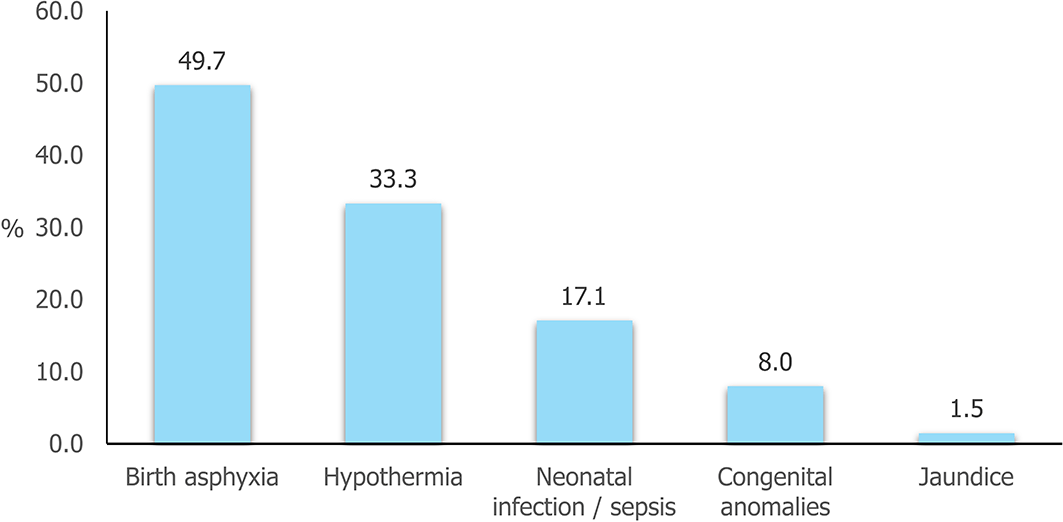
Figure 1 presents selected neonatal clinical conditions documented among neonatal deaths during admission. Birth asphyxia was documented in 49.7% of cases, while hypothermia was recorded in 33.3% of neonates. Neonatal infection or sepsis was documented in 17.1% of cases, followed by congenital anomalies (8.0%) and jaundice (1.5%). Multiple clinical conditions could be documented in the same neonate.
The mean age at death among neonates was 2.1 days (SD 3.7). Most neonatal deaths occurred during the early neonatal period, with 36.0% occurring within the first 24 hours of life and 49.0% occurring between 1 and 3 days after birth. Fewer deaths were documented between 4 and 7 days of life (7.5%) and after the first week of life (7.5%) ( Table 7).
| Age at death | n (%) or Mean (SD) |
|---|---|
| Age at death (days) | 2.1 (3.7) |
| Age at death categories | |
| < 24 hours | 72 (36.0) |
| 1–3 days | 98 (49.0) |
| 4–7 days | 15 (7.5) |
| > 7 days | 15 (7.5) |
| Total | 200 (100.0) |
Multiple clinical conditions could be documented for the same neonate; therefore, percentages do not sum to 100%. Neonatal respiratory distress was the most frequently documented clinical condition, recorded in 78.4% of neonatal deaths. Prematurity-related complications were documented in 65.0% of cases, while birth asphyxia was recorded in 52.0%. Neonatal sepsis and hypothermia were documented in 25.6% and 29.1% of cases, respectively. Congenital anomalies, hypoglycaemia, congenital syphilis, and accidental trauma were less frequently documented. In 2.0% of cases, the cause of death was recorded as unknown ( Table 8).
Selected maternal and healthcare access characteristics documented in the records are presented in Table 9. Infrequent antenatal care attendance and delayed medical care seeking were commonly documented among cases with available data. Attempted termination of pregnancy and lack of transport to the hospital were infrequently recorded.
This study described maternal, neonatal, and clinical characteristics among neonatal deaths recorded at a rural district hospital in the Eastern Cape, South Africa, between 2019 and 2025. The neonatal mortality rate fluctuated across the study period, with an overall rate of 9.0 deaths per 1,000 live births. Although annual variation in neonatal mortality rates was observed, the study did not include statistical testing for temporal trends. These findings provide insight into patterns of neonatal mortality observed within a rural healthcare setting.
Most neonatal deaths occurred among mothers aged 20–34 years, while approximately one-third occurred among adolescent mothers. However, these findings should be interpreted cautiously, as the study included only neonatal deaths and did not report the total number of births within each maternal age group. Similar age distributions among neonatal deaths have been reported in other South African and sub-Saharan African studies. Adolescent mothers are particularly vulnerable to neonatal complications, even more so in vulnerable populations (Noori et al., 2022; Neal et al., 2020; Mbongwa et al., 2024).
Although most mothers (81%) had attended antenatal care services, late antenatal booking and relatively fewer antenatal care visits were commonly documented among cases with available data. This pattern mirrors findings reported in rural and resource-limited settings, where barriers to timely maternal healthcare access remain common (Ebonwu et al., 2018; Ogallo et al., 2020; Masaba and Mmusi-Phetoe, 2020).
Prematurity, low birth weight, neonatal respiratory distress, birth asphyxia, hypothermia, and neonatal infection or sepsis were frequently documented among neonatal deaths in this study. These findings are consistent with previous reports from South Africa, sub-Saharan African settings and globally, where prematurity and related neonatal complications remain commonly documented among neonatal deaths (Chikandiwa et al., 2024; Hug et al., 2021; Mackay et al., 2022; Meiring et al., 2025; Nieuwoudt et al., 2022).
Hypothermia was documented in approximately one-third of the neonates who died in this study. Several studies describe neonatal vulnerability to thermal instability and neonatal mortality in low-resource settings, particularly among preterm and low birth weight neonates (Ntuli et al., 2023; Tshehla et al., 2023).
Maternal HIV infection (30,9%) and syphilis (5,1%) were also documented among a proportion of cases. These findings are consistent with ongoing public health concerns regarding maternal infectious diseases and vertical transmission in South Africa despite expanded antenatal screening programmes (Tabane et al., 2025).
Most neonatal deaths occurred during the early neonatal period, particularly within the first three days of life. This pattern is consistent with global evidence demonstrating that the first week of life represents the period of highest neonatal vulnerability (Idowu et al., 2024). However, the exclusion of neonates that died after referral to other facilities and those that may have died after discharge from the hospital or readmitted after being discharged may have introduced selection bias.
Overall, the findings of this study provide a descriptive profile of neonatal deaths within a rural district hospital and may contribute to future quality-improvement initiatives, routine neonatal surveillance, and further analytical research in similar resource-limited settings.
This study has several limitations. First, the retrospective descriptive design limits the ability to assess causal relationships or determine risk factors associated with neonatal mortality. Second, the study was conducted at a single rural district hospital, which may limit the generalisability of the findings to other settings.
It relied on routinely collected paper-based hospital records, and some of these records contained incomplete, misclassified, or missing information. Furthermore, neonatal deaths occurring after discharge or following referral to other healthcare facilities were not captured. These factors may have introduced selection bias and affected the completeness of the reported findings.
This study provides a descriptive overview of neonatal deaths within a rural district hospital in the Eastern Cape, South Africa, and highlights the continued burden of neonatal mortality in resource-limited settings. The findings suggest that neonatal deaths commonly occurred in the context of prematurity, early neonatal complications, and challenges related to quality maternal and neonatal care access.
Although the retrospective descriptive design does not permit causal inference or risk estimation, the study contributes locally relevant information from an underrepresented rural setting. Strengthening routine neonatal surveillance, improving the completeness of clinical records, and supporting ongoing maternal and neonatal quality-improvement initiatives may help improve neonatal healthcare delivery in similar rural contexts.
Future analytical studies, including comparison groups, are needed to further explore factors associated with neonatal mortality in these settings.
| Views | Downloads | |
|---|---|---|
| F1000Research | - | - |
|
PubMed Central
Data from PMC are received and updated monthly.
|
- | - |
Provide sufficient details of any financial or non-financial competing interests to enable users to assess whether your comments might lead a reasonable person to question your impartiality. Consider the following examples, but note that this is not an exhaustive list:
Sign up for content alerts and receive a weekly or monthly email with all newly published articles
Already registered? Sign in
The email address should be the one you originally registered with F1000.
You registered with F1000 via Google, so we cannot reset your password.
To sign in, please click here.
If you still need help with your Google account password, please click here.
You registered with F1000 via Facebook, so we cannot reset your password.
To sign in, please click here.
If you still need help with your Facebook account password, please click here.
If your email address is registered with us, we will email you instructions to reset your password.
If you think you should have received this email but it has not arrived, please check your spam filters and/or contact for further assistance.

Comments on this article Comments (0)