Keywords
asthma, exercise, rehabilitation, physical activity, emotional, wellbeing, outcome

This article is included in the Health Services gateway.
asthma, exercise, rehabilitation, physical activity, emotional, wellbeing, outcome
Asthma is a significant public health concern in the United Kingdom (UK), with poor asthma control contributing a substantial burden for both individual patients and the wider society. Asthma accounts for 20% of the total chronic respiratory disease disability-adjusted life year burden.1 Difficult-to-treat (difficult) asthma is defined as uncontrolled asthma despite GINA (Global Initiative for Asthma) Step 4 or 5 treatment or requiring such treatment to maintain control and represents a particularly high-risk group.2 Poorly controlled asthma is associated with increased exacerbation rates,3 greater healthcare utilisation,4 and increased mortality risk.1 Alongside airway inflammation, airway hyperresponsiveness and remodelling,5 it is increasingly recognised that difficult asthma is a complex, multidimensional condition comprising pulmonary, extrapulmonary and behavioural ‘treatable traits’.6,7 These traits include obesity, anxiety, depression, breathing pattern disorders (BPD) and physical inactivity, all of which contribute to greater symptom burden and increased exacerbation risk.8 Multimorbidity has been shown to impact adversely on asthma related outcomes.32 Addressing these treatable traits through targeted multimodal interventions has been shown to improve patient outcomes, with a magnitude comparable to biologic treatment,9 and may reduce healthcare burden.
Physical activity is an important, though often overlooked, component of asthma management. Patients with difficult asthma engage in less exercise and report significant perceived barriers to physical activity, including breathlessness, fatigue, fear of triggering symptoms and lack of motivation.10,11 However, lower levels of physical activity are associated with a greater risk of exacerbation, increased healthcare utilisation and a reduced quality of life (QoL).3,4 Exercise interventions have demonstrated improvements in symptom burden, fitness and QoL in asthma,12,13 with emerging evidence suggesting that exercise may have a disease-modifying effect through anti-inflammatory mechanisms.14,15 BPDs are common in difficult asthma and further contribute to exercise avoidance.10,11 Breathing education has been shown to improve asthma control and QoL, and may help to reduce perceived barriers to exercise.16,17 However, adherence to structured, self-directed exercise outside of supervised programmes remains a challenge; this highlights the need for adequate behaviour change support.18,19
Obesity is one key treatable trait in difficult asthma, with higher body mass index (BMI) associated with increased symptoms, worse QoL and greater exacerbation risk.8 A ~10% reduction in body weight has been linked with improved asthma outcomes.20–22 However, dietary interventions alone have shown limited benefit, whereas combining dietary changes with interventions to improve physical activity has demonstrated greater improvements in asthma control and inflammation.13,23,24 Psychological distress, including anxiety and depression, is also highly prevalent in difficult asthma and is associated with increased symptom perception, poor medication compliance and reduced engagement in self-management behaviours.7,25–28 While some patients require specialist psychological support, many could benefit from structured interventions designed to improve emotional wellbeing and increase confidence in behavioural and emotional self-management.
Multimodal interventions targeting physical fitness, weight management, breathing control and emotional wellbeing could offer a promising approach to improving asthma outcomes.29,30 The SafeFit trial, a remote physical activity and wellbeing intervention for people with cancer, demonstrated the feasibility of delivering a scalable, multimodal approach in a chronic disease population.31 The Wessex Asthma Cohort of Difficult Asthma (WATCH) study emphasises the high burden of multimorbidity in difficult asthma, further enforcing the need for integrated management strategies and recent work has highlighted the link between multimorbidity and greater adverse asthma related clinical outcomes.32 The shift towards community-based models of care aligns with evidence demonstrating that home and community-based exercise programmes achieve equivalent patient outcomes to hospital-based rehabilitation while being more cost-effective.33,34
Effective behaviour change support is key for the success of multimodal interventions. The Healthy Conversation Skills (HCS) approach, developed by the MRC Lifecourse Epidemiology Unit in Southampton,35 is a brief, evidence-based intervention, aiming to increase self-efficacy and support sustainable health behaviour change.36,37 Training healthcare practitioners in HCS has been shown to improve their ability to deliver behaviour change interventions,38,39 resulting in a positive impact on patient outcomes.40,41 Due to the complexity of self-management in difficult asthma, including behaviour change support in multimodal interventions may enhance patient engagement and long-term adherence.
There remains an urgent need to develop scalable, multimodal interventions to address the multifaceted nature of difficult asthma. Our structured, responsive exercise training programme (SRETP) is tailored to each participant and has previously demonstrated improvements in physical fitness in patients undergoing neoadjuvant chemotherapy,42 with potential disease-modifying benefit.43 Preliminary data suggest that SRETP may also lead to clinically significant improvements in asthma symptoms and inflammation.14 However, implementation into clinical practice requires moving from a hospital-based to a community-based model, ensuring accessibility and scalability.1 If successful, this approach has the potential to improve resilience to chronic inflammatory disease, enhance QoL, and reduce healthcare burden in patients with difficult asthma.
The Living Better with Asthma study (LIBERTY) is a single-centre, pilot study evaluating the delivery and preliminary impact of a structured responsive exercise training program (SRETP) with dietary advice, breathing retraining, support for behavioural change and emotional self-management in patients with difficult asthma ( Figure 1).
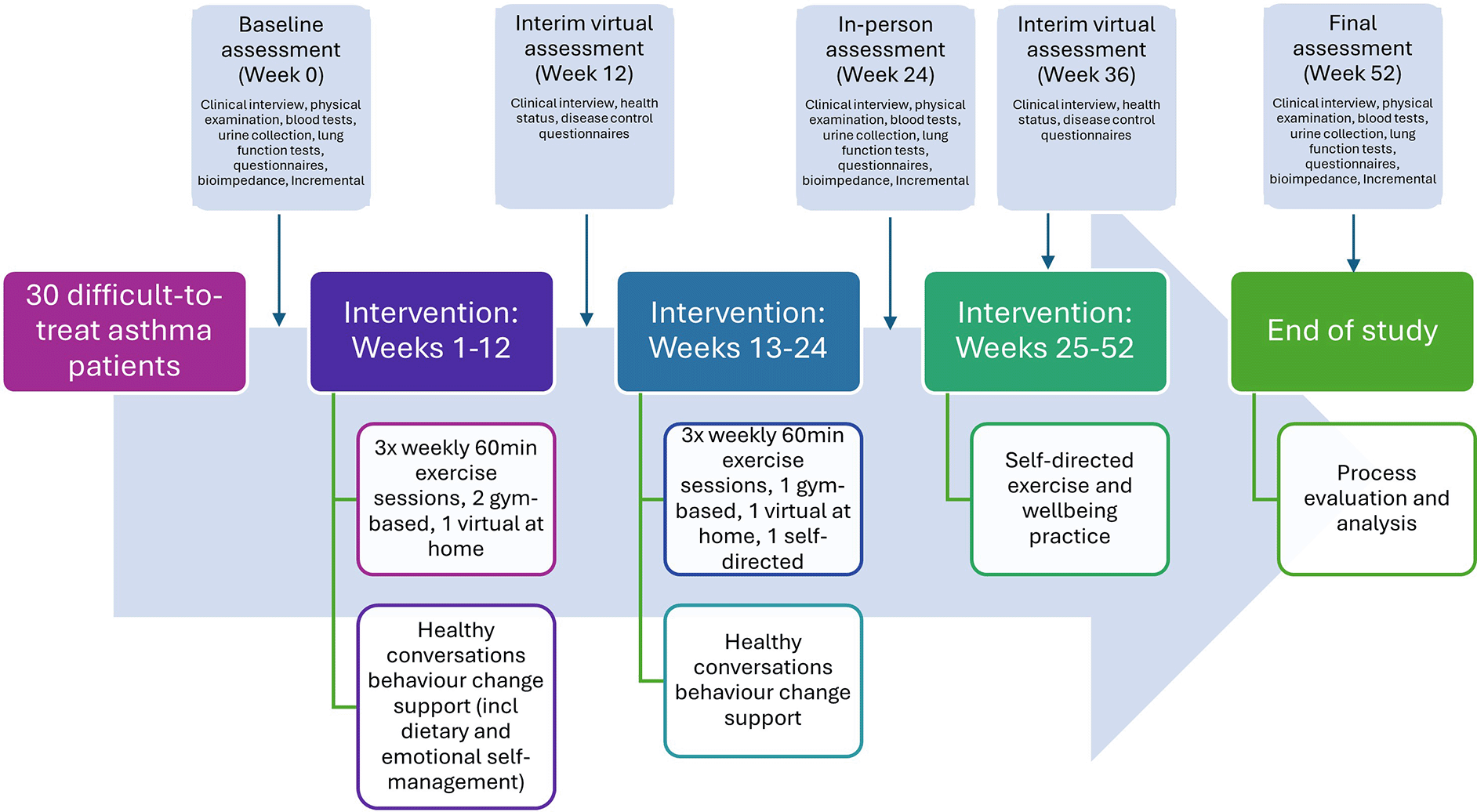
Participants will undertake a 24-week exercise and lifestyle programme. Recruitment, sampling and exercise testing will be performed at University Hospital Southampton. All exercise intervention sessions will be conducted in community gym settings, delivered in-person or virtually, by a Level 3/4 Exercise Rehabilitation Practitioner registered on the Register of Exercise Professionals. These practitioners will also be trained in Healthy Conversations skills, to support dietary and behaviour change, and emotional self-management, and are referred to as Health Guides (HGs) in this article.
The primary objective of this single-centre pilot study is to evaluate the delivery and preliminary impact of a community-based multimodal exercise and behavioural support/emotional self-management programme for patients with difficult asthma. The pilot will assess key aspects of intervention implementation and gather preliminary clinical and mechanistic data to inform the design of a future definitive trial. Specifically, the study will evaluate:
Patients will be eligible for LIBERTY if they are between 18 and 80 years old with symptomatic difficult asthma (Asthma Control Questionnaire (ACQ6) ≥1.5), a less than 50% predicted FEV1, and complete less than 150 minutes of moderate-intensity or less than 75 minutes vigorous-intensity aerobic physical activity weekly, as per WHO recommendations.
Exclusion criteria includes patients who have had an exacerbation of their asthma within 4 weeks of study enrolment that required treatment with systemic corticosteroid and/or antibiotics, have initiated biologic therapy within 6 months of study enrolment, have had any significant change in their regular asthma medication within 12 weeks of study enrolment, have any medical contraindications to exercise or completing an incremental shuttle walk test, on beta-blocker treatment, or are pregnant.
The primary recruitment for the LIBERTY study will be from the Wessex Asthma Cohort of Difficult Asthma (WATCH)6 and severe asthma clinics at University Hospital Southampton (UHS).
If additional recruitment is required, participants may also be identified through secondary care asthma and general respiratory clinics, patient-led groups, established research databases, outpatient departments, and inpatient wards within UHS. The research team will contact patients on existing databases. Those identified through other sources will be approached by their clinical team, who will invite them to express interest in the study. Interested patients will then receive a full Patient Information Sheet, allowing them adequate time to review the study details and have any questions addressed before deciding to participate.
The LIBERTY intervention is a 24-week, supervised multimodal health improvement program designed to enhance physical activity, breathing patterns, dietary habits, and emotional self-management. It comprises structured exercise training sessions delivered in both community gym and home settings, alongside personalised behaviour change and emotional self-management support. This will be provided by trained HGs alongside online resources and applications to support breathing retraining and dietary support. The intervention is underpinned by the LIBERTY Delivery Manual, which guides HGs in the consistent and safe delivery of the program. It includes detailed protocols for exercise delivery, safety screening and escalation, documentation, and core interventional components of the programme. The manual also outlines required training, and provides structured guidance for responding to participant needs, ensuring high fidelity in the intervention across different delivery settings.
During the first 12 weeks, participants will complete two supervised, gym-based exercise sessions per week and one additional home-based session, which will be conducted independently but with virtual supervision via video or telephone call. In the second 12-week phase, the regime will consist of one supervised gym-based session per week, one virtually supervised home-based session, and an additional independent home-based session. This approach ensures a gradual transition from supervised to self-directed exercise, and increasing self-efficacy, promoting long-term adherence and self-management.
The exercise program follows a high-intensity intermittent training (HIIT) approach, with intensity levels individually tailored based on the results of a baseline Incremental Shuttle Walk Test (ISWT). This test predicts peak oxygen uptake (VO2 peak) and anaerobic threshold,44 which is then used to prescribe personalised exercise intensities.45 Each session consists of alternating three-minute intervals at moderate intensity, set at 80% of the participant’s anaerobic threshold, and two-minute high-intensity intervals, calibrated to a work rate midway between the anaerobic threshold and VO2 peak. Exercise intensity will be adjusted throughout the program using the Borg Dyspnoea Scale46,47 and perceived exertion ratings to ensure that participants maintain an appropriate and sustainable level of exertion as their fitness improves.
The program will be delivered by HGs. In addition to supervising the exercise sessions, the HG will provide guidance in normal breathing patterns, behaviour change and emotional self-management support, and dietary guidance. Participants can access breathing retraining via a dedicated website which adheres to national clinical guidelines.2,48 Dietary support includes a baseline food frequency assessment and food diary tracking at baseline, six months, and twelve months, alongside tailored guidance from health guides directing patients to recommendations from the British Dietetic Association. Participants also receive self-directed weight management resources to support dietary modifications.
A core component of the intervention is behaviour change and emotional self-management support delivered through structured Healthy Conversations embedded within the exercise sessions.37,38 The HGs will employ key behaviour change techniques, including open discovery questioning, active listening, and guided self-reflection, to help participants identify and implement sustainable lifestyle changes. This will be supplemented by self-guided resources for emotional self-management. Goal setting is based on the SMARTER framework, ensuring that targets are specific, measurable, achievable, relevant, time-bound, evaluated, and revised as needed. Progress is reviewed regularly to reinforce positive behavioural adaptations.
Session logs will be maintained throughout the program to monitor individual adherence and ensure participant safety. Before each session, the HGs will conduct pre-session assessments to tailor interventions based on the participant’s physical and emotional state. Regular supervision and fidelity assessments ensure consistency in intervention delivery, while safety protocols are in place to escalate concerns to the clinical research team when necessary.
Participants are provided with additional resources, including an interactive booklet containing educational materials on exercise, breathing retraining, diet, and emotional wellbeing. A dedicated LIBERTY website offers supplementary information and self-guided support tools. By integrating structured exercise, behaviour change techniques, and comprehensive self-management support, the LIBERTY intervention aims to equip participants with the skills and confidence to sustain long-term health improvements.
Participant clinical health will be reviewed by the HG before each exercise session, and any concerns escalated to a health care professional at the main site prior to commencing exercise. Participants will not be withdrawn from the study unless their absence results in less than 74% adherence to the exercise intervention. A safety escalation protocol is detailed in the LIBERTY Delivery Manual.
The exercise protocol used in this study has been validated in cancer patients42,49 and shown to be safe and acceptable in populations with asthma13,50 and interstitial lung disease.51 The SafeFit study has further demonstrated that multimodal interventions can be adapted safely for remote delivery.31 The exercise programme was developed through an iterative process with expert consultation and refined with input from patient and public representatives.
HGs delivering the intervention in community settings will be qualified to Level 3/4 Exercise Rehabilitation within the Register of Exercise Professionals. They will also be trained in universal emotional support, breathing retraining, and behaviour change strategies using HCS.40,41
Exercise sessions may be terminated at any time by the participant or by the supervising health guide if there are any safety concerns. All sites delivering the intervention will be staffed by individuals holding a current basic life support qualification, with at least one individual trained in the use of an automated external defibrillator (AED) in accordance with Resuscitation Council UK guidelines. An AED must be available on-site during exercise sessions.
This pilot study will assess if the intervention is safe, feasible and acceptable to patients and practitioners. This will be assessed using patient and practitioner qualitative feedback, intervention adherence and number of adverse events attributable to the intervention.
The primary clinical outcome is change in patient reported symptom burden and improvement in ACQ6 score, with a minimally clinically significant improvement indicated by an increase of >0.5.
Secondary outcomes will include a battery of patient-reported questionnaires, including but not limited to:
ii. Breathing pattern disorder (Nijmegen)54
iii. Quality of life (Severe Asthma Questionnaire (SAQ), Asthma Quality of Life Questionnaire (AQLQ))
iv. Exercise capacity (Godin leisure time exercise questionnaire, Duke Activity status index score)55
v. Disease impact (Silver lining questionnaire)56
vi. Emotional wellbeing (Emotion thermometer)
vii. Capability to self-manage (Self-efficacy scale)
viii. Food diary (via Nurtitics app or food frequency checklist)
ix. Change in exercise capacity, as measured by oxygen uptake of >2 ml/kg/min at peak exercise, calculated by an incremental shuttle walk test (ISWT)
x. Change in reported symptoms and exacerbation frequency
xi. Change in lifestyle behaviour change at 6 months post intervention
Exploratory outcomes will include analysis of pre, during and post intervention blood samples and will look for responses of the redox metabolome.
Qualitative in-depth semi-structured interviews will be conducted with a representative sample of trial participants (n = 7-10) and professionals involved in the delivery of the intervention (n = 5) to assess the acceptability and feasibility of the programme. Purposive sampling will ensure representation of a range of characteristics. Interviews will explore barriers and facilitators to engagement with the intervention, adherence to the programme, and the success of behaviour change. Data will be analysed using a hermeneutic approach, with findings mapped onto the Behaviour Change Wheel framework to inform the design and implementation of behaviour change interventions at individual and systems levels.
Interviews will be conducted via video call by an experienced qualitative researcher, using encrypted systems to ensure data security. Recordings will be transferred to a secure University server on the day of the interview and deleted thereafter. Transcriptions will be handled by the research team, with personal data stored in encrypted, password-protected files on University and Trust servers and destroyed at the study’s conclusion.
In addition, an online questionnaire survey will evaluate the quality of the training package delivered to HGs. The survey will assess the perceived quality and usefulness of the training, as well as HGs’ confidence in delivering the LIBERTY interventions, using a 5-point Likert scale. Open response options will capture in-depth feedback on strengths and weaknesses of the training.
This is a pilot study and is therefore not powered for significance; enrolment of 30 participants is planned. A fully powered randomised controlled trial (RCT) of the intervention compared to standard care will be planned based on the results of this study.
Baseline demographic and clinical data will be summarised using descriptive statistics. For continuous variables, the mean and standard deviation will be reported for normally distributed data, while the median and interquartile range will be used for non-normally distributed data. Categorical and binary variables will be presented as frequencies and percentages of the total.
Patient and public involvement (PPI) has been integrated throughout the development and implementation of the LIBERTY study. Building on previous PPI work from a community-based prehabilitation programme for cancer patients,57 and a remote physical activity and wellbeing intervention,31 a co-design process was undertaken using the Person-Based Approach methodology56 to enhance the acceptability and feasibility of the intervention. A PPI focus group, formed of asthma patients who had previously participated in exercise training interventions, guided the adaptation of the study design to a community-based setting. This ensured alignment with the larger NHSE-funded WesFit study.57
The co-investigator group includes an expert patient who, alongside other PPI representatives (patients and carers), has been actively involved in shaping the study. PPI input has informed key aspects of the protocol, including the content of the intervention, the appropriateness of language used in patient-facing documentation, and the scheduling of study visits and health guide sessions. Additionally, PPI representatives have contributed to the ethical review process and will play a role in the dissemination of study findings.
A dedicated PPI representative will sit on the study’s governance committees, including the steering group. The UHS PPI team, led by a member of the NIHR Race Equality Public Action Group, will coordinate PPI activities. Efforts will be made to ensure that PPI opportunities are accessible to underrepresented groups through targeted community engagement and collaboration with a support group for individuals with severe asthma. Support will also be provided to facilitate participation in remote meetings, including guidance on the use of video conferencing platforms and other relevant tools. These measures will ensure that PPI remains central to the LIBERTY study, contributing to the refinement and successful implementation of the intervention.
Findings from the trial will be disseminated through publication in peer-reviewed scientific journals and presentation at national and international conferences. In addition, dissemination will include active engagement with relevant professional societies, patient groups, and policy stakeholders to maximise the impact of the research. A key element of this strategy will involve collaboration with our Patient and Public Involvement (PPI) contributors to co-develop accessible summaries of findings and targeted dissemination materials tailored for patient communities. These may include plain language summaries, infographics, and presentations at patient-led events or forums. We will also work with established patient advocacy groups and relevant charities to share results through their communication channels, including newsletters, websites, and social media platforms, ensuring that the outputs are relevant, understandable, and reach a wide audience.
Ethical approval was obtained from the Leicester Research Ethics Committee (REC reference 24/EM/0184). and Health Research Authority (HRA) approval granted. Each site, including University Hospital Southampton (UHS) and designated community sites, will undergo formal activation once capacity and capability to conduct the study have been confirmed.
Prior to enrolment, written informed consent will be obtained from all participants following a full explanation of the study. Participants will be given sufficient time to review the information and ask questions before providing consent. The right to decline participation without providing a reason will be respected.
University Hospital Southampton NHS Foundation Trust (UHSFT) is the sponsor for this trial and will ensure compliance with all regulatory requirements, including adherence to Good Clinical Practice (GCP) guidelines and national regulations. The trial may be subject to monitoring, audit, or inspection by UHSFT, the NIHR Southampton Biomedical Research Centre (as the sponsor’s delegate), or other regulatory bodies. All trial-related documents will be made available upon request to authorised personnel.
All participant data will be handled in accordance with the General Data Protection Regulation (GDPR) 2018. Confidentiality will be maintained through pseudonymisation, with access to personal data restricted to the clinical team directly involved in patient care. Study documents will be stored securely, and electronic data will be protected through restricted access controls. Essential documents, including source data, will be retained for a minimum of five years following completion of the study.
The proposed multimodal intervention has previously demonstrated safety and acceptability in clinical populations with significant comorbidities. The SafeFit trial validated a similar protocol in individuals undergoing cancer treatment, confirming the feasibility of delivering multicomponent interventions remotely and without substantial adverse impact.31 Comparable exercise-based programmes have also been shown to be safe and well tolerated in patients with asthma13,50 and interstitial lung disease.51
Within the context of this protocol, only procedures directly related to the research intervention, including study-related sampling, the SRETP, behavioural support (including emotional self-management, dietary and breathing retraining components), and the ISWT, will be defined as trial procedures and subject to safety monitoring following pharmacovigilance principles. Adverse events (AEs) will only be documented if they occur during or are determined by the Principle Investigator to be causally related to, a research-specific activity (e.g., ISWT or a component of the multimodal intervention). Standard reporting protocols will be followed based on the nature and severity of the event.
All AEs will be logged, and any serious adverse events (SAEs), suspected unexpected serious adverse reactions (SUSARs), or life-threatening events will be reported to the sponsor within 24 hours of site awareness. SAEs will be recorded only during the intervention period. The responsible investigator will assess both causality and expectedness of the event and complete the necessary SAE/SUSAR documentation for submission to the host institution’s Research and Development Department within the specified timeframe.
Oversight of participant safety and protocol adherence will be managed by a trial management group comprising the Principal Investigator and co-investigators. This group will convene monthly to review trial progress, adverse events, and risk mitigation strategies, in line with previously developed and tested Standard Operating Procedures (SOPs).
This study will be subject to monitoring and may be audited or inspected by UHSFT in its capacity as study sponsor, to ensure compliance with the principles of Good Clinical Practice (GCP), relevant contractual obligations, and applicable national regulations. All trial-related documentation will be made available for such purposes upon request.
The LIBERTY trial will be the first pragmatic, rigorously conducted pilot study to assess whether a structured, multimodal prehabilitation programme may improve clinical outcomes for patients with severe asthma. This study will evaluate the impact of a tailored exercise intervention combined with breathing retraining, dietary advice, and behavioural and emotional self-management support on symptom control, healthcare utilisation, and quality of life and inform design and delivery of a fully powered, randomised controlled study. By integrating patient-centred strategies within a multidisciplinary framework, LIBERTY aims to establish an evidence-based approach to optimising prehabilitation in this population.
| Views | Downloads | |
|---|---|---|
| F1000Research | - | - |
|
PubMed Central
Data from PMC are received and updated monthly.
|
- | - |
Provide sufficient details of any financial or non-financial competing interests to enable users to assess whether your comments might lead a reasonable person to question your impartiality. Consider the following examples, but note that this is not an exhaustive list:
Sign up for content alerts and receive a weekly or monthly email with all newly published articles
Already registered? Sign in
The email address should be the one you originally registered with F1000.
You registered with F1000 via Google, so we cannot reset your password.
To sign in, please click here.
If you still need help with your Google account password, please click here.
You registered with F1000 via Facebook, so we cannot reset your password.
To sign in, please click here.
If you still need help with your Facebook account password, please click here.
If your email address is registered with us, we will email you instructions to reset your password.
If you think you should have received this email but it has not arrived, please check your spam filters and/or contact for further assistance.

Comments on this article Comments (0)