Keywords
Leadership Style, Organizational Innovation, Job Satisfaction, Employee Performance, Organizational Culture, MSEM, Ping Method

Leadership Style, Organizational Innovation, Job Satisfaction, Employee Performance, Organizational Culture, MSEM, Ping Method
The banking industry is currently navigating a turbulent landscape characterized by intense competition from technology-driven financial service providers (Fintech). To survive and flourish in this dynamic environment, financial institutions must possess the agility to implement strategic changes swiftly and effectively. As noted by previous scholars, the ability of an organization to adapt to such external pressures is heavily dependent on its internal management systems, particularly human resource management (Boxall, 2003).
However, recent data indicates a deceleration in the banking industry’s performance, with credit distribution contracting by 2.41 percent. This decline underscores the urgent need to optimize employee performance through supporting elements such as leadership style, organizational innovation, and job satisfaction. While established literature suggests that leadership style and organizational culture significantly influence employee performance (Syafii et al., 2015; Carmeli & Tishler, 2004), empirical findings remain inconsistent. For instance, while some studies confirm the positive impact of these variables, Niam and Syah (2019) found that job satisfaction did not successfully mediate the relationship between leadership, culture, and performance.
These inconsistent findings present a critical research gap. It suggests that the relationship between leadership style and performance is not linear and may be contingent upon specific contextual factors, such as organizational culture. This study proposes that organizational culture does not merely act as an antecedent but functions as a moderating variable that can strengthen or weaken the impact of leadership style and innovation on employee outcomes.
Therefore, this research employs Moderated Structural Equation Modeling (MSEM) to rigorously examine the impact of leadership style and organizational innovation on job satisfaction and employee performance, with organizational culture serving as a moderator. By focusing on DBS Bank Indonesia, this study aims to provide empirical evidence on how a strong organizational culture can leverage leadership effectiveness to reverse performance deceleration in the banking sector.
This research design makes use of an explanatory approach, which incorporates data collection that is carried out in a single phase (a concise study) or through a cross-sectional method. Through the testing of hypotheses or the identification of appropriate tests for establishing causal conclusions (cause and effect), the purpose of explanatory research is to shed light on the causal relationships that exist between variables. This is done prior to the selection of alternative actions.
The variables that are included in this study are classified into four distinct categories, specifically exogenous variables that are associated with leadership style. There are six indicators that make up the variables, and they are as follows: decision-making proficiency (X1.1), motivational aptitude (X1.2), communication skills (X1.3), capability to manage subordinates (X1.4), accountability (X1.5), and emotional regulation proficiency (X1.6). Systems thinking, mental models, personal mastery, learning teams, and shared vision are the five indicators that are included in organizational innovation. There are three distinct indicators that make up the modulating variable, which is referred to as organizational culture (Z). These indicators are as follows: innovative culture (Z1.1), supportive culture (Z1.2), and bureaucratic culture (Z1.3). The four indicators that make up the mediating variable and the endogenous variable, which is referred to as Job Satisfaction (Y1), are as follows: work results (Y1.1), work environment (Y1.2), additional attitudes (Y1.3), and participation in organizational functions (Y1.4). Productivity (Y2.1), service quality (Y2.2), responsiveness (Y2.3), responsibility (Y2.4), and accountability (Y2.5) are three of the five distinct indicators that make up the endogenous variable that is designated as performance (Y2). Factors that have the potential to influence endogenous variables or to cause changes are referred to as exogenous variables. In the opposite direction, exogenous variables have an effect on endogenous variables.
In this particular investigation, a measurement scale that makes use of interval levels is utilized. This study developed a rating scale based on the Likert scale in order to assess the extent to which respondents agreed or disagreed with a number of different statements (Saunders et al., 2009). One method of probability sampling is known as simple random sampling, which involves selecting samples from the population in a random fashion without taking into account any strata associated with the population. The utilization of this method guarantees that each and every person within the population has an equal opportunity of being chosen for the sample.
This study focuses on participants who are employed by DBS Bank Indonesia as its primary subjects. According to the findings of Hair, Black, Babin, and Anderson (2010), the optimal sample size for subsequent analysis is somewhere between 100 and 400 respondents. Depending on the number of constructs contained within a model, Hair, Black, Babin, and Anderson (2010) outline the sample sizes that are required to properly conduct research: (1) Models that contain more than five constructs require a minimum of one hundred samples; (2) models that contain fewer than seven constructs require at least one hundred and fifty samples; (3) models that contain more than seven constructs require a minimum of three hundred samples; and (4) models that contain a significant number of constructs are required to obtain at least five hundred samples. Figure 1 presents the concept in this research.
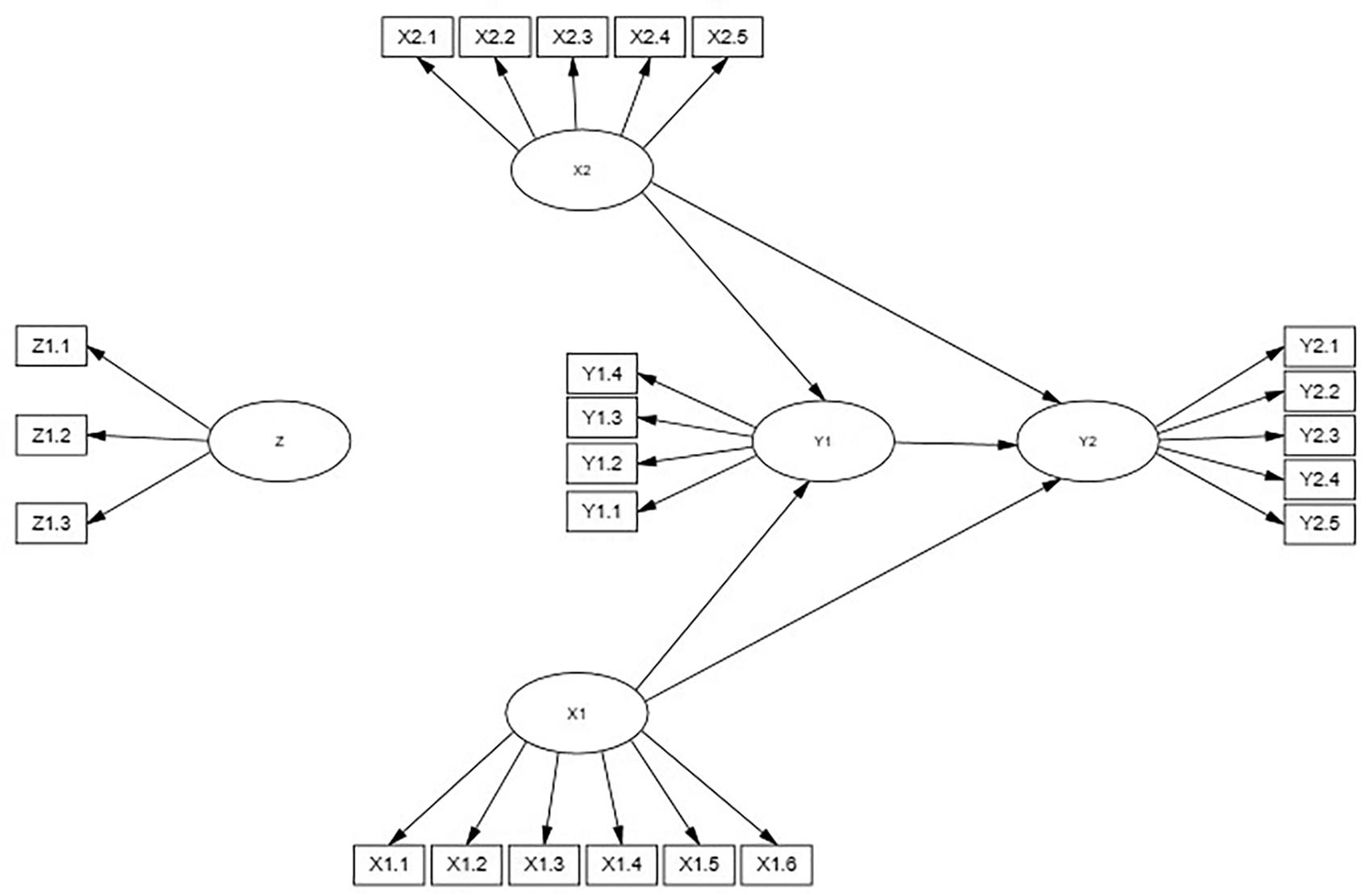
This figure illustrates the proposed theoretical model investigating the relationships between Leadership Style (X_1), Organizational Innovation (X_2), and Employee Performance (Y_2), with Job Satisfaction (Y_1) as a mediator. Organizational Culture (Z) is hypothesized as a moderating variable influencing the relationship between Leadership Style and Job Satisfaction.
Fig. 1 presents the research concept.
This study employs a quantitative explanatory approach utilizing a cross-sectional design to examine causal relationships between leadership style, organizational innovation, organizational culture, job satisfaction, and employee performance. The population comprises employees of DBS Bank Indonesia. Using simple random sampling, the study targeted a sample size sufficient for Structural Equation Modeling (SEM). Following the guidelines by Hair et al. (2010), which suggest a minimum sample size based on the number of constructs, the final dataset falls within the recommended range of 100–400 respondents, ensuring statistical power for complex modeling.
The research instrument utilizes a 5-point Likert scale ranging from 1 (Strongly Disagree) to 5 (Strongly Agree). The variables are measured as follows:
• Leadership Style (X1): Measured by six indicators including decision-making, motivating ability, and communication skills.
• Organizational Innovation (X2): Assessed through five dimensions: systems thinking, mental models, personal mastery, learning teams, and shared vision.
• Organizational Culture (Z): The moderating variable, consisting of innovative, supportive, and bureaucratic culture indicators.
• Job Satisfaction (Y1) & Performance (Y2): Measured as endogenous variables with four and five indicators, respectively.
Data analysis was conducted using Covariance-Based Structural Equation Modeling (CB-SEM) with AMOS software. To test the moderating role of organizational culture, this study employs the Ping (1995) method, a two-step approach specifically designed to estimate interaction effects in latent variable models. The analysis proceeds in two stages: first, assessing the measurement model (validity and reliability) and the structural model without interaction; second, introducing the interaction term (Leadership x Culture) to evaluate the moderating effect.
The research discussion and results encompass various tests, including descriptive statistics, validity and reliability assessments, SEM model assumption evaluations, and MSEM testing. For a more thorough explanation of it, please continue reading. Table 1 presents both descriptive statistics and the mean and standard deviation of the indicators for each latent variable. The table below presents these figures.
Table 1 presents the descriptive statistics for all latent variables. Overall, the respondents demonstrated a positive perception of the measured variables, with mean scores consistently exceeding 4.00 on a 5-point Likert scale. Leadership Style (X1) obtained an average score of 4.255 (SD = 0.614), indicating that employees perceive their leaders as capable and responsible. Among the indicators for leadership, Motivating Ability (X1.2) received the highest rating (Mean = 4.407), suggesting that motivation is a key strength of the current leadership. Similarly, Organizational Innovation (X2) and Organizational Culture (Z) were also rated highly, reflecting a work environment that supports system thinking and innovation.
According to Organizational Innovation (X2) respondents’ statements, the average value was 4.255 with a standard deviation of 0.614. The respondents tend to strongly agree with organizational innovation (X2). Five indicators support the respondent’s statement on organizational innovation (X2): systems thinking (X2.1) with an average value of 4,185 and a standard deviation of 0.574; mental models (X2.2) with an average value of 4,185 and a standard deviation of 0.574; personal mastery (X2.3) with an average value of 4.185 and a standard deviation of 0.574; learning teams (X2.4) with an average value of 4.185 and a standard deviation of 0.574; and shared vision (X2.5) with an average value of 4.185 and a standard deviation of 0.574.
Organizational Culture (Z) gives an average value of 4,255 with a standard deviation of 0.614. The respondents tend to strongly agree on organizational culture (Z). The respondents’ statements on organizational culture (Z) include 3 indicators, namely: innovative culture (Z1.1) with an average value of 4.185 and a standard deviation of 0.574, supportive culture (Z1.2) with an average value of 4.185 and a standard deviation of 0.574, and bureaucratic culture (Z1.3) with an average value of 4.185 and a standard deviation of 0.574.
Job satisfaction (Y1) gives an average value of 4.255 with a standard deviation of 0.614. The respondents tend to strongly agree with Job Satisfaction (Y1). There are four things that the respondent said about Job Satisfaction (Y1): work results (Y1.1), which have an average value of 4.185 and a standard deviation of 0.574; the work environment (Y1.2), which also has an average value of 4.185 and a standard deviation of 0.574; other attitudes held (Y1.3), which also has an average value of 4.185 and a standard deviation of 0.574; and engagement in organizational functions (Y1.4), which also has an average value of 4.185 and a standard deviation of 0.574.
Performance (Y2) gave an average value of 4.255 with a standard deviation of 0.614. The respondents tend to strongly agree on performance (Y2). The respondents’ statements on performance (Y2) include 5 indicators, namely: productivity (Y2.1) with an average value of 4.185 and a standard deviation of 0.574; service quality (Y2.2) with an average value of 4.185 and a standard deviation of 0.574; responsiveness (Y2.3) with an average value of 4.185 and a standard deviation of 0.574; responsibility (Y2.4) with an average value of 4.185 and a standard deviation of 0.574; and accountability (Y2.5) with an average value of 4.185 and a standard deviation of 0.574.
The validity test’s purpose is to determine whether the questionnaire’s questions are representative enough. The AMOS program conducts a validity test on each latent variable using CFA. The second measuring instrument test (questionnaire) is reliability, which is an index that shows the extent to which the measuring instrument is reliable or trustworthy. Reliability measures the internal consistency of indicators of a formed variable, indicating the extent to which each indicator reflects a common formed variable. In this research, calculating reliability uses composite (construct) reliability with a minimum cutoff value of 0.7.
The following table presents the validity and reliability tests for each latent variable in detail:
Table 2 displays the latent variable, Leadership Style (X1), which consists of 6 indicators. These indicators include Decision Making Ability (X1.1) (0.826), Motivating Ability (X1.2) (0.884), Communication Ability (X1.3) (0.849), Ability to Control Subordinates (X1.4) (0.648), Responsibility (X1.5) (0.584), and Ability to Control Emotions (X1.6) (0.617). These indicators yield a value of more than 0.5 and a Composite Reliability (C-R) value of 0.881 above the cut-off value, indicating the validity and reliability of all Leadership Style indicators (X1). Meanwhile, the AVE root value of 0.747, greater than 0.5, confirms the discriminant validity of Leadership Style (X1).
The Organizational Innovation (X2) comprises five indicators: System Thinking (X2.1), Mental Model (X2.2), Personal Mastery (X2.3), Learning Team (X2.4), and Shared Vision (X2.5). These indicators have loading values exceeding 0.5 and a Composite Reliability (C-R) value of 0.881 surpassing its cut-off value, indicating the validity and reliability of all indicators in the Organizational Innovation (X2). Meanwhile, the AVE root value of 0.747, greater than 0.5, demonstrates the fulfillment of the discriminant validity of organizational innovation (X2).
The three indicators of Organizational Culture (Z)—Innovative Culture (Z1.1), Supportive Culture (Z1.2), and Bureaucratic Culture (Z1.3)—have loading values of more than 0.5 and a Composite Reliability (C-R) value of 0.881 above the cut-off value, indicating the validity and reliability of all these indicators. Meanwhile, the AVE root value of 0.747, greater than 0.5, demonstrates the fulfillment of the discriminant validity of organizational culture (Z).
The four indicators of Job Satisfaction (Y1), namely Work Results (Y1.1), Work Environment (Y1.2), Other Attitudes (Y1.3), and Involvement in Organizational Functions (Y1.4), exhibit loading values exceeding 0.5 and a composite reliability (C-R) value surpassing the cut-off value, confirming the validity and reliability of all Job Satisfaction indicators (Y1). The AVE root value of 0.747, greater than 0.5, confirms the fulfillment of the discriminant validity for job satisfaction (Y1), while performance (Y2) encompasses 5 indicators. The loading values of productivity (Y2.1), quality service (Y2.2), responsiveness (Y2.3), responsibility (Y2.4), and accountability (Y2.5) yield a value exceeding 0.5 and a composite reliability (C-R) value exceeding the cut-off value, indicating the validity and reliability of all performance indicators (Y2). The AVE root value of 0.747, greater than 0.5, demonstrates the fulfillment of the discriminant validity on performance (Y2).
Structural modeling requires several prerequisites, including multivariate norms, the assumption of no multicollinearity, non-singularity, and no outliers, after testing the validity and reliability of each latent variable.
Normality of data is one of the requirements in structural equation modeling (SEM)-based covariance modeling. We emphasize normality testing on multivariate data by examining the skewness and kurtosis values, which we can statistically discern from the Critical Ratio (CR) value. We define normally distributed data, both multivariate and univariate, as CR values between −1.96 and 1.96 (−1,96 £ CR £ 1,96), assuming a significance level of 5 percent. The multivariate CR value of 1,705, located outside the range of −1.96 to 1.96, yields comprehensive results for data normality testing across all research variables, confirming the multivariate distribution of the data.
The covariance matrix’s determinant reveals the singularity. A determinant value that is very small or close to zero cannot be used in research because it indicates a singularity problem. The research results provide a sample covariance matrix determinant value of 0.019. We can conclude that there is no singularity problem in the analyzed data because this value is almost zero and still smaller than 10E-5.
The correlation between exogenous latent variables reveals multicollinearity. A covariance p value greater than 0.05 indicates that multicollinearity does not exist. The results of the study provide a p value for each exogenous latent variable, namely: (X1 with X2 of 0.091), (X1 with Z of 0.135), and (X2 with Z of 0.060). Because this value exceeds (a = 0.05), we can conclude that there is no multicollinearity issue in the analyzed data.
Outliers are observations that exhibit extreme values in both univariate and multivariate analyses, primarily due to a combination of unique characteristics that set them apart from other observations. If an outlier appears, we can apply special treatment to it, provided we understand its origin. This study presents the outlier test results in Mahalanobis distance, or Mahalanobis d-squared. Mahalanobis values that are greater than the Chi-square table or p1 values < 0.001 are said to be outlier observations. There are five outlier data points in this study, but they still fall below 5 percent of observations, indicating the absence of outliers.
We conducted validity and reliability tests on all latent variables, yielding valid and reliable results. The data is not multivariate normal; multicollinearity and outliers below 5 percent are absent, allowing us to proceed with SEM analysis on the latent variables:
The following structural equation allows for the interpretation of each path coefficient from the appropriate model:
Where:
X1: Leadership Style
X2: Organizational Innovation
Z: Organizational Culture
Y1: Job Satisfaction
Y2: Performance
The following table presents the path coefficient test from Figure 2:
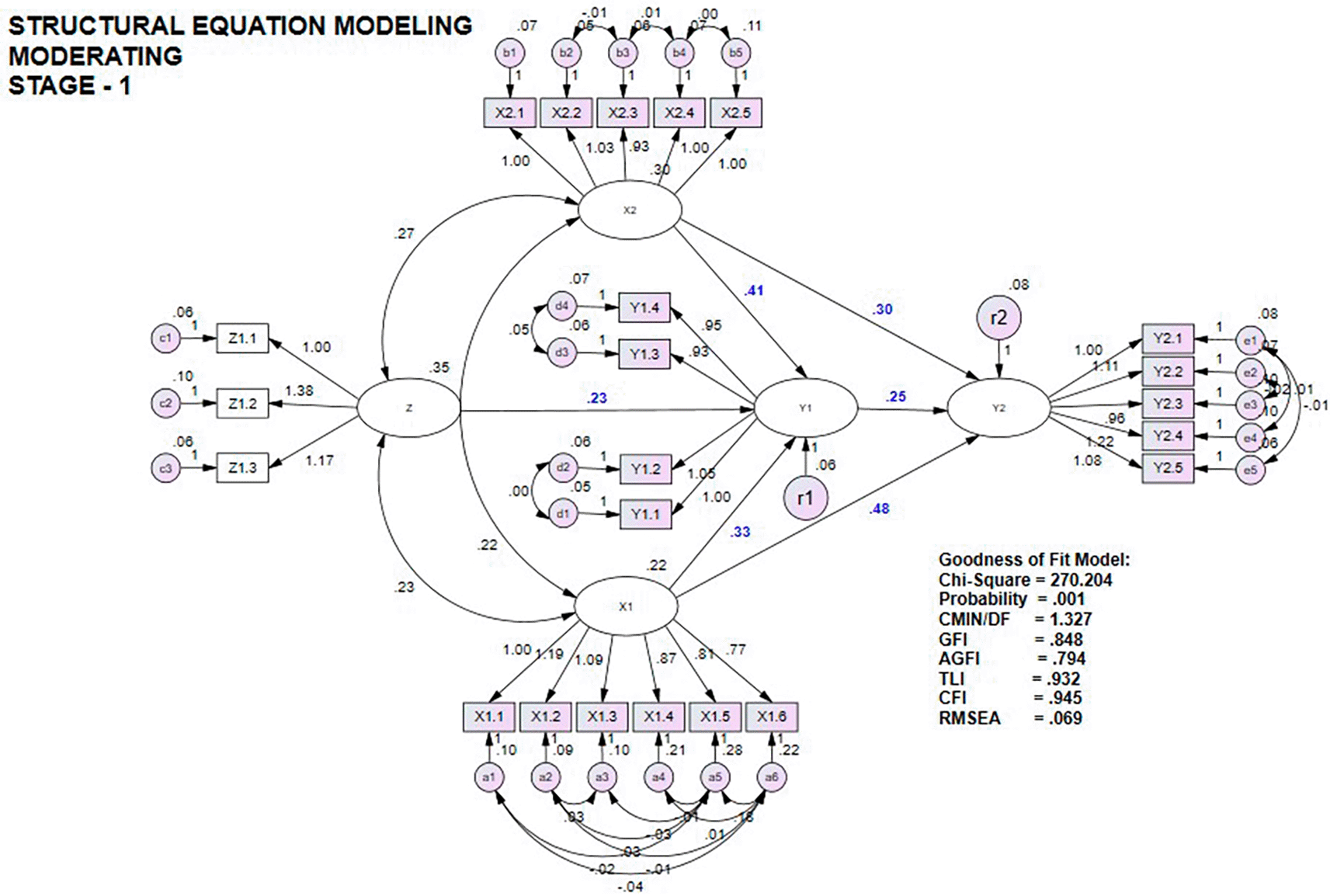
This diagram presents the results of the initial assessment (MSEM Stage 1), displaying the loading factors for indicators and the primary path coefficients between latent variables. Preliminary model fit indices (e.g., CMIN/DF, TLI, CFI) are provided to verify data alignment before incorporating the interaction term.
Table 3 displays the direct effect of the moderating variable (organizational culture (Z)) on job satisfaction (Y1), which is positive and significant. The positive path coefficient of 0.251, with a C.R. value of 3.559, surpasses the t-table value of 1.96, indicating a 0.251 increase in job satisfaction (Y1) with each increase in organizational culture (Z). This indicates a suspicion that organizational culture (Z) functions as a moderating variable, enhancing the impact of leadership style (X1) on job satisfaction (Y1), thereby enabling the continuation of Stage 2 modeling. In stage 1, the Moderating Structural Equation Modeling (MSEM) model obtained the indicator loading value and error variance on each latent variable of organizational culture (Z) and leadership style (X1), which were then used to present the interaction lambda and error variance as follows.
Lambda Interaction of Organizational Culture (Z) with Leadership Style (X1):
Variance Error of Interaction of Organizational Culture (Z) with Leadership Style (X1):
The following table presents the results of the interaction lambda and interaction error variance calculations.
The path diagram in figure 3 presents the interaction and variance error values as follows, based on Table 4.
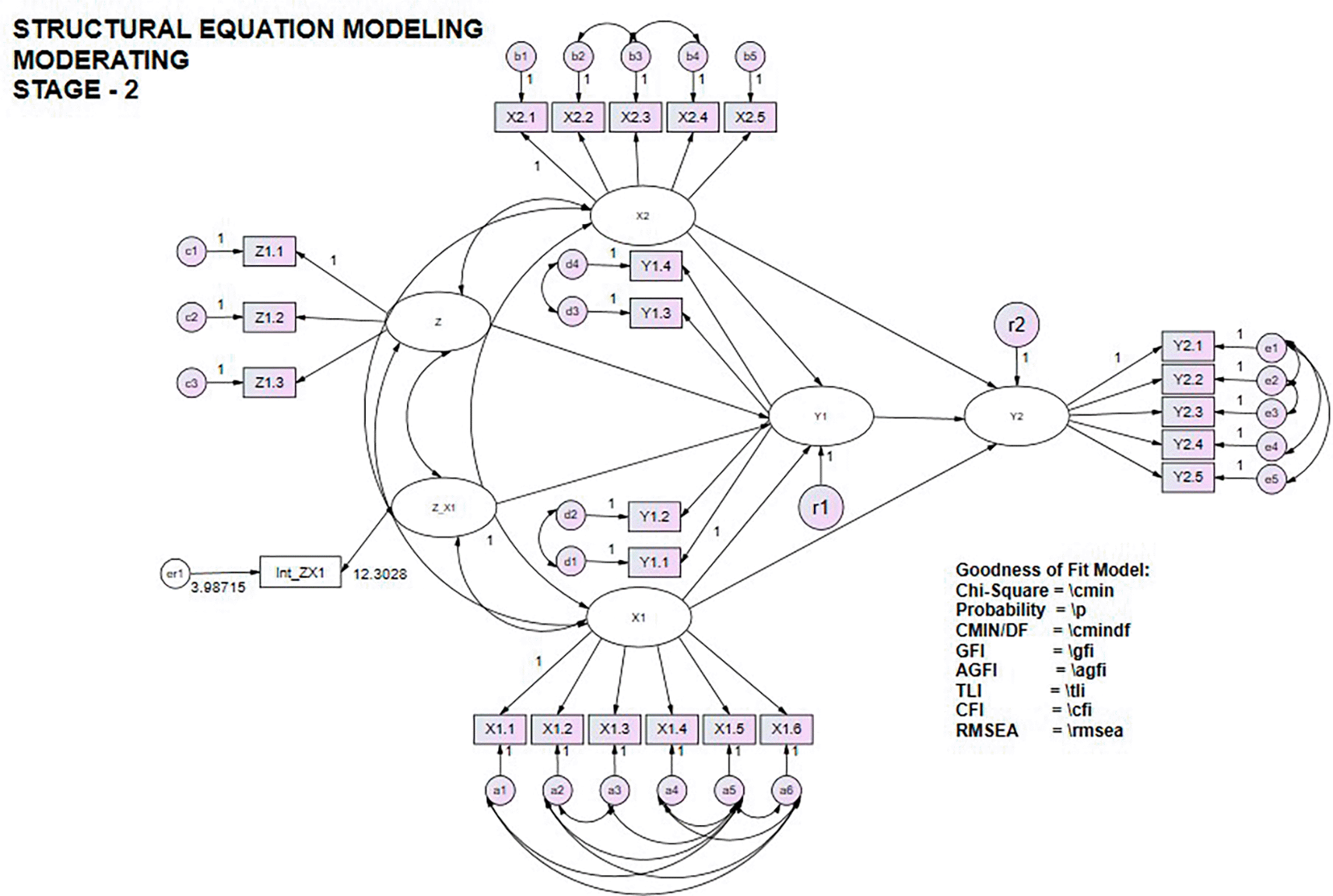
Figure 3 depicts the structural model integrated with specific interaction values derived from the Ping (1995) method. It includes the calculated Interaction Lambda and Interaction Error Variance required to estimate the moderating effect of Organizational Culture on the Leadership-to-Satisfaction path.
The following figure 4 presents the results of the structural model estimation.
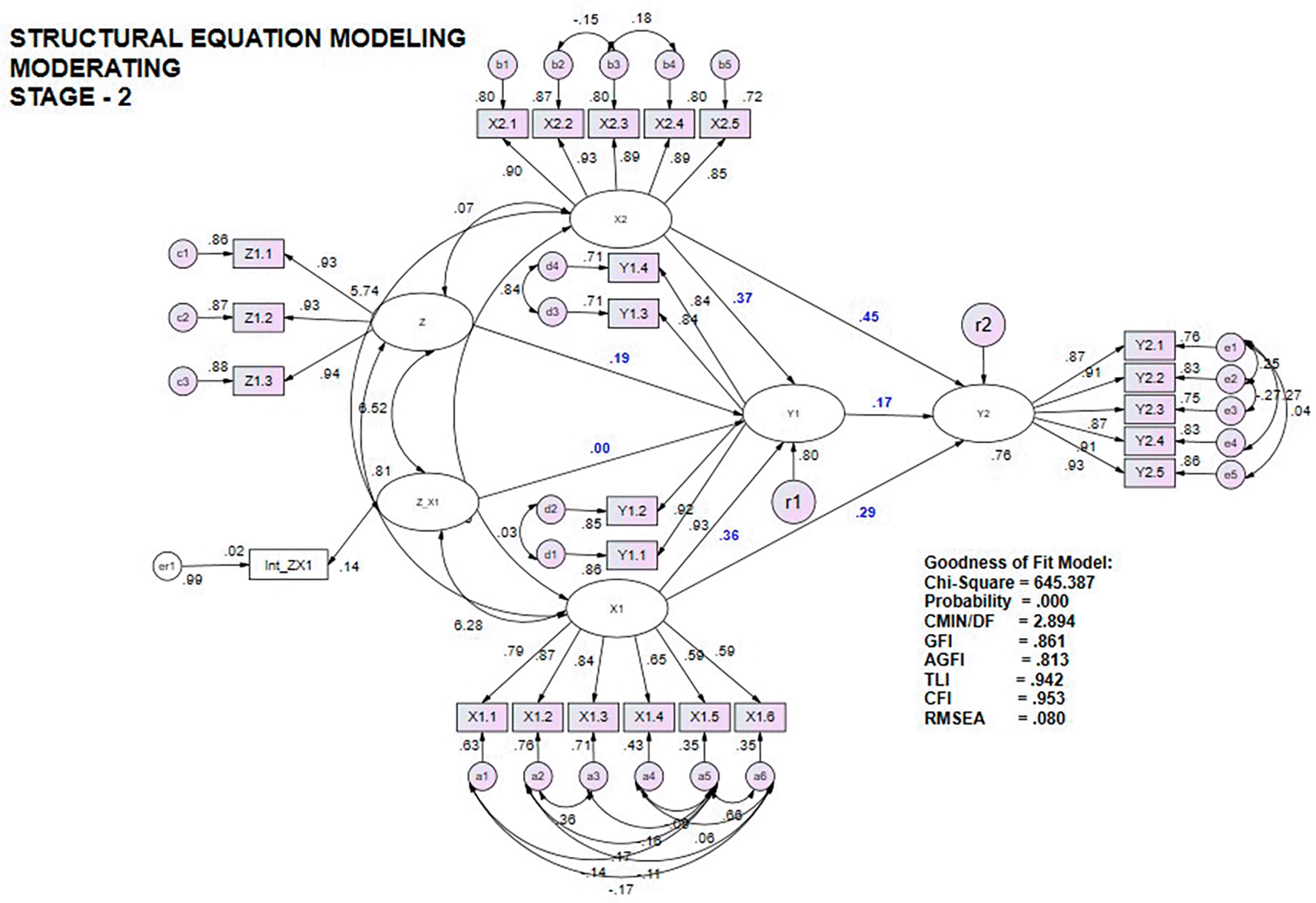
The final path diagram shows the results of the full moderated structural model (MSEM Stage 2). It highlights the significance of the interaction term and identifies Organizational Innovation as the most dominant predictor of Employee Performance.
The following table displays the complete test results of the measurement model using the AMOS program:
We can interpret each path coefficient from the appropriate model. This study presents these path coefficients as hypotheses in the form of a structural equation:
Where:
X1: Leadership Style
X2: Organizational Innovation
Z: Organizational Culture
Y1: Job Satisfaction
Y2: Performance
ZX1: Organizational Culture and Leadership Style Interaction
The following table presents the path coefficient test in Figure 3 and the equation above in detail.
Table 6 explains the interpretation of each path coefficient in detail.
• Leadership Style (X1) has a positive and significant effect on Job Satisfaction (Y1). This can be seen in the positive path coefficient of 0.358 with a C.R. value of 4.125 and a significance probability (p) of 0.000, which is smaller than the significance level (a) determined at 0.05. Thus, leadership style (X1) has a direct effect on job satisfaction (Y1) of 0.358, which means that every time there is an increase in leadership style (X1), it will increase job satisfaction (Y1) by 0.358. Researchers Ni Nengah Rupadi Kertiriasih, I Wayan Sujana, and I Nengah Suardika (2018) concluded that leadership style significantly and positively affects job satisfaction.
• Organizational innovation (X2) has a positive and significant effect on job satisfaction (Y1). The positive path coefficient of 0.368, with a C.R. value of 4.155 and a significance probability (p) of 0.000, clearly demonstrates this, as it falls below the specified significance level (a) of 0.05. Thus, organizational innovation (X2) has a direct effect on job satisfaction (Y1) of 0.368, which means that every increase in organizational innovation (X2) will increase job satisfaction (Y1) by 0.368. This is in accordance with research from Soyoung Park et al. (2016). Using the OLS regression model as an analysis method, it shows that innovation has a positive influence on job satisfaction.
• Organizational culture (Z) has a positive and significant effect on job satisfaction (Y1). The positive path coefficient of 0.185, with a C.R. value of 2.625 and a significance probability (p) of 0.009, demonstrates this, as it falls below the specified significance level (a) of 0.05. Thus, organizational culture (Z) has a direct effect on job satisfaction (Y1) of 0.185, which means that every increase in organizational culture (Z) will increase job satisfaction (Y1) by 0.185. This is in accordance with research from Jusuf Sunya, Salim Basalamah, Ahmad Gani, and Junaidin Zakaria (2017). One of their research findings shows that organizational culture has a positive and significant effect on job satisfaction.
• Leadership Style (X1) has a positive and significant effect on Performance (Y2). The positive path coefficient of 0.285, a CR value of 3.246, and a significance probability (p) of 0.001, which is smaller than the significance level (a) set at 0.05, clearly demonstrate this effect. Thus, Leadership Style (X1) has a direct effect on Performance (Y2) of 0.285, which means that every increase in Leadership Style (X1) will increase Performance (Y2) by 0.285. This is in accordance with research from Prima Sari Pascariati Kasman and Nandan Lima Krisna (2021). This research concluded that leadership style significantly and positively affects employee performance.
• Organizational innovation (X2) has a positive and significant effect on performance (Y2). The positive path coefficient of 0.455, with a C.R. value of 5.195 and a significance probability (p) of 0.000, clearly demonstrates this, as it falls below the specified significance level (a) of 0.05. Thus, organizational innovation (X2) has a direct effect on performance (Y2) of 0.455, which means that every increase in organizational innovation (X2) will increase performance (Y2) by 0.455.
• Job satisfaction (Y1) has a positive and significant effect on performance (Y2). The positive path coefficient of 0.173, with a C.R. value of 2.048 and a significance probability (p) of 0.041, clearly demonstrates this, as it falls below the specified significance level (a) of 0.05. Thus, job satisfaction (Y1) has a direct effect on performance (Y2) of 0.173, which means that every increase in job satisfaction (Y1) will increase performance (Y2) by 0.173. The research by Prima Sari Pascariati Kasman dan Nandan Lima Krisna (2021), Jusuf Sunya, Salim Basalamah, Ahmad Gani dan Junaidin Zakaria (2017) & Romi Ilham (2018) confirms that job satisfaction positively impacts employee performance.
• The MSEM analysis reveals a significant, albeit modest, moderating effect of Organizational Culture on the relationship between Leadership Style and Job Satisfaction (β = 0.004, p < 0.05). This finding implies that while Leadership Style significantly drives Job Satisfaction directly (β = 0.358), its effectiveness is slightly enhanced when supported by a strong Organizational Culture. In practical terms, this suggests that leadership initiatives are most effective when they are aligned with the organization’s innovative and supportive cultural values. However, since the direct effects of Innovation (X2) and Leadership (X1) are substantially larger, the bank’s primary focus should remain on improving these core competencies while treating culture as a supportive framework.
This study confirms that the proposed Moderated Structural Equation Model (MSEM) fits the data well, adhering to required fit indices (RMSEA, TLI, CFI). The findings demonstrate that Organizational Innovation is the most dominant predictor of Employee Performance (β = 0.455), followed by Leadership Style (β =0.285). Furthermore, Organizational Culture plays a significant, albeit modest, moderating role (β =0.004), specifically strengthening the relationship between Leadership Style and Job Satisfaction. This suggests that leadership effectiveness is not static but is amplified within a supportive and innovative cultural context.
These findings offer strategic insights for the banking sector. First, given the dominant impact of Organizational Innovation, bank management should prioritize investments in ‘learning team’ structures and ‘systems thinking’ training over traditional rigid hierarchies. Second, while leadership is crucial, it must be embedded in the right culture. Leaders should actively cultivate a ‘Supportive’ and ‘Innovative’ culture (as per variable Z indicators) because the data proves that culture acts as a catalyst that enhances employee satisfaction.
This study acknowledges several limitations. First, the interaction effect (moderation) yielded a small coefficient, suggesting that other contextual moderators could be explored in future research, such as digital readiness or work-life balance. Second, the study is cross-sectional; future longitudinal research could better capture the dynamic nature of cultural changes in the banking industry.
This study received ethical approval from the Dean of Interdisciplinary Management of Technology School of Institut Teknologi Sepuluh Nopember, with approval number 7279/IT2.IX.8/B/PP.05.02.00/2022. The research adhered strictly to the principles outlined in the Declaration of Helsinki, ensuring the highest ethical standards in research involving human participants. All participants were informed about the purpose, procedures, and potential risks of the study. Written informed consent was obtained from all participants prior to their involvement, ensuring their voluntary participation. Participants were assured of confidentiality and anonymity, and they retained the right to withdraw from the study at any time without any repercussions. The collected data were securely stored and used solely for the purposes of this research.
| Views | Downloads | |
|---|---|---|
| F1000Research | - | - |
|
PubMed Central
Data from PMC are received and updated monthly.
|
- | - |
Provide sufficient details of any financial or non-financial competing interests to enable users to assess whether your comments might lead a reasonable person to question your impartiality. Consider the following examples, but note that this is not an exhaustive list:
Sign up for content alerts and receive a weekly or monthly email with all newly published articles
Already registered? Sign in
The email address should be the one you originally registered with F1000.
You registered with F1000 via Google, so we cannot reset your password.
To sign in, please click here.
If you still need help with your Google account password, please click here.
You registered with F1000 via Facebook, so we cannot reset your password.
To sign in, please click here.
If you still need help with your Facebook account password, please click here.
If your email address is registered with us, we will email you instructions to reset your password.
If you think you should have received this email but it has not arrived, please check your spam filters and/or contact for further assistance.

Comments on this article Comments (0)