Keywords
Transfer value, needs-based model, drought, humanitarian assistance, minimum expenditure basket, targeting, vulnerability

Transfer value, needs-based model, drought, humanitarian assistance, minimum expenditure basket, targeting, vulnerability
Humanitarian cash assistance programs are essential in assisting vulnerable populations during crises in drought prone areas (Gebre and Rahut, 2021; Doocy and Tappis, 2017; Nyaramba and Ngari, 2023). Different approaches are applied in devising cash transfer values based on programme goals, data availability and operational challenges. The Minimum Expenditure Basket (MEB) is the mostly used method for determining the cost of basic goods and services that a household requires to attain basic needs for a given period of time, usually one month. Cash transfer amounts are derived from MEB covering part or full cost of basic needs, and sometimes covers the gap between actual household’s expenditure and the income that a household has for that given time (WFP, 2020; Baizan and Klein, 2021). The MEB approach provides data-oriented and context-specific mechanisms for determining transfer values. However, its accuracy depends on availability of reliable market data and periodic updates for it to remain relevant.
The Minimum Expenditure Basket framework provides a structured basis, majority of humanitarian programmes adopts flat-rate cash transfer models that provides all households with the same amount of cash irrespective of their differences in sizes, composition and vulnerability levels (Pople et al., 2025). Such uniformity always leads to inequitable outcomes whereas smaller or less affected households may be overcompensated while larger households or those which are more vulnerable may be undersupported. This discrepancy can weaken both the efficacy and objectivity of cash-based assistance, especially in diverse and rapidly changing humanitarian contexts (Reader and Andersen, 2022; Mari, 2024). Placing this concern with within equity theory and capability approach, it highlights the normative expectations that support to vulnerable households should be provided in accordance to respective household needs and should enhance people’s capability to cope with shocks.
Apart from flat rate transfer model, there are other differentiated transfer models which determines transfer values depending on household characteristics including number of family members, number of dependants (dependency ratio), vulnerability level or geographical settings. These models puts emphasize on equity and aligns assistance with actual household needs. However, for them to be effective and acceptable, they require effective communication strategies and reliable data systems to ensure transparency, community acceptance and periodic recalibration (Shah et al., 2025).
In drought-affected areas, the needs of households are heterogeneous, thus the devised transfer amounts needs to account for such differences. Empirical evidence from countries in sub-Saharan Africa such as Tanzania, Kenya and Ethiopia indicates that vulnerability of households to climate shocks such as drought is determined by several household, community and geographical related factors such as household size, gender of the household head, dependency ratios, ownership of assets, livelihood type and geographical location (Maru et al., 2021; Belay and Lebeza, 2024; Majiwa et al., 2025). For instance, during drought, female led households or those with many dependent members (children or elders) tend to experience high food insecurity. Similarly, agricultural households, especially pastoralists in remote areas are greatly affected because they more exposed to limited access to food market services. Also, seasonal changes contribute to increased household needs during lean periods when there is scarcity or increased prices of food and water. Further, the cost of non-food items and services such as hygiene items and health care services often goes up in times of droughts implying that transfer values based on food items only may be insufficient to address such vulnerability. Consequently, setting a uniform transfer value for all affected households irrespective of their differential needs can limit their impacts and exacerbate further existing inequalities.
Examples from major programmes reveal how these cash transfer models are implemented in practice. In Ethiopia, the Productive Safety Net Programme (PSNP), one of the largest social protection schemes in Africa, provides both direct support and public works transfers. Transfer amounts for beneficiaries under public work component are determined based on number of workdays and a standard wage rate that is computed based on household size. In this programme, transfer amounts are designed to cover a proportion (ranging from 45% to 90%) of the total MEB for food items. However, Sabates-Wheeler et al. (2022) revealed that, the real value of transfers is eroded by rising food prices. In Kenya, vulnerable households in drought prone areas are provided with unconditional cash transfers through the Hunger Safety Net Programme (HSNP). In this programme, beneficiaries in Group 1 are provided with regular payments of KSh 5,400 after every two months, while Group 2 beneficiaries, who are enrolled in the shock responsive component, receives monthly emergency top-ups of KSh 2,700 during shocks (Song and Imai, 2019; Gelders and Kidd, 2018; Development Initiatives, 2024). Even though transfer values have been periodically recomputed to account for inflation, they are still flat-rate and not adjusted for household size or composition. In spite of the positive impacts the HSNP had on dietary diversity, its evaluation revealed some underlying concerns about adequacy, particularly for larger households (Menon et al., 2024).
The World Food Programme (WFP), a prominent social assistance organization across the globe uses the MEB approach to guide its transfer value decisions in humanitarian contexts. For instance, in Mali, the WFP developed the MEB that composed of food and non-food essentials, and used it to compute transfer values based on market dynamics (WFP, 2020). Also, the Cash Learning Partnership (CALP) Network, another prominent social assistance organization recommends that, MEBs should be used concurrently with household expenditure data and price monitoring mechanisms to ensure that determined transfer values are adequate in times of crises and price hikes (Baizan and Klein, 2021). However, in contexts characterized by market disruptions, high inflation and changing patterns of household’s vulnerabilities, maintaining suitable transfer values remains a challenge. Thus, all these setbacks necessitate regular recalibration of cash transfer values for them to remain relevant. Additionally, empirical evidence from the HSNP and PSNP highlights the significance of regularly reviewing transfer values and incorporating essential non-food needs to ensure that they are adequate and effective protecting vulnerable households in drought prone regions.
Based on the above empirical evidence on approaches for determining cash transfer values in humanitarian context, the major weakness of flat-rate transfers lies in their inability to reflect differences in household size and composition (Casco, 2022; Shah et al., 2025). In contrast, it has been observed that household’s needs-based transfer models offer an opportunity to design social assistance based on specific household needs and realities, thus enhancing both relevance and accountability. However, despite growing recognition of the importance of household’s needs-based approaches, there remains a gap in practical methodology for their design and implementation, especially in the context of drought-induced shocks (Light et al., 2024). This gap is particularly relevant in Sub-Saharan Africa where recurrent droughts, high poverty levels, and diverse household structures complicate targeting for cash assistance, and in policy environments such as Tanzania where social protection and emergency programmes are increasingly shifting towards and relying on cash-based responses. This paper addresses that gap by proposing a model for calculating context-specific and equitable transfer values using household and local market data. The goal is to strengthen the fairness and effectiveness of humanitarian cash assistance by aligning transfer amounts more closely with the real needs of affected households.
Development of the needs-based household cash transfer value model in a humanitarian context adopted the conceptual framework approach which helps to determine how much cash to transfer and why. This systematic process ensures that cash transfers are equitable and corresponds to actual household needs which are based on prevailing realities (Floate et al., 2019; UNHCR, 2023). Therefore, the methodology developed in this study provides guidance and adoptable procedures for determining context-specific transfer values using household level data and local prices of goods and services. The approach incorporates collected empirical data with methodological procedures taking into account household composition, economies of scale and price variations. The fundamental objective is to compute the total MEB from both food and non-food items and devise transfer values that are responsive to household structure, needs and local market prices fluctuations. Relevant assumptions, facts, methodological components and steps of the household’s needs based model are presented in the following sub-sections.
Household level data were collected from 476 households from March to April 2023 using survey questionnaire covering demographic characteristics and expenditure patterns. Before questionnaire administration, an informed verbal consent was obtained from each participant where by a full explanation of the study purpose, procedures, potential risks and benefits, and their rights to withdraw at any time were provided. An informed verbal consent was chosen due to cultural sensitivity, high illiteracy and language barrier in the study area, factors that could discourage participation. Also, due to the aforementioned factors, to recording of interviews was not possible and suitable. However, dates of interviews for each household that participated were documented. Local prices for a standardized set of priority basic needs were collected from relevant markets within the study area. These data provide the basis for computing household specific consumption requirements and transfer values. Based on collected data, the proposed model accepts the following assumptions and facts:-
a) Households have different sizes and compositions.
b) Common food items consumed by households in a study area constitute the food basket for computing the MEB for food items.
c) Expenses for health, communication and transport are treated as distinct expenditure units for a household.
d) Households are located in different locations ranging from proximal to furthest from central places (CPs).
e) Adequacy ratios for drought prone regions ranges between 50% -75% (Gelders & Kidd, 2018).
f ) Adequacy ratios of 30% and 60% are employed in the empirical application of the model to compare the resulting transfer values.
g) Average headline annual inflation rate rose from 3.7 in 2021 to 4.3 in 2022 (NBS, 2022). Thus, the inflation factor of 1.006 is used as adjustment factor for both food and non-food items. The inflation factor is given by the formula 1+ where i is the difference between current and base inflation rates.
The MEB for each household is calculated by combining the adjusted household consumption needs with local prices of essential goods and services. The transfer values are derived to cover the calculated MEB while accounting for prices changes through inflation adjustments and the adequacy ratio, which ensures that transfers meet intended welfare objectives. This step wise process allows for a flexible and context specific determination of cash transfers that can be updated dynamically as new data becomes available.
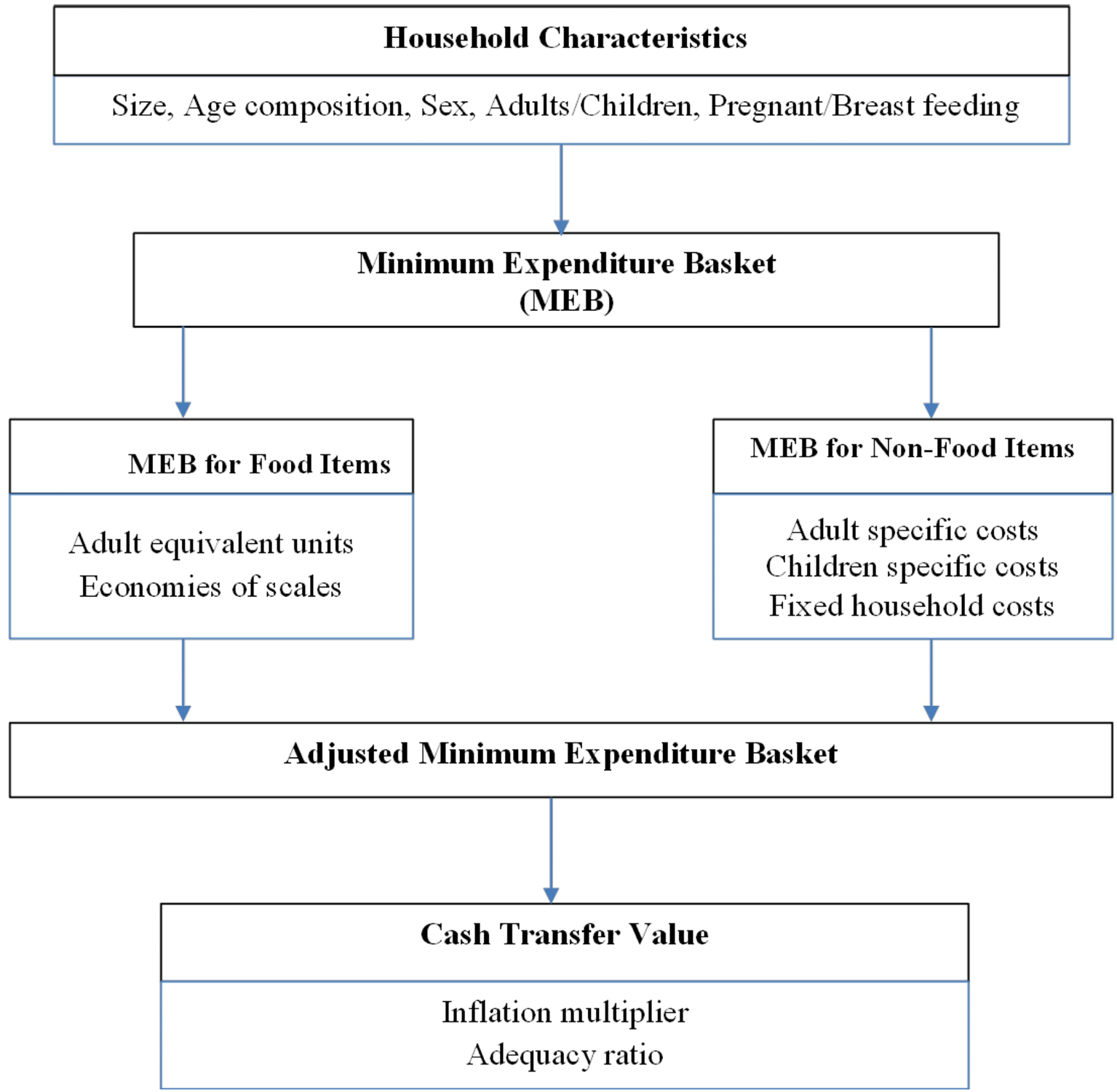
Mathematically, and based on assumptions and facts stated above, the cash transfer value is determined based on the following formula;
Whereby is the transfer value, is the per capita minimum expenditure basket per month for food items, is minimum expenditure basket for non-food items, is the inflation factor and is the adequacy ratio.
The minimum expenditure basket for non-food items is the total cost per month for education (food and uniforms for children), health services, clothing, communication (air time) and transport needs for the household.
Where is the average cost of non-food item i incurred by a household per month.
Since households have different compositions of children and adults and large households share some of the household’s resources (economies of scale), the household size is expressed in terms of adjusted equivalence scales as follows;
Where as is the total adult equivalent size of a household adjusted based on economies of scale. It is given by the following formula:-
Where as is the weight (adult equivalent weight/units) of household member i based on age/sex or consumption needs and is the average cost given a household size.
Finally, the transfer value formula for is given by;
Conceptual description of the needs-based model is presented in Figure 1.
A nuanced understanding of households’ basic needs within the study area is essential for the formulation of interventions that effectively address both acute vulnerabilities and long-term developmental challenges. These needs represent the minimum standards required to ensure dignity, health, and socio-economic stability. Results of the assessment of household’s priority basic needs indicates that, most frequently reported needs include food (92%), education for children (36.8%), access to health services (32.1%), clothing (31.3%), and water for livestock (24.4%). Other needs include energy for cooking (9.2%), transport (4.8%), communication (4.6%) and energy for lighting (3.4%). The prominence of these priorities highlights persistent deficiencies in access to essential goods and services, the redress of which is imperative for strengthening household resilience, promoting adaptive capacity, and fostering sustainable well-being.
Although less reported, needs such as communication (airtime), energy for lighting (kerosene) and transport are considered in this analysis because they also formed part of expenses that cash transfer beneficiaries incurred using cash transfers. Shelter and water for livestock are also excluded from the MEB and transfer value analysis for methodological and conceptual reasons. The MEB is designed to capture the minimum cost of meeting essential human needs necessary for survival and maintaining dignity, while livestock water and shelter are important for livelihood sustainability and extend beyond the scope of immediate household consumption, thus they are excluded to maintain analytical consistency with the MEB’s human-centric framework (WFP, 2020; Baizan and Klein, 2021).
Based on identified priority basic needs for households in the study area, although less reported, needs such as communication (airtime), energy for lighting (kerosene) and transport are considered in this analysis because they also formed part of expenses that cash transfer beneficiaries incurred using cash transfers. Shelter and water for livestock are also excluded from the MEB and transfer value analysis for methodological and conceptual reasons. The MEB is designed to capture the minimum cost of meeting essential human needs necessary for survival and maintaining dignity, while livestock water and shelter are important for livelihood sustainability and extend beyond the scope of immediate household consumption, thus they are excluded to maintain analytical consistency with the MEB’s human-centric framework (WFP, 2020; Baizan and Klein, 2021). Thus, in this analysis, the minimum expenditure basket for households comprises of food and nonfood basic items.
3.2.1 Minimum expenditure basket for food items
Common main food items utilized by households in the study area were used in establishing the cost of food basket and achieve the standard and minimum calorie requirement of 2,100 kca/person per day. Food basket items included maize flour, beans, meat, milk, cooking oil, salt, vegetables, sugar and tea leaves. Required daily quantities to achieve a 2,100 kca/person from these food items are adopted from UNHCR/WFP (1997). Although WFP and WHO guidelines do not include milk in the general ration, this model has taken it into account for planning purposes and considering that it has been reported as priority food item for majority of study households. Standard quantities for each food item required by one adult person per month and their unit market costs was applied to obtain a minimum expenditure basket for food items per person in month as shown in Table 1.
3.2.2 Adult equivalent units and economies of scale
Energy requirements for each household is adjusted based on household size and composition whereby the adult equivalent units for households in the study area were calculated and adjusted to reflect real needs and economies of scales using conversion factors and economies of scale constants for East Africa ( Table 2) as presented by Massawe (2016) and Goto et al. (2024). Adult equivalent conversion factors for pregnant and breastfeeding women are adopted from Bowen et al. (2011). These factors account for the increased dietary energy requirements associated with pregnancy and lactation, incorporating an additional 300 kcal per day for pregnant women to support fetal development and 500 kcal per day for breastfeeding women to meet the nutritional demands of lactation. The specific conversion values used are detailed in Table 3. Adult equivalent units for all household members in each household are summed to obtain total adult equivalent units for a household. These totals are adjusted to take into account economies of scale of a household. According to Assenga and Kayunze (2016), households with lager household sizes requires few resources because some facilities are shared among household members. Therefore, in the second step, the total adult equivalent units for households are multiplied by an average cost corresponding to the household size of each household. These economies of scale constants (average costs) are adopted from Massawe (2016) as presented in Table 4. Adult equivalent units adjusted for economies of scale are used in place of household size to determine the MEB of food items for different households. Computed total adult equivalent scales for all study households ranges from 0.72 to 9.6 while the total adjusted (for economies of scale) equivalent units ranges from 0.67 to 6.9. Results of the computed adult equivalent scales for selected 13 households are presented in Table 5.
| Age group | Adult equivalent conversion factor by sex | |
|---|---|---|
| Men | Women | |
| 0-2 | 0.40 | 0.40 |
| 3-4 | 0.48 | 0.48 |
| 5-6 | 0.56 | 0.56 |
| 7-8 | 0.64 | 0.64 |
| 9-10 | 0.76 | 0.76 |
| 11-12 | 0.80 | 0.88 |
| 13-14 | 1.00 | 1.00 |
| 15-18 | 1.20 | 1.00 |
| 19-59 | 1.00 | 0.88 |
| Above 60+ | 0.88 | 0.72 |
| Age group | Adult equivalent conversion factor | |
|---|---|---|
| Breastfeeding women | Pregnant women | |
| 11-14 | 1.06 | 0.98 |
| 15-18 | 1.06 | 0.98 |
| 19-24 | 1.06 | 0.98 |
| 25-50 | 1.06 | 0.98 |
| 51+ | 0.94 | 0.82 |
| Household size | Average cost |
|---|---|
| 1 | 1.000 |
| 2 | 0.946 |
| 3 | 0.897 |
| 4 | 0.851 |
| 5 | 0.807 |
| 6 | 0.778 |
| 7 | 0.757 |
| 8 | 0.741 |
| 9 | 0.729 |
| 10 and above | 0.719 |
3.2.2.1 Computed monthly minimum expenditure baskets for selected households
The MEB for selected households is computed based on the adjusted adult equivalent units as presented in Table 5. Results of the computed MEB for food items vary among selected households due to differences in adult equivalent units among study households.
3.2.3 Minimum expenditure basket for non-food items
3.2.3.1 Monthly average costs for non-food items
Non-food expenditures comprised of education costs, health services, clothing, communication (air time), transport and kerosene. Descriptions of how relevant non-food expenses were computed are described as follows:-
Education costs for children were calculated by identifying and summing up all the necessary direct and indirectly expenses needed for supporting children’s learning and participation in primary schools. For households in the study area, key components of education needs include food contributions (20 kilograms of maize for a semester equivalent to TZS 26,000, 5 kilograms of beans which was sold at TZS 3,000 per kilogram, and one litre of cooking oil which was sold at TZS 6,000); standard uniforms which includes shirt (at TZS 8000), short/skirt (TZS 8,000), sweater (at a unit price of TZS 12,000), shoes (at an average cost of TZS 6,500) and socks (at a unit price of TZS 1,500); and learning materials such as pencils (2 pencils all at TZS 2,000), pens (2 pens all at TZS 2,000) and exercise books (10 exercise books all at TZS 10,000). Costs for each household were determined using such reported actual market prices of such items and adjusted based on the number of schooling children and number of times in year (semesters) that households make purchases. Number of schooling children in a household ranged from one to four children, and the average cost per month was computed considering 5 months of attending school per semester.
Transport costs incurred by each household in access of food items in a month using a motorcycle or public transport were recorded. Three distinct costs based on proximity (nearer, moderate far and farthest) to market centers (central places) were recorded. The resulting average transport costs per month for households are variable based on the location of households from central places (market centers). For instance, households located farthest away from market centers spent an average of TZS 10,600, those located at moderate distance spent an average of TZS 15 400, and those located nearer to market places spent an average of TZS 23,200 per month on transport. The above results indicates that, the further away the households are from central places, the lesser they incur transport costs and more time spent walking to and from market places because of unavailability of transport facilities (Anega & Alemu, 2023; Mosha et al., 2025). Therefore, in this approach, higher transport cost between the three categories of locations (TZS 23,200) was adopted across all households in the calculation of the total MEB for non-food items. With households preferring to make purchases once a week during market days, the TZS 23,200 was divided by four (the average number of trips in a month that’s heads of household visits market centers in accessing food items) to obtain a weekly average transport cost of TZS 5,800. For households that do not often use transport to access market places, this amount is considered as an incentive to compensate for long walking distances to and from market places. Households can use this amount to purchase extra food items.
Clothing needs for households were determined by considering two adults (spouses) and a maximum of four dependent children. Field experience has shown that traditional clothing is still predominant in the Maasai community where by between two to three pieces of traditional clothes (shukas) are worn among men, women and children. Clothing costs for households were determined using market prices for traditional garments whereby two pieces of traditional garments were considered for men (at an average of TZS 12,000 per piece = 24,000 for 2 pieces), one for children (at a price of TZS 8,000) and three for women (at an average price of 8,700 per garment = 26,000 for 3 pieces). Number of adults and children were variable among study households. These numbers, independently, are considered as units for computation of total clothing costs.
Based on responses from households, communication (air time) was another expenditure that cash transfers were spent on. Total estimate for communication expenses per month was obtained by multiplying the purchase price of units of airtimes with number of times in month that households purchase such airtimes. In practice, households purchase airtime once in a week, during market days with prices per unit ranging from TZS 500 to TZS 2000. The average cost per month for all households was obtained by multiplying the average unit price (TZS 1,250) to the number of times (four) households purchases unit airtime in a month. This cost is incurred by a household head, which means a household (one) is the unit of reference in computational of total communication costs per month.
Field experience revealed that, in times of sickness, Maasai households mostly resorts into traditional medicines for treatment. However, this study includes average health care services costs for pregnant and lactating women when attending clinics, which ranged from TZS 30,000 to 40,000 per month. Thus, for health services component, only households with pregnant and lactating women were considered in the computation of non-food expenses incurred.
Apart from firewood as a primary source of energy for lighting, kerosene is used by a significant number of households as secondary source of energy for lighting. An estimate for total cost incurred by a household in the purchase of kerosene per month was obtained by multiplying the price of half a litre of kerosene (sold at an average of TZS 1,750) with the number of times (four times according to field experience) such households purchases kerosene in a month. In determining the cost of kerosene per month, a household is considered as the unit of reference in computing total energy cost per month.
3.2.3.2 Computed monthly household’s MEB for non-food items
Results of the computed average costs per month and total household’s minimum expenditure basket for nonfood items are presented in Table 6. Results indicates that, the total MEB for non-food items varies among selected households due to differences in the number of adults and children in a household, number of schooling children and presence of pregnant or breast feeding women in a household.
3.2.4 Total MEBs and determined transfer values for selected households
Minimum expenditure baskets for both food and non-food items are presented in Table 7. The total MEB for households varies from one household to another due to differences in MEBs for food (accounts for number of household members) and non-food items (computed by taking into account number of schooling children, number of adults in a household and presence of pregnant or breast feeding women in a household). Also, results of the computed transfer values for different selected households at 30%, 55% and 60% adequacy ratios are presented in Table 7. The computed transfer values are adjusted (using the inflation multiplier) to take into account changes in the prices of goods and services experienced between 2021 and 2022 when the ICTP was implemented.
Based on the computed transfer values, a clear disparity is revealed between the flat-rate transfer of TZS 70,000 (which was 30% of the total MEB) provided by the Tanzania Red Cross Society (TRCS) through the 2021 Integrated Cash Transfer Programme and the transfer values (at 30% adequacy ratio) calculated through the application of the needs-based model as presented in this paper. Sensitivity analysis of the model using 55% and 60% adequacy ratios that are within the recommended range for arid and semi-arid regions was undertaken. The model yields different transfer amounts that are more reasonable for meeting household needs in these areas. Also, in comparison to the TRCS flat rate transfer values, it is evident that some of the beneficiary households of the ICTP were overcompensated while majority of them were under supported.
In comparison, regional programs such as Tanzania Social Action Fund (TASAF) offer considerably lower amounts. Conditional transfers provide up to TZS 26,000 per month for households with young children attending health clinics and school-going children, while unconditional transfers average TZS 12,000 per month (URT & World Bank Group, 2023). These figures fall well below both the Red Cross flat-rate transfers and the household’s needs-based transfer values derived in this study. However, the computed amounts are generally comparable to Kenya’s HSNP, where Group 2 beneficiaries receive a total of KSh. 5,400 during drought (Republic of Kenya, 2025).
The households’ needs based transfer determination model highlights a significant improvement from the conventional flat-rate transfer models in social protection systems. Through determining cash transfer values from the observed market and household level data, the model is helpful in improving equity and efficiency of social assistance programmes, especially in drought prone areas (Beegle et al., 2018; Gentilini et al., 2020). In contrast to flat-rate models, which apply uniform transfer amounts regardless of household heterogeneity, the needs-based model accounts for differences in household size, demographic composition and local price variations (Baizan and Klein, 2021). The connection between resource allocation and actual deprivation facilitates a more gradual and contextually sensitive approach to social assistance, improving targeting accuracy and well-being outcomes. Nevertheless, the model presents several methodological and operational challenges including failure to capture intra-household disparities such as gendered consumption needs or differential vulnerabilities among household members, and high dependency on robust and current data on household consumption patterns and market prices (Tirivayi et al., 2020; Mesfin and Cecchi, 2024; Strupat et al., 2025).
Furthermore, market instability causes variability in the cost of essential goods and services, necessitating frequent adjustments of transfer values in order to maintain their adequacy (Bowen et al., 2020). Implementing multi-tiered models requires adequate institutional capacity for data collection, storage and analysis, which may be a constraint in low-capacity settings. Also, even though it is more sensitive to local economy and social context than flat-rate models, its complex process is subject to high administrative costs (World Bank, 2018; Della et al., 2020; Ghatak, 2024). The needs based model is more flexible and easily adapted in diverse and shock situations including floods, displacements or public health crises, through adjustment of underlying household’s needs parameters (O’Brien et al., 2018). Subsequently, the needs-based transfer determination model provides a robust foundation for equitable, adaptive and shock-responsive social protection systems, though its long term sustainability is dependent on reliable data and strong institutional capacity.
This study has presented a methodological procedure and empirical results from the application of the needs-based transfer determination model. The model provides a framework for designing equitable and effective social assistance programmes by aligning cash transfer values with the actual cost of basic needs. Compared to flat-rate transfer models, the needs-based model is useful in improving targeting accuracy, enhancing household welfare outcomes, and is easily adapted in climate shock situations such as drought. However, its efficacy depends on the availability of reliable data, strong institutional capacity, and frequent recalibration to account for changing market conditions. Given the highlighted gap between flat-rate and needs-based transfer models, this study underscores the importance of adopting cash transfer determination approaches that are sensitive to household structures, geographical contexts, and dynamic market conditions.
Governments and other privately funded social assistance programmes are recommended to institutionalize and adopt the developed needs-based model in cash transfer programming and budgeting processes given its usefulness in promoting equity, improving targeting accuracy and enhancing welfare outcomes to beneficiary households. Additionally, and in order to ensure efficient application of the needs-based model, this study recommends strengthening of administrative units and systems for data management and efficient coordination across programme regions, and improve digital infrastructure for facilitating context specific and real-time recalibration of transfer values. Investments in data systems such as household surveys, price monitoring and periodic vulnerability assessments are vital for strengthening empirical application of the needs-based model.
However, this study suggests further research to explore and develop hybrid cash transfer determination models that combine needs-based approaches with other income gap or geographically based methods in order to improving cash transfers’ efficiency, enhance financial sustainability, and make cash transfer operations easy and feasible. Also, future studies should assess the cost-effectiveness of different recalibration intervals, how well the needs-based models works/perform in diverse livelihood zones, and the possibility of incorporating predictive methods to anticipate household needs under shock conditions. Evidence from suggested studies will be useful in designing more equitable, evidence-driven, and resilient social protection systems for protecting vulnerable populations under both stable and shock conditions.
Ethical approval/clearance for this study was provided by the Institutional Research Review Ethics Committee (IRREC) of the University of Dodoma in Tanzania through letter with Ref. No. MA.84/261/02/23 dated 1st March, 2023. An informed verbal consent form for this study was also approved along with the research proposal by the Institutional Research Review Ethics Committee of the University of Dodoma. The study was conducted in accordance with ethical principles of the Helsinki Declaration.
| Views | Downloads | |
|---|---|---|
| F1000Research | - | - |
|
PubMed Central
Data from PMC are received and updated monthly.
|
- | - |
Provide sufficient details of any financial or non-financial competing interests to enable users to assess whether your comments might lead a reasonable person to question your impartiality. Consider the following examples, but note that this is not an exhaustive list:
Sign up for content alerts and receive a weekly or monthly email with all newly published articles
Already registered? Sign in
The email address should be the one you originally registered with F1000.
You registered with F1000 via Google, so we cannot reset your password.
To sign in, please click here.
If you still need help with your Google account password, please click here.
You registered with F1000 via Facebook, so we cannot reset your password.
To sign in, please click here.
If you still need help with your Facebook account password, please click here.
If your email address is registered with us, we will email you instructions to reset your password.
If you think you should have received this email but it has not arrived, please check your spam filters and/or contact for further assistance.

Comments on this article Comments (0)