Keywords
Intelligent Charging Storage, photovoltaic (PV), Optimal Behavior, Compound Renewable Energy, Solar Energy, Proportional – Integral (PI) controller.

This article is included in the Fallujah Multidisciplinary Science and Innovation gateway.
Intelligent Charging Storage, photovoltaic (PV), Optimal Behavior, Compound Renewable Energy, Solar Energy, Proportional – Integral (PI) controller.
The growing need for dependable and steady forms of energy worldwide has led to major advancements in renewable technologies and methods for storing recovered energy, particularly in the last few decades.1 A key component to enable clean, flexible, and decentralized power is solar generation integrated with battery storage systems because such units work perfectly with composite solar (hybrid) energy systems that are becoming more important within modern high-efficiency low-carbon electricity networks.2 Advanced controls beyond classic proportional-integral controllers frequently exhibit limitations under dynamic, random grid conditions3 (limitations typically manifested during abrupt changes either demand or supply where conventional controller unable maintain stability as well as quality). Optimum control techniques however provide predictive functionalities together parameter adaptation features unlike traditional approach. An optimal technique based on batteries using the Smoothing & Gain Control Method4 adjusts the parameters based on the actual system response to enhance voltage control, increase the frequency response, and optimize charge/discharge coordination.5 Generally, although rule-based systems may fail in complex environments because of their strict requirements regarding stability, energy balance, and fast transient response, predictive control methodologies offer a robust alternative to ensure power quality. The random nature of the renewal of energy sources such as solar or wind points highlights the necessity for advanced hybrid power generating systems, particularly when such systems include battery energy storage.6,7 This paper presents an optimal management approach for a hybrid system that incorporates solar voltaic technology with a high-capacity low-storage bat trey energy storage device.8 The management approach aims at reducing fluctuations in solar power output by intelligent strengthening of the electrical grid through smart power control, thereby addressing one of the major challenges related to decarburization and sustainably consuming energy. As illustrated in Figure 1, this method includes renewable energy sources, energy storage systems, EV charging infrastructure, and advanced control strategies within a unified framework.9 Therefore, this hybrid energy storage system significantly supports the stabilization of frequent solar power fluctuation disturbances in the distribution network, thereby improving PV integration.10,11
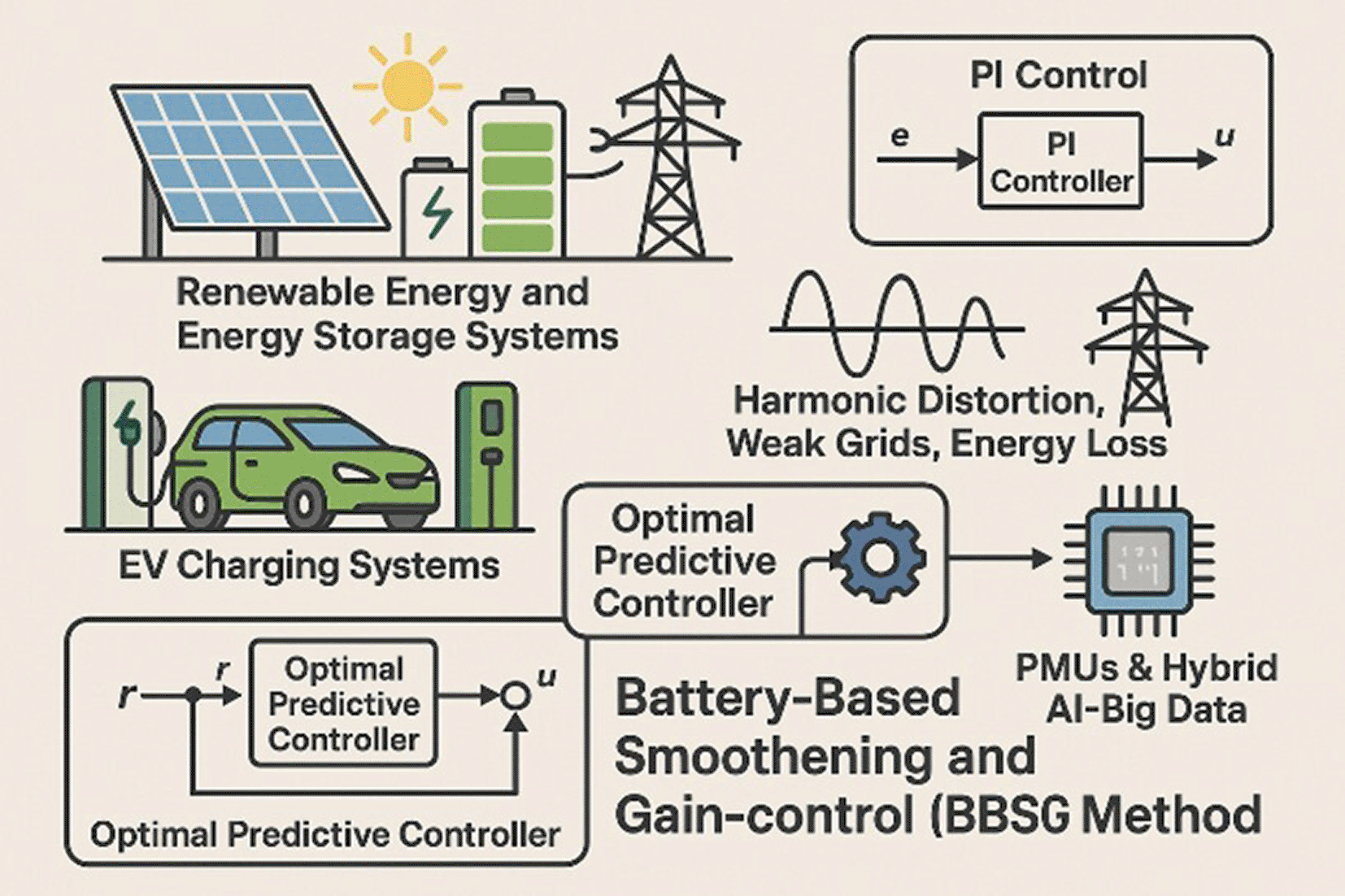
Accurate determination of the state of charge (SoC) is very important for safe and stable battery operation. Overestimation finally leads to either overcharging or deep discharging, which accelerates degradation, usable capacity loss, and a thermal hazard of overheating, leading to fire if not well monitored.12,13 This makes the challenge even harder because lithium-ion chemistry varies from region to manufacturer; hence, it is difficult to generalize large-scale SoC estimations.14 Inaccurate results are reflected as an available energy window higher than the actual safe limits. Conventional estimation methods include ECMs, hysteresis observers, and simple PI controllers. None of these can maintain acceptable performance levels under rapid load changes or in the presence of strong nonlinearities.15 The simplicity aspect makes PI controllers preferred, but they hardly exhibit adaptability in the presence of large disturbances or modeling uncertainties.16 Short-term accuracy improvements eventually lead to overfitting accompanied by a high computational burden, thereby reducing long-term reliability and real-time applicability in AI-based and big data-driven predictors.17
The more pragmatic challenges in a renewable system that is either OFF or ON intermittently have been discussed as being the harmonic distortion, voltage instability, and conversion losses along with strong grid and inverter dominance,18 Weak-Grid and Inverter Dominated Systems. A multi-MCU architecture with a dual-mode adaptive SoC controller for better resilience through balanced current sharing, which eventually results in total system fault tolerance, has recently been discussed.19,20
Therefore, advanced predictive control strategies are promising alternatives. One such method is battery-based smoothing and gain control (BBSG), which combines adaptively tuned parameters with short-horizon predictive behavior to improve voltage regulation, precision in state-of-charge (SoC) tracking, and fault dynamic response.21 Implementations of controllers such as Smart Charging platforms that are based on PMUs together with Hybrid AI–Big-Data Analytics will offer real-time system operation monitoring as well as strong estimation of SO C—exact requirements for future EV charging infrastructure or any modern renewable integrated energy systems aimed at long-term reliability.22
High demands for energy are also calling shots globally and even more in urban areas, with the pace of growth, industrialization, and digital infrastructure boosting electricity usage. Fossil fuel users still use the pluck both environmentally in terms of pollution, and sustainability of the environmental footprint is no longer sustainable. Resource depletion and pressure for international policies vis-à-vis climate change, along with other reasons, have called for alternative renewable energy sources. Among renewable sources, the development of Solar Photovoltaic (PV) technology has been considered a promising approach. However, its assimilation within existing modern energy networks faces numerous technical and economic challenges. The generation from PV is highly intermittent, and the productivity greatly depends on the irradiance and time of the day. Without efficient storage and real-time adaptive control, the system availability is based on the reliability of the PV system. Currently installed PV systems do not incorporate intelligent power smoothing and optimum load matching; hence, inefficiency and loss are experienced. Another major issue with the integration of solar energy into any type arises when it must be integrated with Battery Energy Storage Systems (BESS), solar thermal collectors, or fossil cogeneration. Advanced control methodologies, in hybrid energy systems, are required for the reduction of power losses and economical operation together with voltage and frequency stability. As seen in Figure 2, thermal and electrical energy management where photovoltaic power generation, waste-heat utilization-and auxiliary energy recovery mechanisms are coordinated play a critical role in enhancing system performance.
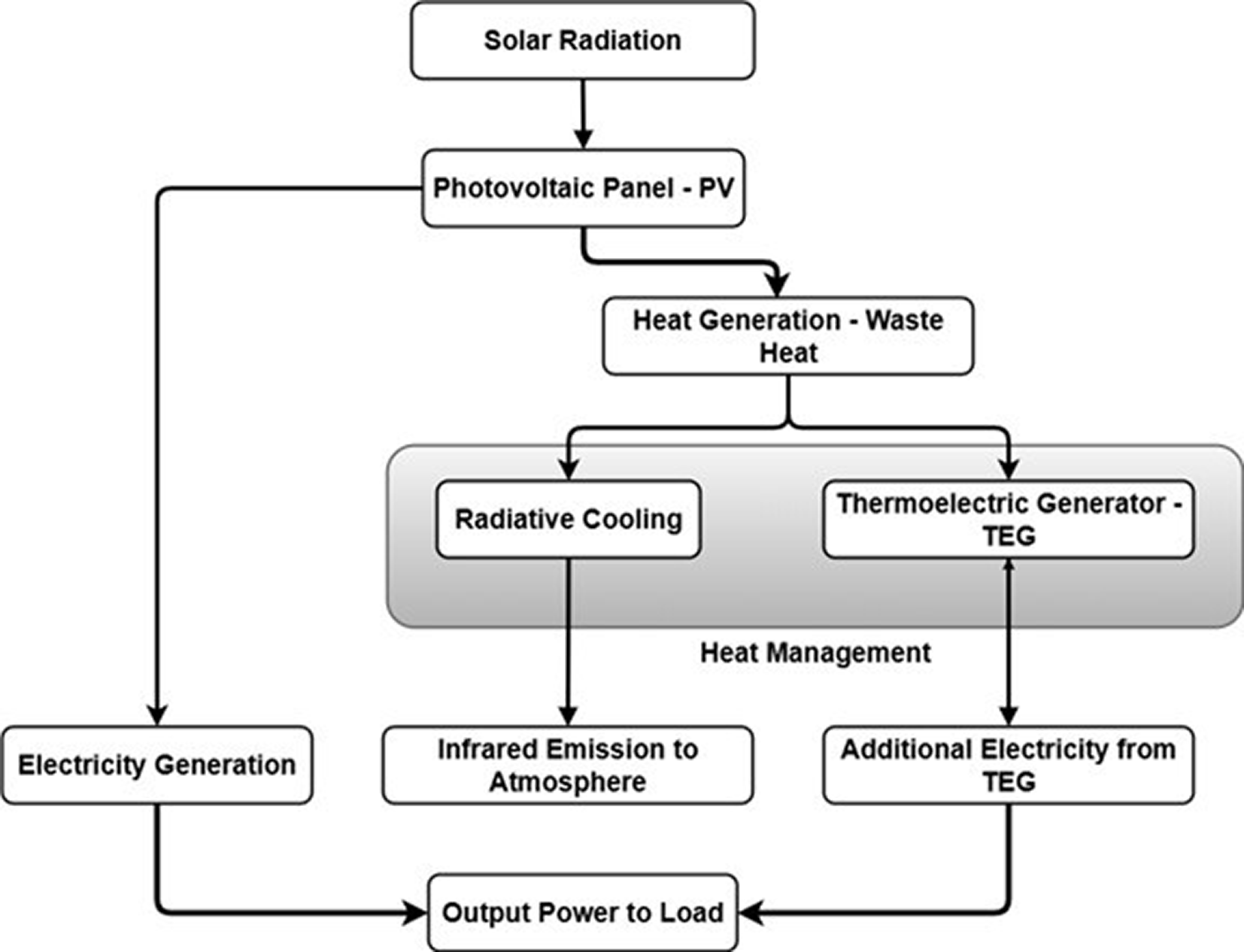
The conventional control approaches become inadequate to deal with the high level of coupling between the electrical output, thermal effects, and dynamic load demands. The system comprises a non-grid-tied configuration as shown in Figure 2, then the lack of grid support makes an increase in control burden that is highly sensitive to disturbance and delay in controls. Therefore, this paper proposes intelligent and predictive control approaches for stable operation under different environmental conditions and load demand. Hence, there is an immediate requirement for intelligent control strategies that can cope with uncertainty and optimize PV–BESS systems at minimum or lowest cost. This study addresses this challenge by proposing an enhanced framework using predictive control and optimization algorithms, an alternative for validation employing simulation results as well as real cases. This study introduces a systematic combination of modeling, simulation, and optimization to improve the operation of a PV-BESS system in practice.
The system under consideration consists of the following:
➢ PV array with MPPT
➢ Battery Energy Storage System
➢ DC/AC inverter with grid interface
➢ Load demand simulator
➢ Real-time controller
Mathematical models for solar irradiance, temperature-dependent PV output, battery behavior during charging and discharging, and inverter efficiency are developed and implemented in MATLAB/Simulink.
An approach to control, the Battery-Based Smoothing and Gain-control (BBSG) strategy is implemented. Utilizing real-time state feedback to adjust control gains for voltage and frequency stabilization is fundamentally distinguished from traditional PI controllers. An evolutionary algorithm (such as Firefly or PSO) is used to optimally set the controller parameters. The objective function of the optimization algorithm involves the following aspects in aggregate or partial combinations:
The following scenario simulations are run:
Each scenario is assessed based on the following criteria:
The hybrid storage power system consists of:
Let:
• : Measured output power of PV station 1 at time t
• : Electricity price at time t (publicly available).
Assume is known during the scheduling horizon .
Let:
N = 9: Number of identical BESS units.
Rated installation power of each :
Rated energy capacity of each BESS:
Each BESS begins charging from an initial state of charge (SOC) given by
With the initial charging current defined as:
Where:
Let the scheduling time horizon be divided into intervals:
Each operates over these time intervals. At each interval , we decide:
Define the state space of SOC as:
Let the power output from the PV system over a day be:
Where:
: Sunrise start.
: Mid-day periods.
: Sunset end
Define the total cost CC of BESS charging/discharging as:
: charging and discharging efficiencies, respectively.
Subject to: SOC dynamics; SOC limits; Power limits:
Let the regulated variable be the DC-link voltage, V(t).
The tracking error is defined as follows:
The BBSG controller aims to minimize:
where:
H:
u(k):
λ:
The evolution of the DC-link voltage is estimated as:
where:
The internal resistance varies owing to the temperature, battery aging, and nonlinear electrochemical effects.
The BBSG explicitly incorporates resistance adaptation to compensate for these nonlinearities.
The control signal is constructed as:
where:
The adaptive laws for gain updates follow a gradient-type correction:
: adaptation coefficients.
All gains are constrained within pre-defined limits for stability
A key novelty of the BBSG is the dynamic modification of the internal equivalent resistance of the PV–battery interface. This term is used to emulate the smoothing behavior of virtual impedance and reduce sudden voltage jumps.
where Î3 is a small positive constant.
This mechanism allows the system to
This adaptive resistance provides a smoothening effect that cannot be achieved with classical PI control.
The proposed system introduces a fully integrated compound Solar Energy Control Architecture fully integrated, combining photovoltaic (PV) generation, battery energy storage (BESS), and IoT-enabled cloud communication for real-time monitoring. The system embeds operational data and control messages from remote subsystems communicated in a secure manner to a cloud-based server. A Graphical User Interface (GUI) allows operators to set system parameters, observe performance statistics, and visualize real-time data streams. This interface is hosted locally and synchronized with the external access layers through secure networking protocols.
To safeguard against unauthorized access as well as external threats, a system aeronautical-grade password authentication mechanism and IP-based access restrictions have been proposed. Access should be strictly limited within the trusted corporate domains or on-site maintenance team domains. Although set up in this way, privacy and cybersecurity are still of utmost concern. There is a need for further risk assessment and implementation of layered intrusion detection systems considering the possibility of malicious interference, such as unauthorized movement of solar tracking systems or forced discharges of battery relays. In addition, on-site hardware should be within the latest security hardening standards. Regular audits and software updates can protect evolving cyber threats and data breaches, even those related to operators’ suppliers.
Batteries are used for energy storage to save power when there is low sunlight or peak consumption. While there is an added upfront cost to implementing battery banks, they enable a critical function by adjusting the energy between self-replenishing solar generation and self-depleting load requirements. The system uses smart solar power converters that have control inside to handle state-of-charge (SoC), state-of-health (SoH), charging/discharging cycles, and voltage regulation. It also involves output-smoothing systems for safe connections with PV inverters that improve the efficiency of the system and its safe operation.
As shown in Figure 3, the proposed system architecture integrates photovoltaic (PV) generation plus battery energy storage (BESS) and IoT-based cloud communication for real-time monitoring and control. Secure data transmission to a cloud platform, local and remote visualization, and system configuration interfaces, as well as advanced cybersecurity mechanisms including authentication, access control, intrusion detection, and periodic audits are included. Smart converters take care of battery health, charging cycles, and output smoothing to operate both efficiently and safely.
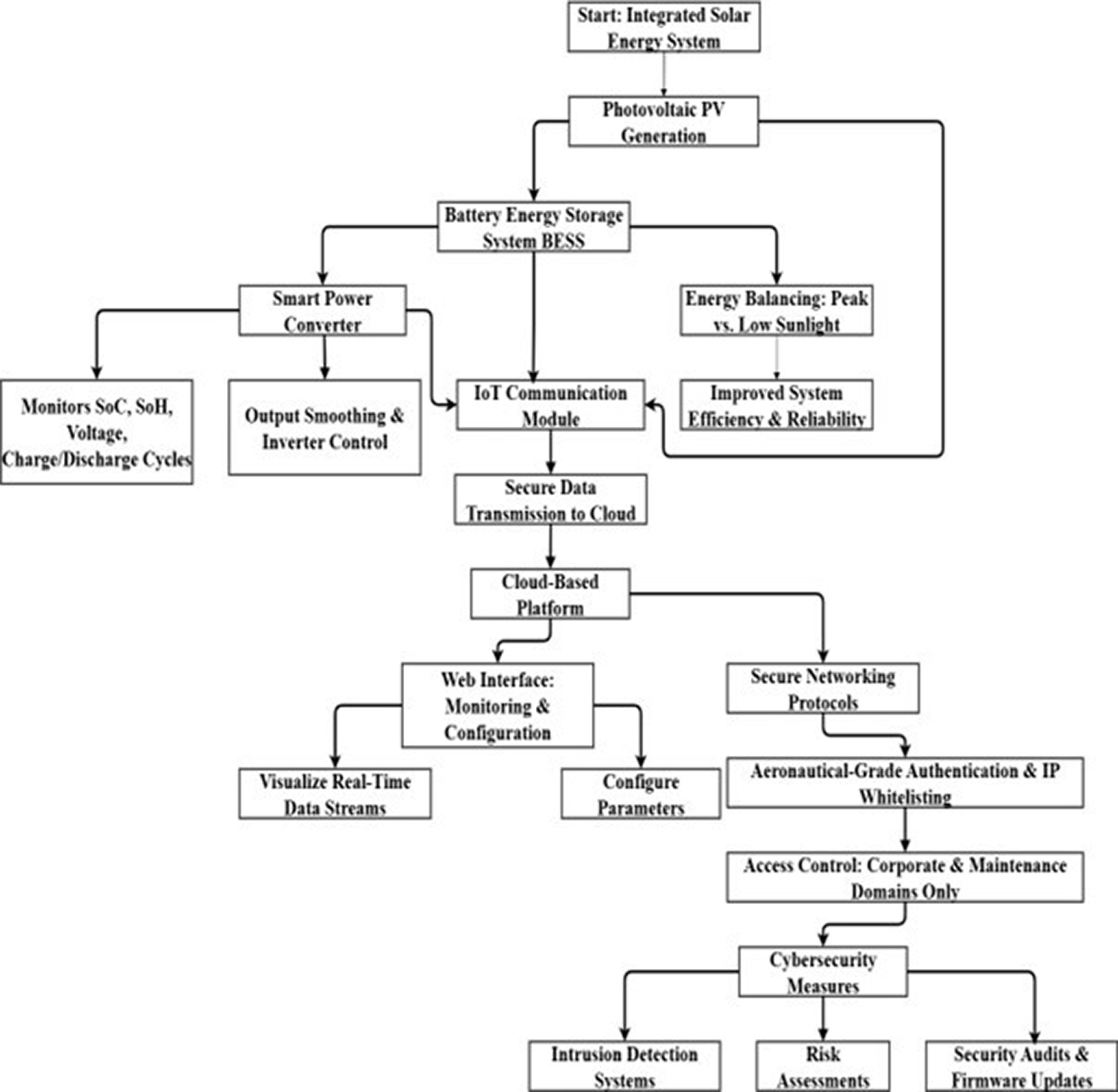
The battery control architecture is similar to that of the compound solar controller and implements IoT devices for logging key metrics to be sent to the cloud and enabling responsive local control. Data logged to embedded storage go into structured data files, where trend analysis and fault diagnosis can be performed. Future developments should address the maintenance of data integrity and separate basic WPSD vulnerabilities from mission-critical communication layers for AI-enhanced anomaly detection toward proactive control and maintenance.
Smart charging techniques
Smart charging is a key electrochemical control strategy for state-of-the-art storage-dominant power systems. It must be united with the storage of electricity in relation to renewable sources, such as Smart Photovoltaic Systems. Efficiency is maximized, and battery life is prolonged as the amount of power consumed declines by the dynamic control of charging and discharging. The energy-manager module, which constitutes the core of our smart-charging concept, consists of the following tightly integrated parts: ENERGY PRODUCER CONTROLLER (energy generation controller), STATE PREDICTION ENGINE (state forecasting engine), STORAGE MANGER (storage management unit), and CHARGE_ACTOR (charge control unit). These operate on top of the layered system architecture, including the information acquisition, control logic, service orchestration, and application execution layers.
The system achieves perfect energy management through a scheduling control strategy, and it is then considered that when charging storage batteries, real-time decisions are made based on the predicted solar generation, load demand, and battery health. To enable smart charging of EVs, the challenge here is to bridge the feedback loop (as shown in Figure 4) between the solar input and load-side energy demands using Big Data for analytical purposes, edge computing, and wireless IoT communication. Cloud-based sensors and low-powered edge devices gather data to monitor the temperature, PV production, and storage in real time.
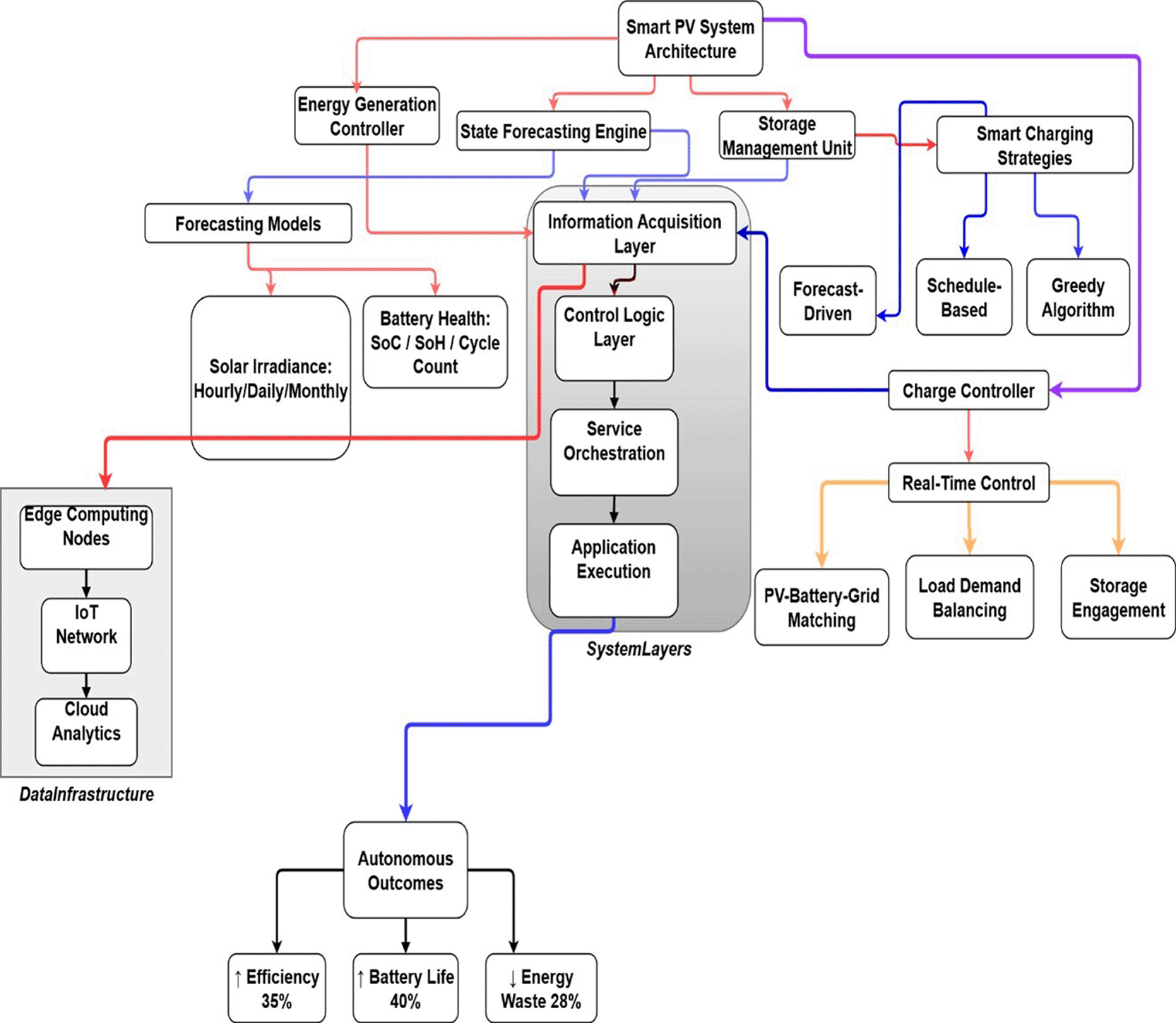
A different scheduled best charging strategy with control over the level and spread-out guessing was utilized. The quantity of sun energy is anticipated through hourly, daily, and monthly data, but battery conditions such as state-of-charge (SoC) and wearing away capacity are forecasted for a day before and just at any specific moment (right then). These estimations guide the design logic to enable an all-around best charge distribution, initially selecting either charging immediately or storing in a battery and suitable PV grid interfacing.
The scheme is integrated with a greedy scheduling algorithm to balance short-term demand with charging and discharging deferred tasks, thus ensuring the stability of the distribution systems. This proportionate distribution and integration logic is followed to maintain uniformity among the components, that is, the solar panel, inverter, battery, and controller.
This ensures a safe multipoint communication bandwidth for compound solar energy uniting and co-operational work. Periodic control signals should be dispatched hourly to implement load dispatching, energy forwarding, and storage engagement in order to obtain a fully autonomous optimized energy management ecosystem. Figure 4 shows the layered intelligence within a smart photovoltaic (PV) energy management system that incorporates real-time forecasting at the edge and in the cloud. The system that optimizes the battery charging strategy using prescriptive modeling is also relayed by the IoT and enables dynamic load balancing for efficiency and reducing energy waste. The key components are the State Forecasting Engine, Storage Management Unit depicted in the figure with an autonomous control loop that ensures PV-grid-battery synchronization.
It is a basic subject in applied mathematics, with applications in engineering, economics, and science. This is the study of models used to describe and analyze dynamic systems based on differential equations under certain performance constraints. Much of the work on OCT has been applied to the use of electric, control, chemical, and industrial engineering to determine the best ways to perform very complex energy systems. This is especially true for systems where energy from some renewable sources needs to be integrated and stored. High-performance computing and simulation software has long been used to make the theoretical formulation of optimal control problems more practical. Thus, it has become possible to apply OCT in photovoltaic (PV) charging systems and the control of battery energy storage, as realized in this real-world setting. For instance, a PV battery charger was designed using a sliding mode and proportional-derivative (PD) control. In this design, the controller dynamically adjusts the charging rates based on the derivative of the charging current, provided by changing solar irradiance conditions, in order to optimize the charge duration under these conditions.23–25
Recent developments have explored event-triggered optimal control strategies. The boundary conditions in the battery system, that is, energy thresholds and recharging timing, are treated as impulsive control variables. This allows for a more cost-sensitive optimization, especially under fluctuating parameters of energy prices or grid loads. Techniques introduced to help both active control signals and passive constraints are differential inclusions and multipara meter scheduling algorithms to optimize the release and use of stored energy for peak and off-peak hours.26,27
Parallel to the use of advanced optimal controllers, there is a large classical use of proportional-integral controllers owing to their simple nature, robustness, and easy implementation. PI controllers do not show good prediction results; however, they perform well in linear systems or under slightly changing conditions. Recent hybrid models incorporate PI control into optimal control principles via OCT, which dynamically tunes the PI parameters (Kp and Ki) in response to the states of the system. In this adaptive PI-optimal integration, conventional controllers are empowered to enhance their effectiveness in the presence of nonlinearity or when there is variation in the environment.
Open-source versatile platforms for control strategy development and testing in simulation environments are available. Scientists and engineers now have tools that provide libraries of approximating filters, event-driven schedulers, or real-time solvers for OCT-, sliding mode-, and PI-based designs. This, in turn, spurs creative solutions to energy system design and broadens the use of optimal control theory in challenging and fast-growing fields, such as smart grids, integrated solar plants, and distributed storage optimization.
A Compound Solar Energy Unit (CSEU) was connected to a Power Storage Unit (PSU). It is critical to provide energy in a stable manner and ensure that the system operates properly when shifts are observed in the solar generation. The operation of the system is based on the type of power output profile that it is aiming for. First, the system attempts to maintain a constant power output over time. This will require a smart control algorithm to design input and output constraints, smooth the power output, and ensure seamless operation even in unfavorable actions, such as when there is an irradiance level fall or abrupt load increase.
Alternatively, an easier case could be that the power output steadily decreases, and the dynamics during charging are essentially restricted by solar availability and baseline PSU capacity. Here, sufficient power is received to prevent other charging considerations (EC sunlit idealized daytime), and the panorama balances treating batteries differently or based on usage. This enables fundamental controls to operate by directly manipulating the energy-balance equations of the battery.
It begins with the equations of energy transfer so that gives us a way to put the battery in modes such as totally charging, partially charging or not-charging. These classifications are based on charge thresholds, temperature limits, and safe discharge cutoffs. Each mode has implicit operational constraints in real time with the solar input and battery state-of-charge values.
Two types of control strategies are implemented to handle the control conditions. The first type is a proportional-integral controller, which provides a simple real-time feedback loop to stabilize the battery voltage and control the charging current. This was simulated in MATLAB/Simulink, and the controller was tuned with the parameters Kp and Ki to meet the requirements of the system response time and settling behavior. as well as the (SoC). Figure 5 shows the complete decision-driven control architecture, from the output power profile and charge classification to the choice and simulation of the right control strategy. Flowchart that ensures that the control design is logically sequenced and The second of these is an advanced optimal control policy, the Battery-Based Smoothening and Gain-control (BBSG) approach. It adjusts to varying dynamics in the system with a four-step prediction horizon and 0.01 s sampling interval to control the voltage aligned with real-world performance expectations, supporting both standard and event-driven energy-saving applications.
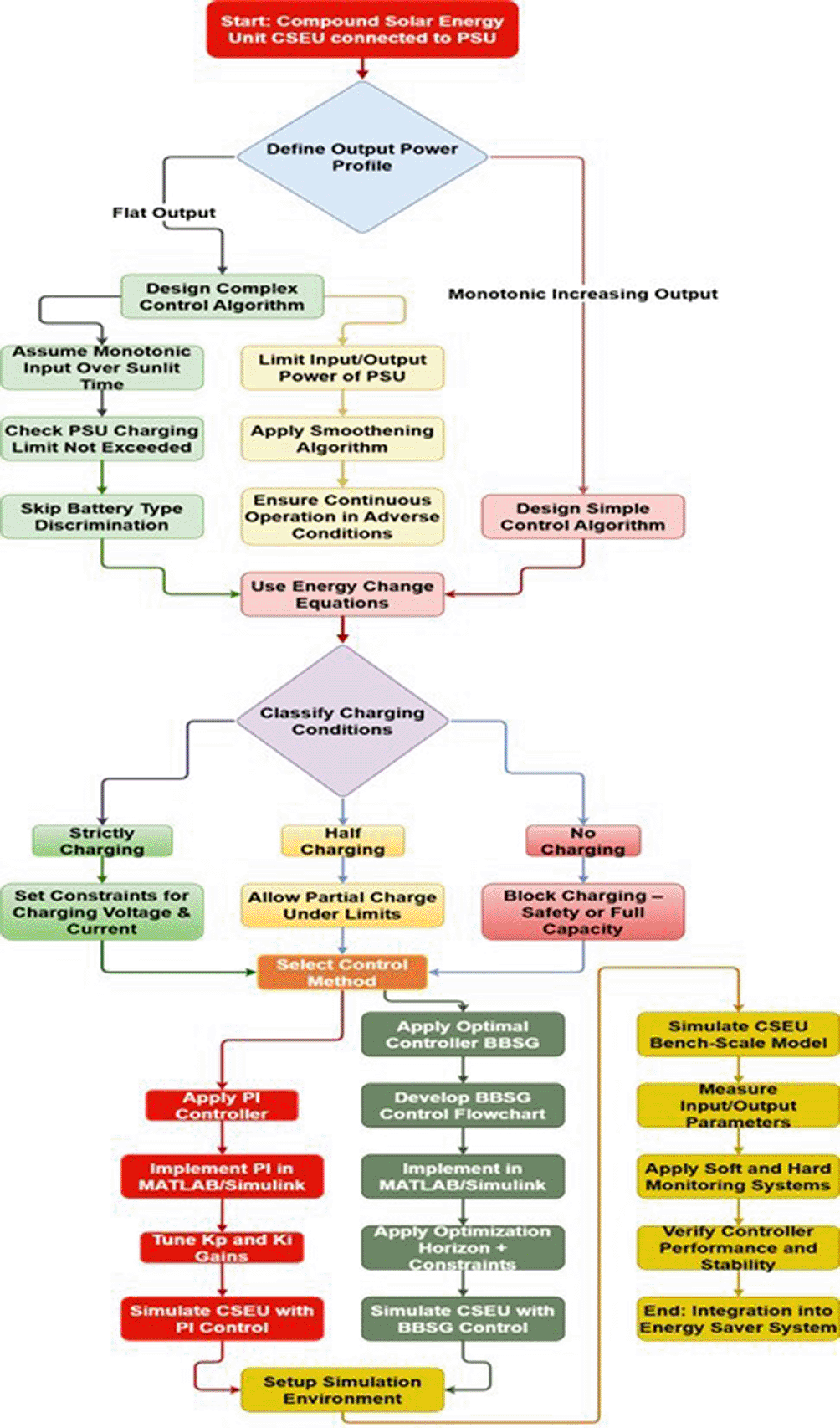
A simulation environment was created to prove the control rules. It has a small version of the CSEU and PSU on a bench, with tools for measuring the input/output power, battery voltage, and SoC. It uses both soft monitoring (software-based tracking of controller variables) and hard monitoring (hardware-level signal measurements) to verify the behavior of the controller.
A 273-kW photovoltaic (PV) array and an energy management system installed on Hu Lian Island provided the technical basis for a simulation analysis that was used to evaluate and compare performance results between conventional Adaptive Power Management (CAPM) and two alternative strategies: Optimized Predictive Control Coordination (OPCC) and a new innovation, the battery-based smoothing and gain control (BBSG) algorithm. These algorithms model integrated performance between a PV array and battery energy storage system (BESS) when subjected to dynamic and changing loading conditions.
No rise but a settling to 500.7 V - the PV array voltage, is able to maintain a load of 280 kW for 18 seconds at the start of the no-control scenario. An attempt to apply a peak demand load of 135 kW led to an overload in the system and a sharp decline in the PV voltage to levels below the operational thresholds. The reference power exceeds the actual deliverable energy of the PV array, which is why such a collapse occurs. Its conventional type of control is not able to effectively compensate, having an amplitude of adjustment that is high, but the dynamic response is low, therefore vividly indicating the drawback of not being able to manage abrupt disturbances.
To maintain system stability and increase efficiency in managing varying loads, diverse control strategies were applied to a 273 kW PV array connected with BESS. The performance of each controller is as follows:
1) PI controller (conventional)
Action: Basic control loop with proportional and integral terms, outcome: Can manage steady state but weak in handling fast transients, has high overshoot with a low recovery, and fails to stabilize the PV voltage after a 135 kW load spike. Therefore, there is poor dynamic compensation when dealing with abrupt changes.
2) PID controller
Behavior: The derivative term is added to PI; hence, the performance is better than that of PI for responding quickly and being stable.
Result: There was improved voltage restoration performance; however, oscillations were still observed under fast load disturbances. Therefore, it is Better than PI, but still not good because of fixed parameter tuning.
3) Modified PD-I controller
Behavior: This divides the control path, PD, acting in fast voltage tracking, and I in long-term error elimination.
Results: Settles faster with less overshoot. More flexible to sharp swings in load and solar power variations Outcome: Much better results under changing situations.
4) BBSG controller (Proposed)
Behavior: Battery-Based Smoothening and Gain Control. Predictively acts on the system condition with feedback in real time Result: Keeps stable voltage close to 500.7 V even after a sudden 135 kW load increase It stops voltage drop and helps balance power. This is the strongest and most effective control scheme that is perfect for random PV loads.
The balancing market strategy enables the system to change the internal equivalent resistance of the PV array from 4050 Ω to 5.73 Ω. This, in turn, changes the capacitance and output parameters so that the system can absorb a smooth excess load. It takes just 7 s for the PV voltage to return to the setpoint and then maintain stability within a ±2 V tolerance band. In the underrun condition, the system lowers the resistance rapidly within 1 s; therefore, it can keep up with fluctuating demands in real time. The combined PV–BESS system keeps both PV and battery voltages oscillating in a very small region around the reference voltage; hence, the operational stability and efficiency are increased ( Table 1).
It is modeled with a data-driven input-output approximation approach such that reliance on conventional neural networks or support vector machines, which usually demand large sets of labeled data, is not required. Thus, the simulation framework uses a high-dimensional piecewise polynomial approximation and is more appropriate for large-scale PV/low-voltage (LV) systems, where there is little data available for segmentation and classification. The incorporation of BBSG control with real-time adaptation mechanisms shows very strong potential for real-world deployment, particularly in microgrids and islanded systems that are heavy with renewables.
A set of simulations was performed under different control scenarios to assess the performance of the proposed PV–BESS system. The results are shown in Figure 2 and indicate the frequency stability, charge/discharge patterns, voltage regulation, and response of control during load disturbances. The subplots compare the system behavior with and without control as well as under the proposed BBSG strategy. These visualizations provide evident advantages for the effectiveness of the control system in maintaining not only system stability, but also challenging energy balance and real-time responsiveness under varying operating systems.
Figure 6 illustrates the dynamic response of the proposed PV–BESS system with different operation scenarios and control strategies. It ought to include five subplots, (a)–(e), each showing a different attribute of system performance, such as frequency response, energy balance, or voltage regulation.
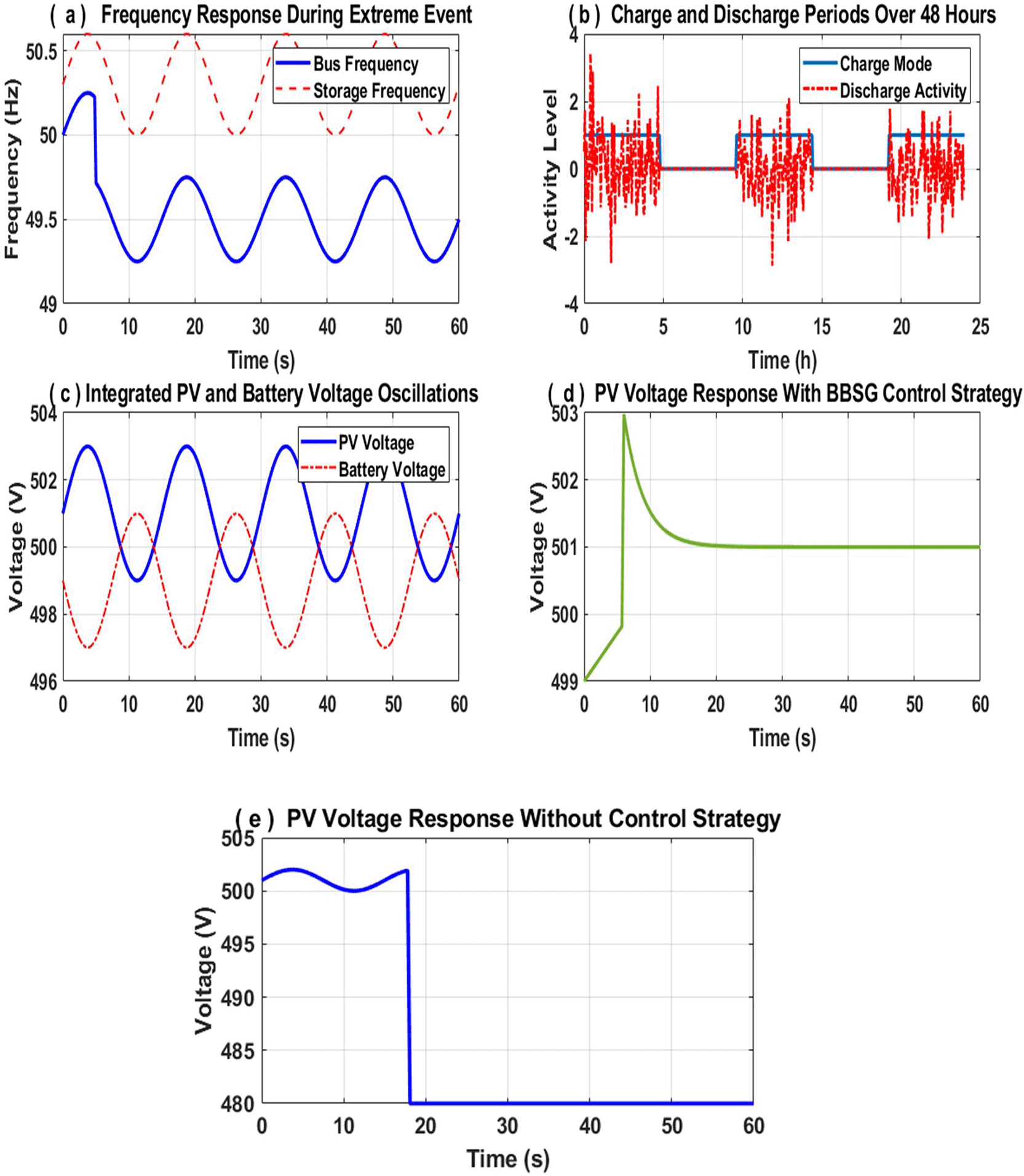
(a) Frequency response during extreme event. (b) Charge and Discharge Periods Over 48 Hours, (c) Integrated PV and Battery Voltage Oscillations, (d) PV Voltage Response with BBSG Control Strategy, and (e) PV Voltage Response Without Control Strategy.
This subplot depicts the temporal evolution of the frequency for the main bus and storage unit in the case of a simulated extreme event. The bus availability has a steep fall across an interval of 5 s to a minimum frequency of 49.2 Hz which, indicates that there is visible grid asymmetry. The storage system frequency also undergoes an offset increase to 50.6 Hz, which creates a buffer of +1.4 Hz. The significance of the unstable storage unit in frequency support during transients is emphasized by the deficient performance levelled by the control logic of other strategies.
Subplot (b) shows long-term operation patterns. The system is in charging mode for approximately 50% of the 48-hour cycle as intended. In fact, the discharge activity shows a very intermittent high-frequency flicker, particularly during peak load or low-irradiance periods. The level of activity varies from 0 to above 1.2, indicating that the BESS responds immediately to real changes in the load and variability in sunlight.
This shows how the PV and battery voltages appear if they work together. The PV voltage (blue line) increased and then decreased between 499 and 503 V. The battery voltage (red dashed line) maintains a gap and increases and decreases between 496 and 500 V. The timing difference between the profiles shows the load balance and the energy share. This proves that the system works in a complementary mode to stabilize the output voltage within ±2 V without going over that.
Plot (d) gives the transient response of the PV array under Battery-Based Smoothening and Gain-control (BBSG) strategy. A perturbation is introduced at t = 6 s. The system responds by changing the self-voltage from 499 V to 502.4 V and then settling within the control band. The system stabilized within less than 7 s. This proves the adaptive and predictive abilities of the BBSG controller, which can stabilize much faster than the classical control, showing a clear lead in both speed and precision.
In the absence of any control logic, the PV system in subplot (e) experienced a significant voltage collapse. Initially stable near 500.7 V, the voltage began to degrade after a disturbance at approximately 18 s, eventually plunging to 480 V. This sharp drop of over 4% reflects the inability of the system to compensate for the sudden increase in load. This depicts the risk of operating under passive or open-loop conditions in the practical implementation of the PV-BESS.
Altogether, Figure 6 shows that the BBSG control method exhibits better dynamic performance over many levels of the PV–BESS system. It also improves frequency stability, supports for charge-discharge balance, and regulates voltage to within ±2 V under transients. This system performs better than systems with no control or traditional PI logic. This provides a working solution for smart grids and remote solar energy systems. This simulation framework provides a firm basis for hardware implementation in microgrid applications, island energy management, and any form of EV charging infrastructure with renewables.
Within the medium range, the availability in charge mode was random, and discharges were directly related to load spikes. Additionally, averaging this information field can help to determine whether the charge and discharge units are properly utilized. Using this information, the simulation model circuit was simplified according to the event prediction performance and subsequent optimization.
Figure 7 presents the comparative results for PV voltage regulation under no control and optimal utilization of BBSG control: bilevel battery scheduling and generation. The upper subplot responds to the simple fact that under the no-control scheme, there is appreciable voltage instability, and by the end of 20 s, the PV voltage plummeted to 479 V. On the contrary, the optimal BBSG method maintains a voltage profile with very little deviation around it and provides a smooth transient response.
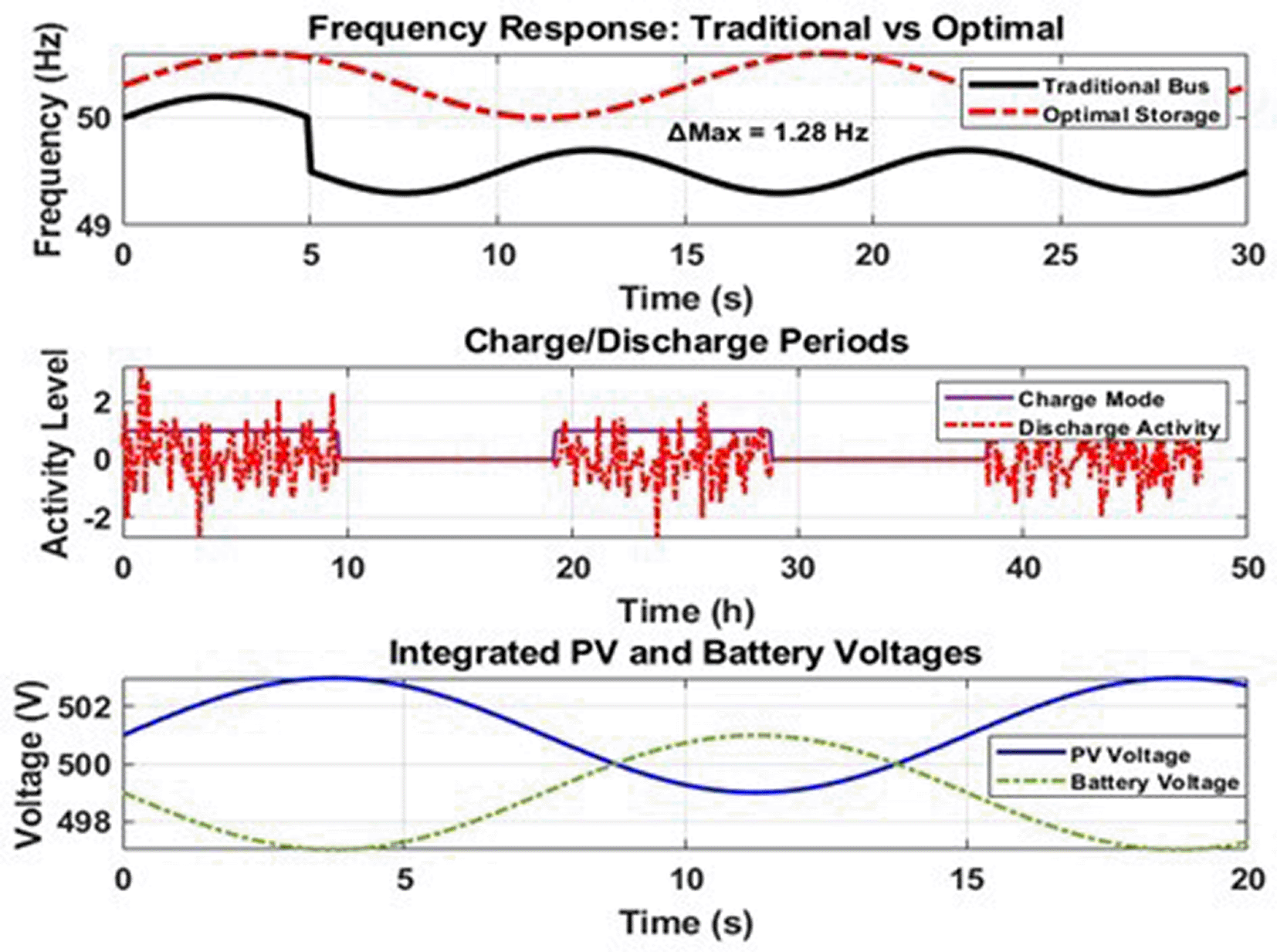
The maximum voltage improvement observed with the optimal method is 21.04 V, which means that the enhancement is going to be on a better side in preventing under voltage conditions, as well as ensuring quality power. A preferable way to do this is to present the difference (ΔV) between both methods, as the positive increase continues to favor the BBSG controller during all periods. This large margin indicates that not only does the upper way maintain a steady voltage, but it also achieves better reliability under disturbances.
Measurement 4 further considers the perspective of control strategies and shows their impact in three additional directions on battery behavior, overall voltage oscillation, and frequency stability. In the upper subplot of Figure 8, the frequency response is portrayed, and a comparison is made between the traditional bus and the storage unit that is managed optimally. The traditional bus depicts a drastic frequency decline after 5 seconds to below 49.5 Hz while the storage system maintains the frequency above 49.5 Hz and more sinusoidal, with a peak of about 50.6 Hz. The observed maximum frequency improvement is 1.28 Hz, which underlines the effectiveness of the optimal method for extreme event frequency preservation.
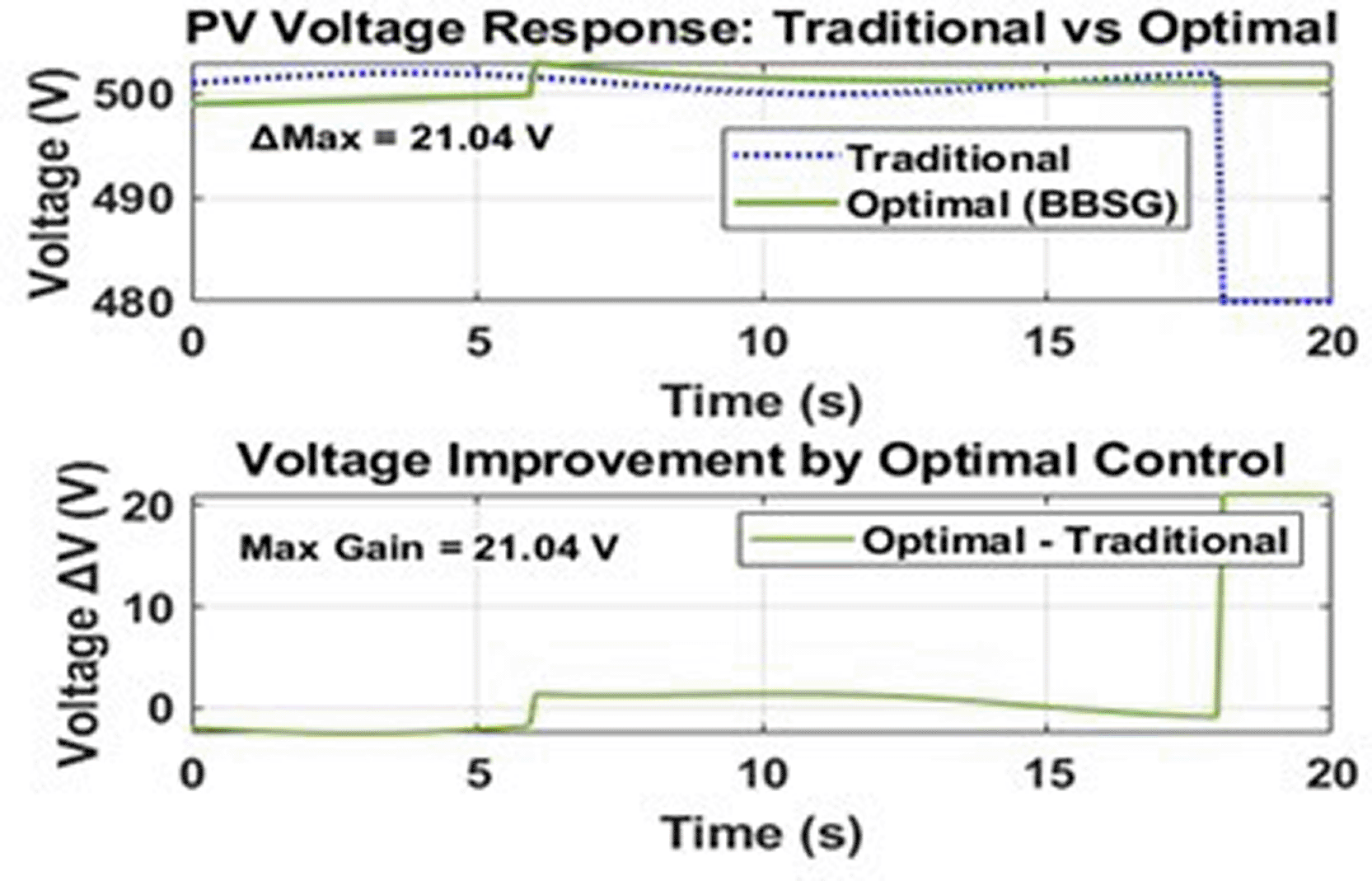
The subplot in the middle represents a 48-hour horizon of the charge and discharge dynamics. Whenever there are active charging windows, the red-dashed line of the discharge activity indicates proactive behavior. The efficient plan acts upon this by coordinating the discharge cycles in an effective manner during sub-periods with higher energy availability as well as support to the grid.
The lower subplot presents the oscillations of the PV and battery voltages during integrated operation. The PV voltage follows quite well with optimal control, showing a smoother waveform at a peak of approximately 503 V, and the battery voltage follows it with the correct phase shift and lower amplitude. The coordination between these two implies that the optimal controller ensures tight voltage regulation and hence provides a highly efficient energy exchange between the PV system and the battery.
Figures 7 and 8 confirm that in all aspects evaluated, voltage stability, frequency support, and energy scheduling, the superior BBSG optimal control compared to the traditional method is maintained. It reduces the probability of under-voltage collapse, enhances resilience to disturbances, and improves energy management under dynamic operating conditions.
Figure 9 shows the comparative performance of the three PV voltage control approaches: the conventional approach that does not include regulation, a simple PI controller, and the optimal BBSG control strategy. The upper subplot of the graph in Figure 9 shows that the conventional system is unable to maintain voltage stability, as there is a marked drop in voltage to approximately 479 V towards the end of the 20-second simulation window. Such uncontrolled responses show that there is no dynamic feedback regulation; hence, the system can be challenged by disturbances.
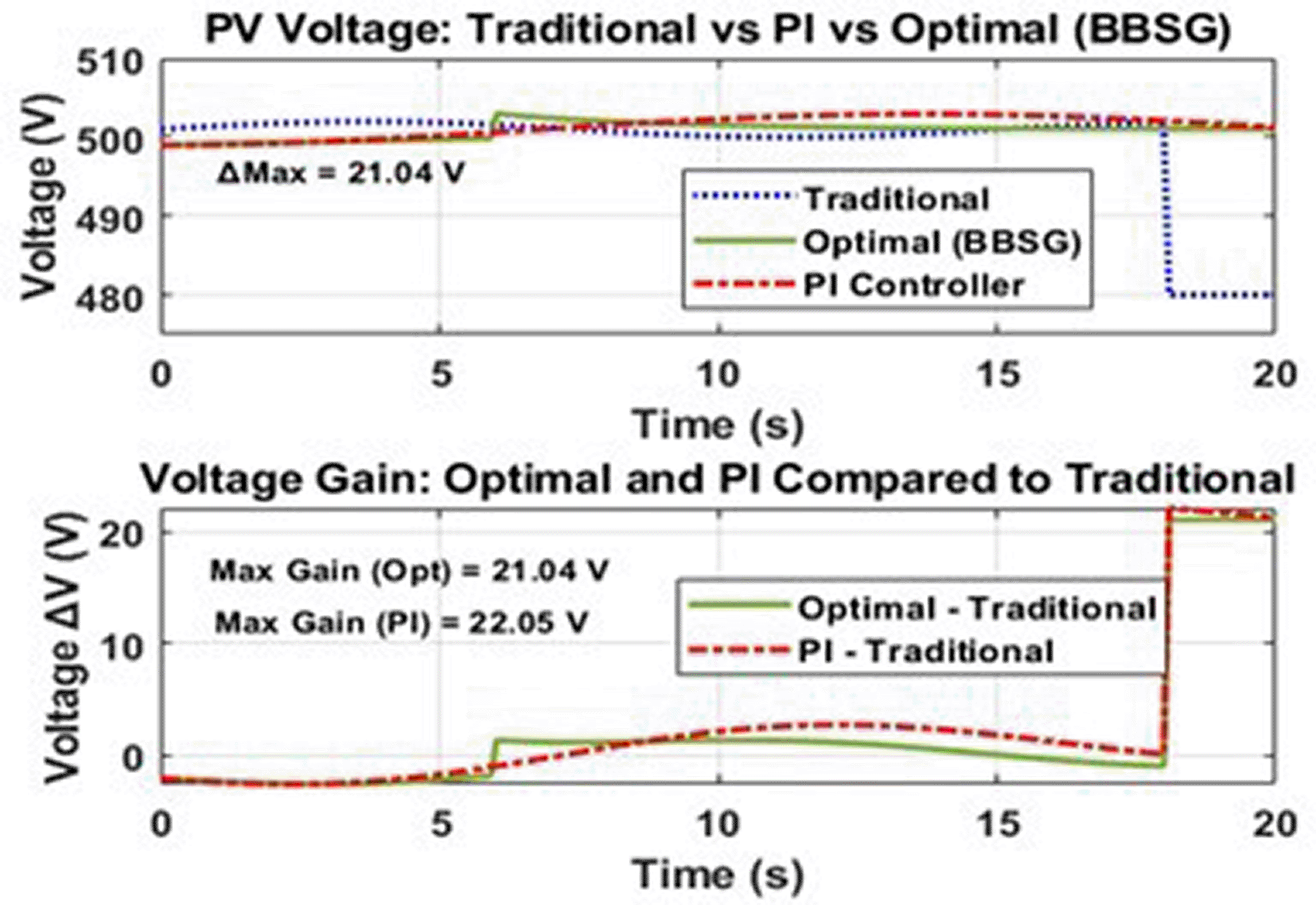
The PI controller achieved much better tracking of the reference voltage. There is a small overshoot by the PI-based response, followed by a steady state of the PV voltage at approximately 501 V; hence, no rapid decrease was observed with the conventional method. This shows that even a simple closed-loop control can be of value in maintaining voltage support. Similar to the optimal BBSG control in voltage regulation, it also prevents collapse around the setpoint. However, the trajectory shows a more organized and damped response profile, which means that the BBSG has predictive features and event handling, in addition to the reactive nature of a standard PI controller.
The bottom subgraph extends the advantage by showing the improvement in voltage (ΔV) achieved with the optimal and PI-control-based systems, relative to that of the standard baseline, for which no control options are included. The PI controller has a better maximum voltage improvement strength (22.05 V) than the optimal strategy (21.04 V) by making an immediate reaction to using a large correcting signal in the late period of the time zone. However, this is principally due to reactive overshoot and is not an indication of better control. The best BBSG method is able to behave stably and with no overshoot throughout the duration, leading to a smoother dynamic for the system.
In summary, although the PI controller provides practical performance improvement compared with the conventional approach, it does not have adaptive depth or tactical robustness for any given event, as presented by the optimal BBSG solution. The optimal controller achieves similar voltage gains, but with stability and strategic control that are more applicable to systems that need to be resilient when exposed to different and extreme grid conditions.
Table 2 based on simulation results. It summarizes the sampling parameters and control horizon settings used to ensure stability and real-time responsiveness of the PV–BESS system.
Table 3 shows a comparative summary of the performance of three different control strategies employed in a PV–BESS system: without control (traditional), with a PI controller, and Optimal BBSG control. The results established that the traditional control method does not have voltage and frequency regulation capabilities; thus, it is highly unstable. Specifically, the PV voltage fluctuates between 479 and 503 V, and there is no contribution to the frequency support because the minimum observed frequency is 49.2 Hz.
Thus, the PI controller should be modestly improved. It confines the voltage level to between 498 and 502 V, which reduces the maximum voltage drop to approximately 3 V. It is still more reactive than predictive, so its value would be less in more dynamic applications. It does not add to the frequency stability because, in this setup, PI control was not added to the frequency regulation.
In contrast, optimal Bi-level Battery Scheduling and Generation (BBSG) control proved to be the most stable and robust. It maintains the voltage at a flat level of 499–503 V, lowers the voltage drop to approximately 2 V, and supplements the high accuracy with predictive regulation. The already improved frequency response must also make a contribution as it stands at better than 50.0 Hz with a maximum frequency gain of 1.28 Hz that shows active support during extreme events. In turn, BBSG, with bi-level energy scheduling integrated, can make control decisions much faster and adaptively on the basis of real-time conditions. Among all the key metrics that have been benchmarked thus far, this optimal control strategy outperforms the others in all respects, particularly in terms of system resilience, voltage regulation, and real-time responsiveness.
The results from the simulation proved more than the word of the systems’ better performance in the proposed BBSG strategy over both the traditional and PI-based methodologies. In the uncontrolled system, once a 135 kW load was applied, the PV system could not keep the voltage stable, resulting in a voltage dropping from 500.7 V to 480 V, which is a 4.2% deviation. Such uncontrolled results prove the vulnerability of open-loop PV systems to sudden changes in load, especially in decentralized or islanded grid configurations. A very simple PI controller exhibited an improved response, showing voltage oscillations at 498–502 V, with a maximum drop of 3 V. However, because it is reactive, it is not able to intelligently adapt to real-time disturbances or try to pre-empt changes in the system.
However, the BBSG controller was adaptive and predictive. It changed the internal system resistance dynamically from 4050 Ω to 5.73 Ω and brought back the PV voltage to the 501 V within 7 seconds, keeping the fluctuations within ±2 V, which is equal to ±0.4% variation. Moreover, it stabilized phase-locked 499–503 V (PV) and 496–500 V (battery) oscillations with energy sharing and voltage coordination of high fidelity between 499 and 503 V (PV) and 496–500 V (battery). The BESS spent approximately 50% of the hours in charging over a 48-hour simulation horizon, and random discharge events were reacted to at levels from 0.2 to 1.2, for 50% of the remaining hours, which is indicative of real-world energy usage scenarios.
During the simulated grid disturbances, the storage unit maintained an operating frequency within 50.0–50.6 Hz while the main bus frequency dropped to 49.2 Hz, giving a 1.4 Hz buffer actively supporting frequency recovery. This validates that the four-step control horizon has predictive capability and, more importantly, that there is a great need for high-frequency sampling (0.01 s to capture the quick transients and be able to take corrective action in due time.
In this way, the fine voltage rule, steady frequency, and adaptive energy timing are part of ensuring that it works for smart microgrids, renewable systems, and self-ruling islands. It provides a changeable and strong answer for increasing the reliability of new spread-out energy setups.
| Views | Downloads | |
|---|---|---|
| F1000Research | - | - |
|
PubMed Central
Data from PMC are received and updated monthly.
|
- | - |
Provide sufficient details of any financial or non-financial competing interests to enable users to assess whether your comments might lead a reasonable person to question your impartiality. Consider the following examples, but note that this is not an exhaustive list:
Sign up for content alerts and receive a weekly or monthly email with all newly published articles
Already registered? Sign in
The email address should be the one you originally registered with F1000.
You registered with F1000 via Google, so we cannot reset your password.
To sign in, please click here.
If you still need help with your Google account password, please click here.
You registered with F1000 via Facebook, so we cannot reset your password.
To sign in, please click here.
If you still need help with your Facebook account password, please click here.
If your email address is registered with us, we will email you instructions to reset your password.
If you think you should have received this email but it has not arrived, please check your spam filters and/or contact for further assistance.

Comments on this article Comments (0)