Keywords
Clinical activation code, emergency department, patient flow, overcrowding, workflow efficiency, emergency care, healthcare systems, time-sensitive emergencies.

This article is included in the Health Services gateway.
Clinical activation code, emergency department, patient flow, overcrowding, workflow efficiency, emergency care, healthcare systems, time-sensitive emergencies.
Emergency department (ED) overcrowding is a persistent and growing global challenge within modern healthcare systems (Salway et al., 2017). ED overcrowding negatively affects patient safety, quality of care, operational efficiency, and overall healthcare system performance (Morley et al., 2018). Increasing patient visits that exceed service capacity are associated with prolonged waiting times, delays in diagnosis and treatment, increased length of stay, limited resource availability, and higher morbidity and mortality rates (Darraj et al., 2023). Beyond its impact on clinical outcomes, overcrowding also disrupts care pathways, reduces patient throughput, and increases pressure on healthcare professionals and hospital operational systems (Samadbeik et al., 2024).
In time-sensitive emergency conditions such as acute ischemic stroke, ST-elevation myocardial infarction (STEMI), sepsis, and major trauma, delays in treatment may lead to significant clinical consequences (Xiong et al., 2025). Concepts such as “time is brain,” “time is muscle,” and “time is life” emphasize the importance of rapid intervention in these conditions. To date, most emergency care improvement efforts have focused primarily on achieving disease-specific clinical performance indicators, such as door-to-needle time in stroke, door-to-balloon time in STEMI, and door-to-antibiotic time in sepsis (Sherman Jollis & Jollis, 2018). Although these indicators are essential for evaluating treatment timeliness, they do not fully capture the complexity of operational challenges within the ED setting (Austin et al., 2020).
From a healthcare systems perspective, ED overcrowding is not solely caused by high patient volume but also by complex interactions among workflow processes, interdepartmental coordination, multidisciplinary communication, resource distribution, and hospital operational responses to emergency conditions (Savioli et al., 2022). Therefore, optimizing emergency care requires approaches that are not only disease-oriented but also capable of improving operational flow and system responsiveness comprehensively (Samadbeik et al., 2024).
Within this context, clinical activation codes have emerged as system-level operational interventions designed to improve the efficiency of emergency care pathways for time-sensitive conditions (Marsilio et al., 2022). Clinical activation codes, including Code Stroke, Code STEMI, code sepsis, and trauma team activation, are structured response mechanisms aimed at accelerating multidisciplinary team mobilization, prioritizing critical resource utilization, and streamlining patient care pathways through standardized protocols (Lam et al., 2026). Beyond functioning as disease-specific clinical protocols, activation codes serve as operational redesign strategies that transform emergency care processes through mechanisms such as fast-track pathways, parallel processing, early patient routing, and real-time cross-disciplinary coordination (Shen et al., 2025).
Previous studies have demonstrated that the implementation of activation codes is associated with significant reductions in treatment delays and improvements in ED operational efficiency (Gupta et al., 2017). Stroke activation systems, for example, have been shown to accelerate door-to-CT and door-to-needle times through prehospital notification systems and direct transfer to diagnostic facilities (Liang et al., 2022). Similarly, Code STEMI and code sepsis protocols enhance coordination among ED physicians, laboratory services, radiology departments, and specialist teams, thereby expediting diagnostic and therapeutic processes (Alwi & Wibowo, 2020). These findings suggest that activation codes not only facilitate faster clinical treatment but also function as mechanisms for optimizing patient flow and operational management within the ED (Mostafa and El-Atawi, 2024).
From a healthcare systems perspective, clinical activation codes may also be understood as operational interventions that redesign how emergency care systems prioritize patients, allocate resources, and coordinate service delivery under conditions of high operational pressure (Böbel et al., 2025). This approach aligns with Lean healthcare principles, which emphasize the elimination of non-value-added activities, reduction of service bottlenecks, and optimization of workflow and patient throughput (Shiddieq et al., 2025). Furthermore, activation codes reflect the principles of systems theory and complex adaptive systems, in which the ED is viewed as a dynamic environment requiring high levels of coordination, flexibility, and responsiveness to maintain system performance (Göransson et al., 2025).
Although activation codes are implemented across various emergency conditions such as stroke, STEMI, sepsis, and trauma, these systems share similar operational mechanisms. These mechanisms include fast-track pathways, parallel processing of diagnostic and therapeutic tasks, multidisciplinary team coordination, and dynamic prioritization of critical resources (Arad et al., 2025). Therefore, this review synthesizes activation codes not merely as disease-specific protocols but as operational flow interventions that redesign emergency department processes at the system level.
Accordingly, this systematic review aims to synthesize current scientific evidence regarding the role of clinical activation codes as operational interventions for optimizing care pathways in emergency departments. Specifically, this review evaluates how activation codes influence patient flow, workflow efficiency, service throughput, multidisciplinary coordination, and operational responsiveness in time-sensitive emergency conditions. Using a systems-oriented approach, this review seeks to provide a more comprehensive understanding of activation codes as healthcare system optimization strategies rather than solely disease-specific clinical protocols.
This systematic review was conducted in accordance with the Preferred Reporting Items for Systematic Reviews and Meta-Analyses (PRISMA 2020) guidelines. This review aimed to synthesize evidence regarding the effectiveness of clinical activation codes in improving patient flow and reducing operational burden in Emergency Departments (EDs) for time-sensitive emergency conditions.
The systematic review process followed the methodological recommendations of the Cochrane Collaboration, including formulation of the research question, comprehensive literature searching, study selection, risk of bias assessment, data extraction, and data synthesis. This review sought to answer the following research question: How effective are clinical activation codes in improving patient flow and reducing overcrowding in emergency departments for conditions requiring rapid management?
The review applied the Population–Concept–Context (PCC) framework to define the clinical question, consisting of: Population (P): emergency patients; Concept (C): clinical activation codes; and Context (C): hospital emergency departments. All identified articles were screened according to the predefined inclusion and exclusion criteria and the PCC framework. The inclusion and exclusion criteria used in this review are presented in Table 1.
| Inclusion criteria | Exclusion criteria |
|---|---|
| Review articles, study protocols, policy briefs, or books were excluded. |
This study used secondary data obtained from the ProQuest, PubMed, ScienceDirect, and Scopus databases. The search strategy was developed using a combination of Medical Subject Headings (MeSH) and free-text keywords related to clinical activation codes, emergency departments, and patient flow. Boolean operators (“AND” and “OR”) were used to combine the search terms. The main keywords included “Emergency Department”, “Code Stroke”, “Code STEMI”, “Code Sepsis”, “Trauma Activation”, “Patient Flow”, “Workflow”, “Overcrowding”, “Door-to-Needle”, “Door-to-Balloon”, and “Door-to-Antibiotic”. The complete search strategy for each database is provided as Extended Data 2 in the Zenodo repository.
All retrieved articles were exported into the Rayyan software for duplicate identification and study screening. Study selection was conducted independently by eight reviewers (PPR, FT, WOUK, CBL, MR, TG, YPW, and RCT) through two sequential stages: title and abstract screening followed by full-text assessment based on the predefined inclusion and exclusion criteria. Any disagreements among reviewers were resolved through discussion until consensus was achieved.
Data extraction was independently conducted by two reviewers using a standardized extraction form including study characteristics, activation code type, operational interventions, time-based outcomes, patient flow indicators, and overcrowding-related outcomes. Any discrepancies in the extracted data were resolved through discussion and consensus among the review team.
Methodological quality and risk of bias were assessed using design-specific critical appraisal tools according to the respective study designs. Cohort, quasi-experimental, and cross-sectional studies were evaluated using the Joanna Briggs Institute (JBI) Critical Appraisal Tools appropriate for each study design. The detailed appraisal results are provided as Extended Data 2 in the Zenodo repository. Quality appraisal was independently performed by the eight reviewers (PPR, FT, WOUK, CBL, MR, TG, YPW, and RCT). Any discrepancies in the assessment process were resolved through discussion until consensus was reached. Study quality was subsequently categorized as high, moderate, or low methodological quality based on the number of JBI criteria fulfilled.
The extraction results showed substantial heterogeneity in study designs, activation protocols, intervention characteristics, outcome measurements, and healthcare system contexts. Therefore, meta-analysis was not considered appropriate. Consequently, the data were synthesized using a narrative thematic synthesis approach to identify recurring operational mechanisms and patterns associated with the effectiveness of clinical activation codes in improving service efficiency in Emergency Departments. Themes were generated inductively by grouping operational mechanisms repeatedly identified across the included studies.
Because of the substantial heterogeneity among the included studies, statistical pooling and quantitative synthesis were considered inappropriate. Therefore, sensitivity analysis was not performed. Assessment of reporting bias or risk of bias due to missing results, including publication bias analysis, was also not conducted because no meta-analysis was undertaken. In addition, certainty of evidence assessment using the Grading of Recommendations Assessment, Development and Evaluation (GRADE) approach was not performed due to variations in study methodologies, intervention characteristics, and outcome measures across the included studies.
The study selection process in this review was documented using the PRISMA flow diagram ( Figure 1). A total of 1,481 records were identified through four electronic databases: PubMed (n = 1,144), Scopus (n = 152), ScienceDirect (n = 120), and ProQuest (n = 65).
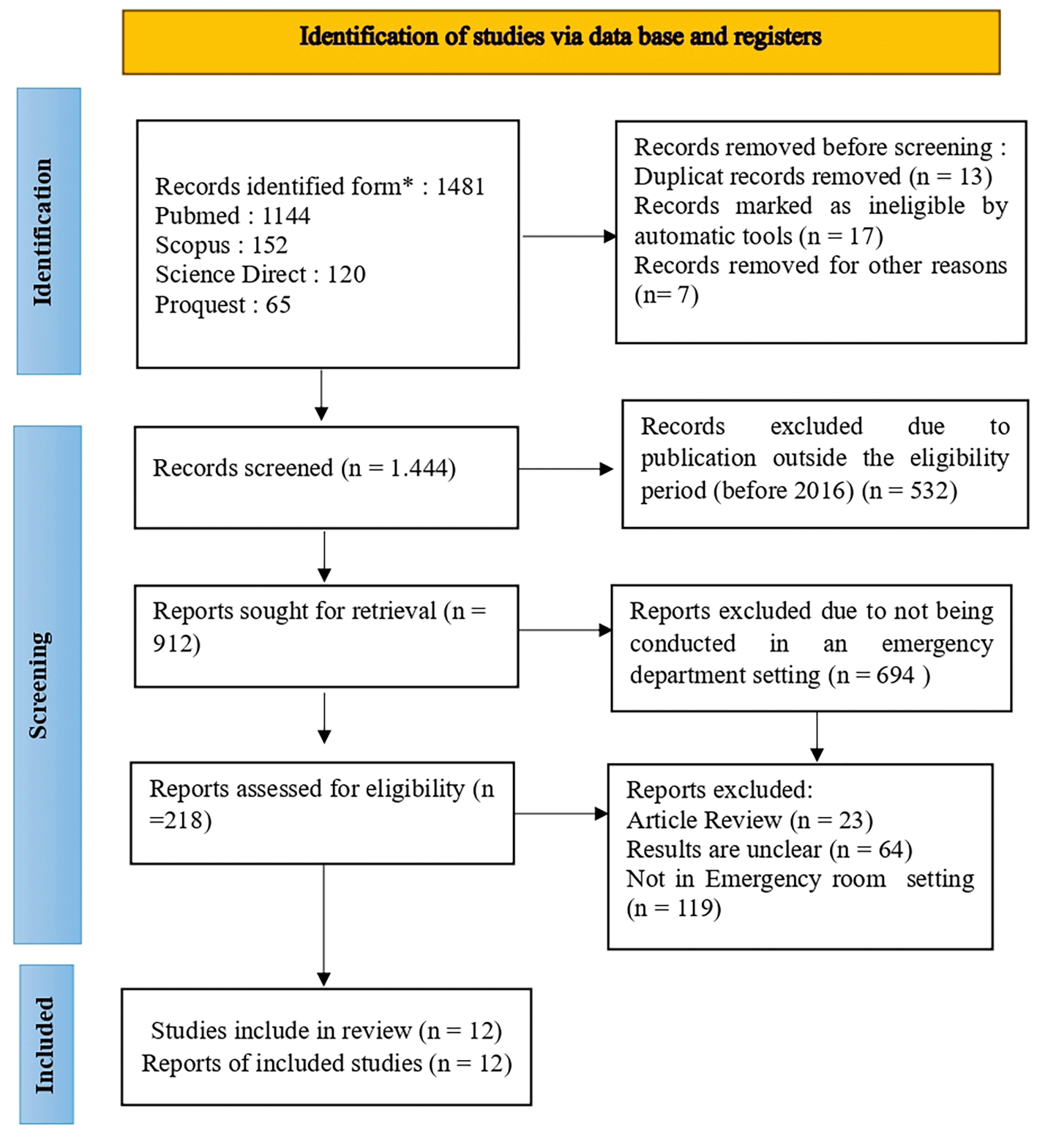
Before the screening process, duplicate records (n = 13), records marked as ineligible by automated tools (n = 17), and records removed for other reasons (n = 7) were excluded, resulting in 1,444 records for title and abstract screening. During this stage, 532 records were excluded because they were published outside the predefined eligibility period (before 2016), leaving 912 records for further assessment.
Of the remaining records, 694 reports were excluded during title and abstract screening because they were not conducted in emergency department settings. Consequently, 218 full-text articles were assessed for eligibility. Following full-text review, 206 articles were excluded because they were review articles (n = 23), had unclear or insufficient findings (n = 64), or did not specifically evaluate clinical activation code interventions in emergency care settings (n = 119). Ultimately, 12 studies met the inclusion criteria and were included in the final review for data extraction and synthesis.
The articles originated from several countries, including the United States (n = 2), Saudi Arabia (n = 2), Singapore (n = 1), Australia (n = 1), Romania (n = 1), Indonesia (n = 3), Taiwan (n = 1), and Spain (n = 1). The study populations included patients with acute ischemic stroke, septic shock, STEMI, and severe trauma patients admitted to the Emergency Department. The research focused on various aspects, including system reorganization, multidisciplinary teamwork, and standardized protocols, which may minimize delays in the management of time-sensitive emergency conditions.
Detailed data extraction from the included studies is available as Extended Data 1 in the Zenodo repository, while the thematic synthesis of the findings is summarized in Table 2. The extraction results showed high heterogeneity in study designs, types of interventions, and measured outcomes; therefore, a meta-analysis was not feasible. Consequently, the data were analyzed using a narrative thematic synthesis approach to identify the main patterns and mechanisms of clinical activation codes in improving service efficiency in the Emergency Department (ED). The synthesis results were grouped into several major themes. No sensitivity analysis was conducted because quantitative synthesis and meta-analysis were not feasible due to substantial heterogeneity among the included studies. Likewise, risk of bias due to missing results, including publication bias assessment, was not formally evaluated because statistical pooling was not performed. In addition, the certainty of evidence was not assessed using the Grading of Recommendations Assessment, Development and Evaluation (GRADE) approach due to variations in study designs, intervention characteristics, and outcome measures across the included studies.
| Theme | Theme findings | Author (s) |
|---|---|---|
| Fast-Track Pathway and Early Patient Routing | Activation codes accelerated patient transfer through bypass triage systems, direct imaging access, rapid registration, and expedited routing toward definitive treatment areas. | Tan et al. (2018); Rasyid et al. (2022); Alzahrani et al. (2023); Alyahya et al. (2018); Sarippy et al. (2025) |
| Parallel Processing and Workflow Acceleration | Diagnostic, laboratory, consultation, and therapeutic interventions were performed simultaneously, reducing sequential delays and improving workflow efficiency | Cheng et al. (2026); Delawder (2018); Peltan et al. (2024) |
| Multidisciplinary Team Activation and Care Coordination | Single-call activation systems, standardized protocols, and real-time communication improved interprofessional coordination and reduced consultation delays. | Tong et al. (2016); Alyahya et al. (2018); Delawder (2018); Fathoni et al. (2026) |
| Resource Prioritization and Reduction of Operational Delays | Activation systems prioritized access to imaging, catheterization laboratories, specialist teams, and critical interventions to reduce treatment delays. | Rasyid et al. (2022); Cheng et al. (2026); Robert et al. (2019); Buleu et al. (2024) |
| System-Level Flow Optimization and Operational Efficiency | Activation codes improved patient flow indicators including waiting time, throughput, treatment delay, and length of stay, potentially mitigating overcrowding-related operational inefficiencies. | Peltan et al. (2024); Alzahrani et al. (2023); Robert et al. (2019) |
Most studies demonstrated that clinical activation codes accelerated service flow through fast-track pathways, such as bypassing triage and enabling direct transfer to diagnostic examinations or treatment areas. Implementations in Code Stroke and Code STEMI consistently reduced door-to-CT, door-to-needle, and door-to-balloon times, although their effectiveness depended on system readiness and interdepartmental coordination.
Activation codes transformed healthcare delivery from a sequential process into parallel processing, allowing diagnostic and therapeutic interventions to be performed simultaneously. This approach was shown to accelerate time-to-treatment and reduce service bottlenecks, although it still depended on resource availability.
Most studies emphasized the importance of multidisciplinary team activation through single-call activation systems, standardized protocols, and real-time communication to reduce consultation delays and accelerate patient management. However, implementation effectiveness varied across hospitals depending on team structure and communication systems.
Clinical activation codes functioned as resource prioritization mechanisms for time-sensitive emergency conditions. These systems helped reduce diagnostic and therapeutic delays associated with overcrowding, although increased utilization of certain resources required ongoing evaluation of operational efficiency.
Overall, clinical activation codes represented system-level interventions that improved ED operational efficiency through reduced waiting times, increased throughput, and a tendency toward shorter length of stay. Although overcrowding was rarely measured directly, several indicators suggested improvements in patient flow and reduced impacts of service congestion.
This systematic review identified four major operational mechanisms underlying the effectiveness of clinical activation codes in Emergency Departments (EDs), namely fast-track pathways, parallel processing, multidisciplinary coordination, and resource prioritization. Across various emergency conditions such as stroke, STEMI, sepsis, and trauma, these mechanisms consistently contributed to improvements in time-sensitive service indicators, workflow efficiency, and patient flow optimization (Xiong et al., 2025). These findings indicate that clinical activation codes function not only as disease-specific clinical protocols but also as system-level operational interventions that redesign emergency care processes to enhance service responsiveness under conditions of high operational pressure and urgent treatment demands (Ortíz-Barrios & Alfaro-Saíz, 2020).
One of the most consistent findings in this review was the implementation of fast-track pathways and early patient routing. Activation codes enabled patients with time-sensitive emergency conditions to bypass conventional care processes, allowing faster access to diagnostic examinations and definitive treatment (Samadbeik et al., 2024). In Code Stroke systems, mechanisms such as prehospital notification, direct transfer to CT scanning, and rapid registration significantly reduced door-to-needle time and door-to-CT time (Li et al., 2026). Similar approaches were identified in Code STEMI systems through direct catheterization laboratory activation and simplified consultation pathways (Alyahya et al., 2018). These findings are consistent with Lean Healthcare principles, which emphasize the elimination of non-value-added activities and unnecessary delays within healthcare service processes (Shiddieq et al., 2025). In the context of emergency care, activation codes may therefore be understood as operational streamlining strategies capable of reducing bottlenecks during the early phases of patient management (Oliveira et al., 2021).
This review also demonstrated that activation codes accelerated healthcare workflows through parallel processing mechanisms. In conventional emergency care, diagnostic and therapeutic processes are often conducted sequentially, resulting in delays between stages of care delivery (Ataman et al., 2023). In contrast, activation systems allow multiple actions, such as laboratory testing, imaging, team mobilization, and therapy preparation, to be performed simultaneously (Na et al., 2021). Studies on Code Sepsis and advanced stroke activation pathways showed that this approach significantly accelerated time-to-treatment and reduced operational delays (Farokhfar and Almani, 2025). From a systems engineering perspective, these mechanisms reflect process redesign strategies aimed at improving throughput efficiency and reducing idle time between service processes (Bonamigo et al., 2023). These findings further strengthen previous evidence that parallel workflows can improve operational performance in high-acuity emergency care settings (Jin et al., 2023).
Another important finding was the central role of multidisciplinary team activation and interdepartmental coordination in improving emergency care effectiveness through reduced consultation delays and accelerated clinical decision-making (Delawder, 2018; Tong et al., 2016). Nearly all reviewed studies emphasized the importance of real-time coordination among ED physicians, nurses, radiology departments, laboratories, specialist teams, and procedural units (Alzahrani et al., 2024). Mechanisms such as single-call activation, standardized communication protocols, and rapid notification systems were shown to reduce delays caused by hierarchical consultations and fragmented interdepartmental communication (Kaljeh et al., 2025). These findings reinforce the concept that the ED functions as a highly integrated operational system in which communication efficiency directly affects patient flow performance (Farahat, 2026). In this context, activation codes serve not only as clinical alert systems but also as operational coordination frameworks that synchronize multiple service units simultaneously (Mostafa and El-Atawi, 2024).
The findings of this review are consistent with Systems Theory and the concept of complex adaptive systems, which view the ED as a dynamic system characterized by interdependent service processes (Notarnicola et al., 2024). Within this framework, clinical activation codes function as adaptive mechanisms that enhance system responsiveness through patient prioritization, resource mobilization, and reduction of service variability. These mechanisms help improve the stability and responsiveness capacity of emergency care services, particularly under conditions of high operational pressure (Alsaad et al., 2025).
This review also demonstrated that resource prioritization is a critical component of activation systems. Priority access to CT scanning, catheterization laboratories, intensive therapy, and specialist personnel was shown to reduce treatment delays (Buleu et al., 2024; Peltan et al., 2024; Alyahya et al., 2018). However, the effectiveness of activation codes remained dependent on organizational readiness and resource capacity. In overcrowded EDs, limitations in imaging facilities, healthcare personnel, and high patient volumes continued to contribute to delays despite the implementation of activation protocols (Sartini et al., 2022).
Most studies reported improvements in operational indicators such as reduced waiting time, increased throughput, accelerated time-to-treatment, and shorter length of stay. However, the current evidence remains insufficient to conclude that activation systems independently reduce ED overcrowding comprehensively (Huang, 2025). Future studies should therefore directly evaluate overcrowding indicators such as occupancy rate, boarding time, access block duration, and crowding index.
In addition, this review found that most studies remained focused on disease-specific clinical outcomes, whereas system-level outcomes such as workflow sustainability, resource utilization, and emergency system resilience were rarely examined. The high heterogeneity of study designs, activation protocols, and healthcare settings also limited the generalizability of findings.
Nevertheless, this review provides an important conceptual contribution by positioning clinical activation codes as system-level operational redesign interventions rather than merely disease-specific clinical protocols. Consequently, the implementation of activation systems should be integrated with process standardization, multidisciplinary coordination, real-time communication systems, and strengthened resource capacity to improve overall emergency care performance.
This systematic review demonstrates that clinical activation codes are effective system-level operational interventions for improving service efficiency in Emergency Departments (EDs) during time-sensitive emergency conditions such as stroke, STEMI, sepsis, and trauma. Their effectiveness is consistently supported by four major mechanisms: fast-track pathways, parallel processing, multidisciplinary coordination, and resource prioritization. Activation systems have been shown to accelerate time-to-treatment, improve service workflows, enhance multidisciplinary coordination, and optimize patient flow through streamlined care pathways and reduced operational delays. In addition to improving time-sensitive service indicators such as door-to-needle and door-to-balloon times, activation codes also contribute to increased service throughput, reduced length of stay, and optimized utilization of critical ED resources.
These findings emphasize that clinical activation codes should not be viewed merely as disease-specific clinical protocols, but rather as system-based operational redesign strategies capable of improving the responsiveness and adaptive capacity of emergency care services. This approach aligns with the principles of Lean Healthcare, Systems Theory, and Complex Adaptive Systems in optimizing modern healthcare delivery. Healthcare institutions should therefore consider integrating activation systems into broader ED operational redesign strategies to improve emergency care responsiveness and patient flow management. Nevertheless, evidence regarding the direct impact of activation systems on overcrowding remains limited, as most studies have focused primarily on clinical outcomes and time-based service indicators. Therefore, future research should evaluate overcrowding indicators more comprehensively, including occupancy rate, boarding time, access block duration, as well as the long-term sustainability and resilience of emergency care systems.
| Views | Downloads | |
|---|---|---|
| F1000Research | - | - |
|
PubMed Central
Data from PMC are received and updated monthly.
|
- | - |
Provide sufficient details of any financial or non-financial competing interests to enable users to assess whether your comments might lead a reasonable person to question your impartiality. Consider the following examples, but note that this is not an exhaustive list:
Sign up for content alerts and receive a weekly or monthly email with all newly published articles
Already registered? Sign in
The email address should be the one you originally registered with F1000.
You registered with F1000 via Google, so we cannot reset your password.
To sign in, please click here.
If you still need help with your Google account password, please click here.
You registered with F1000 via Facebook, so we cannot reset your password.
To sign in, please click here.
If you still need help with your Facebook account password, please click here.
If your email address is registered with us, we will email you instructions to reset your password.
If you think you should have received this email but it has not arrived, please check your spam filters and/or contact for further assistance.

Comments on this article Comments (0)