Keywords
construction productivity; public buildings; project and asset management; decentralised governance; developing countries; Uganda

construction productivity; public buildings; project and asset management; decentralised governance; developing countries; Uganda
The construction sector plays a central role in Uganda’s socioeconomic transformation, supporting public infrastructure delivery in education, health, water, and administrative facilities. The sector contributes significantly to national output and employment, yet project performance remains persistently constrained by cost overruns, schedule delays, and productivity inefficiencies.1,2 Recent studies in Sub-Saharan Africa show that public construction projects frequently exceed planned budgets by 20–50% and experience substantial time overruns, largely due to weak site management, procurement inefficiencies, contractor capacity limitations, and governance challenges.3,4,5,6
Recent empirical syntheses further demonstrate that productivity inefficiencies in public construction are not merely operational but are deeply embedded in institutional and governance systems. A systematic review highlighted that fragmented procurement systems, weak accountability frameworks, and delayed financial flows significantly reduce productivity across developing countries.7 Similarly, governance-related inefficiencies was identified as contributing more to productivity losses than technical factors in public-sector projects.8
In Uganda, empirical evidence indicates that public building projects continue to face implementation challenges associated with delayed payments, inadequate supervision, shortages of skilled labour, and poor coordination among stakeholders.9,10 Auditor General reports and sector performance assessments consistently highlight incomplete projects, cost escalations, and underperforming contractors at both national and district levels. These performance deficiencies undermine service delivery, particularly in rural districts where public infrastructure directly affects access to healthcare, education, and administrative services.
Context-specific studies in East Africa reinforce these findings. For instance,11 show that decentralised procurement structures in Uganda exacerbate delays due to bureaucratic approval chains and limited technical oversight at district level.
Likewise,,9,12 report that institutional fragmentation and weak inter-agency coordination significantly impair project productivity in Kenyan and Ugandan public projects.
Construction productivity—commonly defined as the ratio of output to input in the production process—remains a critical determinant of project success. Contemporary research emphasizes that productivity in developing countries is shaped by a combination of managerial practices, labour competence, financial management systems, material supply chains, and institutional governance structures.13,14,15 Importantly, productivity determinants are highly context-specific, varying across regulatory environments, procurement systems, and local capacity conditions.16,17 Therefore, findings from other regions cannot be assumed to apply directly to Ugandan districts without localized empirical validation.
Recent quantitative studies further classify productivity determinants into five principal domains: (i) financial and cash flow factors, (ii) human resource capacity, (iii) project management practices, (iv) material and equipment logistics, and (v) institutional/governance structures18,19 . Among these, financial delays and managerial inefficiencies consistently rank as the most critical constraints across developing economies.
Systemic productivity constraints are institutional, managerial, and process-related factors embedded within governance and project delivery systems that consistently reduce output efficiency across multiple projects and stakeholders. At the district level, particularly in rural settings such as Kibaale District, limited technical capacity, funding delays, and contractor performance variability may further exacerbate productivity challenges. However, there is limited recent empirical research systematically ranking and quantifying the relative influence of these factors in Ugandan public building projects. Most prior studies in the region focus broadly on project success factors without isolating productivity determinants using structured quantitative approaches.
Moreover, existing Ugandan studies largely adopt descriptive or qualitative approaches, limiting their ability to provide statistically robust prioritisation of productivity constraints. This creates a methodological gap in the literature, particularly regarding the absence of multi-stakeholder comparative analysis and quantitative ranking frameworks. Addressing this gap is essential for informing targeted policy and managerial interventions.
To address this gap, recent construction management studies have applied analytical tools such as the Relative Importance Index (RII) to rank productivity constraints and Spearman’s rank correlation to assess stakeholder consensus.20,21,22 These methods provide a structured and statistically defensible basis for identifying critical productivity drivers and evaluating agreement among professional groups. This study advances existing research by integrating multi-stakeholder ranking with statistical agreement validation at the district level, providing a governance-oriented diagnostic framework for decentralised systems.
The integration of RII and inter-rater agreement analysis has been validated in recent studies as an effective approach for decision support in construction management. For example,18 demonstrates that combining RII with correlation analysis improves reliability in identifying critical productivity factors. Similarly,23 emphasize that such hybrid analytical approaches enhance the robustness of policy-relevant findings in construction productivity research.
This study quantitatively identifies, ranks, and evaluates systemic productivity constraints in decentralised public building projects in Kibaale District, Uganda, using the Relative Importance Index (RII), and assesses inter-professional agreement through Spearman correlation. By generating localised empirical evidence, the study aims to support evidence-based interventions to enhance public construction productivity and improve infrastructure delivery outcomes in Uganda.
A mixed-methods research design was adopted, integrating quantitative survey data with qualitative interviews and site observations. This approach enabled both the measurement of the relative importance of productivity factors and the contextual interpretation of underlying causes. The study employed a convergent parallel mixed-methods design, in which quantitative and qualitative data were collected concurrently, analysed independently, and subsequently integrated at the interpretation stage. This design enhances methodological complementarity and validity in construction management research.24
The study was conducted in Kibaale District, Uganda, focusing on public building construction projects implemented by government agencies and local authorities.
The sampling frame comprised professionals and stakeholders directly involved in the planning, supervision, and execution of public building projects in the district, including Civil Engineers, Architects, Project Managers, Quantity Surveyors, and Quality Control/Assurance (QC/QA) personnel attached to contractors, consultants, and client organisations. Only respondents with direct project experience within Kibaale District in the last five years were eligible for inclusion.
A purposive stratified sampling technique was employed to ensure representation across key professional categories involved in public project delivery. Respondents were selected based on expertise, role relevance, and active participation in district-level construction projects.
The final sample comprised 105 respondents, which satisfies recommended thresholds for perception-based construction studies and ensures statistical stability for factor ranking using ordinal scales.24,25 The sample size is also consistent with established practices in construction management research employing non-probability sampling techniques.26,27
The distribution of respondents across professional categories was designed to capture both managerial and operational perspectives, thereby improving the representativeness of stakeholder views.
2.3.1 Structured questionnaire survey
A structured questionnaire containing both closed-ended and limited open-ended items was designed to capture respondents’ perceptions of factors influencing construction productivity. The instrument covered eleven (11) productivity determinants identified from literature and policy documents. Responses were recorded using a 5-point Likert scale (1 = very low influence to 5 = very high influence). The questionnaire items were adapted from validated instruments used in recent construction productivity studies to ensure construct validity.28 A pilot test involving approximately 10 respondents was conducted to assess clarity, reliability, and contextual relevance. Feedback from the pilot informed minor revisions to the instrument.
2.3.2 Semi-structured interviews
Semi-structured interviews were conducted with purposefully selected key informants, including senior project managers, district engineers, and site supervisors. The interviews provided contextual explanations for the quantitative findings and enabled deeper exploration of operational constraints affecting productivity. An interview protocol was developed to guide discussions while allowing flexibility for probing emerging issues. Interviews were audio-recorded (subject to consent), transcribed verbatim, and prepared for thematic analysis.
2.3.3 Site observations
Direct non-participant observations were carried out on selected public building construction sites. Observations focused on labour deployment, material handling, site organisation, workflow efficiency, and safety practices, to triangulate questionnaire and interview data with actual site conditions. A structured observation checklist was developed based on established construction site performance indicators to ensure systematic and replicable data collection.29
Data collection was conducted over a defined period (approximately 8–12 weeks). Questionnaires were administered through a combination of physical distribution and electronic platforms to maximise response rates. Follow-up engagements were undertaken to minimise non-response bias and ensure adequate representation across professional groups.
Ethical considerations were strictly observed. Participation was voluntary, informed consent was obtained from all respondents, and confidentiality and anonymity were maintained throughout the study.
2.5.1 Quantitative analysis
Quantitative data were analysed using the Relative Importance Index (RII) to rank the perceived significance of factors affecting construction productivity. The RII is widely applied in construction management research to prioritise factors based on stakeholder perception and has been demonstrated to be robust for ordinal Likert-scale data.30 The RII method is particularly suitable for evaluating subjective assessments of productivity determinants and has been validated in recent studies.31
= sum of weights assigned by respondents,
= highest Likert scale weight (5),
= total number of respondents.
To assess the degree of agreement among different professional groups, Spearman’s rank correlation coefficient (ρ) was employed. Spearman’s correlation is appropriate for analysing ranked and ordinal data and is extensively used in construction management studies to evaluate consensus among stakeholder groups.32 The use of Spearman’s correlation enhances analytical robustness by quantifying inter-group consistency and validating ranking outcomes.33
The coefficient was computed as:
= difference between paired ranks,
= number of ranked items.
2.5.2 Qualitative analysis
Qualitative data obtained from interviews and site observations were analysed using thematic analysis. Transcribed data were coded inductively to identify recurring patterns and themes related to productivity constraints. The identified themes were compared with quantitative findings to achieve triangulation and enhance interpretative depth. This integrative approach improves the credibility and validity of mixed-methods research.34
The integration of quantitative and qualitative findings was performed at the interpretation stage. Quantitative rankings derived from the RII were explained and contextualised using qualitative insights from interviews and site observations. This triangulation strategy strengthens the reliability of findings and supports robust conclusions regarding systemic productivity constraints.
Ethical approval for this study was obtained from the KAMPALA INTERNATIONAL UNIVERSITY RESEARCH ETHICS COMMITTEE (KIU-2025-1799) before the commencement of data collection. The study adhered to established ethical standards for research involving human participants. All participants were informed of the purpose of the study, and voluntary written informed consent was obtained before participation. Confidentiality and anonymity of respondents were strictly maintained, and all data were used solely for academic and research purposes.
Informed consent was obtained from all participants before their involvement in the study. The purpose of the research, procedures involved, confidentiality provisions, and voluntary nature of participation were clearly explained to respondents. Written informed consent was obtained before administering questionnaires, conducting interviews, and carrying out site-related data collection activities.
A total of 105 construction professionals participated in the survey, representing key stakeholder categories involved in public building projects in Kibaale District, Uganda. Civil Engineers (n = 44; 41.9%) formed the largest group, reflecting their central technical role in site execution and supervision. QC/QA personnel (n = 33; 31.4%) were the second largest category, underscoring the prominence of compliance and quality assurance functions in public projects. Architects (n = 15; 14.3%) and Project Managers (n = 13; 12.4%) provided complementary design and management perspectives. The distribution is shown in Figure 1.
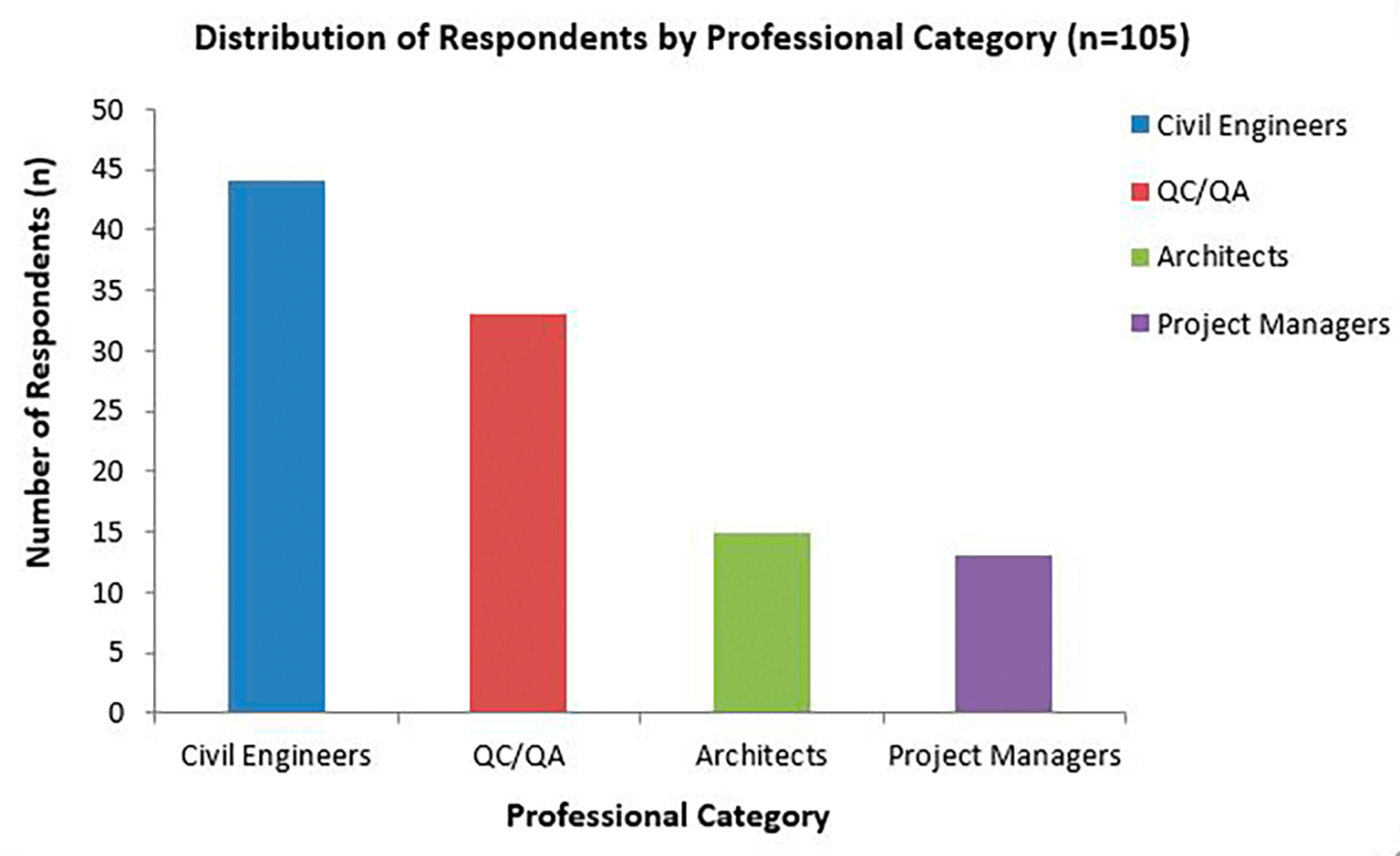
The distribution of respondents across professional categories (Figure. 1) confirms the effectiveness of the purposive stratified sampling approach in capturing both operational and managerial perspectives. This enhances the reliability of the findings, particularly in perception-based productivity assessment studies where expertise-driven sampling is critical. The relatively higher proportion of engineers and QC/QA personnel reflects their continuous involvement at the construction stage, which is directly linked to productivity outcomes. This distribution is therefore considered appropriate for evaluating site-level productivity constraints.
The Relative Importance Index (RII) results ( Figure 2) indicate that four factors dominate productivity constraints in public building projects in Kibaale District:
1. Delayed payments (RII = 0.857)
2. Inadequate site management (RII = 0.841)
3. Lack of competent staff (RII = 0.834)
4. Poor planning and scheduling (RII = 0.830)
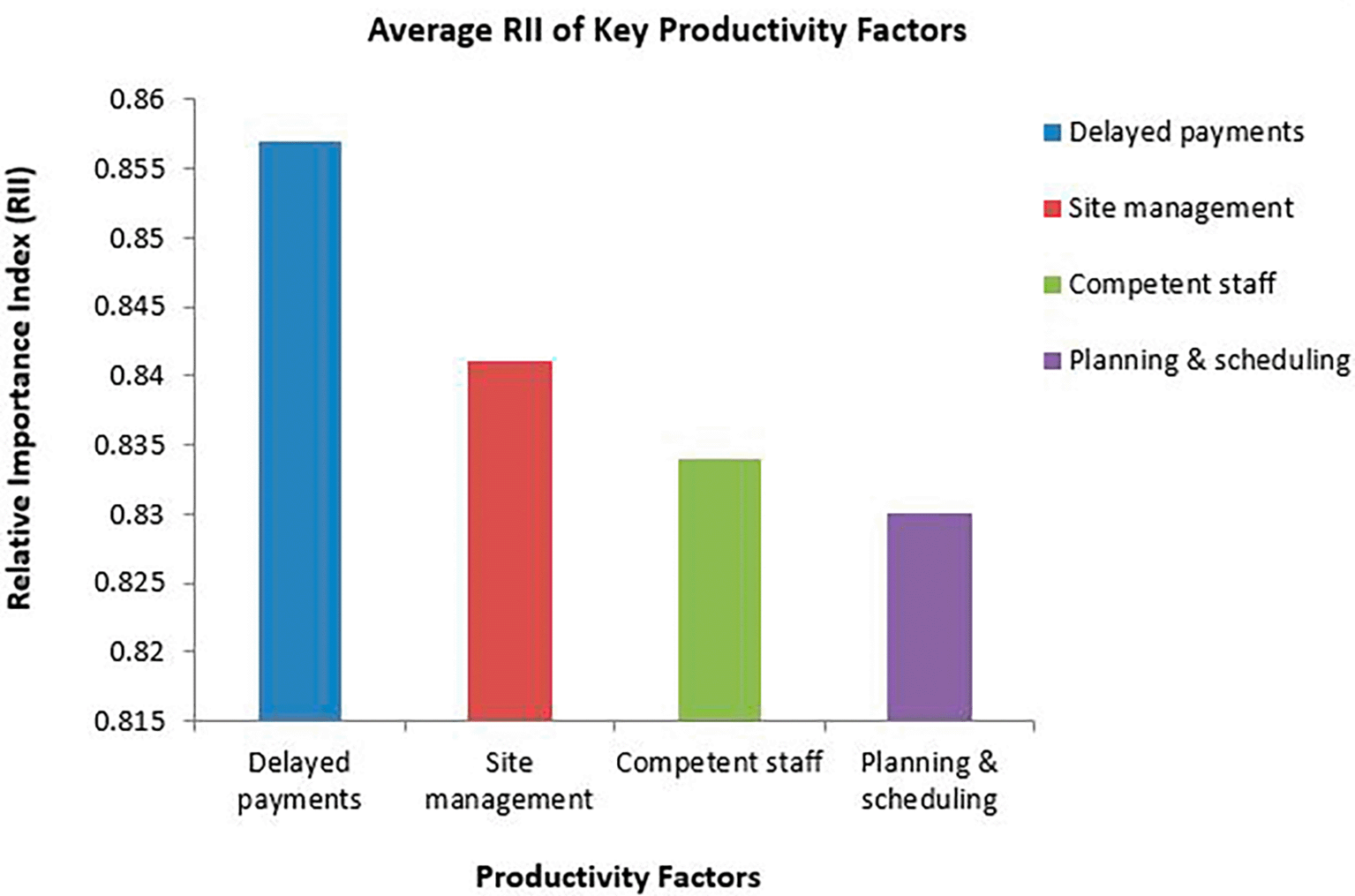
As seen in Figure 2, these factors were consistently ranked highest across professional groups. The high RII values (>0.80) indicate strong consensus on the criticality of these constraints, suggesting that productivity inefficiencies are systemic rather than isolated occurrences. Financial-related constraints (delayed payments) emerged as the most significant factor, highlighting the central role of cash flow in sustaining construction activities. Managerial and organisational factors—specifically site management and planning—also ranked highly, reinforcing the argument that productivity challenges are not purely technical but are strongly influenced by project management practices. These findings are consistent with recent studies in developing countries, which identify financial delays, inadequate supervision, and workforce competence as dominant productivity constraints.35,36 The convergence of these results supports the external validity of the study.
Spearman’s rank correlation coefficients (ρ) show strong agreement across professional groups on the ranking of productivity constraints:
1. Project Managers vs QC/QA: ρ = 0.891
2. Project Managers vs Civil Engineers: ρ = 0.882
3. Architects vs Civil Engineers: ρ = 0.855
4. Project Managers vs Architects: ρ = 0.845
5. Architects vs QC/QA: ρ = 0.818
The result is displayed graphically in Figure 3.
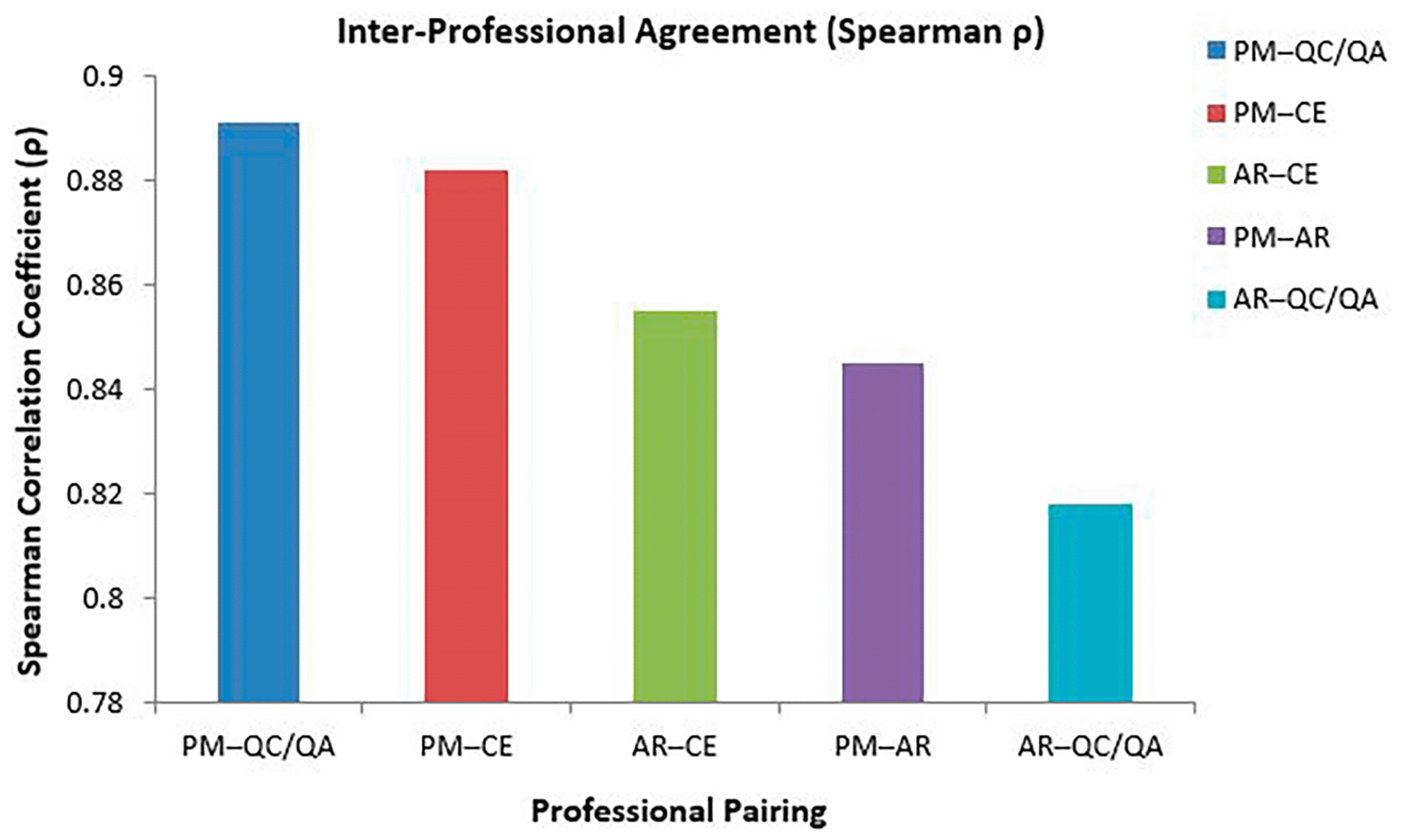
The consistently high correlation coefficients (ρ > 0.80) in Figure 3, indicate a strong level of agreement among stakeholders, confirming that the identified productivity constraints are widely recognised across professional boundaries. This high degree of consensus strengthens the robustness of the RII-based rankings and validates the use of Spearman’s correlation as an effective tool for assessing inter-group agreement in construction management research. The findings suggest that productivity challenges are systemic and institutional rather than profession-specific, supporting the premise that coordinated, cross-functional interventions are required to improve performance.
Qualitative data obtained from semi-structured interviews and site observations were analysed using thematic analysis. The results revealed four dominant themes consistent with the quantitative findings:
1. Financial delays and cash flow disruptions
2. Weak site supervision and management practices
3. Shortage of skilled and competent personnel
4. Ineffective planning and scheduling mechanisms
Interview responses indicated that delayed payments often led to work stoppages, reduced labour motivation, and inability to procure materials on time. Site observations further confirmed irregular workflow patterns and inefficient resource utilisation linked to financial constraints. Inadequate site management was associated with poor coordination of labour and materials, lack of supervision, and absence of structured work plans. These issues were consistently observed across multiple project sites. The shortage of competent staff was particularly evident in rural project locations, where contractors often relied on semi-skilled labour, leading to reduced productivity and increased rework. Poor planning and scheduling were reflected in unrealistic timelines, lack of progress tracking, and limited use of formal project management tools.
In line with the convergent mixed-methods design, quantitative and qualitative findings were integrated at the interpretation stage. The high-ranking factors identified through RII analysis were strongly supported by qualitative evidence from interviews and site observations. Table 1 presents the integration of findings, demonstrating convergence between quantitative rankings and qualitative themes.
The strong convergence between datasets in Table 1 enhances the credibility and validity of the findings, confirming that the identified constraints are not only statistically significant but also practically observable.
The results demonstrate that productivity challenges in decentralised public construction systems are multidimensional, involving financial, managerial, and human resource factors. This supports the study’s conceptualisation of productivity constraints as systemic in nature.
Delayed payments emerged as the most critical productivity constraint. This finding aligns with recent international evidence from developing-country public procurement contexts, where payment delays are linked to contractor cash-flow constraints, interrupted material supply chains, and labour demobilization. Recent studies report that delayed interim payments significantly increase schedule slippage and productivity losses in public projects.37,38,39 Regionally, East African public projects exhibit similar vulnerabilities due to budget release bottlenecks and certification delays, which exacerbate contractor financing costs and reduce site productivity.40,41 In the Ugandan district context, delayed payments plausibly propagate through reduced labour attendance, slower procurement cycles, and deferred equipment maintenance, directly depressing output rates.
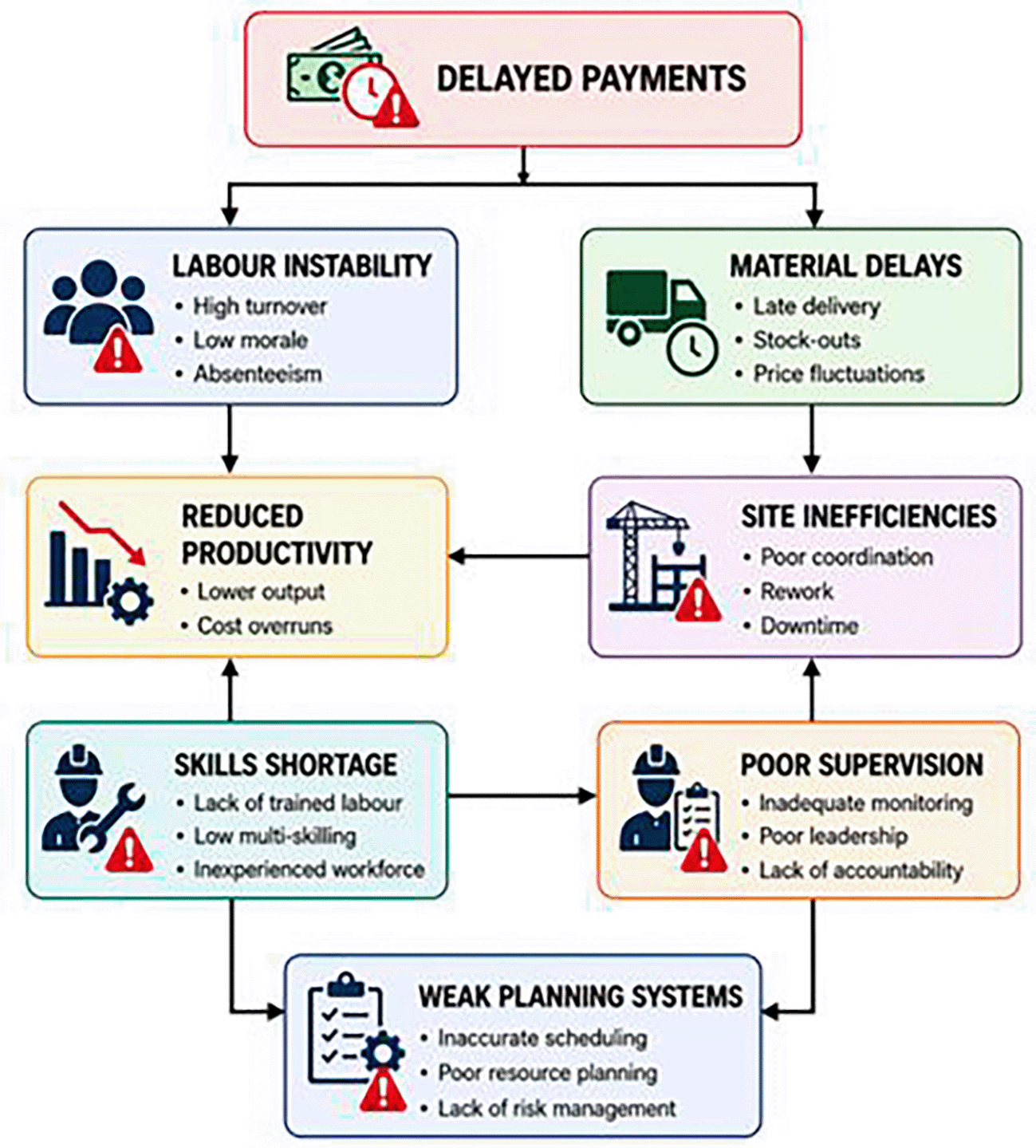
The dominance of delayed payments (RII = 0.857) confirms that financial liquidity is the primary control variable governing productivity performance in decentralised construction systems. Qualitative findings reinforce this, with respondents highlighting repeated work stoppages and disrupted procurement cycles. From a systems theory perspective, delayed payments function as a trigger variable that destabilises multiple subsystems (labour, materials, equipment), resulting in nonlinear productivity losses. This aligns with system dynamics literature, where financial bottlenecks act as high-leverage constraints within project delivery systems. Compared to studies in Southeast Asia and the Middle East, where technical inefficiencies often dominate, the findings suggest that financial governance constraints are more critical in decentralised African contexts, highlighting a distinct regional productivity profile.
Inadequate site management and poor planning/scheduling ranked among the top four constraints. Contemporary construction management literature emphasizes that weak short-term planning, limited look-ahead scheduling, and poor coordination between trades undermine workflow reliability.42,43 Internationally, lean planning practices and robust weekly work planning are associated with measurable productivity improvements.43 In regional public-sector projects, fragmented communication and limited managerial capacity often weaken planning fidelity, consistent with the patterns observed in Kibaale District.
The findings strongly support lean construction theory, particularly the principle of workflow reliability. Observed inefficiencies—idle labour, task interruptions, and poor sequencing—indicate a lack of structured planning systems such as Last Planner or look-ahead scheduling. The interaction between poor planning and delayed payments suggests a dual-constraint system, where financial instability undermines planning effectiveness, and weak planning further amplifies inefficiencies caused by resource uncertainty. Compared to high-income construction environments, where digital planning tools mitigate such inefficiencies, the absence of formal planning systems in decentralised districts represents a critical productivity gap.
The high ranking of lack of competent staff reflects systemic human-capital constraints in decentralized public works departments. Recent studies across Sub-Saharan Africa report that shortages of experienced site supervisors and engineers correlate strongly with rework, quality non-conformities, and reduced labour productivity.29,44 In Kibaale District, understaffing plausibly weakens supervision intensity, inspection frequency, and technical decision-making, compounding delays and productivity losses.
The findings highlight a structural skills deficit, particularly in rural districts, where attracting and retaining qualified professionals is challenging. This leads to over-reliance on semi-skilled labour, increasing variability and reducing output quality. From a human capital theory perspective, productivity is directly linked to workforce competence and supervisory capacity. The observed deficiencies, therefore, represent not only operational issues but long-term institutional capacity gaps. Cross-country comparison shows similar trends in Sub-Saharan Africa but contrasts with emerging economies (e.g., China, Turkey), where workforce upskilling and training systems have significantly improved productivity outcomes.45
The strong Spearman correlations indicate broad cross-disciplinary consensus on productivity constraints. This coherence suggests that productivity problems are not profession-specific but systemic. International governance studies show that when multiple professional groups converge on the same constraints, coordinated institutional reforms (payment systems, planning protocols, staffing norms) are more likely to succeed.46,47 The high agreement between Project Managers and QC/QA personnel further highlights the linkage between planning quality and compliance performance.
The high agreement levels (ρ > 0.80) provide empirical evidence of institutional coherence, indicating that stakeholders share a unified understanding of productivity constraints. From an institutional theory perspective, this suggests that inefficiencies are embedded in governance structures, rules, and processes rather than individual professional practices. This creates a strong foundation for policy reform, as consensus reduces resistance to change and facilitates coordinated interventions across sectors.
The integration of quantitative and qualitative findings reveals that productivity constraints operate as an interconnected system rather than isolated factors. Figure 4 illustrates a conceptual productivity constraint framework showing how financial, labour, material, and managerial inefficiencies interact to influence overall construction productivity. The framework in Figure 4 illustrates a feedback loop system in which constraints reinforce each other, leading to cumulative productivity losses. This systems-based interpretation represents a key contribution of the study, moving beyond linear cause-and-effect relationships to a networked understanding of productivity constraints.
The findings were benchmarked against global studies to situate the results within broader construction productivity research. Table 2 provides a regional comparison of dominant construction constraints and their level of alignment with the present study’s findings.
The study ( Table 2) uniquely highlights financial governance constraints as the dominant driver, distinguishing decentralised African contexts from other regions.
This study contributes to construction management theory in three key ways:
1. Systems Theory Contribution: Demonstrates that productivity constraints form an interconnected system with feedback loops.
2. Institutional Theory Contribution: Establishes that governance structures (payment systems, staffing policies) are primary determinants of productivity.
3. Lean Construction Contribution: Empirically validates the importance of workflow reliability and planning systems in decentralised contexts.
Based on the integrated findings, the following interventions are recommended:
1. Financial Reforms: Streamline payment certification and disbursement systems
2. Managerial Improvements: Introduce structured planning tools (e.g., look-ahead scheduling)
3. Capacity Building: Strengthen technical staffing at district level
4. Integrated Governance: Align procurement, finance, and engineering systems
The systemic nature of constraints implies that isolated interventions will be insufficient, and coordinated reforms are required.
While the study provides robust insights into systemic productivity constraints in decentralised public building projects, several limitations should be acknowledged:
1. Geographical Scope Limitation: The study is confined to Kibaale District, which may limit the generalisability of findings to other districts or national-level projects with different institutional and operational contexts.
2. Sampling Approach: The use of purposive stratified sampling, although appropriate for expertise-based selection, may introduce selection bias and limit statistical representativeness.
3. Perception-Based Data: The reliance on Likert-scale questionnaire responses reflects subjective perceptions of stakeholders, which may be influenced by individual experience or bias.
4. Cross-Sectional Design: Data were collected at a single point in time, restricting the ability to capture temporal variations in productivity constraints or establish causal relationships.
5. Limited Quantitative Modelling: The study employs RII and Spearman correlation, which are effective for ranking and agreement analysis but do not establish causal inference or predictive modelling relationships.
6. Context-Specific Variables: Certain localised factors (e.g., political dynamics, district-specific procurement practices) may not have been fully captured or quantified.
7. Qualitative Data Constraints: The number of interviews and site observations was limited, which may affect the depth and saturation of qualitative insights.
8. Exclusion of Project Performance Metrics: The study focuses on productivity constraints rather than directly measuring objective productivity outputs (e.g., labour productivity rates, cost-time performance indices).
Overall, these limitations suggest that while the findings are valid within the study context, caution should be exercised in generalisation, and future research should adopt longitudinal, multi-regional, and model-based approaches to enhance robustness.
This study set out to identify and evaluate systemic productivity constraints in decentralised public building projects in Uganda, using Kibaale District as an empirical case. By integrating quantitative ranking techniques with qualitative insights, the study provides robust evidence on the institutional, managerial, and operational factors shaping construction productivity outcomes. The findings confirm that productivity is not merely a function of technical efficiency but is fundamentally influenced by the interaction between financial systems, human resource capacity, and project management practices. The developed conceptual framework demonstrates how these factors interact as a feedback system, offering a context-sensitive basis for improving public construction productivity in decentralised settings. The significant conclusions include:
1. Productivity constraints are governed by the interaction of financial, managerial, and human resource factors, validating a systems-based perspective.
2. Delayed payments are the most critical constraint, exerting cascading effects on labour stability, material supply, and workflow continuity.
3. Inadequate site management and weak planning systems significantly reduce coordination efficiency and overall productivity.
4. Shortages of competent staff adversely affect work quality, increase rework, and limit effective supervision.
5. High RII values (>0.80) confirm that the top-ranked constraints are strongly significant across stakeholder groups.
6. Spearman correlation results (ρ > 0.80) demonstrate strong inter-professional agreement, validating the systemic nature of the constraints.
7. Qualitative findings corroborate quantitative results, confirming convergence between statistical ranking and observed site realities.
8. The conceptual framework reveals feedback loops among constraints, explaining cumulative productivity losses in decentralised systems.
9. Financial and governance inefficiencies limit the effectiveness of managerial and technical interventions.
10. Coordinated reforms in payment systems, planning practices, and capacity building are essential for improving productivity outcomes.
Overall, the study contributes to both theory and practice by advancing a systems-oriented diagnostic framework and providing empirically grounded insights for enhancing construction productivity in decentralised public-sector projects in Uganda and similar developing contexts.
| Views | Downloads | |
|---|---|---|
| F1000Research | - | - |
|
PubMed Central
Data from PMC are received and updated monthly.
|
- | - |
Provide sufficient details of any financial or non-financial competing interests to enable users to assess whether your comments might lead a reasonable person to question your impartiality. Consider the following examples, but note that this is not an exhaustive list:
Sign up for content alerts and receive a weekly or monthly email with all newly published articles
Already registered? Sign in
The email address should be the one you originally registered with F1000.
You registered with F1000 via Google, so we cannot reset your password.
To sign in, please click here.
If you still need help with your Google account password, please click here.
You registered with F1000 via Facebook, so we cannot reset your password.
To sign in, please click here.
If you still need help with your Facebook account password, please click here.
If your email address is registered with us, we will email you instructions to reset your password.
If you think you should have received this email but it has not arrived, please check your spam filters and/or contact for further assistance.

Comments on this article Comments (0)