Keywords
E-Solutions, Graduate Sustainable Employability, Multicultural University, , SDG 8, Labour-Market Dynamics, Cultural diversity, Digital Employability

This article is included in the AI and Sustainability collection.
E-Solutions, Graduate Sustainable Employability, Multicultural University, , SDG 8, Labour-Market Dynamics, Cultural diversity, Digital Employability
Universities are redefining their mandates in response to intensified globalisation, shifting labour-market demands, and the digital transformation of work.1,2 Graduate employability now extends beyond immediate job placement to encompass the capacity to sustain meaningful and adaptable careers in contexts characterised by technological disruption, flexible work arrangements, and cross-cultural mobility.3 To support students’ transition into work and ongoing career development, higher education institutions increasingly deploy e-solutions such as digital career platforms, competency-tracking systems, and virtual employability services.4,5 The effectiveness of these digital interventions is strongly influenced by multicultural university environments, as diverse cultural backgrounds, internationalised campuses, and global talent flows shape how students engage with and benefit from e-solutions.6,7 Understanding the interaction between cultural diversity and digital employability strategies is therefore essential for promoting sustainable employability and inclusive participation in the labour market, aligning with Sustainable Development Goal 8 on decent work and sustained economic growth.
Prior research on graduate sustainable employability in multicultural university settings has largely focused on employability outcomes, digital skills acquisition, and the role of internationalised campuses in enhancing career readiness.8,9 These studies suggest that multicultural environments can strengthen cross-cultural competence, adaptability, and global employability, while digital tools such as online career platforms, competency-tracking systems, and virtual mentoring facilitate skill development and job-search capabilities.10,11 However, existing scholarship often examines cultural diversity and digital employability separately,12–14 offering limited evidence on how e-solutions interact with multicultural contexts to support long-term, sustainable career outcomes. This review addresses this gap by integrating perspectives on digital employability strategies and multicultural university environments, examining how culturally responsive e-solutions enhance graduates’ adaptability, resilience, and lifelong career development. By synthesising thematic patterns and effective interventions, the study provides actionable insights for universities, policymakers, and employers seeking to strengthen inclusive and sustainable employability in line with SDG 8.
Despite extensive research on digitalisation in higher education and graduate employability,15–17 limited empirical and conceptual clarity exists on how multicultural universities implement e-solutions to foster graduates’ long-term employability in dynamic labour markets. Research remains fragmented, providing insufficient guidance on which digital interventions effectively cultivate adaptability, resilience, and sustainable career capabilities among culturally diverse student populations. Consequently, many universities deploy digital employability tools without a clear understanding of their long-term impact or their alignment with diverse learner needs. This gap hinders strategic planning and weakens higher education systems’ capacity to respond coherently to evolving employment landscapes, limiting progress toward the employment and productivity targets outlined in SDG 8.
This study examines the role of e-solutions in enhancing graduate sustainable employability within multicultural university settings. Through a thematic synthesis of existing literature, the review identifies prevailing patterns, effective digital innovations, and cultural factors that shape employability outcomes. The analysis elucidates how digital career interventions influence graduates’ capacity to navigate dynamic labour markets over time, offering insights into strategies that align higher education practices with the ambitions of SDG 8.
The study generates insights relevant to universities, policymakers, and employers seeking to strengthen graduate employability amid rapid technological change and cultural diversity. By consolidating evidence on effective digital strategies, the review informs the design of inclusive e-solutions that support adaptability, lifelong learning, cross-cultural competence, and labour-market resilience. Higher education institutions may apply the findings to refine employability services and foster learning environments that promote sustainable career development across diverse student cohorts. The study also advances scholarly understanding by integrating perspectives on digital innovation, multicultural contexts, and sustainable employability, providing a foundation for future research and policy development aligned with SDG 8.
The increasing complexity of global labour markets, rapid digitalisation, and heightened cultural diversity within universities necessitate a deeper understanding of how e-solutions can effectively foster sustainable graduate employability. While digital platforms and virtual employability services are widely implemented, limited empirical evidence exists on their long-term impact in multicultural higher education contexts. This study is therefore justified in examining how culturally responsive digital interventions enhance graduates’ adaptability, resilience, and career sustainability, offering actionable insights for universities, policymakers, and employers to design inclusive and future-ready employability strategies that align with the objectives of Sustainable Development Goal 8.
Specific objectives
• To examine how e-solutions in multicultural university settings contribute to graduate sustainable employability through the development of adaptive capabilities, practical skills, and labour-market readiness.
• To analyse how key digital employability interventions support lifelong learning and career resilience.
• evaluate how institutional investment in e-solutions contributes to the development of graduates’ human capital and employability competencies.
• To assess how graduates’ digital capabilities influence the effectiveness of e-solutions in achieving sustainable employability outcomes.
• To identify key enablers and barriers affecting the implementation and effectiveness of e-solutions in multicultural university contexts.
• To derive evidence-informed implications for higher education policy and practice in promoting sustainable employability aligned with SDG 8.
• To identify gaps in existing literature and propose directions for future research on digital employability in multicultural higher education environments.
This study adopted a Systematic Literature Review (SLR) methodology guided by the PRISMA 2020 Statement framework to synthesise evidence on how university e-solutions enhance graduate sustainable employability in multicultural settings. The review covered literature published between 2015 and 2025, a period characterised by accelerated digital transformation in higher education, including the expansion of learning management systems, blended learning approaches, virtual work-integrated learning, and post-pandemic digital reforms that reshaped graduate employability practices globally. The methodological approach was designed to ensure transparency, replicability, comprehensiveness, and reliability in identifying, screening, analysing, and synthesising relevant evidence, as illustrated in Figure 1. This systematic review has been openly archived on Zenodo, ensuring transparent access and long-term preservation of the research materials. The archived version is publicly available for reference and citation through the Zenodo repository.156
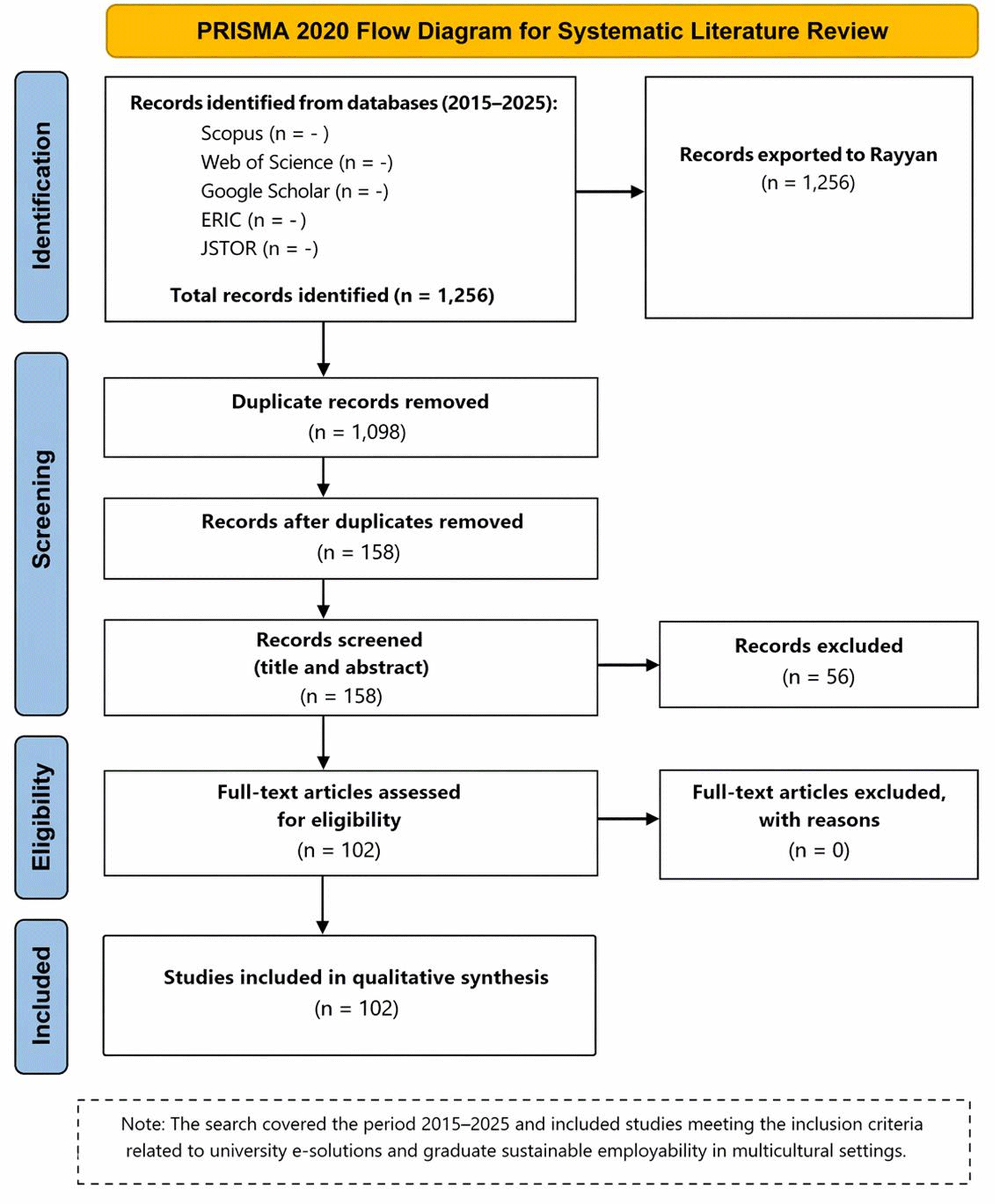
This systematic literature review included studies published between 2015 and 2025 that examined university e-solutions designed to enhance graduate sustainable employability within multicultural higher education contexts. Eligible literature comprised empirical studies, theoretical papers, and case studies focusing on digital employability interventions such as learning management systems, virtual internships, AI-based career support tools, micro-credentials, digital badges, e-portfolios, and digital networking platforms. Only studies written in English were considered. The review excluded studies focused on secondary education, vocational training, or employability approaches that did not involve digital or e-enabled systems. Opinion pieces, editorials, duplicate publications, and non-verifiable grey literature were also excluded to maintain methodological consistency and analytical rigor.
The review drew on secondary data retrieved from five major academic databases, namely Scopus, Web of Science, Google Scholar, ERIC, and JSTOR. These databases were selected due to their comprehensive coverage of higher education research, digital learning innovations, employability studies, and interdisciplinary scholarship. Additional sources were identified through backward and forward citation tracking of key studies to ensure completeness of coverage. All retrieved records were imported into Rayyan, which facilitated systematic screening and management of the review process.
A structured search strategy was developed using a combination of keywords and Boolean operators (AND, OR) to maximise the retrieval of relevant literature. Core search terms included “graduate employability,” “sustainable employability,” “digital career platforms,” “virtual internships,” “AI employability support,” “micro-credentials,” “digital badges,” “e-portfolios,” “multicultural universities,” and “work-integrated learning.” These terms were combined in various configurations, such as “graduate employability AND digital platforms AND multicultural universities” and “virtual internships OR remote projects AND employability.” Search strings were adapted across databases to align with indexing systems and improve retrieval accuracy.
The study selection process followed PRISMA 2020 guidelines to ensure transparency and reproducibility. A total of 1,256 records were initially identified across the selected databases. After importing the records into Rayyan, 1,098 duplicates were removed. The remaining 158 studies underwent title and abstract screening based on predefined eligibility criteria, resulting in the exclusion of 56 records. The full texts of the remaining 102 studies were then assessed for eligibility, and all 102 met the inclusion criteria and quality requirements, leading to their inclusion in the final synthesis.
Data extraction was conducted systematically using a structured framework designed to ensure consistency across studies. Two independent reviewers participated in the screening and extraction process to minimise selection bias and enhance reliability. Extracted information included study characteristics, types of e-solutions implemented, employability outcomes, contextual features of multicultural environments, barriers and enablers, and policy implications. Any discrepancies between reviewers were resolved through discussion and consensus, while iterative refinement of extracted data improved accuracy and completeness.
The review extracted several key data items from each included study. These included the type of university e-solution, employability outcomes reported, geographical and institutional context, participant characteristics, methodological design, and principal findings. Additional variables such as digital readiness of institutions, integration of employability systems, and alignment with Sustainable Development Goal 8 were also recorded to support comprehensive synthesis and interpretation.
Quality appraisal was undertaken using adapted critical appraisal criteria focusing on methodological rigor, clarity of reporting, credibility of findings, and relevance to multicultural higher education contexts. Each study was independently assessed by two reviewers to ensure objectivity and consistency. Studies were not excluded based on quality alone; instead, their methodological strength informed their weighting during synthesis. Disagreements in appraisal were resolved through consensus discussion.
The review considered both quantitative and qualitative effect measures reported in the included studies. Quantitative indicators included employment rates, internship placement rates, employability skill scores, and digital engagement metrics. Qualitative measures captured improvements in career readiness, digital competency development, and perceived employability enhancement. These measures collectively provided a comprehensive understanding of the effectiveness of e-solution interventions in higher education contexts.
A thematic synthesis approach was employed to analyse and integrate findings across studies. Data were coded iteratively to identify recurring patterns and emerging themes related to digital employability enhancement. The synthesis generated key thematic domains, including digital career platforms, virtual work-integrated learning, AI-enabled employability systems, micro-credentials, e-portfolios, and digital networking tools. Comparative analysis across disciplines, institutions, and regions enabled identification of contextual similarities and variations in effectiveness.
Reporting bias was assessed by examining the consistency of reported outcomes, publication types, and the potential presence of selective reporting across studies. The exclusion of non-peer-reviewed grey literature helped reduce bias from non-validated sources. In addition, cross-database searching and citation tracking were used to minimise the risk of incomplete retrieval of relevant studies.
The certainty of evidence was evaluated based on methodological quality, consistency of findings, and contextual relevance across studies. Higher certainty was assigned to studies with robust research designs, clear reporting, and consistent findings across different contexts. Lower certainty was attributed to exploratory studies or those with limited methodological transparency. Overall, the evidence base demonstrated moderate certainty in supporting the role of university e-solutions in enhancing sustainable employability.
The study selection process yielded 1,256 records from the selected databases. After removing duplicates, 158 studies remained for screening. Title and abstract screening excluded 56 studies, while full-text assessment confirmed that 102 studies met all eligibility criteria and were included in the final review. During full-text evaluation, several studies that initially appeared relevant were excluded because they did not fully align with the review focus on university-based e-solutions and sustainable employability in multicultural contexts.
A number of excluded studies focused on general employability without integrating digital or e-solution components, while others examined digital learning in higher education without linking it to employability outcomes. Additional studies were excluded because they were conducted in secondary or vocational education settings, lacked empirical or systematic methodology, or presented opinion-based or conceptual discussions without robust evidence. Some studies also failed to provide sufficient methodological detail or clear outcome reporting, limiting their suitability for inclusion. These exclusions ensured that only empirically grounded, methodologically sound, and contextually relevant studies informed the final synthesis.
The included studies represented diverse geographical regions and institutional settings, reflecting the global nature of digital transformation in higher education. Most studies examined digital employability interventions such as learning management systems, virtual internships, AI-driven career tools, and micro-credential frameworks. Methodologically, the studies included qualitative, quantitative, and mixed-methods designs, offering a broad perspective on e-solution effectiveness.
Overall, the included studies demonstrated moderate to high methodological quality, although variability existed across designs. Common limitations included reliance on self-reported data, small sample sizes, and limited cross-cultural validation. Despite these limitations, most studies provided credible evidence supporting the positive role of digital employability interventions.
Individual studies consistently reported that university e-solutions contributed positively to graduate employability outcomes. Key findings included improved digital competencies, enhanced career readiness, increased internship placements, and strengthened collaboration skills in multicultural environments. Several studies also highlighted the role of AI-based tools and digital platforms in improving access to career services.
The thematic synthesis identified six interrelated e-solution domains that collectively enhance graduate sustainable employability in multicultural higher education contexts. These include digital career development platforms that improve job matching, personalised career guidance, and labour market access; virtual and remote work-integrated learning that strengthens practical skills, global collaboration, and inclusive access to experiential learning; and AI-enhanced employability support systems that provide personalised guidance, skills gap analysis, and data-driven career decision-making.
The synthesis further highlighted the importance of micro-credentials and digital skills badges in offering flexible and verifiable recognition of competencies, digital networking and professional communities in strengthening social capital and access to hidden labour markets, and e-portfolios in supporting continuous capability development and lifelong employability. Collectively, these six domains operate in an integrated manner, reinforcing sustainable employability by improving digital competencies, expanding career opportunities, and supporting continuous professional growth within diverse and multicultural higher education environments.
The synthesis revealed notable heterogeneity across the included studies in terms of institutional context, geographical setting, methodological design, and the type and maturity of e-solutions implemented. Studies conducted in highly digitalised higher education systems generally reported stronger employability outcomes compared to those in developing or resource-constrained contexts, where limited infrastructure and digital access constrained implementation effectiveness. Variation was also observed across disciplines, with STEM-related studies more frequently reporting measurable employability gains from AI tools and virtual work-integrated learning, while humanities and social sciences showed stronger outcomes in digital networking and e-portfolio use.
Methodological diversity further contributed to heterogeneity, as quantitative studies tended to report more standardised employability outcomes such as employment rates and skill scores, whereas qualitative studies emphasised perceived employability, career readiness, and experiential learning gains. Differences in intervention duration, with short-term pilot implementations versus long-term institutional integration, also influenced outcome variability. Despite these differences, the direction of effect remained largely consistent, with most studies reporting positive contributions of e-solutions to graduate employability.
Sensitivity analyses were conducted to assess the robustness of the synthesized findings by examining whether results changed when studies with lower methodological quality, small sample sizes, or limited reporting transparency were excluded. The removal of lower-quality studies did not significantly alter the overall thematic structure or the dominance of the six identified e-solution domains, indicating stability in the synthesis outcomes.
Further sensitivity checks were performed by comparing findings across study types (qualitative, quantitative, and mixed-methods) and across high-income versus low- and middle-income country contexts. While minor variations in the strength of reported outcomes were observed, particularly in relation to AI-driven tools and infrastructure-dependent interventions, the overall pattern of positive impact remained consistent. These analyses confirmed that the synthesized conclusions are robust and not disproportionately influenced by any single study type, region, or methodological approach.
Some studies exhibited potential reporting bias due to selective outcome presentation and limited methodological transparency. However, triangulation across multiple databases and inclusion of diverse study designs helped minimise the overall impact of bias on the synthesis.
The overall certainty of evidence was moderate, with stronger confidence in studies employing robust mixed-methods and longitudinal designs. Lower certainty was associated with exploratory and conceptual studies. Despite variation, consistent convergence across findings supports the reliability of conclusions regarding the role of university e-solutions in enhancing sustainable employability.
The study is anchored in Sustainable Employability Theory, Human Capital Theory, and Digital Capability Theory, which together provide a coherent lens for explaining how e-solutions enhance graduate sustainable employability in multicultural university settings. These theories guide the systematic interpretation of literature by linking digital interventions in higher education to long-term employability outcomes, institutional investment in skills, and digital competence development.
Sustainable Employability Theory conceptualises employability as a dynamic and continuous capacity rather than a static employment outcome. The theory argues that sustained participation in work depends on the interaction between individual capabilities, available opportunities, and motivational factors, enabling individuals to remain productive, adaptable, and healthy across changing labour-market conditions.18–20 It assumes that careers evolve within unstable environments shaped by technological disruption, economic uncertainty, and shifting organisational demands, making lifelong learning and resilience essential for long-term career sustainability. Within this study, the theory frames sustainable employability as the primary outcome influenced by e-solutions that strengthen adaptability, career resilience, and lifelong learning among graduates in multicultural university contexts. Digital career platforms, virtual guidance systems, and competency-tracking tools are therefore interpreted as mechanisms that expand career opportunities and support continuous employability development, aligning with SDG 8 on decent work and economic growth.
Human Capital Theory provides an economic foundation for understanding investment in education and skill development. It posits that education, training, and experience function as forms of capital that enhance individual productivity and labour-market value.21 The theory assumes that both individuals and institutions strategically invest in knowledge and skills to improve employment prospects, income potential, and overall economic performance.22,23 In this study, Human Capital Theory explains how e-solutions function as institutional investments that enhance graduates’ competencies and labour-market readiness. Digital employability platforms, virtual internships, and online skill-building tools are viewed as mechanisms through which universities develop human capital in multicultural learning environments. The theory is relevant because it clarifies the relationship between higher education investment, skill formation, and sustainable participation in the labour market.
Digital Capability Theory emphasises the importance of digital literacy and competence in contemporary education and employment contexts. The theory argues that meaningful engagement in digital environments requires not only access to technology but also the ability to use digital tools critically, confidently, and purposefully for learning, communication, and career development.24 It further assumes that digital capability is unevenly distributed across individuals due to differences in social, cultural, and educational backgrounds, influencing employability outcomes in technology-driven economies.25 In this study, Digital Capability Theory explains how graduates’ digital competence mediates the effectiveness of e-solutions in enhancing employability. Engagement with online career services, digital job platforms, and virtual professional networks is interpreted as an expression of digital capability that shapes employability trajectories in multicultural university settings.
Taken together, these three theories form an integrated analytical framework for the study. Sustainable Employability Theory defines the long-term outcome of interest, Human Capital Theory explains institutional and individual investment in skill development, and Digital Capability Theory accounts for the enabling role of digital competence in accessing and utilising e-solutions. This integrated perspective strengthens the systematic review by providing a structured lens for analysing how digital strategies in higher education contribute to sustainable employability, inclusive labour-market participation, and sustainable economic development.
This systematic literature review examines how e-solutions in multicultural university settings enhance graduate sustainable employability, with particular emphasis on digital career development platforms as a central thematic area ( Table 1). The synthesized evidence shows that universities increasingly integrate technology-enabled career systems that support students from academic training through to employment and long-term career adaptability.26,27
Across the reviewed literature, digital career development platforms consistently emerge as integrated ecosystems that combine personalised guidance, labour-market intelligence, digital self-presentation tools, AI-based job matching, and virtual employer engagement. The synthesis indicates that these components do not operate in isolation but function collectively to strengthen sustainable employability outcomes in diverse higher education contexts.
The thematic synthesis shows that digital career development platforms play a critical role in enhancing graduate employability by embedding career development services within university e-learning environments. These platforms provide continuous, data-driven, and student-centred support systems that enable graduates to navigate increasingly complex and competitive labour markets.
Personalised career guidance is identified as a core feature of these platforms. The literature shows that universities are adopting AI-driven systems and virtual coaching tools to tailor career advice according to students’ skills, interests, and aspirations.28,29 This personalised approach enhances decision-making by aligning individual competencies with labour-market opportunities. For example, the University of Cape Town and Durban University of Technology use digital counselling systems that match student profiles with industry needs, strengthening employability outcomes.30,31 Similarly, the Indian Institute of Technology integrates structured career guidance modules within its e-learning platforms, allowing students to explore career pathways while developing relevant skills.32,33
Real-time labour-market analytics also form a key component of digital career platforms. The reviewed studies indicate that such analytics provide graduates with updated information on employment trends, skill shortages, and emerging job opportunities.34,35 This enables evidence-based career planning and continuous skills alignment with market demands.36 Erasmus University Rotterdam incorporates labour-market dashboards within its career services, allowing students to track demand in sectors such as finance, logistics, and technology.37 In Kenya, Strathmore University provides digital analytics highlighting opportunities in ICT and entrepreneurship, supporting adaptive learning and career planning.38
Digital CV and portfolio development tools further enhance graduate employability by enabling students to present their skills, experiences, and achievements in professional digital formats.39 Tools such as Canva and Portfolium are widely embedded in university systems to support e-portfolio development and personal branding.40 At Makerere University in Uganda, digital portfolio platforms allow students to showcase academic projects, internships, and leadership experiences, improving visibility to employers locally and internationally.41,42
AI-driven job-matching systems are also central to the effectiveness of digital career development platforms. The literature shows that these systems analyse student profiles and match them with suitable employment opportunities, improving efficiency in job search processes.43,44 The University of Manchester in the United Kingdom uses AI-based career portals to recommend job opportunities aligned with student competencies.45 In Nigeria, Covenant University integrates platforms such as Jobberman into its career services, providing tailored job and internship recommendations that support smoother transitions into the labour market.46,47
Virtual employer engagement spaces further extend the functionality of digital career platforms by facilitating interaction between students and employers beyond physical boundaries. Universities increasingly use virtual career fairs, webinars, and online mentorship programmes to enhance networking opportunities.48,49 The American University in Cairo connects students with multinational corporations through virtual engagement events, while Stellenbosch University in South Africa organises online company showcases and interview sessions that broaden student exposure to diverse employment opportunities.50,51
This synthesis demonstrates that digital career development platforms within university e-solutions form integrated systems that strengthen sustainable employability. By combining personalised guidance, labour-market intelligence, digital portfolios, AI-driven job matching, and virtual employer engagement, these platforms create continuous career development pathways. The evidence suggests that such systems not only enhance immediate employment outcomes but also build long-term adaptability, digital career management skills, and resilience in dynamic global labour markets.
The systematic literature review identifies virtual and remote work-integrated learning (WIL) as a key component of university e-solutions that enhances graduate sustainable employability. The evidence shows that universities increasingly adopt digitally enabled experiential learning approaches to bridge the gap between academic knowledge and practical workplace experience. These approaches strengthen students’ employability by developing workplace-relevant skills, expanding professional networks, and enhancing adaptability to dynamic labour markets while reducing geographical and logistical barriers.52–56
Across the reviewed studies, virtual and remote WIL is presented as an integrated set of practices that includes virtual internships, remote industry projects, simulation-based learning, digital mentoring, and online reflective practice. The synthesis indicates that these elements collectively contribute to sustainable employability by enabling students to engage in authentic, flexible, and technology-mediated workplace experiences.
Virtual internships are widely reported as a mechanism through which students gain practical experience in remote work environments. Universities use online internship platforms that simulate real organisational settings and allow students to participate in live projects under remote supervision.57,58 This enhances digital skills, professional competence, and workplace readiness. For instance, the University of Toronto in Canada provides virtual internships in finance, IT, and digital marketing, enabling students to contribute to live projects while receiving remote supervision.59 In Kenya, Strathmore University facilitates virtual internships with tech startups and consultancy firms, exposing students to industry practices and strengthening digital workplace competencies.60,61
Remote industry projects are also highlighted as an important feature of virtual WIL, enabling students to collaborate with organisations on real-world tasks without physical presence.62 These projects strengthen teamwork, problem-solving, and adaptability skills. At TU Delft in the Netherlands, students engage in remote engineering and sustainability projects with multinational partners, addressing real-world challenges through online collaboration.63,64 In India, Internshala Trainings connects students with companies for remote projects in software development and data analytics, supporting the acquisition of industry-relevant competencies in flexible digital environments.65,66
Simulation-based workplace learning provides structured, risk-free environments for students to practise professional scenarios.67 The University of Melbourne in Australia uses virtual simulations in business and healthcare programmes to develop competencies in areas such as project management and patient care planning.68,69 In South Africa, the University of Pretoria applies simulation tools for law students to practise courtroom procedures, enhancing critical thinking, decision-making, and professional readiness.70,71
Digital mentoring and supervision are identified as critical mechanisms for supporting students through remote professional guidance and feedback.72,73 Platforms such as MentorCity in Canada connect students with industry mentors for career advice and project supervision.74,75 In Egypt, the American University in Cairo implements digital mentorship programmes that link students with industry professionals for virtual coaching, strengthening professional networks and employability skills.76,77
Online reflective practice tools are also emphasised in the literature as essential for developing critical self-assessment and lifelong learning skills.78 Universities incorporate e-portfolios and reflective journals into WIL programmes to help students document and evaluate their learning experiences.79 At Makerere University in Uganda, students use digital reflective logs to record internship experiences and skill development, enhancing self-awareness, adaptability, and continuous learning capacity.80,81
The synthesis shows that virtual and remote work-integrated learning within university e-solutions significantly enhances sustainable graduate employability. By combining virtual internships, remote projects, simulation-based learning, digital mentoring, and reflective tools, universities create flexible and inclusive learning environments that strengthen both immediate workplace readiness and long-term employability capabilities.
The systematic literature review identifies AI-enhanced employability support as an emerging and influential component of university e-solutions that strengthens graduate sustainable employability. The synthesis shows that universities are increasingly adopting artificial intelligence to deliver personalised, data-driven employability services that align students’ skills, interests, and competencies with evolving labour market demands.82,83 These systems enhance career decision-making, improve job readiness, and support continuous skill development in competitive and dynamic employment contexts.84,85
Across the reviewed literature, AI-enhanced employability support is presented as a multi-layered construct comprising AI-driven career advising, automated skill assessment, predictive career analytics, intelligent application feedback, and adaptive learning pathways. The synthesis indicates that these tools collectively improve employability outcomes by enabling real-time personalisation and evidence-based career development.
AI-driven career advising is widely reported as a core function of AI-enabled employability systems. These tools use algorithms to generate personalised career guidance based on students’ academic performance, skills, and interests.86 For example, the University of Sydney in Australia integrates AI-powered advising systems within its career portals to help students identify potential career pathways in sectors such as technology and healthcare. In the United Kingdom, the University of Manchester employs AI chatbots that provide real-time career counselling and recommend internships and job opportunities aligned with student profiles.87
Automated skill assessments are also identified as an important feature, enabling students to evaluate their competencies and receive immediate feedback on performance gaps.88 The University of Toronto in Canada applies AI-based assessment tools in technical and business disciplines to benchmark student skills against industry standards.89 Similarly, Covenant University in Nigeria uses digital assessment platforms to evaluate both technical and soft skills, generating automated reports that guide students in improving employability readiness.90
Predictive analytics for career pathways is another key theme emerging from the synthesis. These systems analyse student data and labour-market trends to forecast suitable career trajectories and high-demand sectors.91 Erasmus University Rotterdam in the Netherlands applies predictive analytics to recommend career options based on academic performance and emerging industry needs.92 In Kenya, Strathmore University integrates predictive analytics within its e-career platforms to guide students towards high-growth sectors such as fintech and renewable energy, supporting long-term employability planning.93
Intelligent feedback systems for application improvement are also widely reported in the literature. These AI tools provide automated suggestions to enhance CVs, cover letters, and digital portfolios, improving alignment with employer expectations.94 In the United States, platforms such as VMock are used by institutions like the University of Michigan to provide structured feedback on resume formatting, content quality, and keyword optimisation for applicant tracking systems.95 In South Africa, the University of Cape Town integrates similar AI tools to support students in refining applications for internships and graduate programmes, increasing their competitiveness in global job markets.96
Adaptive learning pathways represent another significant component of AI-enhanced employability support. These systems personalise learning content based on student performance, pace, and career objectives.97 At the Indian Institute of Technology (IIT), AI-driven adaptive learning modules adjust course content and recommend supplementary resources in fields such as artificial intelligence, data science, and cybersecurity.98 In Egypt, the American University in Cairo applies adaptive e-learning systems to strengthen students’ competencies in project management, communication, and analytical skills aligned with industry needs.99
This synthesis demonstrates that AI-enhanced employability support within university e-solutions plays a critical role in strengthening sustainable graduate employability. By combining personalised advising, automated skill evaluation, predictive analytics, intelligent application feedback, and adaptive learning systems, AI technologies enable continuous, data-driven career development. The evidence suggests that these innovations not only improve immediate employability outcomes but also build long-term adaptability, self-directed learning capacity, and responsiveness to evolving global labour market demands.
The systematic literature review identifies micro-credentials and digital skills badges as a growing component of university e-solutions that enhance graduate sustainable employability. The synthesis shows that universities are increasingly adopting flexible, targeted learning pathways that enable students to acquire and demonstrate specific, industry-relevant competencies. These digital credentials support alignment between academic learning and labour market demands, particularly in rapidly evolving and skill-intensive sectors.100,101
Across the reviewed literature, micro-credentials and digital skills badges are presented as a structured ecosystem of short-cycle learning opportunities, verified skill recognition systems, skills tracking mechanisms, and stackable qualification pathways. The synthesis indicates that these elements collectively strengthen employability by enabling continuous upskilling, transparent skill validation, and lifelong learning progression.
Industry-aligned micro-courses are widely reported as a core feature of micro-credential systems. These courses provide focused training in specific competencies that directly match workplace requirements.102 For example, the University of Melbourne in Australia offers micro-courses in data analytics, digital marketing, and project management that are co-designed with industry partners to ensure practical relevance.103 In Kenya, Strathmore University provides micro-courses in fintech, entrepreneurship, and coding, aligning training with emerging sectoral demands and improving graduate employability in regional labour markets.104
Verified digital badges are also highlighted in the literature as portable credentials that formally recognise the acquisition of specific skills or achievements.105 Purdue University in the United States issues digital badges in areas such as cybersecurity and artificial intelligence, which students can display on professional platforms such as LinkedIn and digital portfolios.106 In South Africa, the University of Cape Town integrates digital badges into its e-learning systems, enabling graduates to demonstrate competencies in leadership, software tools, and analytical skills to potential employers.107
Skills mapping and progression tracking systems further enhance employability by enabling students to monitor their competency development over time. These systems identify both acquired skills and existing gaps, supporting targeted learning interventions.108 The University of British Columbia in Canada uses digital dashboards to align student competencies with industry requirements, providing structured feedback on employability readiness.109 In Nigeria, Covenant University integrates skills tracking within its micro-credential programmes to guide students through sequential learning pathways while monitoring progress toward career readiness.110
Short-cycle upskilling modules are also identified as an important mechanism for rapid skills acquisition in response to changing labour-market demands.111 At the Indian Institute of Technology (IIT) Madras, students access short online modules in emerging fields such as artificial intelligence, machine learning, and cloud computing, enabling them to remain competitive in global employment markets.112 In Egypt, the American University in Cairo offers short-cycle courses in digital entrepreneurship and data science, supporting graduates in adapting quickly to sector-specific skill requirements.113
Stackable qualifications are presented in the literature as a key feature supporting lifelong learning and continuous professional development. These systems allow micro-credentials and digital badges to accumulate into larger, formally recognised qualifications over time.114 The University of London offers stackable digital credentials that contribute toward full degree programmes, enabling flexible academic progression.115 Similarly, RMIT University in Australia implements stackable credentials in fields such as design, engineering, and business, allowing learners to build cumulative expertise while maintaining flexibility in their educational pathways.116,117
The synthesis demonstrates that micro-credentials and digital skills badges within university e-solutions provide structured, flexible, and verifiable pathways for skill acquisition and recognition. By combining industry-aligned micro-courses, digital badges, skills tracking systems, short-cycle upskilling modules, and stackable qualifications, these systems enhance graduates’ ability to adapt to changing labour-market demands. The evidence suggests that such interventions not only strengthen immediate employability but also support long-term career mobility, lifelong learning, and sustainable participation in diverse global labour markets.
The systematic literature review identifies digital networking and professional communities as a significant component of university e-solutions that enhances graduate sustainable employability. The synthesis shows that universities increasingly use digital platforms to facilitate structured interaction between students, employers, alumni, peers, and global experts. These systems strengthen professional visibility, social capital, and access to labour-market opportunities, which are essential for navigating competitive and rapidly evolving employment environments.118,119
Across the reviewed studies, digital networking and professional communities are conceptualised as interconnected mechanisms that include virtual career fairs, online professional networks, peer-to-peer intercultural collaboration spaces, digital alumni mentorship, and global virtual communities of practice. The synthesis indicates that these components collectively enhance employability by expanding access to professional networks, promoting knowledge exchange, and strengthening collaborative and intercultural competencies.
Virtual career fairs are widely reported as a key mechanism for connecting students with employers in an online environment. These platforms enable real-time engagement with multiple organisations, improving access to internships and job opportunities.120,121 For instance, Purdue University in the United States hosts virtual career fairs that connect students with multinational companies across sectors such as engineering, finance, and technology.122 In Kenya, Strathmore University organises virtual career expos that allow graduates to interact with employers, submit applications digitally, and engage in real-time discussions, thereby increasing employment access.61
Online professional networks are also identified as critical tools for career development and labour-market integration. These platforms support the creation of professional identities and facilitate continuous engagement with industry stakeholders.123 The University of Toronto in Canada integrates LinkedIn-based networking into its employability ecosystem, encouraging students to develop professional profiles, join industry groups, and interact with practitioners.124 In South Africa, the University of Cape Town provides access to digital professional networks that connect students with employers in business and ICT sectors, supporting internship and job placement opportunities.125,126
Peer-to-peer intercultural collaboration spaces are highlighted in the literature as important for developing global competencies. These platforms enable students from diverse cultural backgrounds to collaborate on academic and industry-related projects.127 Erasmus University Rotterdam in the Netherlands uses digital project rooms where international student teams work on case studies and simulations, enhancing teamwork, communication, and intercultural competence.128,129 Similarly, the American University in Cairo facilitates online collaboration platforms that connect students across North Africa and the Middle East, fostering adaptability and global employability skills.130
Digital alumni mentorship systems are also identified as an important element of professional community building. These systems connect current students with graduates who provide career guidance, networking support, and industry insights.131 The University of Manchester in the United Kingdom operates an online alumni mentoring programme that links students with professionals in sectors such as finance, law, and media.132 In Nigeria, Covenant University implements digital alumni mentorship platforms that connect students with successful graduates working in leading organisations, enabling knowledge transfer and career guidance.133
Global virtual communities of practice are further emphasised in the literature as platforms for collaborative knowledge creation and professional engagement across geographical boundaries.134 The University of Melbourne in Australia facilitates virtual communities of practice in disciplines such as health sciences and engineering, allowing students to engage with global experts and address real-world challenges.135 In India, IIT Madras hosts online professional forums where students collaborate with international peers and experts on research and innovation projects, strengthening problem-solving and technical competencies.136
The synthesis demonstrates that digital networking and professional communities within university e-solutions play a critical role in enhancing sustainable employability. By integrating virtual career fairs, online professional networks, intercultural collaboration spaces, alumni mentorship systems, and global communities of practice, universities enable students to build strong professional networks and social capital. The evidence suggests that these digital interventions not only improve immediate employment access but also foster long-term career resilience, global awareness, and collaborative competencies required in contemporary labour markets.
The systematic literature review identifies e-portfolios and continuous capability development as an important component of university e-solutions that enhances graduate sustainable employability. The synthesis shows that universities increasingly adopt digital systems that enable students to document, track, and demonstrate their skills, learning experiences, and achievements over time. These tools support reflective practice, lifelong learning, and continuous skills development, which are essential for adapting to dynamic labour market conditions.137,138
Across the reviewed literature, e-portfolios and continuous capability development are conceptualised as an integrated set of practices that include evidence-based skills documentation, multimedia competency showcases, longitudinal learning records, automated progress analytics, and reflective learning tools. The synthesis indicates that these elements collectively strengthen employability by making learning outcomes visible, measurable, and development-oriented.
Evidence-based skills documentation is widely reported as a core function of e-portfolio systems. These platforms enable students to systematically record and validate competencies gained through academic work, internships, and professional experiences.139 For example, the University of British Columbia in Canada supports students in compiling verified records of internships, research projects, and certifications within e-portfolios, providing employers with clear evidence of employability readiness.140 In Kenya, Strathmore University integrates structured skills documentation within its e-portfolio systems, ensuring that students’ practical competencies are formally recorded and accessible to potential employers.141
Multimedia showcase of competencies is also identified in the literature as an important feature of e-portfolio systems. This approach allows students to present their skills using diverse formats such as videos, presentations, and project outputs.142 The University of Melbourne in Australia encourages engineering and business students to incorporate multimedia evidence of learning, enhancing the visibility and communication of their competencies.143,144 Similarly, Covenant University in Nigeria supports students in showcasing digital marketing campaigns, coding projects, and design work through e-portfolios, enabling employers to assess applied skills beyond traditional CVs.145
Long-term learning records are highlighted as a mechanism for tracking student development across multiple academic and experiential learning contexts. These records provide a comprehensive overview of skill acquisition and progression over time.146 Erasmus University Rotterdam in the Netherlands uses integrated e-portfolio systems that consolidate academic achievements, internships, and research activities, supporting graduate reflection on competency development and career readiness.147,148 In South Africa, the University of Pretoria maintains longitudinal e-portfolio records for students in healthcare and law, enabling continuous capability development and evidence of sustained learning.149
Automated progress analytics are also identified as a significant feature of modern e-portfolio systems. These tools use data-driven approaches to monitor student progress and identify skill gaps for targeted development.150 At the Indian Institute of Technology (IIT) Madras, e-portfolio dashboards provide real-time feedback on competencies gained and areas requiring improvement, supporting personalised upskilling pathways.151 In Egypt, the American University in Cairo uses similar analytics to track student performance across projects, simulations, and micro-courses, informing tailored learning interventions that enhance employability outcomes.152
Integrative reflection tools are emphasised in the literature as essential for developing self-awareness and lifelong learning skills. These tools encourage students to critically analyse their learning experiences and plan future development.153 Makerere University in Uganda integrates reflective journals within its e-portfolio systems, prompting students to evaluate internships, projects, and collaborative work.154 In the United Kingdom, the University of Manchester embeds reflective prompts across academic modules, supporting students in linking theoretical knowledge with professional practice and strengthening adaptive learning capabilities.155
Overall, the synthesis demonstrates that e-portfolios and continuous capability development within university e-solutions provide a structured, evidence-based framework for enhancing sustainable employability. By combining skills documentation, multimedia presentation, longitudinal tracking, automated analytics, and reflective practice, these systems enable graduates to continuously monitor, demonstrate, and improve their competencies. The evidence suggests that such tools not only enhance immediate employability but also foster long-term adaptability, self-directed learning, and professional growth in increasingly complex and evolving labour markets.
Table 2 shows the results of discussion on the systematic literature reviewed of how E-Solutions enhance graduate sustainable employability in multicultural university settings to advance SDG 8 amid labour-market dynamics.
The systematic literature review shows that digital career development platforms function as integrated employability ecosystems within university e-solutions, combining personalised career guidance, labour-market analytics, AI-driven job matching, digital CV and portfolio tools, and virtual employer engagement. The synthesis indicates that these platforms enhance graduate employability by enabling continuous access to career support services that are data-driven, personalised, and aligned with evolving labour-market demands.
The findings show that personalised career guidance is increasingly delivered through AI-enabled systems and virtual coaching tools that match student profiles with career pathways.28,29 Evidence from institutions such as the University of Cape Town and Durban University of Technology demonstrates improved alignment between student competencies and industry needs.30,31 Similarly, the Indian Institute of Technology integrates structured digital career guidance within learning platforms, enabling students to explore career trajectories alongside skill development.32,33
Labour-market analytics emerge as another dominant feature, supporting evidence-based career decision-making through real-time insights into employment trends and skill demands.34,35 Erasmus University Rotterdam uses labour-market dashboards to guide students towards high-demand sectors such as finance and technology,37 while Strathmore University applies similar analytics to support transitions into ICT and entrepreneurship pathways.38 These systems strengthen responsiveness to labour-market shifts by continuously updating career intelligence.
Digital CV and portfolio tools enhance employability by enabling structured presentation of competencies in professional digital formats.39 Platforms such as Canva and Portfolium support personal branding and skills visibility,40 while Makerere University’s e-portfolio systems allow students to document internships, academic work, and leadership experiences for employer assessment.41,42 This improves transparency of graduate capabilities in recruitment processes.
AI-driven job-matching systems improve efficiency in connecting graduates to suitable employment opportunities by analysing skills and recommending relevant roles.43,44 The University of Manchester uses AI-based career portals to support targeted job recommendations,45 while Covenant University integrates Jobberman to streamline access to internships and employment opportunities.46,47 This reduces job search inefficiencies and improves labour-market matching accuracy.
Virtual employer engagement platforms extend employability support through online career fairs, webinars, and digital networking events.48,49 The American University in Cairo connects students to multinational employers through virtual engagement spaces, while Stellenbosch University provides structured online recruitment interactions that expand exposure to diverse labour-market opportunities.50,51 These platforms strengthen professional visibility and access to global networks.
Despite these advancements, the synthesis reveals several conceptual and empirical gaps. First, most studies focus on platform functionality rather than measured long-term employability outcomes, limiting evidence on whether these systems translate into sustained career progression. Second, there is limited comparative research on effectiveness across multicultural university contexts, particularly in explaining differential outcomes among diverse student populations. Third, integration between platform components (e.g., AI advising, labour analytics, and e-portfolios) is often discussed in isolation rather than as a unified employability ecosystem, indicating a fragmentation gap in the literature.
From a theoretical perspective, Sustainable Employability Theory explains the focus on continuous career adaptation, yet the review shows limited empirical validation of how digital platforms sustain employability beyond graduation. Human Capital Theory is strongly supported through evidence of skill development and labour-market alignment; however, it underexplains disparities in outcomes across student groups, particularly in resource-constrained contexts. Digital Capability Theory highlights the importance of digital skills, but the synthesis shows a persistent gap in understanding how unequal digital literacy levels affect access to and benefits from AI-driven employability systems.
These theoretical gaps converge to reveal a broader limitation: existing literature assumes relatively uniform digital readiness among students, despite evidence of unequal capability distribution in multicultural university settings. This suggests a need for future research to adopt integrated models that examine how digital capability, institutional investment in human capital, and long-term employability interact within diverse socio-cultural contexts.
In synthesis, digital career development platforms represent a significant advancement in university employability strategies, but both empirical and theoretical gaps indicate the need for more outcome-based, comparative, and integrative studies that move beyond platform description toward explaining differential employability impacts across contexts.
The systematic literature review identifies AI-enhanced employability support as an emerging and transformative component of university e-solutions that strengthens graduate sustainable employability. The synthesis shows that universities are increasingly embedding artificial intelligence into career services to deliver personalised, data-driven, and adaptive employability support systems. These systems align students’ competencies, interests, and academic profiles with dynamic labour-market demands, thereby improving career decision-making, employability readiness, and continuous skills development in rapidly changing employment contexts.82,83,84,85
The findings indicate that AI-enhanced employability support operates as a multi-layered system comprising AI-driven career advising, automated skill assessment, predictive career analytics, intelligent application feedback, and adaptive learning pathways. These components function together to provide real-time personalisation and evidence-based career development, shifting employability support from static guidance models to dynamic, continuously updating digital ecosystems.
AI-driven career advising is widely reported as a central feature of these systems, where algorithms generate tailored career recommendations based on student profiles, performance, and interests.86 The University of Sydney integrates AI-enabled advising tools to support exploration of career pathways in sectors such as technology and healthcare, while the University of Manchester uses AI chatbots to provide real-time counselling and recommend internships and job opportunities aligned with individual profiles.87 This reflects a shift towards automated, scalable career guidance that enhances responsiveness to student needs.
Automated skill assessment tools are used to evaluate competencies and provide immediate feedback on performance gaps.88 The University of Toronto applies AI-based assessments in technical and business disciplines to benchmark student abilities against industry standards,89 while Covenant University uses digital assessment systems to evaluate both technical and soft skills, generating structured reports that guide employability improvement.90 These systems strengthen transparency in skills development and support targeted upskilling.
Predictive analytics for career pathways enables forecasting of suitable careers and emerging labour-market opportunities based on student data and industry trends.91 Erasmus University Rotterdam applies predictive models to recommend career trajectories aligned with academic performance and market demand,92 while Strathmore University uses similar analytics to guide students towards high-growth sectors such as fintech and renewable energy.93 This demonstrates a shift towards anticipatory employability planning rather than reactive job searching.
Intelligent feedback systems enhance application quality by providing automated recommendations for CVs, cover letters, and digital portfolios.94 The University of Michigan uses VMock to improve resume quality through structured feedback on content and formatting,95 while the University of Cape Town integrates AI tools to enhance student applications for internships and graduate programmes, improving competitiveness in global labour markets.96 These tools improve alignment between graduate output and employer expectations.
Adaptive learning pathways personalise skill development by adjusting learning content based on student performance, pace, and career goals.97 The Indian Institute of Technology uses AI-driven systems to tailor learning in fields such as artificial intelligence and cybersecurity,98 while the American University in Cairo applies adaptive e-learning systems to strengthen communication, analytical, and project management skills aligned with industry needs.99 This reinforces continuous alignment between education and employability requirements.
Despite these advancements, the synthesis reveals several critical gaps. First, most studies focus on system functionality rather than long-term employability outcomes, limiting evidence on whether AI interventions translate into sustained career progression beyond initial employment. Second, there is limited exploration of ethical implications and transparency in AI-driven career decision systems, particularly regarding algorithmic bias in career recommendations. Third, the literature lacks sufficient comparative analysis of AI effectiveness across multicultural and resource-diverse university settings, despite evidence that digital readiness varies significantly across student populations.
From a theoretical perspective, Sustainable Employability Theory explains the focus on continuous adaptation supported by AI systems; however, the synthesis indicates limited evidence on whether AI tools truly enhance long-term employability stability across career transitions. Human Capital Theory is strongly reflected in the emphasis on skill acquisition, assessment, and labour-market alignment, yet it does not fully account for inequalities in access to AI-driven systems or differences in outcomes across student groups. Digital Capability Theory is particularly relevant, as the effectiveness of AI-enhanced employability support depends heavily on students’ ability to interpret and engage with digital systems. However, the review reveals a gap in understanding how variations in digital capability shape differential benefits from AI-based employability tools.
In synthesis, AI-enhanced employability support represents a significant advancement in university e-solutions, shifting employability development towards intelligent, adaptive, and predictive systems. However, the identified empirical and theoretical gaps suggest the need for future research that moves beyond system description to examine long-term outcomes, ethical considerations, and differential impacts across diverse educational and cultural contexts.
The systematic literature review identifies micro-credentials and digital skills badges as a rapidly expanding component of university e-solutions that enhance graduate sustainable employability. The synthesis shows that universities are increasingly adopting flexible and modular learning pathways that enable students to acquire, certify, and demonstrate specific competencies aligned with industry requirements. These systems strengthen the alignment between academic provision and labour-market demands, particularly in fast-changing and skill-intensive sectors.100,101
The findings indicate that micro-credentials and digital skills badges operate as an interconnected ecosystem comprising short-cycle learning modules, verified credentialing systems, skills tracking tools, and stackable qualification pathways. Together, these elements enhance employability by promoting continuous upskilling, transparent recognition of competencies, and structured lifelong learning progression.
Industry-aligned micro-courses are widely reported as a central element of this ecosystem. These courses provide targeted training in specific skills that directly correspond to labour-market needs.102 The University of Melbourne in Australia offers co-designed micro-courses in data analytics, digital marketing, and project management in collaboration with industry partners.103 In Kenya, Strathmore University delivers micro-courses in fintech, entrepreneurship, and coding, aligning training with emerging regional economic sectors and improving graduate employability.104
Verified digital badges function as portable credentials that formally recognise the acquisition of specific skills and competencies.105 Purdue University in the United States awards digital badges in areas such as cybersecurity and artificial intelligence, enabling students to showcase validated skills on professional platforms such as LinkedIn.106 The University of Cape Town integrates similar badge systems within its e-learning environment, allowing graduates to demonstrate competencies in leadership, software applications, and analytical skills to employers.107
Skills mapping and progression tracking systems further support employability by enabling students to monitor skill acquisition and identify competency gaps over time.108 The University of British Columbia uses digital dashboards to align student skills with industry expectations, providing structured feedback on employability readiness.109 Covenant University in Nigeria integrates skills tracking within its micro-credential programmes, guiding learners through sequenced pathways while monitoring progression towards career readiness.110
Short-cycle upskilling modules are identified as an important mechanism for rapid responsiveness to changing labour-market demands.111 At the Indian Institute of Technology Madras, students access online modules in emerging fields such as artificial intelligence, machine learning, and cloud computing.112 The American University in Cairo provides similar short-cycle programmes in digital entrepreneurship and data science, supporting rapid adaptation to evolving sectoral skill requirements.113
Stackable qualifications support lifelong learning by allowing micro-credentials and digital badges to accumulate into larger, formally recognised academic awards over time.114 The University of London offers stackable digital credentials that contribute towards full degree programmes, enabling flexible progression routes.115 RMIT University in Australia applies similar models in design, engineering, and business disciplines, supporting cumulative skill development while maintaining learning flexibility.116,117
Despite these developments, the synthesis reveals several gaps. First, limited evidence exists on the long-term impact of micro-credentials on sustained career progression and employment stability, as most studies focus on short-term skill acquisition and certification outcomes. Second, there is insufficient comparative research on employer recognition and valuation of digital badges across different regions and industries, raising questions about their labour-market legitimacy. Third, the literature provides limited insight into how micro-credential systems interact with traditional degree programmes, particularly in terms of integration, redundancy, or substitution effects.
From a theoretical perspective, Sustainable Employability Theory explains the relevance of micro-credentials in supporting continuous skill renewal and long-term career adaptability; however, the synthesis indicates limited evidence on whether these credentials translate into sustained employability outcomes across career transitions. Human Capital Theory strongly underpins the findings by framing micro-credentials as targeted investments in skill accumulation and productivity enhancement, yet it does not fully account for differences in recognition and value across labour markets. Digital Capability Theory highlights the importance of learners’ ability to engage with digital learning systems and credential platforms, but the review reveals a gap in understanding how unequal digital access and literacy affect participation in micro-credential ecosystems.
In synthesis, micro-credentials and digital skills badges represent a significant shift towards modular, flexible, and competency-based employability development within university e-solutions. However, the identified empirical and theoretical gaps suggest the need for future research that examines long-term employability outcomes, employer acceptance, and the structural integration of micro-credentials within formal higher education systems.
The systematic literature review identifies digital networking and professional communities as a critical component of university e-solutions that enhances graduate sustainable employability. The synthesis shows that universities increasingly deploy digital platforms to facilitate structured interaction between students and employers, alumni, peers, and global experts. These systems strengthen professional visibility, expand access to labour-market opportunities, and build social capital, all of which are essential for navigating competitive and rapidly evolving employment environments.118,119
The findings indicate that digital networking operates through interconnected mechanisms including virtual career fairs, online professional networks, peer-to-peer intercultural collaboration spaces, digital alumni mentorship, and global virtual communities of practice. These components collectively enhance employability by widening access to professional ecosystems, supporting knowledge exchange, and strengthening collaborative and intercultural competencies required in global labour markets.
Virtual career fairs are widely used as digital recruitment spaces that connect students with multiple employers in real time, improving access to internships and job opportunities.120,121 Purdue University in the United States uses virtual career fairs to connect students with multinational firms across engineering, finance, and technology sectors.122 Similarly, Strathmore University in Kenya facilitates virtual expos that enable direct engagement with employers and real-time application processes, improving employment access for graduates.61
Online professional networks support continuous career development through identity formation and sustained engagement with industry stakeholders.123 The University of Toronto integrates LinkedIn-based networking into its employability systems, encouraging students to build professional profiles and participate in industry groups.124 The University of Cape Town similarly links students to digital professional networks that facilitate internships and job placements in business and ICT sectors.125,126 These systems reinforce visibility and labour-market connectivity.
Peer-to-peer intercultural collaboration spaces enhance employability by enabling students from diverse backgrounds to work together on academic and industry-related projects.127 Erasmus University Rotterdam uses digital project rooms where international teams collaborate on case studies and simulations, strengthening teamwork and intercultural competence.128,129 The American University in Cairo facilitates cross-regional online collaboration, supporting adaptability and global employability skills.130 These platforms reflect increasing demand for cross-cultural collaboration in global work environments.
Digital alumni mentorship systems strengthen professional development through structured guidance and knowledge transfer from graduates to current students.131 The University of Manchester operates online mentoring programmes linking students with professionals in sectors such as finance, law, and media.132 Covenant University in Nigeria uses digital alumni platforms to connect students with industry professionals, enhancing career guidance and networking opportunities.133 These systems extend institutional support beyond graduation pathways.
Global virtual communities of practice enable collaborative knowledge creation and professional engagement across geographical boundaries.134 The University of Melbourne facilitates virtual communities in disciplines such as health sciences and engineering, allowing students to engage with global experts and address real-world challenges.135 IIT Madras hosts similar online forums where students collaborate with international peers and researchers on innovation and technology projects.136 These platforms strengthen problem-solving and knowledge co-creation capacities.
Despite these advances, the synthesis reveals several gaps. First, there is limited empirical evidence on the strength of network outcomes, particularly how digital connections translate into actual employment or long-term career advancement. Second, the literature underexplores inequalities in access and participation, particularly for students with limited digital literacy or weak institutional support, which may constrain benefits from networking platforms. Third, there is insufficient analysis of network quality versus network quantity, as most studies focus on access to platforms rather than the depth, durability, or effectiveness of professional relationships formed.
From a theoretical perspective, Sustainable Employability Theory explains the importance of ongoing relationship-building and adaptability through professional networks, yet the synthesis shows limited evidence on how digital networking sustains employability over long-term career trajectories. Human Capital Theory partially explains networking as a mechanism for enhancing career opportunities through improved access to information and labour-market entry points, but it underrepresents the relational and social nature of employability development. Digital Capability Theory is particularly relevant, as effective participation in digital networking ecosystems depends on graduates’ ability to navigate platforms, communicate professionally, and engage in virtual collaboration; however, the review highlights gaps in understanding how disparities in digital competence shape unequal networking outcomes.
In synthesis, digital networking and professional communities significantly enhance sustainable employability by expanding access to professional ecosystems and strengthening social capital. However, the identified empirical and theoretical gaps suggest the need for future research that moves beyond platform adoption to examine network effectiveness, equity of access, and long-term career impacts within diverse and multicultural university contexts.
The systematic literature review identifies e-portfolios and continuous capability development as a key component of university e-solutions that enhances graduate sustainable employability. The synthesis shows that universities increasingly implement digital portfolio systems that enable students to document, monitor, and demonstrate their skills, learning experiences, and achievements over time. These systems strengthen reflective practice, continuous learning, and adaptive capability development, which are essential for navigating dynamic and evolving labour-market conditions.137,138
The findings indicate that e-portfolios function as structured, multidimensional systems that integrate evidence-based skills documentation, multimedia showcases of competencies, longitudinal learning records, automated progress analytics, and reflective learning tools. These elements collectively improve employability by making learning outcomes more visible, verifiable, and development-oriented, while also supporting continuous self-assessment and skill enhancement.
Evidence-based skills documentation is widely emphasised as a core function of e-portfolio systems. These platforms allow students to systematically record and validate competencies acquired through academic work, internships, and professional engagements.139 The University of British Columbia in Canada supports students in compiling verified records of internships, research outputs, and certifications within e-portfolios, strengthening employer confidence in graduate readiness.140 In Kenya, Strathmore University integrates structured documentation systems that ensure student competencies are formally recorded and accessible to employers.141
Multimedia competency showcases enhance employability by enabling students to present skills through diverse formats such as videos, presentations, and project artefacts.142 The University of Melbourne encourages engineering and business students to integrate multimedia evidence into their portfolios, improving the communication and visibility of applied skills.143,144 Covenant University in Nigeria supports similar practices, where students present digital marketing campaigns, coding outputs, and design projects to demonstrate practical competencies beyond traditional CV formats.145
Longitudinal learning records provide a continuous overview of student development across academic and experiential learning contexts.146 Erasmus University Rotterdam uses integrated e-portfolio systems that consolidate academic achievements, internships, and research activities to support reflective assessment of career readiness.147,148 The University of Pretoria maintains longitudinal records for healthcare and law students, enabling continuous tracking of competency development and sustained learning progression.149
Automated progress analytics enhance the functionality of e-portfolios by enabling data-driven monitoring of student development and identification of skill gaps.150 At the Indian Institute of Technology Madras, digital dashboards provide real-time feedback on competency acquisition and highlight areas requiring improvement, supporting targeted upskilling.151 The American University in Cairo uses similar analytics to track performance across simulations, projects, and micro-courses, informing personalised learning interventions that strengthen employability outcomes.152
Integrative reflection tools support the development of self-awareness and lifelong learning capabilities by encouraging students to critically evaluate their learning experiences and plan future development.153 Makerere University incorporates reflective journals within its e-portfolio systems, enabling students to assess internship and project experiences systematically.154 The University of Manchester embeds reflective prompts across academic modules, supporting students in linking theoretical knowledge with professional practice and strengthening adaptive learning competencies.155
Despite these developments, the synthesis reveals several gaps. First, there is limited evidence on how e-portfolios influence actual labour-market outcomes, particularly long-term career progression beyond initial employment. Second, the literature provides insufficient analysis of employer engagement with e-portfolio systems, particularly regarding how frequently and effectively employers use them in recruitment decisions. Third, there is a gap in understanding the standardisation of e-portfolio systems across institutions, which may affect comparability and recognition of competencies across different labour markets and regions.
From a theoretical perspective, Sustainable Employability Theory explains the role of e-portfolios in supporting continuous adaptation, reflection, and lifelong learning; however, the synthesis shows limited evidence on whether these systems translate into sustained employability stability over time. Human Capital Theory supports the view that e-portfolios enhance the signalling and accumulation of skills, yet it does not fully explain differences in how employers interpret or value documented competencies. Digital Capability Theory is particularly relevant, as effective use of e-portfolios depends on students’ ability to engage with digital documentation, reflection, and analytics tools; however, the review reveals a gap in understanding how disparities in digital competence influence the quality and effectiveness of portfolio use.
In synthesis, e-portfolios and continuous capability development represent a structured mechanism for enhancing sustainable employability through documentation, reflection, and continuous skills improvement. Nevertheless, the identified empirical and theoretical gaps indicate the need for future research focusing on long-term employability outcomes, employer utilisation of e-portfolios, and cross-institutional comparability within diverse labour-market contexts.
The systematic literature review demonstrates that university e-solutions have significant practical implications for strengthening graduate sustainable employability, particularly in multicultural higher education contexts. Across the synthesized evidence, digital employability systems are shown to shift universities from traditional, episodic career support models to continuous, technology-enabled ecosystems that integrate career development into learning processes. This transformation has direct implications for curriculum design, institutional career services, student engagement, and employer collaboration.
A key implication is the need for universities to embed digital career development platforms as core institutional infrastructure rather than optional support services. The review shows that tools such as personalised career guidance systems, labour-market analytics, AI-driven job matching, and digital portfolio tools function most effectively when integrated within academic learning environments. This requires universities to align curriculum content with real-time labour-market intelligence, ensuring that students are continuously exposed to evolving skill demands rather than relying on outdated career information. Institutions such as Strathmore University and Erasmus University Rotterdam illustrate how embedding labour-market dashboards into career systems supports ongoing curriculum responsiveness and graduate readiness.37,38
The findings also imply that universities must prioritise the development of AI-enabled employability ecosystems to improve efficiency and precision in career support services. AI-driven advising, predictive analytics, and automated skill assessment tools enhance the ability of institutions to provide personalised guidance at scale. Practically, this requires investment in digital infrastructure, staff training, and ethical governance frameworks to ensure transparency and fairness in algorithmic decision-making. The use of AI systems at institutions such as the University of Manchester and the University of Sydney indicates that universities can improve career decision-making and job matching efficiency when these systems are systematically integrated into student support services.86,87
Another practical implication is the increasing importance of digital skills development as a foundational graduate competency. The synthesis shows that the effectiveness of e-solutions depends heavily on students’ ability to engage with digital platforms, interpret labour-market data, and manage online professional identities. This implies that universities must integrate digital capability development into both academic and employability curricula. Without targeted digital literacy training, the benefits of AI systems, e-portfolios, and online networking platforms may remain unevenly distributed among students, particularly in multicultural settings where digital readiness varies.
The review further highlights the importance of strengthening work-integrated learning through virtual and remote modalities. Virtual internships, remote industry projects, and simulation-based learning provide scalable opportunities for students to gain workplace experience, particularly in contexts where physical placement opportunities are limited. Practically, this requires universities to establish stronger partnerships with industry actors to co-design digital work-integrated learning experiences. Institutions such as the University of Toronto and TU Delft demonstrate that structured virtual engagement with employers enhances practical skill development and improves transition into employment.59,63
Micro-credentials and digital skills badges also present practical implications for lifelong learning and curriculum flexibility. The findings suggest that universities should adopt modular learning structures that allow students to acquire targeted competencies alongside formal degree programmes. This requires institutional recognition of micro-credentials within academic credit systems and stronger alignment with industry certification frameworks. The integration of stackable qualifications at institutions such as the University of London and RMIT University illustrates how flexible credentialing systems can support continuous professional development and career mobility.115,116
The synthesis further implies that universities must invest in strengthening digital networking ecosystems to enhance graduate social capital. Virtual career fairs, online professional networks, and alumni mentorship platforms provide essential bridges between students and labour markets. Practically, this requires universities to institutionalise employer engagement strategies that extend beyond physical campus recruitment to sustained digital interaction. The use of virtual engagement platforms at Purdue University and Stellenbosch University demonstrates how structured online networking increases graduate access to employment opportunities.122,51
E-portfolios also carry important practical implications for employability assessment and graduate visibility. The findings indicate that universities should standardise e-portfolio use across programmes to ensure consistent documentation of skills and achievements. This requires integrating portfolio development into assessment frameworks and ensuring that employers are actively engaged in interpreting digital competency records. Institutions such as the University of British Columbia and Makerere University show that structured e-portfolio systems enhance transparency of graduate capabilities and support evidence-based recruitment decisions.140,154
From a policy perspective, the review implies that national higher education systems should develop regulatory and quality assurance frameworks for digital employability tools. This includes establishing standards for AI use in career services, ensuring data privacy in student employability platforms, and promoting interoperability of digital credentials across institutions and borders. Without such frameworks, disparities in platform quality and access may reinforce existing inequalities in graduate employability.
In summary, the practical implications of university e-solutions point towards a fundamental transformation of employability development systems. Universities are required to move towards integrated, data-driven, and digitally enabled ecosystems that combine career guidance, skills development, workplace learning, and professional networking. However, the effectiveness of these systems depends on institutional investment, digital capability development, employer engagement, and supportive policy frameworks that ensure equitable access and long-term sustainability of graduate employability outcomes.
The systematic literature review indicates that enhancing graduate sustainable employability through university e-solutions requires coordinated action across universities, policymakers, and industry stakeholders. The evidence shows that employability is no longer shaped solely by academic qualifications, but by integrated digital ecosystems that combine skills development, career guidance, experiential learning, and professional networking. The following recommendations are therefore grounded in the synthesized findings of the review.
Universities should institutionalise digital employability ecosystems rather than treating e-solutions as supplementary services. This includes embedding digital career development platforms, AI-enhanced employability tools, micro-credential systems, and e-portfolio frameworks directly into curricula and assessment structures. The findings show that personalised career guidance, labour-market analytics, and AI-driven advising systems are most effective when integrated into academic programmes rather than accessed externally.28,34,86 Universities should therefore redesign curricula to include continuous career planning components supported by real-time labour-market intelligence, ensuring that students are consistently exposed to evolving skill demands.
In addition, universities should expand the use of structured micro-credentials and stackable digital badges as formal components of degree programmes. The review demonstrates that short-cycle learning modules and industry-aligned micro-courses enhance immediate employability by providing targeted, demand-driven skills.102,103 To strengthen their impact, institutions should ensure that micro-credentials are credit-bearing, quality-assured, and aligned with national qualification frameworks. This would enhance their recognition by employers and reduce fragmentation between formal degrees and short-cycle learning pathways.
A further recommendation is the strengthening of AI-enabled employability support systems, with clear governance and ethical oversight mechanisms. The evidence shows that AI-driven career advising, predictive analytics, and automated skill assessments improve decision-making and job matching efficiency.86,91,94 However, the review also highlights risks related to unequal digital capability and potential algorithmic bias. Universities should therefore establish transparent AI governance frameworks that regulate data use, ensure fairness in career recommendations, and provide students with guidance on interpreting AI-generated outputs. Training in digital literacy should also be prioritised to reduce disparities in access and outcomes.
Universities should also prioritise the expansion of virtual and remote work-integrated learning as a core employability strategy. The findings show that virtual internships, remote industry projects, simulation-based learning, and digital mentoring significantly enhance workplace readiness and adaptability.57,62,67,72 To maximise impact, institutions should develop structured partnerships with industry to co-design virtual work experiences that reflect real organisational challenges. This requires formalised agreements with employers to ensure continuity, quality supervision, and alignment with labour-market needs.
Policymakers and higher education regulators should develop national and regional frameworks to standardise digital employability systems. The synthesis shows variability in the design, recognition, and implementation of e-portfolios, micro-credentials, and AI-based tools across institutions, which limits comparability and portability of skills.108,114 Policy frameworks should therefore establish interoperability standards for digital credentials, ethical guidelines for AI use in education, and funding mechanisms that support digital infrastructure development, particularly in resource-constrained institutions.
Industry stakeholders should be more actively integrated into university digital employability ecosystems through structured and sustained collaboration. The findings show that virtual career fairs, alumni mentorship programmes, and global communities of practice significantly enhance employability by strengthening professional networks and exposing students to real-world expectations.120,131,134 Employers should therefore participate not only in recruitment activities but also in curriculum co-design, virtual supervision of student projects, and mentorship within digital platforms. This would ensure stronger alignment between graduate capabilities and workplace requirements.
Finally, universities should strengthen the use of e-portfolios as central instruments for employability assessment and lifelong learning tracking. The review shows that e-portfolios enhance visibility of competencies through documentation, multimedia evidence, and reflective practice.139,142,153 To improve their effectiveness, institutions should standardise e-portfolio frameworks across programmes and actively involve employers in their evaluation. This would enhance their credibility as reliable indicators of graduate capability in recruitment and selection processes.
In synthesis, the recommendations highlight the need for an integrated, system-wide approach in which universities, policymakers, and industry actors jointly develop digital employability ecosystems. Such coordination ensures that graduates are not only equipped with relevant skills but are also embedded in continuous, technology-enabled pathways that support sustainable employability across diverse and evolving labour markets.
This systematic literature review demonstrates that university e-solutions play a central and transformative role in enhancing graduate sustainable employability within multicultural higher education settings. The evidence shows that employability development has increasingly shifted from traditional, curriculum-bound preparation to integrated digital ecosystems that support continuous, flexible, and personalised career development. Across the reviewed studies, key e-solutions such as digital career development platforms, AI-enhanced employability systems, micro-credentials, digital skills badges, virtual work-integrated learning, digital networking communities, and e-portfolios collectively contribute to strengthening graduate readiness for complex and evolving labour markets.
The synthesis indicates that these digital interventions function as interconnected components rather than isolated tools. Digital career platforms provide personalised guidance and real-time labour-market intelligence, while AI-driven systems enhance decision-making, skills assessment, and career forecasting. Micro-credentials and digital badges enable targeted and verifiable skill acquisition aligned with industry needs. E-portfolios support continuous capability development through structured documentation and reflective learning, while digital networking and professional communities expand access to social capital, mentorship, and global employment opportunities. Virtual and remote work-integrated learning further strengthens employability by providing authentic workplace experiences in flexible, technology-mediated environments.
The integration of Sustainable Employability Theory, Human Capital Theory, and Digital Capability Theory offers a coherent explanatory framework for these findings. Sustainable Employability Theory explains employability as a dynamic, long-term capability shaped by adaptability and lifelong learning. Human Capital Theory highlights the role of institutional investment in developing skills and competencies that increase labour-market value. Digital Capability Theory explains how digital competence influences the effectiveness of e-solutions, particularly in multicultural contexts where variations in access and technological proficiency shape outcomes.
The review also highlights important structural and contextual gaps. Despite the growing adoption of e-solutions, disparities in digital access, uneven institutional capacity, and differences in employer engagement limit the uniform effectiveness of these systems across regions and student populations. In addition, the synthesis suggests a need for stronger integration between digital employability tools and formal curriculum structures, as well as more standardised frameworks for recognising micro-credentials and digital skills across institutions and labour markets.
The findings underscore that university e-solutions represent a significant shift in graduate employability development, moving towards digitally enabled, continuous, and learner-centred career ecosystems. These systems not only improve immediate employability outcomes but also build long-term adaptability, professional resilience, and lifelong learning capacity. Strengthening their integration, accessibility, and institutional alignment is essential for ensuring inclusive and sustainable graduate employability in increasingly digital and globalised labour markets.
Future research should explore the long-term impact of digital employability solutions on career trajectories across diverse cultural and socio-economic contexts. While the current findings highlight the benefits of micro-credentials, e-portfolios, AI-enhanced support, and digital networking, there is limited evidence on how these interventions influence sustained employability over time, particularly in underrepresented regions with constrained digital infrastructure. Comparative studies examining variations in outcomes across countries, disciplines, and institutional types could provide deeper insights into contextual factors that enhance or limit effectiveness.
Research could also investigate the interplay between digital capability and equitable access, focusing on how differences in technological proficiency, internet connectivity, and digital literacy affect graduates’ ability to leverage e-solutions. Understanding these disparities would inform the design of inclusive digital strategies that address barriers to participation and ensure that all students, regardless of background, can benefit from technology-driven employability initiatives.
Additionally, future studies might evaluate the integration of emerging technologies, such as artificial intelligence and virtual reality, within work-integrated learning and professional networking platforms. Assessing the pedagogical effectiveness, scalability, and cost-efficiency of these innovations could guide universities in implementing adaptive and sustainable digital employability programmes. Such research would contribute to evidence-based policy development, ensuring that higher education institutions are equipped to prepare graduates for rapidly evolving global labour markets.
One major limitation of the study is the reliance on documented cases and existing literature, which may not fully capture the nuanced experiences of students across diverse multicultural university settings. While the review highlights successful implementation of e-solutions such as micro-credentials, digital badges, e-portfolios, and AI-driven platforms, the findings may be context-specific and influenced by regional, institutional, or technological factors. This limits the generalisability of the conclusions, as the effectiveness of digital interventions could vary significantly depending on local infrastructure, access to technology, and cultural factors affecting student engagement.
Another limitation is the uneven representation of global contexts within the findings. While the review includes examples from countries such as Australia, Canada, Kenya, India, and South Africa, there is limited coverage of low-resource or underrepresented regions where access to digital infrastructure, industry partnerships, and e-learning platforms may be constrained. This creates a potential bias in understanding the applicability and scalability of e-solutions for enhancing graduate employability, as the strategies highlighted may not be feasible or effective in contexts with limited technological or institutional capacity.
| Views | Downloads | |
|---|---|---|
| F1000Research | - | - |
|
PubMed Central
Data from PMC are received and updated monthly.
|
- | - |
Provide sufficient details of any financial or non-financial competing interests to enable users to assess whether your comments might lead a reasonable person to question your impartiality. Consider the following examples, but note that this is not an exhaustive list:
Sign up for content alerts and receive a weekly or monthly email with all newly published articles
Already registered? Sign in
The email address should be the one you originally registered with F1000.
You registered with F1000 via Google, so we cannot reset your password.
To sign in, please click here.
If you still need help with your Google account password, please click here.
You registered with F1000 via Facebook, so we cannot reset your password.
To sign in, please click here.
If you still need help with your Facebook account password, please click here.
If your email address is registered with us, we will email you instructions to reset your password.
If you think you should have received this email but it has not arrived, please check your spam filters and/or contact for further assistance.

Comments on this article Comments (0)