Introduction
In 2024, an estimated 40.8 million people lived with HIV. The WHO targets that by 2025, 95% of people with HIV should have a diagnosis, 95% of those enrolled in antiretroviral treatment, and 95% achieving viral load suppression. However, in 2024, these figures only reached 87%, 89%, and 94%, leaving roughly 5.3 million individuals undiagnosed.1 Closing this diagnostic gap remains critical to achieving WHO targets. Third-generation HIV testing introduced lateral-flow immunoassay rapid diagnostic tests (RDTs) that detect antibodies, now the backbone of many national HIV diagnosis algorithms worldwide. RDTs deliver results within minutes and require fewer resources than conventional laboratory testing, making them advantageous for point-of-care use.2 Despite their widespread adoption, diagnosing HIV rapidly remains a significant gap in reaching WHO targets.
Past meta-analyses investigating RDT performance were published before 2020, and new studies have since emerged.3–8 HIV diagnostic research continues to evolve, including advancements such as digital self-tests, though current WHO guidelines still recommend HIV self-testing (HIVST) as optional, with low certainty of evidence.9 This study therefore aims to update and expand prior reviews by establishing reliable sensitivity and specificity estimates across diverse populations, given that test performance variability can meaningfully impact clinical and public health outcomes. It covers adults, children, and UNAIDS-defined key populations, reporting pooled diagnostic accuracy estimates (sensitivity, specificity, diagnostic odds ratio, and summary ROC) against multiple reference standards, with subgroup analyses exploring specimen type, administration method, and testing setting.
Methods
Study eligibility criteria
Studies were eligible if they evaluated the diagnostic accuracy of rapid HIV tests in participants with unknown HIV status, including children (aged 18 months to 18 years) and adults. Eligible populations encompassed the general population, individuals seeking voluntary counseling and testing (VCT), those starting provider-initiated testing and counseling (PITC), pregnant women, and key populations as defined by UNAIDS. The index test included any commercially available blood-based or oral fluid-based RDT from third or fourth-generation testing methods. The target condition was HIV infection, defined by confirmed presence of HIV-1 or HIV-2 antibodies or antigens. Reference standards included national testing algorithms, EIA, ELISA, Western blot, and nucleic acid tests (NAT). Eligible designs were observational studies or RCTs, whether laboratory- or field-based, published in peer-reviewed journals between January 2010 and 31 August 2025, in English. Studies were excluded if they focused on early infant diagnosis, individuals on ART or PrEP, or acute HIV infection prior to seroconversion, or if they failed to report sufficient data to construct 2 × 2 contingency tables.
Information sources, search, study selection
PubMed, Scopus, Cochrane Library, and DOAJ were searched, supplemented by reference lists, reverse citation searching, conference proceedings, and short communications. Search terms combined keywords related to HIV, RDTs, diagnostic performance, and self-testing, covering publications from 2010 to 31 August 2025. Records were imported into Rayyan for deduplication and screened independently by two reviewers (ANS, RRT). Full texts of potentially relevant studies were assessed for inclusion, with disagreements resolved through a third reviewer (AGK).
Data collection
Data were extracted using a piloted, standardized form by two independent reviewers (RT and ANS). Extracted variables included study characteristics, index test details, reference standard, 2 × 2 table data, and diagnostic accuracy outcomes. Study authors were contacted when data were unclear. Risk of bias and applicability were assessed using QUADAS-2 across four domains: patient selection, index test, reference standard, and flow and timing. For studies reporting multiple brands, QUADAS-C was applied. Disagreements were resolved by a third reviewer (AGK).
Data synthesis
The primary measures were sensitivity and specificity. Meta-analysis employed a Bayesian bivariate random-effects model,10 jointly modeling sensitivity and specificity while accounting for their correlation and between-study heterogeneity. Analyses were performed in R using meta4diag, INLA, and tidyverse packages. Summary estimates included pooled sensitivity, specificity, diagnostic odds ratio, and SROC curves with 95% posterior intervals. Heterogeneity was assessed via τ2 values and visual inspection of SROC curves and forest plots. Subgroup analyses were conducted for specimen type, test mode, and test setting. Review is registered in Prospero (PROSPERO 2025 CRD420251244881).
Results
Literature search and study selection
We identified 5,012 records through database searches (
Figure 1). After removing 1,124 duplicates, 3,888 unique records were screened by title and abstract, resulting in 3,695 exclusions. Full texts of 193 articles were assessed, of which 27 could not be retrieved and 112 of the remaining 166 were excluded. A total of 54 studies were included in the meta-analyses,8,11–63 with characteristics detailed in the supplementary materials. Studies originated from sub-Saharan Africa, Asia, and Latin America, with some conducted in laboratory environments using stored serum samples. Populations included adults, adolescents, pregnant women, children, and key groups such as men who have sex with men, sex workers, transgender individuals, people who inject drugs, and serodiscordant couples. Sample sizes ranged from fewer than 100 to over 13,000, and reference standards included EIA, ELISA, Western blot, PCR, or combinations thereof.
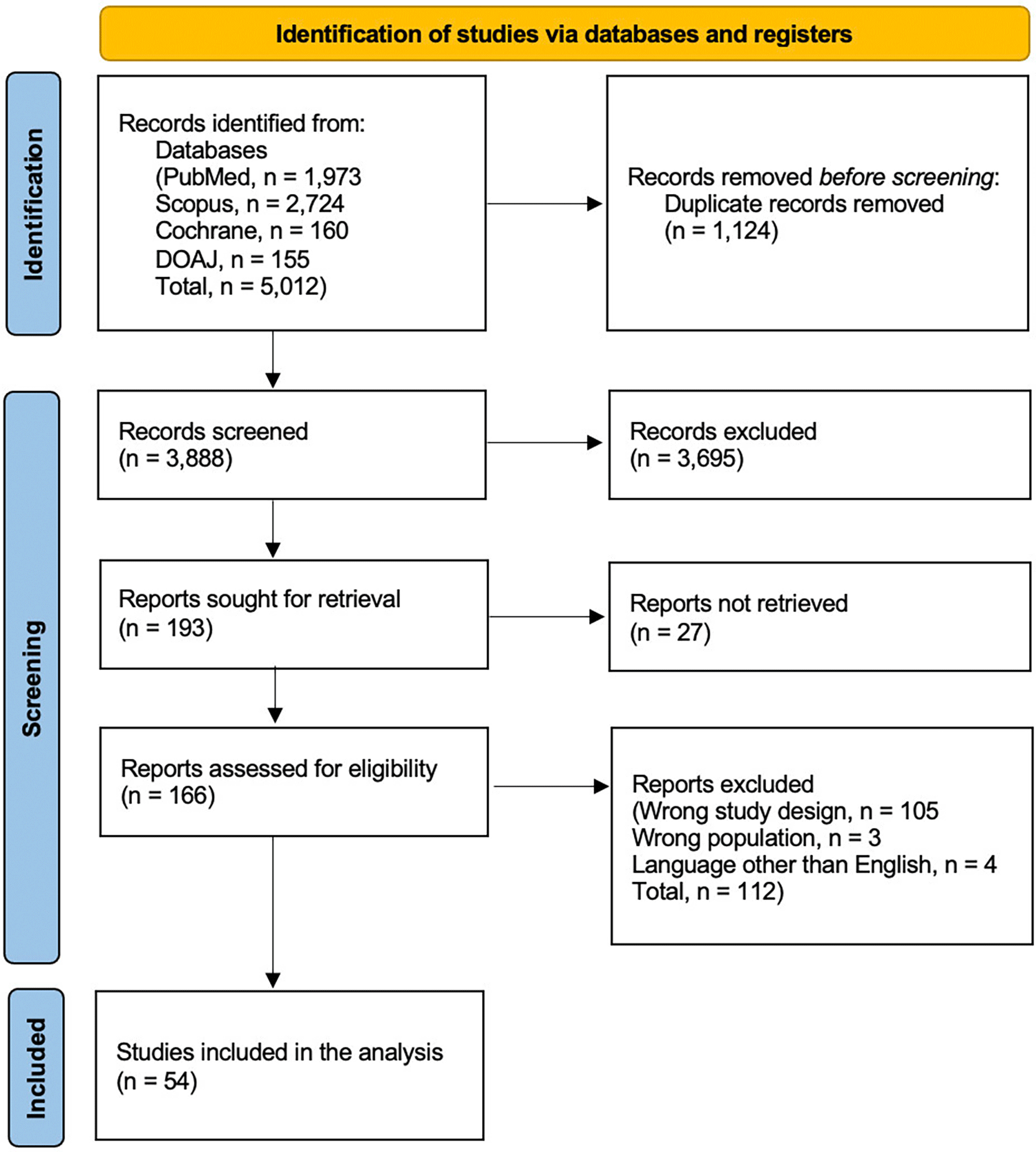
Figure 1. PRISMA flow diagram.
The overall assessment of bias showed that only about half of the studies had a low risk of bias. Nearly 75% of the studies were identified as having a low risk in patient selection, as well as flow and timing (
Figure 2). There were significant concerns about the handling of the index test and reference standards. These bias issues mainly stemmed from inadequate reporting of blinding and unclear personnel procedures or assignments for each test.
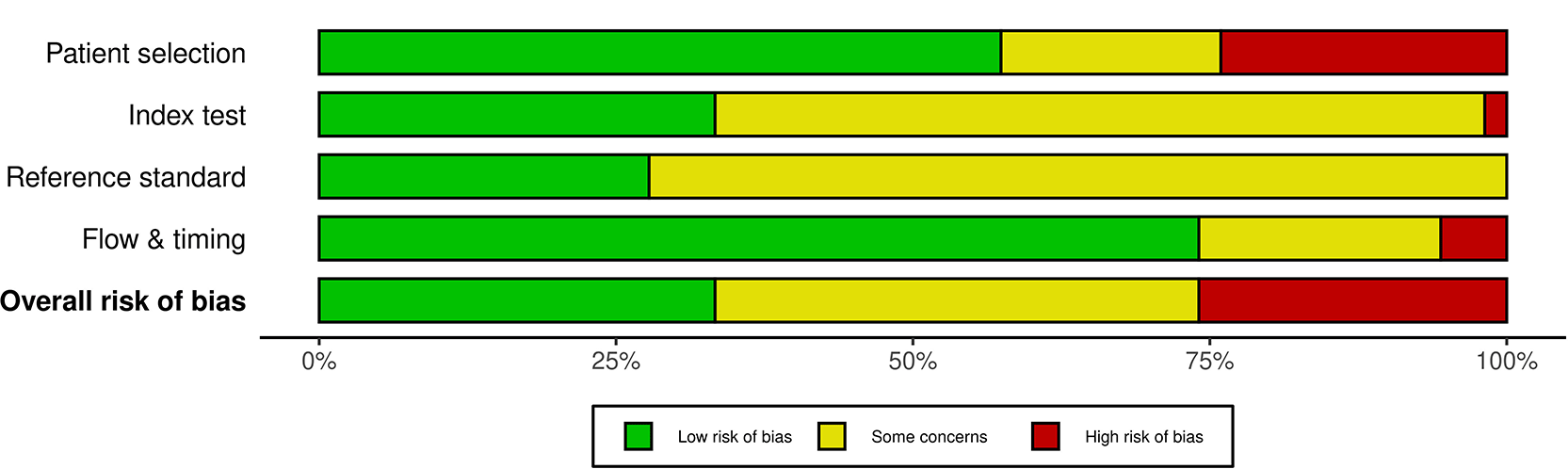
Figure 2. Risk of bias assessment (QUADAS-2 and QUADAS-C).
Diagnostic accuracy of HIV RDTs compared to various reference standards
Across all six reference standard comparisons, HIV RDTs demonstrated consistently high diagnostic accuracy (
Table 1). Against EIA or ELISA, pooled sensitivity and specificity were 97.9% (95% CrI: 96.6–98.8%) and 99.8% (95% CrI: 99.7–99.9%), with a DOR of 24,043.91 (
Figure 3). Performance improved further against EIA plus Western Blot (Se = 99.2%; Sp = 99.7%; DOR = 48,787.10;
Figure 4) and approached near-perfect accuracy against Western Blot alone (Se = 99.8%; Sp = 99.7%; DOR = 126,407.99;
Figure 5). Against the national HIV testing algorithm, pooled estimates remained excellent (Se = 99.1%; Sp = 99.6%; DOR = 29,833.83;
Figure 6). Comparisons using two EIA/ELISA plus Western Blot and PCR yielded similarly high sensitivity (99.6% and 99.4%, respectively), though specificity was slightly lower under PCR (96.6%), reflecting its higher molecular precision (
Figures 7–8). Across all analyses, HSROC curves clustered near the upper-left region and consistently high DOR values confirmed robust test performance. Moderate between-study heterogeneity was observed, particularly in EIA/ELISA comparisons, likely reflecting differences in study design, specimen types, and population characteristics. The weak sensitivity-specificity correlation and overlapping credible intervals indicate this did not translate into clinically meaningful variability.
Table 1. Bayesian hierarchical meta-analyses of lateral flow immunoassay HIV RDTs compared to various reference standards.
| Overall/Subgroup | Sensitivity | 95% CrI | Specificity | 95% CrI |
|---|
| Reference Standard: EIA or ELISA
|
| Overall
| 97.9 | 96.6–98.8 | 99.8 | 99.7–99.9 |
| Specimen
| | | | |
| Whole Blood Serum | 100 | — | — | — |
| Venous Blood | 88.6 | — | — | — |
| Operator
| | | | |
| HCP-testing
| 97.9 | — | 99.8 | — |
| Self-testing
| 97.9 | — | 99.9 | — |
| Setting
| | | | |
| Lab | 98.8 | 97.1–99.7 | 99.8 | 99.5–99.9 |
| Field | 96.3 | 93.9–98.0 | 99.8 | 99.6–99.9 |
| Reference Standard: EIA + WB or ELISA + WB
|
| Overall
| 99.2 | — | 99.7 | — |
| Specimen
| | | | |
| Whole Blood | 99.9 | — | 99.96 | — |
| Stored Serum | 99.8 | — | 97.8 | — |
| Serum | 99.7 | — | 99.1 | — |
| Plasma | 99.4 | — | — | — |
| Finger-prick Blood | 86.1 | — | 99.96 | — |
| Operator
| | | | |
| HCP-testing
| — | — | — | — |
| Self-testing
| — | — | — | — |
| Population
| | | | |
| General population | 99.8 | — | 98.7 | — |
| Key population | 99 | — | 99.9 | — |
| Reference Standard: 2 EIA/2 ELISA + WB
|
| Overall
| 99.6 | — | 98.7 | — |
| Reference Standard: National HIV Testing Algorithm
|
| Overall | 99.1 | — | 99.6 | — |
| Specimen
| | | | |
| Finger-prick Blood | 100.0 | — | 98.5 | — |
| Oral fluid | 99.3 | — | — | — |
| Serum | 99.6 | — | ~100.0 | — |
| Venous Blood | 99.1 | — | 98.7 | — |
| Oral swab | 97.9 | — | — | — |
| Saliva | 95.2 | — | 99.96 | — |
| Operator
| | | | |
| HCP-testing
| 99.4 | — | 99.7 | — |
| Self-testing
| 96.8 | — | 99.6 | — |
| Setting
| | | | |
| Lab | 99.6 | — | 100 | — |
| Field | 99.1 | — | 99.6 | — |
| Population
| | | | |
| General population | 99.1 | — | 99.5 | — |
| Key population | 99.4 | — | 99.97 | — |
| Reference Standard: PCR
|
| Overall
| 99.4 | — | 96.6 | — |
| Reference Standard: Western Blot
|
| Overall
| 99.8 | — | 99.7 | — |
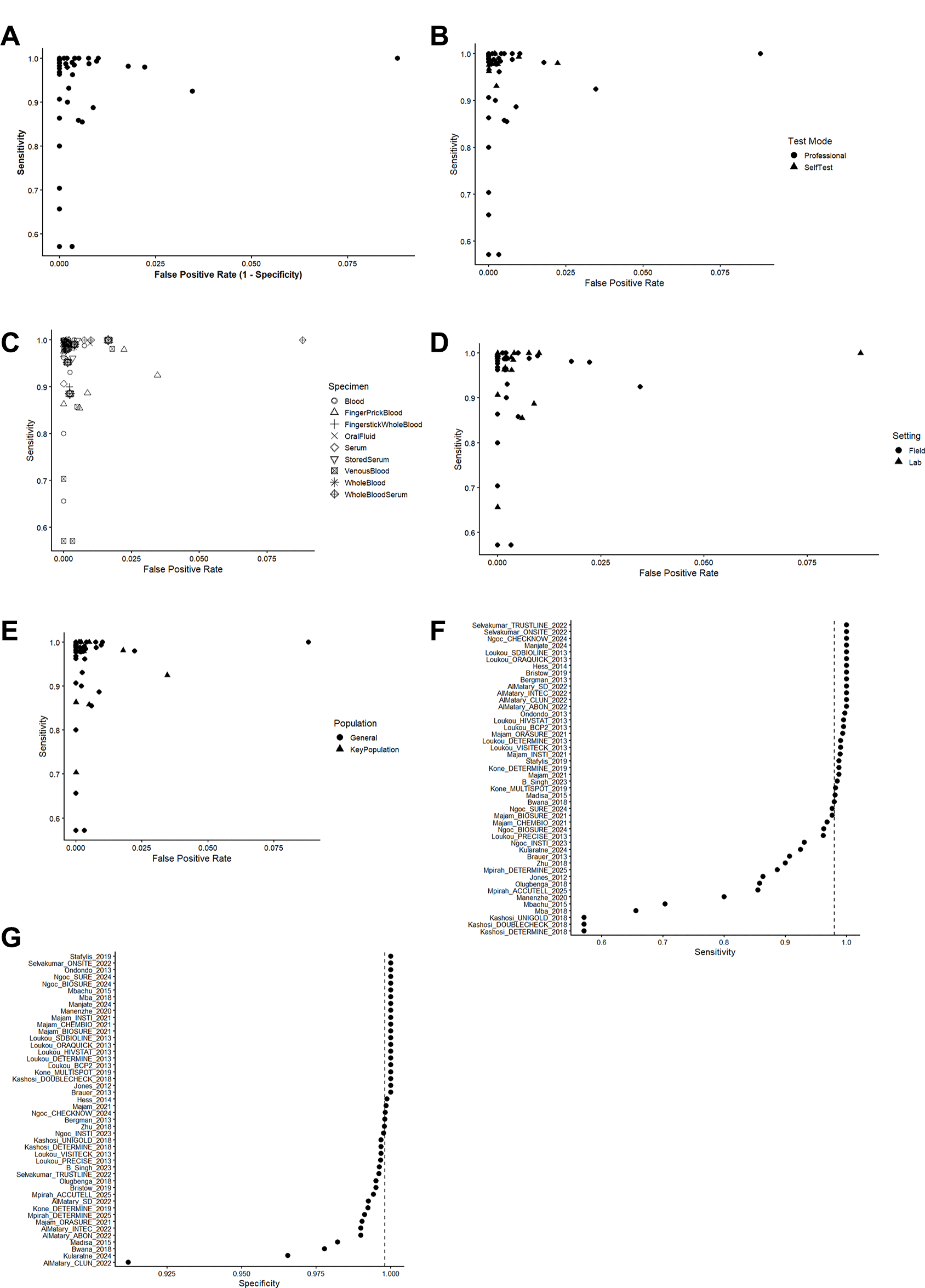
Figure 3. Pooled diagnostic results (Single RDTs vs EIA/ELISA).
A. Overall Summary Receiving Operator Curve (ROC). B, subgroup analysis (Test Mode) ROC. C, subgroup analysis (Specimen). D, subgroup analysis (Setting). E, subgroup analysis (Population). F, pooled sensitivity. G, pooled specificity.
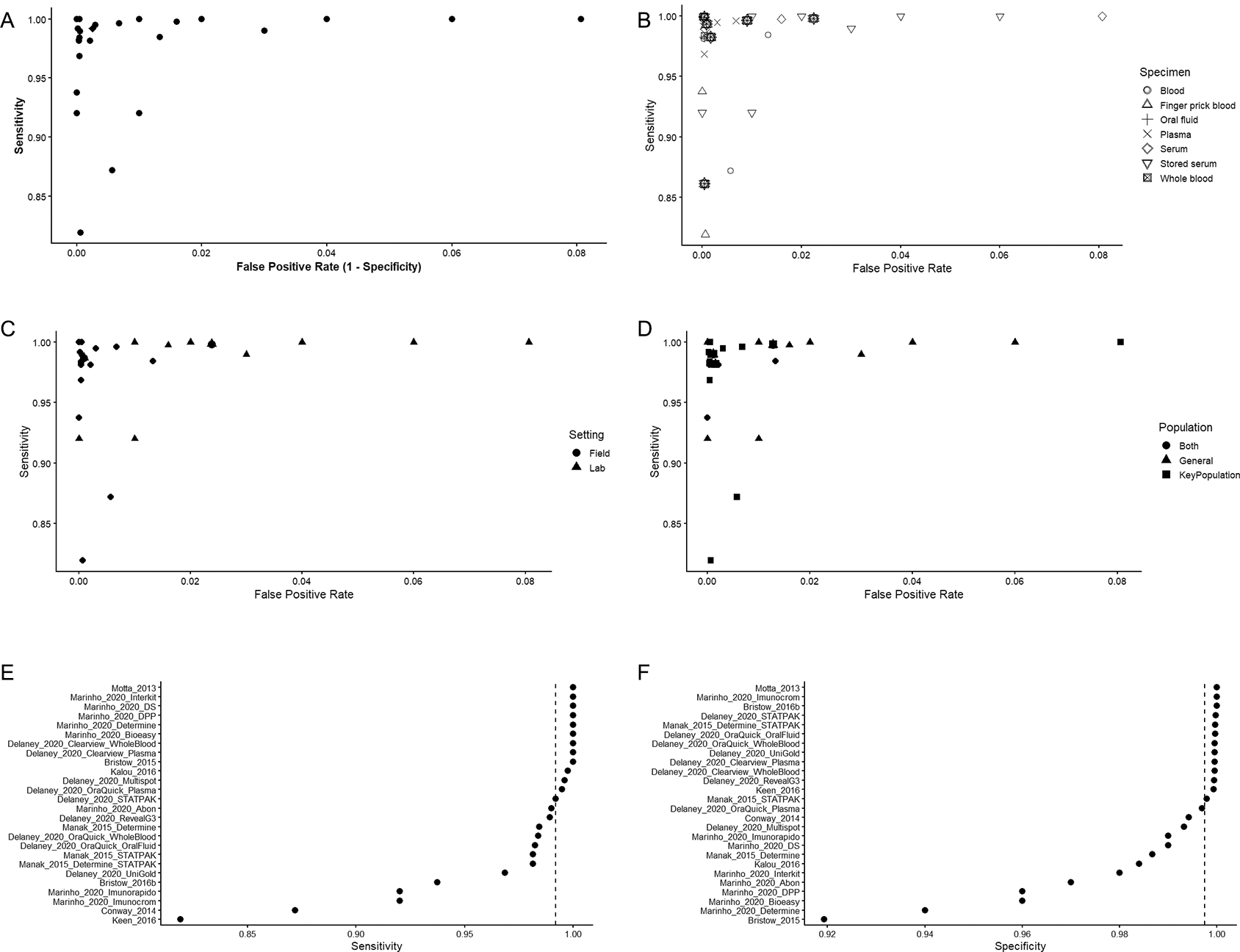
Figure 4. Pooled diagnostic results (Single RDTs vs EIA + WB or ELISA + WB).
A. Overall Summary Receiving Operator Curve (ROC). B, subgroup analysis (Specimen) ROC. C, subgroup analysis (Setting). D, subgroup analysis (Population). E, pooled sensitivity. F, pooled specificity.
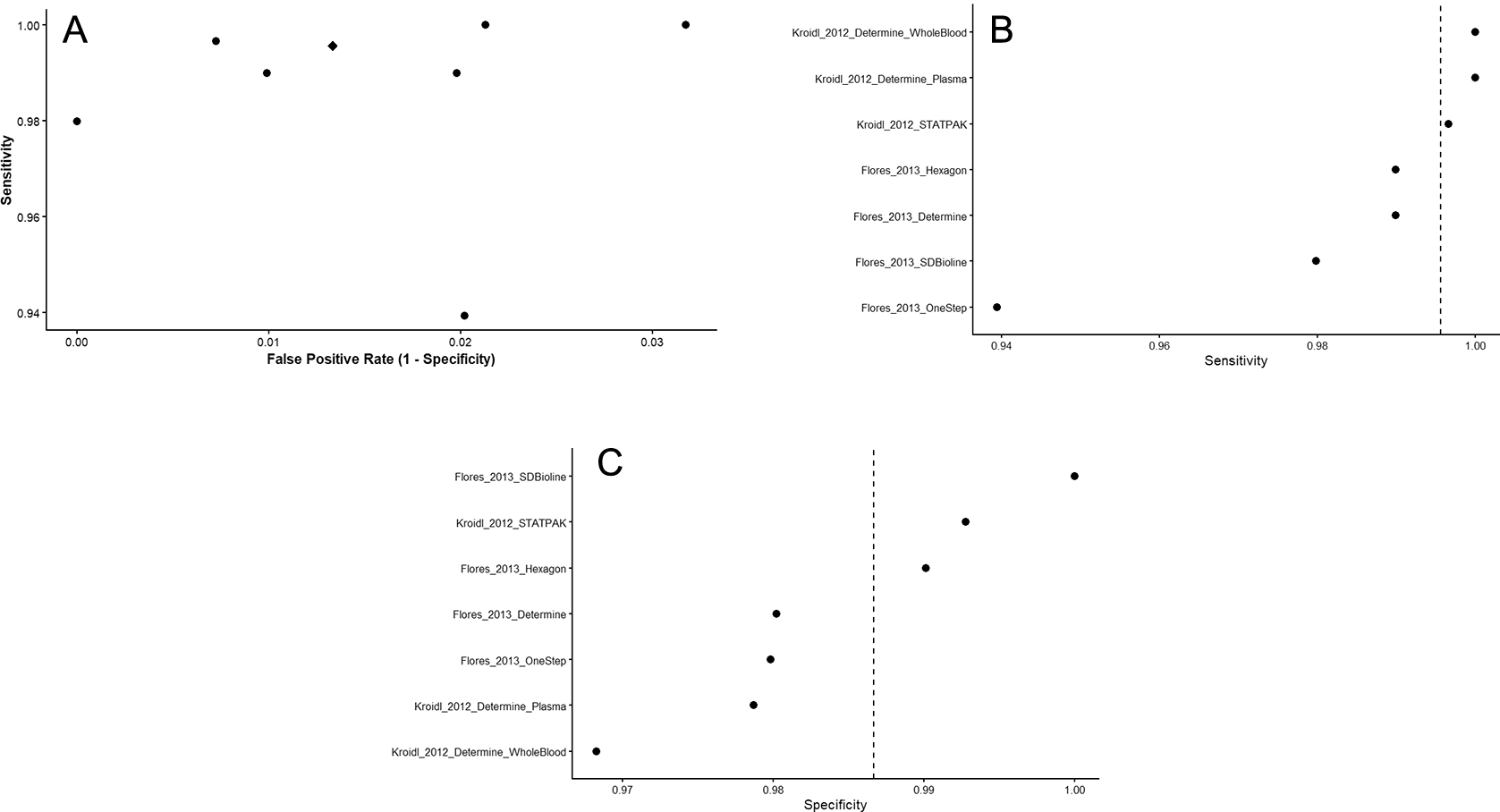
Figure 5. Pooled diagnostic results (2 EIA or 2 ELISA, + WB).
A. Overall Summary Receiving Operator Curve (ROC). B, pooled sensitivity. C, pooled specificity.
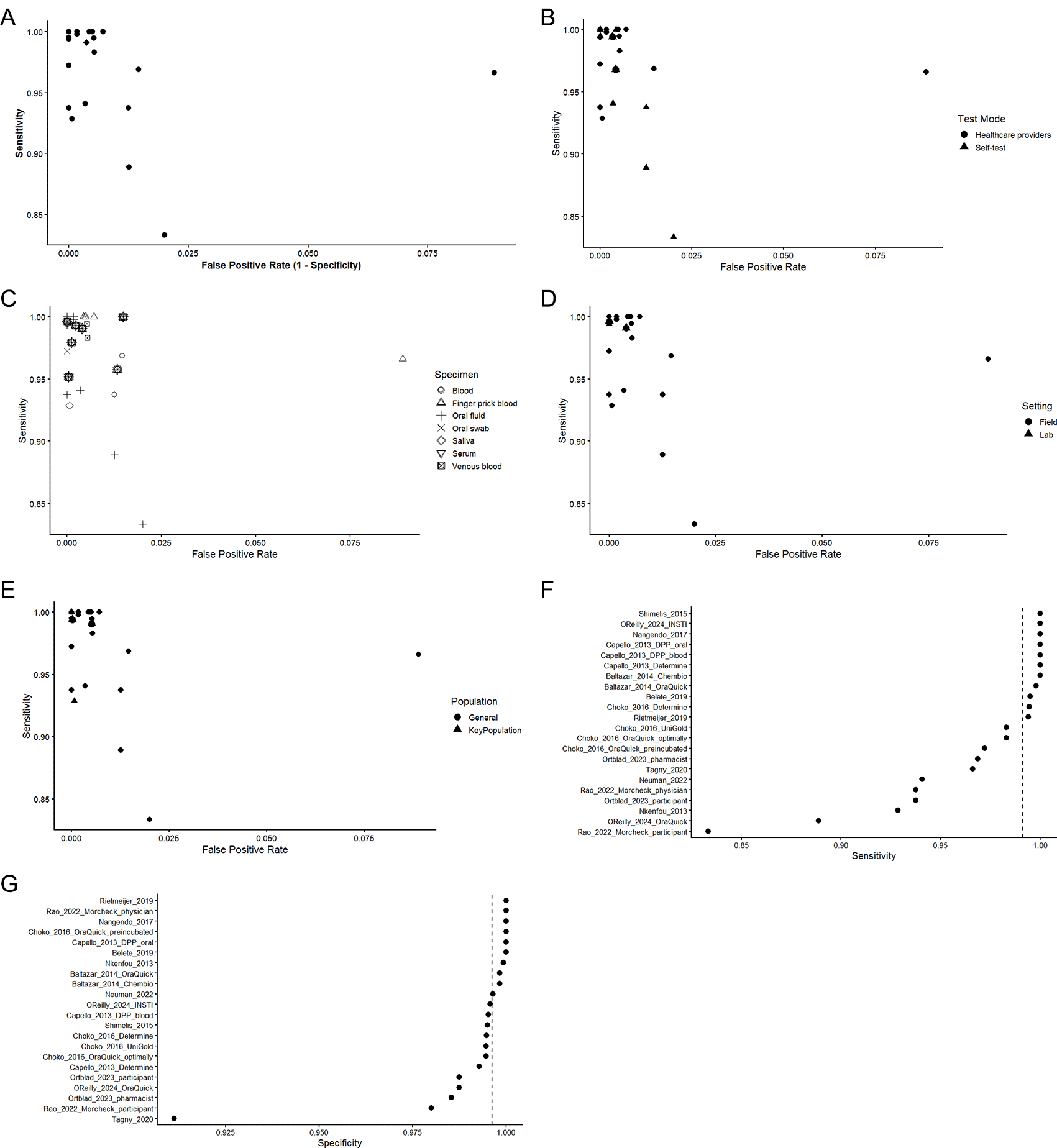
Figure 6. Pooled diagnostic results (Single RDTs vs national algorithms).
A. Overall Summary Receiving Operator Curve (ROC). B, subgroup analysis (Test Mode) ROC. C, subgroup analysis (Specimen). D, subgroup analysis (Setting). E, subgroup analysis (Population). F, pooled sensitivity. G, pooled specificity.
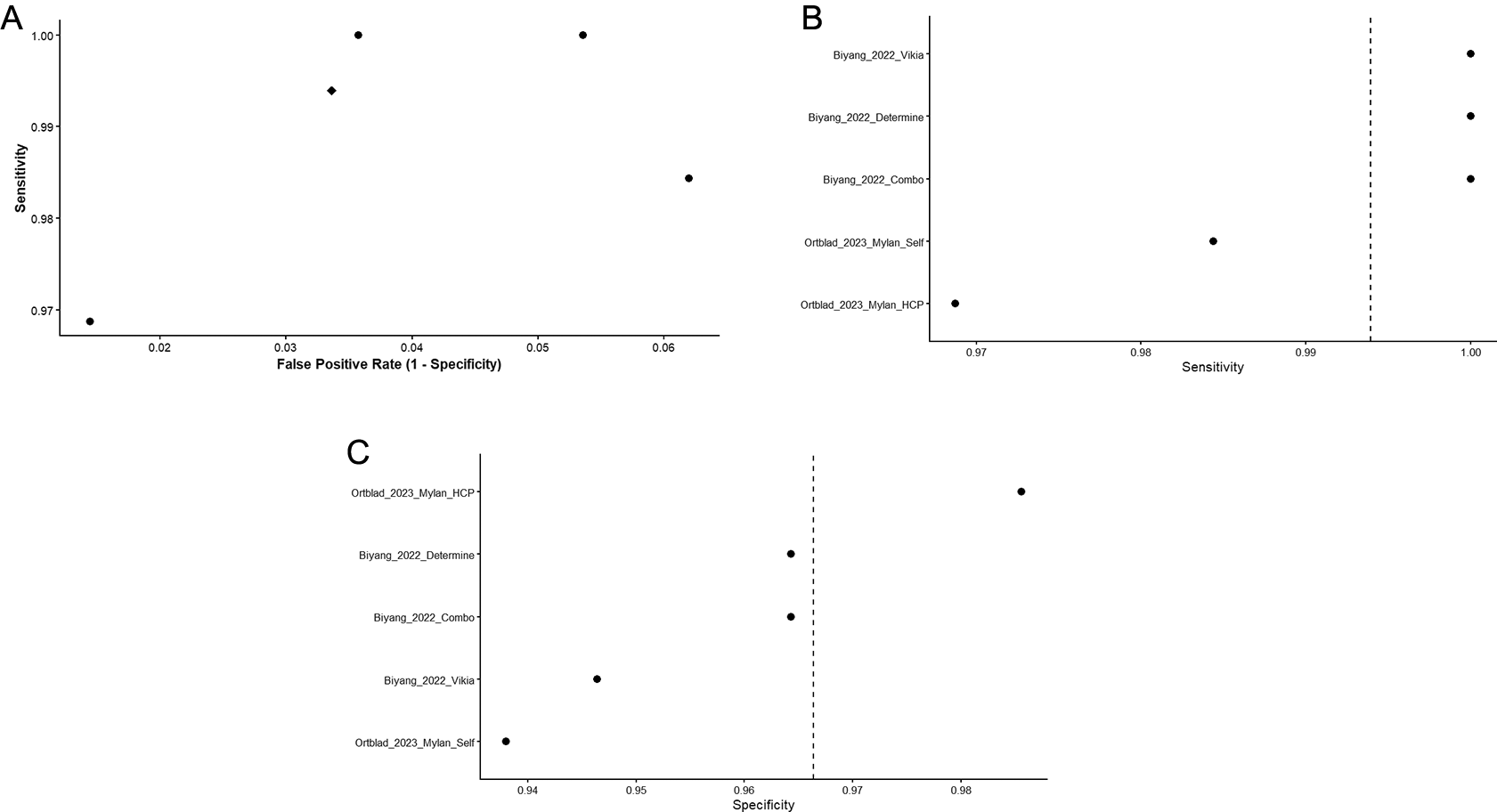
Figure 7. Pooled diagnostic results (Single RDTs vs PCR).
A. Overall Summary Receiving Operator Curve (ROC). B, pooled sensitivity. C, pooled specificity.
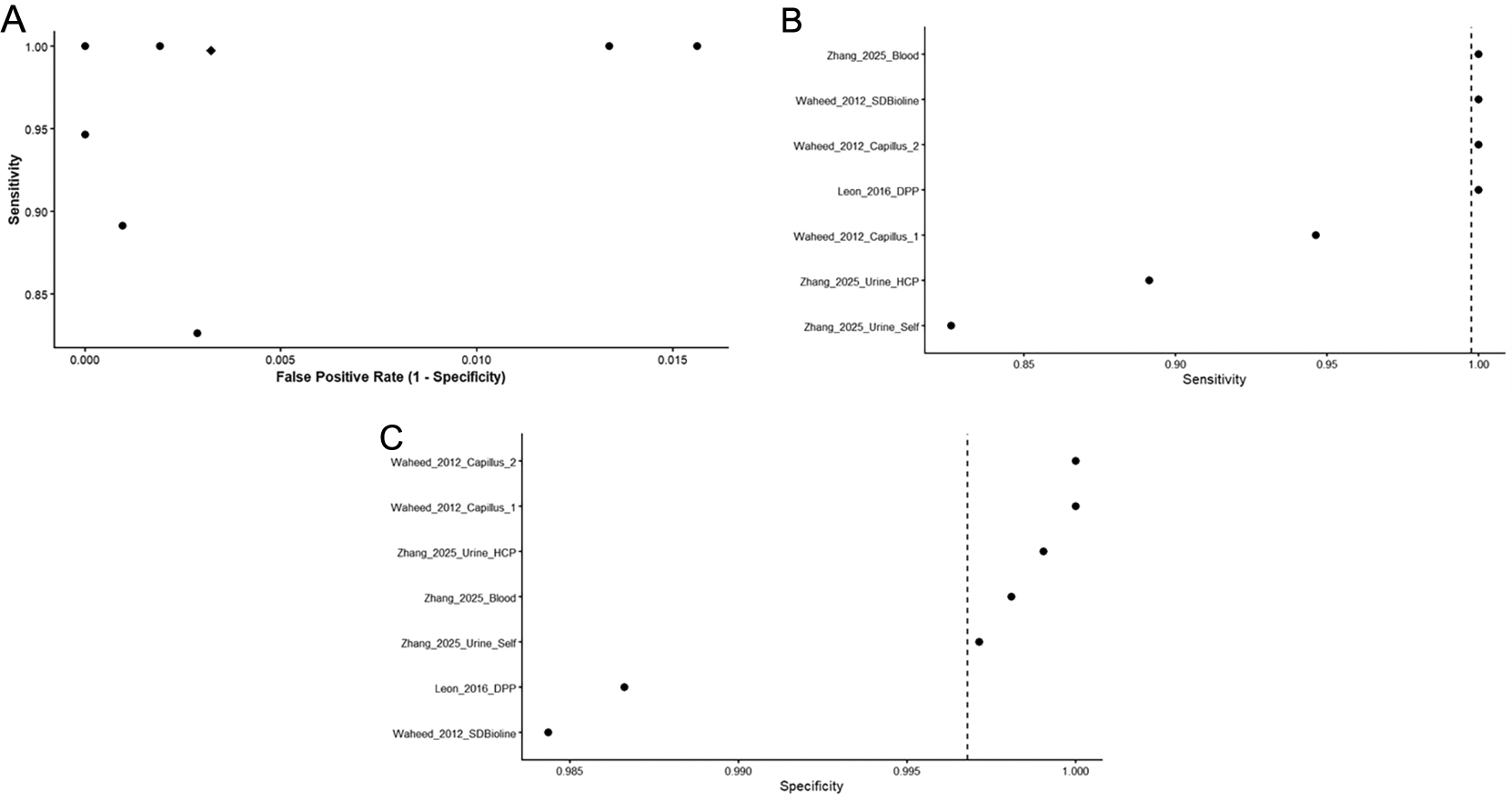
Figure 8. Pooled diagnostic results (Single RDTs vs WB).
A. Overall Summary Receiving Operator Curve (ROC). B, pooled sensitivity. C, pooled specificity.
Subgroup analyses
For EIA/ELISA and national algorithm comparisons, stratification by specimen type, operator, setting, and population consistently demonstrated high accuracy with overlapping credible intervals. Self-testing performed comparably to provider-administered testing, and field-based studies maintained accuracy similar to laboratory settings. Minor reductions in sensitivity were observed in finger-prick samples, but were not clinically significant (
Table 1). Subgroup analyses were not performed for comparisons involving two EIA/ELISA plus Western Blot, PCR, or Western Blot alone, as limited variability in study characteristics, predominantly laboratory-based, provider-administered, general population studies, precluded meaningful stratification.
Discussion
This study demonstrates that HIV RDTs maintain consistently high diagnostic accuracy across multiple reference standards, testing conditions, and populations. The use of multiple reference standards, including serological assays, composite algorithms, and molecular methods, provides a more comprehensive evaluation than a single meta-analysis approach. Overall, HIV RDTs showed strong discriminatory ability, with performance approaching that of established laboratory-based standards, consistent with previous literature.3,6,64 An important finding is the variation in diagnostic performance depending on the reference standard used. Comparisons against serological standards such as EIA/ELISA and Western Blot demonstrated near-perfect accuracy, reflecting their shared immunological basis. In contrast, slightly lower specificity observed against PCR likely reflects the higher analytical sensitivity of molecular assays, which can detect early or low-level infections not yet identifiable by antibody-based RDTs, rather than true false-positive results, an inherent limitation during the serological window period.64
Moderate between-study heterogeneity was observed across several analyses. This might be driven by differences in study design, specimen types, testing environments, and population characteristics. However, this did not translate into clinically meaningful variability, as evidenced by strong clustering of HSROC curves and substantial overlap in credible intervals. The weak correlation between sensitivity and specificity further supports the overall stability of test performance across diverse settings. Subgroup analyses confirmed consistently high performance across specimen types, operators, testing settings, and population groups. Minor variations were observed in finger-prick and oral fluid samples, likely due to lower antibody concentrations or variability in sample collection, but these were not clinically significant.65 Notably, self-testing showed comparable accuracy to healthcare provider-administered testing, supporting its role in expanding access to HIV diagnosis, particularly in resource-limited or high-stigma settings.66 Similarly, comparable performance between laboratory-based and field-based studies underscores the robustness of HIV RDTs under real-world conditions, supporting their use in decentralized and community-based programs.
This study employed a Bayesian bivariate random-effects model, which offers methodological advantages including more intuitive uncertainty estimates, greater stability in handling sparse or heterogeneous data, and better accommodation of the correlation between sensitivity and specificity.67,68 Several limitations should be considered. Variability in study quality, including unclear blinding, differences in reference standard application, and inconsistent reporting, may introduce bias.69,70 Some studies used stored laboratory samples, potentially overestimating real-world performance. Variability in test brands, HIV subtypes, and geographic settings may further limit generalizability.71 At the review level, publication bias toward studies reporting higher accuracy may lead to overestimation of performance, and limited subgroup-specific data restricted more detailed analyses.72
These findings support the continued and expanded use of HIV RDTs in clinical and community settings. Their high diagnostic accuracy, combined with rapid results, ease of use, and cost-effectiveness, make them well-suited for large-scale screening.9 The comparable performance of self-testing and field-based testing further highlights their potential in underserved populations.4 Nevertheless, false-negative results may occur during early infection, and false-positive results, though rare, carry significant psychological and clinical consequences. Confirmatory testing using established algorithms therefore remains essential, particularly in settings with varying HIV prevalence or subtype diversity.73,74
Conclusion
To conclude, this study demonstrates that HIV RDTs maintain consistently high diagnostic accuracy across multiple reference standards, populations, and testing conditions. The robustness of these findings supports their role as a reliable tool for HIV diagnosis and screening. While certain limitations and sources of variability remain, the overall evidence strongly supports the integration of HIV RDTs into both clinical practice and public health strategies aimed at improving early detection and linkage to care.
Ethical approval and informed consent
This study doesn’t require ethical approval or direct informed consent as it uses publicly available data.
Corresponding author
Ayu Nurdiantika Sari ([email protected])
Availability of data
The datasets generated and/or analysed during the current study are available in the Zenodo repository titled “PRISMA Flowchart + PRISMA Checklists_Ayu” (https://doi.org/10.5281/zenodo.19859575).75
Acknowledgement
We have nothing to declare.
References
- 1.
World Health Organization:
HIV and AIDS.2025 [cited 2025 Nov 16].
Reference Source
- 2.
Abdullah DM, Waris A, Khan M, et al.:
The contemporary immunoassays for HIV diagnosis: a concise overview.
Asian Biomed (Res Rev News).
2023 Feb 1; 17(1): 3. PubMed Abstract
| Publisher Full Text
- 3.
Tan WS, Chow EPF, Fairley CK, et al.:
Sensitivity of HIV rapid tests compared with fourth-generation enzyme immunoassays or HIV RNA tests.
AIDS.
2016 Jul 31; 30(12): 1951–1960. PubMed Abstract
| Publisher Full Text
- 4.
Figueroa C, Johnson C, Ford N, et al.:
Reliability of HIV rapid diagnostic tests for self-testing compared with testing by health-care workers: a systematic review and meta-analysis.
Lancet HIV.
2018 Jun 1; 5(6): e277–e290. PubMed Abstract
| Publisher Full Text
| Free Full Text
- 5.
Huang X, Liu X, Chen J, et al.:
Evaluation of blood-based antibody rapid testing for HIV early therapy: A meta-analysis of the evidence.
Front. Immunol.
2018 Jun 26; 9(JUN): 345347. Publisher Full Text
- 6.
Gliddon HD, Peeling RW, Kamb ML, et al.:
A systematic review and meta-analysis of studies evaluating the performance and operational characteristics of dual point-of-care tests for HIV and syphilis.
Sex. Transm. Infect.
2017 Dec 1; 93(S4): sextrans-2016-053069–sextrans-2016-053015. PubMed Abstract
| Publisher Full Text
| Free Full Text
- 7.
Pai NP, Balram B, Shivkumar S, et al.:
Head-to-head comparison of accuracy of a rapid point-of-care HIV test with oral versus whole-blood specimens: A systematic review and meta-analysis.
Lancet Infect. Dis.
2012 May 1; 12(5): 373–380. PubMed Abstract
| Publisher Full Text
- 8.
O’Reilly A, Mavhu W, Neuman M, et al.:
Accuracy of and preferences for blood-based versus oral-fluid-based HIV self-testing in Malawi: a cross-sectional study.
BMC Infect. Dis.
2022 Jan 1; 22(Suppl 1): 979. PubMed Abstract
| Publisher Full Text
- 9.
World Health Organization:
Consolidated guidelines on differentiated HIV testing services.
Geneva:
World Health Organization;
2024.
- 10.
Reitsma JB, Glas AS, Rutjes AWS, et al.:
Bivariate analysis of sensitivity and specificity produces informative summary measures in diagnostic reviews.
J. Clin. Epidemiol.
2005 Oct 1; 58(10): 982–990. PubMed Abstract
| Publisher Full Text
- 11.
Al-Matary AM, Al Gashaa FAS:
Comparison of different rapid screening tests and ELISA for HBV, HCV, and HIV among healthy blood donors and recipients at Jibla University Hospital Yemen.
J. Med. Life.
2022; 15(11): 1403–1408. PubMed Abstract
| Publisher Full Text
| Free Full Text
- 12.
Singh B, Mthombeni J, Olorunfemi G, et al.:
Evaluation of the accuracy of the Asanté assay as a point-of-care rapid test for HIV-1 recent infections using serum bank specimens from blood donors in South Africa, July 2018–August 2021.
S. Afr. Med. J.
2023; 113(10). PubMed Abstract
| Publisher Full Text
- 13.
Baltazar CS, Raposo C, Jani IV, et al.:
Evaluation of performance and acceptability of two rapid oral fluid tests for HIV detection in Mozambique.
J. Clin. Microbiol.
2014 Oct 1; 52(10): 3544–3548. PubMed Abstract
| Publisher Full Text
- 14.
Belete W, Deressa T, Feleke A, et al.:
Evaluation of diagnostic performance of non-invasive HIV self-testing kit using oral fluid in Addis Ababa, Ethiopia: A facility-based cross-sectional study.
PLoS One.
2019 Jan 1; 14(1): e0210866. PubMed Abstract
| Publisher Full Text
| Free Full Text
- 15.
Bergman J, Gratrix J, Plitt S, et al.:
Feasibility and Field Performance of a Simultaneous Syphilis and HIV Point-of-Care Test Based Screening Strategy in at Risk Populations in Edmonton, Canada.
AIDS Res Treat.
2013; 2013: 819593. PubMed Abstract
| Publisher Full Text
- 16.
Biyang YVS, Parkouda S, Mboumba BB, et al.:
Evaluation of HIV-1 rapid diagnostic tests in the context of viral genetic diversity in Libreville (Gabon).
Pan Afr. Med. J.
2022 May 1; 42. PubMed Abstract
| Publisher Full Text
- 17.
Brauer M, De Villiers JC, Mayaphi SH:
Evaluation of the Determine™ fourth generation HIV rapid assay.
J. Virol. Methods.
2013 Apr 1; 189(1): 180–183. PubMed Abstract
| Publisher Full Text
- 18.
Bristow CC, Leon SR, Ramos LB, et al.:
Laboratory Evaluation of a Dual Rapid Immunodiagnostic Test for HIV and Syphilis Infection.
J. Clin. Microbiol.
2014 Jan 1; 53(1): 311–313. PubMed Abstract
| Publisher Full Text
- 19.
Bristow CC, Rivera SKV, Ramos Cordova LB, et al.:
Dual Rapid Test for HIV and Syphilis: a Laboratory Evaluation of the diagnostic accuracy of Standard Q HIV/Syphilis Combo.
Diagn. Microbiol. Infect. Dis.
2018 May 1; 94(1): 30–32. PubMed Abstract
| Publisher Full Text
| Free Full Text
- 20.
Bristow CC, Leon SR, Huang E, et al.:
Field Evaluation of a Dual Rapid Immunodiagnostic Test for HIV and Syphilis Infection in Peru.
Sex. Transm. Dis.
2016 Jan 1; 43(1): 57–60. PubMed Abstract
| Publisher Full Text
| Free Full Text
- 21.
Bwana P, Ochieng L, Mwau M:
Performance and usability evaluation of the INSTI HIV self-test in Kenya for qualitative detection of antibodies to HIV.
PLoS One.
2018 Sep 1; 13(9): e0202491. PubMed Abstract
| Publisher Full Text
- 22.
Cappello JM, Gunasekera A, Gunasekera D, et al.:
A multicenter performance evaluation of the DPP® HIV-1/2 assay for the detection of HIV antibodies in various HIV testing algorithms.
J. Clin. Virol.
2013 Dec; 58: e59–e64. PubMed Abstract
| Publisher Full Text
- 23.
Chikwari CD, Njuguna IN, Neary J, et al.:
Brief Report: Diagnostic Accuracy of Oral Mucosal Transudate Tests Compared with Blood-Based Rapid Tests for HIV Among Children Aged 18 Months to 18 Years in Kenya and Zimbabwe.
J. Acquir. Immune Defic. Syndr.
2019 Dec 1; 82(4): 368. PubMed Abstract
| Publisher Full Text
- 24.
Choko AT, Taegtmeyer M, Macpherson P, et al.:
Initial Accuracy of HIV Rapid Test Kits Stored in Suboptimal Conditions and Validity of Delayed Reading of Oral Fluid Tests.
PLoS One.
2016 Jun 1; 11(6): e0158107. PubMed Abstract
| Publisher Full Text
- 25.
Conway DP, Holt M, McNulty A, et al.:
Multi-Centre Evaluation of the Determine HIV Combo Assay when Used for Point of Care Testing in a High Risk Clinic-Based Population.
PLoS One.
2014 Apr 8; 9(4): e94062. PubMed Abstract
| Publisher Full Text
| Free Full Text
- 26.
Delaney KP, Branson BM, Uniyal A, et al.:
Evaluation of the performance characteristics of 6 rapid HIV antibody tests.
Clin. Infect. Dis.
2011 Jan 15; 52(2): 257–263. PubMed Abstract
| Publisher Full Text
- 27.
Flores K, Leon SR:
Diagnostic Accuracy Among 4 Point-of-Care Tests for the Screening of HIV Infection.
Lab. Med.
2013 May 1; 44(2): 172–175. Publisher Full Text
- 28.
Hess KL, Fisher DG, Reynolds GL:
Sensitivity and Specificity of Point-of-Care Rapid Combination Syphilis-HIV-HCV Tests.
PLoS One.
2014 Nov 6; 9(11): e112190. PubMed Abstract
| Publisher Full Text
| Free Full Text
- 29.
Jones CB, Kuldanek K, Muir D, et al.:
Clinical Evaluation of the Determine HIV-1/2 Ag/Ab Combo test.
J. Infect. Dis.
2012 Dec 15; 206(12): 1947–1949. PubMed Abstract
| Publisher Full Text
- 30.
Kalou MB, Castro A, Watson A, et al.:
Laboratory evaluation of the Chembio Dual Path Platform HIV-Syphilis Assay.
Afr J Lab Med.
2016 Sep 15; 5(1): 6. PubMed Abstract
| Publisher Full Text
| Free Full Text
- 31.
Kashosi TM, Kyambikwa CB, Mulongo PM, et al.:
Field accuracy of HIV rapid diagnostic tests for blood donors screening, Bukavu, Eastern Democratic Republic of the Congo.
The Journal of Infection in Developing Countries.
2018 Jun 30; 12(06): 471–476. PubMed Abstract
| Publisher Full Text
- 32.
Keen P, Conway DP, Cunningham P, et al.:
Multi-centre field evaluation of the performance of the Trinity Biotech Uni-Gold HIV 1/2 rapid test as a first-line screening assay for gay and bisexual men compared with 4th generation laboratory immunoassays.
J. Clin. Virol.
2017 Jan 1; 86: 46–51. PubMed Abstract
| Publisher Full Text
- 33.
Kone B, Sarro YS, Baya B, et al.:
Diagnostic Performances of Three Rapid Diagnostic Tests for Detecting HIV Infections in Mali.
Infect Dis Diagn Treat.
2019; 3(1): 134. PubMed Abstract
- 34.
Kroidl I, Clowes P, Mwalongo W, et al.:
Low Specificity of Determine HIV1/2 RDT Using Whole Blood in South West Tanzania.
PLoS One.
2012 Jun 29; 7(6): e39529. PubMed Abstract
| Publisher Full Text
| Free Full Text
- 35.
Kularatne R, Blondeel K, Kasaro M, et al.:
Clinic-based evaluation of point-of-care dual HIV/syphilis rapid diagnostic tests at primary healthcare antenatal facilities in South Africa and Zambia.
BMC Infect. Dis.
2024 Feb 1; 24(Suppl 1): 600. PubMed Abstract
| Publisher Full Text
- 36.
Loukou YG, Cabran MA, Yessé ZN, et al.:
Performance of Rapid Tests and Algorithms for HIV Screening in Abidjan, Ivory Coast.
Journal of the International Association of Providers of AIDS Care (JIAPAC).
2014 Jan; 13(1): 35–39. PubMed Abstract
| Publisher Full Text
- 37.
M´pirah V, Mbomo S, Mintsa A, et al.:
Clinical diagnostic accuracy of the HIV rapid test ACCU-TELL anti-HIV 1 + 2 in sub-Saharan African region.
BMC Infect. Dis.
2025 Dec 1; 25(1): 812. PubMed Abstract
| Publisher Full Text
- 38.
Mine M, Chishala S, Makhaola K, et al.:
Performance of rapid HIV testing by lay counselors in the field during the behavioral and biological surveillance survey among female sex workers and men who have sex with men in Botswana.
J Acquir Immune Defic Syndr (1988).
2015 Mar 1; 68(3): 365–368. PubMed Abstract
| Publisher Full Text
- 39.
Majam M, Rhagnath N, Msolomba V, et al.:
Usability and Clinical Performance Characteristics of the Asante HIV1/2 Test by Trained Users in Two African Sites.
Diagnostics
.
2021 Sep 20; 11: 11(9). Publisher Full Text
- 40.
Majam M, Fischer AE, Rhagnath N, et al.:
Performance assessment of four HIV self-test devices in South Africa: A cross-sectional study.
S. Afr. J. Sci.
2021 Jan 29; 117(1–2). Publisher Full Text
- 41.
Manak MM, Njoku OS, Shutt A, et al.:
Evaluation of performance of two rapid tests for detection of HIV-1 and-2 in high-and low-prevalence populations in Nigeria.
J. Clin. Microbiol.
2015 Nov 1; 53(11): 3501–3506. PubMed Abstract
| Publisher Full Text
- 42.
Manenzhe SC, Ngwenya SP, Shangase SL:
The diagnostic accuracy of the HIV 1/2/subtype O Tri-line rapid test compared with ELISA: A pilot study.
Oral Dis.
2020 Sep 1; 26(S1): 161–164. PubMed Abstract
| Publisher Full Text
- 43.
Manjate A, Nilsson C, Axelsson M, et al.:
Laboratory-based evaluation of the 4th-generation AlereTM HIV Combo rapid point-of-care test.
PLoS One.
2024 Feb 1; 19(2): e0298912. PubMed Abstract
| Publisher Full Text
| Free Full Text
- 44.
De Oliveira Marinho FL, De Linon Santos NL, Neves SPF, et al.:
Performance evaluation of eight rapid tests to detect HIV infection: A comparative study from Brazil.
PLoS One.
2020 Aug 1; 15(8): e0237438. PubMed Abstract
| Publisher Full Text
- 45.
Eko Mba JM, Bisseye C, Mombo LE, et al.:
Assessment of rapid diagnostic tests and fourth-generation Enzyme-Linked Immunosorbent Assays in the screening of Human Immunodeficiency and Hepatitis B virus infections among first-time blood donors in Libreville (Gabon).
J. Clin. Lab. Anal.
2018 Mar 1; 33(3): e22824. PubMed Abstract
| Publisher Full Text
- 46.
Mbachu II, Udigwe G, Joseph I, et al.:
The evaluation of accuracy of serial rapid HIV test algorithm in the diagnosis of HIV antibodies among pregnant women in south east Nigeria Pregnancy and Childbirth.
BMC. Res. Notes.
2015 Oct 12; 8(1): 557. PubMed Abstract
| Publisher Full Text
- 47.
Da Motta LR, Vanni AC, Kato SK, et al.:
Evaluation of five simple rapid HIV assays for potential use in the Brazilian national HIV testing algorithm.
J. Virol. Methods.
2013 Dec 1; 194(1–2): 132–137. PubMed Abstract
| Publisher Full Text
- 48.
Nangendo J, Obuku EA, Kawooya I, et al.:
Diagnostic accuracy and acceptability of rapid HIV oral testing among adults attending an urban public health facility in Kampala, Uganda.
PLoS One.
2017 Aug 1; 12(8): e0182050. PubMed Abstract
| Publisher Full Text
| Free Full Text
- 49.
Neuman M, Mwinga A, Kapaku K, et al.:
Sensitivity and specificity of OraQuick® HIV self-test compared to a 4th generation laboratory reference standard algorithm in urban and rural Zambia.
BMC Infect. Dis.
2022 Jan 1; 22(Suppl 1): 494. PubMed Abstract
| Publisher Full Text
| Free Full Text
- 50.
Ngoc BV, Majam M, Green K, et al.:
Acceptability, feasibility, and accuracy of blood-based HIV self-testing: A cross-sectional study in Ho Chi Minh City, Vietnam.
PLOS Glob Public Health.
2023 Feb 1; 3(2): e0001438. PubMed Abstract
| Publisher Full Text
- 51.
Nkenfou CN, Kembou JE, Temgoua ES, et al.:
Evaluation of Oraquick® HIV-1/2 as oral rapid test.
Afr J Infect Dis.
2013 Aug 20; 7(2): 27–30. PubMed Abstract
| Publisher Full Text
| Free Full Text
- 52.
Olugbenga I, Taiwo O, Laverty M, et al.:
Clinic-based evaluation study of the diagnostic accuracy of a dual rapid test for the screening of HIV and syphilis in pregnant women in Nigeria.
PLoS One.
2018 Jul 1; 13(7): e0198698. PubMed Abstract
| Publisher Full Text
| Free Full Text
- 53.
Ondondo RO, Odoyo JB, Bukusi EA:
O15.5 Performance Characteristics of SD Bio Line Rapid HIV-Syphilis Duo Test Kit For Simultaneous Detection of HIV and Syphilis Infections.
Sex. Transm. Infect.
2013 Jul; 89: A56.1–A5A56. Publisher Full Text
- 54.
Ortblad KF, Kwach B, Zhang S, et al.:
Measuring the performance of HIV self-testing at private pharmacies in Kenya: a cross-sectional study.
J. Int. AIDS Soc.
2023 Oct 1; 26(10): e26177. PubMed Abstract
| Publisher Full Text
| Free Full Text
- 55.
Rao A, Patil S, Nirmalkar A, et al.:
HIV oral self-screening test among HIV/STD/TB clinic attendees: A mixed-method pilot investigation examining merit for larger evaluation.
Indian J. Med. Res.
2022 Mar 1; 155(3–4): 403. PubMed Abstract
| Publisher Full Text
- 56.
Rietmeijer CA, Mungati M, Kilmarx PH, et al.:
Performance of a Dual Human Immunodeficiency Virus/Syphilis Rapid Test Compared with Conventional Serological Testing for Syphilis and Human Immunodeficiency Virus in a Laboratory Setting: Results from the Zimbabwe STI Etiology Study.
Sex. Transm. Dis.
2019 Sep 1; 46(9): 584–587. PubMed Abstract
| Publisher Full Text
- 57.
Selvakumar M, Nandagopal P, Naveen Kumar M, et al.:
Performance characteristics of two new rapid HIV diagnostic assays and use of test band reader.
Indian J. Med. Microbiol.
2022 Jul 1; 40(3): 370–373. PubMed Abstract
| Publisher Full Text
- 58.
Shimelis T, Tadesse E:
The diagnostic performance evaluation of the SD BIOLINE HIV/syphilis Duo rapid test in southern Ethiopia: a cross-sectional study.
BMJ Open.
2015 Apr 1; 5(4): e007371. PubMed Abstract
| Publisher Full Text
| Free Full Text
- 59.
Stafylis C, Klausner JD:
Evaluation of two 4th generation point-of-care assays for the detection of Human Immunodeficiency Virus infection.
PLoS One.
2017 Aug 1; 12(8): e0183944. PubMed Abstract
| Publisher Full Text
| Free Full Text
- 60.
Tagny CT, Bissim M, Djeumen R, et al.:
The use of the GeeniusTM HIV-1/2 Rapid confirmatory test for the enrolment of patients and blood donors in the WHO Universal Test and Treat Strategy in Cameroon, Africa.
Vox Sang.
2020 Nov 1; 115(8): 686–694. PubMed Abstract
| Publisher Full Text
- 61.
Waheed U, Hayat K, Ahmad B, et al.:
Evaluation of HIV/AIDS diagnostics kits and formulation of a testing strategy for Pakistan.
J. Clin. Virol.
2013 Apr 1; 56(4): 367–369. PubMed Abstract
| Publisher Full Text
- 62.
Zhang C, Li M, Gu Y, et al.:
Accuracy of the Self-Administered Rapid HIV Urine Test in a Real-World Setting and Individual Preferences for HIV Self-Testing — Guangzhou City, Guangdong Province, China, July 2020–February 2021.
China CDC Weekly.
2025 Jan 10; 7(2): 52–56. Publisher Full Text
- 63.
Zhu W, Mumby K, Dankerlui D, et al.:
Evaluation of a rapid point-of-care HIV screening program in an emergency department setting in Detroit, Michigan.
J. Clin. Virol.
2018 Sep 1; 106: 11–12. PubMed Abstract
| Publisher Full Text
- 64.
Smallwood M, Vijh R, Nauche B, et al.:
Evaluation of a Rapid Point of Care Test for Detecting Acute and Established HIV Infection, and Examining the Role of Study Quality on Diagnostic Accuracy: A Bayesian Meta-Analysis.
PLoS One.
2016 Feb 1; 11(2): e0149592. PubMed Abstract
| Publisher Full Text
- 65.
Pavie J, Rachline A, Loze B, et al.:
Sensitivity of five rapid HIV tests on oral fluid or finger-stick whole blood: a real-time comparison in a healthcare setting.
PLoS One.
2010; 5(7): e11581. PubMed Abstract
| Publisher Full Text
| Free Full Text
- 66.
Choko AT, MacPherson P, Webb EL, et al.:
Uptake, Accuracy, Safety, and Linkage into Care over Two Years of Promoting Annual Self-Testing for HIV in Blantyre, Malawi: A Community-Based Prospective Study.
PLoS Med.
2015 Sep 1; 12(9): e1001873. PubMed Abstract
| Publisher Full Text
| Free Full Text
- 67.
Guo J, Riebler A, Rue H:
Bayesian bivariate meta-analysis of diagnostic test studies with interpretable priors.
Stat. Med.
2017 Aug 30; 36(19): 3039–3058. PubMed Abstract
| Publisher Full Text
- 68.
Iyer SC, Yap QV, Soong J, et al.:
Bayesian meta-analysis in the 21st century: Fad or future of evidence synthesis?.
Ann. Acad. Med. Singap.
2025 Jul 1; 54(7): 437–441. Publisher Full Text
- 69.
Leeflang MMG, Deeks JJ, Gatsonis C, et al.:
Systematic Reviews of Diagnostic Test Accuracy.
Ann. Intern. Med.
2008 Dec 16; 149(12): 889–897. PubMed Abstract
| Publisher Full Text
| Free Full Text
- 70.
Deeks JJ, Bossuyt PM, Leeflang MM, et al.:
Cochrane Handbook for Systematic Reviews of Diagnostic Test Accuracy.
Cochrane Handbook for Systematic Reviews of Diagnostic Test Accuracy.
2023 Jun 16; 1–408. Publisher Full Text
- 71.
Allorant A, Kuchukhidze S, Stannah J, et al.:
Socio-demographic and geographic disparities in HIV prevalence, HIV testing and treatment coverage: An analysis of 108 national household surveys in 33 African countries.
J. Int. AIDS Soc.
2025 Aug 1; 28(8): e70024. PubMed Abstract
| Publisher Full Text
| Free Full Text
- 72.
Van Enst WA, Ochodo E, Scholten RJ, et al.:
Investigation of publication bias in meta-analyses of diagnostic test accuracy: a meta-epidemiological study.
BMC Med. Res. Methodol.
2014 May 23; 14(1): 70. PubMed Abstract
| Publisher Full Text
- 73.
Olaru ID, McHugh G, Dakshina S, et al.:
False-negative HIV tests using oral fluid tests in children taking antiretroviral therapy from Harare, Zimbabwe.
J. Int. AIDS Soc.
2017 Aug 29; 20. PubMed Abstract
| Publisher Full Text
- 74.
Shanks L, Siddiqui MR, Kliescikova J, et al.:
Evaluation of HIV testing algorithms in Ethiopia: The role of the tie-breaker algorithm and weakly reacting test lines in contributing to a high rate of false positive HIV diagnoses.
BMC Infect. Dis.
2015 Feb 3; 15(1): 39. PubMed Abstract
| Publisher Full Text
| Free Full Text
- 75.
Sari AN, Abinawanto, Nelwan EJ, et al.:
PRISMA Flowchart + PRISMA Checklists_Ayu.
Zenodo.
2026 Apr 28. Publisher Full Text


Comments on this article Comments (0)