Keywords
Implementation Science, Protocol, Quitline, Scoping Review, Smoking cessation

This article is included in the Addiction and Related Behaviors gateway.
Implementation Science, Protocol, Quitline, Scoping Review, Smoking cessation
Updates to the research questions to better align with the review objectives.
Modified inclusion and exclusion criteria to ensure relevant studies are included.
Reference to the final scoping review arising from the protocol added.
Cigarette smoking is the leading preventable cause of morbidity and mortality in adults worldwide.1 Smoking is also among the prominent risk factors for disability-adjusted life years,2 and strongly associated with poor health-related quality of life.3 The World Health Organization (WHO) estimates that 8.7 million people die prematurely worldwide each year, and tens of millions experience avoidable disease, due to tobacco use and exposure.4 Tobacco-related disease and deaths are predicted to continue to increase globally in coming years.5
Smoking-related harm places substantial strain on healthcare systems internationally,6,7 and in some settings causes more disease and premature mortality than alcohol and illicit drugs combined.8 In countries where tobacco is heavily taxed, smoking places economic burden on individuals and families due to the high cost of tobacco products,9 in addition to lost wage-earning capacity from work absences and healthcare costs due to smoking-related morbidity, and premature death.10
In 2007, the WHO introduced MPOWER measures as a guide to support countries globally to deter smoking.11 The acronym stands for the six measures included in the guide and are as follows: monitor tobacco use and prevention policies (M), protect people from tobacco smoke (P), offer help to quit tobacco smoking (O), warn about the dangers of tobacco (W), enforce bans on tobacco advertising, promotion and sponsorship (E), and raise taxes on tobacco (R).11
Many countries have established Quitlines, which offer telephone-based counselling services to support smokers to quit,12 fulfilling measure “O” of the MPOWER interventions.11 Whilst Quitlines have been shown to be effective and cost-effective internationally,12–23 a preliminary search of the literature revealed heterogeneity between Quitline services by jurisdiction. Although there is evidence that engagement with a Quitline increases the likelihood of successful cessation attempts,12,13,22,23 there is little evidence to support the specific components of Quitline services such as the optimum number, frequency or duration of counselling support calls, or core program components.22 Furthermore, there is conflict regarding the benefit of free nicotine replacement therapy (NRT) provision as an adjunct to Quitline counselling.13,23 The heterogeneity between Quitline services makes it difficult to evaluate the implementation of specific components and strategies used by each service.
Whilst there is ample literature evaluating the effectiveness of smoking cessation programs in community-based services,24–34 the implementation of programs is rarely reported. Reporting core components of smoking cessation programs alongside implementation strategies, and implementation theories, models and frameworks will enable identification of the elements delivered that may be responsible for clinical or service outcomes, adaptations that have occurred across services that inform future selection of implementation strategies, and potential research gaps regarding program implementation.
Implementation Science facilitates the incorporation of evidence-based practices into routine healthcare by bridging the knowledge gap between research and practice.35
Interventions applied in controlled settings may demonstrate effectiveness. However, effectiveness is often not evaluated in real-world conditions prior to being integrated at the population level.36,37 Evaluation of real-world implementation of interventions beyond the controlled research setting will demonstrate whether an intervention is effective when delivered to the intended populations and in different contexts.38 Real-world conditions refer to the context in which interventions are delivered by service providers to service users during usual care provision.39 In real-world implementation evaluations, factors that would be considered confounders within the research context, are considered part of the practical context in which the intervention takes place.37
Scoping reviews are a valuable tool for synthesising evidence, providing a broad map of existing literature and identifying gaps in current research.40 Scoping reviews are particularly valuable where the area of research is emergent, complex or poorly understood.41,42 Using an existing scoping review framework,43 this study aims to systematically map the evidence including the effectiveness or perceived effectiveness of implementation, and any research gaps surrounding the implementation of smoking cessation programs.
The objective of this study is to systematically map the implementation of smoking cessation programs including evaluating how implementation influences service user outcomes.
This review aims to identify current knowledge and highlight gaps regarding the implementation of adult smoking cessation programs in the community. This review will explore the following questions:
• What interventions are used in the implementation of smoking cessation programs to facilitate quit success?
• What implementation theories, models, and frameworks are used to guide the implementation of smoking cessation programs?
• What implementation strategies are used for smoking cessation programs?
The criteria for included studies is based on the Joanna Briggs Institute (JBI) Population Concept Context (PCC) mnemonic for scoping reviews44 ( Table 1), in addition to the type of study.
| JBI Population Context Concept mnemonic for scoping reviews used to report the implementation of smoking cessation programs44 | |
|---|---|
| PCC element | Inclusion criteria |
| Population | Adult daily smokers aged 18 years or older |
| Concepts | Report on the use of implementation strategies or theories, models, or frameworks for guiding, assessing, or evaluating smoking cessation programs applied prospectively |
| Smoking cessation interventions | |
| Context | Community-based smoking cessation programs |
Interventions used by smoking cessation programs will be reported in the review, and may include telephone or in-person counselling, behavioural support and advice; NRT; non-nicotine pharmacotherapies; multi-modal programs such as counselling and NRT; peer support programs; computer and mobile phone-based communications and applications; and integrative medicine (see Table 2).
| Term | Definition |
|---|---|
| Adult | A person aged 18 years, or older. |
| Community-based service | A service delivered to a population that does not take place in a hospital and includes physical clinics or offices; outreach centres; home visiting, digital or telephone-based services; or public buildings such as schools or places of worship to deliver the service. The service may be privately and/ or publicly funded and may include paid and/or voluntary workforce to deliver the service. |
| Health equity | Strategies to improve health outcomes for at-risk populations with a focus on solutions, rather than disparities.45 |
| Hospital | A healthcare facility with specialised and auxiliary staff providing acute or long-term, inpatient or outpatient treatment, which is not the office or surgery of a general practitioner for the provision of examination, evaluation, referral, or treatment of a minor ailment to the general population. |
| Implementation | The fidelity and cost of the components of the intervention at the organisation level. The uptake and utilisation of the intervention at the individual service user level.46 |
| Integrative medicine | May also be referred to as “complementary medicine” and includes practices and treatments that are not generally considered a component of conventional medicine. Examples may include hypnosis, acupuncture, and herbal remedies, and will be as defined by the authors. |
| Quitline | A telephone-based service dedicated to support quitting smoking combustible tobacco provided by either a trained counsellor, psychologist, or other allied health professional relevantly qualified to provide such a service, that is provided free of charge to service users. |
| Smoker | A person who has smoked 100 cigarettes in their lifetime, and who currently smokes tobacco cigarettes.47 |
| Smoking cessation program | Any service to support cessation of smoking combustible tobacco by a provider qualified within their profession to provide such service. |
Studies will take place in high-income countries as defined by The World Bank,48 and compliant with the “O” of the WHO MPOWER measures (i.e., offer help to quit tobacco smoking).11 Included countries will offer a national, toll-free Quitline service at the time the study took place).49
Original studies of either qualitative, quantitative, or mixed methods will be included in this scoping review. Quantitative study designs for inclusion will include, but not be limited to, randomised controlled trials (RCTs), quasi-RCTs, and matched cohort designs. In addition, qualitative studies of all designs will be considered for inclusion. Non-original studies, such as reviews, including systematic reviews, editorials, opinion pieces, protocols, and individual case studies will not be considered. Studies published from June 1997 until the search date will be considered for the review, consistent with the date of inception of the first Quitline in the world in Victoria, Australia.33 Included studies will be limited to human participants. Abstracts for which the full text is unavailable, for example, conference proceedings, will not be included. Abstracts and full-texts not available in English will not be included as the research team do not have the capacity for translation.
Non-original studies such as reviews, opinion pieces, editorials, protocols, and individual case studies will be excluded. Additionally, studies will be excluded if the following are included:
• Only participants under 18 years of age.
• Hospital inpatient programs without any community-based implementation.
• Participants did not engage a formal smoking cessation service (i.e., self-directed smoking cessation plans).
• Programs of cessation of substances other than cigarettes (e.g., ENDS, illicit substances, alcohol) where no other eligible program elements are included.
• Interventions where smoking cessation is not targeted (e.g., tobacco use reduction, motivation to quit, or evaluation of relapse prevention).
• Studies reporting exclusively on theoretical or conceptual research, or the use of implementation theories, models of frameworks to retrospectively guide evaluation rather than prospective use.
• Studies reporting exclusively on clinical or patient-reported outcomes (i.e., no implementation is reported according to our criteria).
• Studies reporting exclusively on service provider outcomes i.e., service user outcomes were not directly evaluated.
The proposed scoping review will follow the Arksey and O’Malley43 methodological framework for scoping reviews. This methodological framework follows five key stages including firstly identifying the research question, followed by a literature search for studies that appear relevant to the research question, selection of studies for inclusion in the review through a literature screening process, extracting and charting data from the included studies, and finally, collating the results, summarising, and reporting the findings of the review.43
A preliminary search of PROSPERO, MEDLINE (EBSCOhost), Embase (Elsevier), Cochrane Central Register of Controlled Trials (CENTRAL), and JBI Evidence Synthesis (Ovid) performed on 23 January 2023 identified no existing or intended reviews on this topic.
We will search for studies reporting the following: a smoking cessation intervention or program in which implementation was prospectively planned and/or delivered and broadly incorporated; (1) implementation strategies and, (2) an implementation theory, model, or framework, or other factors that influenced planning and delivery of implementation as defined by the authors. The search strategy will be organised and adapted to each database to capture key concepts using Boolean operators. Keywords and MeSH terms will be used to search key concepts including smoking cessation, smoking cessation services and interventions, and implementation evaluations. Search terms were developed and refined through discussion with the author team and in consultation with a research librarian. The search strategy to be used for the databases of MEDLINE, Embase, Cochrane CENTRAL, and Web of Science is provided in Table 3.
The search will take place from 21 February 2023 and will include the following databases: MEDLINE (EBSCOhost), Embase (Elsevier), the Cochrane Central Register of Controlled Trials (CENTRAL), and Web of Science (Clarivate). The search for unpublished studies and grey literature will include clinical trial registers, Google Advanced, and Google Scholar (first 200 results).50 Additionally, we will perform forward and backward citation searches of included articles, and of any literature reviews on this topic that are identified to locate further articles not identified during the search.
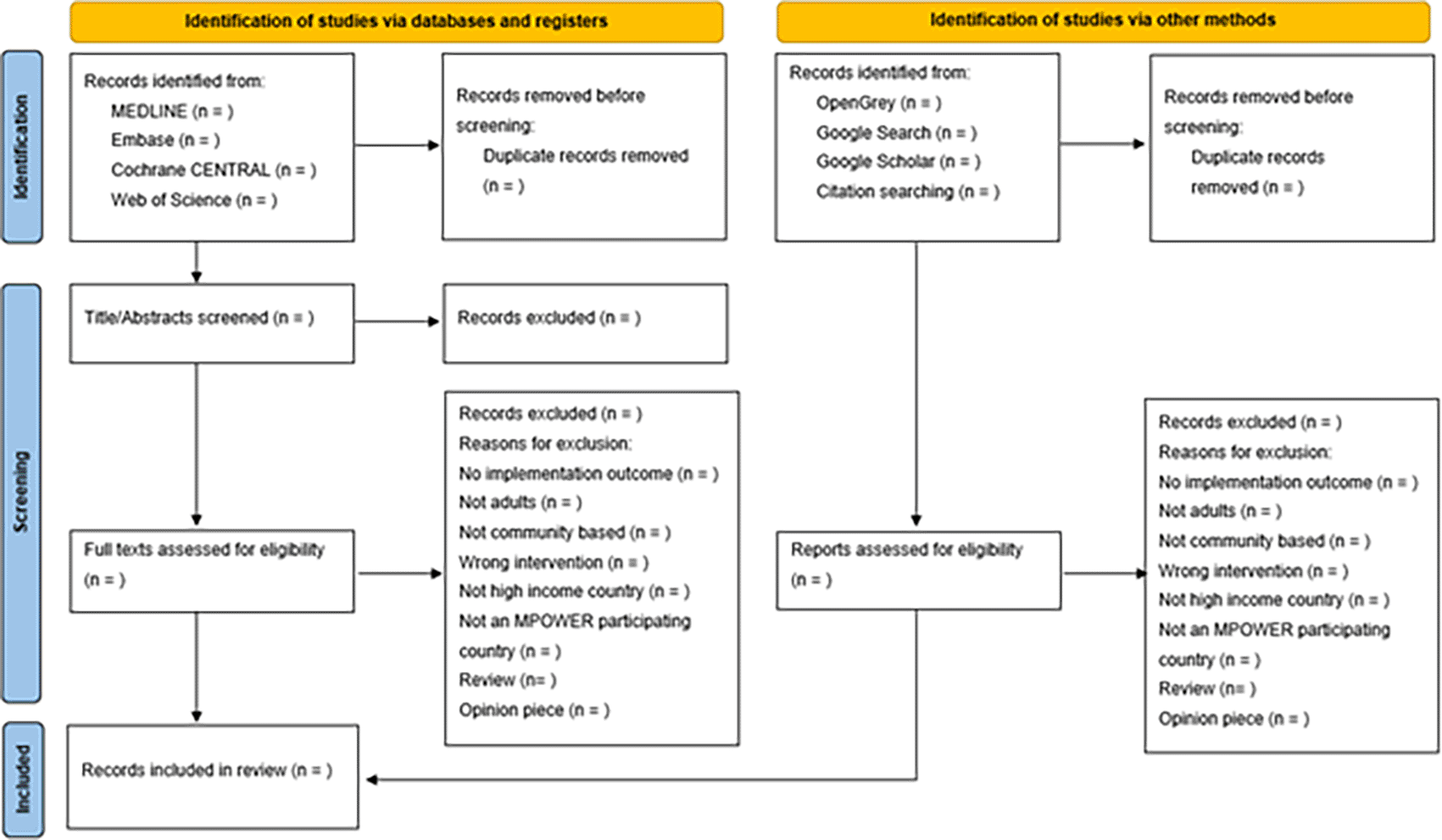
All identified citations retrieved from the search will be loaded into EndNote 20.0.1 2021 (Clarivate Analytics, PA, USA) citation management system, and duplicates removed. The titles and abstracts of all articles identified in the search will be independently screened via the online application, Rayyan51 by at least two reviewers, based on the inclusion and exclusion criteria. Conflicts will be resolved via discussion or with an additional independent reviewer. Articles selected during the screening process will be retrieved in full and undergo full text assessment against the inclusion criteria described above by one reviewer, with at least 20% validated by an additional independent member of the review team. Reasons for exclusion of full-text screened studies which do not meet inclusion criteria will be recorded and reported in the scoping review. Articles included in the full text selection process will be hand searched for potential citation inclusion. Search results will be reported in a flow diagram according to the Preferred Reporting Items for Systematic Reviews and Meta-analyses Extension for Scoping Review (PRISMA-ScR) flow diagram52 ( Figure 1).
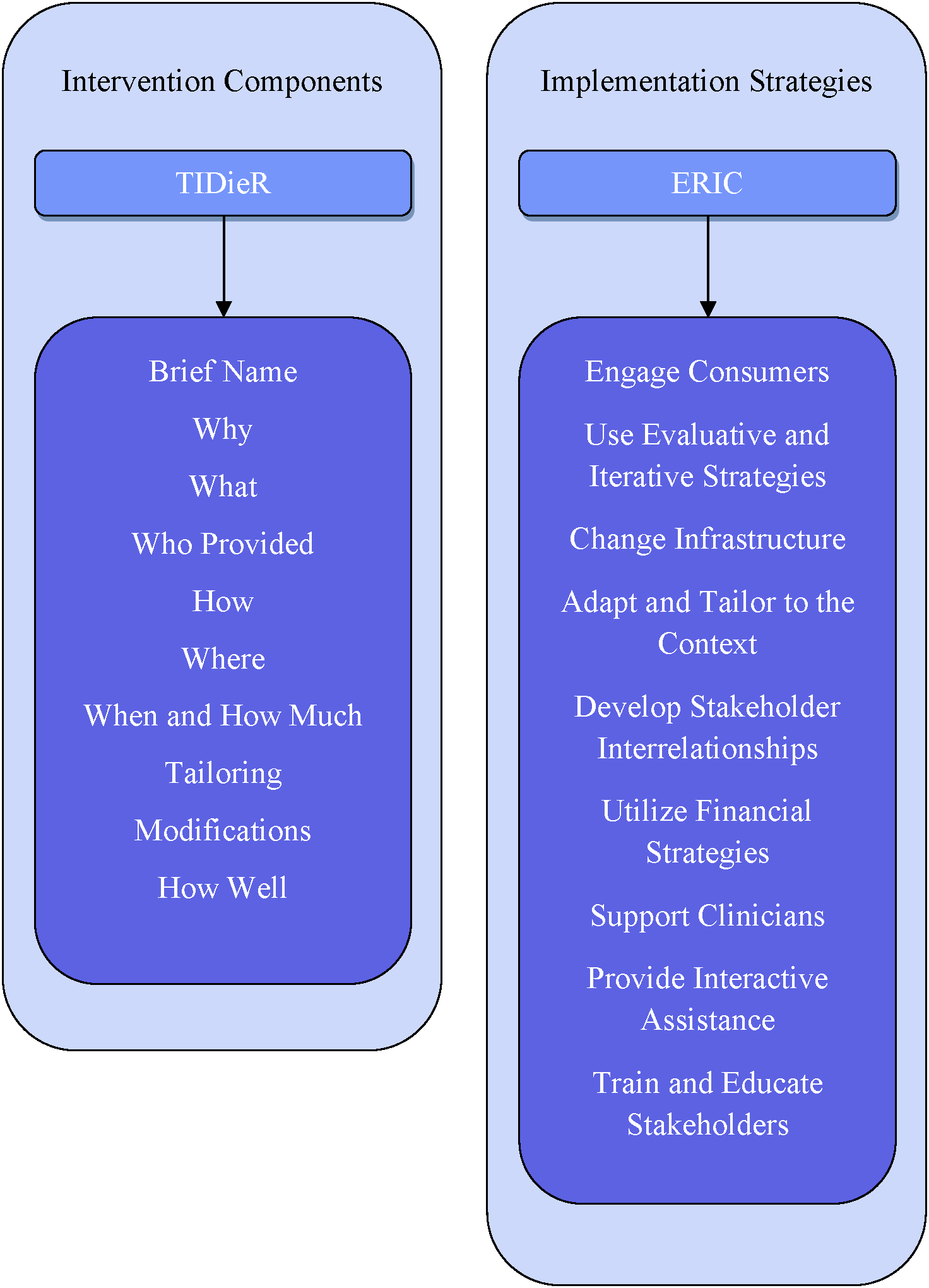
A data extraction form will be developed and piloted by two authors using a Microsoft Excel spreadsheet. Extracted data will be structured using a matrix consisting of the scoping review predetermined reporting framework fields based on the areas of focus and conceptual frameworks; and data, themes or subthemes that fall outside of the framework. Example fields are reported in Table 5 but may be modified iteratively as the scoping review progresses in alignment with scoping review methods.43,53 The matrix will include items adapted from the Template for Intervention Description and Replication (TIDieR) checklist54 ( Table 4). Conflicts that arise during the data extraction and charting process will be resolved either by discussion or with an additional independent reviewer.
| Item number | Item | Where located** | |
|---|---|---|---|
| Primary paper (Page or appendix number) | Other (details) | ||
| BRIEF NAME | |||
| 1. | Word or sentence to describe the intervention. | ||
| WHY | |||
| 2. | Document theoretical basis behind key components of the intervention. | ||
| WHAT | |||
| 3. | Document the intervention materials (e.g., participant documents, training materials) and physical access (URL or appendix). | ||
| 4. | Document activities and processes engaged to administer the intervention. | ||
| WHO PROVIDED | |||
| 5. | Document intervention providers and relevant qualifications, experience, and intervention-specific training. | ||
| HOW | |||
| 6. | Document mechanisms and contexts of delivering the intervention (e.g., face-to-face focus groups). | ||
| WHERE | |||
| 7. | Document specific details of the intervention locations and any relevant organisational characteristics. | ||
| WHEN and HOW MUCH | |||
| 8. | Document the number, frequency, intensity, and duration of the intervention delivered. | ||
| TAILORING | |||
| 9. | Document characteristics of any tailoring or adaptation to the intervention, and rationale for doing so. | ||
| MODIFICATIONS | |||
| 10. | Document characteristics of any modifications to the intervention, and rationale for doing so. | ||
| HOW WELL | |||
| 11. | Planned: Document characteristics of any strategies that were used to support and improve intervention adherence. Document how intervention adherence was assessed. | ||
| 12. | Actual: Document the extent of intervention adherence (if assessed). | ||
The final data extraction will be performed by the first author, with at least 20 percent verified by a second reviewer, according to the study objectives and the extraction template developed and refined during the pilot phase44 ( Table 5). Authors of papers will be contacted to request missing or additional data for clarification where papers have been published in the last five years, if required.55
Quantitative and qualitative data will be analysed separately and presented narratively, graphically and with the aid of tables and figures where appropriate. Reported findings will include: (i) intervention components, reported using adapted TIDieR items;54 (ii) implementation strategies, reported using Expert Recommendations for Implementing Change (ERIC) strategy clusters,56 and (iii) implementation theories, models, and frameworks (see Figure 2). Qualitative data that does not fit within the predetermined reporting framework will be analysed via an inductive approach57 and reported separately.
Findings will be published in an open-access, peer-reviewed journal, and communicated through presentations at national and international conferences, to key researchers, smoking cessation stakeholders and decision makers within local organisations.
This scoping review has been completed and is published in an open-access, peer reviewed journal.58
This protocol outlines the methods for a scoping review evaluating the implementation of smoking cessation services in the community setting. The interventions included in this planned review were selected based on the smoking cessation interventions evaluated in contemporaneous literature.32,59–64 Proctor et al.65 argue that implementation outcomes should be clearly distinguished from service system and clinical outcomes, to better evaluate the effectiveness of the implementation of services. The authors assert that this distinction between service and clinical outcomes, and implementation, is critical to understanding whether service failures are the result of ineffective interventions, or ineffective implementation.65 Milat et al.66 emphasise the importance of considering the implementation of interventions that historically, public health research has largely ignored. Implementation is an important consideration in research, as public health interventions may be effective within discrete, small-scale studies, but may not translate well in large scale to the general population. Glasgow et al.46 reiterate that implementation has frequently been ignored in public health literature, asserting that integrating an implementation framework into research would enhance the application and equity of intervention delivery to target populations.
This proposed scoping review will present an evidence map describing what is currently known, and knowledge gaps regarding the implementation of smoking cessation programs. A taxonomy of implementation theories, models, and frameworks used by smoking cessation programs will be produced, which may form the basis of future systematic reviews of the effectiveness of implementing smoking cessation programs. The outcomes of this scoping review may provide data to help inform the design of future smoking cessation studies. In addition, the results of this scoping review have the potential to contribute to smoking cessation service delivery and uptake.
This review does not consider smoking cessation services in low- and middle-income countries (LMIC’s) where approximately 80% of the worlds smokers reside,67 therefore results may not be applicable in LMIC’s. Furthermore, studies where participants were children younger than 18 years of age were excluded. Future reviews to evaluate smoking cessation service implementation to youth are necessary to identify the unique needs of younger smokers. As this review considers studies within community contexts, the findings are not likely to be generalisable to hospital settings. Existing reviews in hospital settings provide insight into the implementation of smoking cessation programs in those settings.68 Future studies that include analysis of contextual factors influencing implementation of smoking cessation interventions would strengthen the evidence presented in this review.69
| Views | Downloads | |
|---|---|---|
| F1000Research | - | - |
|
PubMed Central
Data from PMC are received and updated monthly.
|
- | - |
Provide sufficient details of any financial or non-financial competing interests to enable users to assess whether your comments might lead a reasonable person to question your impartiality. Consider the following examples, but note that this is not an exhaustive list:
Sign up for content alerts and receive a weekly or monthly email with all newly published articles
Already registered? Sign in
The email address should be the one you originally registered with F1000.
You registered with F1000 via Google, so we cannot reset your password.
To sign in, please click here.
If you still need help with your Google account password, please click here.
You registered with F1000 via Facebook, so we cannot reset your password.
To sign in, please click here.
If you still need help with your Facebook account password, please click here.
If your email address is registered with us, we will email you instructions to reset your password.
If you think you should have received this email but it has not arrived, please check your spam filters and/or contact for further assistance.

Comments on this article Comments (0)