Keywords
Central corneal thickness, corneal collagen cross-linking, Corvis ST, intraocular pressure, transglutaminase

Central corneal thickness, corneal collagen cross-linking, Corvis ST, intraocular pressure, transglutaminase
Version 2 corrects two factual errors and adds transparency notes regarding related research from the same cohort.
1. Correction of CCT values
The mean CCT values for the transglutaminase and UVA/RF epithelial-off groups were transposed in Version 1 due to a data labeling error. Corrected values are:
Transglutaminase: 370.14 ± 42.51 µm → 355.14 ± 33.58 µm
UVA/RF epithelial-off: 368.00 ± 25.48 µm → 370.14 ± 43.04 µm
The corrected CCT p value (one-way ANOVA) is 0.65, revised from 0.990. Study conclusions are unchanged — no significant difference between groups was found in either version. Corrections apply to Table 1, Results, and Abstract.
2. Correction of Discussion
The CCT Discussion has been revised to correctly interpret the corrected group means and updated to reflect that both the transglutaminase and UVA/RF epithelial-off groups underwent epithelial debridement, with differences in CCT attributable to the crosslinking agent rather than epithelial status.
3. Ethics approval clarification
A supplementary ethics approval (No. 2.KEH.102.08.2022), obtained to extend the protocol to include an untreated control group, has been noted in the Methods and Ethical Approval sections.
4. Companion manuscript note
A note has been added to the Limitations section stating that corneal biomechanical outcomes and histopathological findings from the same cohort, including the untreated control group, are being reported in a companion manuscript currently in preparation.
5. Updated dataset
The underlying dataset has been corrected to reflect the revised CCT values and is available at: https://doi.org/10.6084/m9.figshare.32656386
One of the most important factors in diagnosing several corneal disorders is the central corneal thickness (CCT).1 Dynamic CCT is considered to contain critical information about several eye conditions linked to endothelial corneal dystrophies or collagen abnormalities.2 Corneal stroma form 90% of the total thickness of the cornea.3 Intraocular pressure (IOP) is influenced by changes in CCT. The significant increase in IOP after corneal collagen cross-linking (CXL) treatment may be due to the increased rigidity of the cornea.4 Corneal Visualization Scheimpflug Technology (Corvis ST) is a relatively new technology that has been studied for its ability to distinguish between normal corneas and keratoconus.5 Corvis ST characteristics are also responsible for changes following CXL including CCT and IOP; consequently, it has the potential to be used to monitor the result of CXL.6
The cornea is a transparent and avascular tissue, and nutrients and oxygenation of the cornea are obtained by diffusion through the aqueous humor, tear film, and limbal blood vessels.7 Corneal ectasia is a condition where the cornea’s thickness decreases from normal values. Keratoconus, pellucid marginal degeneration, and post-refractive ectasia are a few examples of corneal ectasia.3 In the general population, keratoconus has been estimated to occur 50–230 times per 100,000 people.4 The prevalence of post-refractive ectasia ranges from 0.04% to 0.6% in the general population, and it is expected to rise in conjunction with the public’s rising appreciation for the procedure.8,9 The use of spectacles and rigid gas permeable contact lenses is the only non-operative treatment for corneal ectasia.2 In treating progressive keratoconus, corneal CXL has become the gold standard because it strengthens the corneal structure, preventing ectasia.10
Currently, riboflavin and ultraviolet-A (UVA) are used in conventional CXL. However, the CXL method using riboflavin and UVA is considered to cause discomfort to patients due to the UVA rays.11,12 Transglutaminase was hypothesized as a potential way for inducing CXL. Transglutaminase reduces discomfort due to UVA irradiation and inhibits keratocyte cell death. It is envisaged that using accessible enzymatic products as a treatment technique will be easier and reduce the cost of CXL therapy.13
In this study, New Zealand rabbits were divided into three groups, namely the transglutaminase-induced CXL group, Ultraviolet A/riboflavin (UVA/RF) epithelial-off group, and UVA/RF transepithelial group. This study aims to evaluate the safety of transglutaminase-induced CXL on CCT and IOP in vivo.
Ethical approval was obtained from the Animal Care and Use Committee (ACUC) Faculty of Veterinary Medicine, Universitas Airlangga (No. 2.KEH.071.07.2022). A supplementary ethics approval (No. 2.KEH.102.08.2022) was subsequently obtained to extend the protocol to include an untreated control group, whose outcomes are being reported in a companion manuscript currently in preparation. All procedures were performed to ethical standards.
We calculated the sample size using the Lemeshow formula. Twenty-one normal New Zealand white rabbits were enrolled, and the right eye was treated. All the rabbits were divided into three groups, namely, transglutaminase-induced CXL group, epithelial-off CXL group, and transepithelial CXL group. There were seven rabbits in each group and we used random allocation. All rabbits were healthy males, between two and three months of age, and weighed between 3 and 4 kg. All rabbits were provided by the Faculty of Veterinary Medicine, Universitas Airlangga. The experiments were performed at Veterinary Hospital Universitas Airlangga.
The equipment utilized in this study included individual rabbit cages in an ideal room temperature (24°C), enough ventilation, and good ad libitum; the portions of food and drink were the same for all rabbits.
Anesthesia was induced via intramuscular injection of 0.1 mL/kgBW xylazine 2% (Xyla, Interchemie, Netherland) and 6–10 mg/kgBW ketamine (Ket-A-100®, Agrovet Market s.a. Lima, Peru). The right eyes were treated, and the contralateral eyes served as untreated controls kept closed during the procedure. The corneal epithelium of the transglutaminase group was removed using an 8 mm MacRae Photorefractive Keratectomy (PRK) well and alcohol 20% for 40 seconds, then the loose epithelium was removed with a hockey knife. After the epithelial-off procedure, transglutaminase solution 1 U/mL (Zedira, Germany) was dripped onto the cornea every two minutes for 30 minutes, for a total of 16 times. The cornea epithelial of the transepithelial group was not removed, then the riboflavin transepithelial (Peschke TE, Peschke Meditrade GmbH, Switzerland) was dripped onto the cornea every two minutes for 30 minutes. Subsequently, UVA exposure (365 ± 5 nm, 3 mW/cm2, 8-mm diameter light spot) was performed using a UVA lamp CCL-Vario System (Peschke Trade GmbH, Switzerland) while continuously dripping the riboflavin onto the cornea every two minutes for 30 minutes. The cornea epithelial of the epithelial-off group was removed with the same procedure, then the riboflavin epithelial-off (Ribolink, Aurolab, India) was dripped two times onto the cornea. Subsequently, UVA exposure was performed using the same technique while continuing to drip the riboflavin onto the cornea every five minutes for 30 minutes.12,13 Immediately following the procedure, an eye ointment containing chloramphenicol (Cendo, Indonesia) was used. The ointment was administered every eight hours for 14 days.
Fourteen days after treatment, the CCT and IOP of the rabbits were evaluated using Corvis ST (Oculus Optikgeräte GmbH, Wetzlar, Germany). Before the procedure, the rabbits were first anesthetized using 0.15 mL/kg xylazine and 6–10 mg/kg ketamine intramuscularly. All examinations were conducted by the same experienced ophthalmology technician to remove potential interobserver variability. The heads of the rabbits were positioned in front of the instrument to ensure that the cornea was 11 mm away from the air nozzle. In the instance of improper imaging or alignment concerns, a retake was performed in order to meet quality standards. The air puff was released and the ultrafast camera captured 140 horizontal cross-sectional corneal images; subsequently, CCT and IOP were determined.
Comparative between data were tested using the one-way ANOVA followed with a post hoc test if the data were normally distributed. If the data were not normally distributed, they would be analyzed using the Kruskal–Wallis test and continued by using the Mann–Whitney test. The result is considered significant if the p-value is < 0.05. All statistical data were processed using SPSS 26.0 software (RRID:SCR_002865) (SPSS, Chicago. IL, USA).
All the protocols are published in protocols.io (https://doi.org/10.17504/protocols.io.261ge3eool47/v1).
We found no secondary infection in the rabbit’s cornea during the observation period and 14 days after cross-linking ( Figure 1). Our study demonstrated that the UVA/RF epithelial-off group had the highest individual CCT value at 428 μm, while the lowest individual value was also from the UVA/RF epithelial-off group at 321 μm, reflecting the greatest variability in this group. In comparison across groups, the transglutaminase-induced CXL group displayed the lowest mean CCT (355.14 ± 33.58 μm), while the UVA/RF epithelial-off group had the highest mean CCT (370.14 ± 43.04 μm), followed by the UVA/RF transepithelial group (369.86 ± 23.43 μm) ( Table 1). Analysis using the one-way ANOVA test revealed no significant differences between any of the groups (p-value = 0.65).
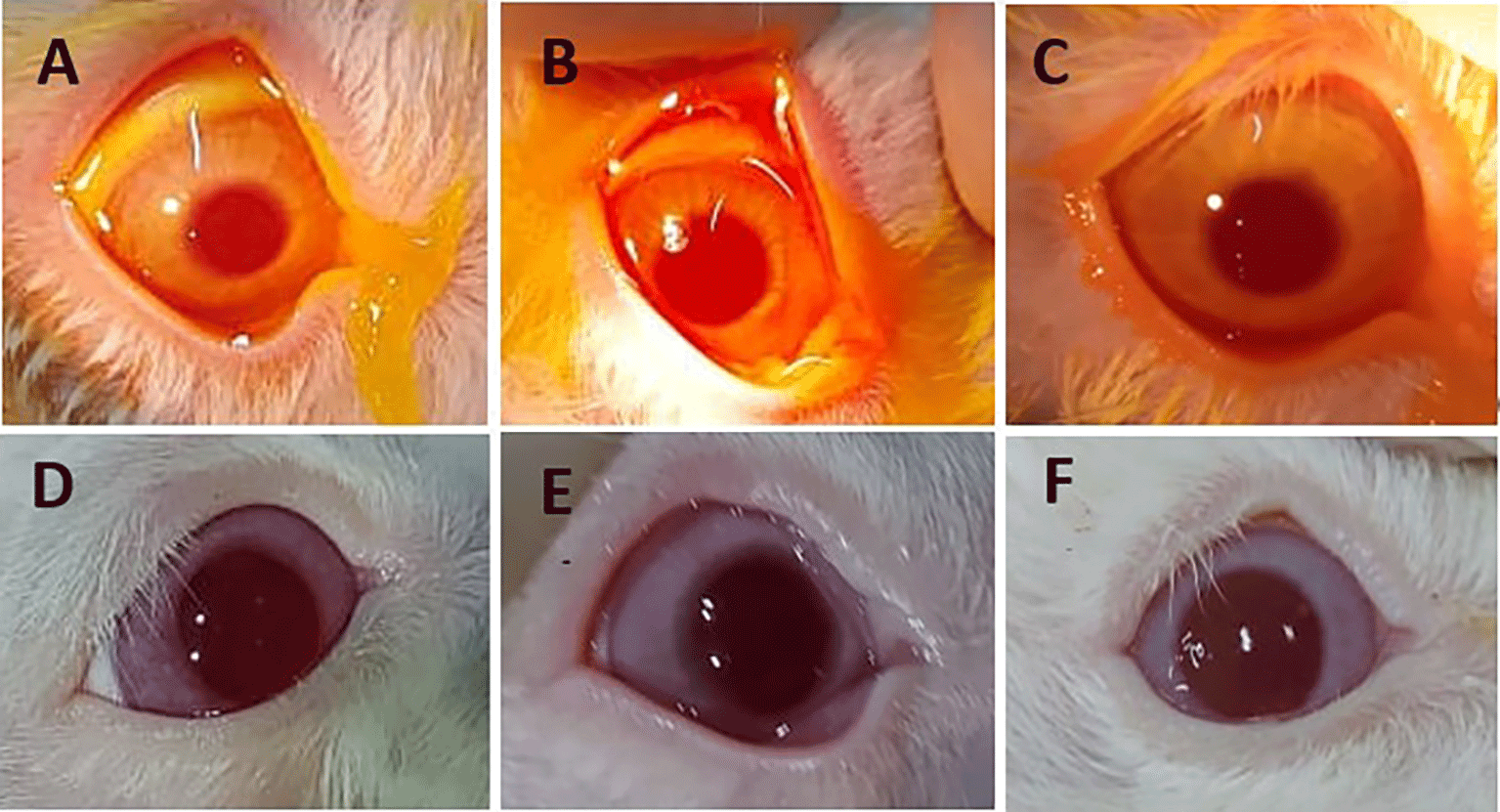
The results of the research showed that the IOP was lowest in the UVA/RF transepithelial and the UVA/RF epithelial-off CXL groups with 5.50 mmHg. The highest IOP was in the transglutaminase-induced CXL group with 13.50 mmHg. The median IOP in the transglutaminase-induced CXL group was highest among three groups ( Table 2). Analysis using the Kruskal–Wallis test revealed no significant differences between any of the groups with p-value = 0.26. There were no signs of infection and inflammation in the three groups immediately after treatment and 14 days after treatment.
This study used two conventional CXL groups, namely, the UVA/RF epithelial-off group and the UVA/RF transepithelial group, compared with the transglutaminase-induced CXL group. In contrast to earlier research by Wu et al.12, which solely employed UVA/RF epithelial-off techniques, transepithelial procedures were performed more often at the time of this investigation to prevent possible complications.
Both the transglutaminase-induced CXL group and the UVA/RF epithelial-off group underwent corneal epithelial debridement before treatment. Therefore, the difference in CCT observed between these groups at 14 days is attributable to the crosslinking agent rather than epithelial status. The UVA/RF epithelial-off group demonstrated the highest mean CCT (370.14 ± 43.04 μm), while transglutaminase group showed the lowest mean CCT (355.14 ± 33.58 μm), despite both undergoing epithelial removal. This finding may reflect the known effect of UVA irradiation on stromal keratocyte apoptosis and subsequent inflammatory response during early wound healing, which can produce transient stromal edema and relative corneal thickening at 14 days post-procedure.14,15 In the transglutaminase group, the absence of UVA irradiation may have resulted in less keratocyte apoptosis and a milder inflammatory response, potentially explaining the lower CCT at this early timepoint. The UVA/RF transepithelial group, which retained the epithelium, showed a mean CCT (369.86 ± 23.43 μm) comparable to the epithelial-off group, consistent with prior reports of relatively stable CCT following transepithelial CXL.14 Despite these directional differences, no statistically significant difference in CCT was found across groups (p=0.65), consistent with findings reported by Wu, et al.12,13
The group with transglutaminase-induced CXL had the highest IOP among the groups, although there was no significant difference between groups (p-value = 0.26). The increase in IOP can be one of the factors that explain an increase in corneal rigidity after transglutaminase administration as CXL. A previous study by Kymionis et al.16 showed a mean rise of 2–3 mmHg after UVA/RF CXL due to increased corneal stiffness. Several studies stated that there were significant differences in IOP after CXL. These studies use different measuring instruments from those used in our study, namely Goldmann Applanation Tonometry and Tonopen.16–18 In addition, these results can be interpreted as the safety of transglutaminase-induced CXL can be compared with UVA/RF CXL in influencing CCT and IOP, which is one of the factors in increasing corneal rigidity.12,13
Cornea CXL is a procedure to create bonds that connect polymer chains. The CXL procedure can change the biomechanics of the human cornea by increasing corneal rigidity by up to 328.9%.19 Morphologically, the formation of cross-links increases the distance between molecules because the collagen polypeptide chains are separated.20 In conventional CXL, two phases are employed. The corneal saturation step acts as a photosensitizer to promote cross-linking, while the UVA irradiation stage protects the underlying tissues from UVA-induced damage.21 Conventional CXL will result in cross-linking through two pathways, namely oxidative and glycosylation pathways.22 Activated riboflavin, in addition to activating oxidative pathways, can also support the occurrence of glycosylated cross-linking in proteoglycans and collagen fibers through a mechanism mediated by advanced glycation end products.23,24
Recent studies have shown that mRNA, fibronectin, and transglutaminase are more abundant in human corneal keratocytes treated with UVA and riboflavin. Induction by transglutaminase is proposed as a new mechanism for cross-linking.9,10 One of the possible advantages of CXL transglutaminase is that it prevents the loss of keratocytes and the discomfort usually experienced by patients treated with UVA and riboflavin.12,13 Transglutaminase facilitates the formation of the ε-(γ-glutamyl) lysine isopeptide bond, which mediates the biochemical reaction between glutamic acid and lysine.25 The cornea is mainly constructed of type I collagen and is rich in glutamic acid and lysine. Corneal collagen fibers could be cross-linked by transglutaminase, potentially resulting in more rigid mechanical properties.26
The findings of this study demonstrate that there were no significant differences between the transglutaminase-induced CXL group and UVA/RF CXL group, so the safety of transglutaminase-induced CXL could be comparable with that of UVA/RF CXL in terms of altering CCT and IOP, which are two factors contributing to corneal rigidity.
This study’s limitations included the limited follow-up period and the absence of any measurements before the CXL procedure. Recolonization of stromal keratocytes and enhanced stromal fiber density are complete six months following CXL; hence, a six-month follow-up may be recommended.27 This study’s brief research period was a constraint; if the research had a longer period and pre-post CXL procedure examination, it might have produced the best results. Consequently, more research into the use of transglutaminase as a treatment for CXL and corneal ectasia is warranted. Corneal biomechanical outcomes and histopathological findings from the same animal cohort, including an untreated control group enrolled under supplementary ethics approval No. 2.KEH.102.08.2022, are being reported in a companion manuscript currently in preparation.
Ethical approval was obtained from the Animal Care and Use Committee (ACUC) Faculty of Veterinary Medicine, Universitas Airlangga (No. 2.KEH.071.07.2022). A supplementary ethics approval (No.2.KEH.102.08.2022) was subsequently obtained to extend the original protocol to include untreated control group; outcomes from this extended protocol are being reported in a companion manuscript currently in preparation.
| Views | Downloads | |
|---|---|---|
| F1000Research | - | - |
|
PubMed Central
Data from PMC are received and updated monthly.
|
- | - |
Provide sufficient details of any financial or non-financial competing interests to enable users to assess whether your comments might lead a reasonable person to question your impartiality. Consider the following examples, but note that this is not an exhaustive list:
Sign up for content alerts and receive a weekly or monthly email with all newly published articles
Already registered? Sign in
The email address should be the one you originally registered with F1000.
You registered with F1000 via Google, so we cannot reset your password.
To sign in, please click here.
If you still need help with your Google account password, please click here.
You registered with F1000 via Facebook, so we cannot reset your password.
To sign in, please click here.
If you still need help with your Facebook account password, please click here.
If your email address is registered with us, we will email you instructions to reset your password.
If you think you should have received this email but it has not arrived, please check your spam filters and/or contact for further assistance.

Comments on this article Comments (0)