Keywords
Strategic Determinants, Women-led SMEs, Social Cultural Barriers, SMEs Performance, Diverse Cultures

Strategic Determinants, Women-led SMEs, Social Cultural Barriers, SMEs Performance, Diverse Cultures
The revised manuscript addresses the reviewer’s major concerns by restructuring the title, abstract, and keywords for clarity and impact, and explicitly stating the research gap, highlighting the lack of systematic understanding of how socio-cultural factors moderate strategic determinants and performance across diverse contexts. The narrative review approach is justified, emphasizing its suitability for synthesizing context-rich, qualitative findings and developing a conceptual framework. The methodology now provides a detailed search strategy, including the full Boolean search string, databases, and search dates, alongside a thorough explanation of thematic analysis using both deductive and inductive coding, with software and coding procedures specified. A formal quality assessment of the 100 included studies is incorporated using standard criteria, ensuring critical appraisal. Findings sections have been rewritten to move beyond description, offering synthesis, analysis, and identification of patterns and contradictions across regions. Discussions explicitly interpret results, link insights to Entrepreneurial Orientation and Gender Role Theory, and situate findings within existing literature. Limitations are elaborated to reflect interpretive constraints and potential publication bias. Finally, actionable future research directions are provided, including mixed-methods longitudinal designs, quantitative testing of moderating relationships, and exploration of socio-cultural enablers such as male allies and inclusive networks.
To read any peer review reports and author responses for this article, follow the "read" links in the Open Peer Review table.
Women led SMEs operate within complex environments where strategic success factors such as access to resources, effective market positioning, risk management, and innovation are significantly influenced by prevailing socio-cultural conditions.1,2 These factors are not experienced equally by all entrepreneurs; cultural norms, institutional structures, and societal expectations often constrain the strategic choices available to women, limiting their access to opportunities and reducing their autonomy in decision making processes.3–5 Traditional gender roles, coupled with family responsibilities and community perceptions, further shape the entrepreneurial paths women follow, often creating barriers that men do not typically encounter in business settings.6
Socio cultural factors can both support and constrain the strategic choices available to women in business contexts.7 Education and institutional support often enhance innovation and improve access to vital resources, enabling women to pursue competitive strategies. In contrast, restrictive cultural norms and certain religious beliefs may limit women’s mobility in the market and reduce their willingness or ability to take entrepreneurial risks.1 Family structures can provide emotional and practical support that fosters resilience, yet traditional caregiving responsibilities frequently limit the time and energy women can dedicate to business growth.8,9 Understanding the strategic behavior and long-term sustainability of women led enterprises therefore requires a broader cultural perspective that considers the diverse social forces shaping entrepreneurial experiences.10
This review adopts an integrated framework that brings together strategic management and socio-cultural analysis to examine women led SMEs.1 Unlike conventional studies that focus primarily on financial or operational challenges, this approach emphasizes the interplay between societal attitudes, religious beliefs, education, family responsibilities, gender norms, and institutional arrangements with core business strategies such as resource access, market positioning, risk management, and innovation.11 By merging these perspectives, the review moves beyond standard business models to uncover how cultural and institutional dynamics influence entrepreneurial outcomes and shape the strategic direction of women led enterprises.12,13
Earlier studies have acknowledged gender-based barriers to entrepreneurship,14–16 but this research advances the discussion by directly linking socio cultural influences such as gender roles and religious beliefs to strategic decisions including market positioning and risk management. This integrated approach aims to provide a deeper understanding of the lived experiences of women entrepreneurs, highlighting how cultural contexts shape their strategic behavior and influence enterprise outcomes across diverse settings.
Women led SMEs face persistent structural and socio cultural barriers that drive performance gaps. Gender bias in financial systems and institutional weaknesses limit credit access to women,17,18 while societal norms confine women to low growth sectors.19 Family expectations further hinder risk taking,20 and unequal access to education, technology, and networks restricts women’s innovation.21 While prior research has identified these socio cultural barriers, a systematic understanding of how they moderate the relationship between specific strategic determinants such as innovation, market positioning, risk management, and resource access and performance across diverse cultural contexts is lacking.
This review therefore explores how socio cultural factors influence the performance of women led SMEs by shaping the strategic determinants previously discussed. A narrative review was chosen over a systematic review to synthesise diverse, context rich qualitative findings and to develop a conceptual framework that captures the complexity of socio cultural influences across different settings. Drawing on Entrepreneurial Orientation and Gender Role Theory, the study highlights the importance of aligning business strategy with cultural context to address barriers and harness emerging opportunities. This integrated framework offers practical insights for policy makers and development agencies, strengthening both strategic management and gender focused research by presenting a contextually grounded understanding of women entrepreneurs’ performance in an increasingly globalised economy.
The research objectives of this study are as follows:
a. To examine the influence of strategic determinants of resources, market positioning, risk management, and innovation on the performance of women-led SMEs in diverse cultural contexts.
b. To analyze the moderating role of socio-cultural factors, including societal attitudes, religious beliefs, education, family dynamics, gender roles, and legal and institutional frameworks, in shaping the strategic decisions of women entrepreneurs.
c. To investigate the interplay between strategic and socio-cultural forces, identifying how these interactions impact business growth, competitiveness, and sustainability in women-led SMEs.
d. To identify key barriers and enablers within different cultural settings that affect women entrepreneurs’ access to resources, market opportunities, and innovation potential.
e. To provide policy and practical recommendations aimed at fostering inclusive entrepreneurial ecosystems that support the growth and sustainability of women-led SMEs.
This narrative review employed a qualitative approach guided by thematic analysis22,23 to examine how socio cultural factors and strategic determinants influence the performance of women led SMEs. The review synthesised findings from 100 peer-reviewed articles published between 2015 and 2025, aiming to reveal patterns and mechanisms through which socio cultural barriers moderate strategic outcomes across diverse contexts.
Data were sourced from Scopus, Web of Science, and Google Scholar. The search was conducted between 1 March and 30 April 2025. The exact Boolean search string was: (“women-led SME*” OR “female entrepreneur*”) AND (“socio-cultural” OR “gender norm*”) AND (“strategic determinant*” OR “enterprise performance” OR “business performance”). Studies included empirical or conceptual research explicitly linking socio cultural factors to strategic determinants and performance of women led SMEs. Key information extracted from each study included study context, theoretical framework, strategic factors, socio cultural moderators, and reported outcomes.
A three-stage screening process ensured relevance and quality. Stage one involved title and abstract screening, stage two involved full-text evaluation for alignment with research objectives, and stage three involved citation tracking. Inclusion criteria were: peer-reviewed studies published between 2015 and 2025, English-language publications, and studies addressing socio cultural moderators of strategic determinants in women led SMEs.
Studies published before 2015 were excluded to maintain currency. Articles without theoretical grounding or based solely on anecdotal evidence were omitted. Single-case studies with limited generalisability and studies not linking socio cultural factors to strategic performance were excluded.
Thematic analysis was conducted using NVivo 12. Deductive coding applied theory-driven categories based on Entrepreneurial Orientation and Gender Role Theory, including societal attitudes, family dynamics, institutional frameworks, and strategic determinants. Inductive coding identified emerging themes such as digital infrastructure, microfinance, and public-private collaborations. The analysis followed Braun and Clarke’s six-step process: familiarisation with data, generating initial codes, searching for themes, reviewing themes, defining and naming themes, and producing the final report. Frequency, contextual relevance, and evidence strength were considered in theme development.
Study quality was assessed using the Critical Appraisal Skills Programme (CASP) checklist for qualitative research and a custom checklist for mixed-methods studies, evaluating clarity of aims, appropriateness of methodology, data collection, analysis rigor, and relevance. The overall evidence base was considered moderate to high, with the majority of studies demonstrating methodological transparency and consistency. Peer debriefing and memo writing supported reflexivity, ensuring transparency and minimising bias.
To enhance reliability and transparency in thematic analysis, the study incorporated specific procedures to manage subjectivity. Coding was conducted using NVivo software, with an initial set of deductive codes derived from literature on socio-cultural factors and strategic determinants, and inductive codes emerging from the data. To improve coding reliability, peer review steps were implemented: a second researcher independently coded a random sample of 20% of the articles, and discrepancies were resolved through discussion and consensus. Reflexivity was operationalized by maintaining detailed memos and coding journals, documenting analytic decisions such as theme inclusion, interpretation of ambiguous findings, and adjustments made when new patterns emerged. For example, the decision to classify digital financial inclusion as a socio-cultural enabler was explicitly recorded, reflecting reflexive consideration of context. These measures ensured that thematic findings were transparent, consistent, and grounded in the data, reducing subjective bias and enhancing the credibility of the review.
This review integrates Entrepreneurial Orientation (EO) Theory and Gender Role Theory to examine the performance of women led SMEs. EO Theory emphasizes strategic traits such as risk taking, innovation, and proactiveness as key drivers of firm success.24,25 However, EO often assumes a level playing field, overlooking how gender norms restrict women’s autonomy and decision making in entrepreneurial contexts.26–28 Gender Role Theory complements EO by illustrating how societal expectations, religious norms, and institutional biases shape women’s roles and constrain their participation in strategic decision making.1,29–31 Education levels and family dynamics further influence women’s behavior in areas such as innovation and risk taking.32,33 While EO explains strategic intent, it fails to address the socio-cultural barriers that women navigate. Gender Role Theory highlights these constraints but lacks the strategic focus to explain how women adapt their business practices. Integrating EO and Gender Role Theory provides a more comprehensive view of how cultural norms shape entrepreneurial strategies in restrictive settings.34,35
The explanations of these results are based on how Socio-cultural factors moderate the relationship between strategic determinants and the performance of women-operated SMEs, as illustrated in Figure 1.
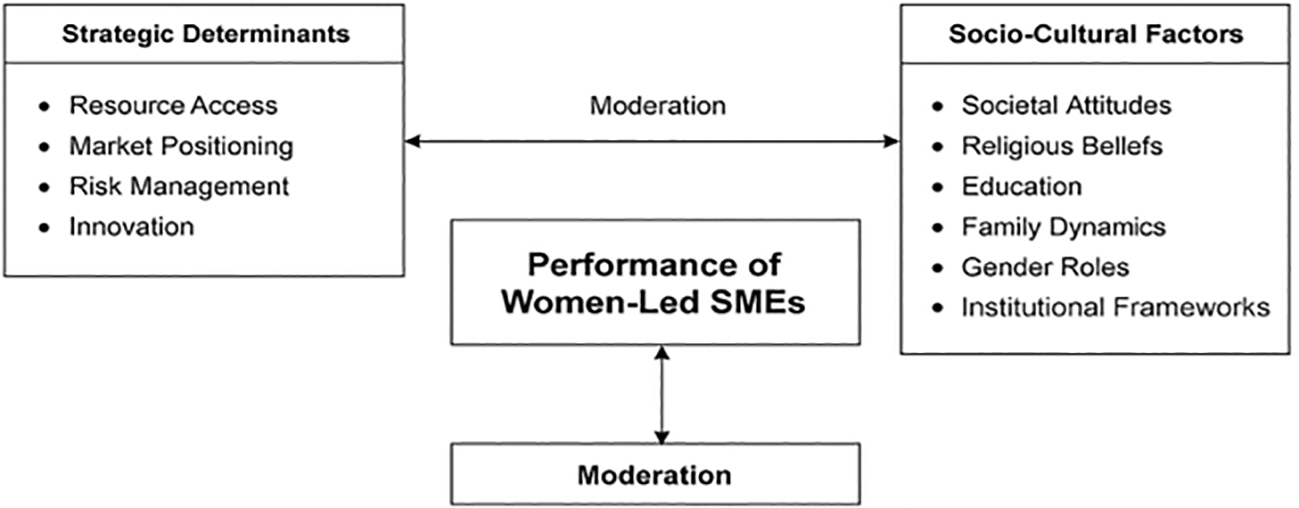
Institutional frameworks, encompassing both formal and informal rules, critically shape the performance of women led SMEs by influencing access to finance, business networks, and infrastructure.36 Evidence from Kenya37,38 indicates that gender-based lending practices and stringent collateral requirements significantly restrict credit access, particularly in contexts where land ownership is predominantly male. While similar constraints are observed in India,39,40 domestic responsibilities further limit women’s participation in networks and training, suggesting that institutional barriers intersect with cultural expectations to compound strategic disadvantages. In Nigeria41,42 poor road infrastructure disrupts supply chains for women in agricultural enterprises, illustrating how physical infrastructure can directly affect enterprise performance. By contrast, digital financial inclusion initiatives in Bangladesh43 demonstrate that technology can mitigate these institutional constraints, enhancing access to financial services and expanding market opportunities. These findings suggest that institutional interventions are context dependent: measures effective in one sector or country may not transfer seamlessly to others, particularly technology or service-based enterprises.
Across the evidence base, patterns emerge highlighting the interplay between formal regulations, cultural norms, and strategic outcomes. For example, inclusive lending and property rights reforms consistently correlate with improved access to resources,44–46 yet the magnitude of their impact is moderated by entrenched societal norms. Contradictions are apparent when comparing contexts: in Pakistan, religious norms often restrict women’s financial participation, whereas in Indonesia, Islamic microfinance provides culturally aligned avenues for resource access, illustrating that socio cultural factors can function as both barriers and enablers depending on local interpretations of institutional rules.47,48 This comparison underscores the need for contextually tailored strategies rather than universal policy prescriptions. Overall, the evidence suggests that strengthening institutional frameworks alone is insufficient; interventions must simultaneously address cultural, gendered, and infrastructural constraints to enhance the strategic capabilities and performance of women led SMEs.
Societal attitudes and religious beliefs exert a powerful influence on the market positioning of women led SMEs, often limiting them to low growth sectors in traditionally patriarchal contexts.49,50 Evidence from Saudi Arabia51,52 demonstrates that policy reforms under Vision 2030 have begun to mitigate these barriers by actively promoting women’s participation in industries historically dominated by men, suggesting that government-led interventions can reshape entrenched norms. In contrast, in Pakistan,53 religious and cultural norms continue to restrict women’s access to financial resources, constraining both business expansion and strategic decision making. Interestingly, Indonesia47,48 illustrates how similar religious frameworks can function as enablers rather than barriers, with Islamic microfinance offering culturally aligned, interest-free loans and supportive services that empower women entrepreneurs. These contrasting outcomes underscore that socio-cultural factors interact with local institutional and financial mechanisms, making context-specific strategies essential.
Access to quality education and targeted entrepreneurial training further shapes women’s strategic capabilities.54–56 Studies indicate that educational interventions strengthen digital literacy, business acumen, and innovation capacity, which in turn enable broader participation in competitive markets. Complementary public and private sector initiatives, such as mobile banking programs in Bangladesh,57–59 have enhanced financial inclusion and improved market access, demonstrating the potential for coordinated institutional support to reinforce educational gains. While these interventions are promising, their transferability across sectors and regions remains uncertain, as contextual norms and infrastructure continue to mediate their effectiveness. Overall, the synthesis suggests that addressing societal attitudes and religious constraints in combination with educational and institutional initiatives is critical for enabling women led SMEs to expand into higher growth sectors. Targeted measures, including scholarships, tailored training programs, and culturally sensitive financial inclusion reforms, emerge as key strategies for fostering equitable market participation and sustainable enterprise performance.
Risk management is critical for the sustainability and growth of women led SMEs, with both family dynamics and institutional frameworks shaping strategic decisions.17 Evidence from India60,61 suggests that traditional gender norms confine women to low risk sectors, limiting access to higher growth opportunities. Conversely, supportive family structures62 appear to facilitate risk taking, fostering innovation and encouraging engagement in more ambitious business ventures. These findings highlight that family support functions as a contextual moderator, enhancing the effectiveness of strategic initiatives where cultural expectations may otherwise restrict women’s entrepreneurial autonomy.
Institutional deficiencies further constrain women’s capacity to manage risk effectively. Weak legal enforcement in Kenya,63–65 for instance, limits business expansion and reduces incentives for investment, whereas targeted interventions such as Rwanda’s Women’s Guarantee Fund66 demonstrate how tailored support can mitigate financial risks and stimulate enterprise growth. Evidence from Nigeria67–70 indicates that financial literacy and risk management training improve profitability and resilience in the agribusiness sector; however, these sector-specific successes raise questions about the transferability of such interventions to technology or service-based SMEs. Similarly, inclusive financial systems in Bangladesh71 have enhanced access to credit and insurance, enabling women entrepreneurs to undertake strategic risks that would otherwise be constrained by both socio-cultural and institutional barriers.
The synthesis of these studies reveals a pattern: effective risk management for women led SMEs requires simultaneous attention to family support, institutional reforms, and targeted financial interventions. Advancing gender balanced legal frameworks, strengthening institutional enforcement, and integrating culturally sensitive financial tools emerge as essential strategies to promote equitable entrepreneurship, enhance strategic decision making, and support sustainable growth across diverse business contexts.
Innovation among women entrepreneurs is closely linked to access to both formal and informal education, which builds business, technical, and digital competencies.72,73 Evidence from rural Pakistan74,75 indicates that limited educational opportunities restrict innovation, compelling women to rely on outdated practices and constraining enterprise growth. In contrast, well-established educational systems in Finland76 enable women to adopt digital technologies and expand business operations, illustrating the critical role of systemic educational support in fostering innovative capacity. These regional contrasts highlight that education functions not only as a skill-building mechanism but also as a moderator of the relationship between strategic determinants and performance.
Cultural norms and restrictive gender expectations further shape innovation outcomes. In India,77–82 societal attitudes in the technology sector limit access to funding and deter risk taking, thereby suppressing innovative potential even when technical skills are present. By contrast, interventions in Canada and Rwanda83–85 demonstrate that targeted programs in sectors such as fintech and healthcare can successfully overcome structural and socio-cultural barriers, enabling women entrepreneurs to translate skills into innovative business practices. This suggests that the effectiveness of education and training is contingent upon complementary institutional and societal support.
Synthesising these findings reveals that enhancing innovation among women led SMEs requires a multi-layered approach. Educational interventions must be paired with strategies to transform societal attitudes and reduce gender-based constraints, while also providing sector-specific support mechanisms. Programs that integrate skills development with culturally and institutionally aligned support not only expand opportunities for women entrepreneurs but also strengthen their capacity to adopt novel practices, manage risks, and achieve sustainable enterprise growth. Overall, the evidence underscores the importance of aligning education, societal transformation, and strategic innovation initiatives to foster inclusive and high-performing women led SMEs.
The review provided a detailed critical discussion of the findings of the literature review on how social cultural barriers moderate the relationship between strategic determinants and performance of women-led SMEs in diverse cultural contexts as shown in Figure 2.
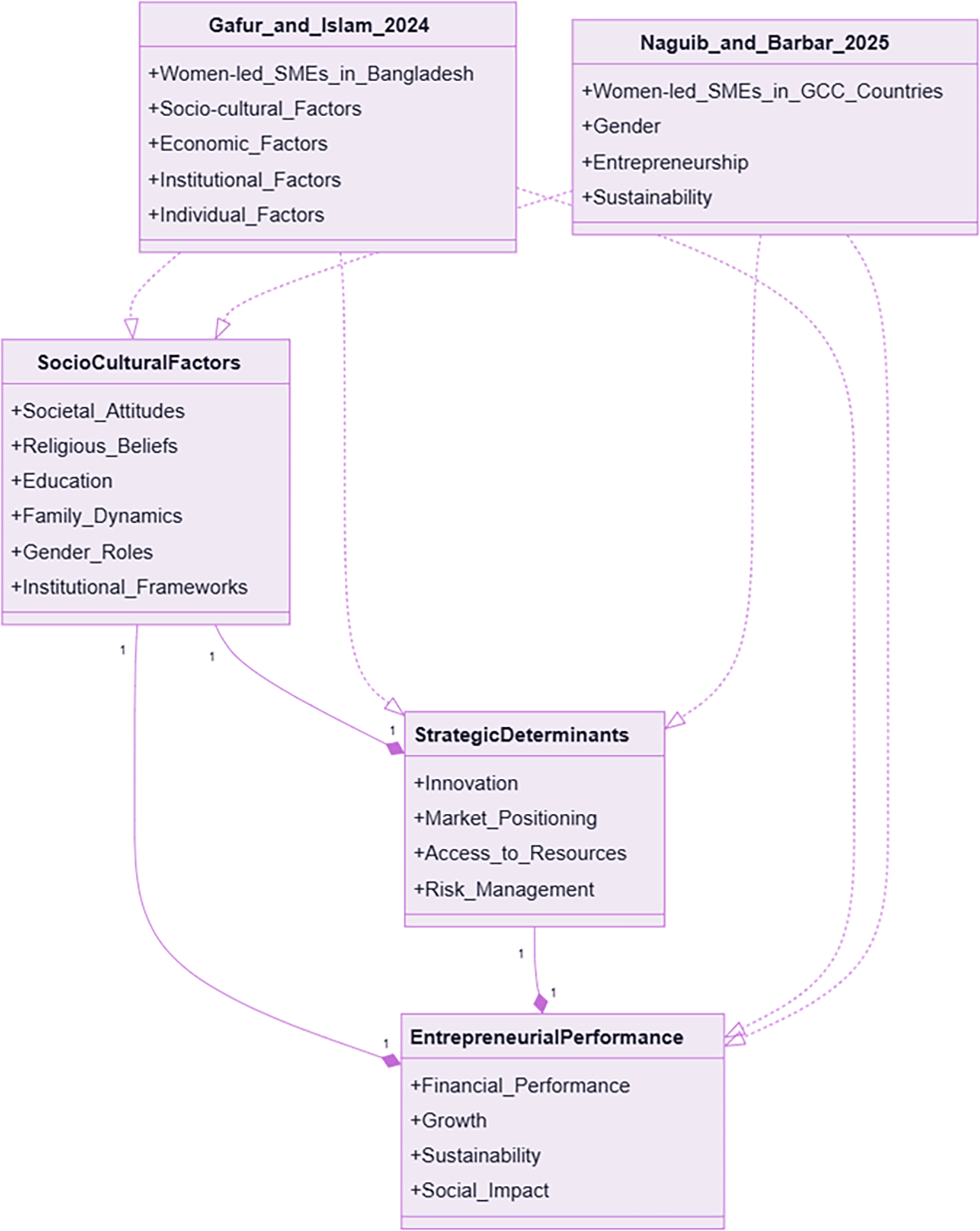
The evidence indicates that institutional barriers such as collateral requirements, gender bias in banking systems, and uneven policy enforcement36,37,85 significantly limit access to finance for women led SMEs, constraining their strategic decision making and growth potential. These barriers are often compounded by low land ownership and insufficient regulatory support, which intersect with socio cultural expectations and inadequate infrastructure38,40,41,86,87 to restrict participation in high growth industries and access to critical business networks. Microfinance and informal credit sources remain important enablers, yet their role is unevenly leveraged in shaping strategic outcomes. Initiatives such as mobile banking in Bangladesh42 show potential to transform these constraints into opportunities, suggesting that socio cultural and technological interventions can shift these factors from barriers to enablers under supportive policy and infrastructural conditions.
Linking these findings to theory, the results demonstrate that Entrepreneurial Orientation’s core components—risk taking, innovation, and proactiveness24,25—are not universally accessible; they are filtered through a gendered socio cultural lens. Women entrepreneurs’ ability to exercise these traits is constrained by institutional and cultural norms, extending Gender Role Theory1,29–31 by showing how societal expectations and structural barriers interact to shape strategic behaviour. While EO explains strategic intent, the findings reveal that institutional and socio cultural conditions mediate the effectiveness of these strategies, providing a critical theoretical contribution by highlighting the conditional nature of strategic capabilities in restrictive contexts.
Contextualizing with existing literature, these findings align with prior reviews emphasizing the influence of institutional support and socio cultural norms on women’s entrepreneurship, but extend the discussion by integrating financial, infrastructural, and technological dimensions across multiple regions. The synthesis underscores the need for culturally responsive financial policies, targeted infrastructural improvements, and technology enabled interventions to strengthen women’s strategic capabilities and long term enterprise sustainability. This integrated perspective advances the discourse by linking institutional and socio cultural moderators directly to strategic determinants, providing actionable insights for policymakers, development agencies, and researchers seeking to enhance women led SME performance globally.
Societal attitudes shape the market positioning of women led SMEs, frequently confining them to low growth sectors due to entrenched gender norms.46,49 Reforms such as Saudi Arabia’s Vision 203050 show promise in promoting inclusivity, yet their impact varies across regions, with rural areas demonstrating slower changes in entrepreneurial participation. Religious beliefs also influence women’s mobility, asset ownership, and access to finance.52,88,89 Evidence from Islamic microfinance47,53 illustrates that culturally aligned financial services can transform these norms into enablers, creating opportunities for women entrepreneurs in otherwise restrictive contexts. Education enhances digital and business skills,48,54 but disparities in access and variations in societal or religious interpretation continue to limit competitiveness.
The findings demonstrate that the strategic capabilities emphasized in Entrepreneurial Orientation—risk taking, innovation, and proactiveness24,25—are constrained by socio cultural and educational factors. While women may possess entrepreneurial intent, societal expectations and institutional barriers reduce the effectiveness of these strategies. Gender Role Theory1,29–31 helps explain how cultural and religious norms shape permissible business behaviours, revealing that strategy and performance cannot be fully understood without considering these socio cultural moderators.
Overall, the evidence indicates that successful market positioning for women led SMEs requires interventions that combine education, culturally sensitive financial instruments, and supportive policies. The interaction between societal attitudes, religious norms, and educational access highlights both obstacles and opportunities for strategic development, emphasizing the need for integrated approaches to foster sustainable growth and competitiveness in diverse contexts.
Family dynamics and institutional frameworks strongly influence how women manage entrepreneurial risk. Cultural gender norms frequently channel women towards low risk ventures, restricting participation in high growth sectors such as technology and finance.17,59,60,90 Supportive family environments can enhance confidence and willingness to take calculated risks,61 yet variations in generational roles suggest that family influence on decision making is context dependent and requires further investigation. Institutional factors, including legal protections and access to finance, further shape risk taking. In Kenya,63,64 weak enforcement mechanisms reduce investment incentives and constrain business expansion, whereas Rwanda’s Women Guarantee Fund65 mitigates financial risk and promotes growth. Financial literacy initiatives in Nigeria66,67 have improved profitability and operational decision making, though exposure to market and operational risks continues to limit enterprise resilience.
These findings indicate that the strategic components of Entrepreneurial Orientation24,25—risk taking, innovation, and proactiveness—are filtered through both family and institutional contexts. While women may demonstrate strategic intent, cultural and structural factors determine whether these strategies can be effectively executed. Gender Role Theory1,29–31 further explains how societal expectations shape permissible risk behaviours, highlighting that risk management is not only a strategic choice but also a function of socio cultural and institutional constraints. Effective interventions must therefore integrate family support mechanisms, legal reforms, and financial empowerment programs to enhance resilience and enable sustained growth in women led enterprises.
Education is a key driver of innovation among women entrepreneurs, providing essential technical, managerial, and strategic skills.72 Restricted access to education in regions such as rural Pakistan73,74 limits women’s capacity for innovation and reduces their competitiveness in emerging markets. In contrast, countries with well developed educational systems, such as Finland,75 support digital adoption and enhance entrepreneurial outcomes for women. Societal attitudes toward leadership and risk taking further shape innovation potential. In India,77–79 cultural restrictions and limited access to funding continue to inhibit women’s advancement in male dominated sectors such as technology and engineering.
Evidence from Canada and Rwanda82–84 demonstrates that inclusive environments, supported by incubators, mentorship programs, and policy backed funding, can foster innovation and empower women entrepreneurs. These findings indicate that the strategic traits of Entrepreneurial Orientation24,25—innovation, risk taking, and proactiveness—are strongly mediated by education and societal context. While women may possess the intent to innovate, cultural norms and structural constraints determine whether innovation efforts translate into sustainable outcomes. Gender Role Theory1,29–31 explains how societal expectations shape the types of innovation strategies women can pursue, highlighting that innovation is both a strategic capability and a product of socio cultural and institutional conditions.
The synthesis suggests that promoting inclusive innovation requires coordinated interventions across education systems, societal norms, and policy frameworks. Developing supportive ecosystems that integrate skill development, mentorship, and culturally aligned funding is essential for enabling women led enterprises to compete effectively, sustain innovation, and achieve long term performance in diverse contexts.
Addressing the challenges facing women led SMEs requires the development of tailored support systems that respond to both socio cultural and strategic barriers. Revising lending models to include flexible terms can help overcome discriminatory practices and reduce the burden of collateral requirements that disproportionately affect women. Mentorship provides essential business guidance and opens access to investor networks, while targeted training in financial literacy, digital skills, and leadership builds the capacity for informed decision making and enhanced competitiveness. Structural constraints can be mitigated through digital commerce training and improved access to business resources. Legal reforms that promote equal property rights, streamline business registration, and introduce tax incentives are also crucial in lowering entry barriers. When supported by robust institutional frameworks and technology, these interventions equip women entrepreneurs with the tools to innovate, expand their enterprises, and contribute meaningfully to inclusive and sustainable economic development.
Women’s entrepreneurship extends beyond mastering traditional business skills, requiring the ability to navigate complex socio-cultural barriers that influence access to resources and capacity for innovation. While strategic and financial competencies remain critical, their effectiveness is shaped by the broader cultural and institutional context in which women operate. In societies that support gender equity, systemic structures such as inclusive policies and legal protections enhance women’s entrepreneurial outcomes. In more restrictive environments, entrenched social norms and discriminatory practices pose significant barriers, making adaptability and resilience essential for success.
Tackling these challenges requires a multi layered approach, including legal reforms that guarantee property rights and business protections, expanded financial inclusion through accessible credit and mobile banking, and efforts to shift public attitudes. Mentorship programs and the visibility of successful female role models help to dismantle stereotypes and inspire broader participation. Encouraging women’s entry into high growth sectors and fostering a culture that accepts entrepreneurial risk are also vital for economic transformation.
Investments in education, digital literacy, and institutional support are key to enabling women to lead innovative and competitive enterprises. When such measures are in place, women entrepreneurs can significantly contribute to economic growth and play a central role in building inclusive and sustainable development across diverse societies.
Legal reforms that safeguard equal credit access and property rights play a pivotal role in dismantling structural inequalities that hinder women-led SMEs. In Rwanda and Kenya, such reforms have contributed to increased financial inclusion and improved business ownership for women, setting an example for broader policy adoption.44,91 Enhancing women's entrepreneurial success also depends on targeted education in financial literacy, digital technologies, and leadership. Programs across the Asia Pacific region have shown how tailored capacity-building initiatives help women gain strategic competencies essential for growth.56
Mentorship and partnerships between NGOs and industries further contribute to the sustainability and resilience of women-owned enterprises. Such models offer practical insights, access to networks, and guidance on scaling businesses in competitive markets.92 Institutional collaboration between government and private actors, like those implemented in Egypt, helps align national development goals with private-sector expertise to drive inclusive entrepreneurship.93,94
Global initiatives like SheTrades play a transformative role in reshaping societal attitudes by promoting women’s integration into global markets. These platforms support gender-responsive trade, enable market access, and reinforce inclusive economic participation, thereby strengthening the overall positioning of women in business.95 Replicating and localizing such approaches could be vital to cultivating an enabling ecosystem for women entrepreneurs globally.
The main limitation of this study lies in its reliance on secondary data and its narrative review approach, which is interpretive rather than a systematic, reproducible meta-analysis. The findings may be affected by publication bias, as valuable insights from grey literature, non-English sources, or contexts where women’s entrepreneurship is under-studied could be overlooked. The qualitative synthesis, while rich in context and conceptual understanding, does not allow for quantitative conclusions about the strength or magnitude of the moderating relationships between socio cultural factors, strategic determinants, and performance. Additionally, rapidly evolving socio-cultural and institutional environments may not be fully captured in published literature, limiting the immediacy of insights regarding contemporary challenges and opportunities for women led enterprises.
Future research should employ mixed-methods longitudinal designs to trace the causal pathways through which specific socio-cultural factors influence strategic choices such as risk taking, innovation, and market positioning over time. Large-scale, cross-national quantitative studies are needed to test the moderating effects of institutional frameworks, societal attitudes, education, and resource access on women led enterprise performance. Investigating the role of male allies and evolving masculinities in reducing socio-cultural barriers could provide insights into how inclusive networks and social support enhance women’s strategic agency. Further studies should evaluate the effectiveness of culturally aligned financial interventions, digital infrastructure, and educational programs across diverse regions to identify best practices that foster sustainable enterprise growth. Finally, research should explore underrepresented contexts and grey literature to capture emerging trends and the lived experiences of women entrepreneurs, particularly in rapidly changing socio-cultural and institutional environments, ensuring a more complete understanding of the opportunities and constraints affecting women led enterprises.
| Views | Downloads | |
|---|---|---|
| F1000Research | - | - |
|
PubMed Central
Data from PMC are received and updated monthly.
|
- | - |
Provide sufficient details of any financial or non-financial competing interests to enable users to assess whether your comments might lead a reasonable person to question your impartiality. Consider the following examples, but note that this is not an exhaustive list:
Sign up for content alerts and receive a weekly or monthly email with all newly published articles
Already registered? Sign in
The email address should be the one you originally registered with F1000.
You registered with F1000 via Google, so we cannot reset your password.
To sign in, please click here.
If you still need help with your Google account password, please click here.
You registered with F1000 via Facebook, so we cannot reset your password.
To sign in, please click here.
If you still need help with your Facebook account password, please click here.
If your email address is registered with us, we will email you instructions to reset your password.
If you think you should have received this email but it has not arrived, please check your spam filters and/or contact for further assistance.

Comments on this article Comments (0)