Keywords
Digital Financial Innovation, e-financial Literacy, Strategic Innovative e-Solutions, SMEs Growth, Sustainable Loan Repayment

Digital Financial Innovation, e-financial Literacy, Strategic Innovative e-Solutions, SMEs Growth, Sustainable Loan Repayment
The rapid evolution of digital technologies has transformed financial landscapes across the globe, reshaping how SMEs access, manage, and repay loans.1,2 Harnessing e-financial literacy has become a critical factor in promoting sustainable loan repayment and fostering business growth in increasingly multicultural and digitally integrated markets.3,4 As SMEs navigate the complexities of online financial platforms and digital credit systems, the adoption of strategic e-solutions offers opportunities to enhance financial decision-making, reduce default risks, and ensure long-term business sustainability across diverse cultural contexts.5–7
The integration of e-financial literacy, sustainable loan repayment, and SME growth demonstrates a strong interconnection vital for modern business success.8 E-financial literacy equips SME owners with the knowledge and skills to effectively use digital financial tools and strategically incorporate e-solutions for managing online transactions, assessing credit options, and monitoring repayment schedules.9,10 This capability fosters sustainable loan repayment by promoting responsible borrowing, timely payments, and effective cash flow management, which reduces default risks and strengthens financial credibility. As SMEs maintain consistent loan repayment, they gain easier access to larger credit facilities that support business expansion.11 The strategic use of e-solutions within e-financial literacy further enhances financial decision-making, operational efficiency, and competitiveness across multicultural markets.12,13 Collectively, these elements form a reinforcing cycle in which financially literate SME owners leverage digital solutions to sustain loan repayments, expand credit access, and reinvest strategically, driving continuous business growth and long-term enterprise sustainability.14–16
SMEs operating in multicultural and diverse economic environments continue to encounter persistent challenges in maintaining consistent loan repayment and achieving sustainable growth.17,18 Limited access to financial knowledge, inadequate credit management skills, and difficulties in navigating digital financial systems often constrain their ability to manage debt effectively.19,20 Harnessing e-financial literacy through innovative e-solutions offers a transformative pathway for addressing these barriers.12 In Kenya, for example, SMEs that have adopted mobile-based financial applications such as M-Pesa and digital bookkeeping tools have demonstrated improved repayment discipline, better financial record management, and enhanced access to credit facilities.21,22 In India, the integration of digital lending platforms and e-learning initiatives has strengthened entrepreneurs’ understanding of loan management, reducing default rates and supporting enterprise growth.23,24 Likewise, in Ghana, the implementation of digital financial training programmes has enabled business owners to utilise e-payment systems and budgeting applications more effectively, improving repayment consistency and long-term business sustainability.25,26
In multicultural business environments where technological adoption and financial practices vary widely, e-financial literacy serves as a powerful equaliser by bridging digital divides and promoting inclusive access to financial systems.4 Evidence from India European Union shows that SMEs using digital financial dashboards and e-credit management tools experience improved financial decision-making and reduced dependence on collateral, which fosters stable business expansion.27,28 These diverse experiences highlight the pivotal role of e-financial literacy and innovative e-solutions in strengthening loan repayment performance, enhancing operational efficiency, and supporting sustainable growth.
Despite these encouraging developments, a critical knowledge gap remains. Most previous studies and initiatives have examined loan repayment and business growth as separate phenomena, without adequately exploring how e-financial literacy interlinks these two outcomes through digital innovation. The relationship between financial knowledge, digital capability, and repayment behaviour across multicultural contexts has yet to be comprehensively understood. There is limited empirical evidence on how SMEs, when empowered with e-financial literacy and supported by innovative e-solutions, can simultaneously enhance repayment discipline and achieve sustainable growth. This study seeks to bridge that gap by examining how SMEs in diverse cultural and economic settings harness digital financial tools and literacy to manage debt responsibly, strengthen financial stability, and drive long-term business sustainability.
Previous studies have demonstrated that owner-managers’ attitudes, subjective norms and perceived behavioural control (elements of the Theory of Planned Behaviour-TPB) significantly influence financial behaviours such as loan-repayment discipline and financial-management practices among SME actors in both developed and developing contexts.29–31 Research has also shown that investing in education, training and financial skills—as articulated in the Human Capital Theory—enhances SMEs’ growth, productivity and capacity to manage debt obligations effectively.32–34 Meanwhile, work grounded in the Technology Acceptance Model (TAM) reveals that perceived usefulness and ease-of-use of digital financial tools strongly shape adoption behaviour, which in turn relates to access to finance and improved performance among SMEs.9
Despite this body of work, a knowledge gap persists: few studies concurrently integrate financial literacy, digital technology adoption, loan-repayment behaviour and SME growth within a multi-cultural setting, using a combined theoretical lens of TPB, Human Capital Theory and TAM. This study fills that gap by investigating how financial literacy (as human capital) and digital solution adoption (through TAM) interplay with SME actors’ behavioural intentions (via TPB) to influence sustainable loan repayment and business growth across diverse cultural contexts.
The purpose of this study is to investigate how e-financial literacy and the adoption of innovative digital solutions influence sustainable loan repayment and SME growth in multicultural contexts, providing policy insights to strengthen financial education, inclusive credit systems and technology-driven enterprise development.
The specific objectives of this study are to:
i. Examine the influence of e-financial literacy on sustainable loan repayment and business growth among SMEs in multicultural contexts.
ii. Assess how the adoption of innovative digital financial solutions affects SMEs’ loan repayment performance and overall business growth.
iii. Identify the key enablers and barriers influencing SMEs’ e-financial literacy, digital adoption, loan repayment, and growth.
iv. Explore the interaction between behavioural, human capital, and technological factors using the Theory of Planned Behaviour, Human Capital Theory, and the Technology Acceptance Model to explain SME financial decisions.
v. Contribute to the body of knowledge by integrating behavioural, educational, and technological dimensions of SME financial management and growth.
vi. Generate policy recommendations that promote e-financial literacy development, inclusive access to credit, and digital innovation frameworks to strengthen SME resilience and long-term sustainability.
The primary research question guiding this study is:
How do e-financial literacy and the adoption of innovative digital financial solutions influence sustainable loan repayment and business growth among SMEs in multicultural contexts?
This study adopted a narrative review design to synthesise existing evidence on the role of digital financial literacy and technological innovations in enhancing sustainable loan repayment and growth among SMEs in multicultural contexts. The approach enabled a comprehensive examination of theoretical, empirical, and policy-based studies published between 2015 and 2025, aligning with Human Capital Theory, the TPB, and the TAM. The review sought to integrate diverse insights from global academic and institutional sources to identify key trends, challenges, and opportunities shaping digital financial inclusion among SMEs.
Data collection involved a systematic search of relevant literature from reputable academic databases, institutional repositories, and peer-reviewed journals. The main sources included Google Scholar, Web of Science, Scopus, ResearchGate, and reports from international organisations such as the World Bank, OECD, and IMF. The search focused on English-language studies published between 2015 and 2025. The analysis followed a thematic approach, allowing patterns and themes related to digital financial education, fintech integration, policy frameworks, and SME behavioural responses to emerge inductively from the reviewed literature.
To minimise researcher bias and enhance objectivity, data interpretation adhered to a structured coding framework based on predefined theoretical constructs drawn from Human Capital Theory, TPB, and TAM. Cross-validation was conducted through independent review of emerging themes by multiple researchers to ensure consistency and confirmability of interpretations. Sources were also triangulated to verify the credibility of evidence and eliminate subjective distortions.
The search strategy employed Boolean operators and keyword combinations including: “digital financial literacy,” “SME financial behaviour,” “sustainable loan repayment,” “fintech adoption,” “virtual financial education,” “data-driven financial analytics,” “institutional digital policy,” “multicultural financial inclusion,” and “Technology Acceptance Model in SMEs.” These terms ensured comprehensive coverage of both theoretical and empirical studies relevant to the topic. Data-driven financial analytics, virtual inclusive literacy platforms, fintech integration, and policy ecosystems.
Studies were included if they met the following conditions: published between 2015 and 2025; peer-reviewed or institutionally verified; focused on SMEs and digital financial literacy; explored behavioural, technological, or institutional dimensions; and provided evidence on adoption, financial performance, or loan repayment outcomes. Both qualitative and quantitative research designs were considered to ensure methodological diversity.
Sources were excluded if they lacked empirical or conceptual relevance to SME digital financial literacy, were published before 2015, were non-English, or represented opinion pieces, conference abstracts, or non-scholarly commentaries. Studies focusing exclusively on large corporations or personal financial literacy without SME orientation were also omitted.
The data were analysed thematically using a multi-phase process involving data familiarisation, initial coding, theme identification, theme refinement, and synthesis. The analysis focused on five thematic domains—digital financial education, data-driven financial analytics, virtual inclusive literacy platforms, fintech integration, and policy ecosystems. Relationships between theoretical frameworks and practical applications were examined to identify emerging trends, challenges, and knowledge gaps.
Each selected study was evaluated using an adapted critical appraisal checklist assessing conceptual clarity, methodological transparency, theoretical grounding, and empirical relevance. Studies were also examined for internal consistency, cultural sensitivity, and applicability to multicultural SME contexts. The evaluation process enhanced the robustness of insights derived from the literature and ensured alignment with the study’s theoretical underpinnings.
To maintain methodological rigor, the review adhered to principles of transparency, replicability, and comprehensiveness. All stages—from data identification to synthesis—were documented systematically. The inclusion of multiple theoretical perspectives strengthened interpretative depth, while the use of diverse data sources enhanced credibility. The integration of peer-reviewed journals, institutional reports, and dissertations further ensured that the findings reflected balanced and verifiable academic evidence.
The review will be anchored on the TPB, Human Capital Theory, and the TAM, each offering a unique perspective to explain how SMEs’ financial literacy and adoption of innovative digital solutions influence sustainable loan repayment and business growth in multicultural settings. 35–37 This is shown in Figure 1.
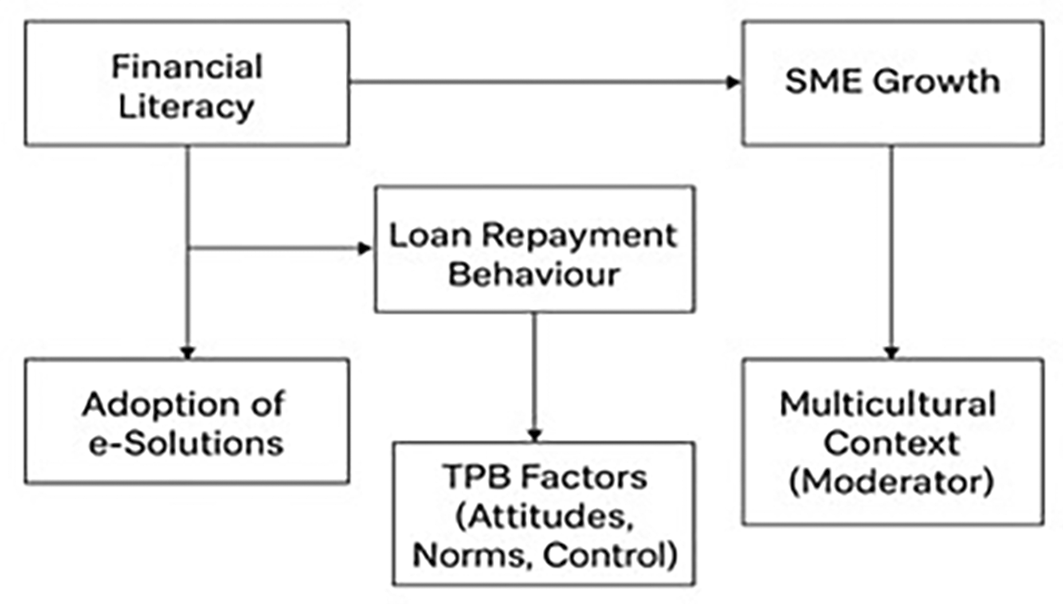
The Human Capital Theory posits that individuals’ knowledge, skills, and competencies constitute a form of capital that can be invested to generate economic returns.38,39 Its central assumption is that enhancing human capabilities, such as financial literacy, improves decision-making, productivity, and long-term sustainability.40,41 In this study, Human Capital Theory provides a framework to understand how SME owners’ financial knowledge and skills directly affect responsible loan management and overall business growth, emphasising the role of education and expertise as drivers of economic performance.
The TPB posits that an individual’s behaviour is guided by their attitudes, subjective norms, and perceived behavioural control. 35,42 The theory assumes that behavioural intentions are shaped by personal evaluations, social influences, and perceived ability to perform specific actions.43,44 Within the context of this study, TPB offers a framework to explain how SME owners’ attitudes towards e-financial literacy, the influence of community or cultural expectations, and their confidence in managing loans and adopting digital tools collectively shape sustainable loan repayment behaviour and intentions for business growth.
The TAM posits that the adoption of new technology is primarily determined by perceived usefulness and perceived ease of use.37,45 Its assumptions include the belief that individuals are more likely to embrace technology that they find beneficial and easy to operate, and that technology adoption mediates the translation of knowledge into practical outcomes.46,47 TAM forms a framework for this study by illustrating how the uptake of innovative e-solutions facilitates improved financial tracking, adherence to repayment schedules, and strategic planning, effectively linking financial literacy with practical application.
Collectively, these theories provide a comprehensive conceptual framework where financial literacy, psychological factors, and technology adoption interact to influence SME performance. TPB explains the behavioural and motivational mechanisms, Human Capital Theory emphasises the foundational role of knowledge and skills, and TAM highlights the practical application of digital tools. The multicultural context further moderates these relationships, recognising that cultural diversity shapes financial attitudes, technology adoption, and repayment behaviour, thereby offering a nuanced understanding of SME growth in diverse settings. 35–37
The review examines studies highlighting the critical role of e-financial literacy and the adoption of e-solutions in improving loan repayment and SME growth in diverse contexts, as shown in Figure 2.
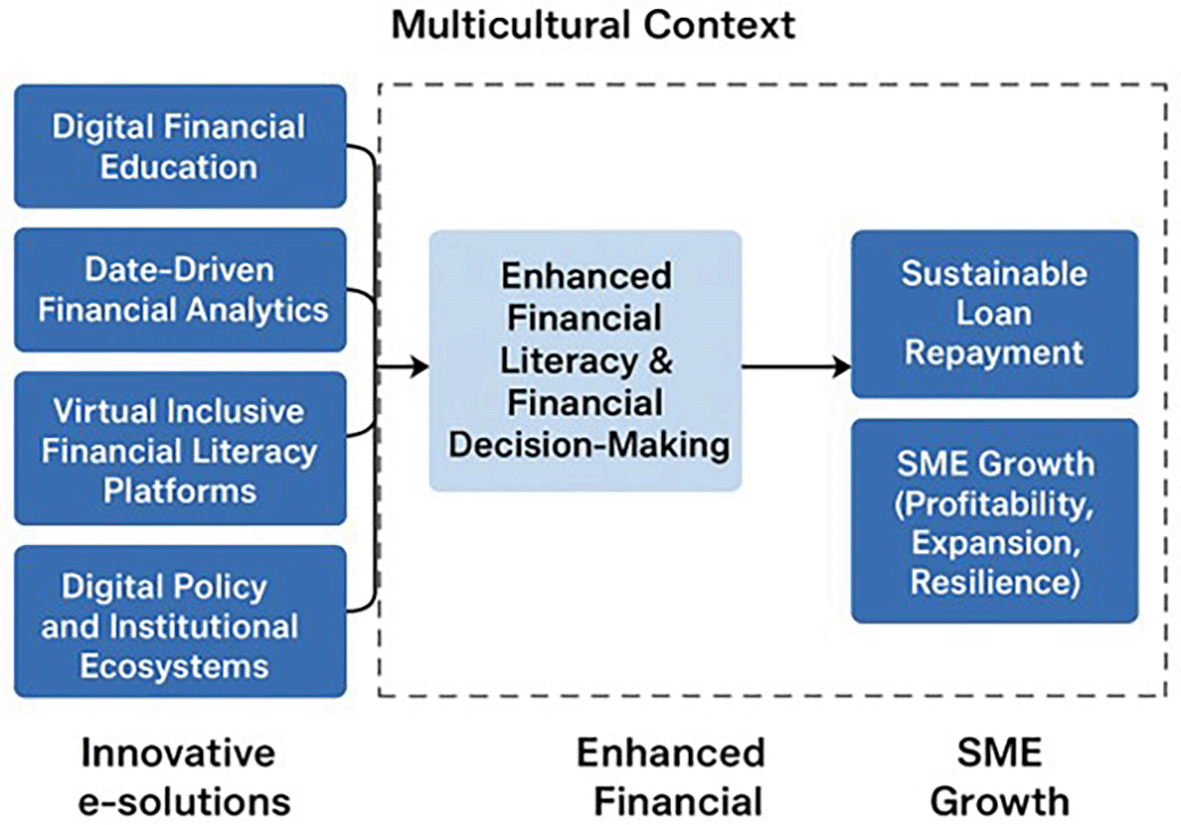
Digital financial education has emerged as a transformative force in enhancing financial literacy and promoting sustainable loan repayment among SMEs14,48. As SMEs navigate complex and dynamic financial environments, the integration of e-learning tools and mobile-based solutions has become central to building financial competence.49,50 These innovations transcend geographical and cultural barriers by offering accessible, context-specific learning experiences that empower entrepreneurs to make informed financial decisions, thereby improving their creditworthiness and long-term growth prospects.48,51,52
Mobile-based financial learning applications have become essential tools for SME owners in both developed and developing economies.49 Platforms such as M-Pesa’s “Pamoja” app in Kenya53,54 and Alipay’s SME financial academy in China provide interactive modules that teach users about budgeting, cash flow management, and responsible borrowing.55,56 These mobile applications use gamified interfaces, multilingual options, and scenario-based exercises to enhance engagement and inclusivity. In Sub-Saharan Africa and South Asia, mobile-based financial education allows SME owners who may lack formal education or access to banking institutions to develop essential financial management skills through culturally adapted content and local-language support.58–60
Online financial management courses have also significantly contributed to improving SME financial literacy.61 Programs like Goldman Sachs’ 10,000 Women initiative and the World Bank’s SME Finance Forum deliver online courses that blend financial literacy with business strategy and digital finance. These platforms often include case studies from diverse regions, allowing learners from Latin America, Europe, and Africa to compare best practices and adapt them to local business realities. Through such courses, entrepreneurs gain a deeper understanding of financial planning, credit management, and sustainable investment, leading to better financial discipline and loan repayment behaviours.14,62–66
E-learning modules tailored for SME owners have expanded opportunities for continuous learning beyond traditional classrooms.67 For example, the OECD’s “Digital for SMEs” (D4SME) initiative provides modular e-learning resources that help entrepreneurs integrate digital tools into financial planning and operations.68–70 In multicultural business environments such as the European Union and Southeast Asia, these e-learning platforms accommodate varying literacy levels and cultural norms, promoting inclusivity through visual storytelling, audio translations, and region-specific examples. This approach ensures that SME owners from different cultural and educational backgrounds can acquire practical financial knowledge aligned with their unique business contexts.
Interactive budgeting and accounting tools have further revolutionised digital financial education by turning theoretical learning into real-time practice.71 Tools such as QuickBooks Online, Wave Accounting, and Zoho Books offer SMEs cloud-based interfaces that combine learning with financial management.72,73 For instance, in Canada and Singapore, SMEs use these tools to simulate different budget scenarios, manage expenses, and track financial performance, which fosters practical understanding of financial principles.73–76 In multicultural settings, these interactive systems are often customised with local tax regulations, currency formats, and language preferences, enabling entrepreneurs to make informed financial decisions without external assistance.
Digital financial education, when implemented through these innovative solutions, bridges the gap between knowledge and practice in diverse cultural contexts. It empowers SME owners to build financial resilience, enhances transparency in loan management, and fosters sustainable enterprise growth.48 As global financial systems continue to digitalise, the integration of culturally adaptive and accessible e-learning tools will remain crucial for promoting inclusive and sustainable SME development across different regions.
Data-driven financial analytics plays a pivotal role in improving financial literacy and promoting sustainable loan repayment among SMEs in multicultural contexts.58 The rise of digital innovation has transformed how entrepreneurs collect, interpret, and apply financial information to make strategic business decisions.77 Through data analytics, SME owners gain real-time insights into cash flow, credit performance, and profitability trends, enabling informed and proactive management of financial risks.78 These digital tools not only enhance decision-making but also bridge cultural and educational gaps by offering user-friendly, localised, and accessible financial soutions.
The use of financial analytic software has become a cornerstone of modern SME management across different regions.79 Platforms such as Tableau, Microsoft Power BI, and SAS Analytics empower SME owners to visualise financial trends and identify performance gaps.73,78,80 In multicultural settings like India and Nigeria, SMEs are increasingly adopting such software to analyse expenditure patterns, project revenue streams, and evaluate the financial viability of new investments.81,82 These tools simplify complex financial data into easy-to-understand visual dashboards, fostering better comprehension among entrepreneurs with varying levels of financial literacy. By integrating local financial regulations and currency metrics, analytic software supports culturally adaptive financial decision-making while promoting transparency in loan repayment and credit utilisation.83,84
Cloud-based accounting systems have revolutionised SME financial operations by providing secure, scalable, and collaborative platforms for managing business accounts.85 Solutions such as Xero, QuickBooks Online, and Wave Accounting enable entrepreneurs to access their financial data remotely, ensuring continuous oversight of income, expenses, and debt obligations.86–88 In multicultural contexts like Southeast Asia and Latin America, these systems support multilingual interfaces and region-specific tax compliance features, allowing SMEs to maintain accuracy and consistency in financial reporting. The cloud-based approach also facilitates collaboration between SMEs and financial institutions, improving credit assessment and loan monitoring through shared digital records. This digital transparency fosters accountability and reduces the risk of loan defaults among small enterprises.89–91
Predictive modelling for credit management has emerged as an innovative approach to assessing and improving SME creditworthiness.83 By analysing historical repayment patterns, market trends, and behavioural data, predictive models help financial institutions and SMEs anticipate potential risks.92 For example, in Kenya’s fintech ecosystem, firms such as Tala and Branch employ predictive algorithms to assess borrower reliability using mobile transaction data, thereby expanding access to credit for small businesses with limited collateral.93–96 In multicultural environments, predictive credit systems help overcome traditional barriers like lack of formal financial history, ensuring equitable access to financing for entrepreneurs from diverse socio-economic backgrounds.97
Real-time financial performance dashboards provide SME owners with immediate insights into their business health, enabling faster and more accurate financial decisions.78,98 Tools such as Zoho Analytics offer dynamic dashboards that display key indicators including cash flow, profit margins, and outstanding debts.99,100 In regions such as the Middle East and North Africa, SMEs use these dashboards to monitor cross-border transactions and exchange rate fluctuations in real time.101,102 The accessibility of such tools through mobile and web platforms promotes inclusivity, as SME owners from different linguistic and cultural backgrounds can interpret financial data using simplified visual representations.
The integration of data-driven financial analytics within SMEs not only enhances operational efficiency but also strengthens financial literacy through experiential learning. By equipping entrepreneurs with the ability to interpret and act on financial data, these technologies foster informed decision-making, improve credit management, and support sustainable business growth across culturally diverse markets.15,50
Virtual inclusive financial literacy platforms have become vital in promoting equitable access to financial knowledge among SMEs in multicultural settings.14 As globalisation and digitalisation reshape business landscapes, entrepreneurs from diverse cultural and linguistic backgrounds require learning systems that are both adaptive and inclusive.103 These virtual platforms harness AI, gamification, and collaborative learning to deliver personalised, culturally relevant, and engaging financial education.50,104,105 In integrating innovation with inclusivity, they enhance SME owners’ capacity to manage loans, make informed financial decisions, and achieve sustainable growth.
AI-powered multilingual learning platforms for SMEs have redefined financial education by providing tailored content that reflects users’ linguistic preferences and cultural contexts.106 Tools such as Google’s Primer App and Coursera for Business employ AI algorithms to personalise learning paths and recommend financial modules aligned with user needs.109 In multicultural regions like Africa, South Asia, and Latin America, these platforms translate financial concepts into local languages while integrating region-specific examples.108 For instance, Kenya’s Ajira Digital Program uses AI-based adaptive learning modules to train SME owners in digital finance and record-keeping, enabling entrepreneurs with limited English proficiency to access financial education in Swahili and other local dialects.109,110 This inclusive approach ensures that diverse business communities can participate equally in financial ecosystems.
Virtual mentorship and peer-learning communities further enhance the inclusivity of financial literacy by fostering collaborative knowledge exchange.111 Platforms such as MicroMentor, supported by Mercy Corps, connect SME owners with financial experts and mentors from various cultural and professional backgrounds.112 In multicultural contexts like Indonesia and Brazil, these digital mentorship networks encourage entrepreneurs to discuss financial challenges, share best practices, and co-develop solutions suited to their business environments.113,114 Such peer-learning models not only democratise financial education but also build social capital, which is essential for SME sustainability and responsible loan repayment.
Gamified financial literacy applications have added an interactive dimension to learning, making financial education both engaging and culturally adaptive.115 These applications often employ simulation-based games to teach budgeting, savings, and debt management through real-life scenarios that reflect local business contexts.116,117 By integrating storytelling and gaming, they can explain financial concepts in regional languages, making them accessible to entrepreneurs with varying literacy levels.118,119 This approach bridges cultural differences by presenting financial principles through relatable experiences, thereby enhancing retention and enabling practical application among SME owners across diverse backgrounds.
Webinars and podcasts featuring multicultural SME case studies have also become powerful tools for virtual financial literacy.120 Global platforms such as the SME Finance Forum’s Virtual Learning Series and IFC’s Business Edge Podcasts bring together experts, entrepreneurs, and policymakers to share insights on credit management, digital transformation, and sustainable business practices.121–123 These sessions often highlight case studies from regions like East Africa, Southeast Asia, and Eastern Europe, allowing participants to learn from diverse financial experiences and innovations. The virtual format ensures inclusivity by enabling participation across geographical and cultural boundaries, thereby enriching global perspectives on financial management and sustainability.62,125
Virtual inclusive financial literacy platforms thus represent a paradigm shift in how financial education is delivered to SMEs. By integrating AI, gamification, and collaborative virtual networks, these tools address cultural, linguistic, and educational diversity in the global SME landscape. Their focus on accessibility and inclusivity fosters not only financial competence but also resilience, enabling entrepreneurs from different cultural backgrounds to navigate financial systems confidently and sustainably.
Integration of fintech solutions has revolutionised how SMEs access, manage, and sustain financial resources in multicultural contexts.126 As financial technology continues to bridge gaps in traditional banking systems, SMEs are increasingly adopting digital tools to streamline transactions, improve financial transparency, and enhance creditworthiness.2,126 The integration of fintech solutions into SME operations supports financial inclusion by enabling entrepreneurs from diverse cultural and geographical backgrounds to participate effectively in the digital economy.1 These innovations not only promote financial literacy but also contribute to sustainable loan repayment and enterprise growth.
Digital payment and loan tracking systems have become essential tools for SMEs seeking efficient and transparent financial management.127 Platforms such as PayPal, Stripe, and Flutterwave allow SMEs to process payments securely across borders, facilitating participation in global markets.129,130 In multicultural regions like East Africa, M-Pesa and Airtel Money have revolutionised digital transactions by enabling small business owners to send, receive, and track payments through mobile phones.58,131–133 These systems enhance loan repayment accountability by allowing SMEs to monitor outstanding debts and repayment schedules digitally. In rural and informal markets, such technology has replaced manual bookkeeping, providing entrepreneurs with instant access to their financial records while fostering financial discipline.
Mobile banking innovations have expanded access to formal financial services for SMEs in both developed and developing economies.134 Digital platforms offered by banks, such as Equity Bank’s EazzyBiz in Kenya, WeBank in China, and Revolut Business in Europe, enable business owners to conduct real-time financial transactions, apply for loans, and manage accounts remotely.56,135–138 In multicultural contexts, mobile banking applications often include multilingual interfaces and culturally adaptive customer support, ensuring inclusivity for entrepreneurs with varying linguistic and educational backgrounds. The accessibility of mobile banking promotes regular savings, credit monitoring, and cash flow management, ultimately supporting responsible borrowing and sustainable business expansion.
Blockchain technology has introduced a new era of transparency and security in SME financial operations.139 By creating decentralised ledgers that record transactions in immutable and verifiable ways, blockchain reduces fraud, enhances trust, and facilitates cross-border trade.140 In regions like Southeast Asia and Latin America, blockchain platforms such as BitPesa (now AZA Finance) and Stellar are used by SMEs to conduct transparent and low-cost international transactions.141,142 Blockchain also enables financial institutions to verify SME loan histories without intermediaries, making it easier for credible borrowers to access funding.143 This level of transparency builds confidence among lenders and investors, encouraging sustainable financing in multicultural business environments.
Automated credit scoring tools have further transformed the financial landscape for SMEs by simplifying access to credit.144 Traditional credit systems often exclude entrepreneurs with limited financial history, particularly in developing and culturally diverse regions.145 Fintech-driven tools such as Tala, and Branch use machine learning algorithms to analyse non-traditional data—such as mobile payment records, utility bills, and social media behaviour—to assess creditworthiness.146,147 In multicultural contexts, this innovation allows entrepreneurs from informal sectors or underserved communities to qualify for loans based on behavioural and transactional data rather than conventional credit reports. Such systems promote financial inclusion while reducing bias in lending practices, fostering sustainable repayment and trust between lenders and borrowers.
The integration of fintech solutions within SME financial management has significantly advanced financial literacy and inclusion across cultures. By providing accessible, data-driven, and transparent financial tools, fintech empowers entrepreneurs to make informed decisions, maintain credit discipline, and enhance business sustainability. As digital transformation continues to reshape global finance, fintech innovations will remain central to promoting equitable growth and long-term financial resilience among SMEs in multicultural settings.
Digital policy and institutional ecosystems have become fundamental drivers of financial empowerment for SMEs in multicultural contexts.148 As financial technologies evolve, governments and institutions are recognising the need for enabling environments that support innovation while ensuring inclusivity and responsible financial practices149 (Gonzalez et al., 2025). Well-designed digital policies and institutional frameworks not only promote SME access to finance but also foster sustainable loan repayment and equitable participation in the global digital economy.2 By integrating digital strategies, public-private partnerships, and ethical regulatory systems, countries can strengthen the link between financial literacy and technological adoption across diverse cultural and economic landscapes.150
National digital strategies supporting fintech-driven SME growth have been instrumental in modernising financial ecosystems.151 Governments in countries such as Singapore, Rwanda, and Estonia have implemented comprehensive digitalisation roadmaps that prioritise fintech innovation as a pillar of SME development.152–154 Singapore’s Smart Nation initiative, for example, integrates digital payments and data-driven tools to enhance SME financial operations and competitiveness.155,156 In Africa, Rwanda’s ICT for Development Policy promotes digital inclusion through affordable internet access and fintech incubation hubs.157 These national frameworks encourage SMEs from different cultural and linguistic backgrounds to adopt e-financial tools, enhancing their capacity for efficient financial management, credit monitoring, and sustainable business growth.
Integration of e-financial literacy modules in SME loan policies has become an effective institutional approach to fostering responsible borrowing and informed financial decision-making.158 Financial regulators and development agencies increasingly require borrowers to complete digital financial education modules before accessing loans.159 For instance, the Central Bank of Nigeria introduced the Financial Literacy Framework, mandating digital training for SMEs to strengthen loan management skills.158 Similarly, in the European Union, digital financial literacy is embedded within the Digital Education Action Plan (2021–2027) to ensure that entrepreneurs acquire the necessary skills to navigate online financial systems. Such integration ensures that financial education complements access to digital credit, promoting both literacy and accountability among culturally diverse SME operators.160,161
Public-private partnerships for digital SME finance innovation are critical in bridging institutional and market gaps.162 Collaborations between financial institutions, technology firms, and development agencies have resulted in innovative financing platforms that cater to multicultural SME communities.1 The Partnership for Finance in Africa (FiDA) and the International Finance Corporation’s (IFC) SME Finance Platform exemplify global efforts that combine digital finance with training and capacity-building initiatives.163,164 These partnerships enable the co-creation of context-specific solutions such as mobile credit scoring and digital bookkeeping apps, which support SMEs in regions with limited formal financial infrastructure. In multicultural contexts, public-private collaborations ensure that digital tools and services are designed with sensitivity to local business customs, languages, and regulatory conditions.
Regulatory frameworks encouraging ethical digital lending play an equally important role in safeguarding SME financial empowerment.1,2 The rapid growth of digital lending platforms has created both opportunities and risks, particularly concerning data privacy, interest rate transparency, and consumer protection.165 Countries like India and Kenya have established fintech regulatory sandboxes to monitor and guide innovation while protecting borrowers’ interests166 (Musamali et al., 2023167). The Kenya Data Protection Act (2019) and India’s Reserve Bank of India on digital lending guidelines, are examples of policies that promote responsible digital finance practices. These frameworks ensure that fintech firms operate ethically and that SMEs benefit from transparent, fair, and secure lending processes.168–170
Digital policy and institutional ecosystems thus form the backbone of sustainable SME financial empowerment in multicultural contexts. Through cohesive digital strategies, inclusive education policies, collaborative innovation, and ethical regulation, nations can create supportive environments where technology enhances both financial literacy and access to capital. Such ecosystems ensure that SMEs not only survive but thrive in an increasingly digital and interconnected world.
The literature consistently demonstrates that digital financial education significantly improves financial literacy and enhances sustainable loan repayment among SMEs.14,48 Several studies converge on the finding that e-learning tools, mobile-based applications, and online courses effectively equip entrepreneurs with practical financial management skills, enabling informed decision-making and long-term business growth.48–52 Across different geographical contexts, mobile-based financial learning applications, such as M-Pesa’s “Pamoja” app in Kenya and Alipay’s SME financial academy in China, have shown similar positive outcomes in teaching budgeting, cash flow management, and responsible borrowing.53–56 Interactive and gamified interfaces are repeatedly identified as critical for engagement and inclusivity, particularly in regions where formal financial education is limited.57–60
Contradictions appear regarding the relative effectiveness of different digital platforms and approaches. While mobile-based applications are highly effective in regions with limited formal education and banking access,57,58 online courses and structured e-learning modules may be less accessible for SMEs lacking reliable internet connectivity or digital literacy.61–63 Furthermore, while interactive budgeting tools enhance practical learning and simulate real-world financial scenarios, some studies note that the complexity of such platforms can overwhelm SME owners with limited prior experience in accounting software.71,72 This indicates that the effectiveness of digital financial education is context-dependent and requires careful alignment with users’ technological and educational capacities.
Despite the promising findings, gaps exist in longitudinal and comparative research on the sustained impact of digital financial education across diverse SME sectors and regions. Most studies focus on immediate learning outcomes and short-term improvements in financial literacy or loan repayment.14,48,65 Few studies evaluate long-term business growth, resilience, or financial behaviour changes over time. Additionally, limited research addresses cross-cultural adaptations and the customization of digital tools for SMEs in low-income countries or multicultural business environments, particularly in Africa, South Asia, and Southeast Asia.68–70 Future research could investigate the integration of artificial intelligence, adaptive learning systems, and gamification features to further enhance digital financial education, as well as examine the differential impacts of various platforms across sectors, literacy levels, and cultural contexts.
The literature consistently highlights that data-driven financial analytics significantly enhances financial literacy and decision-making among SMEs in multicultural contexts.50,77,78 Multiple studies converge on the finding that financial analytic software, cloud-based accounting systems, predictive modelling, and real-time dashboards provide SMEs with actionable insights into cash flow, profitability, and credit performance.73,79,80,85 These tools simplify complex financial data into user-friendly dashboards, allowing SME owners with varying literacy levels to make informed, culturally adaptive financial decisions.82,83 The literature consistently indicates that such systems promote transparency, accountability, and sustainable loan repayment by integrating local regulations, currency metrics, and accessible interfaces.84,89,90
Contradictions emerge concerning accessibility and the complexity of these digital solutions. While cloud-based systems and predictive models enhance operational efficiency and credit assessment, some studies argue that SMEs in regions with limited internet connectivity or low digital literacy may struggle to fully utilise these platforms.86–88 Similarly, predictive modelling, while effective in assessing creditworthiness and reducing loan defaults, may inadvertently exclude entrepreneurs who lack sufficient historical transaction data, potentially reinforcing financial inequities.92,97 These contradictions highlight the need for context-sensitive implementation strategies that consider technological infrastructure, educational levels, and socio-economic factors.
Gaps in the literature are evident in longitudinal studies and cross-cultural evaluations of the sustained impact of data-driven analytics on SME financial performance. Most research focuses on short-term outcomes such as improved credit repayment or operational efficiency, with limited evidence on long-term business growth or resilience.15,78,98 Additionally, research exploring the integration of advanced technologies like artificial intelligence, machine learning, and adaptive dashboards in culturally diverse SME contexts remains scarce.93–95 Future studies could investigate the comparative effectiveness of different analytical platforms across sectors and regions, assess their role in bridging financial inclusion gaps, and evaluate how experiential learning through these technologies contributes to sustainable SME development.
The literature consistently highlights that virtual inclusive financial literacy platforms enhance equitable access to financial knowledge among SMEs in multicultural contexts.14,103 Studies converge on the finding that AI-powered adaptive learning, gamification, and collaborative mentorship significantly improve financial competence, enabling SME owners to manage loans, make informed decisions, and achieve sustainable growth.50,104,105 Across different regions, platforms such as Google’s Primer App, Coursera for Business, and Kenya’s Ajira Digital Program illustrate how personalised content in local languages and culturally relevant scenarios fosters inclusivity and practical application.107–110 Peer-learning communities and mentorship networks further strengthen knowledge exchange, social capital, and responsible financial behaviour among SME owners from diverse backgrounds.109,111,114
Contradictions in the literature emerge around access, technological readiness, and engagement. While AI-driven platforms and gamified applications provide interactive, personalised learning experiences, SMEs with limited digital literacy or unstable internet infrastructure may not fully benefit from these tools (Abiodun et al., 2021; Raza, 2025; Barna, 2025). Similarly, while virtual mentorship networks enhance collaboration and inclusivity, their effectiveness can vary depending on the mentor-mentee match, cultural compatibility, and the SMEs’ ability to actively participate in online interactions.111,112 These contradictions suggest that platform design and support mechanisms need to be tailored to local capacities and cultural contexts to maximise impact.
Gaps in the literature are evident in the long-term evaluation of these platforms and their comparative effectiveness across regions and SME sectors. Most studies focus on immediate learning outcomes, engagement, or financial literacy improvements without assessing sustained behavioural changes, financial resilience, or business growth over time.118–120 Furthermore, there is limited research on integrating emerging technologies such as AI-driven predictive feedback, multilingual voice assistants, or immersive simulation tools to enhance inclusivity and engagement.121,122 Future research could explore how virtual platforms can systematically address inequalities in digital access, cultural barriers, and learning retention, as well as evaluate their long-term effects on sustainable SME performance and loan repayment behaviours across diverse multicultural contexts.123,124
The literature consistently demonstrates that fintech solutions have significantly improved SME access to financial services, transparency, and sustainable loan repayment in multicultural contexts.2,125,126 Studies converge on the finding that digital payment systems, mobile banking, blockchain platforms, and automated credit scoring tools enhance financial literacy and operational efficiency while promoting financial inclusion across culturally and geographically diverse SME populations.1,127,134 Across multiple regions, platforms like PayPal, Stripe, M-Pesa, and Equity Bank’s EazzyBiz provide SMEs with secure, real-time financial management capabilities, fostering accountability in loan repayment and enabling participation in both formal and informal markets.128,129,131 Blockchain applications and automated credit scoring further support trust, transparency, and equitable access to finance, particularly for entrepreneurs lacking conventional credit histories.139,143,146
Contradictions in the literature arise regarding technological readiness and inclusivity. While fintech innovations offer advanced, data-driven financial tools, SMEs in rural or low-infrastructure regions may face barriers to adoption due to limited internet access, low digital literacy, or lack of familiarity with complex platforms.135,136,138 Similarly, automated credit scoring and blockchain technologies, although designed to enhance transparency and inclusion, may inadvertently exclude entrepreneurs who do not generate sufficient digital transactional data or who operate primarily in informal economies.145,147 These contradictions suggest that fintech solutions require adaptive implementation strategies, including training, simplified interfaces, and culturally sensitive support, to ensure equitable impact across diverse SME populations.
The literature also highlights gaps in long-term impact assessments and comparative studies across regions and SME sectors. Most research evaluates immediate outcomes such as improved loan repayment, credit access, or operational efficiency, with limited empirical evidence on sustained financial literacy, enterprise resilience, and business growth over time.125,140,141 Furthermore, there is a lack of investigation into the synergistic effects of combining multiple fintech tools (e.g., blockchain, mobile banking, and AI-driven credit scoring) and their influence on SMEs’ strategic decision-making in multicultural settings.93,145 Future research could explore these areas, as well as examine the socio-cultural and regulatory factors that affect fintech adoption, ensuring that innovations effectively promote sustainable financial inclusion, equitable growth, and responsible borrowing among SMEs globally.125,146,147
The literature consistently demonstrates that robust digital policies and institutional ecosystems are critical drivers of SME financial empowerment in multicultural contexts.2,148,149 Multiple studies converge on the finding that national digital strategies, public-private partnerships, and ethical regulatory frameworks enhance access to finance, promote responsible borrowing, and foster sustainable enterprise growth.1,150,151 Examples such as Singapore’s Smart Nation initiative, Rwanda’s ICT for Development Policy, and the European Union’s Digital Education Action Plan illustrate how comprehensive digital roadmaps integrate financial literacy, fintech adoption, and regulatory oversight to support SMEs from diverse cultural and linguistic backgrounds.155–157,160 These coordinated efforts demonstrate that institutional ecosystems not only enable access to financial tools but also strengthen entrepreneurs’ capacity for informed decision-making and loan accountability.
Contradictions in the literature arise regarding the uniform effectiveness of policy and institutional interventions. While national strategies and regulatory frameworks enhance inclusion in countries with developed digital infrastructure, SMEs in regions with limited internet access or weak institutional capacity may not fully benefit from these initiatives.158,159 Similarly, while public-private partnerships facilitate innovative solutions and context-specific fintech tools, challenges remain in scaling these interventions equitably across rural or underserved multicultural communities, particularly where local business customs or regulatory inconsistencies hinder adoption.1,163,164, These contradictions suggest that digital policies must be coupled with targeted capacity-building and contextual adaptation to ensure equitable impact.
Gaps in the literature are evident in long-term evaluations of the impact of digital policies and institutional ecosystems on SME financial literacy, access to finance, and business resilience. Most studies focus on policy implementation or short-term financial outcomes without systematically assessing sustained SME growth, cross-cultural inclusivity, or the interplay between regulatory frameworks and technology adoption.2,165,166 Additionally, research on comparative effectiveness of different policy instruments and regulatory models in fostering SME financial empowerment across diverse cultural and economic contexts remains limited.168–170 Future studies could explore the long-term impact of integrated digital strategies, the role of public-private collaborations in bridging institutional gaps, and the effectiveness of ethical fintech regulation in enhancing inclusive and sustainable SME development globally.167,171
The study examines relationship between literature review and the underpinning theoretical frameworks thereby identifying the persistent challenges and eminent gaps as shown in Figure 3.
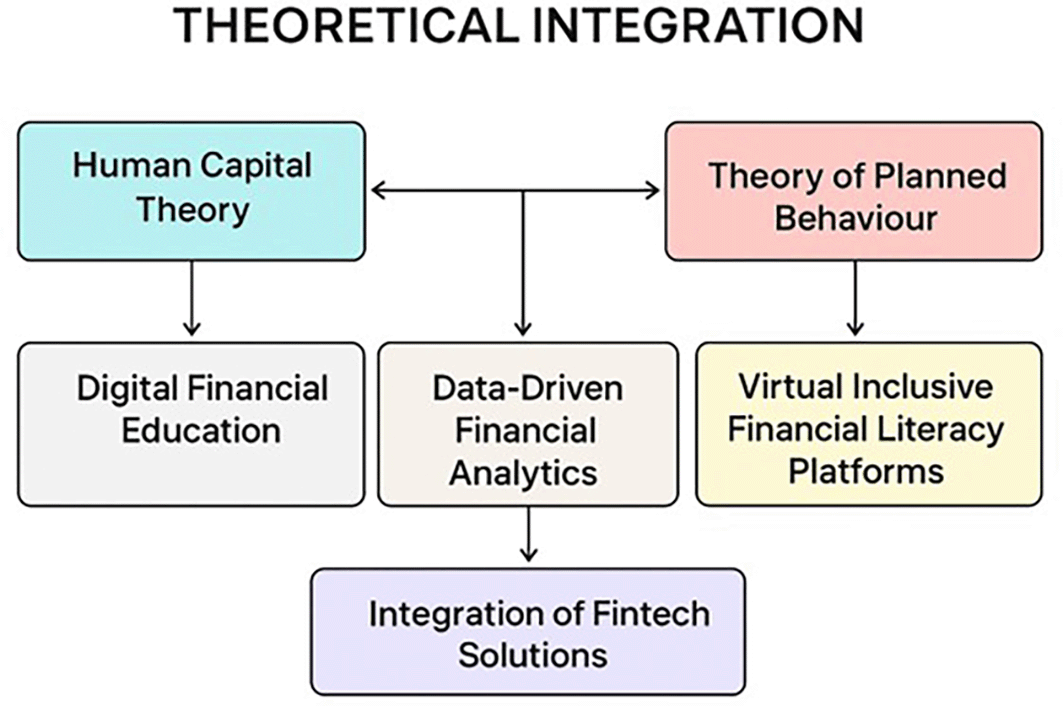
The literature on digital financial education aligns closely with the Human Capital Theory, TPB, and TAM, illustrating how SMEs’ financial literacy and adoption of digital tools influence sustainable loan repayment and business growth 35–37 as shown in Table 1. Human Capital Theory underpins the emphasis on knowledge and skills development, showing that e-learning platforms, mobile-based applications, and interactive budgeting tools enhance SME owners’ competencies in financial management, credit monitoring, and investment planning.48,49,68 The literature confirms that investing in financial education increases entrepreneurs’ ability to make informed decisions, thereby translating knowledge into tangible outcomes such as improved loan repayment and enterprise resilience.51,52,59 However, a persistent challenge is ensuring that SMEs with low literacy levels, limited access to technology, or minimal prior exposure to formal financial systems can fully leverage these digital solutions, highlighting a gap between theoretical potential and practical inclusivity.57,60,71
The TPB complements this understanding by explaining the psychological and social mechanisms through which financial literacy translates into behaviour. 35,43 Evidence from the literature indicates that SME owners’ attitudes towards e-financial education, subjective norms shaped by community and cultural expectations, and perceived control over technology adoption collectively influence their loan repayment and financial management practices.50,53,68 Yet, challenges remain in accounting for cultural variability and social pressures that may either facilitate or constrain the translation of knowledge into consistent financial behaviour, suggesting a gap in context-specific research that systematically examines these moderating effects across multicultural settings.58,69,70
The TAM further explains the observed relationship between digital tools and practical financial outcomes, highlighting that perceived usefulness and ease of use drive adoption and sustained application.37,46 Studies confirm that gamified interfaces, multilingual options, and scenario-based exercises enhance engagement and usability, linking digital adoption directly to improved financial tracking and adherence to repayment schedules.55,56,72 Nevertheless, gaps remain in evaluating the long-term effectiveness of these technologies in diverse SME contexts and their ability to overcome infrastructural limitations, technological complexity, and varying levels of digital literacy.73,75,76 Collectively, while the literature supports the theoretical framework, it underscores the need for research that integrates cultural, psychological, and technological dimensions to address persistent challenges in equitable access, sustained adoption, and measurable impacts on SME growth and loan repayment.
The literature on data-driven financial analytics demonstrates strong alignment with Human Capital Theory, TPB, and TAM, illustrating how SMEs’ financial literacy and technology adoption influence sustainable loan repayment and business growth, 35, 36 as reflected in Table 2. Human Capital Theory is reflected in studies highlighting that financial analytic software, cloud-based accounting systems, and real-time dashboards enhance SME owners’ knowledge and skills, which in turn improve decision-making, risk management, and operational efficiency.50,78,79 By equipping entrepreneurs with actionable insights, these digital tools effectively translate financial knowledge into economic outcomes, reinforcing the role of education and competence as forms of capital.15,73,80
TPB complements this perspective by explaining the behavioural mechanisms through which SME owners’ attitudes, subjective norms, and perceived control shape adoption and application of analytics tools. 35,42 Evidence indicates that entrepreneurs’ confidence in interpreting financial data, their social influences, and perceptions of ease of use affect the consistency and effectiveness of financial management practices.81,83,84 However, a persistent challenge is the variability in SMEs’ capacity to adopt these tools across multicultural and socio-economic contexts. Differences in digital literacy, access to infrastructure, and cultural attitudes toward technology create gaps in equitable adoption, limiting the universal applicability of these tools.92,93,97
TAM further underpins the observed link between technology use and practical outcomes by emphasising perceived usefulness and ease of use as drivers of adoption.37,46 Studies show that SMEs benefit from user-friendly dashboards, predictive credit models, and cloud-based accounting systems, which facilitate financial tracking, credit monitoring, and timely loan repayment.78,89,100 Nevertheless, gaps remain in evaluating long-term effectiveness, scalability, and cultural adaptation of these digital tools. Research rarely addresses how SMEs in regions with limited infrastructure or varying educational backgrounds sustain engagement with analytics platforms over time.87,98 Future investigations should focus on bridging these gaps by examining contextual adoption barriers, cross-cultural usability, and the measurable impact of data-driven analytics on SME financial resilience and growth.
The literature on virtual inclusive financial literacy platforms aligns closely with Human Capital Theory, highlighting how knowledge, skills, and competencies serve as forms of capital that enhance SMEs’ decision-making and long-term sustainability 36,38,39 as shown in Table 3. Studies demonstrate that AI-powered multilingual learning, gamified applications, and collaborative peer-learning platforms equip SME owners with essential financial competencies, enabling responsible loan management and strategic business growth.50,106,116 By providing context-specific, culturally adaptive content, these platforms reinforce the idea that investment in human capabilities yields tangible economic returns, particularly in multicultural business environments.108,109
The TPB further explains how behavioural intentions influence the effective use of these platforms. 35,42 SME owners’ attitudes towards digital financial learning, the influence of cultural norms, and their perceived control over technological tools collectively determine engagement levels and the successful application of acquired knowledge.43,44 While the literature highlights the potential for enhanced financial literacy and sustainable loan repayment through virtual platforms, persistent challenges include disparities in digital literacy, internet accessibility, and the ability of SMEs in resource-constrained regions to fully exploit these tools.103,111 These gaps indicate that TPB-mediated behavioural factors are not uniformly addressed across diverse cultural and socio-economic contexts.
The TAM underscores the role of perceived usefulness and ease of use in the adoption of virtual financial literacy platforms.37,46 Evidence suggests that AI-driven adaptive modules, gamification, and user-friendly interfaces facilitate practical application of financial knowledge, improving budgeting, credit monitoring, and loan repayment behaviours.107,118,119 Nevertheless, significant gaps remain in evaluating the long-term engagement, scalability, and cross-cultural adaptability of these tools. Research rarely addresses how SMEs in linguistically diverse or low-literacy regions maintain sustained interaction with platforms or translate digital learning into consistent financial practices.110,113 Future studies should examine how cultural, technological, and infrastructural factors jointly mediate the effectiveness of virtual inclusive financial literacy platforms in promoting equitable SME growth.
The literature on fintech integration aligns closely with Human Capital Theory, emphasising that SME owners’ knowledge, skills, and competencies constitute essential capital for business growth and sustainable financial management 36,38,39 as reflected in Table 4. Studies reveal that digital payment systems, mobile banking, blockchain, and automated credit scoring tools enhance financial literacy by providing SMEs with accessible, data-driven, and transparent mechanisms for managing cash flow, monitoring debts, and evaluating investment opportunities.113,125,144 By equipping entrepreneurs with practical skills and technological competence, fintech solutions reinforce the notion that human capital development directly contributes to responsible loan management, improved creditworthiness, and sustainable business expansion (Siano et al., 2020; Abebe et al., 2025).
The TPB provides insights into how SME owners’ attitudes, subjective norms, and perceived behavioural control influence the adoption of fintech solutions. 35,43 Literature indicates that cultural expectations, social influence, and confidence in using digital tools collectively shape engagement with fintech platforms and the effective application of financial knowledge in decision-making.1,44 However, persistent challenges exist in low-resource or rural contexts, where limited digital literacy, inadequate infrastructure, and socio-cultural barriers may inhibit technology adoption, thereby constraining the potential benefits of fintech integration.131,145 These gaps suggest that TPB-mediated factors are not uniformly addressed, leaving opportunities for targeted interventions to improve fintech uptake.
The TAM further explains the relationship between perceived usefulness, ease of use, and SMEs’ adoption of fintech solutions.37,46 Evidence shows that fintech tools, when user-friendly, culturally adapted, and technologically accessible, enhance practical financial management, credit monitoring, and repayment compliance.143,147 Nevertheless, gaps remain in evaluating long-term usage, cross-cultural adaptability, and integration with existing business processes. Research rarely addresses how SMEs in linguistically diverse or technologically underserved regions sustain engagement with fintech platforms or translate digital insights into consistent financial discipline.125,141 Future studies should investigate these contextual moderators to better understand how human capital, behavioural intentions, and technology adoption jointly determine the effectiveness of fintech solutions for SMEs in multicultural environments.
The literature on digital policy and institutional ecosystems aligns closely with Human Capital Theory, emphasising that the development of SMEs’ knowledge, skills, and competencies through digital literacy programs strengthens financial management and sustainable loan repayment. 36,38,39 as shown in Table 5. National strategies such as Singapore’s Smart Nation initiative and Rwanda’s ICT for Development Policy demonstrate how structured digital policies and institutional frameworks foster human capital by providing SMEs with access to fintech tools, training, and inclusive e-financial literacy modules.155,157 By enhancing SME owners’ financial capabilities and technological competence, these policies create conditions for responsible borrowing, improved credit monitoring, and equitable participation in the global digital economy.2,150
The TPB provides a lens to understand how SMEs’ attitudes, perceived norms, and behavioural control influence the uptake of digital financial tools and adherence to loan requirements. 35,43 Public-private partnerships and regulatory frameworks, which embed financial literacy and culturally adaptive tools, reinforce positive behavioural intentions by demonstrating community endorsement and providing structured support.1,162 Nonetheless, persistent challenges arise in contexts where SMEs face infrastructural gaps, digital skill deficits, or socio-cultural barriers, which may weaken the intended behavioural outcomes despite supportive policies.166,167 These gaps highlight the need for context-sensitive strategies to ensure that SMEs from diverse cultural and educational backgrounds can fully leverage digital financial ecosystems.
The TAM further complements this framework by explaining how the perceived usefulness and ease of use of fintech platforms influence SME adoption and practical application.37,46 Evidence suggests that when digital tools are user-friendly, culturally adapted, and embedded within institutional frameworks, SMEs are more likely to engage with them effectively, enhancing financial literacy and operational transparency.151,153 However, gaps persist in evaluating long-term adoption, interoperability of digital systems, and inclusivity across linguistically diverse or underserved regions.2,149 Addressing these gaps will require continuous policy innovation, targeted capacity-building initiatives, and adaptive regulatory measures to sustain SME empowerment in multicultural contexts.
Based on the discussion of the literature across the themes, several policy implications emerge that could guide governments, regulatory agencies, and development partners in supporting SMEs’ financial literacy, inclusion, and sustainable growth.
The findings on digital financial education indicate that policymakers should prioritise investments in accessible, context-sensitive digital learning platforms for SMEs. This includes supporting mobile-based applications, interactive e-learning modules, and gamified financial literacy tools tailored to different literacy levels and regional contexts. Policies could incentivise the development of locally relevant content and the integration of adaptive learning technologies, ensuring that SMEs in low-income regions or rural areas can effectively benefit from financial education programs. Governments may also consider partnerships with private sector technology providers to scale these initiatives while monitoring their impact on sustainable loan repayment and business resilience.
Regarding data-driven financial analytics, the literature underscores the importance of policies that enhance SMEs’ access to affordable, user-friendly analytic tools while addressing technological and infrastructural constraints. Policymakers could promote initiatives that provide cloud-based accounting systems, predictive modelling software, and real-time dashboards to SMEs, accompanied by training programs that improve digital and financial literacy. Regulatory frameworks could also support data privacy and security while encouraging fintech solutions that integrate culturally adaptive features, ensuring that analytics tools do not inadvertently exclude SMEs lacking historical financial data or technological resources.
The discussion on virtual inclusive financial literacy platforms highlights the need for policies that foster equitable access to AI-powered, gamified, and collaborative learning environments. Governments and institutions could provide incentives for platform developers to incorporate multilingual content, culturally relevant scenarios, and mentorship networks that enhance engagement among SMEs from diverse backgrounds. Policy interventions could also support infrastructure improvements, such as internet connectivity and digital access, to reduce barriers to participation, particularly in rural or underserved areas.
In the case of fintech solutions, the literature suggests that policymakers should encourage the development and adoption of digital financial services, including mobile banking, blockchain platforms, automated credit scoring, and digital payment systems. Regulatory policies should ensure these innovations are inclusive, addressing digital literacy gaps, regional disparities, and the needs of SMEs in informal sectors. Public-private collaborations could be incentivised to offer training, simplified interfaces, and culturally sensitive support, maximising equitable access to fintech tools and promoting responsible borrowing and sustainable loan repayment.
Finally, findings on digital policy and institutional ecosystems point to the importance of comprehensive, coordinated policy frameworks that integrate digital financial literacy, fintech adoption, and ethical regulatory oversight. Policymakers should prioritise developing national digital strategies and supporting public-private partnerships that strengthen SMEs’ capacity for informed decision-making and financial accountability. Policies must also be adaptable to local contexts, with targeted capacity-building initiatives to ensure equitable impact in regions with limited infrastructure or institutional weaknesses. Long-term monitoring and evaluation mechanisms should be embedded to assess the sustained effectiveness of these policies in promoting SME growth, inclusivity, and resilience.
Based on the discussion of the literature across the five themes, several recommendations emerge for stakeholders aiming to enhance e-financial literacy and promote sustainable loan repayment and SME growth through innovative solutions.
For digital financial education, policymakers and development agencies should prioritise the implementation of mobile-based and interactive e-learning platforms that are tailored to the local context. Success stories, such as Kenya’s M-Pesa “Pamoja” app and China’s Alipay SME Financial Academy, demonstrate the effectiveness of mobile financial literacy programs in improving budgeting, cash flow management, and responsible borrowing among SMEs. Governments and NGOs can partner with technology firms to scale such solutions, integrating gamified and adaptive learning features to accommodate diverse literacy levels. SMEs themselves should actively engage in these programs to build practical financial skills that directly support sustainable loan repayment.
In the area of data-driven financial analytics, financial institutions, fintech developers, and SME associations should collaboratively facilitate access to user-friendly analytic tools that provide real-time insights into cash flow, profitability, and credit performance. The case of cloud-based accounting systems in India and predictive analytics in South Africa illustrates how SMEs can leverage these technologies for informed decision-making and improved loan management. Stakeholders should provide targeted training on these tools, particularly in regions with lower digital literacy, to ensure equitable access and usage, while regulatory agencies ensure data security and compliance with financial standards.
Regarding virtual inclusive financial literacy platforms, developers and educational institutions should expand AI-driven, gamified learning environments that offer multilingual content and culturally relevant scenarios. Platforms like Google’s Primer App and Kenya’s Ajira Digital Program have successfully fostered engagement, peer-learning, and mentorship, which strengthen financial competence and responsible borrowing. Policymakers and SME support organisations should invest in infrastructure and digital access to ensure that underserved communities can fully benefit, while SMEs actively participate in virtual learning communities to enhance long-term financial resilience.
For fintech solutions, regulators, banks, and fintech innovators should promote inclusive digital financial services, including mobile banking, automated credit scoring, blockchain applications, and digital payments. Equity Bank’s EazzyBiz and M-Pesa provide illustrative cases where fintech adoption has increased financial transparency, operational efficiency, and access to credit for SMEs. Recommendations include simplifying interfaces, offering training programs, and developing culturally sensitive support mechanisms to encourage adoption, particularly among SMEs in rural or informal sectors. Strategic public-private partnerships can further amplify impact and ensure sustainability.
Finally, in digital policy and institutional ecosystems, governments and regulatory bodies should formulate robust digital strategies that integrate financial literacy initiatives, fintech adoption, and ethical oversight. Successes such as Singapore’s Smart Nation initiative and Rwanda’s ICT for Development Policy illustrate how comprehensive frameworks can enhance SME access to financial tools, strengthen decision-making, and promote loan accountability. Stakeholders should focus on adaptive policy measures, capacity-building, and cross-sector collaboration to ensure equitable benefits, while continuously monitoring and evaluating long-term SME growth, inclusivity, and financial sustainability.
In these recommendations, we emphasise a coordinated approach in which governments, financial institutions, technology developers, educational providers, and SMEs actively collaborate. Strategies combining digital education, analytics, inclusive learning platforms, fintech adoption, and supportive institutional ecosystems can sustainably improve e-financial literacy, responsible borrowing, and long-term growth of SMEs across diverse cultural and economic contexts.
Based on the discussions across the five literature themes, we propose several recommendations for future research aimed at strengthening e-financial literacy, sustainable loan repayment, and SME growth through innovative digital solutions. First, longitudinal studies are needed to assess the long-term impacts of digital financial education on SMEs’ financial behaviour, enterprise resilience, and business growth across diverse sectors and geographical contexts. While existing research demonstrates short-term improvements in financial literacy and loan repayment, limited evidence exists on sustained behavioural changes or the cumulative effects of continuous digital learning interventions. Comparative studies could further examine the differential effectiveness of mobile-based applications, structured e-learning modules, and interactive gamified platforms, particularly in low-income regions and multicultural business environments.
Future research should also explore the integration of advanced technologies, such as artificial intelligence, adaptive learning systems, and predictive analytics, within SME financial management. Studies could investigate how AI-driven personalised content, scenario-based simulations, and real-time dashboards influence practical decision-making, loan accountability, and business performance. Moreover, research should consider the socio-cultural, linguistic, and technological contexts that mediate adoption, focusing on SMEs with low digital literacy, limited internet access, or minimal prior exposure to formal financial systems. Investigating culturally adaptive approaches and platform customisation will help identify strategies for inclusive and equitable access to digital financial tools.
In relation to fintech solutions, research should examine the synergistic effects of combining multiple tools, such as blockchain, mobile banking, and automated credit scoring, and their influence on SMEs’ strategic decision-making and credit management. Longitudinal and cross-cultural studies could illuminate how these technologies promote sustainable financial inclusion, operational efficiency, and responsible borrowing, particularly for entrepreneurs in informal economies or rural settings. Additionally, studies should evaluate the role of regulatory frameworks, public-private partnerships, and digital policies in fostering adoption, while addressing potential barriers such as infrastructural deficits, socio-economic disparities, and digital skill gaps.
Virtual inclusive financial literacy platforms also warrant further investigation, particularly concerning long-term engagement, learning retention, and behavioural translation. Future research could explore how peer-learning networks, mentorship programs, and culturally relevant content influence SMEs’ practical financial competencies over time. Moreover, evaluating the effectiveness of emerging features, such as multilingual voice assistants, gamified adaptive modules, and immersive simulations, could provide insights into strategies for maximising inclusivity and sustained impact.
Finally, research on digital policy and institutional ecosystems should focus on assessing the effectiveness of integrated digital strategies in promoting SME financial empowerment across multicultural contexts. Studies could explore the comparative effectiveness of different policy instruments, regulatory models, and capacity-building initiatives in enhancing financial literacy, loan repayment, and enterprise growth. By examining the interplay between human capital development, behavioural intentions, technology adoption, and institutional support, future research can provide evidence-based recommendations for designing context-sensitive interventions that ensure equitable and sustainable SME development globally.
The literature reviewed underscores the transformative potential of digital financial education and innovative technological solutions in enhancing SMEs’ financial literacy, loan repayment, and sustainable business growth. Across the five thematic areas—digital financial education, data-driven financial analytics, virtual inclusive financial literacy platforms, fintech integration, and digital policy and institutional ecosystems—the evidence consistently highlights that equipping SME owners with practical financial skills and access to user-friendly digital tools translates into improved decision-making, operational efficiency, and financial accountability. Mobile-based applications, e-learning modules, gamified interfaces, and AI-powered adaptive learning platforms have emerged as critical mechanisms for delivering financial knowledge, particularly in regions where formal financial education is limited or traditional banking access is constrained. Case examples, such as M-Pesa’s “Pamoja” app in Kenya, Alipay’s SME financial academy in China, and Google’s Primer App, illustrate the real-world success of these solutions in promoting responsible borrowing, budgeting, and long-term business growth.
Data-driven financial analytics further reinforce SMEs’ capacity to make informed decisions by transforming complex financial data into actionable insights through predictive models, real-time dashboards, and cloud-based accounting systems. These tools not only enhance transparency and accountability but also facilitate sustainable loan repayment and operational resilience, particularly when aligned with users’ digital literacy levels and socio-cultural contexts. Similarly, virtual inclusive platforms demonstrate that adaptive, culturally relevant, and interactive digital content can foster equitable access to financial literacy, while mentorship and peer-learning networks enhance social capital, knowledge exchange, and responsible financial behaviour among SME owners from diverse backgrounds.
Fintech integration has emerged as a pivotal driver of financial inclusion and SME empowerment, with mobile banking, blockchain, and automated credit scoring tools enabling secure, real-time financial management, improved creditworthiness, and participation in formal and informal markets. However, the literature also highlights that the effectiveness of these solutions is contingent on technological readiness, digital literacy, and infrastructural access, indicating the necessity for context-sensitive implementation strategies. Likewise, robust digital policies and institutional ecosystems are shown to underpin SME financial empowerment by providing regulatory guidance, capacity-building initiatives, and public-private partnerships that foster sustainable enterprise growth and inclusive adoption of digital financial tools.
Collectively, the synthesis of these five themes illustrates that sustainable SME development is not solely dependent on technology adoption but also requires the integration of human capital development, behavioural interventions, and supportive institutional frameworks. Despite the documented successes, persistent gaps remain in longitudinal and cross-cultural evaluations, particularly regarding long-term business growth, resilience, and equitable access across multicultural contexts. The evidence therefore underscores the need for future research and policy interventions that consider technological, socio-economic, and cultural factors to maximise the potential of digital financial solutions for inclusive, sustainable SME growth.
We therefore comprehensively confirm that the strategic adoption of digital financial education, analytics, fintech tools, virtual learning platforms, and enabling institutional frameworks can collectively enhance SMEs’ financial literacy, improve loan repayment behaviour, and support long-term enterprise sustainability.
First, reliance on secondary literature poses a limitation, as the findings are based primarily on previously published studies rather than original empirical data. This may result in over-reliance on contexts, methodologies, and conclusions from other regions or sectors, potentially limiting the generalisability of the findings to all SMEs, particularly in under-researched or resource-constrained settings.
Second, limited longitudinal and cross-cultural evidence constrains the study’s ability to assess the sustained impact of digital financial education, fintech adoption, and virtual learning platforms on SMEs’ long-term financial behaviour, growth, and resilience. Most reviewed studies focus on short-term outcomes, leaving gaps in understanding the enduring effects of these interventions across diverse cultural, socio-economic, and technological contexts.
| Views | Downloads | |
|---|---|---|
| F1000Research | - | - |
|
PubMed Central
Data from PMC are received and updated monthly.
|
- | - |
Provide sufficient details of any financial or non-financial competing interests to enable users to assess whether your comments might lead a reasonable person to question your impartiality. Consider the following examples, but note that this is not an exhaustive list:
Sign up for content alerts and receive a weekly or monthly email with all newly published articles
Already registered? Sign in
The email address should be the one you originally registered with F1000.
You registered with F1000 via Google, so we cannot reset your password.
To sign in, please click here.
If you still need help with your Google account password, please click here.
You registered with F1000 via Facebook, so we cannot reset your password.
To sign in, please click here.
If you still need help with your Facebook account password, please click here.
If your email address is registered with us, we will email you instructions to reset your password.
If you think you should have received this email but it has not arrived, please check your spam filters and/or contact for further assistance.

Comments on this article Comments (0)