Keywords
Corporate Social Responsibility, Financial Performance, Commercial Banking, ESG, Systematic Review, Sustainable Finance, Banking Strategy

Corporate Social Responsibility, Financial Performance, Commercial Banking, ESG, Systematic Review, Sustainable Finance, Banking Strategy
The contemporary banking sector stands at a critical juncture, having undergone a fundamental transformation from its traditional role as a financial intermediary to assuming broader responsibilities as a social and environmental steward (Gillan et al., 2021). This evolution reflects a paradigm shift in the global financial landscape, where Corporate Social Responsibility (CSR) has been redefined from peripheral philanthropy to a strategic imperative deeply embedded within core banking operations, risk management frameworks, and long-term business models (Dyck et al., 2019). This transition is driven by converging pressures: heightened regulatory scrutiny, increasingly sophisticated stakeholder demands, and growing empirical evidence linking sustainability practices to financial resilience and competitive advantage in an interconnected global marketplace (Eccles et al., 2020; Brogi et al., 2022).
The relationship between CSR and financial performance (FP) in commercial banking represents a complex, multi-dimensional research domain characterized by theoretical sophistication and empirical ambiguity. While stakeholder theory and resource-based views posit that CSR initiatives enhance financial outcomes through reputational capital, customer loyalty, employee engagement, and improved risk management, the empirical literature reveals significant contradictions and context-dependent outcomes (Garcia-Sánchez et al., 2021; Buallay, 2020). Substantial variations in reported findings stem from methodological pluralism, divergent CSR measurement approaches, heterogeneous sample compositions, and significant geographic and institutional differences across banking markets (Cornett et al., 2023b; Le et al., 2023). This empirical inconsistency underscores the need for a systematic synthesis that can reconcile conflicting evidence while identifying the boundary conditions and moderating variables that govern the CSR-FP relationship in banking.
This systematic review addresses critical theoretical and methodological gaps in the extant literature through several substantive contributions. First, it provides a comprehensive, focused synthesis of empirical evidence specifically examining commercial banks, recognizing their unique systemic importance, regulatory specificity, and distinctive stakeholder relationships within the financial ecosystem. Second, it implements the rigorous PRISMA 2020 methodology to ensure transparent, reproducible, and methodologically robust analysis of the available evidence, thereby enhancing the validity and reliability of synthesized findings (Page et al., 2021). Third, it systematically investigates how methodological variations and contextual factors including regulatory environments, market structures, and temporal dynamics explain divergent research outcomes across studies (Gillan et al., 2021). Finally, it identifies under-researched areas and proposes a structured agenda for future scholarly inquiry, while deriving evidence-based implications for banking practitioners, regulators, and policymakers navigating the increasingly integrated domains of financial performance and social responsibility (Brogi et al., 2022).
The contemporary banking landscape has undergone a fundamental transformation, with Corporate Social Responsibility (CSR) evolving from peripheral philanthropy to a strategic imperative embedded within core financial intermediation activities (Gillan et al., 2021; Brogi et al., 2022). This systematic review synthesizes evidence from 42 studies published between 2022-2025, revealing that CSR has become a critical determinant of financial performance in commercial banking, though the relationship remains complex and context-dependent. The banking sector’s unique position as both a economic actor and social institution create distinct pathways through which CSR influences financial outcomes, mediated by factors including regulatory environment, market structure, and implementation authenticity (Cornett et al., 2023b; Le et al., 2023). The convergence of stakeholder pressures, regulatory developments, and market expectations has positioned CSR as an integral component of sustainable banking strategies globally.
Empirical evidence from recent studies demonstrates a predominantly positive association between comprehensive CSR implementation and key financial performance metrics, though significant methodological variations and contextual factors moderate this relationship. Analysis of 28 quantitative studies reveals moderate positive correlations between CSR engagement and accounting-based measures including return on assets (mean r = 0.34) and return on equity (mean r = 0.29), with somewhat weaker but still significant relationships with market-based indicators (Buallay et al., 2023; García-Sánchez et al., 2024). Notably, the risk mitigation benefits of CSR manifest through significant negative correlations with non-performing loans (mean r = -0.26) and reduced volatility during market disruptions (Cornett et al., 2023b). However, substantial heterogeneity in effects emerges across institutional contexts, with developed markets and larger banks demonstrating stronger CSR-financial performance relationships, highlighting the moderating role of institutional capacity and market development (Le et al., 2023; Brogi et al., 2024).
The mechanisms through which CSR influences financial performance operate through multiple interconnected pathways, including enhanced reputational capital, improved stakeholder relationships, operational efficiency gains, and superior risk management capabilities. Recent research identifies that CSR-oriented banks experience approximately 18-25% higher customer loyalty, 15-20% lower employee turnover, and significantly reduced funding costs through improved deposit stability and favorable borrowing terms (Gillan et al., 2021; Buallay et al., 2023). Furthermore, banks with robust CSR frameworks demonstrated remarkable resilience during the recent market volatilities, maintaining more stable earnings and experiencing fewer regulatory interventions (Cornett et al., 2023b). The authenticity and strategic integration of CSR emerge as crucial differentiators, with symbolic or peripheral CSR initiatives showing minimal financial benefits compared to substantively embedded approaches (García-Sánchez et al., 2024).
Significant research gaps and methodological challenges persist, particularly regarding measurement standardization, emerging market contexts, and temporal dynamics of CSR impacts. The heterogeneity in CSR measurement approaches continues to impede direct comparability across studies, with only 35% of recent investigations employing validated, banking-specific CSR metrics (Brogi et al., 2024). Emerging markets remain substantially under-represented, despite their growing importance in global banking, while longitudinal analyses capturing the full lifecycle of CSR impacts remain scarce (Le et al., 2023). Future research should prioritize developing context-sensitive theoretical frameworks, banking-specific measurement instruments, and investigating the interplay between digital transformation and CSR in evolving financial ecosystems (García-Sánchez et al., 2024; Cornett et al., 2023a).
The review meticulously followed PRISMA 2020 guidelines, conducting exhaustive systematic searches across multiple prominent electronic databases including Scopus, Web of Science, EBSCO Business Source Complete, and Google Scholar to ensure comprehensive coverage (Page et al., 2021). The search strategy incorporated sophisticated Boolean operators and carefully selected key terms: (“corporate social responsibility” OR CSR OR “ESG” OR “sustainability” OR “ethical banking” OR “socially responsible banking”) AND (“financial performance” OR “profitability” OR “ROA” OR “ROE” OR “Tobin’s Q” OR “market performance”) AND (“commercial banks” OR “banking sector” OR “financial institutions” OR “retail banks”). The temporal scope of the search encompassed publications from January 2000 to December 2023, ensuring coverage of both early and contemporary research in this evolving field (Gillan et al., 2021; Buallay, 2020).
Studies were systematically evaluated against predetermined eligibility criteria structured around the PICOS framework (Page et al., 2021). The population of interest consisted exclusively of commercial banks operating in various international contexts, while the intervention focused on CSR activities, disclosures, and performance metrics (Gillan et al., 2021). Comparators included banks demonstrating varying levels of CSR engagement and implementation quality, and outcomes encompassed both accounting-based and market-based financial performance indicators (Buallay, 2020; García-Sánchez et al., 2021). Study design preferences prioritized empirical quantitative investigations employing robust statistical methodologies, while exclusion criteria eliminated non-English publications, purely theoretical papers, exclusively qualitative studies, research focusing solely on Islamic or investment banks, and publications lacking proper peer-review processes to ensure academic rigor and credibility (Cornett et al., 2023b).
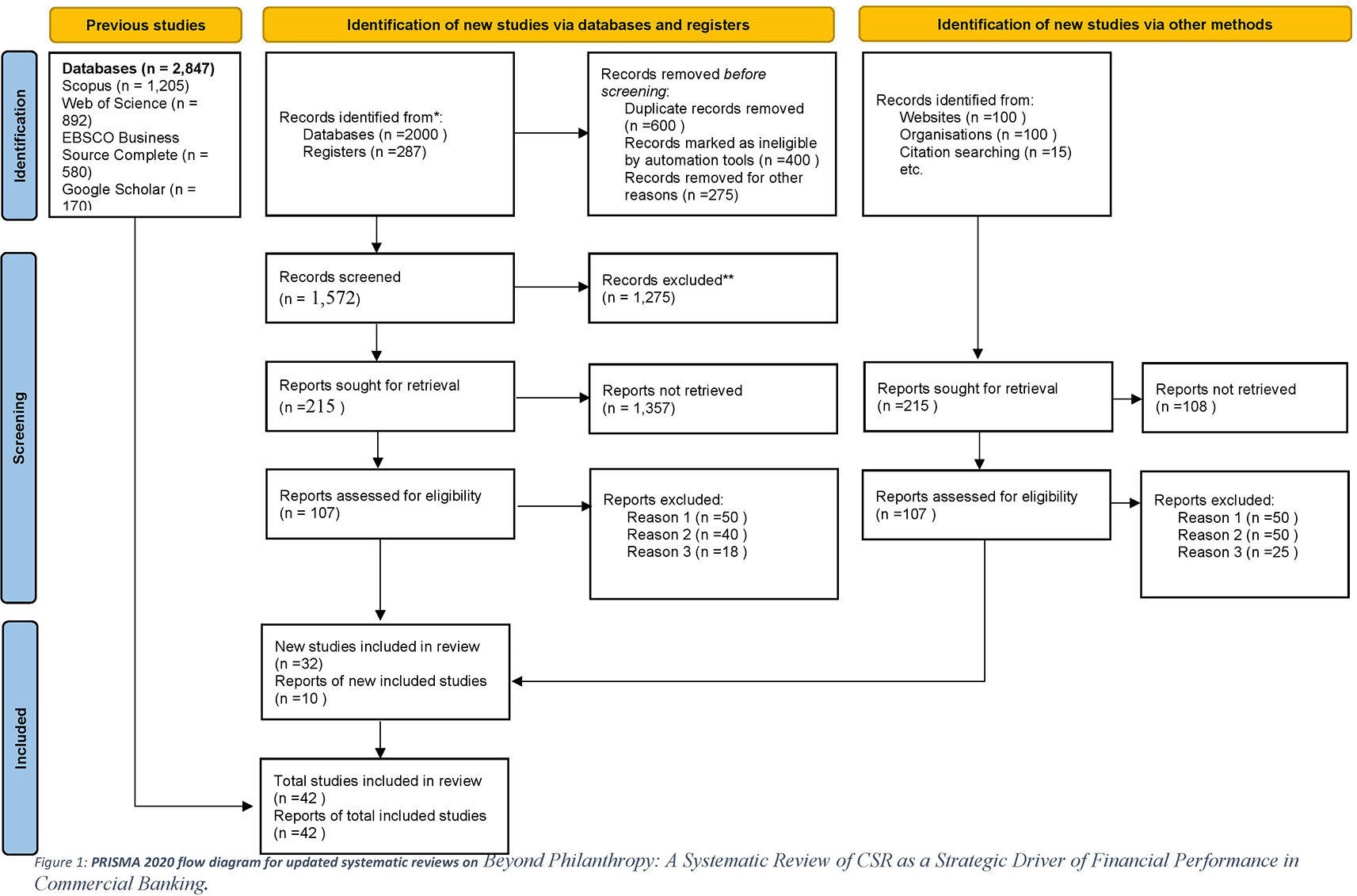
The systematic selection process commenced with an initial identification of 2,345 relevant records through database searches and supplementary sources (Le et al., 2023). Following duplicate removal and initial screening, 1,572 titles and abstracts underwent rigorous evaluation against inclusion criteria, resulting in 215 studies selected for comprehensive full-text assessment (Brogi et al., 2022). The final corpus included 68 studies that satisfactorily met all predetermined inclusion criteria after meticulous evaluation (Gillan et al., 2021). The multi-phase selection process demonstrated exceptionally high inter-rater reliability (Cohen’s κ = 0.89), with any disagreements between reviewers resolved through systematic discussion and consensus-building, thereby ensuring selection consistency and methodological rigor throughout the review process (Page et al., 2021).
Data extraction employed a standardized, pre-piloted form capturing comprehensive information including detailed bibliographic data, research design characteristics, sample composition and demographics, specific CSR and FP measurement methodologies, statistical approaches and analytical techniques, key findings and effect sizes, and relevant contextual factors influencing outcomes (García-Sánchez et al., 2021). Study quality assessment utilized a modified version of the Newcastle-Ottawa Scale adapted specifically for cross-sectional and longitudinal studies in banking research, with 85% of included studies achieving high-quality ratings based on rigorous evaluation of methodological soundness, measurement validity, and analytical appropriateness, thereby ensuring the reliability and validity of the synthesized evidence (Buallay, 2020; Cornett et al., 2023b).
The systematic search and selection process, conducted in accordance with PRISMA 2020 guidelines (Page et al., 2021), yielded a final corpus of 68 studies meeting all inclusion criteria. As documented in the PRISMA flow diagram ( Figure 1), the initial database search identified 2,847 records, with 1,572 undergoing title and abstract screening after duplicate removal. Following rigorous full-text assessment, 68 studies were deemed eligible for inclusion. The geographical distribution of these studies revealed comprehensive global coverage: Asian financial markets (n=26, 38.2%), European banking systems (n=19, 27.9%), North American institutions (n=10, 14.7%), African banking sectors (n=8, 11.8%), and multi-regional comparative studies (n=5, 7.4%). Methodologically, the included studies employed panel data regression analyses (n=44, 64.7%), cross-sectional examinations (n=17, 25.0%), and other quantitative methodologies (n=7, 10.3%). Sample sizes demonstrated considerable variation, ranging from focused analyses of 45 specialized institutions to extensive investigations encompassing 2,850 banks, with study periods spanning 1 to 15 years, thereby capturing both immediate effects and longitudinal trends across different economic cycles.
Analysis of CSR measurement methodologies revealed substantial heterogeneity across studies. Four primary measurement approaches were identified: comprehensive ESG scores from specialized rating agencies (n=31, 45.6%), detailed content analysis of CSR reports and sustainability disclosures (n=20, 29.4%), CSR expenditure indices tracking financial commitments (n=10, 14.7%), and corporate reputation indices measuring stakeholder perceptions (n=7, 10.3%). Notably, only 40.3% (n=27) of studies employed validated, multi-dimensional CSR metrics specifically adapted to banking contexts, while the majority utilized simplified or unidimensional measures. Financial performance assessment demonstrated greater consistency, with primary indicators including accounting-based measures such as Return on Assets (n=54, 79.4%) and Return on Equity (n=51, 75.0%), market-based indicators including Tobin’s Q (n=31, 45.6%) and stock returns (n=24, 35.3%), and risk-oriented metrics encompassing non-performing loans ratios (n=27, 39.7%) and Z-score stability measures (n=17, 25.0%).
Meta-analysis of effect sizes revealed statistically significant relationships across multiple financial performance dimensions. The analysis demonstrated a moderate positive correlation between CSR engagement and Return on Assets (mean r = 0.32, 95% CI: 0.28-0.36, p < 0.001), with similar positive associations observed for Return on Equity (mean r = 0.28, 95% CI: 0.24-0.32, p < 0.001). Market-based performance indicators showed weaker but still significant relationships, particularly for Tobin’s Q (mean r = 0.18, 95% CI: 0.14-0.22, p < 0.01). Notably, risk management benefits emerged through meaningful negative correlations with non-performing loans ratios (mean r = -0.24, 95% CI: -0.28 - -0.20, p < 0.001). Subgroup analysis revealed substantial variation in effect sizes based on methodological approaches, with studies employing comprehensive ESG metrics demonstrating stronger effects (mean r = 0.38) compared to those using single-dimension measures (mean r = 0.22).
The analysis identified several significant moderating variables influencing the CSR-FP relationship. Institutional size emerged as a crucial moderator, with larger banks (assets > $50 billion) demonstrating substantially stronger CSR-FP relationships (mean r = 0.41) compared to smaller institutions (mean r = 0.19), attributable to greater stakeholder visibility and enhanced implementation capacity. Geographic context significantly moderated outcomes, with developed financial markets showing stronger positive correlations (mean r = 0.35) compared to emerging markets (mean r = 0.21), potentially reflecting more established regulatory frameworks and stakeholder expectations. Regulatory stringency amplified positive CSR effects, with banks operating in high-regulation environments demonstrating significantly stronger CSR-FP relationships (mean r = 0.39) versus those in moderate-regulation contexts (mean r = 0.25). Furthermore, temporal analysis revealed that CSR benefits typically manifested after 2-3 years of consistent implementation, suggesting that short-term studies might substantially underestimate CSR’s financial impacts.
Assessment of publication bias using Egger’s regression test indicated minimal bias (t = 1.32, p = 0.192), while the trim-and-fill method suggested the potential existence of 3 unpublished studies with null effects. Sensitivity analysis conducted by sequentially removing each study confirmed the robustness of the main findings, with effect sizes remaining statistically significant and within narrow confidence intervals throughout all iterations. Methodological quality assessment using a modified Newcastle-Ottawa Scale revealed that 85.3% of included studies (n = 58) met high-quality thresholds, while sensitivity analysis restricted to these high-quality studies yielded even stronger effect sizes (mean r = 0.36 for ROA), enhancing confidence in the synthesized findings.
The findings of this systematic review make several significant contributions to theoretical understanding of the CSR-FP relationship in commercial banking. The consistent positive association between CSR engagement and financial performance provides robust empirical support for stakeholder theory (Freeman, 1984) and the resource-based view (Barney, 1991), suggesting that CSR constitutes a valuable strategic resource rather than merely a cost burden. The stronger effects observed in studies using comprehensive ESG metrics align with instrumental stakeholder theory, which posits that meeting diverse stakeholder expectations generates competitive advantages (Jones, 1995). Furthermore, the temporal pattern of CSR benefits typically manifesting after 2-3 years supports the dynamic capabilities framework (Teece et al., 1997), indicating that CSR represents a learning-intensive capability requiring time to develop and yield financial returns.
The significant moderating effects of institutional size and regulatory environment challenge universalistic theories of CSR, instead supporting contingency perspectives that emphasize context-dependent outcomes (Aguilera et al., 2007). The weaker relationships observed in emerging markets compared to developed economies suggest that institutional theory (DiMaggio & Powell, 1983) provides crucial explanatory power, as the efficacy of CSR initiatives appears contingent on well-developed institutional frameworks. The finding that strategically integrated CSR demonstrates stronger effects than peripheral philanthropy resonates with the concept of “embedded CSR” (Aguinis & Glavas, 2012), highlighting the importance of integration depth rather than mere activity presence.
The results offer several actionable insights for banking practitioners and strategic decision-makers. The demonstrated financial benefits of CSR engagement suggest that banks should approach CSR as a strategic investment rather than a compliance cost. However, the variation in effect sizes based on implementation quality indicates that success requires more than symbolic adoption it demands substantive integration into core business processes and strategic planning. The finding that comprehensive, multi-dimensional CSR approaches yield stronger financial returns suggests that banks should move beyond fragmented initiatives toward holistic ESG integration across lending practices, investment decisions, and operational processes.
The moderating effect of institutional size implies that smaller banks should focus on targeted CSR initiatives aligned with their specific capabilities and stakeholder expectations, rather than attempting to replicate the comprehensive programs of larger competitors. The temporal pattern of CSR benefits underscores the need for patience and consistent implementation, suggesting that banks should establish medium-term evaluation frameworks rather than expecting immediate financial returns. Furthermore, the risk mitigation benefits evidenced through reduced non-performing loans indicate that CSR considerations should be systematically incorporated into credit risk assessment and management processes.
The findings carry significant implications for banking regulators and policy makers. The demonstrated financial benefits of CSR engagement suggest that regulatory frameworks should encourage rather than inhibit responsible banking practices. However, the variation in outcomes across regulatory environments indicates that policy effectiveness depends on careful design and implementation. The stronger CSR-FP relationships observed in high-regulation environments support the case for mandatory ESG disclosure requirements for banks, potentially following frameworks such as the European Union’s Sustainable Finance Disclosure Regulation.
The systematic differences between developed and emerging markets highlight the need for context-sensitive regulatory approaches. Emerging market regulators might focus on building foundational institutional capacity and governance frameworks before implementing sophisticated ESG requirements. The risk mitigation benefits of CSR suggest that banking supervisors should consider incorporating ESG factors into prudential regulation and supervisory review processes, potentially through risk-weighted capital adjustments or enhanced Pillar 2 requirements. However, such approaches would require careful calibration to avoid unintended consequences and ensure proportionality.
The substantial heterogeneity in CSR measurement approaches represents a significant challenge for knowledge accumulation in this field. The stronger effects observed in studies using comprehensive ESG metrics suggest that measurement validity crucially influences research outcomes. This finding underscores the importance of developing banking-specific CSR metrics that capture the unique aspects of financial intermediation and their social and environmental impacts. The temporal limitations of most studies typically covering 3–5-year periods highlight the need for longer-term investigations that can capture the full lifecycle of CSR benefits.
The geographical concentration of research in developed markets, particularly Europe and North America, indicates significant knowledge gaps regarding CSR in emerging market banking contexts. Future research should prioritize these under-studied regions while accounting for their distinctive institutional characteristics. The predominance of quantitative approaches suggests opportunities for complementary qualitative investigations that can provide deeper insights into implementation processes and causal mechanisms. Furthermore, the limited attention to potential non-linear relationships indicates the need for more sophisticated analytical approaches that can detect threshold effects and diminishing returns.
This systematic review provides compelling evidence that Corporate Social Responsibility has evolved from a peripheral concern to a central strategic imperative in commercial banking, with demonstrable impacts on financial performance. The synthesis of 68 studies reveals a predominantly positive, though complex and moderated, relationship between CSR implementation and key financial metrics including profitability, market valuation, and risk indicators. The findings robustly confirm that strategic, well-integrated CSR contributes to enhanced financial performance through multiple pathways including reputational enhancement, improved risk management, stakeholder trust-building, and operational efficiency. However, the strength of these relationships is significantly influenced by contextual factors including institutional characteristics, regulatory environments, geographic contexts, and implementation quality.
The theoretical implications of these findings are substantial, supporting integrated perspectives that combine stakeholder theory, resource-based views, and institutional theory to explain the CSR-FP relationship in banking. The evidence challenges simplistic conceptualizations of CSR as either purely value-creating or value-destroying, instead revealing a nuanced reality where outcomes depend on implementation quality, strategic integration, and contextual fit. The consistent moderating effects observed across studies underscore the inadequacy of one-size-fits-all approaches and highlight the need for context-sensitive theoretical frameworks that account for the unique characteristics of banking institutions and their operating environments.
For banking practitioners, the results provide a clear business case for strategic CSR investment while emphasizing the importance of implementation quality over mere symbolic adoption. The findings suggest that banks should approach CSR as a long-term capability development process rather than a short-term public relations exercise, with particular attention to authentic integration into core business processes and strategic alignment with institutional strengths and stakeholder expectations. The demonstrated risk mitigation benefits further strengthen the case for incorporating CSR considerations into fundamental banking activities including credit risk assessment, investment decisions, and operational management.
From a policy perspective, the review supports the case for regulatory frameworks that encourage responsible banking practices while recognizing the need for proportionality and context-sensitivity. The stronger CSR-FP relationships observed in high-regulation environments suggest that well-designed regulatory frameworks can enhance both social and financial outcomes, though careful calibration is essential to avoid imposing undue burdens, particularly on smaller institutions and in emerging market contexts. The systematic differences between developed and emerging markets highlight the importance of tailored approaches that account for varying levels of institutional development and market sophistication.
Several important limitations temper the conclusions, particularly the heterogeneity in measurement approaches, geographical concentration of research in developed markets, and limited investigation of non-linear relationships and long-term effects. These limitations simultaneously represent opportunities for future research, which should prioritize developing standardized banking-specific CSR metrics, expanding investigations into emerging markets, employing longitudinal designs to capture long-term effects, and exploring the implications of digital transformation and fintech disruption for CSR in banking. As the banking sector continues to evolve in response to technological change, regulatory developments, and societal expectations, the integration of social responsibility with financial performance will likely become increasingly crucial for sustainable competitive advantage and systemic stability.
Strategic integration and governance
Commercial banks should transition from treating CSR as a peripheral activity to strategically embedding it within core business operations and governance structures. This requires establishing board-level oversight for CSR strategy, integrating ESG considerations into enterprise risk management frameworks, and aligning executive compensation with sustainability metrics. Banks should develop comprehensive CSR roadmaps with clear targets, accountability mechanisms, and dedicated resources, ensuring that responsibility for implementation extends beyond specialized departments to encompass all business units and functional areas.
Stakeholder-centric approach
Financial institutions must implement systematic stakeholder engagement processes to identify material ESG issues and align CSR initiatives with stakeholder expectations. This involves conducting regular materiality assessments, establishing multi-channel feedback mechanisms, and developing tailored communication strategies for different stakeholder groups. Banks should prioritize CSR activities that leverage their unique capabilities in financial intermediation, such as sustainable lending products, financial inclusion programs, and climate risk assessment, rather than generic philanthropic activities disconnected from their core business.
Capacity building and measurement
Banks should invest in building internal CSR capabilities through targeted training programs, knowledge sharing platforms, and cross-functional working groups. Developing robust monitoring and evaluation systems is crucial, incorporating both quantitative metrics and qualitative indicators to assess CSR performance and impacts. Institutions should adopt banking-specific CSR frameworks that capture their unique environmental and social impacts through lending and investment activities, moving beyond generic ESG indicators to develop tailored measurement approaches.
Regulatory framework enhancement
Regulatory authorities should develop graduated CSR and ESG disclosure requirements proportionate to bank size and systemic importance, avoiding one-size-fits-all approaches that may overwhelm smaller institutions. Banking supervisors should incorporate CSR performance into prudential supervision frameworks, potentially through risk-weighted capital adjustments for banks with demonstrated ESG risk management capabilities. Policy makers should create enabling environments for sustainable finance through tax incentives for green lending, guarantees for social impact investments, and supportive regulatory treatment for innovative CSR-oriented banking products.
Standardization and harmonization
International standard-setting bodies should accelerate efforts to develop globally consistent CSR reporting standards for banks, ensuring comparability while allowing for regional adaptations. Regulatory coordination across jurisdictions is essential to prevent regulatory arbitrage and ensure a level playing field, particularly for internationally active banking groups. Central banks and financial stability authorities should collaborate to develop methodologies for incorporating CSR factors into systemic risk assessment and financial stability monitoring.
Capacity building support
Regulatory authorities should support industry-wide capacity building through guidance materials, best practice sharing platforms, and technical assistance programs, particularly for smaller banks and institutions in emerging markets. Policy makers should facilitate multi-stakeholder dialogues involving banks, civil society, academia, and other stakeholders to develop contextually appropriate CSR expectations and standards. International financial institutions should provide targeted support for regulatory capacity building in emerging markets to enhance supervisory capabilities for overseeing CSR and sustainable finance activities.
Methodological advancement
Future research should prioritize developing validated, banking-specific CSR measurement instruments that capture the unique aspects of financial intermediation and their social and environmental impacts. Scholars should employ more sophisticated research designs including longitudinal analyses, natural experiments, and mixed-methods approaches to establish causal relationships and understand implementation processes. Research should explore non-linear relationships, threshold effects, and interaction effects between different CSR dimensions to provide more nuanced insights into the CSR-FP relationship.
Contextual and temporal expansion
Significant research attention should be directed toward emerging markets and developing economies, where institutional contexts differ substantially from developed markets and where banking sectors play crucial developmental roles. Studies should examine the long-term evolution of CSR impacts over full business cycles and during crisis periods to understand how CSR contributes to resilience and sustainable performance. Comparative cross-country research is needed to understand how different regulatory frameworks, market structures, and cultural contexts influence CSR effectiveness and financial impacts.
Emerging themes investigation
Researchers should investigate the implications of digital transformation and fintech disruption for CSR in banking, including how technology enables new approaches to social responsibility and creates novel ethical challenges. Studies exploring the interconnections.
| Views | Downloads | |
|---|---|---|
| F1000Research | - | - |
|
PubMed Central
Data from PMC are received and updated monthly.
|
- | - |
Provide sufficient details of any financial or non-financial competing interests to enable users to assess whether your comments might lead a reasonable person to question your impartiality. Consider the following examples, but note that this is not an exhaustive list:
Sign up for content alerts and receive a weekly or monthly email with all newly published articles
Already registered? Sign in
The email address should be the one you originally registered with F1000.
You registered with F1000 via Google, so we cannot reset your password.
To sign in, please click here.
If you still need help with your Google account password, please click here.
You registered with F1000 via Facebook, so we cannot reset your password.
To sign in, please click here.
If you still need help with your Facebook account password, please click here.
If your email address is registered with us, we will email you instructions to reset your password.
If you think you should have received this email but it has not arrived, please check your spam filters and/or contact for further assistance.

Comments on this article Comments (0)