Keywords
Immune thrombocytopenia, LDH, Platelet indices

This article is included in the Manipal Academy of Higher Education gateway.
Immune thrombocytopenia, LDH, Platelet indices
Immune thrombocytopenic purpura (ITP) is an acquired autoimmune disorder where IgG autoantibodies target circulating platelets, occurring as primary ITP. Secondary ITP is caused by chronic infections and autoimmune disease.1 ITP increases the risk of hemorrhagic episodes and causes isolated thrombocytopenia and purpura. The disease can affect both adults and children. ITP is mostly diagnosed by ruling out other recognized causes of thrombocytopenia. ITP is considered to be a benign disease with no higher mortality rate than the general population. However some patients are unresponsive to several therapies, and they could die from infections or hemorrhages brought on by immunosuppressive treatment.2 The American Society of Hematology defines ITP as a condition characterized by a generalized purpuric rash, a platelet count below 100,000/μL, and normal white blood cell (WBC) count and hemoglobin levels. In adults, primary ITP accounts for about 80% of cases, while secondary ITP comprises the remaining 20%.3 The annual incidence of primary ITP is about 3.3 per 100,000 individuals, with a frequency of up to 9.5 per 100,000 adults.4 Clinically, ITP can be divided into three stages: newly diagnosed (during the first three months of diagnosis), chronic (lasting more than 12 months), and persistent (lasting 3 to 12 months).5
The most reliable technique for determining the cause of ITP is bone marrow analysis. However, regarding its importance in assessing ITP, the controversy remains. It is not advised as a first-line diagnostic method because of its invasiveness and potential to cause discomfort to the patient. The lack of conclusive clinical and laboratory characteristics, ITP is still considered an excluding diagnosis.6 Recently several studies have reported elevated serum Lactate dehydrogenase (LDH) levels in patients with ITP. Numerous cell types, including platelets, contain the enzyme LDH, which is essential for the body’s metabolic processes. Platelets are known to have significant levels of LDH activity.7 There are five distinct LDH isoenzymes that are found in different tissues. Studies revealed that, in comparison to other LDH isoenzymes, isoenzymes 2 and 3 were more common in platelets. The enzyme LDH is present in the heart, liver, kidneys, muscles, and blood, and is essential for the metabolism of cellular energy. When cells are damaged, an internal enzyme called LDH is released into the circulation. In the clinical setting, high serum LDH levels are a useful biomarker for prognosis prediction, treatment evaluation, and disease monitoring.8
Although LDH is primarily used as a marker for red blood cell destruction, limited research has explored its elevation in cases of increased platelet turnover without concurrent erythrocyte destruction, such as isolated thrombocytopenia. Previous studies have reported an inverse relationship between LDH levels and thrombocytopenia. However, no studies have specifically examined the correlation between LDH and the severity of ITP or its association with bleeding in ITP. The purpose of this study was to assess the correlation between LDH levels and the degree of thrombocytopenia in ITP. Since ITP is a diagnosis of exclusion, with no specific parameters for its diagnosis or severity grading, assessing LDH levels in newly diagnosed ITP patients may provide valuable insights into disease severity.
This prospective observational study was performed at Kasturba Medical College, Manipal, India. The study was adhered to the principles outlined in the Declaration of Helsinki and was approved by Kasturba Medical College and Kasturba Hospital institutional Ethics Committee (IEC No 494/2022). Informed written consent was obtained from all participants.
A total of 62 patients with ITP were studied from July 2022 to April 2024.
The inclusion criteria for this study consist of newly diagnosed cases of ITP, including both primary and secondary causes above 18 years of age. Secondary ITP cases included were those whose autoimmune serology were only weakly positive.
Patients with hemolytic anemia, such as Evans syndrome, or those with a positive direct antiglobulin test, patients with vitamin B12 or folate deficiency anemia, drug-induced thrombocytopenia, active infections, muscular disorders, or malignancy were excluded from the study. SLE with nephritis, catastrophic APLA, patients with HIV, hepatitis B, or hepatitis C who have progressed to cirrhosis also were excluded.
Patients whose platelet counts were recently found to be low were included and platelet indices including “mean platelet volume (MPV), plateletcrit (PCT); platelet distribution width (PDW)”, and serum LDH levels were analyzed before starting treatment. Platelet indices were analyzed using the Beckman Coulter DXH 900, while serum LDH was measured on the Cobas 8000 (Roche Diagnostics) using an enzymatic immunoassay.
Test for anti-neutrophil antibodies test (ANA profile) by immunofluorescence for diagnosing secondary ITP due to SLE, APLA were done. Bone marrow biopsy was done to rule out haematological malignancies and hypo proliferative marrow, biopsies that showed peripheral destruction of platelets were considered as immune thrombocytopenia. Other additional tests like Coombs tests, serum b12, folate, HIV, hepatitis B serology, and CPK were done to rule out other causes of thrombocytopenia that cause LDH elevation. Direct Coombs antigen test was done in patients with autoimmune etiology to rule out underlying hemolytic anemia and hence associated LDH elevation.
Based on the severity of thrombocytopenia; “mild to moderate thrombocytopenia was considered as non-severe thrombocytopenia while platelet count <20,000 was considered as severe thrombocytopenia”. In this study, bleeding severity in immune ITP was classified based on the ITP Bleeding Scale. Grade 0 and Grade 1 bleeding were categorized as non-severe, while Grade 2 bleeding was considered severe.
The normal distribution of the variables was evaluated using the Shapiro test. Continuous variables are represented by mean ± SD, whereas non-continuous variables are represented by median with interquartile range. Percentages of categorical variables were compared using chi-square or Fisher exact test. We used t-tests and the Mann-Whitney U test to compare the mean and median for continuous variables. One-way ANOVA was performed to compare the platelet indices among different grades of clinical severity of ITP. Bonferroni was employed for post hoc paired-wise comparison. The cut-off value of serum LDH in separating severe ITP from non-severe ITP was determined using receiver operating characteristic curve analysis.
40 (64.5%) of the 62 ITP patients that were studied had severe thrombocytopenia, while 22 (35.4%) had non-severe thrombocytopenia. Primary ITP was more prevalent, accounting for 59.7% of cases. The demographic and clinical characteristics of the overall population are summarized in Table 1. The mean age of the cohort was 41.72 ± 12.2 years, with a female predominance (67.7% vs. 32.3%). Fever was observed in 16.1% of patients, while 30.6% reported fatigue.
| Variables | Proportion N = 62 |
|---|---|
| Age, years a | 41.72 ± 12.2 |
| Gender, n (%) | |
| Female | 42(67.7) |
| Male | 20(32.3) |
| Fever, n (%) | 10(16.1) |
| Fatigue, n (%) | 19(30.6) |
| Bleeding, n (%) | 13(20.9) |
| Malena, n (%) | 3(4.8) |
| Hematuria, n (%) | 2(3.2) |
| Menorrhagia, n (%) | 10(16.1) |
| Subdural hemorrhage, n (%) | 1(1.6) |
| Petechiae, n (%) | 12(19.3) |
| Ecchymosis, n (%) | 9(14.5) |
| Platelet count, ×103/μLb | 24(50-37) |
| Mean platelet volume, fla | 10.7 ± 2.1 |
| Plateletcrit,% | 20(6.0-31) |
| Platelet distribution widtha | 16.7 ± 2.3 |
| serum LDHb U/L | 241(205-290) |
| Clinical Severity, n (%) | |
| Grade 0 | 20(31.6) |
| Grade 1 | 7(11.3) |
| Grade 2 | 35(56.5) |
| Severity of ITP, n (%) | |
| Severe | 40(64.5) |
| Non-severe | 22(35.5) |
| Types of ITP, n (%) | |
| Primary | 37(59.7) |
| Secondary | 25(36.2) |
Among clinical manifestations of ITP, 41.2% of patients presented with symptoms, with bleeding being the most common (20.9%). Notably, seven patients experienced gum bleeding accompanied by epistaxis. Purpura was reported in 33.8% of cases, with petechiae (19.3%) and ecchymosis (19.3%) being the predominant findings. Regarding clinical severity, Grade 2 ITP was the most frequently observed (56.5%). The median serum LDH level for the entire cohort was 241 U/L (interquartile range: 205–290 U/L).
We further compared the clinical and laboratory parameters between severe and non-severe ITP ( Table 2). Patients with severe ITP had a higher incidence of fever (18.0% vs. 15.2%) and fatigue (32.5% vs. 27.3%) compared to those with non-severe ITP. Grade 2 severity was significantly more common in the severe ITP group (77.5%), whereas Grade 0 was more frequently observed in non-severe cases (72.7%) (p = 0.01).
| Variables | Severe (N = 40) | Non-severe (N = 22) | P value |
|---|---|---|---|
| Fever, n (%) | 6(18.0) | 4(15.2) | 0.23 |
| Fatigue, n (%) | 13(32.5) | 6(27.3) | 0.39 |
| Severity, n (%) | 0.01 | ||
| Grade 0 | 4(10.2) | 16(72.7) | |
| Grade1 | 5(12.5) | 2(9.1) | |
| Grade 2 | 31(77.5) | 4(18.2) | |
| Types, n (%) | 0.13 | ||
| Primary | 23(57.5) | 14(63.6) | |
| Secondary | 15(37.5) | 8(36.3) | |
| Plateletcount, 103/μLa | 7.6(3.0-11) | 51(33-73) | 0.01 |
| MPV,flb | 10.8 ± 1.8 | 10.5 ± 2.6 | 0.42 |
| serum LDHa U/L | 271(216-307) | 209(184-275) | 0.03 |
In both groups, primary ITP was the predominant type, reported in 57.5% of severe cases, 63.6% of non-severe cases, and 2 patients were diagnosed as RVD-associated ITP. Among secondary ITP cases three cases were diagnosed with SLE, two with APLA and rheumatoid arthritis, 2 patients were HIV positive, while the other patients had positive autoimmune. Thrombocytopenia due to peripheral destruction was observed in the bone marrow biopsy of 36 patients. The remaining biopsies revealed either dilute marrow or reactive hypercellularity. Bone marrow biopsy was not performed in 20 patients, of whom two tested positive for anti-platelet antibodies, while other autoimmune markers, including ANA profile and APLA antibodies, were negative. However, the mean level of MPV did not differ significantly between the groups (p = 0.42). The median serum LDH level was significantly higher in severe ITP (276 [216–307]) compared to non-severe ITP (209 [184–275]), p = 0.03.
We further compared the clinical and laboratory parameters between severe and non-severe ITP. Patients with severe ITP showed a higher incidence of fever (18.0% vs. 15.2%) and fatigue (32.5% vs. 27.3%) compared to those with non-severe ITP. Grade 2 severity was significantly more common in the severe ITP group (77.5%), whereas Grade 0 was more frequently observed in non-severe cases (72.7%) (p = 0.01) ( Table 2).
On analysis of the association between platelet indices and LDH with clinical severity of ITP ( Table 3). Among the platelet indices assessed, only the median platelet count and Plateletcrit demonstrated significant differences across severity grades. On further post hoc analysis it was revealed that platelet count and plateletcrit only differed significantly between grades 0 and 2 (p = 0.01) ( Table 4). The median platelet counts progressively decreased with increasing severity, from 52 (24–77) in Grade 0 to 11 (7.0–35) in Grade 1 and 10 (3.0–13) in Grade 2 (p = 0.01). Similarly, the median plateletcrit was 47.1 (16–77) and showed a gradual decline as severity worsened (p = 0.01).
| Variables | Grade 0 | Grade 1 | Grade 2 | P value |
|---|---|---|---|---|
| Plateletcount, 103/μLa | 52(24-77) | 11(7.0-35) | 10(3.0-13) | 0.01 |
| MPV, fl | 10.3 + 1.2 | 11.1 + 1.0 | 11.2 + 2.1 | 0.188 |
| Plateletcrit, % | 47.1(16-77) | 13.0(7.2-38.6) | 1.2(0.3-1.5) | 0.01 |
| PDW, fl | 16.2 + 2.4 | 17.8 + 1.3 | 16.6 + 2.5 | 0.831 |
| LDH, U/L | 235(185-289) | 275(168-392) | 241(208-288) | 0.721 |
| Variable | Grade 0 vs Grade1 | Grade 0 vs Grade 2 | Grade 1 vs Grade 2 |
|---|---|---|---|
| Platelet count | 0.11 | 0.01 | 0.50 |
| Plateletcrit | 0.64 | 0.01 | 0.68 |
Spearman’s rank correlation coefficient was calculated for plasm LDH with platelet indices as shown in Table 5. LDH showed a negative correlation with platelet count (ρ = -0.817, p = 0.01) and plateletcrit (ρ = -0.26, p = 0.03), while MPV (ρ = 0.05, p = 0.68) did not exhibit any correlation.
| Parameters | Platelet count | MPV | Plateletcrit | PDW | |
|---|---|---|---|---|---|
| LDH | Spearman’s ρ | -0.817 | 0.05 | -0.26 | 0.17 |
| p-value | 0.01 | 0.68 | 0.03 | 0.19 | |
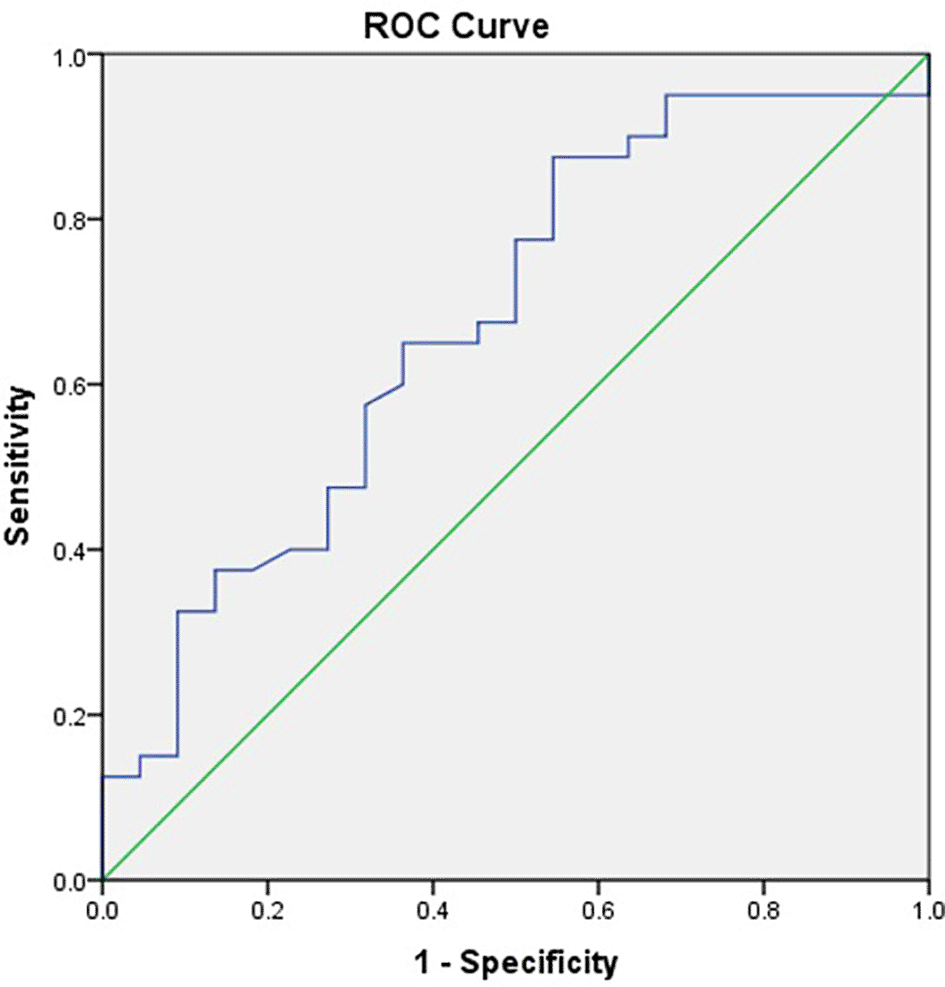
On ROC analysis, the area under the curve (AUC) was 0.676 (95%CI 0.53-0.81) at a cut-off value of 234 U/L, with the specificity of 62.5% and 63.6%, respectively for diagnosing severe thrombocytopenia (Figure 1).
Immune thrombocytopenia is an acquired hematologic disorder caused by autoantibodies, primarily of the IgG type, produced by B lymphocytes.1 These autoantibodies target platelet membrane glycoproteins, such as GPIIb/IIIa, leading to platelet destruction. The presentation can range from mild bruising to life-threatening hemorrhage, potentially resulting in death. Among the various causes of thrombocytopenia, ITP remains one of the least studied etiological factors. Studies on its clinical severity, grading, and evaluation are scarce. The conclusive diagnosis of ITP remains a clinical challenge globally. Although LDH is widely used as a marker of erythrocyte destruction, there is a lack of published data on LDH elevation in cases of increased platelet turnover without concurrent erythrocyte destruction, such as in ITP.3 In this study, we analyzed LDH levels in patients with ITP and examined their correlation with types of ITP and clinical severity.
We observed a mean age of 41.72±12.2 and a female predominance in our cohort, which aligns with several previous studies. A prospective study by Mikias et al., reported a similar distribution, with 63% of patients being female and 36.3% male, with a mean age of 41 ± 17.8.9 Another study by Emrah et al found 66.8% of female prevalence in those who diagnosed with ITP.10 In our study, primary ITP cases were more prevalent than secondary ITP. In contrast, Sadia et al. reported a significantly higher proportion of secondary ITP in a cross-sectional study in southern Pakistan where 64.8% had secondary ITP and 35.2% had primary ITP.11
Among clinical manifestations of ITP, 41.2% of patients presented with symptoms, with bleeding being the most common (20.9%). Notably, seven patients experienced gum bleeding accompanied by epistaxis. Purpura was reported in 33.8% of cases, with petechiae (19.3%) and ecchymosis (19.3%) being the predominant findings. The incidence of melena and hematuria was relatively low. In a cross-sectional study of 417 patients diagnosed with ITP, 43.16% presented with hemorrhagic manifestations, while 56.8% were asymptomatic. Among the symptomatic cases, gum bleeding occurred in 32.7%, epistaxis in 40.8%, and similar to our findings, melena, and hematuria were reported in fewer cases (2.0% and 4.0%, respectively). Platelet count was significantly lower in severe ITP compared to non-ITP, and among the platelet indices assessed, only the median platelet count and plateletcrit demonstrated significant differences across severity grades.
We found that the mean serum LDH was 271 (216-307) in severe ITP and the cut-off value was 234 μ/l to diagnose severe ITP. In a case-control study by Hanny et al the median LDH was 215 μ/l and the control group had 210 μ/l. They also found the LDH elevation with no association with patient age, gender, or remission status. However, an inverse correlation was observed between LDH levels and platelet count in their cohort, which was consistent with our findings. This suggests that LDH elevation is at least partially driven by increased platelet turnover.12 Emrah et al. analyzed serum LDH levels in 226 ITP patients and compared them with healthy controls, reporting LDH levels of 218 IU/L in ITP patients and 159 IU/L in controls. They also found an inverse correlation between LDH levels and platelet counts. Additionally, subgroup analysis revealed that LDH levels correlated with the treatment group but not with the untreated ITP group. Comparison of LDH levels between pre-treatment and post-treatment ITP groups showed a mean of 241.8 IU/L in the pre-treatment group and 225.7 IU/L in the post-treatment group. LDH levels were moderately elevated in ITP patients at diagnosis and showed a slight improvement after treatment.10
We considered it important to investigate whether LDH levels increase in ITP patients with bleeding symptoms due to hemolysis of extravascular erythrocytes. Therefore, we compared LDH as the clinical severity worsens (from grade 0 to grade 2). We observed that LDH did not exhibit any correlation with the clinical severity of ITP (bleeding and non-bleeding cases). Similarly, Emrah et al. also reported that there was no correlation of LDH with bleeding symptoms, where LDH levels were 246 IU/L in those who had bleeding and 199 IU/L in patients without bleeding symptoms.10 LDH levels may rise due to massive bleeding and hematomas; however, since none of the patients experienced such bleeding, the observed differences were solely related to platelet count. The study limitation includes the single-centered cross-sectional design, lack of estimation of LDH isoenzymes.
A significant proportion of our cohort was diagnosed with severe ITP. Platelet count was significantly lower in severe ITP compared to non-ITP, and among the platelet indices assessed, only the platelet count and Plateletcrit demonstrated significant differences across severity grades. There was a significant elevation of serum LDH levels in patients with severe ITP compared to non-severe ITP. While the LDH level did not elevate significantly as the severity of bleeding worsened. However, the optimum LDH cut-off value for clinical application will need to be determined by more large-scale prospective cohort studies. Further testing of the LDH isoenzyme will be helpful in the evaluation of ITP and its severity.
| Views | Downloads | |
|---|---|---|
| F1000Research | - | - |
|
PubMed Central
Data from PMC are received and updated monthly.
|
- | - |
Provide sufficient details of any financial or non-financial competing interests to enable users to assess whether your comments might lead a reasonable person to question your impartiality. Consider the following examples, but note that this is not an exhaustive list:
Sign up for content alerts and receive a weekly or monthly email with all newly published articles
Already registered? Sign in
The email address should be the one you originally registered with F1000.
You registered with F1000 via Google, so we cannot reset your password.
To sign in, please click here.
If you still need help with your Google account password, please click here.
You registered with F1000 via Facebook, so we cannot reset your password.
To sign in, please click here.
If you still need help with your Facebook account password, please click here.
If your email address is registered with us, we will email you instructions to reset your password.
If you think you should have received this email but it has not arrived, please check your spam filters and/or contact for further assistance.

Comments on this article Comments (0)