Keywords
Contact lens deposit; Rigid corneal lens; Contact lens complications; Lipid deposits

This article is included in the Eye Health gateway.
Contact lens deposit; Rigid corneal lens; Contact lens complications; Lipid deposits
Contact lens deposits refer to residual coatings or formations on the surface of contact lenses that persist despite the natural flushing action of tears during blinking.1 These deposits pose significant challenges for wearers, including reduced lens clarity, discomfort, and, in some cases, discontinuation of lens wear.2–5 The increased utilization of silicone monomers in modern contact lens materials has contributed to a higher prevalence of deposits due to their inherent lipophilic nature. While deposits are less common in hydrogel materials, they are frequently observed in extended wear modalities.6–8
Lipids are a major source of contamination for both soft and rigid gas permeable (RGP) contact lenses and have garnered significant research attention.9–12 Lipid deposits typically present as greasy, smooth, and shiny adherent films on both RGP and soft contact lenses.1 Studies have revealed that these deposits primarily consist of phospholipids, neutral fats, triglycerides, cholesterol, cholesterol esters, and fatty acids.11,12 In rigid corneal lenses (RCLs), lipid deposits often coexist with various other compounds, creating diverse morphological patterns.1
Despite this understanding, the scientific literature lacks detailed case reports exploring lipid deposits on RCLs, particularly regarding their combination with other compounds. This gap limits the ability of clinicians to fully understand the factors influencing lipid deposition and to develop tailored management strategies.
In this report, we present two cases of lipid deposits on rigid corneal lenses, emphasizing the morphological differences, compositional analysis, influencing factors, and individualized management approaches. These cases aim to expand the current knowledge base and provide insights into effective solutions for addressing lipid contamination in RCL wearers.
A 28-year-old man with moderate keratoconus in both eyes (BE) had been using rigid corneal lenses (Purecon, New Delhi, India) for visual rehabilitation for past 5 years. Over three months, he experienced progressive blurring of vision and discomfort in the right eye (RE), significantly affecting his daily activities. The RCL for the RE was two years old, whereas the one for the left eye (LE) was six months old.
His presenting distance visual acuity (DVA) with RCL was 20/125 in the RE and 20/20 in the LE, with near vision acuity (NVA) of N8 at 30 cm for the RE and N6 for the LE. Retinoscopy showed a dull glow with a shadow in the RE and a Plano clear reflex in the LE. Subjective refraction did not yield any improvement, and best-corrected visual acuity remained unchanged. Slit lamp biomicroscopy revealed multiple whitish, raised, jelly-like deposits adherent to the RE lens surface ( Figure 1a), while the LE lens appeared clear. The RCL for the RE, being two years old, was identified as a likely source of the issue due to improper care and maintenance, while the LE lens, only six months old, appeared clear. Moreover, the scratches were evident over RE RCL. Other ocular structures, including the adnexa and posterior segment, were within normal limits.
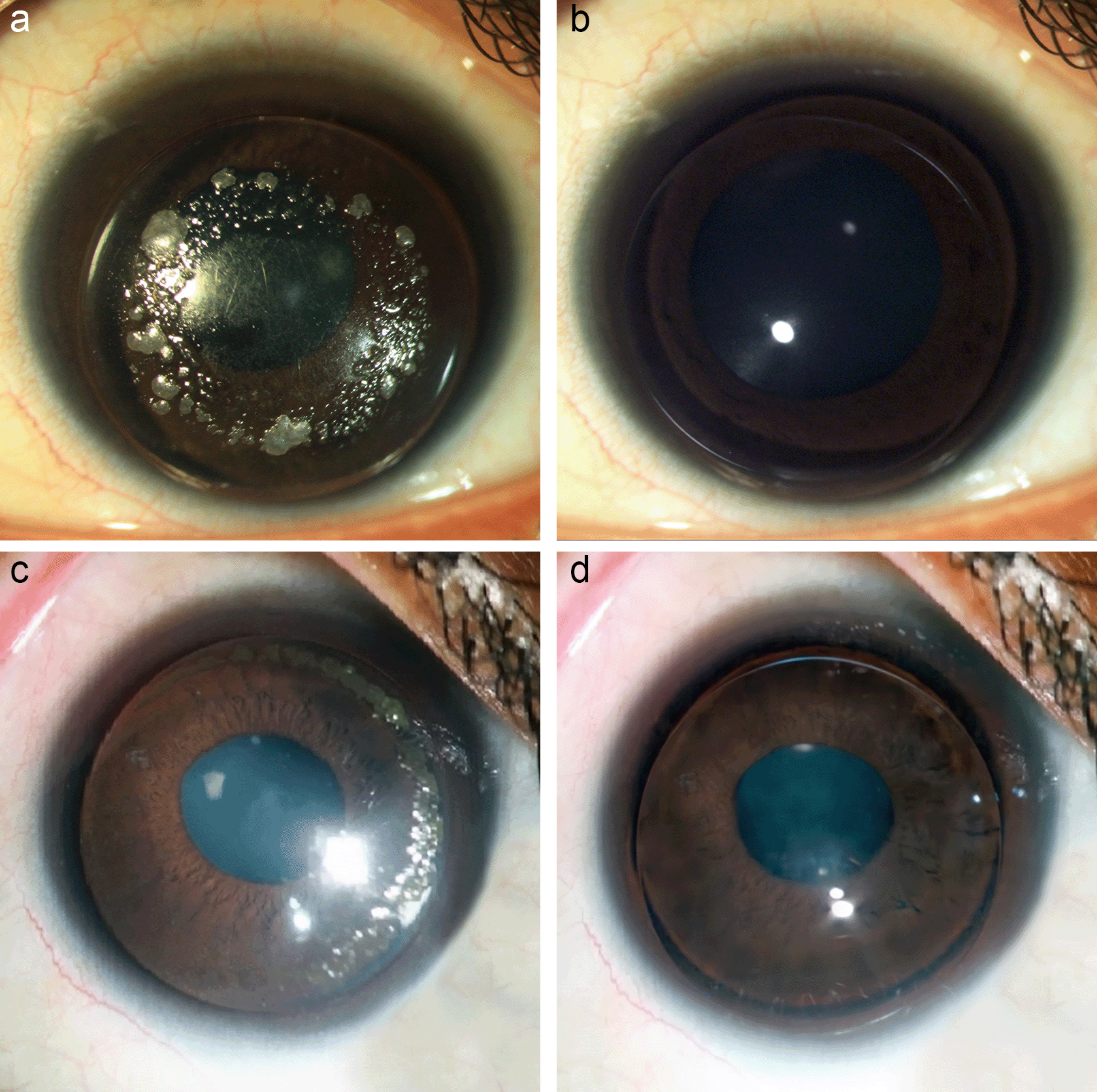
Following evaluation, a new lens trial for the RE was performed using a conventional RCL. Parameters such as base curve (BC), back vertex power (BVP), and total diameter (TD) were selected according to general fitting principles. The static fitting showed a central feathery touch with mid-peripheral bearing and optimal edge clearance (0.8 mm). Dynamically, the lens demonstrated good lid stability, movement, and pupillary coverage ( Figure 1b). The finalized lens parameters for the RE were BC: 7.2 mm, BVP: -3.00 DS, and TD: 9.2 mm. DVA improved to 20/20, and NVA improved to N6.
The patient was counselled regarding the condition of his lens, attributed to infrequent replacement and poor maintenance. He was advised to adhere to regular lens care, ensure timely replacements, and seek follow-up if similar issues arise.
The second case involved a 26-year-old male software technician diagnosed with forme fruste keratoconus in the RE and moderate keratoconus in the LE during previous visits. He had been using a rigid corneal lens (Purecon, New Delhi, India) in the LE for vision correction. The patient reported discomfort and transient blurring of vision after wearing the lens for more than 4–5 hours over the preceding four months. Retinoscopy revealed a refractive power of -0.25 DS/-0.50 DC × 160 over the RCL in the LE. Subjective over-refraction resulted in an accepted Plano power in the LE, yielding a best-corrected visual acuity of 20/20 in the LE.
Slit lamp evaluation revealed lipid deposits localized to the peripheral region of the RCL in the LE, accompanied by mucin flakes ( Figure 1c). The upper and lower lids of both eyes exhibited cheese-like secretions and blocked meibomian gland orifices. Dry eye evaluation tests, including Schirmer test-I, indicated moderate evaporative dry eye (EDE), while other ocular structures were normal.
The lens deposits were attributed to EDE and improper lens cleaning and maintenance. The RCL was thoroughly cleaned with a multi-purpose solution, effectively removing the deposits ( Figure 1d). The patient was advised to continue using the same RCL in the LE and implement warm compresses with lid massage for both eyes for 3–4 months. Lubricating eye drops (carboxymethycellulose 0.5%; 4-6 times a day for 3 months) and topical antibiotic eye ointment (Polymyxin B Sulphate Bp 10000 Units, Chloramphenicol 10 mg, Dexamethasone Sodium Phosphate I.P. 1 mg, Sterile Base Q.S.; twice daily for 1 month) was recommended.
At the one-month follow-up, the patient reported comfortable lens wear for up to 12 hours daily, with significant improvement in symptoms.
Contact lens deposits disrupt tear film uniformity, impairing vision and causing discomfort. These deposits are classified as tear-related (proteins, lipids, and inorganic compounds) or non-tear-related (environmental particles).1 Lipid deposits, the most prevalent type, not only reduce lens comfort and clarity but can also initiate inflammation due to lipid degradation.13–15 Lipids are primarily secreted by meibomian glands and consist of triglycerides, cholesterol, waxy esters, and other nonpolar lipids.11,12 These components can form deposits that integrate with proteins, mucin, and other substances, creating complex structures like jelly bumps over the lenses.10
Jelly bumps, also referred to as “mulberry spots” or “lens calculi,” predominantly contain cholesterol and waxy esters but may also include calcium, lysozyme, bacteria, and fibrin.10,16,17 Their presence can cause discomfort, disrupt vision, and contribute to conditions like Contact Lens Papillary Conjunctivitis.10 Transparent or translucent jelly bumps tend to occur frequently on high water content, ionic, extended wear lenses. The occurrence of jelly bumps can range from a single to multiple deposits. Typical jelly bumps were observed in Case 1. Since removal attempts can damage lenses and accelerate regrowth, and the RCL was highly scratched, the RCL was replaced in this case, as recommended in the literature.10,17
Other Factors influencing lipid deposition include lens material hydrophobicity, improper cleaning, dry eye, meibomian gland dysfunction (MGD), high-fat diets, alcohol consumption, and exposure to pollutants.2,16,15,18 Management typically involves regular lens cleaning using surfactant or alcohol-based solutions, adherence to replacement schedules, and treating underlying conditions like MGD and dry eye.10,17 In case 2, peripheral, flat, deposits were present, most likely due to MGD. The RCL was thoroughly cleaned and patient was advised appropriate treatment for MGD.
Apart from that, replacement with Fluoro-siloxane acrylate lenses can be done as they exhibit reduced lipophilicity and therefore, demonstrate lower susceptibility to deposits.2,15 Lifestyle modifications, such as frequent blinking, dietary adjustments, and the use of oil-free cosmetics, are also recommended.10,17 Omali et al.18 quantified and verified different types of lipid deposition on contact lenses using a liquid chromatography-mass spectrometry technique. This method provided precise identification of the lipid composition, offering valuable insights into the nature of deposits. Incorporating similar spectrometric verification in our cases would have enhanced the scientific rigor of the findings, allowing for a more detailed understanding of the lipid deposition process. Such advanced analysis could confirm the presence of specific lipids and their interactions with other compounds, which would further aid in tailoring preventive and management strategies.
Therefore, emphasizing proper care, regular follow-up, treating underlying conditions, and timely lens replacement are essential for ensuring comfortable and risk-free contact lens wear. Such best practices ultimately help avoid complications associated with deposits to enhance overall visual rehabilitation outcomes.
| Views | Downloads | |
|---|---|---|
| F1000Research | - | - |
|
PubMed Central
Data from PMC are received and updated monthly.
|
- | - |
Provide sufficient details of any financial or non-financial competing interests to enable users to assess whether your comments might lead a reasonable person to question your impartiality. Consider the following examples, but note that this is not an exhaustive list:
Sign up for content alerts and receive a weekly or monthly email with all newly published articles
Already registered? Sign in
The email address should be the one you originally registered with F1000.
You registered with F1000 via Google, so we cannot reset your password.
To sign in, please click here.
If you still need help with your Google account password, please click here.
You registered with F1000 via Facebook, so we cannot reset your password.
To sign in, please click here.
If you still need help with your Facebook account password, please click here.
If your email address is registered with us, we will email you instructions to reset your password.
If you think you should have received this email but it has not arrived, please check your spam filters and/or contact for further assistance.

However, several aspects require clarification
1. The manuscript is presented as a “case report,” yet mentions spectroscopic analysis in the Methods section. However, no details of the methodology, instrumentation, analytical protocol, or results of this analysis are provided later in the manuscript. Please clarify whether spectroscopic analysis was actually performed. If not, this should be removed from the Methods to avoid overstatement. If performed, details and results must be clearly reported.
2. The manuscript occasionally implies causal relationships (e.g., lens age, MGD, improper care) without objective quantification. The language should be revised to emphasize associations rather than causation, which is more appropriate for case reports.
3. In Case 2, evaporative dry eye and MGD are cited as key contributors, but objective grading systems (e.g., meibomian gland expressibility, TBUT, meibography) are not described. Including standardized grading or clearly stating limitations in assessment would strengthen the clinical interpretation.
4. Please clarify whether lens wear was discontinued during ointment use and whether risks (e.g., steroid-related complications) were considered.
5. The manuscript does not explicitly state whether informed consent was obtained from patients for publication of clinical details and images.
However, several aspects require clarification
1. The manuscript is presented as a “case report,” yet mentions spectroscopic analysis in the Methods section. However, no details of the methodology, instrumentation, analytical protocol, or results of this analysis are provided later in the manuscript. Please clarify whether spectroscopic analysis was actually performed. If not, this should be removed from the Methods to avoid overstatement. If performed, details and results must be clearly reported.
2. The manuscript occasionally implies causal relationships (e.g., lens age, MGD, improper care) without objective quantification. The language should be revised to emphasize associations rather than causation, which is more appropriate for case reports.
3. In Case 2, evaporative dry eye and MGD are cited as key contributors, but objective grading systems (e.g., meibomian gland expressibility, TBUT, meibography) are not described. Including standardized grading or clearly stating limitations in assessment would strengthen the clinical interpretation.
4. Please clarify whether lens wear was discontinued during ointment use and whether risks (e.g., steroid-related complications) were considered.
5. The manuscript does not explicitly state whether informed consent was obtained from patients for publication of clinical details and images.