Keywords
Drug-resistant tuberculosis, loss to follow-up, psychosocial determinants, stigma, mental health, depression, South Africa

Drug-resistant tuberculosis, loss to follow-up, psychosocial determinants, stigma, mental health, depression, South Africa
Despite significant progress towards its eradication, tuberculosis (TB) continues to be the principal cause of death from a single infectious agent globally with 1.25 million fatalities in 2023.1 In many developing nations, TB, a chronic, airborne infection, caused by Mycobacterium tuberculosis although treatable and preventable, continues to be a major cause of mortality.2–4 This has become a worrisome trend in resource-constrained nations even with the availability of effective treatment for decades.2,5 The Global TB report of the World Health Organization (WHO) estimated that 10.8 million people were affected by TB in 2023, with an incidence rate of 134 per 100,000 population and Africa alone reported the highest TB infections, accounting for 24%.1,2
Approximately 5% of incident TB cases develop drug-resistant TB (DR-TB).6 DR-TB develops either as a result of misuse of anti-TB medications or outright infection with a drug-resistant strain.4 DR-TB is a significant public health challenge globally recognized by the WHO as a threat to achieving the End TB targets.7 The DR-TB pandemic is characterized by high rates of morbidity, mortality, and poor treatment outcomes and is mainly concentrated in low and middle-income countries including Africa, where there are resource constraints and low TB treatment coverage.8 DR-TB infected patients face significant economic and social costs and only 33% access quality care. The remaining proportion represents the missing patients otherwise known as loss to follow up (LTFU) and reaching them is a significant public health challenge.9 LTFU contributes to poor outcomes, leading to continued disease transmission, development of further drug resistance, and increased mortality.
Psychosocial determinants including stigma, depression, poverty, social isolation, and lack of family support are increasingly recognized as critical factors influencing LTFU. While several studies have explored these factors in various contexts, the evidence remains fragmented and scattered, necessitating a comprehensive mapping through a scoping review.
Drug-resistant tuberculosis (DR-TB) remains a significant public health concern in South Africa, with LTFU both pretreatment and on-treatment posing persistent challenges to treatment success. While recent policy and therapeutic advancements, such as the introduction of short all-oral regimens, aim to ease treatment burden, psychosocial barriers to care remain inadequately addressed. Evidence on factors like stigma, depression, substance use, and socioeconomic stressors is fragmented and inconsistently measured, limiting its utility for programmatic action. Given South Africa’s National TB Program’s call for patient-centered, evidence-based strategies, a scoping review is necessary to systematically map the psychosocial determinants of LTFU, clarify definitions and measurement tools, highlight contextual modifiers, and identify implementation gaps. This will support the development of targeted interventions and inform policy design to enhance retention in DR-TB care.
The proposed scoping review will utilize the Joanna Briggs Institute (JBI) methodology for scoping reviews and the Preferred Reporting Items for Systematic Reviews and Meta-Analyses extension for Scoping Reviews (PRISMA-ScR) guidelines and checklist to enable us make use of literature across study designs and in both peer-reviewed and grey literature.10–12 The study will be accomplished in six key phases ( Figure 1).
1. Defining the research question
2. Developing a search strategy
3. Delineating inclusion and exclusion criteria
4. Charting the data
5. Data extraction, analysis and presentation of the results
6. Consultation
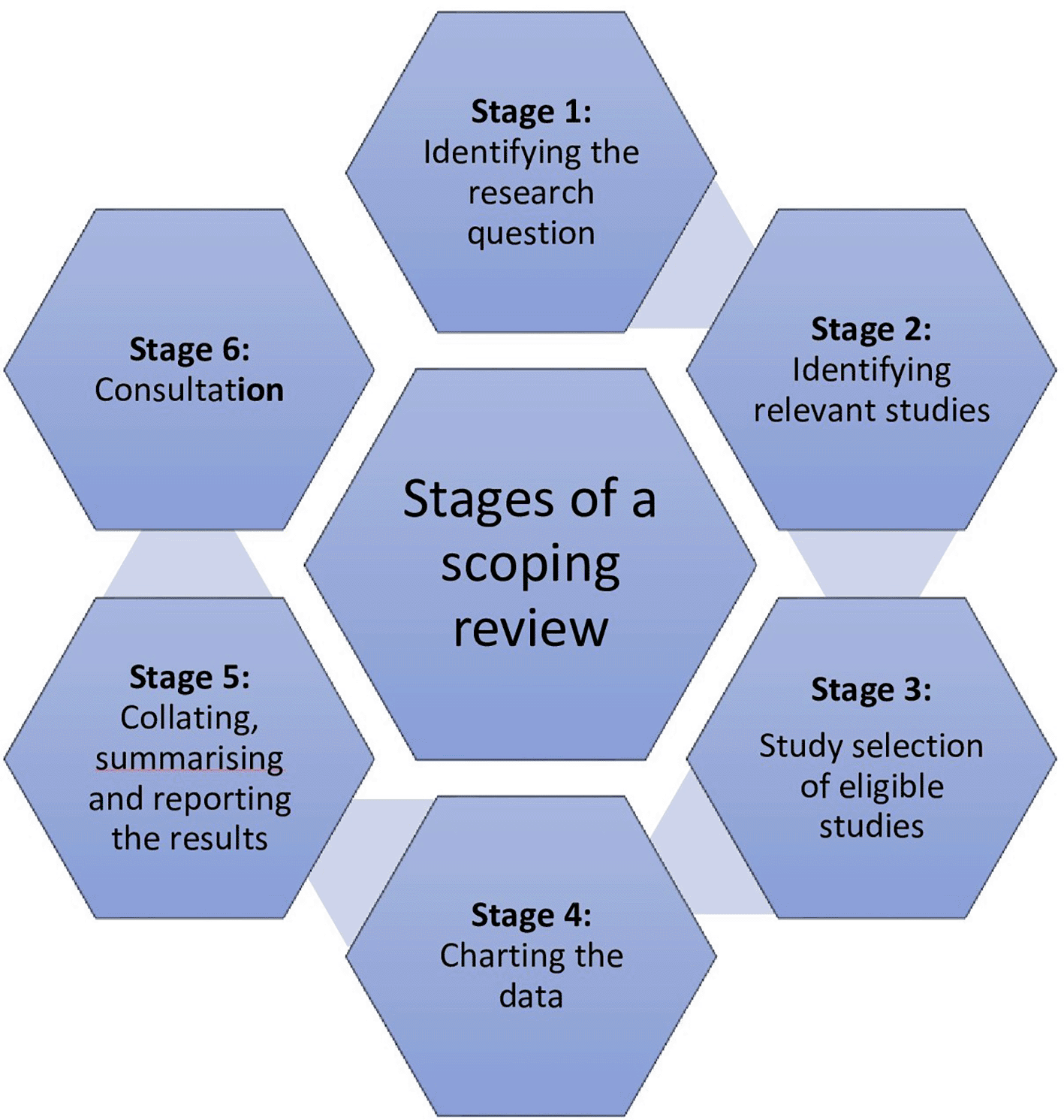
A well-crafted research question allows the exploration of appropriate literature, identifies gaps in knowledge, and the synthesis of evidence thus ensuring the systematic conduct of a scoping review. Hence, the following research questions will be answered in this scoping review:
• What psychosocial determinants are associated with pretreatment and on-treatment LTFU among people with DR-TB in African settings?
• How are these determinants defined, measured, and reported across study designs and programmatic eras (e.g., pre- vs. post-“short, all-oral” regimens)?
• Where are the evidence gaps and what implementation strategies are suggested to address them?
To match the study selection with the research issue, this study will employ the Population, Intervention, Comparison, Outcomes, and Timeline (PICOT) framework. As there is no comparator in the proposed scoping review, therefore a PIOT framework will apply. Table 1 displays the PIOT framework to be used in this investigation. The research will run for 8 weeks, from 1 November to 31 December 2025, and studies from 2010 to 2025 will be eligible. In December 2010, WHO convened a global consultation and issued its first policy recommending Xpert MTB/RIF for rapid detection of TB and rifampicin resistance, triggering country adoption and large-scale roll-out. South Africa planned national roll-out from 2011. This shift shortened diagnostic delays and altered patient pathways which are key drivers of pretreatment and on-treatment LTFU. This period captures the programmatic era of DR-TB care in South Africa when diagnostic, treatment, and service-delivery changes reshaped the psychosocial context of LTFU. The period also accounts for COVID-19 disruptions and recovery. The pandemic caused major interruptions to TB diagnosis and treatment in South Africa with partial recovery, thereafter, likely amplifying psychosocial and structural risks for LTFU; extending the window through 2025 allows inclusion of the post-pandemic recovery period and the National TB Recovery Plan trajectory.
The strategy will utilize a research-librarian-led electronic search strategy following reviewers’ careful consideration. A comprehensive search strategy will be developed using PubMed, Scopus, ScienceDirect, and Google Scholar electronic databases, an all-inclusive search strategy will be developed for peer-reviewed articles and gray literature search focusing on English-language studies published between 2010 and 2025. To allow for the inclusion of appropriate studies, the review team will ensure that curated combination of Boolean operators, keywords and search terms are employed in electronic databases search ( Table 2).
To ensure a systematic and transparent selection process, the PIOT framework will guide the title and abstract screening, with two reviewers (MCH and OOA) working independently. The selection of eligible studies as indicated in Table 3 is expected to be finalized within 8 weeks, in accordance with the PRISMA-ScR checklist. After retrieving all relevant records from the databases, duplicates will be removed using EndNote V.20 (Clarivate). The entire screening process will be conducted using the Covidence systematic review platform to support collaboration between reviewers and ensure consistency. Discrepancies at any stage will be resolved through discussion and, if necessary, consultation with a third reviewer (OMO) to reach consensus. The PRISMA-ScR flowchart will be used to document the study selection, detailing the number of records identified, screened and included. A blank PRISMA-ScR flowchart is shown in Figure 2.
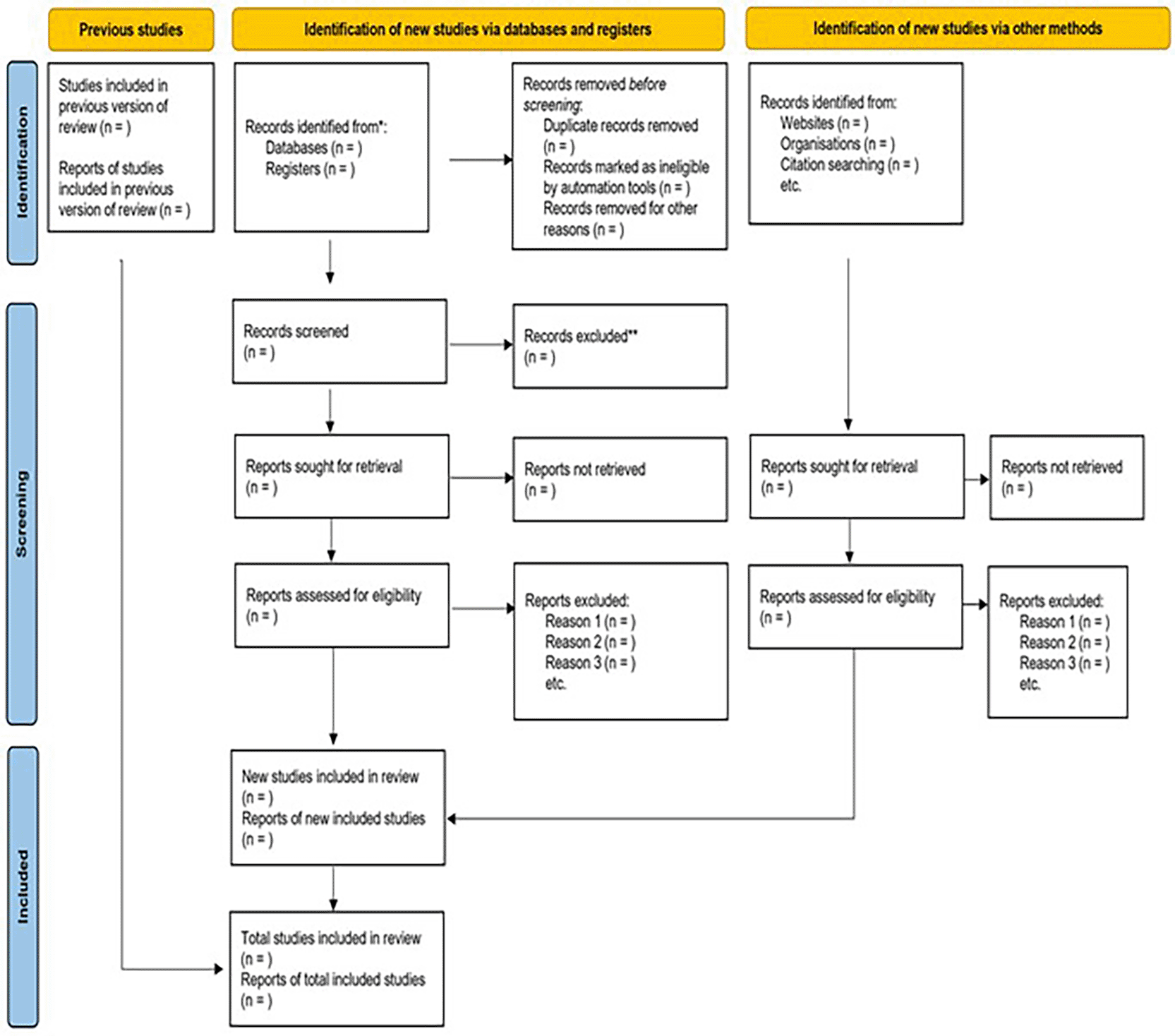
Source: Tricco AC, Lillie E, Zarin W, O’Brien KK, Colquhoun H, Levac D, et al. PRISMA extension for scoping reviews (PRISMA-ScR): checklist and explanation. Ann Intern Med, 2018,169 (7), 467–473.
A standardized data charting form will be developed and pilot-tested to ensure clarity, consistency, and suitability for capturing relevant information across studies. The form will be designed to capture essential information as outlined in Table 4.
A descriptive assessment to assess completeness of reporting; variability in LTFU definitions; presence/quality of measurement tools for psychosocial constructs will be performed. Both quantitative and qualitative methods will be utilized in the evaluation of scoping review results. Qualitative analysis will involve using themes to evaluate the data extraction table and develop overarching themes from the literature using tables and graphs that can assist in addressing the research questions and developing future research questions and frameworks emerging from psychosocial determinants of LTFU among DR-TB patients. The extracted data will be systematically organized into a table for easy comparison and analysis, categorizing information by study characteristics, psychosocial determinants of LTFU, health outcomes, adaptation strategies, and study quality. Secondly, quantitatively, a numerical summary using descriptive statistics will be conducted to explore opportunities for future studies across disciplines that may be under-represented in the publications reviewed.
Quality assessment is not a core component of this scoping review, however, the study designs of included articles, qualitative, quantitative, and mixed methods will be documented to enhance transparency and consistency in reporting. This descriptive approach will aid in contextualizing the strength of the evidence base and in highlighting methodological gaps. No formal risk of bias assessment will be conducted as obtained in standard scoping review methodology.
Stakeholders will not be involved in the design of this scoping review however, consultation with relevant actors including researchers, policymakers, and practitioners will be undertaken to validate the findings and support their interpretation for evidence-informed decision-making and practical application.
By applying a PICOT-aligned approach, comprehensive multi-database and grey literature searches, dual-reviewer screening, and a piloted data-charting framework, the scoping review will map existing evidence and clarify how individual, interpersonal, community, and system/structural factors including stigma, mental health, substance use, social support, poverty, food insecurity, and distance/transport costs shape both pretreatment and on-treatment disengagement from care. The synthesis, reported in line with PRISMA-ScR, will prioritize transparency in definitions (especially heterogeneous LTFU thresholds), measurement tools for psychosocial constructs, and contextual modifiers such as HIV co-infection, regimen era (long vs. short all-oral), decentralization, and urban–rural setting.
This review will inform National TB Program policies and frontline implementation, guide the design and target of patient-support packages and identify priorities for future research. The scope intentionally emphasizes breadth over causal inference and will not conduct meta-analysis; the review will document methodological limitations and reporting gaps to enable subsequent focused systematic reviews or primary studies. Through an optional stakeholder consultation with program managers, clinicians, community health workers, and patient representatives, the findings will be grounded in operational realities and ready for uptake. A limitation of this review is that the studies are limited to South Africa, given the high TB prevalence and incidence rates and it remains one of the global high-burden countries for TB. Overall, this protocol positions the review to deliver actionable, context-specific intelligence that can reduce LTFU, improve DR-TB treatment success, and accelerate progress toward South Africa’s End TB targets.
Ethical approval is not required for this scoping review. The findings of this review will be disseminated through peer-reviewed publications and academic presentations at local, national and international conferences. Policymakers and stakeholders will also benefit from reports generated from this study. Stakeholder consultation including National Tuberculosis Program managers, DR-TB clinicians/nurses, community health workers (CHWs), and patient representatives across provinces in South Africa will be carried out to validate findings and refine recommendations.
| Views | Downloads | |
|---|---|---|
| F1000Research | - | - |
|
PubMed Central
Data from PMC are received and updated monthly.
|
- | - |
Provide sufficient details of any financial or non-financial competing interests to enable users to assess whether your comments might lead a reasonable person to question your impartiality. Consider the following examples, but note that this is not an exhaustive list:
Sign up for content alerts and receive a weekly or monthly email with all newly published articles
Already registered? Sign in
The email address should be the one you originally registered with F1000.
You registered with F1000 via Google, so we cannot reset your password.
To sign in, please click here.
If you still need help with your Google account password, please click here.
You registered with F1000 via Facebook, so we cannot reset your password.
To sign in, please click here.
If you still need help with your Facebook account password, please click here.
If your email address is registered with us, we will email you instructions to reset your password.
If you think you should have received this email but it has not arrived, please check your spam filters and/or contact for further assistance.

Comments on this article Comments (0)