Keywords
Digital Divide, Gender, Systematic review, ICTs

Digital Divide, Gender, Systematic review, ICTs
Technological innovation processes within the Fourth Industrial Revolution reproduce long-standing gender inequalities. In the context of ICTs, these are known as gender digital divides, to refer to inequality in access to the Internet and ICTs (Iberdrola, 2021). The COVID-19 pandemic highlighted the need for access to the Internet and the sufficiency of digital skills to face the new working and relationship conditions imposed by confinement. In Latin America, between 60% and 85% of households remain disconnected (CEPAL, 2020), alongside an estimated 240 million people lacking internet access (World Bank, 2023), evidencing the importance of advancing in digital literacy as well as the regional gender agenda (UNESCO, 2018).
The digital divide, rooted in broader social inequalities (Escuder, 2019), is measured through various indicators such as the Digital Opportunity Index, the ICT Development Index (IDI), and the digitization index, in terms of access to networks, cost of services, broadband speed and human capital, particularly regarding ICT literacy and education. Likewise, it is possible to locate geographically the countries that concentrate the highest level of ICT appropriation, as is the case of China, Japan, Germany, the United States and Korea, granting these countries strategic advantages that may translate into barriers to entry for less developed regions (Basco & Garnero, 2020).
Digital culture and user behavior reveal persistent gender asymmetries in ICT access and usage between women and men. While women in Latin America are less familiar with digital applications and platforms that facilitate and support daily tasks, they report higher acceptance of digital banking tools, with 37% of women and 40% of men using them regularly, and point to Brazil, Nicaragua and Costa Rica as the countries with lower gender gaps (Statista, 2024; Basco & Garnero, 2020) while in Argentina, Brazil, Chile, Colombia and Mexico three out of ten companies face lack of STEAM skills (Basco et al., 2019).
The digital divide can be understood as comprising three distinct levels: (i) Unequal access to technology in terms of devices such as connectivity, (ii) Use according to digital skills and competencies for handling technology, and (iii) Quality in terms of specialized use and design of advanced services (Bércovich & Muñoz, 2022). For this reason, this research aimed to conduct a systematic review of the literature using the Prisma protocol to synthesize the current state of research on digital divides to make visible the findings regarding manifestations, causes and consequences of these new gender inequalities in the use of and access to ICTs.
Despite the rapid expansion of ICT access worldwide, evidence on how and why gender digital divides persist remains fragmented and uneven across regions and methodological traditions. Existing studies frequently focus on isolated dimensions, individual countries or single demographic groups, limiting the ability to identify broader determinants, patterns and consequences. A systematic and comprehensive synthesis of empirical findings is therefore necessary to consolidate current knowledge, identify trends and highlight persistent inequalities requiring policy attention.
The objective of this systematic review was to synthesize empirical evidence on gender digital divides, focusing on their manifestations, underlying causes, consequences, and documented mitigation strategies. Specifically, we aimed to: identify how gender digital divides have been defined and measured in empirical research; examine the main socioeconomic, cultural and technological determinants of gender disparities in ICT access and usage; analyze the reported consequences of these divides in social, educational, economic and labor contexts; and review strategies proposed or implemented to mitigate gender digital inequalities.
The study adopts a qualitative and documentary approach supported by a systematic review on gender digital divides according to the PRISMA protocol (Preferred reporting Items for Systematic Reviews and Meta Analyses) (Page et al., 2021). No protocol was registered for this review. This approach enables the identification of trends, patterns, and gaps in the literature, aiming to qualitatively interpret the causes, scope, limitations and approaches to these new inequalities that we call digital gender divides. Thus, the systematic review made it possible to compile the main results and research trends.
A comprehensive search was conducted across Scopus, Sage Journals, EBSCO, and Web of Science databases for articles published in Spanish and English focused on the gender digital divide and related systemic inequalities. The search strategy was based on a standardized and reproducible Boolean equation in all the databases consulted, thus guaranteeing the transparency of the information collected and its alignment with the objectives of this study. Searches were conducted between November and December 2024. The construction incorporated the selection of key terms linked to gender inequality, digital divides and access to the Internet and ICTs. In addition, we incorporated Boolean operators that, despite increasing procedural complexity, enhanced the precision in the results obtained. Thus, the equation adopted the following structure:
(“gender inequality” OR “gender gap” OR “gender disparit*” OR “digital gender gap” OR “gender digital divide”) AND (“digital divide” OR “ICT access” OR “internet access” OR “access technology” OR “access to digital resources”) AND (“women” OR “female” OR “gender”) AND (“social inequality” OR “gender inequality” OR “technological inequality” OR “digital inclusion” OR “digital exclusion”).
To ensure completeness, a manual search was also performed in the Scopus database using specific keywords and filters by language and type of publication, since its search bar does not allow extensive Boolean equations such as the one shown here. Thus, the keywords of the documents were grouped to highlight research priorities. The exhaustive filtering of the information obtained from the databases followed the protocol explained in Figure 1 (Page et al., 2021).
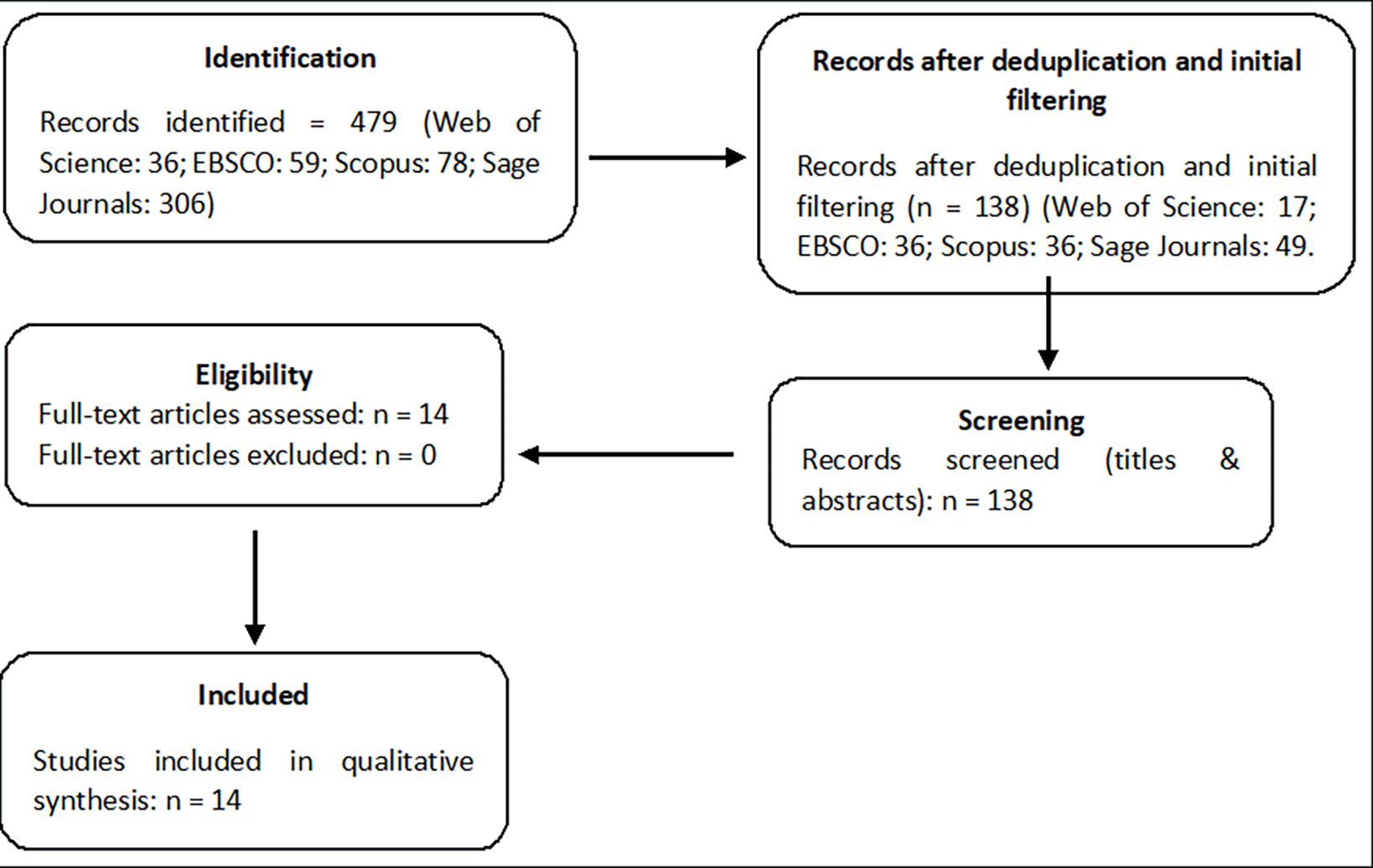
Source: own elaboration.
Inclusion criteria were:
• empirical studies
• published between 2010 and 2024
• focused on gender disparities in ICT access, internet usage or digital skills
• conducted in any geographical region
• published in English or Spanish.
Exclusion criteria were:
• theoretical articles or essays
• studies focused exclusively on online violence or cyber harassment
• publications not involving gender as an analytical variable
• duplicated records across databases.
Theoretical or reflective texts were excluded, which reduced the number of documents to a total of 14 (Rivera-Lozada et al., 2025; Critical Appraisal Skills Programme, 2018).
The data extraction was conducted independently by the same two reviewers utilizing a structured template designed to capture key information from each study. This included the year of publication, the country or region of focus, the methodological approach employed, sample characteristics, the type of data used (fieldwork or secondary), and the main findings concerning the manifestations, causes, consequences and mitigation strategies of gender disparities. The extracted information was subsequently cross-checked, and any discrepancies were resolved through discussion until a consensus was reached.
Two reviewers independently screened titles and abstracts. Full texts were then assessed according to the eligibility criteria. Disagreements were resolved through discussion until consensus was reached.
Because the included studies were heterogeneous in design (quantitative, qualitative and mixed-methods), and the purpose of this review was to provide a descriptive and narrative synthesis rather than a comparative assessment, no formal critical appraisal tool was applied. Instead, the methodological characteristics and limitations reported by each study were considered qualitatively to contextualize the interpretation of findings. No studies were excluded on the basis of methodological quality.
Of the list of the 14 documents selected, 14%, 29%, 7%, 21% and 29% correspond to publications in the years 2020, 2021, 2022, 2023 and 2024, respectively. In addition, 43% include statistical data through surveys and/or interviews resulting from field work and the remaining 57% use data from national and international secondary database sources ( Table 1).
Finally, the selected articles are concentrated in the African, American, European and Asian continents, as well as in the global category with percentages of 7%, 14%, 14%, 36% and 29%, respectively ( Figure 2) in countries such as Colombia, Brazil, Ecuador, Mexico, Peru, Spain, Italy, India, Pakistan, Jordan and Serbia.

Source: own elaboration.
In general, in the so-called “developing” countries, it is possible to detect the existence of a persistent gap in Internet access between men and women (Banović, 2024) in different contexts. For instance, in Serbia during 2022, 85.9% of men used the internet compared to 81.2% of women (Banović, 2024); in Peru, in contrast, usage rate was 40.25% in men and 34.85% in women (Calatayud et al., 2023). This percentage is more dramatic in cases such as India, where women are 20% less likely to have access to mobile telephony, only 63% of women compared to 79% of men (Scott et al., 2021).
Studies identify two distinct dimensions of digital divides: everyday use and learning (Pérez-Escoda et al., 2021). Existing research indicates that disparities in opportunities to access ICT (Information and Communication Technology) resources and develop digital skills can negatively affect student learning and amplify social inequalities (Pérez-Escoda et al., 2021; Orkoh & Viviers, 2021; Ortiz and Jeri, 2023; Campos & Scherer, 2024).
Internet penetration levels are positively correlated with the extent of the digital gender gap. There is a pronounced digital gender gap between men and women in Africa, in the sub-Saharan area (Kashyap et al., 2020) evident in the disparity of usage of Google and Facebook platforms; a similar study for 186 countries reveals that Facebook’s API (Application Programming Interface) data indicate a high gender1 index concentrated in certain regions, especially Africa, Central Asia, South Asia, and West Asia (Wang & Lin, 2024). Similarly, African companies undergoing digital transformation are less likely to have their own website or a broadband connection when the management of these organizations is run solely by women, compared to counterparts in other regions with similar economic conditions (Orkoh & Viviers, 2021).
Wang & Lin (2024) demonstrated spatial clustering in the gender digital divide, meaning that countries with higher or lower gender indices tend to be geographically close to each other. These findings confirm that this gap is more pronounced in developing and least developed regions and less developed countries, especially in regions such as Africa, Central Asia, and South Asia.
In Peru, the gender digital divide widened during the COVID-19 pandemic due to increased difficulties in internet access among women, which negatively affected many of them economically due to a decrease in their online sales (Calatayud et al., 2023). A study on Google and Facebook usage trends that sought to capture insight into at least 80% of global variations in digital gender gaps concluded that countries with high internet penetration rates also have greater gender equality in their use, while countries with lower unemployment rates tend to have greater equality, which is related to the fact that higher or lower incomes can decrease or increase the gap respectively (Kashyap et al., 2020; Prabhu et al., 2022).
In the case of India, the use of cell phones corresponds to mothers with certain social expectations about the manifestation of their personal wishes, in the sense of expecting an exclusive use to call close relatives; additionally, they also face technical barriers, especially about the knowledge needed to use the phones (Scott et al., 2021).
This digital divide is not always so evident in all contexts; a study with hospitality students, according to the DigiComp theoretical framework (information, communication, content creation, security, problem solving), found that this gap is closing, especially in access to technology. However, it is still very much present in the digital competence needed to take advantage of it, where men maintain the advantage over women (Prabhu et al., 2022).
In the labor context, digital divides impact other inequalities. Women engaged in handicrafts in the Peruvian province of Puno are less likely to have access to the internet than men and use it less frequently. Researchers find the determinants of this disparity in education levels, the cost of cell phone plans and the hiatus between generations, with older women having the least access (Calatayud et al., 2023).
As the main hypothesis of their research, VIollaz & Winkler (2020) theorized that an increase in Internet access would have a positive effect on women’s labor market participation, especially in MENA countries (Middle East and North Africa). They found that access to the Internet significantly increases women’s labor participation, despite having no effect on men. However, this access only improves the quality of employment for more educated and older women. In addition, Internet access helps them to enter the labor market, but does not always translate into paid work. Despite this, the trend indicates that there is a relationship between access to the network and a negative perception of domestic abuse, indicating that the reduction of the digital divide contributes directly to female empowerment.
Notably, the reduction of gender gaps in the labor market is associated with a decrease in the severity of biased social norms that are related to women’s ability to make decisions, access to economic resources to cover household expenses, the ability to save and own valuable assets such as jewelry or land, the presence of domestic violence by husbands, women’s fear of expressing disagreements with their husbands or other men in the household, and their level of agreement with statements related to female empowerment (Viollaz & Winkler, 2020).
The use of government services is related to access to technology, so digital gender gaps directly affect the quantity and quality that women receive from these (Macaya et al., 2021). The use of online government in Brazil depends directly on the user’s gender; in 2019 37% of men paid their taxes through the internet, compared to 19% of women (Macaya et al., 2021). The digital divide also directly affects women’s political participation (Scott et al., 2021), in addition to the disadvantage they have compared to men in accessing online banking services and digital applications, especially in India (Gupta & Kiran, 2024).
Migrant women, specifically Peruvian women in Spain and Italy, have greater difficulties in adapting to the new country because of the digital divide, since they are more likely to get a precarious job if they do not have access to the Internet (Ortiz & Jeri, 2023); on the other hand, it also allows them to continue their academic and work training because they have access to courses and technical knowledge through the use of technological devices.
Several studies list social norms imposed on women as a key factor in understanding the digital divide (Scott et al., 2021; Macaya et al., 2021; Orkoh & Viviers, 2021; VIollaz & Winkler, 2020; Gupta & Kiran, 2024) that respond to a patriarchal society (Ortiz and Jeri, 2023; Barra et al., 2024). Women’s economic dependence in countries such as India and negative perceptions about women’s leisure time (Scott et al., 2021) contribute to digital gender gaps. In Pakistan, women tend to justify the use of technology due to social pressure and the “multitasking whirpool” effect, the social phenomenon that assigns the responsibility of carrying out tasks in very different domains, such as domestic and family duties or undefined jobs where they have no voice, to women; in contrast, men seek to demonstrate their initiative and professional engagement (Barra et al., 2024).
Lack of technical training (Scott et al., 2021; Pérez-Escoda et al., 2021; Ortiz & Jeri, 2023; Gupta & Kiran, 2024) or self-perceived inadequacy or “technophobia” (Scott et al., 2021; Prabhu et al., 2022; Pérez-Escoda et al., 2021; VIollaz &Winkler, 2020; Campos and Scherer, 2024; Gupta & Kiran, 2024) are also reasons why a percentage of the female population does not access digital technology. Along these lines, gender attitude towards technology plays a key role in the germ of the gender digital divide, except for certain specific geographic variations, boys generally have more positive attitudes towards technology, higher self-efficacy and broader interest in technology-related tasks compared to girls (Orkoh & Viviers, 2021; Campos and Scherer, 2024). In contrast to these studies, before singling out women, it is necessary to think about the social supports to reverse these asymmetries and for them to find the motivation to access these technologies as well as the same benefits perceived by men (Barra et al., 2024).
A disparity has been demonstrated across countries in ICT skills between men and women over the last ten years (Macaya et al., 2021; Orkoh and Viviers, 2021; Banović, 2024; Barra et al., 2024), a period of time defined by an accelerated digitization of countries and their households but not reflected in closures of gender gaps (Banović, 2024).
Along the same lines, it is possible to dimension three levels in the analysis of the manifestation of the digital divide. The first level analyzes differences in access to technologies such as computers and the Internet, both at home and at school, along with students’ attitudes towards technology, interest, confidence and perceptions; the second level examines inequalities in the use of digital technologies, including the skills and knowledge needed to manage them effectively and the ability to search for information or solve problems using digital tools; finally, the third level addresses the outcomes derived from the use of ICT, such as the impact on students’ academic performance and future opportunities (Campos & Scherer, 2024).
The gender digital divide in developing countries is explained by low educational levels and low technological training among women (Wang & Lin, 2024). Men have higher priority in accessing technological resources, which combined with educational constraints, traditions, culture and societal norms, exacerbates gender inequalities in the digital realm and other social inequalities derived from the above (Ortiz & Jeri, 2023; Macaya et al., 2021; Orkoh & Viviers, 2021; Campos & Scherer, 2024; Barra et al., 2024).
When considering both economic and cultural variables in the analytical models, economic variables, such as GDP per capita and HDI (Human Development Index) turn out to be more determinant in predicting gender gaps in Internet use than cultural factors, such as Hofstede’s dimensions, considered in previous studies. This indicates that a country’s economic development has a more significant impact on reducing gender inequality in the digital realm than cultural aspects (Kashyap et al., 2020). This result is consistent with the assumption that the level of socioeconomic development of a country and the existing gender inequality influence the relationship between gender and digital skills even when factors such as attitude towards ICT and access to these technologies, reflected in the everyday life of individuals, are taken into account, women tend to go through greater economic problems than men (Ortiz & Jeri, 2023; Campos & Scherer, 2024; Gupta & Kiran, 2024).
The Peruvian context made it possible to identify four causes of such inequality: i) age because older women artisans use the mobile Internet less frequently (Calatayud et al., 2023); ii) education, as fewer years of education are associated with less mobile Internet use (Macaya et al., 2021); iii) residence because women living in rural areas have less access to and use of the mobile Internet; and iv) connectivity, as having limited mobile Internet service reduces the frequency of use.
Finally, security is an important cause, as women suffer more online harassment than men, which limits their access and perverts the democratization of online services. These are compelling reasons for the inclusion of a gender perspective in public policies aimed at reducing the digital divide (Macaya et al., 2021).
It is clear that the different biases and social norms that continue to restrict the technological and digital world to the male environment must be addressed in a way that combats the different social and cultural causes that restrict women (Scott et al., 2021; Pérez-Escoda et al., 2021; Macaya et al., 2021; Barra et al., 2024).
It is crucial to implement public policies and educational programs of digital inclusion to ICTs to reduce this gap (Scott et al., 2021; Pérez-Escoda et al., 2021; Macaya et al., 2021; Prabhu et al., 2022; Calatayud et al., 2023; Barra et al., 2024), promoting gender equality in access to ICTs (Ortiz and Jeri, 2023; Campos and Scherer, 2024), the use of digital technologies for business (Orkoh and Viviers, 2021) and the creation of more accessible and user-friendly applications in the banking system (Gupta and Kiran, 2024), all of which would also imply better Internet infrastructure in rural areas (Calatayud et al., 2023).
It is necessary to involve women in the planning of the technological inclusion process to gather their requirements and incorporate effective actions as well as to establish safe spaces for them on the Internet (Macaya et al., 2021), an important action for the migrant population (Ortiz & Jeri, 2023) that can be done in collaborative spaces through social networks that respect gender equality (Pérez-Escoda et al., 2021).
Using the Internet’s own data to support possible policies and courses of action to bridge the digital information divide can also be used for monitoring (Kashyap et al., 2020). Along the same lines, expanding access to the Internet is a key strategy to decrease gender inequalities in labor participation and address the limitations women face in accessing information (VIollaz & Winkler, 2020). In this perspective, increasing the use of submarine cabling can ensure greater global access to the Internet (Wang & Lin, 2024).
Regarding courses of action on the three levels of analysis of the gap announced above, the individual treatment of any one of them leaves out the rest, making any comprehensive solution impossible (Campos and Scherer, 2024). In this regard, educational policies in Norway, Denmark and Finland have reduced gender inequalities through inclusive curricula, teacher training and specific programs. These countries guarantee equal access to technological resources and promote the participation of girls in ICT education, which explains the smaller gender gaps in digital skills, although the authors recommend further research to adapt these policies to other regions (Campos & Scherer, 2024).
In any case, it is essential to ensure equitable access to ICTs for women (Pérez-Escoda et al., 2021; Macaya et al., 2021; Orkoh & Viviers, 2021; Campos & Scherer, 2024). To this end, Pérez-Escoda et al. (2021) believe UNESCO should be followed and women should be supported in the areas of security, digital literacy, and trust. For example, Scott et al. (2021), on their own, advocate policies for access to technology-competent cell phones for women in India.
Campos and Scherer (2024) propose that the use of advanced technologies such as artificial intelligence (AI) and machine learning offer the possibility of designing personalized educational experiences that respond to the individual needs of students, to generate a more positive and motivating perception towards technology, which is essential in an increasingly digitized world.
These and other authors mention as a possibility to work on changing the perception that women and men, as well as boys and girls, have about technology, prejudices and paths related to tasks involving ICTs (Campos & Scherer, 2024; Macaya et al., 2021), to ensure that more women decide to access related careers and the rest of society does not exclude them from the dissemination of information about digital platforms and applications.
The presence of a digital gender gap between women and men, in favor of the second group in the global context is evident. These asymmetries deepen in the nations of the global south, those considered as underdeveloped or developing countries, insofar as in these places women have fewer opportunities to access or use information and communication technologies. This situation worsened during the Covid-19 pandemic, because, even though technology played a fundamental role in this period, women were mostly in charge of care work, which widened the digital gender disparity in the peripheries of the world.
Thus, women face a greater digital divide than men due to gender issues. In other words, the presence of gender stereotypes in patriarchal society hinders women’s access to and use of digital tools in the 21st century. This scenario deepens if variables such as age, migration and access to education are analyzed, to the point that women belonging to older age groups, as well as migrant women and those without educational levels of training, will find it more difficult to be networked today.
Finally, some nations have begun to articulate their policies and development plans with information and communication technologies; however, it is still necessary to mainstream the gender perspective in these policies to improve digital connectivity in the world with a differential approach that seeks to achieve gender equality and sustainable development of nations in this new period, a “digital era”.
Ethical approval and informed consent were not required, as this study is a systematic review based on previously published data.
No specialized units, symbols, or mathematical scripts were used in this article.
| Views | Downloads | |
|---|---|---|
| F1000Research | - | - |
|
PubMed Central
Data from PMC are received and updated monthly.
|
- | - |
Provide sufficient details of any financial or non-financial competing interests to enable users to assess whether your comments might lead a reasonable person to question your impartiality. Consider the following examples, but note that this is not an exhaustive list:
Sign up for content alerts and receive a weekly or monthly email with all newly published articles
Already registered? Sign in
The email address should be the one you originally registered with F1000.
You registered with F1000 via Google, so we cannot reset your password.
To sign in, please click here.
If you still need help with your Google account password, please click here.
You registered with F1000 via Facebook, so we cannot reset your password.
To sign in, please click here.
If you still need help with your Facebook account password, please click here.
If your email address is registered with us, we will email you instructions to reset your password.
If you think you should have received this email but it has not arrived, please check your spam filters and/or contact for further assistance.

Comments on this article Comments (0)