Keywords
Lecturer–Student Interaction, Critical Thinking Skills, Student Engagement, Classroom Dialogue, Higher Education

Lecturer–Student Interaction, Critical Thinking Skills, Student Engagement, Classroom Dialogue, Higher Education
This version has been revised in response to the peer review reports from both reviewers. No changes were made to the title, author list, or underlying data.
Abstract: Revised to include methodological details (Braun & Clarke's thematic analysis, member checking, inter-coder reliability), a summary of all three identified themes, and specific implications.
Introduction: Strengthened the research gap with recent systematic reviews and integrated Facione's (1990, 2020) critical thinking framework as the theoretical lens.
Methods: Added detailed descriptions of thematic analysis procedures, data saturation rationale, member checking, and inter-coder reliability.
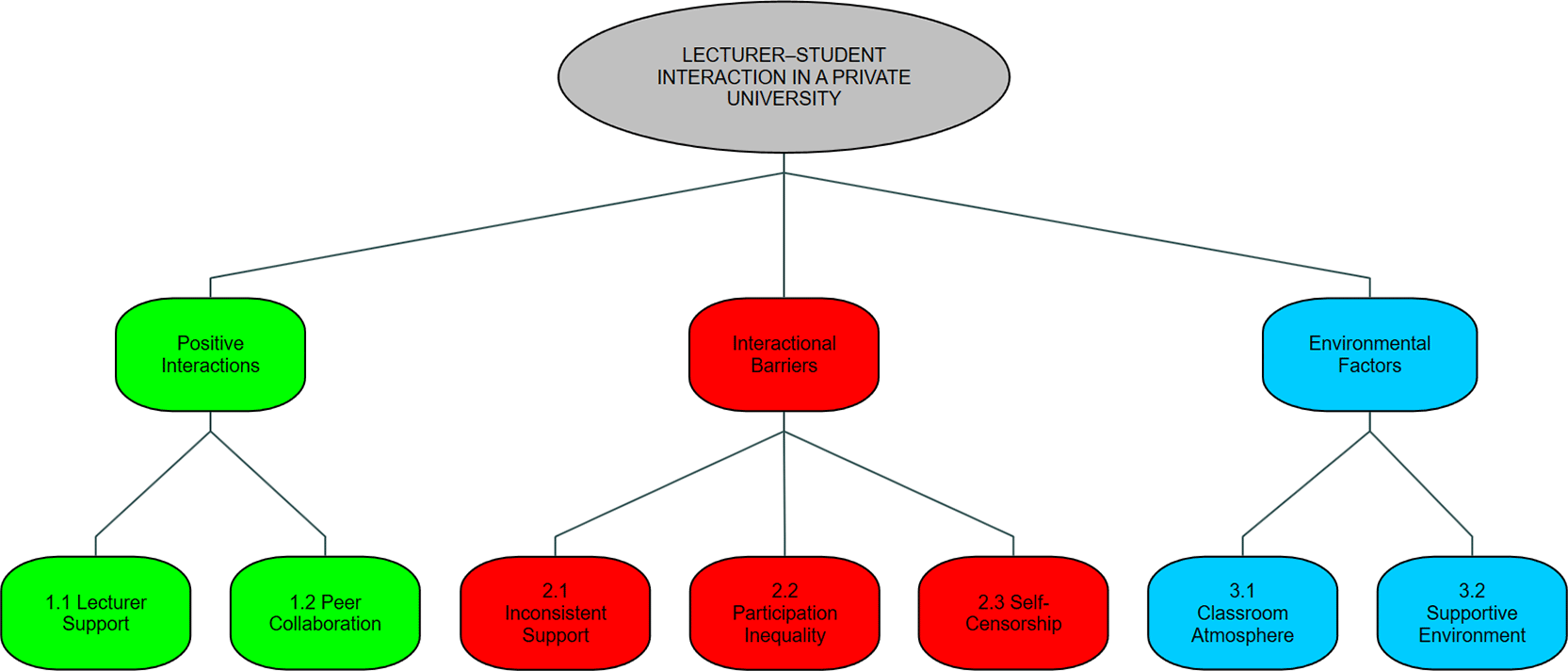
Results: Restructured around three themes: (1) Positive Lecturer–Student Interactions, (2) Interactional Barriers, and (3) Environmental Factors. New thematic map added (Figure 1). Findings connected to Facione's framework.
Discussion: Substantially revised with four subsections aligned to the three themes, new literature (2020–2025), and a new subsection on Environmental Factors.
Conclusions: Rewritten to address all three research objectives with specific practical implications.
Figure 1: New thematic map added.
References: Approximately 25 new references added; three removed.
See the authors' detailed response to the review by Rita Pramujiyanti Khotimah
Lecturer–student interaction is widely recognized as one of the most influential factors shaping students’ learning experiences and academic development. Positive, supportive, and dialogic interactions have been shown to enhance students’ engagement, comfort, and satisfaction with the learning process (Che Ahmad et al., 2017). Such interactions create an environment where students feel encouraged to participate actively, express ideas, and build confidence—elements essential to deeper learning and the development of critical thinking. Evidence from Indonesian higher education further highlights the unique interactional characteristics of private universities. Wulandari and Jager (2018) reported that private institutions tend to adopt more customer-oriented approaches, leading students to expect more accessible lecturers, more transparent communication, and more individualized academic guidance. Because private universities generally operate with smaller class sizes and more flexible administrative structures, students often experience closer and more personal interaction with lecturers. Such conditions make private universities an important setting for examining how lecturer–student interaction contributes to students’ cognitive and critical thinking development.
Among the various 21st-century competencies—commonly referred to as the “4Cs” of critical thinking, creativity, communication, and collaboration (Thornhill-Miller et al., 2023)—critical thinking occupies a foundational position. (Facione, 1990) defines critical thinking as purposeful, self-regulatory judgment that involves interpretation, analysis, evaluation, inference, explanation, and self-regulation. Unlike communication or collaboration, which can occur at a surface level without deep cognitive engagement, critical thinking inherently requires the capacity to question assumptions, evaluate evidence, and construct reasoned arguments—processes that are fundamentally shaped by the quality of intellectual interaction in learning environments (Facione, 2020). In Indonesian higher education, critical thinking has been explicitly recognized as a core graduate learning outcome under the Merdeka Belajar–Kampus Merdeka (MBKM) policy framework and the national Indikator Kinerja Utama (IKU) for higher education institutions (Kemendikbud, 2020). This policy emphasis reflects the growing recognition that critical thinking is not merely one skill among many, but the cognitive foundation upon which other higher-order competencies depend. Therefore, this study focuses specifically on critical thinking as the outcome variable most sensitive to the quality of lecturer–student interaction.
From a social constructivist perspective, learning is fundamentally mediated through social interaction. Vygotsky argues that knowledge is first constructed through collaborative dialogue before being internalized as higher-order thinking (Wan Hussin et al., 2019a). In this sense, lecturer–student interaction serves as scaffolding that guides students to analyze, evaluate, and reflect more deeply on cognitive processes that align directly with the core skills of critical thinking identified by Facione (1990). However, research suggests that differences in lecturers’ beliefs about critical thinking—whether it is viewed as a teachable skill or a fixed ability—can affect the extent to which classroom interactions truly support students’ cognitive development (Indrašienė et al., 2023).
However, how students participate in social interaction is powerfully shaped by cultural norms, particularly in Southeast Asian learning contexts. Chung (2021), studying Thai undergraduates, showed that students often engage through “silent participation”—a form of attentive, reflective engagement expressed through deliberate quietness rather than passivity, used to maintain social harmony and avoid the risk of negative judgment. Similar patterns have been observed in other high-power-distance cultures in the region. Similar findings have been observed in other Southeast Asian contexts. Luu (2022) demonstrated that academic interactions in Vietnam tend to foster cautious, deliberate communication, in which students prefer listening to questioning or arguing, especially when taught by lecturers from different cultural backgrounds. These findings confirm that Asian academic culture plays a significant role in shaping how students interact and develop critical thinking skills, and highlight the need to understand interaction dynamics within their specific cultural contexts.
Previous research highlights that lecturers’ active teaching behaviors—such as providing guidance, asking probing questions, and encouraging participation—significantly enhance student engagement and satisfaction. These forms of pedagogical interaction help establish a learning atmosphere where students feel supported and motivated to contribute, which is essential for the development of higher-order thinking skills. Studies also show that how lecturers structure interactions during learning activities can influence students’ cognitive outcomes, including their critical thinking abilities (Li et al., 2023). Prior studies further suggest that active teaching strategies and meaningful academic interactions can enhance students’ responsibility for learning and foster higher-order thinking (Lu, 2021).
A similar phenomenon was also found in the Indonesian context. Wijayanti et al. (2023) revealed that many students chose not to ask questions directly to lecturers due to fear of making mistakes, fear of being perceived as incompetent, and feeling awkward speaking in front of their peers. The habit of relying more on written messages during online learning also reinforces this tendency, leading students to engage less frequently in face-to-face dialogue. Furthermore, Sari et al. (2023) confirmed that students’ reluctance to interact constitutes a communicative barrier that can limit opportunities for critical thinking and for negotiating meaning in learning.
Although various instructional models have been shown to influence critical thinking, three specific limitations in the existing literature warrant attention. First, most studies on critical thinking in higher education have adopted experimental or quasi-experimental designs, focusing on the effectiveness of specific teaching methods rather than on naturally occurring interactional processes that shape students’ cognitive development (Karapetian, 2020; Lu, 2021). A recent systematic review of systematic reviews by Andreucci-Annunziata et al. (2023) confirmed that the predominant research approach in this field remains intervention-focused, with limited attention to how everyday classroom interactions organically contribute to critical thinking. Second, research on lecturer–student interaction has predominantly examined lecturer perspectives, overlooking students’ own experiences and interpretations of how these interactions influence their thinking Hagenauer and Volet (2014). While some recent studies have begun exploring student perceptions of academic engagement (Amerstorfer & Freiin von Münster-Kistner, 2021), these have been conducted in Western educational contexts and do not capture the culturally specific dynamics of Southeast Asian classrooms. Third, the context of private universities—which constitute over 90% of all higher education institutions in Indonesia and enroll approximately 58% of the total student population (Welch & Aziz, 2024)—remains underexplored in critical thinking research, despite these institutions’ distinct interactional characteristics, including smaller class sizes, closer interpersonal relationships, and more personal communication expectations. This gap is significant because the cultural, institutional, and pedagogical conditions of private universities create a unique interactional ecology that may either facilitate or constrain critical thinking in ways distinct from those of public institutions.
Therefore, this study aims to explore how students perceive and experience lecturer–student interactions in relation to the development of their critical thinking skills. Specifically, the study addresses three research objectives: (1) to describe the forms of lecturer–student interaction experienced by students, (2) to examine the quality of pedagogical support as perceived by students, and (3) to identify the barriers that influence the development of students’ critical thinking. Given the central role of interaction in shaping cognitive development, this study investigates how students at a private university in Bogor experience these interactions within their specific cultural and institutional context. The findings are expected to provide practical insights for lecturers and institutional policymakers in designing more effective and interaction-rich learning environments.
Because lecturer–student interaction is shaped by cultural norms, emotions, and classroom dynamics, a qualitative approach is necessary to capture its depth and complexity. Students’ own experiences provide insights that cannot be obtained through experiments, which tend to force interactions into controlled, unnatural conditions. This case study was chosen because the context of private higher education has distinct interaction characteristics—smaller classes, more intense interpersonal relationships, and more personal communication expectations. By focusing on student experiences, this research seeks to understand how academic interactions are perceived, negotiated, and interpreted as students develop critical thinking skills.
Unlike previous studies that have focused primarily on teaching models, experimental interventions, or lecturer perspectives, this research offers a novel contribution by centering on students’ lived experiences of interaction within a culturally hierarchical private university context. By simultaneously examining both facilitative and constraining interactional dynamics—and connecting them to critical thinking through a sociocultural lens—this study provides new insight into how interactional patterns shape the development of critical thinking in settings that remain underexplored in the Southeast Asian higher education literature.
This study employed a qualitative case study design to explore how students experience lecturer–student interactions and the learning environment in a private university in Bogor, Indonesia. A qualitative approach was selected because social interaction, students’ perceptions, and the development of critical thinking are context-dependent and cannot be adequately captured by experimental or survey-based methods. Following Yin (2018), a case study design was chosen to enable an in-depth examination of naturally occurring interactional patterns within a real institutional setting, where the boundaries between the phenomenon (interaction dynamics) and context (private university culture) are not clearly distinguishable (Paparini et al., 2020).
Participants were selected using purposive sampling based on the following inclusion criteria: (1) active enrollment status at the university, (2) completion of at least two semesters of coursework to ensure sufficient experience with lecturer–student interactions, (3) enrollment across different semester levels (3rd, 5th, 7th, and 9th) to capture a range of academic experiences, and (4) representation from multiple study programs to ensure disciplinary diversity. Twelve undergraduate students (7 females, 5 males) participated in the main interviews. The sample size was guided by the principle of data saturation, consistent with Guest et al. (2006), who demonstrated that thematic saturation in qualitative interview studies typically occurs within 12 interviews when participants share relatively homogeneous experiences within a defined setting. The gender composition (58% female, 42% male) reflected the natural demographic proportions of the university student population and was not treated as a controlled variable, as the study did not aim to compare findings by gender. Rather, gender information is reported for transparency and to provide a complete description of the participant profile. The variation in semester levels (3rd to 9th) and academic backgrounds provided rich, diverse perspectives on learning interactions and the environmental factors influencing critical thinking. A summary of participant characteristics is presented in Table 1.
Participant characteristics.
Data were collected through two main methods: semi-structured interviews and focus group discussions (FGDs).
Semi-structured interviews. A total of 12 individual semi-structured interviews were conducted using a guide comprising 20 open-ended questions organized around three thematic domains: (1) experiences of lecturer-student interaction, (2) peer collaboration dynamics, and (3) challenges and barriers to developing critical thinking. Sample interview questions included:
• “How do you describe your interaction with lecturers and peers? Do you feel supported in developing critical thinking?” (Domain 1)
• “How do group discussions influence your ability to think critically about course material?” (Domain 2)
• “What challenges do you experience in developing critical thinking during learning activities?” (Domain 3)
Each interview lasted between 60 and 120 minutes and was audio-recorded with prior written consent. The full interview guide is available in the dataset repository (Psixrasetyo et al., 2025).
Focus group discussions. Two FGDs were conducted to triangulate the interview findings and to capture group-level interactional dynamics that might not emerge in individual interviews. The first FGD included six participants from Semesters 3 and 5, while the second included six participants from Semesters 7 and 9. Each FGD lasted approximately 90 minutes and was facilitated by the first author using a semi-structured protocol based on emerging themes from the individual interviews. The FGDs focused on verifying, enriching, and challenging the patterns identified in individual interviews, particularly regarding the dynamics of group participation, the quality of lecturer feedback, and perceived barriers to expressing critical opinions. Two additional participants (beyond the original 12) were subsequently involved in member checking to validate and cross-check emerging findings, bringing the total number of participants who contributed to the study to 14.
All interviews and FGD recordings were transcribed verbatim in Indonesian and subsequently translated into English by a bilingual researcher. Translations were cross-checked by the second author to ensure accuracy and fidelity to participants’ original expressions. Data were managed and analyzed using NVivo 12. Thematic analysis was conducted following (Braun & Clarke, 2006) six-phase framework: (1) familiarization with the data through repeated reading of transcripts, (2) generation of initial codes, (3) searching for themes by grouping related codes, (4) reviewing themes against the coded data and the full dataset, (5) defining and naming themes, and (6) producing the final report. The analysis was primarily inductive, allowing themes to emerge from the data rather than being imposed by a predetermined framework. The coding process yielded 15 initial codes, which were organized into 7 subthemes and consolidated into 3 overarching themes: (1) Positive Interactions (comprising two subthemes: lecturer support and peer collaboration), (2) Interactional Barriers (comprising three subthemes: inconsistent lecturer support, participation inequality, and self-censorship/freedom of speech constraints), and (3) Environmental Factors (comprising two subthemes: classroom atmosphere and supportive learning environment). A codebook excerpt illustrating the relationship between data excerpts, initial codes, subthemes, and themes is presented in Table 2.
Codebook excerpt.
To enhance analytical rigor, the first and second authors independently coded a subset of five transcripts and subsequently compared their codes. Discrepancies were discussed and resolved through consensus, and the resulting codebook was applied to the remaining transcripts. Member checking was conducted by returning summarized findings to six participants to verify interpretive accuracy and ensure that the themes faithfully represented their experiences.
The thematic analysis of interview and FGD data identified three overarching themes in students’ learning experiences during lecturer–student interactions: (1) positive interactions, encompassing lecturer support and peer collaboration; (2) interactional barriers, including inconsistent lecturer support, participation inequality, and self-censorship; and (3) environmental factors related to classroom atmosphere and supportive learning conditions. Table 3 summarizes these themes, including the number of participants who reported each pattern and a representative quote for each.
Summary of thematic findings.
| Theme | Subtheme | Codes | n* | Representative Quote |
|---|---|---|---|---|
| 1. Positive Interactions | 1.1 Lecturer Support | LS1–LS5 | 10 | “Lecturers always provide feedback and allow us to share our thoughts.” (P2) |
| 1.2 Peer Collaboration | PC1–PC4 | 11 | “Group discussions allow us to communicate and share ideas from different perspectives.” (P5) | |
| 2. Interactional Barriers | 2.1 Inconsistent Lecturer Support | NL1–NL2 | 6 | “Some lecturers are supportive, but others do not provide enough opportunities to express opinions.” (P7) |
| 2.2 Participation Inequality | NL2 | 7 | “I feel not everyone has the same opportunity to speak.” (P10) | |
| 2.3 Self-Censorship & Cultural Constraints | NL3, NG3–NG5 | 8 | “Sometimes I choose not to express my views because I am afraid my ideas may not be appreciated.” (P10) | |
| 3. Environmental Factors | 3.1 Classroom Atmosphere | EF1 | 9 | “During presentations, there are many questions that trigger our critical thinking.” (P8) |
| 3.2 Supportive Learning Environment | EF2 | 8 | “Supportive friends make me more confident to participate in discussions.” (P6) |
The first theme captured the facilitative interactional dynamics that students experienced that supported their engagement in critical thinking activities. This theme comprised two subthemes: lecturer support and peer collaboration. Together, these patterns address the first research objective—describing the forms of lecturer-student interaction—and the second objective—examining the quality of pedagogical support.
Lecturer support
The majority of participants (10 of 12) described their interactions with lecturers as supportive, responsive, and conducive to the development of critical thinking. Students consistently reported that lecturers who provided constructive feedback, encouraged questioning, and demonstrated openness to dialogue created a classroom climate in which they felt safe to express and develop their ideas. Two representative accounts illustrate this pattern:
• Participant 2: “The interaction is constructive. Lecturers usually provide feedback and allow us to share our thoughts freely. This kind of interaction helps me become more engaged in the learning process.”
• Participant 6: “Lecturers are very open to discussions and guidance. They often encourage us to think critically and provide constructive feedback during learning activities.”
Beyond responsiveness, students emphasized that lecturers’ willingness to acknowledge contributions—through verbal appreciation, additional credit for active participation, and timely feedback on assignments—strengthened their confidence and motivation. As Participant 1 explained, lecturers who reward intellectual engagement “add enthusiasm” and signal that critical expression is valued. Several participants also reported receiving support that extended beyond the academic domain; Participant 3 noted, “Some lecturers always support me, both academically and non-academically,” suggesting that holistic lecturer support contributes to the affective conditions necessary for intellectual risk-taking.
These findings indicate that positive lecturer–student interactions function as more than interpersonal courtesies; they serve as pedagogical mechanisms that cultivate what Facione (1990, 2020) identifies as critical thinking dispositions—particularly open-mindedness, self-confidence in reasoning, and inquisitiveness. When lecturers model dialogic engagement and provide evaluative feedback, students are not only encouraged to participate but are also guided through the cognitive processes of analysis, evaluation, and self-regulation that constitute the core of critical thinking.
Peer collaboration and group discussion
Nearly all participants (11 of 12) reported that peer interactions during collaborative learning activities played an important role in strengthening their engagement and developing critical thinking. Group discussions were described as opportunities to exchange ideas, compare perspectives, and deepen understanding of course material. Two participants captured this pattern:
• Participant 5: “Interactions with peers are very supportive. Through group discussions, we can exchange ideas and learn from different points of view, which helps improve our critical thinking skills.”
• Participant 4: “My interactions with friends and lecturers greatly support the development of my critical thinking.
When asked about their experiences with collaboration-based learning, participants described collaborative activities as empowering, helping them feel more involved in the learning process. Students explained that working in groups increased their confidence because they felt supported by classmates during discussions. One participant elaborated that group discussions allowed them to explore topics more thoroughly and gain new insights from classmates’ viewpoints, while another noted that the diversity of perspectives within groups enriched their analytical reasoning.
Participants also highlighted the role of presentations in stimulating critical thinking. Participant 8 stated, “During presentation sessions, lecturers and classmates often ask many questions. These questions help stimulate our critical thinking and encourage deeper understanding.” This finding suggests that structured peer interaction formats—particularly those involving questioning and argumentation—function as catalysts for the CT skills of analysis and inference (Facione, 1990).
These collaborative experiences reflect what Facione (2020) describes as the social dimension of critical thinking development, where exposure to diverse perspectives fosters the dispositions of open-mindedness and truth-seeking. Students consistently expressed that collaboration—whether through structured group tasks or informal discussions—created a learning atmosphere in which they felt encouraged to participate, question, and refine their reasoning.
The second theme captured the constraining dynamics that participants identified as hindering their engagement in critical thinking. This theme comprised three subthemes: inconsistent lecturer support, participation inequality, and self-censorship rooted in cultural constraints. These findings directly address the third research objective—identifying barriers to the development of critical thinking.
Inconsistent lecturer support
Six of the twelve participants reported that the quality and consistency of lecturer support varied significantly across courses and lecturers. While some lecturers were described as providing detailed explanations, dialogic feedback, and ample opportunities for student expression, others offered only brief comments or limited discussion space. Participant 7 illustrated this variation:
• Participant 7: “Support from lecturers is inconsistent. Some of our critical ideas are accepted, but others are rejected. It can be fifty-fifty.”
Several participants explained that receiving unequal levels of guidance made it more difficult for them to understand expectations or improve their performance. They expressed a preference for more specific, substantive feedback, particularly when completing assignments or engaging in class discussions. This inconsistency created uncertainty about the extent to which critical expression was valued, leading some students to self-regulate their participation based on their assessment of each lecturer’s receptiveness.
This finding suggests that inconsistent pedagogical support creates a “cognitive opportunity gap”—an uneven distribution of opportunities for students to practice the analytical and evaluative skills that constitute critical thinking (Facione, 1990). When feedback quality varies, students receive inconsistent scaffolding for developing the self-regulatory dimension of critical thinking, which requires ongoing guided practice and reflective dialogue.
Participation inequality
Seven participants reported that participation during group discussions was often uneven, with a small number of students tending to dominate conversations while others remained silent. This inequality limited all students’ opportunities to contribute ideas, test arguments, and receive peer feedback.
• Participant 10 expressed: “I feel that not everyone has the same opportunity to speak. Sometimes I hesitate to speak because I am afraid that my ideas may not be appreciated.”
Students highlighted that they felt more willing to participate when the classroom atmosphere was safe, respectful, and when they were confident that their ideas would be acknowledged The fear of being dismissed or overshadowed by more vocal peers made some participants hesitant to speak, leading to unequal participation and a reduced diversity of perspectives in discussions.
This pattern is particularly consequential for the development of critical thinking because, as Facione (1990) emphasizes, the skills of evaluation and inference are strengthened through exposure to competing viewpoints and the practice of constructing and defending arguments. When participation is dominated by a few voices, the majority of students are denied these cognitive opportunities, narrowing the epistemic space necessary for higher-order thinking.
Self-censorship and cultural constraints
The most prominent barrier, reported by eight of twelve participants, was students’ tendency toward self-censorship—a deliberate choice to withhold opinions due to fear of judgment, cultural norms of politeness, and hierarchical expectations. This pattern manifested in several ways.
First, some participants described direct peer discouragement. Participant 11 recounted: “Sometimes peers discourage us from speaking. When we want to express an idea, some friends say, ‘Don’t say it,’ even though we think our idea is good.” This finding reveals that barriers to critical expression originate not only from lecturers or institutional structures but also from peer culture, where conformity pressures can suppress intellectual diversity.
Second, participants reported experiencing negative social reactions to critical thinking itself. Participant 12 explained: “People sometimes respond negatively to critical thinking. They question why someone is being too critical and do not understand that different perspectives are part of learning.” This reaction suggests that in some campus contexts, critical thinking is perceived not as an academic virtue but as a social transgression—a misalignment between institutional learning goals and campus cultural norms.
Third, participants identified the limited opportunities to practice critical thinking in the learning environment as a structural barrier. As Participant 9 reflected: “A learning environment that does not provide sufficient opportunities to practice critical thinking can become a barrier. When students feel uncertain or unsupported, they tend to remain silent.” This observation connects individual self-censorship to broader environmental conditions, suggesting that silence is not merely a personal choice but a rational response to perceived institutional constraints.
These self-censorship patterns represent a significant obstacle to the development of what Facione (1990, 2020) terms critical thinking dispositions—particularly self-confidence in reasoning, inquisitiveness, and openness to new ideas. When students perceive that critical expression carries social risk, the dispositional foundations necessary for sustained engagement in higher-order thinking are undermined, regardless of students’ cognitive capacity.
The third theme addressed the physical and social dimensions of the learning environment that participants identified as influencing their engagement in critical thinking.
Classroom atmosphere
Nine participants reported that certain classroom conditions—particularly presentation sessions and structured question-and-answer formats—served as catalysts for critical thinking. Participant 8 described: “During presentation sessions, lecturers and classmates often ask many questions. These questions help stimulate our critical thinking and encourage deeper understanding.” These findings suggest that structured interactional formats that require public articulation and defense of ideas create conditions conducive to the CT skills of explanation and self-regulation (Facione, 1990).
Supportive learning environment
Eight participants emphasized that a comfortable, non-judgmental social atmosphere increased their willingness to participate in discussions and express critical opinions. Participant 6 noted that interactions with both lecturers and peers were “already quite good” and that knowing “some lecturers who always support me in both academic and non-academic settings” contributed to a sense of safety. Students consistently associated a warm, supportive learning environment with greater confidence in articulating and defending their views—conditions that directly support the development of critical thinking dispositions.
Taken together, the three themes reveal that students’ critical thinking development at this private university is shaped by a complex interplay of facilitative and constraining interactional dynamics. Positive lecturer support and peer collaboration provide the scaffolding and cognitive stimulation necessary for analytical engagement, while interactional barriers—particularly inconsistent support, participation inequality, and culturally rooted self-censorship—limit students’ opportunities to practice and internalize critical thinking skills. Environmental factors, including classroom formats and social atmosphere, mediate the relationship between interaction quality and critical thinking engagement.
The findings of this study show that students’ critical thinking development at a private university in Indonesia is shaped by a complex interplay of three interactional dynamics: facilitative interactions (lecturer support and peer collaboration), constraining dynamics (interactional barriers), and mediating conditions (environmental factors).
The finding that lecturers’ supportive behaviors—including acknowledging contributions, providing dialogic feedback, and asking probing questions—enhance students’ confidence and critical engagement is consistent with previous research on academic interaction quality. Che Ahmad et al. (2017) emphasized that positive classroom interactions strengthen students’ comfort and active participation, two prerequisites for higher-order thinking. Amerstorfer and Freiin von Münster-Kistner (2021) further demonstrated that student–teacher relationships in interactive pedagogical settings significantly enhance students’ academic engagement across cognitive, affective, and social dimensions. The present findings extend this evidence by showing that these dynamics operate within a culturally specific context where students’ engagement is mediated by hierarchical norms.
From a social constructivist perspective, these interactions function as scaffolding through which students internalize analytical processes via dialogue and meaning negotiation (Wan Hussin et al., 2019b). Hagenauer and Volet (2014) similarly demonstrated that lecturers’ responsiveness and warmth strengthen motivation, cognitive engagement, and the development of reflective skills. In this study, students consistently reported that prompting questions, gradual guidance, and verbal appreciation helped them formulate arguments and evaluate information more critically. These pedagogical behaviors align with what Facione (1990) identifies as conditions conducive to developing core CT skills—particularly analysis, evaluation, and self-regulation—and CT dispositions such as open-mindedness and self-confidence in reasoning (Janse van Rensburg & Rauscher, 2022; Wang & Abdullah, 2024).
Notably, the role of lecturer recognition—through verbal appreciation, participation rewards, and timely feedback—emerged as a significant motivator. Fatima et al. (2025) and Samsudin et al. (2025) confirmed that when students feel acknowledged, they are more willing to sustain intellectual effort and engage in challenging cognitive tasks. Surapaneni (2024) further noted that constructive feedback during small group activities enhances both engagement and higher-order reasoning. In the present study, students who received consistent recognition demonstrated greater willingness to express ideas and challenge existing viewpoints—behaviors essential for critical thinking.
However, these interactions cannot be separated from the Indonesian cultural context. A culture of politeness, respect for hierarchy, and avoidance of confrontation fosters cautious communication patterns. Some students admitted feeling hesitant to express opinions for fear of being perceived as impolite. This phenomenon is consistent with Chung (2021) who demonstrated that silent participation in Southeast Asian contexts is not passivity but a strategy for maintaining social harmony. When translated into the private university environment, the smaller class sizes and closer interpersonal relationships identified by Wulandari and Jager (2018) create opportunities for lecturers to mediate learning more intensively and build the trust necessary for students to engage in critical dialogue.
These findings also resonate with international literature on teacher immediacy. Shoaib (2023) emphasized that warm verbal and nonverbal behaviors create a learning climate conducive to academic courage, while Yuan (2024) demonstrated that teacher immediacy significantly contributes to engagement through rapport-building. From a psychological perspective, Terblanche et al. (2021) found that lecturers’ emotional support increases self-esteem, which in turn improves cognitive performance and learning initiative. Taken together, these findings indicate that positive lecturer–student interactions are not merely interpersonal courtesies but pedagogical mechanisms that mediate knowledge construction, foster academic confidence, and strengthen critical thinking within the sociocultural context of Indonesian private higher education.
The finding that peer collaboration—through group discussions, presentations, and idea exchange—serves as a catalyst for critical thinking development is strongly supported by sociocultural learning theory. Students in this study described collaborative activities as spaces for exchanging perspectives, testing arguments, and deepening understanding. This pattern reflects Vygotsky’s proposition that knowledge construction occurs first in the social realm before being internalized as individual cognitive capacity (Wan Hussin et al., 2019a).
Previous research confirms that dialogue-based activities help students negotiate meaning, assess argument validity, and formulate informed interpretations (Bellaera et al., 2021; Stigmar, 2016). Lin et al. (2019) emphasized that diverse perspectives within collaborative settings enable students to develop more complex reasoning and coordinate knowledge more systematically. Similarly, Ohreen et al. (2022) demonstrated that peer interaction in academic contexts fosters analytical and social reasoning processes. These findings are consistent with the present study, where students reported that group discussions enriched their analytical capacity through exposure to viewpoints they might not have encountered independently.
The role of structured interaction formats—particularly presentations and question-and-answer sessions—deserves attention. Aarar (2023) and Pham (2023) demonstrated that structured debate and questioning formats stimulate argumentation, clarification, and inferential reasoning. In this study, participants consistently identified presentation sessions as particularly effective for triggering critical thinking, as the need to articulate and defend ideas publicly engaged the CT skills of explanation and evaluation (Facione, 1990). Furthermore, Jin et al. (2022) and Lin et al. (2022) showed that peer encouragement increases learner confidence and engagement during collaborative reading and discussion activities—a pattern clearly reflected in the present findings.
Beyond cognitive benefits, collaborative learning contributes to affective and social competencies, including intrinsic motivation, academic empathy, and self-control (Mendo-Lázaro et al., 2022). Patra et al. (2022) confirmed that group discussions improve social skills and self-confidence, while Blau et al. (2020) and Puig et al. (2020) demonstrated that collaboration enriches conceptual understanding by opening access to diverse perspectives. The argumentative dimension of collaboration is further supported by Larrain et al. (2019), who found that the active production of counterarguments predicts long-term improvements in understanding. Meanwhile, Jiang et al. (2023) provided evidence that knowledge-building communities through peer assessment and constructive criticism result in significant improvements in critical thinking, and Xia and Xu (2024) showed that peer facilitation triggers critical thinking episodes, particularly at the analysis and evaluation levels. A comprehensive meta-analysis by Xu et al. (2023) confirmed that collaborative problem-solving significantly improves critical thinking when learning designs provide clear group structure and adequate scaffolding.
Overall, these findings confirm that peer collaboration functions not merely as task-sharing but as an epistemic space where students construct, challenge, and revise their understanding. Peer interaction thus serves as a pedagogical mechanism that strengthens knowledge construction and fosters critical thinking competencies in a dialogic learning environment.
Although interactions in this study were generally supportive, the analysis revealed three interconnected barriers that constrain students’ critical thinking development: inconsistent lecturer support, participation inequality, and self-censorship rooted in cultural norms.
First, students reported significant variations in the quality and consistency of lecturer feedback across courses. While some lecturers provided detailed, dialogic feedback, others offered only brief or general responses. This inconsistency limited students’ opportunities to refine arguments and develop evaluative skills. Van der Kleij and Lipnevich (2021) asserted that feedback quality is a critical determinant of higher-order reasoning development, a finding supported by Haughney et al. (2020), who demonstrated that feedback quality in higher education directly influences learning outcomes. Howe et al. (2019) further showed that the nature of teacher–student dialogue during instruction has measurable effects on student cognitive outcomes. Zheng (2021) and Segabutla and Evans (2019) confirmed that variations in lecturer clarity and support reduce students’ confidence and create uncertainty about academic expectations. When feedback quality is inconsistent, students receive unequal scaffolding for the self-regulatory dimension of critical thinking Facione (1990) creating what may be termed a “cognitive opportunity gap” in access to higher-order thinking development. Bergold and Steinmayr (2023) further noted that students’ perceptions of being valued by lecturers significantly shape their motivation and engagement.
Second, unequal participation in group discussions emerged as a significant issue, with dominant voices narrowing the epistemic space available for alternative perspectives. Omodan (2023) characterized this phenomenon as a form of epistemic injustice in educational settings, while Gill and Stewart (2024) emphasized the importance of instructional designs that distribute speaking opportunities equitably. Ahmad (2021) similarly found that students hesitate to express views due to fear of negative evaluation or being overshadowed by more dominant peers. This inequality directly constrains the development of CT skills—particularly evaluation and inference—which require exposure to competing viewpoints (Facione, 1990). Parker-Shandal (2023) reinforced the importance of inclusive discussion climates to prevent the reproduction of participation inequalities.
Third, self-censorship emerged as the most prominent barrier, with students deliberately withholding opinions due to fear of judgment, norms of politeness, and hierarchical expectations. This finding aligns with Wijayanti et al. (2023) and Sari et al. (2023), who documented that politeness norms and structural power relations strongly influence academic dialogue in Indonesia. Peer discouragement—where classmates actively discouraged critical expression—and negative social reactions to being critical reveal that barriers originate not only from institutional structures but also from peer culture. Chung (2021) conceptualized this pattern as “quietly attentive participation,” while Wang et al. (2024) emphasized that student silence is often a strategic form of participation rather than passivity, rooted in interaction norms and community membership. Svendby (2024) critique of educational environments that suppress individual expression is relevant to understanding how these structural barriers reduce spaces for developing students’ critical voices. Lasfeto and Ulfa (2020) further confirmed that fear of being wrong inhibits students’ courage to think critically, while Van Le (2024) demonstrated that academic hierarchies create psychological distance that limits questioning and idea-challenging behaviors.
These barriers collectively undermine what Facione (2020) identifies as critical thinking dispositions—particularly self-confidence in reasoning, inquisitiveness, and open-mindedness. When critical expression carries social risk, the dispositional foundations for sustained engagement in higher-order thinking are eroded regardless of cognitive capacity.
The finding that classroom atmosphere and social support conditions mediate the relationship between interaction quality and critical thinking engagement introduces an important environmental dimension to the discussion. Penner et al. (2024) demonstrated that psychologically safe, non-judgmental learning spaces enhance students’ confidence to engage in challenging discussions, while Edmondson (1999) established that psychological safety is a foundational condition for learning behavior in group settings. Garrison et al. (2000) further argued that critical inquiry requires a supportive social and cognitive environment where participants feel safe to construct and challenge meaning.
In the present study, structured classroom interactions—particularly presentation formats and guided question-and-answer sessions—fostered self-regulation and reflective monitoring. Hyytinen et al. (2021) confirmed that self-regulation plays a dynamic role in critical thinking assessment, while Kumar et al. (2023) showed that structured assessment activities improve students’ self-regulated learning and critical thinking skills. Song and Cai (2024) provided evidence that interactive learning environments serve as significant sources of critical thinking skill development among college students, and Hagos (2026) demonstrated that Socratic questioning methods effectively enhance students’ understanding and analytical application.
These findings resonate with Rasmitadila et al. (2021), who emphasized that supportive and well-designed instructional approaches create more conducive classroom environments. When teachers structure learning to respond to diverse characteristics, students experience increased motivation and positive engagement—conditions essential for the development of higher-order thinking. Lithoxoidou and Georgiadou (2023) similarly showed that thoughtful course design and the teaching practicum structure enhance the development of critical thinking. Taken together, the environmental factors identified in this study suggest that critical thinking development requires not only quality interactions but also intentionally designed learning environments that provide psychological safety, structured opportunities for expression, and equitable participation formats.
The finding that supportive interactions directly strengthen students’ engagement and critical thinking underscores the need for pedagogical training that emphasizes dialogic communication, consistent feedback, and inclusive facilitation of discussion. The identification of participation barriers—including group dominance, hierarchical norms, and self-censorship—implies the importance of learning designs that create safe spaces, equitable discussion structures, and varied formats for student expression. In private universities, where interactional dynamics are shaped by institutional characteristics and cultural norms, institutional investment in lecturer development and student support systems is particularly critical.
This study’s limitations include its small sample size at a single private university and its reliance on subjective student reports. The findings, therefore, cannot be broadly generalized to different institutional contexts or academic cultures. Future research should expand the context and methods by incorporating classroom observations, cross-institutional comparisons, and long-term studies. Additionally, in-depth exploration of silent participation mechanisms—including how cultural factors and power relations influence critical engagement over time—would strengthen the theoretical and practical contributions of this line of inquiry.
This study set out to explore how students at a private university in Indonesia perceive and experience lecturer-student interactions in relation to the development of their critical thinking skills. The study contributes to the literature by demonstrating that critical thinking development in private university contexts is not determined solely by instructional methods but is fundamentally shaped by the quality, consistency, and cultural dynamics of academic interactions. By centering students’ lived experiences and simultaneously examining facilitative and constraining interactional dynamics, this research offers a nuanced understanding of how cultural norms, power structures, and institutional characteristics intersect to shape higher-order thinking in settings that remain underexplored in the Southeast Asian higher education literature.
These findings carry practical implications for private universities in Indonesia. Institutions should invest in systematic pedagogical training that emphasizes dialogic communication, consistent and substantive feedback, and the facilitation of inclusive discussions. Learning environments should be intentionally designed to create psychologically safe spaces, equitable participation structures, and varied formats for student expression. Future research should extend this inquiry through multi-institutional comparisons, classroom observation data, and longitudinal designs that track how interactional dynamics influence the development of critical thinking over time.
The thematic structure of findings regarding lecturer–student interaction and collaborative learning is summarized in Figure 1, which illustrates the main categories emerging from the interviews.
Ethical approval for this study was granted by the Research and Community Service Department of Universitas Djuanda, Bogor, Indonesia (Certificate No. 341/LPPM/K-X/X/2024, issued on February 8th, 2024). Written informed consent was obtained from all participants in accordance with approval document 01/K-X/IX/2024, dated January 24th, 2024.
| Views | Downloads | |
|---|---|---|
| F1000Research | - | - |
|
PubMed Central
Data from PMC are received and updated monthly.
|
- | - |
Provide sufficient details of any financial or non-financial competing interests to enable users to assess whether your comments might lead a reasonable person to question your impartiality. Consider the following examples, but note that this is not an exhaustive list:
Sign up for content alerts and receive a weekly or monthly email with all newly published articles
Already registered? Sign in
The email address should be the one you originally registered with F1000.
You registered with F1000 via Google, so we cannot reset your password.
To sign in, please click here.
If you still need help with your Google account password, please click here.
You registered with F1000 via Facebook, so we cannot reset your password.
To sign in, please click here.
If you still need help with your Facebook account password, please click here.
If your email address is registered with us, we will email you instructions to reset your password.
If you think you should have received this email but it has not arrived, please check your spam filters and/or contact for further assistance.

Comments on this article Comments (0)