Keywords
nutrition; vitamin status; vitamin D; physical capacity; cardiopulmonary exercise testing; VO2 max; biomarkers.

nutrition; vitamin status; vitamin D; physical capacity; cardiopulmonary exercise testing; VO2 max; biomarkers.
Respiratory and cardiovascular diseases (CVDs) frequently coexist and share common risk factors.1 The early identification of declining respiratory and cardiovascular function is crucial for preempting irreversible pathology, as subtle deviations in physiological trajectories often precede clinical diagnoses by years.2 Research indicates that deterioration in spirometric parameters serves not only as a predictor of pulmonary disease but also as a potent independent risk factor for sudden cardiac death and incident heart failure, typically outperforming established biomarkers like serum cholesterol.3,4 The primary indicator for assessing physical endurance is the functional ability to perform maximum physical activity, which is assessed using cardiopulmonary exercise testing. This is the overall ability of the cardiovascular, respiratory, and muscular systems to sustain the highest possible level of physical work until exhaustion, usually quantified by maximal oxygen uptake (VO2 max) or peak workload.5 Furthermore, the analysis of early-life respiratory risk profiles reveals that these physiological patterns are frequently established decades prior to late-life morbidity, underscoring the necessity of early surveillance for effective risk stratification and targeted intervention.6,7
Optimal nutrition serves as a fundamental determinant in maintaining peak physical capacity and reducing the risk of developing non-communicable diseases, the ratio of macronutrients in the diet playing a pivotal role in metabolic adaptation and recovery.8,9 Research demonstrates that individualized dietary strategies, particularly those optimizing protein intake (1.6–2.2 g/kg/day) and carbohydrate availability (5–12 g/kg/day), significantly enhance contractile function and glycogen resynthesis, thereby delaying fatigue and correcting metabolic dysregulation associated with inactivity.10 Micronutrient sufficiency, especially vitamins, is essential for maintaining physiological homeostasis and optimizing physical capacity, as vitamins serve as critical cofactors in metabolic pathways regulating energy production and mitigating oxidative stress.11 Research highlights the pleiotropic effects of vitamin D, where deficiency is not only correlated with impaired muscle contractility but also acts as a significant predictor of adverse cardiovascular outcomes, including dyslipidemia and systemic inflammation.12 Furthermore, adequate levels of antioxidant vitamins (C and E) and B-complex vitamins are critical for neutralizing exercise-induced reactive oxygen species and regulating homocysteine levels, thereby directly correcting independent risk factors for vascular pathology and ensuring sustained functional capacity.13,14
This study aimed to investigate the effects of diet (food consumption) and serum levels of vitamins, on physical capacity in healthy young adults.
The study was conducted in accordance with the Declaration of Helsinki and approved by the Local Ethics Committee of the Federal Research Center of Nutrition, Biotechnology and Food Safety (N1/2017 dated on 16/JAN/2017). Written informed consent was obtained from all participants prior to their inclusion in the study. All subjects were provided with comprehensive information regarding the study objectives, procedures, potential risks, and expected benefits, and were given the opportunity to ask questions before voluntarily agreeing to participate. A cross-sectional clinical study includes 22 young healthy individuals (8 men (36.3%), 14 (63.7%) women). The median age of the participants was 28 [22;34] years, and the body mass index (BMI) was 22.8 [19.6;25.3] kg/m2. All participants had 4 weeks wash-out period from any vitamin supplements prior to blood samples collection. Participants were divided into two groups depending on their level of physical capacity: a group with normal physical capacity (NC, predicted VO2 max ≥84%) and a group with reduced physical capacity (RC, predicted VO2 max < 84%). Inclusion and exclusion criteria and participant groups are presented in Figure 1.
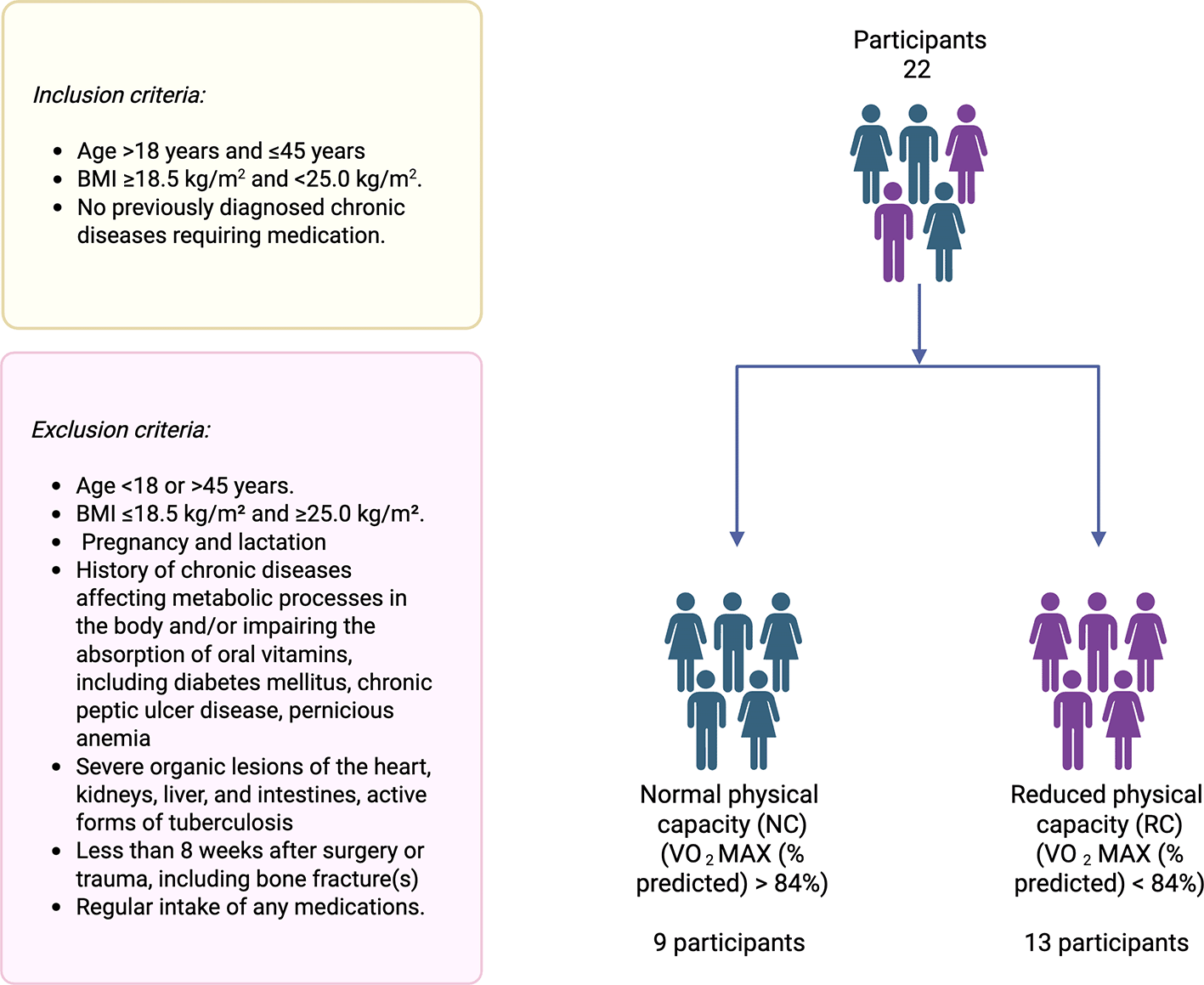
Body weight and height were measured on a medical scale and stadiometer and performed as kg and m. BMI was calculated from weight and height using the BMI = weight (kg)/Height2 (m2) formula. Body fat mass (kg), muscle mass (kg) and visceral adipose tissue area (cm2) were measured by bioimpedance analysis on the InBody 770 analyzer (Inbody Co. Ltd, Republic of Korea). Food intake was assessed using food diaries. Participants were given a detailed explanation of the rules and requirements for keeping them. The collected 72-hour food diaries were analyzed using the MyDiet 5.0 (Center for Medical Prevention “Origins of Health”, Russia). Data processing was performed using Goldberg thresholds for assessing energy intake, individually calculated for each participant in accordance with the specified methodology.
Cardiopulmonary exercise testing (CPET) was assessed using a CARDIOVIT CS-200 Ergo-Spiro multifunctional cardiopulmonary workstation (SCHILLER AG, Switzerland) and a Mortara ERG 911S/911BP cycle ergometer (SCHILLER AG, Switzerland) according to an individual protocol with an initial load of 25 W for women and 50 W for men, followed by a stepwise increase in load by 25 W every 2 minutes. A maximum oxygen consumption of 84% of the predicted value or higher was considered normal physical capacity.15
The fasting serum concentrations of vitamin B1, 25-OH Vitamin D, retinol, and α-tocopherol were determined by enzyme-linked immunosorbent assay (ELISA; Cloud-Clone Corporation, China). Vitamins B2 and B6 were quantified using a microbiological assay (ELISA Immunodiagnostic analysis kits, UK). Vitamin B12 levels were measured by a standardized immunochemiluminescent method using an automated IMMULITE 2000 analyzer (Siemens, Germany). Vitamin C concentrations were assessed using a colorimetric method (Immunodiagnostic kits, UK) in combination with a TECAN spectrophotometer (TECAN, Switzerland). All procedures were performed in accordance with the manufacturer standardized protocols.
The normal distribution of the data was assessed using the Shapiro–Wilk test. A chi-square test was used to calculate the frequency distributions, and a non-parametric Mann–Whitney U-test was used to calculate the differences in continuous variables between study groups. Spearman’s pairwise correlation analysis was used to detect associations between physical capacity and food intake. IBM SPSS Statistics 20.0 software (IBM Corp., Armonk, NY, USA) was provided for statistical analysis. A p-value of <0.05 was considered to be statistically significant.
The study cohort consisted of 22 participants stratified into two groups based on their physical capacity status: a Normal Capacity (NC) group (n = 9) and a Reduced Capacity (RC) group (n = 13). Demographic analysis revealed an age difference between the cohorts (p = 0.036), with the NC group being older (median age 33 years) compared to the RC group (median age 23 years). Despite the disparity in physical capacity, anthropometric parameters showed remarkable homogeneity between the groups. No statistically significant differences were observed in body weight, BMI, waist or hip circumference, fat mass, muscle mass, or visceral adipose tissue area (p > 0.05) ( Table 1).
CPET revealed a pronounced discrepancy in capacity relative to predicted capacity. The NC group achieved a significantly higher median percentage of predicted maximal oxygen consumption (90.0%) compared with the RC group (69.0%; p = 0.001), underscoring mildly reduced physical capacity in the latter. In contrast, absolute physiological indices, including peak heart rate and absolute peak VO2, showed no significant intergroup differences, suggesting that the observed deficit in the RC group reflects reduced attainment of predicted potential rather than impaired absolute output ( Table 2).
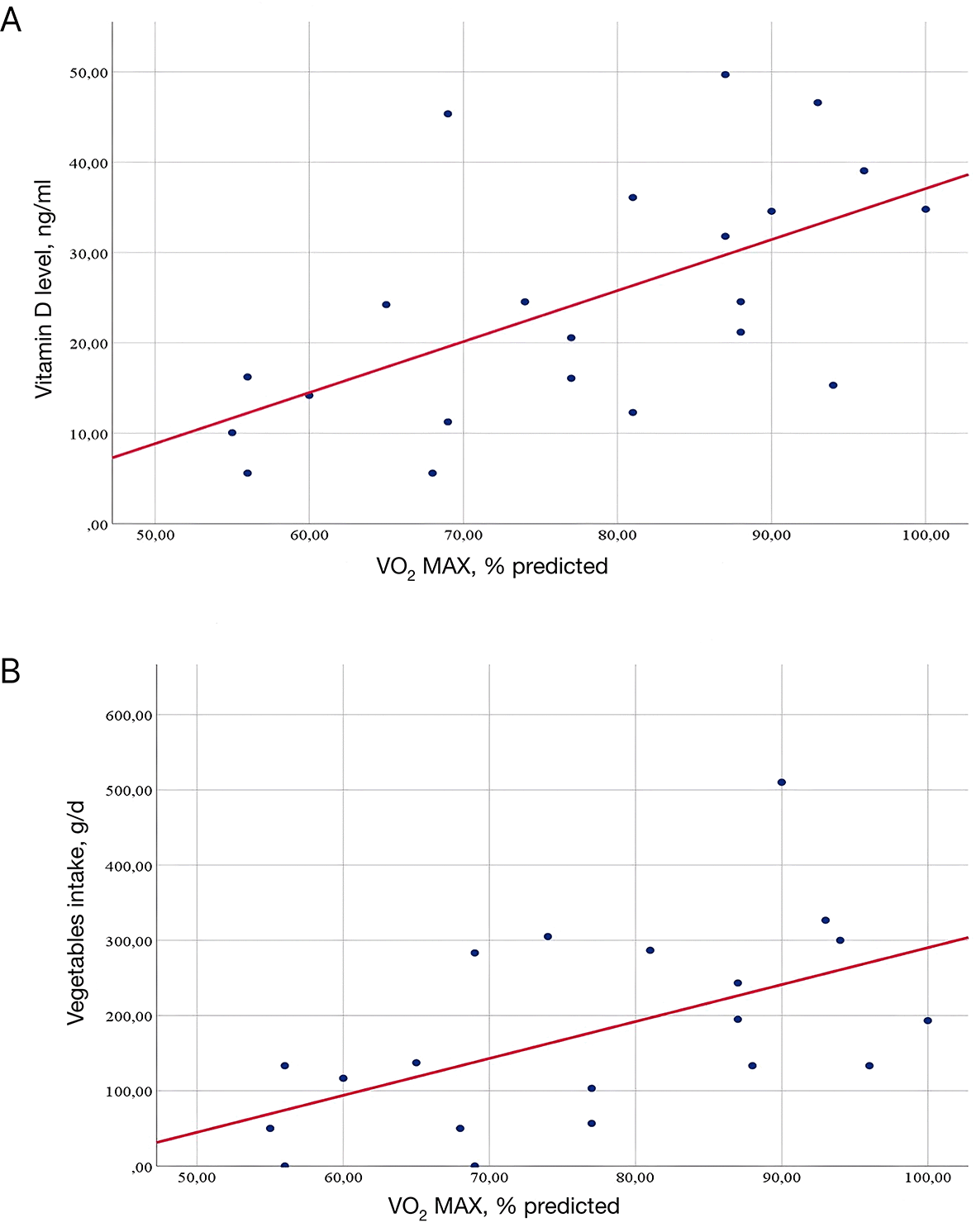
Analysis of food diaries identified a marked nutritional discrepancy between groups, with the RC group reporting a significantly higher total daily energy intake than the NC group (2635.0 kcal vs. 1750.5 kcal; p = 0.047), driven primarily by greater carbohydrate consumption (229.2 g/day vs. 163.9 g/day; p = 0.007). In contrast, the NC group consumed significantly more vegetables (219.1 g/day vs. 110.0 g/day; p = 0.025), consistent with the positive correlation between vegetable intake and physical capacity (ρ = 0.576, p = 0.008). Other dietary components, including fats, proteins, sugars, fiber, fruits, and meats, did not differ significantly between groups and are therefore considered secondary observations ( Table 3).
A biochemical assessment demonstrated a specific association between serum vitamin D levels and physical capacity. The NC group exhibited normal Vitamin D levels (median 34.6 ng/mL), which were significantly higher than levels observed in the RC group (median 16.1 ng/mL; p = 0.009) ( Table 4).
In addition, a correlation analysis was conducted. Physical capacity indicators demonstrated a moderate direct correlation with serum vitamin D levels (r = 0.606, p = 0.003) and average daily consumption of vegetables and vegetable dishes (excluding potatoes) (r = 0.576, p = 0.008) as assessed by food diaries. Thus, with increasing serum vitamin D levels, an increase in physical capacity is observed ( Figure 2).
In this cohort, cardiorespiratory capacity varied in ways that were not fully explained by age or basic exercise test parameters. Although the normal efficiency group was older, they reached a higher proportion of predicted VO2 max, whereas the reduced capacity group did not meet age-adjusted physiological expectations, even though their absolute peak heart rate and VO2 max values were similar. This pattern appeared to be linked to lifestyle and nutritional factors: the normal efficiency group had higher serum vitamin D levels and reported greater vegetable intake, while the reduced efficiency group consumed more calories and carbohydrates and more often presented with vitamin D deficiency and lower vegetable intake. Anthropometric indicators were comparable between groups, suggesting that the observed differences were driven primarily by metabolic and nutritional characteristics rather than by body composition.
Signalling pathways associated with calcium homeostasis help maintain mitochondrial integrity, support ATP production, and preserve muscle fiber efficiency.16 When vitamin D is deficient, impaired phosphocreatine resynthesis and less efficient aerobic metabolism may limit actual physical performance relative to genetic potential.17,18 These proposed pathways align with contemporary reviews showing that adequate vitamin D reduces oxidative stress, supports mitochondrial respiration, and sustains protein synthesis and muscle strength in skeletal muscle.19 In the present cohort, serum 25-hydroxyvitamin D showed a strong positive correlation with performance, reflecting the results of large cross-sectional analyses in US adults and Iranian women where higher vitamin D status independently associated with greater maximal oxygen uptake and more favorable cardiorespiratory fitness (CRF) categories.20,21 Similar associations have been reported in older adults and heart failure patients, in whom lower vitamin D concentrations are linked to reduced peak VO2 and poorer functional capacity, while university-level athletes and healthy student populations also demonstrate positive associations between 25(OH) D and markers of aerobic fitness, with deficiency blunting training adaptations.22 At the same time, randomized trials in vitamin D–insufficient but otherwise healthy or moderately trained men and military recruits show that significantly increasing 25(OH) D markedly with supplementation does not yield additional gains in VO2max beyond those achieved with exercise training, suggesting that adequate vitamin D is permissive rather than independently ergogenic for CRF.23
Dietary patterns rich in vegetables, fruits, and whole grains provide micronutrients and antioxidant compounds that can improve redox balance and endothelial function, particularly under physiological stress such as exercise.24,25 Enhanced antioxidant capacity and vascular function may facilitate more efficient oxygen delivery and utilization in working muscles, offering a plausible mechanistic link between higher vegetable intake and better CRF and physical capacity.26,27 Cross-sectional analyses in middle-aged adults show that dietary patterns with higher intakes of vegetables, fruits, and whole grains are positively associated with VO2 max even after multivariable adjustment, suggesting that plant-rich diets improve CRF independent of traditional confounders. The study that increased fruit and vegetable intake consistently demonstrates improvements in micronutrient and antioxidant biomarkers, along with changes in vascular function, which may underlie the positive association between vegetable intake and physical performance observed in this study.28 At the same time, the effect of sufficient vegetables and fruits consumption on microbiota diversity also should be considered.29
The present study has several limitations that should be considered when interpreting the results. The small sample size restricts the statistical power and limits the generalizability of the findings to the broader population. Furthermore, the cross-sectional design precludes the establishment of causal relationships between nutritional factors and physical capacity; thus, the observed associations between vitamin D status, dietary patterns, and capacity outcomes describe correlation rather than causation.
This study identifies a significant association between nutritional status, specifically serum vitamin D concentrations and vegetable intake, and physical capacity in healthy young adults. The findings indicate that individuals with normal endurance exhibit significantly higher vitamin D levels and greater vegetable consumption than those with reduced endurance, independent of body composition. However, further longitudinal research involving larger cohorts is required to confirm these observations and to elucidate the mechanistic pathways linking specific dietary components to muscle bioenergetics and cardiorespiratory fitness.
The study was conducted in accordance with the Declaration of Helsinki. The study protocol was approved by the Local Ethics Committee of the Federal Research Center of Nutrition, Biotechnology and Food Safety (N1/2017 dated on 16/JAN/2017). Written Informed consent was obtained from all subjects involved in the study. All participants had the right to withdraw at any stage of the study, and all incomplete responses were considered withdrawn and excluded from the analysis.
| Views | Downloads | |
|---|---|---|
| F1000Research | - | - |
|
PubMed Central
Data from PMC are received and updated monthly.
|
- | - |
Provide sufficient details of any financial or non-financial competing interests to enable users to assess whether your comments might lead a reasonable person to question your impartiality. Consider the following examples, but note that this is not an exhaustive list:
Sign up for content alerts and receive a weekly or monthly email with all newly published articles
Already registered? Sign in
The email address should be the one you originally registered with F1000.
You registered with F1000 via Google, so we cannot reset your password.
To sign in, please click here.
If you still need help with your Google account password, please click here.
You registered with F1000 via Facebook, so we cannot reset your password.
To sign in, please click here.
If you still need help with your Facebook account password, please click here.
If your email address is registered with us, we will email you instructions to reset your password.
If you think you should have received this email but it has not arrived, please check your spam filters and/or contact for further assistance.

Comments on this article Comments (0)