Keywords
High-cost patient, cost recovery rate, DRG, hospital, machine learning.

High-cost patient, cost recovery rate, DRG, hospital, machine learning.
Healthcare expenditure has been rising continually owing to advancements in medical technology, extended average human lifespan, and the adoption of universal healthcare coverage (Sorenson et al., 2013). Given budget constraints, governments globally initiated reforms in the healthcare sector to improve the efficiency of healthcare provision (Camilleri et al., 2018; Fahlevi et al., 2022). In this context, prospective provider payment has been introduced as the primary hospital payment system, in which hospitals are paid using predetermined rates, rather than for each service provided by the hospitals (Fahlevi, 2016; Gillespie & Privitera, 2019). Hence, hospitals are encouraged to retain their actual patient costs below DRG fees; otherwise, they make a deficit (Nedelea & Fannin, 2017) through efficiency improvement while maintaining care quality ( Rosko et al., 2020).
Furthermore, enhanced motivation to control costs and hospital managers also need to focus on the treatment of certain groups of patients, such as high- and high-cost (HNHC) (Zdrale et al., 2024). Although the percentage of HNHC was relatively small compared to the total number of patients (for instance, 5%, 10%, or 15%), these patients may contribute to more than half of the total patient costs incurred in a hospital. For instance, Zdrale et al. (2024) it was reported that six million adults contributed to the top 10% of spending in U.S. healthcare from 2009 to 2011. It is Osawa et al. (2020) believed that 1% and 5% of high-cost patients contribute to 23% and 50% of the total healthcare costs, respectively. Thus, HNHC has become a target for spending evaluation and monitoring (Wammes et al., 2018).
Patients with high needs and high costs (HNHC) have contributed significantly to the total cost of patient care in the United States (Bilazarian, 2021). The HNHC patient healthcare system’s goals include reducing needless or preventable treatments or activities that frequently occur in the emergency department or hospitalization conditions as well as improving care quality (Tanke et al., 2019). As HNHC patients are diverse, hospitals need to design interventions specifically to address their needs and prevent resource waste (Wammes et al., 2018).
There is emerging literature on the determinants of HNHC. However, most studies were conducted in hospitals in the US and Canada (Chang et al., 2021; Wammes et al., 2018). Moreover, prior studies aim to evaluate the determinants and possibility of HNHC cases rather than evaluate their cost recovery or profitability. Most studies associate the HNHC with patient social and demographic profiles. For instance, Wammes et al. (2018), based on their literature review, found that HNHC patients correlated with increasing age. Patients with multiple chronic conditions and mental health problems incur significantly higher costs (Wammes et al., 2018). Meanwhile, higher incomers absorb higher costs in the USA, whereas in other countries, it is vice versa (Wammes et al., 2018). These determinants highlight the complexity and diversity of high-cost patients across healthcare systems.
Tanke et al. (2019) reported similar results. They found that multi-morbidities lead to high-cost treatments, and that older patients tend to consume more hospital resources. They also found that Length of Stay (LOS) was correlated with high costs. Other studies have documented that healthcare utilization and access to care are associated with HNHC. For instance, inpatients and emergency patients are more likely to become HNHC. However, studies on how successfully hospital management copes with the HNHC are still limited. Thus, this study aimed to evaluate the cost of recovery in HNHC cases and predict their determinants.
The present study was conducted in Indonesia. Similar to other countries that adopt the social insurance scheme, Indonesia has adopted DRG-based payments to improve the quality and efficiency of hospital services since 2014 (Chalkley et al., 2022). According to BPJS Kesehatan (National Health Insurance Agency), heart disease, cancer, stroke, and kidney disease are four examples of catastrophic diseases or conditions that require extensive medical care at a high cost. Healthcare funding is dominated by expensive and catastrophic diseases. According to Regional Health Office of the Special Region of Yogyakarta (2025), nearly 25% of the total healthcare expenses since 2014. Most of the cost (83.31 percent) is the cost of referral services in hospitals, which amounts to approximately IDR 312 trillion when data from 2016 to 2020 from the cost of health services of approximately IDR 374.86 trillion were evaluated (Regional Health Office of the Special Region of Yogyakarta, 2025).
Furthermore, the cost recovery rate (CRR) is a financial performance measure that compares total revenue to total hospital production costs. CRR has been used in previous studies to evaluate the cost recovery of each DRG case (Rahayu et al. 2023). If the CRR is greater than 100%, the case is fully cost-recoverable (profitable), and vice versa. Hospitals must ensure that all patients have a CRR greater than 100%[17]. CRR can be used to evaluate the efficiency of patient treatment and thus facilitates efficiency improvement while maintaining treatment quality.
Arfiani et al., (2020) discovered in their analysis of an Indonesian referral hospital that the accumulated CRR was only 60%, implying that the INA-CBG price could cover only 60% of the hospital’s costs. This study also discovered disparities in claims and INA-DRG/INA-CBGs based on patient age, sex, number of days of treatment, and severity. Cost control in the analyzed hospitals continues to adopt an aggregate/total cost approach rather than a case-by-case approach, resulting in inefficient cost control (Moe et al., 2017). Furthermore, according to Fahlevi et al., (2020) patient costs, differences and CRR are driven by severity and length of hospitalization (LOS), although patient sex and age had no significant effect on the dependent variables investigated.
More recently, Fahlevi et al. (2022) it was found that the determinants of CRR in the top ten inpatient cases in an Indonesian referral public hospital are LOS, severity, and patient age. The study also concluded that the determinants and the use of big data analysis enable hospital management to predict patient treatment cost recovery at the beginning of treatment and, more importantly, facilitate discussion and mutual learning between management and doctors in containing patient costs.
This study focused on the determinants of HNHC patient cost recovery. Prior studies have mostly investigated the predicted profile and costs of HNHC patients, not their treatment cost recovery. For instance, Powers et al. (2019), found that HNHC patients were most likely younger, male, and had higher rates of comorbid illnesses. Thus, this study fills this research gap by investigating the determinants of HNHC patient cost recovery.
The datasets were collected from two Indonesian private hospitals and two public hospitals to enable a comparative analysis. The sample hospitals represent each hospital classification based on the number of beds and offered services. All hospitals were located in Aceh Province, Indonesia. The period of data collection was between 2017 and 2020 to avoid any potential increase in patient costs and claims due to the COVID-19 pandemic.
This study involved four hospitals selected to represent variations in ownership and service classification. Two of them were publicly owned hospitals (types A and B), while the other two were privately owned hospitals (types C and D). Pseudonyms were used to maintain institutional confidentiality without compromising the validity of the analyses.
The patient data collected included patient profile (age, sex), patient care characteristics (patient class, discharge, length of stay (LOS), severity, and intensive care), and patients with supporting medical equipment (surgical procedures and radiology examinations). A total of 226,220 inpatient datasets were collected from four hospital patient records and insurance claims databases. Later, HNHC inpatient cases were selected from the highest 25% of inpatient cases that accounted for 60% of the total inpatient costs of Indonesian hospitals in the period (121,482 cases).
The CRR was calculated by dividing the DRG claims-based insurance charge by hospital cost. If the CRR is greater than 100%, the hospital is profitable; if it is less than 100%, the hospital’s tariff is not covered by the cost recovery. Table 1 provides information about how the studied variables were measured.
In Indonesia, patient classification based on insurance premiums refers to the class system under the Badan Penyelenggara Jaminan Sosial Kesehatan (BPJS Kesehatan), the National Health Insurance Program. The classification system determines the healthcare facilities that patients can access, particularly inpatient care. The three classes, namely Classes 1, 2, and 3, are primarily distinguished by the amount of monthly premiums paid and the quality of the facilities provided. Class 1, as the highest tier, requires the largest monthly premium and provides better inpatient facilities, such as rooms shared by only two to four patients, with enhanced amenities, such as air conditioning, private bathrooms, and more comfortable beds. Class 2 represents a mid-tier level, offering standard facilities at a moderate premium, with rooms typically shared by four to six patients and fewer amenities than Class 1. Meanwhile, Class 3 is the most basic tier, designed for individuals from lower-income groups, featuring the lowest premiums, mostly subsidized by the government, and rooms shared by six to eight patients with limited facilities, such as fans and shared bathrooms. The patient reimbursement rates for each class were higher in Class 1 than in Classes 2 and 3.
Moreover, patient discharge can be categorized into five main types based on circumstances and clinical considerations. First, the decision was made by a doctor. The patient is discharged based on the doctor’s decision, as the patient has recovered sufficiently or no longer requires inpatient care. Second, the patient was referred to another hospital, typically because of the need for specialized treatment or facilities not available at the current hospital. Third, the patient can be discharged based on their own request, despite medical advice. Consequently, the patient was required to sign a consent form that acknowledged the associated risks. Fourth, the patient was discharged after death. Fifth, there are other reasons such as administrative decisions or specific situational factors.
In Indonesia’s healthcare system, particularly under the BPJS Kesehatan framework, patient classification based on the severity level is divided into three categories to determine the appropriate level of care and financing. Severity 1 (mild) includes patients with minor conditions or illnesses that require minimal medical intervention and are typically managed through outpatient services or basic treatments. Severity 2 (moderate) involves patients with more serious conditions that require hospitalization, continuous monitoring, and standard medical interventions, without the need for intensive care. Severity 3 (very severe) refers to patients with critical or life-threatening conditions that require advanced medical interventions, intensive monitoring, and treatment in the Intensive Care Unit (ICU). This classification ensures that BPJS Kesehatan can effectively allocate healthcare resources, manage costs, and provide appropriate services based on a patient’s medical needs.
Meanwhile, BPJS Kesehatan classifies patients based on their severity level into (1) low/mild, (2) moderate, and (3) severe. Severity 1 (mild) included patients with minor conditions or illnesses that required minimal medical interventions. Severity 2 (moderate) involves patients with more serious conditions that require hospitalization, continuous monitoring, and standard medical interventions, without the need for intensive care. Severity 3 (very severe) refers to patients with critical or life-threatening conditions that require advanced medical interventions, intensive monitoring, and treatment in the Intensive Care Unit (ICU).
In this study, two machine learning techniques were used to analyze the data: multiple regression and decision tree analysis. Multiple regression was utilized to identify and quantify the influence of independent variables on the dependent variable (CRR) (Yan et al., 2019).
The multiple regression formula as follow:
Decision tree analysis was employed to model the data by segmenting them into branches based on the most significant variables, enabling the identification of patterns and decision rules in a hierarchical structure (Kong et al., 2020). Orange Data Mining was used to perform descriptive data analysis and machine learning modeling for the linear regression and decision tree models.
In this study, 121,482 inpatients patients from hospital samples were examined. Table 2 shows the cost of recovery of the total inpatient cases of the hospital samples and the cost of recovery of the HNHC patients. It can be clearly seen that the CRR of all patient costs (population) is 67% (less than 100%), as the patient costs higher than the reimbursement rates paid by BPJS. However, the CRR of the HNHC was also lower than 100% (72%), which indicates that their actual treatment costs are lower than the reimbursement rates.
Furthermore, Table 3 shows that the CRR value for each HNHC case varied significantly. The average CRR is 1.28 The average CRR data is 128%, meaning that the costs acquired through INA-CBG’s claims covered 1.28 times the hospital’s costs. However, the CRR of more than half of the HNHC patients (55%) was lower than 100% (unfavorable/deficit), while the rest (45%) caused deficits. Moreover, the data showed that more than half of the HNHC patients were adults, females, and class III patients. Most of the HNHC patients were discharged by a doctor’s permit and interestingly classified as non-intensive and low severity rate patients. Interestingly, the average hospitalization duration of the HNHP patients was relatively short, namely 4.96 days
Regression analysis provides valuable insights into the factors influencing CRR among High-Need and High-Cost (HNHC) patients. The regression model predicted the CRR with a grand mean (intercept) of 2.73. The coefficients indicate deviation from this mean, ceteris paribus. The performance of the Linear Regression model indicated weak predictive fit. The R-squared (R2) value was 0.217, suggesting that the model’s independent variables explained only 21.7% of the total variance in the CRR. This low explanatory power was complemented by a relatively high prediction error. The Root Mean Squared Error (RMSE) was 1.005, which signified that the model’s predictions deviated from the actual CRR values by an average of 1.005 units. Collectively, the low R2 and high RMSE suggest that the linear model, in its current form, has limited utility for accurate predictions.
Furthermore, the determinants were grouped into three dimensions: patient profile, patient care, and patient treatment characteristics. First, patient profile variables, namely age and sex, show relatively modest effects on cost recovery. Referring to Table 4, the negative coefficient for age (-0.0118) suggests that older patients tend to have a slightly lower CRR than younger patients. Gender also played a minor role. Male patients (0.0821) had marginally higher cost recovery rates than female patients (-0.0821). Although the effect was minor, this pattern could be linked to differences in case mix or the types of procedures commonly required by male and female patients. Overall, demographic factors appear to exert minimal influence when medical and care-related factors are considered.
Second, patient care characteristics showed stronger and more meaningful associations with cost recovery. The results indicate that the bed class (e.g., Class I, II, or III) has only a small effect on CRR. The CRR of bed class patient 1 was relatively higher than that of other patients from classes II and III. Thus, the treatment of bed class patient 1 was more profitable. This could be because the DRG tariff for bed-class patient 1 (VIP patient) is mostly higher than the actual hospital treatment cost.
Furthermore, discharge type emerged as a critical variable in this study. Patients who left the hospital at their own request (-0.3582), were referred elsewhere (-0.0432), died during treatment (–0.3559), or were discharged with the doctor’s permission (-0.5083) experienced lower cost recovery compared to the reference category. In contrast, those discharged under “other reasons” (1.2655) achieved substantially higher CRR. This group of patients leaves the hospitals for uncommon reasons, for instance, leaving without notification and administration problems.
The length of stay (LOS) also negatively affected the CRR (-0.0809). This suggests that, as hospitalization lengthens, treatment costs tend to escalate faster than reimbursable or recoverable income. In other words, prolonged hospital care may diminish the financial returns for hospitals. In contrast, ICU admission showed a positive relationship with CRR. ICU_yes has a positive coefficient of 0.155, which indicates that being in the ICU significantly increases the dependent variable by 0.155 units. This effect was highly significant. This could be because ICU treatments are well documented, highly justified, and typically covered by comprehensive and higher reimbursement fees. Conversely, undergoing radiology, represented by Radiology_yes, shows a negative coefficient of -0.205, meaning that it significantly reduces the dependent variable by 0.205 units. This can be attributed to the additional days required for radiology procedures, which extend the length of stay.
Lastly, patient treatment characteristics revealed that illness severity substantially influences CRR. Compared with low-severity cases (-0.2986) and moderate cases (-0.0673), patients categorized as severe (0.3659) achieved higher cost recovery. This pattern reflects the greater justification for treatment costs and the more comprehensive insurance coverage often provided for critically ill patients. Interestingly, medical interventions and radiologic examinations have negative effects on cost recovery. Patients who underwent medical interventions (-0.3023) tended to have a lower CRR, possibly because such interventions require longer diagnostic procedures and an extended waiting time for treatment.
Based on the coeefienct, follwong in the regression formula:
Y = 2.73 + 0.06 (bed_class=class I) - 0.11 (bed_class=class II) +0.05 (bed_class=class III) - 0.08 (gender-_sex=female) + 0.08 (gender_sex=male) - 0.36 (patient_discharged=at his own request) - 0.04 (patient_discharged=by referral) -0.36 (patient_discharged=death) - 0.51 (patient_discharged=doctor permission) + 1.26 (patient_discharged=other reason) - 0.30 (severity_level=low) -0.07 (severity_level=moderate) + 0.37 (severity_level=severe) - 0.15 (ICU_admitted=ICU_no) + 0.15 (ICU_admitted=ICU_yes)+ 0.30 (Medical intevention=intervention_no) - 0.30 (Medical intevention=intervention_yes) + 0.02 (radiologic_exam=radiology_no) - 0.02 (radiologic_exam=radiology_yes)- 0.08 (Length Of Stay) - 0.01 (age_in_years)
In summary, while patient demographic characteristics such as age and sex play a limited role, the findings highlight that clinical and administrative factor, particularly discharge type, severity of illness, and medical intervention, are the most influential determinants of cost recovery among HNHC patients. The results underscore the importance of improving discharge management, streamlining claim processes for high-cost interventions, and ensuring standard treatment procedures through, for instance, clinical pathways. Strengthening these areas may enhance both hospital sustainability and overall efficiency of healthcare financing for high-need patient groups.
Given the predictive limitations and sensitivity to non-normal data distribution inherent in the linear regression model, the decision tree is a robust, non-parametric alternative for practical applications. This model classifies outcomes into “favorable” (CRR more than or equal to 100/ patient cost covered) and “unfavorable” (CRR less than 100/patient cost is uncovered) categories. The determinants or independent variables were classified as categorical data. Figure 1 shows the results of the decision tree analysis, which reveal significant insights into the determinants of CRR.
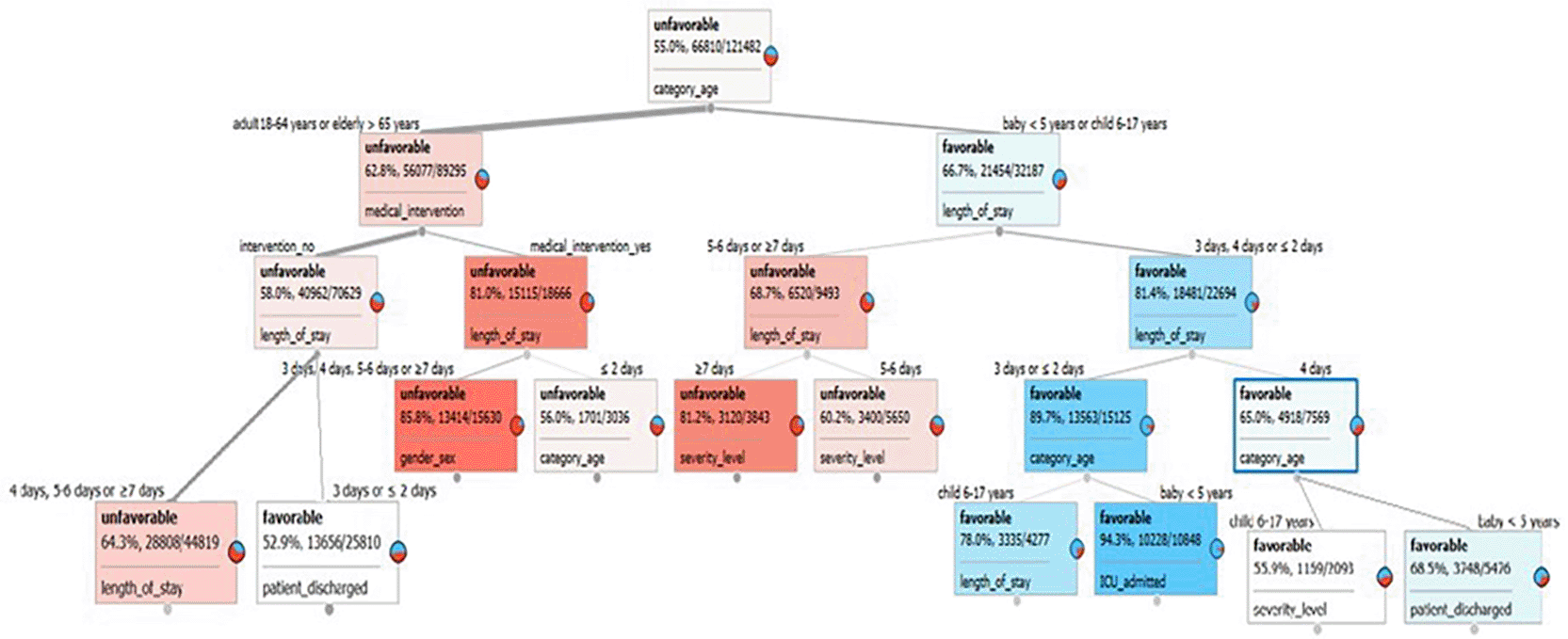
First, the decision tree analysis revealed that age category was the most influential determinant of patient outcomes (first level). 55% of the HNHC cases were not fully cost-recovered (unfavorable/deficit). Furthermore, adult and elderly patients (aged 18–64 or ≥65 years) exhibited a higher probability of unfavorable outcomes (62.8%), whereas younger patients, namely babies under five years and children aged 6–17 years, tended to experience favorable outcomes (66.7%). Thus, hospital managers should be more concerned with adult and elderly patients (aged 18–64 or ≥65 years), as their treatment costs may exceed reimbursement fees.
Second, among adult and elderly patients, the presence of a medical intervention and length of hospital stay significantly influenced the outcome classification. Adult and elderly patients (aged 18–64 or ≥65 years) who underwent medical intervention and remained hospitalized for five days or longer demonstrated the highest likelihood of unfavorable outcomes, particularly when combined with a higher severity level. Conversely, adults and elderly individuals with shorter stays (≤2 days) and without medical intervention are more likely to achieve favorable outcomes. Meanwhile, for younger patients, length of stay continues to be a critical predictor. Children aged 6–17 years with hospitalizations of three days or less had favorable outcomes in 89.7% of cases, while babies under five showed an even stronger trend, reaching 94.3% favorable outcomes when not admitted to the ICU.
Overall, the results suggest that age, procedural complexity, hospitalization duration, and severity level interact to shape patient outcomes. The findings underscore that younger age and shorter hospital stay are consistently associated with favorable outcomes, whereas older age, longer treatment duration, and higher severity correspond to an increased possibility of unfavorable outcomes.
This study found that the determinants of HNHC patient cost recovery can be classified into favorable and unfavorable determinants. Favorable determinants that support better cost recovery are patients from bed class 1, bed class III, male sex, discharge for other reasons, treatment in the ICU, medical intervention, and a high severity level.
Meanwhile, the non-favorable determinants that decrease the profitability of HNHC patients’ treatment are patients from bed class 2, female, discharged at the patient’s request, by referral, death, doctor’s permit, low severity, and moderate severity, who were not treated in the ICU and had no medical intervention. Thus, this finding is consistent with prior studies that investigated the CRR of the top ten inpatient cases, such as Fahlevi et al. (2020) and Fahlevi et al. (2022), where LOS, age, severity, and sex are the determinants. Therefore, HNHC patients share similar determinants with general or common patients.
The results confirmed that both severity and LOS were negatively associated with the CRR. These findings partly align with previous research by Rahayuningrum et al. (2016), Nelson-Williams et al. (2016), Kuo et al. (2018) and Wu et al. (2020). Additionally, the study supports Ariwardani et al. (2019), who identified age and sex as determinants of CRR in inpatient care.
Furthermore, the results of this study support those of prior studies in HNHC patients. For instance, Taheri et al., (1999) research has been conducted on the profitability of trauma discharges in an American hospital. They found that the margin on death patients was greater than that of survivors, and the profitability of treatments was determined by the LOS. Thus, the type of patient discharge and LOS play a role in the profitability of HNHC patients’ treatments.
Interestingly, the decision tree analysis revealed that patient age, medical intervention, and LOS were the main determinants of cost recovery of HNHC patients. More than half of baby and child patients result in a surplus, while more than half of adult and elderly patients have a financial deficit, as their treatment costs are higher than the reimbursement fees.
Finally, the research findings suggest that hospital management can use the results of machine learning to review the treatment of patients with specific profiles, such as elderly and male patients, to improve the efficiency and effectiveness of given treatments. Moreover, the results of regression and decision tree analyses can be used to predict the CRR of newly admitted patients, so that better treatment can be made to avoid uncovered patient costs.
The study identified age and patient discharge type as the primary determinants of the cost recovery rate (CRR) for high- and high-cost (HNHC) inpatient cases. Specifically, bed class 2 status, length of stay (LOS), and age were found to negatively impact CRR, whereas sex (male), discharge type, severity level (medium and high), and surgery had a positive influence. These findings highlight the complexity of the factors affecting the CRR in Indonesian hospitals.
This study’s limitations include its focus on data from only four hospitals (two public and two private) in Indonesia, which may not be representative of all hospitals in the country. Additionally, the analysis was based on historical data from 2017 to 2020, which may not fully capture the current trends or changes in healthcare practices.
To enhance the generalizability of our findings, future research should include a larger and more diverse sample of hospitals. This would provide a more comprehensive understanding of the factors influencing CRR in different healthcare settings. Moreover, investigating additional factors, such as hospital management practices, patient socioeconomic status, and regional healthcare policies, could offer deeper insights.
Finally, exploring the impact of recent healthcare reforms and technological advancements on CRR in HNHC inpatient cases is valuable. This could help to identify new strategies for improving cost recovery and ensuring the sustainability of healthcare services for high-need and high-cost patients.
To meet privacy and security requirements, ethics approval was obtained for our research. The ethics approval for the study was granted by the studied The Health Research Ethics Committee, Faculty of Medicine, Universitas Syiah Kuala, Banda Aceh, Indonesia (reference number: 151/EA/FK-RSUDZA/2021).
| Views | Downloads | |
|---|---|---|
| F1000Research | - | - |
|
PubMed Central
Data from PMC are received and updated monthly.
|
- | - |
Provide sufficient details of any financial or non-financial competing interests to enable users to assess whether your comments might lead a reasonable person to question your impartiality. Consider the following examples, but note that this is not an exhaustive list:
Sign up for content alerts and receive a weekly or monthly email with all newly published articles
Already registered? Sign in
The email address should be the one you originally registered with F1000.
You registered with F1000 via Google, so we cannot reset your password.
To sign in, please click here.
If you still need help with your Google account password, please click here.
You registered with F1000 via Facebook, so we cannot reset your password.
To sign in, please click here.
If you still need help with your Facebook account password, please click here.
If your email address is registered with us, we will email you instructions to reset your password.
If you think you should have received this email but it has not arrived, please check your spam filters and/or contact for further assistance.

Comments on this article Comments (0)