Keywords
Hotel green practices, customer loyalty, customer satisfaction, willingness to pay, hotel

This article is included in the Manipal Academy of Higher Education gateway.
Hotel green practices, customer loyalty, customer satisfaction, willingness to pay, hotel
Greenhouse emissions, waste production, and environmental pollution has become major issues in the hotel operation (Bohdanowicz, 2006; Gössling, 2015). Thus, hotels now a days are heavily using eco-friendly practices in their daily activities (Han & Yoon, 2015; Mensah, 2006). According to Han et al. (2019) and Chang et al. (2024), hotel green practices involves adoption of green initiatives and socially responsible initiatives in hotel operations. These practices has not only influences environmental concerns positively, but has also improves customer satisfaction significantly (Genç & Zengin, 2025). Several studies also confirm that green initiatives positively influence customer satisfaction, attitudes, and behavior (Han et al., 2010; Kang et al., 2012; Rahman & Reynolds, 2016; Han & Hyun, 2018; Kandampully & Suhartanto, 2000). These activities also influence brand image (Chen, 2010; Rahman and Reynolds, 2016), trust and brand equity (Chen, 2010) significantly. Han et al. (2010) concluded that eco-friendly operations have an important influence on hotel choice intentions. Kang et al. (2012) found that consumers are ready to pay a high price when a hotel conducts genuine environmental activities.
Most existing studies have examined the impact of green hotel practices on customer satisfaction (Han et al., 2010; Han & Hyun, 2018), and most of these studies were conducted in developing nations (Chen, 2010; Han et al., 2010; Rahman and Reynolds, 2016). However, developing markets such as India are emerging in tourism, and consumer expectations remain undiscovered. In addition, mediators, including financial mediators, such as willingness to pay, and relational mediators, such as customer loyalty, are often examined independently and not in an integrated system.
The study area considered for this empirical study is Delhi, India, and its sustainability challenges (Singh et al., 2014) provide a particularly relevant context for this investigation. Addressing these gaps, the present study investigates the direct and indirect relationship between HGP, CS, and proposes below research questions:
RQ1: Do hotel green practices (HGP) influence customer satisfaction?
RQ2: Do customers’ willingness to pay and customer loyalty mediate the relationship between Hotel Green Practices and customer satisfaction?
In the hotel industry, sustainable practices benefit all internal and external stakeholders, as well as long-term reputational and financial results (Font et al., 2016; Yusof et al., 2022). Many studies have advocated the importance of technology adoption, sustainable practices, ecotourism awareness, and customer preferences in the hotel industry (Kaurav et al., 2020; Baber et al., 2015; Rana et al., 2023; Raina et al., 2024). Consumers are also becoming eco- friendly now a days, and are willing to pay premium price for the environmentally friendly products (Kang et al., 2012; Damigos, 2023). Many studies advocates that hotel green initiatives positively affect customers’ WTP because of their visibility and credibility (Rahman and Reynolds, 2019; Barber, 2014). Kang et al. (2012) established that customers of hotels in the U.S. were ready to pay up to 6% more in eco-certified hotels. This trend was confirmed by Damigos (2023), who conducted a global systematic review and found that tourists are willing to pay a premium price to stay in sustainable accommodations. Similarly, Han et al. (2019) reveal that guests’ perceived environmental responsibility increases their readiness to provide financial assistance to hotels’ green efforts. The implications of these findings are that the perceived value of hotel services improves because green practices are implemented and communicated effectively, thereby improving guests’ WTP.
HGP has a positive impact on customers’ WTP.
Customer loyalty refers to long-term attitudinal and behavioral loyalty to a service provider (Oliver, 1999). Service quality, trust, and emotional attachment to the brand determine loyalty in hospitality (Bowen and Chen, 2001). Green practices are also instrumental in creating a feeling of loyalty by generating value congruence between the personal values of the customer and the environmental ethics of hotels (Genç and Zengin, 2025). Moise et al. (2018) found that guests who view hotels as environmentally responsible have increased brand loyalty and positive word-of-mouth. Han, Yu, and Kim (2019) also highlighted that eco-friendly hotels significantly impacts customer trust, which results in attitudinal and behavioural loyalty.
HGP has a positive impact on CL.
Customer satisfaction is the cumulative judgment of a service encounter in comparison to anticipations (Oliver, 1980). Regarding green hotels, satisfaction does not solely depend on the traditional service quality aspects, but on the perceived performance in the environmental aspects as well (Soni et al., 2022; Chang et al., 2024). The empirical data show that the guests gain satisfaction when they find green practices of hotels to be genuine and close to sustainable values (Rahman and Reynolds, 2019). The study of Chang et al. (2024) discovered that green initiatives have a positive impact on visitor satisfaction and revisit intention. Similarly, Moise et al. (2018) found that green initiative influence customer loyalty and customers’ willingness to pay.
HGP positively impact CS.
When guests are more willing to pay for sustainable services, they tend to be more satisfied because they are contributing to the services according to their moral and environmental beliefs (Han and Hyun, 2017) revealed that eco-friendly consumers experience a sense of psychological fulfilment when they patronize green hotels, which increases their satisfaction. Damigos (2023) also advocates that WTP mediates the connection between perceived sustainability and tourism consumption satisfaction. This implies that guests’ readiness to spend on green programs reflects both altruistic and hedonic motivations, which add to satisfaction.
WTP positively impact CS.
Satisfaction is a major antecedent of loyalty in hospitality, but reciprocal causality is also found i.e., satisfied customers are likely to express greater satisfaction because they have a positive experience and accumulate it (Bowen and Chen, 2001). The empirical data support positive relationship between customers’ satisfaction and loyalty. Moise et al. (2018) advocates that the loyal guests has higher satisfaction due to the constant fulfilment of their expectations. Han and Hyun (2017) also reveals that loyalty is a positive reinforcement of satisfaction by creating emotional attachment to the brand.
CS positively impact CL.
Indirect linkages between HGP and CS through WTP and CL have been established in sustainability studies. Han et al. (2019) found that the guests’ willingness to pay for eco-friendly services mediates the effect of green practices on satisfaction. Genç & Zengin (2025) reported that loyalty serves as a critical conduit through which environmental responsibility enhances satisfaction. Furthermore, mediating effects highlight psychological mechanisms by which guests translate green perceptions into satisfaction. WTP reflects cognitive evaluation of value, while CL embodies affective commitment (Oliver, 1999). Integrating both mediators provides a holistic understanding of how green practices ultimately improve satisfaction.
WTP significantly mediates the relationship between HGP and CS.
CL significantly mediates the relationship between HGP and CS.
Based on the above arguments, the conceptual framework proposed for the study is presented in Figure 1.
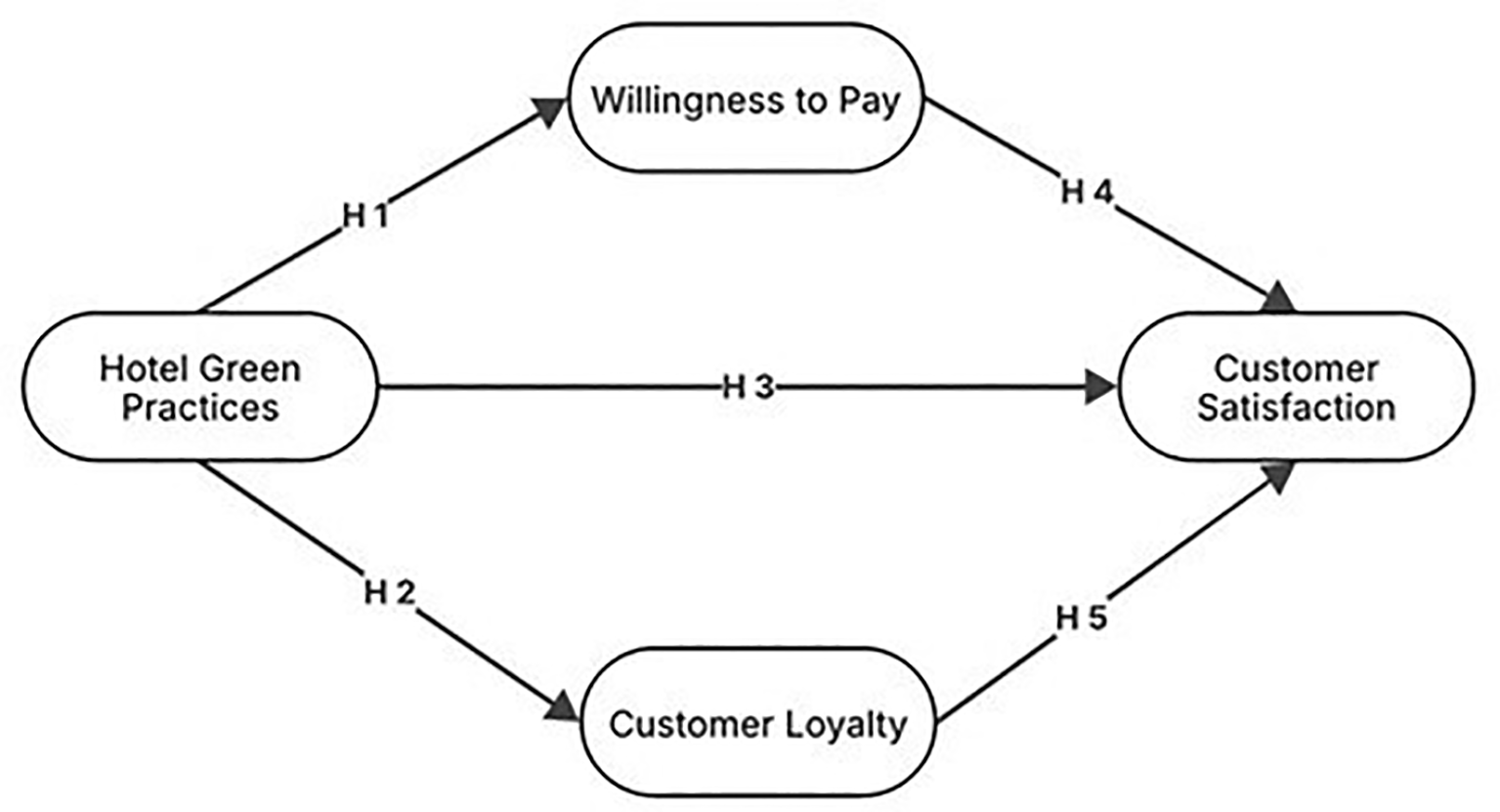
The study used a cross-sectional design and Partial Least Squares Structural Equation Modeling (PLS-SEM) is proposed to test the measurement and structural model. Data were collected using a convenience sampling method, and all respondents were aged 18 years or older. Written informed consent was obtained from all participants prior to their participation in the study. Participants were informed about the study objectives, their right to withdraw at any stage, and the measures taken to ensure the confidentiality and anonymity of their responses. Between 9th and 29th October 2025, individuals staying in star-rated hotels in Delhi were approached with a self-administered survey instrument. A 5-point Likert scale was employed for all items (1 = strongly disagree, 5 = strongly agree). From the 510 questionnaires distributed, 79 were excluded due to incomplete or invalid responses, resulting in 431 usable questionnaires for the analysis. The HGP construct was evaluated using four items (Han, Hsu, & Sheu, 2010), WTP with three items derived from (Namkung & Jang, 2013), CL through four items (Zeithaml, Berry, & Parasuraman, 1996; Prayag & Ryan, 2012), and CS was measured through four items (Merli et al., 2018; Oliver, 1996). Details of constructs are their items are presented in Table 1.
| Hotel Green Practices (HGP): Adapted from Han, Hsu, & Sheu (2010) | |
|---|---|
| HGP1 | This hotel makes substantial efforts to reduce energy consumption (e.g., LED lighting, smart thermostats). |
| HGP2 | This hotel has an active program to reduce water use (e.g., low-flow faucets, linen reuse). |
| HGP3 | This hotel minimizes waste by recycling and composting. |
| HGP4 | This hotel offers environmentally friendly guest amenities (e.g., bulk dispensers, eco-certified toiletries). |
| Willingness to Pay (WTP): Adapted from Namkung & Jang (2013) | |
| WTP1 | I am willing to pay a higher price for a room in this green hotel compared to a regular one. |
| WTP2 | I would accept higher room rates if environmentally friendly practices are guaranteed. |
| WTP3 | I would pay more, if necessary, to stay in a hotel that is environmentally responsible. |
| Customer Loyalty (CL): Adapted from Zeithaml, Berry, & Parasuraman (1996); widely applied in hotel studies such as Prayag & Ryan (2012) | |
| CL1 | I intend to stay in this hotel again in the future. |
| CL2 | I will recommend this hotel to friends and relatives. |
| CL3 | If I need accommodation in this area, this hotel would be my first choice. |
| CL4 | I would say positive things about this hotel to others. |
| Customer Satisfaction (CS): Adapted from Merli et al. (2018) and Oliver (1996) | |
| CS1 | I am happy with my decision to stay here because of its environmental practices. |
| CS2 | I am pleased with the hotel’s eco-friendly products/services. |
| CS3 | Overall, I feel satisfied with the hotel’s environmental performance. |
| CS4 | My decision to purchase this hotel’s services was influenced by its green image. |
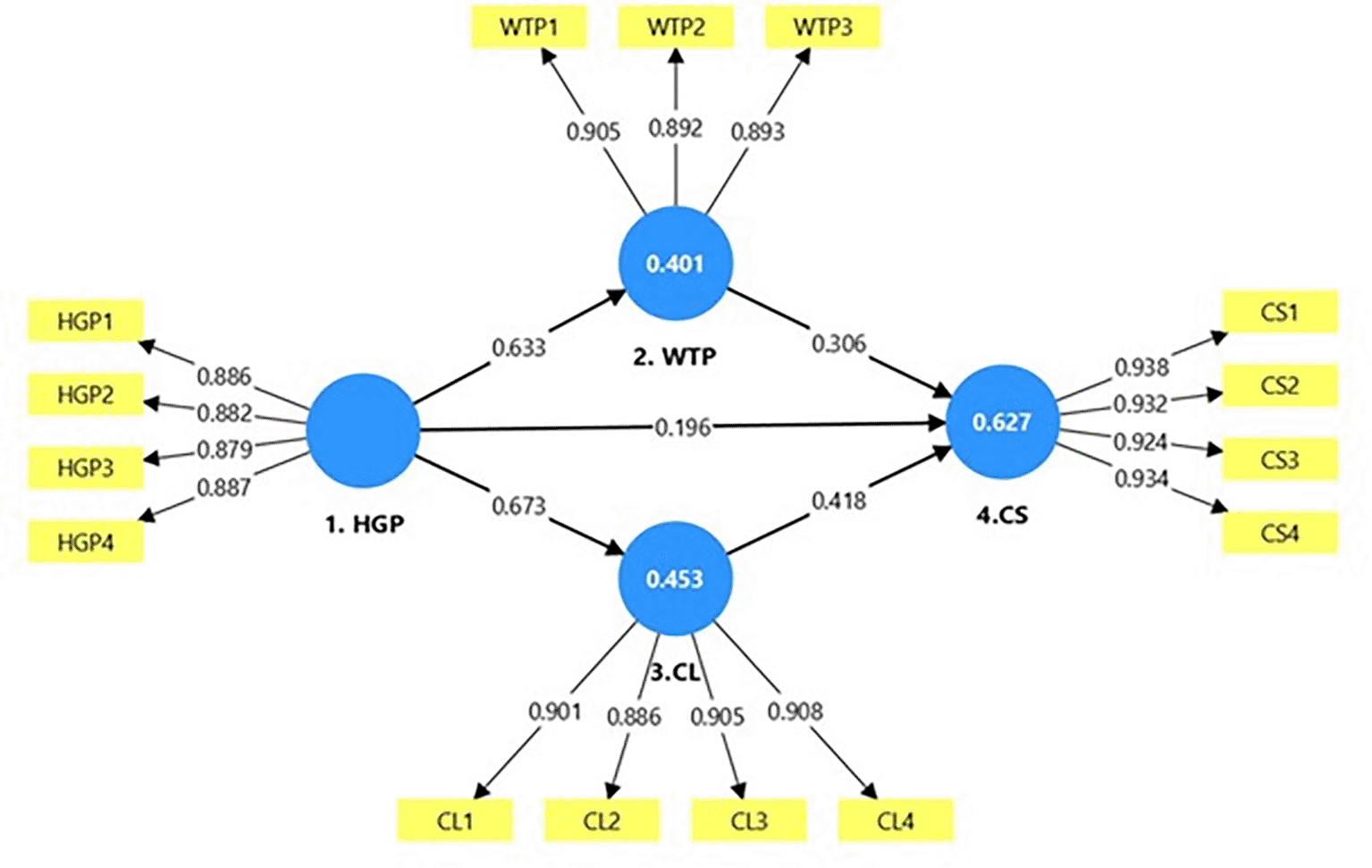
As shown in Figure 2, the measurement model presents the outer and inner loadings for the four latent variables HGP, WTP, CL, and CS. Table 2 summarizes the results of all reliability statistics used in this study. All constructs reported Cronbach’s alpha values exceeding the recommended threshold of 0.70, confirming satisfactory reliability. The rho_A values were more than 0.70, and positioned between Cronbach’s alpha and ρ_C. As shown in Table 2, all AVE values were greater than 0.50, thus supporting convergent validity (Fornell & Larcker, 1981).
The cross-loading results revealed that each item loaded more strongly on its intended construct than on all other constructs. The HTMT values were all below the conservative threshold (<0.85). Table 4 summarizes the Fornell–Larcker statistics, showing that the square roots of AVEs for all constructs exceeded their inter construct correlations, thereby confirming discriminant validity (Fornell & Larcker, 1981). Furthermore, the HTMT results presented in Table 3 were below the conservative threshold of 0.85, further supporting construct distinctiveness (Henseler, Ringle, & Sarstedt, 2015). Together, these results indicate that HGP, WTP, CL, and CS are distinct from one another.
| 1. HGP | 2. WTP | 3. CL | 4. CS | |
|---|---|---|---|---|
| 1. HGP | ||||
| 2. WTP | 0.709 | |||
| 3. CL | 0.736 | 0.585 | ||
| 4. CS | 0.723 | 0.711 | 0.759 |
| 1. HGP | 2. WTP | 3. CL | 4. CS | |
|---|---|---|---|---|
| HGP | 0.884 | |||
| WTP | 0.633 | 0.897 | ||
| CL | 0.673 | 0.527 | 0.9 | |
| CS | 0.671 | 0.65 | 0.711 | 0.932 |
Finally, multicollinearity among predictors was evaluated through variance inflation factor (VIF) statistics ( Table 2). All VIF values were well below 5, suggesting that multicollinearity is not a concern in this model (Kock, 2015; Diamantopoulos & Siguaw, 2006).
Figure 3 presents the structural model of the proposed study. HGP had a significant positive impact on both WTP (β = 0.633, t = 20.715, p < 0.001) and CL (β = 0.673, t = 25.670, p < 0.001), indicating that sustainable initiatives increase guests’ willingness to pay and strengthen loyalty. H3 confirmed significant, and positive direct relationship between HGP and CS (β = 0.196, t = 4.495, p < 0.01), suggesting that green practices influence satisfaction primarily through mediating mechanisms. H4 confirmed that WTP positively affects CS (β = 0.306, t = 7.838, p < 0.001), while H5 showed that CL has the strongest impact on CS (β = 0.418, t = 10.651, p < 0.001). These results highlight loyalty as a key driver of satisfaction in green hospitality settings. Each of these findings is summarized in Table 5.
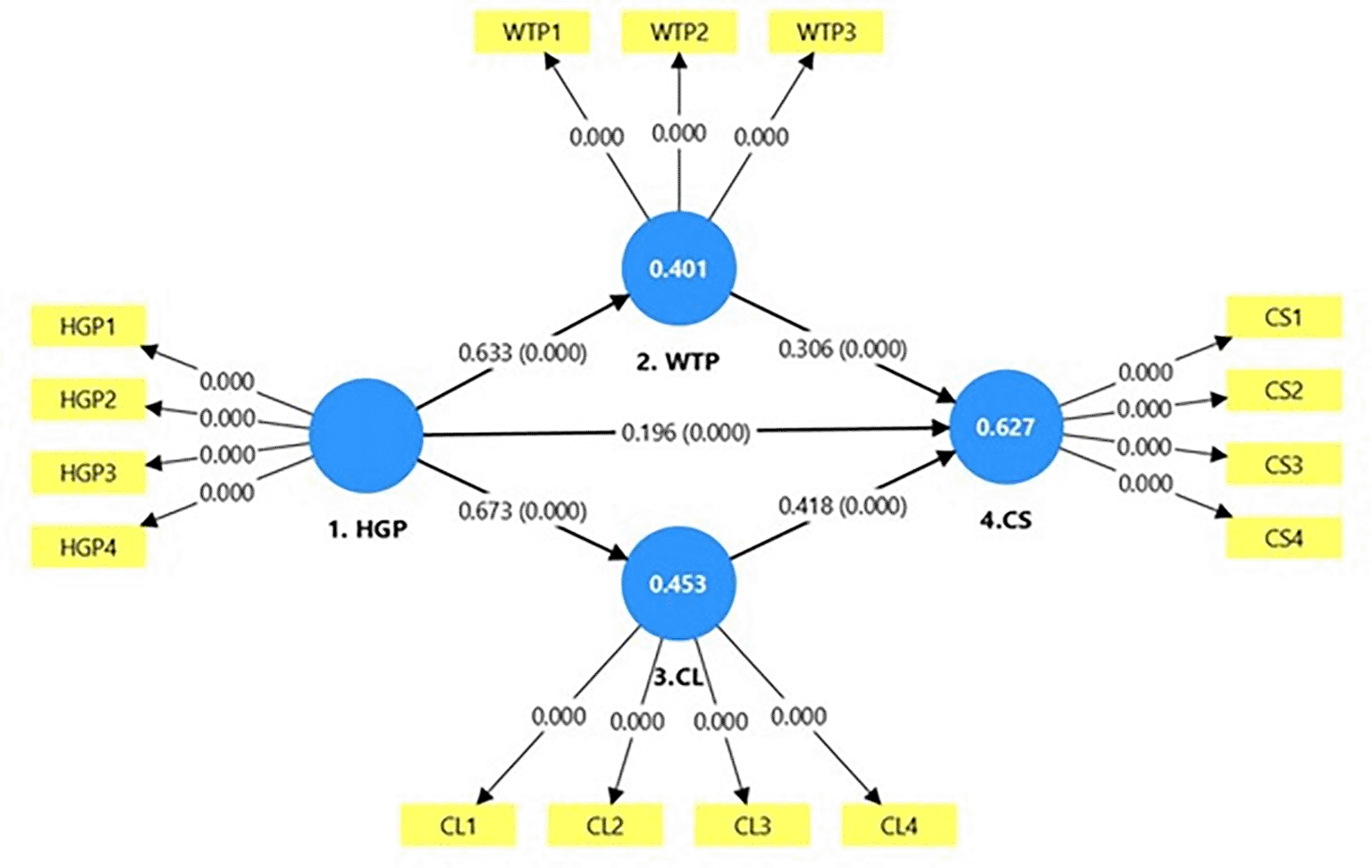
Mediation analyses were conducted to examine the mediating roles proposed in H6 and H7. For H6 examined whether WTP mediates the relationship between HGP and CS. The results (see Table 6) indicated a significant indirect effect of HGP on CS through WTP (β = .193, t = 7.031, p < .001). The total effect of HGP on CS remained significant (β = .671, t = 25.283, p < .001), and after the inclusion of mediator (WTP), the direct effect of HGP on CS also remained significant (β = .196, t = 4.495, p < .001), demonstrating a complementary partial mediation and thereby supporting H6. Similarly, H7 proposed that CL mediates the relationship between HGP and CS. The findings revealed a significant indirect effect of HGP on CS through CL (β = .282, t = 9.564, p < .001). The total effect of HGP on CS was again significant (β = .671, t = 25.283, p < .001), and with the presence of mediator (CL), the direct effect of HGP on CS remained significant (β = .196, t = 4.495, p < .001), indicating a complementary partial mediation.
Table 7, presents model’s explanatory power. HGP explains 40.1% of the variance in WTP (R2 = 0.401) and 45.3% of the variance in CL (R2 = 0.453). Customer Satisfaction (CS) has the highest explanatory power, with an R2 of 0.627, indicating that HGP, WTP, and CL together explain nearly 63% of its variance. The adjusted R2 (see Table 8) values for WTP (0.399), CL (0.452), and CS (0.625) closely align with their respective R2 values, confirming the model’s robustness and absence of overfitting.
| Original sample | Sample mean | Standard deviation | T statistics | P values | |
|---|---|---|---|---|---|
| WTP | 0.401 | 0.403 | 0.039 | 10.382 | 0 |
| CL | 0.453 | 0.454 | 0.035 | 12.874 | 0 |
| CS | 0.627 | 0.63 | 0.028 | 22.581 | 0 |
| Original sample | Sample mean | Standard deviation | T statistics | P values | |
|---|---|---|---|---|---|
| 2. WTP | 0.399 | 0.401 | 0.039 | 10.322 | 0 |
| 3. CL | 0.452 | 0.453 | 0.035 | 12.808 | 0 |
| 4. CS | 0.625 | 0.627 | 0.028 | 22.33 | 0 |
Effect size results in Table 9 further clarify the strength of these relationships. HGP shows a large effect on both WTP (f2 = 0.669) and CL (f2 = 0.829), demonstrating that sustainability practices strongly influence willingness to pay and loyalty. In contrast, HGP’s direct effect on CS is small (f2 = 0.045), indicating that its impact on satisfaction operates mainly through the mediating roles of WTP and CL. Overall, these findings highlight the importance of integrating green practices with value-driven mechanisms to better predict customer satisfaction in sustainable hospitality settings.
Table 9 reported the effect sizes of WTP and CL. The result revels that both WTP and CL significantly contribute to customer satisfaction, with CL (f2 = 0.249) exerting a slightly stronger influence than WTP (f2 = 0.145). Table 10 summarized the result of predictive relevance. The Q2 values for WTP (0.397), CL (0.451), and CS (0.448) exceeds the threshold value of 0.35. These results indicate strong out-of-sample predictive capability. Additionally, the PLS Predict results reported in Table 11 show that the PLS model demonstrates lower or comparable prediction errors relative to linear regression benchmarks, confirming its high predictive accuracy.
The study concludes that HGP significantly impacts CS, WTP and CL. Similar, results have been reported in previous studies, showing that green practices influences customer attitudes and behavioural intentions (Chen, 2010; Han et al., 2010; Kang et al., 2012). The path coefficient between the HGP and CL linkage is significantly high, which supports that sustainable practices can build a strong relation between hotels and their guests. Hotel green practices positively influence environmentally mindful guests, which further results in increase in emotional bonding, word of mouth, and customer loyalty towards the brand (Han and Hyun, 2018). This will not only significantly increase repeat business but also cut acquisition costs. The study also reveals that the impact of HGP on CS is comparatively low as compared to the mediating variables i.e, WTP and CL. This finding suggest that along with hotel green practices, WTP and CL also plays significant role for the customer satisfaction. In other words guest satisfaction increases, when HGP coupled with WTP and CL. By integrating WTP and CL as a mediating variables, and within a single structural model, the study offers a more holistic explanation of how green practices influence consumer satisfaction in hospitality settings. The empirical results further revels that the model has strong explanatory power (R2 = 0.627) and predictive relevance (Q2 > 0.35), confirming its theoretical soundness and empirical reliability (Chin, 1998; Hair et al., 2019; Shmueli et al., 2019). Overall, results indicate that Indian hotel customers respond positively to hotel green initiatives, reflecting a broader shift toward more environmentally responsible consumption patterns.
From a hotels perspective, the results have a number of actionable insights. First, hotel operators should strategically invest in and communicate green practices, not merely as compliance with environmental regulations but as mechanisms to enhance brand loyalty and willingness to pay. The installation of energy-saving systems, the adoption of water saving technologies, complete separation of waste will attract environmentally conscious customers. The customers’ trust on a hotel brand can be strengthen, when hotel clearly mention their green certifications (e.g., LEED, Green Key) or provide real-time sustainability data (e.g., energy-saving dashboard). Second, there is a need to have a communication policy to customers to translate the green practices into economic and relationship terms. The willingness to engage in environmental activities, be it on websites, in-room, mobile applications, and even in communication with the staff, may be the defining factor of whether the guests pay a higher rate (Kang et al., 2012). Moreover, loyalty could be reinforced and sustainable behavior promoted by green loyalty programmes which reward environmentally friendly behavior (e.g., more points on reusing towels, using digital check-out, or tree-planting programmes). Third, the effective implementation of green initiatives depends on the training and engagement of the staff. The ambassadors of the environmental initiatives of the hotel will be frontline workers, and by offering them knowledge and incentives to promote green initiatives, the overall experience and satisfaction of the guests can be enhanced. The results are educative to the government agencies, tourism boards and industrial associations. Fiscal incentives (e.g., tax exemption of certified properties), easy access to green finance, and certification are one of the ways of persuading hotels to adopt green practices. Regulatory regimes can also be used to improve consumer trust by ensuring that sustainability indicators are clearly reported. In addition, special awareness campaigns should be used to sensitize local and foreign tourists to the environmental effect of their choice of accommodation, which will increase the demand for green hotels. Industry associations can assist hotels in sharing knowledge, capacity-building programs, and joint marketing of certified green hotels as part of India’s sustainable tourism positioning.
This study provides strong empirical data on the effect of hotel green practices on customer satisfaction, which is manifested in the willingness to pay and loyalty towards the customer in the case of star-rated hotels in Delhi, India. This study improves the theoretical understanding of the processes by which sustainability and customer outcomes are connected by developing and confirming a dual-mediation model using PLS-SEM. The results show that hotel green practices have a direct influence on satisfaction, but indirect effects through loyalty and willingness to pay are stronger, with the former being the most significant channel. This highlights that sustainable initiatives generate both operational benefits and emotional value, which are essential for customer satisfaction and competitive advantage. The study contributes theoretically by integrating environmental factors with relationship marketing and value perspectives into a unified framework. It also offers practical evidence for hoteliers and policymakers seeking to align sustainability objectives with business performance. Incorporating environmental practices into service delivery and relationship-building strategies can enable hotels to increase loyalty, justify premium rates, and boost overall guest satisfaction. Therefore, this study confirms that sustainability and profitability are not conflicting but complementary goals.
First, only five star hotels in Delhi were used as the sample, which can limit the extrapolation of the results. Customer’s attitudes and behaviours toward green practices will most likely differ by geographic area, culture, and hotel typologies. Future efforts should aim to duplicate the current research in other cities or countries to strengthen external validity and explore the possibility of cross-cultural variations in the mediating processes. Second, causal inference is restricted because of the use of cross-sectional survey data. Despite the theoretical soundness of the structural model, a longitudinal or experimental design might have been more suitable to grasp the dynamics of time in terms of green practices, loyalty, willingness to pay, and satisfaction. Third, this study focused on customer loyalty and willingness to pay as the mediating variables of interest. These relationships could also be mediated or moderated by additional psychological variables, including perceived authenticity, environmental involvement, trust, or green brand image (Chen, 2010). These constructs should be included in future models to provide a more comprehensive insight into how customers respond to green practices. Finally, although this study was customer-centred, a multi-stakeholder approach that includes the involvement of employees, managerial intentions, and policy frameworks could be used in future studies.
| Views | Downloads | |
|---|---|---|
| F1000Research | - | - |
|
PubMed Central
Data from PMC are received and updated monthly.
|
- | - |
Provide sufficient details of any financial or non-financial competing interests to enable users to assess whether your comments might lead a reasonable person to question your impartiality. Consider the following examples, but note that this is not an exhaustive list:
Sign up for content alerts and receive a weekly or monthly email with all newly published articles
Already registered? Sign in
The email address should be the one you originally registered with F1000.
You registered with F1000 via Google, so we cannot reset your password.
To sign in, please click here.
If you still need help with your Google account password, please click here.
You registered with F1000 via Facebook, so we cannot reset your password.
To sign in, please click here.
If you still need help with your Facebook account password, please click here.
If your email address is registered with us, we will email you instructions to reset your password.
If you think you should have received this email but it has not arrived, please check your spam filters and/or contact for further assistance.

Comments on this article Comments (0)