Keywords
Tobacco consumption, Galapagos Islands, Ecuador, tobacco cessation, tobacco harm reduction

This article is included in the Addiction and Related Behaviors gateway.
Tobacco consumption, Galapagos Islands, Ecuador, tobacco cessation, tobacco harm reduction
In Latin America, smoking is among the 5 leading risk factors for disability and is responsible for approximately 12% of the total deaths in adults.1 It also contributes to poverty due to a decrease in productivity and an impact on medical expenses.2 Among the most populated Latin American countries, Chile is the country with the highest prevalence of smoking in general.1 Chile, Argentina, and Brazil are the three countries responsible for the most burden of disease, with more than 2500 years of life lost per 100.000 population.3
In Ecuador, 10.1% of adults used tobacco in 2022, with males (17.6%) significantly outnumbering females (2.6%). Youth tobacco use remains concerning, with 13% of adolescents reporting usage in 2016. Despite smoking and advertising bans, the illicit cigarette trade surged, reaching 71.9% in 2022.4 Quito is the city with the highest male smoking prevalence and the lowest female smoking prevalence, with a fivefold difference between male and female prevalence. Quito had the highest percentage of homes where smoking was not allowed.5
The Framework Convention on Tobacco Control constitutes the main international agreement on public health guided by the World Health Organization (WHO), focusing on an increase in taxes for tobacco products, smoke-free public areas, graphic warnings in cigarette packs, and the prohibition of publicity for tobacco products. In theory, these measures should decrease the rates of tobacco use in the countries that apply them, including Ecuador.6
The Galapagos Islands offer a unique population to learn about behaviors due to several factors involving its inhabitants and the islands. There are approximately 25.000 people distributed between the 4 habitable islands: Santa Cruz, San Cristobal, Isabela, and Floreana, but less than 1% of the Galapagos population lives on Floreana island. Although a lot of human transit occurs in the Galapagos, a big percentage of its population corresponds to a fixed population.7 This population distribution is 52.9% mestizos, 35.1% montubios, 0.6% indigenous, and 6.1% afro-Ecuadorian. Additionally, some populations from the Ecuadorian Amazon reside temporarily in the Galapagos due to job opportunities.7 Given the population characteristics and the unique location of the archipelago, it represents a valuable opportunity to evaluate the impact of health policies in remote settings.
Although previous studies conducted in Ecuador have reported findings on the prevalence, knowledge, and attitudes regarding tobacco use in major cities across the country,8 research of this subject in the Galapagos Islands has not been described in current literature. Due to their particular characteristics such as geographic isolation, a constantly shifting and mobile population, and the absence of prior research on the subject, there remains a significant gap in knowledge on this issue that needs to be addressed.
Thus, the objective of this study was to determine the prevalence of tobacco consumption including both smoking and other forms of tobacco use, as well as to analyze the knowledge, attitudes, and practices of the population residing in the Galapagos Archipelago about tobacco consumption and its alternatives.
A descriptive study based on the Global Adult Tobacco Survey (GATS) and the Global Youth Tobacco Survey (GYTS) was conducted. Both instruments were used for evaluating essential aspects related to tobacco consumption such as demographic characteristics, associated practices, and knowledge of its consequences. These surveys have been evaluated and validated in cooperation with the Centers for Disease Control and Prevention (CDC) in the United States of America (US), WHO, John Hopkins Bloomberg School of Public Health and the Research Triangle Institute in the US.9,10 These instruments were translated into Spanish and used to collect data.
A sample size was calculated based on the total population data, with a 95% confidence level, 80% statistical power, and an expected margin of error of 5%. This sample was further divided into adults (65%) and teenagers (35%) based on the demographic age distribution of the Galapagos Archipelago’s population.
Between March and June 2023, surveys were conducted face-to-face using either Kobo Toolbox or Google Forms to capture the answers to the questionnaire. Only demographic information was collected to maintain anonymity. 2-5 researchers were selected from the main inhabited islands of the Galapagos Archipelago to conduct the surveys. A sample selection process using convenience sampling was conducted; each researcher identified the resident population based on availability and willingness to participate in the study. To target the teenage population, researchers approached schools and offered the students who met age criteria the opportunity to participate in the study voluntarily.
Out of 497 individuals approached, 489 agreed to participate, while 8 individuals declined, yielding a refusal rate of 1.6%. The primary reasons for refusal, when provided, included lack of time or disinterest. Due to inconsistencies in the reported date of birth, including implausible ages and participants outside the target age range, 53 surveys were excluded, resulting in a final study sample of 436 participants.
This study was reviewed and approved by the Bioethics Committee at the Universidad San Francisco de Quito (2022-060IN). The use of verbal informed consent was allowed as our study aimed to capture anonymous information; if written (signed) informed consent was requested, the potential participants might feel subject to identification.
To ensure anonymity, verbal informed consent was obtained before the survey was conducted, and therefore, the first question was: “If you choose to participate, please state to the interviewer: I freely and voluntarily agree to take part in this study. The survey will begin only after you provide this confirmation. If you prefer not to participate, simply inform the interviewer.” In the case of teenagers, previous authorization was obtained both from the educational institution and their parents, before asking for their voluntary participation as previously described.
All data classification and subsequent sub-analysis were conducted using IBM SPSS Statistics, version 27. Data were meticulously organized into distinct groups and subgroups: adults, teenagers, current smokers, and non-current smokers (including ex-smokers and never smokers). Subgroup analysis was performed using various statistical tests corresponding to the type of variables analyzed to determine significant differences between groups.
Characteristics of the population studied are summarized in Table 1. Sample belonged to the San Cristobal Island (n = 72 adults; n = 106 teenagers), Santa Cruz Island (n = 81 adults; n = 89 teenagers) and Isabela Island (n = 49 adults; n = 19 teenagers).
In the adult population (n = 222), 25.2% (n = 56) were smokers and 23.4% (n = 52) identified as ex-smokers. Most adult current smokers were male (60.7%, n = 34), while female sex predominated among not current smokers (54.2%, n = 90), although this difference was not statistically significant (p = 0.0631). In the teenager group (n = 214), 6.1% (n = 13) currently smoked and 4.2% (n = 9) were ex-smokers, with no significant sex differences among smokers or non-smokers (p = 0.1364).
Concerning education and work habits, 85.7% of adult smokers and 85.5% of adult non-smokers completed high school. Employment was similarly high in both groups (89.3% smokers vs 89.8% non-smokers). Among teenagers, 86.6% of non-smokers and 76.9% of smokers were still studying.
In adults, the prevalence of tobacco use was 25.3%. They started smoking at 17 years old and consume an average of 15 commercial cigarettes daily ( Table 1). In this group, only 16.1% (n = 9) had their first cigarette within an hour of waking up, and they mainly purchased cigarettes by the unit (50%; n = 28) rather than by the full pack (48.2%; n = 27).
On the other hand, the prevalence of tobacco use in teenagers was 6.1%. However, they began smoking at the age of 15, with an average consumption of 7 commercial cigarettes daily ( Table 1). In this group, 15.4% of participants got their first cigarette within the first hour after waking up, and an equal amount (46.2%) bought full packs or individual units.
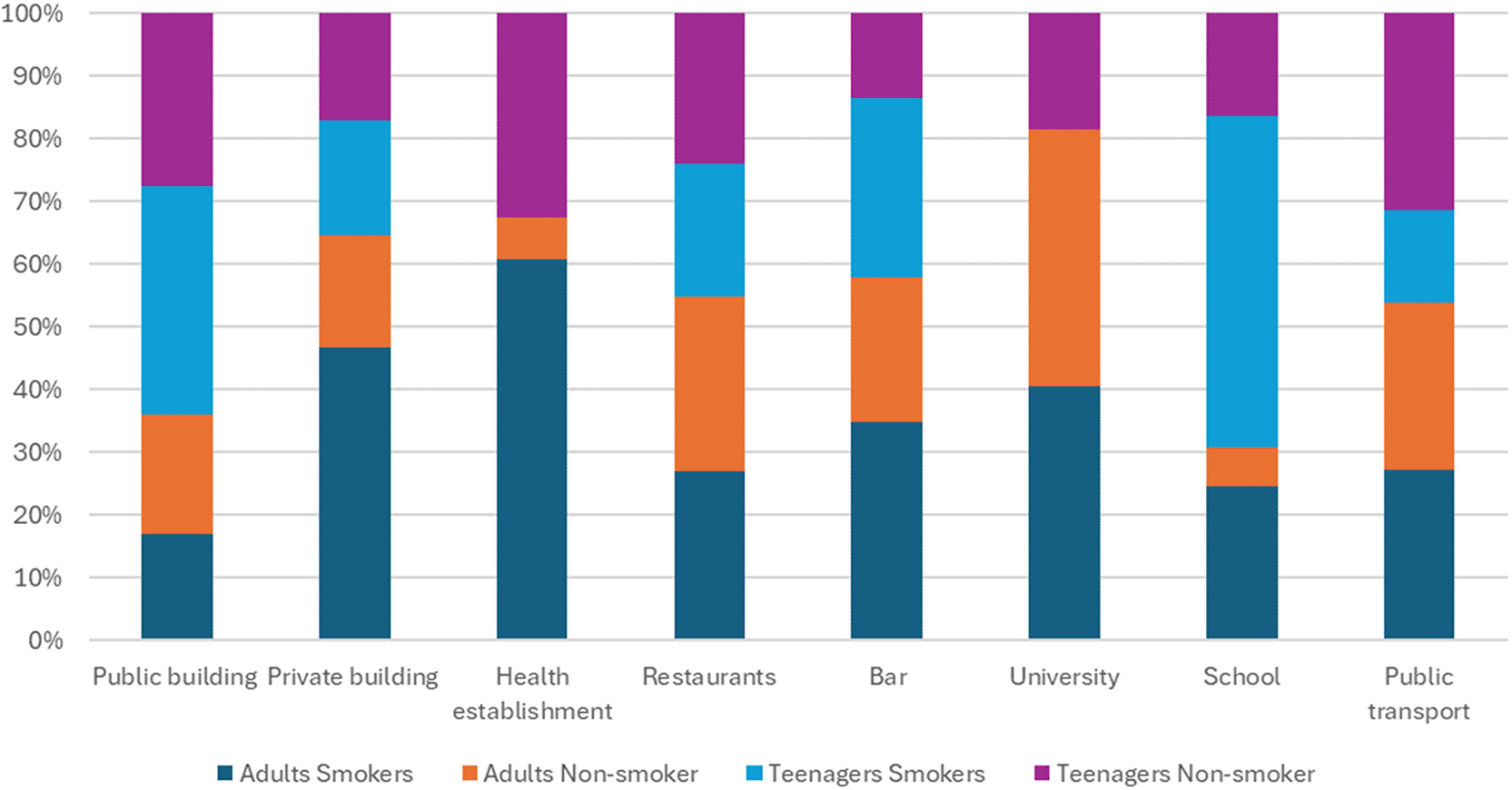
The perceptions of places where people smoke differ between smokers and non-smokers in both groups. Bars are the most common place for smoking, followed by restaurants ( Figure 1).
Regarding cessation intention, in the adult population, only 12.5% of current smokers planned to quit within the next month. However, a significantly larger portion (35.7%) had no intention of quitting in the following 12 months, and 33.9% would consider quitting sometime within the next year. In the case of teenagers, 7.6% planned to quit within the next month, 7.6% within the year, while 38.5% had no intention to quit in the next 12 months; notably, 46% did not know or did not respond.
Among adult smokers, 57.9% attempted to quit in the previous 12 months. Of these, 21.2% (n = 7) remained abstinent for months, 42.4% (n = 14) for weeks, 24.2% (n = 8) for days, and 9% (n = 3) for less than a day. Only 27.2% tried quitting without assistance.
In the past 12 months, 57% of adult smokers and 65% of adult non-smokers visited a healthcare provider (p < 0.001). However, only 31.2% of smokers and 34.8% of non-smokers were asked about smoking during those visits (p = 0.61). Only 25% of smokers received medical advice to quit smoking.
Lung cancer was widely recognized by adults because of tobacco consumption, regardless of smoking status (98.2% of smokers, as well as non-smokers) and teenagers (92.3% of smokers and 87% of non-smokers). Addiction was also commonly acknowledged, with 96.4% of adult smokers and 92.2% of non-smokers identifying it as a consequence, along with 76.9% of teenage smokers and 78.6% of non-smokers. In contrast, cardiovascular and respiratory diseases were mentioned far less frequently ( Table 2).
Knowledge of secondhand smoke, as a serious health risk, was significantly higher in non-smoking adults (94.6%) compared to smokers (85.7%; p = 0.03). In teenagers, this knowledge was lower and no different in both groups (61.5% smokers vs. 77.1% non-smokers; p = 0.20). However, in specific problems, e.g., cardiac or pulmonary, in adults, there was no difference between smokers and non-smokers, but the rates were higher than those of teenagers ( Table 3).
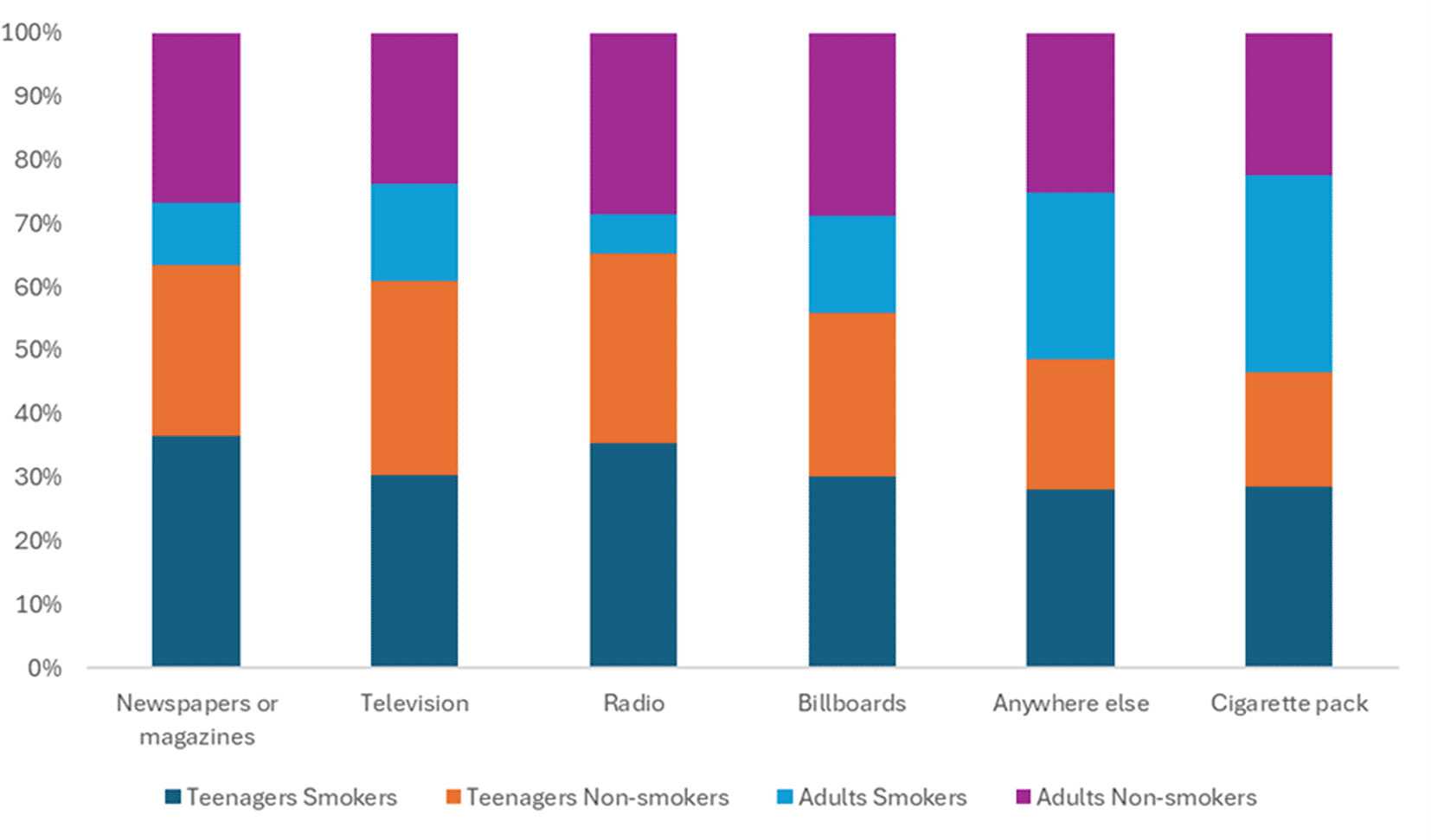
A significant difference was found in awareness of health risks from smokeless tobacco among adults (37.5% smokers vs. 57.2% non-smokers; p = 0.01), but not among teenagers. Both adults and teenagers, regardless of smoking status, reported low impact from general public information about smoking risks, independently of the communication media. Cigarette pack warnings were considered the most effective medium, particularly among smokers ( Figure 2).
Regarding smoking at home, 21.4% of adult smokers allowed it inside their homes compared to only 7.7% of non-smokers (p < 0.01). Additionally, 66% of smokers had others smoking in their home, versus 18.1% of non-smokers (p < 0.001). At the workplace, 66.1% of adult smokers reported smoking restrictions, yet 33.9% had seen someone smoking there in the past 30 days.
Support of the anti-smoking laws varied significantly between smokers and non-smokers in both age groups, particularly regarding enforcement in public spaces like hospitals, transport, churches, schools, and universities ( Table 4).
Regarding tobacco alternatives, awareness of electronic cigarettes was high among adults, with 92.9% of smokers and 84.6% of ex-smokers reporting familiarity; however, usage remained low, with only 10.7% of smokers and 3.8% of ex-smokers having tried them. Support for increasing tobacco taxes showed a statistically significant difference, with 77.1% of non-smokers in favor compared to 62.5% of smokers (p = 0.032). On the other hand, dual usage was high in the teenage population with 69.2% of Galapagos teenage smokers and 33.33% of ex-smokers also use electronic cigarettes.
Our results showed that in the adult population resident in the Galapagos, there is a high prevalence (25.3%) of cigarette consumption, even though in Ecuador efforts to reduction on tobacco consumption have been made since 2011 with the establishment of the Organic Law of regulation and Control of Tobacco based on the Framework Convention on Tobacco Control provided by the WHO.11 Among teenagers, the prevalence of smoking was found to be 6.1%. Although much lower, teenage smokers started consuming at 15 years old. This would be an indicator that perhaps the policies taken towards the reduction of tobacco could be taking effect on younger populations, nevertheless, more has to be done to diminish this number further.
The results of this study show that adult smokers are very much aware of other smokers in their surroundings. However, the main places where smoking was seen were bars, followed by restaurants. Even though these places should, according to the WHO regulations, be a smoke-free environment, in reality, they are not. Unfortunately, these strategies have not had the desired effect wanted and expected to increase smoke-free environments.6
A strategy proposed to help smokers quit smoking is switching to alternative forms of tobacco, like loose leaf chewing tobacco, moist snuff, snus, dissolvable tobacco, and electronic cigarettes.12 However, electronic cigarette use is in question since there have been no long-term controlled clinical trials that establish the efficacy of using them to facilitate quitting smoking.12,13 Indeed, in the Galapagos Islands, according to our study, most adult smokers and ex-smokers had heard about electronic cigarettes, and 10.7% of adult smokers were dual users.
Dual use of both cigarettes and smokeless tobacco products has been identified with negative health outcomes, including increased rates of cardiovascular disease and esophageal as well as pancreatic cancers. Studies have also found that dual use can make quitting tobacco more difficult.12
Although evidence-based smoking cessation strategies are well established,14 our results indicate that most individuals attempting to quit did not follow a specific method. This highlights the limited use of available and recommended cessation approaches, likely due to a lack of awareness of these options and the challenges in accessing necessary tools or medications, particularly given the geographic constraints of the islands. These constraints may be addressed through policies that facilitate access to the means to promote smoking cessation and the medications needed to address it.
According to the US Public Health Service Guideline, the first step to help a patient quit smoking is starting the conversation, and the guideline encourages physicians to use the 5A’s and 5R’s model.15 The results of the survey conducted in the Galapagos indicated that a minimum of the adults surveyed were asked about their smoking habits in the last medical provider visit in the last 12 months, represented by 31.2% of smokers and 34.8% of non-smokers. Furthermore, only a quarter of adult smokers were counseled on quitting tobacco consumption habits.
To help a patient quit smoking requires interdisciplinary efforts, including the medical community, public health policies, and education. The last area mentioned is a critical factor as the tobacco industry has targeted teenagers specifically, and the popularity of electronic cigarettes or vapes is increasing in this population. In 2016, 11.8% of students ages 13-15 from Ecuador reported smoking habits.16 In our survey, 6.1% of teenagers consider themselves current smokers and 4.2% ex-smokers, giving a total of 10.3% of teenagers interviewed who have tried cigarettes in their lives. Additionally, the knowledge about the consequences of tobacco was found to be very poor, whereas less than half of the teenagers interviewed were aware of the health issues related to cigarettes in most systems. The most well-known consequence for teenagers was lung cancer, and the least well-known consequences were emphysema, sexual dysfunction, and alopecia. These results show that the general knowledge of the consequences of tobacco needs to improve from an early age, and the intervention of education can help in this matter.
Another concern is poor regulation and varied methods of distribution for electronic cigarettes, with widespread knowledge about them among teenagers. Access to this type of cigarette is widespread, and the results show that 69.2% of Galapagos teenage smokers and 33.33% of ex-smokers also use electronic cigarettes. The results found in Galapagos correlate to studies worldwide. A systematic review and meta-analysis regarding the global prevalence of e-cigarettes in youth found an increase in the prevalence in this population, especially in males.17
Cigarette butts have been identified as one of the most common types of waste. Approximately 760,000 metric tons of cigarette butts are produced each year. These account for almost half of all litter recovered from both roads and streets.18 These waste products can be harmful to humans, animals, and environmental health. Therefore, preventive and corrective actions must take place at a political as well as an individual level to minimize the damage caused to public health.
A study took place in 2021 in the Romanian population that aimed to identify the behaviors as well as the motivations of smokers and the environmental impact that tobacco waste has. This study also showed that tobacco consumers are not aware of the environmental impact that tobacco consumption has. Almost a third of smokers mentioned they believed cigarette butts were biodegradable, and another third of smokers mentioned they were not aware of this aspect of tobacco waste.19 This could explain the lack of appropriate disposal behavior. Similar results were obtained in Spain and in Scotland in recent studies.19
Third-hand smoke pollution, the residue of tobacco smoke, is part of the environmental impact that tobacco has on human health. In indoor areas, third-hand smoke pollution can be detrimental to children due to their vulnerable immune systems.20 In our study, we found that one-third of adult smokers had someone smoking inside their houses. Similarly, one-third of teenage smokers perceived smoking inside schools. These findings identify a possible high degree of third-hand smoke pollution in the indoor areas of the Galapagos population. In outdoor areas, third-hand smoke is found in solid-waste landfills or dumps and persists in treated wastewater and in drinking water treatment plants.20 Another impact of tobacco waste is seen in marine life, which can cause harm to marine species due to entanglement or ingestion of waste plastics.19 The Galapagos Conservation Trust (2024) found 52 species tangled in plastic, and 69% of the plastics that are found on the coastline are single-use.21
In conclusion, this report highlights a higher prevalence of smokers in the Galapagos Archipelago compared to adult smoking rates in continental Ecuador.22 These findings suggest that conventional strategies to reduce tobacco consumption may be insufficient, particularly within such unique populations. Therefore, additional efforts are necessary to reduce tobacco product consumption, prevent early initiation, and increase awareness of the detrimental health effects in the Galapagos population. Moreover, addressing the environmental impact resulting directly from tobacco consumption should be prioritized.
The limitations in our study include a distribution of sample size that is not concordant with the general population in the Galapagos Archipelago. Our most significant survey recollection was done in San Cristóbal Island, while the island with the most residents is Santa Cruz. Therefore, our results may not accurately represent the Galapagos population. The sample selection methodology used was convenience sampling; nevertheless, given the variability and geographic difficulties, other sampling methodologies were not possible. Additionally, since our study was specific to the Galapagos, the generalizability of the study is limited, and its results cannot be extrapolated to wider populations such as the Ecuadorian or Latin American population though differences and similarities between populations can and have been done. Furthermore, studies conducted in wider populations with greater generalizability should be conducted to better identify the knowledge, attitudes and practices towards tobacco consumption. Consequently, targeted public health policies can be created to tackle this concerning problem.
This study was reviewed and approved by the Bioethics Committee at the Universidad San Francisco de Quito (2022-060IN). To ensure anonymity, verbal informed consent was obtained before the survey was conducted, and therefore, the first question was: “If you choose to participate, please state to the interviewer: I freely and voluntarily agree to take part in this study. The survey will begin only after you provide this confirmation. If you prefer not to participate, simply inform the interviewer.” In the case of teenagers, previous authorization was obtained both from the educational institution and their parents, before asking for their voluntary participation as previously described.
| Views | Downloads | |
|---|---|---|
| F1000Research | - | - |
|
PubMed Central
Data from PMC are received and updated monthly.
|
- | - |
Provide sufficient details of any financial or non-financial competing interests to enable users to assess whether your comments might lead a reasonable person to question your impartiality. Consider the following examples, but note that this is not an exhaustive list:
Sign up for content alerts and receive a weekly or monthly email with all newly published articles
Already registered? Sign in
The email address should be the one you originally registered with F1000.
You registered with F1000 via Google, so we cannot reset your password.
To sign in, please click here.
If you still need help with your Google account password, please click here.
You registered with F1000 via Facebook, so we cannot reset your password.
To sign in, please click here.
If you still need help with your Facebook account password, please click here.
If your email address is registered with us, we will email you instructions to reset your password.
If you think you should have received this email but it has not arrived, please check your spam filters and/or contact for further assistance.

Comments on this article Comments (0)