Keywords
Wages, Gender, Firms productivity, Manufacturing, Emerging Economy

Wages, Gender, Firms productivity, Manufacturing, Emerging Economy
This revised version includes substantial conceptual, methodological, and empirical improvements across all sections of the manuscript. The Introduction and Literature Review have been significantly expanded to integrate a broader set of theoretical approaches explaining productivity and its determinants. In addition to neoclassical and human capital theories, the revision now incorporates efficiency wage theory, industrial organization, firm heterogeneity (Syverson, 2011), and feminist economics perspectives emphasizing occupational segregation, access to training, and promotion barriers (Blau & Kahn, 2000; Kabeer, 2016). The empirical review has also been reinforced with cross-country evidence illustrating variations in the productivity–wage relationship, including new Colombian data from RUES, Emicron, and WCP sources, providing a more robust contextual foundation.
The Theoretical Framework was consolidated to explicitly include gender as a structural dimension of productivity, clarifying how institutional and cultural factors interact with firm-level dynamics. The Discussion Section has been reformulated to focus on three elements: (i) the gendered transmission of productivity to wages; (ii) identification of potential biases and sectoral limitations; and (iii) implications for inclusive wage and promotion policies that foster both equality and competitiveness.
In terms of methodology, we strengthened the explanation for employing a dynamic random effects GLS model instead of fixed effects, detailing the Hausman test results and theoretical justification. The estimation of Total Factor Productivity (TFP) was clarified, addressing traditional critiques by distinguishing between macro- and micro-level perspectives, and acknowledging its limitations. Additionally, the study introduces a methodological innovation by extending Wooldridge’s (2009) estimator to disaggregate labour by gender, allowing the estimation of separate output elasticities for male and female labour.
Lastly, all tables and figures were revised for clarity, new citations were added to enhance analytical rigor, and minor language and formatting adjustments were made to improve overall readability and precision.
See the authors' detailed response to the review by Davide Villani
See the authors' detailed response to the review by Ronald M. Hernandez
The economic literature, particularly within the industrial organization, suggests that firm wages depend on several factors, including firm size (Carlsson, et al. 2016), employee education and skills (Mincer, 1974; Schultz, 1961), economic subsector (Suhányi, et al. 2023), geographic location (Méjean & Patureau, 2010), and the presence or absence of unions (Card, et al. 2017). Among these determinants, productivity is considered one of the most critical factor influencing wages (Feldstein, 2008).
Based on the neoclassical microeconomic theory, increases in labor productivity positively affect real wage growth in the long-run (Mankiw, 2015). In line with this, industrial organization literature acknowledges that firm productivity significantly influences employees’ wages. Although empirical evidence supporting this hypothesis varies in strength depending on the country and industries analyzed, productivity is widely recognized as a key determinant of wages, whether at the individual or firm level (Meager & Speckesser, 2011).
Despite this, previous literature has left two issues aside. First, the method used to measure productivity and second, the role of gender in these topics. Regarding productivity measurement, several studies, particularly in macroeconomics, have used the average product of labor as a proxy. This approach is limited as it measures labor productivity rather than firm productivity and only applies in the short-run (Sargent & Rodriguez, 2000). While other studies, particularly in microeconomics, have correctly used total factor productivity (TFP) at the firm level, many studies generate flawed estimates due to the use of statistical methods that generate biased and inconsistent parameters, leading to inaccurate conclusions and recommendations (Gómez Sánchez, 2020).
The second issue concerns the exclusion of gender from productivity analysis. Microeconomic and industrial organization theory frequently subsumes workers under the generic label of “labor,” a simplification that introduces biases. Factors such as gender-based occupational segregation, unequal access to training, and asymmetric promotion opportunities can distort productivity measurement when labor is treated as a homogeneous input. This limitation is particularly relevant in emerging economies such as Colombia, where industries like Beverages, Garments, Textiles, Pharmaceuticals, and Chemicals employ a large share of women. Recognizing these differences is essential, since productivity may respond differently to female and male participation, and such distinctions should be reflected in wage determination.
In this order of ideas, this paper aims to assess the relationship between wages and productivity in firms with a high proportion of female employees or female firms hereafter, compared to firms with a higher proportion of male employees, referred to as male firms hereafter (Tsou & Yang, 2019; Gomez Sanchez, et al., 2025). To do so, we first estimate unbiased total factor productivity using the two-stage method proposed by Wooldridge (2009), and for the first time, we disaggregate the workforce into male and female to obtain gender- a gender-specific productivity estimate rather than an aggregate measure of TFP as the tradition.
In this regard, we implement the methodology in two steps. First, we use the two-equation system proposed by Wooldridge (2009) to obtain consistent estimates of input elasticities and unbiased TFP estimates. This system is jointly estimated under the Generalised Method of Moments (GMM) framework. As a novelty, we separate employees by gender to estimate TFP. Second, we implement a dynamic random effect generalized least squares model (GLS) with panel data to address endogeneity. Moreover, we also include industrial organization covariates, such as exports or innovations, along with wage persistence; that is, firms with higher (or lower) wages in the past tend to continue those wage levels in the present. In addition, the model also deals with potential initial condition problems (Blundell & Bond, 1998).
The data comes from The Annual Manufacturing Survey (EAM) and The Technological Development and Innovation Survey (EDIT), both published by the Statistics Department of Colombia (DANE) for the period 2013-2020. After merging eight waves of EAM and EDIT, we obtain an unbalanced panel with 59,355 observations. Our main findings are summarised as follows: i) Female firms exhibit higher productivity than male firms. ii) The impact of female firms’ productivity on wages is lower than female firms’ productivity, suggesting wage discrimination in the Colombian manufacturing industry. iii) Female labor output elasticity is higher than male elasticity, indicating that women contribute more to firm output than men iv) TFP displays lower input elasticities than gender-specific TFP estimates, suggesting that TFP underestimates firm productivity when gender is considered.
The remainder of this paper is organized as follows. Section 2 examines theoretical and empirical literature. Section 3 describes the data. Section 4 displays TFP and stochastic model estimates. Section 5 discusses the results, and Section 6 offers conclusions.
To introduce the theoretical foundations on productivity and wages, several approaches explain how pay levels relate to worker performance. Human capital theory argues that individual productivity, and consequently wages, derive from investments in education, training, and work experience (Schultz, 1961; Mincer, 1974). These investments increase skills and capabilities, producing enduring benefits not only for workers but also for firms through higher efficiency and better task performance.
Besides, efficiency wage theory, as formulated by Shapiro and Stiglitz (1984) and expanded by Akerlof and Yellen (1986), emphasizes the strategic role of compensation. Firms may deliberately set wages above the market-clearing level to discourage shirking, lower turnover, and stimulate motivation, thus highlighting the endogenous relationship between remuneration and output. Together, these theories provide a basis for understanding why wages may reflect both the productive potential of workers and managerial choices aimed at improving performance.
Building on this foundation, insights from firm heterogeneity and industrial organization literature broaden the discussion by situating productivity within a wider set of market and managerial factors. Syverson (2011) notes that differences in technology adoption, market structure, managerial quality, and access to inputs generate significant productivity gaps among firms operating in similar environments. These findings suggest that productivity does not stem solely from individual characteristics but also from firm-level strategies and competitive pressures that shape the efficiency of resource allocation. As a result, wage determination is influenced not only by the capabilities of workers but also by the organizational and structural conditions under which firms operate.
Incorporating gender economics and labour market segmentation further improves these models by revealing how institutional and structural biases shape productivity outcomes. Occupational segregation, unequal access to training, and limited promotion prospects systematically distort productivity measures when labour is treated as a homogeneous input (Blau & Kahn, 2000; Seguino, 2000; England and Folbre, 2002; Kabeer, 2016). A growing body of feminist economics shows that women are frequently concentrated in lower-paid sectors or occupations, creating a persistent gap between actual productivity and wages (Becker, 1971; Goldin, 2014). Moreover, recent evidence suggests that even when female workers or female-dominated firms achieve high productivity, wage transmission tends to be weaker, pointing to the influence of structural discrimination (Rivera-Lozada et al., 2024).
These dynamics are particularly relevant in emerging economies such as Colombia, where industries like garments, textiles, and pharmaceuticals employ a large share of women (Ñopo and Gallardo, 2009). Integrating gender-sensitive approaches into productivity analysis thus allows for a more nuanced understanding of how institutional barriers and social norms interact with firm performance and wage setting.
The empirical evidence on gender and productivity present mixed findings. Tsou and Yang (2019) show that Chinese firms with higher proportions of female workers often display lower productivity than those with more male workers. Nonetheless, when women possess higher levels of education, they significantly enhance firm productivity, particularly in small private and foreign firms, whereas the effect is weaker or absent in medium and large public enterprises. Pfeifer and Wagner (2014) similarly report contrasting outcomes: under an OLS approach, female-dominated firms appear less productive than male-dominated ones, yet a GMM framework reverses these results. Such inconsistencies underscore the importance of methodology and the operational definition of “female firms.” Most existing studies focus on the gender of CEOs or owners, whereas our work, constrained by the structure of the EAM survey, classifies firms as female or male according to the proportion of women or men in their workforce. This distinction is important because the composition of employees can reflect broader organizational practices, sectoral norms, and institutional barriers that leadership-based classifications may overlook.
In Colombia since early stages of industrialization, women have contributed actively to manufacturing, particularly in food and textile sectors, often as a means to supplement household income (Santos, 2017; Arango, 1991). Historically, their work was associated with low pay, shaped by religious norms and disciplinary practices that undervalued female contributions (Arango, 1991). Over time, women have strengthened their position in the economy by investing in education and acquiring skills that match or even surpass those of men (Goldin, 2014).
Despite these advances, wages still fail to adequately reward women’s resilience and investment in human capital, and gender wage gaps remain pervasive worldwide (World Bank, 2024). Recent Colombian data reinforce this paradox: women-led firms, identified in the Unified Business and Social Registry (RUES), represent 59% of the 1.2 million registered firms and around 1.8 million microenterprises. According to the Emicron Survey (2022) and WCP (2024), these firms show slightly higher productivity (34.3% compared with 33.25% for male-led firms) and greater efficiency improvements (25.8% versus 17.9%). Nevertheless, wage differentials continue to exceed productivity gaps. Santos (2017) highlights three factors behind this persistence.
First, firms often perceive female labour as costlier due to assumptions about motherhood and absenteeism, even when they lack systems to measure labour costs by sex (Todaro et al., 2002). Second, some women-led firms may capitalize on relatively lower wages to increase profits, diverging from the predictions of efficiency wage theory. Third, occupational segregation by sector confines many women to specific industries, perpetuating unequal pay structures (Goldin, 2014).
Lastly, merging these perspectives reveals that the decoupling between wages and productivity, well documented in advanced economies since the 1970s and linked to globalization, declining bargaining power, and labour market segmentation, acquires a distinctive gendered dimension in emerging economies. In Colombia, this divergence is amplified for women-led or female-intensive firms, suggesting that wage discrimination is embedded in the very mechanisms that connect productivity and remuneration. Understanding these linkages is therefore essential for developing policies that promote fair compensation, enhance firm efficiency, and reduce structural gender inequalities in the labour market.
TFP broken down by gender follows Wooldridge’s (2009) method. This framework takes advantage of the GMM estimation to shorten the standard error calculation and avoid using bootstrapping techniques. Expressly, we assume that the production process follows a linearised Cobb-Douglas production function:
denotes firm’s i production in period t; is the women labor; is the men labor; is the firm’s capital stock; and, is the materials consumption, and is the electric energy consumption. Besides, is the firm’s productivity, which is only observable or predictable by the firm. As well, represents an error term unobserved or unpredictable by firms.
Olley & Pakes (1992) assume that capital stock evolves according to the perpetual inventory method, and it is determined in the previous period (state variable). Therefore, current productivity shocks do not affect capital stock (Eslava et al., 2013). We also assume that labor by gender and firm’s energy consumption are chosen in the same period, as they are consumed (freely variable factors). However, Ackerberg, et al., (2015) demonstrate that these choices are correlated with , so the equation (1) cannot be estimated by ordinary least squares (OLS), fixed effects (FE), or instrumental variables (IV). In this sense, Levinsohn and Petrin (2003) suggests using the materials demand function as a proxy for unobserved productivity. The demand for materials is as follows:
According to Levinsohn and Petrin (2003), this demand is monotonically increasing in productivity, so we can invert this function to express firms’ productivity in terms of observables:
is an unknown function of ; and . Replacing (3) in (1):
is unknown, so it is proxied by third-degree polynomials in the respective arguments. Nevertheless, and are collinear with so we cannot to identify these parameters. Following Olley & Pakes (1992), and Levinsohn and Petrin (2003), it is necessary to introduce the law of motion of productivity as a Markov process:
Furthermore, by lagging and replacing equation (3) into (6), we get:
It is important to mention that we acknowledge the historical and theoretical critiques of Total Factor Productivity (TFP), particularly those raised by authors such as Shaikh (1974), or Felipe & McCombie (2020). Their arguments, which question the ability of TFP to isolate technological progress from other factors, are fundamental in the macroeconomic debate. However, it is crucial to distinguish these objections from their applicability to firm-level productivity analyses. Our research focuses on the productive efficiency at the firm level, where TFP is the standard performance measure. Unlike macroeconomic models, our analysis is focused on how the gender composition of the workforce affects productive efficiency and wages within the firm. Furthermore, the initial critiques of TFP, such as those by Shaikh (1974), precede the key methodological innovations in production econometrics. Modern approaches, such as those by Olley and Pakes (1992); Syverson, (2011) and in particular, the two-step method of Wooldridge (2009), were developed to deal with endogeneity problems. These advancements allow us to obtain more robust and consistent TFP estimates by controlling for the correlation between inputs and unobserved productivity shocks. Our main methodological contribution is an extension of the Wooldridge (2009) approach to disaggregate the labor factor by gender, allowing us to estimate the output elasticity of female and male labor separately.
In the next section, our estimation results consistently show that the output elasticity of female labor exceeds that of male labor. This differential is obtained prior to the calculation of TFP, reinforcing the reliability of our production function estimates. The stability of these parameters indicates that the subsequent TFP measure provides a valid and accurate representation of firm-level efficiency and productivity differences.
This section describes some key variables used in this study that provide insight into the empirical model. We specifically examine the output elasticity of labor without considering gender and with gender taken into account, as well as the linkage with firms’ salaries, analyzed for the entire sample and by manufacturing sectors.
Table 1 presents the estimates of labor product elasticities using three different methods: Ordinary Least Squares (OLS), Generalized Least Squares (GLS), and Wooldridge’s (2009) two-step method. These estimates are analyzed under two scenarios: one considering the firm's total labor force (Labor) and the other distinguishing employees by gender (women and men’s labor).
As expected, the results generally reveal that all methods yield positive and statistically significant elasticities. Nevertheless, without distinguishing by gender, the product elasticity under Wooldridge’s (2009) method is 0.286. In contrast, the OLS and GLS methods tend to overestimate this figure, likely due to biases from unaddressed endogeneity issues in the Cobb-Douglas production function. When gender is considered, Wooldridge’s (2009) method shows that the product elasticity of women’s labor is 0.136, while that of men’s labor is 0.132. The remaining elasticities corresponding to capital (0.093), materials (0.690), and energy (0.045) fall within the ranges reported by empirical studies on the industrial organization in Colombia (Gómez-Sánchez et al., 2022; Llopis et al., 2022; Sanchis Llopis et al., 2024).
The significance of our findings extends beyond the absolute size of the elasticity gap. The results’ econometric significance stems from their statistical significance and consistency across different model specifications. While the use of logarithmic transformations and monetary variables in U.S. dollars may compress the apparent magnitude, these differences translate into substantial economic effects when converted to Colombian pesos. Furthermore, our findings reveal that the higher output elasticity of female labor is a general characteristic of the Colombian manufacturing industry. This is due to that only one of the twenty-three sectors deviates from the overall pattern.
The differential in labor product elasticities between men and women is noteworthy: the elasticity of female labor is higher, implying that women’s average contribution to the firms’ output surpasses that of men. However, it is possible that women’s wages do not correspond to this greater contribution to production. In this regard, we present additional descriptive analyses to explore this idea.
Figure 1 shows that male firms have higher average log-wages (13.52) than female firms (13.09). Besides, in terms of average product of labor (APL), male firms exhibit higher productivity (11.598) than female firms (11.127), seemingly aligning with the prediction of neoclassical theory.
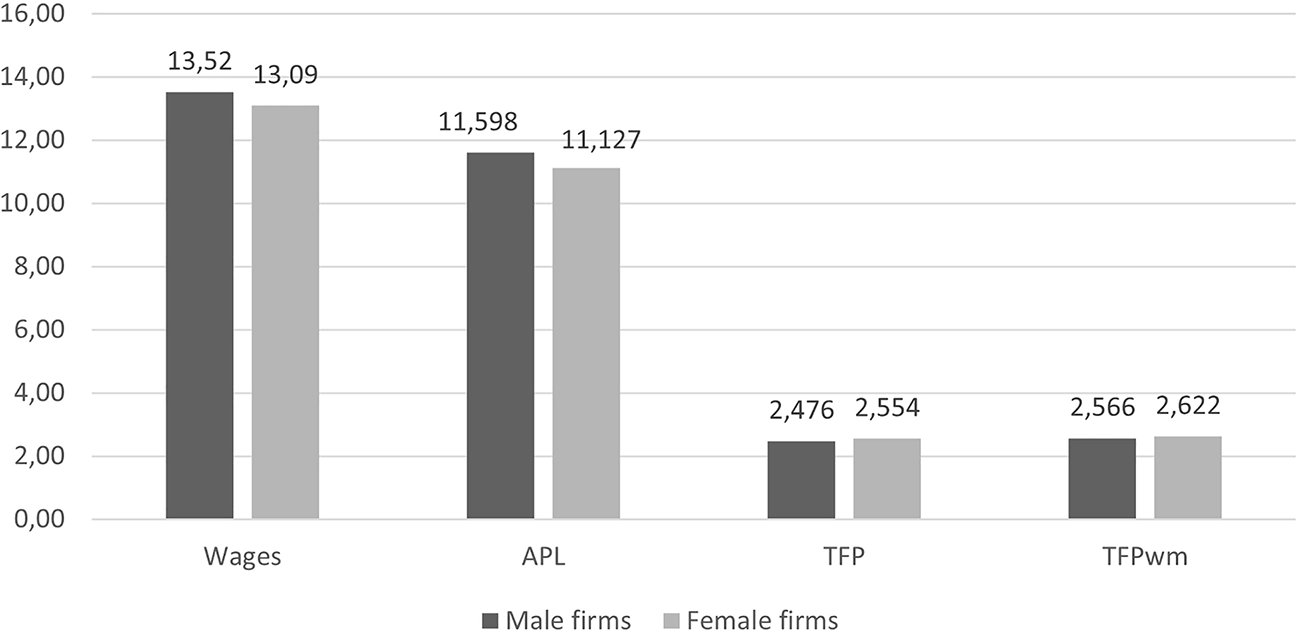
However, more precisely, measures of a firm’s productivity suggest different results. In the TFP scenario, female firms outperform male firms, with values of 2.554 and 2.476, respectively. Furthermore, in TFP weighted by gender (TFPwm), female firms also perform better (2.622) compared to male firms (2.566). Whilst further analysis is required to establish causality, these findings advise a potential productivity advantage when gender weighting is considered.
Table 2 presents wages and different productivity measures broken down by manufacturing sectors to deepen our analysis. In our preferred scenario (TFPwm), the numbers reveal that in industrial sectors such as Food, Textiles, Leather, Publishing, Coking, chemicals, Electric motors, Vehicles, and Machine Maintenance, female firms’ productivity displays higher productivity than male firms. However, wages are lower for female firms compared to salaries in male firms. In the remaining sectors, there is a clear correspondence between productivity and wages, that is, the more productive, the higher the wages, regardless of firms’ gender orientation.
Other productivity measures, such as TFP, are consistent with the observed results for TFPwm. Nonetheless, APL estimates indicate that both productivity and wages are higher in male firms than in female firms across all industries except the Garment sector.
To explore the effect of female firm productivity on a firm’s wages, we offer a dynamic generalized least squares model (GLS) with random effects for panel data. The variables are in natural logs except for dummy variables. In addition, we lagged all covariates in one period to deal with possible simultaneity, except factor variables such as time, industry, and firm localization. The model is as follows:
Where signifies the firms wages; represents the female firm’s index with q ∈ continuous index and r ∈ dichotomous index. Besides, denotes firms productivity; with h ∈ full TFP; j ∈ TFP by gender; and p ∈ APL. Supported in Roberts and Tybout (1997), we introduce the term to capture firm’s wages persistence, that is, firms with higher (lower) wages in the past; currently continue to show higher (lower) wages. In this sense, here persistence aims to capture potential gender discrimination. That is, it examines whether firms that paid lower salaries in female firms in the past continue to do so in the present.
The vector includes firm’s control variables according to industrial organisation. It includes the firm’s classification as SMEs (SMEs), to capture if a firm's size influences wages. In line with Schultz (1961), Mincer (1974), and others, we incorporate employee skills (skills) as a proxy for human capital, as higher levels of education and/or training are associated with increased wages. Specifically, skills are the number of employees with master’s degrees. Export ( and innovations activities ) are included as a part of firm’s internationalisation strategies, as highlighted by De Loecker (2013) and Crepon, Duguet & Mairesse, (1998). According to Schank et al., (2010), firms with strong international trade connections and innovation efforts tend to be more productive and efficient, which typically results in higher employee wages. It is worth mentioning that due to the limited introduction of innovations in Colombian manufacturing, we combine both process and product innovations to achieve accurate statistical representativeness.
As well, the vector accounts for market concentration proxied by Herfindahl-Hirschman index (lihh), and firm’s mark-up (lmarkup). We also include the firms’ age (lage) because, according to the ILO (2015), young small enterprises in Latin America significantly contribute to job creation. On the other hand, following Blundell and Bond (1998), we include pre-sample means of the dependent variable ( ) to deal with correlated unobserved firm heterogeneity in the model estimation. Note that we also control for geographic firm localization (loc), macroeconomic shocks (year), and sector characteristics (ind). Finally, is a composed the error term that consist of a fixed effect of firms ( and an idiosyncratic error term ( .
We adopt a random effects specification because our framework requires simultaneous control for industry-specific characteristics and macroeconomic shocks, which are introduced through sector and time dummies. In a fixed effects specification, these variables would be eliminated, thereby removing crucial cross-sectional variation that is essential for our analysis. For this reason, the Hausman test is not applied, since its conventional interpretation in this context could lead to a misrepresentation of the underlying economic rationale. Consistent with the practice in industrial organization research, the random effects model provides a more suitable framework for capturing the interaction between firm productivity, workforce gender composition, and wage outcomes.
Table 3 shows the estimates of the empirical modelling. Columns (1), (2), and (3) display TFP results for the full industry, female firms, and male firms, respectively. Columns (4), (5), and (6) present TFP results classified by workforce gender, whilst the final three columns analyze the average product of labor (APL). Each scenario includes continuous and dichotomous indices for female firms and wage persistence.
The results are notable. Firstly, all productivity measures positively and statistically significantly impact firm wages. Secondly, the TFP measure without gender differentiation (first three columns) yields lower figures than the gender-specific TFP scenario (columns 4, 5, and 6). Thirdly, as we expected, in this latter scenario, the impact on male-dominated firms is more significant than on female-dominated firms. All else being equal, a 1% increase in TFPwm raises wages by 6.2%, whereas for female firms, the increase is only 5.7%.
The first result eventually supports the neoclassical hypothesis that wages are related to productivity. Nevertheless, in the case of APL (columns 7, 8, and 9), the figures are noticeably lower than those in the first two scenarios. This suggests that using APL to measure a firm’s productivity may be misleading or biased, as it captures short-run employee performance rather than the productivity of the firms as a whole, potentially underestimating the actual impact.
Other covariates reveal additional interesting results. There is evidence of positive wage persistence across all productivity measures, indicating that firms that paid higher (or lower) wages in the past are likely to continue doing so in the future. However, regardless of the productivity measure, the impact is consistently more substantial for male firms than for female firms. Furthermore, the positive and statistically significant estimates of the pre-sample mean of wages , which captures the long-run impact of individual heterogeneity, further support the importance of wages persistence. These findings align with the study by Hansen and McNichols (2020), which suggests that employers’ prior knowledge of employees’ salaries perpetuates historical gender-based wage discrimination.
Firm size reveals that regardless of productivity proxy, SMEs show a negative impact on salaries than large firms, and in addition, female firms SMEs reduce the average wages less than male firms SMEs (-0.539 and -0.612 in the TFPwm case, respectively). These results are consistent with Messina (2019), whose findings reveal that large firms are more profitable and, therefore, pay higher wages, and this is not solely because they attract more skilled workers. Employees with identical qualifications earn better salaries when they work for these firms. As well, Blau and Kahn (2000) highlighted that wage disparities between male- and female-dominated firms could be linked to differing management styles, workplace policies, or labor force composition, and some studies suggest that female leadership may be associated with more equitable pay practices.
Moreover, as we expected, the employees’ skills also positively and significantly affect salaries, as predicted by Human Capital theory. Regardless of TFP measurement, the evidence shows female firms have less impact on salaries than male firms, although when the employees have master's degrees. This is a clear signal of gender discrimination corroborated extensively by many authors, such as Rivera-Lozada et al., (2024) for Colombia, in the context of Kitakawa-Oaxaca-Blinder wage discrimination. In addition, in a typical emerging economy, the magnitude of the parameter (elasticity) is less than one. This suggests low education levels among employees and/or a limited number of hires with master’s degrees or that the manufacturing process does not require a highly specialized workforce.
Internationalization strategies indicate that, for exports of final goods, the results for female firms are inconclusive, as the parameter is not significant. Conversely, for process and/or product innovation activities, the findings support the idea of a positive relationship with wages, with the impact being more significant in female firms than male firms.
According to Gómez Sánchez, (2020), this result may be because in Colombia, small firms tend to be more focused on innovation activities than export activities, whereas the opposite trend is observed in large firms. Furthermore, Dezsö and Ross (2012) argue that gender diversity in leadership can enhance team performance, especially in innovation-driven contexts, as diverse perspectives foster solutions that are more creative and improved decision-making.
For female firms, higher concentration levels tend to boost wages, whilst the evidence related to mark-ups is inconclusive, especially in the TFPwm case. When firms hold significant market power, they may share some of their higher profits with employees through increased salaries, potentially to retain talent or improve productivity. Firms’ age positively and significantly affects wages in all scenarios considered. This evidence supports the findings of ILO (2015), where young small businesses are the ones that contribute the most to job creation. Nevertheless, female firms always display a lower impact than firms with a high male proportion.
Lastly, when firms are geographically located in the Capital District of Bogota (loc), which is the most important economic activity zone in Colombia, female firms consistently have a more significant impact than male firms. Rodríguez-Pose and Crescenzi (2008) emphasize the role of regional dynamics, noting that companies located in economically buoyant areas benefit from knowledge diffusion and network effects, which can amplify the influence of various leadership structures, including those led by women.
The relationship between productivity and wages in the Colombian manufacturing industry confirms that, although both variables are linked, the transmission of productivity into wages differs significantly depending on the gender composition of firms. Our findings show that the marginal contribution of female labor to output is greater than that of male labor, which aligns with evidence from other emerging economies (Tsou and Yang, 2019; Pfeifer and Wagner, 2014). However, this higher contribution is not proportionally reflected in remuneration, supporting the hypothesis that structural discrimination mechanisms persist in labor markets (Blau and Kahn, 2000; Seguino, 2000).
This result has two major implications. First, it challenges the predictions of orthodox microeconomic theory, which assumes a neutral transmission between productivity and wages (Mankiw, 2015). Second, it highlights the importance of incorporating feminist economics and labor segmentation approaches, which emphasize how occupational segregation, unequal access to training, and career progression barriers distort the productivity-wage relationship (Kabeer, 2016; England and Folbre, 2002; Ñopo and Gallardo, 2009). These perspectives suggest that productivity cannot be treated as a gender-neutral input, especially in economies where women are concentrated in specific industries.
At the same time, some limitations of this study should be considered. First, due to lack of information, the classification of firms as “female” or “male” relies on the proportion of female workers, not on ownership or leadership, which may complicate comparisons with the international literature. Second, although the econometric strategy (Wooldridge, 2009) deals with endogeneity, productivity measures remain sensitive to sectoral data availability and potential measurement errors (Felipe & McCombie, 2020). Third, the analysis is restricted to manufacturing firms, while in service sectors, where female employment is even higher, patterns of wage discrimination may diverge (World Bank, 2024).
The practical implications of these findings are particularly relevant for policy and business strategy. Narrowing the gap between productivity and wages in female-intensive firms is not only a matter of equity but also of efficiency. Ignoring the productive contribution of female labor constrains firm competitiveness and weakens inclusive economic growth. Policy initiatives could include the adoption of gender-disaggregated cost accounting systems, fiscal incentives for firms with inclusive hiring and promotion practices, and training programs targeting women in high-productivity sectors (ILO, 2015; Rodríguez-Pose & Crescenzi, 2008). Such measures would contribute to aligning wages with productivity while addressing structural sources of gender inequality.
In other words, the persistence of a productivity-wage gap in female-intensive firms demonstrates that gender-based wage discrimination is not incidental but structurally embedded. Advancing towards policies and business practices that recognize the differential contribution of female labor is crucial not only for achieving gender equality but also for strengthening the efficiency and sustainability of the Colombian productive sector.
As a conclusion, we can point out that gender wage discrimination goes beyond individual differences between men and women to extend to female and male firms in Colombia. This situation could reveal labor exploitation that would be conditioning the productivity of female firms and has been perpetuated since the dawn of industrialization in Colombia. These findings highlight the need for public policies that address gender pay disparities by recognizing and rewarding productivity regardless of gender. These could include gender-sensitive cost accounting systems, incentives for inclusive hiring practices, and targeted efforts to break occupational segregation. Otherwise, persistent wage gaps will continue undermining gender equity in the labor market.
| Views | Downloads | |
|---|---|---|
| F1000Research | - | - |
|
PubMed Central
Data from PMC are received and updated monthly.
|
- | - |
Provide sufficient details of any financial or non-financial competing interests to enable users to assess whether your comments might lead a reasonable person to question your impartiality. Consider the following examples, but note that this is not an exhaustive list:
Sign up for content alerts and receive a weekly or monthly email with all newly published articles
Already registered? Sign in
The email address should be the one you originally registered with F1000.
You registered with F1000 via Google, so we cannot reset your password.
To sign in, please click here.
If you still need help with your Google account password, please click here.
You registered with F1000 via Facebook, so we cannot reset your password.
To sign in, please click here.
If you still need help with your Facebook account password, please click here.
If your email address is registered with us, we will email you instructions to reset your password.
If you think you should have received this email but it has not arrived, please check your spam filters and/or contact for further assistance.
 ). TFP (ωit
 ), on the other hand, represents the unobservable component of firm productivity that is transmitted over time and can be correlated with the firm’s input decisions, which leads to the endogeneity problem.
 ) and male labour (βlm
 ), which to our knowledge, has not been systematically implemented in previous studies using this cutting edge estimation approach. This approach is crucial for determining whether the marginal contribution to production (output elasticity of labour) differs between men and women at firm level. If, as our preliminary results in Table 1 suggest, βlw
Comments on this article Comments (0)