Keywords
Health Awareness, Public Policy, Healthcare Spending

This article is included in the Health Services gateway.
Health Awareness, Public Policy, Healthcare Spending
This version has been revised to improve methodological clarity, reproducibility, and practical relevance. The forecasting description has been clarified to specify the use of univariate ARIMA models for GDP and healthcare spending as a share of GDP, based on annual data from 2018–2023, with projections reported for 2024–2030. The Results and Discussion section has also been strengthened to provide clearer interpretation of Figures 1 and 2 and the projected fiscal implications.
To enhance transparency, the Data Availability Statement has been expanded and the extended data repository has been updated to include the forecasting workflow files, including the README file, Python reconstruction script, and Excel file containing reconstructed forecasting inputs and outputs. In addition, the manuscript has been refined for readability, with targeted revisions to the conclusion and the inclusion of practical policy recommendations for decision-makers and a brief teaching note. Minor corrections were also made to improve internal consistency, formatting, and metadata.
To read any peer review reports and author responses for this article, follow the "read" links in the Open Peer Review table.
This case study focuses on Thailand’s national health awareness policy, initiated in response to rising public health concerns related to non-communicable diseases (NCDs) and accelerated during the COVID-19 pandemic. It highlights the government’s integrated response from 2020 to 2024, including media campaigns, digital platforms, and localized interventions.
This case study presents Thailand’s national health awareness policy and its relationship to healthcare spending. The synthesis draws from multiple datasets and existing evidence to underscore Thailand’s increasing focus on health awareness, enhance public health outcomes through education, prevention, and robust policy frameworks.
Over the years, Thailand has demonstrated remarkable progress in fostering health awareness among its citizens, employing a diverse and comprehensive approach that integrates public health campaigns, community involvement, and the incorporation of health education into school curricula. These initiatives reflect the government’s dedication to equipping the population with the knowledge and tools necessary to adopt healthier lifestyles and prevent the onset of diseases.
A key aspect of Thailand’s strategy has been the use of mass media campaigns, digital platforms, and localized public health interventions to promote healthier behavior and improve health literacy. These measures addressed communicable diseases such as dengue fever and COVID-19, as well as non-communicable diseases (NCDs) including diabetes, hypertension, and cardiovascular disease. From a policy perspective, Thailand’s response can be understood through Kingdon’s Multiple Streams Framework and the Stages Heuristic Model, as the convergence of public health pressures, digital health opportunities, and political attention created a policy window for reform. At the implementation level, the Health Belief Model helps explain how campaigns encouraged perceptions of susceptibility, severity, and preventive action, while broader structural considerations remain consistent with the social determinants of health perspective.
The formulation of Thailand’s health initiatives can be understood through the Stages Heuristic Model and Kingdon’s Multiple Streams Framework, where the convergence of the COVID-19 crisis, rising concern over non-communicable diseases, digital health advancements, and political will created a ‘policy window’ for systemic reform. Rather than operating in a theoretical vacuum, these frameworks illustrate how stakeholder engagement across the policy cycle helped shape national health priorities and translate them into media campaigns, digital platforms, and localized interventions. Central to the implementation of these policies is the Health Belief Model (HBM), which helps explain how Thailand’s health communication strategies encouraged perceptions of susceptibility, self-efficacy, and preventive behavioral change during the pandemic and in NCD prevention.
Furthermore, the integration of the Social Determinants of Health (SDH) and Health Systems Theory ensures that these interventions move beyond individual education to address structural inequities and governance. By aligning behavioral insights with systemic oversight, Thailand’s policy framework effectively bridges the gap between theoretical health promotion and the practical resilience of its public health infrastructure.
Taken together, these perspectives support a more policy-relevant understanding of how Thailand’s health awareness initiatives between 2020 and 2024 were formulated, implemented, and adapted to address both behavioral and structural determinants of health (Buse, Mays, & Walt, 2012; Marmot & Wilkinson, 2005).
Health policy in Thailand is characterized by its commitment to providing universal health coverage (UHC) to its population. The country has made significant strides in healthcare reform, particularly with the implementation of the Universal Coverage Scheme (UCS) in 2002, which aimed to provide equitable access to health services for all citizens. This policy shift resulted in substantial improvements in health outcomes, including increased life expectancy and reduced child mortality rates. The Thai government allocates a considerable portion of its budget to healthcare services, with expenditures focused on both public health initiatives and infrastructure development. For instance, the UCS, which covers approximately 75% of the population, is funded through general tax revenue, reflecting the government’s prioritization of health in its fiscal policies. Additionally, the Ministry of Public Health (MOPH) spearheads numerous health projects aimed at addressing specific health issues, such as non-communicable diseases, maternal and child health, and infectious diseases. The MOPH also collaborates with international organizations to enhance health service delivery and capacity building. Despite these advancements, challenges remain, including the need for sustainable financing mechanisms, addressing health disparities among different regions, and managing the growing burden of chronic diseases. Overall, Thailand’s health policy framework is a testament to its commitment to ensuring accessible and quality healthcare for all its citizens, supported by substantial government investment and innovative health projects (Tangcharoensathien et al., 2018b; World Health Organization, 2015).
Health literacy policy in Thailand is an essential component of the broader public health strategy, recognizing the critical role that informed and empowered individuals play in achieving optimal health outcomes. The Thai government has implemented various initiatives to enhance health literacy, aiming to improve the population’s ability to access, understand, and utilize health information effectively. This includes educational campaigns, community-based health promotion programs, and integrating health literacy into the national curriculum. The Ministry of Public Health (MOPH) collaborates with educational institutions, non-governmental organizations, and international partners to develop resources and training programs that address health literacy needs. Despite these efforts, Thailand faces significant challenges in its healthcare system. Issues such as disparities in healthcare access between urban and rural areas, an aging population, and the increasing prevalence of non-communicable diseases (NCDs) strain the healthcare infrastructure. Additionally, while the Universal Coverage Scheme (UCS) has expanded access to healthcare services, it has also brought about financial sustainability concerns and resource allocation challenges. Rural health facilities often lack the necessary equipment and trained personnel, exacerbating health inequities. Moreover, the rise of NCDs such as diabetes and cardiovascular diseases requires a shift towards more preventive and health-promoting strategies, which hinges on effective health literacy initiatives. Overall, while Thailand’s health literacy policies are robust, continuous efforts are needed to address the systemic issues within the healthcare system to ensure equitable and effective health service delivery for all citizens (Ek Sereewatthanawut et al., 2020; Phulkerd et al., 2017).
Government health projects in Thailand, despite their ambitious scope and positive intentions, face several significant challenges that hinder their effectiveness. One major problem is the allocation and management of budgets for these projects. While the government has increased its health expenditure over the years, there are persistent issues related to the distribution of funds. Often, rural and remote areas receive less financial support compared to urban centers, leading to disparities in healthcare quality and access. Additionally, bureaucratic inefficiencies and corruption can result in misallocation of resources, further exacerbating these inequities. The financial sustainability of health projects is another pressing concern. The Universal Coverage Scheme (UCS), which provides healthcare for a majority of the population, is primarily funded through general tax revenue. This reliance on tax funding makes the system vulnerable to economic fluctuations and policy changes, which can impact the availability and quality of healthcare services. Moreover, the growing burden of non-communicable diseases (NCDs) and an aging population require substantial and sustained investment in healthcare infrastructure and services, adding strain to the budget. The government also faces challenges in ensuring that health projects are adequately staffed with trained healthcare professionals, as workforce shortages and uneven distribution of healthcare workers are common. These issues highlight the need for comprehensive reforms in health budget planning and management to ensure that health projects can achieve their intended outcomes effectively and equitably (Tangcharoensathien et al., 2018a; Patcharanarumol et al., 2013).
Forecasting healthcare yearly spending and GDP in Thailand from 2024 to 2030 involves analyzing historical trends, economic projections, and anticipated changes in healthcare needs. This period will likely see continued economic recovery and growth, following the impacts of the COVID-19 pandemic, alongside increasing investments in healthcare to address the aging population and rising burden of non-communicable diseases (NCDs).
Thailand’s economy is expected to stabilize and grow gradually as the country recovers from the COVID-19 pandemic and implements various economic reforms. Key drivers of economic growth will include increased regional trade integration, technological advancements, and infrastructure investments. The government’s focus on innovation and digital transformation will also bolster economic performance.
Based on historical trends and economic forecasts from the World Bank (2023a) and other financial institutions, Thailand’s GDP is projected to grow at an average annual rate of approximately 3-4% from 2024 to 2030. This moderate growth rate takes into account potential global economic uncertainties and domestic policy impacts.
Healthcare spending in Thailand is expected to grow due to demographic pressures and the need to sustain and improve the Universal Coverage Scheme (UCS). An aging population will drive higher demand for healthcare services, particularly for chronic disease management and elder care. Continued investments in healthcare infrastructure, workforce development, and digital health innovations will be necessary to address these emerging health challenges. Historically, Thailand’s healthcare spending has been around 3-4% of GDP. Given the anticipated economic growth and increasing healthcare demands, it is reasonable to forecast that healthcare spending will gradually rise, reaching approximately 4-5% of GDP by 2030.
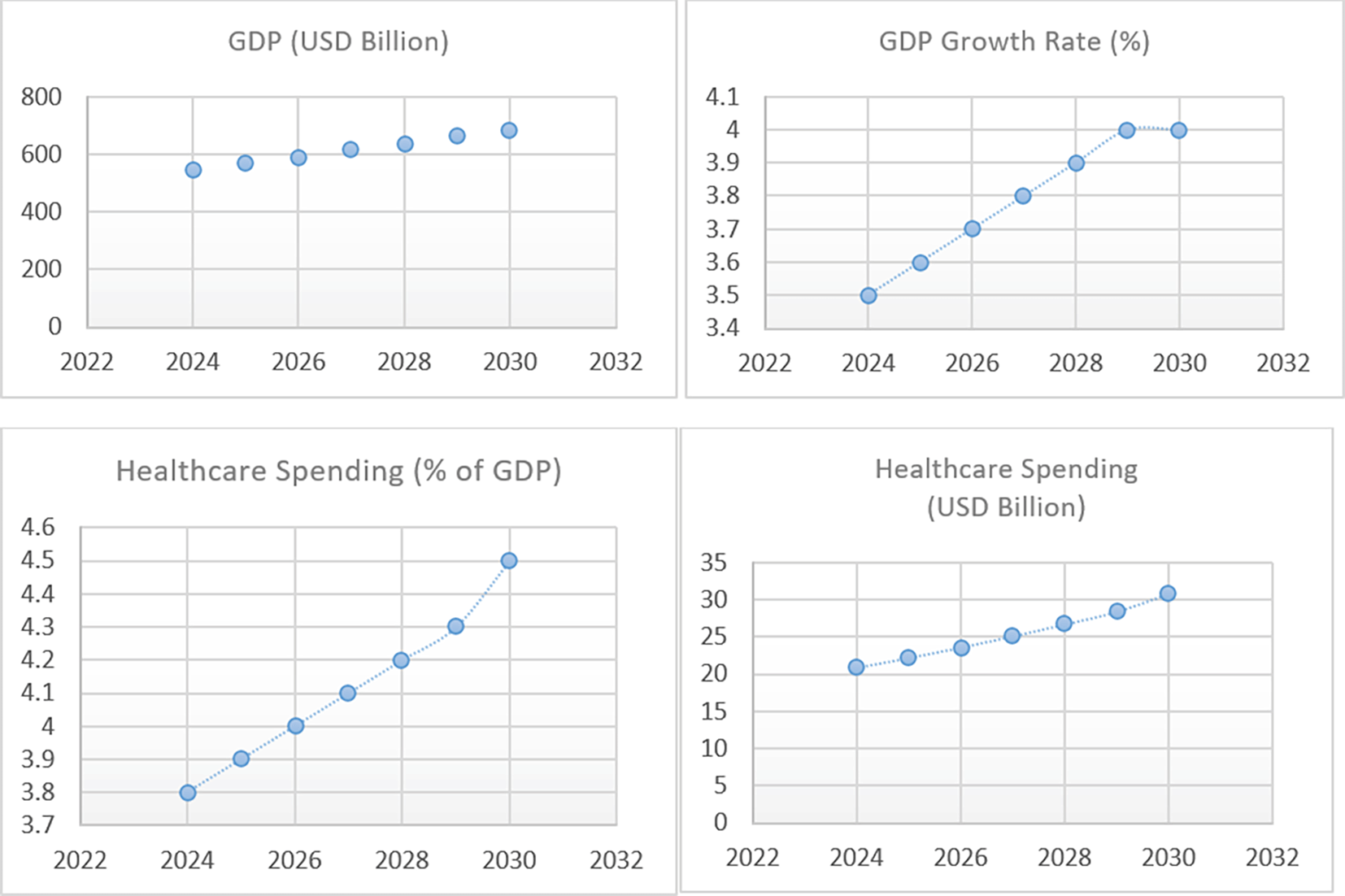
The forecasting dataset was generated using univariate ARIMA models applied separately to two annual time series: GDP (USD billion) and healthcare spending as a percentage of GDP. Following the implementation provided in the extended data, both series were modeled using ARIMA(1,1,1) based on annual historical observations for 2018–2023, and forecasts were produced for seven years ahead (2024–2030). Forecast uncertainty was summarized using 95% confidence intervals. These intervals were used to reflect the plausible range around the central forecast and to emphasize that the projections should be interpreted as directional estimates rather than exact point values. Model checking was conducted through residual inspection to assess whether the fitted models showed major systematic departures from the observed annual patterns. Forecast adequacy was also examined by comparing fitted values with the historical series over 2018–2023. Given the short time span of the dataset, these checks were used as diagnostic procedures to support model transparency and short-term interpretability rather than as a basis for model selection or optimization. The projected healthcare spending in USD billion was then calculated by multiplying projected GDP by projected healthcare spending (% of GDP). To support reproducibility, the forecasting code and implementation details used to generate the projections and figures are provided in the extended data repository. This calculation procedure is identical to the step-by-step implementation provided in the extended data, where projected GDP and projected healthcare spending (% of GDP) are first generated separately and then combined to estimate healthcare spending in USD billion.
This forecast assumes steady economic growth with moderate increases in healthcare spending relative to GDP. The gradual increase in healthcare spending reflects Thailand’s ongoing commitment to improving healthcare access and quality, addressing the health needs of an aging population, and managing the increasing burden of NCDs. To achieve these goals, Thailand will need to continue investing in healthcare infrastructure, particularly in rural and underserved areas, to reduce disparities in healthcare access and quality. Additionally, the adoption of digital health technologies, such as telemedicine and electronic health records, will be crucial in enhancing the efficiency and effectiveness of healthcare delivery. Thailand’s experience with the COVID-19 pandemic has highlighted the importance of a resilient healthcare system capable of responding to public health emergencies. Future healthcare spending will likely include allocations for strengthening public health infrastructure, improving disease surveillance and response systems, and ensuring adequate healthcare workforce capacity. Forecasting healthcare spending and GDP for Thailand from 2024 to 2030 underscores the interplay between economic growth and healthcare investment. As Thailand continues to develop economically, sustained and strategic investments in healthcare will be essential to address emerging health challenges and improve overall health outcomes. The projections presented in this analysis provide a framework for understanding potential future trends and the necessary steps to ensure a resilient and equitable healthcare system.
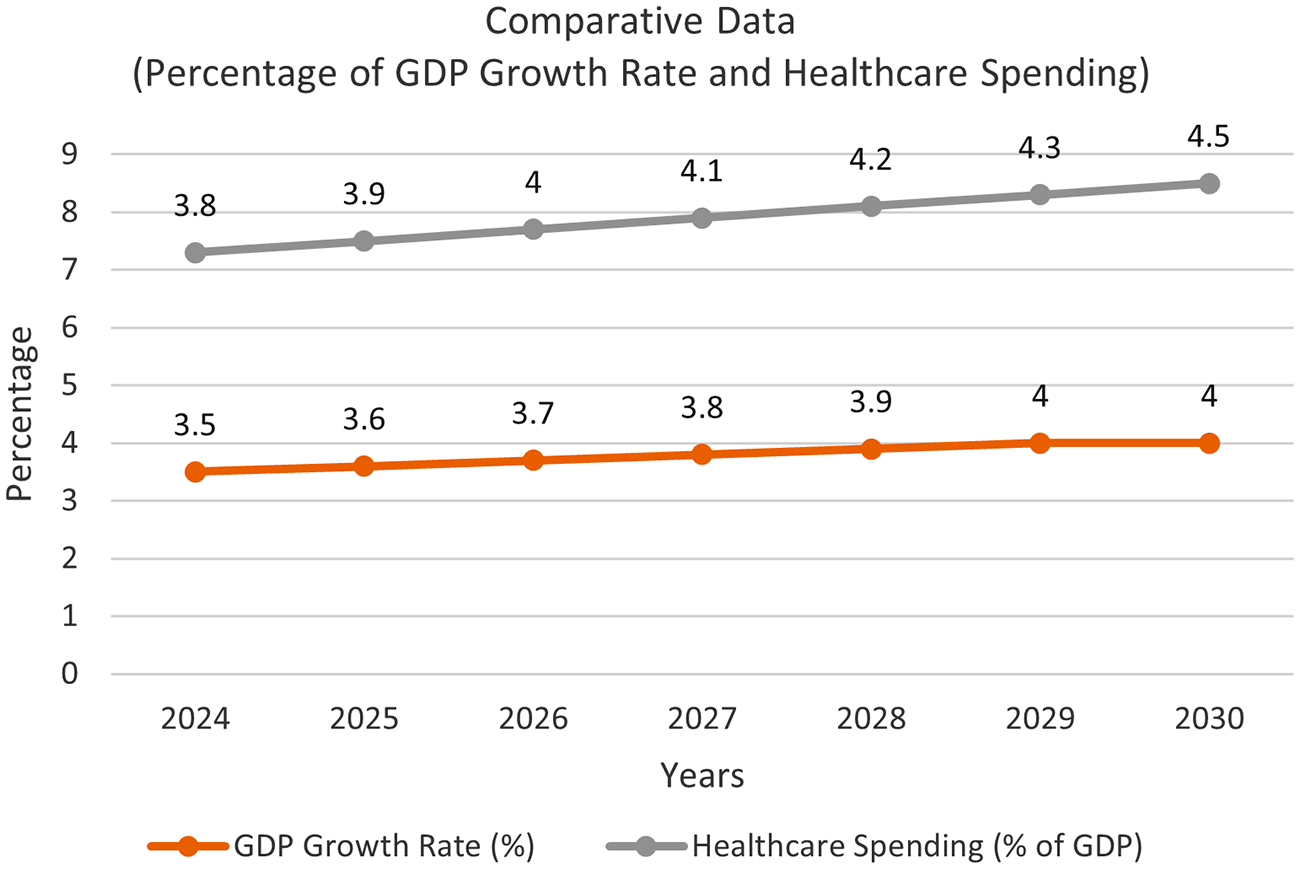
Figure 1 indicates a gradual upward trend in both projected GDP and projected healthcare spending over the 2024–2030 period, suggesting that health expenditure is expected to rise alongside broader economic expansion. The confidence intervals around the forecasts indicate uncertainty in the magnitude of future change, but the central trajectory remains positive across the forecast horizon. Figure 2 further shows that projected healthcare spending as a share of GDP rises from 3.8% in 2024 to 4.5% in 2030, while GDP growth remains within a relatively moderate range of 3.5% to 4.0%. Taken together, these patterns suggest that future health financing pressures may grow not only because of economic expansion, but also because healthcare is projected to absorb a gradually larger share of national output. Table 1 provides the corresponding annual values used to interpret these projected trends.
In 2024, the COVID-19 situation continues to present significant challenges globally, with varying degrees of impact across different regions. Despite the widespread availability of vaccines, new variants of the virus have emerged, leading to periodic surges in cases. These variants often exhibit mutations that can reduce the effectiveness of existing vaccines, complicating efforts to achieve herd immunity. In many countries, including Thailand, the government has had to continually adapt its strategies to manage the pandemic. Thailand’s COVID-19 prevention programs have focused on several key areas: vaccination campaigns, public health education, and healthcare infrastructure enhancement. The government has prioritized booster vaccination drives to enhance immunity against new variants, alongside initial vaccine rollouts for any remaining unvaccinated populations. Public health campaigns emphasize the importance of mask-wearing, social distancing, and hygiene practices, leveraging both traditional media and digital platforms to reach diverse demographics. Moreover, the government has invested in improving healthcare infrastructure, including expanding hospital capacities, enhancing testing and tracing capabilities, and ensuring the availability of critical medical supplies such as ventilators and personal protective equipment (PPE).
Budgeting for COVID-19 prevention has been substantial. In Thailand, the government allocated significant funds for pandemic response in the 2024 fiscal year, which includes procurement of vaccines, funding for public health campaigns, and support for the healthcare system. According to recent reports, the Thai government dedicated approximately 10% of its total budget to health services, with a significant portion specifically earmarked for COVID-19 prevention and management. However, challenges persist in ensuring efficient use of these funds. Issues such as logistical delays in vaccine distribution, disparities in healthcare access between urban and rural areas, and managing the economic impacts of the pandemic on the broader population complicate the response efforts. Additionally, sustaining long-term public compliance with preventive measures remains difficult, particularly as pandemic fatigue sets in. Overall, while Thailand has made considerable strides in managing COVID-19, continuous adaptation and effective use of allocated budgets are crucial to overcoming the ongoing challenges presented by the pandemic (Kantamaturapoj et al., 2023; World Bank, 2023b).
In 2024, COVID-19 prevention policies in Thailand’s provinces continue to play a critical role in managing the pandemic, particularly given the country’s decentralized healthcare system. Provincial governments have been empowered to tailor their response strategies based on local epidemiological data and healthcare capacities. This localized approach has involved a combination of stringent public health measures, robust vaccination campaigns, and targeted public awareness programs. Provincial policies often include mandatory mask-wearing, social distancing protocols, restrictions on large gatherings, and the enforcement of quarantine measures for individuals exposed to the virus. Moreover, provinces with higher infection rates have implemented temporary lockdowns and curfews to curb the spread of the virus. The vaccination rollout has been a priority, with provincial health departments working to ensure equitable access to vaccines, including booster shots, particularly in rural and underserved areas. Mobile vaccination units and community health workers have been instrumental in reaching remote populations.
The budgeting for COVID-19 prevention at the provincial level has been substantial, reflecting the need for sustained investment in health infrastructure and public health initiatives. In 2024, the Thai government has allocated significant funds to support provincial COVID-19 response efforts. According to recent data, provincial health departments received a notable share of the national health budget, specifically designated for pandemic-related expenditures. This includes funding for the procurement of vaccines, expansion of testing and contact tracing capabilities, and the purchase of essential medical supplies such as personal protective equipment (PPE) and ventilators. Additionally, resources have been allocated to strengthen healthcare facilities, enhance laboratory capacities, and support the workforce through training and incentives. However, managing these budgets effectively remains a challenge. Disparities in resource allocation between urban and rural areas persist, with some provinces struggling with logistical issues and limited healthcare infrastructure. Efficient coordination between national and provincial authorities is essential to address these disparities and ensure that all regions have the necessary resources to combat the pandemic effectively. Overall, while significant progress has been made, continuous oversight and strategic planning are crucial to optimizing the impact of the COVID-19 prevention policies and budgets in Thailand’s provinces (World Health Organization, 2024; Ministry of Public Health, Thailand, 2024). For vaccine services to prevent COVID19 in 2024, the Thai government’s vaccine services to prevent COVID-19 continue to be a cornerstone of the nation’s public health strategy, focusing on both primary vaccinations and booster doses to combat emerging variants. The government has launched comprehensive vaccination campaigns aimed at achieving high coverage rates across all demographics, including hard-to-reach populations in rural and remote areas. To facilitate this, the Ministry of Public Health (MOPH) has set up numerous vaccination centers nationwide, including mobile units and pop-up clinics, ensuring that vaccines are accessible to everyone, regardless of their location. These efforts are supported by robust public education campaigns designed to address vaccine hesitancy and misinformation, leveraging social media, traditional media, and community outreach programs to disseminate accurate information about the safety and efficacy of COVID-19 vaccines. In addition to the national vaccination rollout, there has been a strong emphasis on international collaboration to secure a steady supply of vaccines. The Thai government has engaged in agreements with multiple vaccine manufacturers and participated in global initiatives like COVAX to diversify its vaccine portfolio and ensure timely availability of doses.
To optimize Thailand’s public health trajectory and support the sustainability of its universal healthcare framework, the following strategic actions may be considered:
• Institutionalize Digital Health Integration: To mitigate logistical delays and enhance service equity, the Ministry of Public Health (MOPH) should prioritize the implementation of a unified digital health ecosystem. Expanding telemedicine within the “30 Baht for Health Care Project” scheme may help bridge access gaps between urban centers and remote provinces. In the longer term, selected AI-assisted diagnostic tools may also be explored cautiously as part of broader efforts to improve service efficiency and responsiveness, provided that implementation is supported by appropriate regulation, professional oversight, and equitable access safeguards.
• Empower Localized Governance: Building on the experience of decentralized responses during recent public health emergencies, policymakers may further strengthen the role of local health governance and improve coordination between central and local agencies. Providing local bodies with adequate fiscal support, operational flexibility, and relevant technical training may enhance agility in responding to future public health challenges.
• Pivot Toward Preventative NCD Management: Given the growing burden of non-communicable diseases (NCDs) in Thailand, a shift from curative to more proactive and preventive healthcare remains important. Funding should be specifically diverted toward community based physical activity programs and digital health literacy platforms that empower citizens to manage chronic risks independently.
• Strengthen Community Health Networks: Community health networks should continue to be strengthened as an important foundation of public health resilience. In particular, Village Health Volunteers (VHVs) and related local actors may play an expanded role in health communication, early outreach, and community-level health awareness, helping sustain public engagement beyond periods of acute crisis.
• Enhance Self-Reliance in Medical Supply Chains: To strengthen national health security, the government should continue investing in healthcare innovation, system preparedness, and strategic service capacity. Reducing vulnerabilities in healthcare delivery and improving long-term system resilience will be important for protecting Thailand against future public health and supply-side disruptions.
By integrating these policy directions, Thailand can move beyond short-term crisis response toward a more resilient, equitable, and sustainable public health system that addresses the long-term determinants of population health.
Finally, the financial commitment to these vaccine services has been substantial. In the 2024 fiscal year, the government allocated a significant portion of its health budget specifically for COVID-19 vaccination programs. This includes the cost of procuring vaccines, logistics for distribution, training healthcare personnel, and upgrading cold chain infrastructure to maintain vaccine efficacy. Despite these investments, challenges persist, such as ensuring the timely delivery of vaccines amidst global supply chain disruptions and addressing disparities in vaccination rates between urban and rural regions. Additionally, the administration of booster doses requires continuous monitoring and data collection to adapt to the evolving nature of the virus. The Thai government has also invested in developing local vaccine production capabilities to reduce dependency on international supplies and enhance long-term vaccine security. Overall, while the government’s vaccine services have made significant progress in controlling the spread of COVID-19, ongoing efforts are necessary to maintain high vaccination rates, manage new variants, and address logistical and equity challenges (Kantamaturapoj et al., 2023; Ministry of Public Health, Thailand, 2024).
This case may be used in public health and public policy classrooms to illustrate how health communication, health literacy, and forecasting can be linked in a policy case. Instructors may use the case to prompt discussion on policy windows, preventive communication strategies, and the implications of demographic and fiscal trends for healthcare planning in Thailand. This teaching note may also support classroom discussion on how policy theory, public communication, and fiscal forecasting can be integrated within a single health policy case.
| Views | Downloads | |
|---|---|---|
| F1000Research | - | - |
|
PubMed Central
Data from PMC are received and updated monthly.
|
- | - |
Provide sufficient details of any financial or non-financial competing interests to enable users to assess whether your comments might lead a reasonable person to question your impartiality. Consider the following examples, but note that this is not an exhaustive list:
Sign up for content alerts and receive a weekly or monthly email with all newly published articles
Already registered? Sign in
The email address should be the one you originally registered with F1000.
You registered with F1000 via Google, so we cannot reset your password.
To sign in, please click here.
If you still need help with your Google account password, please click here.
You registered with F1000 via Facebook, so we cannot reset your password.
To sign in, please click here.
If you still need help with your Facebook account password, please click here.
If your email address is registered with us, we will email you instructions to reset your password.
If you think you should have received this email but it has not arrived, please check your spam filters and/or contact for further assistance.

Comments on this article Comments (0)