Keywords
Double pipe distillation, Ethanol, Firewood, Cereal crops, Modified stove, Traditional distillation, Sensory evaluation.

This article is included in the Agriculture, Food and Nutrition gateway.
Double pipe distillation, Ethanol, Firewood, Cereal crops, Modified stove, Traditional distillation, Sensory evaluation.
The revised manuscript has been included new Figures to strengthen the results of the finding, updated the Methods, and improved language quality of our manuscript.
See the authors' detailed response to the review by Diego Bonatto
See the authors' detailed response to the review by Nermina Spaho
Areke is a traditional, home-brewed alcoholic beverage widely consumed in Ethiopia.1,2 Dembecha, Arsi Negele, and Debre Birhan are the most well-known areke-producing regions.2–4 Areke is produced by many households and sold in Ethiopian markets as well as exported to nearby countries.3 A household uses 450 kg of firewood on average for the traditional distillation process to produce 150 liters of areke within six business days.5 Many Ethiopian women with low incomes who live in rural and semi-urban areas rely on areke as their primary source of income.1 Areke is a colorless, higher-alcohol distilled beverage, indigenous to Ethiopia.6 Areke usually has an alcohol content between 30% and 50% (v/v).7 It is considered a very strong drink and is more expensive than most other local beverages.8,9
Locally produced fermented areke has been created by indigenous peoples utilizing primitive equipment made of gourds and wood and locally accessible raw materials.10 Areke is made by distilling a mixture of water, ground gesho (Rhamnus Prinoides L.), and cereals. Barley (Hordeum vulgare L.), wheat (Triticum sativum L.), maize (Zea mayz L.), millet (Eleusine coracana L.), sorghum (Sorghum bicolor L.), teff (Eragrostis tef L.), and other grains are used for producing areke beverage.4,11 Areke is traditionally divided into two categories, such as terra-areke and dagim-areke. The word terra in Amharic means ordinary, whereas dagim means second time, indicating that it has undergone a second distillation. The normal alcohol content of dagim-areke is approximately 45%. The alcoholic content of terra-areke was reported to be 34.09% (v/v).12,13
The distillation process areke was described according to Refs. 14 and 15. Areke distillation stoves are traditionally made of mud with a round-shaped design, and at least three stones are needed for the pot to stand. The distillation process included a clay pot, pot lid, condensation tube, and collecting flask. A small clay pot (madiga) was used to boil the fermented mash to release the vapor. The cloth was used to seal the madiga to prevent vapor loss. A hollow tube of dry bamboo (Bambusa vulgaris L.) was used as a pipe to transport the vapor of areke from a clay pot (boiler) to the collector. Koda was used as a collector. Tofaa made of clay contained cooling water in which the koda vapor changed into liquid.3,14 Local areke distillation uses an open-fire system in which much of the heat is wasted on the environment. This forces them to use more firewood, and the energy utilization system is not economical.3,16 An improved areke stove is a stove that requires less firewood to distill the areke amount than a traditional one.15 It also produces less smoke compared to traditional stoves.16–18 Improved areke stoves significantly reduce the smoke by having excess air and better combustion.15,19
No extensive research has been conducted in Ethiopia to enhance the conventional areke distillation process using efficient modified areke distillers or stoves. Thus, there is a strong motive for increasing the distillation process performance by developing double-pipe heat exchangers and energy-efficient distillation stoves, which lower the production time, increase the amount of areke produced, and minimize the utilization of energy. However, traditional fermentation processes and distillation have the potential to transform home-based arts into modern industry necessities through research and technological modification and/or development. Traditional areke distillation could be increased by developing a modified fermenter, modified stove, and modified distiller to increase the taste, aroma, content of alcohols and shorten the processing time of the beverage.2,10
The study was conducted at the Debre Markos microbiology laboratory of the Department of Biology and Mechanical Engineering Department Workshop at Debre Markos University, Ethiopia. The university is located in the town of Debre Markos, which is situated at a latitude and longitude of 10020′N 37043′E/10.3300N 37.7170E and 2,446 meters above sea level. Debre Markos is found 265 kilometers from Bahir Dar and 300 kilometers from Addis Ababa, the capital of Ethiopia. In Debre Markos, 107,684 residents comprise 49,893 men and 57,791 women.20 The lowest and highest temperatures are 15°C and 22°C, respectively, and the average annual rainfall is 380 mm.
The initial steps in improving the efficiency of traditional areke fermentation distillation included developing a prototype of the areke distiller equipment and gathering various engineering materials ( Figure 1). The equipment required for developing a prototype of the areke distiller included a heat exchanger, condenser, energy-saving stoves, fermentation equipment, storage tanks, and local areke extraction apparatus. Areke distiller equipment was purchased, and the prototype of the areke distiller apparatus was manufactured by technicians (welders).
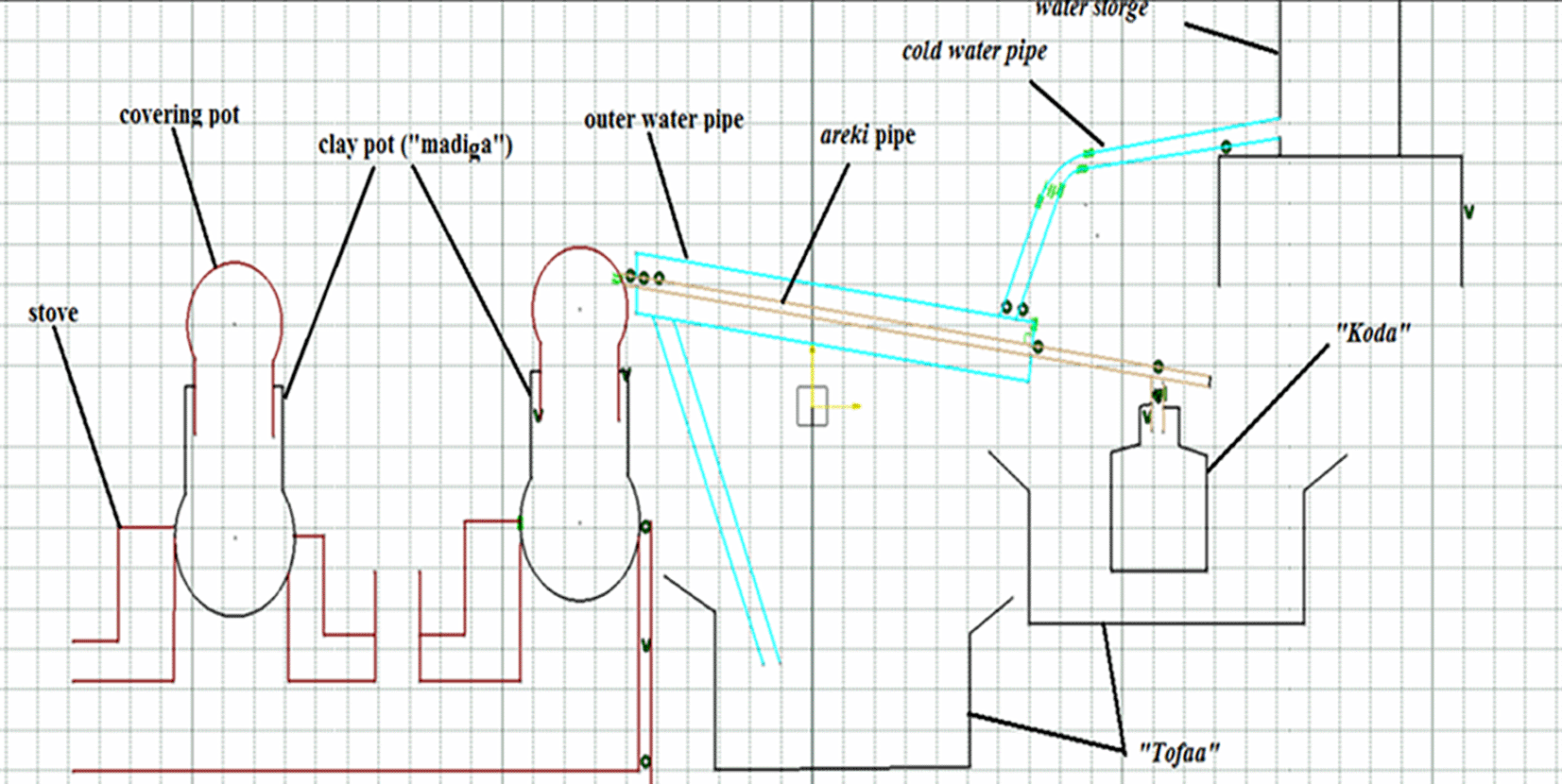
A double-pipe heat exchanger (surface condenser) was used to condense the ethanol vapor. The outer pipe was constructed using polyvinyl chloride with a length of 120 cm and a diameter of 3.81 cm ( Figure 3). A large volume of cold water was effectively transported to the outside pipe because the substance was inert and could not react with other materials to cool. The internal pipe was made from copper and stainless steel pipes with a length of 140 cm and a diameter of 1.27 cm. The outer pipe and holes between the outer and inner pipes were sealed using a sealing material.
A modified areke stove and a traditional stove were the two biomass stoves used in the study. Energy-efficient modified areke stoves were constructed and evaluated at the areke vendor houses as alternative stove types with six stoves in a row, four stoves in a row, two stoves in a row, and one stove. The traditional areke stove is constructed from mud and painted with wet manure. A modified fire stove (midija) was constructed using bricks and mud. Smaller granules of crushed clay were sieved through a 4 mm sieve to obtain fine granules. Sifted sawdust and clay in a ratio of 1:1 were mixed by adding water to make them moldable. A closed fire stove (midija) was used to save heat from going out. The bowl-shaped cover was made of clay to fit well with the clay pot and double pipe.
Five different types of cereal crops were utilized to produce local areke, including millet (Pennisetum glaucum L.), wheat (Triticum aestivum L.), lupine (white lupine L.), barley (Hordeum vulgare L.), and maize (Zea mayz L.). Areke was made through distillation from various ratios of water, ground gesho (Rhamnus prinoides L.), and cereals.4,11,21 Various grains (maize, barley, lupine, wheat, and millet) were purchased from a neighborhood market.
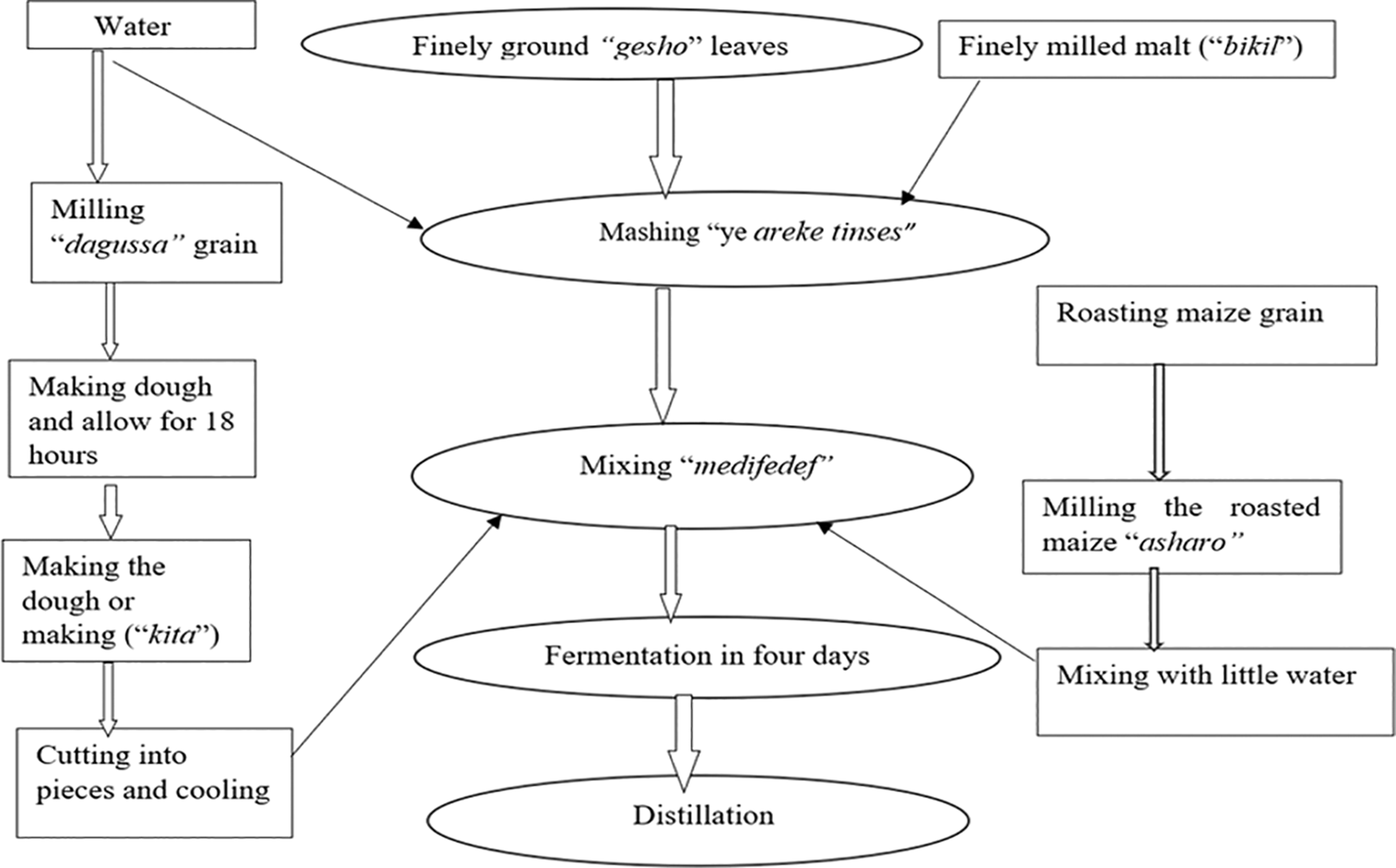
Yereke-tensis , medifedef, and areke are the three basic processes in the areke production process ( Figure 2).4,7,21,22 The traditional areke fermentation process was prepared by an experienced woman brewer using a mixture of ingredients with appropriate steps and procedures in Debre Markos City at Bole Kebele, which is held by a private areke producer with cash. Gesho powder (1 kg), bikil malt (0.5 kg), and 12 liters of water were mixed in a fermenter to produce yereki-tensis, which was fermented for a week. Cereals were soaked, dried, roasted, and ground to make kita (thin pancake-like bread) and enkuro (toasted flour). While enkuro was prepared by steaming roasted maize flour on a bret mitad at 70–100°C, kita was cooked on a mitad. To create medifedef, 10 kg of enkuro and 5 kg of kita were added to yereki-tensis and fermented anaerobically for 15–20 days. The fermented mash was boiled for the areke distillation process once fermentation was complete. Traditional areke fermentation processes were based on natural, spontaneous fermentation without the intentional inoculation of commercial yeast.
Big pots (metensesha) from the local alcohol distiller were used as fermenters. A small clay pot (madiga) was used to boil the fermented mash to release vapor. A smaller clay pot (madiga) was used during distillation to boil the fermented mash and release vapor, typically holding 12 L depending on local production methods. Hollow tubes of copper and stainless steel were used as pipes to transport the vapor of areke from the clay pot (boiler) to the collector. Koda was used as a collector. The tubes were made of metal or aluminum to collect vapor that passed through them. Tofaa made of clay was used to contain cooling water, in which koda vapor changed into a liquid. A traditional distillation apparatus of the bamboo tube (a pipe to transport vapor that comes from the boiler to the collector) made from hollow plant steam (Bambusa vulgaris L.) was used as a control according to the method of distillation described.3,14
This study was conducted to evaluate the efficacy of a traditional stove, a modified stove, and a combination of a modified stove and double pipe in terms of firewood consumed, time of operation reduced, and productivity of alcohol. The quantity of fuelwood used at a household level was estimated by measuring fuelwood in kilograms (kg) using a spring balance. The calculation of efficiency firewood, time of operation is reduced, and productivity of ethanol amount were calculated according to the Refs. 23, 24 and 25 equation, respectively.
The specific gravity and refractive index were measured to estimate the ethanol level using the technique of.26 The specific gravity and refractive index of the samples were determined at 20°C. Ethanol concentration samples were determined using a hydrometer (to measure specific gravity) and a refractometer (to record sugar content). A refractometer (Model 2WA) was used to measure the refractive index of the areke samples. A single drop of ethyl alcohol was used for calibration after the prism was cleaned with ethyl alcohol. The apparatus was set up such that half of the field was illuminated and the other half was left in the dark. The refractive index was determined by placing a drop of areke on the sample holder. The ethanol content (%) was calculated according to the equation below: Ethanol content = R − [(S.G.−l) × 1000] where R = refractometer reading, SG = specific gravity.
The sensory evaluation of areke samples was performed by ten consumer sensory panelists. The average age of the panelists was between 25 and 50 years, all of whom had prior experience consuming traditional areke. Additionally, the panelists were chosen from the community based on their familiarity with the product, availability, and interest. The ten consumer sensory panelists received formal sensory training prior to the evaluation, which included practice sessions using the hedonic rating scale to ensure consistent and trustworthy assessments, explanations of the sensory qualities of areke, and familiarization with the evaluation procedures. Sensory parameters such as flavor, color, alcoholic strength, and overall acceptance of areke were evaluated using a hedonic scale of 1 to 5, where excellent = 5, very good = 4, good = 3, Fair = 2, and poor = 1. Sensory attributes (color, taste, alcoholic strength, and overall acceptability) were assessed utilizing the technique of.27–29
The SPSS version 23.0 IBM SPSSInc., Chicago, IL, SPSS (RRID: SCR_002865) (https://www.ibm.com/support/pages/downloading-ibm-spss-statistics-23) was used to evaluate the data. The averages and standard deviations of the triplicates analysis were determined using analysis of variance (ANOVA). Tukey’s multiple range testing was defined as the statistical significance (p < 0.05).
The present study was approved by the Ethical Review Committee of Debre Markos University, College of Natural and Computational Sciences (Ref No. DU/NCS/12/2024) on the date of approval, December 10, 2024. This study adhered to the ethical principles outlined in the Declaration of Helsinki. Participants verbally consented to promote a more conversational dialogue than in a written form. The participants’ verbal consent was approved by the ethics committee. The ethical approval committee waived the participant consent because the study involved minimal risk to participants and did not adversely affect their rights and their potential benefits to society. Participants verbally consented on May 7, 2024, for their data to be used. All data were de-identified using the Safe Harbor method to ensure the protection of personal and sensitive information.
The physicochemical properties of areke obtained from traditional distillation (C) and double-pipe distillation (E) are shown in ( Table 1). There was no statistically significant (p ≥ 0.05) difference between barley E (gebis E) and wheat E (sinda E) in the ethanol content of areke samples. The study indicated that double-pipe distillation (E) produced a higher ethanol concentration than traditional distillation (C). The highest concentration of ethanol in areke was achieved through double pipe distillation (E) from millet E (dagusa E) 53.75 ± 0.01 (% v/v). The minimum ethanol concentration of areke was achieved through traditional distillation (C) from lupine C ( gibeto C) 24.19 ± 0.05 (% v/v). Medium levels of ethanol were found in five of the areke samples of millet E (dagusa C), maize E (bekolo E), barley C ( gebis C), and lupine C ( gibeto C). The double pipe and traditional distillers areke ethanol contents were consistent with those reported in other studies,7,12,30 which implies that areke ethanol content can vary greatly. The differences in the ethanol content of areke may be due to variations in cereal crops, methods of preparation, fermentation, and modified distillers.31–34
The average specific gravity of traditional distillation areke ranged from 0.99 ± 0.00 to 0.92 ± 0.01 ( Table 1). Barley C ( gebis C) and lupine C ( gibeto C) exhibited higher specific gravity than the other areke samples. The double pipe distillation areke had a mean specific gravity that varied between 0.96 ± 0.02 and 0.92 ± 0.01. The average refractive indices of the areke samples varied between 1.42 ± 0.01 and 1.33 ± 0.00. A higher refractive index was obtained from barley C ( gebis C) than from other areke samples. The mean specific gravity and refractive index findings in this study were consistent with those of other researchers.25,35–37 This difference is due to variations in fermentation and distillation efficiency levels.
The sensory test (taste, color, alcoholic strength, and general acceptance) of areke was conducted by a panel of ten people, and the average results are presented in Table 2. Lupine C ( gibeto C) had the lowest score (2.2 ± 0.01) among the measures for overall acceptance compared to the other parameters. The highest score was attributed to maize E (bekolo E) (4.5 ± 0.01) for overall acceptance than other areke sensory parameters. The alcoholic strength of lupine E ( gibeto E) was scored excellent (5.0 ± 0.01) to other areke sensory parameters. The taste of maize E (bekolo E) (5.0 ± 0.01) and wheat E (sinda E) (5.0 ± 0.02) were scored excellent based on the sensory assessment. There was a statistically significant (p < 0.05) difference between lupine E ( gibeto E), lupine C ( gibeto C), and maize E (bekolo E) in the overall acceptance of the areke samples. The overall acceptance of double-pipe distillation of areke samples was higher than that of traditional distillation. All judges agreed that traditional and double pipe areke consumption was acceptable based on their sensory evaluations. The sensory evaluation of areke is strongly affected by the method of preparation and the use of gesho, which in turn plays an important role in the perception of the people.2,12,38,39 The heat provided during the boiling stage has a significant impact on the final distilled areke flavor, aroma, color, and alcoholic strength.25
The average amount of firewood used was reduced by 50% ± 0.15 when double-pipe distillation was combined with a modified stove ( Table 3; Figure 3). The percentage of areke (v/v) increased by 68.5% ± 0.01 when the combination of a modified stove and double-pipe distillation were used. The amount of areke produced from traditional distillation was 1013 ml ± 1.00, and the temperature of the areke was lowered to 61°C ± 1.00 as soon as the distillation stopped ( Table 3). The amount of areke in the modified stove distillation was increased by 1014 ml ± 0.57, and the temperature of the areke was lowered to 60°C ± 0.57 as soon as the distillation stopped. The amount of areke in double-pipe distillation was increased by 1141ml ± 1.00, and the temperature of areke was reduced by 35°C ± 1.15 as soon as distillation stopped. The amount of areke in a modified stove and double pipe distillation increased by 1253 ml ± 0.92, and the temperature of the areke dropped by 35°C ± 0.58 as soon as the distillation stopped. Double-pipe distillation was more efficient than traditional bamboo areke distillation because of improved condensation and heat transfer. The alcohol vapor traveled through an inner pipe and was continuously condensed into a liquid by cooling water in the outer pipe of the double-pipe distillation.
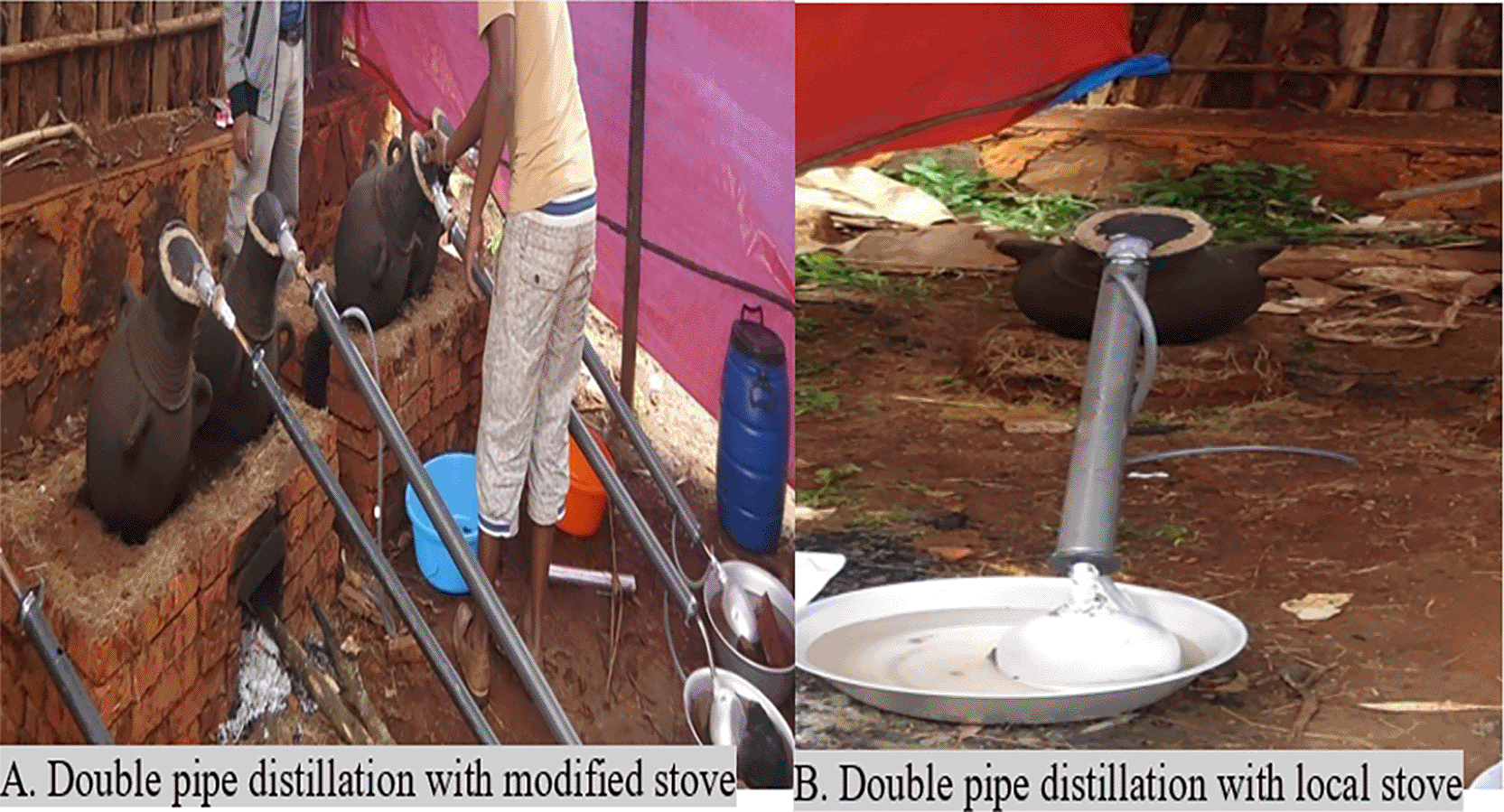
Firewood consumption was higher in the traditional open fire stove (5.1 kg ± 0.1) than in the modified stove (3.5 kg ± 0.01). A total of 2.5 kg ± 0.01 of firewood was needed for distillation using a combination of a modified stove and double-pipe distillation ( Table 3; Figure 3). Traditional and modified stove distillation methods were not statistically significant (p > 0.05) in terms of areke productivity, temperature at the end of distillation, or volume of areke produced. According to Temesgen and Kamil,15 the time used by the modified (mirt) areke stove was reduced by over 50% by the stove with three stones (52%; 1:04 h: min). The modified areke stove reduced distilling time by 22% compared to the traditional areke stove.14 The modified areke stove emits less smoke and uses less firewood to distill areke than a traditional stove.15–17,40 Combining the modified stove with double-pipe distillation resulted in a productivity of 7.3 ± 0.06 g/min, which is more than three times higher than that of the conventional method (2.0 ± 0.05 g/min). This is due to reduced heat loss, increased vapor generation, and accelerated alcohol recovery.41
According to the study, the ethanol concentration from double-pipe distillation (E) was higher than that from traditional distillation (C). The maximum ethanol concentration of areke was obtained from millet E (dagusa E) (53.75 ± 0.01 (% v/v)) and Lupine E ( gibeto E) (53.61 ± 0.11). The maximum score attributed was obtained from maize E (bekolo E) (4.5 ± 0.01) and maize E (bekolo C) (4.0 ± 0.02) parameters of overall acceptance than other areke sensory parameters. Our findings show a better reduction in time (42% ± 0.58) and amount of firewood (50% ± 0.15) to distill areke using a combination of double-pipe distillation with a modified stove. The performance of traditional areke distillation can be scaled up by developing a modified distiller (double-pipe distillation) and a modified stove.
Ethical approval was obtained from the Debre Markos University, College of Natural and Computational Sciences of Ethical Review Committee approval number (Ref No. DU/NCS/12/2024) on the date of approval,10th December 2024. The ethical guidelines of the Declaration of Helsinki were followed in this investigation. Participants verbally consented to facilitate more natural conversations than written forms. Participants verbally consent were approved by the ethical committee. Participants were provided with detailed information about the study objectives and benefits before they provided verbal consent. The ethical approval committee decided to waive participant consent because the study involved minimal risk to participants and did not adversely affect their rights and their potential benefits to society.
| Views | Downloads | |
|---|---|---|
| F1000Research | - | - |
|
PubMed Central
Data from PMC are received and updated monthly.
|
- | - |
Provide sufficient details of any financial or non-financial competing interests to enable users to assess whether your comments might lead a reasonable person to question your impartiality. Consider the following examples, but note that this is not an exhaustive list:
Sign up for content alerts and receive a weekly or monthly email with all newly published articles
Already registered? Sign in
The email address should be the one you originally registered with F1000.
You registered with F1000 via Google, so we cannot reset your password.
To sign in, please click here.
If you still need help with your Google account password, please click here.
You registered with F1000 via Facebook, so we cannot reset your password.
To sign in, please click here.
If you still need help with your Facebook account password, please click here.
If your email address is registered with us, we will email you instructions to reset your password.
If you think you should have received this email but it has not arrived, please check your spam filters and/or contact for further assistance.

Comments on this article Comments (0)