Keywords
environmental degradation, natural resources rent, institutional quality, financial sector development, renewable energy, Climate change, Climate justice

environmental degradation, natural resources rent, institutional quality, financial sector development, renewable energy, Climate change, Climate justice
The introduction has been adjusted to include further context and cross-reference with the theoretical perspective as suggested by the reviewers. The data and methodology have been expanded to include justification of the variables and their proxies, as well as the suitability of the methodological approach. The results and interpretation have been aligned, especially the sign for institutional quality and its interpretation. Furthermore, robustness checks have been added to ensure the reliability of the ARDL results.
See the authors' detailed response to the review by Rui Alexandre Castanho
See the authors' detailed response to the review by Tafirenyika Sunde
See the authors' detailed response to the review by Muntasir Murshed
Environmental degradation as a result of climate change is at the forefront of policy discussions at the academic, scientific, and policy levels (Sakariyahu et al., 2024). The impact of economic activities, especially land use and transportation, on climate change has reached unprecedented levels (IPCC, 2019). As such, the quality of the environment reflects the extent to which increased economic activities, especially dependence on natural resources and unsustainable energy sources, inflict danger to the environment (Amer et al., 2024). While Ngarava (2021) argued that increased economic activity is a threat to environmental sustainability, the theoretical view for this relationship is contested (see Zhang et al., 2024; Burgess and Barbier, 2025). The Environmental Kuznets Curve (EKC) suggests that institutional framework and economic advancement eventually lead to environmental recovery (Stern, 2004; Zuo et al., 2022). Additionally, Treadmill of production theory argues that accumulation of capital leads to rent seeking and prioritisation of profit leads to continued industrial expansion to maintain economic growth at the expense of the environment (Curran, 2017; York and Foster, 2005). For low-income countries, characterized by high levels of poverty, inequality, and unemployment, there is pressure for economic development and prioritisation of growth which leads to increased pollution due to limited clean technology adoption for production, sustainable storage, transportation, and waste disposal (Hunjra et al., 2024).
Environmental degradation is varied across jurisdictions, with greatest divide being between global north versus global south (Lauer, Llases, and López-Muñoz, 2025; Li, Wei, Chen et al., 2025). On the other hand, even among peer economies, differences of managing environment, especially ensuring sustainable production, depends on level of financial development and law quality and enforcement (part of institutional quality) (Khan, Weili, & Khan, 2022b; Hussein, Warsame, and Abdi, 2025; Naseer, Hunjra, Palma, and Bagh, 2025). Understanding of this development in the global South context is critical, especially Africa (OSS, 2022; Sakariyahu et al., 2024), and this study advances inquiry in the case of Namibia.
Namibia, like many developing countries, has the least carbon emissions, yet is heavily impacted by climate change as a country with over 90% of it classified as hyper-arid, arid, or semi-arid, ranking second to the Sahara Desert in terms of aridity (World Bank Group, 2021). As a result, communities are prone to catastrophic events such as increased temperature, drought, and floods (World Bank Group, 2021; Government of the Republic of Namibia, 2023). Namibia faces immense pressure to control its ecological footprint, especially in terms of land use, which is the highest emitter of greenhouse gases in the country. Economic activities such as exploration of natural resources are the highest contributor to land use and contribute 14.4% to GDP, more than 50% to export earnings, and 55.9% to government revenue (Bank of Namibia, 2023; Chamber of Mines of Namibia, 2024). While, these resources are crucial for socioeconomic development, dependence on unsustainable economic activities has a consequential impact on the environment. Propelling growth through the extractive primary sector strains the environment (Aladejare, 2022). As such, increased economic activities, such as the use of fossil fuels, exploration, and industrialization, contribute to global warming and environmental degradation (Gutti, Aji and Magaji, 2012; Amer et al., 2024). This has prompted policymakers and governments to encourage sustainable land use management to protect the environment. Although resource rent and other economic activities are beneficial to the economy, they also pose a threat to the environment (Sadaoui et al., 2024). In addition, the financial sector, as an enabling division of the economy with its intermediating role, plays a role in transferring and managing climatic risk; hence, the development of these sectors matters in finding a lasting solution.
Environmental degradation is a result of increased economic activities, production, and exploitation of natural resources. However, it is believed not to be a result of capitalism and economic growth alone but also involves the absence of effective institutional frameworks and policies to deal with greenhouse gas emissions and climate change (Cohen, 2023). Thus, there are calls for institutional frameworks to address the global emission levels of greenhouse gases. According to Hussain and Dogan (2021); Warsame et al. (2022) indicate that institutional quality plays an important role in environmental sustainability. Song et al. (2024) emphasized that environmental quality can be preserved through the implementation of stringent environmental policies that reduce the use of non-renewable energy sources that burden the environment. Contrary, institutional quality contributes to poor environmental management depending on priority of the economy between economic growth and environmental sustainability (Handoyo, 2024). In Namibian, various laws have been implemented to avert environmental degradation, such as Article 95 of Namibia’s Constitution, Environmental Management Act 7 of 2007, the National Policy and Strategy on Climate Change 2011, and the Environmental Assessment Policy 1994. These policies are aimed at environmental protection and dealing with environmental degradation. The theory of Institutions suggests that the presence of institutional frameworks is not sufficient to ensure market functioning (North, 1990). Therefore, presence of institutional framework does not guarantee environmental sustainability. However, the Ecological modernisation theory highlights that financial markets are necessary to provide capital for green innovations, however it requires robust institutions that prioritise enforcement of environmental policies discourage carbon-intensive industrial expansion (Raihan and Sarker, 2026).
The advocacy for investment in green energy and technology to avert environmental degradation has been at the forefront of climate change talks at the United Nations Convention Conferences and Paris Agreement negotiations. Therefore, financial development is critical for investments in projects and technologies that preserve the environment (Imran et al., 2023; Gul and Hussain, 2024). Kirikkaleli and Adebayo (2021) indicates that financial development is crucial for environmental sustainability, as it allows for a shift from traditional to more modern and sustainable practices (Raihan and Sarker, 2026). Given the importance of investment in clean energy, technology, and low-carbon development, Namibia has implemented initiatives such as the 2016 Green Climate Fund (GCF) through the Environmental Investment Fund established under Act 13 of 2001. The GCF has a portfolio of N$ 640 million secured for grant and readiness support by 2023. These funds aim to finance climate change mitigation programs that allow for overall economic development and environmental protection. Despite the legislative framework, and financial commitments, there remain implementation gaps. Therefore, while the country continues to attract FDI into the extractive sector, the allocation of capital toward environmentally friendly and climate-resilient infrastructure remains unclear.
While the literature acknowledges the impact of production and consumption on the environment, current views show that additional factors are responsible for climate change and environmental degradation. Despite the importance of environmental sustainability to our livelihoods, there is a lack of consensus on the influence of policies and finance on the environment. To address the gap, the study utilised the Auto-Regressive Distributed Lag (ARDL) simulation technique and the FMLOS, CCR for robustness to investigate the impact of financial sector development and institutional policies on environmental degradation in Namibia from 1990 to 2023. The study found that while financial sector development reduces environmental degradation in line with the ecological modernisation theory. Institutional quality exacerbates degradation of the environment, contrary, to the EKC hypothesis, therefore the results support the Treadmill of Production Theory, suggesting that Namibia’s institutional frameworks favour economic expansions than environmental protection. The findings provide insight into the effectiveness of institutional frameworks and financing. The study offers guidelines for a holistic approach to creating synergies between these variables to enhance environmental quality and sustainability. Additionally, the research assists policymakers in creating environmentally friendly policies that balances environmental sustainability and the pursuit for economic growth.
The rest of the paper is structured as follows: Section 2 presents the literature review, Section 3 discusses the data and methods, and Section 4 presents the empirical results. Section 5 presents the conclusions and recommendations.
The Treadmill of production theory highlights the relationship between increased economic activity, natural resource demand, and the environment (Schnaiberg, Pellow and Weinberg, 2002; Islam and Hossain, 2015). It suggests modern political economies are in constant pursuit of economic growth and profit without considering the impact on the environment (Islam and Hossain, 2015; Lewis, 2019). Thus, environmental degradation is due to the direct production demand of state organs, political actors, and the private sector (Curran, 2017; Lewis, 2019). In this theory, public and private sector are interested in rent-seeking and pushing for profit, which leads to the use of machinery to replace labor, leading to increased energy consumption and an increase in ecological harm while decreasing social benefits (Schnaiberg, Pellow and Weinberg, 2002; Islam and Hossain, 2015). In addition, the drive for economic development leads to the increased exploitation of natural resources, waste production, and environmental pollution (Lewis, 2019). Thus, to deal with social problems, the treadmill must increase its capacity and further deepen environmental problems. The environment degradation is influenced by rent-seeking and pursuit for development. Thus, in the context of this study, TPP helps explain that when countries aim to maximise economic output, it leads to environmental damage. However, North’s theory of institutions quality underscores the importance of governance, rule of law, regulatory efficiency and enforcement of property rights can in determining the functioning of the economy (Faundez, 2016; John Nye, 2010). The theory indicates that well-functioning institutions which include high quality environmental policies, incentives and stringent enforcement can deal with environmental degradation. Thus, if institutions designed to favour economic development and income can lead to climate risk and environmental degradation (John Nye, 2010). In this regard, the strength of institutions determines the extent to which a country like Namibia can implement institutional frameworks for environmental protection and ensuring that development is prioritised at the expense of the environment.
Conversely, the Environmental Kuznets Curve suggests a transition in the economy, where economic activities lead to increased environmental degradation, however it eventually reduces (Leal and Marques, 2022). The theory highlights that the harm to the environment is due to the rate of production and lack of sustainable practices for waste reduction and management, therefore as the composition of the economy changes from the primary sector and industrialization to the service sector, pollution levels remain stagnant and decline over time (Sajeev and Kaur, 2020; Leal and Marques, 2022). Furthermore, with the implementation of environmental policies or institutional frameworks, the use of clean energy and technology, and improved waste management, environmental pressure declines and sustainability improves (Stern, 2014; Zuo et al., 2022). Additionally, the Ecological modernisation theory provides a lense through which the adoption and spread of institutional reforms and the environment can be understood. The theory explains that pursuit of economic growth and environmental preservation can coexist, through collaboration between institutional reforms, technological innovation and industrial development (Mol et al., 2014). It argues that the use of technology and green financing can contribute to eco-friendly industrialisation and preserve the environment (Glynn et al., 2017). The theory argues that innovation pressures can transform resource-intensive and environmentally intensive industrial practices to address climate change challenge through institutional framework and market incentives (Baer and Singer, 2022; Glynn et al., 2017). In the context of this study, EMT helps explain how institutional and financial development contributes to reduction of carbon emissions and improve environmental sustainability in developing countries.
Thus, the Treadmill of Production (TOP), Environmental Kuznets Curve (EKC), institutional theory, and Ecological Modernisation Theory (EMT) collectively provide the theoretical foundation for analysing the relationship between institutional quality, financial sector development, and CO2 emissions in Namibia. While the TOP theory predicts that economic expansion, industrialisation, and financial development increase environmental degradation through resource intensive production and energy consumption, the EKC and EMT perspectives suggest that improvements in institutional quality, technological innovation, and sustainable financial systems can eventually reduce environmental pressure and support environmental sustainability. Therefore, this study attempts to reconcile these competing perspectives by examining whether financial development and economic growth in Namibia intensify environmental degradation as predicted by TOP, or whether institutional quality moderates these effects and promotes environmental sustainability in line with EKC and EMT arguments.
Based on these theoretical perspectives, the study tests the following expectations: first, economic growth and financial sector development are expected to increase CO2 emissions due to greater production activities and energy demand; second, institutional quality is expected to reduce environmental degradation through effective environmental governance, regulatory enforcement, and sustainable policy implementation; and third, the interaction between financial development and institutional quality is expected to moderate environmental degradation by encouraging green investment, cleaner technologies, and environmentally responsible economic activities.
Namibia provides an important context for testing these theoretical relationships because of its unique environmental and economic structure. As a hyper arid country highly vulnerable to climate change, droughts, desertification, and ecological stress, Namibia faces significant sustainability challenges despite its relatively small population. At the same time, the economy remains heavily dependent on natural resource extraction, mining, energy consumption, and primary sector activities, making the country particularly relevant for examining the tensions between economic development and environmental sustainability. Furthermore, Namibia’s ongoing institutional and financial sector reforms provide an opportunity to assess whether improvements in governance and financial systems can mitigate environmental degradation in a developing country context. Therefore, the Namibian case offers unique insights into the finance, institutions, and environment nexus and contributes to broader debates on sustainable development in resource dependent economies.
Environmental sustainability and achievement of SDG, including the role of institutional quality and financial development, have been at the center of discussion at academic and policy levels, with empirical studies giving opposing views. Akpan and Kama (2024) carried out a panel analysis of high- and low-income economies and found that countries with strong institutions in terms of corruption control, government effectiveness and regulatory quality tend to reduce environmental degradation by prohibiting fossil fuel consumption, whereas those with weak institutions worsen the situation. In BRICS-T economies, Hussain and Dogan (2021); Song et al. (2024) stringent environmental policies and institutional quality can effectively reduce their ecological footprint. Assessing whether innovation and institutional quality can contribute to SDGs in emerging economies (E7), Anwar et al. (2021); Anwar, Malik and Ahmad (2022) institutional quality and innovation impede CO2 emissions, thus enhancing environmental quality. This signifies that strengthening institutional frameworks inhibits rent-seeking and it will contribute to environmental preservation, thus prioritisation of environmental protection laws is critical in reducing degradation. Furthermore, studies such as Ali et al., (2019); Udemba (2021); Xaisongkham and Liu (2024) reported similar findings that institutional quality and good governance are crucial for environmental sustainability. In developing economies, Xaisongkham and Liu (2024) institutional quality, especially government effectiveness, promotes environmental quality. In contrast, Sibanda et al. (2023) combined institutional quality and natural resource rent in sub-Saharan Africa found that institutional quality increases environmental degradation due to weak institutions. Aydin, Sogut and Erdem (2024) discovered that institutional quality reduces the ecological footprint in certain countries, such as Austria, while it increases the ecological footprint in countries, such as Germany and France. These findings show that highly industrialized countries, such as Germany, which rely on non-renewable energy sources, tend to contribute to an increased ecological footprint and environmental degradation.
Contrary to theories that institutional quality reduces environmental degradation, enhancement in government effectiveness, regulatory quality and political stability are linked to increased emissions in developing countries, as they encourage investment and industrial expansion as such increase environmental impacts (Yaman and Cetin, 2025). Additionally, in both developed and developing economies (Saba et al., 2025; Yuan et al., 2025) found that governance and institutional quality indicators worsen environmental deterioration as increased government efficiency tends to weaken environmental protection as countries prioritise economic development. Handoyo (2024) examined public governance and environmental performance in cross-country study using two-stage least squares and found that different measures of governance has different impact on environmental performance. Voice and accountability, government effectiveness and rule of law are negatively linked to environmental performance as with strong institutional frameworks they may lead to conflicting priorities and lead to focus on socio-economic issues. However, political stability and regulatory quality enhance environmental sustainability by guiding economic activities and enforcing policy implementation.
Using the common correlated effects mean group in emerging Asian economies (Rashid, 2025; Zhang et al., 2024), concludes that institutional quality is a large contributor to per capita carbon emissions and when interacting with economic diversification it contributes to environmental degradation. The findings depict that good institutional quality facilitate diversification of the economy resulting in enhanced emissions from the various economic activities. Mixed impact was found in Africa, as (Yeboah et al., 2024) used multiple advanced regression modelling techniques to assess government policies, biocapacity and CO2 emissions reduction. In countries such as Algeria, Botswana, South Africa, Angola, Cameroon, Tanzania, Kenya, Zambia, Ghana, Cameroon, Guinea, and Togo government policies promote quality environment. However, government policies in Burkina Faso, Sierra Leon, Cote d’Ivoire, Nigeria, Mali, Uganda, Rwanda, and Libya causes an increase in CO2 emissions. Similarly, (Obobisa et al., 2022), supports that institutional quality derails environmental protection in Africa as they contribute to CO2 emissions. The findings shows that in certain African countries policies on environmental preservation face resistance due to prioritisation of economic development and encourage increased emissions, while in others they promote efficiency in production and provide incentives for environmental protections.
SDGs 13 calls for financial sector development or finance accessibility to deal with climate change and environmental degradation. A cross-analysis study Zuo et al. (2022) found that financial development is detrimental to the environment in low- and high-income countries due to the capacity of funding in developing economies, while developed economies continue to invest in non-renewable energy sources. In middle-income economies, they find that financial development is crucial for environmental sustainability. In sub-Saharan Africa, Habiba and Xinbang (2022) financial sector development in its entirety is detrimental to the environment; however, financial institutions’ development in terms of access, depth, and efficiency contributes to environmental degradation more than financial market development, as the availability of credit can encourage consumption and production using outdated technologies, and also due to a lack of environmental protection regulations. Similarly, Ganda (2022) financial sector development is linked to increased carbon emissions in BRICS countries. Additionally, Tran et al. (2023) financial development leads to environmental degradation in ASEAN countries.
A nonlinear relationship between financial sector development in terms of green financing and environmental degradation was found in China, as Huang and Guo (2023) found that green financing encourages CO2 emissions in the short run but encourages environmental sustainability in the long run. However, in terms of traditional financial development, it leads to environmental degradation, as funding tends to be channelled to pillar industries with high emissions, other than low-carbon industries (green industries) with low survival rates. However, Raihan (2023) financial development was found to have a negative relationship with environmental deterioration, thus reducing environmental degradation. Usman, Makhdum and Kousar (2021) revealed that financial development contributed to a reduction in environmental degradation and enforced sustainability. Similarly, Kirikkaleli and Adebayo (2021) it was found that financial development, in terms of green financing and credit, enhances environmental quality due to investment in clean energy and technologies.
Combining financial development and institutional quality Amin et al., (2022) found that governance and financial development reduced carbon emissions. In MENA countries (Awdeh, 2022), it was found that financial development, good governance, and quality institutional systems can mitigate pollution and environmental degradation and that the combination of these factors has a more significant impact on controlling the carbon footprint and achieving environmental sustainability. In contrast, Ahmad et al. (2022) indicates that financial development is detrimental to the environment, whereas institutional quality reduces carbon emissions and ensures sustainability. However, the joint impact of financial development and institutional quality has a negative effect on carbon emissions, indicating that institutional quality has a moderating effect, reducing the negative impact of financial development as such strong regulations and institutions enable the implementation of regulations on finance for environmental protection and ease green financing and investment. A global analysis Khan, Weili and Khan (2022a) found that financial sector development and institutional quality individually contribute to increased carbon emissions; however, the interaction between the two indicates that they can reduce carbon emissions through the facilitation of environmentally friendly projects and green investment.
Literature on financial sector development, institutional quality, and environmental degradation presents mixed and sometimes contradictory findings. Prempeh et al. (2023) found that banking sector development contributes to environmental degradation through increased industrial activities and energy consumption, although technological advancement can help mitigate these effects. Similarly, Prempeh (2024) revealed that financial development and economic growth increase environmental pressure when supported by carbon intensive industrialisation and unsustainable production systems. In contrast, Khan, Weili and Khan (2022b) found that institutional quality can moderate the negative environmental effects of financial development through environmental regulations, governance effectiveness, and support for green investment. Likewise, Hussein, Warsame and Abdi (2025) showed that weak institutional systems contribute to environmental pollution, suggesting that governance quality is important for environmental sustainability in developing countries. Naseer et al. (2025) also found that governance quality and energy policies contribute significantly to improving environmental performance and sustainable development outcomes.
The broader environmental sustainability literature also highlights tensions between economic development and environmental protection. Stern (2004), through the Environmental Kuznets Curve hypothesis, argues that environmental degradation initially increases with economic growth before declining as economies adopt cleaner technologies and stronger environmental institutions. However, Burgess and Barbier (2025) criticise this assumption by arguing that economic growth alone does not guarantee environmental sustainability, particularly in developing economies characterised by weak institutions and resource dependence. Similarly, Zhang et al. (2024) found that emerging economies continue to struggle in balancing economic competitiveness with environmental sustainability due to dependence on carbon intensive production systems. Sakariyahu et al. (2024) further demonstrated that environmental degradation in Africa extends beyond emissions to include ecological stress, land degradation, and reduced quality of life. In addition, Li et al. (2025) highlighted persistent environmental inequalities between the Global North and Global South, where developing countries experience greater environmental vulnerability despite lower historical emissions contributions. Lauer, Llases and López Muñoz (2025) also argue that global environmental governance frameworks often fail to fully address the environmental realities and developmental challenges facing poorer economies.
Therefore, literature on institutional quality, financial sector development, and environmental degradation remains inconclusive and context dependent. While some studies suggest that financial development worsens environmental degradation through increased production and energy demand, others indicate that strong institutional quality and sustainable financial systems can mitigate environmental harm through green investment and effective environmental governance. Furthermore, most existing studies rely on cross country panel analyses and place limited attention on environmentally vulnerable and resource dependent economies such as Namibia. Consequently, there remains a knowledge gap regarding how financial sector development and institutional quality interact to influence environmental degradation within Namibia’s unique context of hyper aridity, resource extraction, and ecological vulnerability.
Literature review on the impact of institutional quality and financial sector development on environmental degradation shows mixed impact as such reveals knowledge gaps in understanding the influence of institutional framework and finance on the environment. While from the theoretical underpinning institutional quality reduces environmental degradations, the literature highlighted mixed impact both negative and positive suggesting the context and nature of institutions are critical. Additionally, the impact of financial sector development on environment varies depending on the type of financial development in terms of green or traditional financing as well as the country. While the impact varies, for both variables, the study is based on the past theoretical underpinnings and hypothesises as follows:
Institutional quality negatively impacts environmental degradation
Financial sector development negatively impacts environmental degradation
This study used time-series data from 1990 to 2023 in Namibia to investigate the impact of institutional quality and financial development on environmental degradation. The data are sourced from World Bank Databases (WDI) and the Fraser Institute databases. This study used carbon dioxide (CO2) per capita emissions as a proxy for environmental degradation, as it is a major contributor to environmental change and has been widely used in empirical studies examining the relationship between economic growth, financial development, and environmental outcomes (Sida, 2011; Doğan, Saboori and Can, 2019; Tran et al., 2023; Gul and Hussain, 2024). This study used CO2 as a proxy due to data constraints relating to broader environmental indicators such as ecological footprint and land degradation indices. Although Namibia’s major environmental challenges include desertification, land degradation, droughts, and ecosystem stress, consistent long term data for these indicators remain limited. Nevertheless, given Namibia’s dependence on mining, fossil fuel based energy consumption, and resource intensive economic activities, CO2 emissions remain a relevant and consistent measure of emission related environmental degradation. Furthermore, institutional quality was measured using the Worldwide Governance Indicators, which capture dimensions such as government effectiveness, regulatory quality, rule of law, and control of corruption, reflecting the role of governance in supporting environmental sustainability and policy implementation. The independent variables includes institutional quality (IQ) proxied by economic freedom index which assigns scores up 10; where 10 indicates high quality while 0 indicates low quality as adopted from Dube and Horvey (2023). The index includes various institutional quality characteristics such as rule of law, government size, regulatory efficiency, market openness. The index measures both government efficiency and enforcement of regulation in a resource dependent country where the government intervention in economic activities and resource management plays a role in environmental outcomes. Other proxies from World Governance Indicators (WGI) only starts from 1996, the use of EFI allows to capture post-independence and give which are commonly used have data limitations as such EFI allows a broader analysis. Credit to the private sector (%GDP) as an indicator of financial sector development (FSD), adopted from studies such as Amin et al. (2022), Awdeh (2022), and Khan, Weili and Khan (2022a). Other explanatory variables included renewable energy consumption (% of total usage) (REC), GDP per capita (constant 2015 US$) as proxy of economic growth (GDP), and trade openness (% of GDP) (TO). All the variables have been transformed to natural logarithm form for easy analysis. Given data constraints for REC the analysis are carried out on common sample. This study acknowledges that the relatively small sample size of approximately 31 to 34 observations may present limitations for time series estimation and statistical inference. Small sample sizes can reduce statistical power and increase the possibility of unstable coefficient estimates, particularly in models with multiple parameters such as the ARDL framework. However, the ARDL approach remains appropriate for this study because it is widely recognized for its suitability in small sample time series analysis and for variables integrated at different orders, provided none are integrated beyond I(1). Furthermore, diagnostic and stability tests were conducted to assess the reliability and robustness of the estimated model. The data and its sources are presented in Table 1. The model used in the study, informed/adapted from Amin et al. (2022) and modified, is presented as follows:
Table 2 presents descriptive statistics of the variables used in this study. Due to data limitation for the Renewable energy consumption % of total electricity, the study used the common period of 31 observations.
To select suitable estimation techniques for the study, a unit root test was adopted, as economic and financial data are not stable and thus contain outliers. Economic and financial data tend to be non-stationary and can lead to spurious estimations. Therefore, data must be stationary to produce reliable results. In addition, it allows us to choose a suitable estimation approach based on the order of integrations at levels I(0), first difference I(1), or second difference I(2). The study used the Dickey-Fuller, augmented Dickey-Fuller, and Phillips–Perron (P–P) methods to ensure robustness of the results and allow the majority rule to apply where conflicting order of integration exists.
This study used ARDL estimation techniques to examine the relationship between NRR, FSD, IQ, and environmental degradation. ARDL is preferred because it allows the use of a mixed order of integration of either I(0) or I(1) (Pesaran et al., 2001). In addition, ARDL is recommended because it reduces the issue of misspecification, spurious, and random errors that can occur because of non-stationary data (Nkoro and Uko, 2016). Furthermore, ARDL allows for bound tests to assess whether cointegration exists as dependent and independent variables, even when integrated at different orders of integration (Pesaran et al., 2001). Additionally, ARDL approach is suitable for small sample size, its flexible and unlike the Johansen and Juselius’s and the Engle and Granger’s cointegrations, as it allows for both long term and short term cointegrations to be regressed simultaneously (Nkoro and Uko, 2016; M. H. Pesaran et al., 2001). To examine the existence of cointegration, this study proposes the following hypothesis:
Pesaran, Shin and Smith (2001) provides critical values to be tested against the F-statistic. Lower bound I(0) and upper bound I(1). Pesaran, Shin and Smith (2001) indicate that when the F-statistic is below the lower bound, the null hypothesis indicates that no cointegration exists, and when it falls between the upper and lower bounds, the results are inconclusive, as none of the hypotheses are accepted. However, when the F-statistic is larger than both critical values, the alternative hypothesis is accepted, which indicates the presence of cointegration (Nkoro and Uko, 2016). As such, if there is evidence of cointegration (long-run relationship), the ARDL-EC model is used to estimate the long-run. The ARDL model used in the study is specified below:
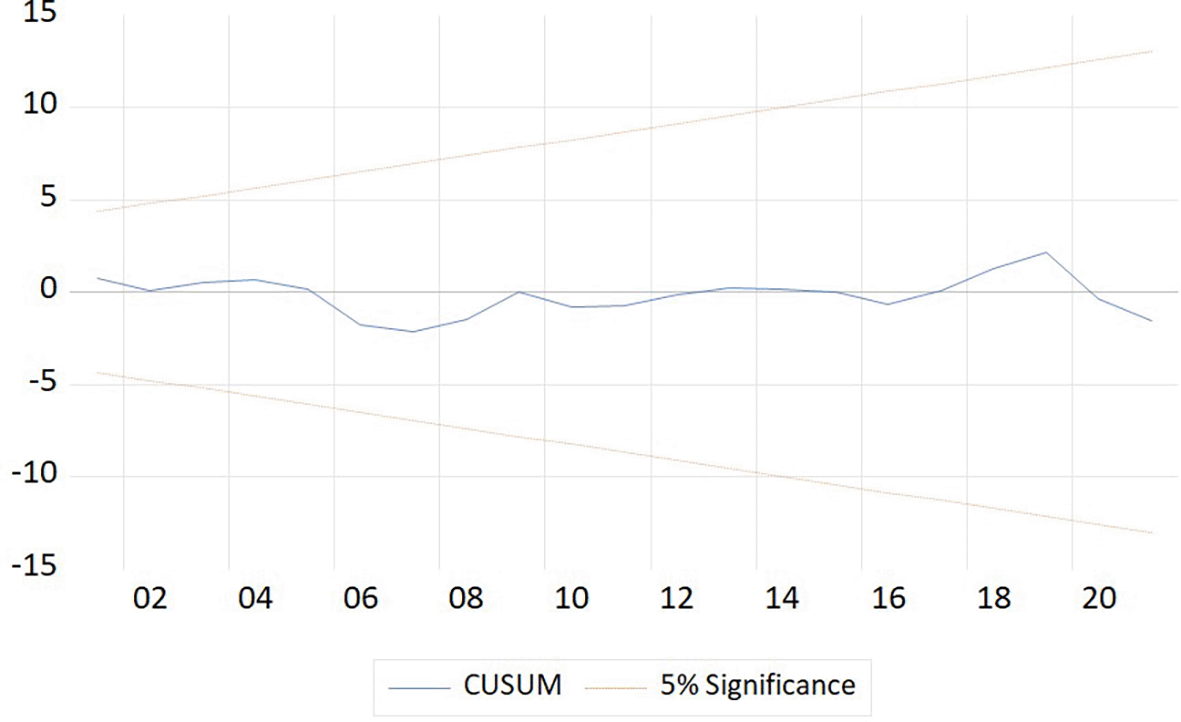
β1−β12 are short- and long-run parameters, ∆ is the difference operator, εt is the error term, and ECT is the Error Correction term. Given the dynamics of time-series data that tend to be serially correlated, this study has carried out serial correlation to ensure that the error terms are serially independent. In addition, the model was assessed for normality and if residuals were homoscedastic. To ensure that the model was stable, a stability test was performed using the CUSUM. The stability test is important in time series analysis, as we cannot predict the structural changes that may have occurred. The Ramsey RESETs test was used to assess the model specifications.
The study applied Fully Modified Ordinary Least Squares (FMOLS), Canonical Cointegration Regressions (CCR), and pairwise Granger causality tests to further assess the reliability of the ARDL model results. The FMOLS used in estimation of long run cointegration among integrated variables which is common in time series analysis (Phillips, 1995). As such, can produce reliable estimations when dealing with time series data which often exhibits non-stationarity. Additionally, FMOLS can address issues of serial correlation and endogeneity in error term (Phillips, 1995; Phillips and Hansen, 1990)s. Therefore, this makes the approach suitable for robustness check for ARDL results. CCR estimates the cointegrating vectors and can account for issues of endogeneity and serial correlation in the error terms as such ensure efficient and consistent estimation of cointegrating relationships (Park, 1992). Additionally, it can correct the asymptotic biasness that arises due to correlation between the regression and stochastics regressor errors. Therefore, together with the FMOLS, CCR was used as a robust estimator to validate the findings from the ARDL model.
This section discusses the empirical results, which include unit root, cointegration analysis using ARDL, and presentation and discussion of the results for both the short and long coefficients. It also includes diagnostic tests.
Stationarity tests were carried out as presented in Table 2 to ensure that all variables were stationary at either I (0) or I (1), and it was found that all the variables were integrated at either I (0) or I (1), and no variables were integrated at the I(2) order. Among the variables included in the model, carbon dioxide emissions, and GDP per capita demonstrated stationarity at I(1) in all the tests while renewable energy consumption, financial sector development and institutional quality have mixed integration whereby they are integrated at I(0) for ADF and PP while are stationary at I(1) for DF. Additionally, trade openness demonstrated I(0) in terms of ADF and DF and I(1) for PP. Therefore, the results satisfy and validate the ARDL criterion, which allows the use of the ARDL estimation approach.
To ensure accurate and reliable estimation of the bound cointegration test and the error correction term there is a need to establish the optimal lags order. To select the optimal lag length the study used the following lag length criteria such as sequential modified LR test statistic (LR), final prediction error (FPE), Akaike information criterion (AIC), Schwarz information criterion, (SC) and Hannan–Quinan information criterion (HQ). Table 5 illustrates that LR, FPE, AIC and HQ indicate 2 lags at 5% level. Therefore, given that the majority criteria recommend a lag of 2 as optimal, the study used lag 2 as the preferred optimal lag length.
Given the unit root test, the study used the AIC to select the optimal lag length for the Pesaran et al. (2001) ARDL approach to assess the long-run relationship. The bound test results shows that the estimated F-statistics is 19.6874, which is greater than the lower and upper bounds at a 1 and 5 percent levels of significance, indicating the existence of a cointegrating relationship between the dependent and independent variables (see Table 3).
| F-Statistics | Value | K |
|---|---|---|
| 19.6874 | 5 | |
| Significance level | Lower bound | Upper bound |
| 1% | 4.134 | 5.761 |
| 5% | 2.910 | 4.193 |
| 10% | 2.407 | 3.517 |
With confirmation of the long-run relationship, the study estimated the long and short run.
The results presented in Tables 6 and 7 indicate that GDP growth has a positive and statistically significant relationship with environmental degradation in both the long and short terms. This indicates that a 1% increase in economic growth leads to a 1.54% increase in CO2 and environmental degradation. The findings are consistent with the Treadmill of production theory, which emphasizes that the pursuit of increased economic growth and profit-seeking because of the exploitation of natural resources and others leads to environmental degradation (Schnaiberg, Pellow and Weinberg, 2002; Lewis, 2019). In addition, it contradicts the EKC theory, which indicates that in the long run, GDP growth is supposed to contribute to environmental sustainability due to the use of clean energy, environmental legal frameworks, and waste management practices (Stern, 2014; Zuo et al., 2022). This finding supports ToP that as economic agents continue to seek profit, they put more pressure on the environment, thus causing climate change and degradation. The findings further reflect Namibia’s current economic situation, which saw increased investment in explorations of natural resources, oil, and gas, taking precedent over economic activities that are environmentally friendly.
In addition, financial sector development has a negative relationship in both the short and the long run. This implies that increased financial sector development, in terms of credit access by the private sector, can reduce environmental degradation. The availability and accessibility of financial resources can encourage investment in green energy sources and technologies, as suggested in Raihan (2023) and Usman, Makhdum and Kousar (2021). In addition, financial development is suggested to lower environmental degradation as it can accelerate technological advancement, which can reduce pollution and enhance sustainability (Amin et al., 2022; Prempeh, 2024). The findings further validate the ecological modernisation theory that financial development can contribute to technological innovation and green financing, which transform institutions, modernise economic activities and contribute to eco-friendly industrialisation (Mol et al., 2014). As outlined in the literature, the results suggest that a more developed financial sector in Namibia can mitigate environmental degradation through investment in green technologies and energy sources. Furthermore, the findings provide justification for the green hydrogen and the introduction of new green financing mechanisms in Cactus farming and solar energy production that are being developed in the country currently. Therefore, the finding further justifies that financial development for the green economy can actually mitigate carbon emissions and achieving the SDGs in climate action. These further support the ecological modernisation views that green financing can reduce degradation due to innovation in terms of green technology.
Moreover, institutional quality is positively related to environmental degradation, suggesting that it exacerbates environmental degradation. The results are contrary to theories, as improved governance is expected to reduce environmental degradation, however, in the context of economic development, improved institutions in terms of government effectiveness, regulatory quality enhance economic stability in a country, attract investment and promote industrialisation. Therefore, if a country prioritises economic development, it can encourage large scale economic activities and relaxes environmental protection measures. This is supported by Kumar et al. (2021) who found that institutional quality is unable to reduce environmental degradation in the presence of corruption. Corruption is rampant in global South economies and is not reflected in the institutional quality measured in this study which is economic freedom. The results align with In line with the results for the previous period (Saba et al., 2025; Sibanda et al., 2023; Yaman and Cetin, 2025), the rules and regulations set by governments have not been implemented to reduce environmental degradation. However, it contradicts Aydin, Sogut and Erdem (2024), Akpan and Kama (2024), that institutional quality encourages environmental sustainability. Additionally, North argues that institutions reduce transactional cost to facilitate economic exchange, thus it does not guarantee environmental sustainability, thus the efficiency is based on the priority of government (John Nye, 2010). Therefore, based on the findings, in the context of Namibia high quality institutional frameworks and institutions may incentivise and prioritise economic development, thus high institutional quality will lead to conducive environment for increased economic activities. Thus, quality institutions reduce transaction cost for mining, oil and gas explorations. This explains that better institutional quality is facilitating the expansion of carbon-intensive economic activities, as such prioritises economic development over ecological preservation. Therefore, environmental degradation is not only a product of economic activities, but also of the structures and functioning of institutions (Cohen, 2023).
The results show that the consumption of renewable energy can reduce environmental degradation as it has a negative and statistically significant relationship with environmental degradation in both the long and short run. This implies that an increase in energy consumption from renewable sources leads to a decline in carbon emissions and ecological footprint. However, the relationship was positive in the previous period in the short term. The findings are similar to those for Kirikkaleli and Adebayo (2021); Achuo, Miamo and Nchofoung (2022); Habiba and Xinbang (2022) the consumption of renewable energy that dampens greenhouse gas emissions, such as reduced environmental degradation. Furthermore, the findings show that increased investment in renewable energy production and initiatives, such as green hydrogen and solar energy, can contribute to environmental sustainability. This supports the ecological modernisation theory that technological innovation, institutional reform and investment in clean energy balances economic growth and environmental protection.
In terms of trade openness, the relationship with environmental degradation is negative. These results suggest that trade openness can shift cleaner production technologies to Namibia, which enhances environmental sustainability. These results are consistent with those of the Karedla, Mishra and Patel (2021); Shakeel and Nobre (2024) and Thi, Pham and Nguyen (2024).
Based on the overall findings, while Namibia’s economy lean towards the Trademill of production, as the country remains generally resourced dependent. However, the results for FSD and REC show that the impact of variables on environment in terms of ecological modernisation is present although it is not sufficient to offset the growth-led degradation. The error correction measures the speed of adjustment from short to long run. The ECT value is negative and statistically significant at -0.9260, indicating that 92.60 percent convergence speed from short run to long run stable equilibrium. This implies that full equilibrium will be reached in about 1.079 years.
The value of the R2 and adjusted R2 as per Table 7, were estimated to be 88 and 87 percent, which confirms that the model is a good fit. The F-statistics are estimated at 67.857. Furthermore, diagnostics tests such as serial correlation, heteroskedasticity, model specification and stability and normality test are presented in Table 7. It is observed that the ARDL model has met all the criteria as such passed all diagnostics as such is no serial correlation, and the error terms are homoscedastic. Additionally, the model was correctly specified, and the residuals in the models were normally distributed according to the normality test. Meanwhile, the stability test using CUSUMs which shows stability of the model as the plot is between the critical boundaries at 5 percent level of significance as presented in Figure 1. Therefore, the diagnostics tests confirm that the short and long run parameters are accurate.
The Granger causality results as presented in Table 8, revealed a unidirectional causality from renewable energy, institutional quality, and GDP to environmental degradation. This suggests that energy transition, economic growth, and institutional quality can predict environmental outcomes. The findings show that institutional frameworks are leading indicators of environmental degradation. Additionally, environmental degradation and financial sector development has a bidirectional causality indicating that they are interlinked and have a feedback effect. If further suggest that the provision for green financing can reduce carbon emissions and the environment stabilise.
To assess the robustness of the ARDL results, the FMOLS and CCR test were performed as presented in Table 9. The results confirm the ARDL results that institutional quality and GDP have a positive long run relationship with environmental degradation, suggesting that they contribute to environmental degradation, although insignificant with institutional quality. Renewable energy consumption, financial sector development and trade openness reduce environmental degradation.
The essence of environmental sustainability and concerns regarding the impact of environmental degradation on humanity prompted the study to investigate Namibia. Namibia, like many developing countries, has the least carbon emissions, yet is heavily impacted by climate change as a country with over 90% of it classified as hyper-arid, arid, or semi-arid, ranking second to the Sahara Desert in terms of aridity (World Bank Group, 2021). As a result, communities are prone to catastrophic events such as increased temperature, drought, and floods (World Bank Group, 2021; Government of the Republic of Namibia, 2023). Therefore, this study examined the impact of financial sector development and institutional quality on environmental degradation. The following conclusions and recommendations were drawn:
• Institutional quality improvements contribute to significant increases in carbon emissions and environmental degradation, as the institutional frameworks prioritise rent-seeking and the pursuit of economic development over ecological sustainability. This focus often leads to increased emissions of greenhouse gas emissions and environmental neglect.
The findings suggest that current institutional frameworks exert the scale effect, where regulatory efficiency promotes carbon-intensive industrialisation and resource exploration. Therefore, for Namibia to reduce environmental degradations and achieve environmental sustainability, the country should undergo institutional reforms that ensure that the country moves away from growth focused policies towards balancing growth and environmental protection. The current policy frameworks on environmental protection have not been highly effective; the national laws prioritise industrialisation and economic expansion and which leads to pressure on the environment. Therefore, policymakers should strengthen institutional quality by promoting sustainable development which can reduce negative environmental impacts. Furthermore, based on the findings developing countries must incorporate financial globalization into environmental protection frameworks to adopt international green standards that penalise environmental destruction. Therefore, given the impact of institutional quality on the environment, there is a need to link environmental protection and investment law, to attract green economic activities that contribute to development and environmental sustainability.
• Financial sector development presents a positive impact on the environment. In both the short- and long-run financial development reduces environmental degradation, as such contribute to environmental sustainability.
Environmental sustainability relies heavily on access to finance for advanced technologies and means of production. Developing countries are most impacted by climate change; however, they have limited financial capacity. Thus, there is a concerted effort by developing countries to continue to persuade advanced economies to increase climate change financing as they lack domestic liquidity to fund climate mitigation projects, while they are the most impacted by environmental degradation. Thus, it is imperative that countries proactively invest in clean energy. Domestically government, through the central bank, should implement green credit guidelines providing preferencial climate loans with special conditions to commercial banks that provide financing for environmentally friendly technologies. Thus, by improving financial accessibility and inflow into clean energy investments can reduce dependence on non-renewable energy. The research, therefore, offers insight and contributes to policy and literature by providing a view on the importance of finance and institutional frameworks in environmental protection and the need to create a balance between economic development and environmental sustainability.
The current study focuses on Namibia; however, its implications can be applied to other contexts. Therefore, future studies should incorporate other measures of environmental degradation, such as the ecological footprint or other forms of greenhouse gases. Furthermore, institutional quality might not be adequately captured as the study used economic freedom index and not the measure by the World Governance, as such future study may use other measure of governance to measure institutional quality. Additionally, although the study used multiple econometric models, the complexity of the relationship may not be fully captured as such future studies can incorporate other control variables such as resources rent to assess whether the relationship might be different. Further studies can apply asymmetric relationships, as the impact may be influenced by changes in a country’s economic or political atmosphere.
| Views | Downloads | |
|---|---|---|
| F1000Research | - | - |
|
PubMed Central
Data from PMC are received and updated monthly.
|
- | - |
Provide sufficient details of any financial or non-financial competing interests to enable users to assess whether your comments might lead a reasonable person to question your impartiality. Consider the following examples, but note that this is not an exhaustive list:
Sign up for content alerts and receive a weekly or monthly email with all newly published articles
Already registered? Sign in
The email address should be the one you originally registered with F1000.
You registered with F1000 via Google, so we cannot reset your password.
To sign in, please click here.
If you still need help with your Google account password, please click here.
You registered with F1000 via Facebook, so we cannot reset your password.
To sign in, please click here.
If you still need help with your Facebook account password, please click here.
If your email address is registered with us, we will email you instructions to reset your password.
If you think you should have received this email but it has not arrived, please check your spam filters and/or contact for further assistance.

Comments on this article Comments (0)