Keywords
Varieties, sorghum, adaptable, tidal swamplands, sandy soil, MGIDI, GGE biplot.

This article is included in the Agriculture, Food and Nutrition gateway.
Varieties, sorghum, adaptable, tidal swamplands, sandy soil, MGIDI, GGE biplot.
Amendment from version 2
Abstracts has been edited for better readability
Table 1 :second column :”origin” was replaced with ”main traits”. Non available data (“na”) at row 12 column 3, and row5,8,10 at column 5 (% Tanin) were replaced by actual data.
Pedigree/origin of the tested varieties was added below Table 1
Information on irrigation was also added below table 1
Table 2: second column, “trait” was replaced by”relevance”
Introduction: Justification of the study and research gap has been added.
Experimental Design: plot size was clarified 5X4 m with planting distant 0.25 cm within row and 0.60 cm between row.
Model 1 has been edited so that Ei was written in place of Ei
GGE biplot environment based partioning (svp=2) was replaced by genotype based partitioning (SVP=1) for studying genotypes(varieties) and environment based partitioning (SVP=2) was used for comparing environment.
Figure 1-4 was combined into figure 1a,1b,1c,d.
Figure 5-16 was grouped into two figure: figure 2. GGE biplot on grain yield, figure 3.GGE biplots on forage yield and placed under section 3.5 adaptability in subsection grain yield or forage yield.
Two table was added, i.e. Table 7. MGIDI values and Table 10. Variance components and contribution to the total variance. Cosequently the numbering of Tables are adjusted.
Discussion: new paragraph revised/added, i.e., paragraph 3,4,10,11.
The conclusion was revised/moderated such as the “ valuable tool and “ broadly adaptive. Alignment of the adaptive varieties with each environment was added in the conclusion
The R code was revised in the figshare.
See the authors' detailed response to the review by Ramendra Nath Sarma
See the authors' detailed response to the review by Tushar Arun Mohanty
See the authors' detailed response to the review by Niranjan Ravindra Thakur
The sorghum crop (Sorghum bicolor L.) plays a significant role as a source of food, bioenergy, and animal feed materials. As a food source, it provides carbohydrate sources and other essential nutrients, including proteins, polyunsaturated fatty acids, and high fiber. The utilization of sorghum can then be promoted for food diversification.1,2 As a source of bioenergy, it produces biomass that can be processed through fermentation, gasification, and fast pyrolysis to generate various biofuels, including bioethanol, biodiesel, bio-oil, biogas, biohydrogen, and other bio-derived products.3–6 Sorghum also serves as a source of feed for animals.
Sorghum (Sorghum bicolor L.) is a highly adaptable crop that thrives in diverse agroecosystems due to its genetic diversity and resilience to various environmental stresses.7–9 Sorghum crops are primarily cultivated in drylands due to their drought resistance, which is attributed to their evolution in arid regions. As a drought-resistant crop, sorghum is widely cultivated in many areas, including semi-arid and arid zones in Africa, Asia, the Middle East, Central America, North America, and Australia.4,5,10
In Indonesia, sorghum is mainly cultivated in dry lands. However, the availability of dry lands for sorghum cultivation continually reduced due to land conversion for non-agricultural purposes and competition with other crops, prompting the need to expand sorghum cultivation to tidal swamplands and sandy soil areas, which are quite promising and widely available in Indonesia. It was estimated that 8.92 million hectares of tidal swamplands and 2.10 million hectares of sandy soils were available for agriculture in Indonesia.11,12
Swamplands are low-lying lands that are regularly flooded. It consists of two types of lands, i.e., tidal and inland swamplands. Tidal swamplands are swamplands that are influenced by sea tides. It can be further classified based on tidal influence into types A, B, C, and D.11 Tidal swamplands of type A are those lands influenced by spring and neap tides, whereas type B are those influenced by neap tides only. Suppose there is no flooding, i.e., only a rise in the water table during the tides, then those lands are classified as type C, while type D is not influenced by sea tides at all, and thus, basically a dry land in the swampy areas. Inland swamps are areas formed in the inland valley where water originates from an upstream river or rainfall. Sandy soil contains a high proportion of sand particles, i.e., more than 60% of sand by volume, derived from sedimentary rock. It has a gritty texture, excellent drainage, poor nutrient retention, and good airflow.13
The expansion of sorghum cultivation to tidal swamplands and sandy soils necessitates the development of varieties that can thrive in these environments. A crop’s adaptability is defined by its ability to grow and yield well under varying environmental conditions. Consequently, high phenotypic performance and consistency across different environments serve as critical indicators of adaptability. While sorghum’s adaptability has been investigated in dryland environments14–18—encompassing a range of climates from semi-arid and dry to humid,19,20 as well as21 various agroclimatic conditions,22–26 differing altitudes,27 and diverse fertilizer applications17,28—there is a notable lack of research focusing on sorghum’s response to high rainfall and inundation, as well as to nutrient-poor and pyrite-containing soils characteristic of tidal swamplands and sandy soils. This gap presents a valuable opportunity for further exploration.
In tidal swamplands, Sorghum can be cultivated in types C and D, as flooding is limited in these types of lands.29,30 However, this crop faced a number of agronomic and environmental difficulties because tidal swamplands differed significantly from the semi-arid ecosystems where sorghum normally flourishes. These included: (1) Soil acidity and toxicity, which can lead to reduced root elongation, poor nutrient uptake, stunted growth, and low yield; (2) Nutrient imbalance and deficiency; and (3) waterlogging and inadequate drainage, as prolonged waterlogging can seriously hinder sorghum growth. In sandy soil, low water holding capacity, low nutrient retention, low soil fertility, and low soil root anchoring are obstacles to sorghum production.
Environmental and variety-based adaptation research, including the use of biofertilizers and nutrients, as well as the influence of climate on swampy and sandy soils, are phenomena that require study. Given that superior sorghum varieties can adapt or tolerate climate change or stress. Intercropping and integrated nutrient management, as well as land and water management practices, are key adaptations that can enhance the health and productivity of marginal soils and are effective in increasing sorghum yields.29
Multi-trait crop selection has been extensively applied to maize31–34 rice,35–37 and soybean38,39 breeding, particularly for marginal agro-ecosystems such as acidic uplands, rainfed lowlands, and intercropping systems in Indonesia, using advanced tools including GGE biplot, and MGIDI. However, such integrated approaches remain scarce for sorghum under tidal swamplands and sandy soil conditions.
MGIDI is a tool for selecting plant genotypes and ranking agronomic treatments based on multiple traits. It integrates various traits into a single index. It could be used to select varieties and their interaction with an environment close to the ideal type of sorghum in tidal swamplands and sandy soils.40–42 MGIDI embedding weight to prioritize traits, reduce dimensionality, and enhance selection accuracy.41,42 Some studies have shown that MGIDI can lead to significant selection gains across various traits.43 The GGE biplot is a graphical tool for studying the performance of varieties in multiple tested environments. The biplot illustrates the two factors (G and GE) that are important in variety evaluation. The GGE biplot displays the first two principal components (PC1 and PC2) derived from environment-centered data, i.e., when the effect of environment is removed from the multi-environment data of the cultivar. This method has been employed in numerous studies to investigate adaptability and genotype-environment interaction in sorghum.44–59
The purposes of this research are: 1. to identify a high-performance variety based on multipl traits and beneficial characteristics in tidal swamplands and sandy soils. 2. To determine adaptable varieties in tidal swampland and sandy soil, and 3. To determine the best environment to test broadly adaptable varieties. The high-performance and adaptable varieties were selected using the Multi-Trait Genotype-Ideotype Distance Index (MGIDI) and Genotype plus Genotype Environment (GGE) biplot.
The experiments were conducted from October 2022 to February 2023 (wet season) and from July to November 2024 (dry season) in tidal swamplands at Petak Batuah Village, Dadahup Sub-district, Kapuas Regency, and from August to December 2023 (dry season) in sandy soils at Sidodadi Village, Bukit Batu Sub-district, Palangka Raya City, Central Kalimantan Province, Indonesia.
The experimental site's soil has very low levels of exchangeable K, Na, Ca, and Mg. With a pH range of 3.62 to 3.8, the swampland area's soils were likewise highly acidic. Base saturation was extremely low, whereas cation exchange capacity was extremely high. Organic-C values ranged from moderate to extremely high. While accessible P and exchangeable K, Na, Ca, and Mg were at extremely low levels, total N was at a moderate level.
Rainfall in tidal swamplands ranges from 184.9 cm to 302 cm during the wet season, and from 77.8 cm to 416.5 cm during the dry season; in sandy soil, it ranges from 28.4 to 317 cm during the dry season. The weather in the trial sites appears to be approaching the start of the wet season at the end of the dry season.
This study used 12 varieties of sorghum. The Cereal Crop Instrument Standard Testing Centre (CCISTC) is the source of all seeds. Table 1 shows some of the main characteristics of these varieties. Other materials needed include soil conditioners such as dolomite and chicken manure. The inorganic fertilizers are Urea, NPK, SP-36, and KCl. Several insecticides were applied as required.
| Varieties (code) | Main traits | Pest and disease resistance* | Plant age at 50% flowering (dap)** | Carbohydrates (%) | Tanin (%) | Yield (t ha−1) |
|---|---|---|---|---|---|---|
| Super 1 (V1) | High yield and stablity | Aphis (R), Anthracnose, leaf rust, and leaf blight (R) | 56 | 71.30 | 0.110 | 5.70 |
| Super 2 (V2) | High yield and stablit | Aphis (R), Anthracnose, leaf rust and leaf blight (R) | 60 | 75.60 | 0.300 | 6.30 |
| Suri 3 Agritan (V3) | High yield and stablit | Aphis (R), Anthracnose and leaf spot (R) | 54 | 64.06 | 0.077 | 6.00 |
| Suri 4 Agritan (V4) | High yield and stablit | Aphis, Anthracnose, and leaf spot (MR) | 55 | 64.93 | 0.013 | 5.70 |
| Mandau (V5) | Adaptation | stem borers (R), Anthracnose and leaf rust (R) | 65 | 76.00 | 0.95 | 4.00–5.00 |
| Soper 6 Agritan (V6) | High yield and stablit | Aphis and leaf rust (HR), leaf spot, and Anthracnose (MR) | 64 | 66.88 | 0.070 | 6.00 |
| Soper 7 Agritan (V7) | Drought tolerance, disease resistance | leaf rust and leaf spot (R), Anthracnose and stem rot (HR) | 59–65 | 63.90 | 0.210 | 12.93 |
| Numbu (V8) | High yield, wide adaptation | Aphis (R), leaf rust and leaf spot (R) | 69 | 84.58 | 0.95 | 4.00–5.00 |
| Soper 9 Agritan (V9) | Drought tolerance, disease resistance | leaf rust (R), leaf spot, Anthracnose, and stem rot (HR) | 62–65 | 63.86 | 0.210 | 14.40 |
| Kawali (V10) | Drought tolerance, disease resistance | Aphis (MR), leaf rust and leaf spot (R) | 70 | 87.87 | 1.08 | 4.00–5.00 |
| Bioguma II Agritan (V11) | Sugar + yield | leaf rust (R), Anthracnose (MR), and stem rot (HR) | 69–75 | 61.40 | 0.140 | 9.39 |
| UPCA S1 (V12) | Early maturity | Aphis (MS) | 60–70 | 66.50 | 0.215 | 7.38 |
The primary genetic sources of the twelve tested varieties are Numbu and Kawali varieties. Super 1-2, Suri 3-4, and Soper are the result of Numbu introduction and selection; Soper 7-9 is the result of a cross between Kawali and indigenous varieties; and Bioguma is a result of Numbu mutant breeding. For MGIDI-based multi-trait genotype selection and GGE biplot-based mega-environment stratification, the founder-dominated pedigree structure is quite advantageous. More than 70% of the genetic base of Indonesia's released cultivars comes from Numbu and Kawali.
The experiment was conducted in tidal swamplands of type C (Inceptisols) and sandy soils (Entisols). Intensive tillage was practiced. After one week, two seeds were planted per planting hole. The plot size was 5x4 cm with planting distant between row 0.6 m and within row 0.25 m. A replanting operation was performed 7–14 days after planting. Thinning was conducted 30 days after planting, leaving a single plant per pot. Weeds were controlled manually, with hoeing 26 and 46 days after planting. Irrigation by watering the plants with a hose for 4-5 hours during the early growth and seed filling. Fungicides with the active ingredients difenokonazol and azoksistrobin were used to control fungal disease, whereas insecticide with the active ingredient karbofuran was used to control pests.
The trials were arranged in a randomized complete block design (RCBD) with two-factor treatments and three replications. The first factor was tested environments consisted of E1 = tidal swamplands applied with 500 kg ha−1 chicken manure in the wet season, E2 = tidal swamplands applied with 1000 kg ha−1 chicken manure in the wet season, E3 = tidal swamplands applied with 500 kg ha−1 chicken manure in the dry season, and E4 = tidal swamplands applied with 1000 kg ha−1 chicken manure in the dry season, E5 = sandy soils applied with 500 kg ha−1 chicken manure in the dry season, and E6 = sandy soils applied with 1000 kg ha−1 chicken manure in the dry season. The second factor was 12 varieties of sorghum ( Table 2). The utilized area was defined as the area occupied by the central row. The entire plot was applied with 1000 kg ha−1 of dolomite. The observed traits are given in Table 2.
2.4.1 Analysis of variance
Multivariate Analysis of Variance for all traits according to the following model:
Where Yijkt is the observed t-th traits at k-th block under the i-th environment of the j-th variety, μt is the grand mean of the t-th trait, βk is the k-th block effect, i = 1, 2 … e; j = 1, 2, 3 … v; k = 1, 2, 3; t = 1, 2 … p. Ei is the i-th environmental effect, Vj is the j-th variety effect, (EV)ij is the interaction of the variety and the environment, and ϵijkt is the experimental error and k-th block. The 1xp vector =(ϵijk1, ϵijk2, ϵijk3,… ϵijkp.) is assumed to be multivariate normal with mean = 0 and positive definite covarianc matrix ∑. Multivariate Analysis of variance (MANOVA) was conducted for p traits based on model (1). Based on the MANOVA results, the means of the significant effects are extracted to construct two-way tables with variety means or a combination of variety-environment means in rows and traits in columns. Let denote the two ways tables in matrices form as V = (Vij)vxp and EV = (EVij)evxp, for variety means or variety-environment combination means in rows and traits in columns, respectively. The rows of the two matrices are then rescaled so that all columns have values 0-100 as follows.40,43
for the column of V. The column of EV rescaled in the same way. Where and are the new maximum and minimum values of traits j in column of V or EV after rescaling, respectively; and are the original maximum and minimum value of the trait j in the i-th variety or variety-environment combination. The values of and determined based on whether we expect the highest value and the lowest value in the “ideotype”. If we expect that the “ideotype” has the highest value for the traits then we set, = 100 and = 0; otherwise, = 0 and = 100.
2.4.2 Factor analysis
The V* or EV* = i.e., the rescaled V and EV respectively are then subject to factor analysis to group variables based on their correlation. All variables within a particular group are expected to be highly correlated with one another but have relatively small correlations with variables in different groups.
The estimation of the factorial scores for each row in the two matrices (V* and EV*) is according to the following model:
Where X is a 1xp vector of a row of V* or EV*, μ is the 1xp vector of the standardized mean, L is a pxf matrix of factorial loadings, f is a px1 vector of common factors, and ϵ is a px1 vector of residuals. p and f are the number of traits and common factors retained. The initial loadings are computed considering only factors with eigenvalues of the correlation matrix of rVij or rVEij higher than 1. The varimax rotation criteria are used for the analytic rotation and estimation of final loadings. The scores are then obtained as follows.
S is a vxf matrix with factorial scores, X is a vxp scaled matrix (V* or EV*), and A is a pxf matrix of canonical loading. R is a pxp correlation matrix between the traits, and f is the number of factors retained. Factors associated with the eigenvalue of the matrix greater than one are retained.
2.4.3 Multitrait-Genotype-Ideotype-Distant Index (MGIDI)
The MGIDIi for the i-th treatment (variety or variety-environment combination), is defined as the Euclidean distance between the scores of the i-th treatment and the ideal type, and computed as follows.40
Where γij is the score of the i- th treatment in the j- th factor (i = 1, 2, … , t; j = 1, 2, … , f), being t and f the number of treatments and the retained factors, respectively; and γj is the jth score of the ideotype or ideal treatment. The treatment with the lowest MGIDI is closer to the ideal treatment, presenting the desired values for all the p traits. The traits are prioritized by putting the following weights (number in the bracket in front of the traits): (0.4) PH, (0.6) LC, (0.4) INC, (0.4) INL, (0.7) SD, (0.7) LW, (0.7) LL, (0.6) PL, (0.5) (PDW), (1.0) LWW, (0.3) BRIX, (1.0) SWW, (1.0) GY. The Analysis was performed using R software version 4.3.3.60
2.4.4 GGE Biplot
The mean yield of variety i in environment j according to model (1) is:
If we delete E i from Y ij, then the environmental-centered data matrix M with the ij-th element:
Where = and = ; are the PC score for variety i and environment j, respectively; the singular value of Principal Component (PC) k, and a is the partitioning factor i.e, a = 0 for environment focused partitioning and a = 1 for genotype-focused partioning. Environment-focused singular value partitioning was applied to evaluate the discriminating ability and representativeness of test environments, while genotype-focused partitioning was used for genotype evaluation and mega-environment delineation. In R code, a = 1 is coded as SVP = 1 and a = 0 is coded as SVP = 2.
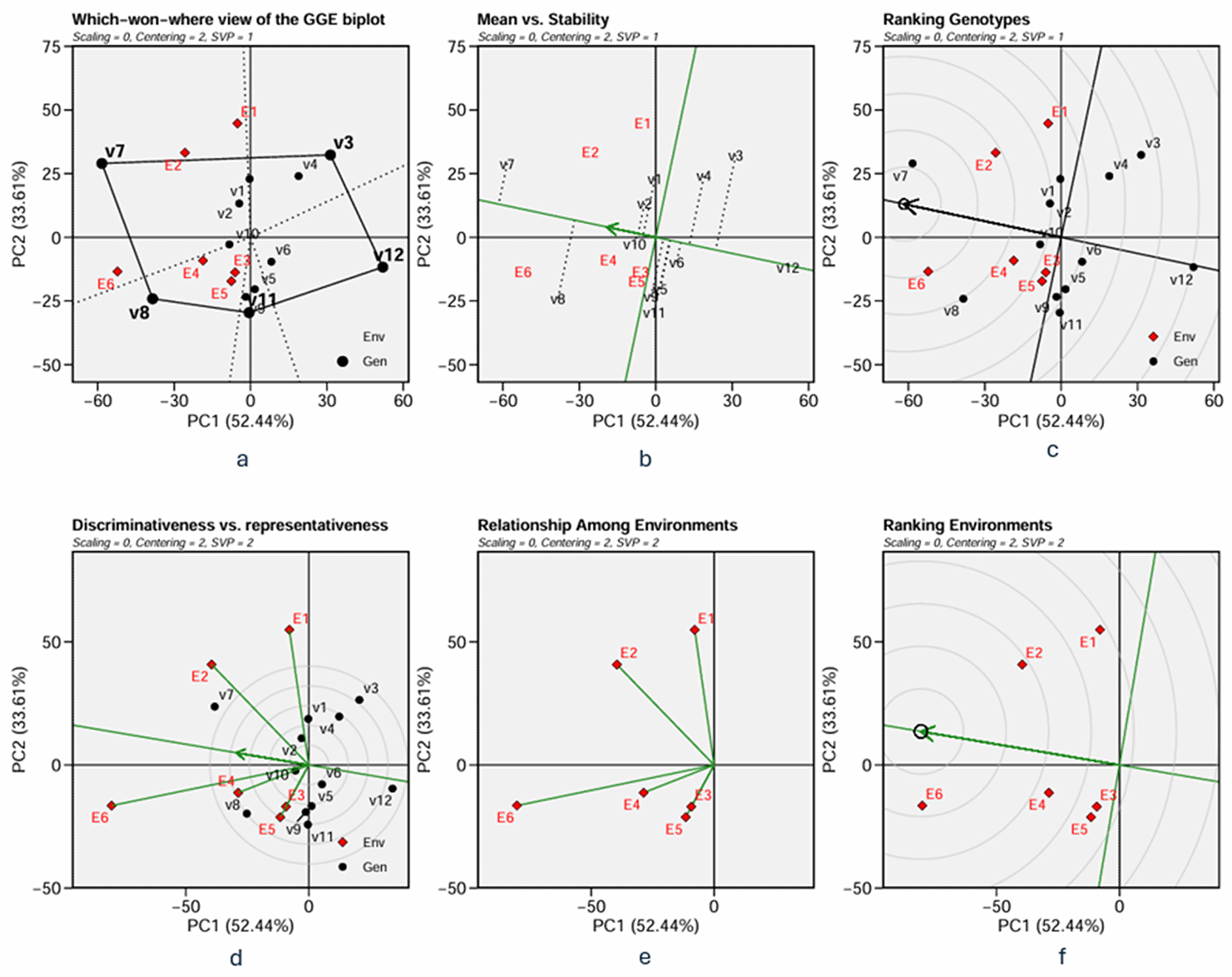
A Genetic plus Genetic-Environment interaction (GGE) biplot was used to examine the stability and adaptability of the varieties. The biplot’s abscissa represents the first principal component (PC1), indicating the phenotypic performance of the varieties, while the ordinate represents the second principal component (PC2), indicating the stability of the varieties. The two components account for the variation in varieties and the interaction between varieties and environments. By connecting the variety’s coordinates that were most distant from the origin, a polygon was created that can be used to determine which varieties were the best or worst and at which environments ( Figure 2a and Figure 3a). The biplot is divided into sectors by drawing a dotted line perpendicular to the polygon’s sides from the origin of the biplot. The sectors depict environments that are most comparable to one another. The varieties with the best or the worst phenotypic performance in environments within a sector were those found near the polygon’s vertices in the sector. A group of environments where the same variety performs the best is called a mega-environment. Varieties in a sector without allocated environments are considered unfavourable to any environment and exhibit low phenotypic performance responsiveness.
The average environmental point, with coordinates representing the average PC1 and PC2 scores of the environments, was initially defined to create the Average Environmental Coordination (AEC). The AEC’s X-axis is a line between the biplot’s origin and the average environmental point. Simultaneously, the Y-axis is the line that runs perpendicular to the AEC’s X-axis in the biplot’s origin. The ordinate shows the interactions between each variety and its environment, whilst the AEC abscissa shows the phenotypic performance of varieties in the average environment. The arrow in the AEC axis indicates the direction of ascending phenotypic performance. The projection of each variety on the X-axis of AEC measures the mean phenotypic performance across environments.
In contrast, the projection on the Y-axis measures the stability of the variety in tested environments ( Figure 2b and Figure 3b). The ascending direction is the arrow in the abscissa, and the varieties projected above the origin in the direction of the arrow in the abscissa are above the average of the mean phenotypic performance; the higher the ordinate of the variety in the AEC coordinate is, the less stable it is. The best (adaptable) variety is the highest phenotypic performance and stability variety. This imaginary “ideal variety,” i.e., the best variety, is marked as a small circle in Figure 2c and Figure 3c. Varieties are ranked by their mean phenotypic performance and stability, as indicated by their closeness to the “ideal variety”.
The ideal variety is based on its performance in the AEC. However, one may need to determine a test environment representing the average environment. A line vector was constructed from the biplot’s origin to each environmental point to evaluate the environment’s representativeness and discriminating power. The length of the vector represents the discriminating ability of the environment, while the angle between the vector and the X-axis of AEC measures the representativeness of the environment. The longer the vector and the smaller the angle, the higher the discriminating ability and representativeness of the environment associated with the vector ( Figures 2b and 3b). The environment is then ranked based on its discriminativeness and representativeness ( Figures 2f and 3f). Relationship among environment ( Figures 2e and 3e) identify redundant environment, detect mega-environment and optimize trial network.
The multivariate analysis of variance ( Table 3) found that variety means across environment (V) and variety-environment interaction (VE) have significant effects on the vector of traits, based on the Pillai trace Test (p < 0.01), indicating differences in the means of varieties across environments and such differences are affected by environment. The significant effect of variety-environment interaction means that the ranking of varieties within each environment is varied.
Two two-way tables were extracted from the MANOVA: V = (Vij)vxp, i.,e., the rows are varieties and the columns are the traits, and EV = (EV(ij)t)(ev)xp, i.e., the rows are the variety-environment combinations and the columns are the traits. Factorial loading after varimax rotation and their cumulative variance obtained in factor analysis on the variety mean matrix (V) are presented in Table 4. In contrast, the variety-environment combinations matrix (EV) is presented in Table 5. In both tables, four factors associated with an eigenvalue greater than one are retained along with their cumulative variance. The bold-faced numbers (greater than 0.50 in absolute value) in each table are the dominant factor loading of the traits to the associated factor. Hence, for example, in Table 4, internode count (INC), panicle dry weight (PDW), stem wet weight (SWW), and grain yield (GY) are associated with factor 1(FA1). Similarly, plant height (PH), Internode count (INC), internode length (INL), leaf length (LL), and BRIX are associated with the factor (FA2). Factor 3 is associated with panicle length (PL),) and BRIX. Factor 4 is associated with leaf count (LC), stem diameter (SD), leaf width (LW), panicle dry weight (PDW), and Leaf wet weight (LWW). Similar interpretations can also be held for Table 5. The result of factor analysis will then be used to calculate MGIDI.
3.3.1 Selected varieties
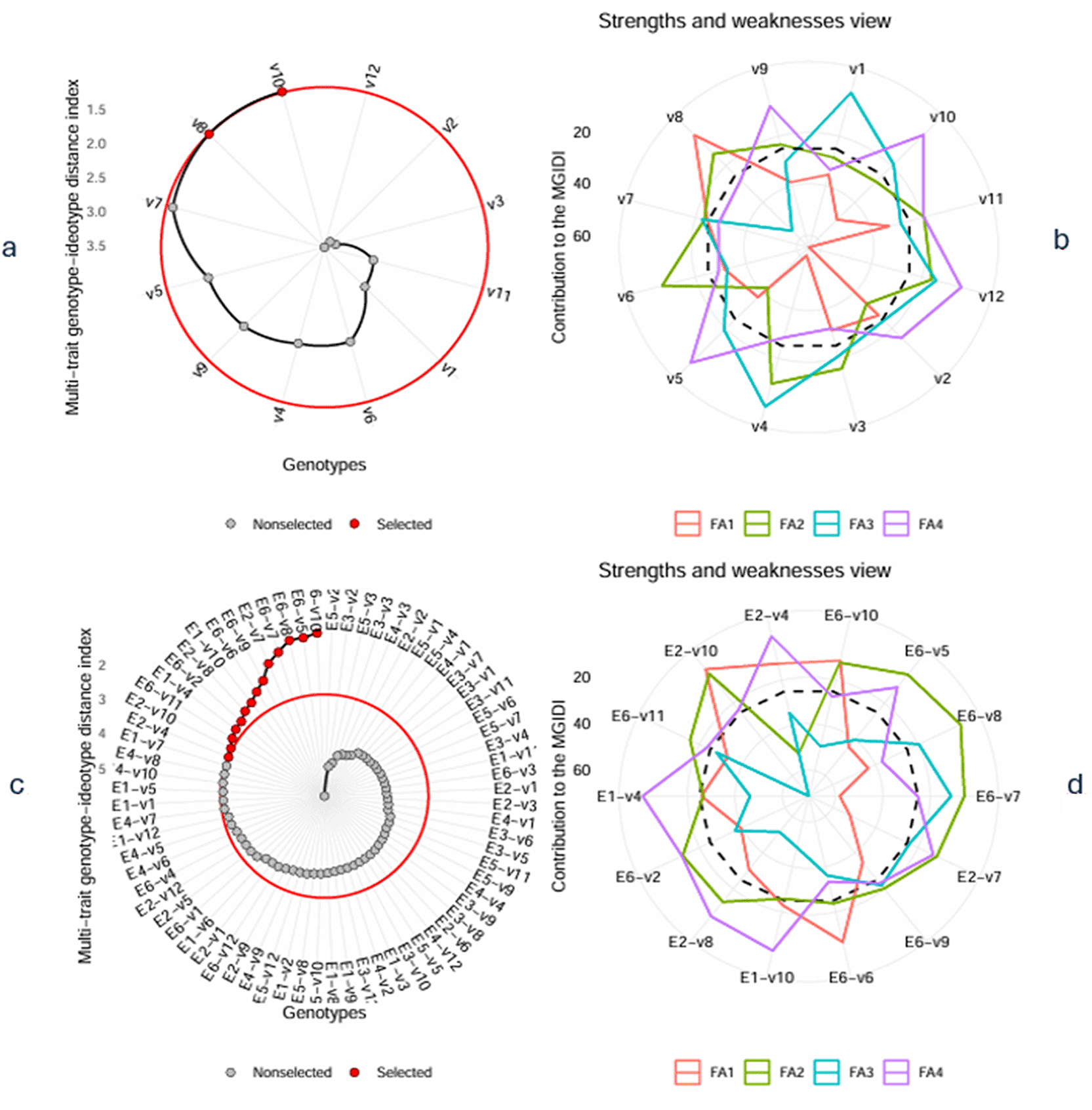
Figure 1. a. Selected varieties based on MGIDI; b. Strengths and weaknesses of selected varieties; c. Selected genotype – environment combination; d. Strengths and weaknesses of all genotype – environment combinations.
Figure 1a shows the ranking of the MGIDI of varieties averaged across environments. The selected varieties based on the MGIDI are Kawali (V10) and Numbu (V8), as indicated by the red dots in Figure 1a. The score for MDIGI on variety averaged across environment and in each environment are presented in Table 6.
3.3.2 Selected variety-environment combinations
Figure 1c presents the ranking of variety-environment combinations based on MGIDI. The red dot at the outer circle is the selected environment-variety combination. They are E6-V10, E6-V5, E6-V8, E6-V7, E2-V7, E6-V9, E6-V6, E2-V8, E1-V4, and E1-V10, E6_V11, E2_V10, E2_V4, E6_V2, where EiVj denotes the j-th variety planted at the i-th environment. Most selected varieties are those applied in sandy soil with a high rate of organic fertilizer (E6). Only four varieties (V4, V7, V8, or V10) were selected for tidal swamplands in the rainy season, and they were either applied at a high or low rate of organic fertilizer (E1 and E2).
3.3.3 Selected varieties in each environment
The multivariate analysis of variance, as shown in Table 3, indicates that the interaction between variety and environment is significant. This interaction suggests that the ranking of varieties varies across different environments. Therefore, it is necessary to select varieties in each environment by the MGIDI. The selection procedure is similar to that of average varieties across all environments and variety-environment combinations. However, the result of the factor analysis and the graphs of the ranking are not presented here. Table 7 presents the result of the selection.
The strengths and weaknesses of all varieties and selected varieties-environment combinations, which are accounted for by the proportion of each factor to their calculated MGIDI, are presented in Figure 1b and Figure 1d, respectively. Each factor has a specific color line, as indicated by the legend. The closer the variety or variety-environment combinations are to the external edge of the polygon, with a specific color representing a particular factor, the smaller the contribution of the factor to the MGIDI. The smaller the contribution of a factor to the MGIDI of a variety/variety-environment combination, the closer the traits associated with the factor to the “ideal type.” Since we defined “ideal type” as those varieties or variety-environment combinations with the highest values in all traits (as selection goals), it implies that the traits associated with the factor are high in the varieties or variety-environment combinations.
The strengths and weaknesses of all varieties are shown in Figure 1b. We should focus attention on the selected varieties, i.e., V8 and V10. Variety V8 is closely related to FA1 and V10 is closely related to FA4. It implies that FA1 has a small contribution to the MGDI of V8, and hence traits like internode count (INC), panicle dry weight (PDW), stem wet weight (weight (SWW), and grain yield (GY), which are associated with FA1, have high values in V8. Similarly, V10 exhibits high values in traits related to FA4, including leaf count (LC), stem diameter (SD), panicle dry weight (PDW), and leaf wet weight (LWW).
Figure 1d illustrates the strengths and weaknesses of selected variety-environment combinations. Unlike Figure 1b, Figure 1d presents only the selected variety-environment combinations for simplicity, given the high number of variety-environment combinations. Factor FA1 makes a small contribution to the MGIDI of E1-V10, E6-V10, and E6-V6, indicating that traits associated with this factor in that variety-environment combination are similar to those in the variety-environment idiotype. Therefore, traits such as plant height (PH), internode count (INC), Internode Length (INL), leaf Length (LL), and BRIX have high values in that variety-environment combination. With similar reasoning traits associated with FA2, such as leaf count (LC) and panicle dry weight (PDW), these values must be high in variety-environment combinations E6-V8, E6-V7, E2-V7, E6-V5, and E6-V11. Two economically valuable traits, grain yield (GY) and stem wet weight (SWW), contribute to biomass production associated with FA3. This factor has made a small contribution to the MGIDI of E6-V7, E2-V7, E6-V9, and E6-V8. Therefore, these varieties must possess high values for both traits. Finally, traits that are associated with FA4 must have high values in E1_V4, E1_V10, E2-V4, E6_V2 and E2_V8.
The adaptability and stability of each variety were studied, with valuable traits including grain yield and fresh forage yield (stems and leaves, expressed as wet weight). The GGE biplot on each of the two traits was used to study the adaptability and stability of varieties. The mean of varieties across environments of the two traits and their confidence intervals is presented in Table 8.
Table 9’s variance components for grain and forage yield revealed a significant G-E interaction for grain yield and a low one for forage yield. This suggests that the application of GGE biplot and MGIDI analysis on grain yield is warranted, while the analysis on forage yield, the result will provide broadly adaptive varieties.
| Components | Estimated variance | |||
|---|---|---|---|---|
| Grain yield | % | Forage yield | % | |
| Variety | 48.46 | 13.0 | 1072 | 21.6 |
| G X E | 3.39 | 43.1 | 461 | 9.3 |
| Rep | 3.39 | 0.9 | 0 | 0 |
| Residual | 109.99 | 43.0 | 3433 | 69.1 |
3.5.1 Grain yield
The GGE biplot on grin yield are dislayed in Figure 2. The “Which-won-where view” of the biplot on the grain yield (GY) and its polygon is displayed in Figure 2a. Of the total GGE variation, the PC1 and PC2 contributed 52.44% and 33.61%, respectively. PC1 reflects the average performance (mean grain yield) of the varieties, while PC2 reflects the stability (variety-environment interaction) of the varieties/genotypes. Jointly, the two components account for 86.05% of the total genotype plus genotype × environment interaction. The polygon separated the biplot’s five sectors. The highest or the lowest phenotypic performance (mean grain yield) varieties were the varieties at the vertices of the polygon. There are five varieties at the polygon’s vertices, i.e., V3, V7, V8, V11 and V12. These varieties are candidates for the best adaptable varieties. There are two mega-environments in the biplot. Mega-environment 1 consists of environments E1, E2, and E6 in one sector, with a variety at the vertex, V7, while mega-environment 2 consists of environments E3, E4, and E5, with a variety at the vertex, V8. Varieties V3, V11, and V12 were found in sectors with no allocated environment. Hence, they were less responsive and exhibited low phenotypic performance (in terms of grain yield) in all tested environments.
The mean and stability analysis depicted in Figure 2b shows that V7 has the highest mean in Mega-Environment 1, as it is the furthest left along the green AEC line. Note that the green AEC arrow points to the left; therefore, varieties further in that direction can be interpreted as having a higher mean performance (in grain yield). V8 is the second-highest performance, with similar reasoning. Additionally, a contrast comparison test ( Table 10) showed that V7 differs significantly from the average grain yield of other varieties. In terms of stability, which is reflected by the ordinates in AEC, V7, and V8 are moderately stable, although they are less stable than other varieties, such as V1, V2, and V10. The ranking of varieties based on their mean performance (in terms of grain yield) and stability is presented in Figure 2c. The best varieties, which are the most adaptable, are those closest to the ideal variety (represented by the small circle near the arrow), an imaginary genotype or variety with the highest mean grain yield and stability. V7 is the most adaptable variety, followed by V8. Consequently, in mega-environment 1, i.e., tidal swamplands in rainy season applied with high rate (E2) or low rate organic fertilizer (E1), and in sandy soils applied with high rate organic fertilizer (E6), the adaptable variety is Soper 7 agritan (V7), while in tidal swampland at dry season applied with high rate (E4) or low rate organic fertilizer (E3) and in sandy soils applied with low rate of organic fertilizer (E5) the adaptable variety is Numbu (V8).
Since the “ideal variety” in the environmental average is only hypothetical, we may need to determine the phenotypic performance of the varieties in a particular tested environment that represents the average environment. For this purpose, we first determined the tested environment that was more discriminative and representative of the average environment. The discriminativeness and representativeness of all tested environments were analysed in Figure 2d. The highest line vector from the origin of the biplot to the environment “point” was the most discriminative environment. At the same time, the most representative is the line vector with the lowest angle to the average environment. The selected environments are ranked based on their discriminativeness and representativeness ( Figure 2f). The center of the concentric circles in Figure 2f represents the ideal environment for selecting genotypes, i.e., the most discriminative and representative ones. The closer an environment is to this center, the better it ranks. Hence, E6 is the most discriminative and representative environment of the average environment. In other words, sandy soil applied with a high rate of organic fertilizer during the dry season (E6) is ideal for selecting broadly adaptive genotypes or varieties based on grain yield (GY).
3.5.2 Forage yield
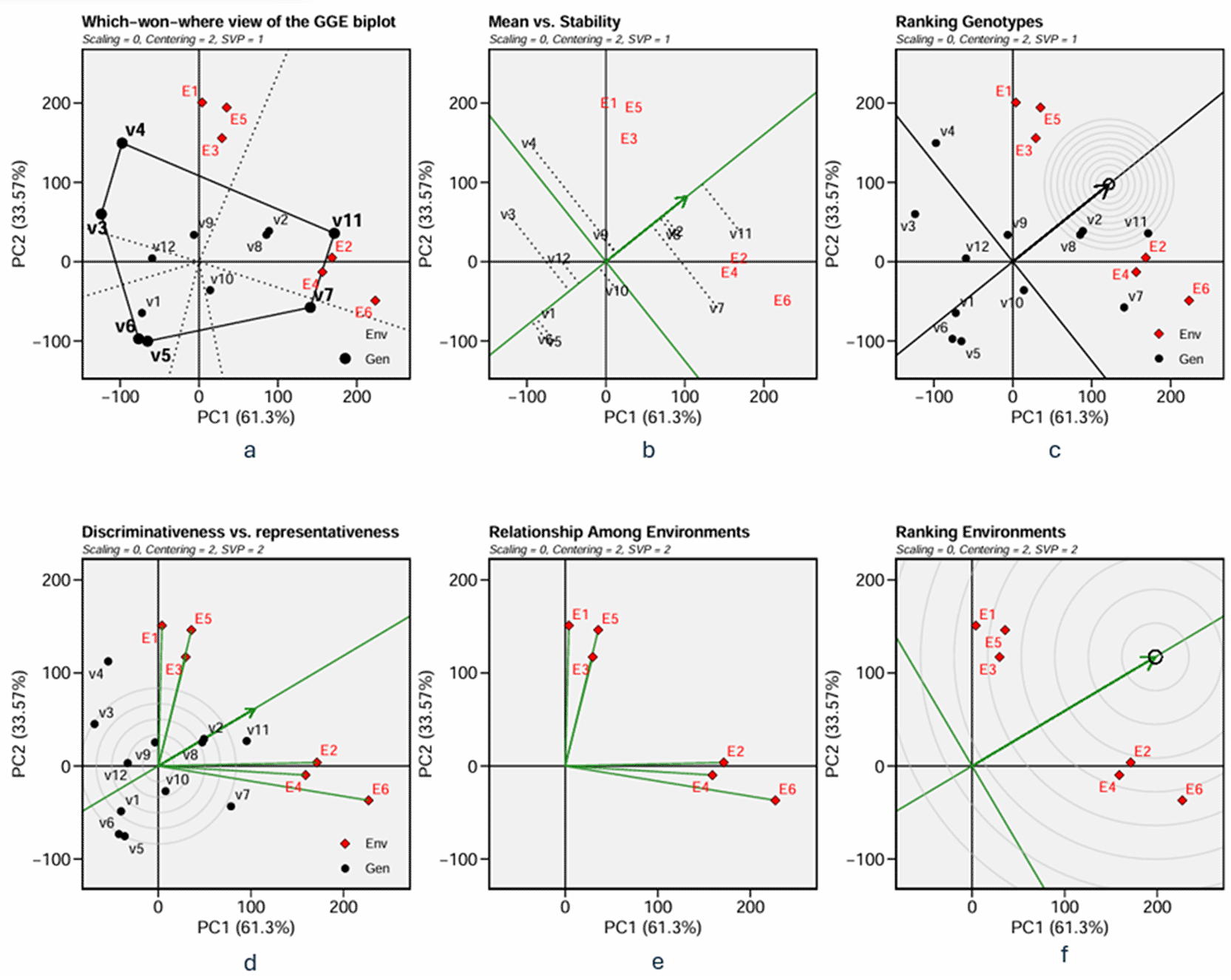
Figure 3a depicts a biplot of sorghum varieties’ Forage yield (FY) and its polygon. PC1 and PC2 contributed 61.30% and 33.57%, respectively, and jointly accounted for 94.87% of the overall GGE variance. There are two mega-environments in the biplot. The first mega-environment is in the sector that contains E1, E3, and E5 tested environments, and the second mega-environment is in the sector that contains E2, E4, and E6 tested environments. We can define the first mega-environment as the environment applied with a low rate of organic fertilizer since all environments are those applied with a low rate of organic fertilizer (500 kg of chicken manure per hectare) in both types of land at both seasons.
For the same reason, we can define the second environment as the one applied with a high rate of organic fertilizer (1,000 kg of chicken manure per hectare). Varieties V3 and V4 are at the vertices of polygons within mega-environment one and become the candidates for the best varieties in the environment. Variety V11 is the candidate for the best varieties in mega-environment 2. Varieties V5, V6, and V7 were found in sectors with no environmental conditions, indicating that they are not responsive and exhibit low mean phenotypic performance in any tested environment.
The graph of mean and stability ( Figure 3b) showed that among the three varieties in mega-environment 1, V3 has a phenotypic performance (mean forage yield) below the average, while varieties V4 and V9 are above the average, with almost similar phenotypic performance. In contrast comparison test ( Table 11), V4 and V9 were not statistically different in environments E1, E2, and E6, whereas V3 and V4 were considerably different in environments E2 and E6, with the exception of environment E1. This result may explain why, although V9 is not at the vertex of the polygon. It has greater mean forage yield than V3, and has the same mean forage yield as V4. In genotype rank ( Figure 3c), V9 is closer to the “ideal variety” than V3 or V4 in this mega-environment. However, it is further from the ‘ideal variety’ than V11, V2, and V8, which are in mega-environment 2. Therefore, we can conclude that in mega-environment 1, i.e., the environment in tidal swampland applied with low (E1) or high rate (E2) organic fertilizer and in sandy soils applied with low rate of organic fertilizer, the adaptable varieties are variety Soper 9 agritan (V9); while in mega-environment 2, i.e. tidal swamplands and sandy soil applied with high rate organic fertilizer, variety Bioguma agritan (V11) are the most adaptive variety.
Figure 3d analyses the discriminativeness and representativeness of all tested environments. Figure 3f gives the rank of the selected environment. Using the same reasoning as in the GGE biplot on grain yield, the tested environment E2 is the most discriminative and representative environment compared to the average environment. Therefore, tidal swampland applied with a high rate of organic fertilizer during the rainy season (E2) is ideal for selecting broadly adaptive genotypes/varieties based on forage yield (FY).
MGIDI incorporates trait information into a single value to rank varieties or variety-environment combinations based on their distance from an “ideal type.” The “ideal type” or “ideotype” is a hypothetical variety/variety-environment combination with the best possible value for each trait. It has been successfully applied to several studies to enhance the performance, productivity, quality, or adaptability of different crops.14 Each trait is assigned a weight based on its value or desirability, whereas superior varieties are those with the smallest distances from the ideal variety. The advantage of the MGIDI-based selection is that it incorporates several traits into the study and reduces the dimensions of these traits to just four factors that account for a significant portion of the variation. Finding varieties like ideotype types can be aided by the strengths and weaknesses of the selected varieties, as indicated by the contribution of each factor to the MGIDI. A helpful indicator for sorghum breeding or crop improvement would be the factors and their associated traits that contribute to the MGIDI of the selected varieties.
In contrast to the MGIDI, the GGE biplot tools only consider one trait at a time. In the GGE biplot technique applied in this study, we consider two valuable beneficial traits: grain yield and forage yield. The GGE biplot offers a more comprehensive evaluation of the best varieties across various environments (mega-environments). Furthermore, the ideal environment for identifying adaptable varieties, i.e., environments with representative and high-discriminating power, can be determined using the GGE biplot. Aside from the difference between MGIDI and GGE biplots, particularly in the traits they evaluate, comparing the results of the two methods in identifying the best varieties is worthwhile.
MGIDI and GGE biplot provide complementary perspectives for genotype evaluation. While MGIDI identifies genotypes closest to the ideotype by integrating multiple correlated traits into orthogonal factors, GGE biplot elucidates genotype performance patterns across environments, revealing stability, mega-environment structure, and specific adaptation. Their combined application enables robust selection of superior genotypes with both multi-trait superiority and wide environmental adaptability. Because MGIDI uses factor analysis to minimize dimension and convert correlated variables into orthogonal latent factors, it can eliminate bias in multi-trait selection indices caused by multicollinearity among agronomic and physiological traits. This improves the reliability of genotype ranking under multi-stress conditions by ensuring balanced representation of distinct biological processes and preventing the dominance of highly correlated productivity variables.
The GGE biplot has identified Soper 7 Agritan (V7) and Numbu (V8) as the top-performing varieties in terms of mean grain yield across various environments. These results differ somewhat from the varieties selected by the MGIDI, specifically V8 and V10. While V8 was chosen by the MGIDI and is acknowledged in the GGE biplot for its high mean grain yield, V10 was also selected by the MGIDI but does not perform as strongly in the GGE biplot, despite maintaining a mean grain yield above the average. Conversely, V7, not selected by the MGIDI, stands out as the top performer in grain yield according to the GGE biplot.
These discrepancies can be attributed to the fact that the contribution of FA1, which is associated with grain yield, is relatively small within the MGIDI for V8, thereby limiting its role in determining the highest mean grain yield. In contrast, the contribution of FA4, which does not relate to grain yield, is also minimal for V10 in the MGIDI. This difference implies that while V8 has significant value in terms of grain yield, V10 does not, although it may possess other traits related to FA4 that are unrelated to grain yield. The GGE biplot focuses solely on grain yield, which is why V7 was selected over V10. Although Soper 7 Agritan (V7) exhibited the highest grain yield according to the GGE biplot, it was not selected by the MGIDI index. This discrepancy occurs because the GGE biplot evaluates genotypes primarily based on grain yield performance and genotype × environment interaction, whereas the MGIDI index simultaneously considers multiple agronomic traits and selects genotypes closest to an ideal ideotype. Therefore, despite its superior yield performance, V7 likely showed undesirable values in one or more secondary traits, increasing its distance from the ideotype and preventing its selection by the MGIDI index.
The GGE biplot also shows the environment in which the varieties performed best in terms of their mean grain yield. During the rainy season, the Soper 7 agritan 7 (V7) variety is suitable for use in tidal swamplands during the wet season with either high-rate (E2) or low-rate organic fertilizers (E1), as well as in sandy soils with high-rate organic fertilizers (E6). Conversely, the Numbu (V8) variety is recommended for tidal swamplands during the dry season, particularly with high-rate (E4) or low-rate organic fertilizers (E3) and in sandy soils with low-rate organic fertilizers (E5). The MGIDI analysis indicated that variety V7 is also selected in the E2 environment and E3 environment, while V8 is selected in almost all environments except E1 and E3. These differences indicate that in specific environments (E1 and E2), V8 exhibits traits beyond grain yield that make it the closest to the ideal variety.
The highest means across environments have also been identified via the GGE biplot on forage yield (FY), using a logic like that of the GGE biplot on grain yield (GY). Like the grain yield, varieties differ from those chosen using the MGIDI. The Bioguma (V11) variety has the highest mean in tidal swamplands during both the rainy (E2) and dry seasons (E4), as well as in sandy soil (E6), when using high-rate organic fertilizer. Meanwhile, the Soper 9 agritan (V9) variety has the highest mean in tidal swamplands in both the wet and dry seasons, with a low rate of organic fertilizer (E1 and E3), as well as in sandy soil during the dry season, with a low rate of organic fertilizer (E1, E3, and E5). These differences indicated a variation in selecting grain yield and forage yield. Some varieties, however, are dual-purpose varieties, i.e., higher in grain yield as well as forage yield mean.
GGE biplot also determined the stability of the varieties in each group of environments. Soper 7 agritan (V7) and Numbu (V8) varieties that have the highest mean on grain yield, and Bioguma (V11) and Soper 9 Agritan (V9), which also have the highest mean in forage yield in their respective environments, are also relatively stable or have low variety-environment interactions. Therefore, they are adaptable varieties with the highest phenotypic mean (grain yield and forage yield) in the respective environments. Specifically, Soper 7 Agritan (V7) is adaptable in Mega-environment 1, and Numbu (V8) is adaptable in Mega-environment 2, as indicated by the GGE biplot on grain yield. At the same time, Soper 9 Agritan (V9) is adaptable in Mega-environment 1, and Bioguma (V11) is adaptable in Mega-environment 2, as shown in the GGE biplot for forage yield. The MGIDI, however, cannot identify adaptable varieties. The selection of a Variety-Environment combination can only determine which variety has the highest ranking in MGIDI. However, the selected variety-environment combination indicated that most varieties have a high MGIDI ranking, hence being close to ideal genotypes in environments E6, E4, and E2, which is like the result of the GGE biplot on forage yield.
The best environments for choosing broadly adaptive varieties could also be identified using the GGE biplot. These environments include tidal swamplands that are fertilized with a high rate of organic fertilizer during the rainy season (E2) to maximize forage yield and sandy soil that is fertilized with a high rate of organic fertilizer during the dry season (E6) to enhance grain yield. A high level of organic fertilizer enhances the environment’s ability to discriminate and represent the average environment.61,62 High rates of organic fertilizer have a significant impact on crops in tidal swamplands during the rainy season because they increase the populations of facultative and anaerobic microbes, which can help slow down the release of nutrients, add organic matter that can help bind particles in otherwise waterlogged areas, and help microbes release nutrients from organic material. In contrast, organic fertilizer increases fertility in sandy soils during the dry season by releasing nutrients slowly, a process that is particularly important in nutrient-poor sands. This process improves biological activity and soil life while also reducing compaction and erosion. These conditions will enhance environmental productivity, particularly for responsive varieties, thereby increasing the discriminating power of the environment.
Stronger vegetative growth and improved tolerance to acidic soil conditions and nutrition limitations, such as in tidal swamplands and sandy soils, contributed to Numbu's comparatively consistent performance. On the other hand, under nutrient-poor conditions, early maturing genotypes like Kawali tended to show lesser panicle development and decreased biomass accumulation. Mandau and other high-yielding cultivars showed more genotype–environment interaction, indicating that soil fertility has a significant impact on their potential output. Numbu is close to the perfect genotype in both the MGIDI test and the GGE biplots, whilst other varieties are not. This could be because the MGIDI takes into account all traits when determining how close a variety is to the ideal genotypes, whereas the GGE biplots in this study only take into account grain yield or forage production separately.
A limitation of this study is that the tested environments are not sufficiently varied, so adaptability is not significantly broad. Planting seasons (dry and rainy season), agroecosystem type (tidal swamplands and sandy soils), and the rates of organic fertilizer application determine the environmental variations. Because the aim of this study is to find sorghum varieties for expansion of their cultivation to sandy soils and tidal swamplands, where organic fertilizer and planting seasons are crucial factors, such environmental variations are justified. Organic fertilizers significantly enhance the productivity and sustainability of agricultural practices in tidal swamplands and sandy soil. They are vital for improving soil fertility,20,21 enhancing crop productivity,63 reducing environmental impacts,64 and supporting sustainable agricultural practices in tidal swamps.65 Combined with traditional knowledge and an integrated farming system, their use can transform these marginal lands into productive agricultural areas. The expansion of sorghum farming to tidal swamplands should consider using fertilizer and soil amelioration to improve soil fertility.
It might be possible to broaden the tested environment by extending the testing conditions to include different soil types, like peat soil, and different kinds of swamplands, like inland swamps, which might be able to support sorghum production, as well as different agronomic interventions. However, it might not be possible to expand testing conditions to waterlog and salinity pressures since sorghum is cultivated in type C and type D of tidal swamplands, which are unaffected by sea tide, and salinity stresses are only felt in type A tidal swamplands due to sea water intrusion. Expanding sorghum production in arid and upland regions may necessitate adaptability to heat stress and elevation changes. Adaptation of sorghum crops to heat stress7,23,24 and different altitude27 is possible, however testing such adaptability are beyond the scope of the current research.
Genomic prediction should be taken into account for next breeding cycles since it reduces the cost of phenotyping by enabling inference on unobserved genotype-environment interaction. It is also possible to employ other spatial testing techniques as (A) Factor Analytic Mixed Linear Models (FA-MLM) and (B) SpATS: Integrating a two-dimensional P-spline mixed model (SpATS). SpATS would take into consideration limited field trends within the tidal swamplands and sandy soils, while FA-MLM would offer better tools for addressing heterogeneous variations across settings and capturing complicated spatial variation. Combining sophisticated spatial testing with genomic prediction may provide a better understanding of genotypic adaptability.
The majority of global research on sorghum adaptation focuses on resilience to heat and drought and low fertility soils. The current research will add two underrepresented agro-ecosystems: tidal swamplands and sandy soils. It can also be integrated into international frameworks for multi-environmental experiments in adaptation breeding. Adaptive alleles for wet tolerance and sandy soil resilience from genotypes that are stable across severe soils, such Numbu, Kawali, and Soper 7 Agritan, can strengthen breeding pipelines for stress resistance.
Adaptable varieties differ for various groups of environments and different traits under consideration. Optimal environments for identifying broadly adaptable varieties differ between grain yield an forage yield. Based on grain yield, the adaptable variety is Soper 7 agritan in tidal swamplands applied with high rate or low rate organic fertilizer during the rainy season and in sandy soils applied with high rate organic fertilizer; in tidal swamplands applied with high rate or low rate organic fertilizer during the dry season, the adaptable variety is Numbu. According to forage yield, variety Soper 9 agritan is the most adaptable in tidal swamplands and sandy soils treated with low or high rates of organic fertilizer; variety Bioguma agritan is the most adaptable in tidal swamplands and sandy soils treated with high rates of organic fertilizer. The multitrait genotype-ideotype distance index would be a valuable tool for selecting varieties based on multiple traits, provided that the tested environments are broadly varied. In parallel, the genotype plus genotype-environment interaction biplot effectively identifies adaptable varieties based on individual traits.
| Views | Downloads | |
|---|---|---|
| F1000Research | - | - |
|
PubMed Central
Data from PMC are received and updated monthly.
|
- | - |
Provide sufficient details of any financial or non-financial competing interests to enable users to assess whether your comments might lead a reasonable person to question your impartiality. Consider the following examples, but note that this is not an exhaustive list:
Sign up for content alerts and receive a weekly or monthly email with all newly published articles
Already registered? Sign in
The email address should be the one you originally registered with F1000.
You registered with F1000 via Google, so we cannot reset your password.
To sign in, please click here.
If you still need help with your Google account password, please click here.
You registered with F1000 via Facebook, so we cannot reset your password.
To sign in, please click here.
If you still need help with your Facebook account password, please click here.
If your email address is registered with us, we will email you instructions to reset your password.
If you think you should have received this email but it has not arrived, please check your spam filters and/or contact for further assistance.

Comments on this article Comments (0)