Keywords
Liver transplantation, cholestasis, ursodeoxycholic acid, obeticholic acid, alkaline phosphatase.

Liver transplantation, cholestasis, ursodeoxycholic acid, obeticholic acid, alkaline phosphatase.
This revised version (Version 3) incorporates additional updates based on detailed internal author review to further strengthen this study protocol. The methodology has been refined to ensure closer alignment with established reporting standards (SPIRIT guidelines) and to enhance transparency, reproducibility, and justification of key design elements, including eligibility criteria, outcome definitions, follow-up strategy, and statistical approach. The background and rationale have been updated to reflect recent developments in the field, including evolving regulatory perspectives and the current evidence base for FXR agonists. The objectives and expected outcomes have been clarified to ensure appropriate alignment with the study purpose. As this is a protocol, no study data or results are reported. Minor revisions to language, structure, and formatting have also been made to improve overall clarity and coherence. These updates enhance the methodological rigor, relevance, and interpretability of the proposed study. All revisions addressing the peer reviewer's comments, as included in version 2 have been incorporated into this version as well.
See the authors' detailed response to the review by Gregory Guthrie
See the authors' detailed response to the review by Palak J Trivedi
Liver diseases cause nearly 2 million deaths worldwide each year, with approximately 1 million deaths from cirrhosis complications and another 1 million from viral hepatitis and liver cancer, according to WHO estimates.1,2 Liver transplantation (LT) is recognized as the primary curative treatment, with success rates reaching 85% in the first year and 75% at 5 years post-transplantation.3 In India, over 3000 liver transplants are performed annually. Despite the considerable expense associated with LT, it is considered cost-effective, especially for individuals in their prime years, who have many active work years ahead of them.4,5 However, post-transplant morbidity, particularly intrahepatic cholestasis, presents significant challenges.6
Intrahepatic cholestasis is a major complication following liver transplantation, caused by multiple factors. Ischemia-reperfusion injury during organ retrieval and transplantation leads to cellular damage and postoperative cholestasis.7,8 Sepsis from infections worsen cholestasis through inflammatory responses.9 Essential post-transplant drugs, including immunosuppressants and antibiotics, can interfere with bile formation, causing liver injury.10,11 Immunological reactions such as T-cell and B-cell-mediated rejection and lymphocytic cholangitis also contribute to cholestasis.12 Surgical complications like stenosis or obstruction of the biliary and vascular anastomosis can also result in intra- and extrahepatic cholestasis.13–15
The absence of effective medicines limits the current medical therapy of cholestasis. Although its usefulness is questionable, many practitioners utilize ursodeoxycholic acid (UDCA) as a hepatoprotective drug.15 It is usually administered for three months post-transplant at a dose of 10-15 mg/kg thrice daily. In 2016, the FDA approved obeticholic acid (OCA), a strong selective Farnesoid X Receptor (FXR) agonist, to treat primary biliary cholangitis (PBC) in conjunction with UDCA.16,17 Research has demonstrated that over 12 months, OCA, either in combination with UDCA or on its own, dramatically lowers levels of total bilirubin and alkaline phosphatase.18,19 In individuals with advanced liver disease, the FDA has cautioned against administering OCA at doses of 10–50 mg.20 Studies comparing OCA’s effects on cholestasis, rejection, regeneration, and cost-effectiveness to the current standard UDCA are being conducted to assess the role of OCA in the postoperative recovery of liver transplant patients.21 Our proposed project is a randomized controlled trial between OCA and UDCA, in managing post-liver transplant cholestasis, improving graft survival and overall quality of life.22
Following LT, a major morbidity mitigating long-term liver functions is intrahepatic cholestasis due to a multitude of reasons. UDCA remains the first-line pharmacological therapy for most forms of intrahepatic cholestasis.23 FXR is a newly detected receptor gene, playing multiple roles in liver homeostasis, including detoxification of bile acid excess, stimulation of bile salt export from hepatocytes, reduction of inflammation, delaying fibrosis, and perhaps may even assist liver regeneration.24,25 Although obeticholic acid was previously approved as a second-line therapy for primary biliary cholangitis, the U.S. Food and Drug Administration withdrew its approval in 2024 following failure to demonstrate confirmatory clinical benefit. Nevertheless, as a potent farnesoid X receptor agonist with well-characterized effects on bile acid synthesis and transport, it remains a biologically relevant therapeutic candidate warranting further investigation in specific cholestatic settings.26 Research shows OCA significantly reduces key liver enzymes like alkaline phosphatase, gamma glutamyl transferase and total bilirubin in cholestatic liver disease, though its effects specifically in LT patients have not been well-studied.27,28
This study aims to fill an essential gap by evaluating the efficacy of obeticholic acid compared to ursodeoxycholic acid in managing post-liver transplant cholestasis. By conducting specific biochemical tests to assess cholestasis, this research will provide insights into the effectiveness of OCA relative to the current standard, UDCA.29 Additionally, this study will examine the potential effects of OCA on rejection, tissue regeneration, and cost-effectiveness—areas where knowledge is currently limited.30,31 The ultimate goal of this study is to determine whether OCA can emerge as a new standard of care in post-LT management, offering cost-effective solutions to enhance long-term outcomes for liver transplant patients.
The primary endpoint will be the proportion of patients achieving a ≥15% reduction in serum alkaline phosphatase (ALP) and gamma-glutamyl transferase (GGT) levels at 3, 6 and 12 months compared with the one-month post-transplant baseline between the two groups. ALP and GGT is assessed at 6 and 12 months to evaluate the trajectory and durability of response over time.
• Assessment of biochemical markers (Liver function tests, metabolic profile, CRP, tacrolimus levels).
• Molecular markers (fibroblast growth factor 19 (FGF-19), transforming growth factor β (TGF-β) level, Cytokeratin 18 level, Serum autotaxin level, Bile Salt Export Pump levels (BSEP), Plasma bile acid levels.
• Biopsy-proven acute or chronic rejection.
• Incidence of biliary complications.
• All-cause mortality.
• Any adverse events.
• Death due to acute or chronic rejection.
• Quality of life.
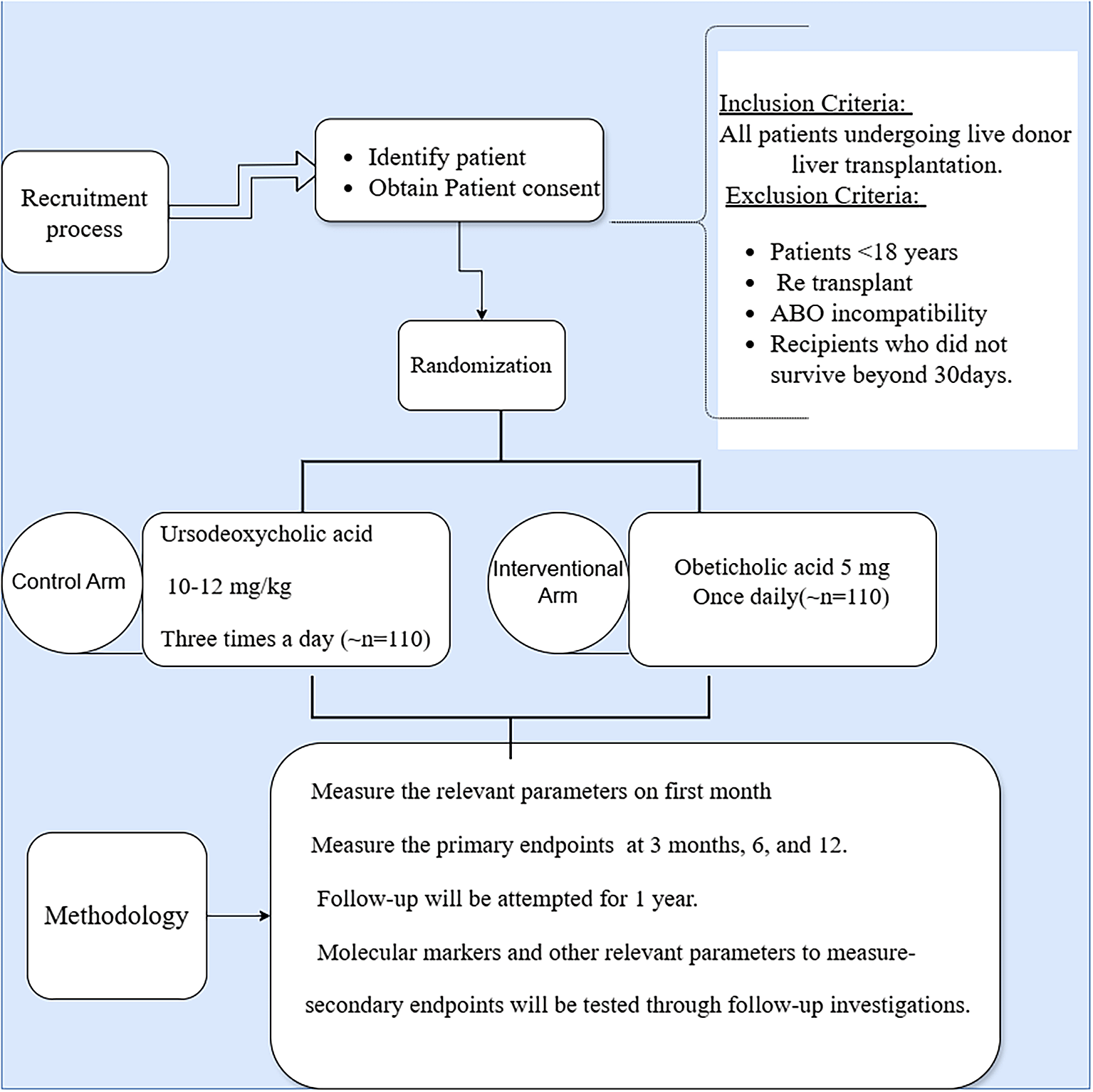
This is a single-center, open-label, parallel-group randomized controlled trial conducted at a tertiary care liver transplant center.
Adult living donor liver transplant recipients who meet the predefined inclusion and exclusion criteria have been enrolled in the study since December 2021.
All adult patients undergoing live donor liver transplantation during the study period are being included. Recipients who are less than 18 years of age, those undergoing deceased donor liver transplants, ABO-incompatible transplants, retransplant cases, those not surviving beyond 30 days, and patients lost to follow-up during the study period, are being excluded. We excluded patients who were randomized into the trial but died within the first 30 days. This decision was based on the fact that early mortality in this period is most commonly attributable to sepsis or technical complications. Including such patients would not be appropriate for evaluating interventions aimed at the management of cholestasis, which usually occur 2 to 3 weeks after surgery. Mortality within 30 days, purely secondary to the adverse effect of the drug, with no other technical (vasculo-biliary), septic or immunological cause is extremely unlikely. Obeticholic acid was administered at a low dose of 5 mg once daily, which represents the standard starting dose used in clinical trials. Published studies have demonstrated acceptable tolerability at this dose, with pruritus being the most commonly reported adverse event and no evidence of treatment-related early mortality.
Interventions
Participants randomized to the intervention group receives Obeticholic acid [OCANASH® (Macleods Pharmaceuticals) or OCABILE® (Torrent Pharmaceuticals)], while those in the comparator group receives Ursodeoxycholic acid [URSETOR® (Torrent Pharmaceuticals)].
Allocation
Participants are randomized in a 1:1 ratio using a computer-generated permuted block sequence. Allocation concealment will be ensured using sequentially numbered, sealed opaque envelopes opened by the study pharmacist on postoperative day two.
Blinding
This is an open-label study. Blinding is not feasible due to the nature of the interventions. Given the difference in tablet size and dosing frequency (three times daily for UDCA vs once daily for OCA), blinding is not being done.
Primary outcomes will be based on objective biochemical parameters to minimize bias.
Given the difference in tablet size and dosing frequency (three times daily for UDCA vs once daily for OCA), blinding is not being done.
Follow-up visits for physical examinations and safety assessments are being scheduled during the study period at the following intervals: one month, three months, six months, and twelve months post-transplant ( Figure 1).
Study assessments were initiated at one month post-transplant because a substantial proportion of our liver transplant recipients are high-MELD patients who often have markedly elevated bilirubin and cholestatic enzyme levels in the immediate postoperative period. In addition, transient elevations in liver function tests are commonly observed during the early post-transplant phase due to ischemia–reperfusion injury, surgical factors, sepsis, or early graft dysfunction or rejection.
In live donor liver transplantation, particularly among high-MELD recipients, these fluctuations are often pronounced during the first few weeks after surgery. Therefore, a four-week stabilization period was allowed to enable resolution of early postoperative variability and to ensure that subsequent biochemical measurements more accurately reflect the effects of the study intervention rather than perioperative factors.
Liver function tests, C-reactive protein (CRP), platelet count, prothrombin time/international normalized ratio (PT/INR), fasting blood sugar (FBS), tacrolimus concentration, and other relevant parameters are being measured at each follow-up visit. Lipid profile—including total cholesterol, low-density lipoprotein (LDL), high-density lipoprotein (HDL), very low-density lipoprotein (VLDL), and triglycerides (TG)—as well as glycosylated hemoglobin (HbA1c) levels, are being assessed at pre-transplant admission, and at three, six, and twelve months post-transplant.
We selected a 15% reduction in both alkaline phosphatase (ALP) and gamma-glutamyl transferase (GGT) as our primary biochemical endpoint based on evidence from previous trials in cholestatic liver disease. Specifically, the landmark study by Nevens et al., published in The New England Journal of Medicine (2016), evaluated obeticholic acid in patients with primary biliary cholangitis and used a composite endpoint that included a ≥15% reduction in ALP as part of the therapeutic response criteria.
Although this trial was not conducted in post–liver transplant patients, it provided a strong precedent for using ALP-based endpoints to assess treatment response in cholestatic conditions. We extended this rationale by including GGT alongside ALP, as the combination of these two enzymes provides a more comprehensive and sensitive assessment of cholestasis, particularly in the post-transplant setting where bile duct injury and graft function are dynamic.
Given the lack of clinical trials of OCA in the liver transplant population, this combined biochemical endpoint serves as a reasonable and evidence-informed surrogate marker of response in our study.
Secondary endpoint serum markers are being assessed using an enzyme-linked immunosorbent assay (ELISA) [ELK Biotechnology™] at the centralized biochemistry laboratory. Blood samples collected during the one-month and twelfth-month post-transplant follow-up visits are being used for ELISA testing.
In addition, demographics, patient characteristics, and other critical study details (e.g., medication history, medical history, social habits, family history, and use of other medical systems) are being collected through direct patient or bystander interviews, doctor consultation notes, hospital health information systems, and case records. The collected data is being transcribed into a pre-designed proforma (data collection form) by the investigator.
A biopsy is being performed when suspected rejection (unexplained rise in transaminases) is observed. The biopsy results are being evaluated based on the Rejection Activity Index score and the Banff criteria. Data on the frequency and duration of the first biopsy-proven acute rejection (BPAR) episode (within six months of transplantation) that requires therapy are being recorded. Any biliary system-related strictures, leaks, or anastomosis issues are being documented. Early allograft dysfunction (EAD) is being assessed using the criteria developed by Olthoff et al.7,32
Adverse events are being captured by direct interview of patients during the routine follow-up visits. We are capturing the pruritus by physical examination, vital signs and 5D pruritus questionnaire and documented systematically using structured Case Report Forms (CRFs) to ensure standardized data collection and analysis. The Naranjo algorithm will be used to establish causality and then classify them as definite, probable, possible, or unlikely.
Safety monitoring
Participants undergo scheduled clinical and biochemical monitoring.
During patient interviews, a validated Chronic Liver Disease Questionnaire (CLDQ) is being administered to assess quality of life (QOL).33 The copyright license for the English version of the questionnaire is being obtained from the authors. The QOL questionnaire is being completed both pre-transplant and at the one-year post-transplant follow-up. Patients are completing the questionnaire in either Malayalam or English.
The CLDQ includes six domains:
• Abdominal symptoms (AB): Items 1, 5, 17
• Fatigue (FA): Items 2, 4, 8, 11, 13
• Systemic symptoms (SY): Items 3, 6, 21, 23, 27
• Activity (AC): Items 7, 9, 14
• Emotional functions (EM): Items 10, 12, 15, 16, 19, 20, 24, 26
• Worry (WO): Items 18, 22, 25
The CLDQ overall score is the sum of the scores from each domain, ranging from 0 to 203. Lower scores indicate poorer quality of life.
The sample size was calculated based on a pilot study comparing the effect of obeticholic acid (OCA) and ursodeoxycholic acid (UDCA) on cholestatic injury in post-liver transplant patients. In the pilot study, the difference in alkaline phosphatase (5.131 ± 39.639 vs 12.496 ± 52.139) was observed between the two groups. With 80% power and 95% confidence, the minimum sample size required was determined to be 108 patients in each group, totaling 216 samples. We will be recruiting around 110 to 120 patients per arm. The calculation was based on the expected difference in ALP reduction between groups observed in pilot data.
• To compare the means of continuous variables between groups (Drug A vs Drug B), an independent sample t-test will be used at each time point.
• To compare the changes in continuous variables from pre- (1 month) to post-transplant (3, 6, and 12 months), a paired t-test will be applied.
• To compare the means of variables from baseline to subsequent time points within each group, repeated measures ANOVA will be used if significant. Repeated measures analysis will be used to assess longitudinal changes over time, and Bonferroni correction will be applied for multiple comparisons where appropriate.
We expect a significant reduction in cholestatic liver enzymes following LDLT in the OCA group compared to the UDCA group, with improvements observed from one month to subsequent time points (3, 6, and 12 months). We hypothesize that the potent mechanism of action of OCA will ameliorate cholestatic injury and enhance graft survival. Additionally, we anticipate a reduction in biliary complications, all-cause mortality, and an increase in quality of life for OCA-receiving patients. This may reduce long-term financial expenditure for patients. Given that there are currently no drugs to prevent damage to the transplanted liver, a positive outcome could be a significant advancement for the transplant population. If beneficial, this study could lead to the adoption of OCA as a standard of care following liver transplantation. If proven beneficial, this study could support the potential adoption of obeticholic acid (OCA) as a therapeutic option in the management of post-liver transplant cholestasis. Although regulatory approval for OCA in primary biliary cholangitis was withdrawn due to the lack of confirmatory clinical benefit, its distinct mechanism of action and the different pathophysiological context of post-transplant cholestasis warrant independent evaluation in this setting.
Although Ursodeoxycholic acid remains the standard first-line therapy, a substantial proportion of patients with post–liver transplantation cholestasis exhibit inadequate biochemical and clinical response, highlighting an important unmet therapeutic need. Obeticholic acid, a potent Farnesoid X receptor agonist, has demonstrated the ability to regulate bile acid synthesis, transport, and hepatobiliary homeostasis.
Given the unique pathophysiology of post-transplant cholestasis, this randomized controlled trial will evaluate the efficacy and safety of obeticholic acid in this population. We hypothesize that FXR activation will ameliorate cholestasis, improve graft function, and lead to better clinical outcomes.
All information about participants enrolled in this clinical trial are treated with the utmost confidentiality to protect their privacy and adhere to ethical standards. Personal identifying information are securely stored and accessible only to authorized personnel involved in the study. Data collected are anonymized and coded to maintain confidentiality during analysis and reporting. Any publication or presentation of results will not include identifiable information unless explicit consent is obtained from participants.
Access to data collected during this clinical trial will be managed according to established protocols and regulatory requirements. Authorized personnel, including investigators, statisticians, and regulatory authorities, will have access to raw data for analysis, monitoring, and verification. Data-sharing agreements will be established to govern access by external parties, ensuring compliance with data protection regulations and participant confidentiality. Requests for access to study data from external researchers or institutions will be considered on a case-by-case basis and subject to review by the study sponsor and relevant ethics committees.
Upon completion of the study, data will be disseminated through peer-reviewed journal publications, conference presentations, and participant communication. Findings will be shared transparently with participants, addressing risks and benefits. Regulatory reporting will ensure compliance with obligations to relevant agencies. Additionally, data-sharing agreements and repositories will facilitate access for other researchers while maintaining participant confidentiality.
The study protocol was initially approved by the Institutional Ethics Committee, AIMS (IEC-AIMS-2021-GISURG-262) on 13-10-2021 and later modified for a title change on 15-06-2022 (modified ethics number—IEC-AIMS-2022-GISURG-160). This study involves liver transplant patients aged 18 years or older admitted to our hospital’s gastrointestinal surgery department. Before the study’s initiation, patients gave written informed consent. The consent form was prepared both in English and the local language Malayalam. The study has received ethical clearance from our Institutional Ethics Committee. The committee also approved the informed consent in both languages. This study was registered with the Clinical Trials Registry of India. Our CTRI registration number is CTRI/2021/11/038218 dated on 23/11/2021. The study was conducted according to the principles of the Declaration of Helsinki.
• S. Sudhindran, Unnikrishnan G, Dinesh Balakrishnan, Johns Shaji Mathew, and Shweta Mallick contributed to formulating the concepts.
• Implementation of study including randomization, and data collection: Anila KN, Saraswathy S Nair, Nafiya Zackariah, Haritha Rajakrishnan.
• Drafting manuscript: Anila K N.
• S. Sudhindran, OV Sudheer, Arun Valsan, Binoj ST, Ramachandran Narayana Menon, Krishnanunni Nair, Madhu Srinivasan Durairaj, V Guhan, Christi Titus Varghese contributed to giving valuable inputs and critical revisions.
| Views | Downloads | |
|---|---|---|
| F1000Research | - | - |
|
PubMed Central
Data from PMC are received and updated monthly.
|
- | - |
Provide sufficient details of any financial or non-financial competing interests to enable users to assess whether your comments might lead a reasonable person to question your impartiality. Consider the following examples, but note that this is not an exhaustive list:
Sign up for content alerts and receive a weekly or monthly email with all newly published articles
Already registered? Sign in
The email address should be the one you originally registered with F1000.
You registered with F1000 via Google, so we cannot reset your password.
To sign in, please click here.
If you still need help with your Google account password, please click here.
You registered with F1000 via Facebook, so we cannot reset your password.
To sign in, please click here.
If you still need help with your Facebook account password, please click here.
If your email address is registered with us, we will email you instructions to reset your password.
If you think you should have received this email but it has not arrived, please check your spam filters and/or contact for further assistance.

Comments on this article Comments (0)