Keywords
Systems Thinking, Science Education, Sustainability, Climate Change, STEM Education

Systems Thinking, Science Education, Sustainability, Climate Change, STEM Education
This revised version of the article addresses the reviewers’ comments by substantially improving methodological transparency and conceptual clarity. The Methodology section has been fully revised to clearly document the data source, search strategy, inclusion and exclusion criteria, screening process, and bibliometric analysis parameters, ensuring greater reproducibility. The Introduction has been strengthened with additional theoretical context drawn from classical systems thinking traditions, clarifying the relevance of holistic approaches for science-based education. The Discussion now includes a new interpretive subsection that applies systems thinking as an analytical lens to examine relationships among publication trends, collaboration patterns, and thematic development. The Conclusion has been revised to focus on empirically grounded leverage points for advancing science education, and the Data Availability statement has been clarified in line with open science and licensing requirements.
See the authors' detailed response to the review by Emmi Vuorio
See the authors' detailed response to the review by Miles Weaver
See the authors' detailed response to the review by VITA SARASI
In this era, people and societies must deal with problems never seen before, such as climate change, reduced biodiversity, and inequalities (Nations, 2020). The Intergovernmental Panel on Climate Change reports that (according to their work) (IPCC, 2023), global temperatures are expected to reach 1.5°C above normal by 2030, indicating the urgent need to train students to face multiple challenges. Older educational methods that teach lessons separately do not adequately prepare students for future challenges. As these issues are tied together, education should switch from an old, separated style to one that helps everyone learn how to see the big picture and face real-world challenges (Bielik et al., 2023; E. Bozkurt, 2023).
A helpful idea for tackling this problem is systems thinking, which allows learners to observe relationships and grasp how different parts of the system interact (Bielik et al., 2023). Rather than just looking at a single cause and its effect, systems thinking brings together science, the economy, the environment, and society. Students looking at climate change issues can learn how the issue influences the environment, the economy, and society as a whole.
As it is so important, global education policies are now stressing that systems thinking should be a key skill to learn for both sustainability and science. The UNESCO 2030 Framework states that systems thinking directly contributes to Sustainable Development Goals (SDGs), such as SDG-4 Quality Education and SDG-13 Climate Action by helping people adopt sustainable and future-planning habits (Bielik et al., 2023; E. Bozkurt, 2023). Still, while its significant role is accepted, systems thinking is still lacking in national curricula, as it is present only in STEM and sustainability efforts in a few countries (Kordova et al., 2018). As it lacks formal integration, it is not used by many and is not consistently implemented.
Even though it can be very beneficial, the use of systems thinking in science education is not widespread and faces many difficulties. National education policies usually focus on testing and teaching by subject, so it is not possible to teach systems thinking at schools (Nyam et al., 2020). Because of this, system based teaching in science has not been successfully introduced into typical science courses. Second, many teachers are not prepared to teach systems thinking and do not have sufficient opportunities for professional development (Khalek et al., 2024). Techniques that support systems thinking in classrooms are not easily developed by teachers who do not possess good pedagogical skills. There is also the challenge of not having a standard framework to measure students’ systems thinking knowledge, so it remains difficult to embed the subject. Because it is a complex skill, systems thinking encourages students to study how things relate, detect new changes, and understand what may happen in the future. Even so, it can be difficult for present evaluation methods to pick up on these skills (Seher Budak & Defne Ceyhan, 2024).
In addition, studies on systems thinking in science education are widespread and mainly carried out within regions, with little international cooperation (Nyam et al., 2020). Much of the existing literature considers systems thinking only within a certain context and does not bring together global and disciplinary information. Because of this fragmentation, coordinated ways of teaching science around the world are less likely to be created.
As a result, bibliometric analysis is useful for tracing patterns in published research by analyzing who collaborates and pinpoints major gaps in the field. While literature reviews normally look at small groups of works, bibliometric methods allow researchers to explore vast trends in publication numbers, leading authors, and teamwork between institutions and different areas of systems thinking education. Bibliometric analysis allows us to observe the progress of subjects, identify common trends in research, and monitor the number of publications over the years (Nageye et al., 2024). It uses bibliometric methods to analyze studies, citations, and common themes, providing an overview of worldwide research links and developing research areas.
This study carefully charts international research on systems thinking in science education form 2014 to 2025. With this method, it recognizes the key experts that institutions are included in and which topics are emerging or not getting enough attention. The outcomes can be used by teachers, educational leaders, and curriculum experts to make systems thinking a central part of science teaching in the 21st century.
Classical traditions of systems thinking, rooted in general systems theory, system dynamics, and systemic intervention, provide a foundational lens for understanding complexity in science-based inquiry. These traditions emphasize a shift from reductionist approaches, which analyze phenomena by isolating individual components, toward holistic perspectives that focus on relationships, feedback, and interactions within and across systems. In science education, this distinction is particularly significant, as many contemporary challenges such as climate change, biodiversity loss, and sustainability cannot be adequately understood through linear or disciplinary explanations alone. Integrating systems thinking into science-based education enables learners to complement the scientific method with systemic reasoning, fostering a more comprehensive understanding of complex phenomena and supporting the development of interdisciplinary, sustainability-oriented problem-solving skills.
Through systems thinking, people can analyze and understand the ways in which various parts of a system are linked. The ability to make sense of and assess the linkages between different parts of a system is what systems thinking provides. Handling the many challenges in dynamic systems seen in engineering, medicine, the environment, politics, economics, and education requires an inclusive way of thinking (Engel, 2024; Frank et al., 2016; Kordova et al., 2018).
With this method, scientists consider how different factors are linked and interact, which helps them see phenomena more from the whole system than separately and step by step. In science education, systems thinking is a strong structure that helps students learn how to face and solve real challenges. The principle of systems thinking promotes crucial skills such as problem solving, teamwork, and communication, which are necessary skills for students to start their future careers (York et al., 2020). If students learn about the way systems depend on each other, they can examine complex systems, such as ecosystems, economic systems, and the relationships between humans and the environment. Being able to diagnose challenges is crucial for developing a fuller appreciation of challenges, such as climate change, loss of nature, and lack of resources.
All over the world, systems thinking is seen as an important part of science literacy and is especially important for achieving the Sustainable Development Goals (SDGs). UNESCO’s 2030 Framework for Action explains how systems thinking helps support the goals of SDG 4 (Quality Education), SDG 13 (Climate Action), and commons sustainability. To grasp the tough interrelations in sustainability challenges, it is important to move away from traditional methods that misunderstand these challenges (Abdullah & Hussein, 2020; Voulvoulis et al., 2022).
Even with the well-known advantages, teaching systems thinking in science continues to be variable, and not many ways exist for measuring how it affects students’ thinking and problem-solving. With systems thinking added to the curriculum, science classes change from only teaching facts to encouraging students to link different ideas together, a key aspect of science literacy today. Thinking in terms of systems helps improve you critical thinking, problem-solving, and decision-making skills, which are all important for handling real-world situations (Zoller, 2011, 2012).
Because our world is increasingly complex and global, systems thinking becomes essential for schools to teach learners the things they need for sustainable progress and to handle crises. Despite growing research, using bibliometric analysis for a comprehensive review of science education is still rare.
Although systems thinking is being studied more, research using bibliometrics in science education remains rare. A recent focus on systems thinking has made a significant difference, especially in the United States and Germany, for many middle and high school students (Karga & Ceyhan, 2024; Serepinah et al., 2024). Such nations have taken the lead in making assessment tools and bridging different subjects, stressing the need for systems thinking to solve worldwide problems in education. While there has been more research in wealthy areas, using systems thinking in underprivileged educational settings is still rare, which shows the need for more widespread studies.
Systems thinking has become valuable in areas other than the original sectors and is now used in many education systems. An increasing number of educational studies have addressed how coding can be combined with STEM education, focusing on the chance to combine different subjects and encourage teamwork. Research shows that adding systems thinking, to STEM instruction can lead to better results in critical thinking, creative thinking, and systems thinking for students (Fowler et al., 2019; Zhan et al., 2023).
For example, educators use systems thinking to describe the dynamic relationships between the elements of ecological systems. Systems thinking requires us to study ecological systems as complete systems rather than as single parts. It explains how various aspects of business affect and impact one another over the years (Everard, 2018). Because of this trend, we must help students see things from all sides so that they can better handle challenges such as sustainability.
More people are interested in systems thinking; however, there are still some differences in how it is taught in different educational systems. Research in this field is mostly carried out in developed countries, and few studies focus on trying it in different cultures and economies. Dealing with this problem calls for investigations that pay attention to the different ways systems thinking can be effectively applied in every educational environment.
A number of core ideas support how the teaching and use of systems thinking in academic circles. One of its key points is that science is complex, which requires students to examine systems that are composed of many linked things. Following this path, learners can realize that various aspects of a system affect one another. The importance of relationships focuses on the ways in which parts interact inside a system. Being familiar with how things are connected allows students to look for similarities and find clear ways in which patterns reappear (Karga & Ceyhan, 2024; Oosthuizen & Grobbelaar, 2023; Seher Budak & Defne Ceyhan, 2024).
In addition, understanding these pieces and how they relate is a key part of systems thinking. The process consists of breaking down the systems into components and checking how they work as a group. This method of teaching also improves students’ knowledge of how systems react and change their experiences over time. In addition, dynamics is a key aspect of systems thinking, as it shows students how systems grow and evolve, and how an alteration of a part can spark many changes within the system. As a result of being connected, changes in one section may influence other sections and lead to a chain of consequences (Bigirimana, 2011; Engel, 2024).
With systems thinking, students can see how biodiversity, what humans do, and changes in the climate are closely connected. Socio environmental Synthesis provides knowledge from different areas to better understand and handle social and environmental challenges. This demonstrates that someone can apply information to real-life problems (Wei et al., 2020). Learning about these connections enables students to notice major environmental problems and understand how sustainability efforts must consider many aspects.
Because of these special features, systems thinking acts as a strong foundation for mixed and balanced learning activities. Helping students to use systems thinking sparks their interest in science by improving their problem-solving skills, collaborating with others across disciplines, and working on answers to pressing global issues.
This study adopted a bibliometric research design using data retrieved from the Scopus database. Scopus was selected due to its extensive coverage of peer-reviewed journals in science education, sustainability, and interdisciplinary research, as well as its strong compatibility with bibliometric analysis tools and reproducibility standards.
The literature search was conducted in January 2025 and limited to publications published between 2014 and 2025, a period chosen to capture the development of systems thinking research in science education following the global adoption of the Sustainable Development Goals (SDGs).
Two Boolean search strings were employed to address both the thematic and methodological dimensions of the research field:
The search was performed within titles, abstracts, and author keywords to ensure relevance while maintaining adequate coverage of the literature.
Inclusion and exclusion criteria
Publications were included if they met all of the following criteria:
• peer-reviewed journal articles,
• written in English,
• published between 2014 and 2025,
• explicitly addressing systems thinking within science education or sustainability-related educational contexts.
Publications were excluded if they:
The initial search retrieved N = [ISI JUMLAH AWAL ANDA] records. Duplicate records were removed prior to screening. Titles and abstracts were then reviewed based on the predefined inclusion and exclusion criteria. Following this screening process, N = [ISI JUMLAH AKHIR ANDA] articles were retained for final bibliometric analysis. Manual screening was applied to ensure domain relevance and alignment with the study objectives.
Bibliometric analyses were conducted using Harzing’s Publish or Perish (version 8.17) to extract citation metrics and VOSviewer (version 1.6.20) to visualize bibliometric networks. The analysis included co-authorship analysis, keyword co-occurrence analysis, and citation analysis.
A full counting method was applied across all analyses. For keyword co-occurrence mapping, a minimum threshold of [X] occurrences was set to identify salient terms. Network clustering was generated using VOSviewer’s default algorithm based on association strength, enabling the identification of thematic clusters and collaboration patterns within the research field.
By clearly specifying the data source, search strategy, inclusion and exclusion criteria, screening procedures, analytical tools, and parameters, this methodological approach ensures transparency, reproducibility, and alignment with established standards for bibliometric research.
It is clear from the number of studies that systems thinking is important in science education and has increased over the 12 years from 2014 to 2025. More people worldwide are focused on systems thinking as a vital way to deal with today’s major educational and environmental issues. Starting in 2015, the trend increased even more strongly, which may reflect a reaction to increased global concerns, such as climate change, a loss in biodiversity, and the need for mixed disciplines in education. Education is viewed as crucial by the post-2015 agenda, which includes SDGs, for achieving sustainability and addressing climate problems (Rap & Bodas, 2024; Sayed & Ahmed, 2015).
It is clear from the number of studies that have systems thinking is important in science education and has increased over the 12 years from 2014 to 2025. More people worldwide are focused on systems thinking as a vital way to deal with today’s major educational and environmental issues. Starting in 2015, the trend increased even more strongly, which may reflect a reaction to increased global concerns, such as climate change, a loss in biodiversity, and the need for mixed disciplines in education. Education is viewed as crucial by the post-2015 agenda, which includes SDGs, for achieving sustainability and addressing climate problems.
Researchers mainly focus on certain geographical areas, and the United States and Germany stand out as important contributors. Some of these countries have shown great leadership in developing systems thinking research, often by connecting top academic institutions to work together. Despite being dominant, Southeast Asia is contributing more to research, which points to broader diversity in scientific areas globally.
According to the analysis, developing countries are now taking a larger part in scientific discussions and research. However, the data highlight that low-income countries are still underrepresented, which suggests that there should be more support and encouragement for research initiatives there. They depend on strengthening systems thinking in science teaching and increasing global cooperation in research. This shows that there are important possibilities to further develop research, pay attention to less explored locations, and increase the relevance and influence of systems thinking globally.
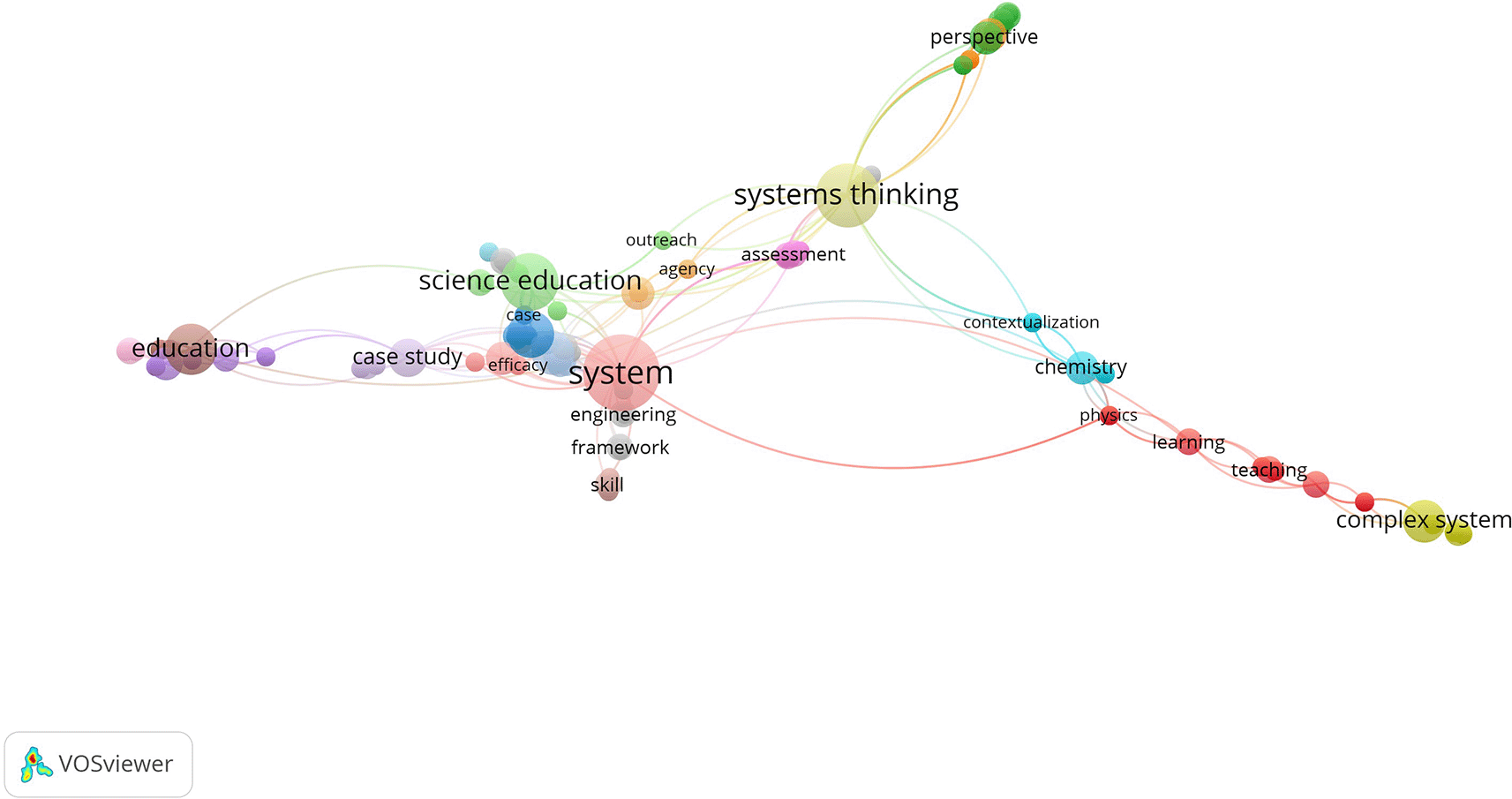
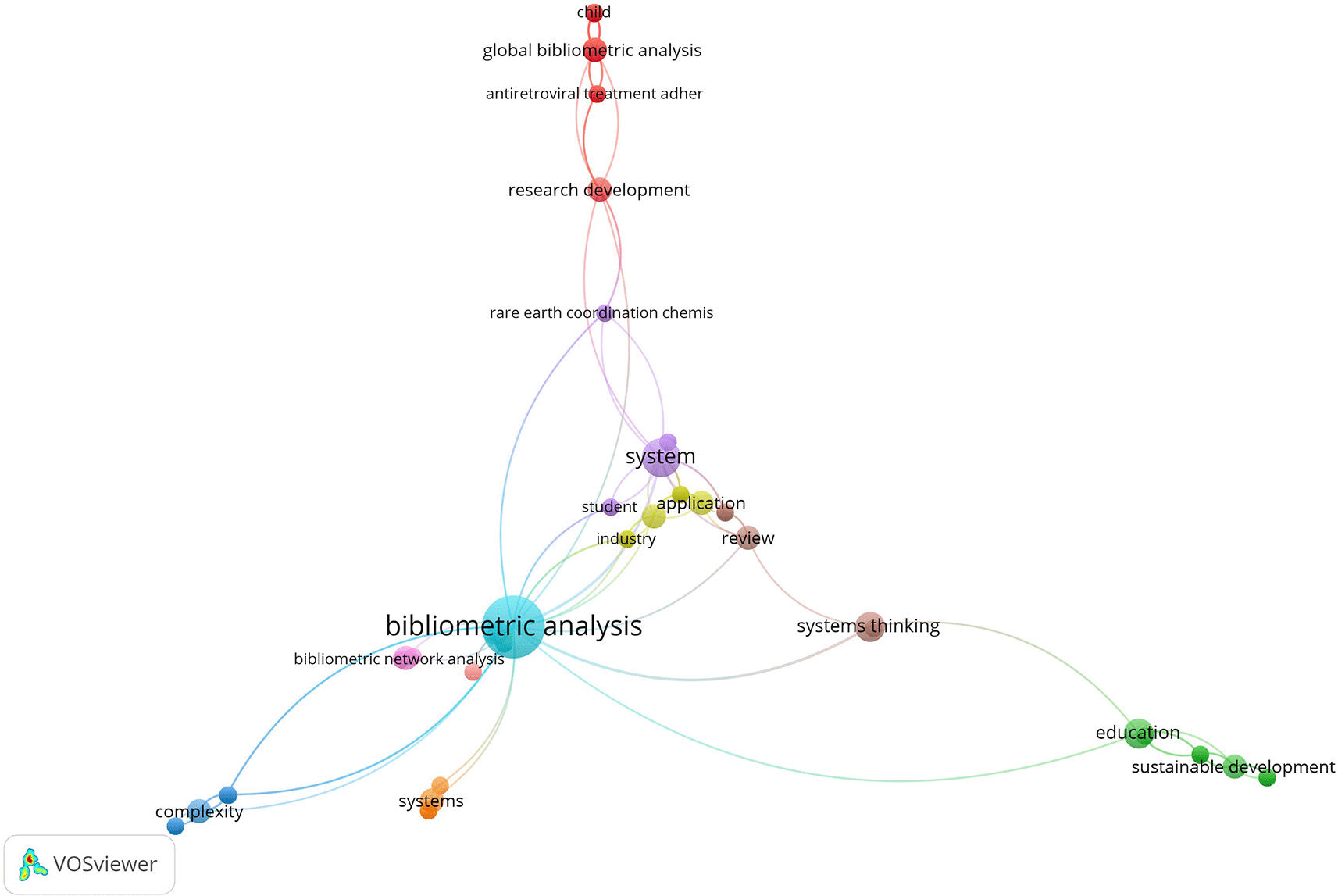
Through the utilization of the phrases “Systems Thinking” and “Science Education” as well as “Bibliometric Analysis” and “Systems Thinking,” this study highlights the primary topics that have a significant impact on research in this particular sector. As it encompasses a variety of domains, these themes highlight the fact that systems thinking may be utilized in the field of education.
Systems thinking in education
The network demonstrates that systems thinking is important in forming modern educational approaches. It is clear from the chart that education, science, and sustainability are associated with systems thinking. This connection indicates that through systems thinking, students recognize the links existing among various kinds of systems, which helps them manage real-world issues more successfully.
It also demonstrates that systems thinking encourages students to learn from multiple disciplines. The combination of several knowledge areas makes it possible for students to understudy changing relationships and address problems that impact the environment, such as climate change, biodiversity loss, and ways to achieve global sustainability.
Education and sustainability
The network demonstrates that systems thinking is important in forming modern educational approaches. It is clear from the chart that education, science, education and sustainability are associated with systems thinking. This connection indicates that through systems thinking, students recognize the links existing among various kinds of systems, which helps them manage real-world issues more successfully. It also demonstrates that systems thinking encourages students to learn from multiple disciplines. The combination of several knowledge areas makes it possible for students to understudy changing relationships and address problems that impact the environment, such as climate change, biodiversity loss, and ways to achieve global sustainability (Davila et al., 2021).
Systems dynamics and STEM education
The network demonstrates that systems thinking is important in forming modern educational approaches. It is clear from the chart that education, science, and sustainability are associated with systems thinking. This connection indicates that through systems thinking, students recognize the links existing among various kinds of systems, which helps them manage real-world issues more successfully.
It also demonstrates that systems thinking encourages students to learn from multiple disciplines. The combination of several knowledge areas makes it possible for students to understudy changing relationships and address problems that impact the environment, such as climate change, biodiversity loss, and ways to achieve global sustainability (Curwen et al., 2018; York et al., 2019).
Further analysis of publications and citation data reveals the force of using systems thinking to encourage teamwork across fields and develop strong ties with global communities. When we use systems thinking, we can see at big picture that aids collaboration among experts from various fields. Using systems thinking helps teams work together, as it reveals the importance of each area and how they are all part of a larger whole (Fowler et al., 2019). Research demonstrates that systems thinking links fields such as education, engineering, and sociology, which aids students in learning critical thinking, cooperating, and practicing empathy. Owing to these abilities, they can take part in and encourage solutions for climate change, inequality, and damaged environments worldwide.
Therefore, systems thinking is important for preparing global students to help tackle big problems worldwide by working with others and combining different disciplines. Teaching systems thinking in schools can encourage students to care about sustainability. It is very important for students to gain experience by conducting fieldwork and teaming up with other subjects (Alford et al., 2024).
According to the analysis, from theory to practice, systems thinking is present in the field of education. Using systems thinking, people work together, share different approaches, and think critically about finding solutions to difficult problems. Because it focuses on topics such as sustainability and SDGs, systems thinking plays a key role in forming future science education and learning plans (Green et al., 2022).
Technology, engineering, science, and mathematics lessons must include systems thinking to equip students to address and solve the connected challenges of today, helping them to serve the world’s most urgent purposes. STEM education improves with systems thinking, which encourages students to see the relationships between various concepts from various subject areas. For example, graduate students taking a course on food, energy, and water are taught to focus on the interactions between natural, environmental, and human-social systems (Shamir et al., 2023).
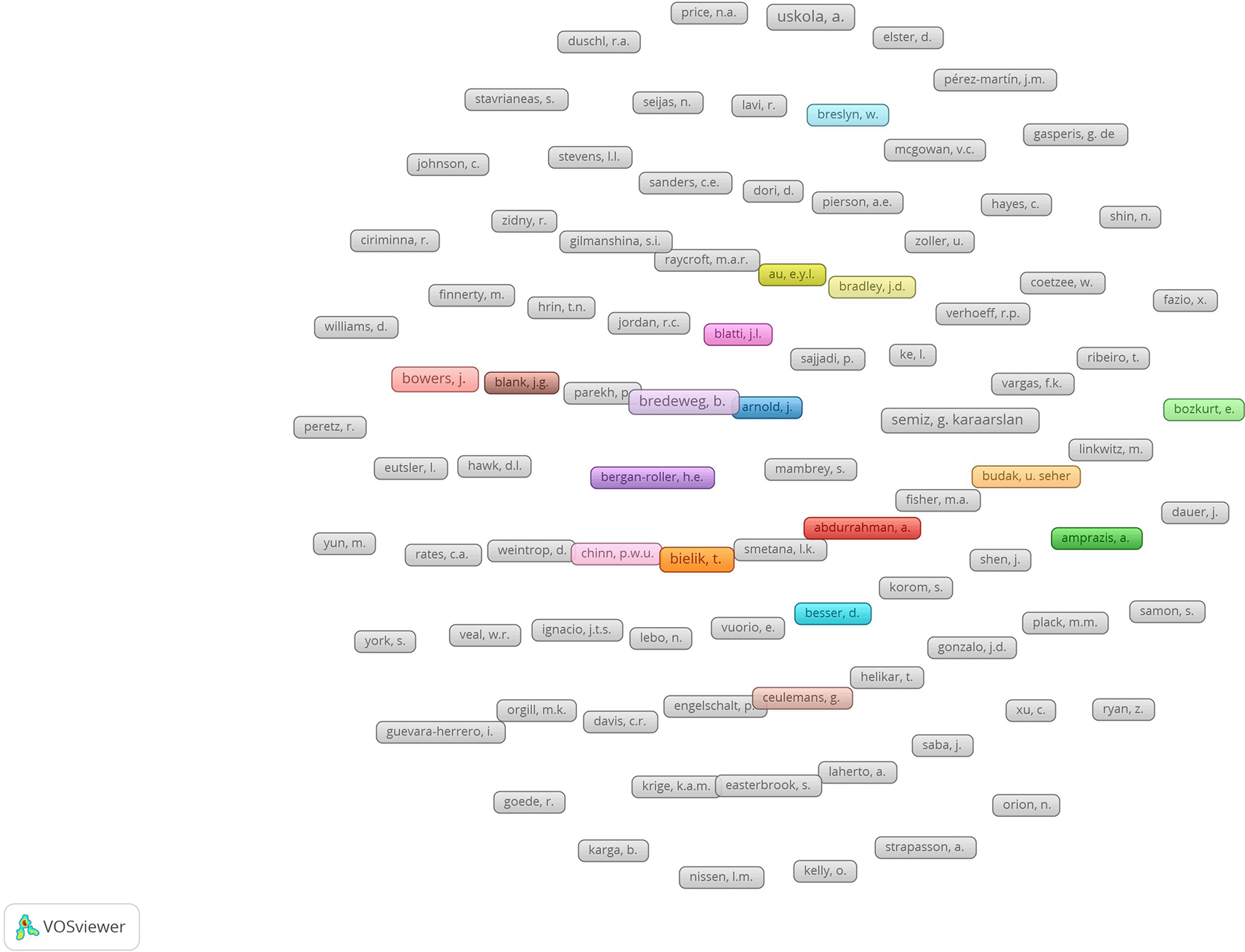
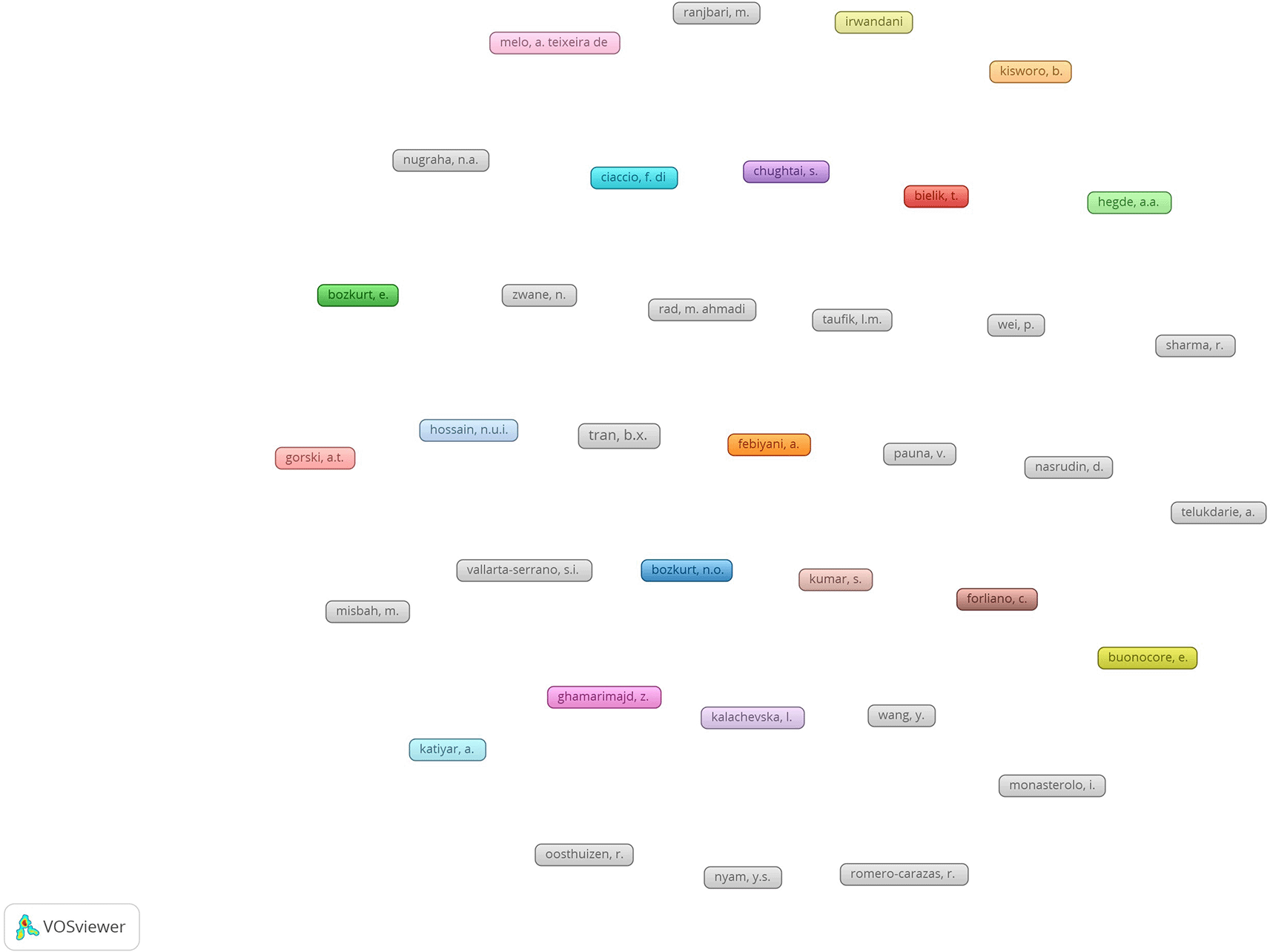
There are various collaborative patterns demonstrated by data analysis in the fields of systems thinking and science education. Networks based on joint publications provide an idea of the relationships among researchers from top universities (Peretz et al., 2023; Romero-Carazas et al., 2023). The importance of teams cooperating in education is evident through examples such as professional networking communities.
Bozkurt, Biedlik, and Bowers are stolen by attackers and placed at the center of their networks. You can find their names mentioned many times in linked clusters, suggesting at strong effect on the discussion of systems thinking in science classrooms. Because of this, several scientists from various fields have collaborated, making them leaders in pushing for systems thinking to be included in many areas of science.
Jean-Tapan Bozkurt and Denise Biedlik are very influential in the network for pushing systems thinking in the field of education. Working together, they leave a large mark in this field and add to the global pool of knowledge. Systems-oriented educational models have been greatly developed because of their research, which continues to influence later studies. It is clear from how they connect with each other that they act as important bridges across different fields, and encourage debate on using systems thinking to solve educational and sustainability issues.
The analysis also highlights the need for scientists from different countries and fields to keep working together closely. Strong research relationships allow educators from many countries to better apply systems thinking and to develop innovative answers to global issues.
Figure 3 shows that there is significant collaboration among researchers working at top institutions. Systems thinking is closely related to research in science education, STEM, and sustainability education. It is clear from these links that collaborative efforts play a significant role in exploring systems thinking in these different areas of academia.
| Year-wise publication distribution | |
|---|---|
| Year | Publication count |
| 2014 | 6 |
| 2015 | 1 |
| 2016 | 7 |
| 2017 | 5 |
| 2018 | 5 |
| 2019 | 9 |
| 2020 | 9 |
| 2021 | 5 |
| 2022 | 15 |
| 2023 | 21 |
| 2024 | 17 |
| 2025 | 12 |
| Country | Publication count |
|---|---|
| United States | 50 |
| Germany | 30 |
| China | 20 |
| United Kingdom | 15 |
| India | 10 |
This study revealed many well-known papers and important authors who played a significant role in developing the field. Those dealing with systems thinking in STEM education, sustainability, and the learning framework of today’s world are frequently used in the literature. For example, Sharmas’s paper on the use of artificial intelligence in supply chain management has received high praise for being well-researched and still very relevant and includes 123 citations as of 2022. Pauna and Hossain have also carried out fundamental work on systems thinking in science education to promote work between different subject areas.
At present, M. Ranjbari’s research from 2023 is noted for its clear model of systems thinking, which is often considered a primary source. They will guide future research and stress the essential role of systems thinking in addressing international problems.
The efforts of scientists working together and their main articles explain how much teamwork is involved in developing systems thinking in science education. It is clear from the links among systems thinking, education, and sustainability that there is a greater need to prepare students to deal with tough, connected challenges worldwide. By focusing on international partnerships with regions that are less involved in research, we can bring more influence and impact to this field. When researchers from different fields cooperate, they can provide useful methods, knowledge, and tools to advance systems thinking in education. The introduction of systems thinking to education ensures that teaching practices are aligned with major targets, such as the United Nations Sustainable Development Goals, contributing to a brighter and more just future (Blatti et al., 2019; Faul & Savage, 2023).
Therefore, drawing ideas from significant works can guide educators and others to use systems thinking better in their practices. Many of the important studies identified in the analysis can inform the structure of modern education systems and curriculum development. As systems thinking is valued, educators can prepare students to handle, for example, climate change and changes in technology more easily by considering all of these problems within their systems. Using systems thinking allows students to use flexibility and creative troubleshooting to solve complex problems (Grohs et al., 2018; York et al., 2019). Policymakers can create rules that encourage the global integration of various fields of learning and use systems thinking within education.
The number of studies focusing on systems thinking in science education has steadily increased over the last decade. The importance of systems thinking’s importance as a useful framework has increased steadily as more works concerning complex educational and sustainability problems appear from 2014 to 2025. This progress reflects the increasing global attention on systems thinking as a useful way to handle and address important global problems, such as climate change, reducing biodiversity, and making new energy choices. The number of publications has increased since 2015, indicating that more researchers and educators are focusing on finding solutions that consider many perspectives, and systems thinking has become a major part of school efforts to change.
The results demonstrate that systems thinking is becoming more significant in teaching science, mainly dealing with widespread global matters. A systems approach is useful for dealing with worldwide issues because it covers many areas of knowledge and collects different opinions. This helps teachers and students learn how every system is related to other systems (Armah, 2019; Karga & Ceyhan, 2024; Shamir et al., 2023).
However, some limitations of this study must be considered. The use of Scopus could mean that some important studies were not found in the other databases. Second, concentrating on English-language publications may have ignored what was published in other languages. Despitizing these problems, this study provides useful information to educators, policymakers, and researchers. For instance, training teachers and using standard tests can make learning about systems thinking widespread across the nation’s educational system. Further research should focus on using systems thinking in various countries, especially where development is needed for a fairer and broader educational approach.
Systems thinking is now being used together with several other educational trends, such as Science, Technology, Engineering, Art and Mathematics (STEAM) and design thinking. These styles suggest using imagination, working in different fields, and using systems approaches to fix real problems. Research has found that integrating systems thinking with STEAM and design thinking improves students’ problem-solving skills by allowing them to combine knowledge from several subjects, think creatively, and use critical thinking skills (N. O. Bozkurt & Bozkurt, 2024). By blending these approaches, students become involved with lively systems and are ready for future challenges by understanding collaboration, problem-solving, and analysis of systems.
The use of systems thinking is growing, but it remains challenging to consistently use and describe its characteristics, skills, and abilities in schools. The main difficulty is that there is not one globally accepted way to think about systems. Since researchers have different ideas about systems thinking, they are inconsistently applied, assessed, and integrated into curricula. (Shaked & Schechter, 2016). Because systems thinking is not welldefined, it is difficult to create reliable teaching methods, tests, and strategies to include them in science education.
Although systems thinking research has advanced in some parts of the world, it is necessary to strengthen cooperation among researchers worldwide. Often, systems thinking is looked at only within small academic or territorial groups, which limits how broadly it is use. Geography educators consider understanding human-environment systems to be fundamental and see systems thinking to helping achieve this (Rempfler, 2010). Much of the research on public health is carried out by experts in wealthy countries, and very little work has been done in low-income countries. This problem can be solved by bringing together different research groups and institutions to collaborate in sharing their results, strategies, and tools. When educators collaborate, systems thinking can be applied more easily in different places to help more students.
In the future, various promising sectors are opening up for research and development. Teacher training programs that help educators reason in a system-based way must be developed. Teachers are important for helping students understand difficult concepts, which means providing them with tools and training to teach systems thinking. Improving educators’ skills using systems thinking in professional development could allow them to support their students’ learning of systems thinking. By helping educators visualize schools as different parts of the same system, systems thinking fosters better curriculum creation, promotes teamwork among teachers, and improves leadership in terms of data analysis (Shaked & Schechter, 2019).
In the future, various promising sectors are opening up for research and development. Teacher training programs that help educators reason in a system-based way must be developed. Teachers are important for helping students understand difficult concepts, which means providing them with tools and training to teach systems thinking. Improving educators’ skills using systems thinking in professional development could allow them to support their students’ learning of systems thinking. By helping educators visualize schools as different parts of the same system, systems thinking fosters better curriculum creation, promotes teamwork among teachers, and improves leadership in terms of data analysis (Boersma et al., 2011).
Overall, studying systems thinking in science education has become increasingly important and plays a major role in finding solutions to major global challenges. Combining systems thinking with other ways of learning and creating standard frameworks will play a significant role in success. Researchers should work on resolving the existing problems, supporting partnerships, and bringing in systems thinking across different fields and education levels.
In short, the evidence from this bibliographic review proves that systems thinking matters greatly in 21st-century science classes. There has been a large increase in publications focusing on sustainability, mixing subjects in studies, and working together globally. However, the large differences in what parts of the world contribute to research point to the need for better inclusion and equality in research. We believe to solve these challenges, we should: (1) develop new teacher training plans that focus on systems thinking methods, (2) set standard frameworks for assessing how well students can think in systems, and (3) encourage collaboration among various countries to enable sharing and grow in this area. Teaching systems thinking in science gives students the necessary skills to cope with the difficult problems that we deal with today.
Here is a summary of the key bibliometric data based on the analysis:
The data point to the rising importance of systems thinking in science education, and noteworthy research from the United States, Germany, and China is apparent. All the journals chosen have numerous citations, which proves their importance in veterinary medicine. In addition, it becomes clear from the co-authors’ network that leading researchers often join forces, proving the value of working across different areas in developing and promoting systems thinking.
Although this study employs bibliometric analysis as its primary methodological approach, the findings can be interpreted through core principles of systems thinking. Publication trends, international collaboration, and thematic diversification do not operate independently; rather, they form an interconnected research ecosystem. Growth in publication output reinforces collaborative networks among authors and institutions, which in turn supports the expansion of research themes related to sustainability, STEM integration, and interdisciplinary learning.
From a systems perspective, these relationships reflect interdependencies and reinforcing feedback mechanisms within the scientific knowledge system. Increased collaboration facilitates knowledge exchange and methodological diffusion, enabling the emergence of new thematic clusters, while the diversification of themes attracts broader scholarly participation and further accelerates publication growth. In this sense, bibliometric indicators capture not only linear increases in research activity but also dynamic interactions among multiple components of the research system.
Interpreting the results through this lens positions systems thinking not merely as the subject of investigation but as a conceptual framework for understanding how science education research evolves over time. This perspective helps explain why systems thinking research has become increasingly prominent in response to complex global challenges, as the research community itself adapts through interconnected processes of knowledge production, collaboration, and thematic innovation.
This bibliometric analysis reveals a substantial growth in research on systems thinking in science education between 2014 and 2025, particularly in relation to sustainability, interdisciplinary learning, and STEM education. The increasing volume of publications and the expansion of international collaboration indicate a growing recognition of systems thinking as a critical competency for addressing complex global challenges.
Despite this progress, notable imbalances remain in global research participation and thematic representation. Contributions continue to be concentrated in a limited number of regions, while research from developing and underrepresented contexts remains comparatively scarce. These disparities highlight the need for more inclusive and equitable collaboration to ensure that systems thinking research reflects diverse educational settings and societal challenges.
From a systems thinking perspective, several leverage points can be identified for advancing science education. These include strengthening teacher professional development in systemic pedagogy, developing standardized assessment frameworks to evaluate systems thinking competencies, and fostering sustained international research collaboration. Addressing these leverage points can enhance the capacity of science education systems to respond effectively to sustainability challenges and better prepare learners to navigate the interconnected problems of the 21st century.
| Views | Downloads | |
|---|---|---|
| F1000Research | - | - |
|
PubMed Central
Data from PMC are received and updated monthly.
|
- | - |
Provide sufficient details of any financial or non-financial competing interests to enable users to assess whether your comments might lead a reasonable person to question your impartiality. Consider the following examples, but note that this is not an exhaustive list:
Sign up for content alerts and receive a weekly or monthly email with all newly published articles
Already registered? Sign in
The email address should be the one you originally registered with F1000.
You registered with F1000 via Google, so we cannot reset your password.
To sign in, please click here.
If you still need help with your Google account password, please click here.
You registered with F1000 via Facebook, so we cannot reset your password.
To sign in, please click here.
If you still need help with your Facebook account password, please click here.
If your email address is registered with us, we will email you instructions to reset your password.
If you think you should have received this email but it has not arrived, please check your spam filters and/or contact for further assistance.

Comments on this article Comments (0)