Keywords
Caregiver, Elderly, Dementia, Communication

This article is included in the Dignity in Aging collection.
Caregiver, Elderly, Dementia, Communication
Effective communication between caregivers and elderly individuals with dementia is a cornerstone of quality dementia care. As dementia progresses, communication becomes increasingly challenging due to cognitive and language impairments, making it difficult for older adults to express their needs and for caregivers to interpret them accurately. These challenges can impact daily care, relationships, and the overall well-being of both parties. Research highlights that communication is not only essential for meeting the practical needs of persons living with dementia but also for maintaining their sense of personhood, dignity, and social connectedness, which are vital for person-centered care (Zwakhalen and Bormans, 2021; Alsawy et al., 2017; Delfino and Cachioni, 2016).
Caregivers, both formal and informal, often face significant obstacles in their interactions with persons living with dementia. Studies show that caregivers may lack the necessary skills to ensure effective communication, despite recognizing its importance. Communication difficulties are compounded by the unique environment of home care, where personal space and routines can both enable and complicate interactions. The literature identifies a range of communication strategies, from verbal techniques such as using simple sentences and closed-choice questions to nonverbal approaches like eye contact, touch, and gestures. However, there is disagreement about which strategies are most supportive, and caregivers frequently use both effective and ineffective methods. This underscores the need for targeted education and training to help caregivers adapt their communication to the needs of individuals with dementia (Kamalraj et al., 2020; Bender et al., 2022; Delfino and Cachioni 2016).
The quality of caregiver–elderly communication in dementia care has broader implications, including the reduction of caregiver burden and the improvement of care outcomes. Effective communication strategies have been shown to strengthen relationships, facilitate participation and autonomy for persons with dementia, and reduce stress for caregivers. Conversely, poor communication can lead to misunderstandings, increased frustration, and diminished quality of life for both caregivers and care recipients. The literature calls for more research involving the perspectives of people with dementia themselves and emphasizes the importance of developing and disseminating evidence-based communication strategies to support both caregivers and those they care for (Hanna et al., 2024; Alsawy et al., 2017; Watson, 2017).
Effective communication between caregivers and elderly individuals with dementia presents complex challenges due to cognitive impairments that hinder verbal expression and comprehension. Studies reveal that caregivers often struggle with interpreting nonverbal cues and managing repetitive behaviors, leading to frustration for both parties (Polenick et al., 2020; Varik et al., 2020). The triadic relationship involving healthcare professionals introduces additional complexity, as mismatched expectations about care roles and responsibilities can create tension (Tuijt et al., 2021). While simplified language and visual aids show promise in bridging communication gaps, many interventions lack scalability, particularly in resource-limited settings (Polacsek et al., 2020; Lima et al., 2022). This highlights the need for adaptable strategies that account for varying stages of cognitive decline and diverse care environments.
Technological innovations have emerged as potential solutions to facilitate caregiver-elderly communication, though their implementation faces significant barriers. Web-based advance care planning tools demonstrate effectiveness in stimulating dialogue about future care preferences, but their utility often depends on caregiver mediation due to limited independent use by individuals with dementia (Monnet et al., 2024). The COVID-19 pandemic accelerated adoption of telemedicine, which reduced logistical burdens while introducing new challenges like technological literacy and connectivity issues (Lima et al., 2022). Culturally tailored applications incorporating reminiscence therapy and natural language processing show particular promise, as evidenced by improved psychological well-being in Thai caregiver-patient dyads (Watcharasarnsap et al., 2020). However, inconsistent staff training and fragmented care continuity continue to hinder widespread adoption of these technologies across healthcare systems (Polacsek et al., 2020).
Ethical dilemmas and cultural factors significantly influence communication dynamics in dementia care, creating both opportunities and challenges for intervention. Truth-telling about diagnosis and prognosis remains contentious, with literature-based approaches showing potential to facilitate these difficult conversations (Skov et al., 2024). Cultural norms profoundly shape communication preferences, as collectivist societies often prioritize family decision-making over individual autonomy (Altamirano and Weisman de Mamani, 2021). Systemic inequities further complicate matters, with non-English speaking populations frequently lacking access to appropriate multilingual resources (Richards et al., 2025). Psychoeducational programs have demonstrated success in improving caregiver skills and reducing burden, but their reach remains limited by socioeconomic disparities and inadequate policy support (Cintoli et al., 2024). These findings underscore the importance of culturally sensitive approaches that address both interpersonal and structural barriers.
Critical gaps in current research highlight the need for more comprehensive and inclusive approaches to dementia communication. Many studies rely on small, homogeneous samples that limit generalizability across diverse populations (Varik et al., 2020). The predominance of Western-centric tools fails to account for cultural variations in communication norms and caregiving practices (Lima et al., 2022). Longitudinal data on intervention efficacy remains scarce, with few studies tracking outcomes beyond short-term follow-up periods (Watcharasarnsap et al., 2020). Emerging technologies like artificial intelligence offer potential solutions but raise ethical concerns about privacy and accessibility (Kase, 2024). Future research should prioritize culturally adaptive interventions, robust outcome measures, and policy frameworks that support equitable implementation across care settings.
The synthesis of current evidence reveals both progress and persistent challenges in caregiver-elderly communication for dementia. While technological advances and targeted interventions show promise, their effectiveness depends on addressing systemic barriers and cultural diversity. Strengths of existing research include growing recognition of triadic dynamics and innovative digital solutions, while weaknesses center on fragmented implementation and limited generalizability. Moving forward, collaborative efforts must focus on developing scalable, culturally competent strategies supported by policy changes and adequate resource allocation. By integrating technological innovations with person-centered approaches that respect ethical and cultural considerations, future interventions can better support the complex communication needs of dementia caregiving dyads across diverse contexts.
In a systematic literature review (SLR), research questions play a crucial role as they form the foundation and guide the entire review process. They define the scope and focus of the SLR, assisting in determining which studies to include or exclude to ensure the review remains relevant and aligned with the topic of interest. A clearly articulated research question ensures a thorough and systematic search of the literature, encompassing all relevant studies that address key aspects of the subject. This minimizes the risk of bias and ensures a rigorous evaluation of the available data. Additionally, research questions help organize and structure data from the included studies, providing a framework for analyzing findings and synthesizing them to generate meaningful insights. They enhance clarity and focus by eliminating ambiguity and maintaining the review’s emphasis on specific issues, thereby increasing the applicability and actionability of the results. Moreover, well-crafted research questions improve the transparency and reproducibility of the study, enabling other researchers to extend the review to related fields or replicate the process to validate findings. Ultimately, research questions ensure that the review aligns with the study’s overarching objectives, whether these involve identifying gaps in the literature, evaluating the effectiveness of interventions, or exploring trends in a particular domain. As such, they are fundamental to conducting a comprehensive, targeted, and relevant systematic literature review.
Defining the Research Questions (RQs) is the most critical task during the planning phase and constitutes the cornerstone of any SLR, as it drives the entire review methodology (Kitchenham, 2007). Given that the objective of this SLR is to identify and analyze the state of the art, the PICo framework a mnemonic tool for formulating research questions, particularly in qualitative research, proposed by Lockwood et al. (2015) was applied in this study. This research addressed three RQs, outlined as follows:
1. What are the key communication barriers for dementia caregivers, and which interventions most effectively address them?
2. Which policy-supported digital communication tools demonstrate the strongest evidence for improving caregiver-elderly interactions in institutional dementia care settings?
3. How do caregiver-elderly communication dynamics in dementia care vary across ethical, cultural, and systemic contexts?
A widely accepted standard for conducting systematic literature reviews, ensuring transparency, accuracy, and consistency, is the PRISMA (Preferred Reporting Items for Systematic Reviews and Meta-Analyses) framework (Page et al., 2021). By following PRISMA guidelines, researchers can enhance the precision and rigor of their analyses. These guidelines provide a structured approach to identifying, screening, and including studies in the review process. Furthermore, the framework emphasizes the importance of controlled studies, recognizing their capacity to minimize bias and offer robust evidence to support the review. In this study, two prominent databases, Web of Science and Scopus, were utilized due to their extensive coverage and reliability.
The PRISMA methodology consists of four key phases: identification, screening, eligibility, and data extraction. During the identification phase, databases are searched to locate all potentially relevant studies. In the subsequent screening phase, these studies are compared against predefined criteria to exclude low-quality or irrelevant research. The eligibility phase involves a thorough evaluation of the remaining studies to ensure they meet the inclusion criteria. Finally, the data extraction phase focuses on collecting and synthesizing information from the included studies, which is essential for drawing valid and meaningful conclusions. This systematic process ensures that the review is conducted with rigor, producing reliable results that can inform future research and practice. A completed PRISMA 2020 checklist and flow diagram supporting this review are publicly available in an external data repository (Zenodo) with the following DOI: https://doi.org/10.5281/zenodo.18047692.
This study employed the essential phases of the systematic review process to compile a significant body of relevant literature. The process began with the identification of keywords, followed by the utilization of dictionaries, thesauri, encyclopedias, and prior research to refine the search. All pertinent terms were identified, and search strings were formulated for the Web of Science and Scopus databases, as outlined in Table 1. During the initial phase of the systematic review, a total of 715 publications related to the study’s topic were retrieved from these two databases. The search strategy is summarized in Table 1.
During the screening phase, potentially relevant study items are evaluated to ensure their alignment with the specified research subject or topics. In this phase, the terms “caregiver, elderly, dementia, communication” are commonly used to select study topics. Duplicate papers are also removed at this stage. Initially, 582 articles were excluded, leaving 133 for further review based on specific inclusion and exclusion criteria (refer to Table 2). The primary criterion was the literature, as it serves as the main source of practical guidance. This category excludes book reviews, book series, meta-syntheses, meta-analyses, conference proceedings, and chapters that were not part of the most recent research. The review was restricted to English-language publications released between 2022 until 2025. A total of 130 publications were ultimately retained after removing duplicates. The inclusion/exclusion criteria are presented in Table 2.
In the third step, known as the eligibility phase, a total of 130 papers were prepared for examination. During this stage, the titles and key components of each article were carefully reviewed to ensure they met the inclusion criteria and aligned with the objectives of the current study. Consequently, 105 papers were disqualified for reasons such as being outside the scope of the study, having irrelevant titles, featuring abstracts unrelated to the study’s purpose, lacking full-text access, or not being supported by empirical evidence linked to the study’s goals. As a result, 25 manuscripts remained for further evaluation.
Data abstraction and analysis were conducted using a structured and iterative synthesis process adapted from established systematic review methodologies (Abouzahra et al., 2020; Azwani et al., 2024; Haron et al., 2025; Kitchenham, 2007). Following study selection, relevant data were independently extracted from each included article, focusing on study objectives, research design, communication context, key findings, and methodological characteristics. To ensure analytical rigor, an inductive thematic synthesis approach was employed. Initial codes were generated through repeated reading of the selected studies, after which related codes were grouped into higher-order categories. These categories were progressively refined into overarching themes that reflected recurring patterns across the literature. Throughout the analysis process, regular discussions were held among the authors to compare interpretations and resolve discrepancies. An audit trail was maintained to document analytical decisions, reflections, and emerging insights, thereby enhancing transparency and reproducibility. This integrative approach enabled the synthesis of evidence across diverse study designs while preserving the contextual richness of each contribution. The study selection process is illustrated in Figure 1.
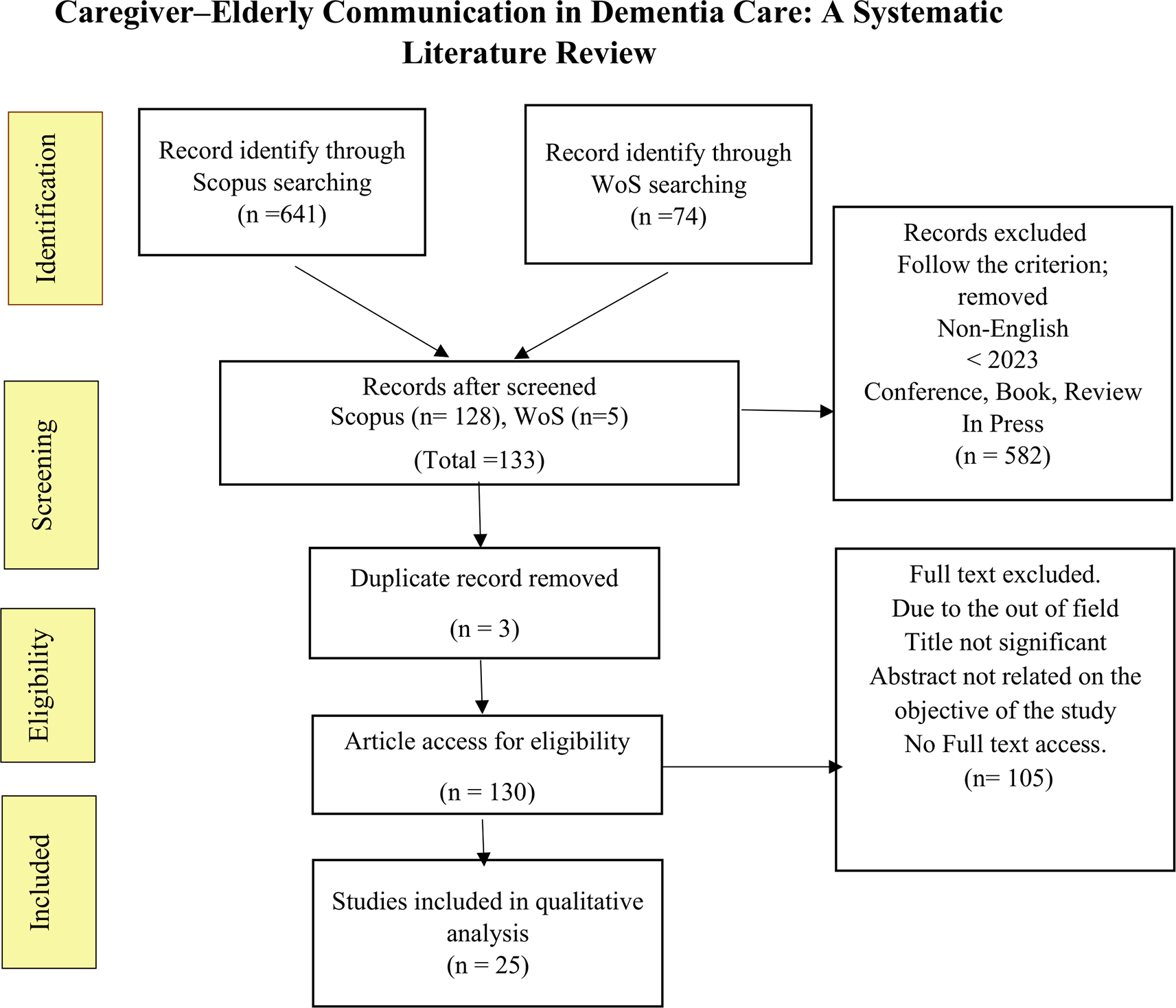
The diagram shows the number of records identified, screened, assessed for eligibility, and included in the final analysis.
The methodological quality of the included studies was assessed using a predefined quality appraisal framework adapted from prior systematic reviews methodologies (Abouzahra et al., 2020; Azwani et al., 2024; Haron et al., 2025; Kitchenham, 2007). This framework comprised six criteria evaluating clarity of objectives, relevance, methodological rigor, conceptual transparency, comparison with existing literature, and acknowledgement of study limitations. Each study was independently appraised by three reviewers using a three-point scoring system: “Yes” (1 point), “Partly” (0.5 points), and “No” (0 points). Scores were aggregated to produce an overall quality score for each study. Only studies achieving a minimum threshold score were retained for synthesis. Any disagreements in scoring were resolved through consensus-based discussion. This appraisal process ensured that only studies of acceptable methodological quality informed the thematic synthesis, thereby strengthening the credibility of the review findings.
1. Is the purpose of the study clearly stated?
2. Is the interest and usefulness of the work clearly presented?
3. Is the study methodology clearly established?
4. Are the concepts of the approach clearly defined?
5. Is the work compared and measured with other similar work?
6. Are the limitations of the work clearly mentioned?
Background of selected study: based on quality assessment, Table 3 shown the result of assessment performance for selected primary studies.
| Author | Title | QA1 | QA2 | QA3 | QA4 | QA5 | QA6 | Total Mark | Percentage (%) |
|---|---|---|---|---|---|---|---|---|---|
| Dooley et al. (2025) | Profiling Communication Ability in Dementia: Validation of a new cognitive-communication assessment tool | 1 | 1 | 1 | 1 | 1 | 0.5 | 5.5 | 91.67% |
| Ramirez et al. (2024) | The lucidity in dementia experience: Perspectives from family and professional caregivers | 1 | 1 | 1 | 0.5 | 1 | 0.5 | 5 | 83.33% |
| Puente-Fernández et al. (2023) | Quality of dying among elderly people diagnosed with dementia in nursing homes: A mixed methods study | 1 | 1 | 1 | 0.5 | 1 | 0.5 | 5 | 83.33% |
| Kase (2024) | Preventing isolation of people with dementia: Effectiveness and challenges of communication robots | 1 | 1 | 1 | 0.5 | 0.5 | 0.5 | 4.5 | 75.00% |
| Gleason et al. (2023) | Use of the patient portal among older adults with diagnosed dementia and their care partners | 1 | 1 | 1 | 1 | 0.5 | 0.5 | 5 | 83.33% |
| Moody et al. (2024) | The Experience of Hospitalisation for People Living With Dementia: A Qualitative Exploration of How Context Shapes Experiences | 1 | 1 | 1 | 0.5 | 0.5 | 0.5 | 4.5 | 75.00% |
| Richards et al. (2025) | Adapting “Listen N Talk”: Developing a Personalized Communication App with Culturally and Linguistically Diverse Residents in Aged Care | 1 | 1 | 1 | 1 | 0.5 | 0.5 | 5 | 83.33% |
| Chary et al. (2024) | Emergency department communication with diverse caregivers and persons living with dementia: A qualitative study | 1 | 1 | 1 | 0.5 | 0.5 | 0.5 | 4.5 | 75.00% |
| Powell et al. (2023) | The role of care partners in medical visits of older adults with hearing loss and dementia: A national study | 1 | 1 | 1 | 1 | 0.5 | 0.5 | 5 | 83.33% |
| Lin et al. (2025) | Conquering the ‘Collected Treasures’ of Older Adults With Dementia: A Qualitative Study on Caregiver Strategies and Challenges | 1 | 1 | 1 | 1 | 0.5 | 0.5 | 5 | 83.33% |
| Nemcikova et al. (2023) | Social support, positive caregiving experience, and caregiver burden in informal caregivers of older adults with dementia | 1 | 1 | 1 | 0.5 | 0.5 | 0.5 | 4.5 | 75.00% |
| Tagliafico et al. (2022) | Abuse in older adults with communicating disorders: a step forward in this understanding? | 1 | 1 | 1 | 0.5 | 0.5 | 0.5 | 4.5 | 75.00% |
| Reiff et al. (2023) | Fielding the quality of communication questionnaire to persons with cognitive impairment and their family in primary care: A pilot study | 1 | 1 | 1 | 0.5 | 0.5 | 0.5 | 4.5 | 75.00% |
| Cintoli et al. (2024) | The Psychoeducational Interventions: a valuable communication tool to support the caregiver of people with dementia | 1 | 1 | 1 | 0.5 | 0.5 | 0.5 | 4.5 | 75.00% |
| Cintoli et al. (2024) | ‘It opens up a whole new world for everybody’: how carers of people with dementia view the online empowered conversations communication course | 1 | 1 | 1 | 0.5 | 0.5 | 0.5 | 4.5 | 75.00% |
| Veldwijk-Rouwenhorst et al. (2022) | Losing hope or keep searching for a golden solution: an in-depth exploration of experiences with extreme challenging behavior in nursing home residents with dementia | 1 | 1 | 1 | 0.5 | 0.5 | 0.5 | 4.5 | 75.00% |
| Duodu et al. (2024) | Exploration of family caregivers’ experiences on coping in dementia care in Ghana | 1 | 1 | 1 | 1 | 0.5 | 0.5 | 5 | 83.3% |
| Fasth et al. (2025) | How Should Clinicians Discuss Deprescribing with Caregivers of Older Adults with Dementia? | 1 | 1 | 1 | 1 | 1 | 0.5 | 5.5 | 91.7% |
| Monnet et al. (2024) | Evaluation of interactive web-based tools for advance care planning | 1 | 1 | 1 | 1 | 0.5 | 0.5 | 5 | 83.3% |
| Skov et al. (2024) | Exploring experiences of deliberating ethical issues using literature-based intervention | 1 | 1 | 1 | 1 | 0.5 | 0.5 | 5 | 83.3% |
| Khanassov et al. (2025) | Virtual primary care for people living with dementia in Canada | 1 | 1 | 1 | 1 | 1 | 0.5 | 5.5 | 91.7% |
| Berry et al. (2024) | Adapting the Serious Illness Conversation Guide for Dementia Care | 1 | 1 | 1 | 1 | 0.5 | 0 | 4.5 | 75.0% |
| Zhuo et al. (2025) | Effects of an art-based intervention in older adults with dementia: a randomized controlled trial | 1 | 1 | 1 | 1 | 1 | 0.5 | 5.5 | 91.7% |
| McHugh et al. (2024) | Perspectives from persons living with dementia and their caregivers on emergency department visits, care transitions, and outpatient follow-up: A qualitative study | 1 | 1 | 1 | 1 | 0.5 | 0.5 | 5.0 | 83.3% |
| Sarmiento-González et al. (2025) | Conditions for Nutritional Care of Elderly Individuals with Dementia and Their Caregivers: An Exploratory Study | 1 | 1 | 1 | 1 | 0.5 | 0 | 4.5 | 75.0% |
Here is the quality assessment table for the selected papers: The performance of selected primary studies is shown in Table 3.
Cognitive decline in persons living with dementia creates significant barriers to effective communication, often manifesting as difficulty in verbal expression and comprehension challenges. These fundamental impairments lead to secondary issues such as behavioral resistance during care activities (McHugh et al., 2024), which are further compounded when care occurs in clinical environments. Hospital settings prove particularly problematic due to their unfamiliar nature, time constraints, and frequent lack of staff training in dementia-specific communication approaches (Moody et al., 2024). The communication challenges intensify when hearing loss coexists with dementia, creating a dual sensory-cognitive barrier that requires care partners to actively mediate medical interactions to ensure accurate information exchange (Powell et al., 2023).
These communication barriers extend into daily care activities, particularly around nutritional management. Caregivers frequently struggle with feeding difficulties due to both cognitive impairments and their own lack of training in appropriate communication techniques, often resulting in preventable health complications (Sarmiento-González et al., 2025). In response to these multifaceted challenges, caregivers across different cultural contexts have developed adaptive communication strategies. Ghanaian family caregivers, for instance, employ humor and positive reinforcement alongside spiritual support to maintain meaningful connections while simultaneously reducing their own caregiving stress (Duodu et al., 2024). Similarly, in clinical discussions about medication management, communication proves more effective when focused on immediate risks and cognitive impacts rather than abstract long-term prognosis, as this approach aligns with caregivers’ priorities regarding current quality of life (Fasth et al., 2025).
The development of structured communication frameworks has provided more systematic approaches to specific behavioral challenges. The CALM guideline offers a methodical process for managing hoarding behaviors through gradual decluttering paired with communication techniques carefully adapted to the individual’s cognitive abilities (Lin, Chiu, and Chou, 2025). Even the unpredictable moments of lucidity that occasionally occur in dementia can be leveraged for meaningful connection when caregivers are prepared to recognize and respond to these fleeting opportunities while maintaining realistic expectations about disease progression (Ramirez et al., 2024). However, these individual strategies often encounter systemic barriers within healthcare environments that fail to accommodate the unique communication needs of dementia care.
Care transitions, particularly following emergency department visits, frequently break down due to inadequate communication protocols, leaving caregivers unprepared for follow-up care responsibilities (McHugh et al., 2024). In long-term care settings, staff often struggle with extreme behavioral symptoms, sometimes persisting with ineffective communication approaches or abandoning attempts altogether due to frustration and lack of standardized protocols (Veldwijk-Rouwenhorst et al., 2022). These systemic shortcomings occur despite evidence that proper support structures can significantly improve outcomes. Caregivers who receive adequate social support and develop positive perceptions of their role typically experience reduced burden, though many still lack access to formal training in therapeutic communication techniques (Nemcikova et al., 2023). Even the physical environment of care facilities plays a crucial role in communication success, as noisy, unfamiliar spaces tend to increase disorientation and challenging behaviors among persons with dementia (Moody et al., 2024).
Addressing these interconnected challenges requires comprehensive reforms across multiple levels of dementia care. Healthcare providers need specialized training in communication techniques that account for cognitive fluctuations and sensory impairments (Powell et al., 2023), while caregivers require both practical strategies for daily interactions and emotional support to maintain their own wellbeing (Duodu et al., 2024). At an institutional level, policies must prioritize care continuity through standardized communication protocols, particularly for transitions between care settings (McHugh et al., 2024). Future interventions should simultaneously address the technical aspects of communication and the emotional needs of all parties involved in dementia care (Ramirez et al., 2024).
Policy communication tools, technologies, and interventions are essential in addressing the complex needs of individuals with dementia and their caregivers. The development of interactive web-based tools has been highlighted as a promising avenue to stimulate reflection and communication about advance care planning (ACP). Monnet et al. (2024) evaluated two such tools: the ‘Thinking Now About Later’ tool and the digital version of the ‘Life Wishes Cards’. These tools were found to be helpful in facilitating conversations between people with dementia and their family caregivers, though barriers to independent use by individuals with dementia were noted. Similarly, Berry et al. (2024) adapted the Serious Illness Conversation Guide (SICG) for dementia care, emphasizing values-based ACP conversations that involve patient-caregiver-clinician triadic communication. Both studies underscore the importance of caregiver involvement in guiding the use of these tools and ensuring their effectiveness. Furthermore, Zhuo et al. (2025) demonstrated the potential of creative expressive art-based interventions in improving communication abilities and reducing behavioral symptoms in dementia patients, reinforcing the role of structured interventions in enhancing communication.
Technological advancements have also introduced innovative solutions to address communication challenges faced by individuals with dementia. Kase (2024) explored the effectiveness of communication robots equipped with reminiscence methods to prevent social isolation among people with dementia. The study highlighted the potential of commercially available robots like Pepper and Robohon, which were modified with AI models to support meaningful interactions. These findings align with Gleason et al. (2023) investigation into the use of patient portals among older adults with dementia and their care partners. The study revealed that care partners often authored messages using patient identity credentials, suggesting that technological tools must be designed to accommodate shared access and proxy use. Together, these studies emphasize the need for user-friendly technologies that can be seamlessly integrated into daily caregiving routines while addressing the unique communication needs of dementia patients.
Interventions aimed at improving communication in dementia care extend beyond technology to include psychoeducational programs and community-based initiatives. Cintoli et al. (2024) examined the impact of psychoeducational interventions on informal caregivers, demonstrating significant improvements in caregiver burden, stress management, and communication skills. These findings resonate with Eastham et al. (2025) exploration of the Empowered Conversations course, an online communication program for carers of people with dementia. Participants reported enhanced understanding of dementia and improved interpersonal communication, highlighting the value of structured educational programs in empowering caregivers. Additionally, Richards et al. (2025) adapted the “Listen N Talk” app to facilitate communication between care staff and culturally and linguistically diverse residents in aged care settings. This initiative underscores the importance of personalized communication tools tailored to individual contexts and cultural backgrounds.
The integration of policy communication tools, technologies, and interventions requires a multidisciplinary approach to ensure their accessibility and effectiveness. For instance, Dooley et al. (2025) validated the Profiling Communication Ability in Dementia (P-CAD) tool, which provides a comprehensive assessment of communication abilities in individuals with dementia. This tool complements the work of Reiff et al. (2023), who adapted the Quality of Communication (QOC) questionnaire to assess communication needs in primary care settings for patients with cognitive impairment and their caregivers. Both studies highlight the necessity of developing reliable instruments to guide interventions and evaluate outcomes. Moreover, the studies by Monnet et al. (2024) and Berry et al. (2024) demonstrate the importance of involving stakeholders, including patients, caregivers, and clinicians, in the design and implementation of communication tools to ensure their relevance and usability.
Ethical, cultural, and system-level influences play a pivotal role in shaping communication dynamics for individuals with dementia and their caregivers. Ethical considerations are particularly evident in the context of discussing sensitive topics such as end-of-life care or shifting roles within families. Skov et al., (2024) explored how literature-based interventions facilitated conversations on ethical issues among home-dwelling individuals with dementia and their family members. The study highlighted that using excerpts from dementia-related literature enabled participants to deliberate on complex ethical dilemmas like disclosing the diagnosis or transitioning to nursing homes. Similarly, Monnet et al. (2024) emphasized the importance of advance care planning (ACP) tools in fostering ethical discussions about future care preferences. These findings resonate with Berry et al. (2024), who adapted the Serious Illness Conversation Guide (SICG) for dementia care, focusing on values-based ACP conversations. Together, these studies underscore the necessity of structured interventions to address ethical challenges while ensuring that communication remains respectful and patient-centered.
Cultural factors significantly influence communication patterns, especially in diverse caregiving environments. Richards et al. (2025) investigated the adaptation of the “Listen N Talk” app to support communication between care staff and culturally and linguistically diverse residents in aged care settings. The study revealed that personalized phrase-based apps could facilitate interactions during medical emergencies and daily routines, emphasizing the need for culturally tailored solutions. This aligns with Chary et al. (2024) exploration of emergency department communication with caregivers and persons living with dementia from minoritized racial and ethnic groups. The research identified language barriers as a critical issue, particularly for non-English-speaking patients, where caregiver advocacy became central to effective communication. Furthermore, Khanassov et al. (2025) examined virtual primary care for dementia in Canada, highlighting disparities in access based on urbanicity and support systems. These studies collectively demonstrate the importance of addressing linguistic and cultural diversity in designing communication strategies for dementia care.
System-level influences, including institutional policies and technological infrastructure, also shape communication practices. Gleason et al. (2023) analyzed the use of patient portals among older adults with dementia and their care partners, revealing that organizational efforts to facilitate shared access could enhance support systems. Care partners often authored messages using patient credentials, indicating the need for policies that promote proxy access. Similarly, Puente-Fernández et al. (2023) conducted a mixed-methods study to assess the quality of dying among elderly people diagnosed with dementia in nursing homes. The findings highlighted insufficient end-of-life communication, suggesting systemic gaps in training and tools for healthcare professionals. These insights are complemented by Kase (2024) exploration of communication robots, which proposed multidisciplinary approaches to integrate AI models into commercially available robots. Such innovations could mitigate caregiver shortages and improve social connectivity for individuals with dementia, provided systemic barriers like usability and accessibility are addressed.
The interplay of ethical, cultural, and system-level factors necessitates comprehensive frameworks to guide communication in dementia care. Cintoli et al. (2024) evaluated psychoeducational interventions for informal caregivers, demonstrating significant improvements in stress management and communication skills. These programs were effective both online and on-site, underscoring the adaptability of interventions to different contexts. Eastham et al. (2025) further supported this through their investigation of the Empowered Conversations course, an online program for carers of people with dementia. Participants reported enhanced understanding of dementia and improved interpersonal communication, reflecting the value of structured educational initiatives. Additionally, Reiff et al. (2023) fielded the Quality of Communication questionnaire among primary care patients with cognitive impairment and their families, identifying the need for cognitive accessibility in communication tools. These studies collectively emphasize the importance of integrating ethical considerations, cultural sensitivity, and systemic support into communication strategies.
Effective communication in dementia care requires a comprehensive approach that integrates ethical considerations, cultural sensitivity, and systemic support. Evidence underscores the necessity of adapting strategies to address cognitive impairments, behavioral challenges, and environmental constraints while prioritizing person-centered techniques. Structured interventions, including literature-based discussions, digital tools, and psychoeducational programs, have demonstrated potential in enhancing communication and reducing caregiver burden. These approaches must be tailored to accommodate diverse cultural contexts and individual needs, ensuring accessibility and relevance across various settings. Additionally, the integration of technological innovations, such as communication robots and personalized apps, highlights the importance of addressing both emotional and practical dimensions of dementia care. To achieve sustainable improvements, healthcare systems should focus on developing standardized yet adaptable frameworks that combine evidence-based practices with robust support systems. By implementing multidimensional solutions, significant advancements can be made in improving the quality of life for individuals with dementia and their caregivers while fostering equitable and effective communication practices.
| Views | Downloads | |
|---|---|---|
| F1000Research | - | - |
|
PubMed Central
Data from PMC are received and updated monthly.
|
- | - |
Provide sufficient details of any financial or non-financial competing interests to enable users to assess whether your comments might lead a reasonable person to question your impartiality. Consider the following examples, but note that this is not an exhaustive list:
Sign up for content alerts and receive a weekly or monthly email with all newly published articles
Already registered? Sign in
The email address should be the one you originally registered with F1000.
You registered with F1000 via Google, so we cannot reset your password.
To sign in, please click here.
If you still need help with your Google account password, please click here.
You registered with F1000 via Facebook, so we cannot reset your password.
To sign in, please click here.
If you still need help with your Facebook account password, please click here.
If your email address is registered with us, we will email you instructions to reset your password.
If you think you should have received this email but it has not arrived, please check your spam filters and/or contact for further assistance.

Comments on this article Comments (0)