Keywords
quantum-mechanical mathematical model, either–or questioning, early adolescence, ego autonomy, psychoanalytic systems theory

This article is included in the Japan Institutional Gateway gateway.
quantum-mechanical mathematical model, either–or questioning, early adolescence, ego autonomy, psychoanalytic systems theory
Freud apprehended libido as sexual energy (Freud, 1905); Jung redefined it as universal psychic energy that functions as life energy (Jung, 1912). Freud later described libido as the life drive, which includes sexual energy, and explained its fusion and defusion with the death drive that represents its pair (Freud, 1923). Jung focused on the complementarity of opposites, such as life and death, and centered his theory on middle-aged individuals; however, the primary concern lies in the integration of these contradictions into the self. Freud’s theory was more focused on early adolescence, at a time when the reestablishment of identity amid the polarization between the life and death drives becomes the central issue. The discrete center of attention is believed to have influenced the abovementioned differences in the understanding between Freud and Jung. The extant investigation discussed whether the two drives proposed by Freud are originated from the same microglia (Kato and Kanba, 2013), simultaneously different and coexistent or complementary (Maruyama, 1989).
Freud (1923) argued that anxiety arises when the ego is subjected to pressure from the id, the superego, and the external world. In relation to neurosis, he identified two types of anxiety: libidinal anxiety and fear of death, the latter understood as a reworked form of castration anxiety. He placed the management of anxiety—arising from conflict between the ego, id, superego, and reality—at the center of psychotherapy. Freud further argued that the ego cannot take a neutral position between the two kinds of drives. Aligning itself with the death drive within the id, the ego assists in mastering the libido; in doing so, it becomes the object of the death drive and faces the threat of its own destruction. Therefore, to preserve itself, the ego seeks to make itself lovable through libidinal cathexis (Freud, 1923). This suggests the significance of viewing the ego as moving dynamically back and forth between the two drives as it apprehends them.
This study focus on the point that Freud viewed drives in terms of their orientation (Freud, 1923) and treated libido quantitatively as the energy of life drive (Freud, 1905) and that death drive produces the energy development of aggressive drive (Freud, 1920). According to Solms and Turnbull (2002), visceral functions such as respiration, blood pressure, and temperature regulation form the physiological basis of the drives and activate the SEEKING system (Panksepp, 1998), the most fundamental emotional command system directing behavior toward the satisfaction of needs. Variations in drive states are experienced as emotions, and conscious awareness rests upon emotional awareness. The view that emotion constitutes a primary motivational system has become a shared understanding in contemporary psychoanalysis (Kernberg, 2021). The SEEKING system is regarded as roughly equivalent to the concept of libido (Kernberg, 2021), although some interpret it as closer to assertion or effectance, understood as forms of non-destructive aggression (Hoffman, 2022). In any case, research has shown that the brain regions governing the drives constitute the core of human consciousness (Solms, 2020), and consciousness itself can be understood as arising from the id (Solms, 2013). While this requires modification of Freud’s original theory—as ego-consciousness arises when the unconscious ego is cathected by the conscious id (Solms, 2013)—Freud’s central insight remains valid: that drive states become registered in consciousness and that feeling itself marks the origin of consciousness (Solms and Zellner, 2012).
In neuropsychoanalysis, dual-aspect monism (Solms and Turnbull, 2002) posits that the subjective insights obtained through psychoanalysis and the objective metrics provided by neuroscience concern the same phenomenon viewed on different levels of description; yet, neither can be simply reduced to the other. This principle opened a path toward identifying the neural correlates of the key components constituting the libido (Solms and Turnbull, 2002); using functional MRI and pharmacological investigations in healthy subjects, researchers have shifted the question from which brain region mediates libidinal interest to which specific fiber tracts it traverses. From the mental point of view, drives are inferred entities; although it is not possible to objectively measure the level of drive, if the correlation between blood levels of specific hormones and feelings and action could be clarified, it may be possible to quantitatively describe the strength of the source of the drive (Solms and Zellner, 2012). Incorporating a quantum-mechanical perspective further suggests that acausal correlations may operate analogously between the subjective aspect of mind and the material aspect of brain—an idea that resonates with Solms’s model integrating emotion generation at the brainstem level with cognitive functions of the cerebral cortex (Narita, 2025). Recent MRI research supports the hypothesis that the physical substrate of consciousness in the brain exists in a macroscopic quantum state that is not self-evident (Kerskens and Pérez, 2022; Pérez et al., 2023). The authors claim to demonstrate that macroscopic quantum-entanglement states exist within the brain; that these quantum brain states are highly likely to be related to consciousness and cognitive function; and that these consciousness-related quantum states can couple to the nuclear-spin degrees of freedom of water molecules in the brain. Further experimental work has introduced chemical substances believed to bind to and stabilize microtubules and has yielded results inexplicable within classical frameworks. These findings lend support to the quantum consciousness theory (Khan et al., 2024), which holds that the essence of consciousness lies in quantum oscillations within microtubules inside neurons and that such oscillations significantly influence neuronal electrical signaling patterns. Given that consciousness arises from the id, it is noteworthy that a quantum-theoretical perspective has been introduced to transcend the limitations of Freud’s attempt to render his metapsychology visible through Newtonian mechanics and thermodynamics, focusing instead on his original effort to capture the dynamic unfolding of the life and death drives (Kotani, 2018).
In quantum theory, specifically, quantum informs everywhere as a probability wave [all the information for the observer (Hotta, 2019)] when unobserved and appears as a particle once observed). This perspective of dealing with the superposition of states differs from the assumption of classical theory (Shimizu, 2003) stating that physical quantities have a fixed value at each instant of time, regardless of whether they are measured or not. However, under the assumptions of quantum theory, the state changes when measured. Although the probability distribution is uniquely determined for the same physical state when measured, the measured value of a physical quantity generally differs each time it is measured (quantum fluctuation), and not all physical quantities generally take a fixed value at each instant of time (Shimizu, 2003). Moreover, physical quantities take values at intervals and change discontinuously. Such a quantum-theoretic perspective may at least help psychotherapists to capture the indicators involved with concurrently changing drives at a given moment in the interaction and to infer drives probabilistically (Nagayama, 2023). Nagayama (2020) responded to either–or questions that emerged from cases of early adolescence with underdeveloped ego autonomy through a hypothesis based on quantum analysis (Kotani, 2018). In addition to the uncertainty relationship due to quantum fluctuation, Author postulated the existence of an uncertainty relationship that cannot be immediately and accurately measured in the life (activity– passivity) and death (activity– passivity; Hypothesis 1) drives. He further proposed an expansion mechanism that enabled the individual measurement of the indicators related each drive through interactions with a therapist in conditions in which neither drives were defined (Hypothesis 2). The present model is based on the two drives of Freud, which represent two types of observable and noncommutative pairs. The conditions of activity and passivity can be regarded as superimpositions. However, according to Jung’s perspective, the two drives may be deemed as a single complementary set once they become measurable.
Of particular interest is Khrennikov’s (2015) argument that just as a quantum entity, a cognitive entity is influenced by the act of measurement or decision, which is characterized by cognitive interaction itself. Based on his mathematical modeling, an abstract quantum-like formalism could be directly applied to cognitive phenomena, enabling an explanation of their quantum-like dynamics. This makes it possible to introduce a complex, quantum-like amplitude representing the state of a cognitive entity expressed in relation to the chosen mental observable. As previously noted, both quantum processes and drives underlie consciousness, suggesting the relevance of adopting a spin model. From this standpoint, the indeterminacy of mental states appears formally analogous to that of quantum states: when the indeterminacy of the drive underlying consciousness collapses and activity–passivity becomes determined, a continuous state of consciousness arises. This process formally parallels the collapse of a quantum state, in which the spin assumes a single orientation. It may further be supposed that while one drive governs our conscious experience, the other remains unregistered in consciousness—persisting in a state of quantum indeterminacy—and therefore cannot be felt.
Nagayama (2020) demonstrated that the therapist-client interaction space of each “mental matrix,” which is a space created by each person’s unique mental energy (Kotani and Usami, 2018) based on neural networks (Pinney, 1994) of the question with two options generates microscopic quantum changes. Thus, transforming the question with two options into a method would be beneficial. Such a methodology development requires a clinical examination of psychodynamic intervention after the formulation of Hypotheses 1 and 2. In addition, a mathematical formulation that enables the quantitative treatment of drive energy is essential. Therefore, the current study initially formulates the uncertainty relationship that accompanies the quantum fluctuation of the life and death drives outlined in Hypothesis 1 using the two-state system quantum-mechanical mathematical model. The study then develops a function hypothesis model of the intervention method with either–or questions. Therefore, on the basis of dual-aspect monism, this study re-examines, from a quantum-theoretical perspective, the changes in drive that were inferred in Nagayama’s (2020) either–or question case study; additionally, it develops a mathematical formulation for these drives. Although drives cannot be demonstrated to be quantum phenomena, the formulation proceeds by defining drives in terms of their neural correlates and by hypothesizing that the indeterminacy associated with consciousness arises from the indeterminacy of drives. Rather than modeling the drives themselves, the aim is to derive an equation using a pseudo-spin model that represents the pathways constituted by the chemicals mediating drive transmission. Building on this model, We also explore interventions using either–or questions designed to foster emotional awareness related to changes in drive.
Scholars frequently utilize questions with options in the cases of early adolescence and neurodevelopmental disorders. According to Nagayama (2020), a pubertal client was unable to maintain an independent self in the linear bonding of consciousness and experience and required a mother–child mental matrix in which the space of quantum fluctuation could be safely enjoyed. Through repeatedly posed questions with options, it was suggested that each moment enabled the safe continuation of the linear process of consciousness and that the original chaos experience existed in the microscopic world. Freud endeavored to construct a model by referring to classical mechanics, which is considered part of quantum mechanics (Hotta, 2021), and the unconscious can be conceptualized in the parameters of quantum theory (Gargiulo, 2006). Hence, Freud highlights the conscious and unconscious through topographic theory, which may be further explained through the understanding that the conscious functions as a system of classical mechanics, and the unconscious works as a system of quantum mechanics. Thus, the study infers that the client must access the quantum-mechanical unconscious through either–or questions for the unconscious ego to be cathected by the conscious id. When words are assigned to particles that emerge from the unconscious, one may infer that the process of access from consciousness to the unconscious constitutes the binary value of the continuous space, which, thereby generates two distinct values and either–or questions. Specifically, these either–or questions resolve the here and now boundary; therefore, the study construes that they can also help switch from the classical mechanical to the quantum-mechanical system using time as a parameter. Furthermore, the questions offer two polar opposite options. We deduce that they denote the two-value expression form of the unconscious in which both options are accorded 50/50 occurrence probability.
Methodologically, we infer that either–or questions can correspond with the two values of the unconscious through the conscious construction of such questions contrasted with the here and now in a continuous space while becoming conscious of the unconscious through free association. Either–or questions access the quantum-unconscious by considering the two values and, thus, is considered effective with pubertal clients with linear, all-or-nothing (1 or 0) mindsets as well as individuals with neurodevelopmental disorders. Through quantum analysis of pubertal cases with underdeveloped ego autonomy, Nagayama (2020) hypothesized that the origin of the vector is defined by departing from the position fixation and capturing energy particles through either–or questions. In addition, independent ego autonomy becomes activated, and autonomous decision-making is enabled through the “intrapsychic drive energy processing” (Kotani, 2008), which exhibits the following sequence: the ego must function so as to render drives conscious as needs and from this state of awareness, the subject proceeds to wish, decision-making and ultimately to action or expression. Furthermore, an uncertainty relationship exists, as previously noted. The life and death drives, position/being, and momentum/doing cannot be accurately and simultaneously measured, and a mechanism is discovered through which the Oedipal (life) and castrated (death) selves are accepted through the uncertainty relationship. If a quantum-mechanical mathematical model could be used to derive this uncertainty relationship and to outline its associations between its variables, then the function of a method for assisting the energy expansion of the inner drive could be elucidated. Toward this end, the present study constructs a model in which drive, position, and momentum are commutative.
The study reorganizes the quantum analysis of the case data to extract factors from the case of Nagayama (2020) for use as variables.
Client. He is a boy in the ninth grade who dislikes his fourth-grade female homeroom teacher and refuses to go to school. He increased attendance in fifth grade when he was assigned to a male homeroom teacher but refused to attend school again in 8th grade. Oftentimes, he became unstable and hit his mother or sister (single-parent family). He was diagnosed with autism spectrum disorder according to the DSM-V criteria and had to choose a career path between a special needs school or a private school. At the first meeting, Client repeatedly asked, “Which do you like, homos or gays or sadists or masochists?” until the male staff responded. After four months, he asked: “Which do you like, sadists or masochists?” and “Take the middle with a homo?” He was delighted when the therapist chose <masochists>, and asked, “Which would you date, homo or gay?”
Individual Psychotherapy #1 Client did not talk about himself. After directions, such as “Get rough,” he asked, “If you could have as many layers of down as you want, which would be better, 40 degrees or −10 degrees?”. The therapist deliberated and the client laughed, “But just one pair of underpants underneath.” The therapist responded <What about you? > However, the client said, “Neither. Which one?” The therapist answered <40 degrees>, and the client laughed, saying, “test that in summer.” Group activity (G)#8 Client did not get excited about winning at race with male staff and took risky tactics to fail and lose the game when he was in the lead. After breaking his chopsticks and putting them in his lunch box to annoy his mother, client made male staff answer his question: “If you don’t want to go bald on the train and you won’t go bald if you yell 10 times, but you’ll suddenly go bald if you don’t, which would you choose?” In response to questions from staff, client began to answer, “Yell.” #9 Extreme either–or questions, such as “Which one, bet on mahjong or sleep in front of King (P: male therapist for his mother)?” increased, and, at such a pace, that therapist could not ask back. The therapist said <I hate both>, but client said, “It’s mandatory” and laughed when therapist made a choice. Increasingly initiated conversation. G#11 Asked male staff, “Q or R (handsome overseas actors), which do you want to be?” #12 Client asked, “If you will get paid 9,000 yen every day forever if you cut off your finger, would you do it or not do it?” The therapist said, <I don’t want to cut off my finger> and resisted even after client offers better conditions, to which client said, “What if you could save your parents if you cut off your pinky?” <That’s really tough. It’s a hard choice to make.> “What would you do?” <It’s tough … But I would cut it off. How about you? > Client read a book as if to shut down the conversation. He said, “I’m going to go ask S (male staff ).” #17 Client asked in succession, “Which would you marry, King or a rock?” and “Which would you rescue, S or T (male staff )?” The therapist said <I can’t do either …. how about you client?>, and client responded, “I would rather be a rock than a homo” and “I would make them play rock, paper, scissors.” Client began to diversify the difficulty of his questioning and started to share his feelings with respect to third parties; “I think it would be funny to tell comedians that they would die if they can’t answer ‘1 + 1 =’ right. They would be nervous.” <People get nervous if they have to decide on even simple things>, etc. #22 After a barrage of questions, such as “How long did it take you to get over depression?” and “What is life?” client said, “I’m going to go ask A later.” Client started sharing feelings with one other person; “If you or your parents had to die, which would it be?” <That’s a tough choice.> “I’m asking because it’s tough.” G#24 After he said, “Which would you make on the train, a bridge or a heart shape?” and “If you make a bridge, you might be arrested if they think you’re doing drugs,” the client stopped asking extreme either–or questions. #24 While therapist made Chinese character quizzes at client’s directions, client said, “There are essays for entrance exams, I hate that. Only two more months.” #G31 Client announced that he had decided to attend a general private high school: “Did you leech off your parent? Did you get a loan?” <I leeched off my parent> “I bought test prep books with my mom’s money. I’ll work and pay it back eventually.” G#36 Client asked therapist about study methods, “I’m going to try new things.” “I want to do the things I can do right now. I can make it if I know the rules,” and commented on changes in himself: “I’m not having rejective reactions anymore.”
These data may be classified into the following six items:
(1) First, the client was overwhelmed by the polarization of the life and death drives, was unable to stabilize and felt the need to ask the question of choosing between the active and passive life drive (gay–homosexuality) and death drive (sadistic–masochistic) (Nagayama, 2020). He felt anxious, undertook action, and found desires that were difficult to handle.
(2) From the establishment of reaction to castration anxiety, the individual was led to the action of either–or questions; the individual could apprehend the drive energy particles due to position fixation through either–or questions (Nagayama, 2020). Initially, the questions were concerned about position and drive, and, eventually, they involved momentum and desire (G#8). Thus, a development from drive to desire could be observed. Afterward, desires were subsequently expressed (G#11). Thus, an inner drive energy processing toward the goal of autonomous decision-making was accomplished by departing from either–or questions (Nagayama, 2020).
(3) Prioritization shifted from the measurement of the death drive through questions on working ability (#12) to the measurement of the life drive through questions on loving ability (#17). Then, capturing the space for the occurrence of anxiety between the therapist and client through the clear interactive mental matrix of vectors enabled by the either–or questions (#17) became possible.
(4) Individually measuring position and momentum and the life drive and death drives also became possible and their relationships can be specified through the interaction with the therapist through either–or questions (Nagayama, 2020). The individual could then select the libido expression when provided with the option between libido expression and inhibition (Nagayama, 2020). Thus, safely positioning the Oedipal self (life) with the disappearance of the two extreme options (G#24) became possible for the individual (Nagayama, 2020).
(5) The life drive became the source of moments that could sustain the space of anxiety generated through confrontation with the death drive (Kotani, 2018–2019), which, thus, resulted in the acceptance of life and death (G#24 and #24) by the individual (Nagayama, 2020).
(6) Express/acting on the basis of autonomous decision-making became possible for the individual (Nagayama, 2020) to address realistic anxiety (#G31 and #G36).
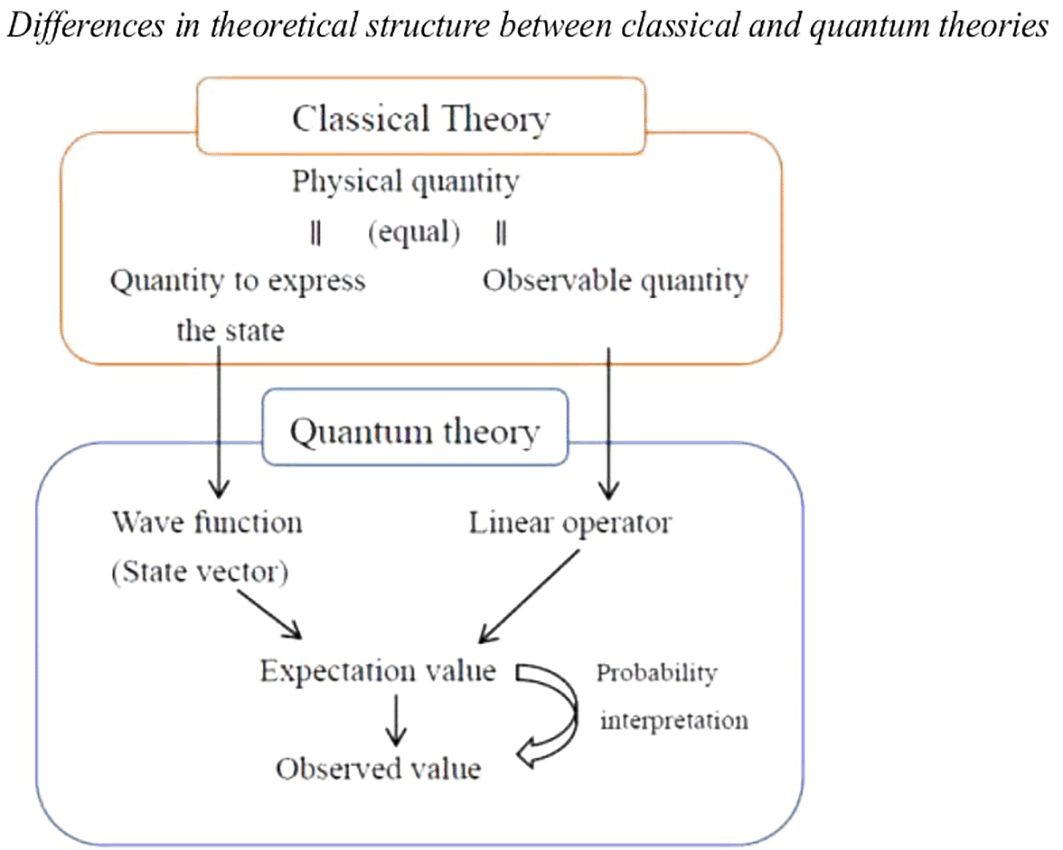
Figure 1 presents a diagram based on examinations 1 and 2. The above is a macroscopic depiction, but the changes can be captured microscopically by a quantum mechanical mathematical model. On this basis, the subsequent section models the stage at which the position and momentum as well as the simultaneity of the life and death drives becomes uncertain. Then, we will extract the nordal point of microscopic change in another case.
First, the study needs to elucidate the theoretical structure of quantum theory to describe the psychological model as a quantum mathematical one. In classical physics (e.g., classical mechanics and electromagnetics), the set of observed values are identified with state. However, quantum physics (e.g., quantum mechanics and field theory) clearly distinguishes between the concepts of physical quantity and the states. Figure 2 depicts the differences in the structure of classical and quantum physics.
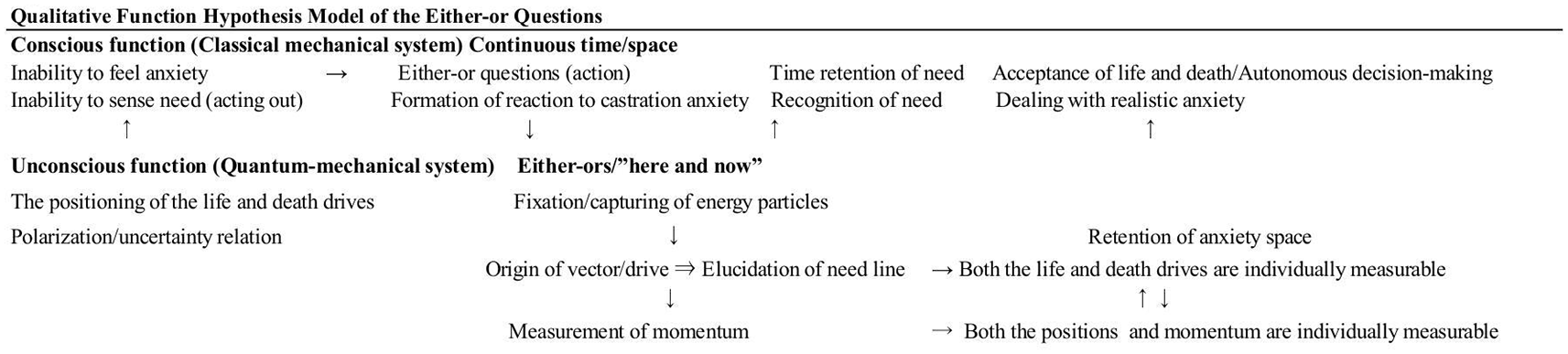
In the quantum theory of operator formalism, a quantity that represents a state corresponds to a wave function (state vector), and an observable quantity corresponds to a linear operator. Therefore, they are clearly distinguished. These quantities are connected by the probability interpretation to obtain real observed values (Dirac, 1958).
The psychological quantum model in the present study replicates this theoretical structure of the quantum theory of operator formalism. It represents the psychological state using state vectors and elucidates the quantum theory of desired psychological aspects that correspond to linear operators. Notably, however, the model developed for this study is a pseudo-quantum one that imitates the theoretical structure of quantum theory. Therefore, it is not a model of quantum physics of real physical objects.
We use the term quantum-mechanical spin to express the two-state system. However, instead of including the real spin in the model, we use the term generalized spin1 as the mathematical expression to describe the two-state system. The model formalizes the representation by diagonalizing the z-component2 of the spin vector. Therefore, the x- (or y-) component presents a nondiagonal representative. Subsequently, the z- and x- (or y-)components of the spin are noncommutative, which derives the uncertainty relationship.
The basic vectors of a two-state system are expressed as a set using . The 1/2 spin only has two components along the z-direction, which are represented by . Thus, the general state (superposition state) is expressed as follows:
In this state, the mental matrix expression is derived as follows:
(the spinor representation): is the mental matrix representation of state (1) and is called the “spinor.” We define it as .
A change in the state in this system is described through the equation of temporal development (Schrödinger’s equation):
The mental matrix representation of the Hamiltonian is as follows:
These nondiagonal components correspond to the potential of the simplest harmonic motion oscillation (* in the upper right represents a complex conjugate). We can then obtain the concrete expressions of and . When the initial state is (initial condition: ), we can obtain the following:
In this case, we obtain the probability of detecting the state after time
Expression (8) is oscillating with period . This type of probability is called “transition probability.”
The average of transition probability per unit time is:
Note that the bar ¯ represents the average with respect to time. By conducting the integral in Expression (9), we obtain the following:
We then drive the uncertainty relationship. When the operator of a pseudo-spin is expressed by a set , then the abovementioned formulization is a representation for the diagonalization of . Using the commutation relationship , we obtain the following uncertainty relationship:
Substituting Expressions (6) and (7) to the right-hand side of Expression (14), the uncertainty relationship can be concretely expressed as a function of time.
To apply the psychological model of Section 2, we adopt the following correspondence:
In other words, a drive is considered a dynamical variable and represented as the operator of the spin components, and the mental state is denoted as the quantum-mechanical state vector. Thus, the psychological model of Section 2 can be expressed through such a correspondence as a quantum mathematical model. In this manner, we can quantitatively discuss the transition probabilities and the uncertainty relationships in the psychological model.
In quantum theory, another method can be used to determine probability amplitudes that differ from operator formalism, i.e., “the path integral formalism” (Feynman & Hibbs, 1965). In this approach, the probability amplitude is calculated as the sum of contributions over all potential paths weighted by in the target space ( is called action integral and specifies the classical dynamical system before quantization). The path integral method can be applied to the spin (Schulman, 1968). In the spin case, the space of the path integral is SO(3) group manifold, which is a form of multiply connected space. Topology (homotopy theory) mathematically describe multiply connected spaces, which are defined as continuous spaces which are not simply connected space. Briefly, simply connected spaces are continuous spaces without holes. The ordinary path integral is conducted on the simply connected space. However, the path integral of the spin is performed on the space with holes.
The image of the path integral well matches the description of psychology. In other words, the space of mind (psychological space) corresponds to a multiply connected space, which is suitably selected. In the case of either–or questions, the probability of a decision is calculated by the total sum of every hesitation in mind. Although we address such a simple model as the two choices, the method of the path integral approach is very similar to the description of a psychological process called decision via various thinking process.
The correspondence between multiply connected and psychological spaces is notable. In the case of either–or questions, the multiply connected space (SO(3) group manifold), which corresponds to psychological space, is relatively simple. In the case of models which are more difficult than either–or questions, we need additional, complicated psychological spaces, such that we need to calculate on multiply connected spaces, which are more complicated than the SO(3) group manifold. In other words, when describing various psychological phenomena using the path integral approach, psychological spaces are less easier that simply connected spaces, such that we need to address the spaces, which are superimposed ones, as having many holes. When spin is considered a drive, this psychological space can be seen as overlapping with the mental matrix mentioned above, suggesting the significance of creating a simple psychological space with either–or questions related to drives. Thus, the study hypothesized that the neurotic psychological space corresponds to the torus, and the neurodevelopmental psychological space corresponds to the Klein bottle (Kawai, 2010); both are multiply connected spaces.
Freud observed that both drives influence psychological phenomena and discussed their fusion and dissociation. The purpose of the qualitative and mathematical models in this study is to clarify, from both subjective and objective perspectives, the mechanism through which dissociated drives move toward fusion. This constitutes a hypothesis regarding the mechanism through which the two drives escape the indeterminate state brought about by polarization. The present model, which treats the components and spin directions of spin vectors as corresponding to drive types and orientations (active–passive) and addresses them quantitatively, provides a foundation for formalizing the either–or question technique as a method for sequentially engaging each drive.
Nagayama (2020) reported questions with polarized options as posed by the client. However, the two options that became (i.e., questions with polar opposites) attain significance, following Expressions (11) and (12), if they match classical mechanics at the limit in which pseudo-Planck’s coefficient is set as . Thus, the study infers that the question that facilitates the understanding of the spin (drive) from an individual’s oscillating position is the one with two polar opposite options with 50% probability for each. This notion exists given the resonance condition in which the frequency of the oscillating type potential generally matches the frequency of the probability amplitude of the spin without interaction. This point is significant given that drives become polarized during early adolescence and that individuals tend to lose their position (macroscopically, the problem of self-identity).
Although the first four-option questions can be regarded as questions on life and death drives, the study infers that they can handle each observable quantity in the following either–or questions, because they are noncommutative. Regarding the uncertainty relationship, the fluctuation of the measurements of and do not become zero at once in Expressions (13) and (14). In addition, only a probabilistic prediction can be made, because at least one of them exhibits a randomized measurement when they are measured. Thus, the client selected two options instead of four and established this choice as compulsory to accurately measure at least one of them. Thus, we assume that processing did not occur for the client living in the quantum-mechanical world of 1 or 0, when the therapist repressively responded on the basis of classical understanding. We believe that being both 0 (or 1; or, for instance, an average attitude of a continuous quantity of 0.5) is possible for psychological development. We similarly surmise that corrective psychological development was activated when the therapist chose 1 or 0. In this context, the initial either–or questions are posed about the positions. Hence, we infer that the states in which the virtual position and the drive (spin) are simultaneously confirmed (wave function) by utilizing their commutativity were created due to the structure of the question asked about the position, even when the content of the question queried the drive (spin). Moreover, the pubertal fluctuation of the self became an issue at this point. Therefore, we conjecture that ascertaining the position than accurately measuring momentum is more important, even in the abovementioned example. As noted, the commutations of spin and position and spin and momentum can explicate aspects that remained unexplained in Nagayama (2020). This capability is notable in the introduction of the spin model and the mathematical expressions.
The current study performed a mathematical modeling of the uncertainty relationship derived from the quantum fluctuation between the life and death drives, as outlined in Hypothesis 1. It also postulated that the quantum entanglement state was formed in the mental matrix of the therapist and the client with regard to the mechanism of later processing in Hypothesis 2, which became paired through the interaction of the boundary fixation of here and now in the either–or questions (Nagayama, 2020). Typically, when one drive is ascertained, the other drive becomes entirely randomized. However, when Robertson’s inequality is used at this point, positive or negative values can be obtained for the other drive at a 50%/50% probability when one drive is ascertained. The ultimate two options then become unnecessary. Furthermore, the measurement error of particle positions and the disturbance in momentum can be simultaneously eliminated using inequality of Ozawa (2003). As such, ascertaining position and momentum as well as their respective drives (spins) at the state in which position and momentum can be simultaneously measured becomes possible. Another possibility is identifying the relationships between drives. This study infers that this ability stabilizes self-identity and assists in the energy processing of the inner drive.
In this section, mathematical equations were employed to identify a clue for resolving the polarization phenomenon of the two drives observed in the preceding case study. The analysis suggests that to achieve this resolution, it is reasonable to adopt a 50/50 either–or question approach, thereby establishing a state in which both position and drive are determined simultaneously. Based on this principle, the next section will consider possible empirical measures and present an example of how the either–or question technique can be formalized.
When love or anger is consciously expressed, we can clearly infer the development of libidinal energy from the life drive or the development of aggressive energy from the death drive (Kotani, 2008, 2018). Therefore, a method that enables the measurement of indices related to love and anger would be apt. A method known as Socio-Energetic Training (SET; Kotani, 2018) developed, in which scripts related to love and anger are selected to be read aloud for training to deliver energy to the external field as an unhesitant A ≅ 1. It follows the expression of ΔF (effect on or influences from external field) = A (mental matrix)•ΔX (drive; Takeyama & Kotani, 2009), which represents intrapsychic drive energy processing to differentiate and integrate libido and aggression. Fluctuations in the id give drives direction, resulting in needs that reflect their vectorization, and these needs are involved in changes in the field through the matrix, the world of the self that transforms these needs into will and action (Takeyama & Kotani, 2009). In SET, as occasionally witnessed in the therapeutic processing of psychotherapy, love can also be delivered anew when anger can be delivered to the external field. ΔX is represented classical mechanically as libido and aggression related to the subjective aspects of the mind in this expression and what help to make A ≅ 1 here is fixing individual’s position through decision-making in either-or questions. In contrast, the study estimates that the proposed quantum-mechanical mathematical model of the two-state system can be utilized related to the material aspects of the brain; to establish the uncertainty relationship between the life and death drives, capture the fluctuating drive particle through position fixation, and define the origin of the vector in relation to ΔX. Moreover, the differentiation and integration became possible when both drives were measurable. A method of linking through measurements is to use ΔF to perform measurements of subjective indicators related to action and the expression of feelings and address ΔX by considering the mental matrix as individual differences. This study intends to apply the abovementioned structure to use SET for the measurement. The indexes of decompression of aggression and libido (Kotani et al., 2001) is expected to become the measurement data.
Taking into account the hypothesis from the mathematical formula, we infer that the psychodynamic intervention and function in Table 1 could be extracted by establishing love and anger as oppositions for either–or questions. Therefore, the actual measurement and examination of the link between such psychodynamic interventions are necessary.
Ego binds the energy when a drive is ascertained. Simultaneously, as the fluctuation of the other drive becomes larger following this ascertainment, ego tries to capture the wave function of such a drive, and ascertainment is performed by posing the question of 1 or 0. The shift from passivity to activity that occurs when “dislike” becomes “like” can be understood as a reversal in spin orientation. Therefore, the study theorizes that self feedback is accelerated, and autonomy improves. The psychodynamics indicate that like (dislike) is in the background when dislike (like) is foregrounded and that either–or can represent this psychodynamics in a simple manner. When such dynamic change is induced through intervention, it becomes necessary to measure data related to the chemicals that bind to and protect microtubules, employing functional MRI and specific pharmacological investigations to capture the material substrate of the brain.
Either–or questions assist intrapersonal drive energy development through the fixation of position enabled by the resonance of position and drive. The assignment of words to particles of the opposite vector enables the formulation of questions that probe for a 50% probability. Therefore, this processing can be expected through the uncertainty relationship between the life and death drives; either–or questions related to two drives promote emotional awareness.
The ability to enable quantitative discussion and mathematically represent the hitherto unrepresented uncertainty relationship between the life and death drives benefits the literature by creating a starting point for the differentiation and integration of libido and aggression in a psychodynamic intervention while maintaining the perspective of economic theory. Furthermore, the present study is significant because it can serve as a platform for future research on momentary and microscopic fluctuation and selection. It is especially pertinent for the formulation of a microscopic mechanism for processing inner drive energy.
While the model proposed here can be useful as a potential perspective for clinical psychologists to employ, as demonstrated in the intervention of the previous section, it remains a hypothesis derived from a single case study. Importantly, it does not demonstrate that the drive system operates according to actual quantum principles. Further research is needed to validate the utility of this model through its relationship to empirical data obtained from either–or question interventions. In addition, it will be necessary to clarify how, when one drive becomes determined, the other remains in a state of quantum indeterminacy, and how this relates to the subjective aspect of experience. The construction of a mathematical model for the interaction of either–or questions remains a subject of future examination. The determination of a path for ascertaining each drive through the generation of play in the fluctuations that occur within the interactive mental matrix between the therapist and client is presumed necessary. In this manner, the new mental matrix of clients can independently integrate psychodynamics without the intervention of a therapist (Takeyama & Kotani, 2009). The formulation of the matrix theory of classical mechanics is expected to lead to the advancement of further quantum-mechanical mathematical models. Thus, future investigation on the relationship between multiply connected and psychological spaces is awaited.
Preprint: A Quantum-Mechanical Mathematical Model with Either-or Questions Posited as a Potential Key to Overcome Ego Autonomy Disorder during Early Adolescence. DOI: https://doi.org/10.31234/osf.io/ayvqw (Nagayama, T. et al. 2022).
The studies involving human participants were reviewed and approved by Hyogo University of Teacher Education Ethics Committee (No.2023–18). Personally identifiable information was removed when preparing clinical materials and the vignettes disguised to assured complete anonymity.
| Views | Downloads | |
|---|---|---|
| F1000Research | - | - |
|
PubMed Central
Data from PMC are received and updated monthly.
|
- | - |
Provide sufficient details of any financial or non-financial competing interests to enable users to assess whether your comments might lead a reasonable person to question your impartiality. Consider the following examples, but note that this is not an exhaustive list:
Sign up for content alerts and receive a weekly or monthly email with all newly published articles
Already registered? Sign in
The email address should be the one you originally registered with F1000.
You registered with F1000 via Google, so we cannot reset your password.
To sign in, please click here.
If you still need help with your Google account password, please click here.
You registered with F1000 via Facebook, so we cannot reset your password.
To sign in, please click here.
If you still need help with your Facebook account password, please click here.
If your email address is registered with us, we will email you instructions to reset your password.
If you think you should have received this email but it has not arrived, please check your spam filters and/or contact for further assistance.

Comments on this article Comments (0)