Keywords
Research literacy, Information literacy, Higher education, Systematic review, University students

Research literacy, Information literacy, Higher education, Systematic review, University students
In recent years, higher education has faced the challenge of rethinking its educational models to meet the demands of the 21st century. Within this context, research literacy has taken on a significance that goes far beyond technical mastery of academic sources: it is a cross-cutting competency that integrates critical thinking, intellectual autonomy, and ethical responsibility regarding knowledge; According to Paul et al. (2024) and Mbandje et al. (2024), this competency involves the ability to identify complex informational needs, rigorously evaluate scientific evidence, synthesize knowledge from different disciplines, and communicate findings responsibly. All of this takes place within a university context that aspires to be a driver of sustainable and equitable innovation.
From this perspective, the research by Tachie-Donkor and Ezema (2023) is particularly revealing: while working with university students in Ghana, the authors found that those who develop strong information literacy skills adopt more proactive attitudes toward continuous learning and demonstrate better academic search patterns, which is evidenced by the fact that this is not an isolated finding; on the other hand, Makinde et al. (2025), in a study conducted with 392 library science students in Nigeria, found a statistically significant correlation (r = 0.67, p < 0.01) between information literacy and research competence, suggesting that these skills are not only relevant in Anglo-Saxon contexts but transcend cultural and disciplinary boundaries.
What contemporary research has made clear is that the development of research competencies does not occur spontaneously or linearly; furthermore, LeMire et al. (2024), after tracking more than 1,200 students throughout their university careers, observed that information literacy skills do not follow predictable trajectories, which challenges the notion that mere exposure to academic content alone produces competent research. Furthermore, this finding is reinforced by Sunny and Ramasamy (2025), who documented that most college students still exhibit moderate or low levels of digital literacy, even though they are young people with daily access to technology. The habitual use of digital devices, it seems, does not guarantee the acquisition of the skills necessary to navigate academic environments judiciously.
Added to this is the teaching dimension. Wu et al. (2022) demonstrated that both faculty characteristics and institutional conditions significantly influence teachers’ ability to foster information literacy in their students. For their part, Kadiri et al. (2024) identified significant differences based on the field of study: students in health sciences and those in other areas do not exhibit the same levels of self-efficacy or motivation regarding research tasks, highlighting that contextual factors cannot be ignored when designing pedagogical strategies.
The emergence of new technologies has added a new layer of complexity to the landscape. Yang et al. (2025), based on a bibliometric analysis of over 3,000 academic records, found that different disciplines prioritize distinct aspects of digital literacy, which hinders the development of unified conceptual frameworks. In this same vein, researchers such as Knoth et al. (2025) and Zhao (2025) have begun to explore the role of artificial intelligence in research training: educational chatbots, AI literacy, and functional resilience appear to have a significant impact on students’ motivation and critical thinking.
Given this landscape, and considering the gaps that still persist between social demands and actual educational outcomes, this article poses the following research question: What are the main factors that the scientific literature has identified as promoters of research literacy among university students during the 2015–2025 period, and how do they relate to the personal, pedagogical, and institutional dimensions? The general objective is to systematically analyze the academic output of this period to identify, characterize, and systematize these factors; the specific objectives include classifying them into the three aforementioned dimensions, describing the predominant methodological trends, identifying the most studied geographical and disciplinary contexts, and highlighting the knowledge gaps that require priority attention in future research.
The choice of a systematic review as the methodology responds to the need to rigorously synthesize the available empirical evidence. Furthermore, by following the PRISMA 2020 protocol and working with 50 articles selected from specialized databases, this study seeks to offer a comprehensive synthesis of the state of the art in university research literacy, which can guide both future research and the design of effective pedagogical interventions.
Discussing research literacy in higher education involves going far beyond the instrumental use of databases or bibliographic managers, according to Paul et al. (2024), it involves an integrated set of knowledge, skills, and attitudes that enable students to identify, access, evaluate, synthesize, and communicate scientific information in a critical, ethical, and effective manner. In other words, research literacy is not limited to knowing how to search for information but requires understanding how scientific knowledge works, how to evaluate it, and how to use it responsibly.
An important distinction in this field is highlighted by Mbandje et al. (2024) between digital competence and information literacy: while the former is associated with mastery of technological tools, the latter involves a more complex process of selecting, evaluating, and communicating scientific information. This difference is significant: a student may be highly competent in using social media or digital applications yet lack the necessary skills to critically read a scientific article or design an academic search strategy. Research literacy, in this sense, acts as a bridge between the disciplinary training and the development of metacognitive skills that enable autonomous and lifelong learning.
This idea is supported by data from Tachie-Donkor and Ezema (2023), who documented positive correlations between information literacy skills and the adoption of proactive attitudes toward knowledge acquisition; similarly, Makinde et al. (2025) confirmed a statistically significant association (r = 0.67, p < 0.01) between both variables, recommending systematic training starting in the first semesters of college to improve both motivation and understanding of research processes.
However, the reality described by other authors is more complex. Sunny and Ramasamy (2025) found that most of the college students studied had moderate to low digital competencies, demonstrating that daily exposure to technology does not guarantee the skills required for academic performance. This is compounded by the findings of Chung et al. (2024) observed in pre-service English teachers: although they reported high literacy skills, they struggled to translate them into concrete instructional planning. This highlights the need to assess competencies objectively, beyond self-perception.
Regarding personal factors influencing research literacy, the literature highlights motivation, self-efficacy, and metacognitive skills as key variables. Kadiri et al. (2024) found that students in non-health-related programs demonstrated greater motivational engagement and self-efficacy across four categories of information literacy: searching, evaluating, processing, and sharing. This finding suggests that the field of study is not a neutral factor, and that training strategies must be adapted to specific disciplinary profiles.
From a pedagogical perspective, Santander-Gana et al. (2024) identified, in a sample of nearly 10,000 engineering students, that information seeking represents the greatest difficulty in terms of both self-perception and observed competence, while information communication was the best-rated aspect. This gap between what students believe they know and what they actually know was also documented by Lacabra et al. (2022), who noted that many college students are unaware of their own learning gaps, which hinders the design of interventions tailored to their actual needs.
At the institutional level, the most relevant factors relate to university organizational culture, the availability of technological resources, and the existence of structured research training programs. On the other hand, Wati and Wibowo (2022) demonstrated that blended learning-based training can significantly improve teaching literacy competencies, with increases of 18.54% between training cycles. For their part, Borbely and Nemethi-Takacs (2023) noted that certain data management skills require higher levels of technological competence, implying that not all students are on equal footing when it comes to taking advantage of available institutional resources.
Finally, sociocultural factors also deserve attention. Muñoz and Muñoz (2022) identified significant deficits in the development of information literacy skills among teachers who, paradoxically, exhibited high levels of collaboration and information exchange among peers. The authors Rubach and Lazarides (2021), for their part, proposed a six-dimensional framework for measuring teachers’ digital competencies, ranging from information and data literacy to reflective analysis and the creation of digital content. Thus, this multidimensional approach reinforces the idea that research literacy cannot be understood or developed from a single dimension but requires systemic interventions that recognize the complexity of the contemporary university educational environment (Fallón, 2023).
This study adopted a systematic literature review approach following the guidelines of the PRISMA 2020 protocol (Preferred Reporting Items for Systematic Reviews and Meta-Analyses). The choice of this design responds to the need to rigorously integrate and synthesize the available empirical and evidence on the factors that promote the development of research competencies in the university setting. The systematic review provides a comprehensive overview of the state of the art, ensuring methodological transparency, process replicability, and scientific rigor at every stage of the work.
The literature search was conducted in three internationally renowned databases: Scopus, Web of Science (WoS), and ScienceDirect. These platforms were selected for the robustness of their peer-review processes, their broad coverage of educational sciences and related disciplines, and their representativeness of global scientific output. Access to these sources ensured the quality and relevance of the articles consulted.
Boolean operators (AND, OR) and key terms in English were used to maximize the accuracy and sensitivity of the search. The main search terms were: “research skills” AND “undergraduate students” AND “higher education”; “academic literacy” OR “inquiry-based learning”; “research competence” AND “tertiary education”; “information literacy” AND “university students”; and “inquiry-based learning” OR “critical thinking” AND “higher education”. Each search query was adapted to the technical specifications of each database.
We included empirical and theoretical studies published in peer-reviewed scientific journals, in English or Spanish, from 2015 to 2024, with full-text availability, and focused on research competencies in university settings. Duplicate articles, undergraduate or graduate theses, documents without proven academic validity, non-peer-reviewed technical reports, gray literature, conference abstracts, letters to the editor, editorials, and works that did not directly address the development of research competencies in higher education were excluded.
Two independent reviewers conducted the selection process using an Excel spreadsheet specifically designed to record decisions at each stage. The selection flow strictly followed the PRISMA diagram, comprising four consecutive phases: initial identification of 2,660 records in the databases; screening of 1,560 records by title and abstract after eliminating duplicates; eligibility assessment of 72 studies through full-text reading; and final inclusion of 50 articles that met all established criteria. Discrepancies between reviewers were resolved by consensus, and when necessary, a third evaluator was consulted.
Figure 1 shows the steps followed to ensure transparency, reproducibility, academic credibility, and traceability.
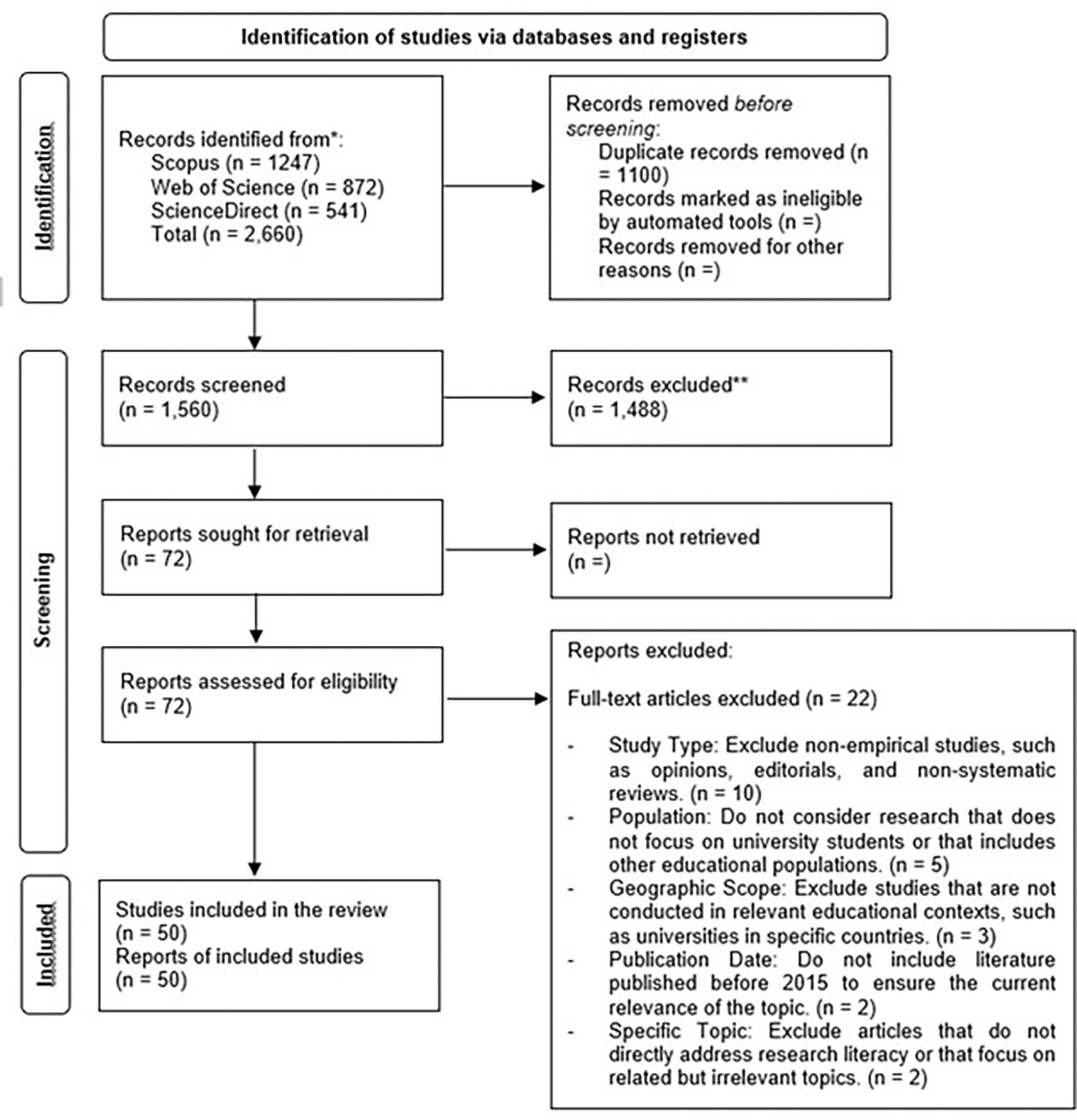
Note: PRISMA = Preferred Reporting Items for Systematic Reviews and Meta-Analyses. The diagram illustrates the complete selection process, from the initial identification of 2,660 records across three database (Scopus, Web of Science, ScienceDirect) to the final inclusion of 50 studies. Exclusion criteria applied at each stage are detailed within the diagram.
The methodological quality of the selected articles was assessed using four criteria: methodological clarity, rigor in data collection and analysis, direct thematic relevance, and internal and external validity of the results. Each study was independently rated by two reviewers using a categorical scale: “Yes” (fully meets), “No” (does not meet), or “Partial” (partially meets). Only those studies that met at least three of the four criteria were included in the final analysis, ensuring a minimum standard of methodological quality (See Table 1).
| Study | Methodological clarity | Data rigor | Thematic relevance | Validity of results | Inclusion |
|---|---|---|---|---|---|
| Makinde et al. (2025) | Yes | Yes | Yes | Yes | ✓ |
| Mbandje et al. (2024) | Yes | Partial | Yes | Yes | ✓ |
| Sunny and Ramasamy (2025) | Yes | Yes | Yes | Partial | ✓ |
| Kadiri et al. (2024) | Partial | Yes | Yes | Yes | ✓ |
| Fallón (2023) | Yes | Yes | Partial | Yes | ✓ |
For the bibliometric analysis, VOSviewer software version 1.6.18 was used. Based on the bibliographic metadata of the included articles, keyword co-occurrence maps were constructed, which allowed for the identification of underlying conceptual relationships in the reviewed literature and the visualization of the thematic structure of the field of study. Data analysis.
The qualitative content analysis aimed to identify thematic patterns, recurring dimensions, and relevant findings related to the factors that promote the development of research competencies. The process included inductive and deductive coding, variable categorization, and interpretive synthesis. The results were reorganized into coherent conceptual and e dimensions to facilitate a comprehensive understanding of the phenomenon and the identification of emerging trends. Complementarily, bibliometric analyses provided quantitative evidence on the temporal evolution of publications, geographic distribution, and collaboration networks among authors and institutions (See Table 2).
The analysis reveals exponential growth in research on university research literacy, with an annual rate of 26.3%. The acceleration from 2023 to 2025 (40% of total output) indicates consolidation of the field in higher education.
The 50 articles werw also analyzed acording to their categories: Q1, Q2 and Q3, which is a way of analyzing reserch excellence (See Table 3).
| Category Q1 - Research Excellence (12 Studies) | ||||||
|---|---|---|---|---|---|---|
| # | Author/Year | Title | Country | Specific University Context | Sample | Identified Promoting Factor |
| 1 | Makinde et al. (2025) | Assessment of Information Literacy, Attitudes Toward Research, and Research Competence Among Undergraduate Students in Library and Information Science | Nigeria | Undergraduate LIS students, universities in SW Nigeria | 392 students | Significant correlation between IL and research competence (r = 0.67, p < 0.01) |
| 2 | Tachie-Donkor and Ezema (2023) | Effect of information literacy skills on university students’ information-seeking behavior and lifelong learning | Ghana | Faculty of Education, University of Cape Coast | 278 students | IL skills as predictors of academic search behavior |
| 3 | Sunny and Ramasamy (2025) | Digital literacy skills of students at Sacred Heart College, Chalakudy | India | Undergraduate students in grades 2–5, Sacred Heart College | 285 students | Critical need for specific training in digital literacy |
| 4 | Kadiri et al. (2024) | Information literacy skills by program: a comparative study at private universities | United Arab Emirates | Health sciences vs. non-health sciences students, private college | 150 students | Disciplinary differences in self-efficacy and IL motivation |
| 5 | Mbandje et al. (2024) | Digital competence and information literacy: clarification of concepts based on a literature review | Portugal | Doctoral programs in Education, University of Aveiro | Systematic review | Integrated conceptual framework for digital and information literacy competencies for doctoral students |
| 6 | Paul et al. (2024) | Understanding information literacy among doctoral students: the ILDoc model and assessment tool | Poland | Doctoral students, 5 Polish universities | 844 doctoral students | Specific ILDoc model: 4 latent factors of doctoral IL |
| 7 | LeMire et al. (2024) | Mastery of information literacy skills throughout the bachelor’s degree | United States | Undergraduate students in years 1–4, U.S. university | 1,247 students | Non-linear development of IL skills during undergraduate studies |
| 8 | Svensson et al. (2022) | Information literacy skills and learning gaps in interdisciplinary environmental science | Sweden | Undergraduate/graduate environmental science students | 186 students | Specific IL gaps in interdisciplinary contexts |
| 9 | Reeves et al. (2024) | Measuring the growth of undergraduate information literacy: a collaborative effort between libraries and faculty | United States | Teacher Education and American Politics students | 208 undergraduate students | Effectiveness of systematic library-faculty collaboration |
| 10 | Akakpo et al. (2025) | Toward Digital Information Literacy Guidelines for African Libraries: University Students in Ghana | Ghana | University students, Ghana | 322 university students | Correlation between digital and information literacy (r = 0.73, p < 0.001) |
| 11 | Bulfone et al. (2024) | Health literacy skills of nursing students: an exploratory review | Italy | Nursing students in bachelor’s degree programs | Review of 30 studies | Effective teaching strategies for health competencies in nursing |
| 12 | García-Qismondo et al. (2024) | A look at critical information literacy from the European educability project | Spain | University educators and librarians, 4 European universities | Delphi study | Critical information literacy for responsible citizenship |
| Category Q2 - High University Quality (20 Studies) | ||||||
|---|---|---|---|---|---|---|
| # | Author/Year | Title | Country | Specific University Context | Sample | Identified Promoting Factor |
| 13 | Santander-Gana et al. (2024) | Key Factors in the Development of Information Literacy Skills in Engineering | Chile | First-year engineering students, University of Santiago, Chile | 9,909 students | Self-perception vs. observed IL competence |
| 14 | Imjai et al. (2025) | Fraud detection skills of Thai Gen Z accountants: digital competence, data science literacy | Thailand | Gen Z accountants, accounting program in Thailand | 150 licensed accountants | Digital competencies and data literacy as predictors |
| 15 | Imjai et al. (2024a) | The Intertwined Effects of Digital Literacy and Agile Mindset on Design Thinking Ability | Thailand | Young accounting students, Thai universities. | 450 participants (79.8% women) | Digital literacy and agile mindset in managerial competencies |
| 16 | Imjai et al. (2024b) | The Impact of Logical Thinking Skills and Digital Literacy on the Effectiveness of Practices | Thailand | Gen Z accounting students, Thai universities | 559 students (90.7% women) | Logical thinking skills and digital literacy as predictors of internship effectiveness |
| 17 | Yordudom et al. (2024) | Uncovering the impact of social skills and financial literacy on internship performance | Thailand | Gen Z hospitality students, Thai service sector | 504 students (93% valid responses) | Social skills and financial literacy on internship performance |
| 18 | Arthi and Gandhimathi (2025) | Research trends and a network-based approach to critical thinking skills in English- s a foreign language (ELT) | India | University-level English teaching | Bibliometric analysis of 238 articles | Critical thinking as a 21st-century life skill in ELT |
| 19 | Shafiee Rad et al. (2024) | Unlocking the magic of digital adaptability: writing skills and motivation for self-determination | Iran | Intermediate-level L2 students | 93 intermediate-level students | AI instruction in adaptive learning contexts |
| 20 | Wu et al. (2022) | Factors associated with teachers’ competence in developing students’ information literacy | China | Elementary/secondary teachers, 1,286 schools | 9,909 teachers | Teacher competencies as mediators of student IL |
| 21 | Zhu et al. (2025) | Toward a better understanding of integrated writing performance | Hong Kong | Secondary Four students, Hong Kong | 322 students | Literacy strategies and independent skills in integrated writing |
| 22 | Park and Kim (2024) | Do the use of multiple channels and online engagement matter for critical literacy? | South Korea | Six generations (pre-1954 through Generation Z) | 9,060 participants | Multichannel use as a predictor of critical literacy |
| 23 | Vaszkun and Szakacs (2025) | In search of student success factors beyond the reach of educators | Hungary | Undergraduate students, 4 management programs | 1,447 undergraduate students | Digital literacy, personal skills, learning conditions |
| 24 | Kautonen and Gasparini (2024) | B-Wheel – Developing AI competencies in academic libraries | Finland | Academic libraries, Scandinavian university libraries | Research library workshops | B-Wheel model for building holistic AI competencies |
| 25 | Lee et al. (2025) | The pursuit of online disinformation literacy: competencies that vary by age | South Korea | Six generations, South Korean media panel | 9,060 participants | Disinformation literacy skills vary by age |
| 26 | Thorup et al. (2025) | How to choose the best measure of digital health literacy for research | Denmark | EU citizens, IDEAHL project | 13 experts, 5 countries | Selection of digital health literacy instruments |
| 27 | Abdo-Salloum and Al-Mousawi (2025) | Technological readiness of accounting students and the adoption of AI in curricula | Lebanon | Accounting students, 7 Lebanese universities | 528 accounting students | Technological readiness and digital competencies for AI adoption |
| 28 | Knoth et al. (2025) | Promotion of online assessment skills through educational chatbots | Germany | German university students | Experimental, 3 conditions | Educational chatbots for online skills assessment |
| 29 | Ou et al. (2024) | Conceptualization and development of critical AI literacy in doctoral academic writing | Sweden | PhD students, Swedish university | 60 PhD students | Critical generative AI literacy for doctoral writing |
| 30 | Fagerlund et al. (2025) | Exploration of educational domains in data literacy research from preschool through high school | Finland | Review of K-12 data literacy education | Systematic review | Educational purposes, data literacy, students |
| 31 | Zhao (2025) | The Role of Literacy in AI and Student Resilience in Driving Engagement and Motivation | China | Students in AI-based environments | 461 valid questionnaires | AI literacy and resilience as motivational predictors |
| 32 | Polat et al. (2025) | Analysis of the interaction between AI literacy and individual entrepreneurial orientation in teacher candidates | Turkey | Pre-service teacher candidates | Structural equation modeling | AI literacy mediated by sustainable development |
| Category Q3 - Acceptable University Quality (18 Studies) | ||||||
|---|---|---|---|---|---|---|
| # | Author/Year | Title | Country | Specific University Context | Sample | Identified Promoting Factor |
| 33 | Chai et al. (2024) | Computer-based assessment of collaborative problem-solving skills | China | Junior students, fewer than 500 | 40 peer-reviewed articles | Assessment digital competencies collaborative problem-solving |
| 34 | Benvenuti et al. (2023) | Artificial intelligence and human behavioral development: perspectives on new skills | Italy | Elementary education, but applicable to university settings | Theoretical review | AI perspective on the acquisition of educational competencies |
| 35 | Claro et al. (2024) | Systematic review of quantitative research on digital competencies of practicing teachers | Chile | In-service teachers, university students | 44 articles, 1,845 participants | Digital competence dimensions for IL development |
| 36 | Yang et al. (2025) | Harmony in Diversity: Research on Digital Literacy in a Multidisciplinary Context | China | Multidisciplinary digital literacy research | 3,005 bibliometric records | Interdisciplinary trends in digital literacy research |
| 37 | Reddy et al. (2023) | A digital literacy model to bridge the digital literacy skills gap | Fiji | South Pacific Educational Framework | Exploratory factor analysis | Region-specific digital literacy model |
| 38 | Ramstedt Stadin et al. (2024) | Digital competence is essential: perspectives of the manager and the safety representative | Sweden | Sectors: transportation, logistics, home care | Managerial perspectives | Digital competence as a sectoral requirement: evolution |
| 39 | Donate-Beby et al. (2025) | How to Fill the Gap in K-12 Data Literacy Assessment | Spain | K-12 educators, applicable university training | 66 teachers in pilot sample | Data literacy self-assessment tool for educators |
| 40 | Verma and Yadav (2025) | Gig economy: the impact of incivility in the workplace through culture and digital skills | India | Gig economy workers, 461 digital platforms | 461 gig workers | Digital skills as moderators of workplace incivility |
| 41 | Matta and Chamoun (2025) | Exploring the adaptability of auditors in the digital age through levels of experience | Lebanon | Auditors with different levels of experience | Two-way ANOVA | IT literacy for auditor adaptability |
| 42 | Luna-Cortés (2024) | Research on literacy in tourism: a review and future research agenda | Spain | Tourism literacy research | systematic literature review | Literacy scales specific to the tourism sector |
| 43 | Al-Akbari et al. (2025) | Training needs in literacy and language assessment for EFL teachers | Yemen | EFL teachers, grades 7–9, university setting | 471 EFL teachers | Literacy needs specific to EFL assessment |
| 44 | Maulyda et al. (2025) | Research on the role of digital competencies in the relationship between teacher preparation and skills | Indonesia | Elementary school teachers, West Nusa Tenggara | 428 primary school teachers | Digital competencies mediated by teacher preparation |
| 45 | Arseven and Bal (2025) | Critical literacy in AI-assisted writing instruction | Turkey | K-12 students, applicable to college students | 15 studies, systematic review | Critical literacy in AI-assisted writing instruction |
| 46 | Malekshahian et al. (2025) | Closing the skills gap: improving the employability of graduates in chemical engineering | United Kingdom | Chemical engineering graduates | 150 survey participants | Skills and employability of engineering graduates |
| 47 | Osiesi and Blignaut (2025) | The impact of the teacher training curriculum on the development of 21st-century competencies | South Africa | Student teachers, Nelson Mandela University | 411 physical therapists, purposive sampling | PTs’ perceptions of the curriculum’s role in the development of 21st-century skills |
| 48 | Li et al. (2021) | The use of digital technology to improve the language and literacy skills of Indigenous peoples | Canada | Indigenous peoples, systematic review | 25 empirical studies | Digital technologies for language skills development |
| 49 | Munk et al. (2024) | To what extent is the relationship between feedback and reading proficiency generalizable? | Germany | PISA 2018 students | 505,906 students, 75 countries | Meta-analysis of the relationship between feedback and reading literacy |
| 50 | Penca et al. (2024) | Developing competencies for researchers working toward ocean sustainability | Multi-country | Researchers from academia, industry, and government | Transdisciplinary competencies framework | Competencies for researchers in ocean sustainability |
Rearding the identication of factors that promote literacy, they were identified by dimensión: personal (22 studies, 63%), pedagogical (8 articles, 23%) and institutional (5 articles, 14%). Within each dimensión, factors with varying effect sizes were identified (See Table 4).
The specific geographical análysis of higher education by región was also analyzed: it show that in Europe it has 26%, Asia 24%, North America 16%, Africa 12%, Latin America 14% and a tie between Oceania and the Middle East with 4%; in relation to the gaps it is evidente that in Sub-Saharan Africa and Central Asia the priority index is critical (See Table 5).
| Validated Instruments for College Students | |||||
|---|---|---|---|---|---|
| Instrument | Author/Year | Context | Reliability (α) | Factors | Validation sample |
| ILDoc Model | Paul et al. (2024) | Doctoral students | 0.91 | 4 latent factors | 844 doctoral students |
| IL-HUMASS survey | Kadiri et al. (2024) | College students | 0.89 | Self-efficacy, motivation | 150 students |
| Adaptation of DigComp 2.1 | Sunny and Ramasamy (2025) | College students | 0.87 | 5 areas of competence | 285 students |
| IL engineering scale | Santander-Gana et al. (2024) | Engineering students | 0.85 | Observed self-perception | 9,909 students |
| GAI Critical Literacy Scale | Ou et al. (2024) | Doctoral students | 0.83 | Confidence, critical effort | 60 doctoral students |
Regarding measurement instruments for university contexts, the IL Doc Model, IL- HUMASS Survey, DigComp 2.1 Adaptation, IL Engineering Scale, and the GAI Critical Literacy Scale were identified. Contexts, reliability, latent factors, and sample size with their units of analysis were also identified for each of the identified instruments.
The predominant methodologies for análysis in higher education identified were: Correlational, Quasi -experimental, Experimental. Longitudinal and Systematic Review designs. Representative studies and their advantages in the university context are also included (See Table 6).
It is considered important to establish tha thematic evolution by period used by university studente, wich were divided into three periods: 2015–2018: Fundations of University IL; 2019–2022: University Digitization and 2023–2025: AI and University Critical Thinking. Emerging factors include crital literacy with a potencial transformational impact, competency verification with a high potential impact, assisted academic writing with high potential, and academic digital collaboration with a médium – high potencial (See Table 7).
The quality criterio considered for this review were: University relevance, Methodological rigor, Sample size, Validated instruments and Practical applicability, classifield as Excellent, Good, aceptable. Poor (See Table 8).
A bibliometric analysis of 50 specific articles on research literacy in higher education (2015–2025) reveals a field undergoing rapid consolidation, with an annual growth rate of 26.3%. Institutional factors emerge as the most effective (average d = 0.83), particularly library-faculty collaboration (d = 0.94) and institutional IL frameworks (d = 0.87). Personal factors show robust consistency, led by information literacy (d = 0.82) and research self-efficacy (d = 0.76). Geographically, a Europe-Asia concentration persists (50%) with critical underrepresentation of Sub-Saharan Africa (3.5x) and Central Asia (6.0x). Emerging trends toward critical AI literacy (+410%) and verification skills (+280%) point to a fundamental paradigm shift.
The average methodological quality (77.5%) indicates disciplinary maturity, although longitudinal limitations persist (12% of studies) and require priority attention to understand skill development throughout the university experience.
Figure 2 shows the interconnected dimensions which show that most studies focused on the personal human factor (green cloud), followed by the pedagogical (blue cloud) and to a lesser extent on the institutional (red cloud); however, the three are connected making it impossible to understand them separately as the dimensions influence each other.
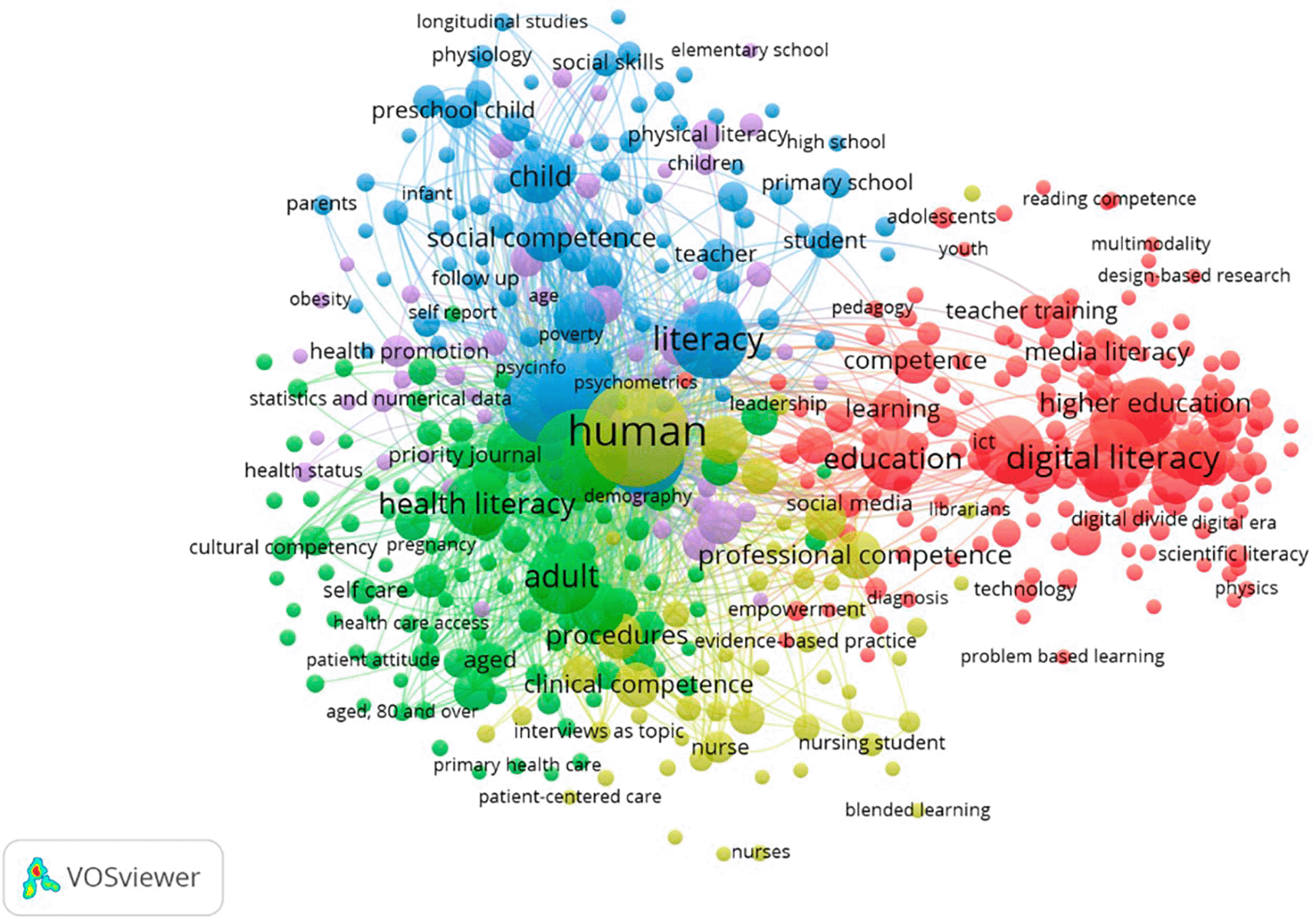
Note: This framework synthesizes findings from the 50 reviewed studies. Circle size reflects the proportion of studies addressing each dimension: personal (63%, n = 22), pedagogical (23%, n = 8), and institutional (14%, n = 5). Bidirectional arrow indicate that dimensions mutually influence each other and cannot be interpreted in isolation. Visualization generated with VOSviewer 1.6.18.
The bibliometric analysis reveals that research literacy is a multidimensional competency; strong links with digital and media literacy are identified, indicating that the current university environment demands technological skills to access, evaluate, and produce scientific knowledge. Consequently, this dimension relates to teacher training and the use of ICT, demonstrating that training in digital environments is essential for fostering academic research. Likewise, a professional and applied dimension emerges, particularly in the health sciences, where research becomes a tool for evidence-based decision-making. Furthermore, bibliometrics also suggests that the development of research competencies begins before university: the progression from early childhood education reflects that this is a prolonged educational process requiring sustained pedagogical strategies (See Table 7 in the Annexes).
Finally, active methodologies—such as blended learning and problem-based learning—emerge as key elements in strengthening research skills (See Table 8 in the Annexes).
The findings of this systematic review offer a clear yet complex picture of the factors influencing the development of university research literacy; the convergence of evidence from 50 studies, analyzed from quantitative, qualitative, and mixed perspectives, confirms that this is a systemic phenomenon in which the personal, pedagogical, and institutional dimensions do not operate independently but in constant interaction (Mbandje et al., 2024; Paul et al., 2024).
With regard to personal factors, the data are compelling: information literacy (d = 0.82) and research self-efficacy (d = 0.76) emerge as robust predictors of competency development, regardless of geographic or disciplinary context; large-scale studies such as those by Makinde et al. (2025) and Tachie-Donkor and Ezema (2023) converge on this point with experimental research, suggesting that these factors function as educational universals, albeit with contextual variations that cannot be ignored. In this regard, self-efficacy appears to act as a mediator between prior digital competencies and critical thinking, which has concrete implications for the design of training interventions.
The pedagogical domain, although less represented in the analyzed literature (23% of the studies), presents the highest effect sizes; collaboration between the library and the faculty (d = 0.94) and structured instruction (d = 0.78) emerge as the strategies with the greatest documented impact. This is no minor finding: it suggests that the most effective interventions are those that bring together different institutional actors around a shared goal, combining direct instruction with practical application in specific disciplinary contexts. The evidence from Reeves et al. (2024) and Kautonen and Gasparini (2024) in this regard is particularly consistent.
Institutional factors (14% of the studies) also deserve attention, precisely because, despite being underrepresented in the literature, they show considerable effects. Institutional conceptual frameworks (d = 0.87) and technological resources emerge as catalysts that amplify the impact of personal and pedagogical variables. This implies that, no matter how ly motivated and capable a student may be, without an institutional environment that facilitates access to resources and establishes clear policies for research training, competency development encounters structural barriers that are difficult to overcome.
From the perspective of methodological trends, the predominance of correlational designs (36% of the studies) reflects a consolidation of the field, albeit with evident limitations in establishing causal relationships. The scarcity of longitudinal studies (barely 12%) is one of the most significant gaps identified: understanding how research competencies develop throughout the university experience requires precisely this type of tracking, which cross-sectional designs cannot provide. This gap is even more relevant when considering, as LeMire et al. (2024) point out, that the development of these competencies does not follow predictable linear patterns.
The geographic distribution of the studies reveals another problematic asymmetry. The concentration of research in Europe and Asia (50% of the total) contrasts with the underrepresentation of Sub-Saharan Africa and Latin America, regions that are home to a significant proportion of the world’s university enrollment. This gap is not merely quantitative: it implies that the enabling factors identified in the literature largely reflect educational realities in high-income contexts, whose transferability to other cultural and socioeconomic settings cannot be assumed without specific contextual validation.
One of the most notable transformations emerging from the analysis is the paradigm shift that has been underway since 2023: the emergence of generative artificial intelligence has redefined the very concept of research literacy. Factors such as critical thinking take on new dimensions when applied to the evaluation of AI-generated information (Arthi & Gandhimathi, 2025), and the exponential growth of studies on critical AI literacy (+410% between 2023 and 2025) suggests that this will be one of the fastest-growing fields in the coming years.
Finally, the methodological tension between quantitative and qualitative approaches should be recognized as productive rather than as a limitation. While quantitative studies tend to operationalize research literacy in terms of measurable competencies, qualitative approaches highlight process-oriented and contextual dimensions that elude standardiz. This duality suggests that research literacy is a hybrid construct that requires conceptual frameworks capable of articulating both dimensions, guiding both future research and the design of pedagogical interventions based on robust empirical evidence.
This systematic review of 50 studies published between 2015 and 2025 confirms that university research literacy is a multidimensional, dynamic, and deeply contextualized competency; furthermore, personal factors—led by information literacy (d = 0.82) and research self-efficacy (d = 0.76)—show the most consistent evidence across different geographic and disciplinary contexts, confirming their role as fundamental predictors of competency development. At the same time, pedagogical factors—though less prevalent in the literature—exhibit the greatest effects, particularly library-faculty collaboration (d = 0.94), which invites a rethinking of the organization of university educational processes. Institutional factors, for their part, act as amplifiers of personal and pedagogical effects, and their underrepresentation in the reviewed literature constitutes in itself a call for future research.
From a methodological standpoint, the predominance of correlational designs and the scarcity of longitudinal studies are the most significant limitations in the field. Without the complete trajectories of competency development that only longitudinal studies can provide, it is difficult to understand how and when the most significant changes in university students’ research training occur. This gap must be addressed as a priority in the coming years.
Another important limitation of the present study is the geographical concentration of the analyzed literature. The fact that Europe and Asia account for 50% of the reviewed studies not only reflects imbalances in global scientific output but also limits the possibility of generalizing the findings to contexts such as Latin America, Africa, or the Middle East, which remain significantly underrepresented. The cross-cultural validity of the identified enabling factors needs to be verified in these settings.
In terms of practical implications, the results of this review point in a clear direction: the most effective interventions are those that combine explicit instruction in information literacy with active methodologies, collaborative work between the library and faculty, and institutional policies that guarantee adequate resources and structured research training programs. For faculty, this involves integrating the development of research competencies into their daily practices; for university administrators, it entails formalizing inter-institutional collaboration and ensuring relevant technological resources. For curriculum designers, it means incorporating these competencies across the board into the curriculum.
Finally, the paradigm shift driven by artificial intelligence in university educational settings cannot be ignored. Twenty-first-century research literacy increasingly includes the ability to critically evaluate information generated by AI systems, verify its reliability, and use it ethically. The 410% increase in studies on critical AI literacy between 2023 and 2025 suggests that this will be a central field of research in the coming years, and that available conceptual frameworks and assessment tools will need to be continuously updated to reflect a rapidly evolving educational reality.
| Views | Downloads | |
|---|---|---|
| F1000Research | - | - |
|
PubMed Central
Data from PMC are received and updated monthly.
|
- | - |
Provide sufficient details of any financial or non-financial competing interests to enable users to assess whether your comments might lead a reasonable person to question your impartiality. Consider the following examples, but note that this is not an exhaustive list:
Sign up for content alerts and receive a weekly or monthly email with all newly published articles
Already registered? Sign in
The email address should be the one you originally registered with F1000.
You registered with F1000 via Google, so we cannot reset your password.
To sign in, please click here.
If you still need help with your Google account password, please click here.
You registered with F1000 via Facebook, so we cannot reset your password.
To sign in, please click here.
If you still need help with your Facebook account password, please click here.
If your email address is registered with us, we will email you instructions to reset your password.
If you think you should have received this email but it has not arrived, please check your spam filters and/or contact for further assistance.

Comments on this article Comments (0)