Keywords
Digital Competence; EHR Utilization; Digital Health; Health Information Systems; Healthcare Workforce; Training and Capacity Building; Socio-Technical Systems; Health Systems Strengthening; Low-Resource Settings

Digital Competence; EHR Utilization; Digital Health; Health Information Systems; Healthcare Workforce; Training and Capacity Building; Socio-Technical Systems; Health Systems Strengthening; Low-Resource Settings
Digital technologies are changing how healthcare systems work across the world. They help healthcare workers record, store, and use patient information more efficiently. One of the most important digital tools in healthcare is the Electronic Health Record system. EHR systems allow patient information to be stored in digital form, making it easier to access, share, and use for clinical decision-making. As a result, they can improve the quality of care, reduce errors, and support better coordination between healthcare providers (Yeung et al., 2023). In many low- and middle-income countries, including those with limited resources, governments and healthcare institutions have invested heavily in EHR systems. These investments are part of broader efforts to modernize healthcare systems, improve data management, and strengthen health service delivery (Torab-Miandoab et al., 2025). Hospitals are increasingly expected to use digital systems instead of paper-based records to improve efficiency and accountability. However, despite the growing availability of EHR systems, many healthcare facilities are not using them effectively. In practice, healthcare workers may only use basic features of the system, or they may continue to rely on paper records alongside digital systems. This reduces the benefits that EHR systems are meant to provide. This situation highlights an important problem: having technology in place does not automatically lead to better performance. There is a clear gap between system availability (having EHR systems installed) and system utilization (how well they are actually used in daily work). Understanding why this gap exists is essential for improving healthcare delivery and ensuring that digital health investments achieve their intended impact.
In many healthcare facilities, EHR systems are available, but they are not fully used in daily clinical work. Although these systems are designed to support a wide range of functions, healthcare workers often use only basic features, such as entering patient information. More advanced features, such as clinical decision support, data analysis, and information sharing across departments, are often not used (Gedikci Ondogan et al., 2023). In some cases, healthcare providers continue to rely on paper-based records alongside digital systems. This creates a “hybrid system” where both paper and electronic records are used at the same time (Hybrid Health Records, 2022). While this may seem practical, it reduces efficiency, increases workload, and raises the risk of data duplication, missing information, and errors (Brand et al., 2025). This situation is known as underutilization as illustrated in Figure 1, meaning that systems are present but not used to their full potential. Underutilization reduces the value of investments made in digital health systems and limits improvements in healthcare delivery. For example, if healthcare workers do not fully use EHR systems, the expected benefits, such as better data quality, faster access to patient information, and improved decision-making, may not be achieved. Research shows that simply measuring whether a system is installed or available (often called “adoption”) is not enough. What matters more is how well the system is actually used in practice. Effective utilization includes regular use, proper data entry, use of advanced features, and integration into daily workflows (Lindsay & Lytle, 2022). Understanding why underutilization occurs is important for improving the performance of EHR systems and ensuring that digital health investments lead to real improvements in healthcare outcomes.
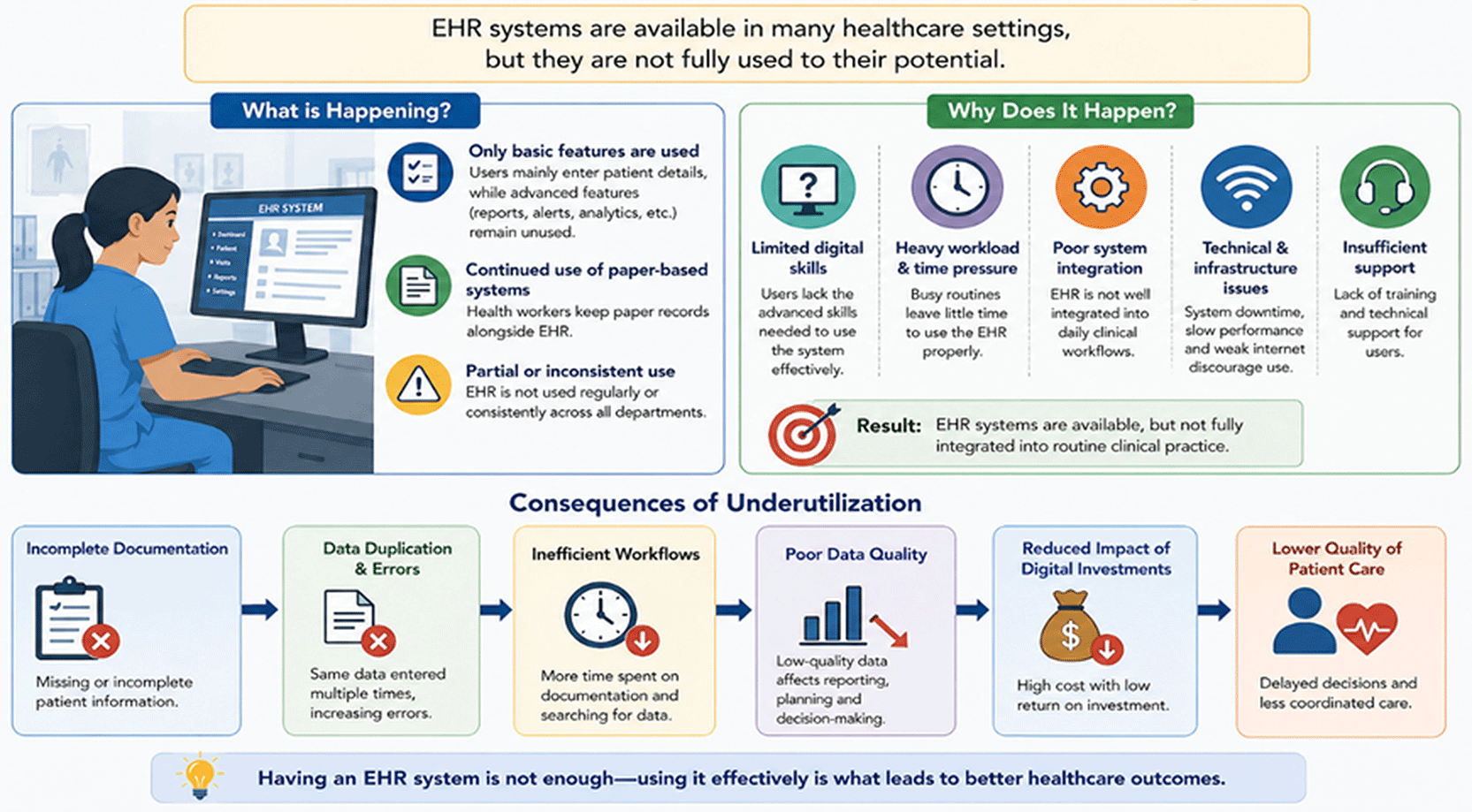
This figure illustrates the gap between EHR system availability and effective utilization in healthcare settings. Although EHR systems are widely deployed, many healthcare workers use only basic functions while continuing to rely on paper-based records. Key contributing factors include limited digital competence, heavy workload, poor workflow integration, technical and infrastructure challenges, and insufficient user support. The consequences include incomplete documentation, data duplication, inefficient workflows, poor data quality, reduced return on digital health investments, and lower quality of patient care.
A major reason why EHR systems are not fully used is the level of digital competence among healthcare workers. Digital competence means having the skills, knowledge, and confidence to use digital systems effectively in daily work (Oberländer et al., 2020). This includes basic tasks such as entering patient data, searching for information, and navigating the system, as well as more advanced tasks like using system features, solving simple technical problems, protecting patient data, and adapting to system updates. Research shows that digital competence plays a key role in how people use technology and how well they perform their tasks (Longhini et al., 2024). In healthcare settings, this is especially important because digital systems are directly linked to patient care. If a healthcare worker cannot use the system properly, it can affect the quality of care, delay services, or lead to mistakes.
Although many healthcare workers have basic computer knowledge, they often lack the practical and advanced skills needed to use EHR systems effectively (Longhini et al., 2022). For example, a user may know how to open the system but may struggle to enter data correctly, retrieve patient records quickly, or use advanced tools such as reporting or decision support features. As a result, healthcare workers may find the system difficult or time-consuming to use. They may enter incomplete or incorrect data, avoid certain features, or depend on others for help. In some cases, they may lose confidence in the system and return to using paper-based records. This not only reduces efficiency but also affects data quality and decision-making. These challenges show that digital competence is not just an additional skill, it is a key requirement for effective use of EHR systems. Without the necessary skills and confidence, even well-designed systems will not be used properly. Therefore, improving digital competence is essential for ensuring that EHR systems deliver their intended benefits in healthcare settings as shown in Figure 2.
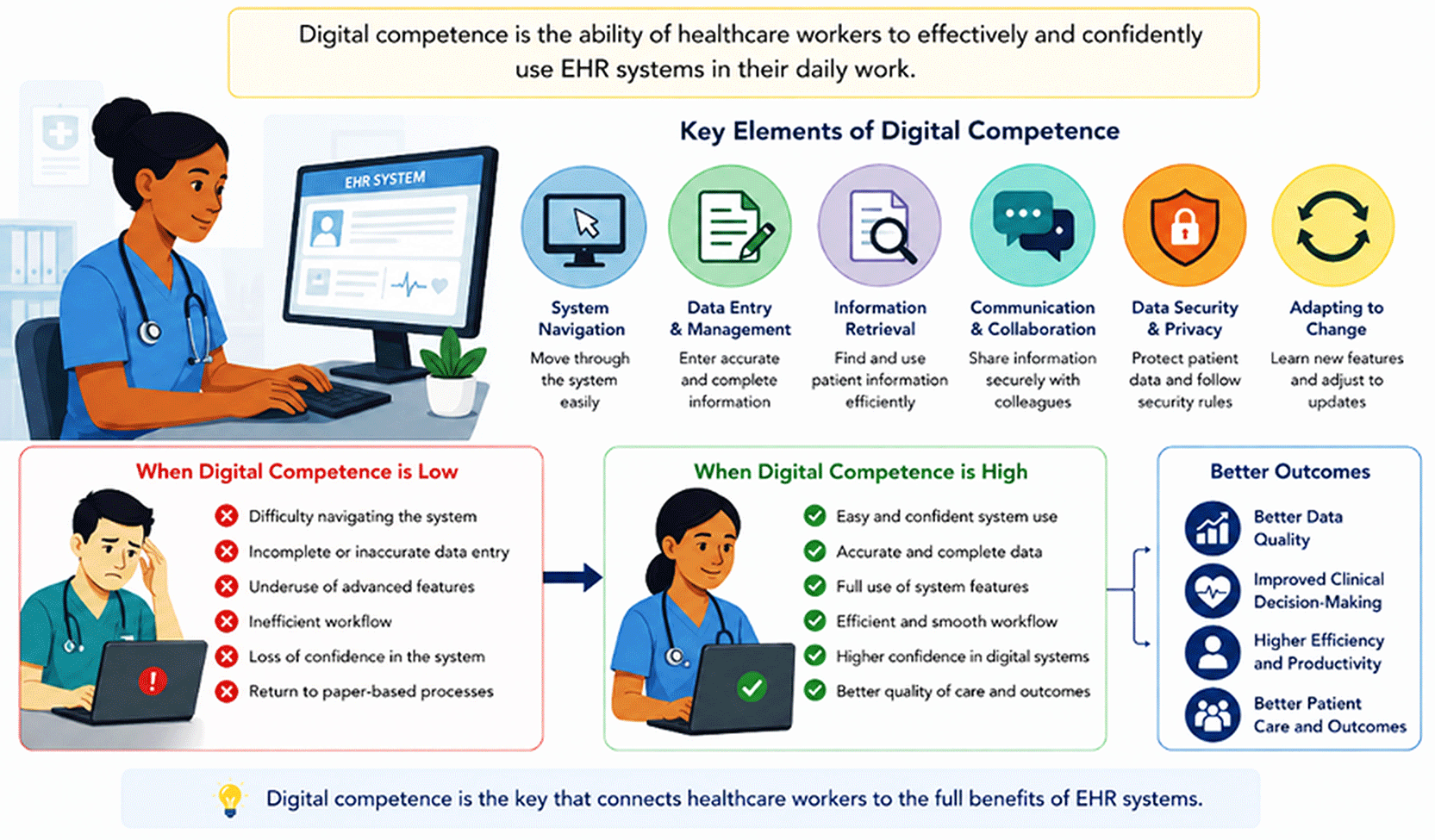
This figure illustrates the role of digital competence in enabling effective HER utilization among healthcare workers. Digital competence encompasses key skills including system navigation, data entry and management, information retrieval, communication and collaboration, data security and privacy, and adaptation to technological change. The figure demonstrates how low levels of digital competence contribute to incomplete data entry, inefficient workflows, underuse of system features, and continued reliance on paper-based processes, whereas high levels of digital competence support accurate documentation, efficient workflows, improved data quality, enhanced clinical decision-making, and better patient outcomes. The model highlights digital competence as the critical link between healthcare workers and the full benefits of EHR systems.
Many digital health programs focus mainly on buying and installing technology, such as computers, software, and Electronic Health Record systems. While these investments are important, they do not automatically lead to effective system use. Simply having the technology in place does not guarantee that healthcare workers will use it correctly or consistently. Research studies shows that digital health systems work best when technology is supported by trained users and strong organizational systems. This means that healthcare workers need the right skills to use the system, and institutions must provide support such as training, technical assistance, and clear workflows. Without these supporting factors, even well-designed systems may not be used effectively.
This idea is explained by the socio-technical approach, which emphasizes that successful system use depends on the interaction between people, technology, and organizational structures (McMullan, 2018). In simple terms, a system will only work well if all three elements are aligned. For example, a hospital may install a modern EHR system, but if healthcare workers are not properly trained, they may struggle to use it. Similarly, even skilled users may face challenges if the system is slow, poorly designed, or lacks technical support. In such situations, the system may be underused or avoided altogether. Therefore, improving technology alone is not enough. Equal attention must be given to building digital skills among healthcare workers and strengthening organizational support systems. By addressing these areas together, healthcare institutions can ensure that EHR systems are used effectively and deliver their intended benefits.
Several challenges limit the effective use of EHR systems in low-resource healthcare settings. These challenges are often interconnected and affect how healthcare workers interact with digital systems in their daily work.
One of the most important challenges is the limited level of digital skills among healthcare workers. Many users lack practical experience in areas such as system navigation, accurate data entry, data management, and basic troubleshooting (Longhini et al., 2022). Although some healthcare workers may have basic computer knowledge, they often struggle with more advanced functions required for effective EHR use. This makes the system difficult to use and reduces confidence among users.
Training is another major challenge. In many cases, training programs are not sufficient to prepare users for real-world system use. Training may be provided only once, may be too short, or may not be tailored to the specific roles of healthcare workers. As a result, users do not develop the skills needed to use the system effectively in their daily tasks (Musa et al., 2023).
Technical and infrastructure-related issues also play a significant role. Many healthcare facilities experience system downtime, slow system performance, and unreliable internet connectivity. These problems interrupt workflow and make it difficult for healthcare workers to rely on the system. Over time, this reduces trust in the system and discourages consistent use (Roy et al., 2025).
In addition, organizational challenges further affect EHR utilization. Healthcare workers often operate under heavy workloads and time pressure, leaving little time to learn or fully use digital systems. Limited availability of technical support means that users may not receive help when they encounter problems. Poor integration of EHR systems into existing clinical workflows can also make systems feel like an extra burden rather than a helpful tool (Olakotan et al., 2025). These challenges, summarized in Table 1, show that EHR systems are present but not fully utilized. And also show that addressing these barriers requires a comprehensive approach that considers human skills, training systems, technical infrastructure, and organizational support at the same time.
The findings of this paper show that current digital health strategies need to go beyond focusing only on technology. Many programs have invested heavily in computers, software, and system installation, but these investments alone are not enough to ensure that EHR systems are used effectively. Without proper use, the expected benefits, such as better data quality, improved decision-making, and more efficient healthcare delivery, cannot be fully achieved.
To improve outcomes, digital health strategies must also focus on people and institutions. This means investing in the skills of healthcare workers and providing the support they need to use digital systems confidently and effectively. If the skills gap is not addressed, healthcare workers may continue to struggle with system use, leading to underutilization and reduced system impact.
A more effective approach is to adopt a competence-driven digital health strategy. This approach places equal importance on human capacity, organizational support, and technology. It involves continuous training, practical skill development, and the availability of technical support within healthcare facilities. It also requires ensuring that digital systems are aligned with clinical workflows and are easy to use.
By shifting from a technology-centered approach to a competence-driven approach, policymakers and healthcare institutions can significantly improve the way EHR systems are used. This, in turn, can lead to better healthcare outcomes, improved efficiency, and stronger health systems overall.
Improving the use of EHR systems requires a coordinated approach that addresses both human factors and system-related challenges. Focusing on only one area, such as technology will not be enough. Instead, multiple actions need to be taken together to achieve meaningful improvements.
First, healthcare institutions should implement continuous training programs to strengthen digital competence among healthcare workers. Training should not be a one-time activity but an ongoing process that is practical and tailored to different roles. For example, nurses, doctors, and records staff may require different types of training based on how they use the system. Regular training helps users build confidence, improve accuracy, and make better use of system features.
Second, strong technical support systems should be established within healthcare facilities. Healthcare workers need timely assistance when they face system challenges. Having dedicated ICT support staff or help systems can reduce frustration, prevent delays, and encourage consistent use of EHR systems.
Third, attention should be given to improving system design. EHR platforms should be user-friendly, easy to navigate, and aligned with existing clinical workflows. When systems are simple and intuitive, healthcare workers can use them more efficiently without feeling overburdened.
Fourth, investments in infrastructure should be strengthened. Reliable systems require stable internet connectivity, fast system performance, and minimal downtime. Improving these areas will increase user trust and make it easier for healthcare workers to depend on digital systems in their daily work.
Finally, policymakers should change how they measure success in digital health programs. Instead of focusing only on whether systems are installed or available, they should assess how effectively the systems are used. This includes looking at factors such as consistency of use, data quality, and integration into clinical workflows.
By implementing these recommendations together, healthcare systems can improve EHR utilization, enhance data quality, and achieve better healthcare outcomes.
EHR systems have strong potential to improve healthcare delivery, especially in low-resource settings where better data management and coordination are needed. However, simply introducing these systems is not enough to achieve these benefits. Their success depends largely on how well healthcare workers are able to use them in their daily work.
This paper has shown that digital competence is a key factor in determining whether EHR systems are effectively used. When healthcare workers have the right skills, knowledge, and confidence, they are more likely to use the system correctly, consistently, and efficiently. Without these skills, even well-designed systems may remain underused.
To achieve meaningful digital health transformation, it is important to strengthen digital skills, improve training programs, and provide continuous technical and organizational support. These efforts should go hand in hand with investments in technology and infrastructure.
By giving equal attention to human capacity and technological systems, healthcare institutions can improve EHR utilization, enhance data quality, and support better clinical decision-making. In the long term, this balanced approach will lead to more efficient healthcare services and improved patient outcomes.
| Views | Downloads | |
|---|---|---|
| F1000Research | - | - |
|
PubMed Central
Data from PMC are received and updated monthly.
|
- | - |
Provide sufficient details of any financial or non-financial competing interests to enable users to assess whether your comments might lead a reasonable person to question your impartiality. Consider the following examples, but note that this is not an exhaustive list:
Sign up for content alerts and receive a weekly or monthly email with all newly published articles
Already registered? Sign in
The email address should be the one you originally registered with F1000.
You registered with F1000 via Google, so we cannot reset your password.
To sign in, please click here.
If you still need help with your Google account password, please click here.
You registered with F1000 via Facebook, so we cannot reset your password.
To sign in, please click here.
If you still need help with your Facebook account password, please click here.
If your email address is registered with us, we will email you instructions to reset your password.
If you think you should have received this email but it has not arrived, please check your spam filters and/or contact for further assistance.

Comments on this article Comments (0)