Keywords
Implant site, intraoral digital impressions, intraoral scanner, implant angulation, implant scan body.

Implant site, intraoral digital impressions, intraoral scanner, implant angulation, implant scan body.
Dental implants are widely recognized as an effective solution for replacing missing teeth, providing reliable functional and aesthetic results.1 A precise impression of the implant is a critical step before fabricating the implant prosthesis.2 As implants are integrated into the alveolar bone, any inaccuracies in the impression can negatively affect the prosthesis fit and lead to biological and mechanical complications, including marginal bone loss, peri-implant inflammation, screw loosening, and implant failure.2–4 However, over the past decade, significant advancements in implant dentistry have been driven by the integration of digital technologies, transforming prosthodontic workflows. These digital processes improve precision, reproducibility, and efficiency in both impression-taking and prosthetic fabrication.5 The use of digital methods has also enhanced the predictability of implant-supported restorations, leading to better clinical outcomes and increased patient satisfaction.1
The introduction of CAD/CAM technology has revolutionized the fabrication of implant-supported restorations through a completely digital workflow. In this process, the intraoral scanner (IOS) plays a crucial role as the first step, capturing the spatial positioning of implants and the surrounding oral tissues to create a three-dimensional virtual model. The accuracy of this digital acquisition is essential for the success of the treatment, as any inaccuracies at this stage could compromise the accurate transfer of the implant position.6
Research in the scientific literature has identified several advantages of intraoral scanning systems. A major benefit is the ability to digitally capture the clinical status of implants, teeth, and oral mucosa simultaneously, eliminating the need for impression trays or conventional materials. This technique boosts patient comfort by reducing the gag reflex, shortens overall treatment time, and improves diagnostic accuracy and treatment planning compared to traditional impression techniques.7 Additionally, the rapid digital transfer of data to dental laboratories increases workflow efficiency and facilitates communication between clinicians and dental.
technicians.8,9 Furthermore, intraoral scanning is easy to use and carries a reduced risk of cross-contamination, thereby improving clinical safety.10
In this context, the choice of an IOS should be considered not only on its operational features but also on its accuracy. Therefore, both trueness and precision must be carefully evaluated.6 Trueness refers to how closely the measured value aligns with the reference value, indicating the presence of systematic error. In contrast, precision measures the consistency of repeated measurements and reflects random error.11
From a clinical and methodological perspective, several factors have been identified as potentially affecting the scanning accuracy of IOSs. These factors include scanner type, scanner technology, calibration, operator experience, surface characteristics, ambient light illuminance conditions, lack of anatomic marks,12 and extension of the intraoral digital scan.13 Additionally, other contributing factors include implant angulation and site,3,14–17 Implant scan bodies (ISB) design and material,15,18 and Inter-implant distance.19
The precision of digital impressions is critical for the clinical success of implant-supported restorations. Although it has been proposed that implant angulation and implant site may affect scanning accuracy, the available evidence is insufficient, with varying and sometimes contradictory findings from previous studies. This highlights the necessity for additional systematic research to better understand the influence of these variables on impression accuracy. Therefore, the purpose of the current in vitro study was to evaluate the effects of implant angulation and implant site on the accuracy of intraoral digital impressions by examining linear, angular, and rotational deviations. The null hypotheses for this study stated that neither implant angulation nor site would influence the accuracy of intraoral digital impressions.
This in vitro study was conducted at the Department of Fixed Prosthodontics, Faculty of Dental Medicine, Damascus University. The research received approval from the Damascus University Ethics Committee (No. 1528/2024).
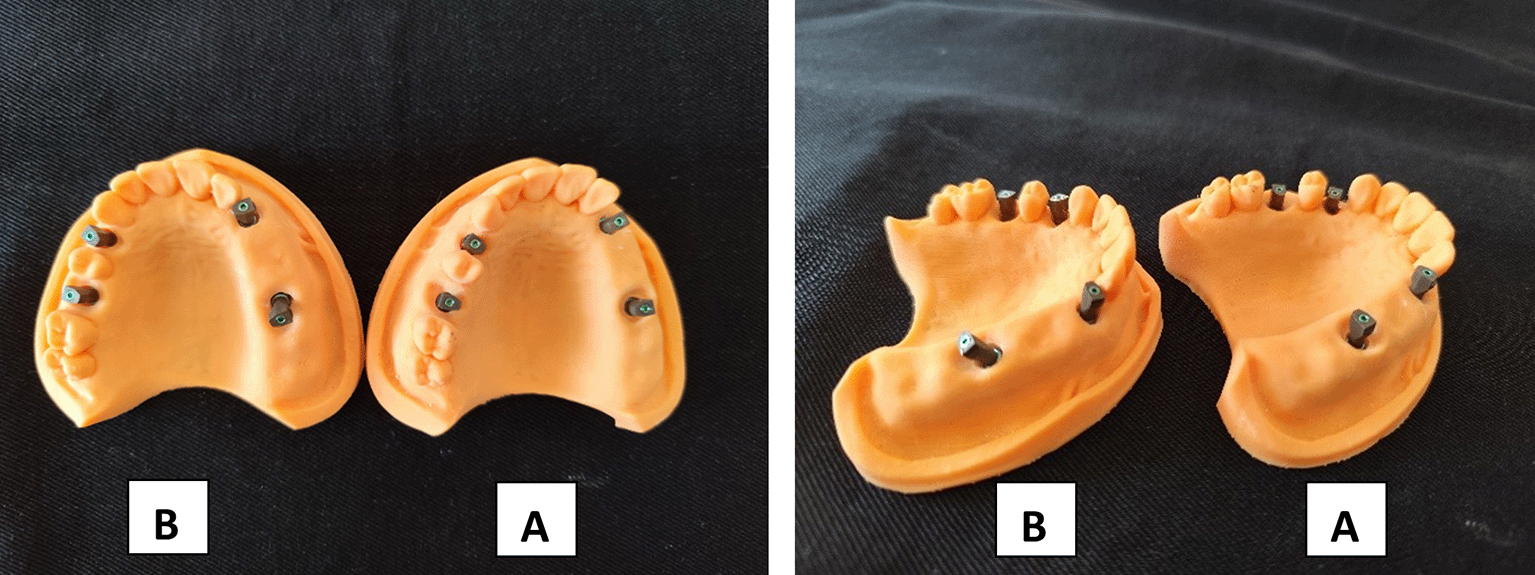
Two maxillary models were digitally designed using computer-aided design software (exocad GmbH, Darmstadt, Germany). The Implant positions and angulations were virtually planned in Blender for Dental (Blender Foundation, Amsterdam, The Netherlands), enabling precise control of implant orientation. The digital models were fabricated using three-dimensional printing (Uniz 3D printer; Uniz Technology Co., Ltd., China). Edentulous sites were identified at teeth 16, 14, and 23–28, with four implants placed at sites 16, 14, 23, and 26 according to the FDI system.
To simulate clinically relevant scenarios, the models were divided into two experimental groups based on implant angulation. In the parallel group (P), all implants were placed vertically and parallel to each other. In the non-parallel group (NP), the implants at sites 16 and 14 were inclined 15° palatally, the implant at site 23 was inclined 15° distally, and the implant at site 26 was inclined 30° mesially.
Each model incorporated two clinical scenarios: a free ridge region without adjacent teeth (FR) and a bounded edentulous region with adjacent teeth (AT). Digital lab analogs (OSSTEM Implant Co., Busan, Korea) were connected to each implant site, and ISBs (OSSTEM Implant Co., Busan, Korea) were secured onto the analogs according to the manufacturer’s instructions ( Figure 1).
The process of collecting digital impressions involved digitizing each definitive implant model with an extraoral laboratory scanner (Identica T300; Medit, Korea) to generate reference STL datasets (P-Master and NP-Master). Before scanning, the scanner was calibrated in accordance with the manufacturer’s quality control procedures.
Ten intraoral digital scans (n = 10) were taken for each model using an IOS (S6000; Fussen, China), and these scans were exported as STL files. A standardized scanning protocol was strictly followed for all specimens, adhering to the manufacturer’s guidelines. The scanning process began with an occlusal-palatal acquisition, followed by scanning of the buccal surface. This was done using a continuous zigzag motion to ensure adequate overlap between consecutive images. All scans were performed by a single operator with experience in digital scanning to minimize variability related to the operator.
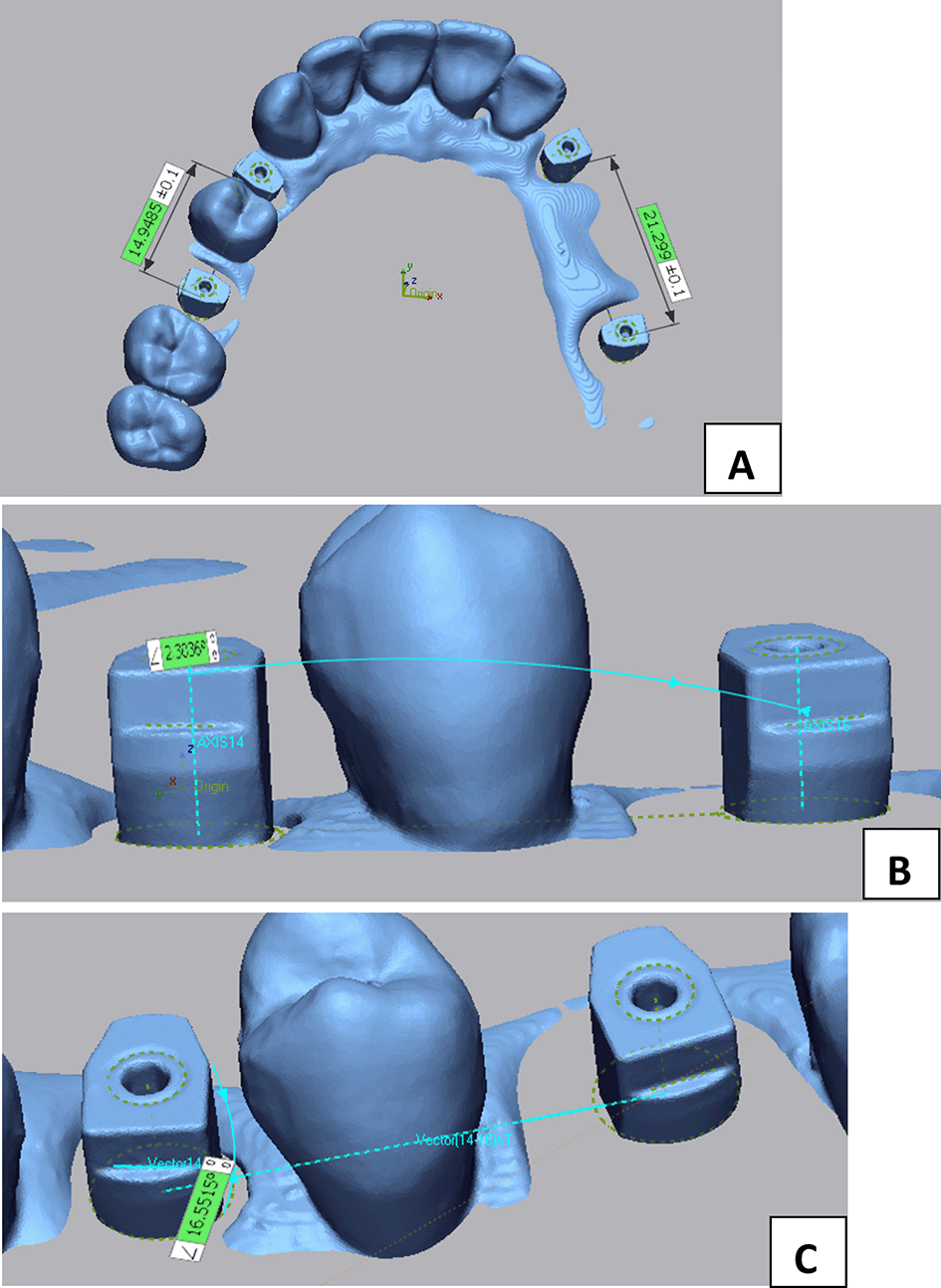
Linear deviations (ΔDis), angular deviations (ΔAngles), and rotational deviations (ΔRot) were evaluated using three-dimensional inspection software (Geomagic Control X; 3D Systems, USA). The Measurements obtained from the reference scans served as baseline values for all subsequent comparisons. A standardized measurement protocol was consistently applied to both reference and experimental intraoral scans.
Linear distances between the center points of the ISB were measured for implant pairs located in two regions: the adjacent-teeth region (14–16AT) and the free ridge region (23–26FR). Angular measurements were defined as the angles between the longitudinal axes of the corresponding ISB pairs in both regions. Rotational measurement was assessed for each ISB as the angle between its bevel reference vector and the corresponding inter-implant reference vector (R14, R16, R23, and R26) ( Figure 2).
For each experimental scan, linear, angular, and rotational measurements were directly compared with their corresponding reference values. To avoid compensating for positive and negative discrepancies, all variations were converted into absolute values. These were then represented as distance deviation (ΔDis), angulation deviation (ΔAngles), and rotational deviation (ΔRot), which were subsequently used for statistical analysis.
Statistical evaluation was conducted utilizing SPSS software (version 28.0; IBM Corp., USA). Descriptive statistics were calculated for all outcome measures. Mean values and standard deviations were used to define linear (ΔDis), angular (ΔAngles), and rotational (ΔRot) variations.
Data distribution normality was assessed using the Shapiro–Wilk test, while the homogeneity of variances was evaluated with Levene’s test. Based on these assessments, appropriate parametric or non-parametric tests were selected.
A 1-way ANOVA was used to compare linear and angular variations among the four experimental groups categorized by implant angulation and site (NP–AT, P–AT, NP–FR, and P–FR). When significant differences were detected, post hoc pairwise comparisons were performed using the Bonferroni correction.
Rotational deviation was analyzed separately due to its measurement varying depending on the implant site. For each implant angulation condition, differences in ΔRot among implant sites were assessed using either a 1- way ANOVA or the Kruskal–Wallis test, depending on the data distribution. Post hoc comparisons were conducted using the Tukey test when applicable. Additionally, comparisons of ΔRot across different implant angulation groups were performed for corresponding implant sites using independent-samples t-tests. The level of statistical significance was set at α = 0.05 for all analyses.
Descriptive statistics were calculated for angular deviation (ΔAngle), including the mean, standard deviation, standard error, and the minimum and maximum values. The lowest mean ΔAngle was observed in the NP–AT group (0.29 ± 0.18°), whereas the highest value was recorded in the P–AT group (0.88 ± 0.82°) ( Table 1).
| study group | Mean ± SD (°) | Median (°) | Minimum (°) | Maximum (°) |
|---|---|---|---|---|
| NP–AT | 0.29 ± 0.18 | 0.06 | 0.01 | 0.50 |
| P–AT | 0.88 ± 0.82 | 0.26 | 0.26 | 2.81 |
| NP–FR | 0.58 ± 0.24 | 0.08 | 0.32 | 0.95 |
| P–FR | 0.44 ± 0.27 | 0.09 | 0.19 | 0.95 |
Descriptive statistics were calculated for angular deviation (ΔAngle), including the mean, standard deviation, standard error, and the minimum and maximum values. The NP–AT group exhibited the lowest mean ΔAngle at 0.29 ± 0.18°, while the highest mean was found in the P–AT group at 0.88 ± 0.82° (see Table 1).
A 1- way ANOVA was conducted to compare the mean (ΔAngle) values among the four experimental groups defined by implant angulation and site (NP–AT, P–AT, NP–FR, and P–FR). The results indicated a statistically significant difference among the groups (F = 2.982, P = 0.044).
To determine which specific groups differed significantly in ΔAngle values, a Post hoc pairwise comparison using the Bonferroni correction revealed a significant difference only between the NP–AT and P–AT groups (P = 0.041), with the NP–AT group exhibiting lower ΔAngle values. No statistically significant differences were found among the remaining group comparisons (P > 0.05).
Descriptive statistics were calculated for linear deviation (ΔDis), including the mean, standard deviation, standard error, and the minimum and maximum values. The lowest mean ΔDis was observed in the NP–AT group, at 26.69 ± 11.12 μm. In contrast, the highest mean ΔDis was observed in the P–AT group, at 70.55 ± 54.75 μm ( Table 2).
| study group | Mean ± SD (μm) | Median (μm) | Minimum (μm) | Maximum (μm) |
|---|---|---|---|---|
| NP–AT | 26.69 ± 11.12 | 3.52 | 5.3 | 48.0 |
| P–AT | 70.55 ± 54.75 | 17.31 | 6.5 | 184.3 |
| NP–FR | 58.30 ± 54.61 | 17.27 | 2.5 | 185.5 |
| P–FR | 49.77 ± 24.34 | 7.70 | 13.9 | 82.9 |
A 1- way ANOVA was performed to compare the mean ΔDis among the four experimental groups defined by implant angulation and site (NP–AT, P–AT, NP–FR, and P–FR). While differences among the group means were noted, they did not reach statistical significance (F = 2.046, P = 0.125). As a result, post hoc multiple comparisons were not conducted.
The absolute differences between the measured rotational angles and their corresponding reference values were calculated for each experimental group. Descriptive statistics, including the mean, standard deviation, standard error, and minimum and maximum rotational deviation (ΔRot), were calculated ( Table 3).
The normal distribution of the data was assessed using the Shapiro-Wilk test. Based on these results, a 1-way ANOVA was performed within the P group implant sites, revealing a statistically significant effect on rotational deviation (ΔRot; P < 0.001). In contrast, the Kruskal-Wallis test was conducted for the NP group, which showed no statistically significant differences in ΔRot among the implant sites.
Post hoc pairwise comparisons utilizing the Tukey test demonstrated significant differences between implant sites 14 and 16 (P = 0.002), 14 and 23 (P < 0.001), and 23 and 26 (P = 0.003). Specifically, implant site 14 exhibited lower rotational deviation than sites 16 and 23, whereas site 23 showed higher rotational deviation than site 26. No statistically significant differences were noted among the other comparisons (P > 0.05).
When comparing implant angulation groups at corresponding sites, the normal distribution of the data was again analyzed using the Shapiro-Wilk test. A statistically significant difference in (ΔRot) between the P and NP groups was identified only at implant site 14 (independent-samples t-test, P < 0.001), with the P group showing lower rotational deviation. No significant differences were detected between the angulation groups at the remaining implant sites (independent-samples t-test, P > 0.05).
Since straight implant insertion is often not feasible in many clinical situations, it is crucial to understand how implant angulation affects the accuracy of digital impression techniques for effective treatment planning.3 For implant-supported restorations to achieve an optimal fit, a precise and reliable impression is essential.20 Typically, mistakes during the impression-making process, can lead to improper seating of the bridge on the implants. This can compromise the passive fit and result in both biological and biomechanical issues related to dental implants and the surrounding peri-implant tissues. Therefore, it is essential to minimize these errors.21 This study assessed how implant angulation and site affect the accuracy of intraoral digital impressions by examining linear, angular, and rotational deviations. Implant angulation affected intraoral scanning accuracy differently across sites. This effect was mainly observed in the AT region, where NP implants showed smaller angular and linear deviations than P implants. In contrast, linear deviations were not significantly affected by implant angulation.
The site-dependent differences observed can be attributed to the ISB’s significant characteristics. These characteristics include the ISB’s position within the dental arch, as well as its design, material, and geometry.22 From a mechanical and optical standpoint, straight (ISBs) positioned perpendicular to the occlusal plane may limit the visualization of axial walls, leading to stitching inaccuracies. In contrast, angulated ISBs enable simultaneous capture of both occlusal and axial surfaces, thereby enhancing image stitching and improving scanning accuracy.16,23,24 This explains the observed results regarding the accuracy of NP implant prints.
In agreement with Abduo and Palamara (2021),2 intraoral digital impressions demonstrated sufficient accuracy and were minimally affected by implant divergence in two-implant models. These findings are further supported by the research of Sicilia et al. (2024),16 who indicated that implant angulation or divergence of up to 18 degrees did not significantly affect the accuracy of intraoral digital scans. Nevertheless, these results contrast with those of Gómez-Polo et al. (2022),23 who reported higher accuracy for parallel implants, which may be related to differences in experimental design, scanner systems, and accuracy assessment methodologies.
Regarding the implant site, intraoral scanning accuracy is affected, especially regarding angular deviations. The AT region demonstrated lower angular deviations than the FR region when NP were present, while linear deviations were not significantly affected by implant site. The presence of adjacent teeth or implants provides stable anatomical landmarks that aid in image alignment and enhance stitching quality. Conversely, long-span edentulous conditions lack these reference points and depend more on stitching algorithms, which can lead to cumulative error propagation.15,24 Especially with greater inter-implant distances and extended scanning spans.25–27
These factors may explain the higher angular deviations observed in the present study within the FR compared with the AT region.
The current findings are consistent with those of Sun et al. (2025), which indicated that the accuracy of digital scanning decreases as the number of inter-implant tooth losses increases. This underscores the importance of having adjacent anatomical references to ensure the accuracy and precision of the scanning process.15
Regarding rotational deviations, implant site and scanning sequence appeared to play a more relevant role than implant angulation. In the NP group, rotational deviations were not significantly affected by the implant site. Conversely, the P group showed site-dependent variations: site 14 exhibited lower rotational deviation compared to sites 16 and 23, and site 26 showed less deviation than site 23. The lower rotational deviation noted at site 26 may be partially attributed to the scanning strategy, as the scan was initiated at this location. Previous studies reported that deviations during intraoral scanning tend to increase with increasing distance from the starting position.28 Additionally, it has been observed that the area where scanning begins typically shows lower error rates compared to the area where scanning ends.3,29 While implant angulation did not generally affect rotational accuracy, a site-specific effect was observed at site 14. At this location, P implants showed lower rotational deviation compared to NP implants. This indicates that the effect of angulation on rotational accuracy may be localized and influenced by site-specific factors, rather than indicating a widespread trend across the dental arch.
Furthermore, the improved rotational accuracy observed at site 14 may be linked to its anterior position and the presence of adjacent mesial and distal teeth. These teeth provide stable anatomical landmarks that help with image alignment and minimize cumulative stitching errors. This finding aligns with previous research reporting higher scanning accuracy in anterior regions compared to posterior sites,17 and supports studies highlighting the importance of adjacent teeth in enhancing the accuracy of digital impressions by increasing the availability of reference points.15,24
The present study has several limitations that should be acknowledged. As an in vitro investigation, the experimental design did not fully replicate clinical conditions. Factors such as mouth opening, saliva, and the characteristics of peri-implant soft tissue were not taken into account. Furthermore, the study focused on a single implant system and one IOS.
This in vitro study revealed notable findings regarding angular deviation among different combinations of implant angulation and site. Specifically, non-parallel implants in the bounded edentulous region with adjacent teeth exhibited lower angular deviation than parallel implants, with a statistically significant difference. However, linear deviation was not significantly influenced by either implant angulation or site. Rotational deviation showed site-specific differences. In the non-parallel group, no significant differences were observed among the different implant sites. Conversely, the parallel group showed significant site-related differences. Notably, a significant difference between parallel and non-parallel implants was observed only at implant site 14, while no differences were observed at the other sites. These findings underscore the importance of considering anatomical context and implant distribution to enhance the accuracy of intraoral digital impressions.
| Views | Downloads | |
|---|---|---|
| F1000Research | - | - |
|
PubMed Central
Data from PMC are received and updated monthly.
|
- | - |
Provide sufficient details of any financial or non-financial competing interests to enable users to assess whether your comments might lead a reasonable person to question your impartiality. Consider the following examples, but note that this is not an exhaustive list:
Sign up for content alerts and receive a weekly or monthly email with all newly published articles
Already registered? Sign in
The email address should be the one you originally registered with F1000.
You registered with F1000 via Google, so we cannot reset your password.
To sign in, please click here.
If you still need help with your Google account password, please click here.
You registered with F1000 via Facebook, so we cannot reset your password.
To sign in, please click here.
If you still need help with your Facebook account password, please click here.
If your email address is registered with us, we will email you instructions to reset your password.
If you think you should have received this email but it has not arrived, please check your spam filters and/or contact for further assistance.

Comments on this article Comments (0)