Keywords
out-of-pocket expenditure; catastrophic health expenditure; health financing; strategic purchasing; essential medicines; missing middle; India; universal health coverage

out-of-pocket expenditure; catastrophic health expenditure; health financing; strategic purchasing; essential medicines; missing middle; India; universal health coverage
India has made real progress on health financing, yet households still bear too much of the cost. The out-of-pocket share of total health expenditure fell from 64.2% in 2013–14 to 39.4% in 2021–22, as the government’s share rose from 29% to 48%, so that public spending now exceeds out-of-pocket spending for the first time ( Figure 1).1 Even after that decline the burden remains heavy. Households still finance about two-fifths of all health spending ( Figure 2). In a single year, out-of-pocket payments pushed an estimated 55 million people into poverty, with the squeeze falling harder on outpatient care than on hospital stays2; more than one in six households face catastrophic health expenditure, and close to 90 million people spend beyond the catastrophic threshold.3 The achievement is real, but it is fragile, uneven across states, and far from the level at which financial catastrophe becomes rare.
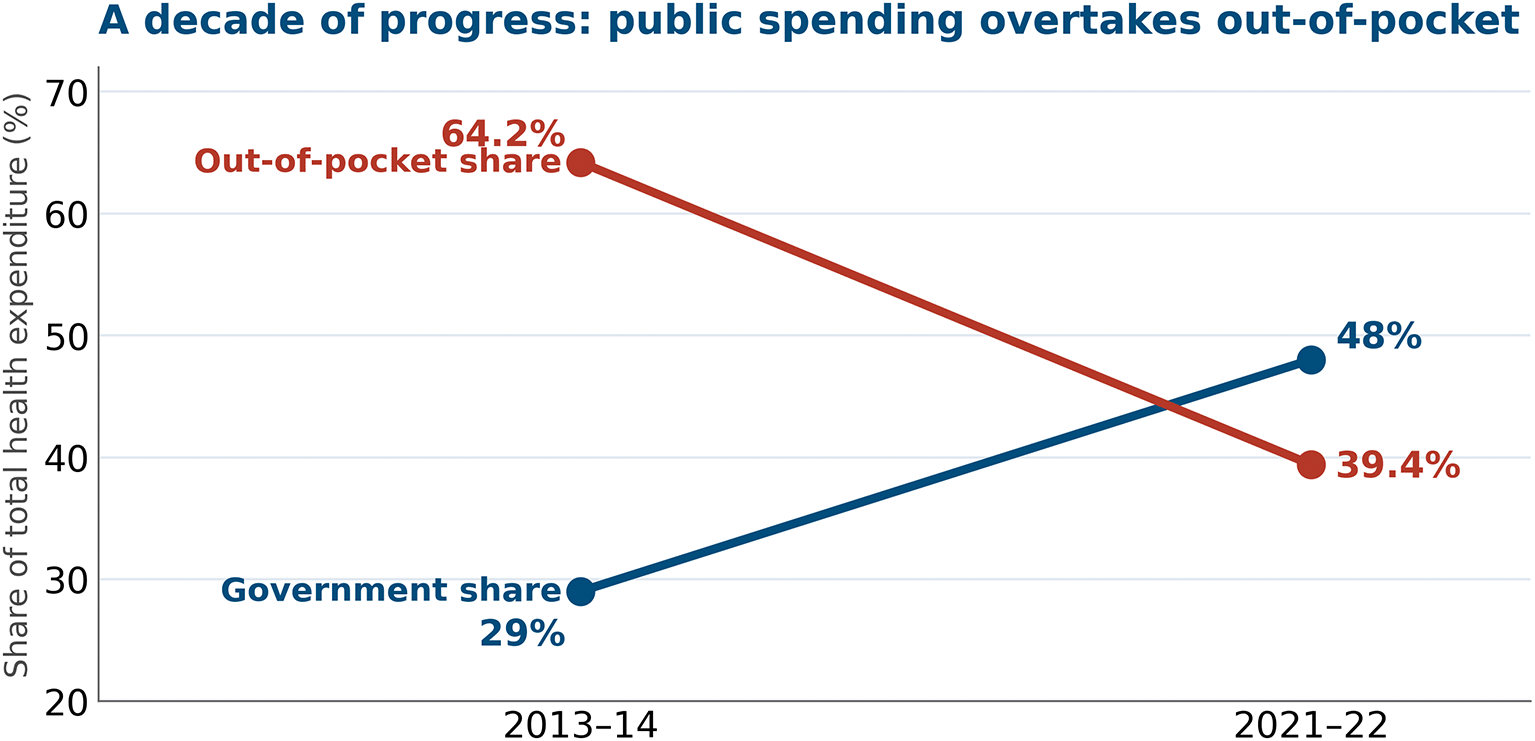
The out-of-pocket share of total health expenditure fell from 64.2% in 2013–14 to 39.4% in 2021–22, while the government share rose from 29% to 48%, so that public spending exceeded out-of-pocket spending for the first time. Source: National Health Accounts estimates.1
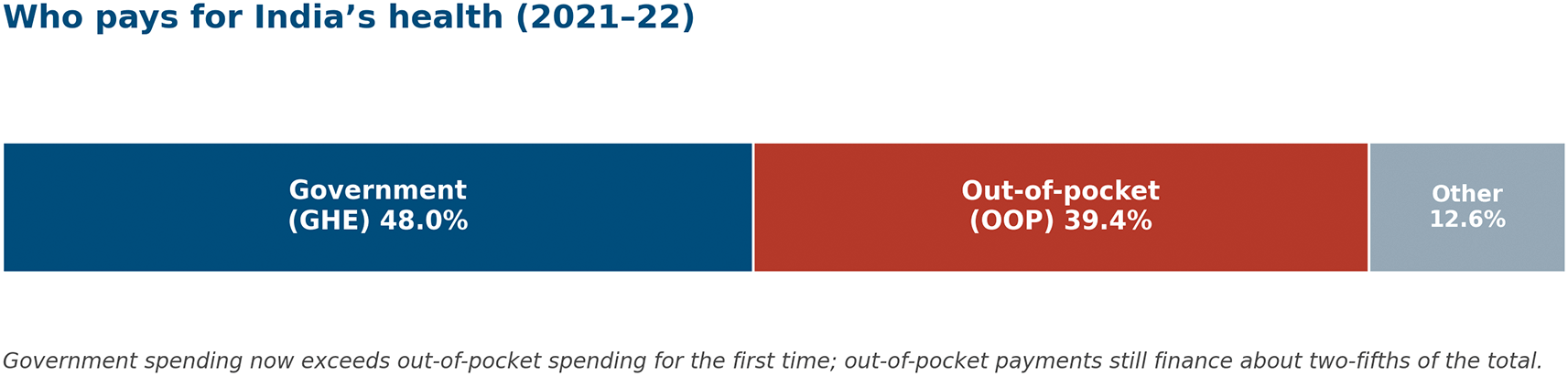
Government spending now slightly exceeds out-of-pocket spending, but households still finance about two-fifths of the total. Source: National Health Accounts estimates.1
Three features explain why the burden persists, and each points to a different lever. First, most catastrophic spending comes from outpatient care, medicines and diagnostics rather than from hospitalization ( Figure 3); medicines are the single largest component, running to about three-fifths of outpatient out-of-pocket costs and close to a third of inpatient costs.4,5 Yet these are the very services the flagship insurance scheme does not cover. Second, a large private sector prices its services with little regulation or transparency, distorting not only what patients pay but what care they receive. Third, a substantial “missing middle” remains without any financial protection. This brief sets out the policy options and a sequenced, costed roadmap to cut catastrophic out-of-pocket spending, measured throughout against what households actually pay at the point of care.
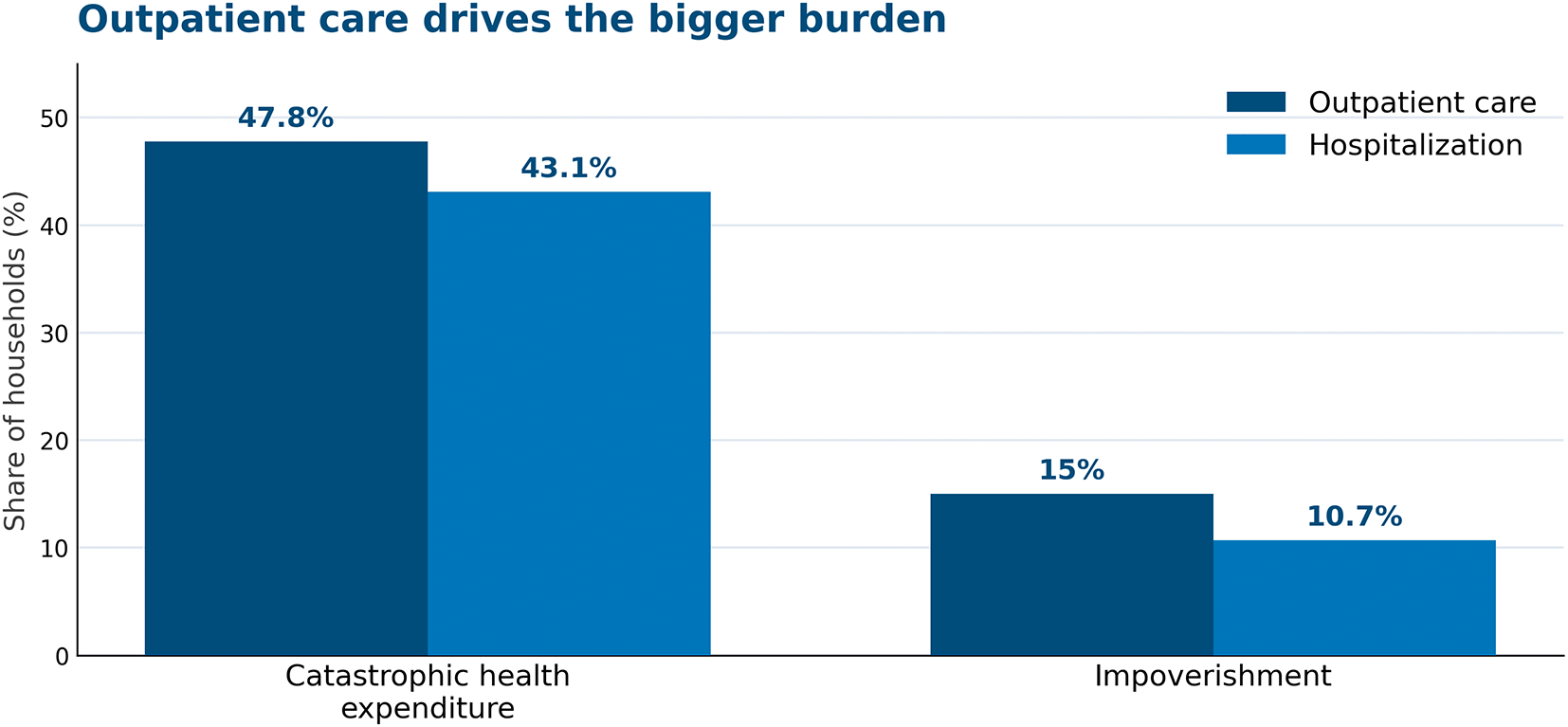
Catastrophic health expenditure and impoverishment are both more common for outpatient care than for hospitalization, yet outpatient services lie largely outside India’s flagship hospitalization insurance. Source: national analysis of out-of-pocket expenditure.4
The case for acting now rests on more than the headline numbers. An out-of-pocket share near 40% remains roughly double the level of most high-performing systems, and the households it harms most – the chronically ill, the elderly, the rural and the informal-sector poor – are the least able to absorb the shock.2,3 The recent gains are also reversible: they depend on sustained public spending and reliable public supply, either of which can falter. A roadmap is therefore not a counsel of perfection but a way of locking in fragile progress and directing the next increment of public money to where it will avert the most hardship.
Four broad options are available. They are complementary rather than competing, and the central message of this brief is that they must be pursued together, because each addresses a different driver and any one alone leaves the others untouched. The options are set out below from the most foundational to the most structural, with their implications and trade-offs.
Option 1 – Raise public spending and aim it at the right gap. Government health expenditure stands at about 1.9% of gross domestic product, short of the 2.5% target set for 2025.6,7 More money helps only if its composition shifts toward the outpatient burden that drives most hardship. The decisive intervention is free essential medicines through pooled procurement: the Tamil Nadu Medical Services Corporation has supplied drugs free across the state’s public facilities since 1995 at a fraction of retail prices, lowering out-of-pocket spending and raising public-facility use, and Rajasthan has built a comparable scheme.8 In short, the single most powerful lever is already proven inside India; scaling it is a matter of money and political will rather than of evidence, and it is among the cheapest interventions to deliver per rupee of hardship averted.
Option 2 – Make the state a strategic purchaser and regulate price. The Clinical Establishments Act 2010 already provides for rate standardization and transparency, but these provisions are largely unimplemented; meanwhile the Central Government Health Scheme and PMJAY show that fixed-rate purchasing across thousands of procedures is feasible.9 Established practice confirms that standardized, transparent rates are how high-performing systems regulate price, in contrast to crude caps.10 Unregulated pricing distorts care as well as cost: private facilities perform caesareans in 47% of deliveries against 14% in public facilities, at several times the out-of-pocket price.11 The gap is not confined to childbirth: in 2017–18 the average out-of-pocket cost of a hospital stay was several times higher in private than in public facilities, and the multiple held from the least to the most expensive conditions ( Figure 4).12 Extending such rates, and paying for appropriate rather than intensive care, would curb both overcharging and over-treatment. The implication is friction with providers, manageable through negotiated and periodically costed rates rather than imposed caps, and through honest revision where package prices fall below the cost of care.
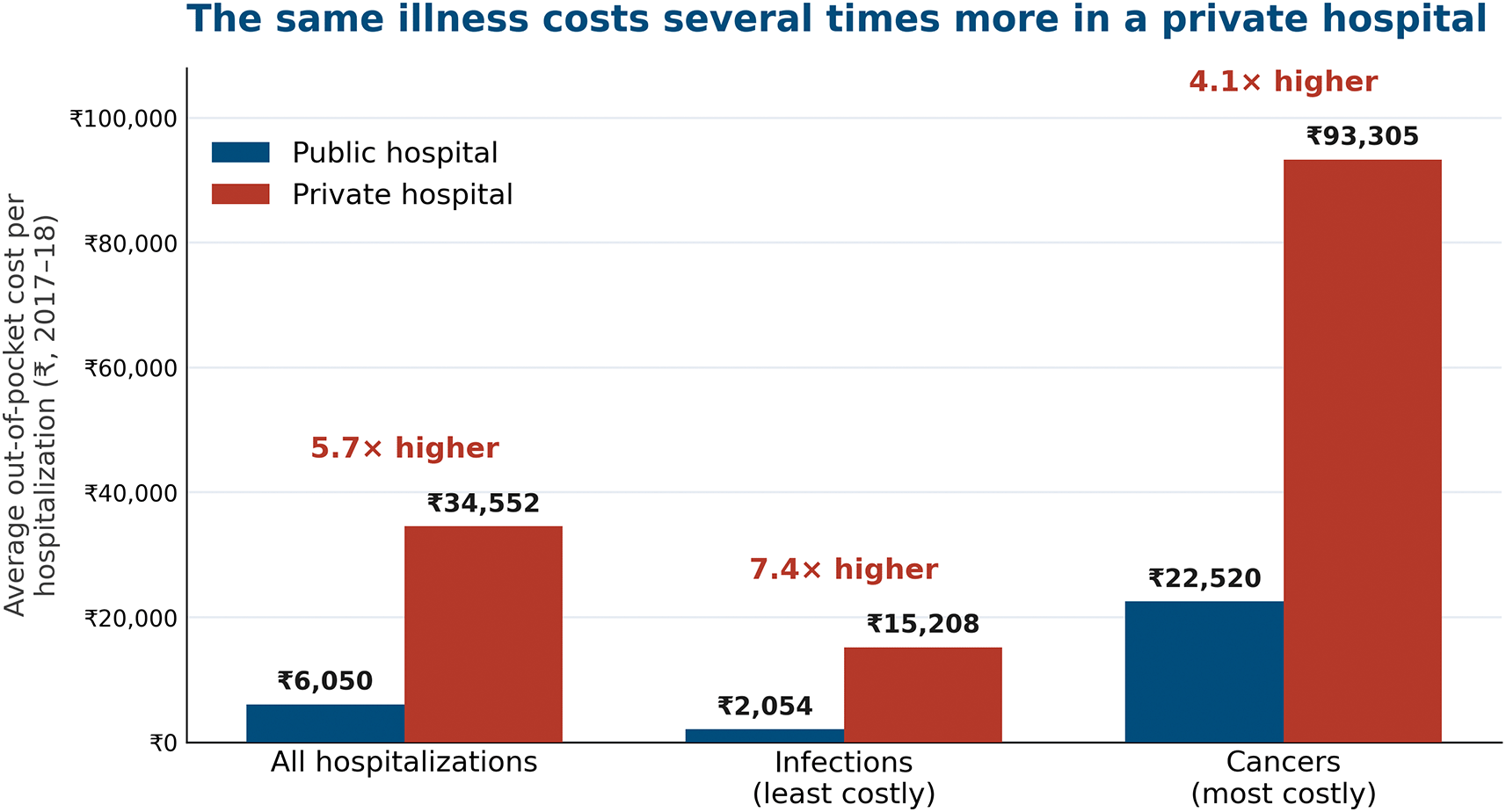
Average out-of-pocket expenditure per hospitalization case in public versus private facilities, overall and for the least and most expensive disease categories. The private cost exceeds the public cost across every category, by roughly four to seven times. Source: NITI Aayog analysis of National Sample Survey 75th round (2017–18) data.12
Option 3 – Close the coverage gap. A “missing middle” of roughly 400 million people has no financial protection,13 and existing cover is hospitalization-bound. Extending publicly stewarded insurance to outpatient care and to the missing middle, through subsidized, income-graded contributory cover with near-automatic enrolment, would widen pooling and, by enlarging the purchaser, strengthen the price discipline of Option 2 at the same time. The cost to weigh is fiscal, set against the poverty it averts, together with a design choice: to avoid repeating the hospitalization-only benefit package that limits the current scheme.
Option 4 – Build public delivery capacity, not just reimbursement. Because private hospitals already provide a majority of insured hospitalizations,14 channeling scheme funds toward strengthening public facilities and primary-care networks reduces long-run dependence on a sector whose prices and clinical incentives are hard to govern. The implication is slower visible expansion in exchange for a more durable, lower-cost system, and a deliberate rebalancing of public money from purchasing private care toward producing public care.
The four options reinforce one another, which is why a piecemeal approach disappoints. Raising public spending without aiming it at outpatient medicines (Option 1) leaves the largest leak open; regulating price without widening coverage (Option 2) protects only those already in the system; widening coverage without price discipline (Option 3) simply pours more money into an unregulated market; and none of these endures without public delivery capacity (Option 4). The sequencing below therefore pursues all four together, front-loading the cheapest, highest-impact measures while the structural reforms mature.
The recommendations below are sequenced as a roadmap across three time horizons ( Figure 5); Table 1 sets out the same sequence with the driver targeted and the lead actor for each phase, and Table 2 matches each driver to its policy lever. They span central and state governments, since health financing in India is a shared responsibility and the strongest results, such as Tamil Nadu’s, have come from states acting on their own initiative.
• Immediate (0–12 months). Implement the rate-standardization and price-transparency provisions of the Clinical Establishments Act, beginning with high-volume procedures, and require empaneled hospitals to display PMJAY package rates at the point of admission. Fix the payment and grievance failures that let beneficiaries be charged despite valid cover, including timely reimbursement to hospitals and a functioning grievance route for patients.9,10
• Medium term (1–3 years). Raise government health spending toward 2.5% of gross domestic product, ringfencing the increase for primary care and for free essential medicines and diagnostics delivered through pooled procurement on the Tamil Nadu model, with central incentives for states that establish functioning medical-services corporations.6–8 Extend strategic purchasing and standardized rates from hospitalization to outpatient care, pay in ways that reward appropriate care, and pilot subsidized contributory cover for the missing middle.13
• Longer term (3–5 years). Consolidate fragmented schemes into a single publicly stewarded pool with one transparent, periodically costed price per service across payers, and invest scheme surpluses in public delivery capacity so that protection does not depend on an unregulated private market.14
• Cross-cutting. Track out-of-pocket spending, catastrophic expenditure and impoverishment as headline indicators, disaggregated by state and income quintile, so that progress is measured by what households pay rather than by scheme enrolment alone ( Table 3).
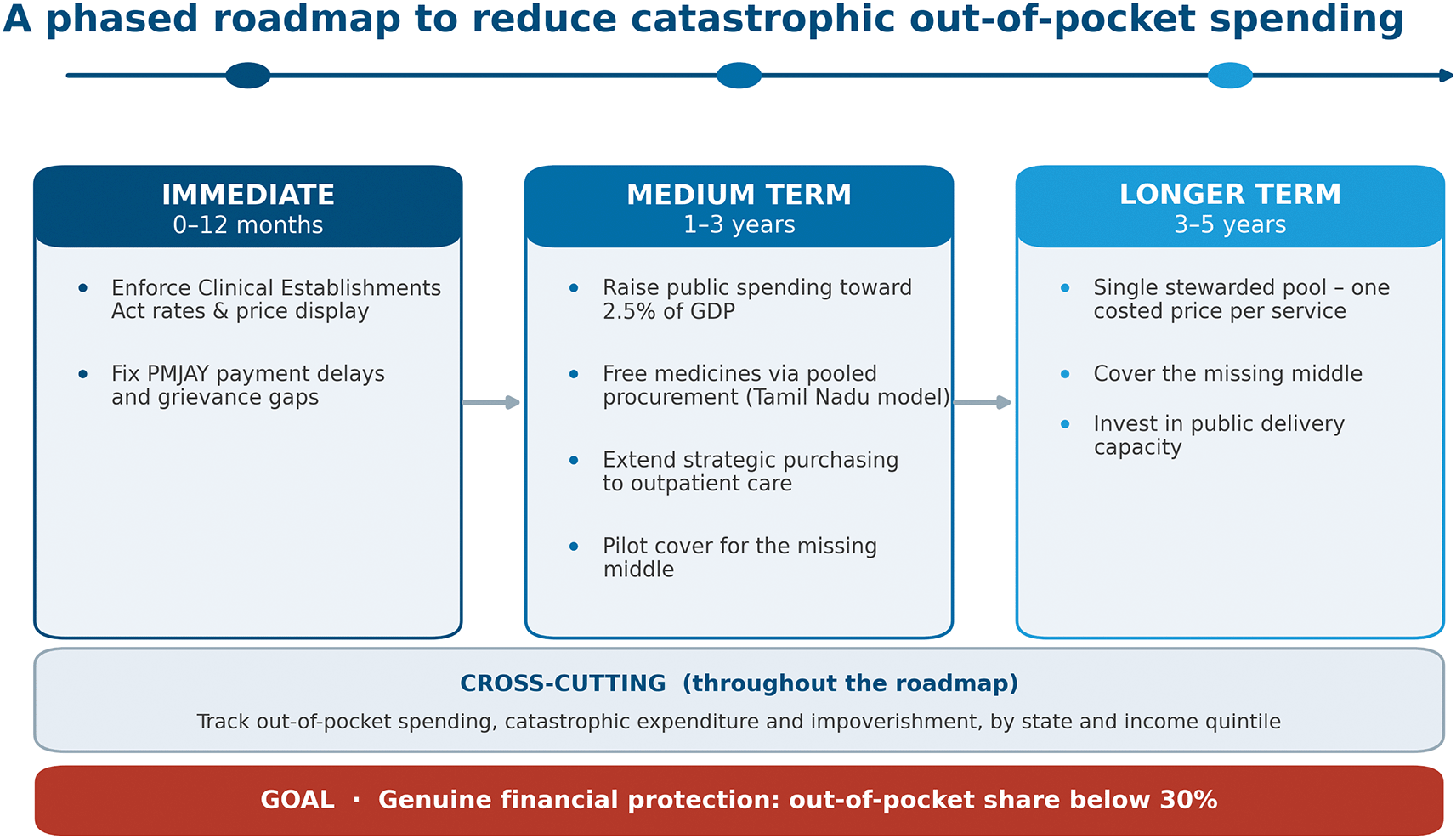
Reforms are sequenced across three horizons, with monitoring running throughout, and the cheapest, highest-impact measures – free essential medicines through pooled procurement and the enforcement of transparent rates – brought forward first. The drivers targeted and the responsible central and state actors are detailed in Table 1.
CEA, Clinical Establishments Act; GDP, gross domestic product; MoHFW, Ministry of Health and Family Welfare; PMJAY, Pradhan Mantri Jan Arogya Yojana.
OOP, out-of-pocket.
GDP, gross domestic product. Baselines from National Health Accounts and Economic Survey estimates.1,6
Financing the package need not wait on a single large increment. The highest-return action, free essential medicines through pooled procurement, is also among the least expensive, because pooled tendering drives unit prices far below retail and because better availability in public facilities draws patients away from costlier private care.8 General taxation is the natural and most progressive source for the broader increase, supplemented by the contributory premiums of Option 3 for those able to pay; earmarked health funds and the conversion of existing scheme outlays from passive reimbursement to strategic purchasing can stretch each rupee further. The sequencing matters as much as the sum: cheap, high-impact measures first, structural consolidation later.
Three risks deserve candid attention. The first is fiscal: raising public spending toward 2.5% of gross domestic product is a large commitment for a country with a modest tax-to-revenue base, and the increase competes with other claims. The mitigation is sequencing and targeting, since the highest-return rupee, spent on free essential medicines through pooled procurement, is also among the cheapest to deliver and has a proven domestic precedent.8 The second is provider resistance to standardized rates, which is real and partly legitimate where package prices fall below the cost of care14; the mitigation is transparent costing and periodic revision rather than abandonment of stewardship. The third is implementation capacity at the state level, since health is a state subject and results have varied widely; the mitigation is to pair central financing and incentives with the demonstrated state models, so that reform is financed and copied rather than merely mandated.
None of this is contingent on new institutions. The National Health Authority already purchases strategically; state medical-services corporations already procure medicines in pooled fashion; the Clinical Establishments Act already provides for rate transparency. The roadmap asks that these existing instruments be funded properly, extended to the outpatient and medicine costs that drive the burden, and held to the single test of what households pay at the point of care.
India’s decade of progress shows that out-of-pocket spending falls when the state pays for, and prices, more of the nation’s care. To go further, the country must aim public money at the medicines and outpatient costs that cause most hardship, using the pooled-procurement model it has already proven in Tamil Nadu; make government a strategic purchaser that sets transparent prices and pays for appropriate care across an unregulated private sector; and close the coverage gap that leaves the missing middle exposed. None of these steps is untried, and the most important of them is running successfully inside India’s own federation. Pursued together and in sequence, beginning with the cheapest and most effective measures, they would convert a steady decline in out-of-pocket spending into genuine financial protection, judged by the only measure that matters to families: what they pay when they fall ill.
| Views | Downloads | |
|---|---|---|
| F1000Research | - | - |
|
PubMed Central
Data from PMC are received and updated monthly.
|
- | - |
Provide sufficient details of any financial or non-financial competing interests to enable users to assess whether your comments might lead a reasonable person to question your impartiality. Consider the following examples, but note that this is not an exhaustive list:
Sign up for content alerts and receive a weekly or monthly email with all newly published articles
Already registered? Sign in
The email address should be the one you originally registered with F1000.
You registered with F1000 via Google, so we cannot reset your password.
To sign in, please click here.
If you still need help with your Google account password, please click here.
You registered with F1000 via Facebook, so we cannot reset your password.
To sign in, please click here.
If you still need help with your Facebook account password, please click here.
If your email address is registered with us, we will email you instructions to reset your password.
If you think you should have received this email but it has not arrived, please check your spam filters and/or contact for further assistance.

Comments on this article Comments (0)