Keywords
Management Accounting; AI; Quality of Financial Reporting; Enhance Trust.

This article is included in the Fallujah Multidisciplinary Science and Innovation gateway.
Management Accounting; AI; Quality of Financial Reporting; Enhance Trust.
For the past 20 years, the world has experienced rapid advances in many areas of human endeavours, including the banking sector, where the adoption of artificial intelligence in every area across the spectrum of human endeavours, including banking tasks, has revolutionized operations. This has resulted in the idea of rethinking over banking & accounting tasks. High levels of data processing, inter and intra cobbling of humongous, large amounts of data, primarily functions which are being supported by the advent of Artificial Intelligence that today helps predict broadest financial similarity behaviour and help decision-makers. At this point there is a need to try to combine management accounting and its constituent essential information that works for management while planning and evaluating, with the artificial intelligence technologies with a view to use this information as much as possible.
The banks suffer from a trust deficit in the eyes of the customers, the shareholders and the regulatory bodies. In order to build this trust, they must enhance the quality, presentation and punctuality of their financial statements. AI technologies can not only assist in the detection of errors or fraud attempts, but also offer prediction of risks by taking advantage of management accounting data, which suggests potentially higher accuracy in financial statements.
Financial Statements are an assurance of transparency and a tool for accountability. They install confidence amongst stakeholders such as customers, investors, and regulators. And so, achieving the quality of financial reporting is one important aspect. One way to delve into this is by making use of artificial intelligence technologies, like machine learning and expert systems, to help with financial reporting. This allows both banks and users of their financial statements to make decisions backed by real-time information.
Conversely, AI-based management accounting via standard costing, activity-based costing, and other methods delivers activity-related costs, operational risk, and performance measures. The addition of AI assists with the provision of information towards predicting and decision-making, made it possible to present accurate and consistent statements of finance, which strengthens stakeholders’ trust in these statements of finance.
One of the most important elements to banks is trust. In all of this, the low quality of financial reporting and the degradation of the reliability of financial statements is a direct hit on the reputation of banks and the trust of stakeholders in banks. Thus, it could be seen that the process of employing the role of artificial intelligence incorporated into management accounting is one of the necessities in order to assist with the quality of financial reporting. Hence integration of management accounting and artificial intelligence is a must to offer a more transparent, trustworthy and compliance of laws and regulation financial reporting system. Such integration modernizes, dynamizes, and makes management accounting responsive to the issues of the day.
This research addresses an important question: can we integrate artificial intelligence technologies into management accounting technologies? Does this amalgamation help improve the quality of financial reporting, enhance transparency and accountability, or improve information quality and efficiency? How does this integration, which improves the quality of financial prediction reports, affect the confidence of bank stakeholders?
Until recently, banks had to use conventional means for fraud detection. However, these methods were clearly not enough as they took a lot of time and effort and involved high resource consumption. With the technological changes around, fraudsters have also devised their ways of frauds. Deep learning techniques are used by banks nowadays for fraud detection with the help of advanced neural net architectures. Deep learning algorithms analyse multidimensional sources of data and behaviours that are interconnected and complex, and provide insight into the future (Ajayi et al., 2024), into future criminal behaviour, specifically.
Fraud detection is one such new capability that can be performed by artificial intelligence and advanced analytics. The evolution of financial fraud has rendered conventional detection mechanisms ineffective. Artificial intelligence is required. It can know fraud, analyse transactional data in real time, and normalize which are transactions that is fraud. Machine learning algorithms, for instance, can detect spikes in high-value transactions or attempts to transfer money to new accounts (Aro, 2024).
Network analysis builds a visual representation of all of the different relationships between entities and types of transactions, which allows AI systems to identify multi-faceted fraud schemes. Feng, 2024 on apex bank decrease their fraud exposure but they also increase their operational efficiency through automating the monitoring process and reducing manual review which is always slow, expensive and error-prone process. AI-based machine learning algorithms can detect standard transaction behaviours and can pinpoint abnormal activities and behaviour that deviates from the norm. This allows the banks to react instantaneously to the risk anticipated and prevents fraudulent actions from happening (Arkhipova et al., 2024).
Banking risk management is not limited to fraud prevention; here, you need to outline a strategy for identifying the risks and making a plan for mitigating their effect. For instance, loan risks could be limited, or possible losses could be hedged (Aziz & Andriansyah, 2023). With the help of AI and the incorporation of predictive models, financial institutions can proactively detect risk areas in real-time, hence preventing compliance violations from occurring and making efficient use of resources (Odetunde et al., 2022).
Transparency in creditworthiness assessment practices: Machine learning algorithms can make a bank comply with transparency and regulatory requirements. Machine learning algorithms can process huge amounts of data, from borrower characteristics to credit history, this momentum allows for more precise risk assessments (Bello, 2023).
AI in financial reporting is a paradigm-shifting development that helps revolutionize the processing, presentation, and interpreting of financial data. The increase in stakeholder confidence on the integrity of financial disclosures is reflective of process automation through artificial intelligence and simplified preparation and examination of financial documents through Natural Language Processing. Moreover, AI can even help compare actual numbers with historical records which increases the reliability of figures to be reported on financial statements (Ajiga, 2021).
Artificial intelligence technologies are changing the ways organizations analyse large volumes of data helping financial institutions to have predictive analytics and making timely decisions (Abikoye et al., 2024). AI also aids in facilitating effective business decision-making through the processing of enormous quantities of data from various sources, converting this data into useful information that is essential for shaping the organization strategy (Adeniran et al., 2024).
Deep learning neural networks and specialized machine learning algorithms have given artificial intelligence the ability to sift through large volumes of data, identify sophisticated patterns, and rapidly interpret changing situations. This is not only a huge helping hand in forecasting more accurately but also ensures optimization of budget spends deriving insights that previously took time to discover. Many predictive AI and machine learning tools go beyond accuracy and adapt to market dynamics. This allows organizations to reconfigure their approach by offering fresh insights, making swift changes, and acclimatizing to vagueness. In the domain of financial forecasting with machine learning, this is through the analysis of past data and the discovery of complex patterns often buried life outside the reach of traditional techniques (Jain & Kulkarni, 2023).
Manual reporting is expensive, slow, and prone to error. AI enables the generation of reports in less time, increases their effectiveness, and gives them money (Odetunde et al., 2022). Banks might take longer to prepare financials before monthly (despite increased latent demand signals) and AI can help process data on real time basis allowing banks to respond to the change quickly and allowing stakeholders to review the data in real time (Mwachikoka, 2024).
The process of preparing financial statements, which involves the collection, classification, and reporting of data to comply with accounting standards, is supported by AI. This enhances accuracy of these statements and saves time on their preparation. Another way is through financial analyses which the AI can perform to show financial ratios, profitability, liquidity, and other key performance indicators (Sreseli and Kadagishvili, 2023).
Challenge of AI application to develop machine learning model to deal with the fast-changing methods of crime. Because most banks have outdated technological systems that cannot support advanced analytical techniques (Ajayi et al., 2024), banks shall allocate substantial resources to building their technological infrastructure. One reason is that the integration of AI into legacy systems can be an obstacle from a technological standpoint. The majority of banks still rely on legacy infrastructure and manual processes that cannot integrate easily; even perhaps most critically, this infrastructure is very likely not designed to handle enormous data peaks successfully. As such, they are costly and labour-intensive to upgrade or replace. The next issue is surrounding resistance to change. When implementing brand new technologies, a lot of organizations experience resistance from their workers. Adoption of new technologies creates anxiety among employees as they believe their jobs will be threatened or they may need to build new capabilities (Odetunde et al., 2022).
Due to the enormous number of data processed by artificial intelligence technologies, data privacy and data integrity are vital for the continued building of customer trust and in maintaining compliance with laws and regulations that require the confidentiality of data (Abikoye et al., 2024). One of the major challenges that AI implementation faces is data privacy. With financial institutions becoming more dependent on customer data, the threat of a data breach and inappropriate use of its customer data is heightened. So, securing customer information and safeguarding is a number one priority (Aro, 2024). Data sensitivity is a serious matter and a data breach can lead to dire consequences. This can result in financial loss for banks, penalties from regulators, and reputational damage. Financial records contain sensitive data like bank account numbers and transactional history. This makes it hard to keep it away from an unauthorized access (Bello, 2023).
The use of artificial intelligence in financial reporting enables substantial benefits (greater accuracy, speed, and efficiency); however, it poses some risks including algorithmic bias that results when artificial intelligence models are trained on incomplete or faulty data and misinterpretation. Mitigation of these risks is important, otherwise, application of artificial intelligence will not be reliable, or secure, and will not comply with ethical standards in the field of accounting and financial reporting (Ajiga, 2021). The complexity of applying the legal and ethical frames of reference that accompany the organization in which the artificial intelligence is being concerned (the decision-making in the sense of the application of artificial intelligence should not be contrary to ethics and legal frame) can be one of the challenges on the path of organizations to adopt artificial intelligence (Ijiga et al., 2024).
Artificial intelligence applications encounter an issue in the form of managers hesitate to depend on big data and regard it as a resource. This entails managers learning the fundamentals of unstructured data, and how to collect, filter, compile, and analyse it in a systematic manner (Arkhipova et al., 2024). Accountants, in this regard, now need to have a traditional accounting knowledge base and technical expertise necessary to comprehend and exploit AI as a core of the modern role of the accountant (Odonkor et al., 2024).
While the use of artificial intelligence in financial reporting has advantages, there are risks, such as the interruption of an automated process or the production of incorrect results due to programming errors or wrong settings. Over-reliance on AI can filter out the mistakes, which can have huge ramifications for financial statements. Indeed, Financial reports often involve human judgment, interpretation, and reasoning that automated systems may be unable to replicate, and Automated systems may be designed to abide by strict, pre-defined rules (Alao et al., 2024).
Nowadays managing finances is not carried out in ledgers like in the past, but with the help of AI tools using new methods of analysing data (Arkhipova et al., 2024). Many finance practices today rely on artificial intelligence for greater accuracy, speed, and better decision-making (Odonkor et al., 2024). Banks, therefore, consume AI for real-time insights – enabling fast, efficient financial reporting (Pavlovic et al., 2024).
Modern management accounting methodology relies on data science, machine learning and cloud computing to forecast adaptive contexts that are relevant for banks’ strategic planning (Nielsen, 2022). Banks are now benefiting much greater from AI tools such as preferring based choices, more informative financial reports and proper regulatory compliance (Kuaiber et al., 2024). Instead of slow hand calculations, banks use artificial intelligence to quickly examine information, allowing them to react faster to changing markets (Aro, 2024). It enhances the identification and prediction of potential risk and opportunities (Odonkor et al., 2024). AI assists in making better decisions and replaces repetitive tedious tasks to save time with low human error relative to the traditional Mk. acc. approach (Aziz & Andriansyah, 2023).
The essence of the quality of financial reporting in the banking sector is in appropriating relevance, reliability, comparability and timeliness of reporting with AI-powered management accounting practices to unlock the power of reliable, concise and timely information for informed decision-making (Odonkor et al. 2024). Artificial intelligence will allow practitioners to integrate management accounting systems with financial reporting systems that will enable timely financial reporting due to the instant detection of anomalies, extraction of information and clarity of pathway broadened by a series of banking transactions that can facilitate comparability (Fotache & Bucsă, 2024).
For instance, in banking, advanced forecasting capabilities made possible by AI-powered management accounting with financial reporting in the production of financial statements enhances the relevance, reliability, comparability, and timeliness of financial statements to reflect current risks and the true state of performance (Odonkor et al., 2024). Artificial Intelligence has a huge potential benefit in the data processing to increase the accuracy of management accountant analyses, classifying disclosures that are important and give insights on the effects to capital adequacy and liquidity reporting (Siddiqui, 2025). Thus, improved timeliness in the quality of the disclosures provided by the financial has become vital so that stakeholders can make timely decisions. In the banking sector, artificial intelligence also can be used to improve management accounting in two ways, it can have more disclosures at a finer level and can improve timeliness of financial disclosures (Al-Okaily, 2023). AI-Powered Analytics: AI-driven analytics brought improved relevance by supporting strategy-aligned reporting, improved reliability via automated validation and anomaly detection, better comparability by standardizing data models for both regulatory and industry requirements across banks and, lastly, improved timeliness through real-time processing of data (Artene et al., 2024).
Management accounting can benefit from having artificial intelligence applied to it which will improve the quality and accuracy of financial data. In fact, by facilitating greater confidence in banks, automating monotonous bookkeeping activities, improving real-time data processing, and decreasing human mistakes, it ultimately leads to improvements in the quality of reporting (Pavlovic et al., 2024). Consequently, this may enhance the confidence of stakeholders like investors or regulatory authorities in the financial statements of banks, which improves transparency (Chagas et al., 2022). The use of computing and artificial intelligence as part of it is widely used in banking services, as it helps to provide integrated, detailed, accurate, and rapid reports that assist in the process of improving decision-making at all administrative levels (Alnor, 2024).
International practices indicate that management accounting technology and artificial intelligence technologies benefit in integrating banking operations and improving the transparency and accuracy of financial reports, which is positively reflected in raising the confidence of stakeholders in these banks due to the quality of financial reports, the effects of which are positively reflected in enhancing the credibility of these banks with regulatory bodies, customers and current and potential investors (Alzeghoul & Alsharari, 2024). However, combining management accounting techniques with AI helps in risk mitigationand timely information delivery which leads to decision-making and trust-building between banks and stakeholders (Ikudabo and Kumar 2024). A Better quality of reporting aids to increase transparency, while disclosure in the right kind of tweets helps to positively contribute towards enhanced or maintained confidence from stakeholders, which it so important to banks (Aziz & Andriansyah, 2023).
The combination of management accounting with artificial intelligence affects the importance of financial data and the accuracy and consistency of financial data that increases the confidence level of investors and customers in banks. This integration helps to accelerate the hints of deficiencies, which boosts the quality of reporting (Zeng, 2022). Thus, increasing stakeholders’ integrity in respect to financial statements boosts improving rapport and communication with banks (Olaoye, 2024). Collaboration between management accounting and AI helps them identify problems quickly which results in more trustworthy reports (Schröder, 2022). Trust is indeed one of the most important factors across all sectors, especially banking, but it is often misunderstood. If there are no trust, if there is no trust, business cannot be conducted. The relationship of an economic unit depends on a crucial factor trust not only among stakeholders but stakeholders themselves, namely customers, investors and regulators. Trust plays a vital role in stakeholder satisfaction, customer loyalty, and creation of potential customers, as well as attracting potential customers and shareholders. This allows to maintain a nexus with stakeholders; thus it becomes important for companies to develop and maintain high degree of trust (Saputra & Bakri, 2023).
Banks are changing dramatically because they now utilize AI alongside traditional Managerial Accounting. This combination boosts service quality while making financial reporting clearer. Research shows automating tasks, letting computers learn from information, also understanding human language cuts down on mistakes and improves data reliability (Madloul & Mohammed, 2024; Mbaidin et al., 2024; Al-Omari & Al-Nimer, 2024).
According to Kelkar (2025), AI is reshaping how finances are reported, boosting the precision of bank disclosures. Mohammed & Wahhab (2024) echo this view - using AI tools enhances statement quality because it makes data more trustworthy alongside accurate. According to Al-Obaidy (2024), incorporating AI into Managerial accounting systems is key because they deliver up-to-date, reliable data - which subsequently sharpens choices. Similarly, Ajiga (2021) notes that utilizing AI when crafting financial reports builds trust with both people generally alongside investors, stemming from increased precision coupled with fewer mistakes made by humans.
Awad et al. (2025) believe that employing automation in financial reporting increases compliance, transparency, and governance necessary to enhance confidence in banks. Based on the results of previous studies, the following hypothesis was developed:
There is a statistically significant effect of the integration of artificial intelligence technologies and management accounting tools on trust in banks.
A number of the latest studies link AI technologies with the quality of financial reporting, which they view as a key mediator in developing confidence in banks. (Image credit: Shutterstock) To have less mistakes and a better accuracy by using artificial intelligence in financial reporting, they see a positive effect when applying artificial intelligence on quality of reporting (Madloul and Mohammed, 2024)
Mbaidin et al. (2024/2025) They also feel that governance is better with artificial intelligence and financial statement quality, transparency and accountability are higher where artificial intelligence is combined and improved. It is supported that the reliability of financial statements is enhanced in case both internal controls and quality of financial reporting act as mediators for their relationship with one another (Al-Omari & Al-Nimer, 2024). Oyeniyi et al. Their rationale for this is that: Artificial intelligence plays a pivotal role in improving the precision of financial statements and compliance with accounting standards (2024) Askary et al. (2018). They argue that the application of machine learning methods including neural networks enhance the reliability of financial statements, thereby bringing investors to make optimal decisions.
Research findings consistently support the view that customer trust in banks is aided by the quality of financial statements from the integration of artificial intelligence and management accounting (Awad et al., 2025; Kelkar, 2025). This implies that as the quality of prepare financial reports improves, accuracy improves, and compliance with regulatory disclosures is high, institutions, investors, and customers develop higher levels of confidence in banks. Research from (Ajiga, 2021) also suggest that the use of artificial intelligence in the preparation of financial statements increase public confidence providing high standard of Ethical Principals and enhancing Institutional Credibility Further (Kelkar, 2025) it tried to elaborate on the influence of the use of automation in financial statements that helps to prevent variations so that biases can be eliminated and it boosts the trust of investors.
Awad et al. (2025), the incorporation of AI technologies to other financial statement preparation steps would increase compliance and transparency and, consequently, strengthen the level of trust of clients, regulators and investors over the financial statements and the financial information. Mbaidin et al. (2024) Artificial intelligence-assisted governance-standardized reporting is claimed as a trust booster for customers in Islamic banking systems.
Mohammed and Wahhab (2024) share a similar opinion that AI-powered electronic accounting systems enable the possibility of efficient error detection, thereby affecting users in a positive way, and enhancing their confidence level in financial reports. According to Al-Obaidy (2024), as the governance systems start relying on artificial intelligence, there will be an augmented collective compliance and transparency that are crucial and indispensable components of the trust game in the banking sector. The following supports that the existing literature has argued for an indirect linking of artificial intelligence with the use of management accounting tools and bank trust mediated by the elements of technological progress and institutional trust (Oyeniyi et al., 2024; Awad et al., 2025). Following previous results, the next hypothesis was formulated:
There is a statistically significant relationship between the integration of artificial intelligence technologies and management accounting tools on trust in banks through improving the quality of financial reports.
The research employs a descriptive approach, collecting data related to the study variables and statistically describing them to accurately reflect the characteristics of the sample. It also utilizes a quantitative approach, statistically analyzing the collected and organized research data using SMART-PLS software.
The research population consisted of the Iraqi banking sector, while the research sample comprised employees of government banks, specifically those working in accounting and financial management departments. Purposive sampling was used to select the employees, with 100 chosen to complete the questionnaire. Since the responses belonged to a specific and targeted group within the research objective, the selected sample size was sufficient to reach data saturation. To enhance data accuracy, questions were directed to senior administrative staff in the banks regarding the mediating variable, “artificial intelligence.” The data collected from these individuals formed the primary analytical unit of the research.
This study was conducted in accordance with the ethical principles outlined in the Declaration of Helsinki. It involved a questionnaire distributed to employees of Iraqi banks and specialized academics, without any interference or collection of sensitive personal data.
The study received formal ethical approval from the Institutional Review Board (IRB) of the College of Administration and Economics, a college within the University of Fallujah, in accordance with applicable national research regulations and institutional guidelines. This approval was granted because the study was non-experimental and posed no anticipated risks to participants. Participation was entirely voluntary, and all ethical standards related to confidentiality, anonymity, and data protection were strictly adhered to. Our research was granted ethical approval under number [UOF.HUM.2025.001].
Informed consent was obtained from all participants prior to their inclusion in study. Participants were informed about purpose of Study, the voluntary nature of participation.
Consent was obtained verbally at the beginning of the questionnaire, as the survey conducted anonymously and did not involve collection of identifiable personal information. This approach is consistent with ethical guidelines for minimal-risk research.
The characteristics of the sample covered by this study include gender, nature of work, type of academic degree, years of professional experience, academic title, and academic qualification. Table 1 shows the detailed distribution of the demographic characteristics of the participants, which shows that the majority of the sample members are male, and most of them work in academic and financial fields, with a clear predominance of those with academic degrees, and a diversity in levels of experience and educational qualifications.
The table shows that the study sample was predominantly male (91%) compared to female (9%), indicating male dominance in the financial and academic fields within the sample.
In terms of the nature of work, the largest percentage of participants were academics (43%), followed by financial accountants (31%), while the smallest category was financial analysts (4%), indicating that academics and accounting constitute the largest percentage of participants. Regarding the type of academic degree, the vast majority held academic degrees (82%), compared to 18% who held professional certificates, which reinforces the academic nature of the sample. As for years of experience, there was a relative balance; 37% had less than five years of experience, 26% had more than 15 years, 25% had between 5 and 10 years, and 12% had between 11 and 15 years of experience, indicating a variety of experience levels within the sample. Regarding academic titles, the highest percentage was for those without an academic title (47%), followed by those with assistant professor and instructor (21% and 20%), respectively. The percentage of professor and assistant professor was relatively low (7% and 5%), indicating that most academics are in the early or mid-career stages. In terms of academic qualifications, bachelor’s degrees represent the largest percentage (47%), followed by master’s degrees (31%), doctorates (14%), and diplomas (8%), reflecting the high educational level of the sample, with bachelor’s and master’s degree holders predominating.
The instrument (questionnaire) was developed based on the main constructs of the research, including the integration of artificial intelligence (AI) and management accounting (MA) as the main independent variable, the quality of financial reports (which in the theoretical model of the research has double effect, and acts as dependent variable and a Mediator between the integration of AI and MA and trust improvement in banks, which is the main dependent variable). The variables (Internal Control System and age of the bank) were introduced as control variables because in the developed mathematical model that we believe the internal control system and age of the bank have an influence on the relationship between the variables studied. The design of the instrument was done in three main steps to ensure the correctness and scientific accuracy of the instrument. The initial preparation stage involved mobilizing past literature and theories on AI implementation in the accounting and financial reporting context to define the questionnaire paragraphs. Then, a session comprising academics and specialists in accounting, AI and banking was conducted in the scientific review step to ensure the clarity of paragraphs and the adequacy of dimensions of the study. The Exploratory study step: where this step was conducted on a few employees from the banking sector to examine the clarity and reliability of paragraphs before distributing the questionnaire in its final form. To achieve the highest possible level of objectivity and accuracy of opinions by the respondents (via an external review of their answers), a five-point Likert scale was included in the questionnaire, with answers ranging between “strongly disagree” and “strongly agree.” Table 2 shows information about the variables, their dimensions, and number of paragraphs.
In the current research, a paper-administered questionnaire was the key data gathering tool, obtaining demographic data as well as questions relevant to important research variables, such as the implementation of artificial intelligence in management accounting, the quality of financial reporting, the enhancement of confidence in banking institutions, as well as specific control variables. The research focused on senior employees and employees of the banks under scrutiny, alongside specialized researchers in the selected sample. The questionnaire was distributed directly to the targeted respondents, resulting in the return of 100 fully answered questionnaires. Then, the answers went for verification, re-design, and were transferred to Excel spreadsheets for necessary statistical analysis.
This study relies on quantitative survey methods to verify the hypotheses and evaluate the relationship between the study variables. The researchers analyzed the data statistically using the Smart-PLS model, which is used for statistical structural equation modeling using least squares. This analysis included verifying the validity and reliability of the model. The researchers also studied the causal relationships that require the integration of artificial intelligence with management accounting tools, the quality of financial reporting, and enhancing trust in the banks under study.
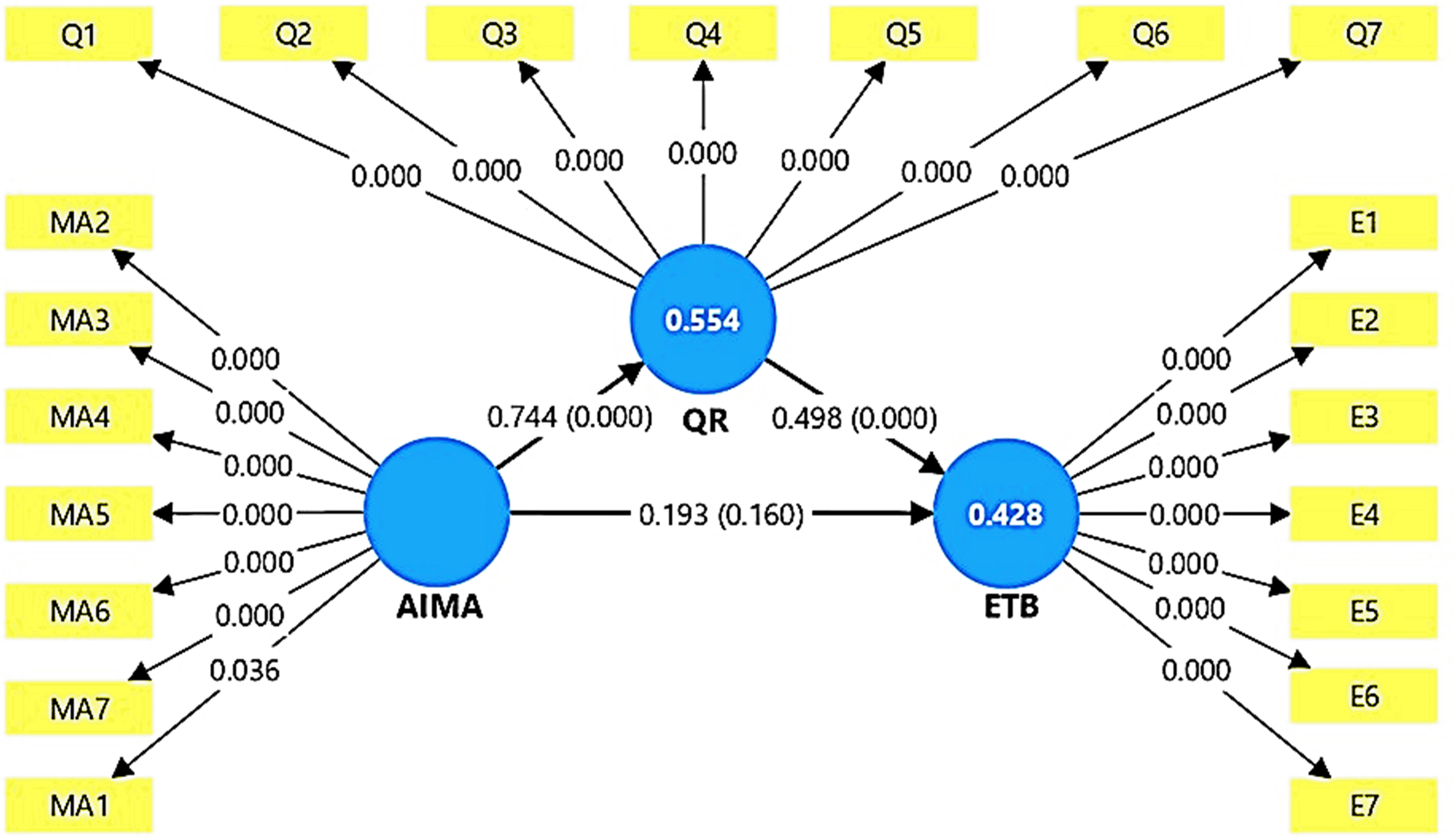
To accomplish the applied aspect of this study, the researchers relied on statistical methods such as structural equation modeling along with regression analysis. Structural equation modeling was used to understand the relationship between the quality of financial reporting, the use of artificial intelligence, and bank reliability. This helped the researchers form a vision of the links that unfold over several stages, demonstrating the pivotal role played by the quality of financial reporting. First, adopting artificial intelligence alongside Managerial accounting methods influences report accuracy. Second, these reports then shape how much people rely on banks. By examining connections between AI use, Managerial accounting practices, report quality, also public confidence, researchers discovered that improved reporting - a result of those earlier factors - is what truly builds faith in banking institutions (See Figure 1).
We review the mathematical models below. The first model describes the total effect of the independent variable (integration of artificial intelligence and management accounting) on the dependent variable (enhancing trust in banks). The second model describes the effect of the independent variable (integration of artificial intelligence and management accounting) on the mediating variable (quality of financial reporting). The third model measures the direct effect of the independent and mediating variables combined on the dependent variable. These models form the core of the Baron and Kenny approach to measuring mediation effects and help determine whether the direct effect increases or decreases significantly after the mediating variable is introduced, confirming the presence or absence of a mediation effect.
7-1-1- Outer loadings
The data in Table 3 present the central four statistics original sample (O), replicate sample mean (M), standard deviation (STDEV) and t-statistics, which help in estimating the strength of both the correlations between the manifest indicators and the latent variables in the PLS-SEM model. The findings show that the majority of dependent variable indicator (enhancement of trust in banks (ETB)) has high loadings (values between 0.611 and 0.773) and all of t-values are high, thus all are significant at p < 0.05. This represents the high explanation of those indicators of the latent variable, and a high level of intra- consistency.
For the indicators of independent variable which is integration of Artificial Intelligence and Management Accounting (AIMA) the loadings are between (0.291) and (0.713) (all significant at 0.05 level). Hypothetically, regarding the figure of parameter MA1, which presented the aim loading (0.308) together with t-value (2.096) as the weakest one in comparison with the other figures for all indicators, being excluded could lead to a more accurate model. Whereas the indicators of the mediating variable, QR has fledged loadings in the range of 0.547 to 0.786 and are significant. This means the indicator successfully reflects the concept of financial reporting quality considering that there is homogeneity in the estimates due to the low values of the standard deviation. Clearly the individual results speak of homogeneity and statistical validity of the estimates, and therefore of the strength of the association between indicators and latent measures. They also provide information about the acceptable level of convergent validity and reliability in the measurement model analysis, and they also confirm that AIMA has positive effects on ETB through QR by using the structural model analysis.
In general, the concordance between O and M values, the low STDEV values, and the high t values all indicate the reliability of the model and the accuracy of the relationships between the indicators and the latent variables, which strengthens the theoretical framework used in this study and confirms the validity of the measurement model for testing hypotheses related to the effect of AIMA on ETB via QR.
7-1-2- Construct reliability and validity and SRMR
Table 4 presents the results of the internal consistency and construct validity assessment for a set of underlying variables using three main instruments: Cronbach’s alpha, composite reliability (CR), and extracted mean variance (AVE), in addition to a qualitative assessment of internal consistency and convergent validity. For the independent variable AIMA, α = 0.781 and CR = 0.810 are both above the acceptable threshold (0.7), indicating good internal consistency. AVE = 0.445 is considered acceptable according to Hair (2014) if the composite reliability is high (>0.6), indicating an acceptable level of convergent validity. This justifies the use of the structural model in structural analysis and the interpretation of relationships between variables.
The dependent variable, ETB, showed α = 0.826 and CR = 0.835, both reflecting high internal consistencies. The mean variance (MVA) of 0.491 was close to the acceptable limit (≈ 0.5), which is considered practically acceptable to support the convergence validity of the variable. The mediating variable, QR, recorded α = 0.805 and CR = 0.823, indicating high reliability. The mean variance (MVA) of 0.460 was less than 0.5, which is also acceptable according to Hair (2014), confirming that the indices explain a sufficient portion of the underlying variance to support the structural model. Overall, these values show that all variables have good to high reliability and acceptable convergent validity, supporting the validity of the study indices and strengthening the model’s reliability in testing hypotheses regarding the effect of AIMA on ETB through QR.
The SRMR test results, related to overall model fit, show an SRMR value of 0.098 for both the estimated and actual models. Since model fit is acceptable within the upper limit (<0.10), particularly for PLS-SEM models, the SRMR result for our research model indicates that the model exhibits a degree of fit within acceptable parameters (See Table 5).
| Original sample (O) | Sample mean (M) | 95% | 99% | |
|---|---|---|---|---|
| Saturated model | 0.098 | 0.075 | 0.087 | 0.093 |
| Estimated model | 0.098 | 0.075 | 0.087 | 0.093 |
7-1-3- Coefficient of determination
Table 6 shows the coefficient of determination (R2) for the explanatory power of the independent variables in the model for the dependent variable. For the “ETB” variable, the raw R2 value is 0.428, and the adjusted R2 value is 0.417, indicating that the model explains approximately 42.8% of the variance in the ETB variable. This reflects the model’s moderate explanatory power, as supported by the narrow confidence interval (0.301 – 0.609).
| Dependent Variable | R2 (Original Sample) | 95% Confidence Interval | R2 Adjusted | Interpretation |
|---|---|---|---|---|
| ETB | 0.428 | 0.301 – 0.609 | 0.417 | Moderate explanatory power |
| QR | 0.554 | 0.446 – 0.695 | 0.550 | Strong explanatory power |
For the “QR” variable, the raw R2 value is 0.554, and the adjusted R2 value is 0.550, indicating that the model explains approximately 55.4% of the variance in the QR variable, reflecting the model’s strong explanatory power.
These results reflect the model’s ability to explain the overall behavior of the dependent variables well, considering minor differences between the raw and adjusted values.
7-1-4- Effect size (f 2)
Table 7 shows the effect sizes (f2) of the independent variables on the dependent variables in the model. The path from AIMA to ETB shows a small effect size of f2 = 0.029, with a confidence interval between 0.000 and 0.175, indicating that AIMA’s influence on ETB is relatively weak; The path from AIMA to QR shows a large effect size of f2 = 1.243, with a confidence interval between 0.805 and 2.279, indicating that AIMA has a strong influence on QR. path from QR to ETB shows a medium effect size of f2 = 0.193, with a confidence interval between 0.047 and 0.493, indicating that QR has a moderate influence on ETB.
The statistics in Table 8 also indicate the relationship between applying AI technologies with management accounting tools (AIMA) to enhance trust in banks (ETB) directly and indirectly through the quality of financial reporting (QR) as an intervening variable.
H1: There is a statistically significant association between AI technologies and management accounting tools integration and trust in banks [Beta = 0.193, (AIMA → ETB), t = 1.404, and P = 0.160]. The 95% confidence interval was between -0.086 and 0.464, crossing zero. The direct relationship among the application of above-mentioned AI technologies and trust in banks are not significant at the 0.05 level, which rejects the first hypothesis, as shown in results of Table 3. Thus, it can be interpreted because without a mediating factor, the direct effect of integrating AI technologies with the effect of management accounting tool on trust of bank is poor and statistically weak. About the second hypothesis (H2) which states that: “There is a relationship between the integration of artificial intelligence technologies and management accounting tools and trust in banks through the quality of financial reports as an intervening variable”, the results of the path AIMA → QR obtained very strong effects β = 0.744 (t = 17.385 and p = 0.000); which indicates that the integration of artificial intelligence technologies contributes significantly to the quality of financial reports of banks.
Similarly, the path QR → ETB also produced a strong significant effect with β = 0.498, t = 4.068, p = 0.000, meaning quality of financial reports can significantly affect the increase of trust in the bank directly.
The total indirect effect of the path of AIMA → QR → ETB was β = 0.370 (t = 3.843, P = 0.000) and the confidence interval of this indirect effect value was (0.195 – 0.579) which was completely positive so that it can be concluded that there is a statistically significant indirect effect.
The results of this study prove that financial reports quality entirely mediates the effect of the integration between AI technologies and management accounting tools weakness on trust’s level in banks. This means there is a full mediation, given that the direct effect between AIMA and ETB is not statistically significant while the indirect effect through QR is significant. The former indicating that quality of financial reports is the sole channel by which the impact of adoption of AI technologies are transmitted to improve banks trust.
From the above, H1 is rejected because there is a test result that there is no significant positive direct effect, and H2 is accepted because there is an indirect effect between AIMA on the quality of financial reports which is strong and significant (See Table 9).
This indicates that technological innovations do not directly achieve such trust but only endow widely accepted insecure institutions with a significant improvement in the quality of financial reporting based on their transparency and credibility and thus help to foster sustainable trust in banking institutions (See Figure 2).
As results in Tables 10 and 11 indicate, controlling for two analyses, two variables bank age (BA) and Internal Control System (ICS) did not affect the model in which we focused on. The values of f2 are an indicator of effect size of various paths Associate, which in our case were all very weak and statistically insignificant. As the effects of bank age on the dependent variable trust in banks (ETB) or quality of financial reporting (QR) f2 = 0.009, f2 = 0.013 were below the minimum acceptable value (0.02) as recommended by Hair (2014). This indicates that the change in dependent variable cannot be explained with bank age. Likewise, the results internal control system found had a poor effect on trust in banks f2 = 0.005 and a poor effect on quality and financial reporting. f2 = 0.058, weak, towards insignificant, but falls short of at the statistically acceptable level. The explanatory power (R2) for trust in banks improved from 0.428 to 0.433 after the two control variables were added, a minimal difference (Michael, 2014) which means that the improvement in the model’s explanation is very low. The R2 value for financial reporting quality increased slightly from 0.554 to 0.578, suggesting a marginal improvement from inclusion of the two control variables in accounting for variance in financial reporting quality.
| Path | f2 (Effect size) | T-Statistic |
|---|---|---|
| BA → ETB | 0.009 | 0.341 |
| BA → QR | 0.013 | 0.440 |
| ICS→ ETB | 0.005 | 0.226 |
| ICS→QR | 0.058 | 1.067 |
| Dependent Variable | Before Adding Controls | After Adding Controls | Note |
|---|---|---|---|
| ETB | 0.428 | 0.433 | Slight positive change |
| QR | 0.554 | 0.578 | Positive change |
So, it is inferred that the two control variables did not affect the main relationships of the model and remain secondary and adjunct to its role. On the other hand, the internal control system seems to have a little significant positive trend with respect to affecting financial reporting quality, indicating that it is worthwhile developing this system for supporting bank reporting quality improvement efforts in the future to increase trust on the banks indirectly (See Figure 3).
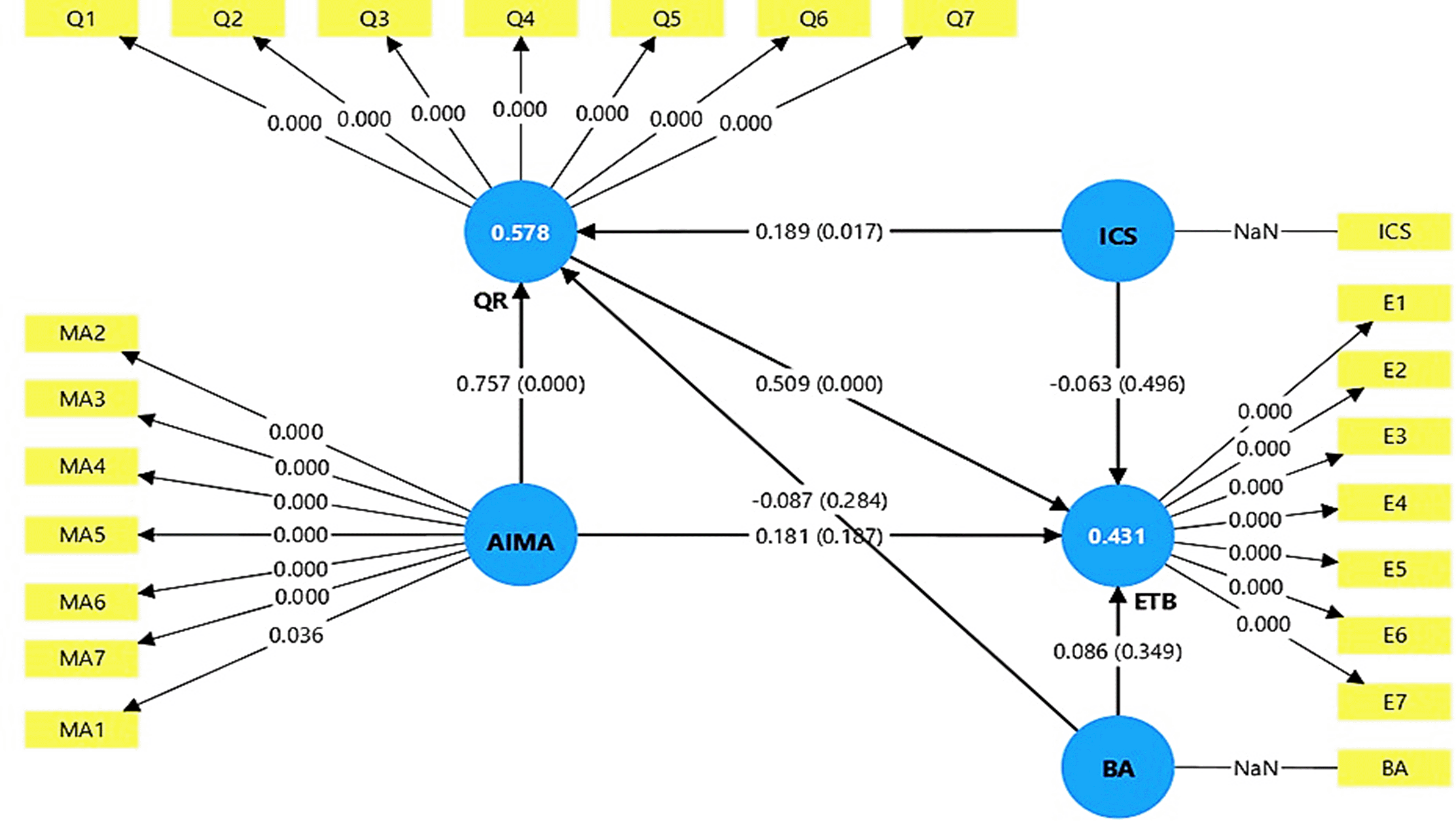
The findings from the statistical analysis state that using AI technologies alongside management accounting tools does lead to an indirect trust increase in banks. Instead, this effect is obtained via the quality of financial statements, representing the first point of contact between technical development and trust-building. While banks cannot dwell on their strong internal performance and operational accuracy, an improvement in these two areas will not shine on outside world unless the information output is transparent, clear and available on demand for customers and investors. The technology fosters trust in itself, and also improves trust in the objectivity and accuracy of financial statements and their ability to represent the true financial condition of banks. This result recognizes the nature of the banking industry in developing settings that the artificial intelligence is embryonic and primarily utilized for internal operational and administrative purposes rather than utilizing for the purpose of enhancing their financial disclosure and communication with the financial community (So, it is reasonable for there to be no direct relationship between AI and trust in banks, as customers can only experience the effects of technology indirectly through the high quality of the information they receive through financial statements). The mediating effect found in the relationship of the quality of financial reporting reveals both a clear and substantive impact. Banks or institutions deploying AI technologies to accounting or financial analysis will be able to generate financial reports more rapidly, correctly and reliably with lesser errors or misleading information, and also add greater credibility to the information published. Clearer interactions: This fosters stakeholder confidence and strengthens the confidence on how banks are managing the situations. People, it seems, are less confident about the tech itself than its function for the improvement of financial reports. When we pair AI with Managerial accounting, it creates the design for accurate systems that can analyze finances and this translates to a better image of the bank in the eyes of clients and investors. In contrast, the control variables of age and internal control system bank not significantly affect the relationship, the implication is that variable age and internal control system bank were no longer the main factors determining trust (bank) as a result of bank regulation in Iraq. Trust is becoming less reliant on a bank as a signer of character (which is more the reason for a bank to relentlessly open up as well as disclose) emerging from technology. Still, the current shift of internal control systems towards providing more control over the quality of financial reporting indicates that such integration could add benefit to the overall transparency and trust in the future.
The loaning banks do not directly have trust built from the integration of AI with management accounting systems. The impact of AI could then be framed in quality of financial reporting since it is a route to ensure stakeholders are trusting the reports. Results show that trust is not placed in the technology, but the technology enhances the information within financial statements by increasing their credibility, transparency, and accuracy. In banks that have implemented AI and concentrate more on their activities, the advantages to stakeholders are clear, as technology fosters more reliable and precise financial information. This shows that the organization’s digitization or its academic past does not matter as much as the clarity and AI-enhanced nature of its financial communication.
As mentioned previously, Researchers argue that Iraqi banks should adopt comprehensive strategy for digital transformation depend on AI techniques to increase quality reporting and boost level of dependability of investors and stakeholders, we can achieve this by developing technological infrastructure and creating unified data servers that support intelligent analysis, Employing ML algorithms in prepare reports and detection of errors and deviation, and improving accuracy of financial performance indicators, in addition adopting automation to conducting accounting adjustments and perform routine tasks by the accountant which contributes in reducing human errors, Moreover Iraqi banks should use advanced AI systems to monitor compliance to IFRS standards and legislation and laws of Central Bank of Iraq, and to detect violations and financial fraud through prediction and early detection models.
In addition to integrating AI techniques with tools of management accounting such as BSC, ABC, and TDABC to prepare more comprehensive and predictive reports, increasing data governance through clear policies for data management and protection it. Furthermore, Iraqi banks need to train their employees on smart analytics, and use of digital systems, dealing with AI, to increase transparency in financial reports and improve reliability of disclosure in the Iraqi banking sector.
Despite the importance of the study and its role in explaining mechanisms of AI with management accounting to improve the quality of financial reports and enhance confidence in Iraqi banks, the study faces a set of limitations that should be taken into consideration, including that the study was conducted on Iraqi banks that operate within an economic and regulatory context characterized by features that differ from banks in other countries.
Furthermore, Iraqi banks differ in adoption of AI from one bank to another, which may lead to variations in participants’ responses or the nature of available data, Moreover, the integration of AI and management accounting requires high level of technical and organizational readiness, which may not always be available, making measuring the actual impact of the integration a complex process.
Based on the results and limitations identified in the current study, several promising avenues for future research emerge that could enrich understanding of AI contributes to development of AIS and the quality of financial reporting in the banking sector. Among the most significant directions are consist of: Future studies could broaden their scope by conducting comparative studies between Iraqi and banks in other countries with more advanced levels of digital readiness. which help reveal existing gaps and highlight the key factors that enable successful adoption of AI.
In addition, incorporating mediating variables such as organizational culture, technological readiness, governance, employees’ digital competencies, and risk management may enhance the explanatory power of future models and allow for more accurate and comprehensive analysis of the relationships involved.
There is also an opportunity to develop modern measurement indicators for financial reporting quality that rely on big data analytics and AI, rather than depending on traditional metrics.
Moreover, upcoming research should seek a deeper understanding of how AI influences behavior of accountants, auditors, compliance officers, and risk managers, as well as the extent to which these professionals are willing to embrace intelligent technologies.
Finally, future investigations could explore impact of AI on other types of reports such as integrated reporting, sustainability (ESG) reports, and risk management reports given their growing importance in the contemporary environment of Banks.
Zenodo: [Integrating AI and Management Accounting to Improve the Quality of Financial Reporting and Enhance Trust in Iraqi Banks]. https://doi.org/10.5281/zenodo.18002519 (Mohammed et al., 2025)
This project contains the following data:
• Data.csv
Data are available under the terms of the Creative Commons Attribution 4.0 International license (CC-BY 4.0).
| Views | Downloads | |
|---|---|---|
| F1000Research | - | - |
|
PubMed Central
Data from PMC are received and updated monthly.
|
- | - |
Provide sufficient details of any financial or non-financial competing interests to enable users to assess whether your comments might lead a reasonable person to question your impartiality. Consider the following examples, but note that this is not an exhaustive list:
Sign up for content alerts and receive a weekly or monthly email with all newly published articles
Already registered? Sign in
The email address should be the one you originally registered with F1000.
You registered with F1000 via Google, so we cannot reset your password.
To sign in, please click here.
If you still need help with your Google account password, please click here.
You registered with F1000 via Facebook, so we cannot reset your password.
To sign in, please click here.
If you still need help with your Facebook account password, please click here.
If your email address is registered with us, we will email you instructions to reset your password.
If you think you should have received this email but it has not arrived, please check your spam filters and/or contact for further assistance.

Comments on this article Comments (0)