Keywords
Mental Health Literacy, Enabling Themes, Organizational Implementation Capacity, University Mental Health Charter, Higher Education

This article is included in the Social Psychology gateway.
Mental Health Literacy, Enabling Themes, Organizational Implementation Capacity, University Mental Health Charter, Higher Education
Mental health in higher education has become a major concern for universities worldwide. University students are situated in a developmental period often described as emerging adulthood, during which individuals experience intensified academic, social, emotional, and identity-related transitions (Arnett, 2000; Arnett et al., 2014). Studies have shown that mental health difficulties among university students are widespread, with anxiety, depression, stress, and other common mental disorders affecting students’ learning, wellbeing, persistence, and overall university experience (Auerbach et al., 2018; Bewick et al., 2010). In Vietnam, recent evidence similarly indicates that student mental health is a growing concern, particularly in relation to academic pressure, social adjustment, and post-pandemic vulnerabilities (Cong et al., 2025). These developments suggest that student mental health should no longer be treated solely as an individual concern but as a system-level issue requiring institutional attention, policy implementation, and coordinated university-wide responses.
In response to these challenges, universities have increasingly developed counseling services, wellbeing initiatives, prevention programs, peer-support activities, and institutional mental health policies. At the international level, the University Mental Health Charter has advanced a whole-university approach by conceptualizing mental health support across interconnected domains, including Learn, Live, Work, and Support, underpinned by enabling institutional conditions such as leadership, strategy and policy, student voice and participation, institutional cohesiveness, inclusivity, and research-informed innovation (Hughes & Spanner, 2024). This perspective recognizes that effective mental health support cannot be achieved solely through counseling services but requires coordinated efforts across teaching and learning, student life, staff wellbeing, governance, and institutional culture. Following this perspective, the present study focuses on lecturers, administrators, specialists, academic advisors, and professional staff who play important roles in shaping and implementing mental health support practices within universities.
Despite growing institutional attention to mental health, the presence of policies and services does not necessarily guarantee effective implementation. Previous studies have highlighted persistent gaps between policy adoption and policy enactment, particularly when institutional structures are fragmented, services are poorly coordinated, or staff members lack clarity regarding their responsibilities in supporting student wellbeing (Baik et al., 2019; Thorley, 2017). From an implementation science perspective, this reflects a broader implementation challenge whereby formal policies are not always translated into consistent and sustainable institutional practices (Fixsen et al., 2005; Proctor et al., 2011). Such challenges are particularly relevant in universities, which are characterized by complex governance arrangements involving academic departments, administrative units, student services, counseling centers, residential systems, and leadership structures. Within these environments, lecturers and administrators often function as policy implementers who interpret, adapt, and enact institutional priorities in their daily professional practice (Cairney, 2019; Lipsky, 2010).
One factor that may influence this implementation process is Mental Health Literacy (MHL). Originally defined as knowledge and beliefs about mental disorders that facilitate their recognition, management, or prevention (Jorm et al., 1997), MHL has subsequently evolved to encompass mental health awareness, help-seeking knowledge, stigma reduction, prevention strategies, and supportive behaviors (Jorm, 2012). In higher education settings, MHL among lecturers, administrators, and professional staff may be particularly important because these groups are often responsible for identifying student difficulties, facilitating referrals, creating supportive learning environments, and implementing institutional wellbeing policies. In the present study, MHL encompasses awareness, support orientation, help-seeking knowledge, non-judgemental attitudes, responsibility for suicide prevention, and willingness to assist individuals experiencing mental health difficulties.
However, higher levels of MHL may not necessarily translate into stronger institutional mental health support outcomes. Awareness and knowledge may remain at the individual level unless they are supported by organizational conditions that facilitate implementation. Therefore, understanding how MHL is associated with institutional outcomes requires attention to the organizational processes through which knowledge is translated into practice. Drawing on the University Mental Health Charter and implementation science literature, this study proposes that Enabling Themes (ET) and Organizational Implementation Capacity (OIC) represent two important organizational pathways through which MHL may be associated with institutional mental health support outcomes. ET reflects institutional conditions such as leadership commitment, policy integration, inclusivity, student participation, organizational cohesiveness, and research-informed innovation, while OIC reflects an institution’s capacity to coordinate resources, structures, and implementation processes. Together, these organizational factors may help explain how mental health literacy becomes embedded within institutional practice.
The present study addresses three important gaps in the literature. First, much of the existing university mental health literature focuses on student symptoms, help-seeking behaviors, stigma, and service utilization, while relatively less attention has been paid to how mental health support policies are implemented from the perspective of university personnel. Second, prior studies frequently examine direct relationships between mental health literacy and mental health outcomes without sufficiently investigating the organizational pathways through which literacy may be associated with institutional practices. Third, limited empirical research has examined the roles of enabling institutional conditions and organizational implementation capacity in explaining how mental health literacy is associated with university mental health support outcomes, particularly within the context of Vietnamese higher education.
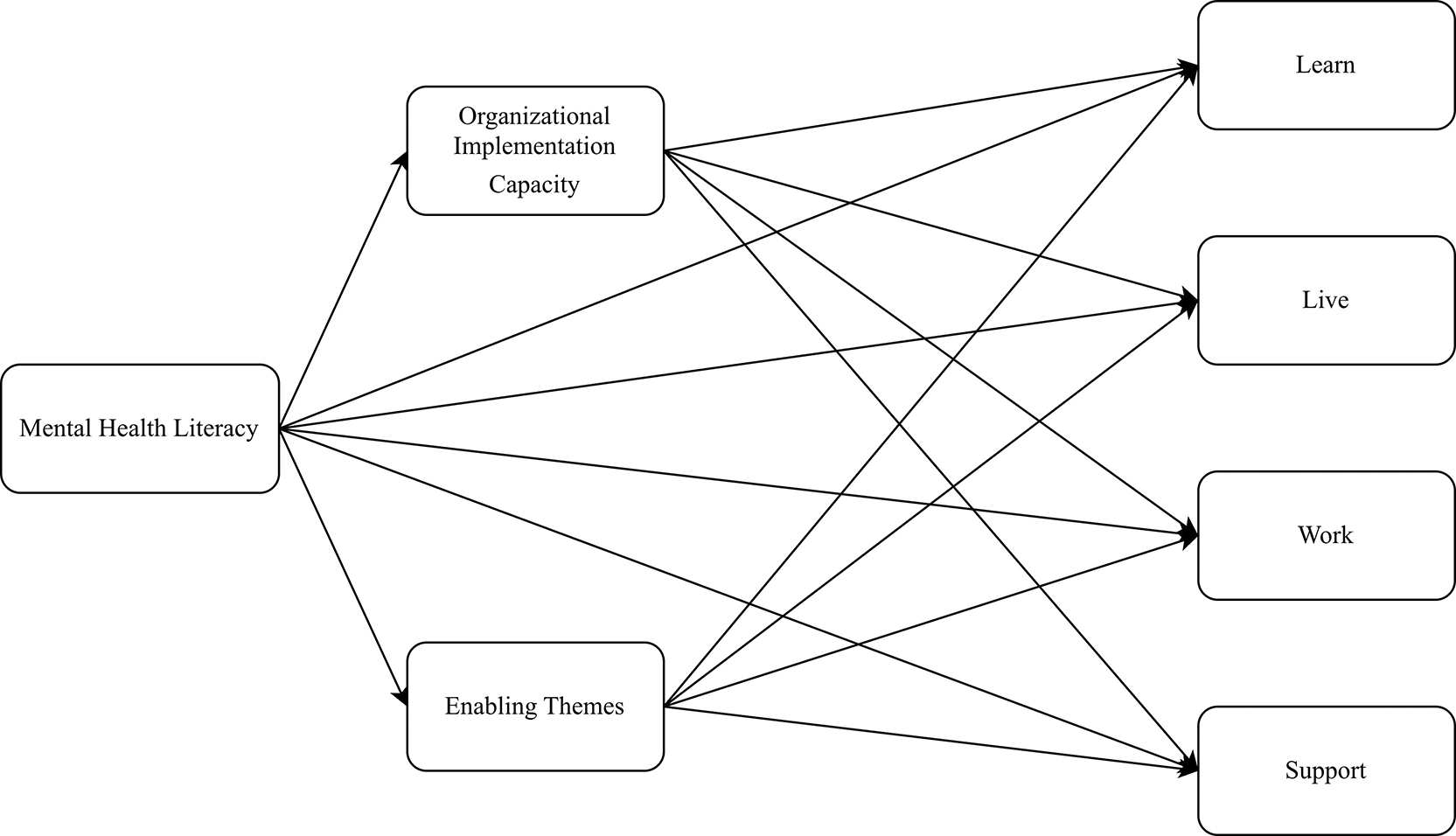
Accordingly, this study aims to examine how Mental Health Literacy is associated with the development and implementation of university mental health support policies in Vietnam. Specifically, it investigates the relationships among Mental Health Literacy, Enabling Themes, Organizational Implementation Capacity, and four domains of university mental health support: Learn, Live, Work, and Support. By doing so, the study contributes theoretically by extending MHL research beyond an individual-awareness perspective and situating it within an organizational implementation framework. It contributes methodologically by applying Partial Least Squares Structural Equation Modeling (PLS-SEM) to examine both direct and indirect relationships among key institutional variables. It contributes practically by providing evidence that may assist university leaders and policymakers in designing more integrated, sustainable, and implementation-oriented mental health support systems.
To address these objectives, the study investigates the following research questions:
RQ1. Does Mental Health Literacy significantly influence Enabling Themes and Organizational Implementation Capacity in higher education institutions?
RQ2. Do Enabling Themes and Organizational Implementation Capacity significantly influence the university mental health support domains of Learn, Live, Work, and Support?
RQ3. Does Mental Health Literacy significantly influence the university mental health support domains of Learn, Live, Work, and Support?
RQ4. Do Enabling Themes mediate the relationships between Mental Health Literacy and the outcome domains of Learn, Live, Work, and Support?
RQ5. Does Organizational Implementation Capacity mediate the relationships between Mental Health Literacy and the outcome domains of Learn, Live, Work, and Support?
Mental Health Literacy (MHL) has been widely recognized as a critical foundation for promoting mental health awareness, prevention, help-seeking, and support behaviors. Originally defined as knowledge and beliefs about mental disorders that facilitate their recognition, management, or prevention (Jorm et al., 1997), the concept has subsequently evolved to encompass broader competencies related to mental health awareness, stigma reduction, help-seeking knowledge, and supportive responses toward individuals experiencing mental health difficulties (Jorm, 2012). Within higher education institutions, MHL among lecturers, administrators, specialists, and professional staff is particularly important because these stakeholders frequently interact with students and often serve as the first point of contact for identifying distress, providing support, facilitating referrals, and implementing wellbeing-related policies and initiatives. Although MHL is commonly examined as an individual-level construct, the present study conceptualizes it as an institutional resource. Specifically, the collective mental health literacy of university personnel may influence how mental health issues are understood, prioritized, and addressed within organizational contexts, thereby shaping institutional responses to student wellbeing.
The University Mental Health Charter provides a useful framework for understanding how universities can develop comprehensive and sustainable approaches to mental health support (Hughes & Spanner, 2024). Rather than viewing mental health as the responsibility of counseling services alone, the Charter advocates a whole-university approach in which mental health is embedded across institutional structures, policies, practices, and cultures. Within this framework, effective mental health support is reflected in four interconnected outcome domains: Learn, Live, Work, and Support. Learn encompasses students’ educational experiences, including transition, teaching, learning, assessment, and academic progression. Live refers to social integration, belonging, accommodation, and the broader campus environment. Work focuses on staff wellbeing and professional development, while Support includes counseling services, risk management, information sharing, and partnerships with external providers. Collectively, these domains represent key indicators of how effectively universities support mental health across academic, social, and organizational contexts.
Although MHL may contribute to greater awareness of mental health needs and support responsibilities, implementation science suggests that awareness alone is unlikely to generate meaningful institutional outcomes (Fixsen et al., 2005; Proctor et al., 2011). Universities are complex organizations characterized by multiple stakeholders, decentralized decision-making structures, and diverse institutional priorities. Consequently, the relationship between MHL and university mental health support outcomes is unlikely to be purely direct. Rather, the influence of MHL may depend on organizational conditions that facilitate the translation of awareness into coordinated institutional action. This perspective highlights the importance of understanding the organizational processes through which mental health literacy becomes embedded within university systems.
One such process is represented by Enabling Themes (ET). Adapted from the University Mental Health Charter, ET comprises five interrelated dimensions: leadership, strategy and policy; student voice and participation; cohesiveness across the provider; inclusivity and intersectional mental health; and research, innovation, and dissemination (Hughes & Spanner, 2024). Together, these dimensions capture the institutional conditions that support the integration of mental health considerations into university governance, teaching, student services, and organizational culture. Leadership and strategic direction provide legitimacy and institutional commitment, student participation promotes responsiveness and co-creation, organizational cohesiveness reduces fragmentation across units, inclusivity ensures attention to diverse student needs, and research-informed innovation supports continuous improvement. As such, ET represents the visible organizational environment through which mental health priorities are translated into institutional practice.
From an implementation perspective, individuals with higher levels of mental health literacy may be more likely to recognize the importance of these enabling conditions and support their development within universities. In turn, stronger enabling conditions may facilitate the implementation of mental health initiatives and contribute to more favorable outcomes across the Learn, Live, Work, and Support domains. This reasoning is consistent with implementation science frameworks, which emphasize that implementation outcomes are shaped by organizational processes that transform knowledge and intentions into coordinated action (Powell et al., 2015; Proctor et al., 2011). Accordingly, the following hypotheses are proposed:
Mental Health Literacy positively influences Enabling Themes.
Enabling Themes positively influence Learn.
Enabling Themes positively influence Live.
Enabling Themes positively influence Work.
Enabling Themes positively influence Support.
Another organizational factor that may help explain how mental health literacy is associated with institutional outcomes is Organizational Implementation Capacity (OIC). Derived from organizational readiness and implementation literature, OIC reflects an institution’s capacity to mobilize resources, coordinate structures, communicate priorities, clarify responsibilities, foster collaboration, and support implementation processes. This conceptualization aligns with organizational readiness theory, which argues that successful implementation depends on both commitment and capability (Weiner, 2009), as well as earlier work emphasizing organizational support, readiness beliefs, and implementation infrastructure as essential conditions for change (Armenakis et al., 1993; Weiner et al., 2008).
The present study conceptualizes OIC as a potential organizational pathway linking MHL with institutional outcomes. University personnel with stronger mental health literacy may be more likely to engage with implementation efforts, communicate mental health priorities, and support institutional change initiatives. Consequently, higher levels of MHL may be associated with stronger perceptions of implementation capacity. In turn, greater implementation capacity may contribute to the development and delivery of mental health support initiatives across university settings. Whether such implementation capacity translates into perceived mental health support outcomes, however, remains an empirical question requiring investigation.
Accordingly, the following hypotheses are proposed:
Mental Health Literacy positively influences Organizational Implementation Capacity.
Organizational Implementation Capacity positively influences Learn.
Organizational Implementation Capacity positively influences Live.
Organizational Implementation Capacity positively influences Work.
Organizational Implementation Capacity positively influences Support.
In addition to these organizational pathways, MHL may also demonstrate direct associations with institutional mental health support outcomes. Individuals with higher levels of mental health literacy may possess greater awareness of student needs, support resources, and institutional responsibilities, which may influence how they evaluate the effectiveness of university mental health support systems. Therefore, direct relationships between MHL and the four outcome domains are also examined.
Mental Health Literacy positively influences Learn.
Mental Health Literacy positively influences Live.
Mental Health Literacy positively influences Work.
Mental Health Literacy positively influences Support.
Finally, ET and OIC are expected to function as organizational pathways through which MHL is associated with institutional mental health support outcomes. Specifically, mental health literacy may contribute to stronger enabling conditions and greater implementation capacity, which subsequently shape the Learn, Live, Work, and Support domains. This perspective is consistent with implementation science, which views organizational processes as key mechanisms linking individual awareness and institutional outcomes.
Accordingly, the following mediation hypotheses are proposed:
Enabling Themes mediate the relationship between Mental Health Literacy and Learn.
Enabling Themes mediate the relationship between Mental Health Literacy and Live.
Enabling Themes mediate the relationship between Mental Health Literacy and Work.
Enabling Themes mediate the relationship between Mental Health Literacy and Support.
Organizational Implementation Capacity mediates the relationship between Mental Health Literacy and Learn.
Organizational Implementation Capacity mediates the relationship between Mental Health Literacy and Live.
Organizational Implementation Capacity mediates the relationship between Mental Health Literacy and Work.
Organizational Implementation Capacity mediates the relationship between Mental Health Literacy and Support.
Drawing upon the preceding literature and theoretical arguments, the present study develops a conceptual model that integrates Mental Health Literacy, Enabling Themes, Organizational Implementation Capacity, and the four domains of university mental health support. Figure 1 presents the hypothesized research model that guides the empirical analysis.
The study surveyed 220 participants, including lecturers, university administrators, specialists, academic advisors, and professional staff working in Vietnamese higher education institutions. Participants were recruited from eight universities across different regions of Vietnam, including member institutions of the Vietnam National University systems and major teacher education universities.
Before completing the online questionnaire, participants were asked to read an written informed consent statement presented at the beginning of the electronic form. The statement clearly explained the objectives of the study, emphasized that participation was voluntary, and provided key ethical assurances regarding confidentiality, anonymity, and the right to withdraw from the study at any stage without any negative consequences. Ethical clearance for the study was granted by the Ethics Review Board of the University of Social Sciences and Humanities, Vietnam National University Ho Chi Minh City, ensuring that all research procedures complied with established ethical standards for studies involving human participants. After data collection, all responses were carefully screened to identify and remove cases with missing, incomplete, or inconsistent information before the final dataset was used for analysis.
The sample consisted of 47.7% male (n = 105) and 52.3% female participants (n = 115). Respondents represented diverse disciplinary backgrounds, with the largest proportions coming from social sciences and behavioral sciences (25.0%), education and teacher training (18.2%), humanities (15.0%), and computer science and information technology (15.0%). In terms of professional experience, most participants reported more than six years of work experience in higher education (61.4%). The diversity of institutions, disciplines, and professional backgrounds provided a broad institutional perspective for examining the development and implementation of university mental health support policies in Vietnam. Table 1 shows the demographic information of the participants in the current study.
The survey instrument consisted of three main sections assessing university mental health support implementation, Mental Health Literacy (MHL), and Organizational Implementation Capacity (OIC). The institutional mental health support section was adapted from the University Mental Health Charter developed by Hughes and Spanner (2024). Respondents evaluated the extent to which their universities had developed and implemented mental health support policies using a five-point implementation scale ranging from 0 (“not implemented”) to 4 (“excellent implementation”). The instrument included four outcome domains: Learn, Live, Work, and Support, as well as a set of Enabling Themes reflecting leadership, strategy and policy, student participation, institutional cohesiveness, inclusivity, and research-informed innovation.
Mental Health Literacy was measured using items adapted from Siddique et al. (2022). The scale assessed respondents’ awareness of mental health issues, willingness to seek or recommend professional help, non-judgmental support orientation, suicide prevention responsibility, and willingness to support individuals experiencing mental health difficulties. Additionally, Organizational Implementation Capacity was adapted from Jo and Hong’s (2023) Readiness for Organizational Change scale. The instrument assessed perceptions regarding institutional structure, leadership support, resources, communication systems, role clarity, collaboration, and organizational openness toward implementing mental health support policies. Responses were measured on a five-point Likert scale ranging from 1 (“strongly disagree”) to 5 (“strongly agree”).
Partial Least Squares Structural Equation Modeling (PLS-SEM) was employed in this study for the data analysis. The analysis followed a two-step structural equation modeling procedure. First, the measurement model was evaluated through assessments of reliability, convergent validity, discriminant validity, and multicollinearity. Reliability was assessed using Cronbach’s alpha. Convergent validity was evaluated using Average Variance Extracted (AVE), while discriminant validity was examined using the Fornell-Larcker criterion and HTMT. Multicollinearity was assessed using Variance Inflation Factor (VIF) values. Second, the structural model was examined including direct effects, mediation effects of Enabling Themes and of Organizational Implementation Capacity on the relationships between Mental Health Literacy and the institutional outcome domains of Learn, Live, Work, and Support.
The measurement model was assessed following the recommendations of Hair et al. (2019), focusing on internal consistency reliability, convergent validity, discriminant validity, and multicollinearity. As presented in Table 2, all constructs demonstrated satisfactory levels of reliability. Cronbach’s alpha values ranged from 0.730 to 0.967, exceeding the recommended threshold of 0.70. Similarly, composite reliability (CR) values ranged from 0.829 to 0.969, indicating strong internal consistency among the measurement items.
Convergent validity was evaluated using factor loadings and Average Variance Extracted (AVE). All retained indicators loaded above the recommended threshold of 0.60, with factor loadings ranging from 0.654 to 0.897. Furthermore, all constructs achieved AVE values above the minimum criterion of 0.50, ranging from 0.549 to 0.674. Specifically, ET achieved an AVE of 0.614, Learn 0.565, Live 0.570, NT 0.549, OIC 0.670, Support 0.590, and Work 0.674. These results indicate that the constructs explained more than half of the variance in their respective indicators, thereby confirming satisfactory convergent validity. Multicollinearity was assessed using the variance inflation factor (VIF). All VIF values ranged from 1.000 to 1.740, substantially below the conservative threshold of 3.30 and the commonly accepted threshold of 5.00. Therefore, multicollinearity was not considered a concern in the current model.
Discriminant validity was subsequently assessed using both the Fornell–Larcker criterion (Fornell & Larcker, 1981) and the heterotrait-monotrait ratio (HTMT) (Henseler et al., 2015). As presented in Table 3, the Fornell-Larcker results indicated acceptable discriminant validity for several constructs. However, relatively high correlations were observed among ET, Live, Support, and Work, suggesting substantial conceptual relatedness among these dimensions. This pattern is theoretically understandable because these constructs are derived from the University Mental Health Charter framework and represent closely interconnected aspects of a whole-university approach to mental health support.
To provide a more rigorous assessment, HTMT values were also examined (Hair et al., 2019; Henseler et al., 2015). As shown in Table 4, most HTMT values were below the recommended threshold of 0.90, indicating acceptable discriminant validity between most constructs. However, several construct pairs exceeded the conservative threshold of 0.90, including ET-Live (HTMT = 0.944), ET-Support (HTMT = 0.909), Live-Support (HTMT = 0.905), Live-Work (HTMT = 0.935), and Support-Work (HTMT = 0.918). These elevated HTMT values indicate that several dimensions of university mental health support are strongly interrelated. Nevertheless, all HTMT values remained below 0.95, and the elevated values are theoretically plausible given the conceptual proximity of the Charter-based domains. Overall, the measurement model demonstrated satisfactory internal consistency reliability, convergent validity, acceptable discriminant validity, and no evidence of multicollinearity, supporting its suitability for subsequent structural model assessment.
Following the assessment of the measurement model, the structural model was evaluated by examining explanatory power (R2), predictive relevance (Q2), and the hypothesized direct relationships among the constructs. The revised model positioned Mental Health Literacy (NT) as the independent variable, Enabling Themes (ET) and Organizational Implementation Capacity (OIC) as endogenous mediating constructs, and Learn, Live, Work, and Support as the outcome variables. As presented in Table 5, the model explained 3.9% of the variance in ET (R2 = 0.039) and 7.1% of the variance in OIC (R2 = 0.071). More substantial proportions of variance were explained in the outcome variables, including Learn (R2 = 0.520), Live (R2 = 0.831), Work (R2 = 0.753), and Support (R2 = 0.754). According to Hair et al. (2019), these values indicate moderate explanatory power for Learn and substantial explanatory power for Live, Work, and Support. The adjusted R2 values were highly consistent with the corresponding R2 values, indicating stable model estimation. The predictive relevance of the model was assessed using the blindfolding procedure. As shown in Table 5, all endogenous constructs yielded positive Q2 values, including ET (Q2 = 0.024), OIC (Q2 = 0.046), Learn (Q2 = 0.284), Live (Q2 = 0.466), Work (Q2 = 0.498), and Support (Q2 = 0.436). Since all Q2 values exceeded zero, the model demonstrated satisfactory predictive relevance. The strongest predictive relevance was observed for Work, Live, and Support, suggesting that the model possesses substantial predictive capability for these mental health support outcomes.
| Endogenous construct | R2 | Adjusted R2 | Q2 |
|---|---|---|---|
| ET | 0.039 | 0.035 | 0.024 |
| OIC | 0.071 | 0.067 | 0.046 |
| Learn | 0.520 | 0.513 | 0.284 |
| Live | 0.831 | 0.829 | 0.466 |
| Support | 0.754 | 0.750 | 0.436 |
| Work | 0.753 | 0.750 | 0.498 |
The path coefficient results are presented in Table 6. Mental Health Literacy exhibited positive and significant effects on both Enabling Themes (β = 0.198, t = 2.845, p = .005) and Organizational Implementation Capacity (β = 0.267, t = 4.084, p < .001). These findings indicate that higher levels of mental health literacy among university personnel are associated with stronger enabling institutional conditions and greater organizational implementation capacity. Regarding the outcome variables, Mental Health Literacy demonstrated a positive effect on Learn (β = 0.109, t = 2.211, p = .027). However, significant negative relationships were observed for Live (β = −0.073, t = 2.250, p = .025) and Work (β = −0.111, t = 2.648, p = .008). The direct effect of NT on Support was not statistically significant (β = −0.035, t = 1.042, p = .298). ET emerged as the strongest predictor across all outcome domains. Specifically, ET demonstrated significant positive effects on Learn (β = 0.704, t = 12.032, p < .001), Live (β = 0.946, t = 31.598, p < .001), Support (β = 0.816, t = 20.682, p < .001), and Work (β = 0.861, t = 17.656, p < .001). In contrast, OIC did not significantly predict any of the four outcome domains. Specifically, the effects of OIC on Learn (β = −0.019, p = .811), Live (β = −0.038, p = .348), Work (β = 0.036, p = .571), and Support (β = 0.088, p = .111) were statistically non-significant. Therefore, the direct effects associated with OIC were not supported. Figure 2 illustrates the structural model of the present study.
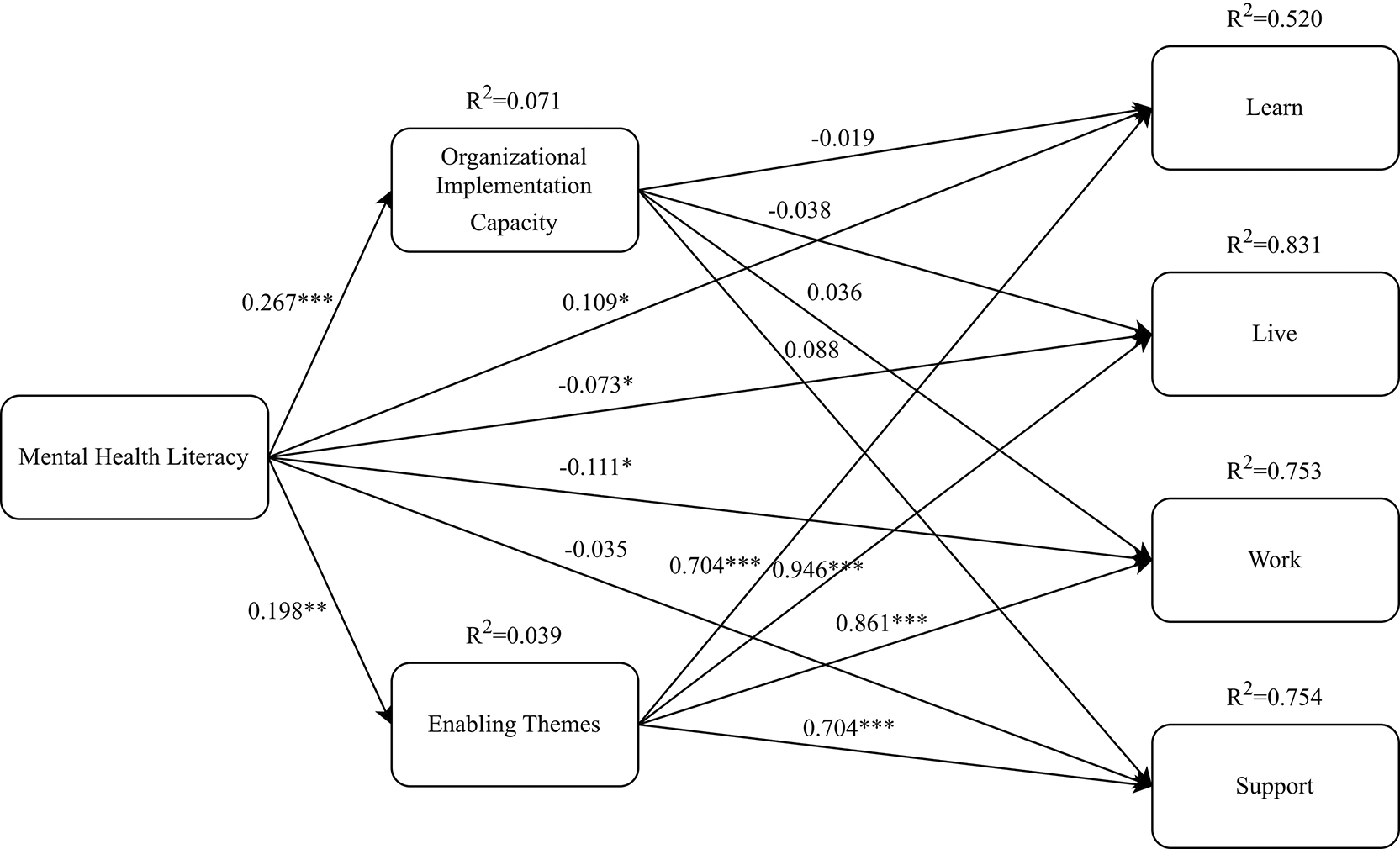
Mediation analysis was conducted to examine whether ET and OIC mediated the relationships between Mental Health Literacy and the four mental health support outcomes. The indirect effects were assessed using the bootstrapping procedure, and the results are presented in Table 7. The findings indicate that ET served as a significant mediator across all four outcome domains. Specifically, Mental Health Literacy demonstrated significant indirect effects on Learn (β = 0.140, p = .004), Live (β = 0.188, p = .006), Support (β = 0.162, p = .005), and Work (β = 0.171, p = .008) through ET. These findings suggest that individuals with higher levels of mental health literacy tend to perceive stronger enabling institutional conditions, which subsequently contribute to more favorable perceptions of mental health support implementation.
In contrast, the mediating role of OIC was not supported. The indirect effects of Mental Health Literacy on Learn (β = −0.005, p = .821), Live (β = −0.010, p = .401), Support (β = 0.023, p = .147), and Work (β = 0.010, p = .589) through OIC were all statistically non-significant. Although Mental Health Literacy was positively associated with Organizational Implementation Capacity, the latter did not significantly influence any of the outcome variables, resulting in non-significant indirect effects. Overall, the mediation analysis demonstrates that ET represents the primary explanatory pathway linking Mental Health Literacy with mental health support outcomes in higher education institutions. In contrast, OIC does not function as a significant mediating mechanism in the proposed model. These findings highlight the importance of institutional enabling conditions, including leadership commitment, strategic direction, policy coherence, inclusivity, student participation, and organizational cohesiveness, in translating mental health literacy into effective mental health support implementation.
This study examined the relationships among Mental Health Literacy (MHL), Enabling Themes (ET), Organizational Implementation Capacity (OIC), and four dimensions of university mental health support implementation, namely Learn, Live, Work, and Support, within Vietnamese higher education institutions. Overall, the findings indicate that MHL was positively associated with both ET and OIC. More importantly, ET emerged as the strongest predictor of all four outcome domains and served as a significant mediator between MHL and institutional mental health support outcomes. In contrast, OIC demonstrated neither significant direct effects on the outcome domains nor significant mediation effects. Taken together, the findings suggest that the relationship between mental health literacy and perceived institutional mental health support is primarily explained through enabling institutional conditions rather than implementation capacity alone.
The first important finding concerns the positive relationships between MHL and both ET and OIC. This result is consistent with the conceptualization of MHL as a foundational capability that enables university personnel to recognize mental health needs, understand support pathways, and appreciate the importance of institutional responses to student wellbeing (Jorm, 2012; Jorm et al., 1997). Individuals with higher levels of mental health literacy may be more likely to recognize the value of leadership commitment, policy integration, inclusivity, student participation, and coordinated institutional responses. Consequently, MHL appears to be associated not only with individual awareness but also with perceptions of organizational conditions that support mental health initiatives. This finding is broadly consistent with organizational change theories suggesting that successful implementation often begins with shared understanding, recognition of problems, and collective acknowledgement of the need for change (Armenakis et al., 1993; Weiner, 2009).
The second and most substantial finding concerns the central role of ET. The results demonstrated that ET was strongly and positively associated with Learn, Live, Work, and Support, with the largest path coefficients observed in the entire structural model. This finding provides empirical support for the University Mental Health Charter framework, which argues that effective mental health support depends on enabling institutional conditions rather than isolated services or interventions (Hughes & Spanner, 2024). Specifically, universities characterized by stronger leadership commitment, strategic alignment, student participation, institutional cohesiveness, inclusivity, and research-informed innovation were also perceived as providing stronger support across academic, social, residential, and staff-related domains. These findings reinforce the notion that university mental health should be viewed as an institution-wide responsibility embedded within organizational culture, governance structures, and everyday practices rather than as a function of counseling services alone.
The mediation results further strengthen this interpretation. ET significantly mediated the relationships between MHL and all four outcome domains, indicating that mental health literacy may be associated with institutional outcomes primarily through enabling organizational conditions. This finding is consistent with implementation science perspectives, which emphasize that implementation outcomes are often achieved through intermediary organizational processes rather than through knowledge, awareness, or policy inputs alone (Fixsen et al., 2005; Proctor et al., 2011). In the context of higher education, mental health literacy may contribute to a shared understanding of mental health priorities, but its influence on institutional outcomes appears to depend on whether this understanding is translated into supportive structures, policies, practices, and collaborative processes. Therefore, ET may be viewed as an important explanatory pathway through which awareness becomes institutional action.
An unexpected finding relates to the direct effects of MHL on the outcome variables. While MHL demonstrated a positive association with Learn, it exhibited negative relationships with Live and Work and a non-significant relationship with Support. These findings suggest that higher levels of mental health literacy do not necessarily correspond to more favorable perceptions of institutional mental health support. One possible explanation is that individuals with greater mental health literacy may possess a more critical understanding of mental health needs, service quality, and implementation standards. As a result, they may be more aware of existing gaps between institutional aspirations and actual practice. Previous studies have suggested that increased awareness can sometimes be accompanied by more critical evaluations of organizational performance because individuals become more knowledgeable about what constitutes effective support systems (Baik et al., 2019; Thorley, 2017). Within higher education contexts, university personnel with stronger mental health literacy may therefore hold higher expectations regarding inclusivity, accessibility, responsiveness, and institutional commitment. Nevertheless, given the cross-sectional nature of the study, this interpretation should be treated cautiously and warrants further investigation.
Another noteworthy finding concerns the role of OIC. Although MHL was positively associated with OIC, OIC did not demonstrate significant direct effects on Learn, Live, Work, Support, nor did it mediate the relationships between MHL and these outcomes. At first glance, these findings appear to contrast with organizational readiness and implementation theories, which emphasize the importance of organizational capacity in supporting change initiatives (Armenakis et al., 1993; Weiner, 2009). However, several explanations may account for this pattern. First, OIC may represent a relatively distal organizational condition whose effects are not directly visible to university personnel. Respondents may evaluate mental health support primarily through observable institutional practices, leadership commitment, inclusivity, and policy implementation, dimensions that are more explicitly captured by ET, rather than through organizational infrastructure or implementation capacity itself. Second, the strong effects of ET may indicate that enabling conditions absorb much of the explanatory variance associated with institutional mental health support, thereby reducing the unique contribution of OIC. Third, implementation capacity may influence outcomes indirectly through organizational processes not included in the present model. Consequently, the findings should not be interpreted as evidence that implementation capacity is unimportant. Rather, they suggest that implementation capacity alone may be insufficient to shape perceptions of university mental health support unless it is translated into visible and meaningful institutional practices.
Taken together, the findings contribute to the growing literature on university mental health by extending MHL beyond its traditional focus on mental health knowledge, stigma reduction, and help-seeking behaviors (Jorm, 2012; Siddique et al., 2022). More importantly, the study advances existing literature by demonstrating that the influence of MHL on institutional mental health support outcomes is not primarily direct but is largely explained through enabling organizational conditions. This finding highlights ET as a key explanatory mechanism linking individual awareness with institutional implementation. By integrating the University Mental Health Charter with implementation science perspectives, the study shifts attention from awareness-raising activities alone toward the organizational processes through which universities translate mental health commitments into sustainable and institution-wide support systems. Consequently, the findings suggest that improving mental health literacy may be necessary but insufficient unless accompanied by organizational conditions that enable awareness to be transformed into institutional action.
This study examined the relationships among Mental Health Literacy (MHL), Enabling Themes (ET), Organizational Implementation Capacity (OIC), and four dimensions of university mental health support implementation: Learn, Live, Work, and Support, within Vietnamese higher education institutions. Drawing upon the University Mental Health Charter and implementation science perspectives, the study investigated how mental health literacy is associated with institutional mental health support outcomes and whether this relationship operates through organizational mechanisms represented by ET and OIC.
The findings revealed that MHL was positively associated with both ET and OIC, suggesting that greater mental health literacy among university personnel is linked to stronger perceptions of enabling institutional conditions and organizational implementation capacity. More importantly, ET emerged as the strongest predictor of all four outcome domains and served as a significant mediator between MHL and Learn, Live, Work, and Support. These findings indicate that the relationship between mental health literacy and university mental health support outcomes is primarily explained through enabling organizational conditions rather than through direct effects alone. In contrast, OIC did not demonstrate statistically significant direct or indirect effects on the outcome domains. While organizational implementation capacity remains theoretically relevant, the present findings suggest that implementation capacity may not directly influence perceptions of mental health support unless it is translated into visible institutional structures, policies, and practices.
Interestingly, the direct relationships between MHL and the outcome domains were mixed. While MHL was positively associated with Learn, it demonstrated negative relationships with Live and Work and a non-significant relationship with Support. These findings suggest that greater mental health literacy may not necessarily translate into more favorable evaluations of institutional mental health support. Instead, individuals with higher levels of mental health literacy may possess a greater awareness of both the strengths and limitations of existing support systems, leading to more critical evaluations of institutional practices.
The study contributes to the growing literature on university mental health by extending the concept of mental health literacy beyond its traditional individual-level focus and positioning it within an organizational implementation framework. More specifically, the findings identify Enabling Themes as a critical explanatory mechanism through which mental health literacy is associated with institutional mental health support outcomes. By integrating the University Mental Health Charter with implementation science perspectives, the study demonstrates that awareness alone may be insufficient to improve institutional outcomes unless it is supported by enabling organizational conditions such as leadership commitment, policy integration, student participation, inclusivity, organizational cohesiveness, and evidence-informed practice.
From a practical perspective, the findings suggest that universities seeking to strengthen mental health support should move beyond awareness-raising initiatives alone. While improving mental health literacy among lecturers, administrators, specialists, and professional staff remains important, sustainable improvements are likely to depend on the extent to which institutions cultivate enabling organizational conditions that support implementation. Investments in leadership engagement, cross-unit collaboration, inclusive practices, student voice mechanisms, strategic policy alignment, and institutional learning processes may therefore be particularly important for strengthening university mental health support systems.
Several limitations should be acknowledged. First, the study employed a cross-sectional design, limiting the ability to draw causal inferences regarding the relationships among the constructs. Longitudinal and experimental studies would provide stronger evidence regarding temporal relationships and implementation processes. Second, all variables were measured using self-reported data collected from the same respondents at a single point in time. Although procedural remedies were employed during questionnaire design and administration, the possibility of common method variance and social desirability bias cannot be completely ruled out. Third, the sample was drawn from a limited number of Vietnamese higher education institutions, which may constrain the generalizability of the findings to other institutional or national contexts. Finally, although the model incorporated important organizational mechanisms, additional contextual factors such as leadership styles, organizational culture, institutional resources, policy maturity, and external regulatory influences were not examined and may further explain variations in mental health support implementation.
Future research may extend the present study in several directions. Longitudinal investigations could examine how mental health literacy, enabling conditions, and implementation outcomes evolve over time. Comparative studies across institutional types, disciplinary contexts, and national settings may provide deeper insights into contextual influences on implementation processes. Future research may also explore additional organizational variables, such as psychological safety, leadership effectiveness, organizational culture, and institutional commitment to wellbeing, as potential mediators or moderators. Furthermore, mixed-methods approaches that combine quantitative analyses with qualitative investigations may provide richer insights into how enabling conditions are developed, enacted, and sustained within higher education institutions. Future studies may also examine whether Organizational Implementation Capacity influences mental health support outcomes through alternative pathways or organizational processes not captured in the present model. Ultimately, such efforts may help universities move beyond awareness-oriented initiatives toward more integrated, sustainable, and institution-wide approaches to mental health support, thereby strengthening the wellbeing of both students and university personnel.
Ethical approval for this study was granted by the Ethics Review Board (ERB) of the University of Social Sciences and Humanities, Vietnam National University Ho Chi Minh City (USSH, VNU-HCM), under ERB application number 29–2025. The principal investigator and all members of the research team were responsible for maintaining compliance with the ERB’s ethical standards, requirements, and regulations throughout the research process. For further information regarding research ethics, inquiries may be directed to the Ethics Review Board (ERB), University of Social Sciences and Humanities, Vietnam National University Ho Chi Minh City, Vietnam.
| Views | Downloads | |
|---|---|---|
| F1000Research | - | - |
|
PubMed Central
Data from PMC are received and updated monthly.
|
- | - |
Provide sufficient details of any financial or non-financial competing interests to enable users to assess whether your comments might lead a reasonable person to question your impartiality. Consider the following examples, but note that this is not an exhaustive list:
Sign up for content alerts and receive a weekly or monthly email with all newly published articles
Already registered? Sign in
The email address should be the one you originally registered with F1000.
You registered with F1000 via Google, so we cannot reset your password.
To sign in, please click here.
If you still need help with your Google account password, please click here.
You registered with F1000 via Facebook, so we cannot reset your password.
To sign in, please click here.
If you still need help with your Facebook account password, please click here.
If your email address is registered with us, we will email you instructions to reset your password.
If you think you should have received this email but it has not arrived, please check your spam filters and/or contact for further assistance.

Comments on this article Comments (0)