Keywords
Socio-ecological value creation; humane entrepreneurship; network embeddedness; policy and institutional arrangements; sustainability; SMEs; Kenya; emerging economies

Socio-ecological value creation; humane entrepreneurship; network embeddedness; policy and institutional arrangements; sustainability; SMEs; Kenya; emerging economies
Small and medium-sized enterprises (SMEs) provide the backbone of most economies, but are increasingly under pressure to act as more than just profit maximizers and to engage meaningfully with society and the natural environment (Lüdeke-Freund et al., 2019; Hockerts & Searcy, 2023). In Kenya, SMEs constitute approximately 98% of all businesses and employ the majority of the workforce, making them critical agents for economic development and poverty reduction (Kenya National Bureau of Statistics, 2016; Micro and Small Enterprises Authority, 2023). However, SMEs have also been associated with significant environmental impacts, with some studies suggesting that they contribute substantially to industrial emissions and environmental degradation (Graafland & Smid, 2016; Mwasiaiji, 2020). This disconnect between economic activity and ecological well-being is particularly acute in resource-constrained settings where policy enforcement is weak, institutional coordination is fragmented, and SMEs operate with limited financial and technical capacity (Kato, 2024; Matsieli & Mutula, 2025; Muathe et al., 2022).
To overcome this disconnect, the concept of socio-ecological value creation has emerged. Unlike shared value, which highlights the value creation between company and society (Bedoya et al., 2024), socio-ecological value creation explicitly focuses on social welfare and environmental preservation as two pillars of value creation in business (Osei-Acheampong & Opoku Mensah, 2024; Tödt et al., 2023). For SMEs, this entails creating benefits for local communities, including job creation, decent wages, and community development, while minimizing environmental damage, including pollution control, biodiversity conservation, and the sustainable use of natural resources (Freudenreich et al., 2020).
Although many studies have acknowledged the important role of socio-ecological value as a desirable objective, previous studies have yielded conflicting results on the importance of policy and institutional arrangements for supporting socio-ecological value for SMEs (Audretsch et al., 2021; Dyck & Manchanda, 2021). Some studies have found positive relationships among good regulation, supportive institutional structures, and sustainability outcomes (Dyck & Silvestre, 2018; Becker, 2020). However, others report only marginal or even adverse impacts, especially in less developed country settings with weak enforcement and a high institutional void (Mukhovi et al., 2020; Villasante et al., 2022; Tai, 2015). The contradictions imply that policy and institutional arrangements are not in isolation. Instead, the effectiveness is probably moderated by how they are applied (mediating processes) and when they are most effective (moderating conditions).
This study uses a multi-disciplinary theoretical approach to explore the relationship between policy and institutional arrangements and socio-ecological value creation in SMEs in Kenya. Three theories guide the investigation: Institutional Theory, Dynamic Capabilities Theory, and the Natural Resource-Based View (NRBV). In line with Sampat et al. (2022), the synergy of several theoretical lenses reduces the number of competing explanations, thereby increasing understanding of the relationships among policy frameworks, entrepreneurial behavior, network structures, and sustainability outcomes.
According to institutional theory, organizations do not exist in isolation. Still, they are situated within larger institutional contexts of beliefs, cultures, values, rules, and norms that powerfully influence organizational practices and institutional behaviors (Abobakr et al., 2022). For Rodríguez-Pose (2020), organizations need to adapt to existing institutional pressures to become legitimate and survive. Institutions are complex social structures comprising symbolic activities, elements, and resources, and they must meet environmental performance standards to obtain legitimacy from stakeholders. Gao et al. (2019) have identified three main institutional pressures: regulative, normative, and cognitive. Regulatory pressures concern abiding by laws, policies, and regulations. Normative pressures include conforming to guidelines established by non-governmental organizations, suppliers, and industry associations. Cognitive pressures involve the requirement to adhere to common beliefs and a cultural framework that regulates acceptable behavior in a community. According to Haack et al. (2021), organizations seek legitimacy through activities considered desirable and appropriate by socially set standards. According to institutional theory, pressure from coercive, mimetic, or normative forces will lead organizations to create socio-ecological values.
The dynamic capabilities theory concerns an organization’s capacity to integrate, build, and reconfigure internal and external competencies to respond to rapidly changing environments (Teece et al., 1997; Teece, 2018). Dynamic capabilities are key to creating new resource configurations in the SME context, which involves combining organizational resources and knowledge (Ayegba & Lin, 2020). Barakat et al. (2019) argue that SMEs can integrate customers’ preferences to offer customer-centric sustainability solutions, thereby increasing the success of their sustainability efforts and market performance and reducing costs. External dynamic capabilities involve mechanisms through which entrepreneurs’ resources and capabilities are embedded in external resources and capabilities, such as those of suppliers and customers (Barakat et al., 2019). These networks play a crucial role in supporting the sustainability process by providing SMEs with the necessary background information, thereby reducing costs (Korsakiene & Raisiene, 2022). Internal integrative dynamic capabilities enable employees to gather and share information among themselves, helping prevent duplication of effort and increasing the likelihood of a holistic approach to achieving sustainability at minimal cost (Shoaib et al., 2021).
The Natural Resource-Based View (NRBV) builds on the resource-based view, making explicit that there is an environmental cost to the use of a firm’s resources and processes (McDougall et al., 2019). The essence of NRBV is that companies can optimize their business to achieve environmental benefits and achieve a competitive advantage (Bals & Rosca, 2022). The theory posits that firms can optimize their production processes to reduce their emissions and costs. Furthermore, NRBV acknowledges resources that are not under the firm’s control, e.g., supplier networks and suppliers that supply green products, as they have a significant impact on the firm’s performance (Andersén et al., 2020). NRBV consists of three phases: pollution prevention, product stewardship, and sustainable development (Bals & Rosca, 2022).
The institutional arrangements are intricate and extensive, and include structures, frameworks, and norms that regulate societies (Abbott & Faude, 2022). In Becker (2020), institutional arrangements are divided into three parts: regulative, normative, and cognitive. The regulative dimension focuses on regulatory processes such as laws, policies, rules, and standards. The normative dimension creates evaluative and obligative pressures, including norms, responsibilities, and role expectations. The cognitive pillar refers to cultural aspects that result in common understandings and frameworks that give meaning.
Policy frameworks offer incentives such as training, funding, and incubation services that empower SMEs to build socio-ecological value-creation capabilities. Incentives that promote the development and uptake of environmentally friendly technologies influence the creation of environmental value (Hart, 1995; Hart & Dowell, 2011). According to dynamic capability theory, the firms’ capacity to adapt and innovate is key to creating socio-ecological value (Teece, 2018). Incentives enhance a firm’s dynamic capabilities by fostering a culture of innovation and adaptability (Helfat & Peteraf, 2003).
The empirical evidence for the relationship is mostly positive, but there are inconsistencies. Hoefer (2022) concluded that institutionalism helps understand how institutions influence policy outcomes. Wolters (2018) proposed models for sustainable value creation that address ecological, social, and technological problems. Barton et al. (2018) explain institutional arrangements for ecosystem valuation. Mukhovi et al. (2020) showed that social factors were effective in enhancing ecological outcomes and benefiting human well-being when included in conservation planning. The Commonwealth Secretariat (2023) found that ESG practices create value for several stakeholders. However, minimal or even negative impacts of regulatory setups have been reported in other contexts, especially in relation to implementing weak enforcement (Villasante et al., 2022; Tai, 2015; Mukhovi et al., 2020). However, the evidence supports a positive association.
(H1): Policy and institutional arrangements significantly positively affect socio-ecological value creation by SMEs in Nairobi, Kenya.
Kim et al. (2018) have defined humane entrepreneurship as one that takes care of human welfare, dignity, and preservation of the environment. According to the humane entrepreneurship orientation theory, entrepreneurs with humane values conduct business activities to maximize profit while considering the benefit of society and the environment (Kim et al., 2021). Humane entrepreneurship is a mediator in theory, since entrepreneurs with a humane perspective are more likely to consider society and the environment in their long-term decision-making and to integrate sustainability into their business models (Kim et al., 2018). Humane entrepreneurs directly engage in decision-making regarding their suppliers, humane production practices, and the adoption of eco-friendly technology, thereby reducing environmental impact and benefiting communities (Kim et al., 2021). Humane entrepreneurship has an indirect impact on the wider business ecosystem, shaping stakeholders’ attitudes and behaviors and fostering a culture of responsibility and accountability beyond the workplace (Parente & Kim, 2021). Humane entrepreneurs also have an important influence on the link between policies and socio-ecological value creation. They often push for policy changes that align with their values, helping shape regulations that enable socio-ecological value creation (Bocken & Short, 2021; Bocken et al., 2014). According to Landowska et al. (2020), the basic characteristics of humane entrepreneurship are a people-centric approach and an interdependent leadership approach. According to Parente et al. (2021), humane entrepreneurship is based on the triple bottom line, emphasizing human values in strategic business decisions. Canestrino et al. (2023) found conditional validation of humane entrepreneurship hypotheses across different cultural contexts.
(H2): Humane entrepreneurship significantly mediates the relationship between policy and institutional arrangements and socio-ecological value creation among SMEs in Nairobi, Kenya.
Network embeddedness fosters trustworthy and reciprocal relationships, reducing risks and transactional uncertainties in stakeholder exchanges (Lyu et al., 2020). Structural embeddedness relates to network position that enables a firm to access essential resources needed to achieve its goals, while relational embeddedness concerns the depth and quality of social relationships within a business network (Pomegbe et al., 2020). Structural embeddedness influences an organization by shaping the strength of ties and network closure (Pomegbe et al., 2020). Weak ties enable stakeholders to access relevant information beyond their social networks, whereas strong ties foster stronger support and cooperation (Lyu et al., 2020). SMEs deeply integrated into their supply chain networks are vulnerable to supplier pressure, and a strong supplier can significantly influence SME behavior (Granovetter, 1985; Burt, 1992).
Relational embeddedness is vital for gaining competitive advantage through strategic resources (Pomegbe et al., 2020; Swierczek, 2019). It is based on the depth and quality of social relationships within a business network. Lyu et al. (2020) state that relational embeddedness refers to an organization’s connections with various actors within an ecosystem, thereby promoting the effective exchange of resources. The triple bottom line is a lens through which humane entrepreneurs can develop relational connections (Swierczek, 2019). The effects of policies and institutional arrangements on SMEs are closely associated with the degree of network embeddedness. Structural embeddedness affects how policies may impact SMEs; in highly networked communities, SMEs may be less likely to influence policy changes, despite their influence, because of shared norms and expectations (Pacheco et al., 2010; Orlitzky et al., 2003). Conversely, some argue that highly embedded SMEs may possess social capital enabling them to resist unfavorable changes (Delmas & Montes-Sancho, 2011). However, the preponderance of evidence indicates that network embeddedness strengthens the policy–value relationship by facilitating resource sharing, information exchange, and collective action (Uzzi, 1996; Gulati, 1995). Trust and mutual understanding improve collaboration, while communities become essential stakeholders in relational embeddedness, increasing SME sensitivity to community expectations (Granovetter, 1985).
(H3): Network embeddedness significantly moderates the relationship between policy and institutional arrangements and socio-ecological value creation among SMEs in Nairobi, Kenya, such that the relationship is stronger at higher levels of network embeddedness.
Despite the theoretical relevance of policy and institutional arrangements, humane entrepreneurship, and network embeddedness, prior research suffers from three limitations that this study addresses. First, empirical evidence on the direct effect of policy and institutional arrangements on socio-ecological value creation remains inconsistent. While some studies report positive associations between strong institutional frameworks and sustainability outcomes (Dyck & Silvestre, 2018; Audretsch et al., 2021; Becker, 2020), others find minimal or negative effects of similar regulatory setups in different contexts, particularly where enforcement is weak (Villasante et al., 2022; Tai, 2015; Mukhovi et al., 2020). These contradictions suggest that the policy–value relationship may depend on mediating and moderating factors that prior research has not adequately specified. Second, while humane entrepreneurship has been theorized as a mechanism for sustainable value creation (Kim et al., 2018; Parente & Kim, 2021; Cucino et al., 2023), no primary empirical study has tested its mediating role between policy and institutional arrangements and socio-ecological outcomes in the African SME context. The theoretical and conceptual frameworks on humane entrepreneurship are largely grounded and have not been empirically tested beyond specific sectoral or geographic contexts (Canestrino et al., 2023; Demir, 2022). Third, network embeddedness has mainly been studied with respect to economic performance measures, such as profitability and competitive advantage (Mozumdar et al., 2019; Songling et al., 2018; Lyu et al., 2020). However, this moderating effect of policy arrangements on the relationship between socio-ecological value creation has been less tested in emerging-economy contexts. Moreover, previous research tends to treat structural and relational aspects of embeddedness as a single unit rather than studying them separately (Hsu & Chen, 2019; Delmas & Montes-Sancho, 2011). This study seeks to close these three gaps by combining all three elements into a single empirical model, which is tested on SMEs in Nairobi, Kenya.
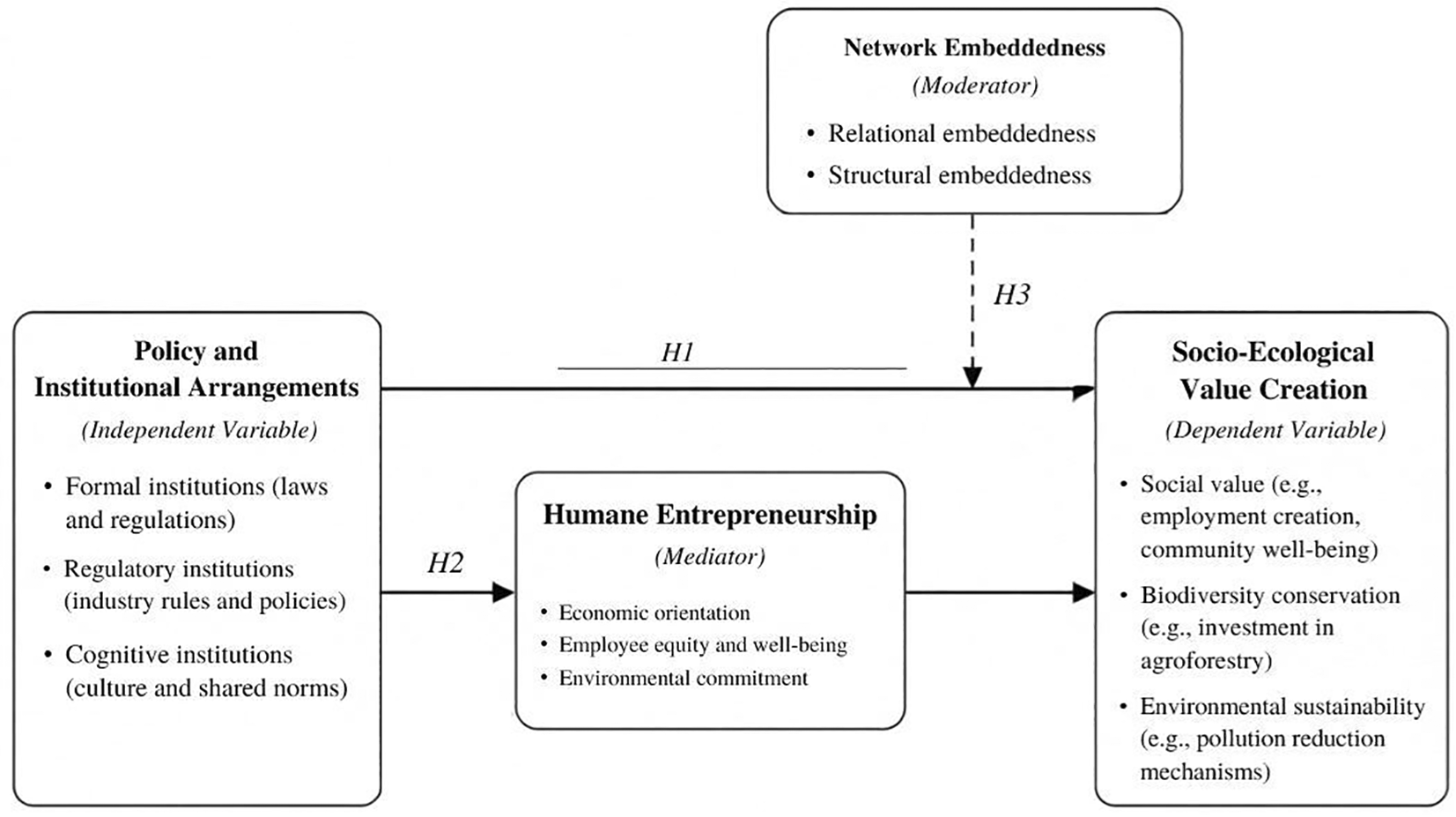
The conceptual framework developed in this study is presented in Figure 1, which incorporates the theoretical and empirical relationships. The framework suggests an intimate link between policy and institutional arrangements and socio-ecological value creation (H1). Humane entrepreneurship also serves as a mediating process between institutional contexts and socio-ecological outcomes (H2), and network embeddedness plays a moderating role that can either strengthen or weaken the link between policy and institutional arrangements and socio-ecological value creation (H3). By combining these constructs within a single analytical model, the framework provides a comprehensive explanation of how and under what conditions SMEs generate socio-ecological value in emerging economies.
This study adopted pragmatism as its guiding research philosophy. Pragmatism asserts that complex real-world problems can be studied objectively while also allowing subjective interpretation by assigning personal meaning to objective indicators (Creswell & Creswell, 2023). In this study, real-world challenges included economic behavior, environmental practices, regulatory environments, SMEs’ cultural norms, and human relationships. Pragmatism supports mixed-methods and multilevel causal reasoning, which was applied through structural equation modeling and qualitative analysis of SME interpretations of policy frameworks. Pragmatism also aims to find practical solutions to contemporary issues (Elder-Vass, 2022), such as balancing policy and institutional frameworks with socio-ecological value creation.
A mixed-methods approach combining quantitative and qualitative methods was used. The quantitative part employed a cross-sectional design, collecting data at a single point to provide a snapshot of the prevailing situation (Creswell & Creswell, 2023). Quantitative data were gathered through structured questionnaires covering network embeddedness, policy and institutional arrangements, humane entrepreneurship, and socio-ecological value creation. The qualitative design adopted a naturalistic approach using key informant interviews to obtain in-depth insights into the experiences and views of SME stakeholders.
The target population comprised 553 SMEs nominated by KPMG in Nairobi, Kenya, from their Top 100 survey conducted between 2008 and 2022. To qualify for the Top 100 list, businesses must have an average annual turnover between KES 50 million and KES 1 billion over four years, audited financial statements, and not be publicly listed on the Nairobi Securities Exchange.
Using Yamane’s formula (Yamane, 1967), the sample size was calculated as:
Where:
Stratified random sampling was used to ensure balanced representation across years in operation (0–10 years, 11–15 years, over 15 years), ownership type, staff size, and asset size. A total of 232 questionnaires were distributed. After data screening and removal of incomplete responses, 208 valid questionnaires were retained for analysis, representing an 89.7% effective response rate (Saunders et al., 2023).
The measures for all constructs were multi-item scales derived from previously validated instruments. The responses were measured on a 7-point Likert scale ranging from Strongly Disagree (1) to Strongly Agree (7). As shown by Rhemtulla et al. (2012), the 7-point ordinal scale is a quasi-continuous treatment in SEM, which can be implemented using ML estimation. In addition, Tarka (2017) presents the quasi-normal distribution of the 7-point Likert scale data, which is acceptable for ML estimation.
Policy and Institutional Arrangements (Independent Variable): Measured with Becker (2020) and Audretsch et al. (2021) using 21 items across three dimensions: formal/normative laws (7 items), regulatory laws (7 items), and cognitive practices (7 items).
Humane Entrepreneurship (Mediator): Measured with 21 items corresponding to 3 dimensions: profit orientation (7 items), employee equity (7 items), and environmental conservation budgets (7 items), adapted from Kim et al. (2018) and Parente et al. (2021).
Network Embeddedness (Moderator): Measured using 28 items across four dimensions: employees (relational, 7 items); customers (relational, 7 items); network density (structural, 7 items); and the closeness of cliques (structural, 7 items), adapted from Lyu et al. (2020) and Pomegbe et al. (2020).
Socio-Ecological Value Creation (Dependent Variable): Measured with 21 items on three dimensions: social value/employment creation (7 items), biodiversity gain/agroforestry (7 items), environmental sustainability/pollution reduction (7 items) based on Freudenreich et al. (2020) and Tödt et al. (2023).
Research gathered for two months (October–December 2024). A structured questionnaire was distributed electronically through email to the SME owners and managers in Nairobi County. In addition, six key informant interviews were conducted with the following senior officials from Kenya Industrial Estates (KIE), Hustler Fund, Uwezo Fund, Women Enterprise Fund (WEF), Micro and Small Enterprises Authority (MSEA), and the National Environment Management Authority (NEMA).
A pilot study was conducted with 23 SMEs, which constituted 10% of the total sample, to improve the questionnaire (Chakraborty & Biswas, 2019). Question clarity and layout were enhanced based on feedback received from the pilot. The overall analytical approach allowed the direct, mediating, and moderating relationships to be examined simultaneously, and the empirical results were robust and valid.
3.5.1 Reliability
Multi-item scales were assessed for internal consistency using Cronbach’s alpha and Composite Reliability (CR). Acceptable internal consistency was determined as having scores of 0.70 or higher (Hair et al., 2021).
One-factor standardized loadings were used to compute the Average Variance Extracted (AVE) and Composite Reliability (CR). AVE measures the percentage of indicator variance accounted for by the latent construct, rather than by measurement error (Fornell & Larcker, 1981):
Where is the standardized loading of indicator i on the construct, and is the number of indicators. Composite Reliability was computed as:
The accepted thresholds were AVE > 0.50 (Fornell & Larcker, 1981) and CR > 0.70 (Hair et al., 2021).
3.5.2 Validity
Content validity was determined by comparing the questionnaire with the study’s objectives and conceptual framework. Confirmatory Factor Analysis (CFA) was applied to assess construct validity. Fit indices, including Chi-square/df, Comparative Fit Index (CFI), and Root Mean Square Error of Approximation (RMSEA), were used to evaluate model fit. Loadings of 0.50 or above indicated strong construct validity (Hair et al., 2021).
Discriminant validity was assessed using the Fornell-Larcker criterion: a construct shows discriminant validity when the square root of its AVE exceeds its absolute correlation with every other construct in the model.
Common method variance was assessed using Harman’s Single Factor Test (Podsakoff et al., 2003). An unrotated principal component analysis was performed on all observed indicators; CMV is a concern when the first unrotated component accounts for more than 50% of total variance.
Structural Equation Modeling (SEM) was used to explore the relationships among variables. SEM was chosen for its effectiveness in analyzing complex relationships involving policy and institutional arrangements, humane entrepreneurship, network embeddedness, and socio-ecological value creation (Hair et al., 2021; Thakkar, 2020).
Data were coded and entered into IBM SPSS version 27 for cleaning and exploratory factor analysis (EFA). SPSS Amos was applied to assess covariance structures, conduct EFA, generate pattern matrices, and perform path analysis. Assumptions tested included normality (Q-Q plots, skewness, and kurtosis within ±2), multicollinearity (VIF < 5), heteroscedasticity (Breusch-Pagan test), and outlier detection.
3.6.1 Outlier Detection
Cases were screened for outliers using two complementary procedures (Tabachnick & Fidell, 2013). First, univariate outliers were flagged when any standardized composite score satisfied |z| > 3. Second, multivariate outliers were identified using the Mahalanobis distance:
3.6.2 Model Fit Assessment
Model fit was assessed using multiple indices: Chi-square/degrees of freedom (χ2/df < 5), Comparative Fit Index (CFI ≥ 0.90), and Root Mean Square Error of Approximation (RMSEA ≤0.08) (Hu & Bentler, 1999; Hair et al., 2021).
3.6.3 Hypothesis Testing
H1 (Direct Effect): The strength and significance of the relationship between policy and institutional arrangements and socio-ecological value creation were determined using path coefficients.
H2 (Mediation): The significance of mediation was tested using bootstrap resampling of 5,000 samples. The confidence interval for the indirect effect was deemed significant when zero was not included (Hayes, 2018). The four conditions of Baron and Kenny (1986) were also verified: (a) significant total effect c of predictor on criterion; (b) significant a-path from predictor to mediator; (c) significant b-path from mediator to criterion controlling for predictor; and (d) bootstrap 95% CI for indirect effect a × b excluding zero.
H3 (Moderation): An interaction term between policy and institutional arrangements and network embeddedness was created and included in the structural model. As a complementary robustness check, hierarchical moderated multiple regression (MMR) was conducted (Tabachnick & Fidell, 2013). Predictors were mean-centered prior to forming the interaction term (Aiken & West, 1991):
Quantile Regression (Robustness Check for H1): Quantile regression (Koenker & Bassett, 1978; Koenker, 2005) was estimated as a distributional robustness check, modeling the conditional quantile ττ of socio-ecological value creation rather than its conditional mean. Coefficients were obtained at τ∈{0.10,0.25,0.50,0.75,0.90} to assess whether the effect of PIA on SEVC varies across the SEVC distribution.
The study received ethical approval from Strathmore University Institutional Scientific and Ethical Review Committee (SU-ISERC2347/24) and National Commission for Science, Technology, and Innovation (NACOSTI). The respondents were assured anonymity and confidentiality, had given informed consent, and were aware of their right to withdraw from the study at any time (Rashid et al., 2019).
A total of 232 questionnaires were sent to the SME owners and managers of Nairobi County, with a response rate of 89.7%. This is considered an excellent response rate for survey research (Saunders et al., 2023). Of all the SMEs that responded, 59.1% were registered as companies, and the remaining 40.9% were registered as sole proprietorships or partnerships. In terms of years in operation, 51.9% of the businesses had operated for 0–10 years, 31.3% for 11–15 years, and 16.8% for more than 15 years. In terms of staff size, 63.0% employed 0–50 employees, whereas 37.0% employed 51–100 employees. Asset distribution indicated that 12.0% had assets below KES 15 million, 28.8% between KES 15 million and KES 50 million, and 59.1% exceeded KES 50 million.
Table 1 presents the descriptive statistics and Pearson correlation coefficients for the study variables. All constructs recorded mean scores above the midpoint of the seven-point Likert scale, indicating generally positive perceptions among respondents. Policy and institutional arrangements (PIA) recorded a mean of 5.61 (SD = 1.12), humane entrepreneurship (HE) a mean of 5.67 (SD = 1.15), network embeddedness (NE) a mean of 5.56 (SD = 1.20), and socio-ecological value creation (SEVC) a mean of 5.59 (SD = 1.16).
| Variable | Mean | SD | 1 | 2 | 3 | 4 |
|---|---|---|---|---|---|---|
| 1. PIA | 5.61 | 1.12 | — | |||
| 2. HE | 5.67 | 1.15 | .841** | — | ||
| 3. NE | 5.56 | 1.20 | .489** | .629** | — | |
| 4. SEVC | 5.59 | 1.16 | .664** | .649** | .860** | — |
Correlation analysis revealed significant positive associations among all variables. The strongest relationship was observed between network embeddedness and socio-ecological value creation (r = 0.860, p < 0.001), followed by policy and institutional arrangements and humane entrepreneurship (r = 0.841, p < 0.001), policy and institutional arrangements and socio-ecological value creation (r = 0.664, p < 0.001), and humane entrepreneurship and socio-ecological value creation (r = 0.649, p < 0.001). These findings provide preliminary empirical support for the proposed conceptual model.
Prior to hypothesis testing, the data were screened for violations of normality, multicollinearity, heteroscedasticity, outliers, and common method bias. The skewness and kurtosis values for all constructs were within the acceptable range of −1 to +1, indicating approximate normality. The Variance Inflation Factor (VIF) values ranged from 1.298 to 1.519, which are well below the recommended threshold of 5; hence, there was no evidence of multicollinearity. The Breusch-Pagan test was non-significant (χ2 = 4.650, p = 0.352), indicating that heteroscedasticity was not present. Using Mahalanobis distance, 10 multivariate outliers (4.8%) were identified and retained, as they were considered to represent more real variance in SME responses. Common method variance was assessed using Harman’s single-factor test, with the first unrotated factor accounting for 36.31% of the total variance, which is below the recommended 50% threshold.
Mahalanobis distance was used to identify multivariate outliers. A case was flagged as a multivariate outlier when D2 > χ20.001,4= 18.467. Ten cases (4.8%) were identified as multivariate outliers, while eight cases (3.8%) were flagged on the univariate criterion (|z| > 3). Following Tabachnick and Fidell (2013), all flagged cases were inspected for data entry errors and implausible response patterns. No such errors were detected; all cases were retained as they reflected genuine variation in SME responses.
4.4.1 Construct Reliability
Cronbach’s alpha was calculated for each construct to assess internal consistency. As shown in Table 2, all Cronbach’s alpha values exceeded the recommended threshold of 0.70 (Hair et al., 2021; Nunnally, 1978), indicating acceptable internal consistency for all constructs.
| Variable | Cronbach’s Alpha |
|---|---|
| Policy and Institutional Arrangements | 0.792 |
| Humane Entrepreneurship | 0.844 |
| Network Embeddedness | 0.945 |
| Socio-ecological Value Creation | 0.814 |
4.4.2 Convergent Validity (AVE and Composite Reliability)
Convergent validity was assessed using the Average Variance Extracted (AVE) and Composite Reliability (CR) per construct, computed from one-factor standardized loadings (Fornell & Larcker, 1981; Hair et al., 2021). The conventional thresholds are AVE > 0.50 and CR > 0.70.
As shown in Table 3, all four constructs satisfy the composite reliability criterion with CR values ranging from 0.847 (humane entrepreneurship) to 0.949 (network embeddedness). The AVE values fall below the conventional 0.50 threshold, ranging from 0.286 to 0.432. Fornell and Larcker (1981) explicitly note that when CR is strong enough on its own to demonstrate construct reliability, convergent validity may still be considered adequate even when AVE falls below the threshold.
4.4.3 Discriminant Validity
Discriminant validity was examined using the Fornell-Larcker criterion: a construct demonstrates discriminant validity when the square root of its AVE exceeds its absolute correlation with every other construct in the model (Fornell & Larcker, 1981).
As shown in Table 4, the strict Fornell-Larcker criterion is not fully satisfied; each off-diagonal correlation exceeds the corresponding √AVE. This pattern reflects the theoretically interlinked nature of the four constructs within the SME ecosystem under study, where policy and institutional arrangements, humane entrepreneurship, network embeddedness, and socio-ecological value creation are conceptualized as causally and structurally related rather than orthogonal. The high composite reliability values ( Table 3), together with the significant, differentiated effects observed in the hypothesis tests (H1, H2, H3), support the empirical distinguishability of the constructs for inferential purposes.
| Construct | PIA | HE | NE | SEVC |
|---|---|---|---|---|
| PIA | 0.657 | — | — | — |
| HE | 0.804 | 0.535 | — | — |
| NE | 0.733 | 0.881 | 0.638 | — |
| SEVC | 0.879 | 0.854 | 0.815 | 0.618 |
4.4.4 Confirmatory Factor Analysis (CFA)
Confirmatory Factor Analysis (CFA) was conducted to assess the measurement model. Standardized factor loadings for all items exceeded the recommended threshold of 0.50 (Hair et al., 2021), ranging from 0.501 to 0.990. This indicates that all retained items exhibited strong associations with their respective underlying constructs. Fit indices for the measurement model were acceptable (χ2/df = 1.96, CFI = 0.899, RMSEA = 0.082).
Structural equation modeling (SEM) was employed to test the proposed direct, mediating, and moderating relationships. The measurement model demonstrated acceptable psychometric properties, with standardized factor loadings exceeding 0.50 and composite reliability values above the recommended threshold of 0.70.
4.5.1 Direct Effect of Policy and Institutional Arrangements on Socio-Ecological Value Creation (H1)
The first hypothesis proposed that policy and institutional arrangements positively influence socio-ecological value creation. The structural model demonstrated acceptable fit (χ2/df = 1.96, CFI = 0.899, RMSEA = 0.082).
As presented in Table 5, the path coefficient from PIA to SEVC was positive and statistically significant (β = 0.47, B = 0.468, SE = 0.061, t = 7.626, p < 0.001). The model explained 47% of the variance in socio-ecological value creation (R2 = 0.47). Therefore, H1 is supported.
As a robustness check, quantile regression was conducted across five quantiles of socio-ecological value creation (τ = 0.10, 0.25, 0.50, 0.75, and 0.90). The relationship remained positive and statistically significant across all quantiles (p < 0.001), confirming the stability of the findings throughout the distribution.
4.5.2 Quantile Regression (Robustness Check for H1)
To verify that the policy effect is not an artifact of conditional-mean estimation, quantile regression (Koenker & Bassett, 1978; Koenker, 2005) was conducted, estimating the effect of policy and institutional arrangements (PIA) on socio-ecological value creation (SEVC) at five quantiles: τ ∈ {0.10, 0.25, 0.50, 0.75, 0.90}.
As shown in Table 6, the effect of PIA on SEVC is positive and statistically significant (p < .001) at every quantile examined, with point estimates ranging from B = 0.722 at the upper tail (τ = 0.90) to B = 1.000 at the median (τ = 0.50). This indicates a uniform positive effect across the distribution, confirming that the relationship holds for SMEs at low, median, and high levels of socio-ecological performance.
4.5.3 Mediating Role of Humane Entrepreneurship (H2)
The second hypothesis proposed that humane entrepreneurship mediates the relationship between policy and institutional arrangements and socio-ecological value creation. The mediation model demonstrated acceptable fit (χ2/df = 3.82, CFI = 0.901, RMSEA = 0.079).
Mediation was assessed using bootstrap resampling (5,000 samples) following Preacher and Hayes (2008). As shown in Table 7, policy and institutional arrangements had a strong positive effect on humane entrepreneurship (β = 0.733, B = 0.725, t = 15.149, p < 0.001), while humane entrepreneurship had a significant positive effect on socio-ecological value creation (β = 0.37, B = 0.368, t = 4.304, p < 0.001). The direct effect of policy and institutional arrangements on socio-ecological value creation remained significant after the inclusion of the mediator (β = 0.20, B = 0.202, t = 2.361, p = 0.018).
| Path | B | β | SE | t | p |
|---|---|---|---|---|---|
| PIA → SEVC (direct) | 0.202 | 0.20 | 0.085 | 2.361 | 0.018 |
| PIA → HE | 0.725 | 0.733 | 0.048 | 15.149 | < 0.001 |
| HE → SEVC | 0.368 | 0.37 | 0.085 | 4.304 | < 0.001 |
The indirect effect (a × b) was 0.341 with a 95% bootstrap confidence interval of [0.206, 0.482], which excluded zero. The direct effect remained significant but was reduced relative to the total effect, indicating partial mediation. Approximately 34% of the total effect of policy and institutional arrangements on socio-ecological value creation was transmitted through humane entrepreneurship. Therefore, H2 is supported.
4.5.4 Moderating Role of Network Embeddedness (H3)
The third hypothesis proposed that network embeddedness moderates the relationship between policy and institutional arrangements and socio-ecological value creation. The moderation model demonstrated acceptable fit (χ2/df = 4.22, CFI = 0.891, RMSEA = 0.042).
As shown in Table 8, network embeddedness had a strong positive direct effect on socio-ecological value creation (β = 0.76, B = 0.771, t = 18.759, p < 0.001). Policy and institutional arrangements also had a significant positive direct effect (β = 0.20, B = 0.201, t = 4.811, p < 0.001). Importantly, the interaction term (PIA × NE) was positive and statistically significant (β = 0.11, B = 0.056, t = 2.939, p = 0.003), confirming the moderating effect of network embeddedness. Therefore, H3 is supported, indicating that higher levels of network embeddedness strengthen the positive influence of policy and institutional arrangements on socio-ecological value creation.
| Path | B | β | SE | t | p |
|---|---|---|---|---|---|
| NE → SEVC | 0.771 | 0.76 | 0.041 | 18.759 | < 0.001 |
| PIA → SEVC | 0.201 | 0.20 | 0.042 | 4.811 | < 0.001 |
| PIA × NE → SEVC | 0.056 | 0.11 | 0.019 | 2.939 | 0.003 |
4.5.5 Hierarchical Moderated Multiple Regression (Robustness Check for H3)
As a complementary robustness check for the moderation hypothesis, hierarchical moderated multiple regression (MMR) was conducted following Tabachnick and Fidell (2013). Predictors were mean-centered prior to forming the interaction term (Aiken & West, 1991). The entry order was: Block 1 (predictor: PIA), Block 2 (moderator: NE), and Block 3 (interaction: PIA × NE). Incremental contributions were assessed via change in R2 (ΔR2) and F-change tests.
Table 9 reports the three-block decomposition. Block 1 shows that PIA alone accounts for 77.3% of the variance in SEVC (B = 0.899, t = 26.48, p < .001). Block 2 demonstrates that adding NE produces a highly significant gain (ΔR2 = 0.063, F(1, 205) = 78.51, p < .001), with both PIA (B = 0.622, p < .001) and NE (B = 0.359, p < .001) retaining strong main effects. Block 3 introduces the multiplicative interaction, yielding ΔR2 = 0.002, F(1, 204) = 2.75, p = .099. The structural-equation test of moderation reported in Table 8 remains the primary inferential test for H3; the hierarchical decomposition provides a variance-attribution view that demonstrates the substantial main-effect contributions of both PIA and NE.
Table 10, summarizes the study’s findings. All three hypotheses were supported.
Collectively, these findings provide empirical support for the proposed conceptual framework and confirm the direct, mediating, and moderating relationships hypothesized in this study.
This study examined how and under what conditions policy and institutional arrangements influence socio-ecological value creation among SMEs in Nairobi, Kenya. The following three findings resulted from the analysis. Policy and institutional arrangements have significant direct positive effects on socio-ecological value creation (H1). Second, humane entrepreneurship partially mediates this relationship, accounting for approximately 34% of the overall effect (H2). Thirdly, the relation between policy and institutional arrangements and socio-ecological value creation is positively moderated by network embeddedness (H3). In this section, each finding is discussed in relation to the existing literature, combined with qualitative information from the key informant interviews, and the theoretical and practical implications of the results are explained.
The results indicate a strong positive relationship between policy and institutional arrangements and socio-ecological value creation. The findings are in line with earlier studies on the role of institutional structures, norms, and frameworks in shaping societal behaviors and their importance for stability and sustainability (Abbott & Faude, 2022; Becker, 2020). The regulative dimension of institutional arrangements, as related to law, policy, and regulation, seems to encourage SMEs to adopt sustainable practices. The normative and cognitive aspects also support this connection by incorporating norms and common cultural values into organizational behavior (Gao et al., 2019; Rodríguez-Pose, 2020).
This effect was robust, as confirmed by quantile regression, which indicated that the positive association was present at all levels of socio-ecological performance from low to high. This indicates that the supportive institutional frameworks are effective even for SMEs with low sustainability capacity.
These qualitative findings support these quantitative findings. Key informants from Kenya Industrial Estates (KIE), the Uwezo Fund, and the Hustler Fund indicated that affordable industrial space, financial inclusion policies, and accessible loans enable SMEs to focus on sustainability. Some of the barriers identified in the qualitative data included high NEMA licensing fees, a complex approval process, and inconsistent enforcement. The findings are consistent with those of Mukhovi et al. (2020), who found that inclusive institutional policies enhance governance and participation. Still, these benefits are realized only when implementation is consistent. Chege and Wang (2020) also present Kenya-specific evidence confirming these assertions, showing that technological innovation in SMEs enhances environmental sustainability practices, thus strengthening the link between institutional arrangements and socio-ecological value creation.
Furthermore, the study’s finding that humane entrepreneurship partially mediates the relationship between policy and institutional arrangements and socio-ecological value creation complements the theoretical advances of Kim et al. (2018) and Parente and Kim (2021), offering practical evidence from the African SME context. The partial mediation pattern indicates that the role of humane entrepreneurship is indeed important, but there is also a substantive direct effect of policy and institutional arrangements.
Such partial mediation implies that policy incentives affect humane entrepreneurs through reshaping their business models, investing in green technologies, and implementing fair labor practices (Canestrino et al., 2023; Vesci et al., 2023). Some policy impacts are independent of entrepreneurial orientation, either through mandatory compliance mechanisms or direct resource provision.
The empirical results also indicated that humane entrepreneurship practices were prevalent among SMEs in Nairobi, with a focus on innovation, employee welfare, and environmental conservation. The profit orientation dimension had the highest level of support, indicating that economic sustainability remains important. The employee equity dimension had moderate support and scores compared to the other dimensions, indicating opportunities for humane leadership practices.
Qualitative findings were used to confirm the relevance of humane entrepreneurship. A key informant from the Women Enterprise Fund observed, “Humane entrepreneurship ensures that SMEs align with social and environmental goals, enhancing their impact.” Another participant from the Uwezo Fund explained, “Regulatory frameworks and ethical entrepreneurship enable SMEs to balance profit with environmental and social benefits.”
This finding has implications for the literature on humane entrepreneurship, as it provides empirical evidence that the construct is an important determinant of socio-ecological outcomes for emerging-economy SMEs (Landowska et al., 2020; Cucino et al., 2023).
The finding that network embeddedness positively moderated the relationship between policy and institutional arrangements (PIA) and socio-ecological value creation is in line with the theoretical argument that structural and relational embeddedness enhance policy effectiveness. This is in line with Lyu et al. (2020), who maintained that network embeddedness helps establish trust and reciprocity, thereby lowering risks and uncertainties in stakeholder exchange.
There is a significant interaction effect, suggesting that the positive effect of policy and institutional arrangements on socio-ecological value creation is greater for SMEs that are well integrated in supporting networks. This is in line with the findings of Pomegbe et al. (2020), which found that structural embeddedness strengthens ties and facilitates the integration of new information. Likewise, Swierczek (2019) noted that the quality of social relationships plays an important role in resource exchange and in achieving organizational goals.
The empirical results revealed a high level of network embeddedness among SMEs in Nairobi, particularly in the relational embeddedness of employees and customers. Socio-ecological outcomes were also positively related to structural embeddedness dimensions such as network density and closeness to cliques.
Qualitative data substantiated these results. According to a key informant from Micro and Small Enterprises Authority (MSEA), “Strong networks can equip SMEs with essential resources, knowledge, and connections that support their sustainability initiatives.” Another Kenyan, who took part in the event, commented: “Close cooperation with industry forums, suppliers, and customers assists SMEs to be able to implement policies effectively and meet ecological targets.” A key informant from the Hustler Fund emphasized: “Networks amplify the reach and value of policy, making it possible for SMEs to generate greater socio-ecological value.”
The findings also align with stakeholder theory (Freeman, 1984), which posits that firms’ structural embeddedness within networks enables them to become attuned to stakeholders’ demands, including those for sustainability-related activities, thereby resulting in socio-ecological value creation.
Qualitative analysis revealed four themes that help to elucidate how and when policy and institutional (PI) frameworks affect socio-ecological value creation.
Supporting Regulatory Environment for Eco-Innovation: Participants noted that waste reduction and cleaner production policies, such as the Climate Change Act (Government of Kenya, 2016, 2018), county green funds, and NEMA environmental guidelines, have promoted these practices (Aming’a et al., 2025; Kariuki et al., 2025). One agri-business SME owner stated, “The County’s climate fund purchased a solar dryer for us, and I doubt we would have been able to afford it without this important funding.”
Institutional and Compliance Barriers: High licensing fees, complicated approval processes, and unequal enforcement were reported as significant barriers. A waste management entrepreneur commented, “The environmental license is too expensive for a small recycler like us. It is as if the fees are meant to punish small businesses but reward big companies.” These barriers prevent the delivery of ecological value by redirecting resources toward compliance rather than innovation.
County-Level Implementation Barriers: The new Constitution of 2010 provided opportunities for SMEs, but inadequate technical capacity and inconsistent county-level responses remain hurdles. One eco-tourism SME owner noted, “The rules are very different when you go to another county to expand. It was a bit of a shock and a bit of a discouragement.” Some counties offer subsidies for green enterprises, while others focus on revenue, leading to over-licensing and unsustainable businesses.
Policy Uncertainty: There is a lack of coordination among national bodies (NEMA, KEBS, county governments), leading to role duplication and policy confusion. One manufacturing SME owner said, “NEMA says one thing, the county says another, and KEBS asks for something totally different; it is very confusing for a small business trying to comply.” This uncertainty decreases the interest in investing in long-term socio-ecological efforts.
Together, these qualitative insights demonstrate that policy and institutional frameworks can affect outcomes by influencing costs, incentives, capabilities, and access to opportunities. Most effective when SMEs are involved in institutional processes through licensing, inspections, funding, training, and county-level enforcement. The themes support the quantitative results and are intended to provide insights into the contextual processes through which policy and institutional arrangements affect socio-ecological value creation.
Theoretical Implications: This study makes three contributions to the literature. First, it advances institutional theory by describing humane entrepreneurship as a transmission mechanism linking policy and socio-ecological outcomes. Second, it empirically supports the humane entrepreneurship construct in an African SME setting, which is beyond previous conceptual studies (Kim et al., 2018; Parente & Kim, 2021). Third, it highlights the boundary role of network embeddedness, revealing that policy and institutional mechanisms have a stronger impact on SMEs with stronger networks.
Practical implications for managers: For SME managers, the results indicate that actively working on Network Embeddedness through industry forums, supplier relations, and customer relations enhances the effectiveness of policy frameworks. Furthermore, the incorporation of humane entrepreneurship principles, such as employee equity schemes and budgets for environmental conservation, can improve socio-ecological outcomes without compromising profitability.
Practical Implications for Policymakers: The partial mediation finding indicates that fostering humane entrepreneurship training and capacity-building interventions can enhance the socio-ecological outcomes of policy interventions. Further, lowering compliance costs, improving coordination among institutions (NEMA, KEBS, and county governments), and reducing policy uncertainty are important for SMEs to participate in socio-ecological value creation.
This study investigated the impact of policy and institutional arrangements on socio-ecological value creation among SMEs in Kenya, and the nature of that impact under specific conditions. The study combines the concepts of institutional theory, humane entrepreneurship, and network embeddedness within a unified analytical framework, thereby providing a more holistic picture of the mechanisms and circumstances by which institutional environments influence sustainability outcomes.
Three main findings emerged from the analyses of 208 SMEs in Nairobi. First, policy and institutional measures directly and positively influence socio-ecological value creation, as evidenced by support for H1. Second, humane entrepreneurship partially mediates this relationship, suggesting that a significant share of the policy effects is carried over into entrepreneurial practices that include humane practices and concern for the environment, which supports H2. Third, the relationship between policy and institutional arrangements and socio-ecological value creation is positively moderated by network embeddedness, where the socio-ecological value creation of SMEs with higher network embeddedness is more strongly supported by supportive policy and institutional arrangements, supporting H3.
The study contributes to the sustainability and entrepreneurship literature by empirically validating humane entrepreneurship as a mediating mechanism and boundary condition linking policy and institutional arrangements to socio-ecological value creation in an emerging-economy SME context. The results also indicate that measures to improve entrepreneurial skills and business networks should be accompanied by measures taken to implement the policy effectively.
There are some limitations to be noted. The cross-sectional research design makes it difficult to determine causal relationships. Second, the emphasis on SMEs in Nairobi County may limit the generalizability of the findings to other parts of Kenya and other emerging economies. Third, self-reported data may have been subject to social desirability bias, but Harman’s single-factor test did not suggest that common method variance was a significant issue. Secondly, the sampling frame for the KPMG-listed SMEs excludes many micro-enterprises and informal businesses that make up a significant share of the Kenyan economy.
Future research should use longer-term research designs to investigate the causal dynamics between institutional arrangements and socio-ecological outcomes. Comparative analysis of such relationships in different counties in Kenya and other developing countries would determine the extent of such contextual differences. Other potential mediating and moderating factors, including organizational culture, leadership style, digital transformation, and innovation capability, could further enhance the proposed framework. Qualitative and mixed-methods studies that involve a broader set of stakeholders would also yield greater depth of understanding of how policy translates into sustainable business practice.
Ethical approval was granted by the Strathmore University Institutional Ethics Review Committee (SU-IERC), reference number SU-ISERC2347/24, and the National Commission for Science, Technology, and Innovation (NACOSTI), reference number 624775. Participants were assured of anonymity and the right to withdraw at any time.
Written informed consent for participation in the study and for publication of anonymized quotations was obtained from all 208 respondents before the interview.
CRediT: Samar N. M. Al-Kindy: Conceptualization, Methodology, Software, Validation, Formal analysis, Investigation, Resources, Data curation, Writing – original draft, Visualization; Henry Kofi Mensah: Writing, review & editing, Supervision, Project administration; Anne Ndirangu: Writing, review & editing, Supervision, Project administration. All authors have reviewed and approved the final version of the manuscript.
Samar N. M. Al-Kindy https://orcid.org/0009-0008-0036-1232
Henry Kofi Mensah https://orcid.org/0000-0001-7580-8125
Anne Ndirangu https://orcid.org/0000-0003-3539-6482
| Views | Downloads | |
|---|---|---|
| F1000Research | - | - |
|
PubMed Central
Data from PMC are received and updated monthly.
|
- | - |
Provide sufficient details of any financial or non-financial competing interests to enable users to assess whether your comments might lead a reasonable person to question your impartiality. Consider the following examples, but note that this is not an exhaustive list:
Sign up for content alerts and receive a weekly or monthly email with all newly published articles
Already registered? Sign in
The email address should be the one you originally registered with F1000.
You registered with F1000 via Google, so we cannot reset your password.
To sign in, please click here.
If you still need help with your Google account password, please click here.
You registered with F1000 via Facebook, so we cannot reset your password.
To sign in, please click here.
If you still need help with your Facebook account password, please click here.
If your email address is registered with us, we will email you instructions to reset your password.
If you think you should have received this email but it has not arrived, please check your spam filters and/or contact for further assistance.

Comments on this article Comments (0)