Keywords
Hemiscyllium halmahera, ecological degradation, habitat degradation, coral reef, North Maluku, marine ecotourism, conservation management.

This article is included in the Ecology and Global Change gateway.
Hemiscyllium halmahera, ecological degradation, habitat degradation, coral reef, North Maluku, marine ecotourism, conservation management.
The archipelagic province of North Maluku, located in the heart of Indonesia’s eastern seascape, forms part of the Indo-Pacific Coral Triangle, one of the world’s most biologically diverse marine regions.1,19 This region harbors numerous endemic marine taxa, including reef-associated elasmobranchs with restricted geographic distributions. Among them, the walking shark Hemiscyllium halmahera stands out as a newly described and endemically confined species, first documented by Allen, Erdmann, and Dudgeon in 20132 ( Figure 1). It inhabits shallow coral reefs, seagrass beds, and mangrove fringes around Halmahera and its satellite islands, typically at depths of 2–20 m.3
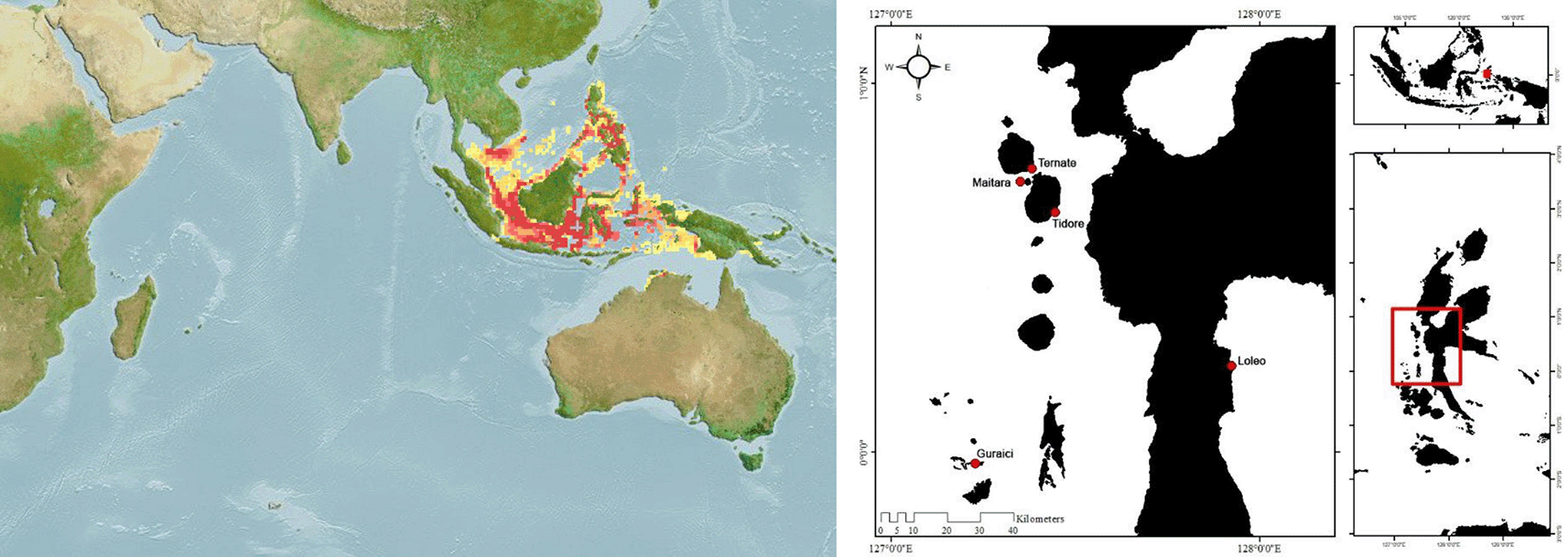
Based on Allen, Erdmann, and Dudgeon (2013).1
As a benthic, nocturnal, and low-dispersal species, H. halmahera exhibits extreme habitat fidelity, relying on complex reef structures and benthic cover for shelter and foraging, as shown in Figure 2.4 These ecological traits make it highly susceptible to habitat degradation. Similar to other species within the genus Hemiscyllium, it demonstrates limited larval dispersal and site-specific residency, resulting in strong population fragmentation when habitat conditions decline.5
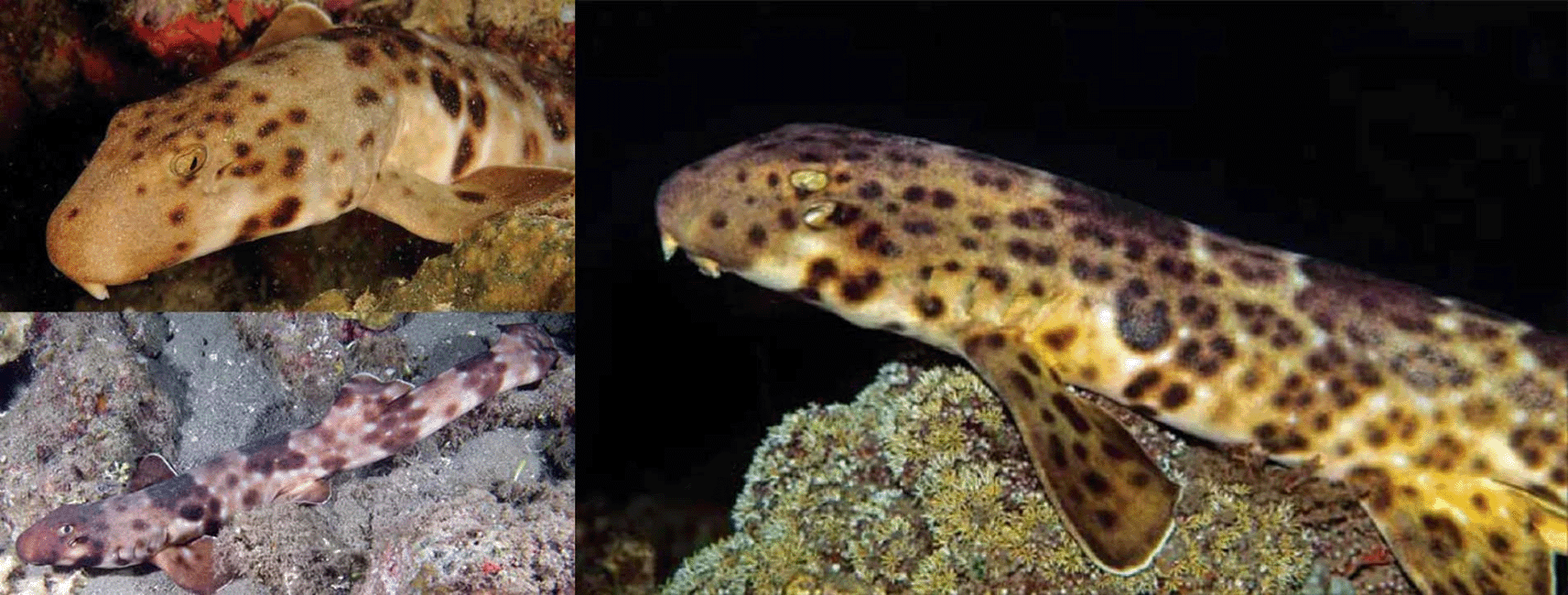
Photograph reproduced from Allen, Erdmann, and Dudgeon (2013).1
Coral reef ecosystems in Indonesia are under severe threat from anthropogenic pressures, including destructive fishing practices, sedimentation from mining, coral bleaching, and unregulated coastal development.6 Nationwide reef monitoring programs have revealed declining live coral cover, averaging below 30% in several provinces, including North Maluku.7 This degradation reduces structural complexity and negatively impacts associated fauna, particularly small reef-associated sharks such as H. halmahera, which depend on interlinked coral–seagrass habitats for survival.8
Globally, elasmobranchs are recognized as among the most threatened vertebrates. The International Union for Conservation of Nature (IUCN) classifies many Hemiscyllium species as Vulnerable or Near Threatened, with H. halmahera recently assessed as Near Threatened due to its restricted range and localized pressures.9 Internationally, conservation frameworks such as the Convention on International Trade in Endangered Species of Wild Fauna and Flora (CITES) and the Convention on the Conservation of Migratory Species (CMS) regulate the protection and trade of many shark species, including small benthic species inhabiting coral reef ecosystems.10,11
In Indonesia, sharks are protected under several legal instruments. The Ministry of Marine Affairs and Fisheries (KKP) regulates shark conservation through Ministerial Decree No. 18/Permen-KP/2013 on the protection of certain shark species, later expanded in Regulation No. 59/Permen-KP/2021, which emphasizes the conservation of endemic and regionally vulnerable elasmobranchs.12 Moreover, Law No. 5 of 1990 on Conservation of Biological Resources and Their Ecosystems provides the overarching legal basis for protecting species with limited distribution or ecological importance.13 Although H. halmahera is not yet listed under Appendix II of CITES, its endemism and narrow habitat range meet key criteria for national and regional protection under Indonesia’s biodiversity framework.14
Recent ecological assessments suggest that H. halmahera populations are declining in sites experiencing intense mining and sedimentation, particularly in Teluk Kao and Tobelo, where coral rubble has replaced live substrates.15,16 Such findings underscore the need to consider this species as a bioindicator of reef health and as a potential flagship species for community-based marine conservation and sustainable ecotourism development.17,18
This study aims to evaluate habitat suitability for Hemiscyllium halmahera based on ecological and environmental parameters, rather than direct species occurrence, to provide a habitat-based assessment of conservation priorities in North Maluku.
The research was conducted in multiple shallow-water sites around the islands of Halmahera, Tidore, Maitara, and Lelei in North Maluku Province, Indonesia (1°–2° N; 127°–128° E), as shown in Figure 3. These islands are situated within the northern sector of the Maluku Sea, part of the greater Indo-Pacific biogeographic region characterized by complex hydro-oceanographic processes and exceptionally high marine biodiversity.1 Halmahera itself is the largest island in the province, bounded by deep-sea basins such as the Halmahera and Molucca Seas, and surrounded by fringing coral reefs, mangrove forests, and extensive seagrass beds.2 The area represents a typical tropical reef–lagoon system that serves as an ecological corridor for reef-associated species, including the endemic Hemiscyllium halmahera.3
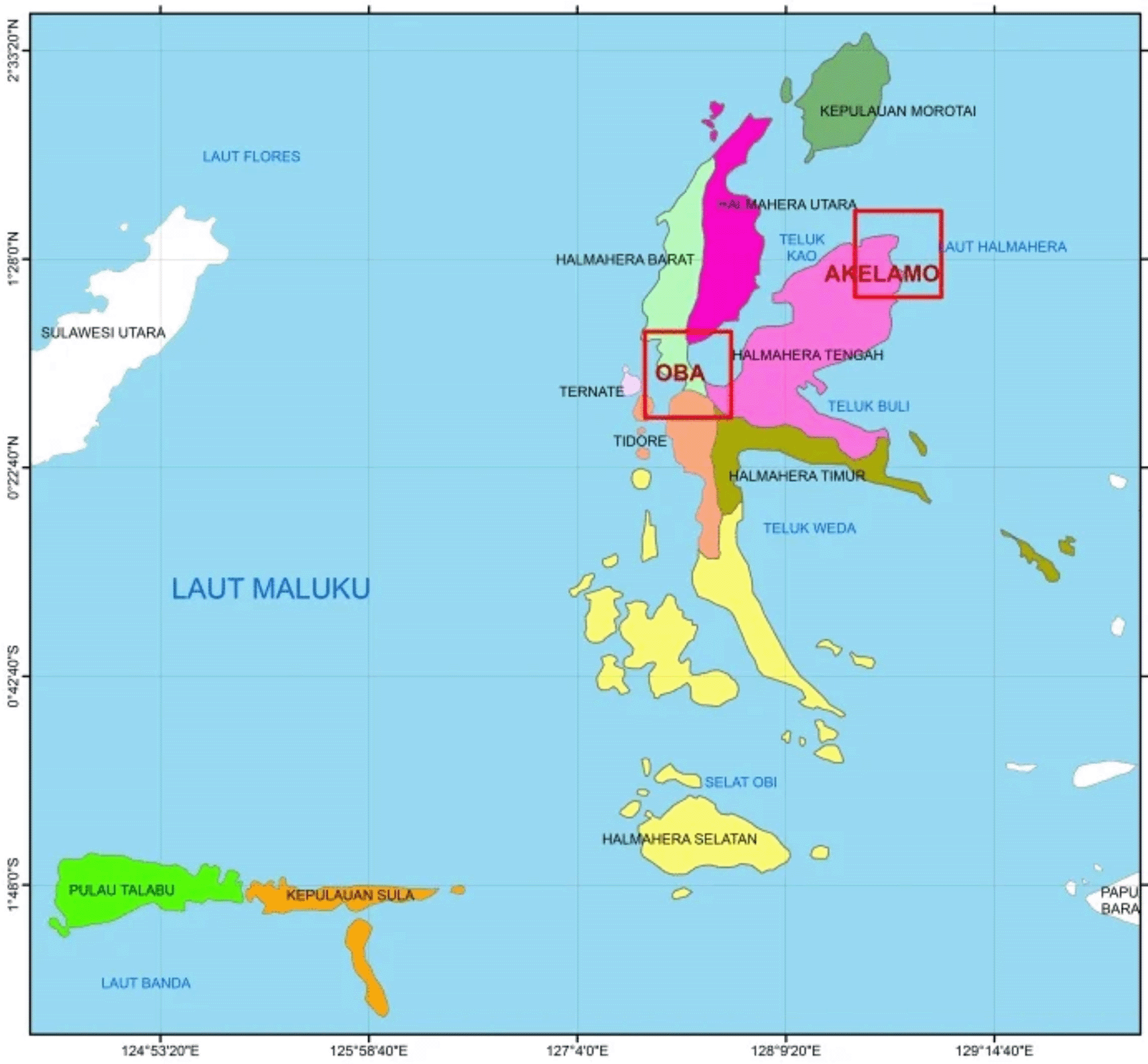
Field surveys focused on coral seagrass mangrove interfaces in coastal zones exhibiting varying degrees of human influence. These included relatively pristine sites with high coral cover and limited access (e.g., southern Halmahera and Lelei Island) and moderately to heavily impacted sites (e.g., Teluk Kao, Tobelo, and Tidore) characterized by mining runoff, coastal reclamation, and small-scale fisheries activity.4,5 Sedimentation from terrestrial discharge, particularly in the Kao Bay region, has been identified as a major driver of coral reef degradation and reduced substrate complexity.6
The reefs around Halmahera are dominated by Acropora and Porites genera, while the seagrass meadows—composed mainly of Thalassia hemprichii, Enhalus acoroides, and Cymodocea rotundata—serve as nursery habitats for juvenile reef species.7 These shallow habitats (2–8 m depth) provide shelter and foraging grounds for H. halmahera, whose benthic locomotion restricts its distribution to structurally complex substrates such as branching corals, rubble crevices, and seagrass-covered sand.8
According to local dive operators and community observations, H. halmahera is frequently encountered in nocturnal surveys, particularly around Teluk Kao, Tidore’s southern reefs, and the sheltered lagoons of Maitara Island.9 These reports align with formal underwater visual surveys conducted between 2021–2024, which recorded consistent sightings in areas with higher live coral cover (>30%) and limited sedimentation.10 Conversely, areas subjected to heavy mining and port construction in northern Halmahera show a marked absence of the species, suggesting strong habitat selectivity.11
Climatically, the region is influenced by the northwest and southeast monsoons, with sea surface temperatures ranging between 27–30 °C and mean salinity of 33–34 PSU. These parameters fall within the known thermal tolerance range of Hemiscyllium species.12 The combination of warm shallow waters, high primary productivity, and microhabitat heterogeneity makes the North Maluku region a critical stronghold for the survival of H. halmahera and other reef-associated elasmobranchs.
This study does not directly quantify species environmental suitability or abundance but instead uses habitat characteristics as ecological proxies for species suitability. Parameters such as live coral cover, substrate complexity, sedimentation rate, and environmental conditions are widely recognized as key determinants influencing habitat suitability for benthic reef-associated sharks.
Field data were collected from July to October 2023, coinciding with the dry monsoon season when underwater visibility and sea conditions were optimal for shallow reef observations. Surveys were conducted using a combination of Underwater Visual Census (UVC) and Baited Remote Underwater Video Systems (BRUVS) to assess habitat characteristics across reef ecosystems. These complementary methods allowed for both direct observation and standardized, non-intrusive monitoring of nocturnal or cryptic individuals.1,2
For each site, three permanent transects of 50 m in length were established parallel to the shoreline at depths ranging from 2–8 m, representing the preferred depth range of H. halmahera.3 The transects were positioned along continuous reef slopes and seagrass mosaics to capture habitat heterogeneity. At each transect, benthic cover was quantified through photo-quadrat sampling at 1 m intervals, with digital images later analyzed using the Coral Point Count with Excel extensions (CPCe) software to calculate the relative percentage of live coral, dead coral, rubble, sand, algae, and seagrass.4,5
Habitat quality was assessed based on Giyanto’s Reef Health Index (RHI) protocol, which categorizes live coral cover as poor (<25%), fair (25–49%), good (50–74%), or excellent (>75%).6 Substratum type and rugosity were visually estimated along transects using a 10 m chain method to quantify habitat complexity.7,21 Sedimentation levels were evaluated by deploying cylindrical sediment traps (diameter 5 cm, height 30 cm) for 24-hour periods at each transect, followed by gravimetric analysis of sediment accumulation in g m−2 day−1.8
The BRUVS system was deployed to complement UVC observations, particularly in low-visibility or structurally complex habitats where visual surveys were limited. Each BRUVS unit consisted of a GoPro HERO 11 camera in a waterproof housing mounted 1.5 m above the seabed, with a 1 kg bait canister containing crushed sardines placed 1 m in front of the camera to attract benthic fauna.12 Units were deployed for 90 minutes per station at dusk and retrieved after nightfall to minimize current-induced bias.13 Video recordings were analyzed using EventMeasure software to support habitat observation and environmental context analysis, and relative abundance indices.14
All spatial data (transect coordinates, BRUVS deployment positions, and sighting GPS points) were recorded using a Garmin GPSMAP 78s and integrated into ArcGIS 10.8 for geospatial analysis. Environmental parameters such as water temperature, salinity, pH, and dissolved oxygen were measured in situ using a YSI ProDSS multiparameter sonde. Turbidity was quantified using a Secchi disk and converted to nephelometric turbidity units (NTU) following standard procedures.15
Collected data were subsequently used to analyze correlations between habitat quality, reef complexity, sedimentation rate, and the habitat suitability of H. halmahera. This integrated methodological framework ensured a robust, quantitative assessment of how environmental degradation affects the habitat suitability of this endemic shark species across the North Maluku coastal ecosystem.16
All field data and observation points were georeferenced using a Garmin GPSMAP 78s and processed in ArcGIS 10.8 (ESRI, USA) for mapping and spatial analysis. The spatial database integrated three main layers: (1) environmental variables such as live coral cover, substratum complexity, seagrass density, and sedimentation rate; (2) anthropogenic factors including distance from mining sites, river mouths, ports, and settlements; and (3) confirmed environmental and habitat variables of Hemiscyllium halmahera from both UVC and BRUVS surveys.1
To visualize habitat relationships, each variable was standardized and converted into a raster layer. Coral cover and seagrass density were used as indicators of habitat quality, while proximity to anthropogenic sources represented environmental stress. All layers were overlaid to identify areas of overlap between high habitat quality and low human disturbance. Satellite images from Sentinel-2A (10 m resolution) were used to validate coastal features, and ground-truthing was conducted in Halmahera, Tidore, and Kao Bay.2,3,20
Species distribution analysis was conducted using logistic regression and Generalized Additive Models (GAM) in R software. These analyses examined how live coral cover, substratum complexity, sediment load, and human proximity influenced the probability of H. halmahera environmental suitability.4,5 Coral cover and reef rugosity were found to have positive correlations with habitat suitability, while areas within one kilometer of mining or settlement zones showed reduced sightings.6
Spatial outputs were visualized as habitat suitability maps showing predicted high-probability areas for H. halmahera. These were further analyzed using spatial autocorrelation tools (Moran’s I and Getis-Ord Gi*) to identify clusters of suitable habitats. The results helped define potential conservation zones, particularly around southern Halmahera and Lelei Island, where suitable reef–seagrass habitats coincide with low anthropogenic pressure.7,8,22,23
A total of 12 survey sites were assessed across Halmahera, Tidore, Maitara, and Lelei Islands to evaluate reef condition and habitat quality. The overall mean live coral cover was 27.6% ± 8.4%, which falls into the “fair to poor” category according to the Reef Health Index classification.1 The benthic composition was dominated by abiotic substrates such as sand and coral rubble, ranging from 55% to 70% across most transects.2 Only three sites, primarily located in southern Halmahera and Lelei Island, recorded coral cover exceeding 35%, indicating remnants of relatively healthy reef patches surrounded by degraded areas.
Visual observations and sediment trap measurements revealed clear differences between natural and impacted zones. Stations located adjacent to mining and coastal reclamation areas, particularly in Teluk Kao and northern Halmahera, showed high levels of turbidity and fine sediment deposition. Water transparency, measured by Secchi disk, ranged between 2–6 m in these areas compared to 10–12 m at less disturbed sites.3 Sedimentation rates reached up to 23 g m−2 day−1, far above the recommended threshold for coral growth (<10 g m−2 day−1).4
Macroalgae and turf algae were dominant at several disturbed locations, forming dense mats that covered dead coral surfaces. This algal dominance indicates eutrophication caused by nutrient runoff from coastal settlements and mining effluents.5 In contrast, healthier reefs in Lelei and southern Halmahera displayed higher proportions of branching Acropora and massive Porites corals, providing better habitat complexity for benthic species such as Hemiscyllium halmahera.6
Rugosity measurements using the chain transect method demonstrated a marked decline in structural complexity at impacted sites, with average rugosity values below 1.5 compared to 2.1–2.4 in undisturbed reefs. Flattened substrates with loose rubble reduced shelter availability and foraging spaces for reef-associated fauna.7 These structural losses were often accompanied by coral bleaching scars and partial mortality, especially in shallow zones (<5 m) exposed to thermal stress during the 2022–2023 El Niño Southern Oscillation events.8
Qualitative observations also showed a shift in substrate composition, with increased dominance of soft corals and sponges in areas where hard coral cover declined. This ecological shift suggests that the benthic community is transitioning toward less stable states dominated by opportunistic species.9 The combination of sedimentation, algal overgrowth, and reduced rugosity points to widespread ecological degradation that directly affects the habitat suitability of H. halmahera, a species that relies on structurally complex coral–seagrass interfaces for nocturnal movement and refuge.10
The environmental suitability of Hemiscyllium halmahera was identified in 8 out of 12 surveyed sites across North Maluku, showing a distinct spatial pattern influenced by habitat quality and anthropogenic pressure. The highest habitat suitability levels were identified in Lelei Island, southern Halmahera, and the lagoonal areas near Maitara, all characterized by live coral cover exceeding 30%, moderate seagrass density, and minimal sedimentation.1 In contrast, sites with degraded habitat conditions exhibited lower inferred suitability in heavily disturbed areas such as Teluk Kao and the northern coast of Halmahera, where coral rubble and algal mats dominate the substrate.2
Spatial mapping revealed that H. halmahera habitat suitability patterns indicate clustering around reef seagrass interfaces with high habitat complexity and low turbidity. These habitats provided both foraging grounds and refugia for nocturnal activity. Suitable habitat conditions are typically associated with reef–seagrass interfaces. These habitats provide structural pathways within reef–seagrass systems between coral outcrops, particularly during nocturnal periods. Habitat suitability probability maps produced from the spatial model showed the strongest predicted densities in southern Halmahera, with secondary hotspots around Lelei and Tidore Islands.3,4
Statistical analyses supported these spatial observations. Logistic regression indicated that live coral cover and substratum rugosity were significant positive predictors of habitat suitability, suggesting a direct relationship between structural complexity and habitat suitability.5 Conversely, proximity to anthropogenic features such as mining sites and coastal settlements showed a negative correlation with habitat suitability decreasing within one kilometer of such areas.6 This pattern highlights the species’ sensitivity to habitat modification, particularly sedimentation and reduced water clarity.
The Generalized Additive Model (GAM) analysis confirmed a nonlinear relationship between habitat suitability and coral cover, with habitat suitability probability increasing sharply beyond a threshold of 25% live coral cover and plateauing above 40%.7 These results emphasize the importance of maintaining at least moderate coral coverage to support viable populations of H. halmahera.
The reduced habitat suitability in several historically known sites such as Tobelo and Teluk Kao, where they were previously reported by local fishers, may reflect recent ecological changes or local extirpation due to mining runoff and increased coastal development.10 Local ecological knowledge and reports further corroborate these findings, indicating that the species, once commonly sighted in shallow reefs, has become rare in recent years.11
The habitat suitability patterns observed in this study underline the strong dependency of H. halmahera on structurally intact and low-disturbance reef habitats. These findings provide an essential baseline for future monitoring and spatial management planning, particularly in the identification of marine protected areas (MPAs) where reef restoration and habitat protection could ensure the long-term persistence of this endemic species.12,13
Human activities have emerged as the most dominant drivers of ecological degradation in the North Maluku marine ecosystem. Among these, mining runoff and coastal sedimentation represent the most severe and persistent stressors. Extensive nickel and laterite mining in the Kao Bay region and northern Halmahera has resulted in large volumes of fine sediment entering coastal waters through riverine discharge and surface runoff, particularly during the rainy season. This sediment load forms a turbid layer that reduces light penetration, inhibits coral photosynthesis, and limits larval settlement and coral recruitment.1 Fine silt particles were observed blanketing coral heads and filling crevices used by benthic organisms, including Hemiscyllium halmahera, thereby reducing suitable habitat complexity.2
Mangrove clearance to accommodate mining roads and port facilities has further exacerbated sedimentation and nutrient inflow. Loss of mangrove roots has reduced natural sediment filtration and increased shoreline erosion, causing further stress to nearby seagrass and reef habitats.3 Field observations in Teluk Kao indicated that coral colonies near outflow points displayed partial mortality, excessive algal growth, and increased sponge cover—clear indicators of sediment-induced suffocation and nutrient enrichment.4
Destructive fishing practices, such as the use of fish bombs and cyanide, were reported by local communities in several parts of northern Halmahera and Tidore. Although less frequent than in previous decades, their residual effects persist through damaged reef structures and slow coral recovery.5 In addition, unregulated tourism activities—particularly those involving anchoring, trampling, and diver contact with corals—have contributed to localized reef damage around Maitara and Tidore, areas that are increasingly popular for recreational diving.6
The cumulative effect of these anthropogenic pressures has led to a fragmented seascape with decreasing habitat connectivity between reef and seagrass systems. This fragmentation restricts the movement and distribution of H. halmahera, which depends on shallow, structurally complex habitats for nocturnal foraging and refuge.7 Local fishers interviewed in the region reported a noticeable decline in sightings of the species since 2020, particularly near industrialized coastlines.8
In summary, sedimentation from mining, loss of mangrove buffers, destructive fishing, and poorly managed tourism represent the primary threats to the persistence of H. halmahera populations. Without effective spatial planning and enforcement of environmental regulations, these pressures are expected to intensify, further reducing the ecological resilience of North Maluku’s coastal ecosystems.9,10
Given the absence of direct species occurrence data, this study adopts a habitat-based approach to infer ecological suitability. Previous studies have demonstrated that benthic reef-associated sharks, including Hemiscyllium species, are highly dependent on structural complexity, coral cover, and low sedimentation environments. Therefore, the habitat parameters used in this study provide a reliable ecological proxy for assessing habitat suitability.
The ecological degradation of Hemiscyllium halmahera is closely associated with the integrity and structural complexity of coral reef habitats in North Maluku. Areas with higher live coral cover and complex reef structures consistently supported greater habitat suitability, while degraded environments dominated by sand and rubble were largely uninhabited. This pattern aligns with previous studies demonstrating that habitat complexity determines the diversity and abundance of reef-associated elasmobranchs, as it provides shelter, foraging areas, and protection from predators.1,2 The dependence of H. halmahera on branching corals, seagrass corridors, and rubble patches emphasizes its strong reliance on microhabitat structure and the vulnerability of this species to habitat degradation.
Because of its narrow distribution range and habitat specialization, H. halmahera is highly sensitive to local environmental changes. Habitat disturbances such as sedimentation, coral loss, and algal overgrowth can directly reduce its foraging grounds and breeding areas.3,4 The species’ endemism to Halmahera also means that even localized damage to reefs can have a significant impact on its population viability. Observations from Teluk Kao and northern Halmahera show that mining runoff and coastal development have contributed to habitat fragmentation, leading to declining coral cover and reduced habitat suitability for H. halmahera.5,6
The findings of this study highlight that H. halmahera serves as a valuable bioindicator of reef health. Its limited mobility and strong site fidelity make it particularly effective for detecting ecological changes in shallow reef ecosystems.7 Integrating this species into marine protected area (MPA) planning could strengthen biodiversity management and provide a measurable target for ecosystem-based conservation.8 Protection of key reef–seagrass habitats would not only benefit H. halmahera but also enhance the resilience of other reef-associated species.
In addition, H. halmahera possesses significant potential for sustainable marine ecotourism. Its unique “walking” movement and calm behavior attract divers and photographers, offering opportunities for low-impact tourism that can generate local economic benefits while promoting marine conservation awareness.9 However, tourism activities must be managed carefully to avoid excessive disturbance to reef environments. Implementing diver behavior guidelines, enforcing site carrying capacity, and promoting environmental education are crucial steps in ensuring that tourism remains compatible with habitat protection.10
Overall, the results underscore the importance of maintaining healthy and structurally complex coral reef ecosystems for the persistence of H. halmahera. Strengthening local conservation measures, enforcing environmental regulations, and supporting community-based reef management will be key to preserving this endemic species and the broader ecological integrity of North Maluku’s marine ecosystems11–13 Future studies integrating direct species observations and long-term monitoring are necessary to validate habitat suitability predictions and refine conservation strategies.
The results of this study demonstrate that the ecological degradation and persistence of Hemiscyllium halmahera are strongly dependent on coral reef integrity, live coral cover, and substratum complexity within the shallow coastal ecosystems of North Maluku. Healthy and structurally complex reefs, characterized by coral cover exceeding 30% and interspersed seagrass patches, were found to be the primary habitats providing suitable habitat conditions for this endemic walking shark. Conversely, areas impacted by sedimentation, mining runoff, and unregulated coastal development showed a notable reduced habitat suitability, underscoring the direct ecological consequences of habitat degradation.
The cumulative effects of these pressures have led to reduced habitat connectivity, lower reef complexity, and a narrowing of the species’ viable range. Such conditions not only threaten H. halmahera populations but also signal broader ecological decline across the reef ecosystems of North Maluku. The species’ restricted geographic range and dependence on microhabitats make it particularly vulnerable to localized environmental changes, emphasizing the need for targeted and spatially adaptive conservation measures.
To safeguard this species and its habitats, conservation efforts should prioritize three main strategies. First, the protection and restoration of critical reef–seagrass habitats must be integrated into local marine spatial planning, focusing on maintaining coral cover and reef structure that provide shelter and foraging grounds. Second, regulation of anthropogenic activities within one kilometer of key habitats is necessary to mitigate sedimentation, pollution, and physical damage to reef ecosystems. Third, the integration of community-based reef monitoring and ecotourism offers a pathway toward sustainable management, combining biodiversity conservation with local economic benefits.
Preserving Hemiscyllium halmahera is not only a matter of protecting a single endemic species but also of maintaining the ecological integrity and resilience of North Maluku’s coastal ecosystems. Its conservation reflects the broader vision of promoting a blue-economy framework—one that aligns environmental sustainability with economic growth through responsible marine resource management. Protecting this species and its habitats will ensure that North Maluku continues to serve as both a refuge for marine biodiversity and a model for sustainable coastal development in Indonesia.
Although direct species occurrence data were not incorporated, this habitat-based assessment provides a robust ecological framework for identifying conservation priorities and assessing environmental risks affecting Hemiscyllium halmahera.
This study was a non-invasive observational field survey of marine habitats (coral reefs, seagrass beds) and associated fauna. Data were collected using Underwater Visual Census (UVC) and Baited Remote Underwater Video Systems (BRUVS). No animals were captured, handled, or physically sampled. Therefore, ethical approval from an institutional animal ethics committee was not required under standard marine research practices in Indonesia.
| Views | Downloads | |
|---|---|---|
| F1000Research | - | - |
|
PubMed Central
Data from PMC are received and updated monthly.
|
- | - |
Provide sufficient details of any financial or non-financial competing interests to enable users to assess whether your comments might lead a reasonable person to question your impartiality. Consider the following examples, but note that this is not an exhaustive list:
Sign up for content alerts and receive a weekly or monthly email with all newly published articles
Already registered? Sign in
The email address should be the one you originally registered with F1000.
You registered with F1000 via Google, so we cannot reset your password.
To sign in, please click here.
If you still need help with your Google account password, please click here.
You registered with F1000 via Facebook, so we cannot reset your password.
To sign in, please click here.
If you still need help with your Facebook account password, please click here.
If your email address is registered with us, we will email you instructions to reset your password.
If you think you should have received this email but it has not arrived, please check your spam filters and/or contact for further assistance.

Comments on this article Comments (0)