Keywords
Anchor plate, Shallow and deep, Group anchor plate, Critical depth, Emulsion Asphalt.

This article is included in the Fallujah Multidisciplinary Science and Innovation gateway.
Anchor plate, Shallow and deep, Group anchor plate, Critical depth, Emulsion Asphalt.
Anchor plates have been widely used in transferring the load from the super-structure to the weak soil, TV towers, large suspension bridges, aircraft, and other structures have a short construction time.2,4 A comprehensive research has been introduced to test the pullout bearing capacity of anchor plates by using different research methods, such as theoretical studies,3,4 numerical simulations,5,6 and model texts.7,8 It seems to improve the conditions of the subsoil that would be used with the anchor plate.9 compared the results that were predicted by different theoretical theories for shallow anchors and obtained a wide disparity.10 they have been compared their experimental results in a deep anchors tests with the theoretical results for Meyerhof (1973) and Ovesen (1964), they obtained a large difference, especially in the case of dense sand. The boundaries between a shallow and a deep anchor plate expressed as a critical embedment ratio. Many researchers11 showed that the critical embedment ratio (H/B)cr. different from (2.5 to 9) depending upon anchors geometry and relative density of the soil. The group was taken with (S = 4D) C/C and acts as a large anchor (single anchor).12 The sandy soil has been improved by much research such as enhancing the bearing capacity of the sandy soil by reinforcing the soil by Geogrid layers and finding the optimum embedment depth.32–34 The increase of (z/B) above 1.5 has no effect on the bearing capacity.13 While improving the loose sandy soil by the same material, the results for the bearing capacity increase by (21%) at one layer and (47.5%) for two layers.14 On the other hand15 stabilized the dune sand by cement kiln dust CKD the results of the tests showed that angle of internal friction and shear strength decreased and became almost constant after (14) day of the curing. Also the existing water with sandy soil affects more than the gravel.16,17 considered the sand soil as improved material in clayey soil23 by using the numerical analysis for the transition (critical) embedded ratio from shallow (breakaway) to deep (no breakaway) equal (H/D = 2.5) in dynamic loading embedded plate anchor (DEPLA). From the previous experimental studies24–28 that indicated the length difference between the shallow and depth anchor plate in a static loading, depth that anchor transits from shallow to depth it’s a critical depth with consideration to the embedded ratio(H/B). Many other studies have concluded an approximately (H/B = 6) at which the anchor transit from shallow to deep. Another conclusion for the phenomenon29 that found the surface failure related to the shape of ground level when the anchor plate that subjected to loading, if the surface failure extend to the ground level will be a shallow anchor, while the deep anchor will be such as a balloon shape and didn’t extend to the ground surface. Whilst30 searched that by depending upon the relative density for the soil in very loose sand and very soft clay be at depth (2D), for stiff clay (5D) and (10D) in very dense sand31 showed the critical depth (H/B = 5) as a transitional ratio32 suggested the critical depth in a soft clay depending on the size, shape of the anchor and the soil parameters in strip anchors (H/B = 3), and for circular anchors (H/B = 1.75). As a result the critical depth depends upon the angle of internal friction, unit weight and relative density of the soil.
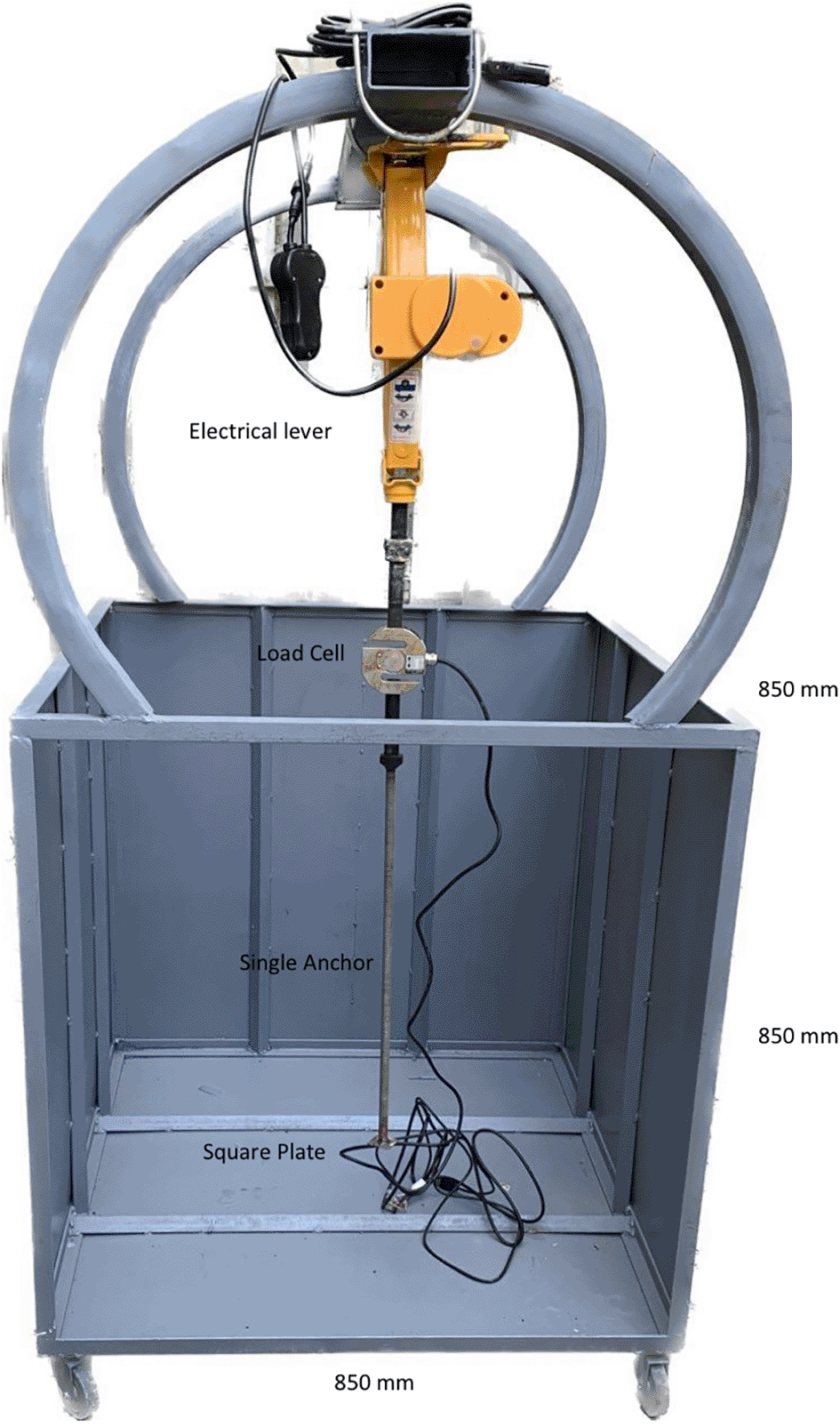
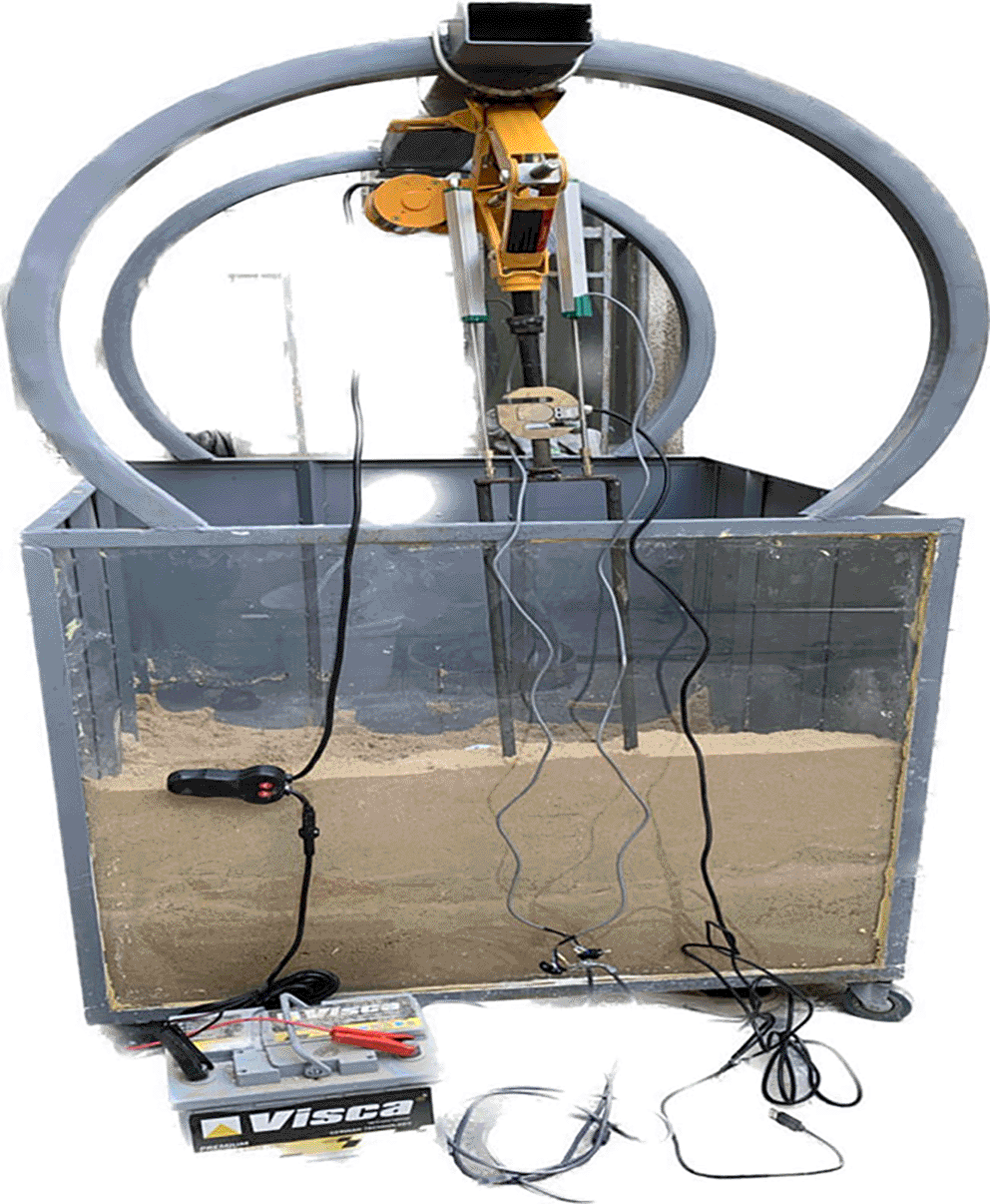
By using a steel container (850*850*850) mm with a unique glass face to observe the failure mode of the anchor. The scale effect of the physical model depending on the modified Soil cone Theory18 as shown in ( Figure 1).
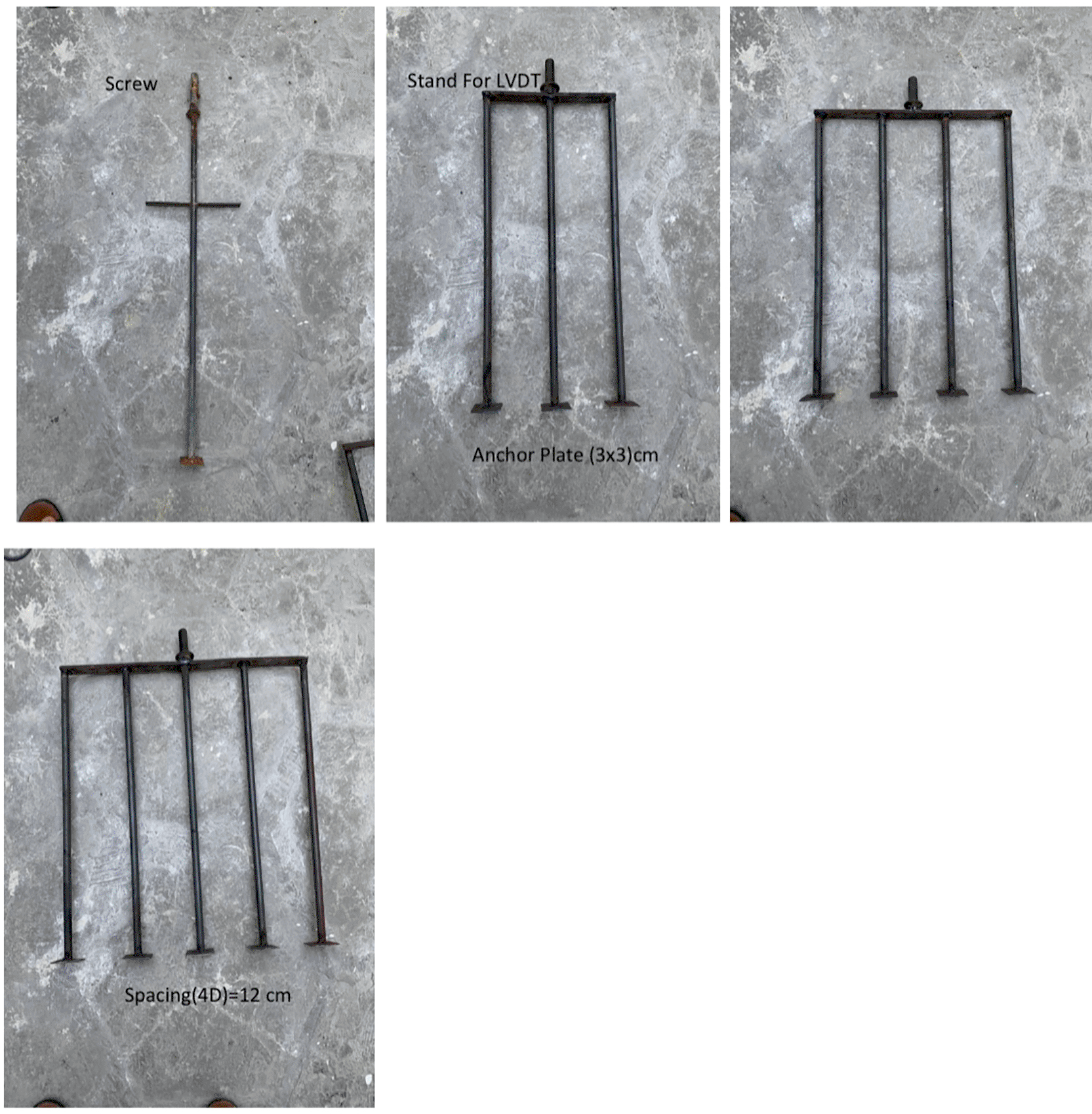
While used in the test steel anchor with square plate (D), (3x3) cm with different embedded depth (H). At each anchor bar there is a welded screw to facilitate connection with the load cell and the electrical lever to lift the anchor plate and also another screw between the load cell and the electrical lever. The line groups (1x2), (1x3), (1x4) & (1x5) welded each group by horizontal steel bar with (S = 4D) as shown in ( Figure 2).
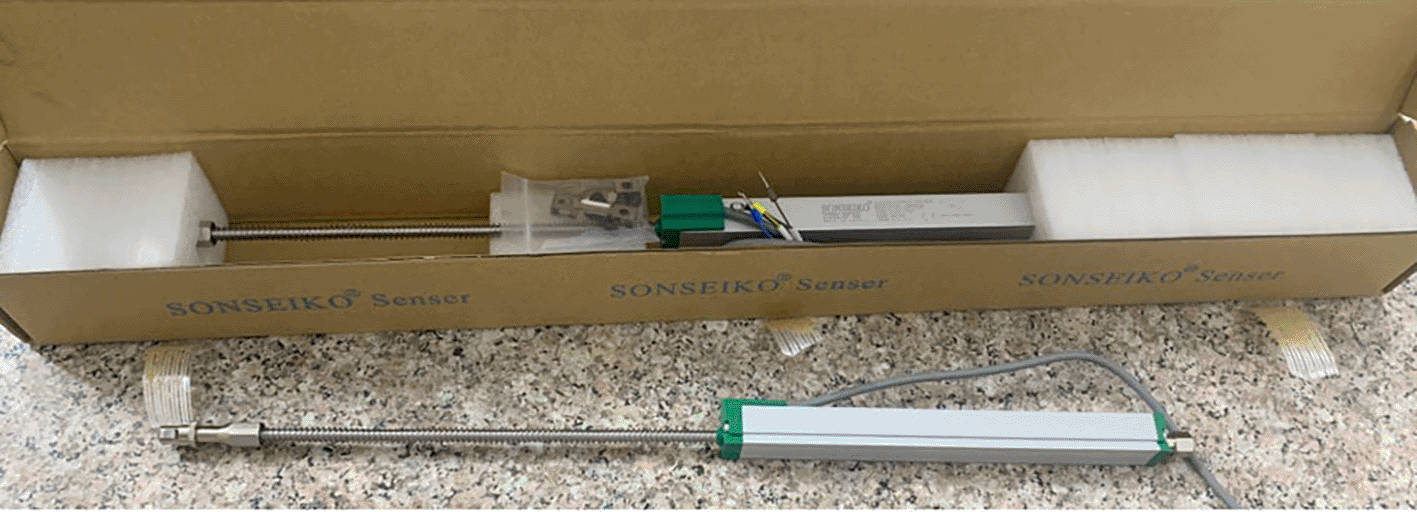
The vertical displacements were recorded by two electronics (Lvdt) as shown in ( Figure 3).
Soil that’s used in the experimental work carried out from the Annajaf sea region. Standard laboratory physical and chemical tests for the soil have been established according to ASTM. Grain size distribution method Sieve analysis test was performed according to the19 (ASTM. D422). The results of the sieve analysis test are listed in Table 1.
Proctor test method20 (ASTM. D 698). This test is performed according to specification ASTM D 698 From the curve of the compaction the maximum dry density is 17.74 kN/m3. Unit weight of soil in place of a field unit weight is carried out by the sand-cone method21 (ASTM. D 1556). The test was conducted in the site of the soil is Najaf sea area and the unit weight and water content of the soil in the site are 15.51 kN/m3 and 2% respectively. Direct shear test three samples were tested in shear box test under normal stresses of (15.7, 31.4 and 54.9 kN/m2) by using ASTM D3080. The cohesion and angle of internal friction of soil are 0 kN/m2 and Ø = 31 deg. Table 2 shows the chemical properties of the soil.
| No. | Test | The results % |
|---|---|---|
| 1 | Gypsum/CaSo4.2H2o | 5.96 |
| 2 | So3 | 2.8 |
| 3 | T.D.S | 3.45 |
| 4 | Organic material | 5.7 |
| 5 | E.c. | 7.1 |
| 6 | PH | 6.9 |
The soil has been prepared in the physical model by using a raining method to obtain a loose state for the sandy soil with a calculated height with a loose unit weight as shown in ( Figure 4).
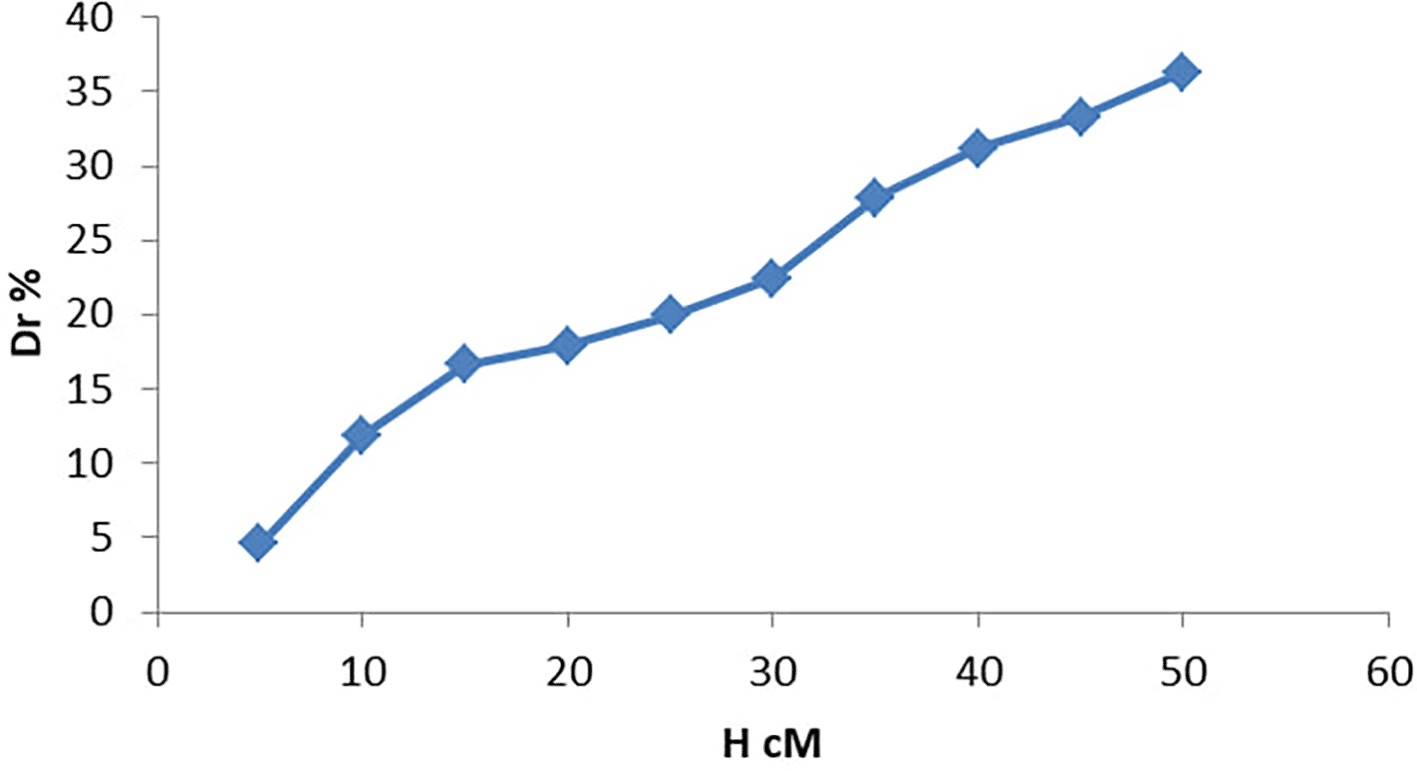
And analyze the above data by using the SPSS program and depending on many modes of analysis and the most accurate higher regression (R = 0.984) as shown in the analysis data in the below Table 3.
Where
H: falling height in CM
So at Ø = 30, the Dr% = 35%, then H = 48 cm according to Equation (1). The below Table 4 shows the physical Properties for the emulsion asphalt.
After installation the set up the anchor plate is tested by uplift loading using an electrical lever and load cell to measure the load capacity and Lvdt to record the average vertical displacement until the anchor plate reaches the failure state as shown in ( Figure 5).
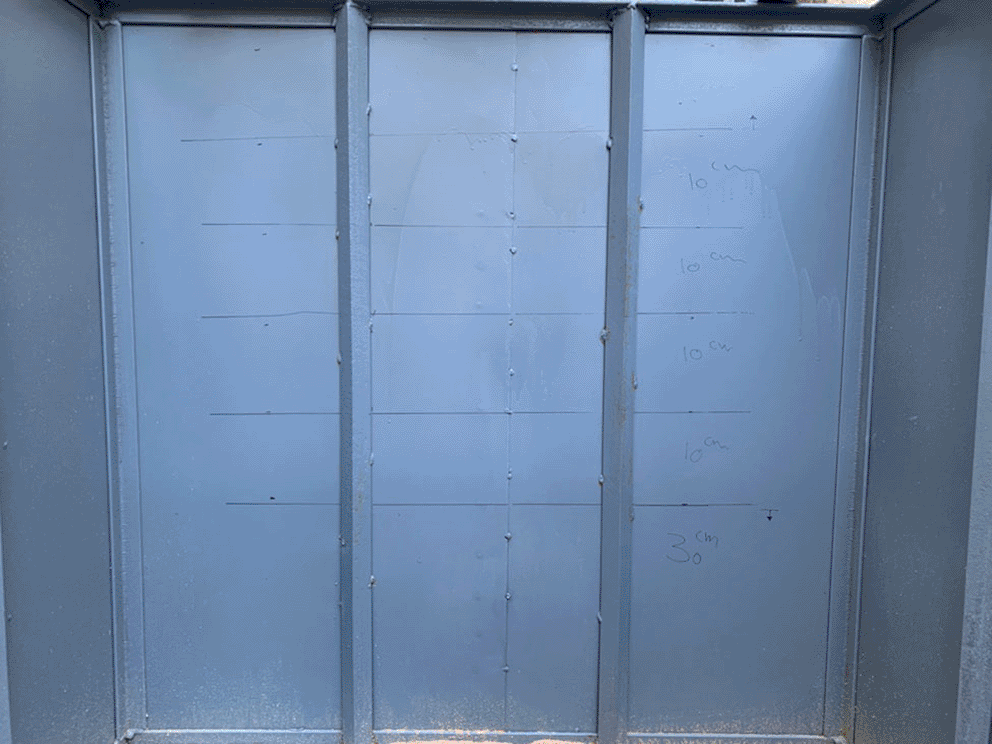
The load that the anchor plate failed at conceded a maximum load and which before it less than the failure load. Each test is repeated at least four times with a difference less than 5% for considering the results of each test. Every test was embedded at depths (2D, 3D, 4D, 5D, 6D, 7D & 8D) and loading till failure in single and line groups square anchor plates (1x2), (1x3), (1x4) & (1x5) in sandy soil. The bed of the sandy soil at depth 30 cm inside the model and below the tip of the anchor and the remaining layers with 10 cm depth for each layer as shown ( Figure 6).
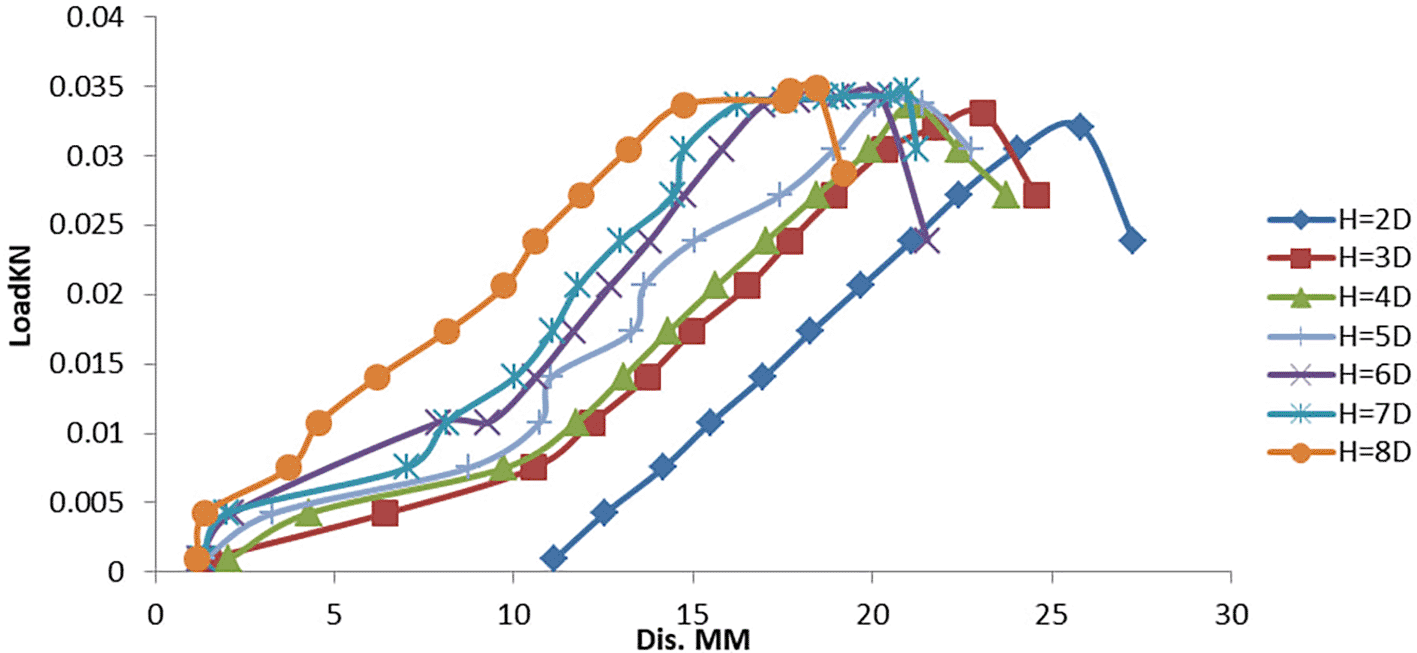
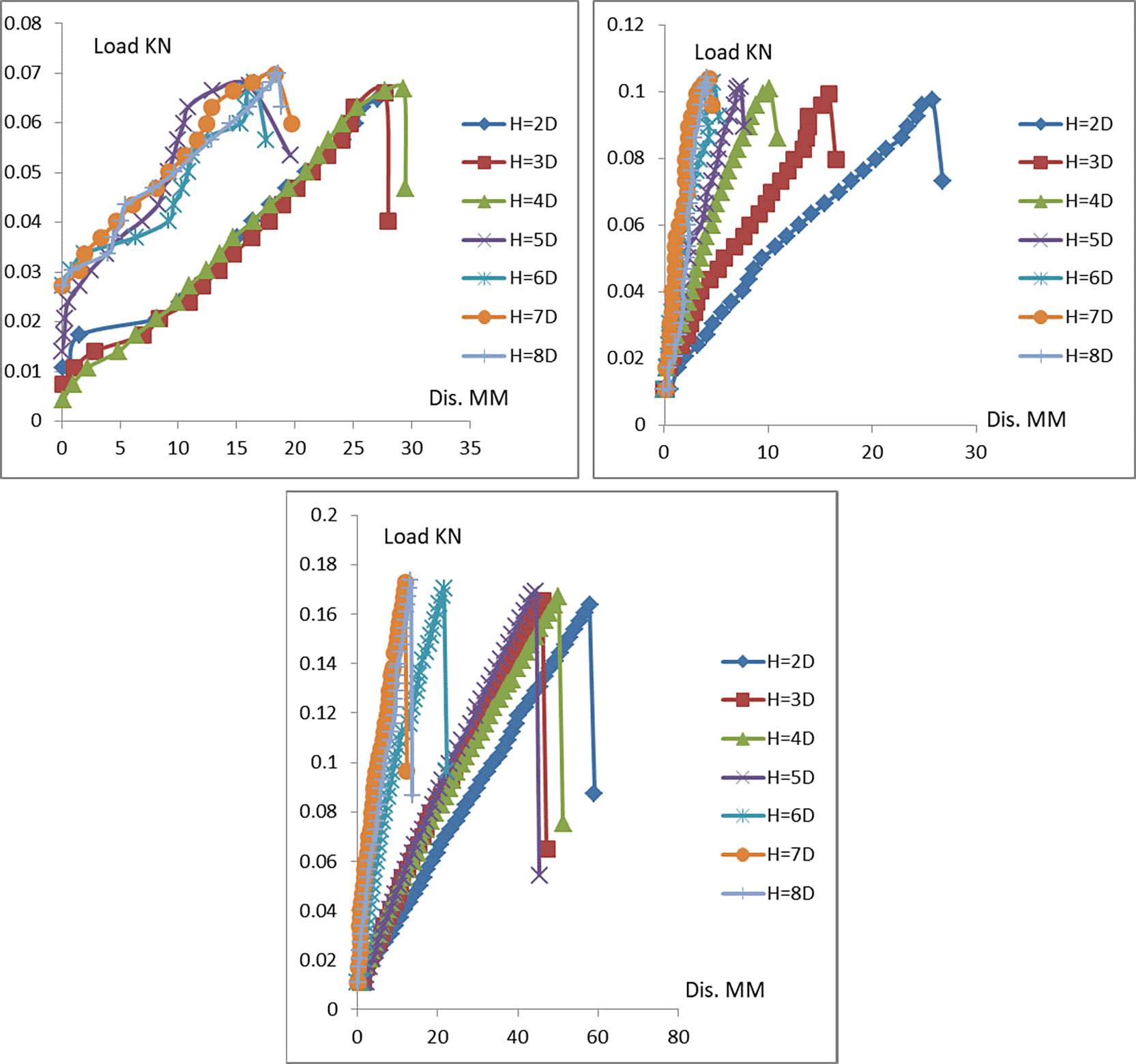
Depending upon the results of the test that performed for the single anchor plate at depths (2D, 3D, 4D, 5D, 6D, 7D & 8D) noticed that the critical depth Hcr not clear when plotting the results as curves because the square anchor plate (3x3) cm considering small size, but can recognize the H.cr from the curves in ( Figure 7) its approximately more than (5D).
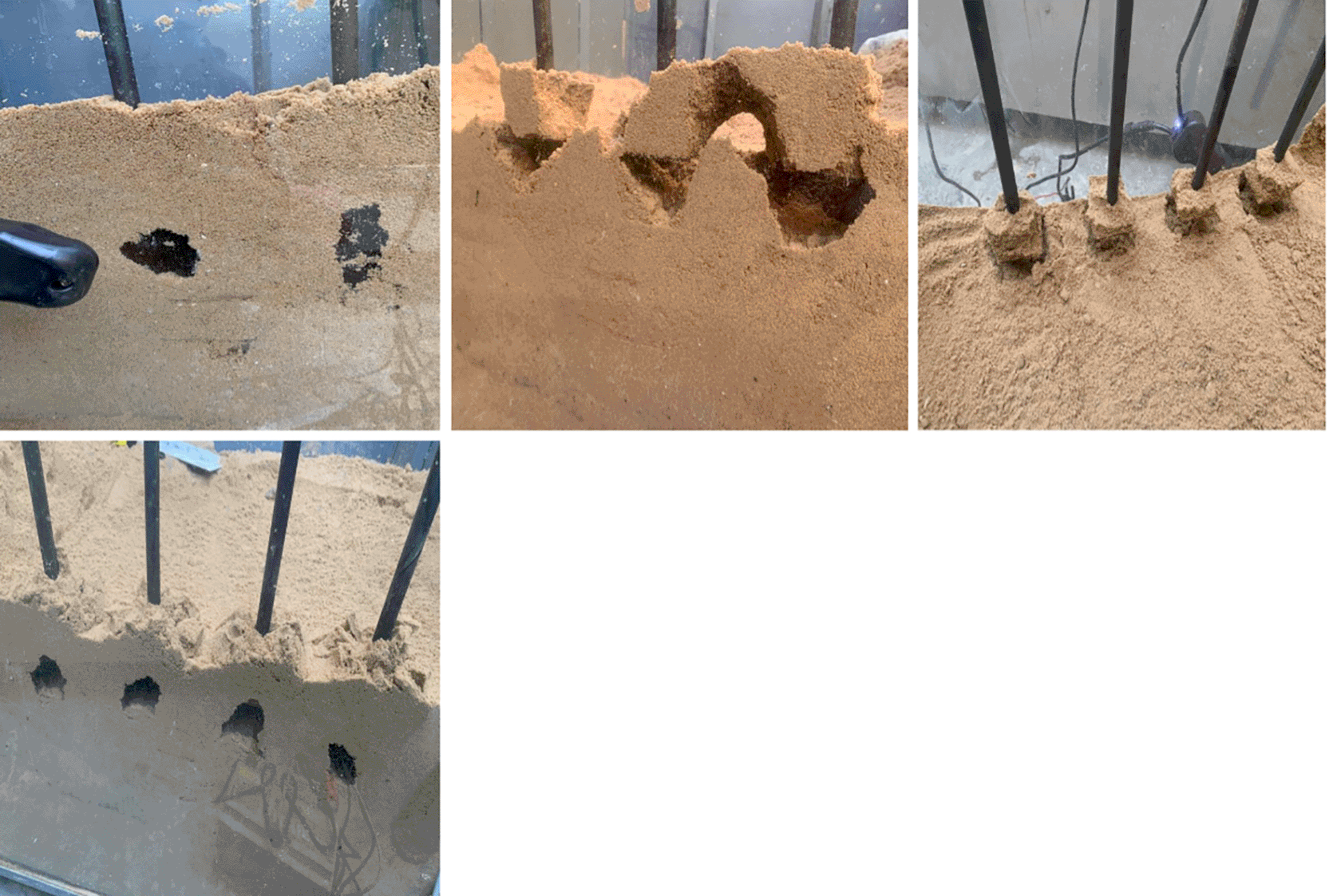
On the other hand the failure surface of the anchor has a rectangular shape as shown in ( Figure 8) as the friction theory.22 The up lift resistance of the anchor plate increases with increase of the embedded depth and the vertical displacement decreases.
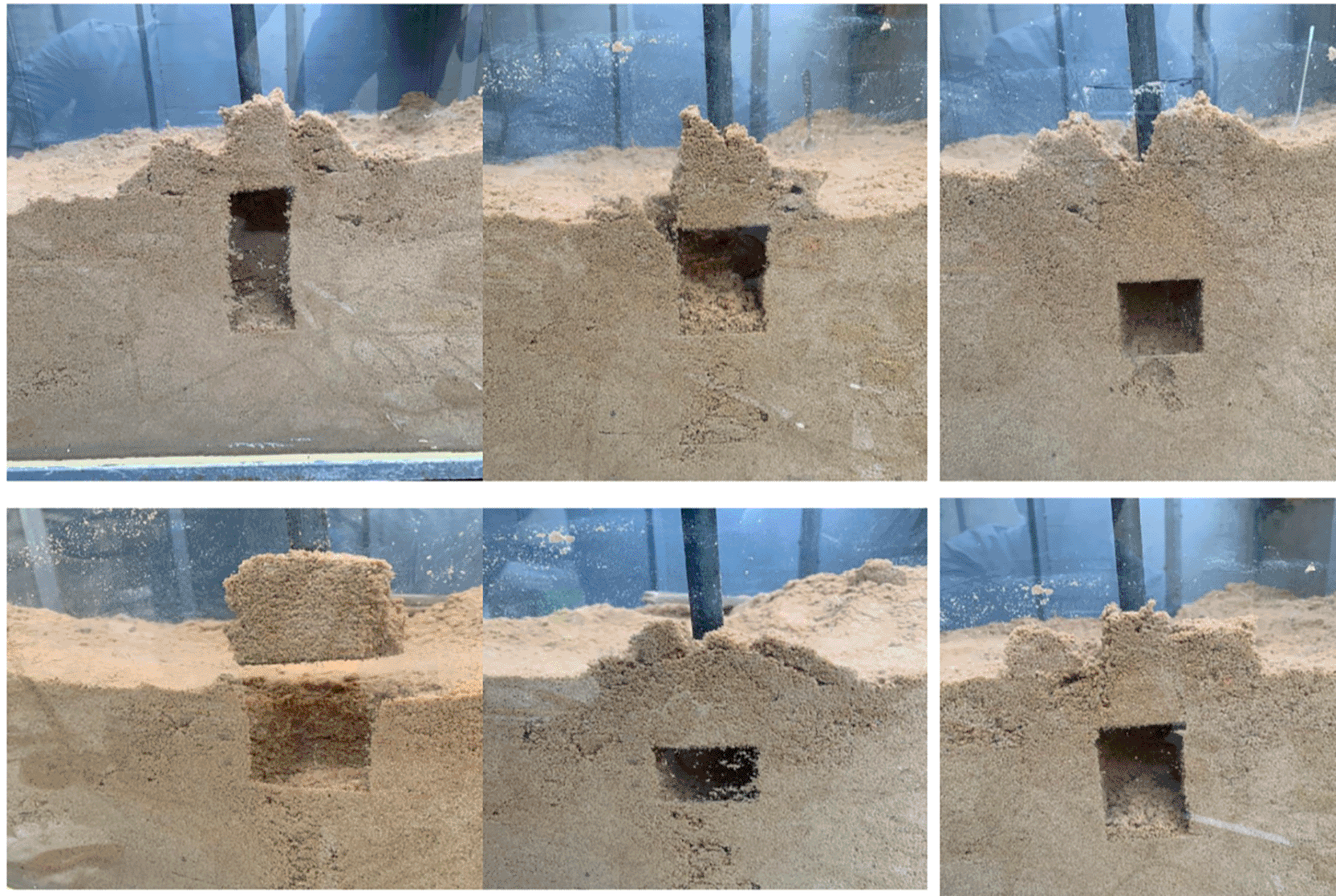
When installation the line groups anchor the behaviour of the critical depth be more clear with the increase number of the anchor plates in the group the depths of the anchor plate separated shallow from deep anchor plates and the separation was at the depth approximately more than (5D), because the group anchor palate increase the areas contact of the plates with the particles soil more than using single plate. This phenomenon helps in observation of the testing results on the curves. Also the failure surfaces of the line groups acts as a rectangular depending on the friction theory22 as shown in ( Figure 9). The up lift resistance of the anchor plate increases with increase of the embedded depth and the vertical displacement decreases.
On the other hand, increasing the number of the anchor plates causes an increase in the critical depth. That’s mean these groups tend to densification the soil during loading, because1 observed the critical depth equal to (6D) in dense sand and (5D) in loose soil while in this test medium soil used with more than (5D) critical depth but with increasing the anchor plates the critical depth approach to the (6D) as shown in the curves in ( Figure 10). Also the effect of group anchor proportionally to the increase of the resistance to the uplift stress as shown in ( Figure 11). The increasing of the number for the anchor plate leads to increase the resistance to the uplift stress because the applied loads will distribute equally on the group anchor plate instead of the single anchor; that distribution minimizes the applied load on the unique anchor. The difference between shallow and deep depth for anchors subjected to an upward force is in the form of deformation of the soil surface when the anchor is pulled upward. In shallow anchors, the deformation is present on the outer surface of the soil, while in deep anchors, the failure form is on the surface within the outer surface of the soil.
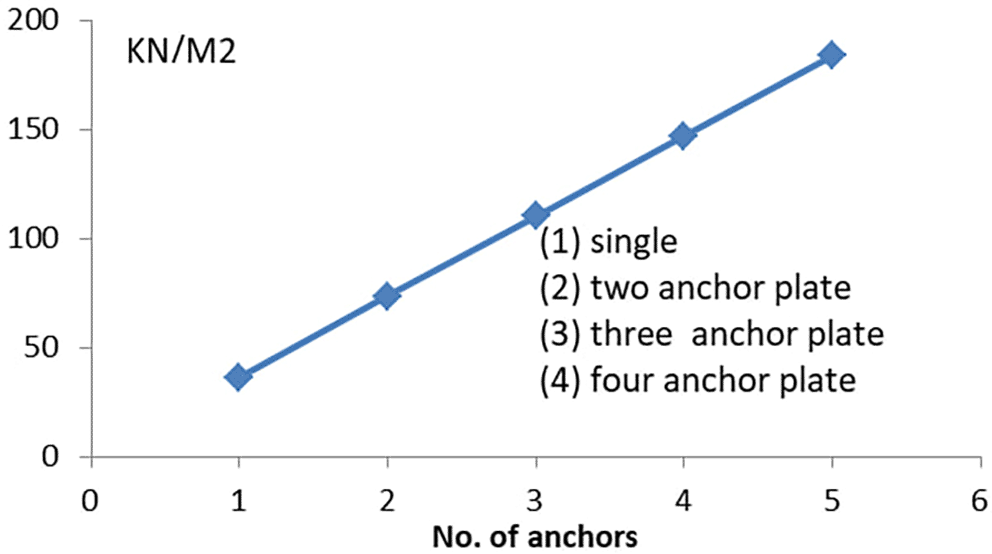
This increases the resistance because the group anchor tends to act as a large single anchor plate because in the test the spacing was close (S = 4D(B)).12
By using direct shear test and unconfined pressure test for different ratio from the soil and emulsion (0, 2, 4, 6, 8)% and the optimum ratio for the internal friction and the cohesion were (4)%. At this ratio maximum value of the internal friction and best cohesion value, because after this ratio the values of the internal friction decrease while the cohesion increases but this increment corresponds to decreasing the internal friction as shown in ( Figure 12).
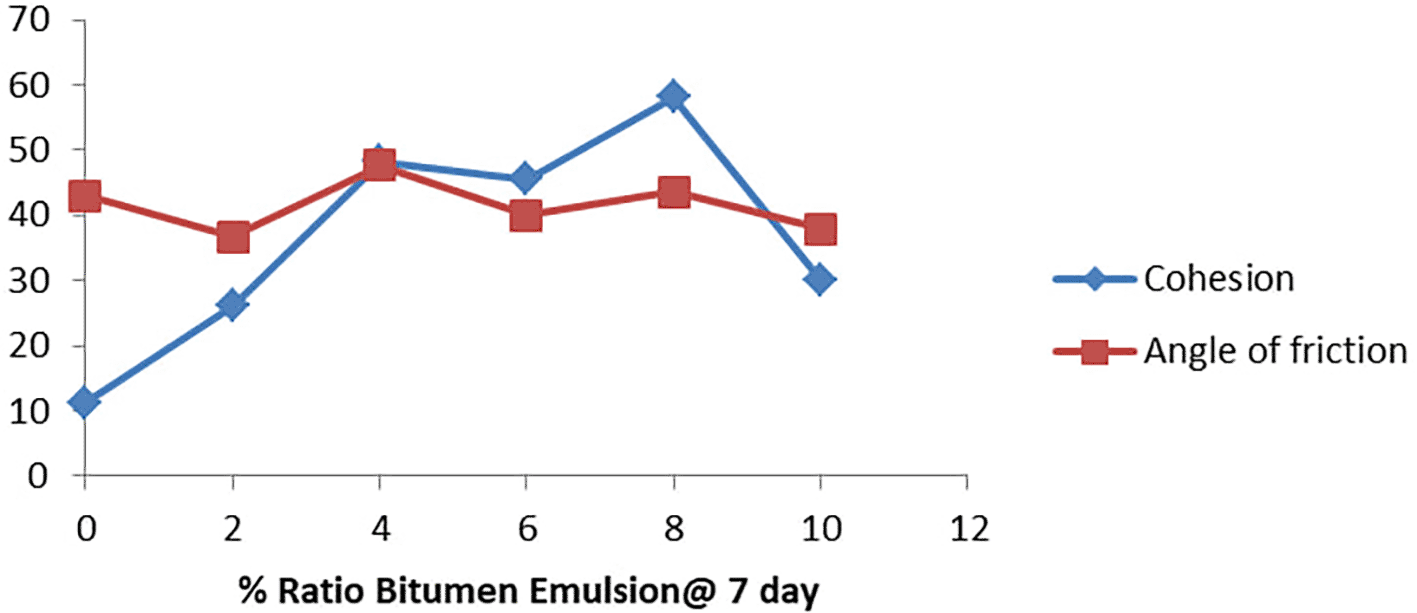
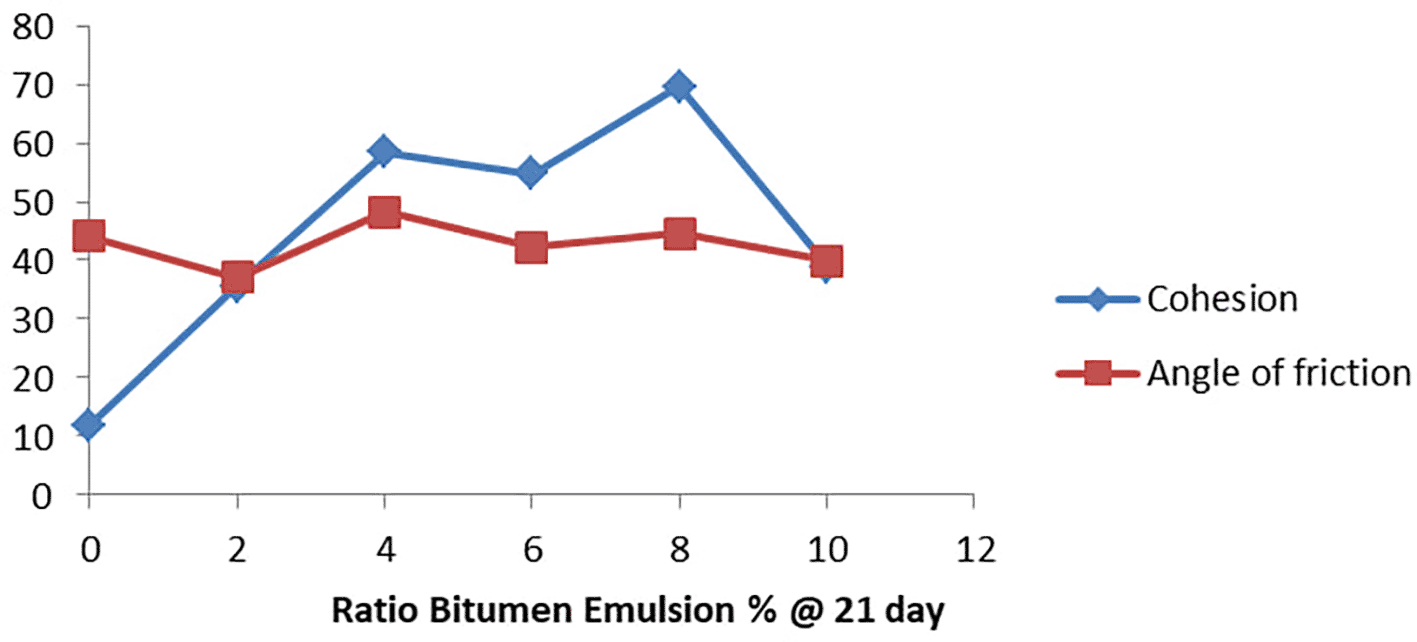
On the other hand the results of the friction and the cohesion at 21 days curing as shown in ( Figure 13). Mechanism of Bitumen’s effect on the sand mixture that increases cohesion (C) when bitumen is added, it coats the sand grains and forms viscous bonds between them. These bonds increase tensile and shear resistance (higher cohesion). While decreasing the friction angle (φ), bitumen reduces the surface roughness of the grains, weakening their mechanical interlocking. The higher the bitumen content, the more slippery the grains become (lower φ). After improving the soil around the anchor plate with the mixture at depth (2D) and (6D) and width (D), for curing 7 days and 21 days. The below curves show the improving ratio with respect to the natural soil ( Figure 14) and ( Figure 15).
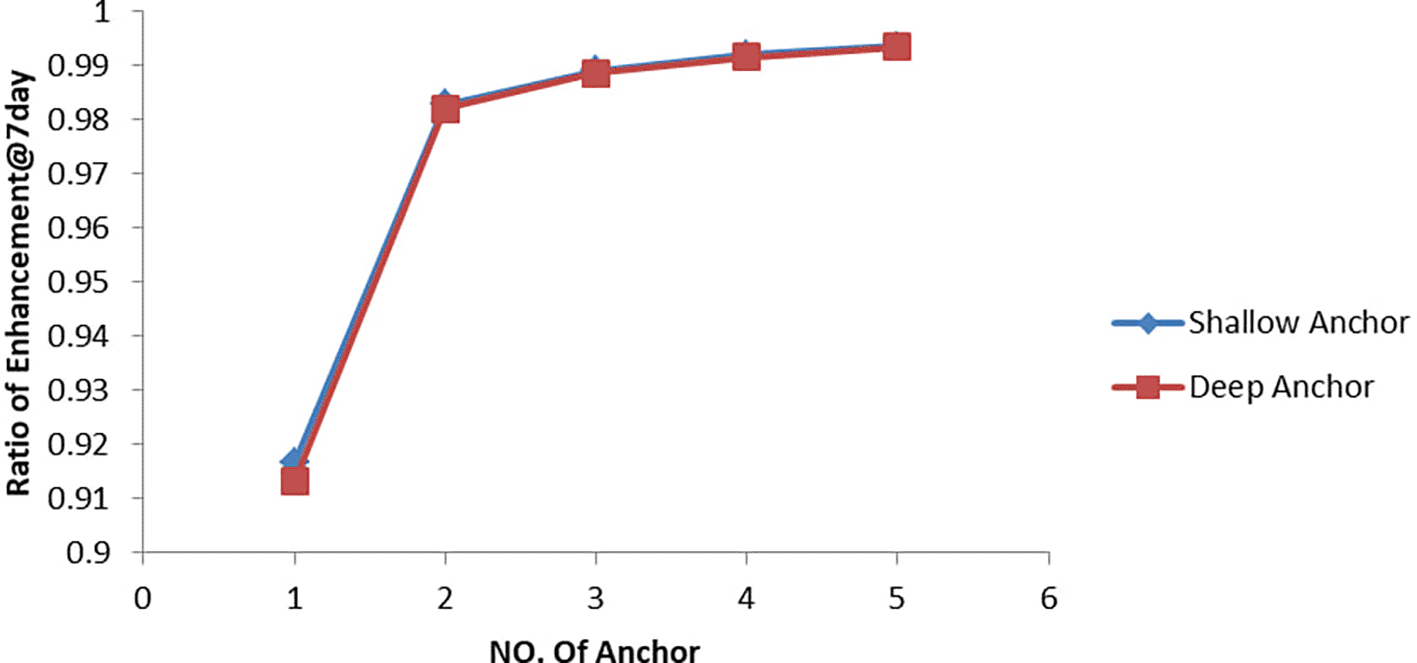
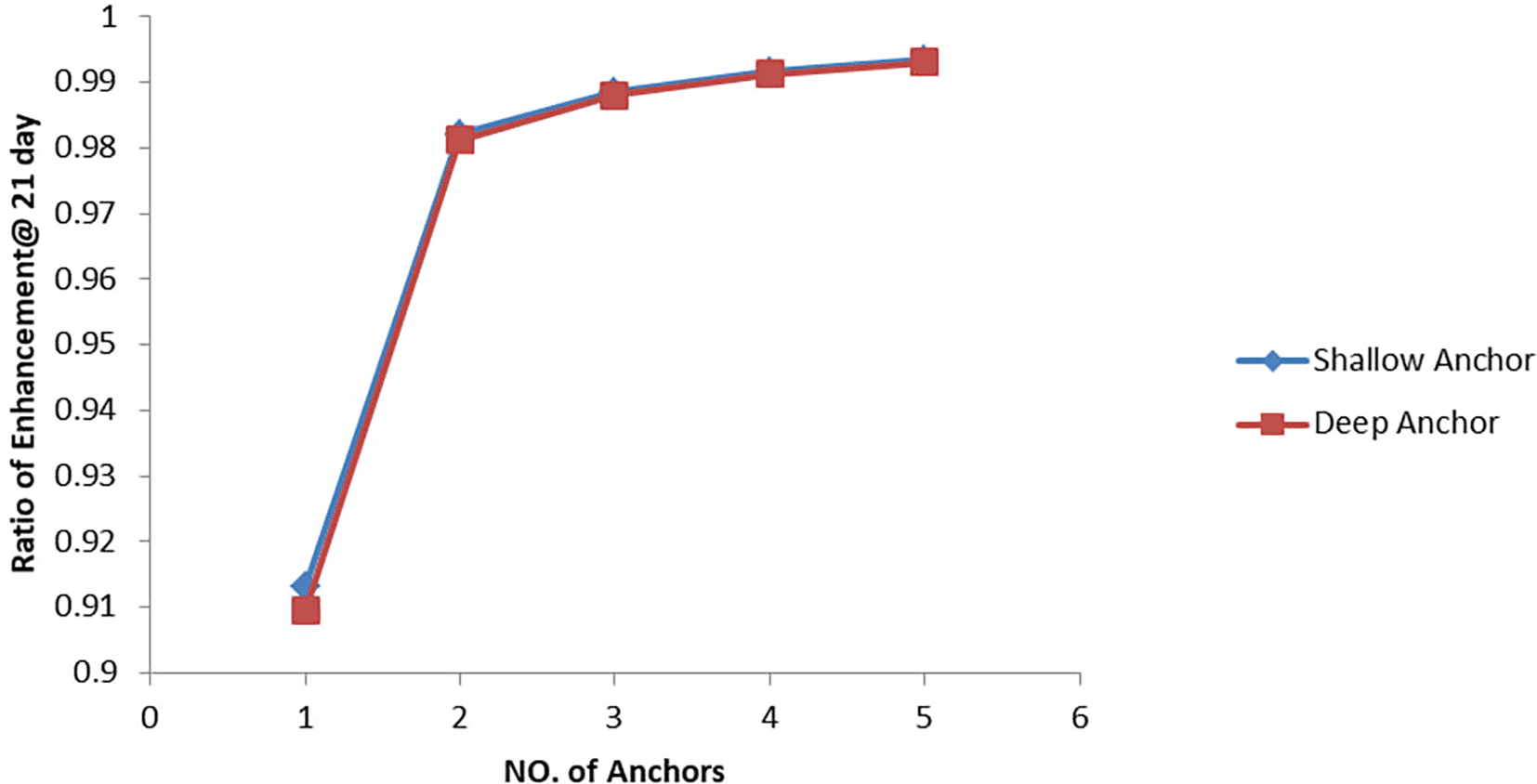
And the difference in improving ratio between 7 days and 21 days is more in single shallow anchor than group deep anchor. Because in shallow single anchors the lifting capacity is low when tested without soil improvement compared to the deep anchor group, so when improving the capacity is logically higher on the less durable side, while the deep anchor group has a higher capacity in natural soil than the rest of the models, so the improvement percentage is lower than the rest. As shown in ( Figure 16).
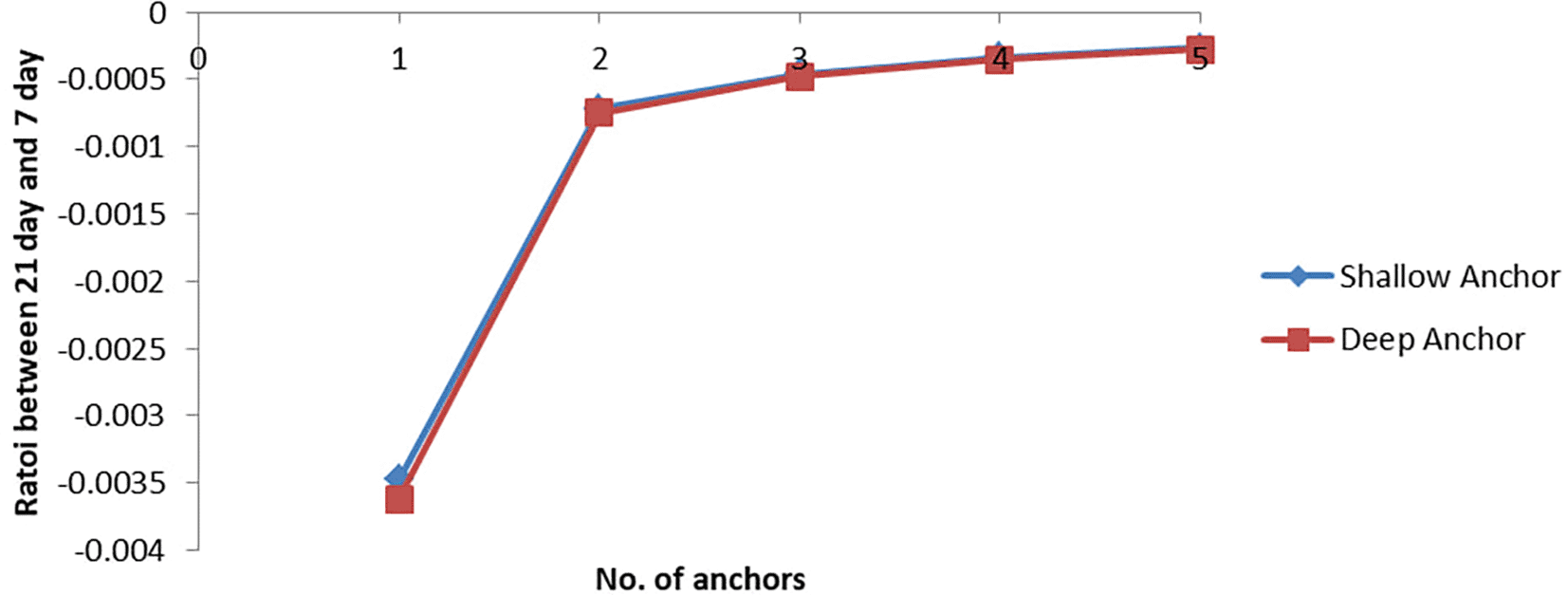
The critical depth of the anchor plate increases with the densification of the soil. The critical depth separated clearly in the group anchor more than the single anchor. The close spacing between the anchors try to make the behaviour of the group anchor as a large single anchor at S = 4D. The increasing number of the anchor plate increases in the uplift resistance and decreases in the vertical displacement. The failure surface with the soil of the anchor plate as a rectangular shape like the friction theory. The optimum ratio for the improving was 4% because after this ratio the values of the internal friction decrease while the cohesion increases but this increment corresponds to decreasing the internal friction. The improving ratio in the shallow anchor higher than in the deep anchor. The improvement rate was higher when the asphalt emulsion was used with a cure for 21 days than when the emulsion was used for 7 days, and the improvement rate was also smaller in the deep anchor group than in the shallow single anchor.
| Views | Downloads | |
|---|---|---|
| F1000Research | - | - |
|
PubMed Central
Data from PMC are received and updated monthly.
|
- | - |
Provide sufficient details of any financial or non-financial competing interests to enable users to assess whether your comments might lead a reasonable person to question your impartiality. Consider the following examples, but note that this is not an exhaustive list:
Sign up for content alerts and receive a weekly or monthly email with all newly published articles
Already registered? Sign in
The email address should be the one you originally registered with F1000.
You registered with F1000 via Google, so we cannot reset your password.
To sign in, please click here.
If you still need help with your Google account password, please click here.
You registered with F1000 via Facebook, so we cannot reset your password.
To sign in, please click here.
If you still need help with your Facebook account password, please click here.
If your email address is registered with us, we will email you instructions to reset your password.
If you think you should have received this email but it has not arrived, please check your spam filters and/or contact for further assistance.

Comments on this article Comments (0)