Keywords
Paper-based clinical records; Usability; Health information management; Patient care; South African hospitals

This article is included in the Health Services gateway.
Paper-based clinical records; Usability; Health information management; Patient care; South African hospitals
One of the most significant and extensively utilised information systems in the medical field is the hospital information system (HIS) (8–10). Effective health information systems are essential for improving healthcare delivery, enhancing operational efficiency, and supporting clinical decision-making. Employee productivity has been demonstrated to increase when information systems (IS) are more user-friendly. Additionally, poor usability results in poor patient outcomes and reduced quality of healthcare. (2). Therefore, the usability of health information systems is a critical component of patient safety and quality care.
In this context, effective patient care delivery is highly dependent on accurate and comprehensive clinical documentation (7). Clinical records serve as an important communication tool among healthcare professionals involved in patient management and continuity of care (4; 5). Furthermore, as healthcare systems become increasingly complex, the majority of clinical research has focused on improving methods of disease diagnosis and treatment.3 However, limited attention has been given to improving healthcare operational systems, particularly clinical record management. This gap is concerning since effective information management systems are fundamental to safe, coordinated and efficient healthcare delivery.
This is particularly relevant in resource-constrained, rural and remote healthcare settings in South Africa, where healthcare facilities continue to experience challenges related to inadequate resources and significant health inequities (Bantom et al., 2016; Cline & Luiz, 2013). Inadequate clinical record administration in rural South African hospitals exacerbates these challenges by delaying timely data access, disrupting care coordination, and reducing the overall quality of healthcare services (Katurura & Cilliers, 2018; Zharima et al., 2023). Moreover, the continued reliance in paper-based systems presents substantial barriers to accurate, accessible, and timely patient information. Moreover, the continued reliance on paper-based systems presents substantial barriers to accurate, accessible and timely patient information (Achieng & Ruhode, 2019; Makumbani & Tsibolane, 2024).
Consequently, these challenges significantly compromise the usefulness of clinical data for both immediate patient care and long-term epidemiological research, thereby perpetuating keeps these underprivileged communities in cycles of poor health outcomes in underserved communities (Abdul et al., 2024; Mrara & Oladimeji, 2024). As a result, the usability of paper-based clinical records becomes a crucial determinant of care coordination, data integrity, continuity of care and overall healthcare service delivery in these settings (Mrara & Oladimeji, 2024). A strong and functional health information system is therefore essential for managing patient care, monitoring health system performance, and informing public health decision-making. However, many developing countries, including South Africa, continue to face challenges such as inadequate infrastructure, limited resources, and insufficient technical expertise (Jatileni & Nicol, 2025). In addition, South Africa still relies heavily on manual systems for collecting, storing, and retrieving patient records, highlighting the need for further research aimed at improving health information management practices (Popela & Dagada, 2016).
Given these challenges, assessing the usability of paper-based clinical records is essential for strengthening health information systems and improving patient care delivery in South African hospitals. Therefore, this study aims to assess the usability of paper-based clinical record systems in four selected South African referral hospitals.
The study was conducted across four public hospitals in two predominantly rural South African provinces: Nelson Mandela Academic Hospital (NMAH) and St. Elizabeth Hospital (SEH) in the Eastern Cape, and Rob Ferreira Hospital (RFH) and Themba Hospital (TH) in Mpumalanga. Both regions are characterized by high levels of poverty, unemployment, and socioeconomic inequality, all of which contribute to sub-optimal regional health outcomes. The majority of the population in these provinces relies on public health facilities for medical services (Neely et al., 2019). Both provinces continue to experience poor health outcomes despite major initiatives, strategies, and investments made by the Department of Health (DoH) to strengthen the health system’s capacity to deliver quality healthcare.
The DoH in the Eastern Cape has encountered various challenges, including overcrowded hospital wards, antiquated infrastructure, and shortages resources, all of which have attracted unfavourable media attention and directly affected healthcare delivery to the population. Similarly, according to a 2017 DoH report, 13 of Mpumalanga’s 25 hospitals experienced acute shortages of essential medical equipment, linen, beds, and basic utilities such as water and electricity, thereby compromising the provision of effective patient care.
A purposive sampling approach was used to select clinical records from four participating hospitals. Five clinical records were randomly selected from each relevant clinical unit within each hospital for discipline-specific assessment. Within these institutions, the sampling frame encompassed a comprehensive array of clinical departments, including specialized internal medicine units (such as Cardiology, Nephrology, and Rheumatology), adult medical and surgical wards, intensive care units (ICU), outpatient clinics, and extensive maternal and paediatric specialties, as comprehensively detailed in Table 0.1.
To be eligible for inclusion, each clinical record was required to contain a minimum of five documented clinical entries. For example, an entry may include the following information about patient care, vital signs (blood pressure, heart rate), laboratory test results, ICD-10 diagnostic codes, medication prescriptions, and fluid balance charts. For each selected record, five entries were reviewed against the study variables and documentation requirements. A variable was scored as “Yes” only if at least five of the reviewed entries contained the required information. Required information includes but not limited to the patient’s personal details, the date of entry, the professional council registration number of the healthcare professional, and all other relevant information. If one or more of the five entries lacked the required information, the variable was scored as “No.”
The decision to sample five records per clinical department, for all departments is the selected hospitals; was based on the absence of established literature to guide sample size determination for this type of clinical record usability assessment. However, the overall sample exceeded the commonly accepted minimum threshold of 30 observations used in quantitative research, thereby supporting reliable descriptive analysis and comparability across study sites.
Data were collected using a standardised questionnaire developed from the Canadian Institute for Health Information Quality Framework. The questionnaire was developed following a comprehensive literature review and aligned with the study objectives. It was designed to assess the four dimensions of clinical record quality: completeness, consistency, usability, and timeliness. However, this manuscript reports only findings related to the usability dimension, while results on other dimensions will be addressed in subsequent publications.
The usability component comprised four key constructs: record accessibility and filing, temporal documentation usability, legibility and readability, and communication usability. Each construct consisted of multiple dichotomous indicators (“Yes”/“No” used to evaluate specific aspects of paper-based clinical record usability.
Record accessibility and filing assessed the physical organisation and management of clinical records, including correct filing, secure placement of documents, chronological arrangement of contents, ease of retrieval, and the physical condition of record folders. Temporal documentation usability evaluated the chronological integrity and timeliness of clinical documentation. This included assessment of whether entries were recorded sequentially and appropriately dated and timed to support continuity of care and clinical decision-making. Legibility and readability assessed the clarity and interpretability of documented information, specifically whether handwritten or recorded clinical notes could be clearly read and understood by healthcare professionals. Communication usability evaluated the extent to which clinical documentation facilitated communication among healthcare professionals, patients, carers, and family members. This construct assessed whether notes were understandable and adequately supported continuity and coordination of patient care.
The four constructs represent key operational dimensions of clinical record usability that influence patient safety, continuity of care, care coordination, and the overall effectiveness of health information systems in healthcare settings.
Following data collection, all data were captured in Microsoft Excel and subsequently exported to IBM SPSS Statistics version 30 (IBM Corp., Armonk, NY, USA) for statistical analysis. Prior to analysis, data cleaning procedures were conducted, including check for missing values, duplicate records, inconsistent coding, and out-of-range responses.
The usability dimension consisted of four constructs derived from the structured record review tool, namely record accessibility and filing, temporal documentation usability, legibility and readability, and communication usability. Each construct comprised multiple dichotomous indicators assessing different aspects of clinical record usability. Each usability indicator was coded as “Yes” = 1 and “No” = 2. Construct scores were calculated by determining the proportion of compliant (“Yes”) responses within each construct. Specifically, the total number of compliant indicators was divided by the total number of indicators within the construct and multiplied by 100 to generate percentage scores ranging from 0 to 100, with higher scores indicating better usability performance.
An overall usability score was subsequently calculated for each reviewed clinical record by averaging the scores of the four usability constructs: record accessibility and filing, temporal documentation usability, legibility and readability, and communication usability.
Descriptive statistics were used to summarise construct scores and overall usability scores. The distribution of continuous variables was assessed using graphical inspection, skewness, kurtosis, and measures of central tendency and dispersion. As several usability construct scores demonstrated non-normal distributions, results were primarily summarised using medians and interquartile ranges (IQRs).
Comparisons of usability construct scores across hospitals were performed using the Kruskal–Wallis test. Frequencies and percentages were used to summarise selected usability indicators across the reviewed clinical records. To facilitate interpretation, overall usability scores were categorised into three performance levels: poor (<50%), moderate (50%–79%), and good (≥80%). Associations between hospitals and overall usability categories were assessed using Fisher’s Exact test because of small, expected cell counts in some categories.
Radar charts and bar charts were used to visually compare usability construct scores and overall usability performance across hospitals. Statistical significance was assessed at the 5% level, with p-values less than 0.05 considered statistically significant throughout the analysis.
Ethical clearance to conduct this study was obtained from the Research Ethics Committee of the Faculty of Health Sciences at Walter Sisulu University (Approval number: WSU HREC 070/2026). Approval to access the health facilities was also obtained from the Provincial Health Research Committees of the Eastern Cape Department (Approval number: EC_202605_030) and Mpumalanga Department of Health (Approval number: MP_202106_009). Upon data collection, admission to the study sites was additionally prearranged with the Chief Executive Officers (CEO) of the respective hospital.
Verbal informed consent was given by the CEOs of the respective hospitals as data was collected using clinical record review method and there was no direct contact with any humans or patients. The verbal informed consent was approved by the Research Ethics Committee of the Faculty of Medicine and Health Sciences, the rational justifying the verbal consent was because there was no human interaction during the actual data collection process, data was collected by the review of clinical records. The Protection of Personal Information Act (POPIA) was then ensured during the study.
A total of 255 records were reviewed across four selected hospitals namely Nelson Mandela academic Hospital, St Elizabeth Hospital, Rob Ferreira Hospital and Themba hospital. The records were obtained from multiple clinical disciplines, to assess the usability of paper-based clinical records for patient care across different clinical settings. See table 0.1 below for list of departments utilised.
Table 1 presents the overall usability construct for the reviewed clinical records. The overall usability score demonstrated moderate performance, with a mean score of 53.1% (SD: 13.3) and a median score of 50.0% (IQR: 18.0). Among the usability constructs, temporal documentation usability achieved the highest performance, with a mean score of 96.6% (SD: 11.2) and a median of 100.0% (IQR: 0.0). This indicates that documentation timing practices were consistently well maintained across most records.
Similarly, record accessibility and filing demonstrated relatively good performance, with a mean score of 74.9% (SD: 21.2) and a median of 80.0% (IQR: 40.0), suggesting generally adequate organization, preservation and retrieval of clinical records.
In contrast, legibility and readability demonstrated poor overall performance, with a mean score of 32.6% (SD: 45.1) and a median score of 0.0% (IQR: 100.0), reflecting substantial variability in the clarity and readability of clinical documentation.The lowest-performing construct was communication usability, which recorded a mean score of 8.4% (SD: 20.2) and a median of 0.0% (IQR: 0.0). This indicates that documentation was rarely written in a manner easily understandable to patients, carers, or other healthcare professionals.
Figure 1 presents the mean overall usability scores across the four hospitals. SEH demonstrated the highest mean overall usability score (55.8%, SD: 10.9), followed by Themba Hospital (54.9%, SD: 14.2), NMAH (52.7%, SD: 14.6), and RFH (51.3%, SD: 12.6). and respectively. Overall, usability scores were relatively similar across hospitals, although moderate variability was observed within facilities.
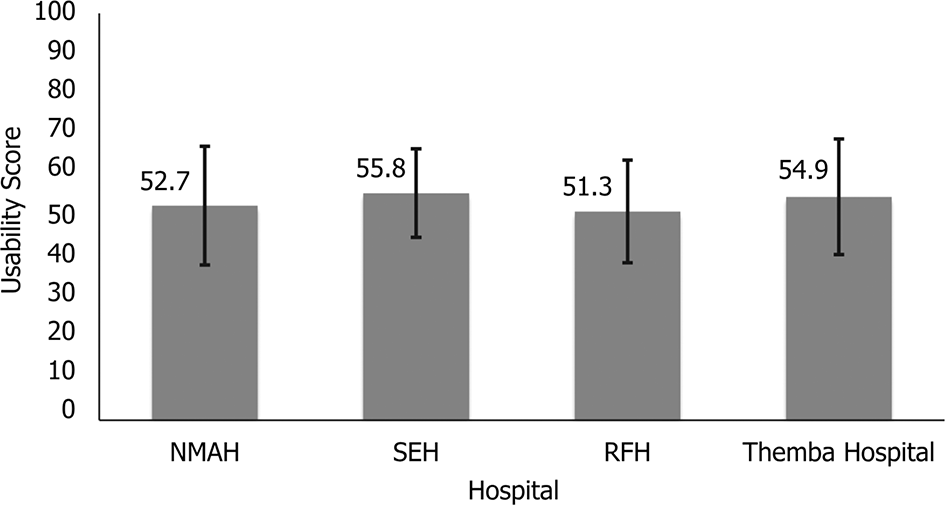
Footnote: Bars represent mean overall usability scores for each hospital, while error bars represent standard deviations.
Table 2 presents the comparison of usability construct scores across hospitals. Significant differences were observed between hospitals for record accessibility and filing, legibility and readability, and communication usability (p < 0.05). However, no statistically significant differences were observed between for temporal documentation usability (p = 0.172).
Record accessibility and filing scores differed significantly across hospitals (p < 0.001). SEH recorded the lowest median score of 40.0% (IQR: 20.0), whereas NMAH, RFH, and Themba Hospital all achieved higher median scores of 80.0.%.
Temporal documentation usability demonstrated consistently high performance across all hospitals, with all facilities recording a median score of 100.0% and no observed interquartile variability.
Legibility and readability also differed significantly across hospitals (p < 0.001). SEH achieved the highest median score of 100.0% (IQR: 0.0), whereas NMAH, RFH, and Themba Hospital all demonstrated poor median scores of 0.0%. Communication usability remained poor across all hospitals despite statistically significant differences (p = 0.001), with median scores of 0.0% recorded across all facilities.
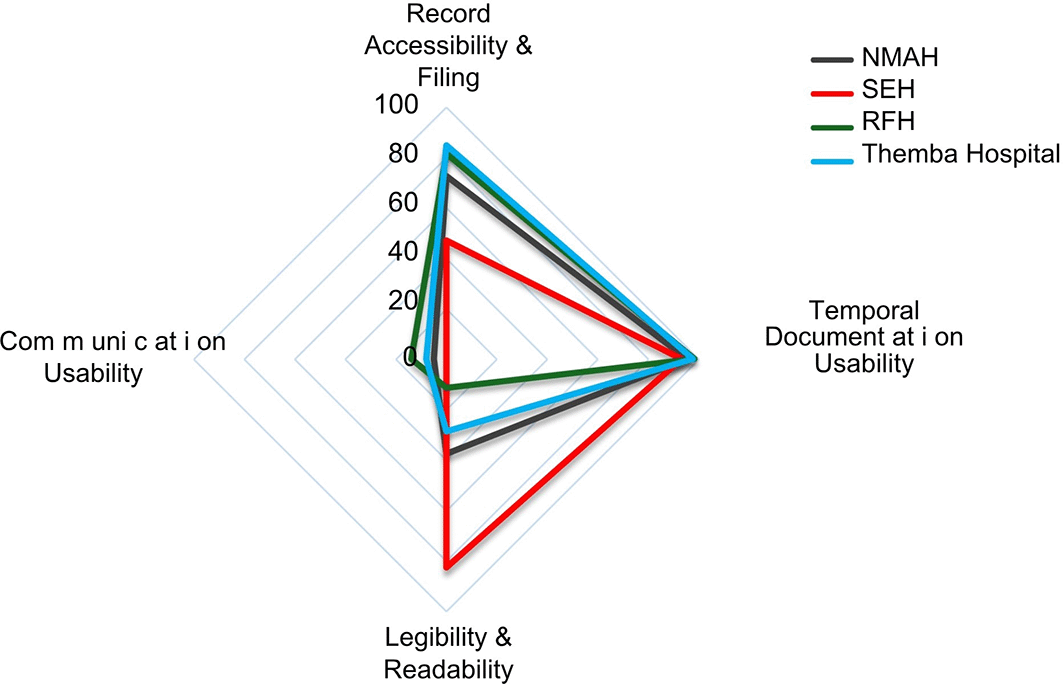
Figure 2 further illustrates the usability construct profiles across hospitals. Temporal documentation usability consistently demonstrated the strongest performance across all hospitals. RFH and Themba Hospital achieved higher scores for record accessibility and filing, while SEH demonstrated markedly stronger performance for legibility and readability. Communication usability remained consistently low across all hospitals.
Footnote: Frequencies of Key Usability Indicators.
Table 3 presents the frequencies of selected usability indicators observed in the reviewed clinical records. Most records were correctly filed (85.1%), maintained in good physical condition (93.7%), and organized chronologically (85.5%). However, only 62.7% of records had papers securely filed within the notes, while continuation sheets were appropriately numbered in less than half of the reviewed records (47.8%). Communication-related usability indicators demonstrated particularly poor performance. Only 21.6% of records contained notes understandable to patients, parents, or carers, while only 2.4% contained notes clearly understandable to other healthcare professionals.
Table 4 presents the distribution of overall usability categories across hospitals. Overall, most reviewed records were classified as having poor usability (65.1%), while 32.5% demonstrated moderate usability and only 2.4% achieved good usability.
SEH demonstrated the highest proportion of records with moderate usability (57.5%). RFH recorded the highest proportion of records classified as poor usability (73.3%), although it also included a small proportion of records with good usability (2.9%). Themba Hospital demonstrated the highest proportion of records classified as having good usability (6.0%).
A statistically significant association was observed between hospital and overall usability category (Fisher’s exact test, p = 0.002), indicating that usability performance differed significantly across the hospitals.
The findings of this study revealed that the overall usability of clinical records across the four institutions was usually unsatisfactory, with a mean usability score of 53.1% and a median score of 50.0%, indicating only modest usability performance. The findings indicate that, while some features of clinical record usability were maintained, numerous key inadequacies persisted, which may have a negative impact on continuity of treatment, clinical communication, and overall healthcare quality. This study paints a troubling picture of clinical record usability in rural South African hospitals, with an overall usability score of 53.1% indicating modest competence but concealing significant underlying flaws. Most importantly, 65.1% of records were rated as ‘Poor’, indicating that the bulk of clinical documentation does not exceed accepted criteria for safe, effective healthcare delivery. This finding is consistent with past South African audits, which have identified recurring quality issues in clinical record-keeping.1,2
Temporal documentation usability outperformed all other usability characteristics, with a median score of 100.0%. This study demonstrates that healthcare practitioners consistently documented clinical information in a timely way and sequenced entries correctly across most records. The consistently good performance across all hospitals shows that temporal documentation practices are well established throughout the participating facilities. Timely documenting is critical for continuity of treatment, medical-legal accountability, and clinical decision-making because it allows healthcare providers to accurately follow patient progress and respond effectively to changes in patient condition. The lack of statistically significant differences between hospitals indicates that temporal recordkeeping techniques were adopted consistently across sites.
With a median score of 80.0%, record accessibility and filing also showed comparatively good performance. The majority of records were chronologically organised, properly filed, and kept in good physical shape. These results show that, in spite of the difficulties frequently encountered in healthcare settings with limited resources, the institutions generally maintained efficient physical record management systems. There was, however, a great deal of variation among hospitals, especially at SEH, which had much lower filing and accessibility rankings. Inadequate filing procedures can jeopardise patient care by slowing down access to crucial clinical data, raising the possibility of lost paperwork, and decreasing the effectiveness of healthcare workers’ workflows.
Despite these advantages, the study found significant flaws in reading and legibility. This construct has a very high degree of variability between records, with a median score of 0.0%. This result implies that a large number of clinical notes were challenging to read or comprehend, most likely as a result of shoddy handwriting, inadequate documentation, ambiguous terminology, or inconsistent formatting techniques. Increased risks of medical errors, pharmaceutical errors, misinterpretation of patient information, and reduced patient safety have all been linked to poor readability in clinical documentation. The wide interquartile ranges also point to significant discrepancies in healthcare providers’ and departments’ documenting procedures.
Interestingly, SEH had substantially greater legibility and readability than the other hospitals, with a median score of 100.0%. This could be due to stronger documentation control, better adherence to documentation standards, or changes in staff training and supervision within that hospital. In contrast, the continually low readability scores obtained in the other institutions suggest the need for specific efforts to improve documentation clarity and uniformity.
Communication usability was identified as the worst element of clinical record usability, with a mean score of 8.4% and a median of 0.0%. The findings found that documentation was rarely produced in a way that was understandable to patients, carers, or other healthcare professionals. Only 21.6% of notes were understandable to patients or carers, and only 2.4% were understood by other healthcare professionals. These findings are especially disturbing because good clinical records should promote interdisciplinary communication and patient-centered care. Poor communication usability can lead to fragmented treatment, miscommunication amongst healthcare teams, service duplication, and less patient involvement in healthcare decision-making.
The frequency analysis of usability metrics emphasised these concerns. Although most documents were physically accessible and well-organised, flaws were discovered in record continuity and communication-related factors. Less than half of the continuation sheets were properly numbered, indicating poor navigation and continuity within patient files. Furthermore, more than one-third of documents had loose or unsecured papers, thus increasing the risk of document loss and incomplete patient histories.
A comparison of hospitals indicated statistically significant differences in various usability aspects, including accessibility and filing, legibility and readability, and communication usability. These findings suggest that institutional variables, management practices, staff capacity, and local documentation cultures can all influence clinical record usability. Despite identical overall usability scores across hospitals, the radar chart revealed varied usability characteristics for each facility, indicating that various hospitals may have unique documentation issues that necessitate context-specific treatments.
The classification of overall usability indicated the scope of the problem. Nearly two-thirds of all reviewed records were rated as having poor usability, with only 2.4% meeting excellent usability criteria. The statistically significant relationship between hospital and usability category indicates that usability performance was not consistent across facilities. SEH had a higher overall usability score, whereas RFH had the highest proportion of unusable records. Themba Hospital had the highest proportion of records classed as good usability, albeit this figure remained tiny.
Overall, the data indicate that, while hospitals performed well in terms of physical organization and timeliness of clinical records, there were significant inadequacies in documentation clarity, readability, and communication usability. These flaws may jeopardise patient safety, continuity of care, interdisciplinary teamwork, and healthcare quality. The findings highlight the importance of focused initiatives aiming at improving clinical documentation procedures, standardisation, staff training, and patient-centered communication within clinical records.
The pattern of performance across usability factors exposes certain systemic strengths and weaknesses. Temporal documentation had the highest score (96.6%), indicating that healthcare staff regularly record dates and times, which is essential for medicolegal compliance and chronological tracking of patient treatment. Similarly, record accessibility and filing performed well (74.9%), demonstrating that physical record management methods are adequate in these remote contexts. These findings indicate that when documentation requirements are simple and procedural, compliance can be fulfilled even in resource-constrained contexts.
However, the investigation discovered catastrophic failures in dimensions that necessitated cognitive effort and professional communication. Legibility and readability received a score of 32.6%, indicating that nearly two-thirds of clinical entries were difficult or impossible to read clearly. This finding is similar with Chamisa and colleagues’ surgical audit, which found 65% readability and noted missing basic identifiers such as hospital numbers, doctor names, and timed records as common issues.1 Poor legibility reduces the utility of any clinical record, regardless of its completeness, because illegible material cannot assist clinical decision-making or enable continuity of treatment.
Most shockingly, communication usability received only 8.4%, with only 2.4% of notes deemed intelligible to other healthcare professionals. This demonstrates a fundamental failure of clinical documentation’s core goal, which is to disseminate patient information across care teams and contexts. Haeusler and colleagues documented similar communication breakdowns in referral letters at a South African medical outpatient department, discovering that 87% of referral letters lacked key clinical information and 48% failed to state a reason for referral, allowing safe triage in only 35% of cases.3 The similarity of these findings across healthcare settings and documentation formats shows a systemic issue in clinical communication procedures, rather than isolated institutional errors.
The significant inter-hospital heterogeneity seen in this study—SEH obtaining 100% median readability while other hospitals recorded 0%—shows that poor documentation is not unavoidable, even in resource-limited situations. This variety shows that local factors such as institutional culture, supervision procedures, staffing patterns, and specific interventions might have a significant impact on documentation quality. Goenka and colleagues showed that focused interventions can improve record quality even in difficult rural settings; their use of a structured pro forma paired with audit cycles considerably improved paediatric tuberculosis and HIV documentation at a regional hospital.4 The success at SEH calls for further inquiry to uncover transferable methods that can be scaled to other institutions.
The results of this study are in line with a more general pattern of inadequate documentation found in South African healthcare settings, especially in rural and underdeveloped areas. This study’s rural setting, which was carried out in the provinces of Mpumalanga and the Eastern Cape, is marked by a lack of human resources, poor infrastructure, and restricted access to health IT.5,6 Clinical documentation and urgent clinical needs compete for healthcare workers’ limited time and attention due to these environmental considerations.
The systemic obstacles to efficient record-keeping in these settings, such as primarily paper-based systems with limited electronic access, retrieval difficulties that lower usability at the point of care, and coexisting facility-held and patient-held records that cause inconsistency, are highlighted by Bantom and colleagues’ research on health information accessibility in rural Eastern Cape.7 The communication breakdowns found in the current study, when information fails to move efficiently between healthcare professionals even when records are physically present, are similar to the fragmentation described by Bantom.
Poor documentation quality may have a domino impact on healthcare delivery, according to the research. Kerry’s interventional study in the Emtshezi Subdistrict revealed issues with hospital record systems, patients utilising several patient-held records at once, and inadequate clinical information exchange between medical facilities.8 These systemic issues raise the likelihood of medical errors, duplicate investigations, and discontinuity of care. Even when records are physically accessible, they frequently fail to enable efficient clinical handover or interfacility communication, as evidenced by the current study’s conclusion that only 2.4% of notes were comprehensible to other professionals.
Crucially, research shows that these issues can be resolved. Standardised record formats, audit-and-feedback cycles, and structured documentation tools have all showed promise in raising the calibre of documentation in South African contexts.4,8 However, the fact that inadequate documentation has persisted in several studies over almost 20 years indicates that system-wide progress has not been sustained by single initiatives.
Patient safety is directly and seriously impacted by the documentation flaws found in this investigation. Clinical decision-making, continuity of treatment between providers and locations, communication within healthcare teams, medicolegal documentation, and quality improvement efforts are all made possible by clinical records.1,9 Patient safety is jeopardised in a number of ways when records don’t perform these tasks.
First, clinicians are unable to obtain crucial patient information at the time of service due to unreadable or unclear documentation. Healthcare professionals must either make decisions based on partial information or spend time seeking clarification when they are unable to read prior entries or comprehend the clinical rationale of colleagues. This time is especially limited in remote areas with limited resources.
Second, care coordination and continuity are compromised by inadequate communication usability, especially for patients who migrate between primary care clinics, district hospitals, and referral centers. Inadequate referral information can result in inappropriate referrals and compromise triage decisions, as demonstrated by Haeusler and colleagues.3 This could delay appropriate care for patients who truly need specialist attention while overloading referral centers with patients who could be managed at lower levels of care. The fact that 91.6% of records in the current analysis did not attain sufficient communicative usability indicates that this issue is widespread rather than unique.
Third, patients’ and healthcare professionals’ medicolegal protection is jeopardised by insufficient documentation. Poor record-keeping violates medicolegal requirements and jeopardises safe practice, according to Chamisa and colleagues.1 Illegible or incomplete records offer neither proof of proper care nor a foundation for learning and improvement in the event of unfavourable results or medico-legal disputes.
Fourth, efforts to improve quality and administer the health system are hampered by inadequate recordkeeping. Monitoring illness trends, assessing therapy results, and pinpointing regions in need of intervention all depend on accurate clinical data. Health system managers are unable to make evidence-based decisions and allocate resources when clinical records are untrustworthy.10
To address these concerns to patient safety, the research recommends a number of high-priority actions. Patient-held records and structured proformas are examples of standardised documentation methods that have been shown to be successful in enhancing documentation communication and completeness.4,8 Regular audits with feedback can promote improvement and increase awareness.1 While taking into account the infrastructural limitations of rural areas, practical hybrid electronic-paper solutions may enhance accessibility and legibility.11 However, resolving underlying systemic problems including workload, supervision, training, and institutional culture will probably be necessary for long-term progress.
When interpreting these results, it is important to recognise a number of limitations. First, the statistical ability to identify differences between facilities or departments and the accuracy of department-specific estimates are both limited by the comparatively small sample size per department. Given the significant inter-hospital variance seen, the small sample size may also restrict how broadly the results may be applied. Larger, multi-site studies would enable more certain identification of factors linked to improved performance and provide more reliable estimates of documentation quality.
Second, a cross-sectional design was used in this study to record documentation quality at a certain moment in time. Changes in workload, staffing, or continuous efforts to enhance quality can all cause variations in documentation procedures over time. A longitudinal evaluation would provide light on patterns and the long-term viability of any advancements.
Third, the Eastern Cape and Mpumalanga, two rural provinces with well-known infrastructure and resource issues, were the sites of the study. This emphasis on under-resourced environments is useful for pinpointing issues where they are probably most serious, but it restricts generalisability to urban or better-resourced facilities. There may be significant differences in the quality of documentation between well-resourced private facilities and post-secondary academic institutions.
Fourt, the study concentrated on paper-based records, which are still common in healthcare settings in rural South Africa.5,7 While issues with communication usability and documentation completeness are expected to continue across formats, the specific findings addressing readability may become less relevant as health information systems develop and electronic health records are progressively used.12
Lastly, the study evaluated the quality of the documentation but did not test patient outcomes directly. Although the research has proven a connection between inadequate documentation and patient safety hazards,1,3,9 this study is unable to measure the precise effect of inadequate documentation on clinical outcomes in these contexts. The evidentiary base for giving documentation improvement top priority would be strengthened by future studies that connect patient safety indicators to the quality of documentation.
This study shows that the usability of clinical records in rural South African hospitals is insufficient, with specific flaws in communication usability and legibility that seriously compromise the essential goal of clinical recording. Most records don’t properly convey clinical information to other healthcare providers, even while temporal documentation and physical record management work rather well. These results are in line with earlier South African studies that showed ongoing issues with documentation quality, especially in rural areas with limited resources.
There are significant and complex ramifications for patient safety. Inadequate documentation makes it more difficult to make clinical decisions, jeopardises continuity of care, raises the possibility of medical errors, and hinders efforts to enhance quality. The literature shows that specific interventions, such as structured documentation tools, audit-and-feedback cycles, and standardised formats, can improve documentation quality, and the significant variation between facilities indicates that improvement is possible even in difficult contexts.
Healthcare administrators, legislators, and professional associations should acknowledge that addressing these documentation inadequacies is a patient safety priority that requires ongoing attention. While keeping the core requirement that clinical records convey crucial patient information in a clear and reliable manner, interventions must be adapted to the realities of rural practice, taking into account workload pressures, infrastructure limitations, and human resource shortages. Efforts to increase patient safety and healthcare quality in rural South Africa will be severely hindered if clinical documentation standards are not greatly improved.
The study showed that most clinical records were categorised as having poor usability, with overall usability across the four hospitals being typically moderate but predominantly inadequate. Significant shortcomings were found in legibility, readability, and communication usability, despite the hospitals’ generally good performance in temporal documentation usability, record accessibility, and filing. These results show that while clinical data were typically accessible and kept up to date, the quality of the documentation frequently hindered efficient interpretation and communication between patients, carers, and healthcare providers.
Significant variations in usability performance between institutions also point to variances in institutional procedures, record management standards compliance, and documentation methods. Continuity of care, patient safety, interdisciplinary teamwork, and well-informed clinical decision-making may all be jeopardised by poor communication usability and limited readability.
The results emphasise the necessity of focused actions to improve clinical documentation procedures in public institutions. Regular staff training on documentation standards, the application of standardised documentation rules, regular clinical record audits, and techniques to enhance communication-oriented documentation are a few examples of such initiatives. Improving patient outcomes, healthcare quality, and the general efficacy of health information management systems in environments with limited resources all depend on making clinical records more user-friendly.
| Views | Downloads | |
|---|---|---|
| F1000Research | - | - |
|
PubMed Central
Data from PMC are received and updated monthly.
|
- | - |
Provide sufficient details of any financial or non-financial competing interests to enable users to assess whether your comments might lead a reasonable person to question your impartiality. Consider the following examples, but note that this is not an exhaustive list:
Sign up for content alerts and receive a weekly or monthly email with all newly published articles
Already registered? Sign in
The email address should be the one you originally registered with F1000.
You registered with F1000 via Google, so we cannot reset your password.
To sign in, please click here.
If you still need help with your Google account password, please click here.
You registered with F1000 via Facebook, so we cannot reset your password.
To sign in, please click here.
If you still need help with your Facebook account password, please click here.
If your email address is registered with us, we will email you instructions to reset your password.
If you think you should have received this email but it has not arrived, please check your spam filters and/or contact for further assistance.

Comments on this article Comments (0)