Keywords
Mobile-banking, Rural population, Digital banking, computer self-efficacy, e-service quality, and digital literacy.

Mobile-banking, Rural population, Digital banking, computer self-efficacy, e-service quality, and digital literacy.
Mobile-banking has emerged as a vital channel for banking transactions (A. Kumar et al., 2020). Customers use mobile-banking, an internet-based service offered by banks, to access their bank accounts and conduct financial transactions (Akinyemi & Mushunje, 2020). Compared to online or in-person techniques, mobile banking offers a convenient way to carry out financial transactions (Das & Dutta, 2024). Mobile-banking offers the ability to manage accounts and conduct transactions from almost anywhere.
Even though government and financial institutions encourage the integration of digital technology in day-to-day activities, the acceptance rate remains low (Namakhwa et al., 2024). The Global Findex Report 2024 (World Bank, 2025) highlights that only 44% of adults involved in digital payment transaction in 2024, showing a significant usage gap to bank account ownership (77.6%). While Basri (2018) highlights the low level of awareness in rural populations regarding mobile-banking, Behl & Pal (2016) argue that this awareness is growing at a steady pace. Furthermore, Prabhu et al. (2019) to suggest that awareness and adoption of mobile-banking are increasing because of training provided by financial institutions.
Chawla & Joshi, (2019) draw attention to the scant literature that examines obstacles to the adoption of mobile-banking by rural populations. The various aspects which determine technology adoption in rural areas are social, economic, and infrastructural factors. Technology acceptance is greatly influenced by social factors and network effects, leading to clustering and erratic adoption patterns (West, 2020). Household income and educational level of individuals also has a significant influence on the technology adoption in rural areas (Dhanai et al., 2018). To enhance technology adoption in rural areas, certain initiatives are required, such as financial assistance, infrastructure development, and financial literacy (Chan et al., 2024).
Goveas et al., (2025) have examined adoption of mobile-banking among specific demographic clusters, there is deficiency of a comprehensive study that examines the diverse and distinctive population of the coastal region. This gap in literature has led to this study of mobile-banking adoption among the rural community in the coastal region. This study will provide actionable inputs that will facilitate policymakers and financial institutions in implementing the policies regarding financial inclusion effectively. This study’s main objective is to evaluate the coastal communities’ degree of familiarity and usage of mobile-banking applications and to examine the components influencing mobile-banking adoption in the region. To accomplish the aforementioned goals, this study examines factors such as perceived behavioural control [PBC] (Abdurrahman, 2024), social influence [SI] (O. Ali et al., 2024; Hassan et al., 2024), computer self-efficacy [CSE] (Li et al., 2024), and e-service quality [ESQ] (Dangaiso et al., 2024) on the adoption of mobile-banking amongst the coastal rural population.
The study offers a new perspective on mobile-banking adoption in the coastal regions of India, a context that has received limited attention in digital finance research. Coastal rural areas possess unique socio-economic and geographical characteristics including dependence on fisheries, fluctuating seasonal livelihoods, and unreliable digital infrastructure (Bokenchin et al., 2025). This study moves beyond the conventional assumption that rural populations are homogeneous (Feltynowski, 2019). Instead, it highlights how contextual realities shape digital behaviour and the adoption of financial technologies in coastal regions. Unlike previous research that applies established technology adoption frameworks such as the TAM and UTAUT in broader ways, this study incorporates additional psychological and contextual dimensions. It integrates computer self-efficacy and e-service quality, alongside established constructs such as perceived usefulness, ease of use, and attitude towards adoption. By combining these factors within a single analytical framework, the study provides a more comprehensive understanding of how users’ technical competence, service experience, and perceived value collectively shape mobile-banking adoption in coastal contexts.
The findings underline that the adoption process cannot be fully explained by traditional behavioural model alone. Instead, it requires a more balanced and context sensitive framework that accounts for environmental and experiential differences. This approach advances both academic understanding and policy development by offering evidence-based insights to inform comprehensive digital finance initiatives tailored to coastal regions.
Studies on mobile banking in rural settings consistently identifies users’ perceptions of technology as central to adoption decisions. Perceived usefulness, ease of use, and system reliability emerge as key drivers, often outweighing concerns like security risks in resource-constrained environments (Abandu et al., 2025). Limited network coverage and inadequate digital infrastructure in rural areas hinder the adoption of mobile banking (Ahmed et al., 2016). Another major obstacle for technology adoption is the complexity of mobile-banking interfaces, especially for users with limited technological proficiency (Shridhar et al., 2025).
Social and demographic factors have a substantial influence alongside technological factors. Young adults, more educated individuals with higher incomes and proximity to banking services, show greater inclination for adoption, as evidenced across rural population. Social influence from family, peers, and community leaders also drives uptake, frequently interacting with trust and digital confidence to shape intentions (Khatun et al., 2024). Behavioural intentions play a significant role in the adoption of mobile-banking in terms of prior experience in technology usage, perceived risk and social norms (Moid & Shankar, 2022).
Mobile-banking is a crucial mechanism for rural financial inclusion. It lowers transaction costs, expands access to formal finance, and supports livelihood integration into broader markets, yielding measurable economic benefits. Where supportive conditions prevail, adoption correlates with increased digital payment use and banking participation (Abandu et al., 2025). Behavioural shift in individuals due to catastrophes like the COVID–19 pandemic has led to increasing the use of mobile-banking as many individuals prefer contactless, safer ways to complete their financial transactions (Khatun et al., 2024).
The two most important theoretical frameworks for evaluating the adoption of mobile banking are the Technology Acceptance Model (TAM) and the Unified Theory of Acceptance and Use of Technology (UTAUT) (Saxena et al., 2023; Souiden et al., 2021).
With drastic changes in technologies, these models are frequently expanded and modified with traditional components to improve the understanding of factors influencing mobile-banking adoption. Perceived utility, ease of use, credibility, expenses, and convenience are important variables (Silanoi et al., 2023). Human traits such as trust, self-efficacy, and innovation significantly influence adoption intentions. Additionally, extrinsic variables such as social influences and subjective norms affect decision-making. This approach may help researchers better understand the complex relationships between technological, societal, and human factors that influence mobile-banking adoption (Asif et al., 2023).
Despite the numerous benefits that information systems provide to business organisations, many of them stumble into challenges when they try to make improvements. Regardless of the various advantages that information systems provide to organisations, many organisations encounter obstructions when attempting to implement changes. Reluctance to change is one of the most noteworthy tasks of this exercise (Sıcakyüz & Yüregir, 2020).
Performance expectancy, effort expectancy, social influence, conducive conditions, habits, hedonic motivation, and perceived value are a proportion of the imperative elements that the Technology Acceptance Model (TAM) recognises as inducing a person’s decision to accept and practice innovative technology (Jaride & Taqi, 2021).
Bank managers essentially develop a rigorous discernment of the aspects that induce consumer satisfaction to enhance the utilisation of mobile-banking facilities. Behavioural outcomes, technology adoption, believability factors, and general satisfaction with the calibre of mobile banking services are all significantly correlated. Additionally, the relationship between mobile banking happiness and utilisation is partially influenced by the level of innovation, connectivity, and the type of economy in which the service is provided (P. Kumar et al., 2024).
The traits included in TAM have a major influence on users’ acceptance of technology, according to research. Users’ decisions to adopt new technologies are heavily influenced by several important elements, including knowledge, awareness, policy frameworks, social influence, demography, self-efficacy, trust, enjoyment, perceived risk, and compatibility (He et al., 2018). Additionally, reference groups have been found to have a positive impact on customers’ utilisation of mobile-banking services (Alkhawaldeh et al., 2022).
These examinations illuminate the complexity of adopting technology and stress the importance of focusing on both social and individual characteristics to facilitate its successful use.
India, although being the second-largest nation in terms of financially excluded populaces (Global Findex report, 2018), has observed noteworthy expansion in mobile phone usage. According to TRAI’s Telecom Subscription Report for June 2018, India had 1.125 billion mobile subscribers, with 500.55 million from rural areas.
This extensive mobile penetration exhibits a considerable prospect for mobile-banking to guide financial inclusion, specifically in rural areas where access to established banking services is restricted. Financial inclusion is the most important precedence for India, as poverty remains a significant obstacle to accessing financial services (Das & Dutta, 2024). In response, the government has introduced endeavours to certify financial inclusion for all households, understanding its role in national development, economic development, job creation, and poverty mitigation. However, most rural populations are still unaware of how to use banking services, especially digital ones like Internet banking, mobile-banking, and digital transfers (Hazarika & Biswas, 2020).
Rural communities stand to benefit the most from mobile technology as it addresses challenges like information acquisition and commodity purchases. Telecommunication infrastructure growth, especially the expansion of mobile networks, offers a pathway to financial inclusion in developing countries, even as major financial institutions strive to enhance their services (Mishra & Singh Bisht, 2013). Despite a vast network of rural branches operated by commercial banks in India, rural banking systems, though welcoming to low-income families, play a relatively minor role in the overall financial ecosystem. Historically, rural banks have been viewed as stepchildren of India’s banking system (Parmar & Ranpura, 2013).
E-banking has begun to extend into rural areas due to technological advancements, but inadequate internet connectivity has hampered its adoption. Despite bankers’ willingness to offer e-services, they often remain inaccessible due to insufficient internet access. Consequently, the adoption rate of e-banking in rural areas remains low (Bagwan & Bhola, 2018).
Challenges to mobile-banking adoption in rural India include network failures, fraud threats, data privacy concerns, and transaction non-delivery concerns. System security uncertainty, especially the loss of a phone, creates barriers to wider use (Anene & Okeji, 2021). Mobile money adoption is influenced by age, education, unemployment, and bank account ownership, all of which affect transaction amounts (Akinyemi & Mushunje, 2020). Perceived convenience, security, and privacy risks significantly affect adoption (Jain et al., 2022; Ly & Ly, 2024). For rural customers, safety drives, branch banking preference, while convenience, ease of use, and safety drive mobile-banking adoption (Moid & Shankar, 2022). Rural farmers’ adoption is influenced by perceived ease of use, usefulness, and trust (Malaquias & Silva, 2020). However, security, privacy, and service standardisation remain barriers (Bamoriya & Singh, 2011), these variables function as a moderating factors rather than being direct determinants of adoption, that influence trust and perceived usefulness (Liang & Shi, 2025).
Inconsistent incomes, poor access to financial services, lack of suitable products, and low financial literacy exacerbate financial exclusion in India. Whereas higher-income levels positively impact the adoption of mobile-banking (Mori & Mlambiti, 2020). Mass and interpersonal communication are also major elements in mobile-banking adoption. Demographics such as females, young and educated people, mobile-savvy users, those using state-owned banks, and individuals in non-agricultural sectors are more likely to adopt mobile-banking (Zhu et al., 2022).
The COVID-19 pandemic has also contributed to the enhancement of the adoption of mobile-banking (Almashhadani et al., 2023), bringing about behavioural changes in rural customers toward technology. This shift represents a positive trend in the acceptance of mobile-banking, especially in rural areas (A. Ali et al., 2022).
Hypotheses
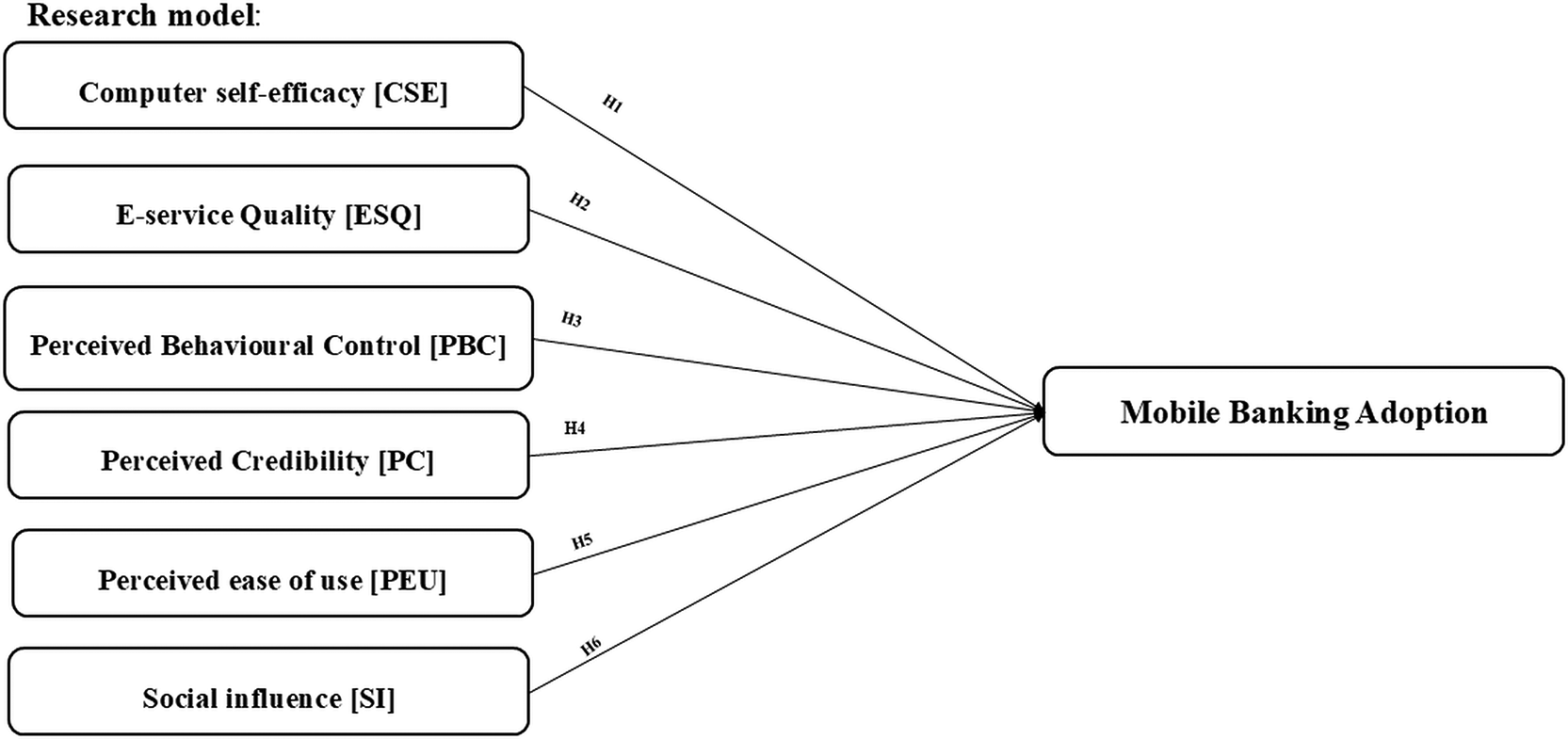
According to Figure 1, which illustrates the conceptual framework used in this study, the six key factors are proposed to influence mobile banking adoption. The following are the hypotheses developed for this study.
Computer self-efficacy
Individuals with elevated computer self-efficacy demonstrate a greater propensity to approach computer-related tasks with confidence, perceive themselves as competent in utilising computer technology, and exhibit eagerness to acquire knowledge and explore novel features (Venkatesh, 2000). It may, however, have a negative correlation in certain situations, suggesting that more self-efficacy may reduce the perceived need for mobile-banking (Addula, 2025).
Computer self-efficacy has a significant effect on the adoption of mobile-banking.
E-service quality
The primary factors influencing electronic word-of-mouth (e-WOM) in mobile-banking adoption are e-service quality, e-satisfaction, e-trust, and e-loyalty (Dangaiso et al., 2024). The positive impact of e-service quality components, including information quality, security, and reliability, on e-satisfaction, e-loyalty, and e-trust will contribute to e-WOM. Brand reputation mediates the relationship between e-loyalty and e-WOM (Puriwat & Tripopsakul, 2017).
E-service Quality has a significant effect on the adoption of mobile-banking.
Perceived behavioural control
An individual’s evaluation of the perceived simplicity or complexity of the behaviour of interest. As perceived behavioural control varies across contexts and behaviours, individuals’ perceptions of behavioural control fluctuate depending on their circumstances (Ajzen, 1991; Lin et al., 2016).
Perceived Behavioural Control has a significant effect on the adoption of mobile-banking.
Perceived credibility
Network security issues related to digital payments, receipts, and credit cards are similar. Advances in banking technology have enhanced the safety of payment services, including digital payments and credit/debit cards, which are crucial for mobile-banking adoption. Customers trust the financial sector owing to its benefits and standards (Akhter et al., 2020). Trust and commitment affect customer loyalty when products and services are reliable. Trust influences customer satisfaction, aiding mobile-banking adoption and use (Arcand et al., 2017).
Perceived Credibility has a significant effect on the adoption of mobile-banking.
Perceived ease of use
An individual’s intent to adopt a new technology depends on its ease of use, which significantly influences mobile-banking adoption. Convenience refers to time-saving benefits, whereas practicality reduces psychological, emotional, and physical burdens (Shankar & Rishi, 2020).
Perceived ease of use has a significant effect on the adoption of mobile-banking.
Social influence
Social influence encompasses conscious and unconscious efforts to modify another individual’s views, attitudes, and behaviours. This phenomenon can manifest as unintentional or incidental, unlike persuasion, which is often deliberate and requires an awareness of the target (Isac et al., 2023). By influencing whether users perceive the social acceptability of the technology, it influences their attitudes and intentions (Ramezaninia et al., 2022).
Social influence has a significant effect on the adoption of mobile-banking.
This study develops a tool to evaluate mobile-banking adoption in the coastal areas of the Indian banking industry, as it is crucial to understand its acceptance in this environment. This study used a quantitative research methodology. The data were gathered using convenience sampling. This method was adopted to reach mobile banking customers from coastal regions as complete sampling frame of all users was not available. This study was approved by the Institutional Ethics Committee of Manipal Academy of Higher Education [IEC1: 207/2023]. Respondents provided verbal consent before participating in the study, with this approach being justified due to varying literacy levels in coastal communities, and all research procedures received ethical approval from the Institutional Review Board. The adoption of mobile-banking was evaluated using a seven-point Likert scale, ranging from “strongly disagree” to “strongly agree.” This assessment was administered to 286 participants as part of the data-collection process. Data collection for this study commenced in January 2024 and continued for three months, concluding in March 2024. To ensure the dependability of the questionnaire, Cronbach’s alpha was calculated and determined to be greater than 0.7.
This study was conducted to create a tool to gauge mobile-banking adoption in the Indian financial environment along the coast. Responses were collected during the data-gathering process from customers of eight commercial banks, including both public and private banks in the coastal areas. Incorporating banks across both ownership groups made it easier to identify differences in technology and service delivery that are pertinent to adoption of mobile-banking. In order to assure feasible data collection while preserving institutional diversity and data quality, the was limited to eight banks. These banks also have a strong and sizable retail presence. At the researcher’s convenience, the study participants were approached from a variety of locations, such as parks, shopping centres, and streets. To find the pertinent participants, a qualifying question such as “Are you subscribed to a mobile-banking service or banking APP?” is employed. Additionally, participants underwent screening to ensure that they remembered their most recent mobile-banking service usage. The selection criteria included using a tablet or smartphone and being an Indian Internet banking customer.
Table 1 shows the respondents’ demographic attributes. The demographic distribution showed that 60.8% of the respondents were male and 39.2% were female. Observing age distribution, 46.8% of the respondents were aged 18–21 years, followed by those aged 22–36 years (48.3%). Only 4.9% of the respondents were in the 37–54 age group, suggesting that mobile-banking adoption is more prevalent among Generation Z and Millennials. Regarding educational attainment, 85.3% of the respondents had an Undergraduate Degree. Of the total respondents, 57.7% maintained an association with their banks for more than two years. Additionally, the table illustrates that 91.3% of respondents adopted mobile-banking.
The study employed SmartPLS software (version 2.0) to perform partial least squares (PLS) path modelling to assess the previously indicated hypotheses. PLS-SEM is a reliable and adaptable technique that explain and forecast the adoption of mobile banking. PLS-SEM manages intricate models and offer predictive insights, in diverse and dynamic settings such as coastal regions (Joshi & Chawla, 2023). PLS aids the analysis of causal research models with numerous constructs and multiple elements, a structural equation modelling (SEM) approach (Lai et al., 2009). PLS concurrently tests the path and measurement models. The ability to test the model with a minimum sample size of merely 30 is PLS’s main benefit of PLS (Wixom & Watson, 2001). This methodology estimates variance-based structural equation models (SEM). To a certain degree, PLS-SEM results are static because they rely on cross-sectional data (Schubring et al., 2016). The flexibility of this approach in addressing complex prediction models and distributional assumptions sets it apart from other SEM approaches (Hoyle, 1999).
Table 2 presents Constructs and measurement items. Using six constructs—Perceived Ease of Use (PEU), Social Influence (SI), Computer Self-Efficacy (CSE), Perceived Behavioural Control (PBC), Perceived Credibility (PC), and E-Service Quality (ESQ)—the analysis highlighted significant aspects affecting the adoption of mobile-banking. In contrast, task efficiency (PEU2) had a less significant contribution, PEU emerged as a significant driver, with items like transaction ease of use (PEU1) showing good association. The impact of social influence varies; for example, observational learning (SI1) has less of an impact, the perception of mobile-banking as hipster (SI4) is crucial. The self-sufficient usage of mobile-banking (PBC1, PBC4) and users’ confidence in technology management (CSE3) are two factors that strongly encourage self-efficacy and behavioural control. Credibility remains a cornerstone of user trust, with safety and reliability (PC4 and PC1) serving as key drivers, although concerns about privacy (PC3) persist. Finally, E-Service Quality strongly aligns with personalisation (ESQ2) and reliability (ESQ3), although there remains the potential for enhancing usability.
Table 3 presents Construct reliability and validity. The analysis of reliability and validity indicated varying levels of construct robustness across the six measured constructs. Cronbach’s alpha values demonstrated acceptable internal consistency for most constructs, with PBC (0.917) and ESQ (0.878) exhibiting excellent reliability, whereas SI (0.742) demonstrated the lowest yet acceptable consistency. Composite Reliability (CR) values corroborate these findings, with all constructs exceeding the threshold of 0.7, confirming their reliability in measuring latent variables. Average Variance Extracted (AVE) elucidates convergent validity, where constructs such as PBC (0.764), ESQ (0.730), SI (0.663) and PC (0.676) exhibit strong validity, surpassing the 0.5 threshold. However, PEU (0.52) is marginal, to meet the AVE criterion. These findings suggest that while most constructs demonstrate reliability and validity, CSE necessitates improvement in item alignment to capture the construct’s underlying factors more accurately and enhance its reliability and validity.
The model fit is presented in table 4. Global model fit measures are reported mainly for clarity rather than as decisive criteria for model acceptance (Hair et al., 2022). The standardised root mean square residual (SRMR), which reflects the average discrepancy between observed and model implied correlations, was 0.162 for both the saturated and estimated models. This value exceeds commonly suggested cut off values, indicating suboptimal overall model fit.
| Model fit indices | Saturated model | Estimated model |
|---|---|---|
| SRMR | 0.162 | 0.162 |
| d_ULS | 8.48 | 8.517 |
| d_G | 1.26 | 1.276 |
| Chi-square | 1040.757 | 1050.527 |
| NFI | 0.62 | 0.616 |
The d_ULS and d_G indices, which represent discrepancy-based measures used mainly for comparative assessment in PLS-SEM, showed similar values for the saturated and estimated models, suggesting limited improvement in global fit. The chi-square value of the estimated model (1050.527) was only marginally higher than that of the saturated model (1040.757), while the normed fit index (NFI) values for both models remained below conventional thresholds. The evaluation of measurement model therefore focused primarily on indicator reliability and convergent and discriminant validity, which were found to be satisfactory, supporting the use of the model for subsequent structural analysis.
Table 5 presents the Discriminant validity - HTMT matrix. The Fornell-Larcker criterion was used to evaluate discriminant validity, and each construct’s square root of AVE was greater than its matching inter-construct correlations. The provided HTMT matrix evaluates the discriminant validity of the constructs in a structural model. Discriminant validity is established when constructs are distinct from one another and is often assessed by examining HTMT values against established thresholds. Generally, an HTMT value below 0.85 (strict criterion) or 0.90 (lenient criterion) indicates adequate discriminant validity.
From the matrix, the majority of the HTMT values fell within acceptable ranges under the lenient criterion (HTMT <0.90). For instance, the relationships between Computer Self-Efficacy (CSE) and E-Service Quality (ESQ) (0.422), and between Perceived Behavioural Control (PBC) and Perceived Credibility (PC) (0.456) demonstrate strong discriminant validity. However, certain pairs approached the threshold: CSE and Perceived Ease of Use (PEU) (0.743) and PBC and PEU (0.787). While these values remain acceptable under the lenient criterion, they suggest that the constructs may be closely related, warranting further examination to ensure that they measure distinct concepts.
A notable observation is the relationship between Social Influence (SI) and PEU (0.801). Although it is within the acceptable range, a higher value suggests a potential overlap, indicating the need to review the items used for measurement. Conversely, constructs, such as Mobile-banking Adoption, exhibit very low correlations with others, reinforcing their distinctiveness.
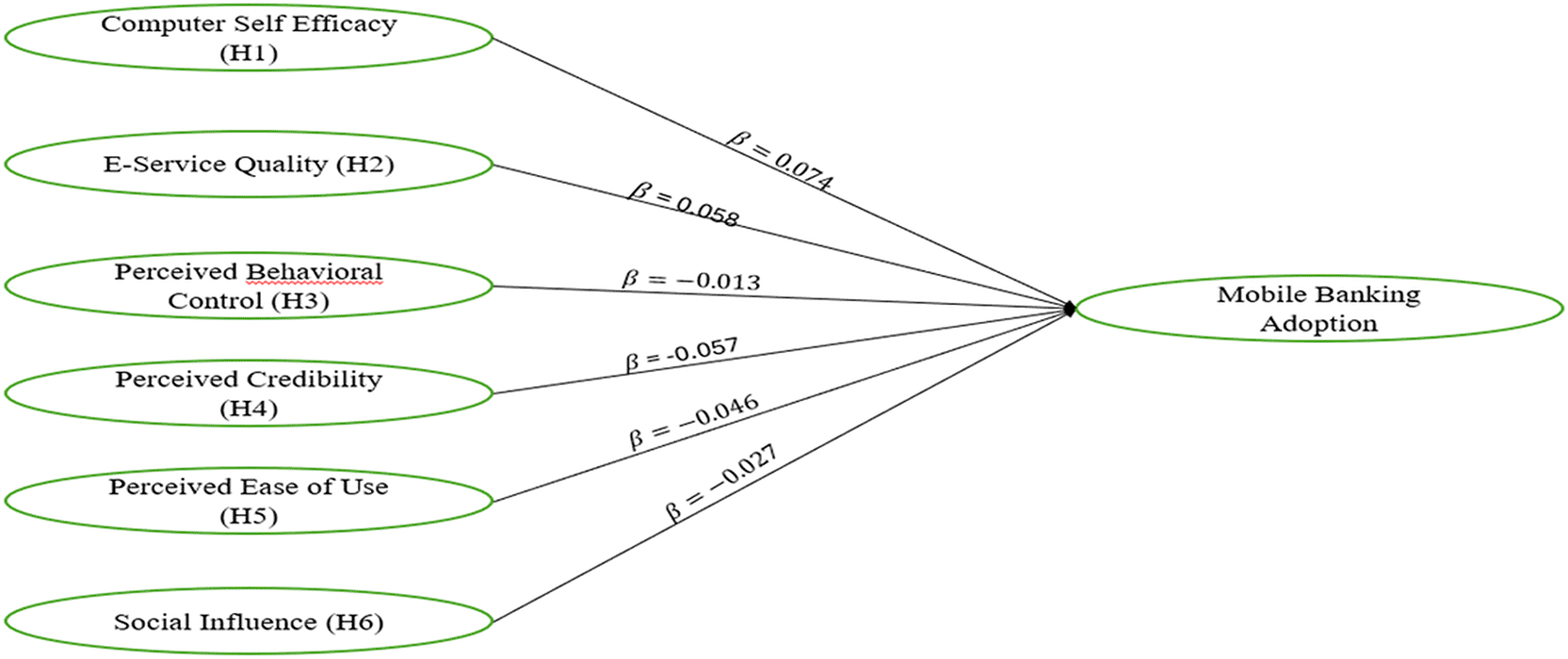
Table 6 presents the Hypothesis testing results. With path coefficients of 0.074 and 0.058, respectively, and supported by T-statistics above 1.96 and p-values below 0.05, the data shows that only Computer Self-Efficacy (CSE) (β = 0.074, p < 0.05) and E-Service Quality (ESQ) (β = 0.058, p < 0.05) have significant positive effects among the hypothesised relationships with mobile-banking adoption, thereby supporting H1 and H2. This suggests that more technological confidence and higher-quality online services promote the use of mobile-banking. In contrast, Perceived Behavioural Control (PBC) (β = −0.013, p > 0.05), Perceived Credibility (PC) (β = −0.057, p > 0.05), Perceived Ease of Use (PEU) (β = −0.046, p > 0.05), and Social Influence (SI) (β = −0.027, p > 0.05) are not significant predictors of mobile-banking adoption. Accordingly, H3, H4, H5, and H6 were not supported. These findings imply that, in the context of the study, customers’ decisions to embrace mobile-banking may not be significantly influenced by behavioural control, perceived credibility, convenience of use, or social constraints. While examining other aspects that can better explain adoption behaviour. The results demonstrate the relative importance of users’ self-efficacy in handling mobile-banking technology and the perceived quality of electronic banking services in driving mobile-banking adoption within the study context, even though a number of hypothesised paths were shown to be non-significant. The findings highlight the need to enhance e-service quality and strengthen customer trust in technology to increase adoption rates.
The principal objective of this study is to assess awareness of banking apps among the people residing in coastal areas and the factors influencing mobile-banking penetration in the region. This study investigates the elements that affect customer adoption of mobile-banking. Computer Self-efficacy and E-Service Quality are significant factors in customer adoption based on the experimental outcomes examined using Cronbach’s alpha. Hypotheses H1 and H2 highlighted the correlation between these variables and the adoption of mobile-banking by customers residing in coastal areas.
Computer Self-Efficacy (CSE) and Mobile-banking Adoption: A T-statistic of 2.114 and a P-value of 0.035 indicate a statistically significant relationship between CSE and mobile-banking use. The sample mean of 0.064 and the original sample value of 0.074 establish a positive effect, showing that customers are more inclined to use mobile-banking with higher trust in computer-related capabilities. This confirms with the prior studies showing individuals who perceive themselves as technically competent are more likely to adopt mobile-banking. This confirms the study’s hypothesis and emphasises the significance of self-efficacy in technology adoption (Malaquias et al., 2021).
E-Service Quality (ESQ) and Mobile-banking Adoption: A T-statistic of 2.053 and a P-value of 0.04 support the significant relationship between ESQ and mobile-banking adoption. A modest but positive effect is determined by the sample mean of 0.05 and the original sample value of 0.058. Service quality increases trust and satisfaction, thus encourages individuals for adoption and usage of technology. This indicates that customers are influenced to adopt mobile-banking services by a perception of high-quality e-services, emphasising the importance of unique service quality on digital platforms (Zoghlami et al., 2018).
Perceived Behavioural Control (PBC) and Mobile-banking Adoption: A T-statistic of 0.387 and a P-value of 0.699 indicate that there is no statistically significant relationship between PBC and mobile banking adoption. The sample mean of −0.019 and the original sample value of −0.013 show insignificant and contrary influences, respectively. This implies that adoption decisions are not strongly influenced by PBC, which determines the perceived ease of control over adopting mobile-banking. This undermines previous studies on mobile-banking adoption, highlighting the importance of PBC (Lin et al., 2016).
Perceived Credibility (PC) and Mobile-banking Adoption: With a T-statistic of 1.763 and a P-value of 0.078, there is no clear correlation between PC and mobile-banking adoption. The initial sample value of −0.057 and the sample mean of −0.053 show a negative influence. While trustworthiness is important in financial technologies, this finding suggests its impact may vary or be overshadowed by other variables. Longitudinal studies might yield positive results, as previous studies revealed PC’s significance in mobile-banking adoption (Akhter et al., 2020).
Perceived Ease of Use (PEU) and Mobile-banking Adoption: A T-statistic of 1.097 and a P-value of 0.273 suggest no significant correlation between PEU and mobile-banking adoption. The sample mean of −0.037 and the original sample value of −0.046 show an insignificant negative influence (Setiawan et al., 2024). Mobile-banking technology has reached a phase of technological maturity where ease of use is no longer a differentiating factor. This suggests other factors may make ease of use less important in mobile-banking adoption. Further studies with larger sample sizes might confirm PEU’s impact (Norng, 2022).
Social Influence (SI) and Mobile-banking Adoption: A T-statistic of 0.781 and a P-value of 0.435 indicate that the relationship between SI and mobile-banking adoption is not statistically significant. The sample mean of −0.008 and the initial sample value of −0.027 showed an insignificant impact. This suggests SI does not significantly affect decisions to adopt mobile-banking. Adoption of Mobile-banking decisions are personal and usefulness-driven rather than socially motivated. These results contradict previous findings highlighting SI’s importance (Isac et al., 2023).
Overall, the outline of path coefficients indicates that, in the setting under study, perceptual or normative factors are less important in affecting the adoption of mobile-banking than capability-based factors (self-efficacy) and service-related factors (e-service quality). By highlighting how the relative significance of predicators may change as technologies progress from early acceptance to mainstream use, The study findings improve current technology adoption models.
Validation of Adoption Models in Rural Contexts:
In accordance with models such as the Unified Theory of Acceptance and Use of Technology (UTAUT) and the Technology Acceptance Model (TAM), the findings corroborate the applicability of constructs, including Computer Self-Efficacy and E-Service Quality. However, the results indicate that constructs such as social influence (SI) and perceived ease of use (PEU) may require revaluation in rural contexts. These factors, which are frequently significant in urban environments, appear to exert less influence in regions where other socioeconomic and infrastructural factors contribute to barriers to technology adoption.
Contribution to Financial Inclusion Literature:
This study enhances the understanding of digital technology’s capacity to mitigate gaps in financial inclusion. This research expands upon traditional adoption models by focusing on rural populations, thereby encouraging scholars to consider local factors when applying global frameworks.
Importance of Customised Models:
This study underscores the significance of adapting theoretical frameworks to account for regional and cultural variation. Future models should incorporate elements, such as socioeconomic factors, accessibility, and trust, to address the complexities of technology adoption in underprivileged areas.
Focus on Digital Literacy:
Financial institutions and policymakers should prioritize the enhancement of computer self-efficacy. Confidence in utilizing mobile-banking applications can be augmented through interactive workshops, practical training programs, and tutorials specifically designed for rural clientele. This is particularly crucial for elderly users and individuals with limited prior exposure to technology.
Improving Service Quality:
Financial institutions must ensure the security, reliability, and usability of mobile-banking systems. User satisfaction and trust can be enhanced through features such as offline functionality, localized language options, and customer support tailored to rural requirements. Enhanced application designs, improved response times, and robust security measures can alleviate customer concerns regarding usability and credibility.
Localised Marketing Strategies:
Financial institutions should focus on enhancing awareness by engaging with the local population (Elsaid Elmaasrawy et al., 2025). The accessibility and reliability of mobile-banking can be improved through the implementation of road shows, testimonials from satisfied rural consumers, and collaborative initiatives with regional influencers or governmental organizations.
Strengthening Infrastructure:
It is imperative to address challenges such as insufficient internet connectivity and low smartphone adoption rates. Adoption rates could be significantly enhanced through strategic collaboration with telecommunications companies to expand network access.
The role of Moderators and Mediators:
Further research should explore whether relationships between constructs and mobile-banking utilisation are moderated or mediated by variables such as income, education, or trust. For example, income may attenuate the ease-of-use impact, whereas trust may amplify the e-service quality effect.
Cross-Regional Comparisons:
Comparative insights can be gained by extending this study to other rural regions in India and globally. Identifying trends across diverse contexts may help refine strategies to promote mobile-banking adoption.
Exploration of Emerging Technologies:
Technologies such as voice banking, biometric verification, and AI-powered chatbots can be included to elucidate their potential for increasing usage, particularly in low-literacy regions.
Longitudinal Analysis:
A longitudinal study tracking users’ adoption behaviour over time would help to understand how attitudes and perceptions evolve with exposure to mobile-banking. This can inform the banks’ long-term strategic plans.
This study provides constructive knowledge into the factors influencing mobile-banking adoption in the coastal areas, identifying Computer Self-Efficacy and E-Service Quality as critical determinants. These findings emphasise the necessity to focus on enhancing user confidence in technology and ensuring high-quality and reliable services to promote adoption. The results challenge conventional assumptions, demonstrating that constructs such as ease of use and social influence may not significantly affect adoption in this specific context. The findings of the study have two inferences. Theoretically, it validates certain aspects of established adoption models while highlighting the need for context-specific adaptations in rural settings. In a practical sense, this highlights the significance of initiatives aimed at improving service quality and digital literacy for financial institutions and policymakers that are working toward increasing the use of mobile banking in rural areas. Future research directions include exploring the roles of moderators and mediators, conducting cross-regional comparisons, investigating emerging technologies, and performing longitudinal analyses. These avenues of inquiry will further enhance our identification of mobile-banking adoption in diverse rural contexts and inform strategies for promoting financial inclusion. In conclusion, this study adds to the expanding body of knowledge regarding the adoption of digital financial services in rural areas. By highlighting the unique factors influencing adoption in coastal regions, this study provides a foundation for targeted interventions and policy formulation to address the digital divide in financial services.
The study titled “Assessing the Impact of Technological and Social Factors on Mobile Banking Adoption in Coastal Areas of India” was conducted following the ethical standards of the Institutional Ethics Committee of Manipal Academy of Higher Education [IEC1: 207/2023]. Participants were assured of the confidentiality and anonymity of their responses, and their participation was entirely voluntary.
| Views | Downloads | |
|---|---|---|
| F1000Research | - | - |
|
PubMed Central
Data from PMC are received and updated monthly.
|
- | - |
Provide sufficient details of any financial or non-financial competing interests to enable users to assess whether your comments might lead a reasonable person to question your impartiality. Consider the following examples, but note that this is not an exhaustive list:
Sign up for content alerts and receive a weekly or monthly email with all newly published articles
Already registered? Sign in
The email address should be the one you originally registered with F1000.
You registered with F1000 via Google, so we cannot reset your password.
To sign in, please click here.
If you still need help with your Google account password, please click here.
You registered with F1000 via Facebook, so we cannot reset your password.
To sign in, please click here.
If you still need help with your Facebook account password, please click here.
If your email address is registered with us, we will email you instructions to reset your password.
If you think you should have received this email but it has not arrived, please check your spam filters and/or contact for further assistance.

Comments on this article Comments (0)