Keywords
College students, Family dynamics, Interpersonal skills, Pro-social competence.

College students, Family dynamics, Interpersonal skills, Pro-social competence.
Pro-social competence are interpersonal skills like empathy, cooperation, sharing, helping and effective communication during social situations. It is crucial to develop pro-social competence which is valuable in the development of healthy relationships, social harmony and beneficial development of the communities. However, one of the areas of concern among college students is pro-social competence, where existing literature has shown a highl level of difficulty when it comes to empathy, social relationships and collaboration.1,2 Many college students find it difficult to adhere to pro-social competence that may include volunteering, serving others, and community servics.3 Scholars4,5,6 have lamented the neglect of pro-social competence by citizens, as there are cases of immorality, dishonesty, and unpatrotic practices among Nigerian citizenry. This justifies the need for the growth and development of pro-social competence among the citizenry.
Pro-social competence is one of the vital social and emotional development factors, especially among college students. It can be defined as the capacity to perform acts, which are beneficial to other people including helping, sharing and collaborating and fostering positive social relationships and interactions.7 Pro-social competence involves a set of skills and behaviours, such as empathy, altruism, and social skills, which are critical to establishing and continuing healthy relationships, academic achievement and well-being. Studies have constantly demonstrated that pro-social competence is linked to several advantages such as enhanced mental well-being, enhanced academic performance and interpersonal relationships.8,9 As an example, when a student has high pro-social competence, he or she is more likely to have more positive relationships with people, is less stressed and anxious and will be more inclined to volunteer and take part in community service.10 On the other hand, pro-social competence deficits have been associated with issues including aggression, substance abuse as well as social isolation.11
In the view of,10 although pro-social competence is a key aspect, it is on the downward trend among college students and the long-term effects may be disastrous to the individual and the society. This has been reduced to several factors such as parenting styles, cultural values, socialisation and so on.12 stated that empathy is important in encouraging pro-social competence among college students. The essential element of pro-social competence is empathy or the capability to feel and share other people or to be able to comprehend their feeling and empathize with them, which is linked to greater helping behaviour, volunteering, and community engagement.7 There are two categories in pro-social competence namely; helping behaviour which is referred to as skills that gives benefits to individuals in improving the welfare of others who provides help and the second category is altruism, which is referred to as the behaviour or skills of rendering help to people without expecting anything in return. In individuals, pro-social competence is influenced by positive emotions which encourages individuals to empathise, help, feel obligated, have strings attached with others. According to,13 individuals with high level of pro-social competence are also able to perceive the emotions of others on a higher level, as these constitute the elements of willingness and ability to form satisfactory relationships with other people. In this way, the probability of pro-social competence will be raised.
Research on pro-social competence in Nigeria and especially among college students in Osun State is restricted. It is important that the factors that determine pro-social competence in Nigerian college students be understood in order to come up with interventions that can help in fostering social and emotional growth in order to seek solutions to the issues that plague the society in Nigeria, particularly, Osun State. Pro-social competence of college students could be determined by several factors, such as emotional intelligence, educational settings, genetic predisposition, family dynamics, cultural background, cognitive development and so on. For the purpose of this study, the relationship between family dynamics and pro-social competence of college students were examined.
There are numerous components of family dynamics which include: power dynamics, family structure, family communication skills, parenting styles, family conflict resolution skills, socio-economic status, family shared values and beliefs and so on. All these components influence how members of a family interact with one another, resolve conflicts, make decisions and so on. In family dynamics, aspects such as socio-economic status, parenting styles and family structures were examined in this study.
In the view of,14 the family continues to be a solid social structure in the society. It is a social group through which individuals acquire valuable life skills and morals. In addition, family is a society of individuals, who are either held together through the bonds of marriage or adoption but are socially responsible towards each other.15 stated that the type of care and attention people get at the initial stages of their lives influences how they manage the situation and critical matters in their lives. According to16 family also supports food, shelter, clothing, safe, clean and stable environment, provision of the required health and educational amenities and sufficient supervision to the individuals, within their dependent years.
The family dynamics is a way that describes the relationship or interaction of the family members.17 The nature of each and every family system and dynamics is unique yet shares similar trends. As observed by,18 even though a young adult is not currently in touch with the family, the situation in the family in the past years will still impact him or her. Family dynamics tend to have an extremely significant role (positive or negative) on the way the young people view themselves, others and the world and this is translated to affect the way they view themselves in relation to others, their behaviours and well being. A family dynamic understanding on the pro-social competence of the students would assist parents to identify the driving forces behind the growth and development of their children. In family dynamics, there exist several components such as ethnic and cultural background, conflict resolution style, parenting style, family history, beliefs and values, family structure, socio-economic and so on. For the purpose of this study, three major aspects or components of family dynamics were examined, namely, socio-economic status, parenting style and family structure.
Socio-economic status is a state in which a person’s condition can be seen from the level of education, employment, income and facilities he possesses. According to,19 socio-economic status is a combined concept between economic resources (resources and wealth), human resources (education and training) and social (family and public relations) within a society and the protection owned by individuals or communities. A study has shown that there is link between socio-economic status and pro-social competence of students.20 The socio-economic status comprises of three major factors which are interrelated and include the level of education of the parents, the employment status of parents and family income. Most families that cannot sustain the basic needs of their families are found to be having material challenges. Pro-social competence of a person can be affected by the socio-economic state of the family.21
Researchers have noted that the work of family members, as well as income and education levels, influence the growth and perception of individuals towards society. Families with a high socio-economic status and sufficient resources are generally not concerned about profits.22 Children who are constantly suffering from poverty might have pro-social competence problem. One reason is that the low-income families cannot afford to buy food, housing and other material goods that can support the child’s pro-social competence.23 Children in high-income societies are more likely to accept the influence of positive peers that encourage achievement and pro-social competence.24
The type of parenting has a significant role in determining the pro-social competence of a child that dictates their capacity to socialize and conduct themselves positively with others. Parenting style is thus a term that is used to denote the manner in which parents raise or bring up children. It is a form of action or behaviour which a parent uses in order to raise his or her children.25 has been credited in specifying four particular parenting styles and their effects in lives of children. They are authoritative, authoritarian, permissive and neglectful parenting styles founded on the level of warmth and control employed by the parents to discipline the child.
The family structure is vague to determine and they vary in accordance to the cultural setting. The family set ups are also varied and they include; blended family, nuclear family, matriarchal family, adoptive family, same sex family, patriarchal family, extended family, multigenerational family, single-parent family, and so on. During this research however, the family structure is limited to nuclear and extended family. A nuclear family constitutes a family that comprises of a father, mother and their unmarried children. A nuclear family tends to be not very large; it is independent and self-sufficient economically. It just has limited members as family. Extended family is extremely huge. It consists of the couple and their children, grand children, aunts, cousins, uncles and at times close relatives whose lineage is male. In such family, the patriarch of the family is the oldest male member of the family. The children have the chance of learning most parts of the lessons in the areas of emotional management through the iteration/joint family, which involves the ability to regulate impulse, postpone gratification, inspire children, and comprehend the social clues of other individuals and how to confront life challenges.26 One of the primary ways through which family has a positive influence on rearing of children is through social support of a family. This is because the family members need each other in terms of physical, economic and emotional support which is one of the key sources of relationship security or stress.
Nevertheless, many college students in Nigeria, particularly Osun State, do not possess the ability to empathise, socialise and cooperate, and it may negatively affect their performance in school, social interactions, mental wellness and career opportunities. Family dynamics is one of the main factors in developing social and emotional stability in children, which consquently affects their pro-social competence. In Osun State, there is a dearth of research on the relationship between family dynamics and pro-social competence of college students. Thus, this research specifically aimed to:
i. assess the level of pro-social competence among college students in Osun State, Nigeria
ii. examine the relationship between family dynamics (socio-economic status, parenting styles and family structure) and pro-social competence of college students in Osun State, Nigeria.
Pro-social competence has a wide range of behaviours, including informal helping (cooking meals, household chores), empathy, to daily social behaviours (visiting friends and greetngs), altruism.27,28 Pro-social competence is a voluntary behaviour, the primary aim of which is to do good to others, which may result in self-estemm of individudals and others.29 Social interactions are the biggest contributors of human welfare. Human beings are social animals and they spend most part of their lives in association with other peoplee. There are social and personal advantages of pro-social competence. Helping may not only provide us with feelings of fulfillment and happiness (individual benefit) but also enforce our social relationship with other people in the different spheres of life (social benefits). It is implied that pro-social competence does not simply benefit the recipient but can also have many health and wellness advantages to the giver.9
30 argued that helping others results in enormous temporary emotions that would generate a greater sense of meaning and happiness to the life a person. It is identified that building social relationships assist individuals to attain a better health condition or healing quickly in some cases. Those who have more popular ties give more affirmative life appraisal. Pro-social competence may frequently entail social connections31 that may assist one to exercise social interactions with others and consequently fix cognitive biases that may strengthen loneliness (for example, the belief that one is not likeable or otherwise socially inadequate or that the interaction with others is exhausting32;.27 assumed that in most cases, these interactions revolve around weak ties (relationships of low emotional intensity, low-contact and low levels of intimacy, such as with service workers or classmates). Other positive effects of pro-social competence include: individuals who volunteer reports reduced depression and increased life satisfaction compared to their other counterparts; and they are happier and healthier.
Besides the obstacles to participate in pro-social competence, one of the most vivid examples of pro-social competence resistance among people is bystander effect.33 described the effect as the bystander effect, which is characterised by the fact that individuals are less willing to help an individual in distress when more than a few of them are present. An example of this is when you drop a purse and some items fall on the floor, the chances that someone will come around and assist you are lower, in case there are people present in large numbers. The same may also occur in instances where one is in danger or in a hideous car accident, people at the location may begin taking pictures and videos and assume that given the number of people there, someone will take care of the victims or call for assistance. As an illustration, there was a murder incident in 1964 of a young lady known as Kitty Genovese. The young lady was assaulted close to her apartment at a late hour but nobody raised an emergency with the authorities in the middle of the attack. As it was reported later, the majority of the neighbours could be too scared to go outside to assist the young woman thinking that they could be attacked as well.34
Another constraint to practice pro-social competence is the fear of being embarrassed or judged. In other cases, some are too scared to extend assistance to others only to find out that they did not need or want it. People just leave it unchanged so that they can remain unajudged. In hard circumstances, individuals will also seek guidance of others in such circumstances particularly when it has some degree of uncertainty or ambiguity. When no one is doing anything to alleviate the situation in question or no other person appears to be doing anything, people may tend to do anything or react. Diffusion of responsibility is the final inhibitor to be involved in pro-social competence.35 stated that the phenomenon of diffusion of responsibility is a psychologically functioning phenomenon where people are less likely to commit a particular action in the presence of many other people. As an example, consider that you are in a lage gathering on the street and then a man falls on the ground and starts convulsing. Most individuals will go round the man struggling to look back on the ground and even call off to assist yet nobody comes to offer an ambulance or even a doctor. Why? Since there are a lot of people, none of them feels like they are compelled to assist the man. Everybody may assume that they do not know him, therefore anybody present in the crowd should assist him or I am not the only one in the crowd, somebody should raise alarm. These impediments do not allow individuals to participate in pro-social competence.
The most important primary group of human groups is the family. The term family has been coined out of Roman term famulus.36 defined family as a group of people that is characterised by a sex relationship that is precise and long lasting enough to give birth to and raise children.37 defined family dynamics as the patterns of interactions between relatives, roles and relationship between them as well as the different factors that influence interactions. This is because the members of the family depend on one another to offer physical, economic and emotional support and this is one of the main sources of relationship security or stress. The relationships within the family are safe and supportive and they provide advice, love, and care, whereas the stressful relations within a family are overwhelmed with tasking and stressful activities, fighting and negative commentaries that are repeated.
Understanding the components of family dynamics is essential for examining or assessing how families relate, communicate, interact and respond to challenges. Family dynamics as the dynamic interplay of roles and relationships within a family are shaped by numerous components which include: power dynamics, family structure, family communication skills, parenting styles, family conflict resolution skills, socio-economic status, family shared values and beliefs and so on. All these components are interlinked in such a way that each component influences and is influenced by the others to bring out the well-being and functionality of the family; these components also determine how family members interact with one another, navigate challenges, make decisions, resolve conflicts and ultimately impact the welfare of members and the family as a whole. The key components of family dynamics that were examined in this study are: socio-economic status, parenting styles and family structure.38
In the view of19 socio-economic status is a condition in which a person’s condition can be seen from the level of education, employment, income, and facilities he possesses. Socioeconomic status refers to the position of a person or group in a social hierarchy based on a combination of economic and social factors. Socio-economic status affects a person’s access to privileges, resources and opportunities in a society. Socio-economic status is a combined concept between economic resources (resources and wealth), human resources (education and training) and social (family and public relations) within a society and the protection owned by individuals or communities. Research found out that students with low-income parents are at increased risk for behavioural and psychological problems, not only during childhood but into their adult years. Such behavioural and psychological problems are: stealing, difficulties in maintaining social relationships, and other anti-social crimes. They can also face unique challenges such as limited access to resources, parent working for long hours so as to make money while leaving less time to be involved in their children’s life, limited opportunities for socialisation, increased stress, often drop out from school without attaining appreciable level of education due to lack of funds and so on. In conclusion, socio-economic status can directly impact students’ pro-social competence in the world. Students who come from a family of high socio-economic status tend to have greater exposure to experiences and diverse cultures that promotes understanding and empathy, and their parents tends to be more opened to their children’s opinions, and democratic while students who comes from a family of low socio-economic status may face biases or stigma which can potentially affect their self-confidence, self-esteem and social interactions.39
Parenting style is considered as the qualities of a parent that alter the efficacy of family practice and receptiveness of children to the family practice. Parenting styles are general patterns of child nurturing practices, behaviours and values.40 posited that parents cannot effectively perform and discharge their roles of parenting in case they are grappling with known or unknown psychological distress. As an example, depressed parents have a higher tendency of providing their children with toxic, unstable, hostile and rejecting home environments. Parenting styles are of four major types that were greatly discussed in this study; they include authoritarian, permissive, authoritative and neglectful parenting style. Authoritarian parenting style is regarded as the parental leadership style that parents exert on their children that entails curtailing their order, value, autonomy, and traditional structure and preservation, therefore hampering verbal give and take as well as promoting parents word as what is right.41,42 In39 study, authoritative parenting style refers to the style of parenting in which the parents are not hostile or strict towards their children rather they are friendly with them. Though they remain the ultimate decision maker but they explain to the children the reason behind the rules and the consequences for breaking those rules. In the view of,39 the form of parenting style whereby the parents are highly engaged or involved in the lives of their children is known as permissive parenting style. They rarely punish their children whenever they report home with poor performance in their studies, instead the parents assure them that they will be better next time. The last parenting style is that of neglectful parenting where the parents do not give much or no attention to the children. They ensure that the basic needs of their children are met such as clothes, food, shelter among others but they do not care about them.39
Family structure is defined as the way in which a family is organised and how the members interact with one other. There are several types of family structure depending on the cultural context, among which are, nuclear family, blended family and bilateral family. The nuclear family is a family structure that is comprised of a father and mother who are married together and their children who may be adopted or born. According to,43 a blended family is the situation when one parent who has his or her own children enters into a new relationship with another person, who is also in a similar situation. In this kind of family, there is usually much to think of, in case the couple may decide to bring the two families under one roof. When these two families are mixed together, it will take time to get everyon to change. Bilateral family is a type of family that is organised around the dominance of both males and females, especially fathers and mothers. This type of family is operated as a democracy. It approximately signifies the similarity between the husband and wife, in terms of auhtority, control, status and decision making.44 Understanding these family structures helps to gain understanding on how family structure impacts the pro-social competence of a child.
This study is grounded in Social Cognitive Theory (SCT) by Albert Bandura in 1986 to explain how individuals developed interest in learning by observing or imitating other people through the process of modeling. This theory came out as the development of the Social Learning Theory (SLT) by.45 Social Cognitive Theory emphasised the ability of an individual to create change in character feature, habits and capabilities including skills as a result of social interactions via performance feedback and modelling persuasion. Bandura postulated that modeling and observational behaviours of individuals is described as follows: (1) the individual on the first instance picks up the modeling behaviour and activities which are associated with a particular action, (2) the idea which has been observed is conceived in a particular manner by the model through a series of cognitive processes, (3) the individual tries to translate his idea into actions, and (4) the individual becomes further motivated having been given feedback about the actions through the process.45
The SCT that was developed by,46 pointed out the connection between family and pro-social competence. The theory indicated that modeling and observational learning is a critical element in influencing the behaviour of an individual. Also, the theory indicated that individuals or college students gain pro-social competence after observing the good behaviours demonstrated by their parents or family members and behaving in a similar manner to others.
47 investigated the pro-social behaviour in students and its linkage to their academic interaction in school. The researchers used 905 middle school students and the study showed that the students who also perceived their classmates as exhibiting more prosocial behaviours (helping and cooperation) tended to exhibit the prosocial behaviours as well. The results showed moderate to high degree of prosocial competence because prosocial behaviour between peers was significantly predicted to indicate the level of cognitive, behavioural, and emotional involvement of students in academic tasks. This implies that positive peer groups are able to promote the prosocial competence development of adolescents.48 explored the acts of prosocial behaviour among college students and its association with emotional and social variables. Based on a sample of university students, the research determined that emotional intelligence and social support played a significant role in the prosocial behaviour. The results showed that students with a high level of emotional intelligence showed higher levels of prosocial competence as they were more inclined to participate in helping behaviours, cooperation and empathy towards another person.
49 investigated the concept of prosocial competence in children and adolescents with emphasis on such behavioural patterns as helping, sharing, and cooperative interaction with peers. The results showed that a large number of the children exhibited positive social behaviours and the general level of prosocial competence was moderate to high but dependent on environmental factors such as family support, school climate, and peer relationships.50 investigated the problem and prosocial behaviours of the students with intellectual disabilities in the special education institutions in Nigeria. The findings showed that the behavioural problems were observed in some of the participants but a good proportion of the children exhibit moderate levels prosocial behaviours that included helping and cooperation albeit at a relatively lower levels than in the typical developing children.
51 investigated the influence of parenting style on pro-social competence. The information was gathered based on questionnaires and the research indicated that parenting styles have significant effect on pro-social competence of young adults.52 conducted a study to examine the effects of parenting styles on the pro-social competence among students. 480 students were selected as a sample. The methods used to collect data were a questionnaire and structured interview. The outcomes indicated that most of the parents were authoritative and therefore, they achieved pro-social competence of their children but in contrast, authoritarian parents achieved anti-social behaviour among their children.
53 carried out a meta-analysis of 67 studies that were published in the years 1990–1999. The samples of children in single parent families and children in constantly married families were compared by them. According to,53 on a range of social-behavioural problems, children with divorced parents in general had worse performance as compared to children in continuously married parents. In particular, children in divorced families were more likely to experience conduct disorders such as aggression, delinquency and misbehaviour and were less psychologically and emotionally adjusted with anxiety and depression, poorest social and relationships, and low self-esteem.5354 examined the predictive capacity of higher social group on higher unethical conduct. The findings indicated that students in low socio-economic status family are more generous and charitable to others when compared to their colleagues. The research conducted by55 showed that the relationship between socio-economic status and pro-social competence is positive, however, it exists only in the context when the behaviour was not self-beneficial. He wrote that high socio-economic status family students had less likelihood of engaging in unethical behaviour than the low socio-economic status family students in cases where the unethical behaviour was done to the advantage of others.
Studies by56&54 on how the rich are different from the poor showed that students of high socio-economic status family are oriented to their own interests when their counterparts are more oriented to other people and more sensitive to their needs. As an example, members of lower socio-economic status exhibit higher performance in the ability to assess the emotions of other people57 are more compassionate of other people,56 attentive to the needs of other people,58 and able to infer the emotional state of the target based on the pictures of their eyes58 in comparison to higher socio-economic status. As,59 discovered subsequently, the correlation between socio-economic status and pro-social competence was not only negative in adults but also in children. As even some studies discovered, more pro-social individuals are those in a higher socio-economic status than their counterparts.60,61 Considering these contradictory findings, the present study conducted an additional investigation on how family dynamics affects the pro-social competence of the students.
The study adopted a descriptive survey research design of correlational type. The main rationale why this design was used is that it allows in-depth study of the subject matter, thereby making it an appropriate methodology for investigating the relationship between family dynamics (socio-economic status, parenting styles and family structure) and the pro-social competence of a particular group (college students).
The participants consisted of 400 college students from two colleges in Osun State, Nigeria. Multistage sampling procedure was used to select the sample for the study. Firstly, purposive sampling technique was used to select two colleges in Osun State. The purpose was to choose two coventional public colleges that have been established for over 10 years. Secondly, simple random sampling technique was used to select 200 college students from each of the college selected making a total of 400 college students.
The research instruments used for data collection were titled: Family Dynamics Questionnaire (FDQ) and Pro-social Competence Scale (PCS). These instruments were tailored towards answering the research question and testing the hypothesis drawn to assist in achieving the aims of the study. The Family Dynamics Questionnaire (FDQ) consisted of two sections namely; section A and B. The first section inquired for the respondents’ socio-demographic characteristics like gender, level and family dynamics (family structure and family’s socio-economic status) while the second section comprised 10 items which elicited information on parenting styles. This was based on four points Likert Scale Model of Strongly Agree (SA), Agree (A), Disagree (D) and Strongly Disagree (SD). The Pro-social Competence Scale (PCS) consisted of 15 items which elicited information on pro-social competence of college students in Osun State. This was based on three-points Projective Rating Scale Model of Always (A), Sometimes (S) and Never (N).
The instruments were validated by experts in Social Studies and Test and Measurement for proper scrutiny. Test-retest reliability method was adopted in ensuring the reliability of the instruments. In achieving this, the research instruments were administered to 20 college students in another college outside the scope of the study. Two weeks after, another 20 copies of the same research instrument were re-administered to the same 20 set of respondents to generate the reliability coefficient value of the instruments. Hence, the FDQ and PCS yielded 0.73 and 0.71 co-efficient values respectively which affirmed to the reliability of the instruments.
Statistical Package of Social Sciences (SPSS) was used to analyse the data for this present study. The data collected was coded and tested for completeness and then analysed using descriptive and inferential statistics. Specifically, descriptive statistics of frequencies, percentages and bar chart were used to answer the research question that was asked in the study. Additionally, inferential statistics of regression analysis (simple linear regression) was used to test the hypothesis.
The study was conducted as part of a Master’s degree research project at Obafemi Awolowo University, Ile-Ife, Nigeria. Prior to data collection, an official introductory letter was obtained from the Department/Institute and presented to the participating colleges to obtain permission to conduct the study. Participants were informed of the purpose and procedures of the study, and informed verbal consent was obtained before participation. Verbal informed consent was chosen because there was minimal risk involved in the study and only an anonymous questionnaire to be completed. Verbal consent allowed the anonymity of the participants to be maintained without collecting signatures or other identifying information. Participation was voluntary, and participants were informed of their right to decline participation or withdraw at any time without penalty. Only participants aged 18 years and above were included in the study. No personally identifiable information was collected, and all responses were treated anonymously and kept strictly confidential throughout the study.
Table 1 shows the socio-demographic characteristics of the participants. It can be deduced from the table that there are more female students (56.0%) than male students (44.0%). According to the academic level of the participants, majority of the participants are in 400 L (37.3%) while very few of the participants are in 500 L (4.5%). Based on family structure, results shows that most of the participants came from nuclear families (66.8%) while very few of the participants came from single-parent families (0.3%). This implies that nuclear family has a strong dominance of different family structure. In terms of the family’s socio-economic status of the participants, which was measured as a composite score of educational level and income, results further shows that majority of the participants fall within the average socio-economic status category (62.0%) while only few of the participants fall within the low socio-economic status category (6.0%).
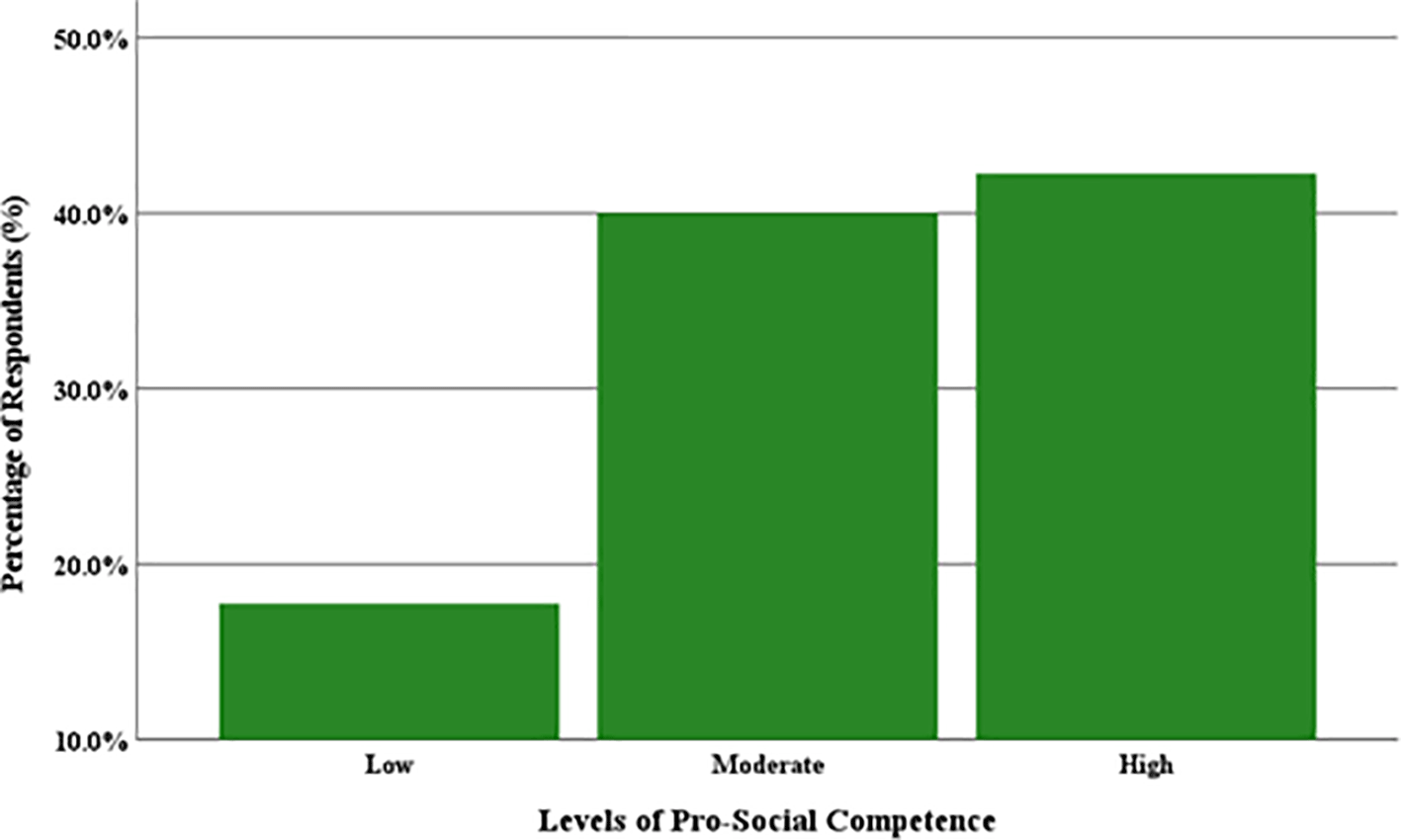
Table 2 presents the descriptive analysis of the responses of respondents on the levels of pro-social competence among college of education students in Osun State, Nigeria. Considering the levels, mean and standard deviation, it can be deduced from the Table that the level of pro-social competence among college students was high at 42.3%.
| S/N | Levels | Range | Frequency | Percentage (%) |
|---|---|---|---|---|
| 1. | Low | 27–33 | 71 | 17.8 |
| 2. | Moderate | 34–39 | 160 | 40.0 |
| 3. | High | 40–45 | 169 | 42.3 |
The overall mean score among college students was 38.3 (SD = 4.50), which indicates that college students in Osun State, Nigeria exhibit a moderate to high level of pro-social competence. The visual representation of the result is shown in figure 1.
There is no significant relationship between family dynamics (socio-economic status, parenting styles and family structre) and pro-social competence of college students in Osun State, Nigeria.
In order to test this hypothesis, data collected on family dynamics (socio-economic status, parenting styles and family structure) known as the independent variable as well as the pro-social competence of college students (dependent variable) were subjected to simple linear regression.
Table 3 presents that there was no significant relationship between family dynamics (socio-economic status, parenting styles and family structure) and pro-social competence of college students in Osun State, Nigeria (R = 0.085; p > 0.05). Therefore, the null hypothesis that states that there is no significant relationship between family dynamics (socio-economic status, parenting styles and family structure) and pro-social competence of college students in Osun State, Nigeria is hereby not rejected. The result also implied that family dynamics could not significantly predict the pro-social competence of university undergraduates in Osun State, Nigeria.
Findings of the study showed that the level of pro-social competence among college students was predominantly moderate to high. Specifically, 42.3% of the respondents were categorised as having high pro-social competence. The overall mean score of 38.3 (SD = 4.50) further support these findings as it falls within the moderate level but is close to the threshold for high level of pro-social competence. The results of the study imply that college students in Osun State, Nigeria demonstrate a moderate to high tendency of exhibiting pro-social competence. The result corroborates the findings of46 on the level of prosociality of students. The result showed that the prosociality of students was of moderate level. Supporting these findings accordingly,47 found that, while undergraduates tended to receive high social support, their level of prosociality tended to be high. In addition, results of the study corroborate with the findings of48 on prosocial competence in children and adolescents with emphasis on behavioural patterns such as helping, sharing and so on. The findings showed that a large number of the children exhibited positive social behaviours and the general level of prosocial competence was moderate to high but dependent on environmental factors such as family support, school climate, and peer relationships. Similarly, the findings of49 which was carried out on the pro-social behaviour of students with intellectual disabilities indicated that students with intellectual disabilities demonstrated moderate levels of prosocial behaviour, which was in line with earlier studies using teacher reports of prosocial behaviour in students with intellectual disabilities.
Results of the study also indicated that there was no significant relationship between family dynamics (socio-economic status, parenting styles and family structure) and pro-social competence of university undergraduates in Osun State, Nigeria. The result implies that family dynamics could not really determine the pro-social competence of university undergraduates in the study area. One could wonder why family dynamics (socio-economic status, parenting styles and family structure) could not wholly determine the pro-social competence of university undergraduates in the study area. It may be that other factors such as personal values, cultural values, genetic predisposition and so on could be highly responsible for this. The result negates the findings of53 when they examined the relationahip between socio-economic status and pro-social competence. Their findings indicated a significant relationship as students from low socio-economic status family are more charitable and generous towards others compared to students from high socio-economic status.
In addition, the results negate the findings of51 which indicated that parents who adopted authoritative parenting style significantly impact the pro-social competence of their children, with individuals exhibiting positive behaviours such as empathy, attentiveness, collaboration and so on, whereas parents who adopted the authoritarian parenting style significantly impact the pro-social competence of their children, leading to anti-social behaviours such as stealing, envy, low self-esteem and so on in individuals. The findings of this study also negate the results of52 that children with divorced parents performed more poorly on a variety of measures related to social behavioural problems than the children of continuously married parents. Specifically, children with divorced parents had more conduct problems including aggression, delinquency and misbehaviour, and also showed poorer psychological and emotional adjustment such as anxiety and depression, weaker social relationships and lower self-esteem.
The study concluded that family dynamics (socio-economic status, parenting styles and family structure) could not determine the pro-social competence of college students in Osun State, Nigeria. The study further concluded that the level of pro-social competence among college students was high. Furthermore, the study has provided insight into the fact that parents and families, educators and the society have significant roles to play in supporting pro-social competence of college students.
The study may not have taken into account all the possible factors that could contribute to pro-social competence of college students. Variables like cultural background, personal development programmes, cognitive development and environmental factors were not fully explored. The findings are specific to Osun State, Nigeria, and may not be applicable to other educational systems or region. Accessibility to most of the students was not easuy due to their academic commitments and schedules, such as exam preparations and tutorials.
Based on the findings of this study, it is recommended that college students should continue to develop positive personal attributes such as empathy, respect, cooperation, and understanding, as these behaviours contribute to the enhancement of pro-social competence and healthy social relationships. Parents and families should maintain open and supportive communication with their children, foster positive family interactions, and model desirable social behaviours that can encourage the development of pro-social competence.
Educators should promote pro-social behaviours through learner-centred teaching approaches, classroom discussions, collaborative learning activities, and supportive school environments that enhance students’ confidence, self-esteem, and interpersonal skills. Furthermore, communities and society at large should encourage values such as gratitude, kindness, empathy, cooperation, and mutual respect through social and educational initiatives that promote positive social engagement among young people.
In addition, future studies should collect and analyse age-related data to determine whether pro-social competence varies across different age groups of college students. Researchers should also examine other potential predictors of pro-social competence, including peer influence, cultural background, personality traits, emotional intelligence, and environmental factors, to provide a more comprehensive understanding of the factors associated with pro-social competence.
| Views | Downloads | |
|---|---|---|
| F1000Research | - | - |
|
PubMed Central
Data from PMC are received and updated monthly.
|
- | - |
Provide sufficient details of any financial or non-financial competing interests to enable users to assess whether your comments might lead a reasonable person to question your impartiality. Consider the following examples, but note that this is not an exhaustive list:
Sign up for content alerts and receive a weekly or monthly email with all newly published articles
Already registered? Sign in
The email address should be the one you originally registered with F1000.
You registered with F1000 via Google, so we cannot reset your password.
To sign in, please click here.
If you still need help with your Google account password, please click here.
You registered with F1000 via Facebook, so we cannot reset your password.
To sign in, please click here.
If you still need help with your Facebook account password, please click here.
If your email address is registered with us, we will email you instructions to reset your password.
If you think you should have received this email but it has not arrived, please check your spam filters and/or contact for further assistance.

Comments on this article Comments (0)