Keywords
Anti-Xa activity; Blood Coagulation; Generic Drugs; Rotational Thromboelastometry; Xabans.

Anti-Xa activity; Blood Coagulation; Generic Drugs; Rotational Thromboelastometry; Xabans.
Direct factor Xa inhibitors (rivaroxaban, apixaban) are widely used in thromboembolic disease due to predictable pharmacokinetics and fixed dosing.1 In emerging economies such as Tunisia, the increasing use of generic xabans has substantially improved therapeutic accessibility and affordability. Nevertheless, their widespread integration into real-world clinical practice continues to raise unresolved questions regarding peak-to-trough pharmacodynamic variability, inter-individual hemostatic response, and the consistency of anticoagulant effect with generic formulations.2,3 Characterizing this hemostatic impact requires tools that go beyond conventional coagulation assays.4,5 While chromogenic anti-Xa assays remain the reference method for quantifying factor Xa inhibitor activity, their limited availability and turnaround time in many emergency settings restrict their practical utility in urgent clinical scenarios.6 Consequently, there is growing interest in rapidly accessible assays capable of providing timely assessment of the anticoagulant effect of DOAC particularly in situations such as major bleeding, urgent surgery, or prior to thrombolysis. In this context, Rotational thromboelastometry (ROTEM), has therefore emerged as a complementary approach for the detection of DOAC activity in time-sensitive situations.7–9
To date, no study has characterized the hemostatic profile of generic xabans using a multiparametric biological approach in a Tunisian or North African cohort, leaving clinicians in the region without locally validated data to support laboratory assessment and therapeutic decision-making.
The present study therefore aimed primarily to characterize the impact of generic rivaroxaban and apixaban on conventional test and ROTEM parameters in a real-world Tunisian cohort, and to establish their correlation with anti-Xa chromogenic activity at peak and trough plasma concentrations.
A prospective cross-sectional study was conducted at conducted at the Haematology Laboratory of Sahloul University Hospital, Sousse, Tunisia.
This study was conducted in accordance with the principles of the Declaration of Helsinki.
Ethical approval was granted by the Institutional Ethics Committee of Sahloul University Hospital, Sousse, Tunisia (Approval reference: HS 29–2024). Written informed consent was obtained from all participants prior to enrolment.
Patients receiving generic factor Xa inhibitors (apixaban or rivaroxaban) for at least one month were eligible for inclusion, provided anticoagulation was initiated for cardioembolic ischemic stroke or non-valvular atrial fibrillation. Exclusion criteria comprised: anticoagulation indication other than those specified; treatment duration of fewer than 30 days; concomitant antiplatelet therapy; pre-existing coagulation disorder; and samples yielding uninterpretable ROTEM profiles due to technical or pre-analytical errors.
For each patient, paired citrated whole-blood samples were collected at two pharmacokinetically defined time points: trough, defined as 30 minutes prior to the next scheduled drug intake, and peak, defined as 2–3 hours after drug ingestion. One sample was immediately centrifuged (3000 × g, 15 minutes) for plasma-based coagulation testing; the second was processed as whole blood for ROTEM® analysis within the manufacturer-recommended time frame.
Biochemical parameters collected from the electronic medical record (EMR): Serum creatinine with estimated creatinine clearance (CrCl) calculated using the Cockcroft-Gault equation10 and patient classification by renal function.11 Hepatic transaminase levels within the past 6 months (normal values: < 40 IU/L).
Conventional coagulation assays: Prothrombin time (PT) and activated partial thromboplastin time (aPTT) were measured on an optical coagulometer (ACL TOP 550®, Instrumentation Laboratory) using RecombiPlasTin® 2G and HemosILSynthASil® reagents, respectively. Fibrinogen was quantified by the Clauss method.
Chromogenic anti-Xa activity. Factor Xa inhibitor activity was quantified using the HemosIL Liquid Anti-Xa chromogenic assay (Instrumentation Laboratory) with drug-specific calibrators (HemosIL® Apixaban Calibrator and HemosIL® Rivaroxaban Calibrator). Results were expressed in ng/mL.
Since no validated therapeutic target range has been formally established for direct factor Xa inhibitors, anti-Xa activity results were interpreted against expected pharmacokinetic reference intervals stratified by molecule and dose regimen ( Table 1).12
Rotational thromboelastometry. Whole-blood ROTEM analysis was performed on ROTEM® Sigma analyzers (Werfen, Barcelona, Spain). EXTEM and INTEM assays were run simultaneously over a 60-minute recording period, activating the extrinsic and intrinsic coagulation pathways, respectively. The following viscoelastic parameters were extracted: clotting time (CT, seconds), defined as the interval from measurement onset to initial fibrin formation; clot formation time (CFT, seconds), corresponding to the time required to reach a clot amplitude of 20 mm; clot amplitude at 10 and 20 minutes (A10 and A20, mm); maximum clot firmness (MCF, mm), reflecting platelet-fibrin interaction and factor XIII-mediated cross-linking; and maximum lysis (ML, %).
Interpretation of ROTEM findings was based on the manufacturer-defined reference ranges for the ROTEM Sigma platform.13
Continuous variables were assessed for normality using the Shapiro–Wilk test. Correlation analyses between anti-Xa chromogenic activity and ROTEM parameters were performed using either Pearson’s correlation coefficient (r) or Spearman’s rank correlation coefficient (ρ), according to data distribution. P-value <0.05 was considered statistically significant. Statistical analyses were performed using IBM SPSS Statistics version 25.0 (IBM Corp., Armonk, NY, USA).
Thirty-three patients were enrolled (mean age 71.3 ± 11.7 years; range 29–89 years, participants aged 70–79 years constituting the largest age group), with a slight female predominance (male-to-female ratio 0.73). The majority were referred from the Neurology department (87.9%). The predominant indication was non-valvular atrial fibrillation (NVAF) complicated by ischaemic stroke (n = 26; 78.8%). Generic apixaban was the most frequently prescribed agent (n = 25; 75.8%), predominantly at the therapeutic dose of 5 mg twice daily, while rivaroxaban was prescribed in 8 patients (24.2%). Statins (66.7%), beta-blockers (39.4%), and ACE inhibitors (27.3%) were the most common concomitant medications. Mean creatinine clearance in the 28 patients with available data was 81.9 ± 29.7 mL/min (78.6% with CrCl ≥50 mL/min). Hepatic function was within normal limits in all patients with available transaminase values. Thromboembolic and bleeding events on DOAC therapy occurred in 6.1% (n = 2) and 9.1% (n = 3) of patients, respectively.
Demographic and clinical characteristics are detailed in Table 1, and dosing regimens by indication in Table 2–3.
In the apixaban group, mean trough anti-Xa activity was 147.9 ± 89.6 ng/mL (range, 14.9–354.2), with 2 patients below and 7 above the expected therapeutic range. Peak anti-Xa activity reached 255.2 ± 128.2 ng/mL (range, 90.6–556.6), corresponding to a 1.7-fold increase from trough levels. In the rivaroxaban group, mean trough anti-Xa activity was 100.1 ± 72.1 ng/mL (range, 16.3–244.7) and increased to 318.9 ± 130.8 ng/mL (range, 148.8–446.1) at peak, corresponding to a 3.2-fold increase (Figure 1).
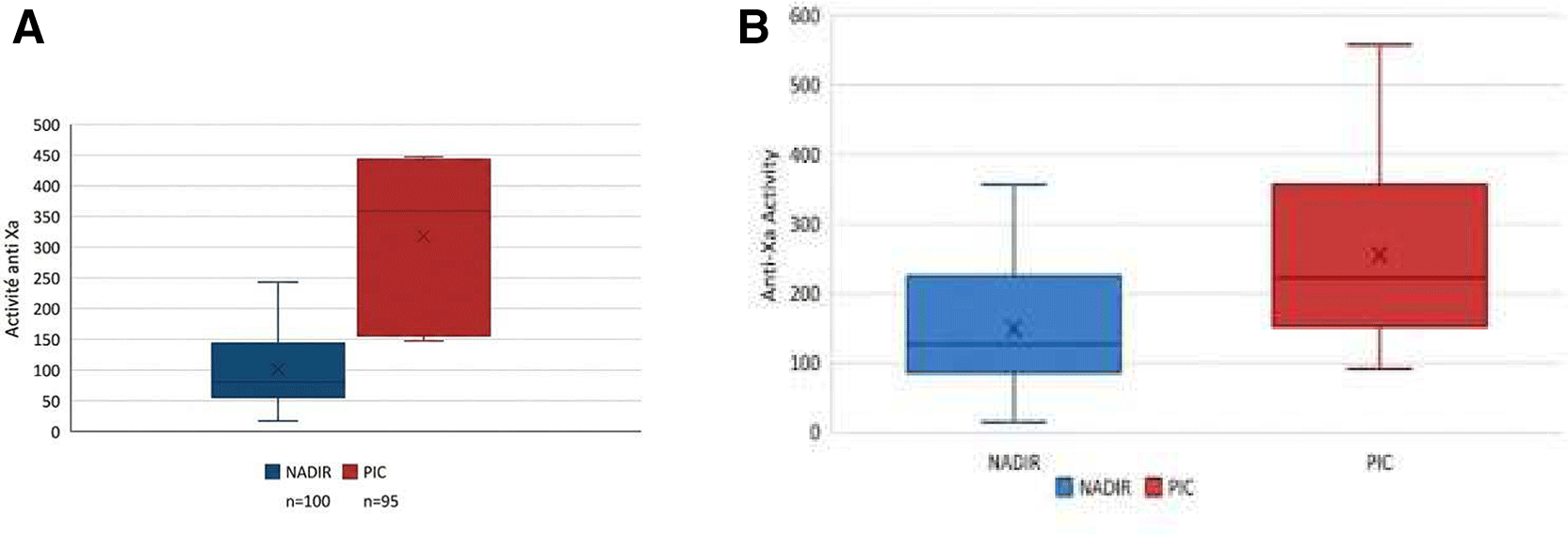
Five nadir samples showed anti-Xa activity below 50 ng/mL: four in the apixaban group (14.9, 35.8, 47.2, and 47.6 ng/mL) and one in the rivaroxaban group (16.3 ng/mL), all collected 30 minutes before the next scheduled dose. Only one value (35.8 ng/mL in a patient receiving apixaban 5 mg BID) fell below the expected trough reference interval, suggesting underexposure; notably, this patient subsequently experienced a thromboembolic event during follow-up. No peak sample exhibited anti-Xa activity below 50 ng/mL.
Abnormal coagulation screening (prolonged PT and/or aPTT) was observed more frequently in rivaroxaban-treated patients than in those receiving apixaban, both at trough and peak levels. In the apixaban group, 45.5% and 73.9% of patients showed a low PT at trough and peak, respectively, compared with 87.5% and 100% in the rivaroxaban group. aPTT prolongation was less pronounced, affecting 27.2% and 34.7% of apixaban-treated patients at trough and peak, versus 50% and 100% of rivaroxaban-treated patients, respectively. Fibrinogen levels were within normal range in the majority of patients in both groups, with mean values ranging from 3.8 to 4.5 g/L in the apixaban group and from 3.9 to 4.1 g/L in the rivaroxaban group. The anti-Xa activity threshold associated with a PT below 70% was 148.6 ng/mL for apixaban and 57.4 ng/mL for rivaroxaban.
A strong and significant inverse correlation was observed between PT and anti-factor Xa activity for both apixaban and rivaroxaban, at peak and trough concentrations. For apixaban, Pearson’s correlation coefficients were r = −0.79 (peak) and r = −0.77 (trough). For rivaroxaban, the correlation was similarly strong at peak (r = −0.84, p = 0.01) and trough (r = −0.79, p = 0.01). Regression analysis indicated that PT values fell below the lower limit of normal (70%) when anti-factor Xa activity exceeded 148.6 ng/mL for apixaban (y = −0.1001x + 84.876; R2 = 0.627) and 57.4 ng/mL for rivaroxaban.
Among the 66 samples analyzed, 56 ROTEMprofiles were considered technically valid and retained for analysis (30 peak and 26 trough samples), whereas 10 profiles were excluded due to pre-analytical abnormalities.
Across both treatment groups, the predominant viscoelastic alteration was prolongation of CT, mainly involving the EXTEM assay. In the apixaban group, EXTEM CT prolongation was observed in 72.2% and 86.9% of patients at trough and peak, respectively, whereas INTEM CT prolongation remained infrequent (5.5% and 8.6%). In the rivaroxaban group, EXTEM CT prolongation was observed in 62.5% of patients at trough and in 100% at peak, while INTEM CT prolongation occurred in 75% and 71.4% of patients, respectively.
Other ROTEM parameters, including clot formation time (CFT), amplitude indices (A10, A20, MCF), and maximum lysis (ML), remained largely unchanged (Table 4).
EXTEM CT showed a significant positive correlation with anti-Xa activity for both agents at both time points: for rivaroxaban, r = 0.88 (p = 0.004) at trough and r = 0.87 (p = 0.012) at peak; for apixaban, ρ = 0.54 (p = 0.021) at trough and ρ = 0.69 (p < 0.001) at peak. No significant correlation was found between INTEM CT and anti-Xa activity for either agent at any time point (all p > 0.33). For rivaroxaban, additional significant correlations were observed at trough with EXTEM CFT (r = 0.90, p = 0.002), INTEM CFT (r = 0.82, p = 0.013), INTEM A10 (r = −0.77, p = 0.024), INTEM A20 (r = −0.80, p = 0.016), and INTEM MCF (r = −0.84, p = 0.010); none of these reached statistical significance at peak (all p > 0.10). No significant correlation was observed between anti-Xa activity and MCF, CFT, alpha angle, or ML for apixaban at either time point (Figure 2).
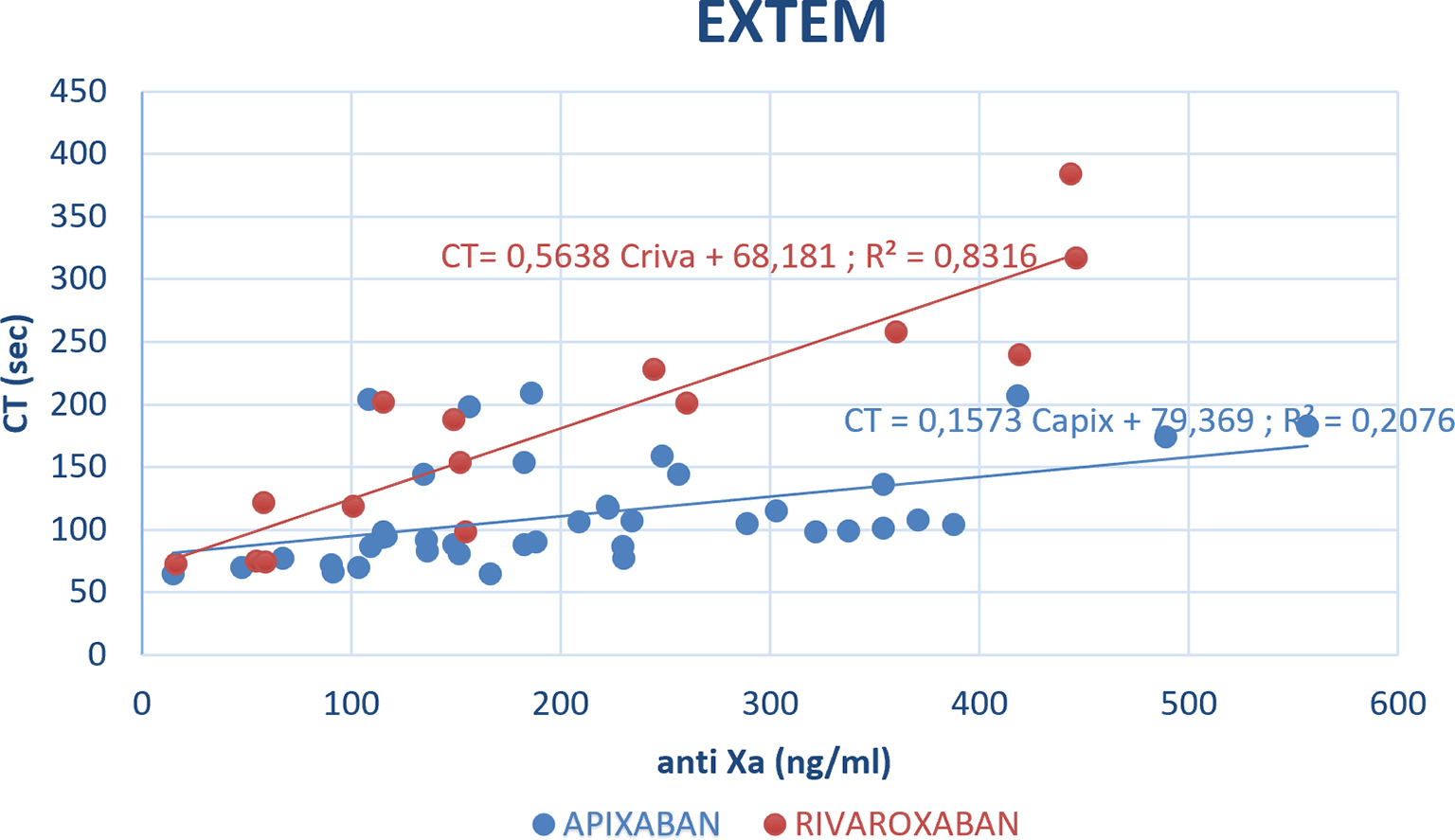
Notably, all five nadir samples with anti-Xa activity below 50 ng/mL, comprising four apixaban and one rivaroxaban specimen, were associated with EXTEM CT values within the manufacturer-defined normal reference range.
This prospective multiparametric study provides the first characterization of the hemostatic impact of generic direct factor Xa inhibitors in a real-world North African cohort, combining calibrated chromogenic anti-Xa assays with ROTEMviscoelastic testing in a paired peak–trough design. Three principal findings emerge. First, rivaroxaban and apixaban exert a differential, concentration-dependent impact on standard coagulation tests, with rivaroxaban producing consistent and pronounced perturbation at both time points while apixaban induces a more modest, peak-predominant effect. Second, among ROTEM parameters, EXTEM CT is the most sensitive and reproducible viscoelastic correlate of anti-Xa activity for both agents, whereas clot firmness parameters remain unaffected. Third, the hemostatic profiles observed with these generic formulations are broadly consistent with published data for originator molecules, providing preliminary evidence of pharmacodynamic equivalence in a real-world clinical setting.
The observation that rivaroxaban consistently altered conventional coagulation parameters at both peak and trough concentrations (100% of cases), whereas apixaban exerted a more limited and concentration-dependent effect (78.2% at peak vs. 54.5% at trough), is in line with known pharmacodynamic differences between these agents. Although both drugs are direct, reversible factor Xa inhibitors and are capable of inhibiting factor Xa within the prothrombinase complex, differences in inhibitory kinetics and drug–target interactions translate into distinct effects on global coagulation assays.14
The greater impact of rivaroxaban on PT has been extensively documented. In ex vivo dose–responseexperiments (0–600 ng/mL), Gosselin RC et al.15 demonstrated a clear, concentration-dependent PT prolongation with rivaroxaban, particularly when using sensitive thromboplastins such as RecombiPlasTin® 2G, the reagent employed in the present study. Under identical experimental conditions, apixaban induced only minimal PT changes. Similar findings emerged from two nationwide Belgian External Quality Assessment Scheme (EQAS) surveys. Van Blerk et al.,16 involving 189 of 192 Belgian laboratories, showed that rivaroxaban induced marked PT prolongation in a concentration- and reagent-dependent manner, with inter-reagent coefficients of variation reaching 23.3% at supratherapeutic concentrations and a 1.7-fold difference in PT ratio between the least sensitive (Innovin®) and most sensitive (Neoplastin R®) reagents. In contrast, the subsequent apixaban-focused survey17 demonstrated only modest and heterogeneous effects on routine coagulation assays across participating laboratories.
The limited responsiveness of conventional coagulation tests to apixaban has been consistently reported. In a large multicentre evaluation conducted by the Groupe d’Étude sur l’Hémostase et la Thrombose, involving 20 PT reagents across two coagulation platforms, both PT and aPTT displayed low and highly variable sensitivity to apixaban.5 These findings were confirmed in Scandinavian ex vivo spiking studies, which demonstrated only modest prolongation of global coagulation assays even at high apixaban concentrations.16 Likewise, Patel et al.17 reported no meaningful aPTT response at concentrations up to 200 ng/mL. Additional ex vivo investigations further highlighted substantial reagent dependency, with PT detectability thresholds ranging from approximately 154 ng/mL to complete insensitivity at concentrations exceeding 1000 ng/mL depending on the thromboplastin used.
In our cohort, the anti-Xa activity threshold associated with a PT value below 70% was substantially lower for rivaroxaban (57.4 ng/mL) than for apixaban (148.6 ng/mL). This observation further supports the limited utility of PT as a surrogate marker of apixaban exposure and emphasizes that PT interpretation in rivaroxaban-treated patients remains highly dependent on the reagent–platform combination employed. Collectively, these findings highlight the critical importance of assay-specific characterization when interpreting routine coagulation tests in patients receiving direct factor Xa inhibitors.
Consistent with prior reports, CT emerged as the ROTEM parameter most sensitive to direct factor Xa inhibition, with EXTEM CT showing greater prolongation than INTEM CT regardless of sampling time or molecule, and with a more pronounced response for rivaroxaban than for apixaban.
The absence of significant INTEM CT correlation (all p > 0.05) is mechanistically expected: the intrinsic pathway is activated by ellagic acid via the contact system, and while factor Xa inhibition theoretically affects the common pathway, the potent contact activation used in INTEM substantially attenuates the relative contribution of prothrombinase-level inhibition to total clotting time.18
This differential sensitivity is well established. In an ex vivo whole blood spiking study in healthy volunteers, Seyve et al.7 demonstrated that the concentration required to double EXTEM CT was substantially lower for rivaroxaban (176 ± 26 ng/mL) than for apixaban (1042 ± 225 ng/mL), while INTEM CT showed overall lower sensitivity regardless of anticoagulant. Similarly, Eller et al.8 reported only minimal effects of apixaban on ROTEM clotting times, mainly at therapeutic and supratherapeutic concentrations, and Martin et al.19 observed a modest increase in EXTEM CT (×1.62) and INTEM CT (×1.28) after in vitro spiking with 200 ng/mL apixaban. Our findings extend this picture to a real-world cohort treated with generic formulations: Spearman’s ρ for EXTEM CT versus anti-Xa activity reached 0.54 (p = 0.021) at trough and 0.69 (p < 0.001) at peak for apixaban, and Pearson’s r reached 0.88 (p = 0.004) and 0.87 (p = 0.012) for rivaroxaban at the respective time points, values in close agreement with the r = 0.81 reported by Adelmann et al.20 for plasma concentration versus EXTEM/INTEM CT.
For rivaroxaban, additional significant correlations were observed at trough with EXTEM CFT (r = 0.90, p = 0.002) and several INTEM parameters (CFTi, A10i, A20i, MCFi; all p ≤ 0.05), reflecting a broader viscoelastic perturbation consistent with the stronger overall anticoagulant signal of this molecule. However, most of these INTEM associations did not replicate at peak (e.g., MCFi r = −0.65, p = 0.113; CFTi r = −0.01, p = 0.981), a counterintuitive finding given that anti-Xa concentrations are higher at peak, warrants careful interpretation. Given a rivaroxaban subgroup size of n = 7–8, statistical power to detect correlations of r ≈ 0.70 is approximately 50–60%, rendering trough-specific findings susceptible to type I error. These associations should therefore be regarded as hypothesis-generating signals requiring validationin a larger cohort, rather than evidence of genuine time-dependent biological effects.
MCF in EXTEM, INTEM, and FIBTEM remained unaffected across DOACs and concentrations, which mechanistically explains the weak or absent correlations between anti-Xa activity and clot firmness parameters: As MCF mainly reflects the contribution of fibrinogen, platelet quantity and function, and factor XIII-mediated clot stabilization, it is not expected to be substantially influenced by direct factor Xa inhibitors. Consistent with this physiological rationale, MCF values remained preserved in our study population. Similar observations have been reported by Casutt et al. (18), who found no effect of rivaroxaban on EXTEM or INTEM MCF, and by Martin et al.,19 who observed unchanged MCF values in apixaban-spiked whole blood. These findings support the limited sensitivity of MCF to factor Xa inhibitor activity.
A critical limitation of standard ROTEM configurations is their inability to reliably detect factor Xa inhibitor concentrations below approximately 50 ng/mL. This observation is consistent with the findings of Seyve et al.,7 who showed that EXTEM CT remains within the normal range until very high apixaban concentrations (~1000 ng/mL), whereas rivaroxaban induces measurable prolongation only at concentrations around 200 ng/mL, well above typical trough levels. This analytical limitation received direct in vivo confirmation in the present cohort: all five nadir samples with anti-Xa activity <50 ng/mL (14.9, 35.8, 47.2, and 47.6 ng/mL in the apixaban group, and 16.3 ng/mL in the rivaroxaban group) yielded normal EXTEM CT values. Notably, one patient receiving apixaban 5 mg twice daily had a trough anti-Xa activity of 35.8 ng/mL, below the expected reference interval, despite a normal EXTEM CT, and subsequently experienced a thromboembolic event during follow-up. Although causality cannot be established from a single observation, this case illustrates that a normal ROTEM profile does not exclude subtherapeutic anticoagulant exposure. This sensitivity gap is clinically important, as a normal EXTEM CT should not be interpreted as evidence of adequate anticoagulant effects at low drug concentrations and highlights the potential complementary value of chromogenic anti-Xa testing in selected high-risk patients.
To overcome the intrinsic sensitivity gap of standard ROTEM reagents, modified assays with reduced tissue factor activation have been developed.9,21–23 Seyve et al.7 reported that low-tissue-factor ROTEM (2.5 pmol/L TF with phospholipids) can detect factor Xa inhibitors down to 25 ng/mL, with sensitivity >90% and specificity >85% above 30 ng/mL. Adelmann et al.20 confirmed strong correlations between DOAC concentrations and LowTF-ROTEM CT (r ≈ 0.81 for both rivaroxaban and apixaban) in spiked samples across 50–400 ng/mL. More recently, FXa-triggered ROTEM assays have achieved detection limits as low as 20 ng/mL for apixaban, with near-perfect sensitivity and specificity and a turnaround time of approximately 20 minutes.9
These advances are further supported at a higher evidence level by a systematic review from Sahli et al.,24 which confirmed a strong correlation between rivaroxaban levels and EXTEM CT across 53 studies but emphasized that normal standard ROTEM results cannot exclude clinically relevant DOAC concentrations, thereby limiting its standalone diagnostic value.
Overall, novel cartridge-based approaches (FXa, RVV) have demonstrated sensitivities and specificities approaching 95–100%, substantially outperforming standard ROTEMin this indication.9
In accordance with these considerations, standard viscoelastic testing remains the only modality available in most emergency laboratories in resource-constrained settings, and the present findings indicate that EXTEM CT, even in its standard configuration, provides clinically informative guidance in the context of rivaroxaban exposure at therapeutic concentrations.
A distinctive contribution of this study is the exploratory characterization of the hemostatic profile of generic factor Xa inhibitors, a dimension largely absent from the current literature, which is based almost exclusively on originator formulations evaluated under controlled pharmacokinetic conditions. Regulatory approval of generics relies on pharmacokinetic bioequivalence, defined by Cmax and AUC within the 80–125% acceptance range versus the reference product. While Pena et al.3 recently confirmed such bioequivalence for a generic rivaroxaban formulation in healthy volunteers under fasting conditions, pharmacokinetic equivalence established in standardized settings does not necessarily translate into comparable pharmacodynamic or hemostatic effects in clinical practice, particularly in elderly multimorbid patients in whom age-related physiological changes, comorbid conditions, polypharmacy, and altered organ function may substantially influence both drug exposure and coagulation response.14,25,26
The hemostatic profiles observed in the present cohort including rotational thromboelastometry clotting time responses, differential prothrombin time sensitivity across agents, and anti-factor Xa activity thresholds associated with coagulation abnormalities, closely mirrored those reported for originator formulations in the international literature. Although formal bioequivalence cannot be inferred from this exploratory study, these findings provide the first real-world evidence supporting comparable pharmacodynamic performance of generic factor Xa inhibitors in a low- and middle-income country setting.
The principal methodological strengths of this study are its prospective paired peak–trough design, which preserves the natural pharmacokinetic and pharmacodynamic variability of these generic formulations without the artificial conditions inherent to ex vivo spiking models, and its integrated multimodal approach combining three complementary assessments, standard coagulation tests, calibrated chromogenic anti-Xa assays, and ROTEM viscoelastic testing, applied simultaneously. The use of drug-specific calibrators for anti-Xa quantification represents an important technical safeguard. This study addresses a genuinely underrepresented clinical context: patients managed with generic anticoagulants in an intermediate-resource setting where rapid functional hemostatic assessment is an unmet clinical need.
These strengths must be weighed against important limitations. The monocentric design and small overall sample size, particularly the rivaroxaban subgroup (n = 8), limit statistical power, preclude robust subgroup analyses, and restrict generalizability. As noted above, statistical power in the rivaroxaban subgroup was approximately 50–60% for correlations of r ~ 0.70, implying that several significant findings, especially those not replicated across time points, should be regarded as exploratory signals rather than definitive estimates.
Within this context, the present study should be viewed as a proof-of-concept investigation that generates preliminary but biologically coherent evidence. The effect estimates derived from this cohort provide a critical empirical framework for future adequately powered multicenter studies integrating direct pharmacokinetic–pharmacodynamic comparisons between generic and originator factor Xa inhibitors.
| Views | Downloads | |
|---|---|---|
| F1000Research | - | - |
|
PubMed Central
Data from PMC are received and updated monthly.
|
- | - |
Provide sufficient details of any financial or non-financial competing interests to enable users to assess whether your comments might lead a reasonable person to question your impartiality. Consider the following examples, but note that this is not an exhaustive list:
Sign up for content alerts and receive a weekly or monthly email with all newly published articles
Already registered? Sign in
The email address should be the one you originally registered with F1000.
You registered with F1000 via Google, so we cannot reset your password.
To sign in, please click here.
If you still need help with your Google account password, please click here.
You registered with F1000 via Facebook, so we cannot reset your password.
To sign in, please click here.
If you still need help with your Facebook account password, please click here.
If your email address is registered with us, we will email you instructions to reset your password.
If you think you should have received this email but it has not arrived, please check your spam filters and/or contact for further assistance.

Comments on this article Comments (0)