Keywords
customer mobilization; digital logistics; last-mile delivery; technology acceptance; platform adoption; systematic literature review

customer mobilization; digital logistics; last-mile delivery; technology acceptance; platform adoption; systematic literature review
The digitalisation of logistics and supply chain management has accelerated substantially over the past decade, driven by the exponential growth of e-commerce, the structural disruptions of the COVID-19 pandemic, and the maturation of platform-based business models that have fundamentally altered how goods move from origin to final recipient. Global e-commerce sales exceeded USD 5.8 trillion in 2023 and are projected to surpass USD 8 trillion by 2027 (Statista, 2024), generating an unprecedented volume of last-mile delivery transactions and placing customer-facing logistics performance at the centre of competitive differentiation. Within this context, digital logistics ecosystems encompassing on-demand delivery platforms, crowdsourced logistics networks, smart parcel infrastructure, and autonomous delivery technologies have emerged as the primary arena in which logistics service providers compete for customer acquisition, engagement, and retention. The challenge of mobilizing customers within these ecosystems attracting initial adoption, sustaining continued use, and cultivating loyalty across multiple platform touchpoints constitutes one of the most consequential and least resolved problems in contemporary logistics management research.
Customer mobilization, as employed in this review, refers to the full arc of customer engagement within digital logistics platforms: from initial awareness and adoption through active usage, satisfaction, and long-term loyalty. This construct is broader than technology acceptance, which focuses primarily on adoption intention, and narrower than customer relationship management, which extends to strategic account management beyond the transactional context. Its relevance to digital logistics derives from the distinctive characteristics of platform-based service environments, where switching costs are low, alternative providers are readily accessible, and customer retention depends on continuous value delivery rather than contractual lock-in (Parker et al., 2016; Täuscher & Laudien, 2018). Understanding what drives customers to adopt, continue using, and remain loyal to digital logistics platforms and what barriers prevent or interrupt these behaviours is therefore of direct theoretical and practical importance to platform operators, logistics service providers, policymakers, and investors.
Despite a rapidly growing empirical literature on customer behaviour in digital logistics contexts, the field remains theoretically fragmented. Existing reviews are limited in scope: Zrelli et al. (2024) review drone applications in logistics and supply chain management but treat consumer behaviour as a peripheral topic; prior SLRs on last-mile delivery focus primarily on operational performance rather than customer behaviour (Ranieri et al., 2018; Mangiaracina et al., 2019); and technology acceptance studies in logistics are predominantly single-country, single-technology investigations that do not synthesise evidence across the ecosystem. No prior systematic review has integrated evidence on drivers, barriers, and trends of customer mobilization across the full range of digital logistics technologies autonomous robots and vehicles, drone delivery, platform-based and crowdsourced logistics, parcel lockers, and e-logistics service quality and across the geographic diversity of contexts in which these technologies are being deployed. Beyond this gap in scope, no prior work has theorised the role of perceived usefulness as a cross-technology mediating hub absorbing the effects of non-TAM antecedents, characterised the simultaneous presence of trust deficits and complexity as a compound barrier dynamic requiring integrated mitigation, or documented the sustainability aspiration-adoption gap as a domain-specific replication of attitude-behaviour gap theory with distinct closure mechanisms in digital logistics contexts. This theoretical fragmentation creates a significant gap between the richness of available empirical evidence and the actionable knowledge available to practitioners and policymakers navigating digital logistics strategy.
This review addresses that gap through a systematic synthesis of 66 peer-reviewed articles published between 2020 and 2026, retrieved from Scopus using a three-cluster Boolean search strategy and subjected to transparent inclusion/exclusion screening, JBI quality assessment, and narrative synthesis with thematic analysis. Four research questions guide the review: what are the emerging trends in digital logistics customer mobilization (RQ1); what are the key drivers that influence customer mobilization in digital logistics ecosystems (RQ2); what barriers and challenges hinder effective customer mobilization (RQ3); and what research gaps and future directions are identified in the literature (RQ4). The temporal scope 2020 to 2026 was selected to capture the post-pandemic acceleration of digital logistics adoption, a period in which contactless delivery technologies, crowdsourcing platforms, and sustainable logistics innovations achieved unprecedented market penetration and scholarly attention simultaneously.
The contributions of this review are threefold. It provides the first comprehensive cross-technology, cross-geography synthesis of customer mobilization in digital logistics ecosystems, establishing a unified evidence base across 21 countries and all major technology categories. It advances theoretical understanding by identifying perceived usefulness as a mediating hub in a complex causal architecture, introducing the trust-complexity nexus as a compound barrier dynamic, and extending the attitude-behaviour gap theory to the digital logistics sustainability domain. And it provides evidence-based guidance for platform operators, last-mile delivery service providers, policymakers, and investors in both developed and emerging market contexts. The remainder of this paper is structured as follows: Section 2 presents the methodology; Section 3 reports the results by research question; Section 4 discusses the theoretical and practical implications; and Section 5 concludes with a future research agenda.
This study follows the Preferred Reporting Items for Systematic Reviews and Meta-Analyses (PRISMA 2020) guidelines to ensure transparency and reproducibility. The review was designed as a systematic literature review (SLR), a method well-established in logistics and supply chain management research for synthesising fragmented empirical evidence into coherent theoretical frameworks (Tranfield et al., 2003; Seuring & Müller, 2008).
Research questions were formulated using the SPIDER framework (Setting – Phenomenon of Interest – Design – Evaluation – Research type), which is suited to management and social science research where the phenomenon involves human behaviour within organisational contexts (Cooke et al., 2012). The setting is digital logistics platforms and ecosystems; the phenomenon of interest is customer mobilization, encompassing adoption, engagement, satisfaction, and loyalty; the design includes quantitative, mixed-method, qualitative, expert survey, and structured review studies; the evaluation focuses on drivers, barriers, and emerging trends; and the research type encompasses empirical, conceptual, and structured review contributions. The four research questions were subsequently evaluated against the FINER criteria (Feasible, Interesting, Novel, Ethical, Relevant; Hulley et al., 2007), confirming their appropriateness for systematic investigation.
A single-database search was conducted in Scopus, selected for its comprehensive coverage of peer-reviewed journals in logistics, supply chain management, and information systems the three fields most central to the phenomenon under review. Scopus is widely used as the primary or sole database in SLRs in the logistics and management domain (Durach et al., 2017; Lim et al., 2021). The limitation of single-database coverage is acknowledged in Section 4.4.
The search was executed on 17 March 2026 using the TITLE-ABS-KEY field. The search string was structured as a three-cluster Boolean query. Cluster 1 captures customer behaviour constructs (“customer mobilization” OR “customer engagement” OR “customer adoption” OR “customer behavior” OR “user behavior” OR “consumer behavior” OR “technology acceptance” OR “platform adoption” OR “customer loyalty” OR “customer satisfaction”). Cluster 2 defines the digital logistics domain (“digital logistics” OR “e-logistics” OR “smart logistics” OR “logistics digitalization” OR “logistics platform” OR “digital freight” OR “on-demand logistics” OR “last-mile delivery” OR “logistics ecosystem” OR “digital supply chain”). Cluster 3 specifies the research focus (“drivers” OR “barriers” OR “challenges” OR “enablers” OR “adoption” OR “trust” OR “perceived usefulness” OR “service quality” OR “digital transformation” OR “technology adoption”). The three clusters were combined using the AND operator, ensuring all retrieved records address customer behaviour, the digital logistics domain, and the research focus simultaneously.
Five automated filters were applied within Scopus: publication year 2020–2026; document type restricted to journal articles; source type restricted to journals; language limited to English; and publication stage set to final to exclude preprints and articles-in-press. The search returned 125 records.
Eligibility criteria were specified a priori and organised into eight inclusion criteria (I1–I8) and eight exclusion criteria (E1–E8), applied across two screening stages.
Criteria I1–I4 and E1–E4 were operationalised automatically through the Scopus filters described in Section 2.2: publication year 2020–2026 (I1/E1), English language (I2/E2), journal article document type (I3/E3), and final publication stage (I4/E4).
Criteria I5–I8 and E5–E8 were applied manually during title/abstract screening and full-text assessment. For inclusion, a study was required to: explicitly address customer or user behaviour within a digital logistics platform or ecosystem context (I5); examine at least one of drivers, barriers, or technology adoption trends relevant to customer mobilization (I6); employ empirical, conceptual, or structured review methodology (I7); and be situated within the logistics, supply chain, or e-commerce industry (I8). Studies were excluded if: customer or user behaviour was not a primary construct of the research (E5); the focus was on conventional or non-digital logistics without a platform or ecosystem element (E6); the article duplicated one already included (E7); or the full text could not be accessed after two retrieval attempts (E8).
Three additional exclusion subcodes were developed inductively during full-text assessment to accommodate patterns not anticipated in the a priori criteria: EX1 (respondents were couriers, managers, or corporate entities rather than end-user customers); EX2 (the study focused on technical systems or infrastructure without examining user behaviour); and EX3 (the digital logistics context was too peripheral to the study’s primary research question to yield meaningful data extraction).
Study selection proceeded through three sequential stages, documented in the PRISMA 2020 flow diagram ( Figure 1).
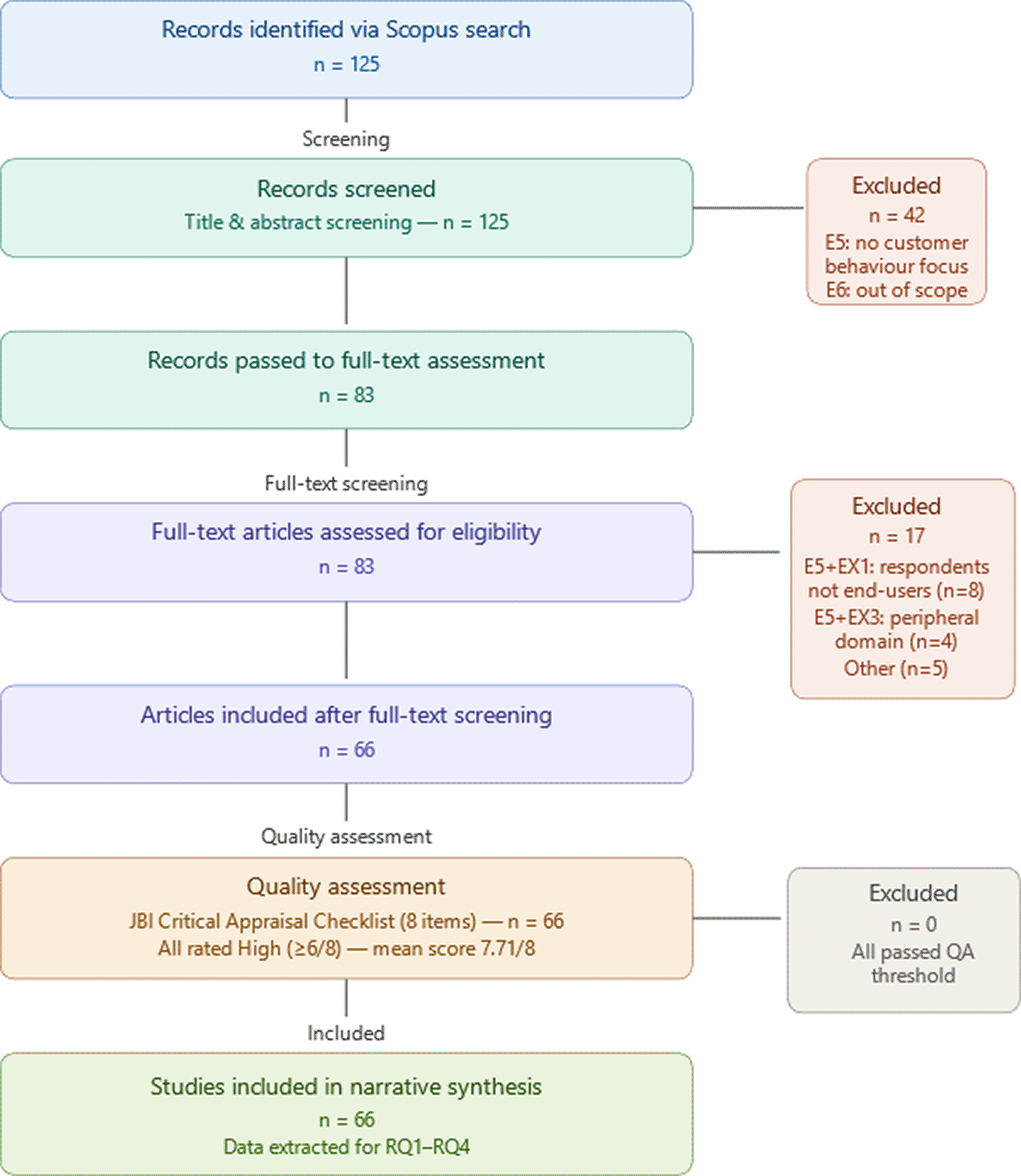
Stage 1 — Identification. The Scopus search returned 125 records after automated filter application. No duplicate removal was required as the search was conducted within a single database.
Stage 2 — Title and abstract screening. All 125 records were screened against criteria I5–I8 and E5–E8 based on titles, abstracts, and author keywords. This stage yielded 83 records for full-text assessment and 42 exclusions. The primary exclusion reason was E5, applied to studies centred on routing algorithm optimisation, mathematical delivery models, or technical logistics systems without a behavioural component. E6 was applied to studies situated in out-of-scope industry contexts including automotive supply chain, tourism logistics, and LPG distribution.
Stage 3 — Full-text assessment. The 83 remaining records were assessed against the full eligibility criteria. Seventeen articles were excluded (exclusion rate: 20.5%), yielding a final corpus of 66 articles. The most frequent exclusion reason was E5 + EX1, where respondents were delivery couriers, logistics managers, or corporate entities rather than end-user customers (n = 8). Full exclusion reason detail is provided in Appendix D.
All 66 articles were assessed using an adapted version of the JBI Critical Appraisal Checklist (Joanna Briggs Institute, 2020). JBI was selected because it provides purpose-built checklists for multiple study designs including cross-sectional surveys, quasi-experimental studies, mixed-method studies, and systematic reviews accommodating the methodological heterogeneity of the included corpus. This makes JBI more appropriate for management and social science SLRs than alternatives designed primarily for clinical research (CASP, ROBIS) or restricted to a single design type (AXIS).
The checklist was adapted to eight items: (Q1) research question clearly defined; (Q2) study design appropriate to objectives; (Q3) population and sample clearly defined and representative; (Q4) measurement instruments valid and reliable; (Q5) data analysis adequate and appropriate; (Q6) findings address the research questions; (Q7) limitations identified and discussed; (Q8) contribution to one or more RQs of this review. Each item was scored dichotomously (Yes = 1, No/Unclear = 0), yielding a maximum score of 8. Quality thresholds were set at High (≥6), Medium (4–5), and Low (≤3).
All 66 articles received a High rating (mean score: 7.71/8; score distribution: 8/8 n = 52, 7/8 n = 9, 6/8 n = 5). No articles were excluded from the synthesis on quality grounds. Articles scoring 6/8 presented minor weaknesses in sample representativeness reporting (Q3), instrument validity documentation (Q4), or discussion of limitations (Q7), but remained eligible given their direct and documented contribution to the RQs (Q8). Full quality assessment scores are reported in Appendix E.
Data were extracted from all 66 included articles using a standardised extraction form comprising 15 fields: article number, author(s), publication year, title, research method, sample size, theoretical framework, key findings, limitations, and four RQ-specific relevance fields (RQ1: emerging trends; RQ2: key drivers; RQ3: barriers and challenges; RQ4: future directions), supplemented by country/geographic context and primary technology focus. All 66 articles yielded complete data across all 15 fields. The full extraction table is provided in Appendix F.
Narrative synthesis was selected as the primary synthesis method, consistent with Popay et al.'s (2006) guidance for heterogeneous evidence bases where methodological diversity precludes statistical pooling. Three reasons precluded meta-analysis: outcome variables were operationalised heterogeneously across studies (adoption intention, customer satisfaction, continuous-use intention, loyalty, and willingness to pay were used as dependent variables but are not statistically equivalent); the corpus employed 18 distinct theoretical frameworks, making effect size comparisons theoretically inappropriate; and only a minority of studies reported standardised effect sizes in a form suitable for pooling.
Narrative synthesis was complemented by two structured analytical procedures. Thematic analysis was applied to RQ2 (drivers) and RQ3 (barriers): driver and barrier constructs were extracted from each article’s RQ-specific field, coded inductively at the construct level, and clustered deductively into theoretically coherent categories using established frameworks from the technology acceptance and service quality literatures as organising schemas. Frequency-based construct mapping was applied across all four RQs to identify convergent evidence (constructs appearing in five or more studies) and divergent evidence (constructs producing contradictory findings across studies). Vote counting was used exclusively to establish construct prevalence and was not used to draw directional causal inferences (Borenstein et al., 2009).
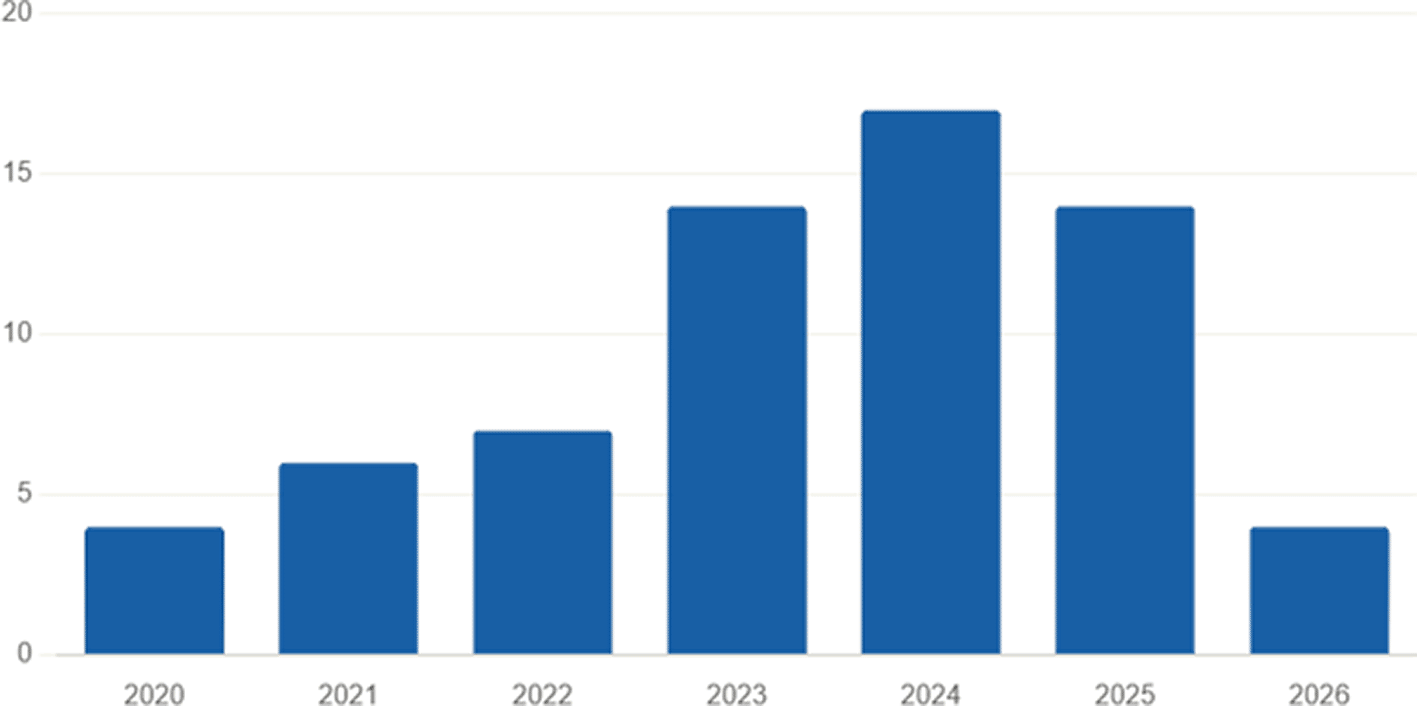
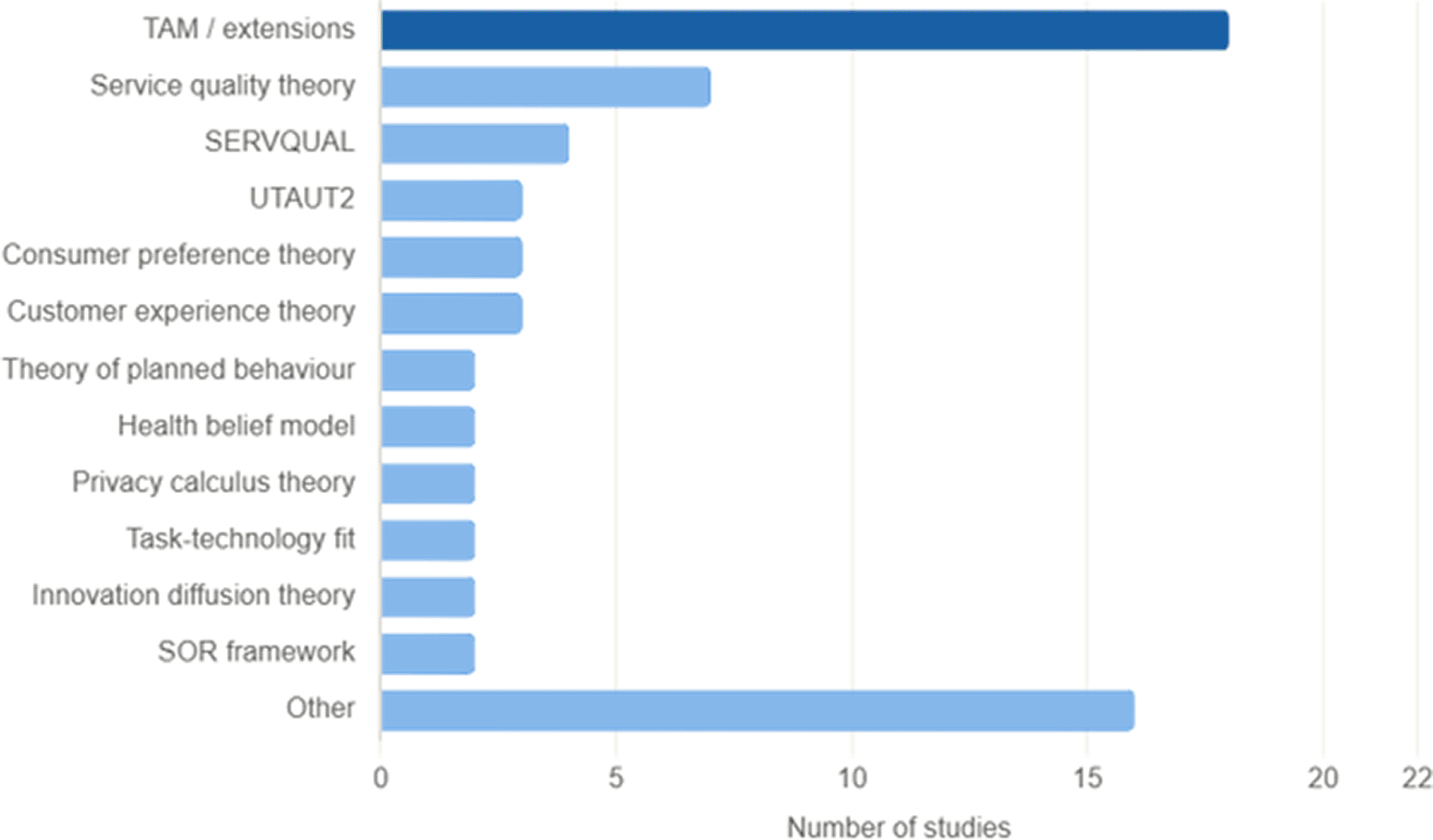
The 66 included studies were published between 2020 and 2026. Publication volume increased substantially from 2023 onward, with 35 studies (53.0%) appearing in the 2024–2026 period ( Figure 2). The corpus comprises 53 quantitative studies (80.3%), eight mixed-method studies (12.1%), and five qualitative or expert-based studies (7.6%). The Technology Acceptance Model (TAM) or its extensions is the dominant theoretical framework, employed in 18 studies (27.3%), followed by Service Quality Theory (n = 7, 10.6%), SERVQUAL (n = 4, 6.1%), and UTAUT2 (n = 3, 4.5%) ( Figure 3). Geographically, China contributes the largest single-country share (n = 13, 19.7%), followed by the United States (n = 7, 10.6%), Germany (n = 5, 7.6%), and Singapore (n = 5, 7.6%); the remaining 36 studies span 17 additional countries, representing 21 distinct countries in total. The methodological and contextual characteristics of the included studies are summarised in Table 1.
Thematic analysis identifies five trend clusters across the 66 included studies.
3.2.1 Trend 1: Proliferation of autonomous and contactless delivery technologies
Autonomous delivery robots (ADR), autonomous delivery vehicles (ADV), and delivery drones collectively account for 22 studies (33.3%). Yuen et al. (2022) document consumer acceptance of ADR in Singapore through an integrated TAM-health belief model framework, identifying perceived value as the strongest acceptance determinant. Kaiser et al. (2024) find that performance expectancy and effort expectancy influence ADR acceptance in Germany, with acceptance higher for package delivery than for meal delivery scenarios. Kapser and Abdelrahman (2020) and Kapser et al. (2021) apply extended UTAUT2 models to ADV acceptance in Germany across two studies, identifying price sensitivity as the strongest predictor in 2020 and trust in technology as a primary determinant in 2021. Meyer-Waarden et al. (2026) investigate AI-automated drone delivery in France using a 2 × 2 × 2 experimental design (n = 3,212), finding that environmental concerns enhance the positive effect of performance expectancy on well-being and that product criticality weakens the well-being-adoption intention relationship.
3.2.2 Trend 2: Expansion of platform-based and crowdsourced logistics models
Ta et al. (2023) analyse customer reviews from multiple US retailers using propensity score matching and cognitive appraisal theory, finding that crowdsourced delivery generates higher customer appraisals of timeliness, price, and reliability than traditional delivery. Liu, Y. et al. (2024) apply an integrated e-CSI and PAM-ISC model to O2O crowdsourcing logistics in China (n = 292), finding that trust contributes most to continuous-use intention among all constructs examined. Koh et al. (2024) integrate the health belief model and TAM in a study of 500 Singaporean consumers, finding perceived usefulness as the primary driver of crowdsourced logistics platform adoption. Zhao et al. (2024) introduce a second-order Q-ETAM model to examine errand delivery a novel platform-based delivery form finding that service quality tangibles have the greatest effect on consumer usage intention. Bossong et al. (2025) apply the TOE framework to digital intermodal freight platforms through multiple case studies, identifying nine levers for platform adoption and documenting opposing preferences between sellers and demanders of freight services. Permatasari et al. (2025) evaluate the SILCARE digital logistics platform for MSMEs in Indonesia using SUS assessments and DBSCAN clustering (n = 100), identifying four distinct user behaviour clusters with 37% of users struggling with complex workflows.
3.2.3 Trend 3: Sustainability and green logistics as mainstream consumer concerns
Klein and Popp (2022) test a TAM-sustainability model with 536 German online buyers, finding that all three sustainability dimensions environmental, economic, and social significantly influence acceptance of home delivery, parcel lockers, and click-and-collect, while perceived costs constrain acceptance across all three methods. Rizzitello et al. (2026) conduct a controlled experiment partnered with an Italian supermarket, finding that moral green nudges outperform financial incentives in driving sustainable delivery choices and that peer influence amplifies adoption of shared delivery systems. Yang et al. (2023) apply contingency, transaction cost, and trust theories to 453 users of green shopping platforms in South Korea, finding that green cooperation positively affects consumer trust and sustainable consumption behaviour. Raźniewska et al. (2026) develop and test an integrated Technology Readiness-TAM model, finding that perceived ease of use significantly impacts perceived usefulness and that environmental awareness improves perceptions of EV courier services without directly translating into adoption intent. Kiba-Janiak et al. (2022) apply conjoint analysis to Polish e-customers, finding that delivery speed and low cost dominate preferences over sustainability options and that most customers select home delivery despite the availability of sustainable alternatives.
3.2.4 Trend 4: Service quality re-conceptualisation toward experience and trust
Vrhovac et al. (2023) develop and validate the CMX-LMD scale (n = 907) through EFA and CFA, identifying six customer experience dimensions: delivery efficiency, parcel tracking, smooth delivery, visual appeal, joyful anticipation, and convenience. Vrhovac et al. (2024) apply SEM to 907 participants across three questionnaires, identifying trust in courier service, delivery speed, price, and courier call before delivery as significant satisfaction predictors, with visual appeal as a negative predictor. Masorgo et al. (2023) conduct a scenario-based vignette experiment finding that inappropriate driver behaviour activates anger and driver inflexibility activates sadness, with both emotional responses reducing customer repurchase intentions; the inflexibility effect is weaker for outsourced than for private fleet drivers. Uvet et al. (2024) develop and test a hybrid LSQ model incorporating a second-order assurance quality construct comprising personnel contact quality, order discrepancy handling, and returns management finding that online ordering procedures and assurance quality account for more variance in customer satisfaction than conventional LSQ dimensions.
3.2.5 Trend 5: Growing geographic diversification of research
Beyond the dominant China-US-Germany-Singapore cluster, the corpus includes studies from Kenya (Mogire et al., 2023), South Africa (Heyns & Kilbourn, 2022), Indonesia (Monoarfa et al., 2024; Permatasari et al., 2025), Vietnam (Do et al., 2023; Trung et al., 2025), Ethiopia (Tadesse et al., 2025), Saudi Arabia (Alahmari et al., 2025), Egypt (Sultan et al., 2023), Iran (Ganjipour & Edrisi, 2023; Esmaili et al., 2025), Poland (Kiba-Janiak et al., 2022), Sweden (Patowary et al., 2023), South Korea (Yang et al., 2023; Jang et al., 2024), Italy (Iannaccone et al., 2021; Rizzitello et al., 2026), France (Meyer-Waarden et al., 2026), India (Sharma et al., 2022; Pathak et al., 2023), Turkey (Toraman & Oz, 2023; Toraman et al., 2024), Malaysia (Teng et al., 2024; Aziz et al., 2025), and Taiwan (Bossong et al., 2025). Tadesse et al. (2025) represent the first application of TAM to digital logistics in a low-income country context, finding that infrastructure availability, human resource capacity, technological accessibility, and supportive policies significantly influence adoption intention beyond the core TAM constructs.
Thematic analysis identifies 47 distinct driver constructs across the 66 studies, consolidated into five clusters. The frequency distribution of the ten most consistently cited driver constructs is presented in Table 2.
3.3.1 Driver cluster 1: Technology acceptance constructs (TAM Core)
Perceived usefulness is the most consistently documented driver, appearing in 17 studies across drone delivery (Leon et al., 2025; Koh et al., 2023; Toraman & Oz, 2023), ADR and ADV adoption (Yuen et al., 2022; Esmaili et al., 2025; Zhang et al., 2025), crowdsourced logistics (Koh et al., 2024), and digital logistics platform adoption (Liu et al., 2025). Perceived ease of use is documented in 10 studies, with Raźniewska et al. (2026) confirming a significant sequential pathway from perceived ease of use to perceived usefulness. Several studies document perceived usefulness as a mediating construct: environmental and health dispositions enhance perceived usefulness (Leon et al., 2025); health concerns shape usefulness perceptions in crowdsourced logistics (Koh et al., 2024); flow experience mediates the path from DOI constructs to platform adoption through usefulness (Liu et al., 2025); and service quality perceptions shape usefulness evaluations in errand delivery platforms (Zhao et al., 2024).
3.3.2 Driver cluster 2: Service quality and experiential dimensions
Service quality dimensions are documented in 10 studies across multiple geographic contexts. Trung et al. (2025) find that delivery staff interaction has the greatest single impact on perceived value in the Mekong Delta (n = 414). Do et al. (2023) identify delivery time as the most critical satisfaction determinant for Generation Z consumers in Vietnam (n = 510). Wang et al. (2024) identify reliability, convenience, freshness, and personnel contact quality as the four key LSQ dimensions in fresh product e-commerce (n = 222). Monoarfa et al. (2024) demonstrate that E-LSQ mediates between user confirmation and customer satisfaction in fresh produce e-commerce in Indonesia (n = 364). Tandon and Ertz (2024) confirm E-LSQ as a stronger antecedent of customer satisfaction than gamification in online shopping (n = 634). Aziz et al. (2025) find empathy and assurance significant but reliability and responsiveness non-significant in the Malaysian courier context (n = 245).
3.3.3 Driver cluster 3: Trust, perceived value, and relational drivers
Trust is a significant driver in seven studies. Liu, Y. et al. (2024) find that trust contributes most to continuous-use intention and significantly reduces perceived risk in O2O crowdsourcing logistics (n = 292). Kapser et al. (2021) identify trust in technology as a primary ADV acceptance determinant (n = 501). Yang et al. (2023) document that green cooperation positively affects consumer trust, which in turn drives sustainable consumption behaviour and loyalty (n = 453). Jarutirasarn and Thirapatsakun (2025) document a satisfaction-sufficiency phenomenon in which positive customer experience diminishes the engagement-loyalty link in Thailand’s e-commerce logistics sector (n = 500). Perceived value operates as a mediating driver in Trung et al. (2025), where delivery quality dimensions drive perceived value which drives satisfaction and loyalty, and in Liu, Y. et al. (2024), where perceived value mediates service quality and continuous-use intention.
3.3.4 Driver cluster 4: Social, normative, and behavioural drivers
Attitude is documented as a significant mediator between beliefs and behavioural intention in Wang et al. (2020), where three competing models demonstrate that no attitude-free specification achieves equivalent fit. Yuen et al. (2022) find attitude holds the largest total effect on ADR adoption intention in Singapore (n = 500). Liu, S. et al. (2024) confirm that attitude directly and indirectly mediates SST adoption intention in China. Social influence is significant in Kapser and Abdelrahman (2020, 2021) and Zhong et al. (2022). Subjective norms are confirmed significant in Esmaili et al. (2025) (n = 1,567). Ganjipour and Edrisi (2023) find that problem awareness, ascribed responsibility, and environmental concern positively influence personal norm, which in turn affects intention to use delivery robots (n = 463). Relative advantage and compatibility from Diffusion of Innovation theory are confirmed as drivers in Wang et al. (2020), Zhang et al. (2025), Liu, S. et al. (2024), and Ganjipour and Edrisi (2023).
3.3.5 Driver cluster 5: Contextual and hedonic drivers
Hedonic motivation is significant in ADV adoption (Kapser & Abdelrahman, 2020; Kapser et al., 2021) and EV delivery acceptance by small businesses (Toraman et al., 2024). Liu et al. (2025) find that flow experience demonstrates a stronger mediating effect on digital logistics platform adoption than technology perception alone in the maritime sector. Encarnación et al. (2025) find that workplace proximity is a stronger parcel locker adoption predictor than home proximity. Iannaccone et al. (2021) quantify willingness to pay for locker accessibility in Rome, finding distance and accessibility as the main choice determinants among young consumers. Personal innovativeness is confirmed as a significant moderator of APL adoption by Jang et al. (2024) (n = 459).
Thematic analysis identifies 41 distinct barrier constructs, consolidated into four clusters. The frequency distribution of the ten most consistently cited barrier constructs is presented in Table 3.
3.4.1 Barrier cluster 1: Technological and perceptual barriers
Complexity is the most consistently documented technological barrier, appearing in seven studies across digital logistics platforms (Liu et al., 2025; Sultan et al., 2023), ADV and ADR adoption (Zhang et al., 2025; Ganjipour & Edrisi, 2023), self-service technology (Liu, S. et al., 2024), and last-mile logistics applications (Sultan et al., 2023). Sultan et al. (2023) identify complexity, insufficient user-developer collaboration, and limited technical knowledge as the three dominant barriers to logistics application adoption in Egypt (n = 1,060). Privacy concerns are documented in five studies, with Garg et al. (2025) finding that women exhibit heightened privacy sensitivity in healthcare drone delivery contexts through PLS-SEM and fsQCA analysis. Esmaili et al. (2025) document perceived theft risk as a novel barrier in ADV adoption in Iran (n = 1,567), with the majority of qualitative respondents citing theft risk as the primary reason they would not use ADVs in urban settings. Low perceived usefulness functions as a barrier in contexts of limited consumer awareness of new delivery modalities (Tadesse et al., 2025; Jang et al., 2024).
3.4.2 Barrier cluster 2: Economic and structural barriers
Klein and Popp (2022) find that perceived costs constrain consumer acceptance across all three delivery methods examined (n = 536). Kapser and Abdelrahman (2020) identify price sensitivity as the strongest single predictor of ADV acceptance in their UTAUT2 model (n = 501). Amaya et al. (2026) find that cost sensitivity is the strongest deterrent to continued online shopping under retail delivery fee conditions, with perceived fairness emerging as a necessary condition for maintaining shopping behaviour. Tadesse et al. (2025) find that infrastructure availability, human resource capacity, and technological accessibility significantly moderate TAM core constructs in Ethiopia. Sharma et al. (2022) identify I4.0 infrastructure as the most fundamental prerequisite for smart last-mile delivery in India, with delivery capacity as the primary operational barrier. Pathak et al. (2023) apply DEMATEL analysis to 20 barriers, identifying routing simulation inadequacy and lack of alternative vehicles as the two cause-group barriers with the greatest downstream impact. Mogire et al. (2023) and Trung et al. (2025) both document returns management as the dimension with the lowest customer satisfaction scores across their respective samples in Kenya and Vietnam.
3.4.3 Barrier cluster 3: Socio-behavioural barriers
Kiba-Janiak et al. (2022) find through conjoint analysis that most Polish e-customers select home delivery despite the availability of sustainable alternatives, attributing this pattern to low ecological awareness. Patowary et al. (2023) document a significant gap between available delivery options and consumer preferences in Sweden, with home delivery preferred despite expressed sustainability concerns. Rizzitello et al. (2026) demonstrate experimentally that financial incentives alone are insufficient to overcome home delivery inertia. Jang et al. (2024) establish distrust as a significant inhibitor of APL adoption operating through its negative effects on perceived usefulness and ease of use (n = 459). Liu, Y. et al. (2024) confirm that perceived risk negatively moderates the satisfaction-continuance intention relationship in crowdsourcing logistics (n = 292). Masorgo et al. (2023) find through scenario-based experiment that inappropriate driver behaviour produces anger and driver inflexibility produces sadness, both reducing repurchase intentions. Zhang et al. (2025) document social awkwardness as a novel barrier specific to ADV adoption in Chinese contexts, where norms around human-robot interaction create adoption resistance not captured by conventional TAM constructs.
3.4.4 Barrier cluster 4: Institutional and regulatory barriers
Tadesse et al. (2025) find that supportive government policies significantly moderate TAM core constructs in Ethiopia, establishing that digital logistics adoption in low-income contexts cannot be adequately explained by individual-level TAM alone. Mutambik (2025) identifies regulatory frameworks as one of four thematic areas critical to the trajectory of last-mile delivery by 2030, drawing on a two-round Delphi study with 52 logistics experts. Bossong et al. (2025) document market transparency fears among sellers of intermodal freight services as a platform-governance barrier through multiple case studies, finding that sellers fear market transparency while demanders favour it a structural conflict not resolved by existing platform design solutions.
Analysis of author-stated future directions across the 66 studies and cross-study gap identification yields five systematic research gap clusters, summarised in Table 4.
| RQ | Theme | Key finding | Primary evidence | Studies (n) |
|---|---|---|---|---|
| RQ1: Trends | Autonomous technology | ADR, ADV, drone deployment accelerating | Yuen et al. (2022); Kaiser et al. (2024); Meyer-Waarden et al. (2026) | 22 |
| Platform economy | Crowdsourcing, O2O, MSME platforms growing | Ta et al. (2023); Liu, Y. et al. (2024); Bossong et al. (2025) | 12 | |
| Sustainability | Green logistics as mainstream consumer concern | Klein and Popp (2022); Rizzitello et al. (2026); Yang et al. (2023) | 12 | |
| Experience & trust | Trust surpasses speed as satisfaction driver | Vrhovac et al. (2024); Masorgo et al. (2023) | 14 | |
| Geographic diversification | 21 countries; low-income contexts emerging | Tadesse et al. (2025); Mogire et al. (2023) | 20 | |
| RQ2: Drivers | TAM core | Perceived usefulness: dominant driver | 17 studies confirm usefulness primacy | 17 |
| Service quality | Reliability & delivery time primary | Trung et al. (2025); Do et al. (2023) | 10 | |
| Trust & value | Trust as primary continuance driver | Liu, Y. et al. (2024); Yang et al. (2023) | 7 | |
| RQ3: Barriers | Complexity & perception | Complexity = dominant technological barrier | Sultan et al. (2023); Zhang et al. (2025) | 7 |
| Infrastructure & cost | Developing market structural barriers critical | Tadesse et al. (2025); Sharma et al. (2022) | 7 | |
| Consumer inertia | Home delivery preference persists | Kiba-Janiak et al. (2022); Jang et al. (2024) | 6 | |
| RQ4: Gaps | Longitudinal designs | Cross-sectional dominance limits causal inference | 13 studies call for longitudinal designs | 13 |
| Cross-cultural comparison | Single-country bias limits generalisability | 9 studies call for cross-cultural validation | 9 | |
| Policy research | Regulatory frameworks absent from literature | Tadesse et al. (2025); Mutambik (2025) | 7 |
3.5.1 Gap 1: Longitudinal evidence and post-adoption dynamics
Thirteen studies explicitly call for longitudinal investigation. Cross-sectional designs account for 83% of the quantitative studies in the corpus. Specific longitudinal gaps include post-pandemic persistence of contactless delivery adoption (Koh et al., 2024; Jang et al., 2024); longitudinal tracking of the sustainability attitude-behaviour gap (Klein & Popp, 2022; Raźniewska et al., 2026); trust formation and erosion dynamics in crowdsourcing logistics (Liu, Y. et al., 2024); and multi-timepoint validation of the CMX-LMD scale (Vrhovac et al., 2023).
3.5.2 Gap 2: Cross-cultural and multi-country comparative studies
Nine studies call for cross-cultural validation. TAM universality is questioned by Tadesse et al. (2025), who find external factors beyond perceived usefulness and ease of use critical in Ethiopia. Cross-cultural comparison of ADV and drone adoption is absent — existing studies are limited to Germany, Singapore, China, and Iran, with no multi-country comparison. Aziz et al. (2025) find different service quality dimensions significant in Malaysia than in European and US contexts. Parcel locker adoption outside Asian and European markets remains unstudied.
3.5.3 Gap 3: Policy, regulatory, and institutional research
Seven studies identify policy and institutional research as a priority. Regulatory frameworks for drone and ADV deployment are absent despite extensive consumer perception data (Leon et al., 2025; Meyer-Waarden et al., 2026). Policy instrument design for sustainable last-mile logistics is identified by Rizzitello et al. (2026) and Kiba-Janiak et al. (2022), who note the absence of scaled policy interventions. Logistics digitalization policy in low-income countries is identified by Tadesse et al. (2025) as a critical gap. Data governance and privacy regulation in platform-based logistics remains unaddressed despite privacy concerns documented in five studies.
3.5.4 Gap 4: Supply-side and ecosystem-level analysis
Bossong et al. (2025) provide the only study in the corpus addressing supply-side adoption dynamics in digital freight platforms. No study simultaneously models multi-actor digital logistics ecosystem dynamics. Network effects and critical mass dynamics in digital logistics platforms have not been empirically investigated. Carrier and courier adoption dynamics beyond electric vehicle acceptance remain largely unexamined.
3.5.5. Gap 5: Emerging technology and methodological gaps
Technology gaps include blockchain applications in logistics consumer trust, AI-driven personalisation in logistics platforms (Alahmari et al., 2025), and gamification design — where Tandon and Ertz (2024) find no effect on satisfaction while Liu, X. et al. (2024) document significant gamification affordance effects, indicating design-contingent effectiveness. Methodological gaps include machine learning analysis of consumer behaviour (one study: Aljohani, 2024), configurational fsQCA approaches (one study: Garg et al., 2025), and big data analytics integration (one study: Shi et al., 2021, n = 54,250 reviews).
Recent studies have emphasized the growing role of platform integration, customer engagement, and digital ecosystem coordination in logistics transformation (Cho, 2021; Gatta, 2021; Alnıpak & Toraman, 2023; Brzozowska, 2023; Jiang, 2020; Liu, S. et al., 2024; Liu, X. et al., 2024; Liu, Y. et al., 2024; Xu, 2024).
The synthesis of 66 peer-reviewed studies across four research questions reveals four cross-cutting patterns that extend beyond the RQ-specific findings and warrant theoretical interpretation.
Perceived usefulness as universal mediating hub. The most robust finding of this review is that perceived usefulness functions not as a terminal attitudinal construct but as a mediating hub through which multiple antecedent variables environmental dispositions, health beliefs, flow experience, service quality perceptions, and social norms exert their influence on adoption intention. This hub-and-spoke architecture is documented consistently across all technology types and across 21 countries, suggesting that perceived usefulness occupies a structurally privileged position in the causal architecture of digital logistics customer mobilization that goes beyond its original conceptualisation in Davis's (1989) TAM. This finding extends Venkatesh et al.'s (2003) UTAUT argument that perceived usefulness is the most powerful predictor of behavioural intention, by demonstrating that in digital logistics contexts, usefulness also absorbs and mediates upstream effects from non-TAM constructs including environmental concern (Leon et al., 2025), health risk perception (Koh et al., 2024), and hedonic flow experience (Liu et al., 2025). The implication for platform intervention design is direct: strategies that enhance usefulness perception through value demonstration, onboarding quality, and risk reduction are more generalisable and more evidence-based than strategies targeting any single upstream construct in isolation.
The trust-complexity nexus as compound barrier dynamic. Trust deficits and complexity emerge as the two dominant barrier types in the corpus, but their co-occurrence is not coincidental. Both operate through distinct psychological mechanisms trust deficits through relational and emotional pathways, complexity through cognitive pathways yet both ultimately suppress adoption intention. Several studies document their structural interaction: Sultan et al. (2023) find that insufficient user-developer collaboration simultaneously creates complexity barriers through poor interface design and trust barriers through perceived developer indifference; Jang et al. (2024) find that distrust in APL systems operates specifically through its negative effect on perceived ease of use, creating a cognitive-relational compound in which emotional distrust manifests as cognitive difficulty. This trust-complexity nexus has not been theorised in the prior TAM or trust literature, where both constructs are typically modelled as independent predictors. The present synthesis suggests that barrier mitigation strategies addressing only one construct are likely to be suboptimal, and that effective customer mobilization requires simultaneous intervention on both relational and cognitive dimensions a finding that challenges the common industry practice of UX simplification as a standalone adoption strategy.
The sustainability aspiration-adoption gap. Klein and Popp (2022), Raźniewska et al. (2026), and Kiba-Janiak et al. (2022) all document that environmental awareness improves consumers’ perceptions of sustainable delivery options without directly driving adoption intent, and that home delivery inertia persists even when consumers articulate sustainability values and sustainable alternatives are readily available. This pattern replicates the attitude-behaviour gap documented in the broader consumer behaviour literature (Kollmuss & Agyeman, 2002) and extends it specifically to the digital logistics domain. Critically, Rizzitello et al. (2026) provide experimental evidence that social pressure in the form of moral green nudges and peer influence rather than financial incentives is required to close this gap, with their shared cart mechanism producing cost reductions of 76.8% when social normative mechanisms are activated. This finding has direct implications for how logistics platform sustainability strategies should be designed: economic incentive mechanisms alone are insufficient, and social normative architecture peer visibility, collective delivery options, and moral framing is the appropriate intervention lever.
Methodological dominance and confirmation risk. The dominance of TAM-based, cross-sectional, single-country, quantitative survey studies 53 of 66 studies (80.3%) creates a risk of systematic confirmation bias. TAM constructs will tend to be found significant when TAM is the primary lens, cross-sectional designs cannot establish temporal precedence, and single-country samples prevent assessment of cultural boundary conditions. The isolated but theoretically significant contributions of studies using Privacy Calculus Theory (Leon et al., 2025; Koh et al., 2023), Health Belief Model (Yuen et al., 2022; Koh et al., 2024), Cognitive Appraisal Theory (Masorgo et al., 2023), and configurational fsQCA (Garg et al., 2025) demonstrate that alternative theoretical lenses reveal dimensions of customer mobilization that TAM-centric research systematically underestimates particularly emotional, normative, and configurational pathways to adoption.
This review makes five theoretical contributions to the digital logistics and customer mobilization literature.
First, it provides the first comprehensive cross-technology, cross-geography synthesis of customer mobilization in digital logistics ecosystems. Prior reviews have been limited to single technology types drone delivery (Zrelli et al., 2024), autonomous vehicles, or parcel lockers single regions, or narrow constructs. By synthesising evidence across all digital logistics technology categories and 21 countries, this review establishes a unified evidence base that identifies which findings are robust across contexts and which are context-contingent.
Second, it advances TAM theory in the digital logistics domain by recharacterising perceived usefulness from a terminal construct to a mediating hub with a complex upstream causal architecture. This recharacterisation has implications for how TAM-based research should be designed and interpreted: studies that model perceived usefulness only as an independent or mediating variable without examining what shapes it are likely to underestimate its theoretical richness and practical leverage.
Third, it introduces the trust-complexity nexus as a theoretically novel compound barrier dynamic that bridges the technology acceptance literature and the trust literature. By demonstrating that trust deficits and complexity interact rather than operate independently, this review offers a more complete explanation of adoption resistance in digital logistics contexts than either construct provides alone, and points toward integrated mitigation strategies that current practice has not yet operationalised.
Fourth, it extends the attitude-behaviour gap theory (Kollmuss & Agyeman, 2002) to the digital logistics domain and identifies social-normative mechanisms rather than economic incentive mechanisms as the primary lever for closing the sustainability aspiration-adoption gap. This extends existing theoretical work on pro-environmental behaviour by demonstrating that the gap is domain-specific and that the mechanisms required to close it differ from those effective in other consumption domains.
Fifth, it documents the limits of TAM universality by establishing, through the Ethiopian case (Tadesse et al., 2025), that external institutional factors infrastructure availability, human resource capacity, and supportive policies significantly moderate core TAM constructs in low-income country contexts. This contributes to the ongoing debate about the cultural and institutional boundary conditions of TAM (Bagozzi, 2007) and suggests that technology acceptance frameworks developed in high-income market contexts require contextual adaptation before application in developing economies.
The findings carry actionable implications for four practitioner groups.
For digital logistics platform operators, the centrality of perceived usefulness as a mediating hub implies that platform strategy should prioritise value communication and demonstration over feature complexity. Onboarding experiences that rapidly demonstrate tangible utility through personalised use cases, visible performance data, and comparative advantage framing are more likely to accelerate customer mobilization than interface aesthetics or feature richness. The trust-complexity nexus further implies that UX simplification and trust-building must be pursued simultaneously: platforms that reduce cognitive load without addressing trust concerns, or vice versa, will encounter persistent adoption resistance at the barriers they have not addressed.
For last-mile delivery service providers, the reconceptualisation of service quality toward experiential and relational dimensions has direct operational implications. Trust in courier service surpasses delivery speed and price as the dominant satisfaction driver (Vrhovac et al., 2024), implying that investment in driver conduct, communication quality, and empathy training yields higher customer mobilization returns than further speed optimisation in markets where baseline delivery time performance is already acceptable. Returns management is consistently identified as the weakest service quality dimension across multiple geographic contexts, representing a high-leverage improvement opportunity. For providers deploying parcel lockers, workplace proximity should be prioritised over residential proximity in location strategy.
For logistics platform policymakers, three gaps require urgent attention. Regulatory frameworks for drone delivery and ADV deployment lag significantly behind consumer acceptance levels, creating a policy vacuum that constrains commercial deployment. Green nudge policy instruments particularly peer influence mechanisms and moral framing are more effective than delivery fee mechanisms for shifting consumer delivery behaviour toward sustainable alternatives, with experimental evidence from Rizzitello et al. (2026) providing a direct model for policy design. In low-income country contexts, logistics digitalization policy must address infrastructure and capacity constraints as prerequisites rather than treating technology adoption as an individual-level behavioural challenge.
For platform investors and startups, particularly in emerging markets such as Saudi Arabia, Indonesia, and Vietnam, service performance and digital integration are the dominant customer experience predictors (Alahmari et al., 2025; Monoarfa et al., 2024; Trung et al., 2025), suggesting that operational consistency should precede marketing investment. MSME-specific platform design must prioritise usability over feature richness, given that 37% of MSME users in Permatasari et al. (2025) struggled with complex workflows even after usability improvements.
Several limitations of this review should be considered when interpreting its findings.
The search was conducted in a single database (Scopus). While Scopus provides comprehensive coverage of peer-reviewed logistics and management journals and is widely used as the sole database in SLRs in this domain (Durach et al., 2017), studies indexed exclusively in Web of Science, Google Scholar, or non-indexed practitioner publications are not represented in the corpus. This limitation may result in underrepresentation of practitioner-oriented evidence and of research published in non-Scopus-indexed regional journals, particularly from Southeast Asian and African contexts.
The restriction to English-language publications excludes a potentially substantial body of logistics and e-commerce research published in Chinese, German, and other languages. Given that China contributes the largest single-country share of the included corpus (19.7%), Chinese-language publications may contain evidence that complements or qualifies the English-language findings, particularly regarding platform-specific consumer behaviour in domestic Chinese logistics ecosystems.
Full-text screening was conducted based on extended abstracts from Scopus rather than physical full-text access, creating the possibility of residual misclassification in borderline cases. While the 20.5% full-text exclusion rate is within acceptable SLR ranges (Liberati et al., 2009), studies that were included based on abstract content but whose full text would not have met the eligibility criteria cannot be entirely ruled out.
Quality assessment was conducted by a single reviewer with a consensus protocol for borderline cases, rather than by two independent reviewers with inter-rater reliability calculation. While all 66 included articles received High ratings on the JBI checklist, the absence of independent verification means that systematic reviewer bias in the quality scoring cannot be excluded.
Finally, narrative synthesis does not permit quantitative effect size comparison. Where directional findings are reported for example, that perceived usefulness is the most frequently cited driver these represent construct prevalence across studies rather than pooled effect sizes, and should not be interpreted as evidence of comparative effect magnitude.
This systematic review synthesised 66 peer-reviewed articles published between 2020 and 2026 to address four research questions concerning customer mobilization in digital logistics ecosystems. The review identified five trend clusters dominating the period: the proliferation of autonomous and contactless delivery technologies, the expansion of platform-based and crowdsourced logistics models, the mainstreaming of sustainability as a consumer concern, the reconceptualisation of service quality toward experiential and trust-based dimensions, and the growing geographic diversification of research to include low-income and emerging economy contexts. Perceived usefulness, service quality, perceived ease of use, and trust were identified as the most consistently documented drivers across technology types and geographic contexts, while complexity, infrastructure limitations, perceived costs, and distrust emerged as the dominant barriers. Five systematic research gaps were identified, centred on the absence of longitudinal evidence, geographic concentration, under-representation of policy and institutional perspectives, a demand-side orientation neglecting ecosystem-level dynamics, and methodological overdependence on TAM-based cross-sectional survey designs.
Three primary contributions are offered. First, this review provides the first comprehensive synthesis of customer mobilization across all major digital logistics technology categories and across 21 countries, establishing a unified evidence base where previously only fragmented, technology-specific or region-specific reviews existed. Second, it advances theoretical understanding by recharacterising perceived usefulness as a mediating hub in a complex causal architecture, introducing the trust-complexity nexus as a compound barrier dynamic, and extending the attitude-behaviour gap theory to the digital logistics sustainability domain. Third, it provides evidence-based guidance for platform operators, last-mile delivery service providers, policymakers, and investors particularly in emerging market contexts where existing literature has provided least support.
Five priorities are recommended for future research. Longitudinal panel designs are needed to establish causal precedence and track adoption persistence beyond single measurement points. Multi-country comparative studies are needed to test the cultural boundary conditions of TAM and UTAUT2 constructs. Policy and regulatory research is needed to translate consumer-level behavioural insights into institutional governance frameworks for autonomous delivery and sustainable last-mile logistics. Ecosystem-level and multi-actor studies are needed to simultaneously model consumer, platform, carrier, and regulatory perspectives. Finally, methodological diversification including fsQCA, big data analytics, and mixed-reality experimental designs is needed to address the confirmation risk created by current methodological dominance.
The digital logistics ecosystem is at an inflection point: autonomous delivery technologies are approaching commercial deployment, platform models are displacing linear logistics provision, and sustainability is reshaping consumer expectations. This review establishes that customer mobilization in this ecosystem is governed by perceived usefulness, trust, service quality, and social norms whose interactions are shaped by technology type, institutional context, and cultural factors in ways that single-country, single-technology research cannot fully reveal. Future scholarship moving beyond cross-sectional TAM-centric designs toward longitudinal, multi-actor, and policy-sensitive frameworks will be essential for advancing both theory and practice in this rapidly evolving field.
| Views | Downloads | |
|---|---|---|
| F1000Research | - | - |
|
PubMed Central
Data from PMC are received and updated monthly.
|
- | - |
Provide sufficient details of any financial or non-financial competing interests to enable users to assess whether your comments might lead a reasonable person to question your impartiality. Consider the following examples, but note that this is not an exhaustive list:
Sign up for content alerts and receive a weekly or monthly email with all newly published articles
Already registered? Sign in
The email address should be the one you originally registered with F1000.
You registered with F1000 via Google, so we cannot reset your password.
To sign in, please click here.
If you still need help with your Google account password, please click here.
You registered with F1000 via Facebook, so we cannot reset your password.
To sign in, please click here.
If you still need help with your Facebook account password, please click here.
If your email address is registered with us, we will email you instructions to reset your password.
If you think you should have received this email but it has not arrived, please check your spam filters and/or contact for further assistance.

Comments on this article Comments (0)