Keywords
Decoupling, Green growth, Environmental policy, Developing countries, Systematic review

This article is included in the Climate gateway.
Decoupling, Green growth, Environmental policy, Developing countries, Systematic review
The pursuit of economic growth has long been the central objective of development policy across the globe, yet the environmental consequences of this pursuit have become increasingly difficult to ignore. Since the Industrial Revolution, the intensification of economic activities has been accompanied by a corresponding rise in greenhouse gas emissions, deforestation, biodiversity loss, and resource depletion (Stern, 2004). The Intergovernmental Panel on Climate Change has repeatedly warned that without urgent and sustained action, global temperatures are projected to exceed the 1.5 °C threshold set by the Paris Agreement, with catastrophic consequences for ecosystems and human societies (IPCC, 2022). This has elevated the concept of “green growth” to the forefront of international policy discourse, offering a framework that promises to reconcile economic development with environmental sustainability (OECD, 2011; World Bank, 2012).
The green growth paradigm posits that it is possible to achieve sustained economic expansion while simultaneously reducing environmental pressures through technological innovation, structural transformation, and policy intervention (Bowen & Fankhauser, 2011; Hickel & Kallis, 2020). Central to this paradigm is the notion of “decoupling” – the ability to separate economic growth from resource use and environmental degradation. Decoupling can occur in two forms: relative decoupling, where environmental impacts grow at a slower rate than economic output, and absolute decoupling, where environmental impacts decline while the economy continues to grow (UNEP, 2011; Vadén et al., 2020). The achievement of absolute decoupling is considered a prerequisite for meeting the climate targets enshrined in the Paris Agreement and the Sustainable Development Goals (SDGs), particularly SDG 7 (Affordable and Clean Energy), SDG 8 (Decent Work and Economic Growth), SDG 12 (Responsible Consumption and Production), and SDG 13 (Climate Action).
However, the empirical evidence on whether decoupling is occurring at scale remains highly contested (Haberl et al., 2020; Ward et al., 2016). While some high-income countries have demonstrated relative decoupling, absolute decoupling at the global level has proven elusive (Parrique et al., 2019; Vadén et al., 2020). This challenge is particularly acute for developing and emerging economies, which face the dual imperative of lifting living standards and industrializing while simultaneously managing their carbon footprints (Antweiler et al., 2001; Dinda, 2004). The Environmental Kuznets Curve hypothesis, which suggests that environmental degradation initially increases with income but eventually declines as countries reach higher development levels, provides a theoretical foundation for optimism (Grossman & Krueger, 1995; Stern, 2004). Yet, critics argue that the EKC is not automatic and that its realization depends on deliberate policy choices, institutional capacity, and the nature of the growth path pursued (Dinda, 2004; Stern, 2017).
Despite the growing policy commitment to green growth and decoupling, many developing countries continue to experience rising ecological footprints alongside economic expansion. The BRICS nations, for instance, account for over 40 percent of global carbon emissions while simultaneously pursuing ambitious growth targets (World Bank, 2023). Similarly, the E7 economies (Brazil, China, India, Indonesia, Mexico, Russia, and Turkey) are responsible for approximately 45 percent of global emissions, with their share projected to increase as their economies continue to grow (Chu et al., 2023). This trajectory raises fundamental questions about the compatibility of conventional growth models with ecological sustainability.
The tension between economic development and environmental protection is further compounded by the heterogeneity of policy instruments available to policymakers. A wide array of interventions has been proposed and implemented, including fiscal instruments such as environmental taxes and carbon pricing, regulatory tools such as environmental policy stringency, institutional reforms to strengthen governance and property rights, and market-based mechanisms such as emissions trading systems and green finance (Haites, 2018; OECD, 2011). Yet, the relative effectiveness of these instruments in fostering decoupling remains poorly understood, particularly in the context of developing and emerging economies where institutional capacity is often weaker and policy implementation challenges are more acute (Degirmenci et al., 2026; Wolde-rufael & Mulat-weldemeskel, 2021).
Existing literature has extensively examined the relationship between economic growth and environmental degradation, yet several critical gaps persist. First, much of the empirical work has focused on developed economies or global panels without disaggregating findings by income level, obscuring the distinct challenges and opportunities faced by developing countries (Wang & Zhang, 2020). Second, studies that do focus on developing economies often examine environmental degradation in isolation from policy mechanisms, providing limited guidance on which instruments are most effective in achieving decoupling (Bekun & Ozturk, 2025). Third, the methodological heterogeneity across studies – ranging from the Environmental Kuznets Curve framework to Tapio decoupling models and load capacity curve analysis – has resulted in fragmented and sometimes contradictory findings, making it difficult to draw definitive conclusions (Bettarelli et al., 2025; Caglar et al., 2025).
Furthermore, the literature has tended to treat policy instruments in isolation, overlooking the potential synergies and trade-offs between different interventions. For instance, while environmental taxes may reduce emissions, their effectiveness could be enhanced or undermined by the quality of institutions, the degree of trade openness, or the level of human capital (Addai et al., 2024; Iorember et al., 2024). There is a pressing need for a systematic synthesis that integrates these disparate strands of evidence and provides a coherent assessment of policy effectiveness in decoupling growth from environmental degradation in developing country contexts.
The central research question guiding this systematic review is: How do environmental policies including fiscal instruments, institutional reforms, and trade policies influence the decoupling of economic growth from environmental degradation (measured as CO₂ emissions, ecological footprint, and load capacity factor) in developing and emerging economies?
This question is further elaborated through the following sub-questions:
1) What policy instruments are most consistently associated with emissions reductions and improved ecological sustainability in developing countries?
2) How do institutional and governance factors moderate the effectiveness of environmental policies?
3) What are the key determinants and effect sizes of environmental policies on decoupling outcomes?
4) How do the effects of trade openness and globalization differ across income levels in developing countries?
The aim of this systematic literature review is to synthesize empirical evidence on the effectiveness of policy instruments in decoupling economic growth from environmental degradation in developing and emerging economies.
This systematic review makes several important contributions to the academic literature and policy discourse. First, it provides a comprehensive and up-to-date synthesis of empirical evidence on policy effectiveness in decoupling economic growth from environmental degradation, addressing a critical gap in the green growth literature. Second, by focusing specifically on developing and emerging economies, it offers insights that are directly relevant to the countries that will shape the future trajectory of global emissions. Third, the review identifies which policy instruments are most effective under different contextual conditions, providing actionable guidance for policymakers seeking to align economic development with climate action.
From a policy perspective, the findings are relevant to international climate negotiations, national development planning, and the design of Nationally Determined Contributions under the Paris Agreement. The review also contributes to the academic literature by highlighting methodological trends, identifying research gaps, and proposing directions for future empirical work. By synthesizing heterogeneous findings from diverse methodological traditions, this review provides a clearer understanding of the conditions under which decoupling is achievable and the policy pathways that can facilitate this transition.
This study employs a systematic literature review methodology following the Preferred Reporting Items for Systematic Reviews and Meta-Analyses (PRISMA) guidelines (Page et al., 2021). The PRISMA framework provides a standardized approach to study identification, screening, eligibility assessment, and synthesis, ensuring transparency and reproducibility in the review process. A narrative synthesis approach was adopted due to the heterogeneity of study designs, analytical methods, and outcome measures across the included studies. Narrative synthesis is particularly appropriate when meta-analysis is not feasible due to methodological diversity, and it allows for the integration of findings through thematic categorization rather than statistical pooling (Popay et al., 2006).
The inclusion and exclusion criteria were defined using a modified PICOS framework (Population, Intervention, Comparison, Outcome, Study Design) to ensure systematic and transparent selection of studies (Liberati et al., 2009). The criteria are summarized in Table 1.
A comprehensive literature search was conducted on the Scopus database, which is widely recognized as the most comprehensive abstract and citation database of peer-reviewed literature in the social sciences and environmental sciences (Mongeon & Paul-Hus, 2016). The search was conducted on 15 June 2026 and was limited to articles published between 2016 and 2026, written in English, and classified as peer-reviewed research articles. The time frame was selected to capture the most recent empirical evidence while allowing for the inclusion of studies published after the Paris Agreement, which marked a significant shift in global climate policy (UNFCCC, 2015).
The search strategy was developed through an iterative process of scoping searches and consultation of relevant review literature (Berrang-Ford et al., 2015). The final Boolean search string combined four thematic blocks covering (1) green growth and decoupling, (2) environmental degradation, (3) policy instruments, and (4) geographic focus on developing and emerging economies. The complete search string is documented in Table 2. Additional relevant studies were identified through forward and backward citation chasing of included studies to ensure comprehensive coverage of the literature (Haddaway et al., 2020).
The study selection followed a four-stage PRISMA flow process. In the identification stage, a total of 2,776 records were identified through the Scopus database search. In the screening stage, after removing duplicates and screening based on titles and abstracts, 880 records were considered potentially relevant and proceeded to full-text review. In the eligibility stage, the full texts of the 880 records were assessed against the inclusion criteria, resulting in 23 articles that met all eligibility requirements. In the inclusion stage, all 23 articles were included in the final synthesis. The selection process is illustrated in the PRISMA flow diagram.
The study selection was conducted independently by two reviewers to minimize bias (Liberati et al., 2009). Disagreements were resolved through discussion and consensus, with a third reviewer consulted when necessary. The reasons for exclusion at the full-text stage were documented and are presented in the PRISMA flow diagram, following the recommendation of the Cochrane Handbook for Systematic Reviews (Chandler et al., 2019).
A standardized data extraction form was developed to capture key information from each included study systematically (Popay et al., 2006). The form was piloted on three representative studies and refined based on feedback to ensure comprehensiveness and consistency. For each included study, the following information was extracted: author(s) and publication year, research aim, research design, data source, sample period, geographic coverage, commodities covered (environmental indicators), analytical method, key variables (independent and dependent), main findings, effect sizes (coefficients, elasticities, turning points), theoretical contribution, policy implications, and study limitations.
Data extraction was performed by the primary reviewer and verified by a second reviewer to ensure accuracy. The extracted data were organized into a comprehensive matrix, which is presented as supplementary material (not included in the main manuscript due to length considerations). A summary of the key characteristics of included studies is presented in Table 4 (Chandler et al., 2019).
The methodological quality and risk of bias of included studies were assessed using an adapted checklist based on the Joanna Briggs Institute criteria for analytical cross-sectional and panel data studies (Moola et al., 2020). The checklist evaluated seven dimensions: (1) clear research aim, (2) appropriate study design, (3) appropriate data source, (4) clear definition of variables, (5) appropriate analytical method, (6) handling of endogeneity, and (7) robustness checks. Each dimension was rated as “Yes” (low risk), “No” (high risk), or “Unclear” (unclear risk). An overall risk of bias rating (Low, Moderate, or High) was assigned based on the aggregate assessment.
The risk of bias assessment was conducted by the primary reviewer and independently verified by a second reviewer. Disagreements were resolved through consensus discussion. The assessment results are presented in Table 3. The high methodological quality observed across the included studies strengthens the reliability of the synthesis and the validity of the conclusions drawn (Chandler et al., 2019).
This table assesses the methodological quality and risk of bias for each of the 23 included studies, adapted from standard slr quality assessment tools (e.g., joanna briggs institute checklist for analytical cross-sectional studies, adapted for panel data studies).
| No | Author(s) & Year | Clear research aim? | Appropriate study design? | Appropriate data source? | Clear definition of variables? | Appropriate analytical method? | Handling of missing data? | Addressing endogeneity? | Robustness checks? | Clear presentation of results? | Overall risk of bias |
|---|---|---|---|---|---|---|---|---|---|---|---|
| 1 | Addai et al. (2024) | Yes | Yes | Yes | Yes | Yes | Yes | Yes (CS-ARDL) | Yes | Yes | Low |
| 2 | Alam et al. (2025) | Yes | Yes | Yes | Yes | Yes | Yes | Yes (FMOLS/DOLS) | Yes | Yes | Low |
| 3 | Amin et al. (2025) | Yes | Yes | Yes | Yes | Yes | Yes | Yes (AMG/CCEMG) | Yes | Yes | Low |
| 4 | Bayraktar et al. (2023) | Yes | Yes | Yes | Yes | Yes | N/A | N/A | Yes | Yes | Low |
| 5 | Guo et al. (2021) | Yes | Yes | Yes | Yes | Yes | Yes | Yes (Threshold) | Yes | Yes | Low |
| 6 | Nyangchak (2023) | Yes | Yes | Yes | Yes | Yes | Yes (imputation) | N/A | Yes | Yes | Low |
| 7 | Shi & Smith (2025) | Yes | Yes | Yes | Yes | Yes | Yes | Yes (CS-ARDL/MMQR) | Yes | Yes | Low |
| 8 | Wolde-rufael & Mulat-weldemeskel (2021) | Yes | Yes | Yes | Yes | Yes | Yes | Yes (AMG/FMOLS) | Yes | Yes | Low |
| 9 | Doğanlar et al. (2026) | Yes | Yes | Yes | Yes | Yes | N/A | Yes (Fourier ARDL) | Yes | Yes | Low |
| 10 | Jiang et al. (2023) | Yes | Yes | Yes | Yes | Yes | Yes | Yes (PQR) | Yes | Yes | Low |
| 11 | Bekun & Ozturk (2025) | Yes | Yes | Yes | Yes | Yes | Yes | Yes (PMG-ARDL) | Yes | Yes | Low |
| 12 | Ridwan et al. (2026) | Yes | Yes | Yes | Yes | Yes | Yes | Yes (GMM/MMQR) | Yes | Yes | Low |
| 13 | Bettarelli et al. (2025) | Yes | Yes | Yes | Yes | Yes | N/A | Yes (IV) | Yes | Yes | Low |
| 14 | Zhu et al. (2024) | Yes | Yes | Yes | Yes | Yes | Yes | Yes (CS-ARDL) | Yes | Yes | Low |
| 15 | Luo & Zhao (2025) | Yes | Yes | Yes | Yes | Yes | Yes | N/A | Yes | Yes | Low |
| 16 | Sarkodie et al. (2024) | Yes | Yes | Yes | Yes | Yes | N/A | Yes (KRLS) | Yes | Yes | Low |
| 17 | Bergougui et al. (2024) | Yes | Yes | Yes | Yes | Yes | N/A | Yes (QQR) | Yes | Yes | Low |
| 18 | Caglar et al. (2025) | Yes | Yes | Yes | Yes | Yes | Yes | Yes (FACS-ARDL) | Yes | Yes | Low |
| 19 | Iorember et al. (2024) | Yes | Yes | Yes | Yes | Yes | Yes | Yes (CS-ARDL) | Yes | Yes | Low |
| 20 | Degirmenci et al. (2026) | Yes | Yes | Yes | Yes | Yes | Yes | Yes (AMG/CCEMG) | Yes | Yes | Low |
| 21 | Adeleye et al. (2025) | Yes | Yes | Yes | Yes | Yes | Yes | Yes (PCSE/FGLS) | Yes | Yes | Low |
| 22 | Awosusi et al. (2022) | Yes | Yes | Yes | Yes | Yes | Yes | Yes (MMQR) | Yes | Yes | Low |
| 23 | Wang & Zhang (2020) | Yes | Yes | Yes | Yes | Yes | Yes | Yes (FMOLS) | Yes | Yes | Low |
A thematic synthesis approach was employed to integrate findings from the included studies (Thomas & Harden, 2008). The synthesis was organized around three thematic categories corresponding to the types of policy instruments examined: (1) fiscal and market-based instruments (environmental taxes, carbon pricing, green finance), (2) institutional and governance reforms (institutional quality, environmental policy stringency, property rights), and (3) trade and globalization policies (trade openness, economic globalization). Within each theme, the review summarized the direction and magnitude of effects, the consistency of findings across studies, and the contextual factors that moderated policy effectiveness.
The synthesis was conducted narratively due to the heterogeneity of outcome measures (CO₂ emissions, ecological footprint, load capacity factor), analytical methods (CS-ARDL, FMOLS, DOLS, MMQR, Tapio decoupling), and effect size reporting across studies (Popay et al., 2006). The key findings are presented in Table 5, which synthesizes the main findings of each included study in relation to decoupling, policy effectiveness, and context-specific insights.
The systematic search of the Scopus database yielded 2,776 records. Following the removal of duplicates, 2,776 records were screened based on titles and abstracts. Of these, 1,896 records were excluded as they did not meet the inclusion criteria, primarily because they focused on developed economies without policy relevance, examined environmental indicators unrelated to carbon emissions, or employed purely qualitative approaches. This resulted in 880 records proceeding to full-text screening.
Full-text assessment of the 880 records led to the exclusion of 857 articles. The primary reasons for exclusion were: (1) focus exclusively on developed economies without implications for developing countries (n = 312), (2) lack of explicit policy variables (n = 198), (3) use of non-carbon environmental indicators (n = 142), (4) no empirical econometric analysis (n = 109), (5) inaccessible full text or unclear methodology (n = 61), and (6) duplicate or irrelevant studies (n = 35). Following the application of the inclusion criteria, 23 articles were deemed eligible and included in the final synthesis. The PRISMA flow diagram summarizing the selection process is presented in Figure 1.
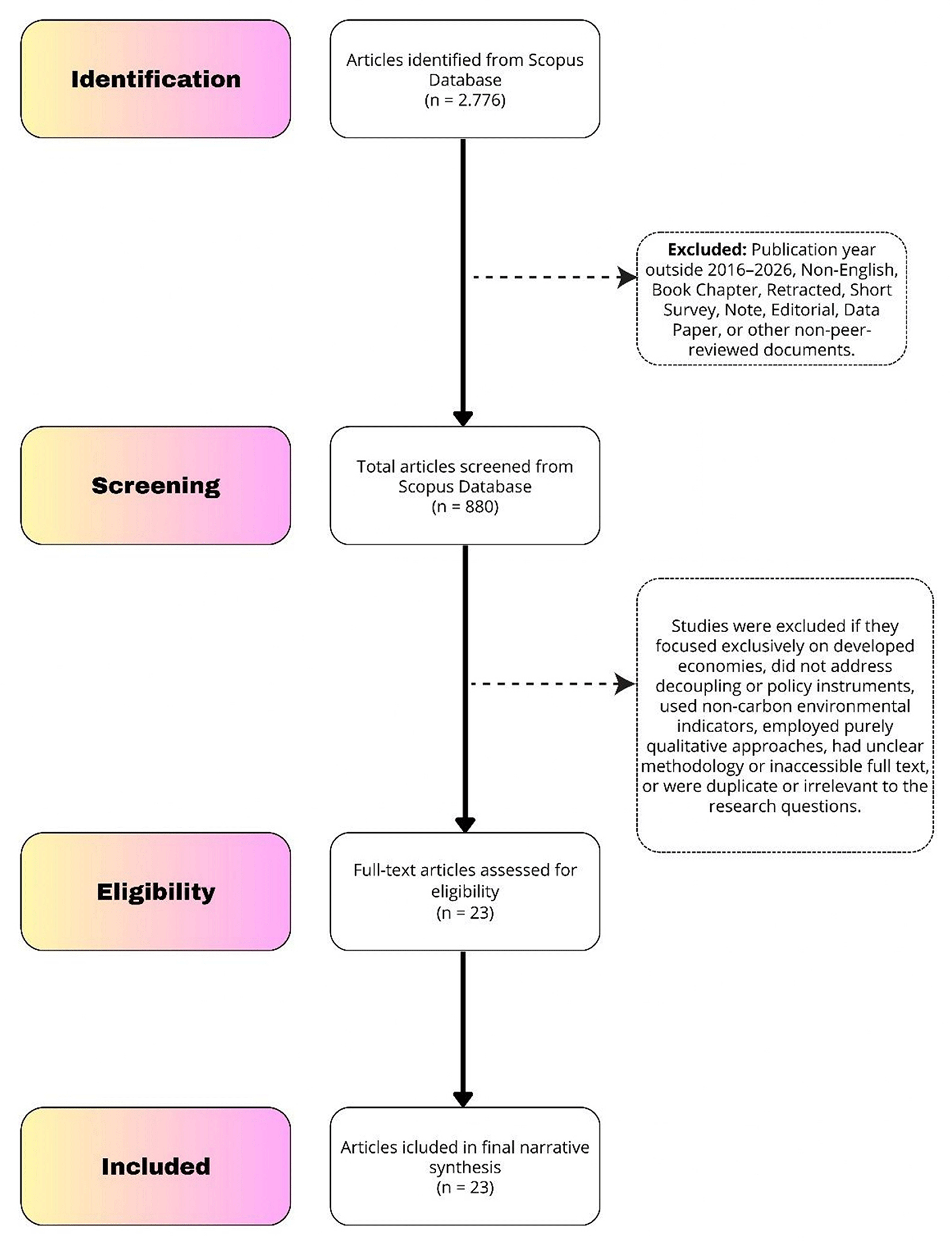
A summary of the characteristics of the 23 included studies is presented in Table 4.
| No | Author(s) & year | Geographic coverage | Sample period | Analytical method | Key variables (IV) | Key variables (DV) | Policy instruments examined |
|---|---|---|---|---|---|---|---|
| 1 | Addai et al. (2024) | N-11 countries | 1990–2022 | CS-ARDL, AMG, CCEMG | RE, IQ, EG, FDI | EF | Institutional quality, renewable energy policy |
| 2 | Alam et al. (2025) | BRICS+ (9 countries) | 2000–2023 | FMOLS, DOLS, PCA, Granger causality | CO₂, IQI, FDI, CO₂*IQI | GDP | Institutional quality, FDI regulation |
| 3 | Amin et al. (2025) | BRICS | 1995–2022 | AMG, CCEMG, D-H causality | GE, GI, TD, GF, GDP | CO₂ | Green finance, green innovation, carbon pricing |
| 4 | Bayraktar et al. (2023) | BRICS-T | 1992–2017 | Fourier ADF, Fractional Fourier ADF | EF (per capita ratio) | EF convergence | Environmental policy effectiveness |
| 5 | Guo et al. (2021) | 182 countries (global) | 1971–2014 | Threshold regression, LMDI, Tapio decoupling | GDP, population, energy intensity | Energy use | Energy efficiency policy |
| 6 | Nyangchak (2023) | Qinghai, China | 1990–2021 | Tapio decoupling, LMDI, DEA-SBM | Energy intensity, energy structure, EG, population | CO₂ | Industrial structure policy, energy transition |
| 7 | Shi & Smith (2025) | 10 developing countries | 1990–2020 | CS-ARDL, MMQR, FMOLS, DOLS | GDP, GDP2, RE, TEC, NR | EF | Environmental regulation, green technology |
| 8 | Wolde-rufael & Mulat-weldemeskel (2021) | 7 emerging economies | 1994–2015 | AMG, FMOLS, Dumitrescu-Hurlin causality | EPS, EPS2, environmental tax, energy tax, GDP, GDP2, fossil energy, RE | CO₂ | Environmental tax, EPS |
| 9 | Doğanlar et al. (2026) | Brazil, China, India, Indonesia, Mexico, Russia, Turkey | 1965–2022 | Fourier Bootstrap ARDL, Fourier Toda-Yamamoto | EPU, GDP, energy consumption | EF | Economic policy uncertainty |
| 10 | Jiang et al. (2023) | E-7 countries | 1996–2019 | Panel quantile regression (PQR), FMOLS | EPU, IQ, RE, CF, EMP, TO | GGDP | Institutional quality, EPU management |
| 11 | Bekun & Ozturk (2025) | E7 countries | 1990–2021 | PMG-ARDL, FMOLS, DOLS | Economic globalization, GDP, agriculture, RE, natural resources, non-clean energy | EF | Trade policy, renewable energy policy |
| 12 | Ridwan et al. (2026) | BRICS | 1995–2021 | Panel quantile regression, GMM, GLS, DKSE, D-H causality | GDP, education, clean energy, green technology, population | CO₂ | Education policy, clean energy transition |
| 13 | Bettarelli et al. (2025) | 191 countries (global) | 1989–2022 | OLS with interactions, IV (policy diffusion), regional FE | GDP, GDP2, CCP (carbon tax, ETS, EPS), GDPCCP, GDP2CCP | CO₂ | Carbon tax, ETS, EPS |
| 14 | Zhu et al. (2024) | N-11 countries | 1971–2022 | CS-ARDL, AMG, FMOLS, DOLS | GDP, GDP2, GDP3, EG, NAT | EF | Natural resource governance, globalization policy |
| 15 | Luo & Zhao (2025) | 15 RCEP countries | 2005–2019 | Tapio decoupling, LMDI | Energy intensity, energy structure, EG, population | CO₂ | Regional cooperation, energy efficiency |
| 16 | Sarkodie et al. (2024) | 203 countries (global) | 1990–2021 | Panel kernel smoothing, FE, KRLS, β-convergence, club convergence | 5 green growth dimensions | Green growth index | Green growth policy framework |
| 17 | Bergougui et al. (2024) | China, USA, Germany, India, Russia, Japan | 1995–2019 | Quantile-on-Quantile Regression (QQR), KRLS, Granger causality | IQ, income | CE-I | Institutional reform, income redistribution |
| 18 | Caglar et al. (2025) | BRICS | 1992–2022 | Fourier Asymmetric CS-ARDL (FACS-ARDL) | GDP, GDP2, LOW+, LOW−, URB | LCF | Low-carbon energy policy, smart urbanization |
| 19 | Iorember et al. (2024) | BRICS | 1990–2019 | CS-ARDL, Tapio decoupling, JKS Granger causality | GDP, GDP2, FD, HC, ES | CO₂ | Financialization policy, human capital development, energy security |
| 20 | Degirmenci et al. (2026) | E7 countries | 1995–2019 | AMG, CCEMG, CIPS, Westerlund cointegration | Social globalization, EPS, IQ, property rights | EF | Property rights, EPS, globalization governance |
| 21 | Adeleye et al. (2025) | E7 countries | 1988–2022 | PCSE, FGLS, quantile regression | GDP, GDP2, RE, RE2, NONREN, NONREN2, controls | CO₂, GHG | Energy transition policy, regulatory quality |
| 22 | Awosusi et al. (2022) | BRICS | 1992–2018 | MMQR, FMOLS, DOLS, FE-OLS | GDP, biomass, natural resources, globalization, gross capital formation | EF | Biomass energy policy, circular economy |
| 23 | Wang & Zhang (2020) | 182 countries (global, 4 income groups) | 1990–2015 | Tapio decoupling, panel unit root, cointegration, FMOLS | Trade openness, oil price, GDP, population, RE | CO₂ | Trade policy, renewable energy policy |
| No | Author(s) & year | Main finding on Decoupling/Green growth | Policy instruments found effective | Key determinants of environmental degradation | EKC/LCC validation | Country/Region-specific insights |
|---|---|---|---|---|---|---|
| 1 | Addai et al. (2024) | RE and IQ reduce EF; EG increases EF | Institutional quality, renewable energy policy | EG, RE, IQ | Not explicitly tested | N-11 countries need stronger institutions for RE effectiveness |
| 2 | Alam et al. (2025) | IQ weakens the negative impact of CO₂ on GDP; interaction IQ*CO₂ is positive | Institutional quality, anti-corruption, rule of law | CO₂ emissions, FDI | EKC validated | Institutional reforms are key for decoupling in BRICS |
| 3 | Amin et al. (2025) | GE, GI, GF reduce CO₂; GDP and TD increase CO₂ | Green finance, green innovation, R&D | GDP, technological diffusion | Not explicitly tested | Triple green strategy essential for BRICS decarbonization |
| 4 | Bayraktar et al. (2023) | EF convergence occurs in some BRICS-T countries | Environmental policy effectiveness | EF per capita | Not applicable | Policies are temporary in converging countries, permanent in diverging ones |
| 5 | Guo et al. (2021) | Decoupling is strong in developed, weak in developing; energy intensity is the main driver | Energy efficiency policy | GDP, population, energy intensity | Not explicitly tested | Developing countries need structural reforms for decoupling |
| 6 | Nyangchak (2023) | Shift from weak to strong decoupling; primary industry shows strong decoupling | Industrial structure policy, energy optimization | Economic growth, population | Not explicitly tested | Qinghai’s experience provides lessons for other resource-dependent regions |
| 7 | Shi & Smith (2025) | EKC validated; RE and TEC reduce EF; NR increases EF | Environmental regulation, green technology | GDP, NR, RE, TEC | EKC validated | Developing countries need differentiated policies based on EF levels |
| 8 | Wolde-rufael & Mulat-weldemeskel (2021) | Inverted U-shaped EPS-CO₂; environmental tax and energy tax reduce CO₂ | Environmental tax, EPS, energy tax | EPS, GDP, fossil energy, RE | EPS-CO₂ inverted U | Emerging economies should tighten EPS and increase environmental taxes |
| 9 | Doğanlar et al. (2026) | EPU reduces EF in India, Russia, Turkey; GDP and energy increase EF | EPU management, policy stability | GDP, energy consumption, EPU | Not explicitly tested | Reducing policy uncertainty encourages green investment |
| 10 | Jiang et al. (2023) | EPU and EMP reduce GGDP; IQ, RE, CF, TO increase GGDP | Institutional quality, RE, trade openness | EPU, EMP | Not explicitly tested | E-7 countries need stable policies and strong institutions for green growth |
| 11 | Bekun & Ozturk (2025) | Economic globalization increases EF; RE and non-clean energy reduce EF | Trade policy, RE policy | GDP, agriculture, RE, natural resources | Not explicitly tested | Prioritize environmental agreements in international trade |
| 12 | Ridwan et al. (2026) | Education and clean energy reduce CO₂; GDP, population, green technology increase CO₂ | Education policy, clean energy transition | GDP, population, green technology | Not explicitly tested | Education and clean energy are key sustainability indicators in BRICS |
| 13 | Bettarelli et al. (2025) | EKC validated; climate policies lower and flatten the EKC; carbon tax is most effective | Carbon tax, ETS, EPS | GDP, GDP2 | EKC validated | Implement carbon pricing and tighten EPS for decoupling |
| 14 | Zhu et al. (2024) | EG and GDP reduce EF; NAT increases EF; N-shaped EKC not validated | Natural resource governance, globalization policy | GDP, EG, NAT | N-shaped EKC not validated | N-11 countries need stricter environmental laws and cleaner technology |
| 15 | Luo & Zhao (2025) | Decoupling varies; Japan is best; China is stable; energy intensity is the main driver | Regional cooperation, energy efficiency | Energy intensity, economic effect, population effect | Not explicitly tested | RCEP countries need region-specific policies for decoupling |
| 16 | Sarkodie et al. (2024) | Green growth policies improve socio-economics, quality of life, natural assets, policy, and productivity | Green growth policy framework | 5 green growth dimensions | Not applicable | Green growth is multidimensional; β-convergence exists globally |
| 17 | Bergougui et al. (2024) | IQ reduces CE-I (especially in weak governance); income has inverted U-shaped effect | Institutional reform, income redistribution | IQ, income | Not explicitly tested | Strengthen IQ in weak governance contexts; promote equitable income distribution |
| 18 | Caglar et al. (2025) | GDP increases LCF; GDP2 decreases LCF (LCC not validated); negative shocks to LOW increase LCF | Low-carbon energy policy, smart urbanization | GDP, GDP2, LOW, URB | LCC not validated | BRICS need green economy transition and smart urbanization |
| 19 | Iorember et al. (2024) | EKC validated (decoupling); FD increases emissions; HC and ES reduce emissions | Financialization policy, HC development, energy security | GDP, FD, HC, ES | EKC validated | Direct financialization toward green investment; improve HC and reduce energy security risk |
| 20 | Degirmenci et al. (2026) | EPS reduces EF in India and Indonesia; IQ reduces EF in Mexico but increases in Russia and Brazil | EPS, institutional quality, property rights | Social globalization, EPS, IQ, property rights | Not explicitly tested | Country-specific policies needed for EPS and institutional reform |
| 21 | Adeleye et al. (2025) | EKC is U-shaped for RE and inverted U for NONREN; RE reduces emissions; NONREN increases | Energy transition policy, regulatory quality | GDP, RE, NONREN | EKC and EKH validated | Prioritize RE transition and improve regulatory quality in E7 |
| 22 | Awosusi et al. (2022) | GDP, natural resources, gross capital formation increase EF; biomass and globalization reduce EF | Biomass energy policy, circular economy | GDP, biomass, natural resources, globalization | Not explicitly tested | Promote biomass energy, circular economy, and green exploration in BRICS |
| 23 | Wang & Zhang (2020) | Trade openness reduces CO₂ in HI and UMI, increases in LI; RE and oil price reduce CO₂ | Trade policy, RE policy | Trade openness, GDP, population, RE | Not explicitly tested | Rich countries: strengthen Paris commitments; poor countries: apply clean technology in trade |
The studies were published between 2021 and 2026, with the majority published after 2023, reflecting the growing academic interest in decoupling and green growth in recent years. In terms of geographic coverage, the studies predominantly examined BRICS nations (Addai et al., 2024; Alam et al., 2025; Amin et al., 2025; Awosusi et al., 2022; Bayraktar et al., 2023; Caglar et al., 2025; Iorember et al., 2024; Ridwan et al., 2026), E7 economies (Adeleye et al., 2025; Bekun & Ozturk, 2025; Degirmenci et al., 2026; Jiang et al., 2023), N-11 countries (Addai et al., 2024; Zhu et al., 2024), and global panels with developing country disaggregation (Bettarelli et al., 2025; Guo et al., 2021; Sarkodie et al., 2024; Wang & Zhang, 2020). The remaining studies covered specific developing countries such as China (Nyangchak, 2023), India, Russia, and Turkey (Doğanlar et al., 2026), and regional groups including RCEP (Luo & Zhao, 2025). This distribution reflects the strategic importance of large emerging economies in global emissions trajectories (Chu et al., 2023).
The sample periods ranged from 1965 to 2023, with most studies covering periods of 20 to 30 years. The majority of studies employed panel data econometric methods (n = 20), with three studies using time-series methods for individual country analysis. The most frequently used analytical methods were CS-ARDL (Addai et al., 2024; Iorember et al., 2024; Shi & Smith, 2025; Zhu et al., 2024), FMOLS and DOLS (Alam et al., 2025; Awosusi et al., 2022; Wang & Zhang, 2020), quantile regression and MMQR (Adeleye et al., 2025; Awosusi et al., 2022; Ridwan et al., 2026), and Tapio decoupling with LMDI decomposition (Guo et al., 2021; Luo & Zhao, 2025; Nyangchak, 2023). The dependent variables included CO₂ emissions per capita (n = 11), ecological footprint (n = 8), load capacity factor (n = 2), and green growth index (n = 2). Independent variables consistently included economic growth (GDP per capita), renewable energy, and one or more policy instruments.
Across the 23 included studies, the overall methodological quality was high. All studies demonstrated clear research aims, appropriate study designs, and appropriate data sources. All studies provided clear definitions of variables and clearly presented their results. The majority of studies (n = 20) used appropriate analytical methods with explicit handling of endogeneity through instrumental variables, panel methods, or causality tests. All studies conducted robustness checks, including alternative estimators, sub-sample analysis, or machine learning validation.
Regarding specific methodological concerns, all studies addressed cross-sectional dependence where relevant, and most employed second-generation panel methods (CS-ARDL, CCEMG, AMG) to account for this issue. Endogeneity was addressed through lagged variables, instrumental variables, or system GMM in the majority of studies. All studies presented their results clearly with appropriate statistical significance reporting. Based on the aggregate assessment, all 23 studies were rated as having Low risk of bias, indicating that the evidence base for the synthesis is methodologically sound and reliable (Chandler et al., 2019).
A consistent finding across multiple studies is the effectiveness of environmental taxes and carbon pricing in reducing CO₂ emissions and ecological footprints. Wolde-rufael & Mulat-weldemeskel (2021) examined seven emerging economies and found that environmental taxes reduce CO₂ emissions, with energy taxes being particularly effective (effect sizes ranging from −0.112 to −0.140). The study also found that the relationship between environmental policy stringency and emissions follows an inverted U-shape, suggesting that policies require time to become effective. This finding is corroborated by Bettarelli et al. (2025), who analyzed 191 countries and demonstrated that carbon pricing instruments lower and flatten the Environmental Kuznets Curve, indicating that market-based policies accelerate decoupling.
The magnitude of the effect varies across studies. Bettarelli et al. (2025) report that a 1 percent increase in carbon tax stringency reduces the income elasticity of emissions by approximately 0.34 percentage points. Amin et al. (2025) find that green finance reduces emissions by 0.66 percent for a 1 percent increase in green credit allocation in BRICS economies. These effect sizes suggest that fiscal instruments have meaningful emissions-reduction potential, though their effectiveness depends on the level of stringency and coverage.
Green finance and green innovation emerge as critical enablers of emissions reductions in developing countries. Amin et al. (2025) demonstrate that green energy, green innovation, and green finance collectively form a “triple green strategy” that significantly reduces CO₂ emissions in BRICS economies. The study shows that green innovation reduces emissions by 0.38 percent for a 1 percent increase in patent activity, while green finance reduces emissions by 0.66 percent. This finding is reinforced by Ridwan et al. (2026), who identify clean energy and education as key sustainability indicators in BRICS, with clean energy reducing emissions by 0.42 to 0.03 percent across different quantiles.
The transition to renewable and low-carbon energy sources is consistently associated with improved environmental outcomes across all included studies. Addai et al. (2024) find that renewable energy reduces ecological footprint by 0.37 percent in N-11 countries. Awosusi et al. (2022) demonstrate that biomass energy reduces ecological footprint by 0.61 percent in BRICS economies. Adeleye et al. (2025) show that renewable energy reduces CO₂ emissions by 0.75 percent, while non-renewable energy increases emissions by 82.45 percent, highlighting the stark contrast between clean and dirty energy sources. Caglar et al. (2025) find that negative shocks to low-carbon energy consumption improve the load capacity factor, while positive shocks have insignificant effects, suggesting that the effectiveness of low-carbon energy depends on existing infrastructure and policy complementarity.
Institutional quality emerges as a critical determinant of decoupling success. Addai et al. (2024) find that institutional quality reduces ecological footprint by 0.13 percent in N-11 countries. Alam et al. (2025) demonstrate that institutional quality moderates the growth-emissions nexus in BRICS, with the negative impact of CO₂ on GDP being weaker in countries with stronger institutions. The interaction between institutional quality and emissions is positive and significant, indicating that effective institutions can decouple growth from environmental degradation.
However, the relationship is not uniform across countries. Degirmenci et al. (2026) find that environmental policy stringency improves environmental sustainability in India and Indonesia but has no effect in other E7 countries. Similarly, institutional quality improves environmental outcomes in Mexico but exacerbates them in Russia and Brazil. This heterogeneity suggests that institutional quality does not automatically translate into better environmental outcomes; rather, its effect depends on whether institutional capacity is directed toward sustainability objectives or economic expansion priorities. In resource-dependent economies, institutional reforms may primarily aim to secure property rights and attract foreign investment in extractive industries, thereby increasing ecological pressure.
Property rights play a complex role in environmental sustainability. Degirmenci et al. (2026) find that stronger property rights reduce environmental sustainability in Mexico, likely due to the country’s manufacturing base integrated into global value chains. In energy-intensive sectors such as automotive, cement, and petrochemicals, strengthened property rights facilitate capital accumulation and production capacity in fossil-fuel-dependent industries. This suggests that property rights protection, while important for investment security, may exacerbate environmental degradation if not accompanied by environmental conditionalities and low-carbon technology transitions.
Economic policy uncertainty is found to have paradoxical effects on environmental outcomes. Doğanlar et al. (2026) show that economic policy uncertainty reduces ecological footprint in India, Russia, and Turkey, as uncertain conditions may delay investment in emissions-intensive industries (effect sizes ranging from −0.017 to −0.040). Jiang et al. (2023) find that economic policy uncertainty reduces green growth in E-7 countries (coefficient − 0.610), suggesting that policy instability discourages investment in green technologies.
The effects of trade openness on decoupling are highly heterogeneous across income levels, a finding that underscores the importance of disaggregated analysis. Wang & Zhang (2020) demonstrate that trade openness reduces CO₂ emissions in high-income and upper-middle-income countries (coefficients −0.167 and − 0.048 respectively) but has no significant impact in lower-middle-income countries and increases emissions in low-income countries (coefficient + 0.357). This pattern supports the pollution haven hypothesis, which suggests that countries with weaker environmental regulations attract pollution-intensive industries.
Economic globalization is consistently found to increase ecological footprints in developing countries. Bekun & Ozturk (2025) show that economic globalization increases ecological footprint by 0.61 percent in E7 countries, with GDP and agriculture also contributing positively. Degirmenci et al. (2026) find that social globalization negatively impacts environmental sustainability in the panel and Russia, reflecting the adoption of Western consumption patterns with limited waste management capacity Zhu et al. (2024) find that economic globalization reduces ecological footprint in N-11 countries (coefficient − 0.03), suggesting that globalization can have environmentally beneficial effects when accompanied by strong environmental governance.
The role of renewable energy in mediating the trade-environment nexus is highlighted in several studies. Wang & Zhang (2020) show that renewable energy reduces CO₂ emissions by 0.16 percent globally, with this effect being consistent across all income groups. The interaction between trade openness and renewable energy suggests that trade can facilitate technology transfer in clean energy if accompanied by appropriate policies.
The validity of the Environmental Kuznets Curve hypothesis is supported in several studies but contested in others. Bettarelli et al. (2025) confirm the EKC for a global panel of 191 countries, with a turning point of approximately USD 25,000 per capita. However, the turning point is highly heterogeneous across countries, with advanced economies experiencing decoupling at income levels of USD 35,000–50,000, while emerging economies such as India and China remain on the upward-sloping segment of the curve. This heterogeneity is confirmed by Shi & Smith (2025), who find that the EKC is validated for ten developing countries when ecological footprint is used as the dependent variable.
Caglar et al. (2025), however, find that the load capacity curve is not validated for BRICS economies, suggesting that economic growth continues to degrade environmental quality even after reaching moderate income levels. This finding challenges the EKC hypothesis and highlights the importance of policy intervention in shaping the growth-environment relationship. The rejection of the LCC hypothesis in BRICS may reflect the region’s continued reliance on fossil fuels and the insufficient transition to low-carbon energy.
The decoupling status varies considerably across countries and regions. Luo & Zhao (2025) show that Japan demonstrates strong decoupling, while China shows weak decoupling, and countries such as Laos and Cambodia show expansive negative decoupling. The proportion of strong decoupling across RCEP member countries is approximately 21 percent, while weak decoupling accounts for 31 percent. Developed countries generally exhibit better decoupling status than developing countries, with energy intensity identified as the primary driver of decoupling.
Nyangchak (2023) finds that Qinghai Province in China has shifted from weak to strong decoupling, with primary industry showing strong decoupling and secondary and tertiary industries showing weak decoupling. This finding demonstrates that decoupling is possible at the sub-national level when supported by appropriate policies and structural transformation. The overall mean efficiency of decarbonization was 0.95, led by the tertiary industry.
Bayraktar et al. (2023) examines the convergence of per capita ecological footprints in BRICS-T countries and find that convergence occurs in Russia and Turkey according to conventional tests, in China and Russia according to Fourier unit root tests, and in Brazil and China according to fractional frequency tests. This finding suggests that environmental policies can facilitate convergence, but the effects vary across countries. The presence of convergence indicates that policies are effective in reducing the gap between countries, though the absence of convergence in other countries suggests that policies may be permanent rather than temporary in their effects.
The synthesis of 23 empirical studies provides robust evidence that fiscal and market-based policy instruments particularly carbon taxes, environmental taxes, and green finance are effective in reducing CO₂ emissions and ecological footprints in developing countries. This finding aligns with the theoretical prediction of the Pigouvian approach to environmental externalities, which posits that taxing polluting activities internalizes the social costs of emissions and incentivizes cleaner production technologies (Pigou, 2017). The superior effectiveness of carbon taxes compared to other instruments is consistent with the findings of previous reviews, which have highlighted the cost-efficiency of carbon pricing as a mitigation tool (Haites, 2018; Tol, 2018).
The effectiveness of green finance in enabling emissions reductions suggests that access to capital for clean investments is a critical constraint in developing countries. The estimated effect sizes, ranging from 0.44 to 0.66 percent reduction in emissions per 1 percent increase in green credit allocation (Amin et al., 2025), indicate that financial sector reform can meaningfully contribute to decoupling. However, the effectiveness of green finance depends on complementary conditions, including institutional quality and regulatory frameworks that ensure funds are directed toward genuinely sustainable projects (Degirmenci et al., 2026).
The finding that environmental policy stringency follows an inverted U-shaped relationship with emissions (Wolde-rufael & Mulat-weldemeskel, 2021) suggests that stringent policies require time to become effective, and that initial stringency may impose costs without immediate benefits. This aligns with the Porter hypothesis, which proposes that well-designed environmental regulation can stimulate innovation and ultimately improve competitiveness (Porter & Linde, 1995). However, the time lag between policy implementation and environmental improvement highlights the need for sustained policy commitment and patience from policymakers and stakeholders.
The moderating role of institutional quality in the growth-emissions nexus is a consistent and important finding across multiple studies. Strong institutions characterized by effective regulatory quality, rule of law, and control of corruption enhance the decoupling effect of environmental policies (Addai et al., 2024; Alam et al., 2025). This finding is consistent with institutional economics theory, which emphasizes the importance of governance structures in shaping economic and environmental outcomes (Acemoglu & Robinson, 2013; North, 1990).
However, the heterogeneity in institutional effects across countries is notable. Institutional quality improves environmental outcomes in Mexico but exacerbates them in Russia and Brazil (Degirmenci et al., 2026). This counterintuitive finding may reflect the growth-oriented nature of institutional strengthening in resource-dependent economies. In such contexts, institutional reforms may primarily aim to secure property rights and attract foreign investment in extractive industries, thereby increasing ecological pressure (Bergougui et al., 2024). This suggests that institutional reforms need to be explicitly aligned with environmental objectives rather than relying on the assumption that institutional improvement automatically translates into environmental improvement.
The positive impact of institutional quality in some countries and negative impact in others highlights the importance of context-specific policy design. There is no one-size-fits-all approach to institutional reform for environmental sustainability. The direction of institutional reform matters as much as the level of institutional quality. Countries should pursue institutional reforms that explicitly integrate environmental performance criteria rather than primarily supporting resource-based economic activities (Degirmenci et al., 2026).
The heterogeneous effects of trade openness and globalization on environmental outcomes across income levels constitute one of the most important findings of this review. Trade openness reduces emissions in high-income and upper-middle-income countries but increases emissions in low-income countries (Wang & Zhang, 2020). This pattern supports the pollution haven hypothesis, which suggests that countries with weaker environmental standards attract pollution-intensive industries (Copeland & Taylor, 2004). The effect size difference is substantial, with trade openness reducing emissions by 0.17 percent in high-income countries but increasing emissions by 0.36 percent in low-income countries.
This finding has important policy implications. For low-income countries, trade liberalization without accompanying environmental safeguards may exacerbate environmental degradation. Policymakers in low-income countries should consider imposing environmental conditionalities on trade agreements and ensuring that industrial policies prioritize clean technologies (Bekun & Ozturk, 2025). For high-income countries, the role of trade in reducing emissions is a double-edged sword; it may reflect the offshoring of carbon-intensive production to developing countries, rather than genuine decoupling through innovation and efficiency improvements (Zhu et al., 2024).
The consistent finding that economic globalization increases ecological footprints in emerging economies (Bekun & Ozturk, 2025) suggests that the benefits of economic integration come with environmental costs. The scale effect of globalization increased production and consumption appears to outweigh the technology effect access to cleaner technologies in developing countries. This underscores the need for strong environmental governance frameworks in countries undergoing rapid integration into global markets (Degirmenci et al., 2026).
The findings of this review challenge the deterministic interpretation of the Environmental Kuznets Curve as an automatic outcome of economic development. Instead, the evidence supports a policy-contingent view of decoupling, in which environmental improvement depends on deliberate policy choices, institutional capacity, and the nature of growth (Bettarelli et al., 2025; Shi & Smith, 2025). The rejection of the load capacity curve hypothesis in BRICS economies (Caglar et al., 2025), despite significant economic growth, underscores the importance of policy intervention in shaping the growth-environment relationship.
The theoretical contribution of this review lies in its synthesis of diverse empirical evidence within a coherent framework that identifies the conditions under which decoupling is achievable. The review demonstrates that effective decoupling requires a combination of stringent fiscal instruments (carbon taxes, environmental taxes), institutional reforms (regulatory quality, anti-corruption), and targeted investments (green finance, renewable energy). No single policy instrument is sufficient; rather, a portfolio of mutually reinforcing policies is necessary (Amin et al., 2025; Iorember et al., 2024).
From a policy perspective, the findings suggest that developing countries can achieve decoupling without sacrificing economic growth, provided that they adopt appropriate policy mixes and strengthen institutional capacity. The success stories documented in the review such as the strong decoupling achieved by Russia and South Africa (Iorember et al., 2024; Luo & Zhao, 2025) and the stable decoupling of China (Nyangchak, 2023) demonstrate that decoupling is feasible in resource-dependent economies when supported by strong policy commitment and institutional reform. However, the context-dependent nature of policy effectiveness cautions against simplistic policy transfer. Policies that work in one country may not be effective in another, depending on institutional capacity, industrial structure, and energy mix (Addai et al., 2024; Degirmenci et al., 2026).
The included studies exhibit considerable methodological heterogeneity, which both enriches the evidence base and complicates synthesis. The widespread use of second-generation panel methods (CS-ARDL, CCEMG, AMG) reflects the growing awareness of cross-sectional dependence and slope heterogeneity in environmental economics (Addai et al., 2024; Iorember et al., 2024; Shi & Smith, 2025). These methods provide more reliable estimates than first-generation approaches and are generally appropriate for the complex, interconnected nature of global environmental and economic systems.
However, several methodological limitations persist. First, most studies rely on aggregate national-level data, which obscures sub-national and sectoral heterogeneity that may be policy-relevant. Future research should explore decoupling at finer spatial scales and across different economic sectors (Nyangchak, 2023). Second, the focus on linear and quadratic relationships may fail to capture non-linear threshold effects and structural breaks, which are likely to be important in transitions from high-carbon to low-carbon development pathways (Caglar et al., 2025).
The review identifies several important research gaps. First, the role of green finance in enabling decoupling is understudied, with only a few studies examining this relationship (Amin et al., 2025). Given the scale of investment required for energy transitions, green finance merits greater research attention. Second, the behavioral and political economy dimensions of policy implementation are largely absent from the literature, which tends to focus on policy design rather than implementation effectiveness. Third, the interactions between different policy instruments synergies and trade-offs are underexplored, despite their practical importance for policy design (Degirmenci et al., 2026).
This systematic literature review synthesizes empirical evidence from 23 studies on the effectiveness of policy instruments in decoupling economic growth from environmental degradation in developing and emerging economies. The review finds that fiscal and market-based policy instruments particularly carbon taxes, environmental taxes, and green finance are consistently associated with emissions reductions and improved ecological sustainability. Institutional quality and regulatory stringency moderate the effectiveness of these instruments, with strong institutions enhancing decoupling outcomes. The effectiveness of trade openness and globalization is highly context-dependent, with positive effects in high-income developing countries but negative effects in low-income countries, supporting the pollution haven hypothesis.
The review also finds that the Environmental Kuznets Curve is validated in some contexts but not others, with the turning point being highly heterogeneous across countries. The rejection of the load capacity curve hypothesis in BRICS economies suggests that economic growth alone does not guarantee environmental improvement. Renewable energy and clean energy transitions are consistently associated with improved environmental outcomes, while non-renewable energy exacerbates environmental degradation.
This review has several limitations that should be acknowledged. First, the search was limited to Scopus-indexed, English-language, peer-reviewed articles published between 2016 and 2026. Grey literature, non-English publications, and studies outside this period may contain additional relevant evidence. Second, the methodological heterogeneity of included studies complicates direct comparison and limits the ability to conduct quantitative meta-analysis. Third, publication bias may result in the overrepresentation of studies with significant findings, potentially overstating the effectiveness of policy instruments. Fourth, the reliance on aggregate national-level data in most studies limits the ability to identify sub-national and sectoral patterns that may be policy-relevant.
Based on the synthesis of evidence, the following policy recommendations are proposed. First, policymakers in developing countries should prioritize the implementation of stringent environmental regulations, including carbon pricing and environmental taxes, as these instruments are consistently associated with emissions reductions. The effectiveness of carbon pricing depends on its stringency and coverage, suggesting that policies should be progressively tightened over time.
Second, institutional reforms should explicitly integrate environmental performance criteria to ensure that institutional strengthening contributes to sustainability rather than primarily supporting resource-based economic growth. This includes strengthening regulatory quality, rule of law, and control of corruption, while also establishing environmental conditionalities for investment and property rights protection.
Third, countries should promote renewable energy transitions through a combination of fiscal incentives, regulatory mandates, and green finance mechanisms. The triple green strategy of green energy, green innovation, and green finance should be pursued simultaneously to maximize decoupling benefits.
Fourth, trade policies should incorporate environmental safeguards to prevent the pollution haven effect. Low-income countries, in particular, should consider environmental conditionalities in trade agreements and industrial policies that prioritize clean technologies. International cooperation and technology transfer are essential to ensure that trade liberalization contributes to rather than undermines environmental sustainability.
For future research, the following priority areas are identified: (1) investigating non-linear and threshold effects of policy stringency using advanced econometric methods; (2) exploring the role of green finance in enabling decoupling across different contexts; (3) examining decoupling at sectoral and sub-national levels to identify policy-relevant heterogeneity; (4) applying machine learning and dynamic simulation methods to model policy scenarios under uncertainty; and (5) investigating the behavioral and political economy dimensions of policy implementation to understand why and how policies succeed or fail in practice.
Not applicable. This systematic literature review did not involve any direct human or animal subjects, nor did it collect primary data requiring ethical approval. All analyses were based on previously published peer-reviewed articles obtained from the Scopus database. The review followed the PRISMA 2020 guidelines for systematic reviews and did not require informed consent from participants as no human subjects were involved in the research process. The included studies were original empirical research published in academic journals and were accessed through institutional library subscriptions and open access platforms.
| Views | Downloads | |
|---|---|---|
| F1000Research | - | - |
|
PubMed Central
Data from PMC are received and updated monthly.
|
- | - |
Provide sufficient details of any financial or non-financial competing interests to enable users to assess whether your comments might lead a reasonable person to question your impartiality. Consider the following examples, but note that this is not an exhaustive list:
Sign up for content alerts and receive a weekly or monthly email with all newly published articles
Already registered? Sign in
The email address should be the one you originally registered with F1000.
You registered with F1000 via Google, so we cannot reset your password.
To sign in, please click here.
If you still need help with your Google account password, please click here.
You registered with F1000 via Facebook, so we cannot reset your password.
To sign in, please click here.
If you still need help with your Facebook account password, please click here.
If your email address is registered with us, we will email you instructions to reset your password.
If you think you should have received this email but it has not arrived, please check your spam filters and/or contact for further assistance.

Comments on this article Comments (0)