Keywords
meropenem, sepsis, a priori dosing, population pharmacokinetics, model-informed precision dosing, resource-limited settings

meropenem, sepsis, a priori dosing, population pharmacokinetics, model-informed precision dosing, resource-limited settings
Sepsis and septic shock are among the leading causes of in-hospital mortality worldwide, accounting for approximately 11 million deaths annually.1 In Indonesia the burden is disproportionately severe, where ICU mortality among patients with sepsis has been reported at nearly 69%.2 These figures underline the need to optimize antibiotic therapy in critically ill patients, in whom pharmacological failure can directly determine survival.
Meropenem is reported as the most frequently prescribed Reserve antibiotic.3 As a time-dependent β-lactam, its efficacy depends on maintaining free drug concentrations above the pathogen minimum inhibitory concentration (MIC), with current guidelines recommending 100% fT>MIC in critically ill patients.4 Achieving this target is challenging because sepsis-related physiological alterations substantially affect drug pharmacokinetics, making therapeutic drug monitoring (TDM) the recommended standard of care.4
TDM is not uniformly implemented in low- and middle-income countries (LMICs). Nearly 40% of ICU clinicians from LMICs report no access to TDM,5 while most population pharmacokinetic (popPK) have been developed in high-income (HICs) settings.6 In Indonesia TDM is largely unavailable and carbapenem resistance in Acinetobacter baumannii has reached 59% nationally, narrowing the options further.7
Within the model-informed precision dosing (MIPD) framework, dosing individualisation can be pursued at two levels. The more informative approach, a posteriori or Bayesian forecasting, refines predictions by combining patient covariate data with at least one measured drug concentration, allowing the population model to be updated toward the individual patient's actual pharmacokinetics.8,9 The simpler form, a priori dosing, works from patient characteristics alone: the individual random effects are fixed at zero (η = 0), and no drug concentrations are needed to generate predicted exposure profiles.8,9 While this yields predictions that are inherently less precise because between-patient variability unexplained by the covariates is not captured, a priori dosing is not merely a lesser substitute. It remains demonstrably more rational than fixed empirical regimens for patients whose renal function, haemodynamic status, and protein levels deviate markedly from average, which is precisely the profile of the critically ill.5,10 When TDM infrastructure is absent, it is the only workable model-based strategy available at the bedside.10
An external existing model can be applied when source and target populations share the relevant clinical and anthropometric features and use the same covariates.9 The two-compartment model of Boonpeng et al., 11 built in 52 critically ill Thai adults, fits well because it comes from a comparable Southeast Asian population and relies on routinely available covariates.11
This study aimed to evaluate the operational feasibility of implementing an a priori covariate-based dosing workflow using an externally developed popPK model in Indonesian critically ill patients, and to explore the association between predicted attainment and clinical outcomes as an exploratory hypothesis-generating analysis. Given the absence of TDM data, these analyses should be considered exploratory rather than a formal validation of model performance.
This was a retrospective pharmacometrics cohort study using an in-silico approach at a tertiary academic centre in Yogyakarta with an active clinical pharmacy service and around 20-bed medical-surgical ICU. Data for January to December 2024 were drawn from the electronic hospital information system following approval from the institutional ethics committee, as further described in the Ethical Considerations section. As this was a retrospective study using routinely collected de-identified medical record data with no direct participant contact or intervention, the requirement for informed consent was waived by the institutional ethics committee. All simulations and analysis were run in RStudio 2025.09.1 on R version 4.5.1.
Adults (≥18 years) admitted with sepsis or septic shock (Sepsis-3) who received intravenous meropenem were eligible. Inclusion required documented sepsis or septic shock, intravenous meropenem for ≥24 h, a serum creatinine within ±24 h of initiation, and a culture with documented meropenem susceptibility (susceptible or resistant). Patients were excluded for carbapenem hypersensitivity, renal replacement therapy at initiation or within the first 72 h, pregnancy or breastfeeding, or death within 72 h from a non-infectious cause. Total sampling was used, and analytical feasibility was checked against the events-per-variable rule of ≥10 events per covariate.12
Individual pharmacokinetic parameters were derived from the two-compartment linear-elimination model of Boonpeng et al.11 (Songklanagarind Hospital ICU, Thailand; n = 52). The covariate equations applied to each patient i were:
CrCL was estimated with the Cockcroft–Gault equation using ideal body weight (Devine formula). Because no measured meropenem concentrations were available for Bayesian estimation, the individual random effect was fixed at η_i = 0, yielding covariate-driven typical-population (a priori) predictions. The reported between-subject variability for CL in the source model (60.5%) is therefore not propagated into the predictions, which is acknowledged as a source of overconfidence in the classification.
Serum albumin measured within ±48 h of meropenem initiation was available for 42 of 69 patients (60.9%); the remaining 27 (39.1%) were imputed by multiple imputation by chained equations (MICE; mice package, m = 20 imputed datasets, predictive mean matching) using age, sex, BMI, serum creatinine, septic shock status and baseline SOFA score as predictors. Estimates were pooled across the 20 datasets. Convergence and plausibility were verified by trace plots over 20 iterations and by density overlap of observed versus imputed values; the missingness pattern was most strongly associated with baseline SOFA score and serum creatinine, supporting the plausibility of a Missing at Random assumption conditional on observed covariates.
Individual pathogen MICs were not recorded, so MICs were assigned from subpopulation MIC50 values of the ATLAS surveillance database (Asia–Pacific, 2020–2024; adult ICU isolates). The MIC50 of the relevant subpopulation was used for the primary analysis and the MIC90 for the sensitivity analysis, computed separately within the susceptible and resistant subpopulations. For patients with multiple isolates, the highest MIC was used.
Steady-state concentration–time profiles were simulated with the deSolve package in R version 4.5.1 (RStudio 2025.09.1) using each patient’s actual prescribed regimen (dose, infusion duration and dosing interval). Profiles were integrated to steady state (≈ 5 × terminal half-life) at 0.01-h resolution. The free fraction was taken as f_u = 0.98 (free concentration = total × 0.98), consistent with the minimal protein binding of meropenem.13 The target of 100% fT > MIC required the free concentration to remain above the assigned MIC for the entire dosing interval; patients were classified as adequate (≥100% fT > MIC) or inadequate (<100%).
The primary outcome was a composite 72-h treatment failure: any of antibiotic escalation (a broader agent added or substituted, or a documented meropenem dose increase), death within 72 h, fever (≥38.0°C) at hour 72, or worsening organ dysfunction (ΔSOFA ≥2 from baseline at hour 72). For patients who died of infection before hour 72, the mortality component was recorded, and the others were not assessed.
Continuous variables were tested for normality (Shapiro–Wilk) and summarized as median [IQR]; categorical variables as n (%). Patient characteristics were compared with the source population descriptively only (medians/proportions), with no hypothesis testing. The 95% CI for target attainment used the exact
Clopper–Pearson method. Between-subgroup comparisons (adequate versus inadequate; imputed versus observed albumin) used the Mann–Whitney U or t-test for continuous variables and Fisher’s exact or Pearson χ2 for categorical variables. Risk ratios with 95% CIs were obtained with epitools and validated by non-parametric bootstrap resampling (B = 2000) with bias-corrected and accelerated (BCa) intervals. Multivariable analysis used Firth penalized logistic regression (logistf ) adjusted for baseline SOFA score and septic shock status. A two-sided P < 0.05 was considered significant. Analyses used the mice, epitools, boot, logistf and car packages in R.
Of 292 adults admitted with sepsis or septic shock in 2024, 221 (75.7%) received meropenem, and 69 met all criteria ( Figure 1). The commonest reason for exclusion was the lack of a culture with susceptibility testing (n = 61), which reflects routine ICU practice in Indonesia, where broad-spectrum empirical therapy usually precedes microbiological confirmation.
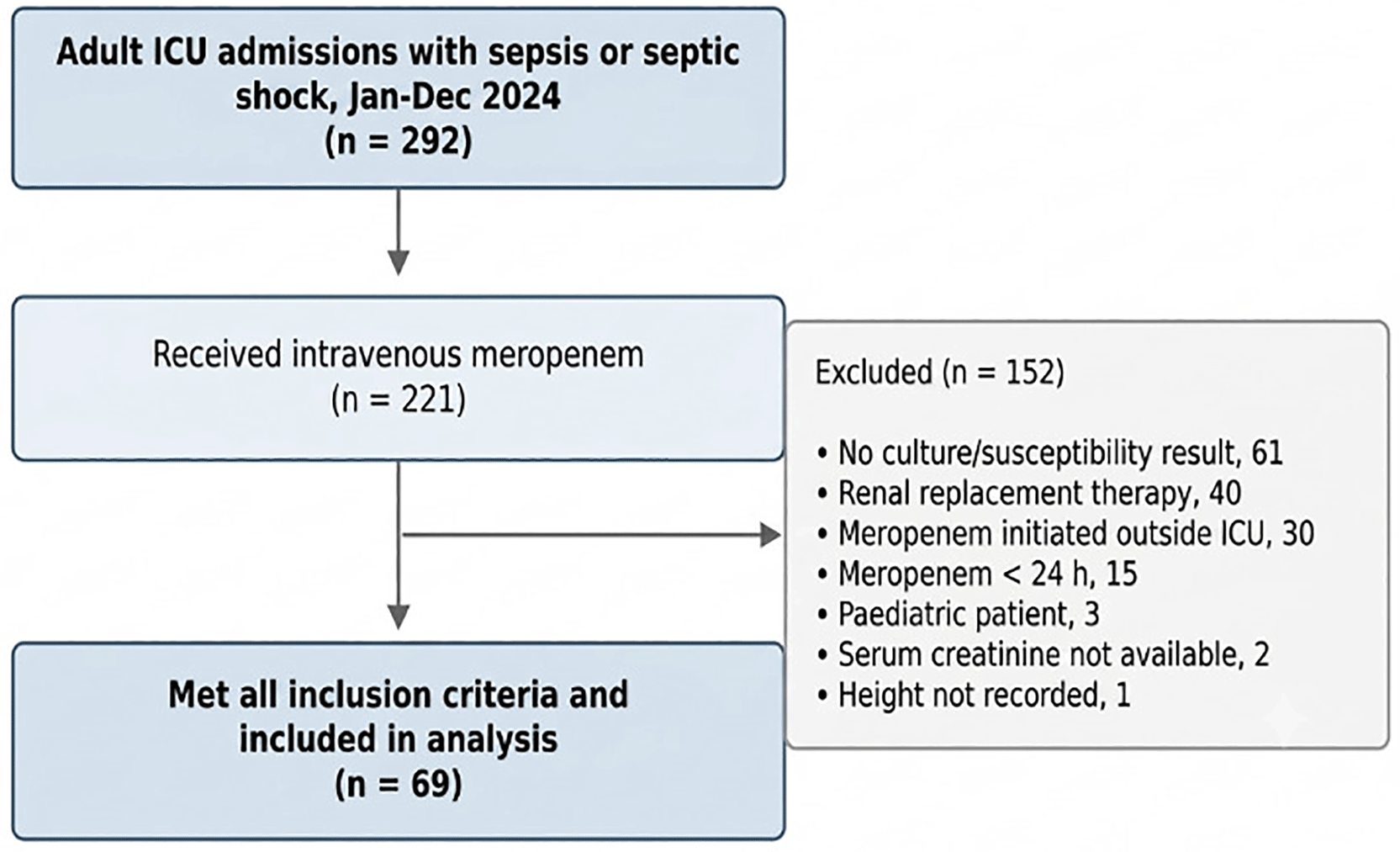
Patients were screened from admission between January and December 2024. ICU, intensive care unit.
The cohort was mostly male (59.4%), with a median age of 67 years [IQR 60.0–73.0]. The findings reflect the older ICU study population. Illness was severe (median APACHE II 24 [20–28]; median baseline SOFA 98–12); 52.2% had septic shock and 79.7% needed mechanical ventilation. Most had reduced renal function (median CrCL 45.5 mL/min [29.1–75.5]), and only 2.9% met ARC criteria. Hypoalbuminaemia was common (median albumin 2.5 g/dL [2.0–2.9]).
Against the Boonpeng et al.11 source population, the covariates that drive the model, such as CrCL (45.5 versus 44.6 mL/min), serum albumin (2.5 versus 2.4 g/dL) and proportion male (59.4% versus 59.6%) matched closely, which supports using the external model. Larger differences appeared in body weight (50.6 versus 61.5 kg), BMI (19.9 versus 22.9 kg/m2) and severity (APACHE II 24 versus 20; septic shock 52.2% versus 34.6%; Table 1). Body weight is not in the model and does not affect predictions. However, the greater severity, implies wider between-patient variability through the shock term on Vp.
| Characteristic | Study population (n = 69) | Boonpeng et al.11 (n = 52) |
|---|---|---|
| Age (years) | 67 [60.0–73.0] | 63 [48.0–74.0] |
| Male sex, n (%) | 41 (59.4) | 31 (59.6) |
| Body weight (kg) | 50.6 [43.0–62.0] | 61.5 [53.4–69.8] |
| BMI (kg/m2) | 19.9 [17.4–23.9] | 22.9 [20.6–25.4] |
| APACHE II score | 24 [20–28] | 20 [14–23] |
| Baseline SOFA score | 9 [8–12] | N/A |
| Septic shock, n (%) | 36 (52.2) | 18 (34.6) |
| Mechanical ventilation, n (%) | 55 (79.7) | 46 (88.5) |
| CrCL (mL/min) | 45.5 [29.1–75.5] | 44.6 [24.2–80.7] |
| Serum albumin (g/dL)‡ | 2.5 [2.0–2.9] | 2.4 [2.0–2.9] |
| Hypoalbuminaemia, n (%)‡ | 18 (42.9) | 28 (53.8) |
| ARC (CrCL >130 mL/min), n (%) | 2 (2.9) | N/A |
| ICU length of stay (days) | 18 [8–29] | N/A |
‡ Calculated in the 42 patients with observed albumin within ±48 h. APACHE II, Acute Physiology and Chronic Health Evaluation II; ARC, augmented renal clearance; BMI, body mass index; CrCL, Cockcroft–Gault creatinine clearance; N/A, not reported in the source study; SOFA, Sequential Organ Failure Assessment.
Individual estimates varied widely, matching the clinical mix ( Table 2). Median clearance was 4.79 L/h [3.44–7.27], spanning more than six-fold (2.21–13.58 L/h) with renal function, which ranged across CrCL 14.3–152.0 mL/min. This covariate was consistent with the linear covariate structure of the source model. The terminal half-life ran from 1.67 to 11.58 h, capturing both rapid elimination near normal renal function and slow clearance in severe AKI. Central volume followed albumin (median Vc 11.10 L [10.49–11.67]; range 8.27–14.50 L), and peripheral volume rose with septic shock, typical Vp 10.3 L without shock versus 21.6 L with it, more than doubling the distribution volume.
Under their actual regimens, 54 patients (78.3%; 95% CI 66.7–87.3%) were predicted to reach 100% fT>MIC and 15 (21.7%; 95% CI 12.7–33.3%) to fall short ( Table 3). The %fT>MIC distribution was sharply bimodal, with patients
clustered near 100% or near 0% and only four in between (24.6%, 26.9%, 54.4% and 71.9%; Figure 2). The split came from MIC imputation: all 15 inadequate patients had been assigned an MIC of 32 mg/L, the resistant-subpopulation MIC50, mostly carbapenem-resistant A. baumannii (CRAB), with carbapenem-resistant P. aeruginosa and K. pneumoniae also present. Susceptible isolates (MIC ≤2 mg/L) all reached 100% fT>MIC, helped by the extended-infusion regimens used in over 70% of patients.
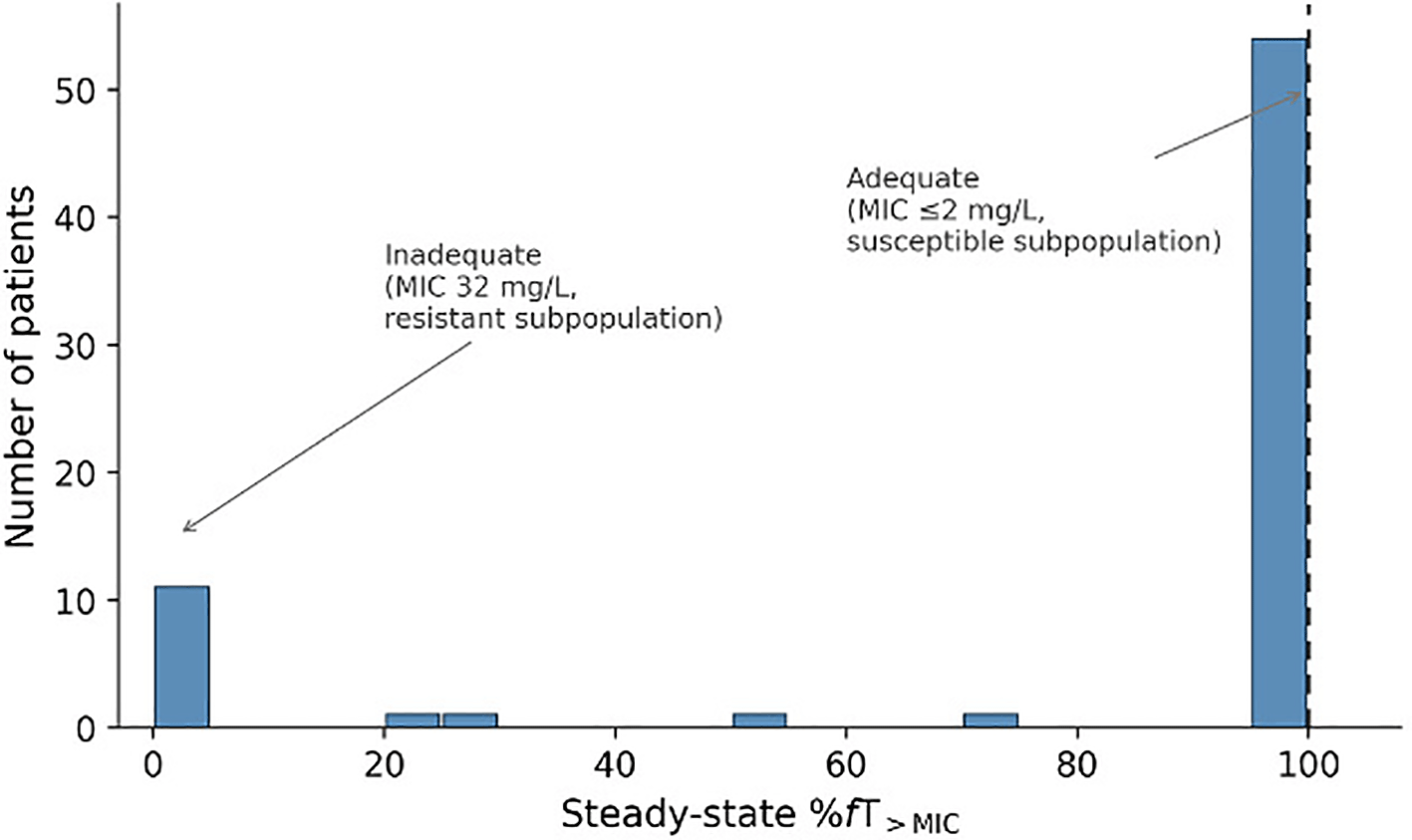
The histogram is bimodal, with most patients clustering near 100% (adequate; susceptible MIC ≤2 mg/L) or near 0% (inadequate; resistant MIC 32 mg/L). The dashed line marks the 100% fT > MIC threshold.
This sets up everything that follows in this dataset the adequate or inadequate split is effectively a susceptible–resistant split, not a gradient of exposure against the same pathogen.
In-hospital mortality was high overall (47/69; 68.1%), in keeping with national reports and well above the global average; 72-h treatment failure occurred in 38/69 (55.1%). For the primary outcome, failure affected 9/15 (60.0%) of the inadequate group and 29/54 (53.7%) of the adequate group—a relative risk of 1.16 (95% CI 0.58–2.29; P = 0.665). Bootstrap resampling agreed (RR 1.12; BCa 95% CI 0.60–1.73; P = 0.659). After Firth regression for baseline SOFA and septic shock (EPV = 12.7; VIF 1.03–2.02), the aOR stayed non-significant (1.24; 95% CI 0.40–4.04; P = 0.717), and neither covariate predicted the outcome ( Table 4).
Breaking the composite into its four parts: antibiotic escalation, 72-h mortality, fever at 72 h and ΔSOFA ≥2, showed no single component carrying an association ( Figure 3a), so a real signal was not being diluted within the composite. In-hospital mortality was likewise non-significant, and its point estimate pointed the other way (RR 0.74; 95% CI 0.35–1.56; P = 0.535; Figure 3b) for reasons set out in the Discussion, is not a protective effect of underdosing.
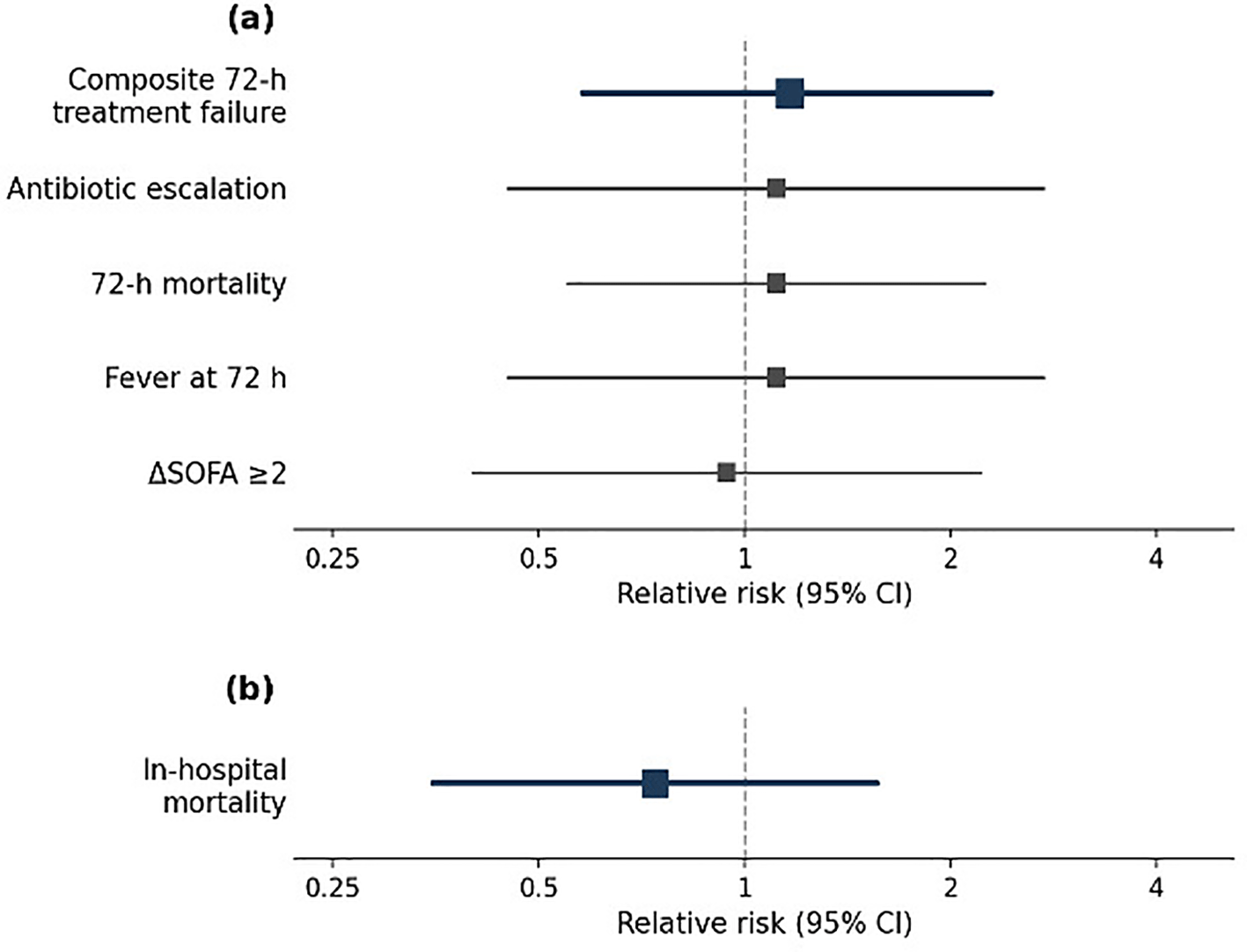
Estimates are relative risks with 95% CIs; the composite primary outcome is shown in bold. The dashed line at 1.0 indicates no association.
The three pre-specified sensitivity analysis are in Table 5. Replacing MIC50 with MIC90 shifted the inadequate proportion by only 1.5 points and left both associations non-significant and in the same direction (failure RR 1.26; mortality RR 0.65). Restricting to the 42 patients with observed albumin widened the intervals, as expected from losing 39.1% of the sample, but kept the direction and the non-significance (failure RR 1.30, 95% CI 0.44–3.81; mortality RR 0.83, 95% CI 0.26–2.65).
The combination-therapy analysis was the most telling. Combination therapy went to 6 of 15 inadequate patients (40.0%) but only 7 of 54 adequate patients (13.0%) (OR 4.35; 95% CI 1.15–18.97; P = 0.028), and the inadequate patients on combinations fared worst (5/6 failed; 83.3%). Among the 56 patients on meropenem monotherapy, the failure RR moved from 1.16 to 0.84 and the mortality RR from 0.74 to 0.54, both still non-significant. That reversal fits confounding by indication which is clinicians steered combinations and closer monitoring to the sickest patients with resistant organisms rather than any true effect of meropenem exposure, and it strengthens rather than weakens the main finding.
The main practical message is that an a priori covariate-based dosing workflow can be implemented using routinely available clinical data, even in hospitals without TDM. Such an approach represents the first step toward future implementation of full MIPD, where Bayesian forecasting based on measured concentrations can subsequently be incorporated. The predicted 78.3% attainment is plausible given how often extended infusion was used. More importantly, the principal finding was not the frequency of inadequate target attainment but the mechanism underlying it. The %fT>MIC distribution was strongly bimodal ( Figure 2), and all patients who failed to achieve the target were infected with pathogens whose MICs exceeded what could be overcome by meropenem exposure, irrespective of dose.
Target attainment is intended to reflect an exposure–response relationship, but this requires variation in exposure and MIC to be at least partly independent. In this study, all susceptible isolates achieved the target whereas none of the resistant isolates did, meaning that attainment status largely reflected susceptibility rather than exposure. This arose because MICs were assigned from population-level MIC50 values rather than measured for each isolate. The susceptible MIC50 (≤2 mg/L) was readily achievable with standard meropenem regimens, whereas the resistant MIC50 (32 mg/L) exceeded achievable exposure ranges even with aggressive dosing. Consequently, attainment classification largely reproduced the susceptibility categories already provided by culture results.
This is why neither outcome showed a meaningful association. The slightly higher treatment failure rate in the inadequate target attainment group (60.0% vs. 53.7%) and the apparently lower mortality estimate (RR 0.74) should be interpreted with caution. These findings primarily reflect comparisons between patients with carbapenem-resistant and carbapenem-susceptible infections, in whom clinical outcomes are driven far more by pathogen susceptibility, host factors, and treatment escalation than by pharmacokinetic predictions alone. The monotherapy analysis makes the mechanism plain. Restricting the analysis to patients receiving meropenem monotherapy reversed the direction of both effect estimates, indicating confounding by indication.14 Combination therapy and intensified clinical monitoring were preferentially used in the sickest patients with resistant pathogens, thereby biasing the crude associations. The absence of statistically significant associations remained consistent across bootstrap validation, Firth penalized regression, and all three sensitivity analyses, suggesting that the findings were robust rather than a statistical artefact.
The 78.3% target attainment observed in this study was higher than the 55% reported in the source study, but this difference should not be interpreted as evidence of model overprediction or superior local dosing practices. Rather, it is largely explained by two methodological differences. First, only one patient (1.4%) in our cohort received meropenem as an intermittent (1-hour) infusion, whereas the widespread use of extended or continuous infusion increases %fT>MIC, a difference appropriately reflected in the simulation. Second, and more importantly, the source study determined isolate-specific MICs using Etest, whereas the present study assigned population MIC50 values. Consequently, fewer patients were evaluated against high MICs associated with resistant pathogens, resulting in higher predicted target attainment.
Even so, the cohort shows real and clinically important PK heterogeneity. Clearance varied more than six-fold, the terminal half-life ran from under two hours to almost twelve, and septic shock nearly doubled peripheral volume through the model's covariate structure. These are exactly the patients for whom uniform empirical dosing fails. Although in this study ARC is uncommon, but in general a patient with ARC would be badly underdosed on a standard regimen, while a patient with CrCL below 50 mL/min risks accumulation.15 MIPD was designed for situations like these, and this study configures the workflow to handle them. Although this study focused on the adequacy of meropenem dosing, future implementations should also consider the risk of toxicity, particularly in patients with reduced renal function. A full characterization of over-exposure risk and meropenem-related toxicity in patients with markedly reduced renal function and low body weight is beyond the scope of the present paper and will be addressed in a separate report (manuscript in preparation).
A crucial caveat to operational feasibility is the current dependence on the R programming environment. While the underlying code is open-source and provided in the repository, execution requires basic familiarity with the R console, which is not standard among bedside clinicians. However, this does not negate operational feasibility within institutional clinical pharmacy services, where pharmacists trained in pharmacokinetics can execute pre-validated scripts. To achieve true bedside accessibility, the natural next step is to containerize this workflow into a user-friendly web-based graphical interface (e.g., Shiny application) or integrate it into existing electronic medical record (EMR) decision-support systems. Such a GUI would abstract the coding layer entirely, allowing clinicians to input covariates and receive a dosing recommendation instantly transforming this proof-of-concept into a genuine clinical decision support tool. Our current work provides the validated backend algorithm for that future development.
The study has clear limits. The most substantial limitation is the lack of measured meropenem concentrations, which rules out Bayesian updating. The predictions are covariate-driven typical-population estimates rather than true individual forecasts, and fixing η = 0 ignores the between-patient variability the covariates do not explain (60.5% for CL in the source model), so the classification is overconfident. Second, drawing MIC from surveillance data rather than measuring it per isolate turned the key analytical variable into a susceptibility surrogate. Third, although common and defensible, imputing albumin adds uncertainty to the volume estimates and a residual Missing Not at Random mechanism cannot be formally excluded given that albumin measurement was not part of the routine laboratory panel at this institution. Fourth, with 15 inadequate patients and a 60% event rate, the multivariable model was underpowered. Consequently, the aOR interval (0.40–4.04) runs from real protection to real harm, meaning the analysis cannot exclude either direction. This uncertainty is an inherent consequence of the sample size rather than a methodological flaw, and it reinforces the need for larger prospective studies before any inference about the direction of the exposure–outcome relationship can be drawn. Fifth, the single-centre design and the exclusion of RRT patients limit the generalizability of these findings. Additionally, while body weight is not a covariate in the model, the observed differences in weight and BMI between our cohort and the source population may reflect broader phenotypic differences that could affect model performance, underscoring the need for local model development or formal external validation.
These gaps define priorities for future research. Prospective studies should incorporate TDM with sparse sampling to enable Bayesian estimation and robust external validation; determine isolate-specific MIC to evaluate exposure against actual pharmacodynamic targets; recruit larger, preferably multicentre cohorts stratified by pathogen susceptibility to ensure that comparisons reflect drug exposure rather than differences in causative organisms; and evaluate the optimal loading dose for patients with septic shock and impaired renal function. If existing models prove unsuitable for this population, developing an Indonesian population pharmacokinetic (popPK) model should be a priority.
In this single-center study, an a priori covariate-based dosing workflow using an externally developed Southeast Asian popPK model was operationally feasible in a resource-limited Indonesian ICU. However, operational feasibility should not be interpreted as clinical validity, which can only be established through prospective validation using measured drug concentrations. Thus, the present study establishes feasibility rather than clinical performance. This work serves as a proof-of-concept for the technical pathway and clearly demonstrates that pathogen-specific MIC measurement is essential for meaningful exposure-response analysis. Prospective studies incorporating measured concentrations and Bayesian updating are urgently needed before clinical implementation.
In settings where therapeutic drug monitoring (TDM) is unavailable, the covariate-based simulation approach may provide a pragmatic strategy for evaluating dosing adequacy, although it cannot replace TDM or Bayesian forecasting. With independent validation, this framework may also be extended to other drugs with narrow therapeutic windows. Importantly, this study highlights that successful implementation of model-informed precision dosing (MIPD) depends not only on pharmacokinetic models but also on the availability of reliable pathogen minimum inhibitory concentration (MIC) data, underscoring the need to strengthen microbiology support within antimicrobial stewardship programs. Finally, these findings provide preliminary evidence to inform the implementation of TDM services in Indonesian tertiary hospitals, in alignment with the National Action Plan for Antimicrobial Resistance Containment.
This study followed the Declaration of Helsinki and was approved by the Research Ethics Committee of the Academic Hospital of Universitas Gadjah Mada (RSA UGM; ref. 139/RSA/KEP/EC/2025). This retrospective study used routinely collected, de-identified electronic medical record data without direct patient contact or intervention. The institutional ethics committee waived the requirement for written informed consent because the research posed minimal risk to participants and involved existing clinical data only.
The authors declare that generative AI was used during the preparation of this manuscript to assist with language editing, grammar and clarity. The authors reviewed, verified, and approved the final manuscript and took full responsibility for its content.
| Views | Downloads | |
|---|---|---|
| F1000Research | - | - |
|
PubMed Central
Data from PMC are received and updated monthly.
|
- | - |
Provide sufficient details of any financial or non-financial competing interests to enable users to assess whether your comments might lead a reasonable person to question your impartiality. Consider the following examples, but note that this is not an exhaustive list:
Sign up for content alerts and receive a weekly or monthly email with all newly published articles
Already registered? Sign in
The email address should be the one you originally registered with F1000.
You registered with F1000 via Google, so we cannot reset your password.
To sign in, please click here.
If you still need help with your Google account password, please click here.
You registered with F1000 via Facebook, so we cannot reset your password.
To sign in, please click here.
If you still need help with your Facebook account password, please click here.
If your email address is registered with us, we will email you instructions to reset your password.
If you think you should have received this email but it has not arrived, please check your spam filters and/or contact for further assistance.

Comments on this article Comments (0)