Keywords
service quality, work culture, satisfaction, brand image, student loyalty

service quality, work culture, satisfaction, brand image, student loyalty
The higher education sector faces increasingly fierce global competition. Educational institutions are not only required to provide quality education but also to build a satisfying overall student experience in order to foster student loyalty.1,2 Student loyalty is a crucial foundation for universities, directly impacting operational sustainability, financial stability through recommendations and continued study, and long-term reputation.3,4 Recognizing this urgency, various studies have attempted to identify the determining factors. Findings from the literature review indicate that loyalty is not formed instantly, but rather is the result of a complex chain of cause and effect. Key factors that have a significant influence include service quality in all aspects, the level of satisfaction felt by students, a strong institutional image in the eyes of the public, and the value perceived by students for the investment they make in their education.5–7 A strategic and holistic approach is absolutely necessary to address all of these elements.
The context of this global trend poses a greater challenge for private universities, which are heavily dependent on student tuition fees as their main source of income, unlike public universities that receive state funding. This financial dependence makes student loyalty and retention a matter of life and death for private universities. This phenomenon is not merely a theoretical concept, but a reality that has triggered a wave of global consolidation in the private university sector. Several problems faced by private universities in various countries have led to closures and mergers, such as in Portugal, where demographic stagnation and regulations caused the share of private universities to decline from 36% to 25% (1996–2006), triggering the closure and merger of several institutions.8 Japan experienced a drastic decline in private vocational colleges due to a decrease in the number of high school graduates, with many non-university institutions closing or merging.9,10 In Romania and El Salvador, delayed regulations (such as stricter accreditation) following the uncontrolled growth of private higher education institutions led to many closures or mergers.11,12 Meanwhile, in Georgia and Kenya, the internal privatization of the public sector (paid Module II programs at public universities) competed directly with PTS and reduced their market share, triggering consolidation.13,14 Similar phenomena also occurred in Thailand and Indonesia due to the expansion of the public sector and demographic pressures.15,16
Higher education policies and practices have created structural inequalities between private and public universities, particularly in terms of funding, regulation, and legitimacy. Given PTS’s dependence on tuition fees, retaining students is more cost-effective than recruiting new ones, a strategy that is unsustainable and can actually weaken the institution’s brand.17,18 Loyalty is reflected in continued studies and positive recommendations, which are the most effective form of marketing.19 Competitive pressure from other private universities and increasingly aggressive public universities not only demands student loyalty but also requires a strong brand image.20 As a result, many private universities are trapped in an unsustainable cycle that ultimately forces institutions to close or merge.
Student loyalty plays a dual role as a pillar of institutional survival and a driver of achievement. In preventing closure or merger, loyalty reflected in high retention rates, timely tuition payments, and positive recommendations ensures financial stability and reduces new student recruitment costs, thereby strengthening institutional sustainability.21 At the same time, loyalty supports the achievement of SDGs, particularly SDG 4 (Quality Education) through improving institutional reputation, global competitiveness, and sustainable social impact. Loyal students become natural promotional agents who strengthen the image of the campus at the national and international levels.22 Understanding the mechanisms of student loyalty formation in the context of private universities, such as in Aceh, is not only a strategic necessity for the survival of the institution, but also a tangible contribution to a more resilient and higher quality higher education ecosystem.
Research on loyalty in education has long been dominated by a linear approach that directly links classical variables. Previous studies conducted in India23 and in Japanese24 consistently examined the direct causal relationship between service quality and student loyalty. A similar linear pattern was also found in different contexts, on international student satisfaction, which still focused on the direct relationship between variables.25 Several previous studies have placed student satisfaction as the main variable that linearly predicts loyalty.26,27 The most crucial gap is the lack of exploration of the mediating role of student satisfaction, including their perceptions of institutional image.28 In addition, previous models often ignore how students’ experiences and outcomes, such as their intention to drop out, are indirectly influenced by service quality,29 which emphasizes the need for a more complex mediation approach.
Based on the above research gaps in the literature that ignore satisfaction mediation mechanisms30 and the lack of studies on contextual moderating variables, the mediating role of satisfaction in transforming service quality into sustainable loyalty31 as well as testing the moderation of institutional work culture32 and brand image21,33 which are often overlooked in student loyalty models, particularly in the context of global education competition.34 Previous research has limitations in its linear approach, which ignores the mediating role of satisfaction and moderating variables such as brand image and work culture, thus failing to comprehensively explain the formation of student loyalty in global competition.
The novelty of this research lies in its integrative research model approach. Several previous studies in Indonesia and internationally have discussed the relationship between variables, but there has been no integrated research that links student loyalty and service quality moderated by work culture and brand image variables in a complex manner. This research approach is still rarely used in higher education research, especially in the context of Aceh, which has unique socio-cultural and economic characteristics. Thus, this study bridges a significant gap in the literature by providing empirical evidence from a unique setting.
Several studies have discussed student loyalty in Indonesian universities, such as at Bina Darma University in Palembang,35 at Padang State University,36 at Batuta University,37 and at 13 universities in Riau province.38 However, this study specifically places Jabal Ghafur University Sigli, Aceh, not only as a subject of study, but as a historical epicenter that proves that this institution is the pioneer of private higher education in Aceh, where its existence and resilience since its establishment on September 30, 1982, make it a critical case study for analyzing the real contributions and adaptation strategies of the oldest private university in advancing the educational landscape and shaping intellectuals in the unique province of Aceh with its characteristics of implementing Islamic law, strong local wisdom values, and post-conflict and tsunami social dynamics, thus providing a highly relevant and interesting context for examining the phenomenon of student loyalty at Jabal Ghafur University.
This study will produce comprehensive findings on (1) the analysis of the direct effect of service quality on student loyalty at private university Aceh; (2) the analysis of the direct effect of satisfaction on student loyalty at private university Aceh; (3) the analysis of the direct effect of service quality on student satisfaction; (4) testing the mediation of student satisfaction; and (5) the role of organizational work culture moderation and (6) brand image in this relationship. Theoretically, this study provides a philosophical foundation that emphasizes the importance of building long-term relationships with students as key customers, where loyalty is a key outcome of quality relationships.39,40 This theory shifts the focus from single transactions to sustainable retention and engagement.19 In practical terms, the research results provide evidence-based management strategies for private university administrators to allocate resources more effectively.41 In terms of policy, the research findings can form the basis for recommendations for private higher education stakeholders in Aceh to build loyalty based on service quality and brand image, not only as a marketing strategy, but as a strategic necessity for survival in a competitive and highly regulated ecosystem.42
1.2.1 The role of student loyalty in the sustainability of PTS and contribution to SDGs
Student loyalty in private higher education institutions is a strategic investment that supports institutional sustainability and the achievement of SDGs. From an operational perspective, loyalty ensures financial stability through student retention and the continuity of tuition fee payments. More broadly, loyalty contributes directly to SDG 4 (Quality Education) through the sustainability of educational participation, as well as SDG 16 (Peace and Justice) through the creation of an inclusive campus environment. Student loyalty is not merely a marketing strategy, but a real contributor to the global development agenda.43,44
1.2.2 Research hypothesis
Service quality has a direct positive effect on student loyalty.
Service quality through the servqual dimension has a positive effect on student loyalty. This impact is manifested in the intention to continue studying, recommending the institution, and strengthening identity as part of the campus community. Service quality is a consistent foundation for the formation of loyalty.45,46 Investing in service quality is a fundamental strategy for building a loyal and sustainable student base.
Satisfaction has a direct positive effect on loyalty.
Student satisfaction has a direct positive effect on student loyalty at Jabal Ghafur University. Student satisfaction is the most consistent direct driver for shaping student loyalty.47,48 Student satisfaction is not only the ultimate goal but also a fundamental strategy in building a loyal and sustainable student base.
Service quality has a direct positive effect on satisfaction.
Service quality has a significant effect on student satisfaction. This hypothesis is consistent with previous studies that confirm service quality through teaching, facilities, and administration aspects as the main determinants of satisfaction in the higher education sector.49 Thus, holistic improvement in service quality not only builds immediate satisfaction but also lays the foundation for long-term loyalty and institutional competitive advantage.50
Satisfaction Significantly Mediates the Effect of Service Quality on Student Loyalty.
Student satisfaction is a key mediator in the relationship between service quality and loyalty. Satisfaction plays a strategic role as a mediator between service quality and customer loyalty.51,52 Satisfaction will transform perceptions of quality into loyalty in the form of study retention and recommendations.53
Work culture significantly moderates the influence of service quality on satisfaction.
Work culture significantly moderates the relationship between service quality and student satisfaction. A strong organizational work culture influences how employees provide services and how recipients respond.54 A positive work culture, such as collaboration and commitment to quality, can strengthen the impact of service quality on student satisfaction.55 These shared values serve as a foundation that drives service quality improvement, while also guiding organizational behaviour.56
Brand image significantly moderates the influence of satisfaction on student loyalty.
Brand image acts as an important moderator in the relationship between student satisfaction and loyalty. A positive brand image, such as academic reputation, adequate facilities, and a successful alumni network, can strengthen the influence of satisfaction on student loyalty.57,58 When students are satisfied, a strong brand image will strengthen their emotional attachment, encouraging long-term loyalty and willingness to recommend the university.59 Brand image not only reinforces the impact of satisfaction, but also creates a solid foundation for the university’s ongoing relationships.
1.2.3 Development of hypothesized student loyalty
Conceptual relationships form the basis of fundamental understanding and the foundation for researchers. Based on the theories of Parasuraman45 and Anderson & Fornell,51 this study proposes an integrative model that places service quality as the foundation for building student loyalty, both directly and indirectly through the mediation of satisfaction. This model is reinforced by two contingency mechanisms: Work culture54 acts as a moderator that strengthens the relationship between service quality and satisfaction, while brand image57 functions as a moderator that strengthens the influence of satisfaction on loyalty. A summary of the hypothesized student loyalty is shown in Figure 1.
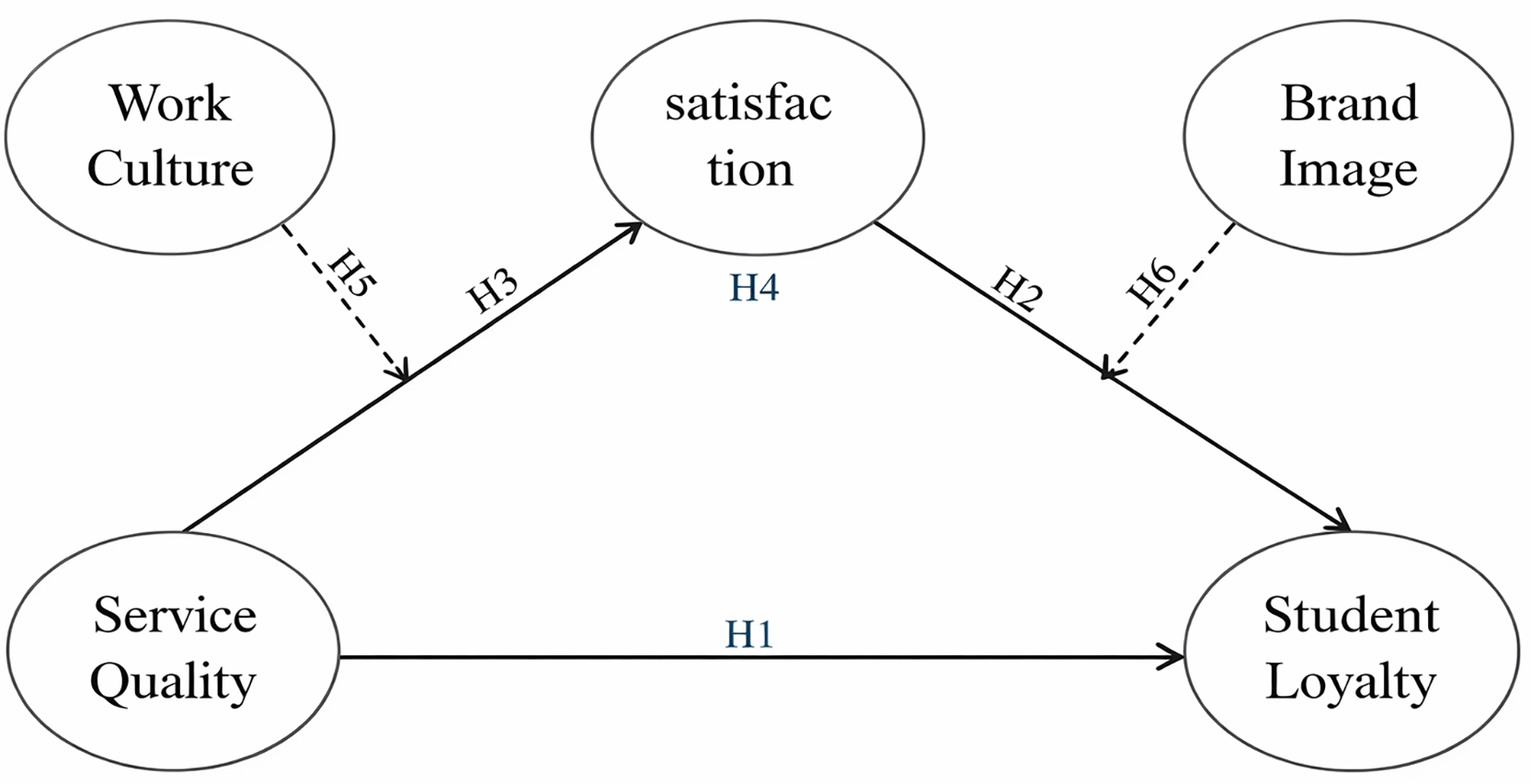
Figure 1 shows the conceptual model of the study that examines the influence of service quality, work culture, and brand image on student loyalty, with satisfaction as a mediating variable. There are six hypotheses: H1 tests the direct effect of service quality on student loyalty, H2 tests the effect of satisfaction on student loyalty, H3 tests the direct effect of service quality on satisfaction, H4 tests the effect of satisfaction in mediating service quality on student loyalty, and H5 and H6 test the indirect effect of work culture and brand image on student loyalty through satisfaction.
The research design used in this study is a quantitative research design. This study uses the Structural Equation Modeling-Partial Least Squares (SEM-PLS) analysis technique. This technique was chosen based on the predictive and exploratory nature of the study in developing a complex theoretical model with mediating and moderating variables, as well as focusing on maximizing the variance of the dependent variable (loyalty) rather than testing model fit. The use of SEM-PLS is also reinforced by a number of previous studies that applied similar techniques in the context of higher education.60,61 This study uses a survey type of research in which the research provides clear limitations on the data. The survey was conducted by distributing a list of statements in the form of a questionnaire to respondents. The questionnaire was used as the main instrument to measure the variables studied, namely service quality, work culture, satisfaction, brand image, and loyalty.
The data source in this study was primary data using a questionnaire containing closed-ended questions. The researchers used a questionnaire instrument that was distributed to all students at Jabal Ghafur University. The questionnaire instrument was developed with the prior consent of the informants involved regarding data confidentiality, and the data collection process was carried out in accordance with applicable research ethics principles. This study uses a single case study approach, focusing the analysis on Jabal Ghafur University as the research subject. The university was selected purposively from 2,812 private universities registered in Indonesia.62 The researcher does not aim to generalize to all private universities in Indonesia, but rather to understand the phenomenon in depth within a specific context. Universitas Jabal Ghafur was chosen because it possesses unique characteristics not representative of other private universities, namely: (1) as a historical epicenter demonstrating that this institution is the oldest private higher education pioneer in Aceh; (2) unique characteristics with the implementation of Islamic law; (3) strong local wisdom values; (4) post-conflict and post-tsunami social dynamics. By focusing on a single university, the researcher can control external variables and extract richer data. The specific population of this study was all active students enrolled at Universitas Jabal Ghafur, totaling 3,031 students. The sample consisted of 352 students, obtained through stratified random sampling. This method is similar to that used by several previous researchers21,63–66 This method was used to determine the sample size for each academic year/cohort. The sample characteristics are shown in Table 1.
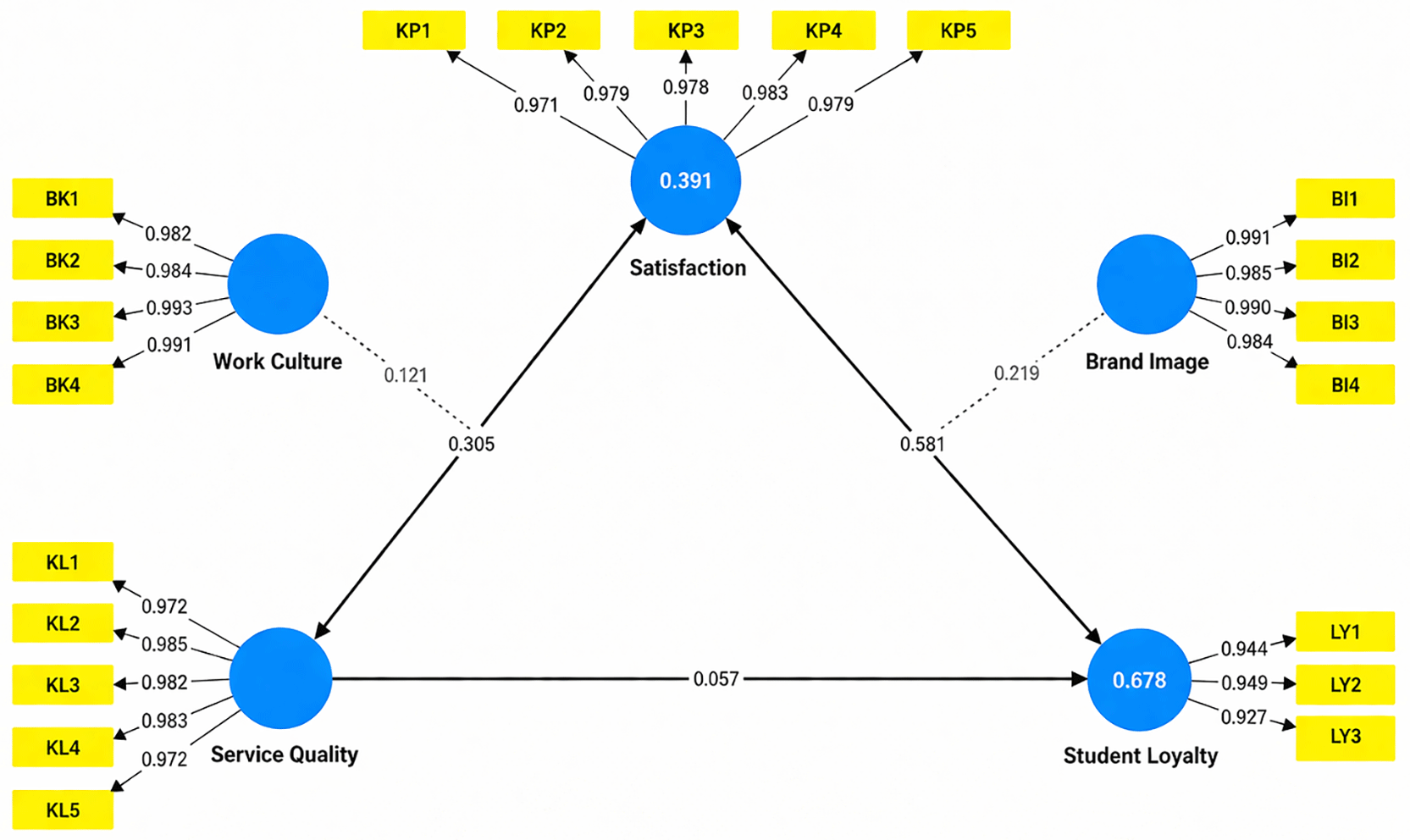
Research instrument testing aims to ensure that the questionnaires used are valid and reliable. Validity testing, namely convergent validity testing (loading factor > 0.7 and AVE > 0.5), ensures that the questionnaire items accurately measure the intended construct. Meanwhile, reliability tests such as Cronbach’s Alpha and composite reliability (>0.7) ensure the consistency of the instrument’s measurement results.67 This testing is crucial because invalid and unreliable instruments will produce biased data, thereby compromising the reliability of the research findings. Operationally, testing was conducted by analyzing factor loading values (>0.7) and AVE (>0.5) for convergent validity, with the test results summarized in Table 2, as well as Cronbach’s Alpha and composite reliability (>0.7) for reliability, with the test results summarized in Table 3.
The external loadings of each indicator in each construct show a loading value greater than 0.7 and an AVE value greater than 0.5. This indicates that convergent validity is well achieved.
All constructs tested met the recommended reliability criteria with Composite Reliability and Cronbach’s Alpha values greater than 0.7. Therefore, it can be concluded that the measurement instruments in this study are reliable for measuring the targeted variables with a high level of reliability.
The results of the instrument testing have met the requirements for excellent validity and reliability, where all indicators in each construct have a loading factor value above 0.7 and an Average Variance Extracted (AVE) above 0.5, thus proving the achievement of convergent validity. In addition, the Composite Reliability and Cronbach’s Alpha values for all constructs are consistently above the 0.7 threshold, confirming that this instrument has high internal consistency and is reliable for measuring the variables under study. A summary of the validity and reliability tests is shown in Figure 2.
Direct Effect Tests were conducted to measure the direct effects between variables in the model, namely the effect of service quality on student loyalty (H1), the effect of satisfaction on student loyalty (H2), and the effect of service quality on satisfaction (H3). These tests aimed to identify the magnitude of the direct effects of each variable. The results of this test were analyzed using the Path Coefficient, T-Statistic, and P-Value to determine the strength and significance of the relationship between variables. The test results are summarized in Table 4.
The results of the direct effect hypothesis test conclude that customer satisfaction plays the most vital role in building student loyalty, compared to the direct influence of service quality. This is evidenced by the significant positive relationship between satisfaction and loyalty with a fairly high path coefficient (0.581). Meanwhile, service quality does not have a significant direct effect on loyalty (path coefficient 0.057). However, service quality was found to have a significant and positive effect on satisfaction (path coefficient 0.305). This finding indicates that service quality has an indirect effect on student loyalty, mediated by satisfaction. In other words, improving service quality will increase satisfaction, which in turn will build student loyalty.
This analysis tests the indirect effect between Service Quality, Satisfaction, and Loyalty (H4). This indirect effect measures how Service Quality affects Loyalty through Satisfaction as a mediator. To test this relationship, Path Coefficients, T-Statistics, and P-Values were used, which provide an overview of how large and significant the effect of Service Quality is on Loyalty through Satisfaction. The test results are summarized in Table 5.
The results of the indirect effect test show that the effect of service quality on loyalty through satisfaction has a Path Coefficient of 0.177, with a very high T-Statistic of 5.058, and a very small P-Value (0.000). Based on these results, it is concluded that satisfaction mediates the relationship between service quality and loyalty significantly and positively. This means that service quality increases student satisfaction, which in turn has a positive effect on their loyalty.
In this section, a test was conducted to measure the moderating effects of two variables, namely work culture and brand image, which moderate the relationship between service quality and satisfaction as well as satisfaction and loyalty. This test aims to determine whether work culture strengthens or weakens the influence of service quality on satisfaction (H5), and whether brand image moderates the relationship between satisfaction and loyalty (H6). The moderating effect was measured using the Path Coefficient, T-Statistic, and P-Value, which provide a general overview of the strength and significance of the interaction between the moderating variables and the relationship between variables in the model. The test results are summarized in Table 6.
Based on the results of the moderation effect test, it can be concluded that both brand image and work culture play a significant role as moderating variables. Specifically, brand image strengthens the influence of satisfaction on student loyalty, as indicated by a significant interaction coefficient of 0.219. Meanwhile, work culture is also proven to significantly strengthen the relationship between service quality and satisfaction, with a path coefficient of 0.121. These findings confirm that the main relationship in building loyalty is not only direct but can be effectively enhanced through the presence of contingency factors, where good brand image and strong work culture act as positive moderators.
The results of the Direct Influence Test (H1; H2; H3), Indirect Influence/Mediation (H4), and Moderating Effects (H5; H6) on student loyalty are shown in Figure 3.
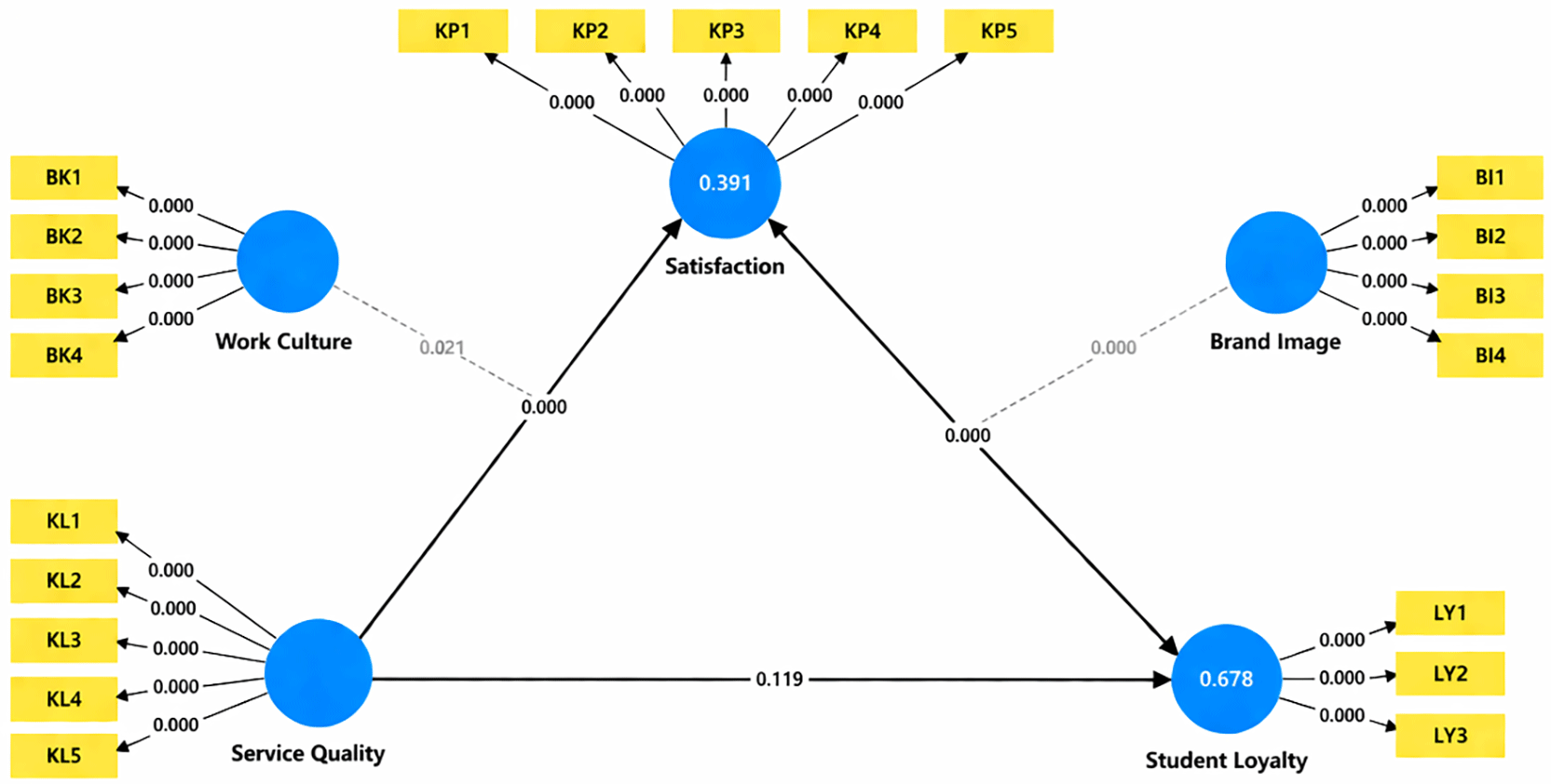
The overall test results indicate that the formation of student loyalty is an indirect mechanism reinforced by moderating factors, where satisfaction plays a key role in directly shaping loyalty (0.581) and also acts as a full mediator that transforms the influence of service quality into loyalty (0.177). While service quality has no direct effect, its influence is vital in creating satisfaction (0.305). This mechanism is further reinforced by contingency factors, where brand image acts as a moderator of the relationship between satisfaction and loyalty (0.219), and work culture functions as a moderator of the relationship between service quality and satisfaction (0.121).
This study aims to examine the relationship between service quality, satisfaction, and student loyalty in higher education institutions, as well as the role of satisfaction as a mediator and the influence of work culture and brand image as moderators. The main findings of this study indicate that service quality, measured based on SERVQUAL Theory, has a significant relationship with student satisfaction and loyalty, thereby confirming the application of this theory in the context of higher education.
Service quality does not significantly affect student loyalty (H1)
The results reveal that service quality, measured through the dimensions in the SERVQUAL theory, does not have a significant direct effect on student loyalty at Jabal Ghafur University. This finding provides a critical perspective by positioning service quality as a hygiene factor or basic prerequisite, the fulfillment of which can prevent dissatisfaction but is not sufficient to create deep loyalty. Instead, loyalty is more effectively shaped by socio-emotional factors, satisfaction, a proposition that finds confirmation and theoretical alignment with Social Integration Theory. This perspective is further reinforced by empirical research which collectively affirm that social integration, emotional attachment, involvement in campus life, and meaningful interpersonal experiences are the main key drivers that build sustainable loyalty.4,31,47,68,69 Thus, it can be concluded that in the higher education ecosystem, service quality serves as the foundation, while social-emotional integration and bonding function as the main pillars shaping student loyalty.
Student satisfaction influences student loyalty (H2)
The analysis results confirm that student satisfaction has a positive and significant effect on student loyalty. This finding is supported empirically and theoretically by previous studies, which confirm the central role of satisfaction as a major antecedent of loyalty,70 in line with the fundamental theories proposed by Anderson51 and Zeithaml.71 Conceptually, satisfaction is formed when students’ actual experiences encompassing aspects of teaching quality, facilities, and administrative services meet or exceed their expectations,52 which then manifests itself in the form of loyalty in the form of affective attachment, intention to recommend, and commitment to continue studying. Furthermore, the convergence of the results of this study with previous findings shows that the construct of satisfaction is not only represented by the technical-functional dimensions of service based on the SERVQUAL framework,45,47,48 but is also enriched and strengthened by the social-emotional dimensions formed through integrative experiences on campus. The implication is that strategies to build sustainable loyalty must focus on creating a satisfying holistic experience, by optimizing the quality of technical services and simultaneously strengthening students’ social bonds within the academic community.
Service quality affects student satisfaction (H3)
Based on the results of data analysis, the research findings confirm that service quality has a significant effect on student satisfaction at Jabal Ghafur University. These results obtain empirical validation and theoretical consistency from previous research that confirms the causal relationship between service quality and satisfaction in the context of higher education.52,71 Operationally, this influence is manifested through the five dimensions of the SERVQUAL framework,45 where the dimensions of servqual simultaneously shape the perception of quality that leads to student satisfaction. This convergence with research reveals that superior service quality not only acts as a direct determinant of satisfaction but also serves as a crucial foundation for building long-term loyalty.50 This aligns with the assertion that service quality is a key variable in building sustainable relationships between educational institutions and students.53
Student satisfaction mediates the relationship between service quality and student loyalty (H4)
The research findings confirm the significant mediating role of student satisfaction in the relationship between service quality and loyalty. These results not only reinforce the validity of the SERVQUAL theoretical framework,45 which positions satisfaction as a central variable that transforms perceptions of service quality into loyalty commitment, but also aligns with the fundamental propositions of Zeithaml71 and Kotler & Keller52 regarding sequential causal mechanisms. This mechanism confirms that service quality, as manifested through the SERVQUAL dimensions, must first create conditions of satisfaction before it can lead to the formation of long-term loyalty. The convergence of findings further strengthens the proposition that service quality excellence will only be effective in building sustainable loyalty if it is successfully recorded as a satisfying experience, which then manifests in the form of retention, active participation, and institutional recommendation behavior, regarding value and loyalty in relational exchanges.72–74 Thus, the holistic implementation of the SERVQUAL dimensions oriented towards achieving student satisfaction is proven to be an imperative strategy for universities to transmute investments in service quality into sustainable loyalty assets.
Work culture moderates the relationship between service quality and student satisfaction (H5)
The findings of this study confirm that work culture serves as a significant moderating in strengthening the relationship between service quality and student satisfaction. These results are firmly grounded in Schein’s Organizational Culture Theory, which asserts that the value systems and basic assumptions embraced by an organization create a work environment conducive to improving service performance. Empirically, these findings are consistent with recent studies which prove that a positive work culture based on shared values strengthens the impact of service quality on student satisfaction.55,56 Operationally, a collaborative work culture internalized in staff interactions functions as a social mechanism that facilitates service responsiveness and efficacy.75 This mechanism not only acts as an amplifier that intensifies the impact of service quality on student satisfaction, but also creates social capital that enriches students’ emotional experiences.76 Thus, the development of a collaborative culture has been proven to be a strategic variable for moderating and optimizing the transformation of service quality into sustainable satisfaction.
Brand image moderates the relationship between student satisfaction and loyalty (H6)
The findings confirm that brand image acts as a key moderator that strengthens the relationship between student satisfaction and loyalty. Based on signaling theory,77 a positive university image, including academic reputation, facilities, and integrity,49 serves as a credible signal that reduces student uncertainty. This signal not only validates a satisfying experience but also transforms it into long-term affective commitment.53 Thus, when satisfaction is achieved, a strong brand image acts as a catalyst59 that deepens emotional attachment and sparks loyalty, as reinforced by findings.57,58,78
Contextualization of Student Loyalty within the Socio-Cultural Framework of Aceh
The unique socio-cultural context of Aceh, characterized by the implementation of Islamic law, strong local wisdom, and post-conflict and tsunami social dynamics, this study reveals that the expectations and perceptions of Jabal Ghafur University students regarding service quality and satisfaction are not only shaped by the technical dimensions of SERVQUAL, but are also greatly influenced by values of religiosity, togetherness, and post-disaster social resilience. These factors collectively strengthen students’ emotional bonds and loyalty to the institution. These findings show a clear difference from research in other contexts, such as the study at Pokhara University in Nepal, which emphasized systemic challenges such as infrastructure limitations, curriculum gaps, and access to financial aid.79 Meanwhile, other studies focus on the performance of higher education through the service quality dimension on student satisfaction, without including cultural and religious factors in depth.80 In vocational education settings, the emphasis is more on barriers to transfer and functional satisfaction.81 Thus, although each region has unique socio-cultural characteristics, this study specifically reveals how religious values and local wisdom play a critical role in shaping student loyalty at Jabal Ghafur University.
Implications
This study makes a theoretical contribution by confirming and expanding the SERVQUAL model45 in the context of higher education. The findings reveal that the relationship between service quality and loyalty is not direct, but rather mediated by student satisfaction. This model is further enriched by the presence of two moderating variables: collaborative work culture, which strengthens the service quality-satisfaction relationship54,55 and brand image, which strengthens the satisfaction-loyalty relationship.78
The theoretical implications recommend the need for a more holistic service quality model that integrates contextual variables, such as work culture and brand image, to reflect the complexity of higher education dynamics.34,82 These findings pave the way for further research to explore the interaction between operational and perceptual factors, while emphasizing that universities need to develop multidimensional strategies that combine service quality improvement with the strengthening of work culture and brand image to create sustainable loyalty.
Practically, this study offers a strategic framework for administrators at Jabal Ghafur University, particularly by demonstrating that management strategies should shift from focusing on isolated service improvements toward developing holistic student loyalty. This holistic experience is defined as a construct shaped through a causal pathway: where service quality builds student satisfaction, which then serves as a key mediator to achieve sustainable student loyalty.33,57 From a policy perspective, these findings can serve as a foundation for stakeholders to formulate policies that support the competitiveness and governance of educational institutions.8,11
Limitations
Despite its contributions, this study has several methodological and contextual limitations that need to be acknowledged. First, the geographical and institutional scope, which is limited to one private university in Aceh, limits the generalizability of the findings. The external validity of the findings requires further verification through replication of the study in more diverse contexts.3,26 Second, the cross-sectional research design used does not allow for capturing temporal dynamics and causal developments between variables over time.29,73 Third, although the research instruments met the criteria for validity and reliability, related to the high Average Variance Extracted (AVE) value, which is likely influenced by the homogeneity of samples from a single institution and the highly context-specific instrument design.83 Semantic proximity between indicators also arises due to the measurement approach that seeks to capture perceptions and expectations of the same object. This has the potential to cause redundancy and limit the generalization of findings to a more diverse population. Fourth, although the proposed model includes mediation and moderation variables, there are still a number of potential exogenous factors such as the influence of family support, socio-economic variables, or government macro policies that have not been integrated into this research framework.12,27
Future research
Based on the findings and limitations identified, several future research agendas can be recommended. First, replication of the study with a broader and more diverse sample covering various private universities in Indonesia and state universities is needed to test the consistency and robustness of the proposed model.3,19 Second, a longitudinal approach is highly recommended to trace the evolution of student loyalty and its formation mechanisms diachronically.4,29 Third, future research can enrich the model by integrating additional variables such as social support, student engagement in co-curricular activities, or the influence of digital media on perceptions of institutional brand image.33,44 Fourth, the application of mixed-methods combining quantitative and qualitative approaches can provide a more comprehensive and contextual explanation of the phenomenon of student loyalty.84 Finally, an in-depth exploration of the interaction between work culture, transformational leadership style, and academic service performance could be a potential area for further research.54,55
This study confirms that student loyalty in private universities is shaped through a complex, indirect mechanism driven by mediation and moderation effects. Service quality does not directly influence loyalty but plays a vital foundational role by enhancing student satisfaction, which serves as a full mediator and the strongest direct driver of loyalty. This relationship is further reinforced by contextual factors: work culture strengthens the link between service quality and satisfaction, while a strong brand image amplifies the effect of satisfaction on long-term loyalty. Consequently, strategies to foster sustainable student loyalty must move beyond merely improving service quality toward a holistic approach that integrates satisfaction creation, positive work culture, and brand image. These findings recommend that policies to strengthen Jabal Ghafur University in Aceh should not only focus on national standards, but also provide space for local initiatives that strengthen cultural identity, community resilience, and emotional relationships between institutions and students.
To ensure compliance with research ethics and educational regulations, this research received ethical approval from the Research Ethics Committee (KEP) of the Institute for Research and Community Service (LPPM), Jabal Ghafur University. The ethical approval registration number is 004/LPPM/Unigha-KEP/VI/2025, issued on June 30, 2025 (date of approval). The study commenced on July 7, 2025. Official research permission has also been deposited and is publicly accessible via its DOI link: https://doi.org/10.5281/zenodo.20154149. All participants were informed about the purpose of the study prior to data collection, and informed consent was obtained from all participants. For participants under the age of 20, consent was also obtained from their parents or legal guardians. The consent was provided in written form, and participants were assured of the confidentiality and anonymity of their responses.
| Views | Downloads | |
|---|---|---|
| F1000Research | - | - |
|
PubMed Central
Data from PMC are received and updated monthly.
|
- | - |
Provide sufficient details of any financial or non-financial competing interests to enable users to assess whether your comments might lead a reasonable person to question your impartiality. Consider the following examples, but note that this is not an exhaustive list:
Sign up for content alerts and receive a weekly or monthly email with all newly published articles
Already registered? Sign in
The email address should be the one you originally registered with F1000.
You registered with F1000 via Google, so we cannot reset your password.
To sign in, please click here.
If you still need help with your Google account password, please click here.
You registered with F1000 via Facebook, so we cannot reset your password.
To sign in, please click here.
If you still need help with your Facebook account password, please click here.
If your email address is registered with us, we will email you instructions to reset your password.
If you think you should have received this email but it has not arrived, please check your spam filters and/or contact for further assistance.

Comments on this article Comments (0)