Keywords
Incidences, STEAM strategies, Educational robotics, Basic education

Incidences, STEAM strategies, Educational robotics, Basic education
Currently, technological applications are used in the economy, industry, agriculture, healthcare, sports, and education, as well as social relations; therefore, the integration of resources for technological skills development in the educational programs is an imminent necessity (Caballero-Gonzalez et al., 2019). In this context, in developed countries has been used an education model oriented towards the learning of Science, Technology, Engineering, Art, and Mathematics known as STEAM (Chaldi & Mantzanidou, 2021; Chen et al., 2022; Su et al., 2019). This methodology is based on an interdisciplinary educational approach (Teles et al., 2024), and it has been demonstrated that this type of education is effective at an early age, from 0 to 8 years old (Hu et al., 2024). The model has been reported as a real transformation of the teaching and learning processes (Ochoa & Valenzuela, 2018) with proven effectiveness results in the pedagogical field (Kessler et al., 2024).
According to Su et al., (2019) STEAM should be viewed as a meta-discipline from the meaningful combination of disciplines integrated into a single educational experience. STEAM programs include the soft and hard skills required by children. It pushes children to acquire knowledge creatively and imaginatively through observation, investigation and questioning by building critical thinking (Filipe et al., 2024; Kessler et al., 2024; Rasmani et al., 2020). Additionally, STEAM methodology promotes students’ active and constructive participation (Chen et al., 2022) the autonomous learning, project-based learning and challenges (Muntomimah & Wijayanti, 2021). The methodology focuses on science education as an experimental activity while technology education is adapted to current trends, i.e., robotics, programming and code learning are a fundamental axis (Ochoa & Valenzuela, 2018). In the arts field STEAM methodology, the curriculum is intended to “develop children’s creative thinking, practical skills, and ability to think independently” (Yu & Li, 2022). It is important to note that STEAM educational practices do not necessarily require the integration of all disciplines simultaneously (Su et al., 2019). In practice, STEAM education aims to achieve meaningful student learning combined with divergent thinking from the arts (Bautista, 2021) design, linking assessment, curriculum, and learning standards, integrating more than one subject (Muntomimah & Wijayanti, 2021), to help children understand the world around them. It has also been shown to stimulate creativity, encourage teamwork (Chaldi & Mantzanidou, 2021; Chen et al., 2022) and learning thinking (Conde et al., 2021). Art has the possibility of expanding cognitive practices in students by encouraging critical thinking, as well as the development of creative skills. This is possible using different modes of technologies (Hsiao & Su, 2021).
Educational Robotics (ER) is considered one of the latest trends in educational programs from preschool to high school to strengthen the learning environment and generate knowledge-building practices (Chaldi & Mantzanidou, 2021). Robotics contributes to STEAM education from the first level. ER is a tool that through the application of fun activities encourages the interest and curiosity of students (Mantzanidou, 2020). Therefore ER “allows the design, construction, and development of active learning environments, moving effectively from the abstract to the tangible” (Caballero-Gonzalez et al., 2019). ER is based on the Piaget constructivism theory which conceived that knowledge is built through experiences that involve interaction with the environment. Later, an extension of this theory, proposed by Papert, argued that the construction process allows the child to invent from the beginning techniques and ways of solving problems that improve the ability to reason (Evripidou et al., 2020). Primary school students are in the concrete operational stage according to Piaget’s cognitive development theory, so it is considered that using a robot as a teaching method can make students show more interest in learning (Noh & Lee, 2020). The goal is to provide children with suitable materials to enhance their practical learning (Mantzanidou, 2020). Some studies report that the application of educational robotics has generated positive effects on the development of critical thinking and problem-solving skills of students (Anwar et al., 2019). ER allows students to investigate, capture, and implement knowledge to face real problems. The ER has been effectively used as a tool to obtain knowledge in fundamental subjects of basic education. RE has been considered the most appropriate tool to promote STEM education (Kyriazopoulos et al., 2021). Likewise, it is an excellent integrative tool within a STEAM learning environment, significantly enhancing student motivation, interest, and performance. While it is not a learning methodology by itself, educational robotics can function as a manipulative tool in the teaching process. ER is a creative process involving interactions between science, society, and technology (Ruiz Vicente et al., 2020). ER presents a promising approach to developing computational thinking (CT) for young pre-kindergarten to sixth-grade learners. Research indicates that educational robotics enhances students’ cognitive learning in STEM (science, technology, engineering, and mathematics) concepts and improves problem education-solving skills. Additionally, it fosters soft skills, such as teamwork and social interaction, as well as positive attitudes and interests toward STEM subjects and careers (Ching & Hsu, 2024). Educational robots are a comprehensive learning tool that integrates technology to help ensure students’ future success. Therefore, these robots should be incorporated into the school curriculum (Nugraha, 2023). Research in the field of Education and Technology is currently focused on identifying and addressing key challenges related to children’s learning, such as frustration and inattention, among others. Recent advances in science and technology have led to innovative studies, particularly in technology-assisted learning methods, aimed at tackling these issues. In this context, robotics has emerged as a significant tool to empower students and enhance their learning experiences, as demonstrated by various researchers. Education is considered a vital application area for robotics, where both students and teachers utilize robotic tools to improve understanding and engagement in the learning process (Patiño-Escarcina et al., 2021).
In Ecuador, the official programs of the Ministry of Education do not contemplate the application of this methodology; however, many institutions, to obtain better learning results, have proposed mechanisms that allow the development of strategies with the STEAM approach in the classroom. In this context, the Universidad Técnica del Norte, for the last two years, has implemented STEAM tools based on educational robotics through programs linked to society. These strategies have been designed by professors of the Faculty of Education, Science, and Technology and are applied by specialists in the area in educational institutions in the community. The model under consideration is implemented from the first year of basic education. Figure 1 shows the expected learning outcomes and their relationship with the STEAM approach, from the first year to the fourth year of basic education. At this stage, according to the Ecuadorian education system, students are between 5 and 8 years old. In addition, Figure 1 shows that in the first year, learning outcomes are differentiated from those expected between the second and fourth years of basic education.
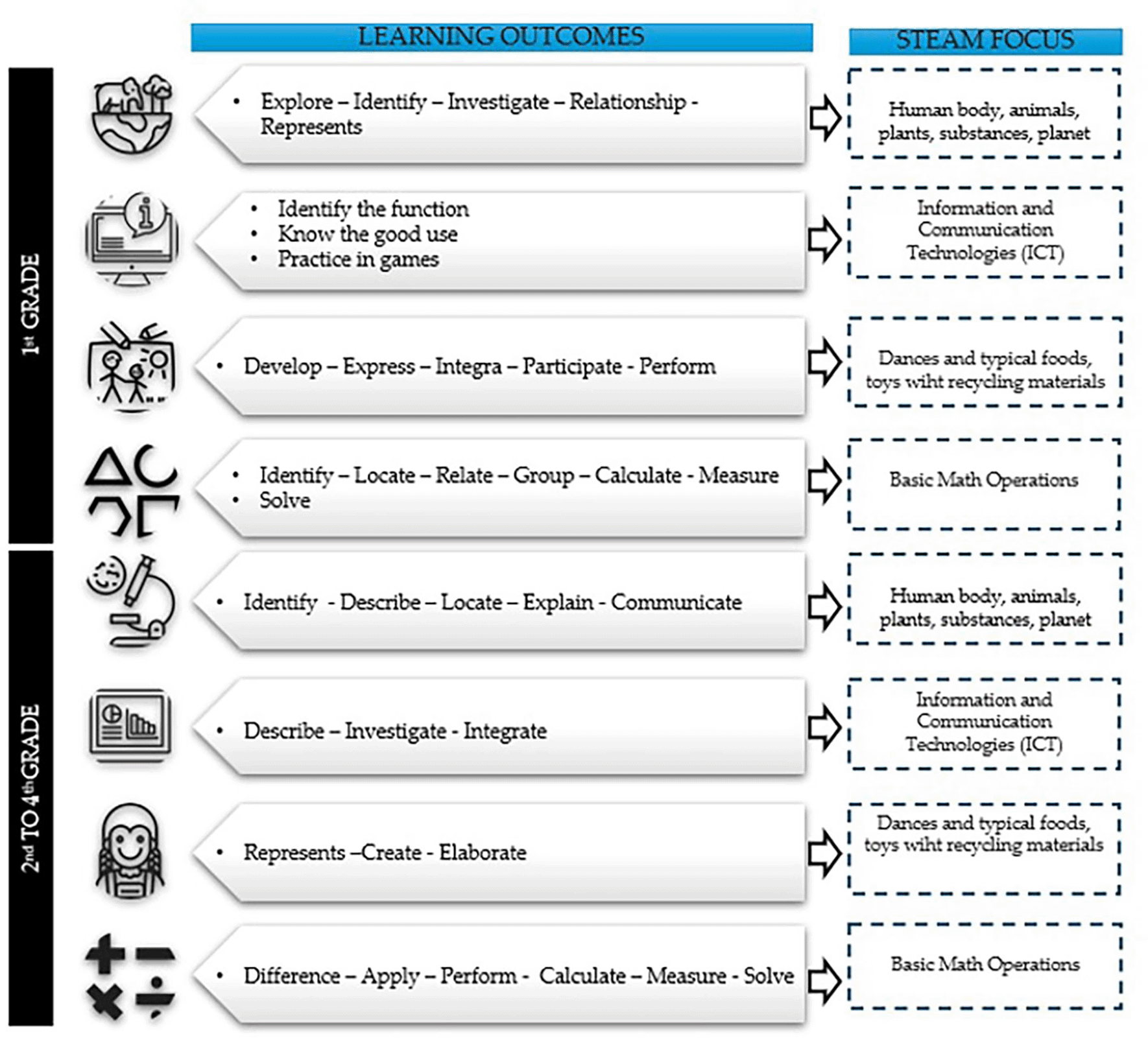
Although this work has been carried out consecutively in the schools of the community, so far, no effective tools have been used to measure the impact of the development of the skills associated with the model. For this reason, the present research aims to evaluate the influence of the STEAM educational model, using tools based on educational robotics, designed by professors of the Faculty of Education, Science, and Technology of the Universidad Técnica del Norte. Based on the above, the research was oriented from the question: How do training strategies through educational robotics influence the performance of STEAM skills in children from 5 to 8 years old in Ibarra-Ecuador?
To fulfill the purpose of the research, a qualitative approach was used. Specifically, oriented to the determination of the extent to which students from the first level of the Ecuadorian educational system are familiar with STEAM processes.
Given that there are no reports in the country on the development of STEAM skills in children who are part of official basic education programs, an exploratory transactional design was applied. In this case, an initial exploration was carried out in the communities during the development of school activities over three months. Likewise, the action-research model was applied to understand the edges of the problem and generate specific proposals. Using the convenience sampling criterion, 06 public institutions located in Ibarra-Ecuador were selected for the study. The study population corresponds to all students from first to fourth grade of basic education in the selected schools. Given the above, 309 students between 5 and 8 years of age were considered for the collection of information on STEAM skills.
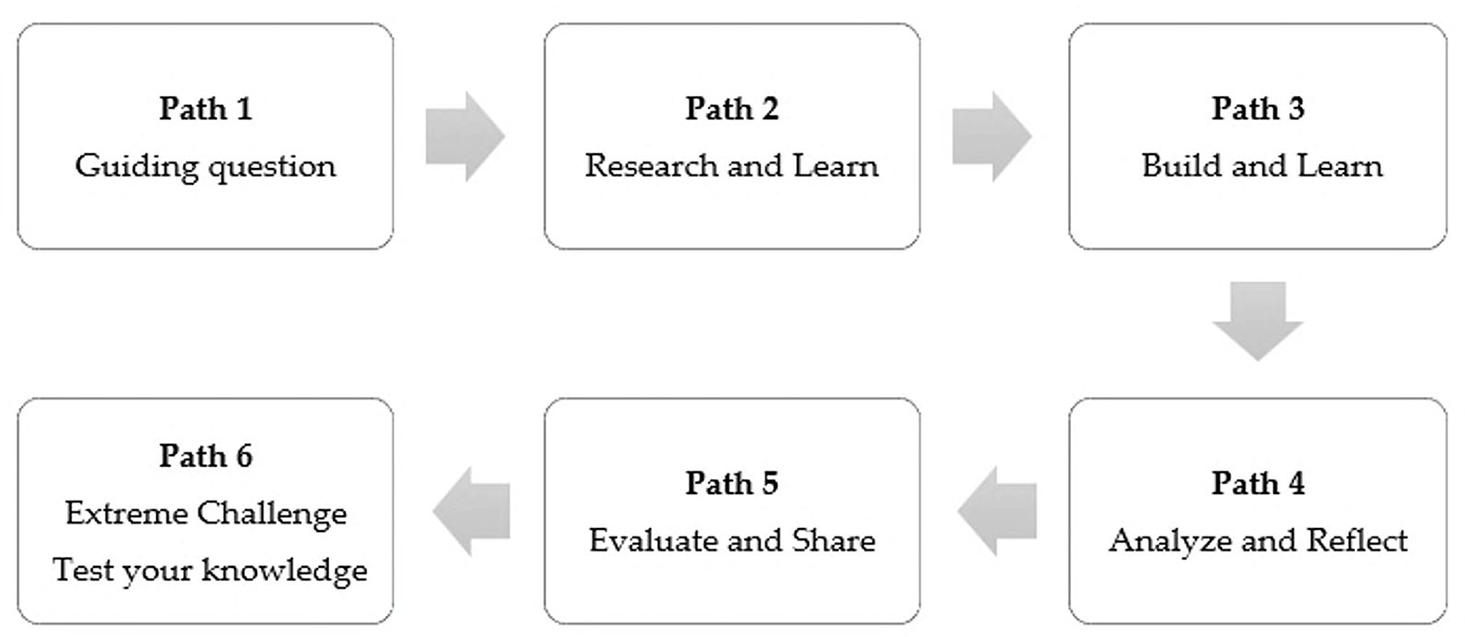
To obtain the results, pedagogical workshops were carried out by STEAM learning paths (see Figure 2), developed weekly in the selected institutions. Considering that in school and education, it is possible to generate learning routes that provide students with cultural and technological and cultural knowledge (Di Stasio & Miotti, 2024).
The observation technique was used, paying due attention to the children’s attitudes during the development of the activities. Based on the curriculum the Ministry of Education of Ecuador planned, 33 skills considered in the subjects and related to STEAM strategies were proposed. Then, to evaluate students’ attitudes towards STEAM, an instrument based on a 05-point Likert scale for the frequency of a behavior is used. Figure 3 shows the questions of the instrument used.
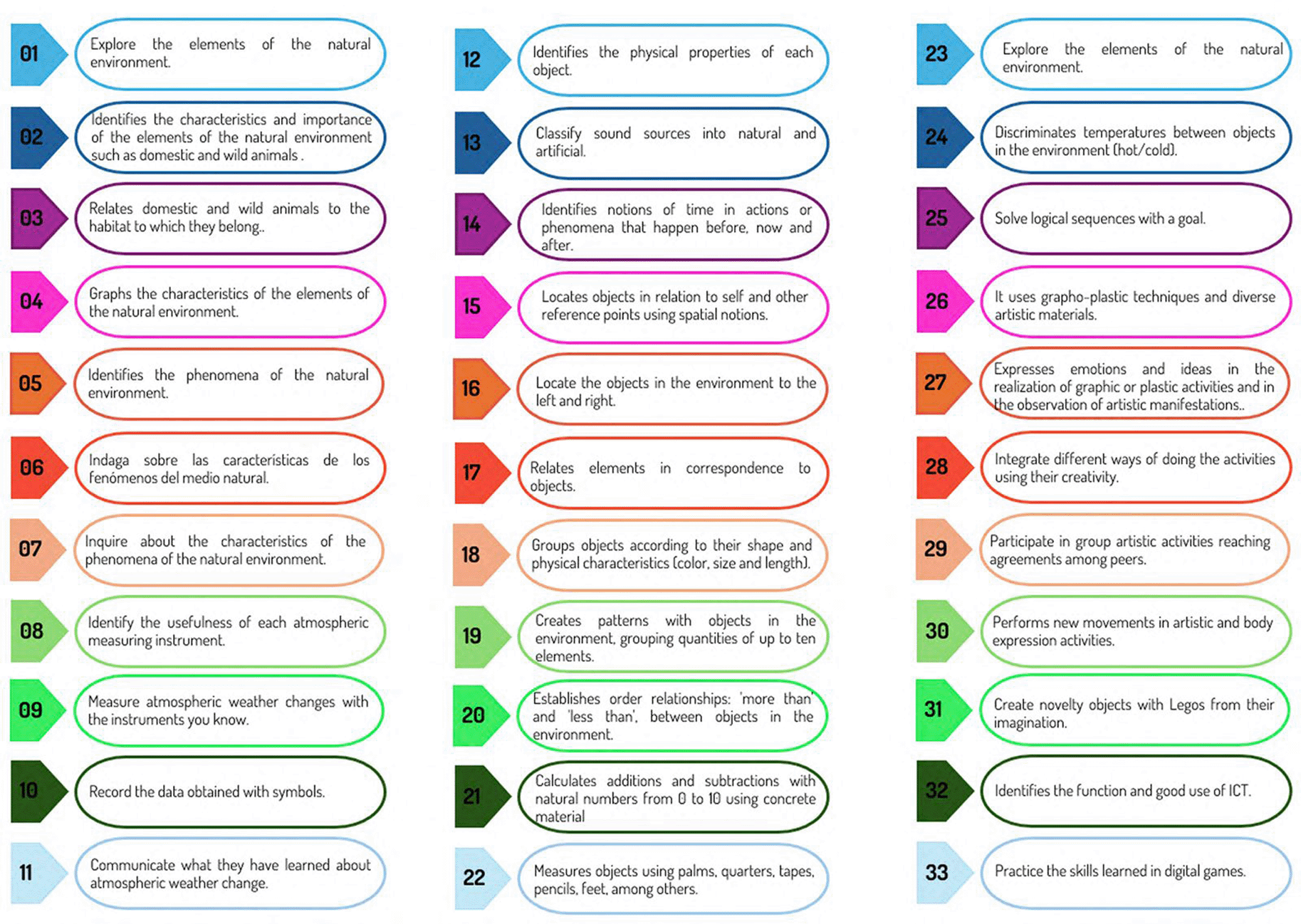
Table 1 shows the distribution by age and gender and the number of students for each educational institution selected for the study.
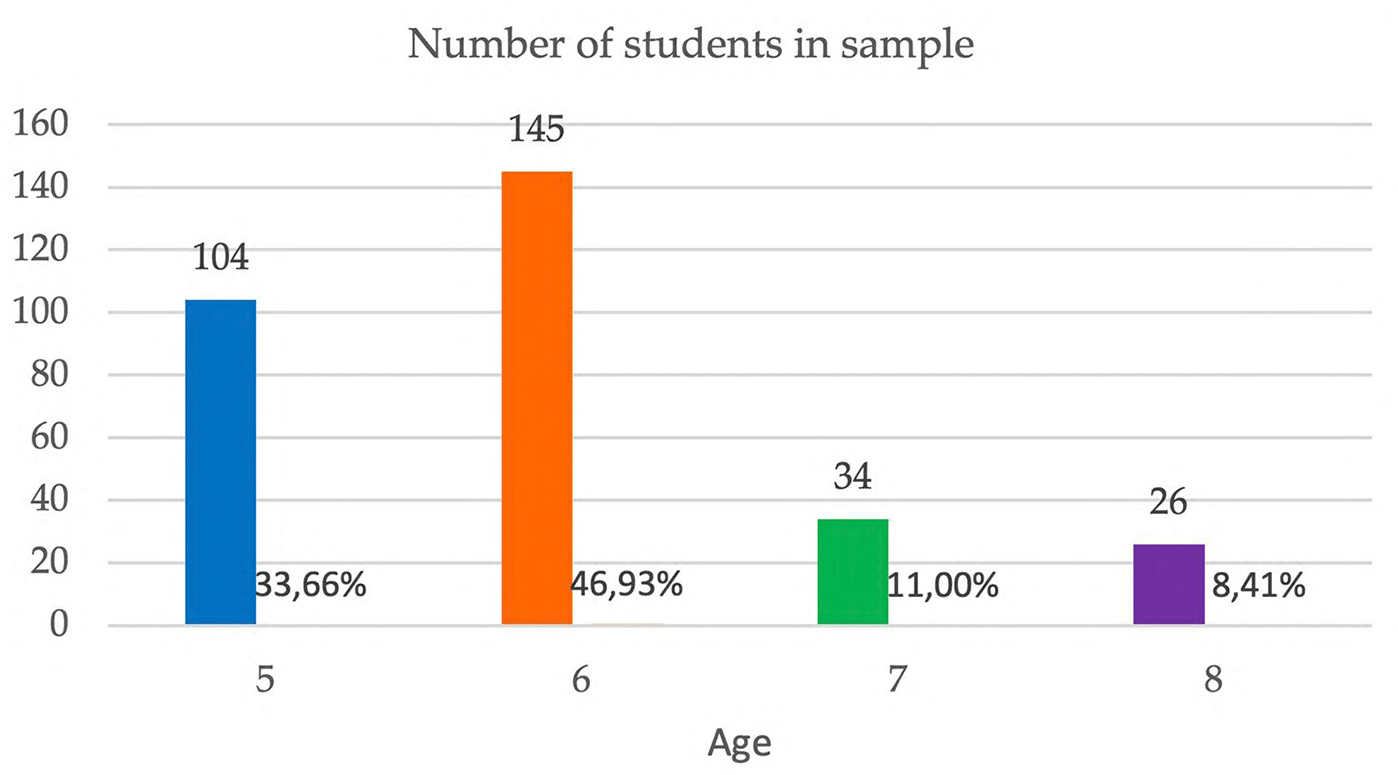
Regarding the age distribution of the students in the sample, 47% corresponded to students aged 6 years, 34% to students aged 5 years, while students aged 7 years represented 11% and those aged 8 years 8% of the total. The distribution by age is shown in Figure 4.
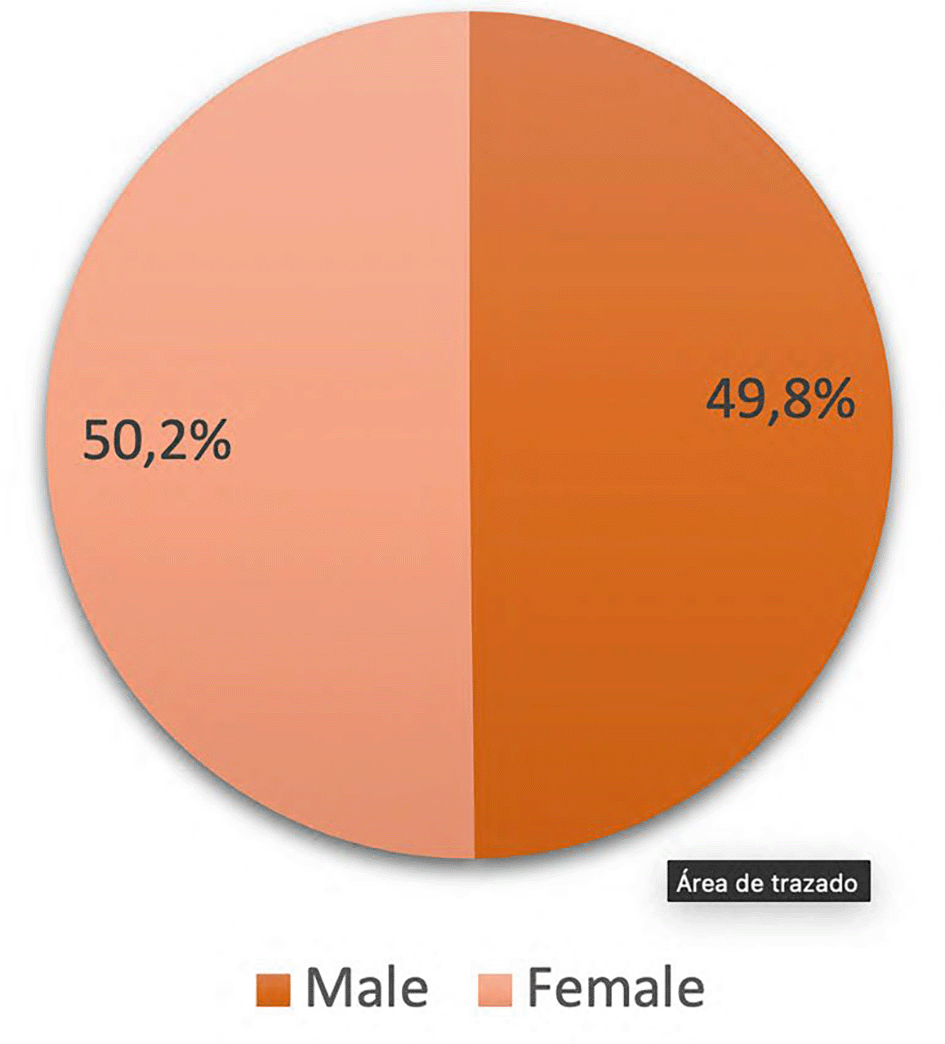
As for the gender of the respondents, 50.2% corresponded to the female gender (154 girls surveyed) and the other 49.8% to the male gender (155 boys surveyed), as shown in Figure 5.
The results obtained for students, classified by age, are shown, considering all educational institutions.
3.2.1 Evaluation of 5-year-old students
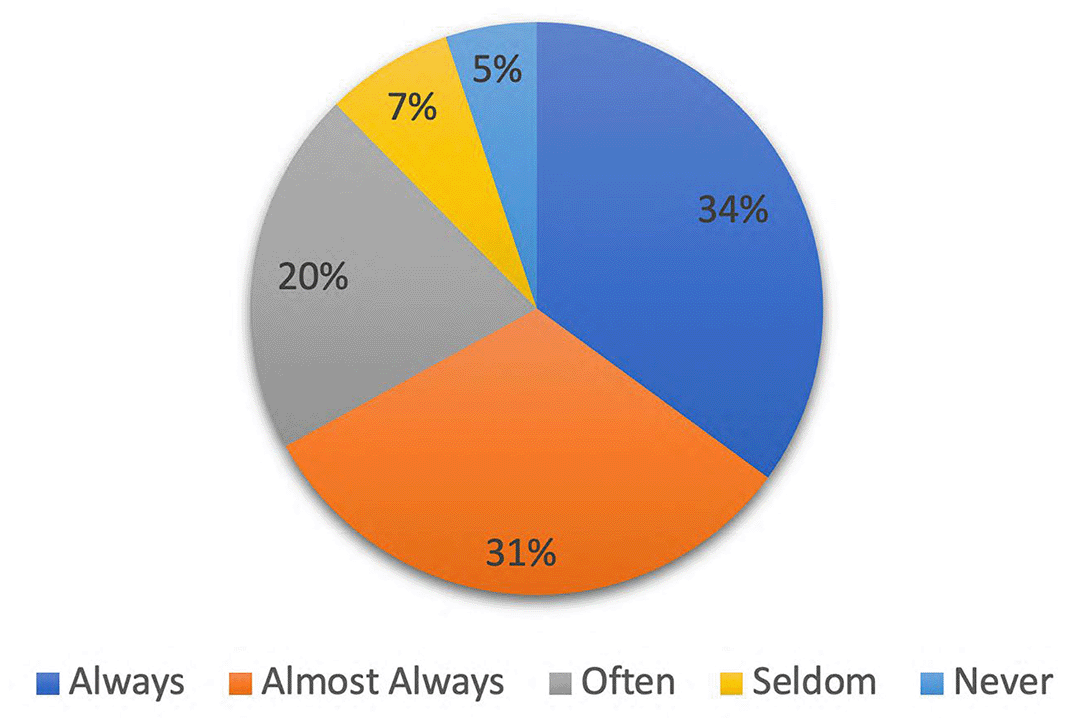
Of the 104 students surveyed, who were 5 years old at the time of the data collection, 50 were girls and 54 were boys. Sixty-five percent met the STEAM skills always and almost always, 20% met them often, while 12% met these skills rarely or never (see Figure 6).
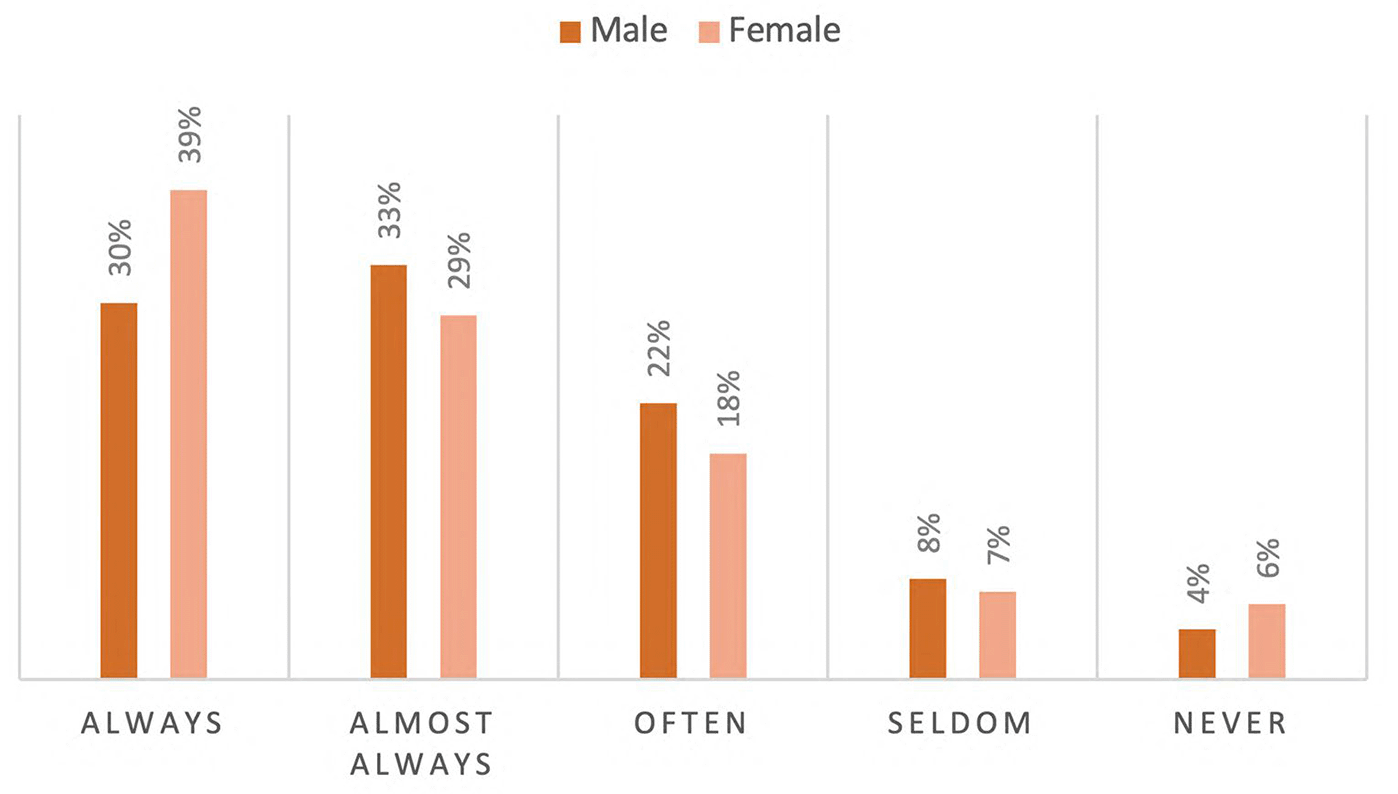
In this case, the difference between girls and boys who always and almost always comply with STEAM skills is 6 percentage points in favor of girls. Thus, Figure 7 shows that 68% of girls always and almost always comply with STEAM skills while boys register a percentage of 62%. On the other hand, 13% of girls rarely or never comply with these skills, and 12% of boys have the same behavior.
3.2.2 Evaluation of 6-year-old students
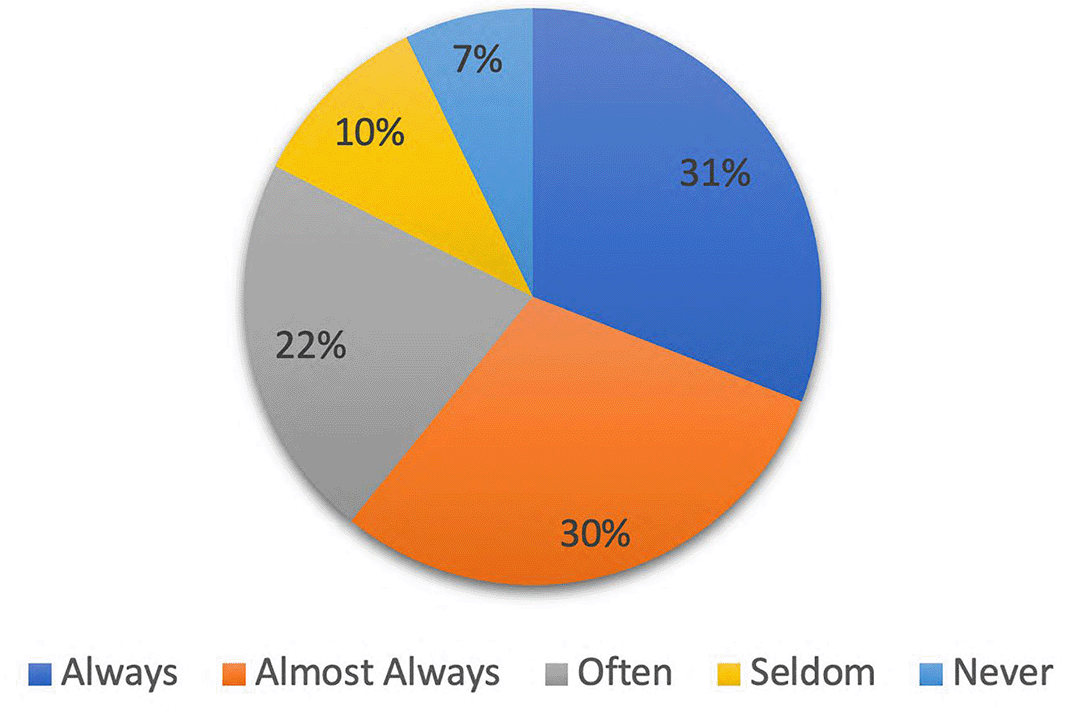
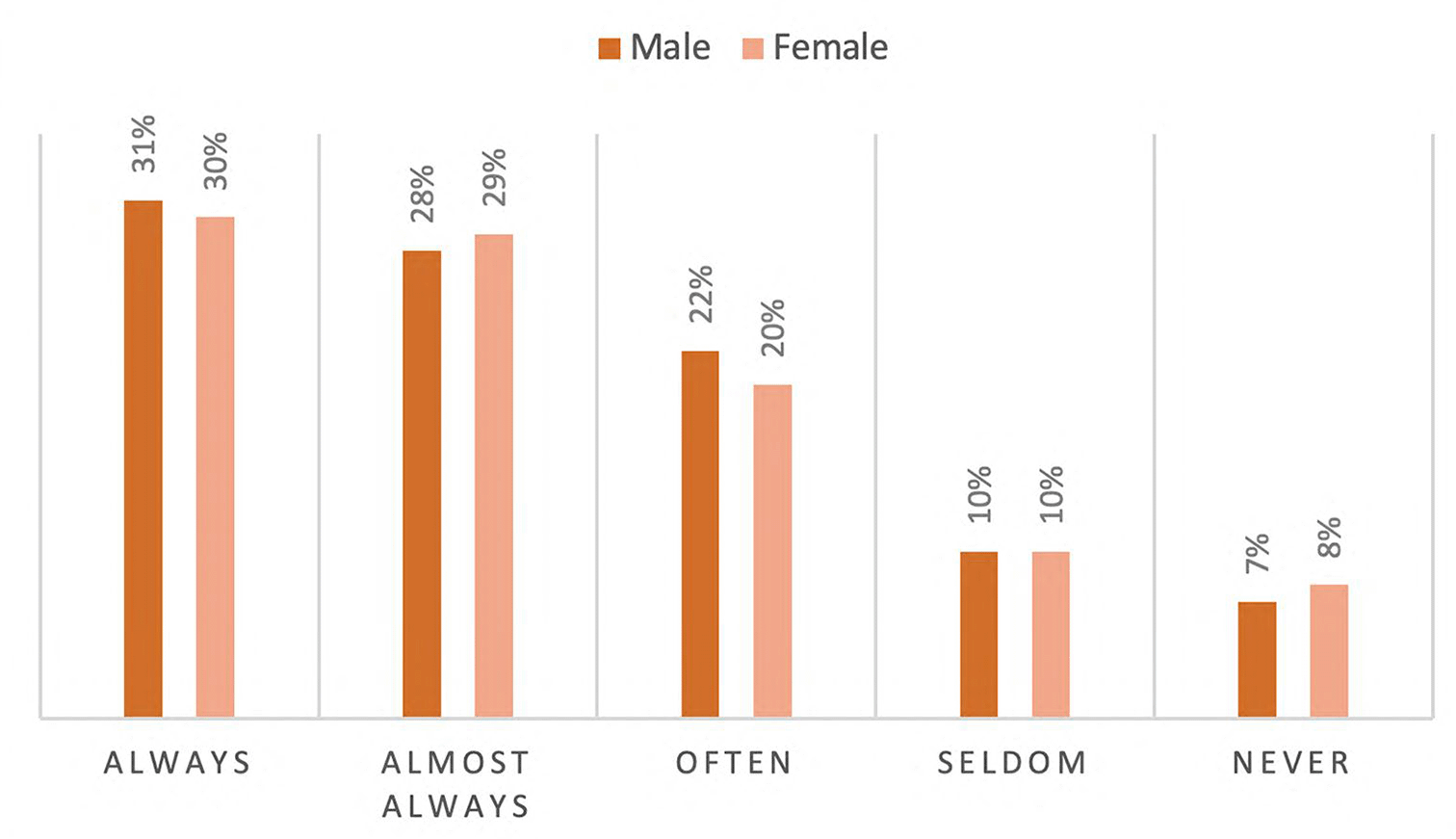
During the study 145 students surveyed were 6 years old. Figure 8 shows that 59% of them always and almost always perform STEAM skills, while 17% rarely or never perform these skills and 21% perform them often.
For the evaluation of 6-year-old students, there was a sample of 73 girls and 72 boys. In this case, there were no differences between girls and boys who always and almost always comply with the STEAM skills, since both register compliance of always and almost always of 59% (see Figure 9). On the other hand, the difference between girls and boys who rarely or never comply with STEAM skills is also similar, registering 18% for girls and 17% for boys.
3.2.3 Evaluation of 7-year-old students
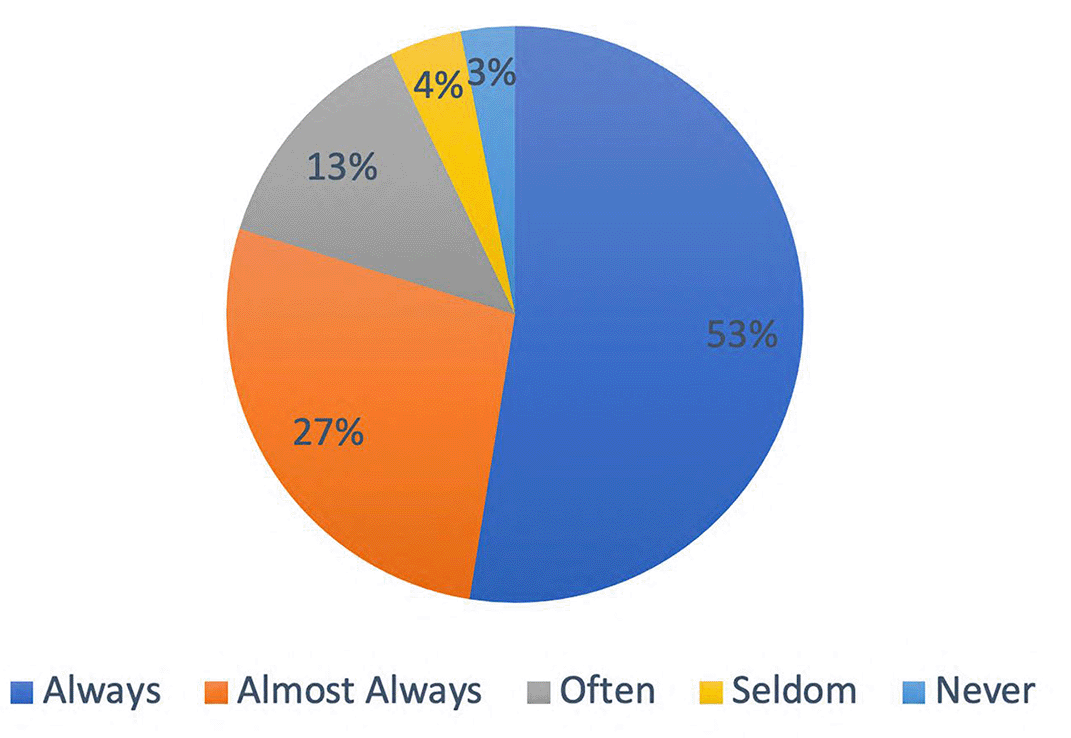
Of the 34 students surveyed who were 7 years old at the time of the data collection, 80% always and almost always comply with STEAM skills. Of the 34 students surveyed who were 7 years old at the data collection, 80% always and almost always comply with the STEAM skills, while only 7% rarely or never comply with these skills and 13% comply with them often, as shown in Figure 10.
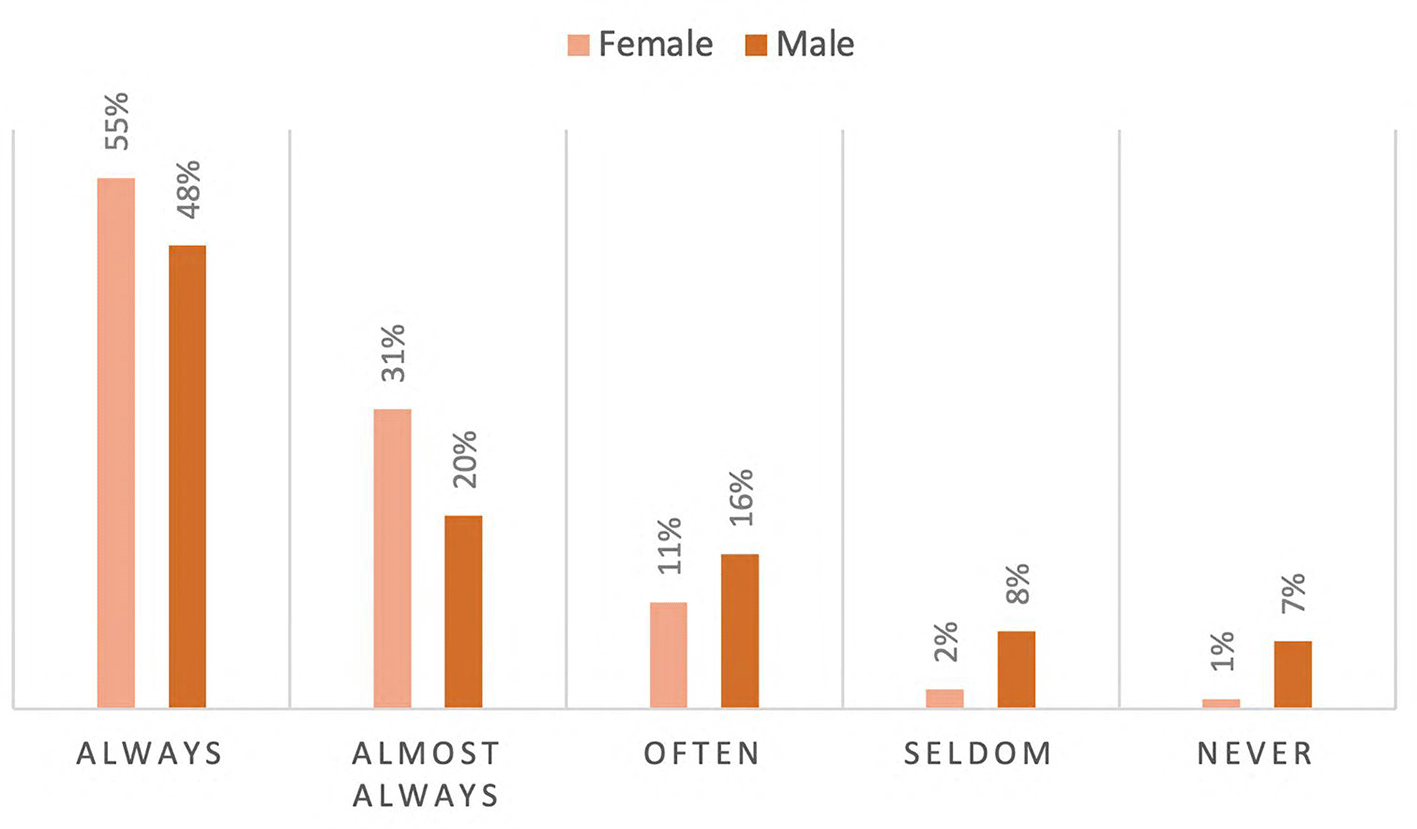
The sample of 7-year-old students consisted of 22 girls and 12 boys. In this case, the difference between girls and boys, who always and almost always comply with STEAM skills, amounts to 18 percentage points in favor of girls.
Thus, 86% of girls always and almost always comply with STEAM skills while boys register a percentage of 62% (24 percentage points difference in favor of girls). On the other hand, only 3% of girls rarely or never comply with these skills, while boys have a percentage of 15%. This age group is where the greatest difference in compliance occurs between girls and boys, as shown in Figure 11.
3.2.4 Evaluation of 8-year-old students
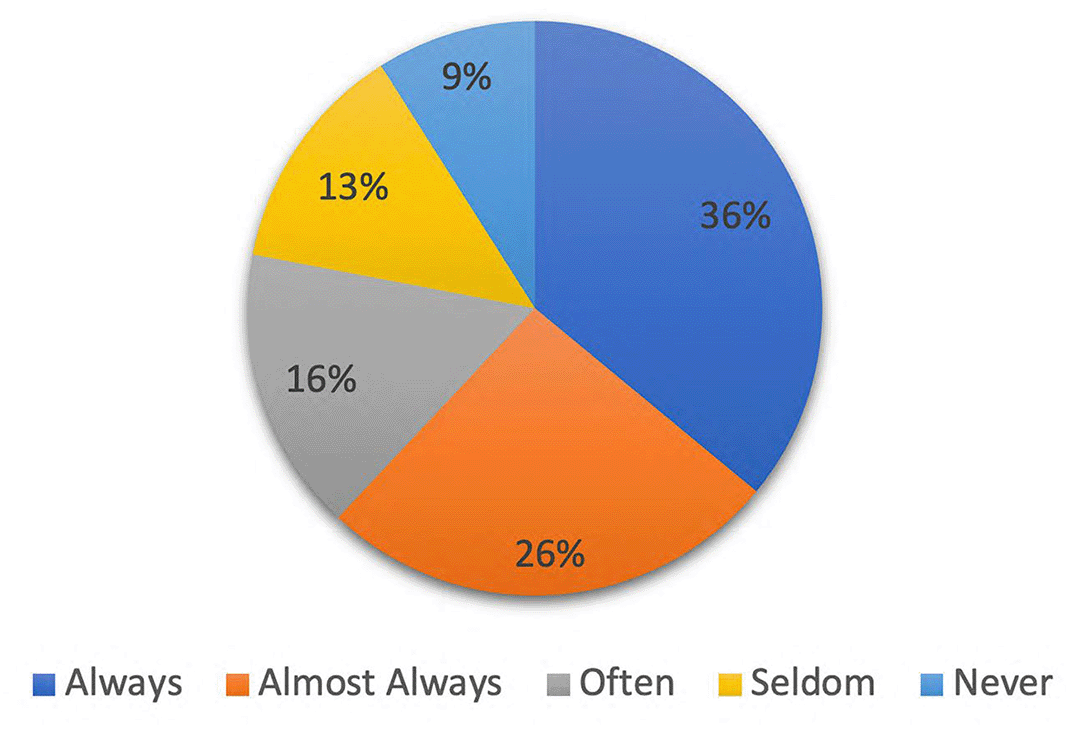
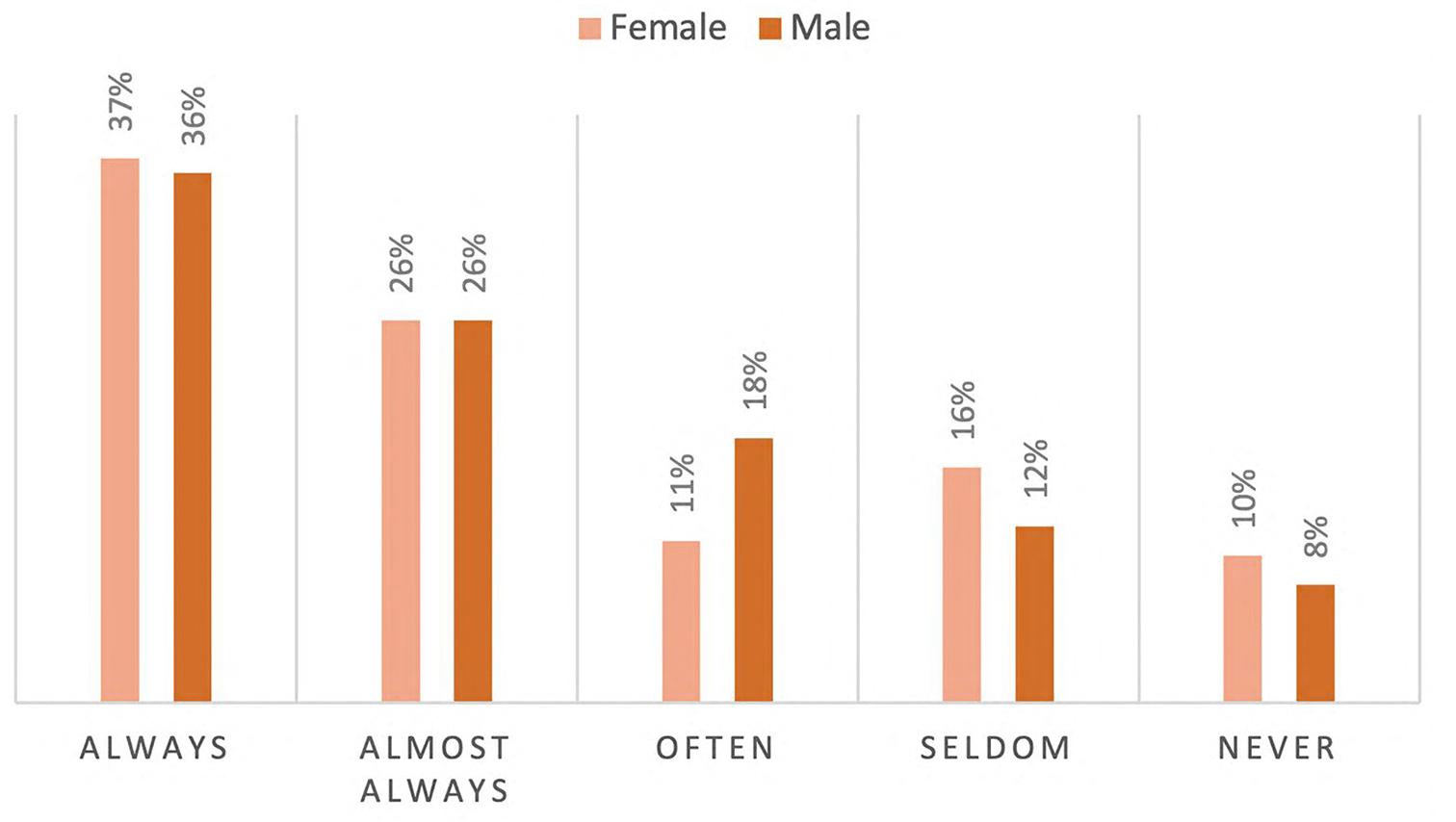
Figure 12 shows that 62% meet STEAM skills always and almost always, while 22% rarely or never meet these skills and 16% meet them often for the 26 students surveyed who were 8 years old at the time of the data collection.
In the present study, 9 girls and 17 boys were analyzed. In this case, there is no difference between girls and boys who always and almost always comply with the STEAM skills, since the percentage of always and almost always compliance amounts to 62% for both sexes. On the other hand, 26% of girls rarely or never comply with these skills, in contrast to boys who register a percentage of 20% where they rarely or never comply with STEAM skills (see Figure 13).
From the age analysis, the group of 7-year-old students is the one with the highest percentage of compliance with STEAM skills (around 80% compliance always and almost always, while the lowest compliance is at age 6 (59% compliance), as shown in Figure 14.
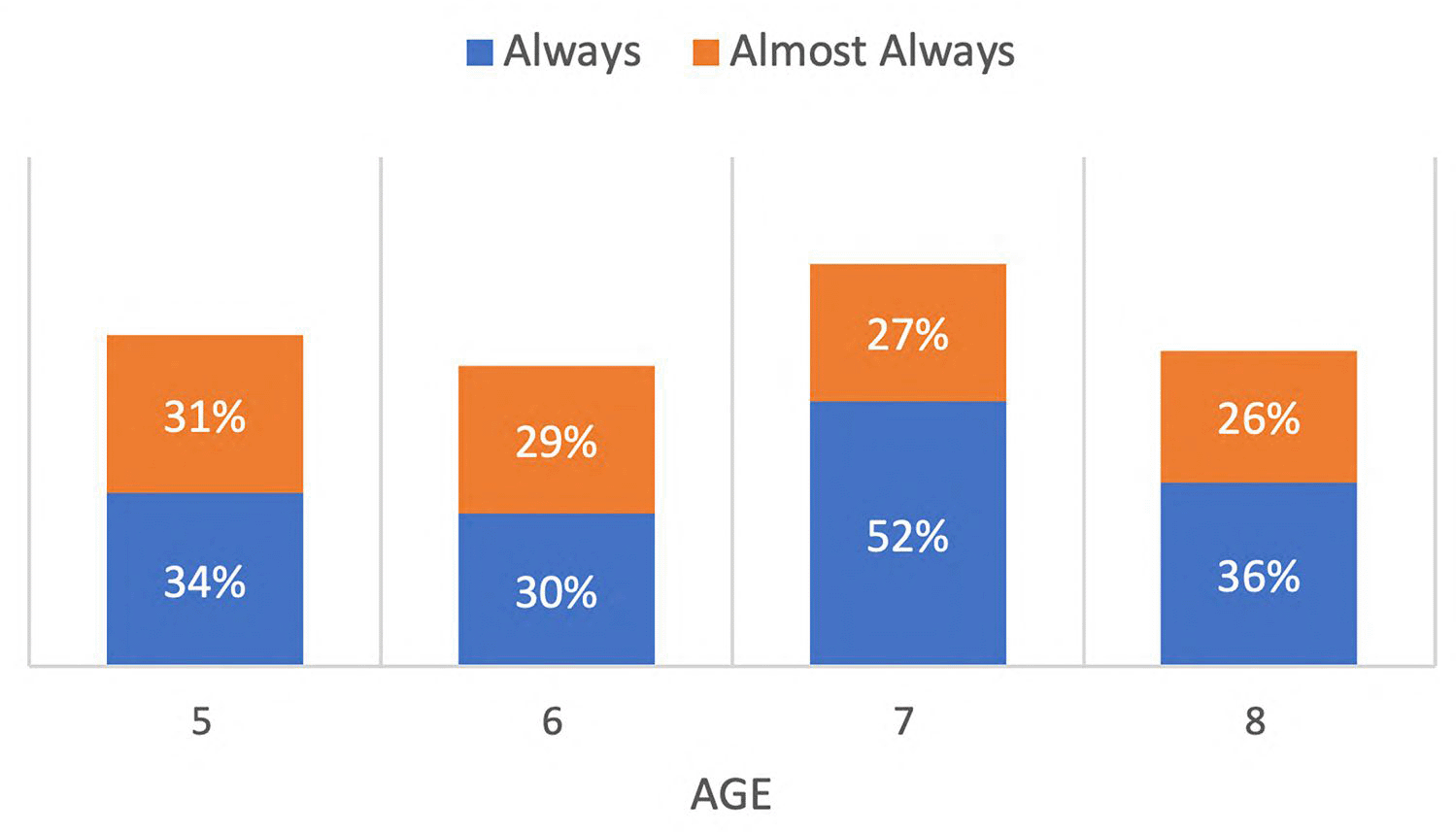
It is worth mentioning that the evolution of STEAM skills throughout the ages analyzed shows an irregular behavior, decreasing between 5 and 6 years of age, increasing between 6 and 7 years of age and, decreasing between 7 and 8 years of age.
3.3.1 Results for the EI-01
Of the 155 students surveyed in EI-01, Figure 15 shows that 79% comply with STEAM skills always and almost always, while only 7% seldom or never comply with these skills and 14% comply with them often. Likewise, it is observed that the students of EI-01 have satisfactorily developed the management of science as a skill, while the tools associated with engineering are the least acquired.
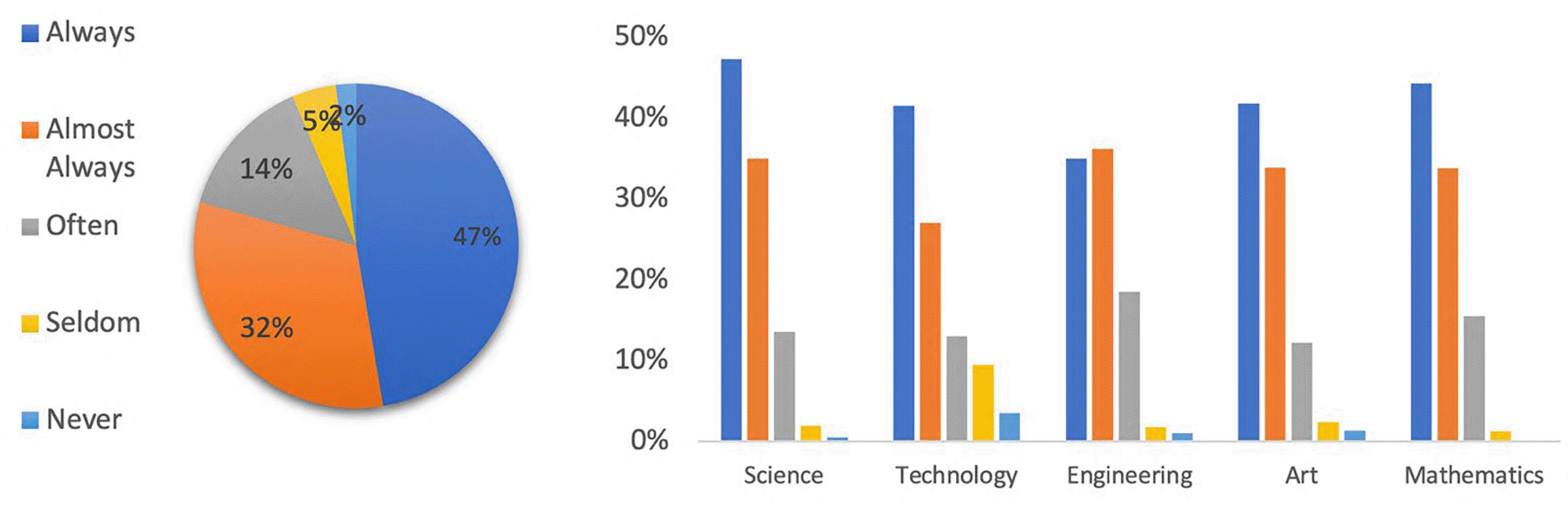
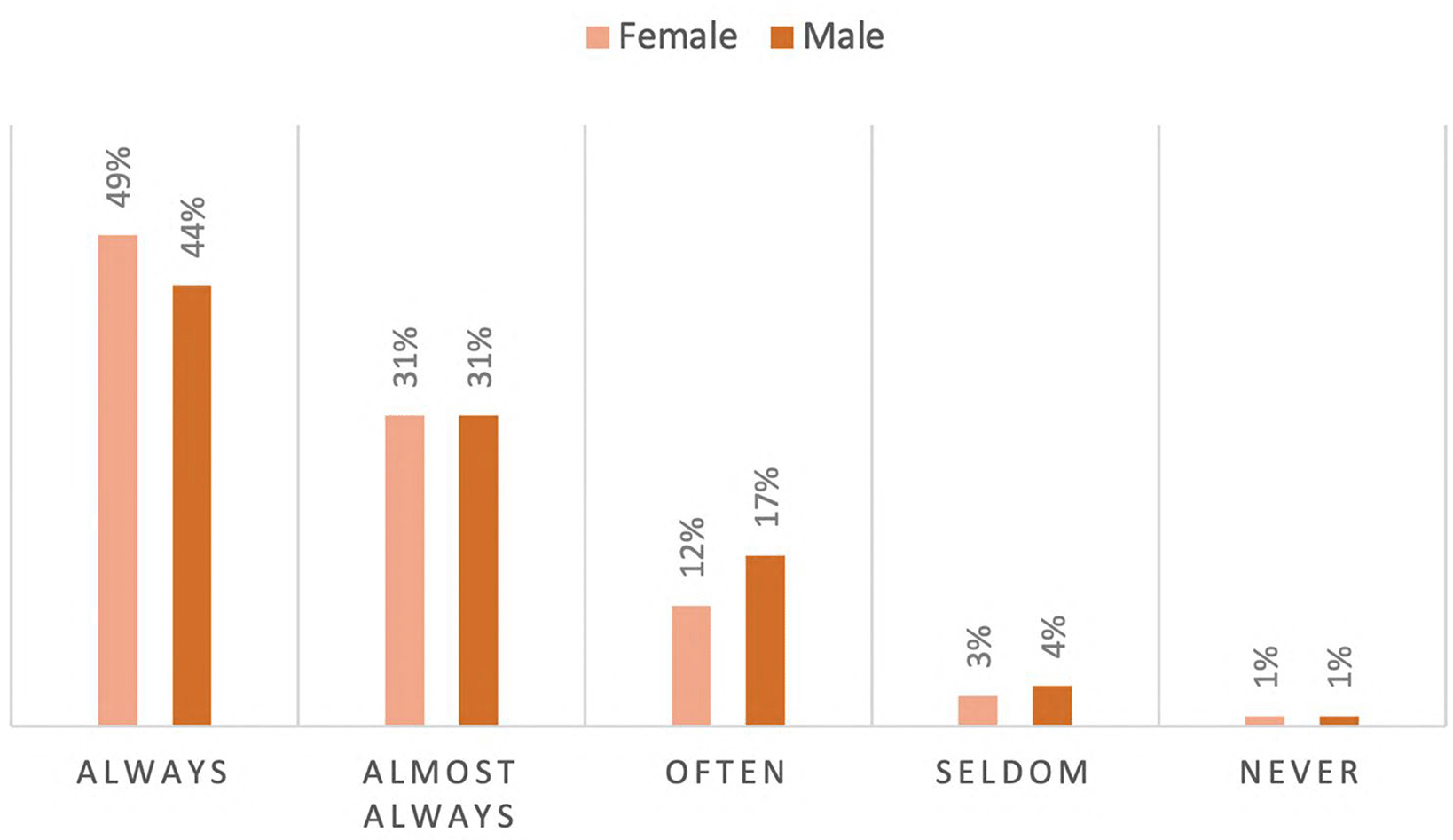
In EI-01, information was collected from 79 girls and 76 boys. In this case, the difference between girls and boys who always and almost always comply with STEAM skills is 6 percentage points in favor of girls.
Thus, 81% of girls always and almost always comply with STEAM skills while boys register a percentage of 75%. On the other hand, only 4% of girls rarely or never comply with these skills and boys register 5% compliance with the skills (rarely and never) (see Figure 16).
As for the results obtained by age, of the 155 students in EI-01, 59 are registered as 5-year-olds. It is observed that 80% always and almost always comply with STEAM skills, 13% comply often, while 3% rarely comply with these skills. On the other hand, for the 56 records of 7-year-old students, 73% always and almost always comply with STEAM skills, 6% rarely or never comply with these skills, and 16% comply with them often. Likewise, 26 records are available for 7-year-olds, of whom 85% always and almost always comply with STEAM skills, while 3% rarely or never comply with these skills, likewise 11% comply with them often. Finally, for EI-01, 14 8-year-old students were recorded, of whom 71% always and almost always comply with STEAM skills, while 10% rarely or never comply with these skills, and 18% comply with them often.
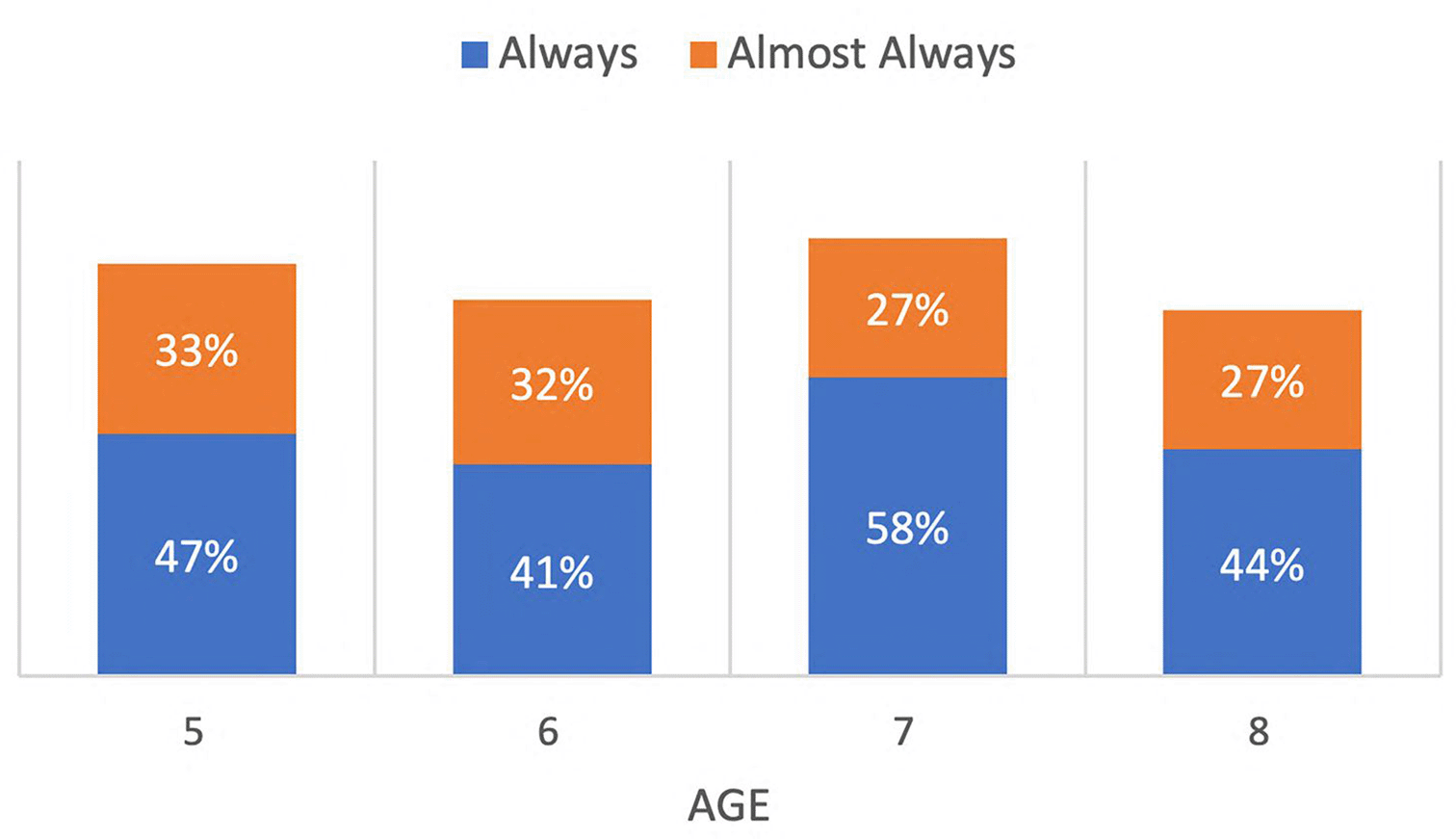
Corroborating the general results of the age analysis, in EI-01, children 7 years old presented a higher percentage of compliance with STEAM skills (85%), while the lowest compliance was recorded by students 6 years old (73% compliance) (see Figure 17). Likewise, the evolution of compliance with STEAM skills between 5 and 8 years of age is irregular.
3.3.2 Results for the EI-02
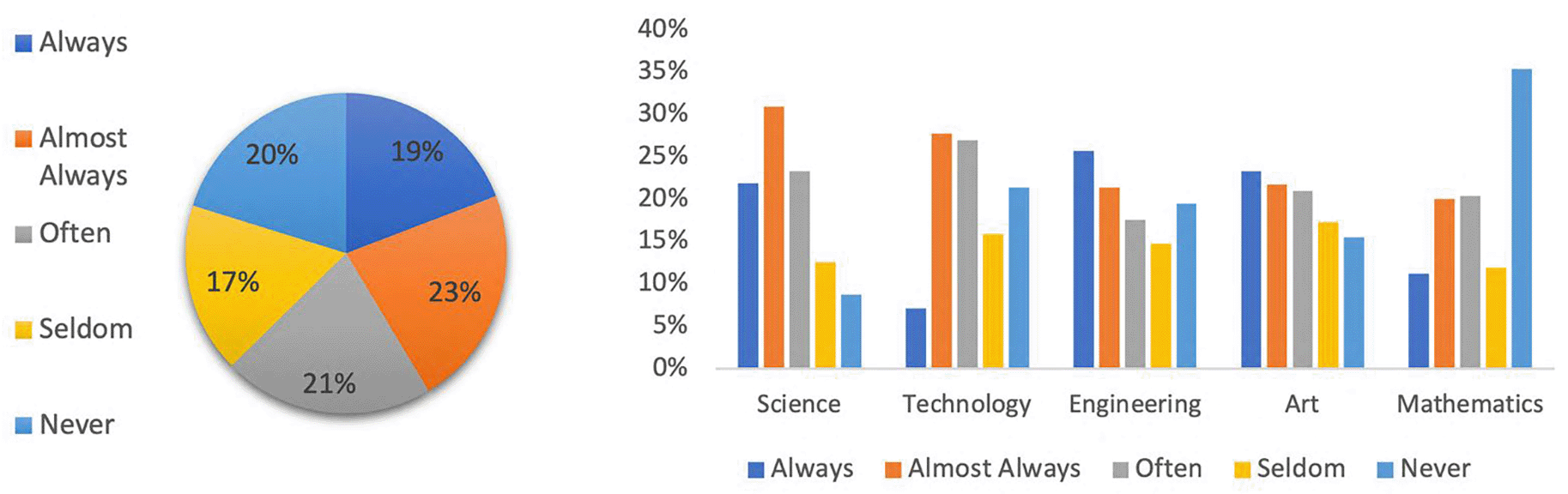
Figure 18 shows that of the 52 students surveyed EI-02 41% always and almost always comply with the STEAM skills, while 37% do so rarely or never and 21% comply often. The EI-02 highlights that 35% of the students have not developed mathematical skills, which should lead to taking the necessary measures to modify this situation.
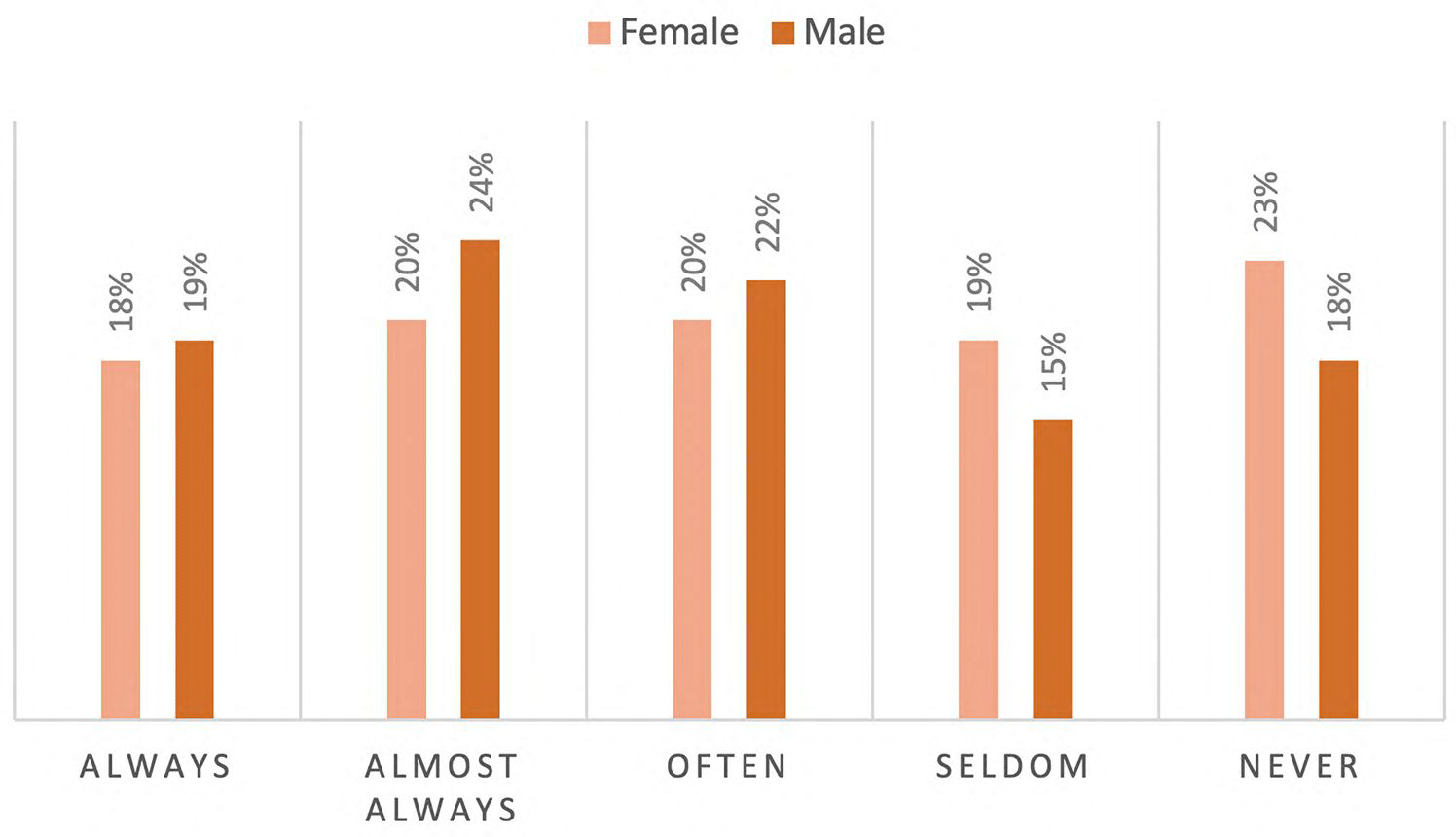
In the collection of information in EI-02, 23 girls and 29 boys were involved, identifying a difference between girls and boys who always and almost always comply with the STEAM skills of 6 percentage points in favor of boys. Thus, 44% of the boys always and almost always comply with the STEAM skills while the girls register a percentage of 38%. Likewise, 33% of boys rarely or never comply with these skills and girls register 42% compliance with the skills (rarely and never) (see Figure 19).
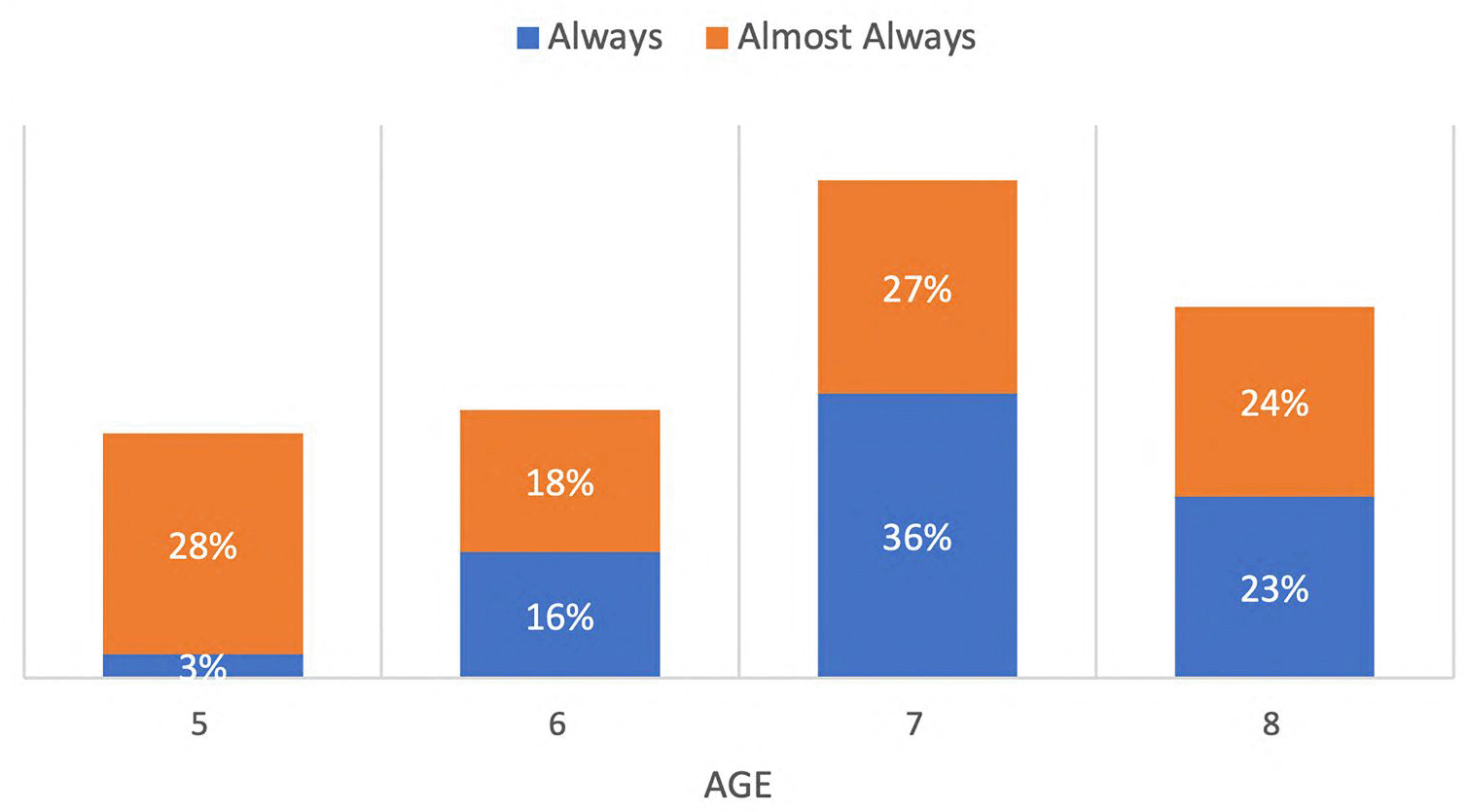
On the other hand, about the results obtained by age for EI 02, of the 52 students surveyed, 8 were 5 years old at the time of the data collection, of whom only 32% always and almost always comply with the STEAM skills, while 39% rarely or never comply with these skills, and 26% comply with them often. Of the 6-year-olds, only 34% always and almost always comply with STEAM skills, while 42% rarely or never comply with these skills, and 23% comply with them often. Similarly, there were 08 7-year-old students, of whom 62% always and almost always comply with STEAM skills, while 19% rarely or never comply with these skills, and 18% comply with them often. Finally, for EI-02, 12 students of 08 years of age were analyzed, of whom 47% always and almost always comply with STEAM skills, while 37% rarely or never comply with these skills, and 15% comply with them often.
According to the age analysis, the group of 5-year-old students in Educational Unit EI-02 has the lowest proportion of compliance with STEAM skills (32% compliance with always and almost always). In the next age group (6 years), although compliance with always and almost always increases 2 percentage points (34%), it continues to be a low proportion. At 7 years of age, the proportion of compliance improves to 62% (an increase of 28 percentage points), but decreases again in the 8-year age group (47% compliance always and almost always) (see Figure 20).
3.3.3 Results for the EI-03
Figure 21 shows that 49% meet STEAM skills always and almost always, while 17% rarely or never meet these skills and 35% meet them often, of the 28 students surveyed in EI-03. In this EI the students have satisfactorily developed the management of technology as a skill, while engineering-related tools have less mastery.
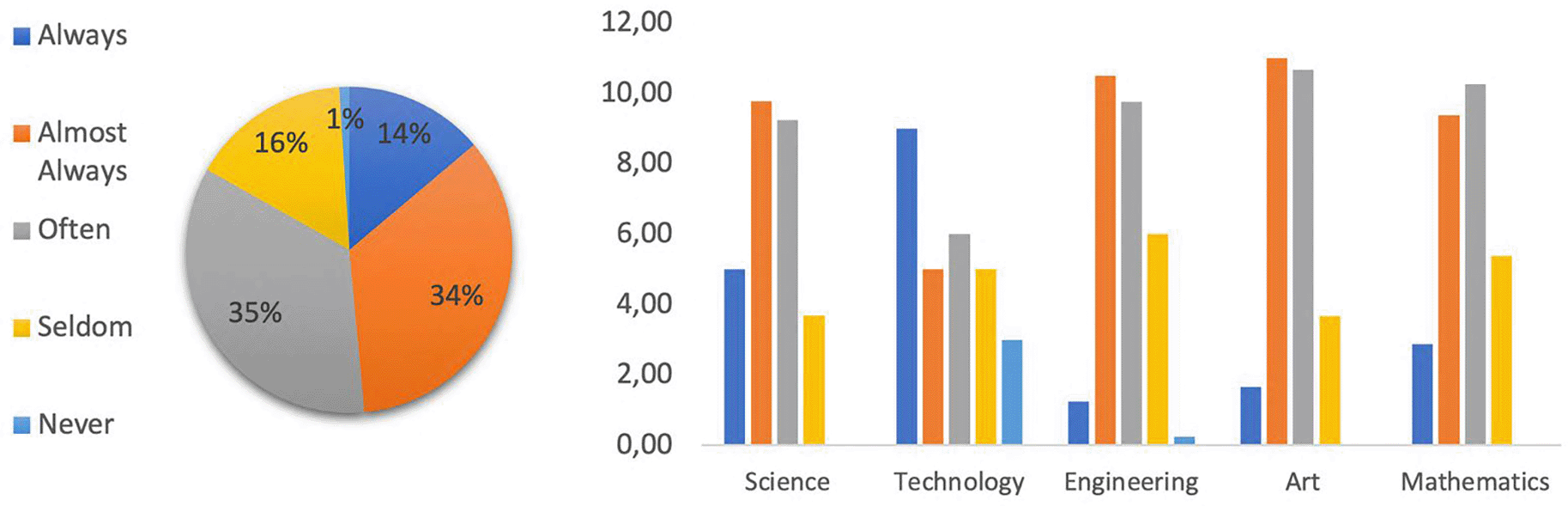
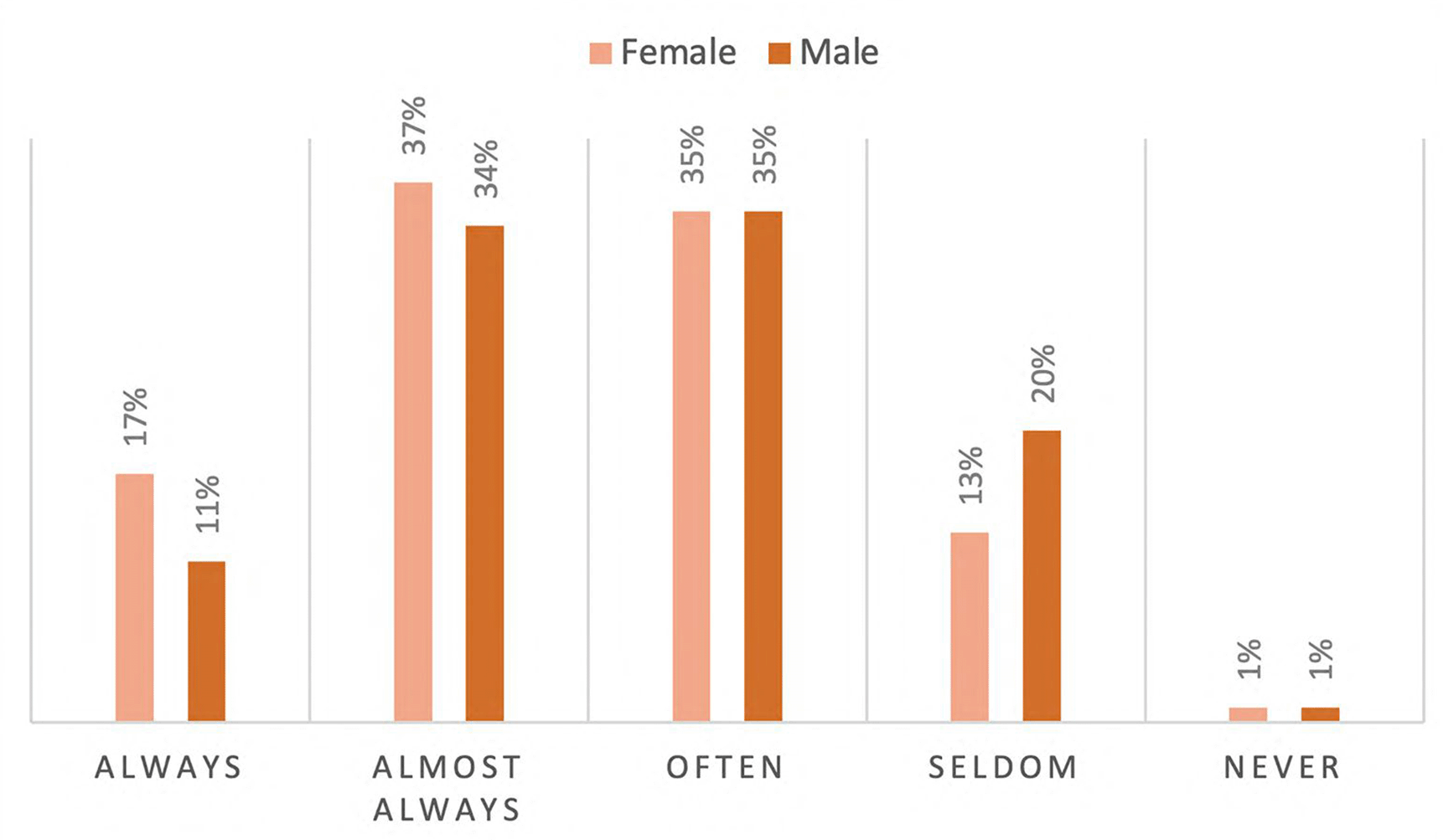
Of the 28 respondents in EI-03, 15 were female and 13 were male. This EI presents the highest difference between girls and boys who always and almost always comply with STEAM skills, registering a difference of 8 percentage points in favor of girls.
Thus, 53% of girls always and almost always comply with the STEAM skills while boys register a percentage of 45%. Likewise, 14% of girls rarely or never comply with these skills and boys register 21% compliance with the skills (rarely and never), as shown in Figure 22.
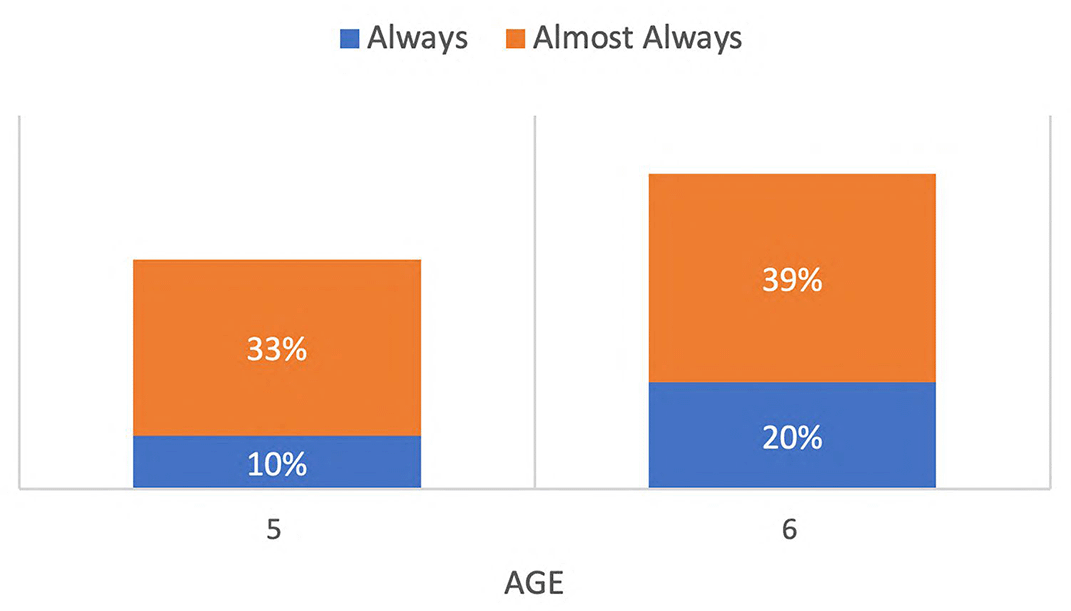
In EI-03, the sample corresponds to 28 students between the ages of 5 and 6 years old. Seventeen 5-year-old students were recorded, of whom 43% always and almost always comply with STEAM skills, while 22% rarely and never comply with these skills. Likewise, 11 students of 6 years old were evaluated, observing that 59% always and almost always comply with STEAM skills, while 9% rarely and never comply with these skills.
From the information corresponding to the 5 and 6 age groups, there was an increase of 16 percentage points in compliance with the STEAM skills of always and almost always, going from 43% to 59% compliance with these skills (see Figure 23).
3.3.4 Results for the EI-04
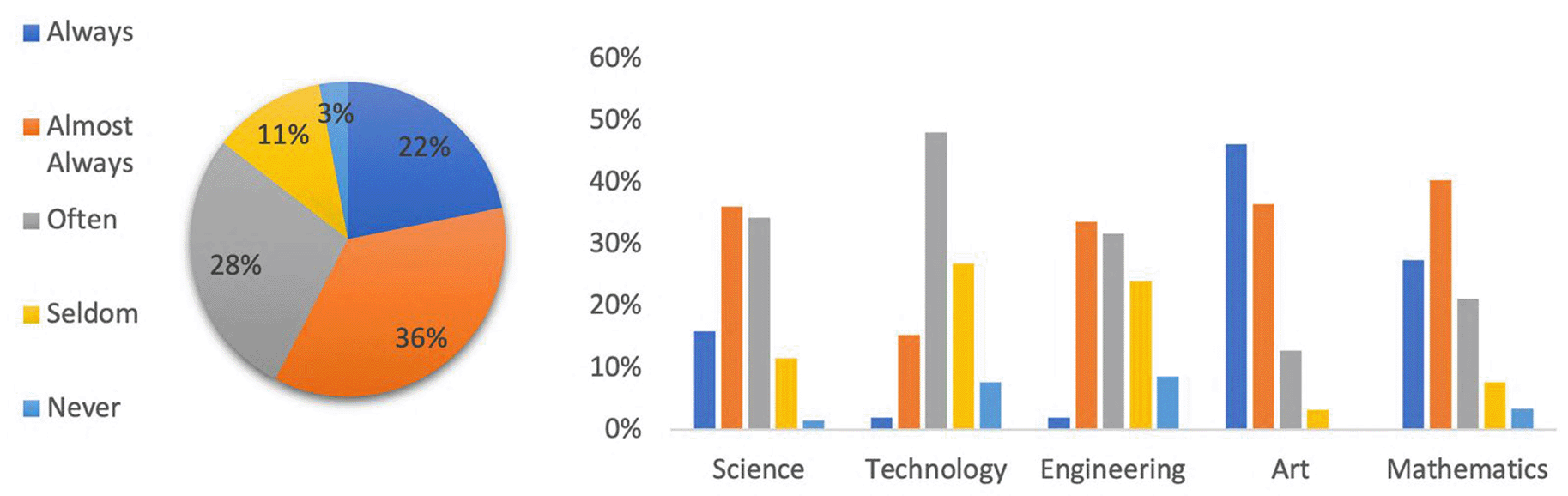
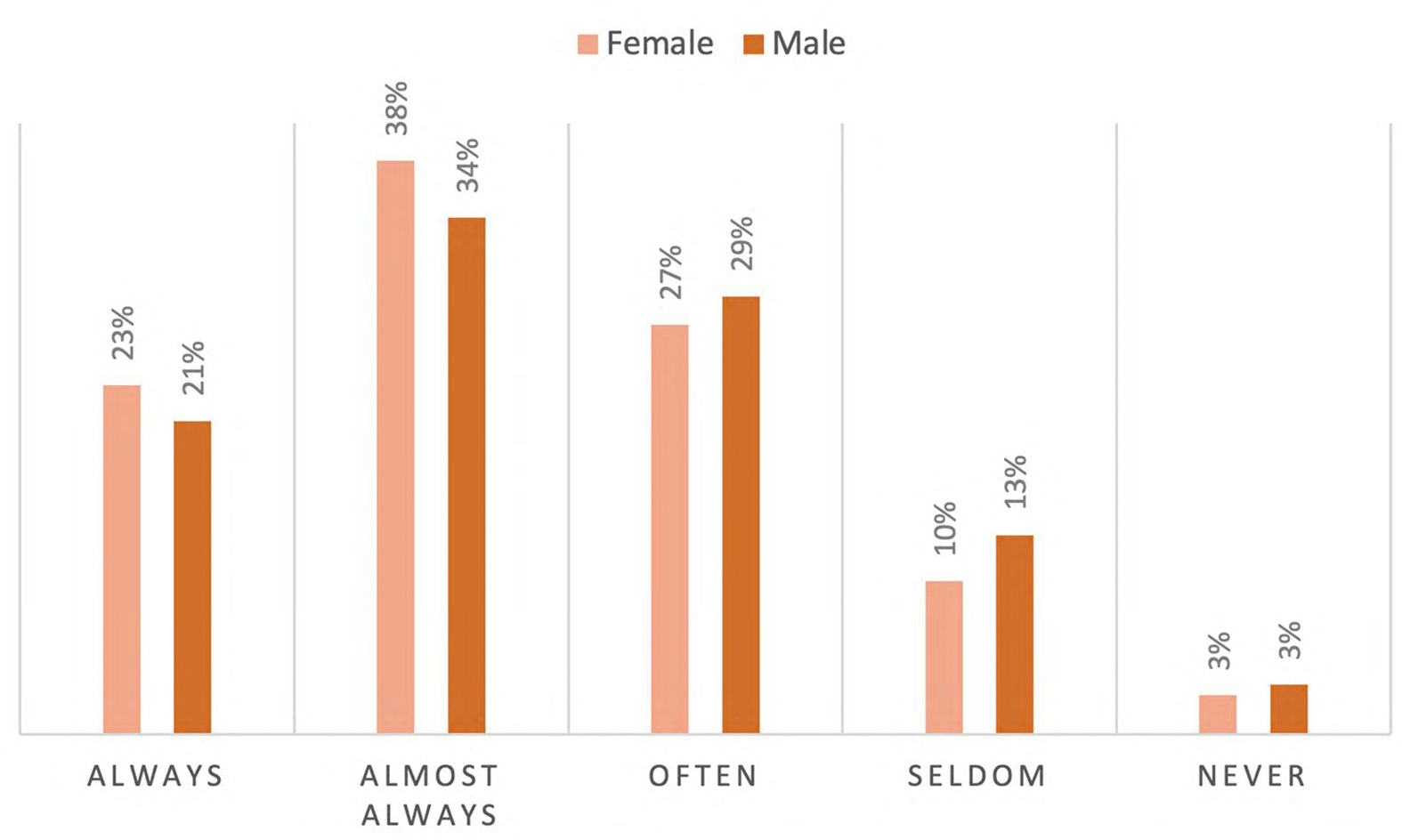
According to Figure 24, of the 26 students surveyed in EI-04 57% of EI-04 students meet STEAM skills always and almost always, while only 15% rarely or never meet these skills and 28% meet them often. EI-04 students have satisfactorily developed artistic skills, but present significant deficiencies in the handling of technology and skills associated with engineering.
In EI-04, 13 girls and 13 boys participated in the data collection. The collection served to identify a difference between girls and boys, who always and almost always comply with the STEAM skills of 6 percentage points in favor of the girls. For this case, 60% of girls always and almost always comply with STEAM skills, while girls register a percentage of 54%. Likewise, 13% of girls rarely or never comply with these skills and boys register 16% compliance with the skills (rarely and never), as shown in Figure 25.
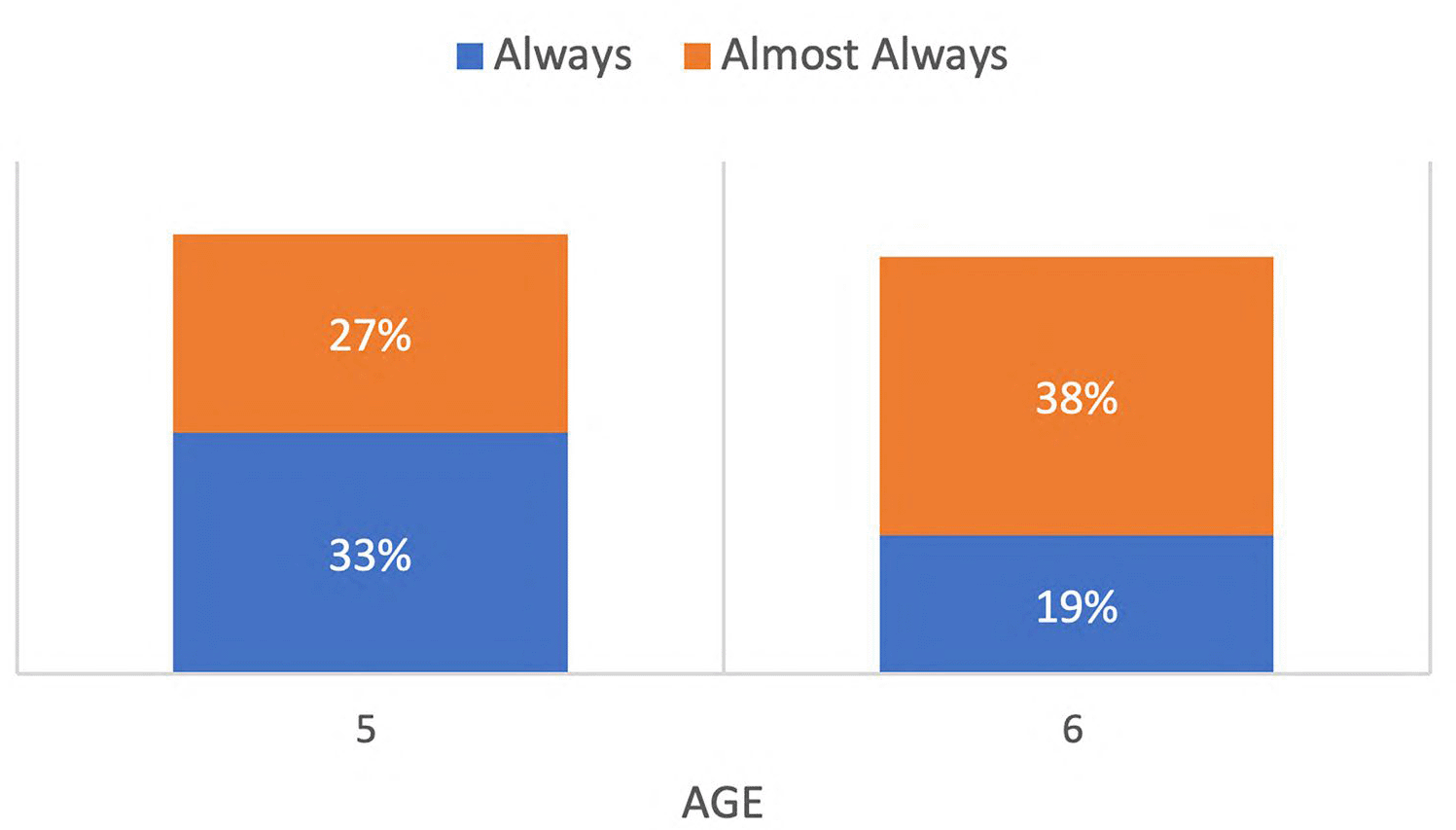
Like the previous case, in EI-04 only students of 5 and 6 years old were analyzed. In this sense, of the 26 students, 5 students of 5 years old were counted, of which 61% always and almost always comply with the STEAM skills, while none of them rarely and never comply with these skills and 39% comply with them often. On the other hand, of the 21 6-year-old students, 57% always and almost always comply with STEAM skills, while 18% rarely and never comply with these skills and 25% comply with them often.
In EI-04, information was collected for the 5 and 6 year-old age groups. A decrease in compliance with STEAM skills of 4 percentage points was observed among 5- and 6-year-old respondents (see Figure 26).
3.3.5 Results for the EI-05
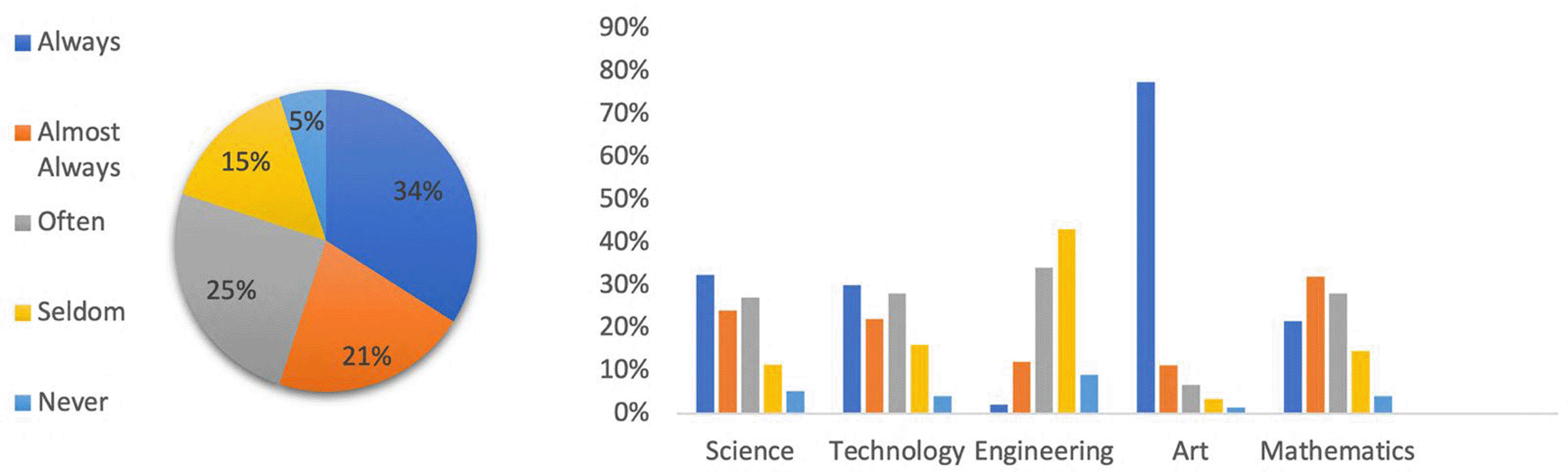
Of the 25 students assessed in EI-05, 56% always and almost always meet the STEAM skills, while 20% rarely or never meet these skills and 25% meet them often. EI-05 students demonstrate highly developed artistic skills but have significant deficiencies in technology skills (see Figure 27).
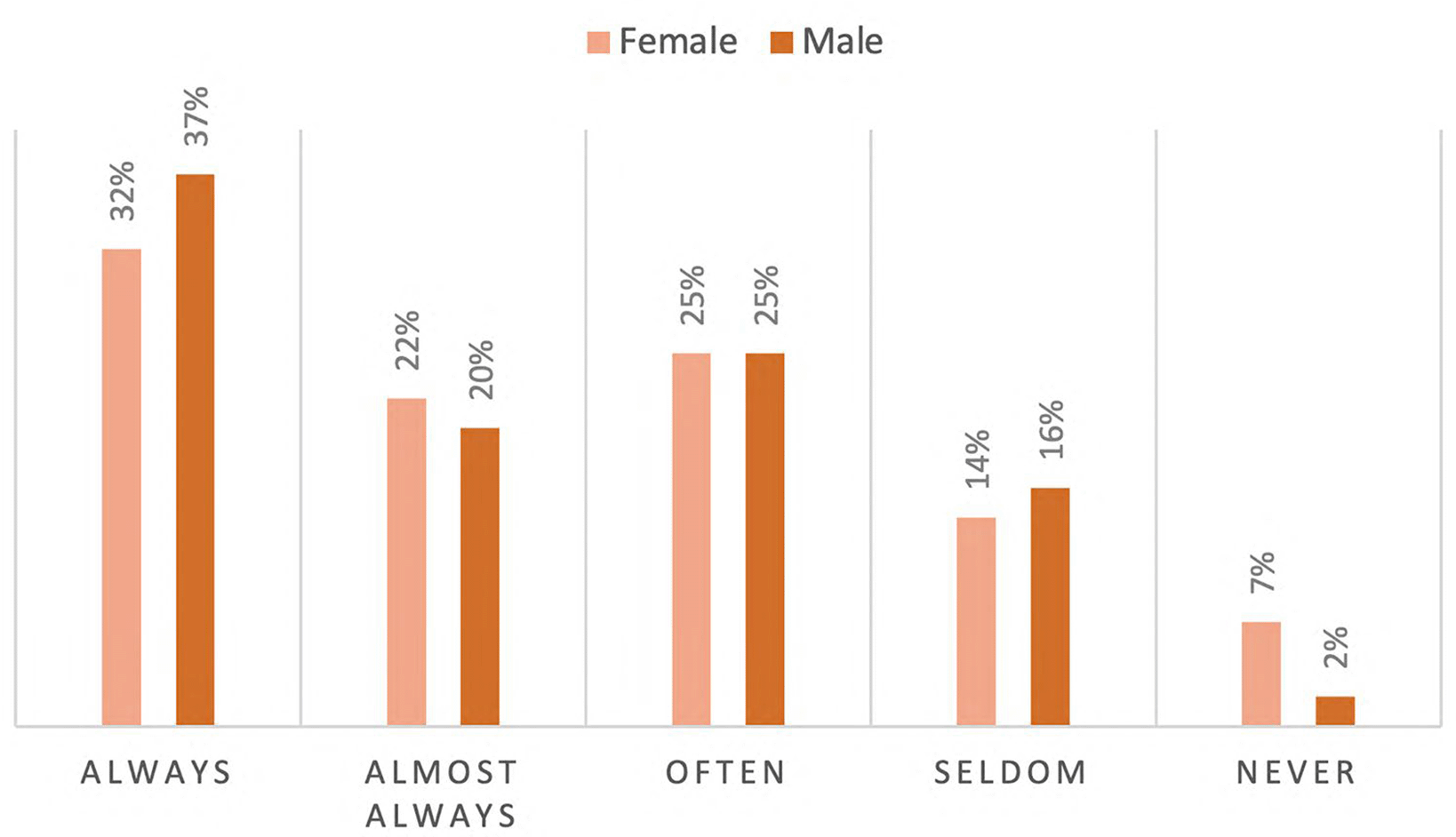
In EI-05, information was collected from 13 girls and 12 boys, identifying a slight difference of 3 percentage points between girls and boys who always and almost always comply with STEAM skills, in favor of boys.
Thus, 57% of the boys always and almost always comply with the STEAM skills, while the girls register a percentage of 54%. Likewise, 18% of boys rarely or never comply with these skills and girls register 21% compliance with the skills (rarely and never).
It is worth mentioning that all respondents in this educational unit correspond to the 6-year-old age group. Figure 28 shows compliance with STEAM skills by sex in EI-05.
3.3.6 Results for the EI-06
Figure 29 shows the results of the evaluation conducted with 23 EI-06 students. It is observed that 53% always and almost always comply, 19% often, while 29% are between the options seldom or never. In addition, it is observed that EI-06 students present high deficiencies in the handling of technology as a skill and a satisfactory development of art, in this same context.
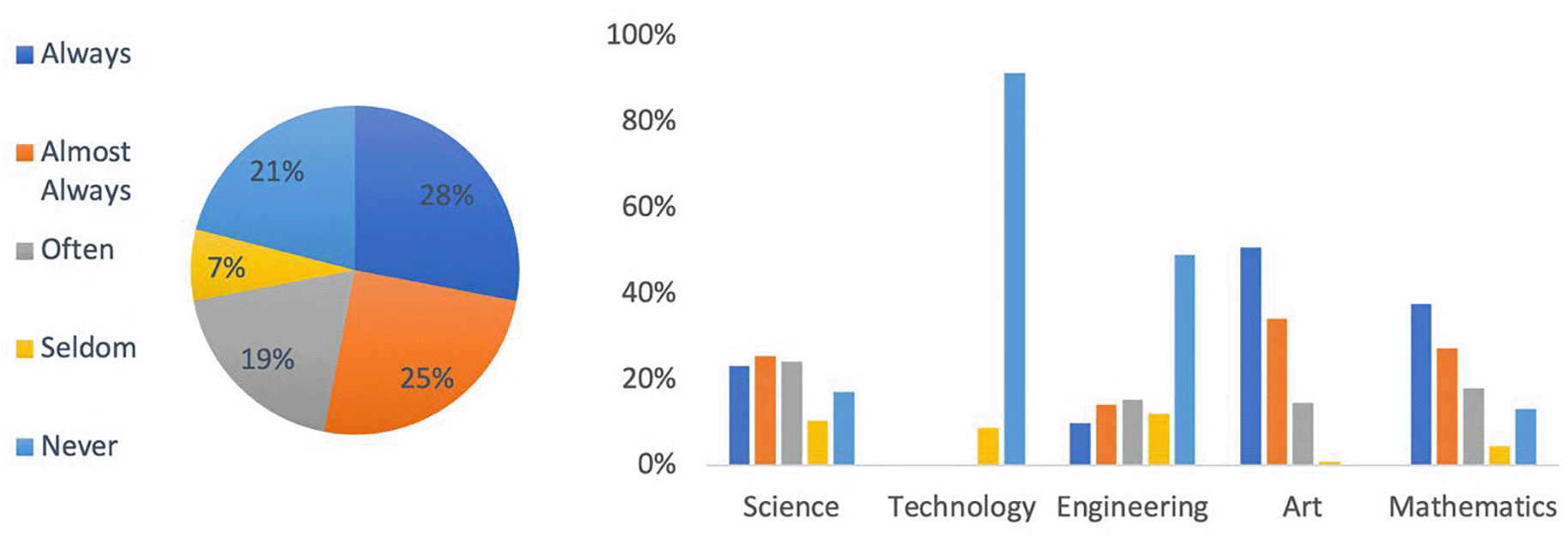
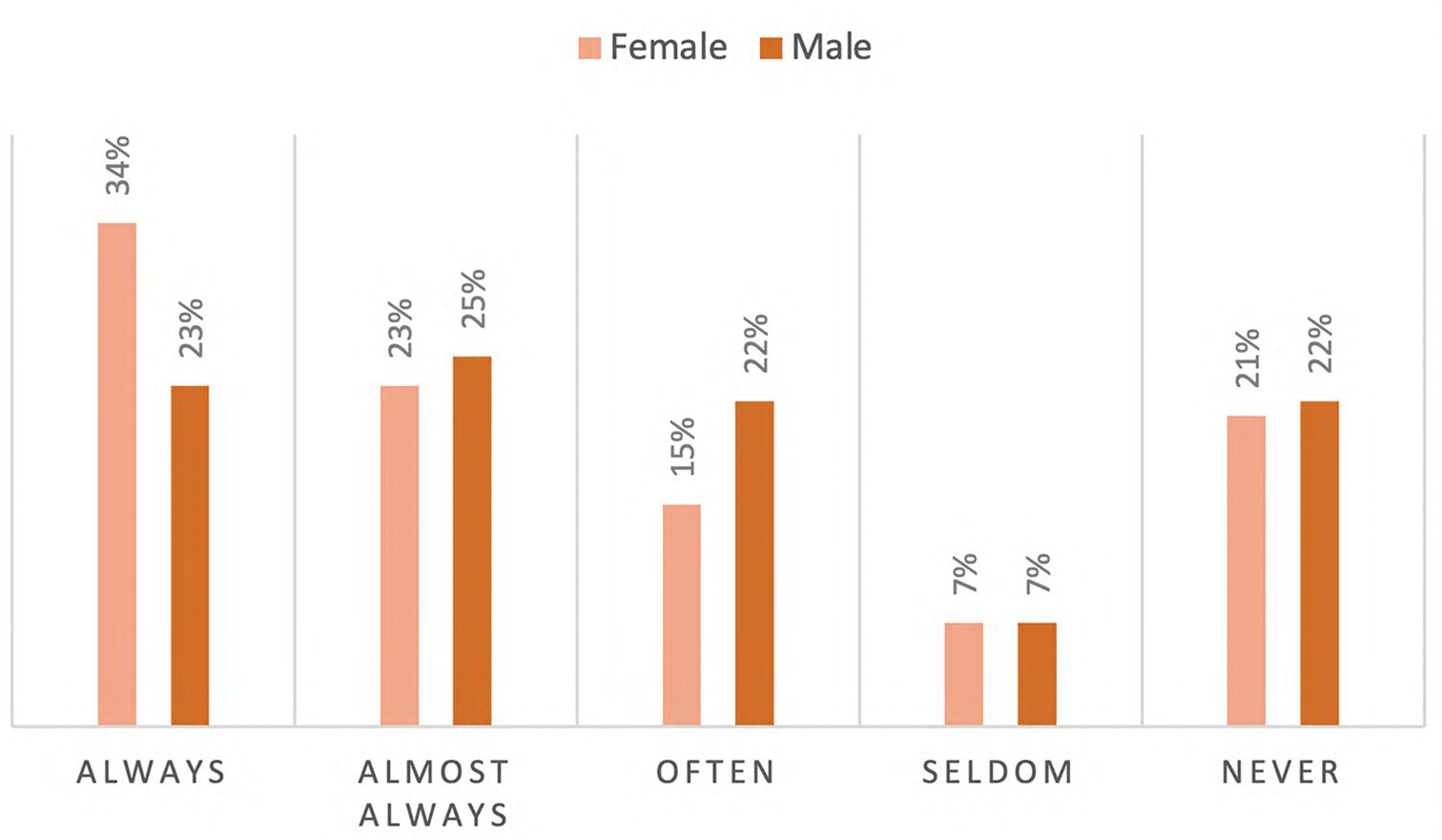
In the data collection in EI-06, 11 girls and 12 boys participated, showing a difference between girls and boys who always and almost always comply with STEAM skills of 9 percentage points in favor of girls.
Thus, 58% of the girls always and almost always comply with STEAM skills, while the boys register a percentage of 49%. Likewise, 28% of girls rarely or never comply with these skills and boys register 29% compliance with the skills (rarely and never) (see Figure 30).
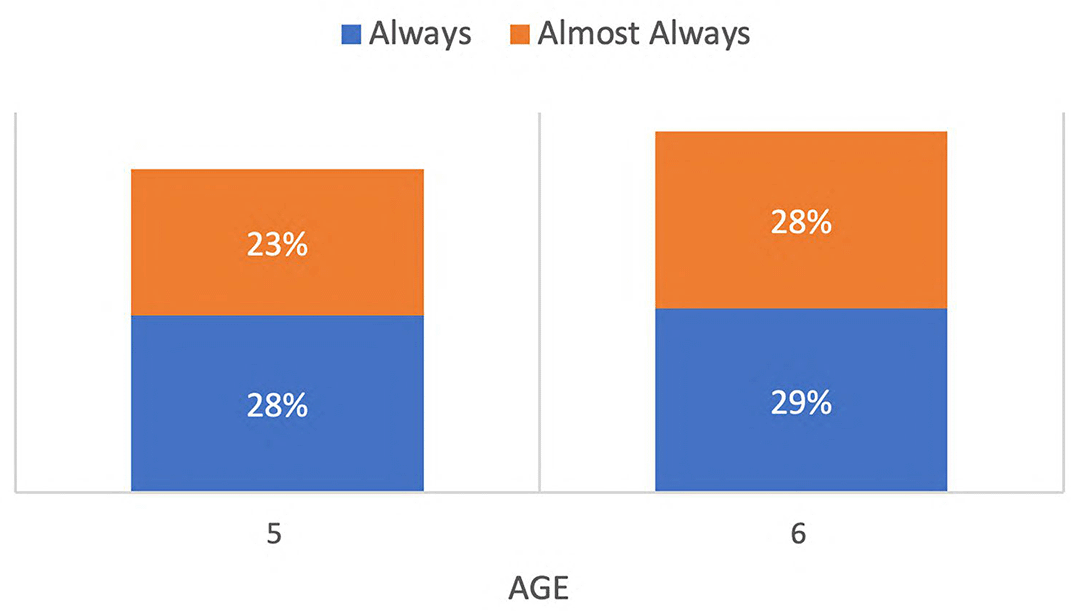
A total of 23 students are recorded in EI-06. Of the 15 who are 5 years old, 51% always and almost always comply with STEAM skills, while 29% rarely and never comply with these skills, and 20% comply with them often. On the other hand, 56% of the 8 6-year-olds always and almost always comply with STEAM skills, while 27% rarely and never comply with these skills and 16% comply with them often.
In EI-06, information was collected for the 5- and 6-year-old age groups. There was an increase in compliance with STEAM skills of 5 percentage points among 5- and 6-year-old respondents, going from 51% to 56% of always and almost always compliance with these skills among 5- and 6-year-olds (see Figure 31).
The answers to the question “How do training strategies through educational robotics influence the performance of STEAM skills of boys and girls from 5 to 8 years old in Ibarra-Ecuador?” were obtained from the analysis of aspects of age, gender and, in different educational institutions. In this way, conclusions are drawn based on the performance of STEAM skills, distinguishing three groups of educational institutions:
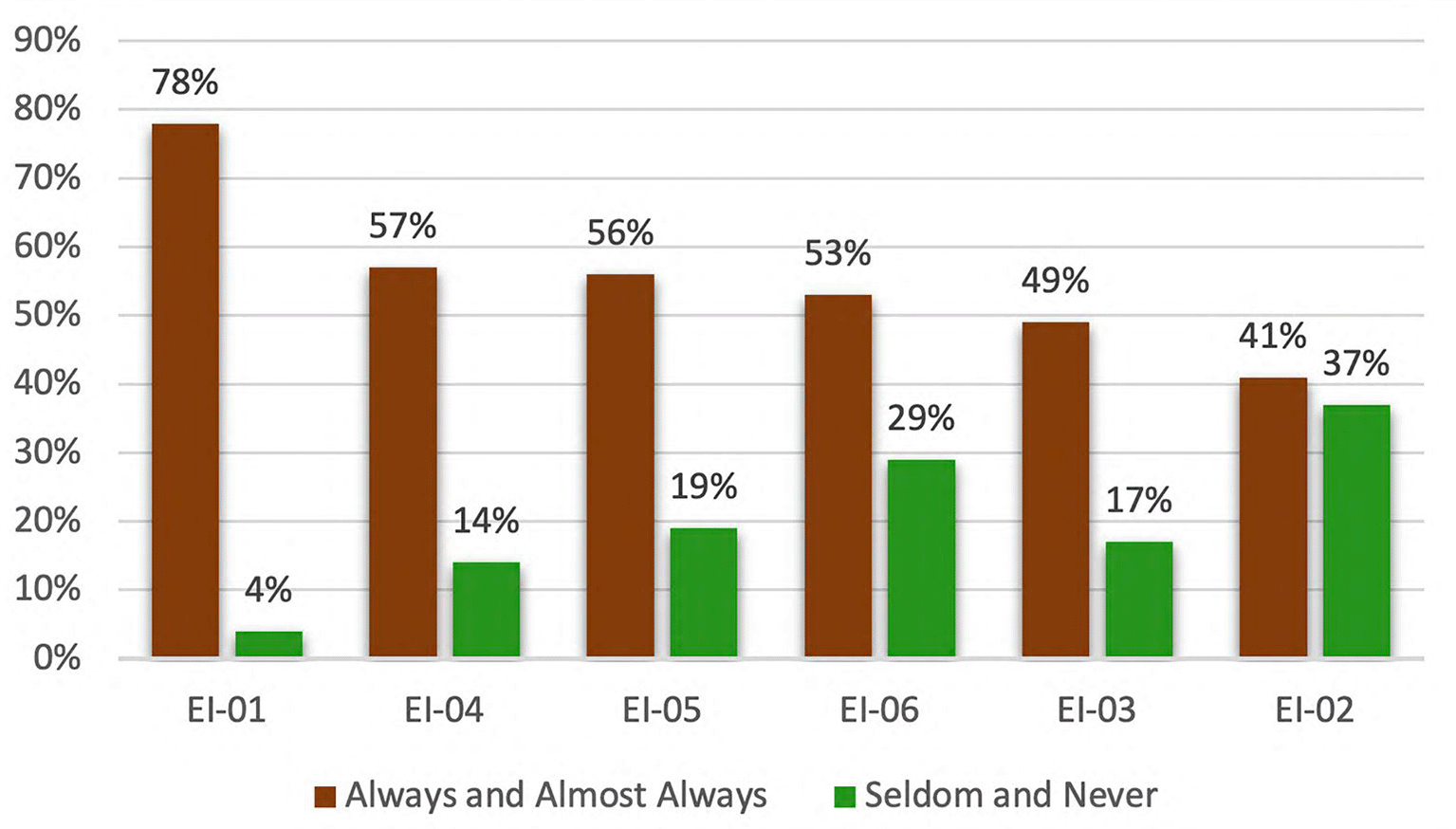
In the first group is located EI-01, which presents the highest number of students who have the best performance of STEAM skills (78%) always and almost always. It also has the lowest percentage of non-compliance, with 4% (performance in STEAM skills recorded as “rarely” and “never”).
The second group is composed of EI-04, EI-05 and EI-06, with performance percentages in STEAM skills (always and almost always) of 57%, 56% and 53%, respectively. In this group, the highest percentage of non-compliance is registered by EI-06 with 28% of its students registering STEAM skills performance of rarely and never, while the lowest percentage of non-compliance in this group corresponds to EI-04 (14%).
Finally, the third group is formed by EI-03 and EI-02, with percentages of STEAM skill’s performance (always and almost always) below 50% compliance (49% and 41% respectively), with EI-02 registering the highest percentage of non-compliance with STEAM skills (37% of its students rarely and never comply with STEAM skills).
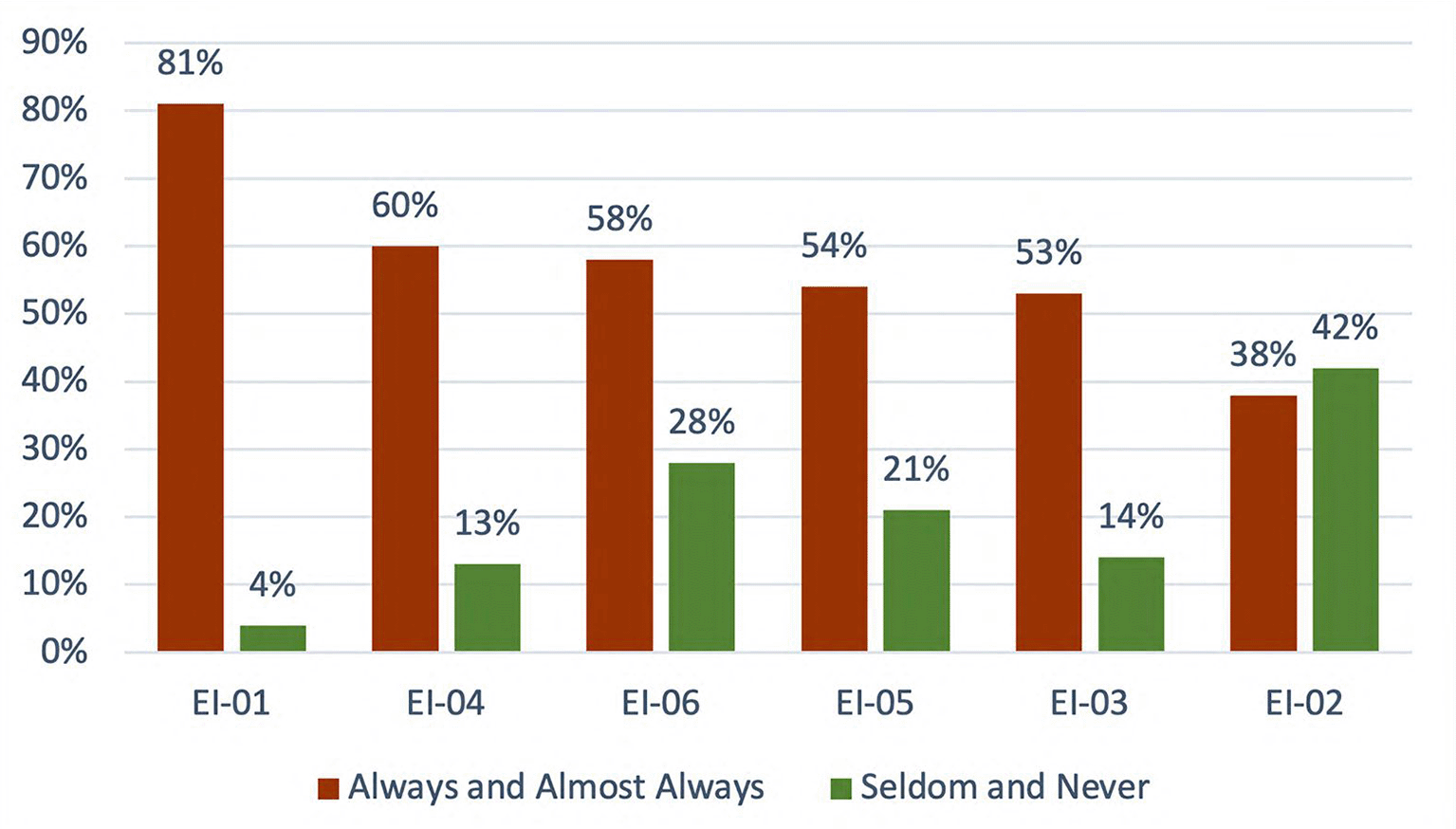
Figure 32 shows the performance of compliance with STEAM skills (always and almost always and rarely and never) by educational institutions.
In the analysis differentiated by gender, it can be observed that the percentages of compliance and non-compliance with the STEAM skills of the educational units are like the total percentages (girls and boys).
In terms of the percentage of girls’ performance (always and almost always) of these skills, EI-01 continues to stand out from the rest of the educational units with a percentage of 81% compliance, while in EI-02, the percentage of girls who comply with STEAM skills is only 38%.
Likewise, the lowest percentage of non-compliance among girls is registered by EI-01 (4%), while EI-02 has the highest percentage of non-compliance with 42%, a percentage that exceeds its level of compliance (38%), as shown in Figure 33.
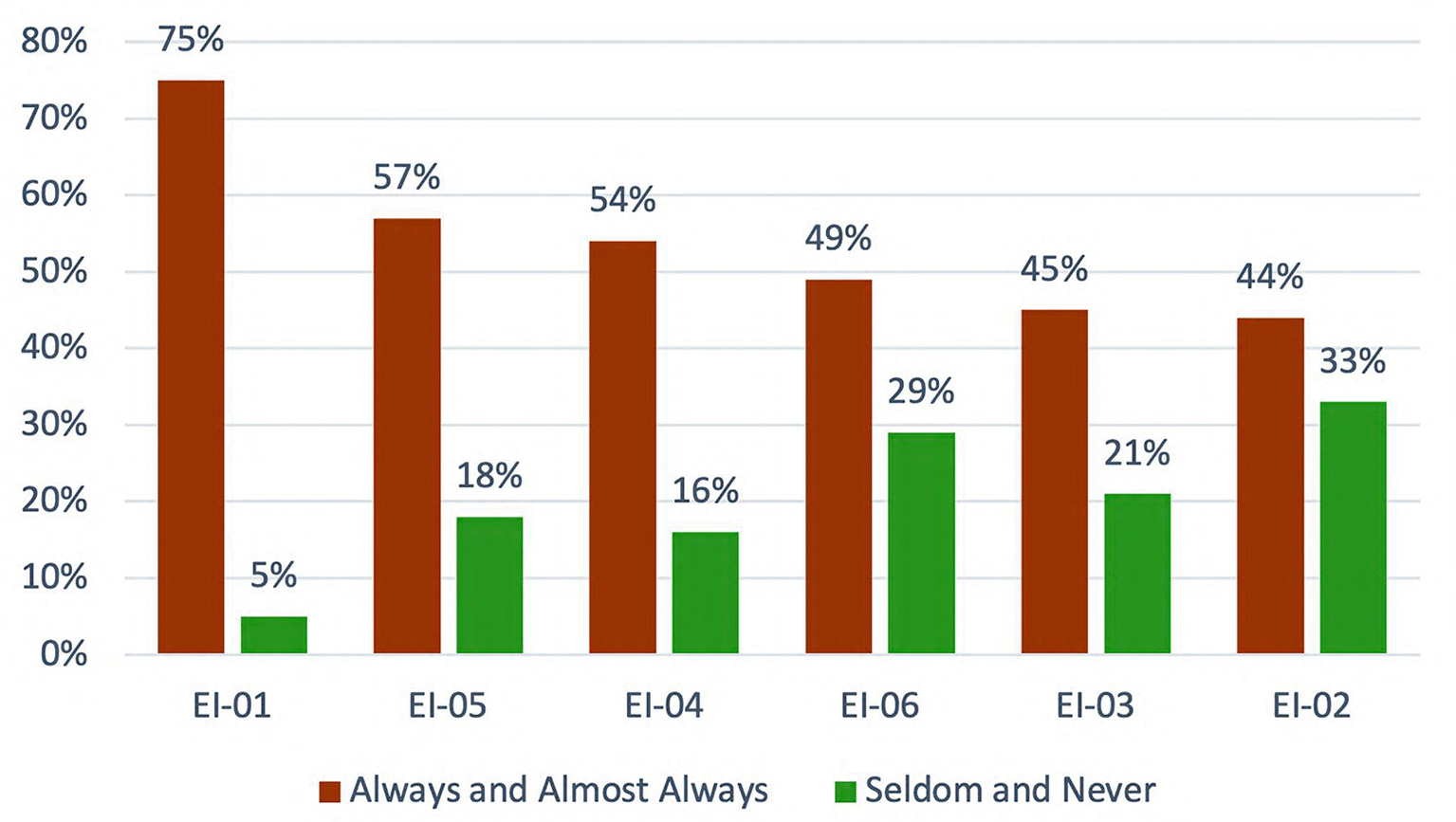
On the other hand, considering the percentage of children’s compliance with STEAM skills, EI-01 continues to present better performance with 74% of children always and almost always complying with these skills, while the institutions with low performance are EI-03 and EI-02, with a compliance percentage of 42% and 44% respectively. EI-02 continues to present the highest percentage of non-compliance (33% of children) (see Figure 34).
Of all the children surveyed, 7-year-olds are the ones who show the best performance in STEAM skills (80% compliance with always and almost always), while the lowest proportion corresponds to 6-year-old students (59% compliance with always and almost always). The 7-year-old group presents the greatest difference in compliance between girls and boys (86% compliance for girls and 62% compliance for boys), resulting in a difference of 24 percentage points.
With respect to the analysis of educational institutions by age group, three differentiated groups are also observed. The first group is composed of EI-01, which, as mentioned above, presents the highest proportion of compliance with STEAM skills in the 7-year age groups (85% compliance always and almost always) and 5-year age groups (80% compliance).
The second group is made up of EI-04, EI-05, and EI-06, which register an always and almost always compliance with STEAM skills in their age groups between 50% and 60%. Of these, the highest proportion of compliance (always and almost always) corresponds to the 5-year age group of EI-04 (61%), while the lowest proportion of compliance corresponds to the 5-year age group of EI-06 (51%).
The third group is made up of EI-03 and EI-02, which have at least one age group with a compliance rate of less than 50%. In the case of EI-03, it is important to mention that, although it records a compliance rate of 43% for the 5-year age group, this improves in the 6-year age group (59%). On the other hand, 3 of the 4 age groups in EI-02 register compliance percentages below 50% (31% compliance for 5-year-olds, 34% for 6-year-olds and 47% for 8-year-olds), the only group that exceeds 50% is that of 7-year-olds (57%).
This research was approved by the Ethics Committee of the Research Directorate of the Technical University of the North under Resolution No. UTN-CI-2023-327-R. The study was carried out in accordance with the guidelines of the university’s code of ethics (UTN, 2012). The students who took part in this research attend public educational institutions in Ibarra that are included in the cooperation agreement with the Technical University of the North (014-2021), whose aim is to promote improvements across all educational fields.
The study was conducted with a minor population and included written informed consent. This consent was obtained through a formal official request sent to the authorities of the participating educational institutions, who authorized the implementation of the study through an institutional supporting signature. In addition, informed assent was obtained from the participating children, ensuring their voluntary participation and adherence to ethical principles in educational research.
| Views | Downloads | |
|---|---|---|
| F1000Research | - | - |
|
PubMed Central
Data from PMC are received and updated monthly.
|
- | - |
Provide sufficient details of any financial or non-financial competing interests to enable users to assess whether your comments might lead a reasonable person to question your impartiality. Consider the following examples, but note that this is not an exhaustive list:
Sign up for content alerts and receive a weekly or monthly email with all newly published articles
Already registered? Sign in
The email address should be the one you originally registered with F1000.
You registered with F1000 via Google, so we cannot reset your password.
To sign in, please click here.
If you still need help with your Google account password, please click here.
You registered with F1000 via Facebook, so we cannot reset your password.
To sign in, please click here.
If you still need help with your Facebook account password, please click here.
If your email address is registered with us, we will email you instructions to reset your password.
If you think you should have received this email but it has not arrived, please check your spam filters and/or contact for further assistance.

Comments on this article Comments (0)